AFP

How Chinese diplomacy helped seal historic nature deal

Expectations heading into a UN biodiversity conference in Montreal were about as low as they could be. 

But a broad recognition that it was now or never for nature — and a flurry of late diplomacy by China —  helped seal a “historic” deal on a night of high drama.

Dubbed the “ugly duckling” of global policy, the COP15 negotiations were snubbed by world leaders who had just attended a far higher-profile climate summit in Egypt.

Beijing, which held the presidency of the talks, at first appeared to have a hands-off approach, and the defining issue — whether the rich world would pledge enough money so their developing counterparts could protect vanishing species and habitats — seemed too great to surmount.

“For months, there was the question: Where is China?” a high-level source close to the matter told AFP.

What’s more, relations between China and Canada, which had to step in to host the event because of China’s strict Covid rules, have deteriorated in recent years.

Canada’s 2018 arrest of Chinese telecommunications executive Meng Wanzhou at the request of the United States was followed quickly by China arresting two Canadians.

Just last month, Chinese leader Xi Jinping was caught on camera scolding Canada’s Justin Trudeau over a sleight. 

What’s more, “it’s strange to have a Chinese presidency on North American soil,” said the high-level source — and early signs did nothing to dispel assumptions that China in charge would mean a weakening of ambition.

In the first week, China let Canada run the show shepherding talks on the key issues, from finance to the cornerstone target of protecting 30 percent of land and oceans by 2030.

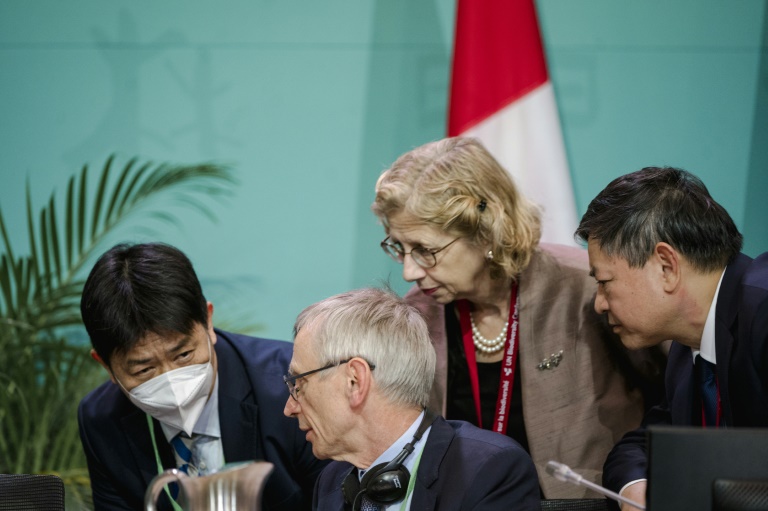
But as the clock ticked down, it was China that took charge of the text, in an approach described as “gentle” diplomacy: having subject experts and political representatives work in a calm, even environment, according to another diplomatic source.

“China closed out the deal and cornered the developing countries with the $30 billion financing pledge by 2030,” said a third source, a European negotiator. 

When countries of the Global North sought more ambitious targets from the South, China responded by telling them they’d need to up their financing. And Beijing acted as a neutral arbiter, not aligning itself with the Group of 77 as it normally does.

“They’ve taken the risk of putting their own reputation on the line for something many thought they weren’t the natural leaders of,” said Lee White, a British-Gabonese conservationist and minister of water, forests and environment of Gabon. 

Nor is China a natural champion of environmental issues, having badly polluted its air and waters and degraded much of its land through agricultural production — a process it is trying to reverse through a greenification campaign. 

“Countries that destroy their biodiversity end up regretting it —  I think the Chinese probably got to that point and are now trying to put things right,” said White.

– High drama –

The passage of China’s compromise text wasn’t smooth sailing. 

A plenary session to ratify the text was postponed Sunday several times to accommodate last minute holdouts, though delegates were eventually asked to take their seats by around 9:00 pm, and wait. And wait, and wait, and wait. 

Some left the main hall to take naps, with several Western delegates expressing irritation that the session was not being adjourned until the next day.

It was around 3:00 am that the session finally began. A new text had been uploaded, and participants were once more buzzing at the prospect of a “peace pact for nature.” When delegates gathered in the vast plenary hall, drama struck.

A delegate from Democratic Republic of Congo refused to back the accord, demanding more funds.

The conference chair, China’s environment minister Huang Runqiu, brushed this off, declaring the deal “approved” and whacking down his gavel to loud applause. DRC’s ally Uganda branded it a “fraud” and a “coup,” but the accord passed.

An exultant Steven Guilbeault, Canada’s environment minister, downplayed the drama — insisting the process was upheld by the United Nations and disagreements on this scale were commonplace at such summits which he had been attending for 25 years.

“I’ve never seen a presidency text tabled and have so much support for it from the get-go,” with the vast majority of countries signing up right away, he enthused.

On cooperation with China, he told AFP: “We both decided to set aside our differences… to focus on what unites us,” adding: “What China and Canada have accomplished together in our relationship is symbolic of what we’ve accomplished here together, more than 196 countries.”

While China took center stage, the United States participated only in a supporting role.

President Joe Biden supports the pact’s goals and announced his own “30×30” plan domestically — but political opposition by Republicans prevents the US from signing on to the convention on biological diversity.
The kindess of strangers keeps migrants warm on US-Mexico border

Rosa Falcon has turned her Texas home into a shelter for desperate migrants crossing from Mexico, whose numbers have swelled as the United States prepares for the possible lifting of rules that have kept the border effectively shut.

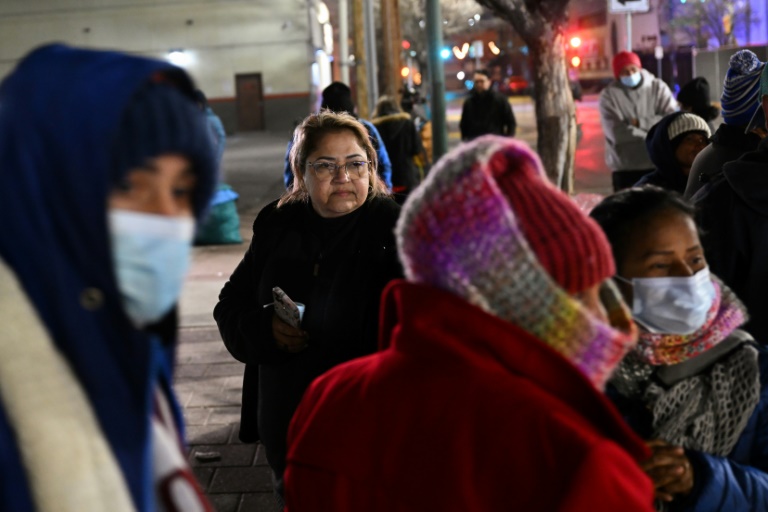
The sight of hundreds of people huddling against the freezing winter weather on the streets of El Paso was just too much for her to bear.

“With everything they have lived through, to leave them like that, adrift, on the street, seems illogical and inhumane to me,” said Falcon as she made her nightly rounds through the city which neighbors Mexico’s Ciudad Juarez.

The southern border of the United States has been officially closed to immigrants without visas for more than two years under a controversial health measure invoked by then-president Donald Trump during the Covid-19 pandemic.

Title 42 prevents asylum seekers from presenting themselves at ports of entry, allowing border patrol officers to turn them away without starting an asylum application.

Its stated purpose is to prevent the entry to the United States of people carrying a contagious disease.

But critics charge that with Covid endemic in the country — the United States has logged around 100 million confirmed cases — it is meaningless. Its true purpose, they say, is to keep migrants out.

But it’s never been very good at doing that.

Knowing that ports of entry are closed to them, would-be asylum seekers instead seek out gaps in the fence and other well-used crossing locations.

Once across, they present themselves to under-resourced border officials who take them to facilities where their cases are considered, and, if accepted, release them with a date when their bid for asylum will be considered.

In El Paso those with relatives wait for money transfers from friends and family that will allow them to buy a bus ticket.

Many sleep rough, the clothes they wear their only possessions.

“It’s heartbreaking, especially when there are children,” said Falcon, a school teacher, who has built a support network with other volunteers and local churches. 

– State of emergency –

More than 53,000 migrants surrendered to border authorities after illegally crossing this section of the border in October alone, a 280 percent increase on the same month last year.

Many arrive in desperate poverty, hungry and exhausted after an arduous struggle through the Darien jungle in Panama, or wet and dirty after wading across the Rio Grande, the river that separates Mexico from the United States.

Recent days have seen a spike in the number of people who have made it to El Paso after sneaking over the border.

So great are the numbers that Mayor Oscar Leeser has declared a state of emergency, to free up resources to help them.

On Saturday night, after his announcement, a bus arrived at a station in downtown El Paso, a frequent stop for poverty-stricken migrants looking to make their way to other cities.

“Anyone who doesn’t have a ticket by tomorrow can come with us,” a municipal official said, explaining people would be taken to a hotel to sleep.

Most of those at the bus station refused to move.

“We have heard so many things,” said Santiago, a 23-year-old Colombian. “How can we trust them? What if they take us to another state?”

– Lapse –

Title 42 had been due to lapse at midnight between December 20 and 21, but on Monday the US Supreme Court issued an administrative stay to allow the bench to consider an appeal by Republican Party-led states against its expiration.

In the meantime, the desperate migrants continue to cross.

President Joe Biden’s administration is at pains to stress they have control of the border, and that it is not a free-for-all.

“It would be wrong to think that the border is open,” White House spokeswoman Karine Jean-Pierre said Monday.

“It’s not open.”

An AFP team at the border on Monday watched 10 people squeeze through a hole in the fence in around 10 minutes.

They, and the many others that cross, will surrender to officials. If their cases qualify they will then be sent back out onto the streets, where for a few days they will survive on the mercy of strangers unwilling to watch them shiver.

On a recent chilly evening, Falcon, her mother, daughter and son-in-law drove around El Paso offering help to anyone who needed it.

There are usually four or five people sleeping in her living room, strangers she feeds — and sometimes clothes — from her own pocket.

“Even though I don’t know them, I feel like they are part of my family,” she said. 

US lawmakers call for criminal charges against Trump

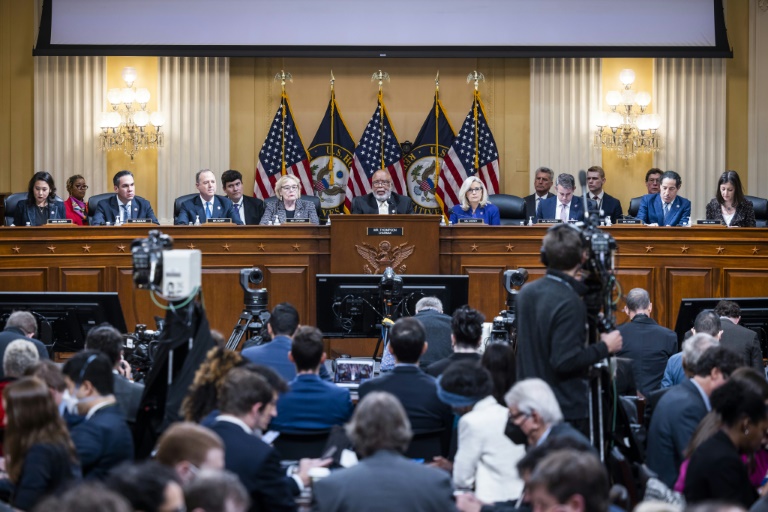
Lawmakers investigating last year’s assault on the US Capitol recommended Monday that Donald Trump be charged with multiple offenses including insurrection — raising the stakes in a parallel criminal investigation that could put the former president in jail.

The House of Representatives select committee called for the indictment — as well as charges of obstruction of an official proceeding and conspiracy to defraud the United States — after an 18-month probe into the storming of Congress on January 6, 2021.

At least five people died after a mob whipped up by Trump’s false claims of a stolen election, and directed to march on Congress by the defeated president, ransacked the seat of US democracy in a thwarted bid to prevent the transfer of power to President Joe Biden.

The bipartisan committee voted unanimously to refer the charges to the Justice Department after opening remarks by vice-chair Liz Cheney in which she accused Trump of “a clear dereliction of duty” in failing to immediately attempt to stop the riot and called him “unfit for any office.”

“No man who would behave that way at that moment in time can ever serve in any position of authority in our nation again,” she said.

The referrals are seen as largely symbolic, as the panel has no control over charging decisions, which rest with the Justice Department.

Jack Smith, a largely independent special prosecutor appointed by Attorney General Merrick Garland, is leading his own investigation into Trump related to the 2020 election.

– Major blow –

Trump issued a statement claiming that the purpose of the investigation was to “keep me from running for president because they know I’ll win” and that any prosecution would be “a partisan attempt to sideline me.”

Trump’s approval ratings are underwater — at minus-20 percentage points in the RealClearPolitics average, compared with minus-eight percent for Biden.

But the lawmakers’ move is nevertheless historic, as Congress has never made a criminal referral against a sitting or former president, and it will add to the clamor among Trump’s opponents for prosecution.

It is also a major blow to Trump amid a series of missteps in the weeks since he announced a comeback bid for the White House — including the Republicans’ poor midterm election showing in states where the tycoon endorsed candidates.

Charges could result in a ban from public office for the 76-year-old Republican, who still wields considerable power in the Republican Party, and even prison time.

“To cast a vote in the United States is an act of faith and hope,” committee chairman Bennie Thompson said.

“That faith in our system is the foundation of American democracy. If the faith is broken, so is our democracy. Donald Trump broke that faith.”

The seven Democratic and two Republican panel members are winding down their work before the end of the year, and have compiled their findings into an eight-chapter report set to be released on Wednesday. 

The committee’s case is that Trump “oversaw and coordinated a sophisticated seven-part plan to overturn the presidential election and prevent the transfer of presidential power.”

– ‘Trump knew he lost’ –

Investigators say the plot began with Trump’s campaign to spread allegations he knew were false that the election was marred by widespread fraud.

He is accused of trying to corrupt the Justice Department and of pressuring his vice president Mike Pence, as well as state election officials and legislators, to overturn the vote by violating the Constitution and the law.

Trump is also accused of summoning and assembling the mob in Washington, and directing it toward the Capitol despite knowing it was armed with assault rifles, handguns and numerous other weapons. 

And for hours he ignored pleas from his team to take action to stop the violence, lawmakers say.

Democratic panel member Zoe Lofgren said Trump’s false fraud claims — far from being spontaneous — were part of a deliberate attempt to sow distrust in democracy that began long before the insurrection.

Lofgren repeated the panel’s suggestion that Trump allies had engaged in witness tampering, alleging that someone linked to the former president had offered potential employment to a witness prior to their testimony.

Lofgren said a witness was also told by a lawyer linked to Trump that she could pretend to not remember facts as she was giving evidence.

Lofgren also returned to an accusation previously leveled by the panel that Trump had “raised hundreds of millions of dollars with false representations made to his online donors.”

FTX founder Bankman-Fried back in jail after hearing

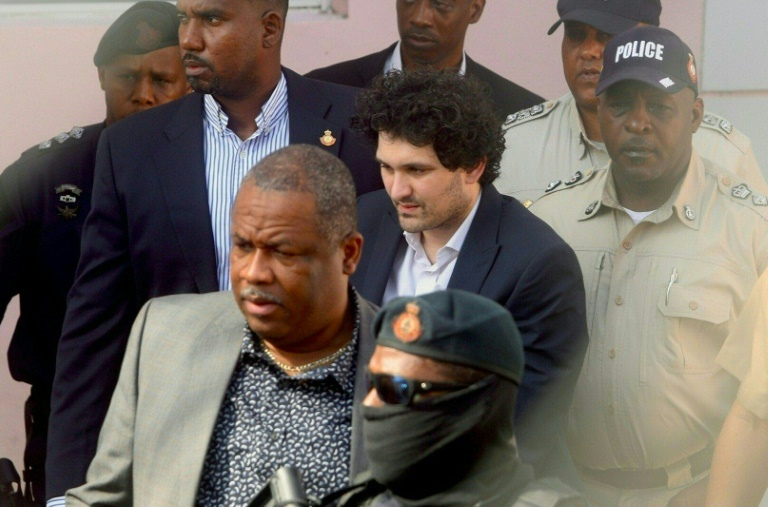
Sam Bankman-Fried, wanted in the United States for fraud after the collapse of his FTX cryptocurrency group, remained in a Bahamas prison Monday after an abortive court hearing that was to consider his possible extradition.

One week after the former billionaire was arrested in Nassau, US and local media had reported that the 30-year-old onetime cryptocurrency wunderkind was preparing to accept extradition to stand trial in New York.

Bankman-Fried was seen arriving at the Nassau magistrate court from the Fox Hill prison, and then leaving nearly three hours later without immediate comment from him or his attorneys.

But local media reported that the hearing was ended shortly after it began amid confusion of why it was called. 

According to the Nassau Guardian, the magistrate, Shaka Serville, permitted Bankman-Fried to speak by phone with his US attorneys before sending him back to the prison.

After Bankman-Fried returned to prison, the Nassau Guardian and the local Eyewitness News cited his local attorneys as saying he had agreed to be voluntarily extradited to the United States.

That could not be immediately confirmed with his US attorneys.

If he maintains his right to fight extradition, he is scheduled to appear for a hearing on the issue in early February.

Last week the US Justice Department and the Securities and Exchange Commission (SEC) filed criminal and civil charges against Bankman-Fried, alleging that he cheated investors in FTX and misused funds that belonged to FTX customers.

FTX rose spectacularly from 2019 to become a leading player in the virtual currency industry while based in the Bahamas.

Bankman-Fried appeared on the covers of finance and tech magazines, and drew in huge investments from prominent fund managers and venture capitalists.

He was also lionized in the halls of politics, becoming a spokesman for the industry on tough issues such as regulation and risk in Washington. 

He also contributed tens of millions of dollars to political campaigns of both Republicans and Democrats.  

But his shooting star snuffed out dramatically in November when the company and its sister trading firm Alameda Research collapsed into insolvency.

After reaching a valuation of $32 billion, the group imploded following a November 2 media report that Alameda’s balance sheet was heavily built on the FTT currency — a token created by FTX with no independent value — and exposed Bankman-Fried’s companies as being dangerously interlinked.

Bankman-Fried was arrested at his Nassau apartment on December 12 at the request of federal prosecutors in New York.

He was charged in the United States with eight counts including conspiracy, wire fraud, money laundering and election finance violations.

Separately the SEC accused him of violating securities laws.

Bankman-Fried “was orchestrating a massive, years-long fraud, diverting billions of dollars of the trading platform’s customer funds for his own personal benefit and to help grow his crypto empire,” US prosecutors said.

FTX founder Bankman-Fried back in jail after hearing

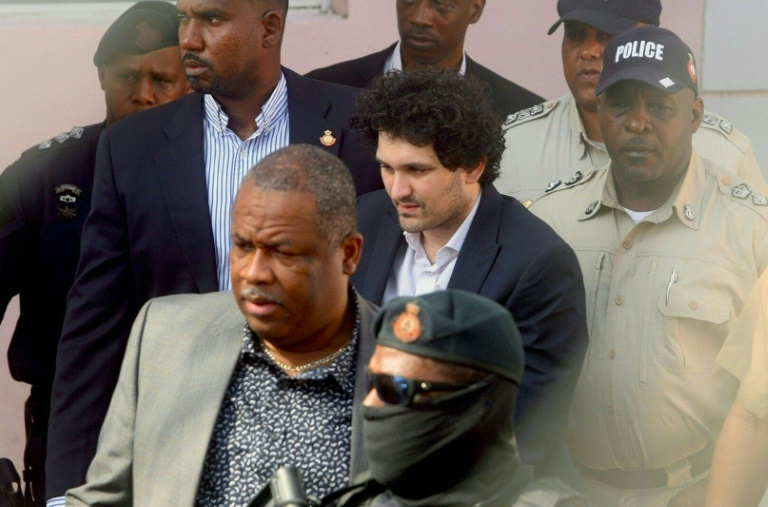
Sam Bankman-Fried, wanted in the United States for fraud after the collapse of his FTX cryptocurrency group, remained in a Bahamas prison Monday after an abortive court hearing that was to consider his possible extradition.

One week after the former billionaire was arrested in Nassau, US and local media had reported that the 30-year-old onetime cryptocurrency wunderkind was preparing to accept extradition to stand trial in New York.

Bankman-Fried was seen arriving at the Nassau magistrate court from the Fox Hill prison, and then leaving nearly three hours later without immediate comment from him or his attorneys.

But local media reported that the hearing was ended shortly after it began amid confusion of why it was called. 

According to the Nassau Guardian, the magistrate, Shaka Serville, permitted Bankman-Fried to speak by phone with his US attorneys before sending him back to the prison.

After Bankman-Fried returned to prison, the Nassau Guardian and the local Eyewitness News cited his local attorneys as saying he had agreed to be voluntarily extradited to the United States.

That could not be immediately confirmed with his US attorneys.

If he maintains his right to fight extradition, he is scheduled to appear for a hearing on the issue in early February.

Last week the US Justice Department and the Securities and Exchange Commission (SEC) filed criminal and civil charges against Bankman-Fried, alleging that he cheated investors in FTX and misused funds that belonged to FTX customers.

FTX rose spectacularly from 2019 to become a leading player in the virtual currency industry while based in the Bahamas.

Bankman-Fried appeared on the covers of finance and tech magazines, and drew in huge investments from prominent fund managers and venture capitalists.

He was also lionized in the halls of politics, becoming a spokesman for the industry on tough issues such as regulation and risk in Washington. 

He also contributed tens of millions of dollars to political campaigns of both Republicans and Democrats.  

But his shooting star snuffed out dramatically in November when the company and its sister trading firm Alameda Research collapsed into insolvency.

After reaching a valuation of $32 billion, the group imploded following a November 2 media report that Alameda’s balance sheet was heavily built on the FTT currency — a token created by FTX with no independent value — and exposed Bankman-Fried’s companies as being dangerously interlinked.

Bankman-Fried was arrested at his Nassau apartment on December 12 at the request of federal prosecutors in New York.

He was charged in the United States with eight counts including conspiracy, wire fraud, money laundering and election finance violations.

Separately the SEC accused him of violating securities laws.

Bankman-Fried “was orchestrating a massive, years-long fraud, diverting billions of dollars of the trading platform’s customer funds for his own personal benefit and to help grow his crypto empire,” US prosecutors said.

US attorney general in hot seat as Trump's legal woes grow

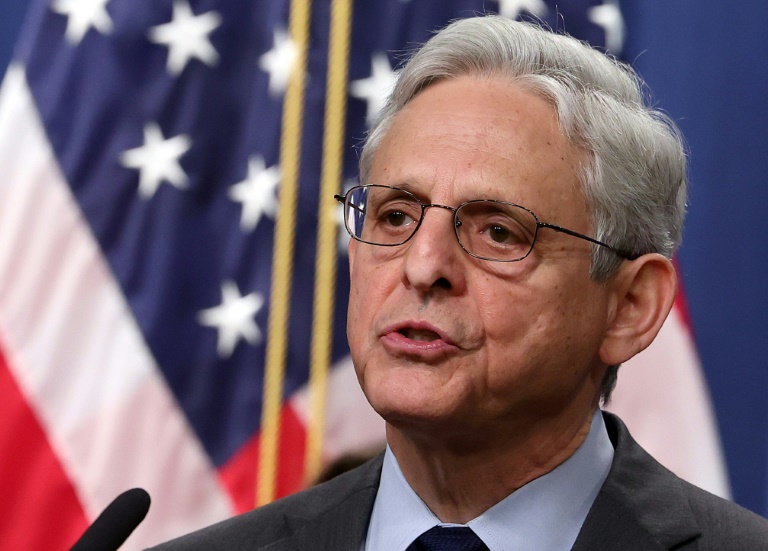
Filing criminal charges against Donald Trump would be a long and complex process ultimately requiring US Attorney General Merrick Garland to weigh the enormous legal and political implications of placing a former president on trial.

The House committee that investigated the January 6, 2021 storming of the US Capitol by Trump supporters recommended Monday that Trump be prosecuted for his efforts to overturn the 2020 election won by Joe Biden.

The bipartisan panel voted unanimously to refer Trump to the Justice Department for insurrection, obstruction of an official proceeding, conspiracy to defraud the United States and making false statements.

Trump, who has announced plans to run for the White House again in 2024, is already the target of a probe by a special counsel appointed by Garland last month to oversee the various investigations into the former president.

One probe is focused on Trump’s maneuvers surrounding the 2020 election and the other is an investigation into a cache of classified government documents seized in an FBI raid on his Mar-a-Lago residence in Florida in August.

Special counsel Jack Smith will decide whether Trump, who has denounced the probes as a “witch hunt” by vengeful Democrats, should be indicted, but it will be Garland, as the nation’s top law enforcement official, who would have to sign off on any charges.

Legal analysts said it is not a foregone conclusion that the 76-year-old Trump will ever face the inside of a courtroom.

“We have not prosecuted a former president,” said John Dean, who served as White House legal counsel to president Richard Nixon, who resigned and was pardoned by Gerald Ford before he could face charges connected with the Watergate scandal.

“And there are all kinds of political fallout from that,” Dean told CNN. “There are practical fallouts from that and there are legal fallouts from it.”

“So it’s a very complex and very interesting and very historic event.”

– ‘No one’ above the law –

While Dean was cautious, Bennie Thompson, a Mississippi lawmaker who chaired the House committee, said he was “convinced” the Justice Department will charge Trump.

“No one, including a former president, is above the law,” Thompson said.

Playing a pivotal role will be the 70-year-old Garland, who was denied a lifetime seat on the Supreme Court by Senate Republicans only to be named attorney general by Biden, a Democrat.

Throughout his career which includes years as a federal court judge, Garland has scrupulously avoided becoming enmeshed in politics, and an indictment of Trump would likely ratchet up tensions even further in a country already bitterly divided along Democratic and Republican lines.

Garland’s decision to appoint an independent prosecutor to oversee the Trump probe was seen in Washington as a bid to rebuff charges that it is politically motivated.

Garland said a special counsel was in the public interest because both the Republican Trump and Democrat Biden have stated their intention to run in 2024, although only Trump has officially declared for now.

A graduate of Harvard Law School, the professorial and soft-spoken Garland is no stranger to high-profile investigations.

As a federal prosecutor, he notably led the probe into the 1995 Oklahoma City bombing by far-right extremists that left 168 people dead. He also prosecuted Ted Kaczynski, the “Unabomber.”

Garland went on to serve as chief judge on the US Court of Appeals for the District of Columbia and was nominated to the Supreme Court by president Barack Obama in March 2016.

But the Republican majority in the Senate declined to hold a vote on his nomination and it was the next president — Donald Trump — who filled the vacant seat.

Amber Heard agrees to pay Johnny Depp $1m in defamation case

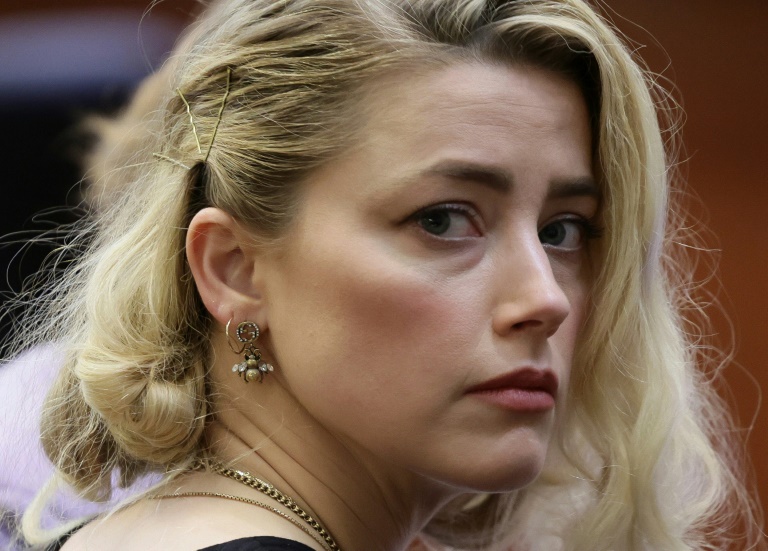
Johnny Depp and Amber Heard have settled their acrimonious defamation case, they said Monday, with the actress agreeing to pay her former husband $1 million over claims he physically abused her.

In a post on Instagram, Heard said she was dropping an appeal against the $10 million payout she had been ordered to make by a jury because she “simply cannot go through” another trial.

“After a great deal of deliberation I have made a very difficult decision to settle the defamation case,” she said.

“I make this decision having lost faith in the American legal system, where my unprotected testimony served as entertainment and social media fodder,” the 36-year-old said.

“Now I finally have an opportunity to emancipate myself from something I attempted to leave over six years ago and on terms I can agree to,” she said. “I have made no admission. This is not an act of concession.”

In a legal battle involving suits and countersuits, a Virginia jury found Depp and Heard both liable for defamation — but sided more strongly with the “Pirates of the Carribean” star following an intense six-week trial riding on bitterly contested allegations of domestic abuse.

The jury awarded $10.35 million in damages to Depp, and $2 million to Heard.

Lawyers for 59-year-old Depp on Monday hailed the settlement.

“We are pleased to formally close the door on this painful chapter for Mr. Depp, who made clear throughout this process that his priority was about bringing the truth to light,” attorneys Benjamin Chew and Camille Vasquez said.

“The jury’s unanimous decision and the resulting judgement in Mr. Depp’s favor against Ms. Heard remain fully in place.

“The payment of $1 million — which Mr. Depp is pledging and will (actually) donate to charities — reinforces Ms. Heard’s acknowledgement of the conclusion of the legal system’s rigorous pursuit for justice.”

– ‘Defended my truth’ –

Depp sued Heard over an op-ed she wrote for The Washington Post in December 2018 in which she described herself as a “public figure representing domestic abuse.”

The Texas-born Heard did not name Depp in the piece, but he sued her for implying he was a domestic abuser and sought $50 million in damages.

Heard countersued for $100 million, saying she was defamed by statements made by Depp’s lawyer, Adam Waldman, who told the Daily Mail her abuse claims were a “hoax.”

The case, livestreamed to millions, featured lurid and intimate details about the Hollywood celebrities’ private lives.

Heard’s lawyers said following the trial that the actress did not have the resources to pay Depp the $10 million in damages.

In her Instagram post, Heard said she “defended my truth and in doing so my life as I knew it was destroyed.

“The vilification I have faced on social media is an amplified version of the ways in which women are revictimised when they come forward,” she said.

“I was exposed to a type of humiliation that I simply cannot relive.

“Even if my US appeal is successful, the best outcome would be a retrial where a new jury would have to consider the evidence again,” she said. “I simply cannot go through that for a third time.”

Entertainment outlet Variety said Heard had initially made claims of domestic abuse in 2016 during her divorce from the “Edward Scissorhands” star.

In a settlement she was granted $7 million and the issue was shelved, with the couple signing non-disparagement and non-disclosure agreements.

European stocks attempt pre-Christmas rebound; US equities retreat

European equities rose Monday in light pre-Christmas trade, rebounding gently from last week’s losses that followed bumper interest rate hikes, but Wall Street and Asian markets failed to get into the holiday spirit.

Equity markets often experience a so-called Santa rally, when prices rise during thin year-end trading dominated by small investors in a festive mood.

“Everyone, it seems, is waiting to see if Santa is going to come around, which leaves the market stuck between feelings of hope and angst,” said market analyst Patrick O’Hare at Briefing.com.

Major indices in New York were in the red most of the day and finished firmly lower, with the S&P 500 off 0.9 percent.

Michael Hewson at CMC Markets said that most investors are likely “content to sit on the sidelines with the main focus likely to be on this week’s core PCE inflation data and personal spending numbers for November which are due on Friday.”

But in Europe, stocks moved timidly higher.

Both Frankfurt and London rose 0.4 percent, while Paris added 0.3 percent.

“Markets are grinding higher as some traders are optimistic about valuations which seem to them somewhat attractive,” AvaTrade analyst Naeem Aslam told AFP.

“We really don’t have much volume in markets as traders are away for holidays,” he added.

“Overall I think it’s going to be pretty subdued trading, given the lack of significant data to react to,” noted analyst Susannah Streeter at stockbroker Hargreaves Lansdown.

Asian indices fell on lingering concern over a possible global recession caused by moves to fight inflation from top central banks.

Equities took a turn south last week after monetary policymakers around the world signaled that while price rises appeared to be stabilizing, more work would be needed to get them under control.

Adding to the downbeat mood was a spike in Covid-19 cases in China following the country’s reopening after almost three years of strict containment measures.

While the move is expected to boost the world’s number two economy, there is a worry that businesses and China’s health system will be hit in the near term.

Still, Beijing flagged a number of measures aimed at kickstarting growth next year, including support for the beleaguered property sector.

An expected pick-up in Chinese demand helped propel oil prices higher, as did plans by the United States to refill its strategic oil reserves.

– Key figures around 2040 GMT –

New York – Dow: DOWN 0.5 percent at 32,757.54 (close)

New York – S&P 500: DOWN 0.9 percent at 3,817.66 (close)

New York – Nasdaq: DOWN 1.5 percent at 10,546.03 (close)

London – FTSE 100: UP 0.4 percent at 7,361.31 (close)

Frankfurt – DAX: UP 0.4 percent at 13,942.87 (close)

Paris – CAC 40: UP 0.3 percent at 6,473.29 (close)

EURO STOXX 50: UP 0.2 percent at 3,811.24 (close)

Tokyo – Nikkei 225: DOWN 1.1 percent at 27,237.64 (close)

Hong Kong – Hang Seng Index: DOWN 0.5 percent at 19,352.81 (close)

Shanghai – Composite: DOWN 1.9 percent at 3,107.11 (close)

Euro/dollar: UP at $1.0610 from $1.0586 on Friday

Pound/dollar: FLAT at $1.2148

Euro/pound: UP at 87.31 pence from 87.14 pence

Dollar/yen: UP at 136.95 yen from 136.60 yen

West Texas Intermediate: UP 1.2 percent at $75.19 per barrel

Brent North Sea crude: UP 1.0 percent at $79.80 per barrel

burs-jmb/sst

European stocks attempt pre-Christmas rebound; US equities retreat

European equities rose Monday in light pre-Christmas trade, rebounding gently from last week’s losses that followed bumper interest rate hikes, but Wall Street and Asian markets failed to get into the holiday spirit.

Equity markets often experience a so-called Santa rally, when prices rise during thin year-end trading dominated by small investors in a festive mood.

“Everyone, it seems, is waiting to see if Santa is going to come around, which leaves the market stuck between feelings of hope and angst,” said market analyst Patrick O’Hare at Briefing.com.

Major indices in New York were in the red most of the day and finished firmly lower, with the S&P 500 off 0.9 percent.

Michael Hewson at CMC Markets said that most investors are likely “content to sit on the sidelines with the main focus likely to be on this week’s core PCE inflation data and personal spending numbers for November which are due on Friday.”

But in Europe, stocks moved timidly higher.

Both Frankfurt and London rose 0.4 percent, while Paris added 0.3 percent.

“Markets are grinding higher as some traders are optimistic about valuations which seem to them somewhat attractive,” AvaTrade analyst Naeem Aslam told AFP.

“We really don’t have much volume in markets as traders are away for holidays,” he added.

“Overall I think it’s going to be pretty subdued trading, given the lack of significant data to react to,” noted analyst Susannah Streeter at stockbroker Hargreaves Lansdown.

Asian indices fell on lingering concern over a possible global recession caused by moves to fight inflation from top central banks.

Equities took a turn south last week after monetary policymakers around the world signaled that while price rises appeared to be stabilizing, more work would be needed to get them under control.

Adding to the downbeat mood was a spike in Covid-19 cases in China following the country’s reopening after almost three years of strict containment measures.

While the move is expected to boost the world’s number two economy, there is a worry that businesses and China’s health system will be hit in the near term.

Still, Beijing flagged a number of measures aimed at kickstarting growth next year, including support for the beleaguered property sector.

An expected pick-up in Chinese demand helped propel oil prices higher, as did plans by the United States to refill its strategic oil reserves.

– Key figures around 2040 GMT –

New York – Dow: DOWN 0.5 percent at 32,757.54 (close)

New York – S&P 500: DOWN 0.9 percent at 3,817.66 (close)

New York – Nasdaq: DOWN 1.5 percent at 10,546.03 (close)

London – FTSE 100: UP 0.4 percent at 7,361.31 (close)

Frankfurt – DAX: UP 0.4 percent at 13,942.87 (close)

Paris – CAC 40: UP 0.3 percent at 6,473.29 (close)

EURO STOXX 50: UP 0.2 percent at 3,811.24 (close)

Tokyo – Nikkei 225: DOWN 1.1 percent at 27,237.64 (close)

Hong Kong – Hang Seng Index: DOWN 0.5 percent at 19,352.81 (close)

Shanghai – Composite: DOWN 1.9 percent at 3,107.11 (close)

Euro/dollar: UP at $1.0610 from $1.0586 on Friday

Pound/dollar: FLAT at $1.2148

Euro/pound: UP at 87.31 pence from 87.14 pence

Dollar/yen: UP at 136.95 yen from 136.60 yen

West Texas Intermediate: UP 1.2 percent at $75.19 per barrel

Brent North Sea crude: UP 1.0 percent at $79.80 per barrel

burs-jmb/sst

Five takeaways from congressional report calling for Trump charges

Much of the detail on Donald Trump’s alleged misconduct aired Monday by the panel probing the 2021 US Capitol insurrection had already been made public.

But a summary of the upcoming report on the congressional committee’s findings was full of tidbits that had not come out before. 

Here are five takeaways from the 154-page document.

– Trump was the ‘central’ cause of the violence –

“(The) evidence has led to an overriding and straightforward conclusion: the central cause of January 6th was one man, former president Donald Trump, who many others followed,” the summary reads.

“None of the events of January 6th would have happened without him.”

– Laws Trump and others allegedly broke –

The document explicitly sets out the multiple criminal statutes it says Trump violated his bid to cling to power — justifying its referrals for insurrection, conspiracy to defraud the United States, conspiracy to make a false statement and obstructing an official proceeding.

None of Trump’s aides was referred to the Justice Department under specific statutes but the summary suggests there could be sufficient evidence to charge Trump lawyer John Eastman and “others.”

The summary details 17 findings undergirding its reasoning for criminal referrals, alleging that Trump knew the fraud allegations he was pushing were false and that his decision to declare victory falsely “was premeditated.”

– Seditious conspiracy? –

The summary raises the possibility of additional “seditious conspiracy” charges against Trump similar to those leveled against members of the Oath Keepers militia over the insurrection.

“The Department of Justice, through its investigative tools that exceed those of this committee, may have evidence sufficient to prosecute President Trump under Sections 372 and 2384.” it reads.

“Accordingly, we believe sufficient evidence exists for a criminal referral of President Trump under these two statutes.”

Committee member Jamie Raskin said after the hearing any potential further charges, beyond the four it has recommended, would be “a judgment that the Department of Justice will have to make.”

– Ivanka Trump not ‘forthcoming’ –

The summary makes clear that several figures close to Trump were evasive or made claims of memory lapses that were not credible during testimony.

It specifically names the former president’s daughter and former advisor Ivanka Trump, saying she appeared to know more than she was acknowledging during questioning.

“Ivanka Trump was not as forthcoming as… others about President Trump’s conduct,” the document says, noting her “lack of full recollection of certain issues.”

The panel also notes that former White House press secretary Kayleigh McEnany “seemed evasive, as if she was testifying from pre-prepared talking points.” 

“In multiple instances, McEnany’s testimony did not seem nearly as forthright as that of her press office staff, who testified about what McEnany said,” the summary states.

– Non-criminal referrals –

The summary says several Republican lawmakers are being referred to the House Ethics Committee for refusal to cooperate with the investigation.

They include House Minority Leader Kevin McCarthy, who is vying to be House Speaker in the next Congress, the third most powerful political position in Washington, and three hardline right-wingers. All four defied subpoenas to give evidence.

“If left unpunished, such behavior undermines Congress’s longstanding power to investigate in support of its lawmaking authority and suggests that members of Congress may disregard legal obligations that apply to ordinary citizens,” the text says.

Close Bitnami banner
Bitnami