AFP

France bans disposable packaging, utensils in fast-food restaurants

Fast-food eateries in France will soon no longer be able to use disposable containers, plates, cups and tableware for clients eating in, the latest measure from a 2020 law to combat waste and encourage recycling.

Restaurants have been preparing for months to implement a rule that comes into force on January 1, which for many has upended business models based on single-use packaging and utensils, both for eating in and for take-out.

The roughly 30,000 fast-food outlets in France serve six billion meals a year, generating an estimated 180,000 tons of waste.

“It’s an emblematic measure that if properly implemented will make a very concrete difference for people — it definitely goes in the right direction,” said Moira Tourneur of non-profit Zero Waste France.

But the law has drawn criticism from the European Paper Packaging Alliance (EPPA), which argues that most single-use containers are made of renewable resources and have a recycling rate of 82 percent across the European Union.

It also says making and washing durable items consumes more energy and water, defeating a purpose of the environmental cause.

Restaurants have noted as well that clients often take reusable cups with them after a meal or end up throwing plates and cutlery in the trash instead of returning them.

– ‘Rethink everything’ –

After several months of testing, the Subway sandwich chain found it needed to mount a “public awareness effort” with franchise operators that included new posters to inform clients to reuse tableware, a spokeswoman told AFP.

At a McDonald’s in the Paris suburb of Levallois-Perret, manager Maria Varela said they needed to hire an additional dishwasher and more hosts to explain that plates, knives and forks must now be separated from trash.

“At first it was very complicated, both at the counter and with table service,” she said, noting that the kitchen had to be remodelled to cope with the new requirements.

“Everything that was in cardboard is now in reusable plastic. We had to rethink everything in the kitchen, separate take-out from on-site orders, create new storage space.”

Pressure groups worry the additional requirements might lead fast-food operators to resist.

Several including Surfrider, Zero Waste France and No Plastic in My Sea have urged clients to “sanction the chains that don’t respect the law” by taking their business elsewhere.

“I didn’t know about this but it’s good that it’s mandatory,” said Tom Fresneau, 16, who was eating a burger with a friend at the McDonald’s outside the French capital.

“But it does cost more than paper and cardboard, so I understand if it’s problematic for the smaller fast-food restaurants that might have to raise their prices,” he said.
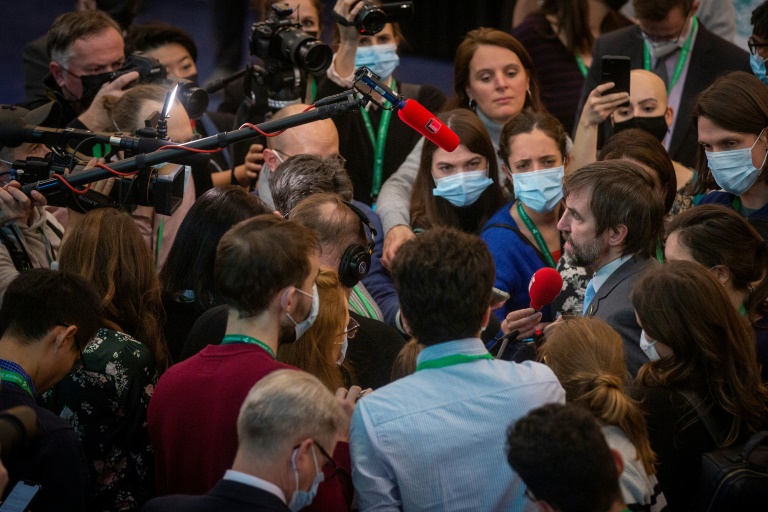
Things to know about a landmark biodiversity agreement

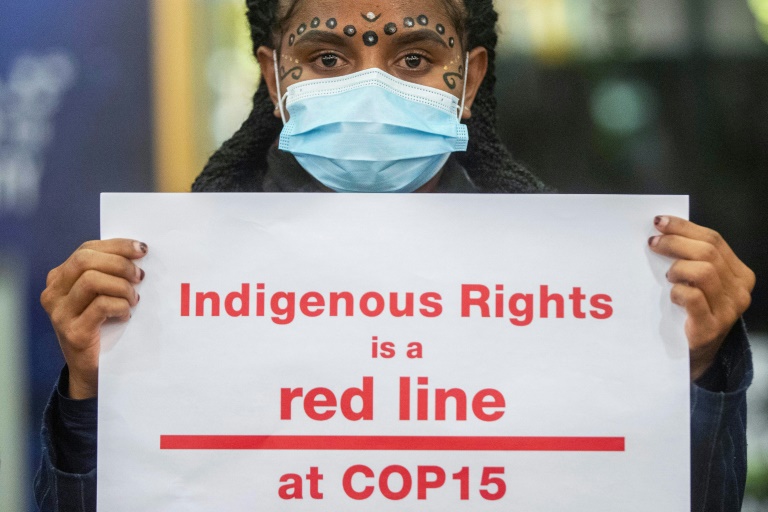
After years of negotiations, the world has agreed a landmark deal to protect vanishing species and ecosystems, dubbed a “peace pact with nature” at the UN meeting in Montreal called COP15.

Here are some of its strengths, as well as where it fell short.

– ’30 by 30′ –

The cornerstone of the agreement is the so-called 30 by 30 goal — a pledge to protect 30 percent of the world’s land and seas by 2030.

Currently, only about 17 percent of land and seven percent of oceans are protected. The oceans target had reportedly been opposed by some countries but made it into the final text.

And some experts had said 30 percent is a low aim, insisting that protecting 50 percent would be better. 

– Indigenous rights –

About 80 percent of the Earth’s remaining biodiverse land is currently managed by Indigenous people, and it’s broadly recognized that biodiversity is better respected on Indigenous territory.

Activists wanted to make sure their rights are not trampled in the name of conservation — previous efforts to safeguard land have seen Indigenous communities marginalized or displaced in what has been dubbed “green colonialism.”

In the end, Indigenous rights were addressed throughout the text, including in areas covered by the 30 by 30 pledge — safeguarding Indigenous peoples’ right to remain stewards of land they use and ensuring they are not subject to mass evictions.

The International Indigenous Forum on Biodiversity praised the text for its “strong language on respect for the rights of Indigenous Peoples and local communities.”

– Finance – 

Finance remained the overriding question.

Developing countries say developed nations grew rich by exploiting their resources and the South should be paid to preserve its ecosystems.

In the end, the text approves the objective for rich countries to provide “at least US$20 billion per year by 2025, and … at least US$30 billion per year by 2030,” approximately double and then triple the current international aid for biodiversity.

It also includes new language that mentions funding from “developed countries, and from countries that voluntarily assume obligations of developed country parties,” which a Western source told AFP was meant to involve the United States.

Washington is not formally a part of the Convention on Biological Diversity but supportive of its goals.

Developing countries were also seeking a new funding mechanism, as a signal of the rich world’s commitment to this goal, but developed nations said it would take several years to create. 

In the end, a halfway solution was adopted: creating a “trust fund” within an existing financial mechanism called the Global Environment Facility, as a stepping stone to a new fund in the future.

– What was missing –

An overriding concern by campaigners was that the final text did not contain enough “milestones” — key statistical measures countries should achieve before the year 2050. 

For example, the text says human-induced extinction of known threatened species is halted, and, by 2050, extinction rate and risk of all species are reduced tenfold — but there aren’t targets that countries must hit before that year.

Also watered down was a mandate for businesses to assess and report on the biodiversity impacts — instead they are merely “encouraged” to do so.

Countries agree historic deal to protect nature

Countries approved a historic deal to reverse decades of environmental destruction threatening the world’s species and ecosystems at a marathon UN biodiversity summit early Monday.

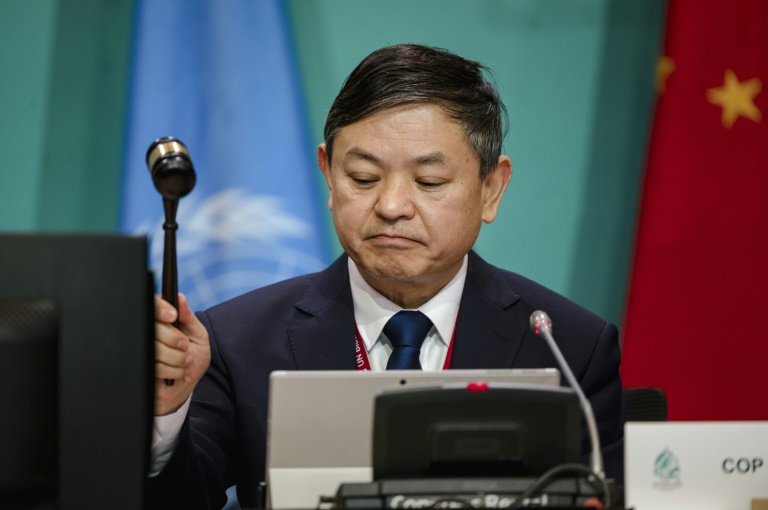
The chair of the COP15 nature summit, Chinese Environment Minister Huang Runqiu, declared the deal adopted at a plenary session in Montreal that ran into the wee hours and banged his gavel, sparking loud applause from assembled delegates.

In doing so he overruled an objection from the Democratic Republic of Congo, which had refused to back the text, demanding greater funding for developing countries as part of the accord.

After four years of fraught negotiations, more than 190 other states rallied behind the Chinese-brokered accord aimed at saving Earth’s lands, oceans and species from pollution, degradation and the climate crisis.

“We have in our hands a package which I think can guide us all to work together to hold and reverse biodiversity loss, to put biodiversity on the path of recovery for the benefit of all people in the world,” Huang told the assembly.

His Canadian counterpart and host Steven Guilbeault called it a “historic step.”

– Biggest conservation deal ever –

The deal pledges to secure 30 percent of the planet as a protected zone by 2030, stump up $30 billion in yearly conservation aid for the developing world and halt human-caused extinctions of threatened species.

Environmentalists have compared it to the landmark plan to limit global warming to 1.5C under the Paris agreement, though some warned that it did not go far enough.

Brian O’Donnell of the Campaign for Nature called it “the largest land and ocean conservation commitment in history.”

“The international community has come together for a landmark global biodiversity agreement that provides some hope that the crisis facing nature is starting to get the attention it deserves,” he said.

“Moose, sea turtles, parrots, rhinos, rare ferns and ancient trees, butterflies, rays, and dolphins are among the million species that will see a significantly improved outlook for their survival and abundance if this agreement is implemented effectively.”

The CEO of campaign group Avaaz, Bert Wander, cautioned: “It’s a significant step forward in the fight to protect life on Earth, but on its own it won’t be enough. Governments should listen to what science is saying and rapidly scale up ambition to protect half the Earth by 2030.”

– Indigenous rights –

The text pledges to safeguard the rights of Indigenous people as stewards of their lands, a key demand of campaigners.

But observers noted it pulled punches in other areas — for example, only encouraging businesses to report their biodiversity impacts rather than mandating them to do so.

The 23 targets in the accord also include saving hundreds of billions of dollars by cutting environmentally destructive farming subsidies, reducing the risk from pesticides and tackling invasive species.

– Funding fight –

At times, the talks looked at risk of collapsing as countries squabbled over money.

How much the rich countries will send to the developing world, home to most of the planet’s biodiversity, was the biggest sticking point.

Developing countries had been seeking the creation of a new, bigger fund for aid from the Global North. But the draft text instead suggested a compromise: creating a fund under the existing Global Environment Facility (GEF).

That concern was echoed by the Democratic Republic of Congo, home to the Congo Basin, a rich haven of biodiversity.

Current financial flows for nature to the developing world are estimated at around $10 billion per year.

A DRC delegate spoke up in the plenary to demand annual funding rise to $100 billion — but Huang passed the accord, angering DRC’s allies.

The United States is not a signatory to the biodiversity convention due to resistance from Republican senators. US President Joe Biden supports the deal and launched his own “30 by 30” plan domestically, while the United States pays into the GEF to assist developing countries.

Countries agree historic deal to protect nature

Countries approved a historic deal to reverse decades of environmental destruction threatening the world’s species and ecosystems at a marathon UN biodiversity summit early Monday.

The chair of the COP15 nature summit, Chinese Environment Minister Huang Runqiu, declared the deal adopted at a late-night plenary session in Montreal and struck his gavel, sparking loud applause from assembled delegates.

In doing so he overruled an objection from the Democratic Republic of Congo, which had refused to back the text, demanding greater funding for developing countries as part of the accord.

After four years of fraught negotiations, more than 190 other states rallied behind the Chinese-brokered accord aimed at saving the lands, oceans and species from pollution, degradation and the climate crisis.

The deal pledges to secure 30 percent of the planet as a protected zone by 2030 and to stump up $30 billion in yearly conservation aid for the developing world.

Environmentalists have compared the accord to the landmark plan to limit global warming to 1.5C under the Paris agreement, though some earlier warned that it did not go far enough.

Brian O’Donnell of the Campaign for Nature called it “the largest land and ocean conservation commitment in history.”

“The international community has come together for a landmark global biodiversity agreement that provides some hope that the crisis facing nature is starting to get the attention it deserves,” he said.

“Moose, sea turtles, parrots, rhinos, rare ferns and ancient trees, butterflies, rays, and dolphins are among the million species that will see a significantly improved outlook for their survival and abundance if this agreement is implemented effectively.”

Marco Lambertini, head of the Worldwide Fund for Nature, said ahead of the approval sessions: “It is the equivalent to 1.5C in climate and vital to catalyzing action toward a nature-positive world and holding everyone accountable.

“However, there still remain several loopholes, weak language, and timelines around actions that aren’t commensurate with the scale of the nature crisis we’re all witnessing, and importantly may not add up to achieve this shared global goal.”

– Aid boost –

The text calls on wealthy countries to increase financial aid to the developing world to $20 billion annually by 2025, rising to $30 billion per year by 2030, while ensuring 30 percent of land and sea areas are effectively conserved and managed by the end of this decade.

It pledges to safeguard the rights of Indigenous people as stewards of their lands, a key demand of campaigners.

But it pulled punches in other areas — for example, only encouraging businesses to report their biodiversity impacts rather than mandating them to do so.

The 23 targets in the accord also include cutting environmentally destructive farming subsidies, reducing the risk from pesticides and tackling invasive species.

– Funding dispute –

At times, the talks looked at risk of collapsing as countries squabbled over money.

The issue of how much money the rich countries will send to the developing world, home to most of the planet’s biodiversity, was the biggest sticking point.

Developing countries, spearheaded by Brazil, had been seeking the creation of a new fund to signal the Global North’s commitment to the cause. But the draft text instead suggested a compromise: creating a fund within an existing mechanism, called the Global Environment Facility (GEF).

Brazilian delegate Braulio Dias, speaking on behalf of the incoming government of Luiz Inacio Lula da Silva, had called for “better resource mobilization” — technical speak for more aid to developing countries, a concern echoed by the Democratic Republic of Congo.

Current financial flows for nature to the developing world are estimated at around $10 billion per year.

Beyond the moral implications, there is the question of self-interest: $44 trillion of economic value generation — more than half the world’s total GDP — depends on nature and its services.

The United States is not a signatory to the biodiversity convention due to resistance from Republican senators. US President Joe Biden supports the deal and launched his own “30 by 30” plan domestically, while the United States pays into the GEF to assist developing countries.

China chaired the conference but it was held in Canada because of China’s strict Covid rules.

Asian markets track US losses on recession worries

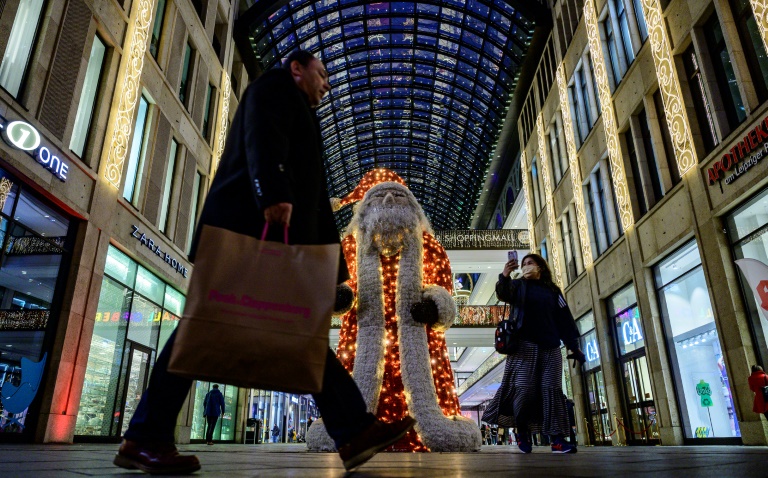
Asian markets fell on Monday as traders weighed the prospect of a global recession caused by central bank moves to fight inflation.

Equities took a turn south last week after monetary policymakers around the world signalled that while price rises appeared to be stabilising, more work would be needed to get them under control.

All three main indexes on Wall Street ended sharply lower Friday after the Federal Reserve warned that it would continue tightening monetary policy into 2023.

That was followed by similar warnings from the European Central Bank and Bank of England, while data suggested economies were feeling the pinch, dealing a blow to sentiment heading into the Christmas break.

“With no shortage of economic headwinds, investors struggle to find something cheerful about this holiday week after the two most dominant central banks cast a pall over the proceedings,” said SPI Asset Management’s Stephen Innes.

The sell-off in New York fed through to Asia, where Tokyo shed more than one percent, while Hong Kong, Shanghai, Taipei, Manila, Bangkok, Jakarta and Wellington were all in negative territory.

However, Singapore and Mumbai edged up, while London, Paris and Frankfurt opened higher.

“A Santa rally looks doubtful given elevated growth risks and hawkish central banks rhetoric,” said National Australia Bank’s Tapas Strickland.

Adding to the downbeat mood was a spike in Covid-19 cases in China following the country’s reopening after almost three years of strict containment measures.

While the move is expected to boost the world’s number two economy, there is a worry that businesses and China’s health system will be hit in the near term.

Still, Beijing flagged a number of measures aimed at kickstarting growth next year, including support for the beleaguered property sector.

Sylvia Jablonski of Defiance ETFs had an upbeat outlook.

She told Bloomberg Radio that “the market will look through the expectations of a future recession at some point and come back in because equities are starting to look cheaper and cheaper as we go along here”.

An expected pick-up in demand from the country helped drive a rally in oil prices, with both main contracts up more than one percent.

– Key figures around 0820 GMT –

Tokyo – Nikkei 225: DOWN 1.1 percent at 27,237.64 (close)

Hong Kong – Hang Seng Index: DOWN 0.5 percent at 19,352.81 (close)

Shanghai – Composite: DOWN 1.9 percent at 3,107.11 (close)

London – FTSE 100: UP 0.4 percent at 7,355.10

Euro/dollar: UP at $1.0633 from $1.0589 on Friday

Pound/dollar: UP at $1.2201 from $1.2140

Euro/pound: DOWN at 87.13 pence from 87.22 pence

Dollar/yen: DOWN at 135.83 yen from 136.68 yen

West Texas Intermediate: UP 0.4 percent at $74.58 per barrel

Brent North Sea crude: UP 0.5 percent at $79.46 per barrel

New York – Dow: DOWN 0.9 percent at 32,920.46 (close)

Asian markets track US losses on recession worries

Asian markets fell on Monday as traders weighed the prospect of a global recession caused by central bank moves to fight inflation.

Equities took a turn south last week after monetary policymakers around the world signalled that while price rises appeared to be stabilising, more work would be needed to get them under control.

All three main indexes on Wall Street ended sharply lower Friday after the Federal Reserve warned that it would continue tightening monetary policy into 2023.

That was followed by similar warnings from the European Central Bank and Bank of England, while data suggested economies were feeling the pinch, dealing a blow to sentiment heading into the Christmas break.

“With no shortage of economic headwinds, investors struggle to find something cheerful about this holiday week after the two most dominant central banks cast a pall over the proceedings,” said SPI Asset Management’s Stephen Innes.

The sell-off in New York fed through to Asia, where Tokyo shed more than one percent, while Hong Kong, Shanghai, Taipei, Manila, Bangkok, Jakarta and Wellington were all in negative territory.

However, Singapore and Mumbai edged up, while London, Paris and Frankfurt opened higher.

“A Santa rally looks doubtful given elevated growth risks and hawkish central banks rhetoric,” said National Australia Bank’s Tapas Strickland.

Adding to the downbeat mood was a spike in Covid-19 cases in China following the country’s reopening after almost three years of strict containment measures.

While the move is expected to boost the world’s number two economy, there is a worry that businesses and China’s health system will be hit in the near term.

Still, Beijing flagged a number of measures aimed at kickstarting growth next year, including support for the beleaguered property sector.

Sylvia Jablonski of Defiance ETFs had an upbeat outlook.

She told Bloomberg Radio that “the market will look through the expectations of a future recession at some point and come back in because equities are starting to look cheaper and cheaper as we go along here”.

An expected pick-up in demand from the country helped drive a rally in oil prices, with both main contracts up more than one percent.

– Key figures around 0820 GMT –

Tokyo – Nikkei 225: DOWN 1.1 percent at 27,237.64 (close)

Hong Kong – Hang Seng Index: DOWN 0.5 percent at 19,352.81 (close)

Shanghai – Composite: DOWN 1.9 percent at 3,107.11 (close)

London – FTSE 100: UP 0.4 percent at 7,355.10

Euro/dollar: UP at $1.0633 from $1.0589 on Friday

Pound/dollar: UP at $1.2201 from $1.2140

Euro/pound: DOWN at 87.13 pence from 87.22 pence

Dollar/yen: DOWN at 135.83 yen from 136.68 yen

West Texas Intermediate: UP 0.4 percent at $74.58 per barrel

Brent North Sea crude: UP 0.5 percent at $79.46 per barrel

New York – Dow: DOWN 0.9 percent at 32,920.46 (close)

Musk polls Twitter users on his future as CEO

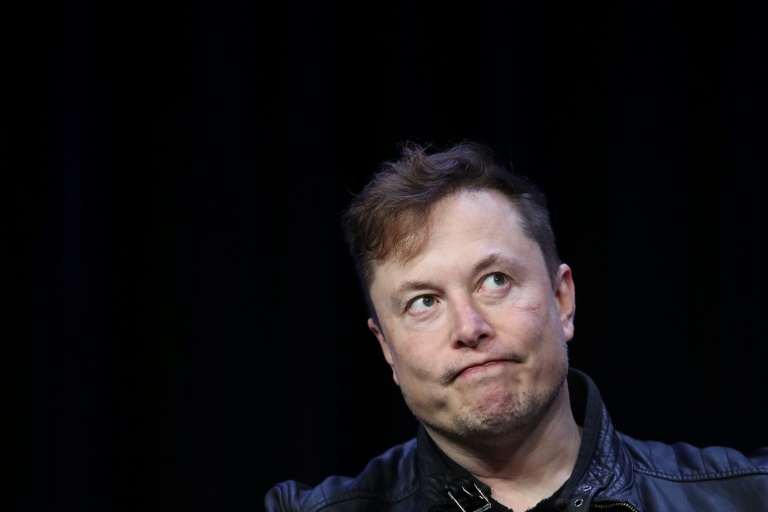
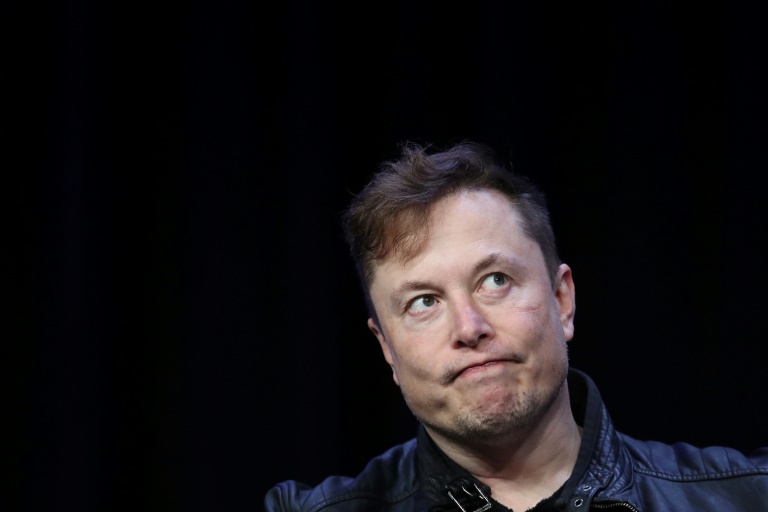
Elon Musk appeared to put his future in charge of Twitter on the line, posting a poll asking whether he should step down and vowing to abide by the results.

“Should I step down as head of Twitter?” he tweeted, asking the site’s users to click yes or no.

“I will abide by the results of this poll.”

With four hours until the end of the poll on Monday, 56.7 percent of nearly 14 million respondents had voted yes.

In Twitter exchanges with followers, Musk said he did not have a replacement lined up.

“No one wants the job who can actually keep Twitter alive. There is no successor,” he said.

Making a “fun suggestion” to Musk, MIT research scientist Lex Fridman offered to run the platform for a bit for no salary.

In a downbeat response, Musk said Twitter was “in the fast lane to bankruptcy.”

“You must like pain a lot. One catch: you have to invest your life savings in Twitter and it has been in the fast lane to bankruptcy since May. Still want the job?” Musk asked.

The unpredictable billionaire posted the poll shortly after apparently acknowledging he had made a mistake banning Twitter users from promoting their accounts on rival social media platforms.

“Going forward, there will be a vote for major policy changes. My apologies. Won’t happen again,” he tweeted.

The sudden shift in the rules was the latest in a series of controversial changes made by Musk since he took over the company in October — upheaval that has led a growing number of users to encourage followers to view their posts on other sites.

Twitter had announced that the company would “no longer allow free promotion of specific social media platforms.”

Users would thus be barred, for example, from posting “Follow me @username on Instagram,” Twitter said.

Twitter co-founder Jack Dorsey questioned the new policy with a one-word tweet: “Why?”

After some notable accounts were suspended under the new policy, including tech investor Paul Graham, Musk tweeted that instead of considering individual tweets, the policy would be limited to “suspending accounts only when that account’s *primary* purpose is promotion of competitors.”

– Series of controversies –

Musk has generated a series of controversies in his short tenure at the helm of Twitter, including layoffs, reinstatement of some far-right accounts and the suspension of several journalists.

Shortly after taking over the platform, he announced the site would charge $8 per month to verify account holders’ identities, but had to suspend the “Twitter Blue” plan after an embarrassing rash of fake accounts. It has since been relaunched.

On November 4, with Musk saying the company was losing $4 million a day, Twitter laid off half its 7,500-strong staff.

Musk also reinstated the account of former president Donald Trump and said Twitter would no longer work to combat Covid-19 disinformation.

In recent days, he suspended the accounts of several journalists — most recently, Washington Post reporter Taylor Lorenz — after complaining some had divulged details about the movements of his private jet that could endanger his family.

The suspension of the journalists — employees of CNN, The New York Times and The Washington Post were among those affected — has drawn sharp criticism, including from the European Union and the United Nations.

The US Federal Trade Commission said it was tracking developments at Twitter “with deep concern.”

The Washington Post’s executive editor Sally Buzbee said the suspension of Lorenz’s account “further undermines Elon Musk’s claim that he intends to run Twitter as a platform dedicated to free speech.”

Some of the suspended accounts have since been reactivated.

Musk polls Twitter users on his future as CEO

Elon Musk appeared to put his future in charge of Twitter on the line, posting a poll asking whether he should step down and vowing to abide by the results.

“Should I step down as head of Twitter?” he tweeted, asking the site’s users to click yes or no.

“I will abide by the results of this poll.”

With four hours until the end of the poll on Monday, 56.7 percent of nearly 14 million respondents had voted yes.

In Twitter exchanges with followers, Musk said he did not have a replacement lined up.

“No one wants the job who can actually keep Twitter alive. There is no successor,” he said.

Making a “fun suggestion” to Musk, MIT research scientist Lex Fridman offered to run the platform for a bit for no salary.

In a downbeat response, Musk said Twitter was “in the fast lane to bankruptcy.”

“You must like pain a lot. One catch: you have to invest your life savings in Twitter and it has been in the fast lane to bankruptcy since May. Still want the job?” Musk asked.

The unpredictable billionaire posted the poll shortly after apparently acknowledging he had made a mistake banning Twitter users from promoting their accounts on rival social media platforms.

“Going forward, there will be a vote for major policy changes. My apologies. Won’t happen again,” he tweeted.

The sudden shift in the rules was the latest in a series of controversial changes made by Musk since he took over the company in October — upheaval that has led a growing number of users to encourage followers to view their posts on other sites.

Twitter had announced that the company would “no longer allow free promotion of specific social media platforms.”

Users would thus be barred, for example, from posting “Follow me @username on Instagram,” Twitter said.

Twitter co-founder Jack Dorsey questioned the new policy with a one-word tweet: “Why?”

After some notable accounts were suspended under the new policy, including tech investor Paul Graham, Musk tweeted that instead of considering individual tweets, the policy would be limited to “suspending accounts only when that account’s *primary* purpose is promotion of competitors.”

– Series of controversies –

Musk has generated a series of controversies in his short tenure at the helm of Twitter, including layoffs, reinstatement of some far-right accounts and the suspension of several journalists.

Shortly after taking over the platform, he announced the site would charge $8 per month to verify account holders’ identities, but had to suspend the “Twitter Blue” plan after an embarrassing rash of fake accounts. It has since been relaunched.

On November 4, with Musk saying the company was losing $4 million a day, Twitter laid off half its 7,500-strong staff.

Musk also reinstated the account of former president Donald Trump and said Twitter would no longer work to combat Covid-19 disinformation.

In recent days, he suspended the accounts of several journalists — most recently, Washington Post reporter Taylor Lorenz — after complaining some had divulged details about the movements of his private jet that could endanger his family.

The suspension of the journalists — employees of CNN, The New York Times and The Washington Post were among those affected — has drawn sharp criticism, including from the European Union and the United Nations.

The US Federal Trade Commission said it was tracking developments at Twitter “with deep concern.”

The Washington Post’s executive editor Sally Buzbee said the suspension of Lorenz’s account “further undermines Elon Musk’s claim that he intends to run Twitter as a platform dedicated to free speech.”

Some of the suspended accounts have since been reactivated.

Drones attack Kyiv as Ukraine watches Belarus border

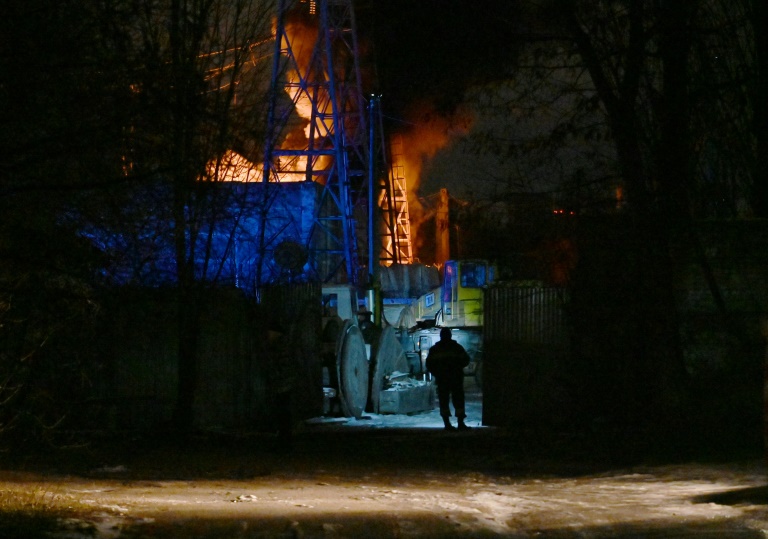
Drones attacked Kyiv early Monday, days after the Ukrainian capital withstood one of the biggest missile attacks since the start of Russia’s February invasion. 

The latest strikes came as Russian President Vladimir Putin travels to Belarus, Ukraine’s neighbour in the north, where Moscow’s troops stationed as part of a regional force are due to hold military exercises.

“During the air alert, 23 enemy UAVs were recorded in the sky above the capital. Air defence destroyed 18 drones,” the Kyiv city military administration said on social media. 

It added that the Russian forces were using barrage ammunition from “Shaheds”, Iranian-made weapons that have pummelled the capital in recent weeks.

Kyiv’s civil administration announced an initial air alert at 1:56 am (2356 GMT) which lasted for just over three hours. A second siren at 5:24 am (0324 GMT) was called off within a half hour.

Mayor Vitali Klitschko confirmed that “explosions” had occurred in the capital’s central Shevchenkivskyi and the Solomianskyi district in the west.

He said a critical infrastructure facilities were “damaged” but there were no known casualties. 

Ukrainian energy operator DTEK said emergency power cuts will be carried out in the capital following the attack.

Ukraine has been subjected to frequent and deadly aerial attacks in the 10 months since Russia’s invasion in late February.

After a series of key battlefield setbacks and lost territory this summer and autumn, Moscow pivoted strategies and stepped up its aerial campaign.

But with temperatures dropping, the missile and drone attacks have plunged cities around the country into darkness, and severed water and heat supplies to millions of Ukrainians.

– Putin to visit Belarus –

France and the European Union have said Russia’s assault on civilian infrastructure constitutes war crimes, with the bloc’s foreign policy chief calling the bombings “barbaric”.

After a major assault on multiple cities involving more than 70 missiles on Friday, the national electricity operator was forced to impose emergency rolling blackouts as it raced to repair the battered energy grid. 

Ukrainian President Volodymyr Zelensky said as of Sunday evening, nine million people have had their energy restored. 

In his nightly address, Zelensky also said the situation on Ukraine’s border with Russia and Belarus was a “constant priority”. 

“We are preparing for all possible defence scenarios,” Zelensky said, adding that the border situation was discussed at a meeting with his military commanders. 

Belarus President Alexander Lukashenko, who has been in power since 1994, is a long-time Kremlin ally and allowed Russian troops to use Belarusian territory as a launchpad for Moscow’s invasion. 

Lukashenko is hosting Putin in the capital Minsk on Monday, in what will be the Russian leader’s first visit to Belarus in over three years. 

Earlier on Monday, the Interfax news agency cited the defence ministry in Moscow as saying that Russian troops will conduct military exercises in Belarus.

In October, Belarus announced the formation of a joint regional force with Moscow with several thousand Russian servicemen arriving in the ex-Soviet country.  

It did not say when and where the drills will take place and how long they will last.

The deployment of Russian troops in Belarus had raised fears that Belarusian troops could join them in their offensive in Ukraine.

Countries poised for historic deal to protect nature

Countries closed in on a historic deal to reverse decades of environmental destruction threatening the world’s species and ecosystems at a marathon UN biodiversity summit on Sunday.

After four years of fraught negotiations, more than 190 states were called on to rally behind a Chinese-brokered accord aimed at saving the lands, oceans and species from pollution, degradation and the climate crisis.

China tabled a plan to secure 30 percent of the planet as a protected zone by 2030 and to stump up $30 billion in yearly conservation aid for the developing world.

A plenary session was scheduled late Sunday at which the countries would be called upon to approve the deal.

Environmentalists have compared the accord to the landmark plan to limit global warming to 1.5C under the Paris agreement, though some conservationists commenting on an earlier draft of the plan Sunday warned that it did not go far enough.

Brian O’Donnell with the Campaign for Nature, remarked that if the draft were enacted, it would be “the largest commitment to ocean and land conservation in history.”

Marco Lambertini, head of the Worldwide Fund for Nature, said “it is the equivalent to 1.5C in climate and vital to catalyzing action toward a nature-positive world and holding everyone accountable.

“However, there still remain several loopholes, weak language, and timelines around actions that aren’t commensurate with the scale of the nature crisis we’re all witnessing, and importantly may not add up to achieve this shared global goal,” he added.

– Aid boost –

The text calls on wealthy countries to increase financial aid to the developing world to $20 billion annually by 2025, rising to $30 billion per year by 2030, while ensuring 30 percent of land and sea areas are effectively conserved and managed by the end of this decade.

The draft published earlier Sunday includes language safeguarding the rights of Indigenous people as stewards of their lands, a key demand of campaigners.

But it pulled punches in other areas — for example, only encouraging businesses to report their biodiversity impacts rather than mandating them to do so.

The more than 20 targets in the accord also include cutting environmentally destructive farming subsidies, reducing pesticide use and tackling invasive species.

At Sunday night’s session at the COP15 summit, the draft will be put to the nearly 200 signatories to the Convention on Biological Diversity.

China chaired the conference but it was held in Canada because of China’s strict Covid rules.

– Funding dispute –

At times, the talks looked at risk of collapsing as countries squabbled over money.

The issue of how much money the rich countries will send to the developing world, home to most of the planet’s biodiversity, was the biggest sticking point.

Developing countries, spearheaded by Brazil, had been seeking the creation of a new fund to signal the Global North’s commitment to the cause. But the draft text instead suggested a compromise: a “trust fund” within an existing mechanism, called the Global Environment Facility (GEF).

Brazilian delegate Braulio Dias, speaking on behalf of the incoming government of Luiz Inacio Lula da Silva, called for “better resource mobilization” — technical speak for more aid to developing countries, a concern echoed by the Democratic Republic of Congo.

Current financial flows for nature to the developing world are estimated at around $10 billion per year.

Beyond the moral implications, there is the question of self-interest: $44 trillion of economic value generation — more than half the world’s total GDP — depends on nature and its services.

The United States is not a signatory to the biodiversity convention due to resistance from Republican senators. US President Joe Biden supports the deal and launched his own “30 by 30” plan domestically, while the United States pays into the GEF to assist developing countries.

Close Bitnami banner
Bitnami