AFP

Asian markets track US losses on recession worries

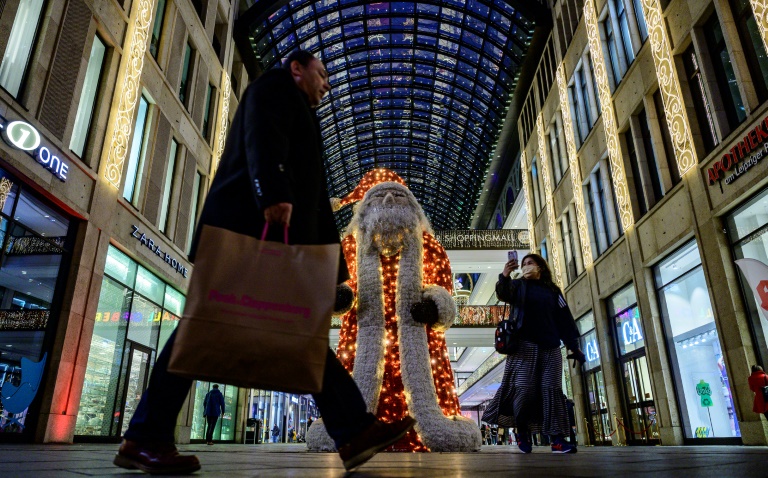
Asian markets fell on Monday as traders weighed the prospect of a global recession caused by central bank moves to fight inflation.

Equities took a turn south last week after monetary policymakers around the world signalled that while price rises appeared to be stabilising, more work would be needed to get them under control.

All three main indexes on Wall Street ended sharply lower Friday after the Federal Reserve warned that it would continue tightening monetary policy into 2023.

That was followed by similar warnings from the European Central Bank and Bank of England, while data suggested economies were feeling the pinch, dealing a blow to sentiment heading into the Christmas break.

“With no shortage of economic headwinds, investors struggle to find something cheerful about this holiday week after the two most dominant central banks cast a pall over the proceedings,” said SPI Asset Management’s Stephen Innes.

The sell-off in New York fed through to Asia, where Tokyo shed more than one percent, while Hong Kong, Shanghai, Taipei, Seoul, Manila, Jakarta and Wellington were all in negative territory.

“A Santa rally looks doubtful given elevated growth risks and hawkish central banks rhetoric,” said National Australia Bank’s Tapas Strickland.

Adding to the downbeat mood was a spike in Covid-19 cases in China following the country’s reopening after almost three years of strict containment measures.

While the move is expected to boost the world’s number two economy, there is a worry that businesses and the country’s health system will be hit in the near term.

Still, Beijing flagged a number of measures aimed at kickstarting growth next year, including support for the beleaguered property sector.

However, Sylvia Jablonski of Defiance ETFs had an upbeat outlook.

She told Bloomberg Radio that “the market will look through the expectations of a future recession at some point and come back in because equities are starting to look cheaper and cheaper as we go along here”.

An expected pick-up in demand from the country helped drive a rally in oil prices, with both main contracts up more than one percent.

– Key figures around 0230 GMT –

Tokyo – Nikkei 225: DOWN 1.1 percent at 27,221.29 (break)

Hong Kong – Hang Seng Index: DOWN 0.9 percent at 19,282.35

Shanghai – Composite: DOWN 1.1 percent at 3,134.33

Euro/dollar: UP at $1.0607 from $1.0589 on Friday

Pound/dollar: UP at $1.2186 from $1.2140

Euro/pound: DOWN at 87.02 pence from 87.22 pence

Dollar/yen: DOWN at 136.06 yen from 136.68 yen

West Texas Intermediate: UP 1.4 percent at $75.32 per barrel

Brent North Sea crude: UP 1.4 percent at $80.17 per barrel

New York – Dow: DOWN 0.9 percent at 32,920.46 (close)

London – FTSE 100: DOWN 1.3 percent at 7,332.12 (closing)

Asian markets track US losses on recession worries

Asian markets fell on Monday as traders weighed the prospect of a global recession caused by central bank moves to fight inflation.

Equities took a turn south last week after monetary policymakers around the world signalled that while price rises appeared to be stabilising, more work would be needed to get them under control.

All three main indexes on Wall Street ended sharply lower Friday after the Federal Reserve warned that it would continue tightening monetary policy into 2023.

That was followed by similar warnings from the European Central Bank and Bank of England, while data suggested economies were feeling the pinch, dealing a blow to sentiment heading into the Christmas break.

“With no shortage of economic headwinds, investors struggle to find something cheerful about this holiday week after the two most dominant central banks cast a pall over the proceedings,” said SPI Asset Management’s Stephen Innes.

The sell-off in New York fed through to Asia, where Tokyo shed more than one percent, while Hong Kong, Shanghai, Taipei, Seoul, Manila, Jakarta and Wellington were all in negative territory.

“A Santa rally looks doubtful given elevated growth risks and hawkish central banks rhetoric,” said National Australia Bank’s Tapas Strickland.

Adding to the downbeat mood was a spike in Covid-19 cases in China following the country’s reopening after almost three years of strict containment measures.

While the move is expected to boost the world’s number two economy, there is a worry that businesses and the country’s health system will be hit in the near term.

Still, Beijing flagged a number of measures aimed at kickstarting growth next year, including support for the beleaguered property sector.

However, Sylvia Jablonski of Defiance ETFs had an upbeat outlook.

She told Bloomberg Radio that “the market will look through the expectations of a future recession at some point and come back in because equities are starting to look cheaper and cheaper as we go along here”.

An expected pick-up in demand from the country helped drive a rally in oil prices, with both main contracts up more than one percent.

– Key figures around 0230 GMT –

Tokyo – Nikkei 225: DOWN 1.1 percent at 27,221.29 (break)

Hong Kong – Hang Seng Index: DOWN 0.9 percent at 19,282.35

Shanghai – Composite: DOWN 1.1 percent at 3,134.33

Euro/dollar: UP at $1.0607 from $1.0589 on Friday

Pound/dollar: UP at $1.2186 from $1.2140

Euro/pound: DOWN at 87.02 pence from 87.22 pence

Dollar/yen: DOWN at 136.06 yen from 136.68 yen

West Texas Intermediate: UP 1.4 percent at $75.32 per barrel

Brent North Sea crude: UP 1.4 percent at $80.17 per barrel

New York – Dow: DOWN 0.9 percent at 32,920.46 (close)

London – FTSE 100: DOWN 1.3 percent at 7,332.12 (closing)
US Capitol riot panel to meet, vote on Trump criminal referrals

Wrapping up an 18-month probe into last year’s deadly attack on the US Capitol, lawmakers will convene Monday to vote on whether to recommend criminal charges against former president Donald Trump and some of his closest aides.

The select House of Representatives committee has interviewed more than 1,000 witnesses and held explosive public hearings into what happened on January 6, 2021 — and who was responsible for it.

The panel, made up of seven Democrats and two Republicans, will meet at 1:00 pm (1800 GMT) to unveil the findings on their investigation into the deadly riot, in which Trump supporters — who falsely claimed that the 2020 election was stolen from him by Joe Biden — ransacked the Capitol.

At least five people died in connection with the melee and 140 police officers were injured. About 900 people have been arrested in connection with the violent rampage, which sent shockwaves across the country and around the world.

The panel will decide whether or not to recommend that the Justice Department seek charges against Trump — who is running to retake the Oval Office in the 2024 election — on at least three counts, according to reports.

Those charges would be inciting an insurrection, obstruction of an official proceeding and conspiracy to defraud the US government, NBC News reported Sunday. 

Lawmakers cannot authorize charges themselves but can make recommendations to the Justice Department, which has already appointed a special counsel to look into Trump’s role in the Capitol riot and his efforts to overturn the 2020 election.

Their vote is nonbinding and largely symbolic — the decision on charges for Trump will ultimately rest with Attorney General Merrick Garland.

But the three charges reportedly being considered could result in prison time and a ban from public office for the former president, who still wields considerable power in the Republican Party. 

“I think that the evidence is there that Donald Trump committed criminal offenses in connection with his efforts to overturn the election,” Democratic committee member Adam Schiff, a former federal prosecutor, told CNN on Sunday.

The committee may also make legislative recommendations to protect the process of certifying election results.

Its final report is due for release on Wednesday. 

– ‘Democrats, misfits and thugs’ –

Schiff did not offer details on possible criminal referrals against Trump, or even say how he himself would vote. 

But on CNN’s “State of the Union” news program, he did say: “I think the president has violated multiple criminal laws. And I think you have to be treated like any other American who breaks the law, and that is, you have to be prosecuted.”

Trump has repeatedly disparaged the House panel on his own Truth Social platform, calling the members “Democrats, misfits and thugs.”

He has defended the speech he gave before the January 6 riot and his other actions that day as “mild & loving.”

On that day, he called on his supporters to “fight like hell.”

– ‘Attempted coup’ –

Since July 2021, the House select committee has sought to shed light on the former president’s actions before and during January 6, 2021.

Across eight hearings this past summer, the panel unveiled reams of evidence on Trump’s involvement in a labyrinthine series of connected schemes to overturn the election — and the impossibility of the Republican not knowing he had lost to Biden.

Trump was “at the center” of “an attempted coup,” the head of the committee, Representative Bennie Thompson, has said.

The panel interviewed several Trump aides including his then Attorney General Bill Barr and even his daughter Ivanka. In snippets of interviews shown to the public, many of them said they never believed there had been election fraud.

The committee also revealed the pressure Trump had placed on his own vice president Mike Pence and other officials, notably in the key states of Georgia and Arizona, in a campaign of intimidation aimed at invalidating the November 2020 election.

Twitter to ban users from promoting rival social platforms

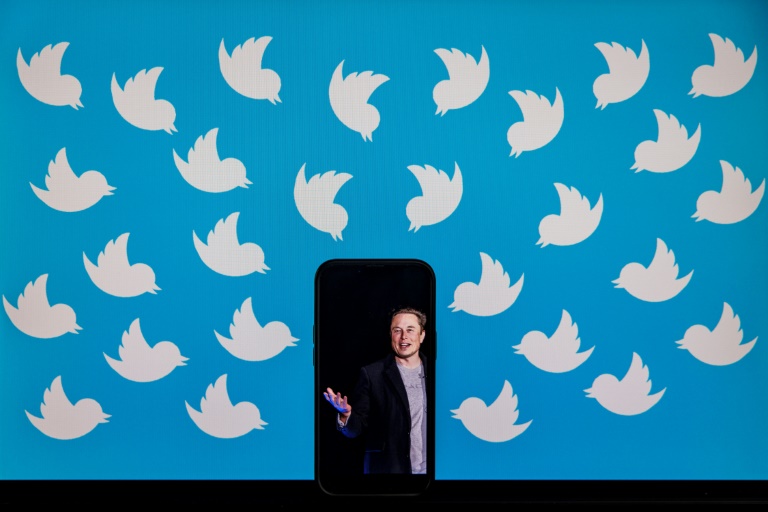
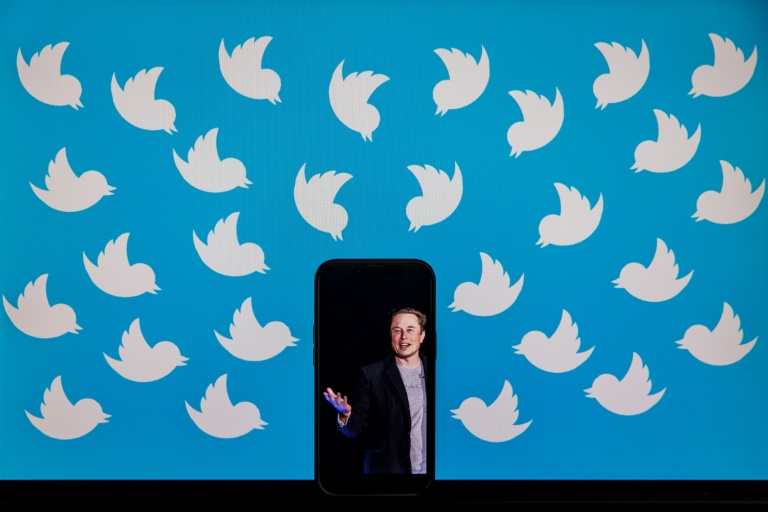
Twitter announced Sunday it would no longer allow users to promote their accounts on several rival social media platforms including Facebook and Instagram, but the site’s mercurial owner Elon Musk appeared to backtrack on the new policy just hours later.

The sudden shift in the rules was the latest in a series of controversial changes made by Musk since he took over the company in October — upheaval that has led a growing number of users to encourage followers to view their posts on other sites.

The unpredictable billionaire even put his future as Twitter’s CEO to a vote.

“Should I step down as head of Twitter?” he tweeted, asking the site’s users to click yes or no. 

“I will abide by the results of this poll,” he added, with the vote open until the early hours of Monday.

Twitter had announced that the company would “no longer allow free promotion of specific social media platforms.”

“At both the Tweet level and the account level, we will remove any free promotion of prohibited 3rd-party social media platforms, such as linking out (i.e. using URLs) to any of the below platforms on Twitter, or providing your handle without a URL,” the company explained in a statement.

Users would thus be barred, for example, from posting “Follow me @username on Instagram,” Twitter said.

Twitter co-founder Jack Dorsey questioned the new policy with a one-word tweet: “Why?”

After some notable accounts were suspended under the new policy, including tech investor Paul Graham, Musk tweeted that instead of considering individual tweets, the policy would be limited to “suspending accounts only when that account’s *primary* purpose is promotion of competitors.”

He later said: “Going forward, there will be a vote for major policy changes. My apologies. Won’t happen again.”

– Changes under Musk –

The move was the latest in a growing series of controversies generated by Musk in his short tenure at the helm of Twitter, including layoffs, reinstatement of some far-right accounts and the suspension of several journalists.

Shortly after taking over the platform, he announced the site would charge $8 per month to verify account holders’ identities, but had to suspend the “Twitter Blue” plan after an embarrassing rash of fake accounts. It has since been relaunched.

On November 4, with Musk saying the company was losing $4 million a day, Twitter laid off half its 7,500-strong staff.

Musk also reinstated the account of former president Donald Trump and said Twitter would no longer work to combat Covid-19 disinformation.

In recent days, he suspended the accounts of several journalists — most recently, Washington Post reporter Taylor Lorenz — after complaining some had divulged details about the movements of his private jet that could endanger his family.

The suspension of the journalists — employees of CNN, The New York Times and The Washington Post were among those affected — has drawn sharp criticism, including from the European Union and the United Nations.

The US Federal Trade Commission said it was tracking developments at Twitter “with deep concern.”

Washington Post executive editor Sally Buzbee said the suspension of Lorenz’s account “further undermines Elon Musk’s claim that he intends to run Twitter as a platform dedicated to free speech.”

Some of the suspended accounts have since been reactivated.

Twitter to ban users from promoting rival social platforms

Twitter announced Sunday it would no longer allow users to promote their accounts on several rival social media platforms including Facebook and Instagram, but the site’s mercurial owner Elon Musk appeared to backtrack on the new policy just hours later.

The sudden shift in the rules was the latest in a series of controversial changes made by Musk since he took over the company in October — upheaval that has led a growing number of users to encourage followers to view their posts on other sites.

The unpredictable billionaire even put his future as Twitter’s CEO to a vote.

“Should I step down as head of Twitter?” he tweeted, asking the site’s users to click yes or no. 

“I will abide by the results of this poll,” he added, with the vote open until the early hours of Monday.

Twitter had announced that the company would “no longer allow free promotion of specific social media platforms.”

“At both the Tweet level and the account level, we will remove any free promotion of prohibited 3rd-party social media platforms, such as linking out (i.e. using URLs) to any of the below platforms on Twitter, or providing your handle without a URL,” the company explained in a statement.

Users would thus be barred, for example, from posting “Follow me @username on Instagram,” Twitter said.

Twitter co-founder Jack Dorsey questioned the new policy with a one-word tweet: “Why?”

After some notable accounts were suspended under the new policy, including tech investor Paul Graham, Musk tweeted that instead of considering individual tweets, the policy would be limited to “suspending accounts only when that account’s *primary* purpose is promotion of competitors.”

He later said: “Going forward, there will be a vote for major policy changes. My apologies. Won’t happen again.”

– Changes under Musk –

The move was the latest in a growing series of controversies generated by Musk in his short tenure at the helm of Twitter, including layoffs, reinstatement of some far-right accounts and the suspension of several journalists.

Shortly after taking over the platform, he announced the site would charge $8 per month to verify account holders’ identities, but had to suspend the “Twitter Blue” plan after an embarrassing rash of fake accounts. It has since been relaunched.

On November 4, with Musk saying the company was losing $4 million a day, Twitter laid off half its 7,500-strong staff.

Musk also reinstated the account of former president Donald Trump and said Twitter would no longer work to combat Covid-19 disinformation.

In recent days, he suspended the accounts of several journalists — most recently, Washington Post reporter Taylor Lorenz — after complaining some had divulged details about the movements of his private jet that could endanger his family.

The suspension of the journalists — employees of CNN, The New York Times and The Washington Post were among those affected — has drawn sharp criticism, including from the European Union and the United Nations.

The US Federal Trade Commission said it was tracking developments at Twitter “with deep concern.”

Washington Post executive editor Sally Buzbee said the suspension of Lorenz’s account “further undermines Elon Musk’s claim that he intends to run Twitter as a platform dedicated to free speech.”

Some of the suspended accounts have since been reactivated.

Draft UN biodiversity deal calls to protect 30% of planet by 2030

Countries gathered at a UN meeting on biodiversity in Montreal were inching closer Sunday to a deal to protect 30 percent of the planet by 2030 and to stump up $30 billion in yearly aid for the developing world to save their ecosystems.

Fraught talks to seal a “peace pact for nature” came to a head as summit chair China presented a long-awaited compromise text that was cautiously welcomed by many, though some nations said more work was needed.

The plan maps out action for the next decade to roll back habitat destruction, pollution and the climate crisis that scientists say threaten a million plant and animal species with extinction.

It calls on wealthy countries to increase financial aid to the developing world to $20 billion annually by 2025, rising to $30 billion per year by 2030, while ensuring 30 percent of land and sea areas are effectively conserved and managed by the end of this decade.

The text includes language safeguarding the rights of Indigenous people as stewards of their lands, a key demand of campaigners, but was watered down in other areas — for example, only encouraging businesses to report their biodiversity impacts rather than mandating them to do so. 

The draft still needs to be agreed upon by the 196 signatories to the Convention on Biological Diversity before it is finalized.

Environmentalists say the “30 by 30” goal is the biodiversity equivalent of the Paris Agreement, which seeks to limit long-term global warming to 1.5 degrees Celsius.

The meeting, called COP15, is being held in Canada because of China’s strict Covid rules.

– Risk of pushback –

“Six months ago, we didn’t even know if we would have a COP this year, let alone a Paris moment for biodiversity, and that sincerely is where I think we’re heading,” said Canada’s environment minister Steven Guilbeault in enthusiastic remarks.

But European commissioner for environment Virginijus Sinkevicius struck a more cautious note, signaling that the funding figures being discussed could be problematic.

“If we have other countries committing to fulfill those goals, such as China, I think that can be realistic,” he said, also calling on Arab states to play their part.

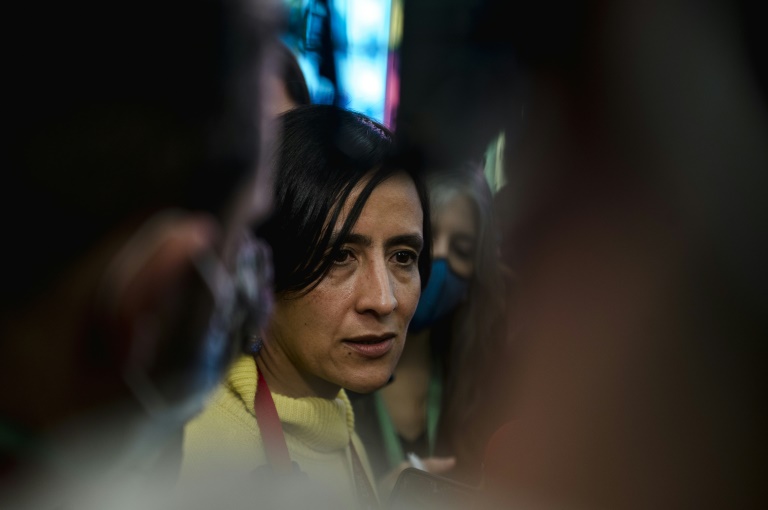
Colombia’s environment minister Susana Muhamad said she was “optimistic that the main goals have been landed,” calling the draft an “important step forward.”

Braulio Dias, however, speaking on behalf of the incoming Brazilian government of Luiz Inacio Lula da Silva, called for “better resource mobilization” — technical speak for more aid to developing countries, a concern echoed by the Democratic Republic of Congo.

Conservation groups said the text was a mixed bag.

“The draft text makes the largest commitment to ocean and land conservation in history,” said Brian O’Donnell, of the Campaign for Nature.

But Georgina Chandler, of Britain’s Royal Society for the Protection of Birds, said she was worried about a lack of numeric “milestones” for restoring ecosystems on the way to 2050.

“We’re basically not measuring progress until 28 years’ time, which is madness,” she said.

– Funding dispute –

Developing countries, spearheaded by Brazil, had been seeking the creation of a new fund to signal the Global North’s commitment to the cause. But the draft text instead suggests a compromise: a “trust fund” within the existing mechanism, called the Global Environment Facility.

Colombia’s Muhamad said her country would accept this as a stopgap measure.

The more than 20 targets also include cutting environmentally destructive farming subsidies, reducing pesticide use and tackling invasive species.

But the issue of how much money the rich countries will send to the developing world, home to most of the planet’s biodiversity, has been the biggest sticking point.

Lower income nations point out developed countries grew rich by exploiting their natural resources and therefore demand to be paid well to protect their own.

Current financial flows for nature to the developing world are estimated at around $10 billion per year.

Beyond the moral implications, there is the question of self-interest: $44 trillion of economic value generation — more than half the world’s total GDP — depends on nature and its services.

'Avatar' sequel dominates N.America movie screens

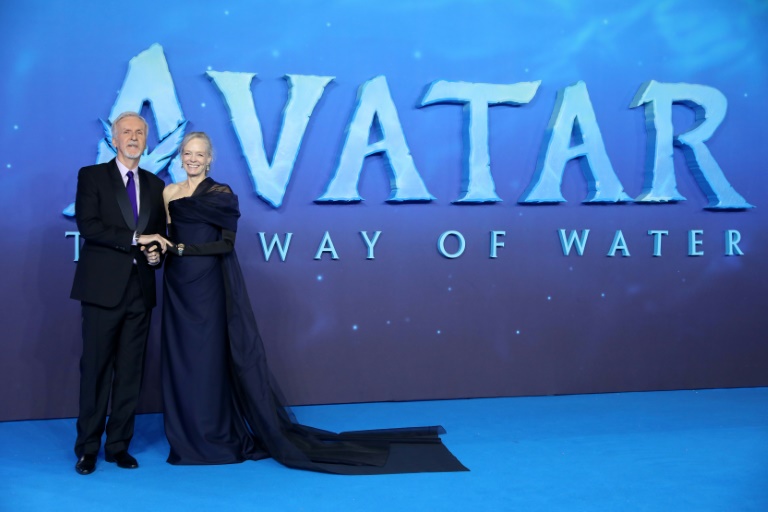
Sci-fi epic “Avatar: The Way of Water,” the long-awaited sequel to James Cameron’s 2009 blockbuster, swamped the competition at North American theaters, taking in an estimated $134 million, industry estimates showed Sunday.

That big number — roughly 10 times the total take of the next four films on the top 10 — was nevertheless below analysts’ expectations for the Friday-through-Sunday period.

Still, international ticket sales of an additional $300 million gave the “Avatar” sequel a sizable $434 million total, according to industry tracker Exhibitor Relations.

That makes it one of the biggest cinematic openings in pandemic times, and its combination of dazzling visuals and big-screen lure are expected to be a box office draw for weeks.

“Expectations aside, this is outstanding,” said David A. Gross of Franchise Entertainment research. “The movie is set up for a very strong run through the holidays.”

“The Way of Water” picks up the story of the extrasolar moon Pandora more than a decade after the events portrayed in the 2009 original. 

US Marine Jake Sully (played by Sam Worthington) has by now transitioned into one of the tall, blue Na’vi people and works with them to protect their home from an ominous threat.

Disney/Marvel powerhouse sequel “Black Panther: Wakanda Forever,” which had topped the box office for five weeks, was pushed back into a distant second by “Avatar,” with a weekend take of $5.4 million. 

Its domestic total now stands at a solid $419 million.

In third place was action comedy “Violent Night” from Universal at $5 million. David Harbour stars as Santa Claus, with a twist: he is forced to fight a team of mercenaries who have taken a wealthy family hostage in Connecticut.

Disney’s computer-animated feature “Strange World” settled into fourth place with a take of $2.2 million. 

And rounding out the top five was Searchlight’s horror-comedy “The Menu,” starring Ralph Fiennes, at $1.7 million.

The rest of the top 10 is as follows:

“Devotion” ($825,000)

“The Fabelmans” ($750,000)

“Black Adam” ($500,000)

“I Heard the Bells” ($309,000)

“Empire of Light” ($235,000)

Key things to know about legal cannabis in New York

As New York state prepares to open its first legal cannabis stores, possibly before the end of the year, AFP details what you need to know about the new market.

– Offenders and non-profits –

Adult recreational use of cannabis is already legal in about 20 American states. In terms of social equity, New York’s policy goes further than most, according to observers.

The state plans to grant the first 150 licenses to people previously convicted for possession or sale of the drug, and associations who help such offenders.

The intention is to offer reparations of sorts to African-American and Hispanic communities whose members were disproportionately arrested and charged during the decades weed was illegal.

Some 900 applications have been filed and 28 permits issued to businesses. Eight associations have also received licenses.

What could be the first official store is backed by the Housing Works non-profit, which helps ex-prisoners, the homeless and people with HIV and AIDS.

– Deliveries and restrictions –

After the first 150 licenses are granted, the market will open up to all businesses, but with rules to reduce market dominance.

Specifically, a company that grows or processes cannabis will not be allowed to distribute the drug, and vice versa. Retailers will be allowed to deliver cannabis but will be restricted to 25 employees for that purpose.

As with alcohol, sales are allowed only to people over 21 years old. An adult can possess up to 85 grams of cannabis flower or 24 grams of concentrated cannabis, which is more potent. A store cannot sell someone more than this limit. 

Cannabis is theoretically still prohibited under US federal law, meaning it is illegal to possess it when crossing state lines or entering and leaving the country.

– Potency tax –

In addition to the taxes paid by the consumer at purchase, New York plans to tax vendors based on the plant’s psychoactive content. Higher tetrahydrocannabinol, or THC, means higher taxes.

Dan Livingston, executive director of the Cannabis Association of New York, fears this will lead to high prices and competition from illegal sellers. He also worries it will encourage vendors to sell stronger cannabis without properly labeling it as such.  

“The consumer could end up getting a lot more high than they really anticipated,” he said.

New York state promises to use tax revenues generated by cannabis sales for addiction prevention, education and grants to associations who help users.

In a 2018 report, it estimated the illegal market was worth $1.7 billion to $3.5 billion annually, equating to between $248 million and $677 million in potential annual taxes. 

– Legal challenge –

The granting of licenses has been slowed because of a legal challenge by a company whose application was rejected, mainly on the grounds that its majority owner was convicted of a cannabis-related offense in the state of Michigan.

A federal judge hearing the case has ordered that no licenses be issued in the five jurisdictions involved in the dispute, including Brooklyn, New York City’s most populous borough.

Draft UN nature deal calls to protect 30% of planet by 2030

A UN nature deal proposed Sunday calls to protect at least 30 percent of the planet by 2030 and asks rich countries to stump up $30 billion in yearly aid for developing nations to save their ecosystems.

Fraught talks seeking an agreement to save the species and ecosystems on which life depends came to a head as summit chair China presented a long-awaited compromise text.

Mapping out action for the next decade to reverse destruction that scientists say threatens a million species, the proposal called on wealthy countries to increase financial aid to the developing world to $20 billion annually by 2025, rising to $30 billion per year by 2030.

It also called on countries to “ensure and enable that by 2030 at least 30 percent of terrestrial, inland water, and coastal and marine areas” are effectively conserved and managed.

The text includes language safeguarding the rights of Indigenous people as stewards of their lands, a key demand of campaigners.

The compromise text was largely welcomed by conservationists, but still needs to be agreed upon by the 196 signatories to the Convention on Biological Diversity before it is finalized.

– Risk of pushback –

Opening the talks in Montreal, UN chief Antonio Guterres warned humanity had become a “weapon of mass extinction” and called on parties to forge a “peace pact with nature.”

The COP15 meeting is being held in Canada because of China’s strict Covid rules.

Delegates began examining the draft agreement just as the football World Cup between France and Argentina kicked off in Qatar.

A plenary session was scheduled for Sunday evening when countries will have the opportunity to approve the deal. Negotiations over the past 10 days have been slow however and observers warned the talks, scheduled to end on Monday, could run over.

“The Chinese presidency’s draft final paper is courageous,” said Germany’s environment minister Steffi Lemke. “By protecting nature, we protect ourselves.”

“By including a target to protect and conserve at least 30 percent of the world’s lands and oceans, the draft text makes the largest commitment to ocean and land conservation in history,” said Brian O’Donnell, of the Campaign for Nature.

But there was also concern that some areas of the text had been watered down.

Georgina Chandler, of Britain’s Royal Society for the Protection of Birds, said she was worried about a lack of numeric “milestones” for restoring ecosystems by 2050.

“We’re basically not measuring progress until 28 years’ time, which is madness,” she said.

– Funding dispute –

Another major issue of contention is the funding mechanism. 

Developing countries, spearheaded by Brazil, were seeking the creation of a new fund to signal the Global North’s commitment to the cause. But the draft text instead suggests a compromise: a “trust fund” within the existing Global Environment Facility.

Observers had warned the COP15 conference risked collapse as countries squabbled over how much the rich world should pay to fund the efforts, with developing nations walking out of talks at one point.

But Chinese environment minister Huang Runqiu said Saturday he was “greatly confident” of a consensus and his Canadian counterpart Steven Guilbeault said “tremendous progress” had been made.

The more than 20 targets also include reducing environmentally destructive farming subsidies, asking businesses to assess and report on their biodiversity impacts, and tackling the scourge of invasive species.

But the issue of how much money the rich countries will send to the developing world, home to most of the planet’s biodiversity, has been the biggest sticking point.

Lower income nations point out developed countries grew rich by exploiting their natural resources and therefore they should be paid well to protect their own.

Current financial flows to the developing world are estimated at around $10 billion per year.

Several countries have recently made new commitments. The European Union has committed seven billion euros ($7.4 billion) for the period until 2027, double its prior pledge.

Beloved 'Hollywood Cat' mountain lion euthanized in Los Angeles

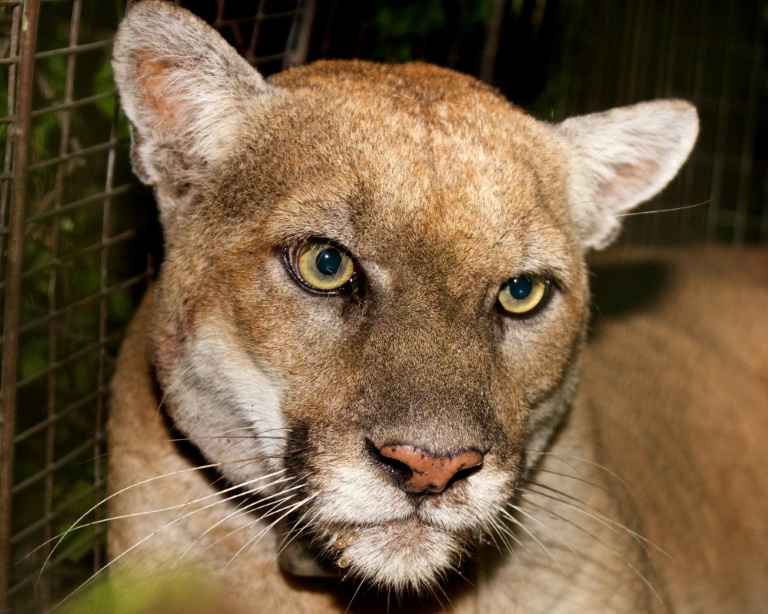
Los Angeles residents and animal lovers Sunday were mourning the death of the sprawling US city’s most famous feline, a wild mountain lion whose often erratic encounters with people prompted reflections about humanity’s connection with nature.

The beloved big cat, often sighted around the city’s Griffith Park, was euthanized Saturday, wildlife officials said.

For years, he was known to prowl around the hillside “Hollywood” sign visible around much of Los Angeles, a fitting setting for a celebrity.

It earned the nickname Hollywood Cat, but the mountain lion — estimated to be around 11 years old and described by at least one expert as “the Brad Pitt of the cougar world” — was officially named P-22.

State and federal wildlife officers decided earlier this month to capture it due to its volatile behavior, perhaps associated with being struck by a vehicle.

Veterinarians found “significant trauma” to its head, right eye and internal organs, California’s Department of Fish and Wildlife said in a statement.

The experts also found underlying health issues, including “irreversible kidney disease, chronic weight loss, extensive parasitic skin infection over his entire body and localized arthritis.”

“The most difficult, but compassionate choice was to respectfully minimize his suffering and stress by humanely ending his journey,” the statement said.

“Mountain lion P-22 has had an extraordinary life and captured the hearts of the people of Los Angeles and beyond.”

Mountain lions typically have a lifespan of up to 10 years in the wild, or up to 21 years in captivity, according to the National Wildlife Federation. 

Euthanizing the cougar was a punch to the gut for game experts who had grown to love the animal.

“This really hurts,” said Chuck Bonham, director of the Department of Fish and Wildlife, when he announced P-22’s death, according to USA Today.

“It’s been an incredibly difficult several days.”

– ‘Our favorite celebrity’ –

Congressman Adam Schiff, who represents part of Los Angeles County, said he was “heartbroken” at P-22’s passing.

“He was our favorite celebrity neighbor, occasional troublemaker, and beloved L.A. mascot,” Schiff tweeted.

“But most of all he was a magnificent, wild creature, who reminded us that we are part of a natural world much bigger than ourselves.”

California Governor Gavin Newsom praised P-22’s “incredible journey” in a statement.

“P-22’s survival on an island of wilderness in the heart of Los Angeles captivated people around the world,” Newsom said.

Griffith Park, where P-22 lived for perhaps a decade, is hemmed in by busy 10-lane freeways and urban sprawl. It is a nine-square-mile (23-square-kilometer) isolated patch of nature.

Experts marveled at how the wildcat got across either of two major Los Angeles freeways — the 405 and 101 — to get to Griffith Park as early as 2012.

Officials said they were not looking for the driver who struck the animal.

“This situation is not the fault of P-22, nor of a driver who may have hit him,” the California Department of Fish and Wildlife said.

“Rather, it is an eventuality that arises from habitat loss and fragmentation, and it underscores the need for thoughtful construction of wildlife crossings and well-planned spaces that provide wild animals room to roam.”

In a profile of P-22 done long before its death, the National Park Service lamented that Griffith Park is too small for a second cougar, and “it’s unlikely he will ever find love with a female lion.”

The cat’s renown was due to frequent sightings, video doorbell cameras and physical encounters.

Early on his mystique grew, particularly after wildlife photographer Steve Winter captured stunning images of the mountain lion prowling the brown hills above LA.

Beth Pratt, California director of the National Wildlife Federation, said she was one of the experts who comforted the cat before he was put down, and that knowing him was a “gift.”

“He changed us. He changed the way we look at LA,” Pratt wrote.

“And his influencer status extended around the world, as he inspired millions of people to see wildlife as their neighbors,” she added. “He made us more human, made us connect more to that wild place in ourselves.”

Close Bitnami banner
Bitnami