AFP

Hope stirs for deal to save nature at UN talks

Top officials at high-stakes UN biodiversity negotiations said Saturday they were confident of securing a major deal to save the natural world from destruction.

Observers had warned the COP15 talks aimed at sealing a “peace pact for nature” risked collapse due to disagreement over how much the rich world should pay to protect ecosystems in developing countries.

The talks that started on December 7 had appeared to be on the verge of breakdown when developing countries walked out days ago over the question of funding. But the mood among leaders turned upbeat on Saturday.

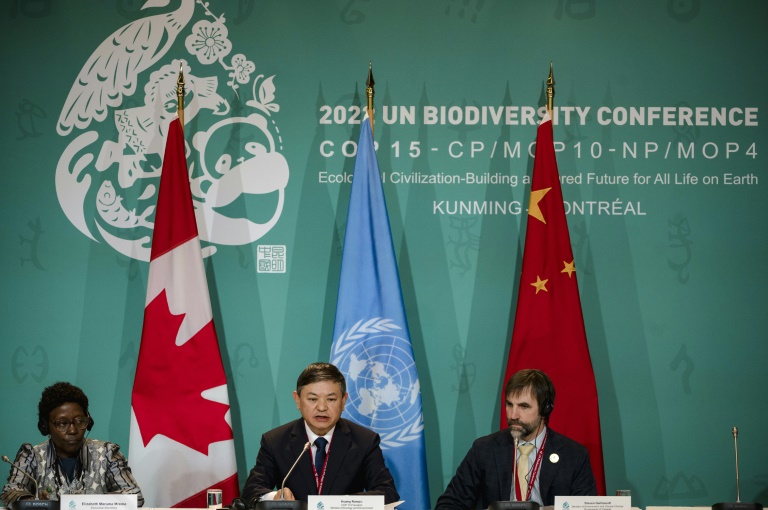
“I am greatly confident that we can … keep our ambitions as well as achieve consensus,” China’s Environment Minister Huang Runqiu told reporters in Montreal, where the COP15 meeting is being held.

His Canadian counterpart Steven Guilbeault echoed his statement, saying: “We’ve made tremendous progress… I don’t know about how many of us thought we could get there.”

Huang said he would publish a draft agreement at 8:00 am EST (1300 GMT) on Sunday and hear lead delegates’ feedback later in the day.

The negotiations officially run until December 19, but could go longer if needed.

French President Emmanuel Macron tweeted: “With just a few days to go before the end of the COP 15 Biodiversity Conference in Montreal, my message to our partners is: now is not the time for small decisions, let’s go big!

“Let’s work together to achieve the most ambitious agreement possible. The world is depending on it.”

– Million species threatened –

Delegates are working to roll back the destruction and pollution that threaten an estimated one million plant and animal species with extinction, according to scientists that report to the UN.

The text is meant to be a roadmap for nations through 2030. The last 10-year plan, signed in Aichi, Japan in 2010, did not achieve any of its objectives — a failure blamed widely on its lack of monitoring mechanisms.

Major goals in the draft under discussion include a cornerstone pledge to protect 30 percent of the world’s land and oceans by 2030.

The more than 20 targets also include reducing environmentally destructive farming subsidies, requiring businesses to assess and report on their biodiversity impacts, and tackling the scourge of invasive species.

Representatives of Indigenous communities, who safeguard 80 percent of the world’s remaining biodiversity, want their rights to practice stewardship of their lands to be enshrined in the final agreement.

“Indigenous Rights are not negotiable,” said Orpha Novita Yoshua, an Indigenous Namblong woman from West Papua, in a statement released by Greenpeace.

“We are the ones doing the work. We protect biodiversity,” said Valentin Engobo, leader of the Lokolama community in the Congo Basin. “You won’t replace us. We won’t let you.”

– Money matters –

The issue of how much money the rich countries will send to the developing world, home to most of the world’s biodiversity, has been the biggest sticking point.

“If the framework is not accompanied by adequate resources, then we will be destined to repeat the same failures that we saw after Aichi,” warned Brian O’Donnell, director of the NGO Campaign for Nature.

“If it’s weak we would certainly oppose it and encourage parties to oppose it and not sign up to a weak deal,” he added. “We’re still remaining hopeful that we can get there.”

Several countries have announced new commitments. The European Union has committed seven billion euros ($7.4 billion) for the period until 2027, double its prior pledge.

But these commitments are still well short of what observers say is needed, and what developing countries are seeking.

Brazil has led that charge, proposing flows of $100 billion annually, compared to the roughly $10 billion at present.

Whether international aid is delivered via a new fund, an existing mechanism called the Global Environment Facility (GEF), or a halfway solution involving a new “trust fund” within the GEF is still up for debate.

Once a free icon, indy game Dwarf Fortress finds new life on Steam

Dwarf Fortress, a quirky independent video game that has been free since its 2006 release, is now among the online marketplace Steam’s best-sellers — to the surprise of its US creators.

Set in a medieval fantasy world, Dwarf Fortress is what’s known in the gaming world as a “construction and management simulation,” in which players supervise a group of dwarves in building a mighty castle.

The classic, bare-bones version of the game remains available for download, but since December 6, players can buy an upgraded version with a soundtrack and better visual graphics.

Releasing the paid version on Steam has opened the door for more players to access Dwarf Fortress, and it’s now the fourth best-seller of the week on the platform.

But the success has been unanticipated — even though the creators, American brothers Tarn and Zach Adams, had an inkling of latent interest.

“We have internal metrics, so you can kinda say like, ‘oh wow, this is actually gonna be pretty cool probably.’ But it’s not a sure thing, right? And so we’re still surprised. It’s awesome,” Tarn Adams said.

Illness in the family created financial necessity — and creation of the paid version.  

“I got sick,” said Zach Adams, a co-creator along with his brother Tarn.

“I had medical insurance, so I was able to pay for my healthcare bills, but Tarn didn’t,” he added.

After Tarn became hospitalized, and the typically-high US medical bills came pouring in, Zach said the duo decided it was time to monetize the pared-down text-based version with an upgrade.

“Seeing so many more people able to play it is awesome,” said Tarn.

The paid version of the game, available for $29.99, has received an enthusiastic reception from the public, with 96 percent positive reviews on Steam.

“I waited 15 years to give Tarn my 30 dollars,” said one reviewer. “Two guys with a dream are putting triple A companies with thousands of employees to shame,” said another.

The Adams brothers developed Dwarf Fortress out of their small studio, named Bay 12 Games, which is located outside Seattle, in the northwestern US state of Washington.

The uniqueness of Dwarf Fortress lies as much in its complexity as in the richness and depth of its worlds, randomly generated and offering an almost infinite number of possible outcomes.

– ‘Losing Is Fun’ –

Another key aspect is that player’s choices only have a marginal influence on how events unfold, while their fortresses are almost inexorably doomed to be destroyed, whether it’s by cyclops, dragons or giant spiders.

“It feels a little bit like you open a history book and you’re sort of in the middle of it,” says New Zealand blogger Peter Tyson, author of a 2012 book about the game.

“Your interactions are important, but it’s not like you’re the most important person in the world.”

The objective is not so much the final victory as the myriad of events that can lead to failure. The slogan “Losing is fun” has become popular among players over the years.

“When the goblins invade,” Tarn explains as an example, “you pull one of these levers down here and it floods it… The goblins all drown.

“Pull a different lever — that opens these hatches and drops them down into the goblins disposal area.

“It’s completely up to the players’ imagination how they want to confront the various threats and problems that arise.”

Though not as well known to the general public, Dwarf Fortress has had a huge impact in the video game world, inspiring global construction and management simulation hits like Minecraft.

The game was also chosen in 2012 to be included in the permanent collection of New York’s Museum of Modern Art (MoMa) alongside classics such as “Pac-Man” and “Tetris.”

Though the upgraded, paid version of Dwarf Fortress may be available on the virtual storefront, the Adams brothers say they’re keeping at it. 

“The game is released but it’s not done,” said Zach.

“We’re not going to just switch gears to something else. This is an ongoing project.”

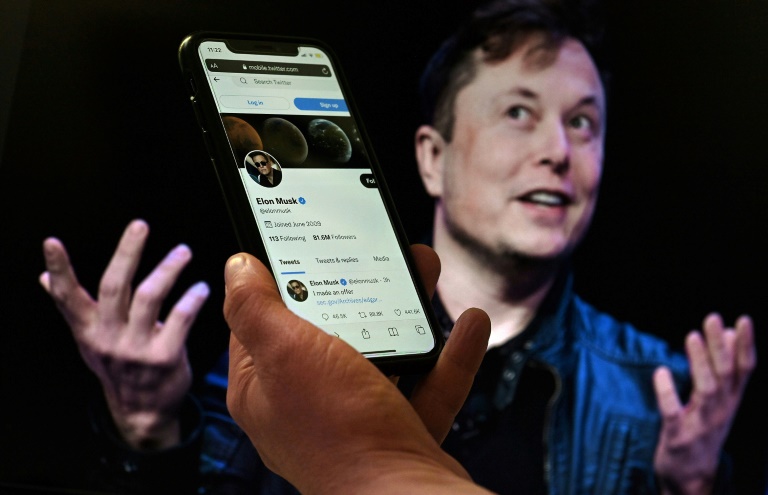
Timeline: Twitter mayhem since Musk takeover

Since buying Twitter, Elon Musk has made radical changes that have sparked fears for the future of the platform, from firing half the staff to restoring ex-president Donald Trump’s account and suspending those of several journalists.

AFP looks back at a rollercoaster two months at the Silicon Valley giant.

– Enter Elon –

Musk, the world’s second-richest richest man and CEO of Tesla and SpaceX, buys Twitter in late October for $44 billion after months of on-off negotiations.

“Let the good times roll,” he tweets after the deal is sealed on October 28. He becomes the sole director of the company after dissolving its corporate board.

– ‘Content moderation council’ –

In one of his first moves, the self-declared free speech absolutist announces he will form a “content moderation council”, in a nod to concerns that Twitter could become a free-for-all platform for disinformation and hate speech.

– Monthly charge –

On November 1, Musk announces the site will charge $8 per month to verify the accounts of celebrities and companies — a service that used to be free. But the November 6 launch of the Twitter Blue subscription plan goes awry. Musk is forced to suspend the move after an embarrassing rash of fake accounts alarm advertisers.

– Brands step back –

Top global companies, including General Mills and Volkswagen, suspend their advertising on Twitter on November 3 as they monitor the new direction the company will take.

– Massive layoffs –

On November 4, half of Twitter’s 7,500-strong staff are made redundant, sending shockwaves through Silicon Valley.

Musk tweets that “unfortunately there is no choice when the company is losing over $4M/day”.

– Regulator’s ‘concern’-

The chaos draws a rare warning on November 10 from the Federal Trade Commission (FTC), the US authority that oversees consumer safety.

“We are tracking recent developments at Twitter with deep concern,” says an FTC spokesperson.

– Ultimatum to staff –

Musk delivers an ultimatum to Twitter staff on November 16, asking them to choose between being “extremely hardcore” and working long hours, or losing their jobs. He gives them a day to decide.

Large numbers of staff quit.

– Trump reinstated –

Musk reinstates the account of banned former president Donald Trump after conducting a poll of users, a narrow majority of whom support the move. 

A few days later he announces an “amnesty” for all banned Twitter accounts.

– ‘War’ with Apple – 

On November 29, Musk tweets that he is going “to war’ with Apple, claiming it has threatened to oust Twitter from its App Store. After meeting with Apple boss Tim Cook he later says the clash was a misunderstanding.

– Covid controversy  –

In late November, Twitter says it is no longer enforcing a policy of combatting Covid-19 disinformation. Musk had fiercely opposed Covid restrictions. Days later he is rapped by the White House for calling for President Joe Biden’s chief Covid adviser Anthony Fauci to be prosecuted.

– Kanye suspended –

Musk revises his promises of unfettered free speech after rapper Kanye West tweets a picture that appears to show a swastika interlaced with a Star of David. His account is suspended for “incitement to violence”.

– Twitter Blue take two –

In mid-December Musk relaunches Twitter Blue. This time, Twitter conducts a review of the account before giving it the coveted blue check mark.

– Journalists suspended, then reinstated –

On December 15, Twitter suspends the accounts of more than a half-dozen journalists, including reporters from CNN, The New York Times, and The Washington Post.

Musk accuses them of endangering his family through their reporting on Twitter’s shutdown of an account that tracked flights of his private jet. 

Media outlets criticise the move and say they are re-evaluating their use of Twitter. The EU threatens to sanction the company.

Twitter users in a poll conducted by Musk back restoring the accounts. 

On December 17 some of the accounts are reactivated, but some remain suspended. A CNN reporter says Twitter conditioned the restoration of his ability to tweet on his removal of a post about tracking Musk’s location. 

The UN’s human rights chief Volker Turk welcomes the reinstatement of the journalists but tweets that “serious concern” remains.

Rio ex-governor to be freed after 6 years in jail over corruption

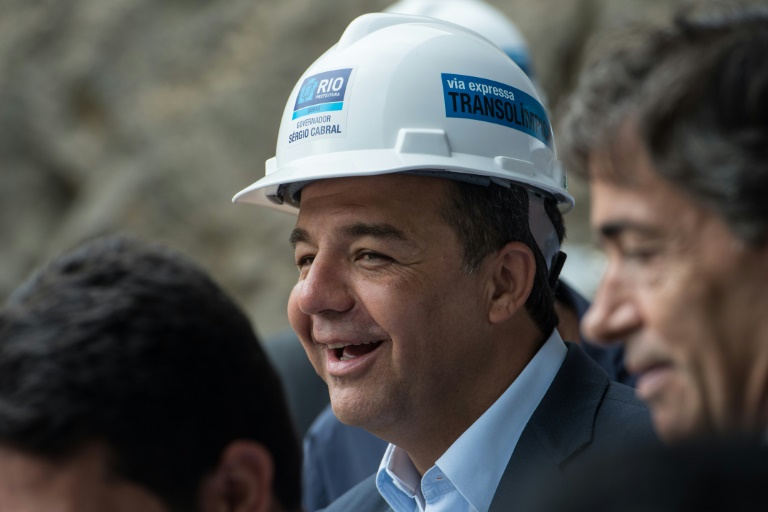
The former Rio de Janeiro governor accused of receiving huge bribes over construction work for the 2014 World Cup and the 2016 Olympics will soon be free after six years in prison, following a ruling by Brazil’s highest court.

The magistrates of the Federal Supreme Court (STF) voted three to two late Friday to place Sergio Cabral under house arrest pending further appeals.

His lawyers said the 59-year-old former journalist would probably be released from prison on Monday. 

Cabral was sentenced to more than 425 years in prison in 23 corruption cases, but no higher court has yet heard his appeals.

Prosecutors say he purchased jewelry and other luxury items with embezzled money — even paying for a horse-riding lesson for his son.

STF Judge Gilmar Mendes, whose vote proved decisive Friday, said Cabral could not be held “indefinitely” under a preventive measure taken to avoid any possible destruction of evidence should he be allowed to await trial in freedom.

But Mendes added that his decision did not in any way amount to Cabral’s acquittal.

Cabral served as Rio governor from 2007 to 2014, years in which Brazil was picked to host both the 2014 World Cup and the 2016 Summer Olympic Games.

Revelations of large-scale corruption involving Cabral shocked public opinion in Brazil.

The diversion of millions of dollars of funds directly affected the public finances of Rio, leaving it near bankruptcy just months after the Olympics.

Musk restores some suspended Twitter accounts of journalists

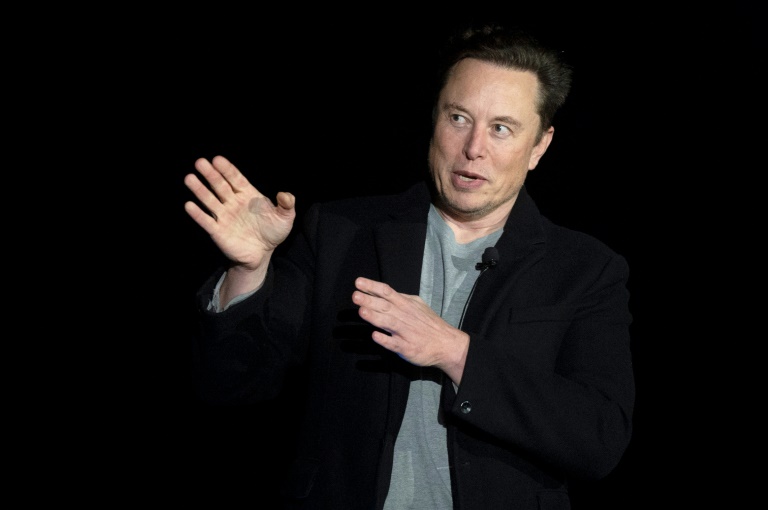
The Twitter accounts of several journalists suspended after Elon Musk accused them of endangering his family were reinstated Saturday, but some said the billionaire owner offered full use of the platform only if they deleted posts about tracking his location.

Musk had drawn anger and warnings from the European Union and United Nations after suspending the accounts of more than a half-dozen prominent journalists from The New York Times, CNN, The Washington Post and other outlets.

“The people have spoken. Accounts who doxxed my location will have their suspension lifted now,” the Twitter owner tweeted late Friday.

Doxxing generally means publishing private information on the Internet to harass or embarrass someone.

Musk carried out a Twitter poll asking whether he should restore the suspended accounts now or in a week’s time. Nearly 59 percent of the 3.69 million who took part said he should restore the accounts now.

Some of the suspended accounts were reactivated, with former Vox journalist Aaron Rupar, Mashable reporter Matt Binder and freelancer Tony Webster tweeting again Saturday.

Speaking later on MSNBC, Rupar warned that Twitter’s crackdown, even if temporary, would have a “chilling effect on coverage of Elon Musk” and make reporters think twice about running afoul of the company’s new owner.

The accounts of some other journalists remained suspended early Saturday, including those of Business Insider’s Linette Lopez and former MSNBC anchor Keith Olbermann.

CNN’s Donie O’Sullivan, who has reported at length on Musk, said that while his suspended account became viewable Saturday, Twitter has imposed a condition for him to be able to tweet again.

He said Twitter demanded he remove a post that it says violates its rules against posting private information.

“Right now, unless I agree to remove that tweet at the behest of the billionaire, I won’t be allowed to tweet on the platform,” O’Sullivan told CNN.

The latest controversy began Wednesday when Musk suspended @elonjet, an account that tracked flights of his private plane.

Musk said the move was necessary after a car in Los Angeles carrying one of his children was followed by “a crazy stalker”; he seemed to blame the jet tracking for the incident.

Some of the suspended journalists had reported on the affair, including tweets linking to the suspended @elonjet account, which Musk said amounted to offering “assassination coordinates” against him and his family.

In a chat hosted live on Twitter, Musk provided no evidence for his claim but told suspended reporters that on Twitter “everyone’s going to be treated the same… they’re not special because you’re a journalist.”

Pressed further on his allegations, Musk ended the conversation. Twitter Spaces, the feature where the chat took place, was then suspended. The live audio service was back up Friday, with Musk saying the platform had been fixing a bug.

As of Saturday, the Musk plane-tracking account remained suspended.

Musk’s deactivations have drawn sharp criticism from media organizations, the EU and the United Nations.

UN rights chief Volker Turk welcomed Musk’s decision to reinstate the accounts, “but serious concerns remain,” he posted on Twitter.

He also urged Musk to “commit to making decisions based on publicly-available policies that respect rights, including free speech. Nothing less.”

Earlier, the spokesman for UN chief Antonio Guterres called the suspensions a “dangerous precedent at a time when journalists all over the world are facing censorship, physical threats and even worse.”

The EU had warned that Twitter could face fines through European laws.

“News about arbitrary suspension of journalists on Twitter is worrying,” EU commissioner Vera Jourova tweeted after the move.

– Controversies –

Twitter has lurched from one controversy to the next since Musk took control of the company in October.

The billionaire’s talk of unfettered speech, coupled with the instability surrounding the company, has scared off major advertisers and caught the attention of regulators.

Musk has reinstated the account of former US president Donald Trump and lashed out against the outgoing key US advisor on Covid-19, Anthony Fauci, a frequent target of vitriol in right-wing media.

CNN has reported that Twitter’s former head of trust and safety fled his home after baseless attacks on Twitter content moderation, endorsed by Musk.

Meanwhile, a purge initiated by Musk at Twitter left more than half of its 7,500 employees out of work.

Musk restores some suspended Twitter accounts of journalists

The Twitter accounts of several journalists suspended after Elon Musk accused them of endangering his family were reinstated Saturday, but some said the billionaire owner offered full use of the platform only if they deleted posts about tracking his location.

Musk had drawn anger and warnings from the European Union and United Nations after suspending the accounts of more than a half-dozen prominent journalists from The New York Times, CNN, The Washington Post and other outlets.

“The people have spoken. Accounts who doxxed my location will have their suspension lifted now,” the Twitter owner tweeted late Friday.

Doxxing generally means publishing private information on the Internet to harass or embarrass someone.

Musk carried out a Twitter poll asking whether he should restore the suspended accounts now or in a week’s time. Nearly 59 percent of the 3.69 million who took part said he should restore the accounts now.

Some of the suspended accounts were reactivated, with former Vox journalist Aaron Rupar, Mashable reporter Matt Binder and freelancer Tony Webster tweeting again Saturday.

Speaking later on MSNBC, Rupar warned that Twitter’s crackdown, even if temporary, would have a “chilling effect on coverage of Elon Musk” and make reporters think twice about running afoul of the company’s new owner.

The accounts of some other journalists remained suspended early Saturday, including those of Business Insider’s Linette Lopez and former MSNBC anchor Keith Olbermann.

CNN’s Donie O’Sullivan, who has reported at length on Musk, said that while his suspended account became viewable Saturday, Twitter has imposed a condition for him to be able to tweet again.

He said Twitter demanded he remove a post that it says violates its rules against posting private information.

“Right now, unless I agree to remove that tweet at the behest of the billionaire, I won’t be allowed to tweet on the platform,” O’Sullivan told CNN.

The latest controversy began Wednesday when Musk suspended @elonjet, an account that tracked flights of his private plane.

Musk said the move was necessary after a car in Los Angeles carrying one of his children was followed by “a crazy stalker”; he seemed to blame the jet tracking for the incident.

Some of the suspended journalists had reported on the affair, including tweets linking to the suspended @elonjet account, which Musk said amounted to offering “assassination coordinates” against him and his family.

In a chat hosted live on Twitter, Musk provided no evidence for his claim but told suspended reporters that on Twitter “everyone’s going to be treated the same… they’re not special because you’re a journalist.”

Pressed further on his allegations, Musk ended the conversation. Twitter Spaces, the feature where the chat took place, was then suspended. The live audio service was back up Friday, with Musk saying the platform had been fixing a bug.

As of Saturday, the Musk plane-tracking account remained suspended.

Musk’s deactivations have drawn sharp criticism from media organizations, the EU and the United Nations.

UN rights chief Volker Turk welcomed Musk’s decision to reinstate the accounts, “but serious concerns remain,” he posted on Twitter.

He also urged Musk to “commit to making decisions based on publicly-available policies that respect rights, including free speech. Nothing less.”

Earlier, the spokesman for UN chief Antonio Guterres called the suspensions a “dangerous precedent at a time when journalists all over the world are facing censorship, physical threats and even worse.”

The EU had warned that Twitter could face fines through European laws.

“News about arbitrary suspension of journalists on Twitter is worrying,” EU commissioner Vera Jourova tweeted after the move.

– Controversies –

Twitter has lurched from one controversy to the next since Musk took control of the company in October.

The billionaire’s talk of unfettered speech, coupled with the instability surrounding the company, has scared off major advertisers and caught the attention of regulators.

Musk has reinstated the account of former US president Donald Trump and lashed out against the outgoing key US advisor on Covid-19, Anthony Fauci, a frequent target of vitriol in right-wing media.

CNN has reported that Twitter’s former head of trust and safety fled his home after baseless attacks on Twitter content moderation, endorsed by Musk.

Meanwhile, a purge initiated by Musk at Twitter left more than half of its 7,500 employees out of work.

Clock ticking down on vital UN nature talks

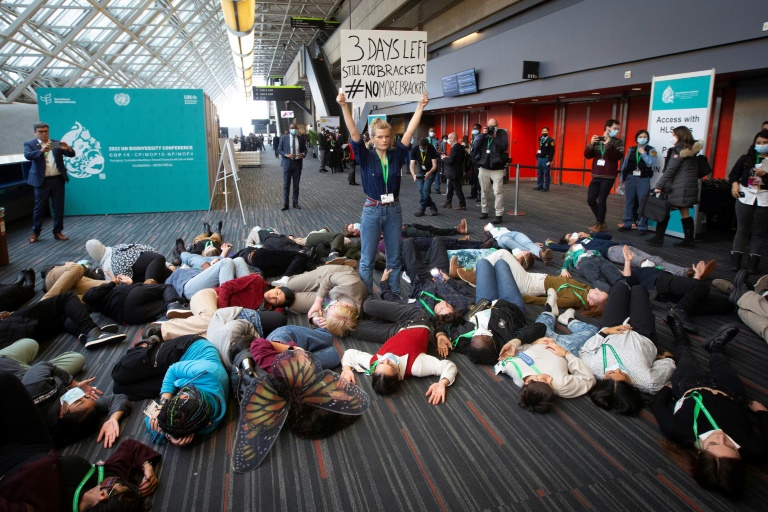
Crucial UN talks aimed at sealing a “peace pact for nature” were entering their final stages Saturday, officially the last day the world’s environment ministers are gathered in Montreal for the COP15 meeting.

Whether they deliver a deal for biodiversity that is as ambitious as the Paris accord for climate, endorse a watered-down text, or fail to agree on anything at all remains to be seen, though there are strong signs the negotiations set to last until December 19 will run beyond the allotted time.

With the clock ticking down, over 3,000 scientists wrote an open letter to policymakers, calling for immediate action to stop the destruction of critical ecosystems.

“We owe this to ourselves and to future generations — we can’t wait any longer,” they said.

At stake is the future of the planet and whether humanity can roll back habitat destruction, pollution and the climate crisis, which are threatening an estimated million plant and animal species with extinction.

The text is meant to be a roadmap for nations to follow that carries them through until 2030, after the last 10-year plan signed in Japan failed to achieve any of its objectives, widely blamed on its lack of monitoring mechanisms.

Major draft goals include a cornerstone pledge to protect 30 percent of the world’s land and oceans by 2030, which is compared to the Paris deal commitment to hold long-term planetary warming by 1.5 degrees Celsius or at least to 2C.

In all, there are more than 20 targets, including reducing environmentally destructive subsidies of agriculture, obliging businesses to assess and report on their biodiversity impacts, and tackling the scourge of invasive species.

The thorny issue of how much money the global north will send to the global south to help preserve their ecosystems has emerged as the biggest sticking point.

Several countries have announced new commitments either at the COP or recently, with Europe emerging as a key leader. The European Union has committed seven billion euros for the period until 2027, double its prior pledge.

But these commitments are still well short of what observers say is needed, and what developing countries are seeking.

Brazil has led that charge, proposing flows of $100 billion annually, compared to the roughly $10 billion at present.

But France has hit back, saying developed countries will only step up funding if developing countries agree to more ambitious plans, including on reducing pesticide use that agro industries in the global south use heavily.

“We cannot have on hand some tears for species but no real commitments at the end of this COP,” French environment minister Christophe Bechu said Friday.

Whether international aid is delivered via a new fund, an existing mechanism called the Global Environment Facility, or a halfway solution involving a new “trust fund” within the GEF, is still up for debate.

Ukraine races to restore power after Russian missiles batter grid

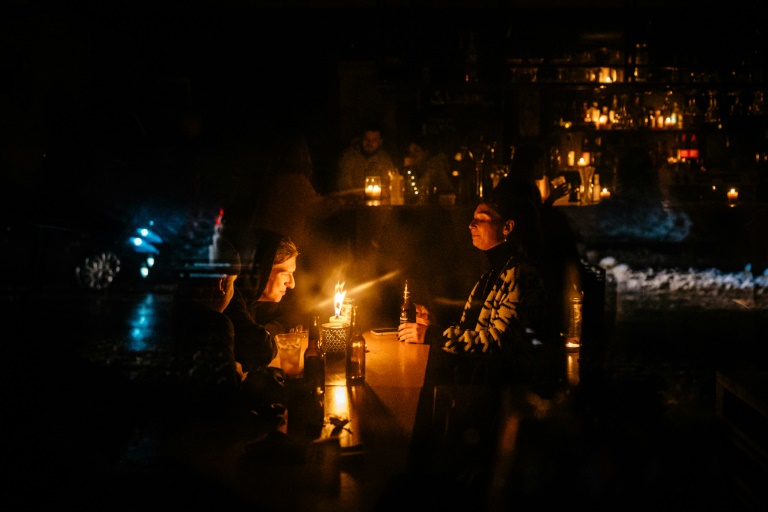
Ukraine worked Saturday to restore electricity and water supplies after Russia’s latest wave of attacks pitched multiple cities into darkness and forced people to endure sub-zero temperatures without heating or running water.

The volley of missiles unleashed Friday came as President Vladimir Putin held extensive meetings with the military top brass overseeing Russia’s invasion of Ukraine, where Moscow has stepped up bombardments. 

In the capital Kyiv, the metro had stopped running so that people wrapped in winter coats could take shelter at underground stations after air raid sirens rang out on Friday morning.

Kyiv mayor Vitali Klitschko said the metro service was relaunched early Saturday and water supply had been restored.

However, a third of Kyiv residents were still without power, Klitschko added. 

Power was also restored throughout the eastern city of Kharkiv on Saturday, regional governor Oleg Sinegubov said, after the strikes left Ukraine’s second city without electricity.

Ukraine’s national energy provider imposed emergency blackouts, saying on Saturday that the energy system “continues to recover”. 

Ukrenergo had warned the extent of the damage in the north, south and centre of the country meant it could take longer to restore supplies than after previous attacks.

During a visit to the army staff Friday, Putin sought out proposals from his military commanders on how Russia should proceed with the Ukraine offensive, according to the Kremlin.

The Kremlin released footage of Putin presiding over a round-table meeting with Defence Minister Sergei Shoigu and Chief of General Staff Valery Gerasimov among other top brass.

– ‘Barbaric’ attacks –

After a series of humiliating battlefield defeats, Russia since October has pursued an aerial onslaught against what Moscow says are military-linked facilities.

But France and the European Union have said the suffering inflicted on freezing civilians constitutes war crimes, with the bloc’s foreign policy chief calling the bombings “barbaric”.

Russia’s defence ministry said Saturday the strikes targeted Ukraine’s military and energy facilities, while also disrupting “the transfer of weapons and ammunition of foreign production”.

“All assigned targets were hit,” the ministry said in its daily briefing. 

Russia fired 74 — mainly cruise — missiles Friday, 60 of which were shot down by anti-aircraft defences, according to the Ukrainian army.

Kyiv withstood one of the biggest missile attacks since the start of the invasion. Regional officials said their air defence forces had shot down 37 out of 40 missiles.

Ukrainian President Volodymyr Zelensky said the strikes hit power and water supplies in Kyiv and 14 regions.

In the central city of Kryvyi Rig, where Zelensky was born, the air strikes hit a residential building.

A 64-year-old woman and a young couple with a little son died, governor Valentyn Reznichenko said Saturday, adding that 13 others had been wounded.

In the south, fresh Russian shelling in Kherson, recently recaptured by Ukraine, killed a 36-year-old man and injured a 70-year-old woman, governor Yaroslav Yanushevich said.

He later said that a separate strike hit a geriatric centre in the village of Stepanivka just north of Kherson. There were no casualties or injuries reported.

Kherson has been subjected to persistent Russian shelling since Moscow’s forces retreated in November, and power was cut in the city earlier this week.

– Protracted war –

Moscow has said the strikes on Ukrainian infrastructure are a response to an explosion on the Kerch bridge connecting the Russian mainland to the Crimean peninsula, annexed from Ukraine in 2014.

Ukrainian defence officials said this week that their forces had downed over a dozen Iranian-made attack drones launched at Kyiv, a sign that Western-supplied systems are having an impact.

Ukrainian military leaders have warned Moscow is preparing for a major winter offensive, including a fresh attempt to take Kyiv.

NATO chief Jens Stoltenberg told AFP that Russia was readying for a protracted war. 

“We see that they are mobilising more forces, that they are willing to suffer also a lot of casualties, that they are trying to get access to more weapons and ammunition,” he said.

Aiming to push Moscow to the negotiating table, the EU Friday imposed further sanctions, adding restrictions on the export of drone engines to Russia or countries like Iran looking to supply Moscow with weapons. 

Russia’s foreign ministry said Saturday the new package of “illegitimate unilateral restrictive measures” will not achieve its goal. 

Germany cuts the ribbon on first LNG terminal

Germany on Saturday inaugurated its first liquefied natural gas (LNG) terminal, built in record time, as the country scrambles to adapt to life without Russian energy.

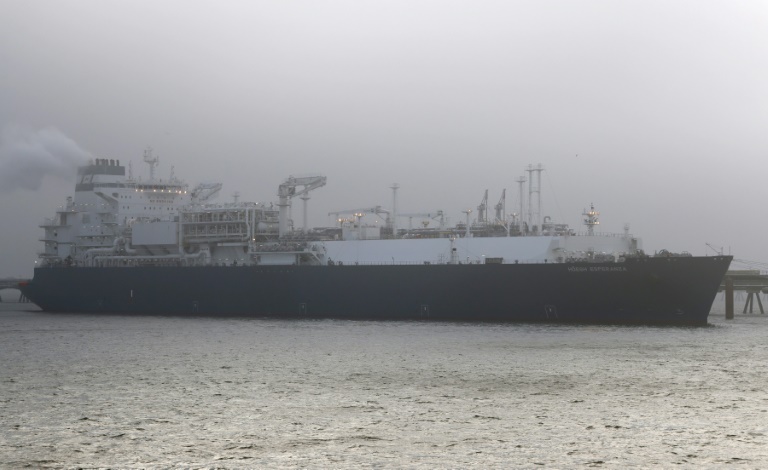
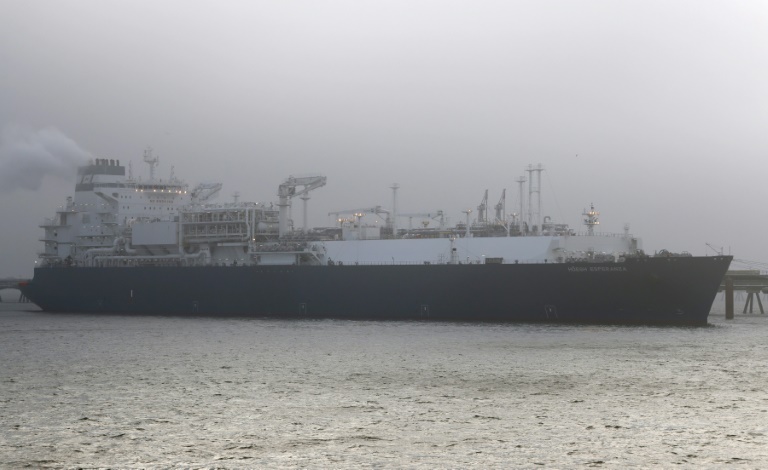
The rig in the North Sea port of Wilhelmshaven was opened by Chancellor Olaf Scholz at a ceremony on board a specialist vessel known as an FSRU, named the Hoegh Esperanza.

“It’s a good day for our country and a sign to the whole world that the German economy will be able to remain strong,” Scholz said from the boat.

The Hoegh Esperanza sounded its horn as the chancellor, dressed in a high visibility jacket, approached.

The ship has already been stocked with gas from Nigeria that could supply 50,000 homes for a year, and the terminal is set to begin deliveries on December 22.

Germany plans to open four more government-funded LNG terminals over the next few months as well as a private terminal in the port of Lubmin.

Together, the terminals could deliver 30 billion cubic metres of gas a year from next year, or a third of Germany’s total gas needs — if Berlin can find enough LNG to service them.

LNG terminals allow for the import by sea of natural gas which has been chilled and turned into a liquid to make it easier to transport.

The FRSU stocks the LNG, then turns it back into a ready-to-use gas.

Until now, Germany had no LNG terminals and relied on cheap gas delivered through pipelines from Russia for 55 percent of its supply.

– Supply worries –

But since Russia’s invasion of Ukraine, gas supplies to Germany have been throttled and Berlin has been forced to rely on LNG processed by Belgian, French and Dutch ports, paying a premium for transport costs.

The government decided to invest in building its own LNG terminals as quickly as possible and has spent billions of euros (dollars) on hiring FSRUs to service them.

However, Germany has not yet signed a single major long-term contract to begin filling the terminals from January.

“The import capacity is there. But what worries me are the deliveries,” Johan Lilliestam, a researcher at the University of Potsdam, told AFP.

A contract has been signed with Qatar for LNG to supply the Wilhelmshaven terminal but deliveries are not set to begin until 2026.

Suppliers want long-term contracts, while the German government is not keen to be locked into multi-year gas deals as it wants the country to become climate-neutral by 2045. 

“Companies need to know that the purchasing side in Germany will eventually diminish if we want to meet climate protection targets,” economy minister Robert Habeck has said.

Environmental campaigners have criticised the LNG project, with the DUH association announcing it will take legal action. A handful of protestors turned out in Wilhelmshaven with placards demanding an “End to gas”.

– Cold winter –

Germany could initially be forced to buy LNG from the expensive spot markets, which would lead to higher prices for consumers.

The market could also be squeezed next year by renewed demand in China as it emerges from strict Covid-19 curbs, Andreas Schroeder, an expert at the ICIS energy research institute, told AFP. 

“If Europe has been able to receive so much LNG in recent months, it is because Chinese demand was low,” Schroeder said. 

China recently signed a deal to buy gas from Qatar for 27 years — the longest such deal in history, according to Doha.

Germany has also had a cold winter so far, meaning the gas tanks have been emptying faster than expected.

“Gas consumption is increasing. This is a risk, especially if the cold spell continues,” said Klaus Mueller, the head of the country’s Federal Network Agency regulatory body, in a recent interview.

As a result, there is a real risk that Germany could experience temporary supply disruptions next winter, according to Schroeder.

Gas usage is currently down 13 percent compared to last year but the government wants that figure to be closer to 20 percent.

In Europe, the gap between supply and demand could reach 27 billion cubic metres (950 billion cubic feet) in 2023, according to an IEA report — equivalent to 6.5 percent of the European Union’s annual consumption.

Germany cuts the ribbon on first LNG terminal

Germany on Saturday inaugurated its first liquefied natural gas (LNG) terminal, built in record time, as the country scrambles to adapt to life without Russian energy.

The rig in the North Sea port of Wilhelmshaven was opened by Chancellor Olaf Scholz at a ceremony on board a specialist vessel known as an FSRU, named the Hoegh Esperanza.

“It’s a good day for our country and a sign to the whole world that the German economy will be able to remain strong,” Scholz said from the boat.

The Hoegh Esperanza sounded its horn as the chancellor, dressed in a high visibility jacket, approached.

The ship has already been stocked with gas from Nigeria that could supply 50,000 homes for a year, and the terminal is set to begin deliveries on December 22.

Germany plans to open four more government-funded LNG terminals over the next few months as well as a private terminal in the port of Lubmin.

Together, the terminals could deliver 30 billion cubic metres of gas a year from next year, or a third of Germany’s total gas needs — if Berlin can find enough LNG to service them.

LNG terminals allow for the import by sea of natural gas which has been chilled and turned into a liquid to make it easier to transport.

The FRSU stocks the LNG, then turns it back into a ready-to-use gas.

Until now, Germany had no LNG terminals and relied on cheap gas delivered through pipelines from Russia for 55 percent of its supply.

– Supply worries –

But since Russia’s invasion of Ukraine, gas supplies to Germany have been throttled and Berlin has been forced to rely on LNG processed by Belgian, French and Dutch ports, paying a premium for transport costs.

The government decided to invest in building its own LNG terminals as quickly as possible and has spent billions of euros (dollars) on hiring FSRUs to service them.

However, Germany has not yet signed a single major long-term contract to begin filling the terminals from January.

“The import capacity is there. But what worries me are the deliveries,” Johan Lilliestam, a researcher at the University of Potsdam, told AFP.

A contract has been signed with Qatar for LNG to supply the Wilhelmshaven terminal but deliveries are not set to begin until 2026.

Suppliers want long-term contracts, while the German government is not keen to be locked into multi-year gas deals as it wants the country to become climate-neutral by 2045. 

“Companies need to know that the purchasing side in Germany will eventually diminish if we want to meet climate protection targets,” economy minister Robert Habeck has said.

Environmental campaigners have criticised the LNG project, with the DUH association announcing it will take legal action. A handful of protestors turned out in Wilhelmshaven with placards demanding an “End to gas”.

– Cold winter –

Germany could initially be forced to buy LNG from the expensive spot markets, which would lead to higher prices for consumers.

The market could also be squeezed next year by renewed demand in China as it emerges from strict Covid-19 curbs, Andreas Schroeder, an expert at the ICIS energy research institute, told AFP. 

“If Europe has been able to receive so much LNG in recent months, it is because Chinese demand was low,” Schroeder said. 

China recently signed a deal to buy gas from Qatar for 27 years — the longest such deal in history, according to Doha.

Germany has also had a cold winter so far, meaning the gas tanks have been emptying faster than expected.

“Gas consumption is increasing. This is a risk, especially if the cold spell continues,” said Klaus Mueller, the head of the country’s Federal Network Agency regulatory body, in a recent interview.

As a result, there is a real risk that Germany could experience temporary supply disruptions next winter, according to Schroeder.

Gas usage is currently down 13 percent compared to last year but the government wants that figure to be closer to 20 percent.

In Europe, the gap between supply and demand could reach 27 billion cubic metres (950 billion cubic feet) in 2023, according to an IEA report — equivalent to 6.5 percent of the European Union’s annual consumption.

Close Bitnami banner
Bitnami