AFP

Beloved 'Hollywood Cat' mountain lion euthanized in Los Angeles

Hollywood Cat is no longer.

The Los Angeles area’s most famous mountain lion, an aged wild male feline sighted around the city’s Griffith Park, was euthanized Saturday, wildlife officials said.

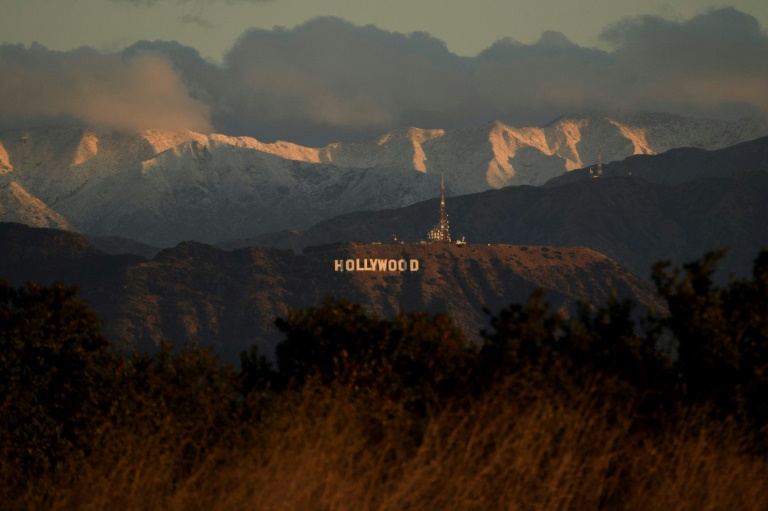
For years, it was known to prowl around the hillside “Hollywood” sign visible around much of Los Angeles, a fitting setting for a celebrity cat.

It earned the nickname Hollywood Cat, but the mountain lion — estimated to be around 11 years old — is officially called P-22.

State and federal wildlife officers decided earlier this month to capture it due to its erratic behavior, perhaps associated with being struck by a vehicle.

Veterinarians found “significant trauma” to its head, right eye and internal organs, California’s Department of Fish and Wildlife said in a statement.

The experts also found underlying health issues, including “irreversible kidney disease, chronic weight loss, extensive parasitic skin infection over his entire body and localized arthritis.”

“The most difficult, but compassionate choice was to respectfully minimize his suffering and stress by humanely ending his journey,” the statement said.

“Mountain lion P-22 has had an extraordinary life and captured the hearts of the people of Los Angeles and beyond.”

Euthanizing the cougar was a punch to the gut for game experts who had grown to love the animal.

“This really hurts,” said Chuck Bonham, director of the Department of Fish and Wildlife, when he announced P-22’s death, according to USA Today. 

“It’s been an incredibly difficult several days.”

California Governor Gavin Newsom praised P-22’s “incredible journey” in a statement.

“P-22’s survival on an island of wilderness in the heart of Los Angeles captivated people around the world,” Newsom said.

Griffith Park, where P-22 lived for perhaps a decade, is hemmed in by freeways and urban sprawl. It is a nine-square-mile (23-square-kilometer) isolated patch of nature.

Experts marveled at how the wild cat got across either of two major Los Angeles freeways — the 405 and 101 — to get to Griffith Park as early as 2012.

In a profile of P-22 done long before its death, the National Park Service lamented that Griffith Park is too small for a second cougar, and “it’s unlikely he will ever find love with a female lion.”  

The cat’s renown was due to frequent sightings, video doorbell cameras and physical encounters.

A Facebook page in honor of the cougar has over 20,000 followers.
Ukraine races to restore power after Russian missiles batter grid

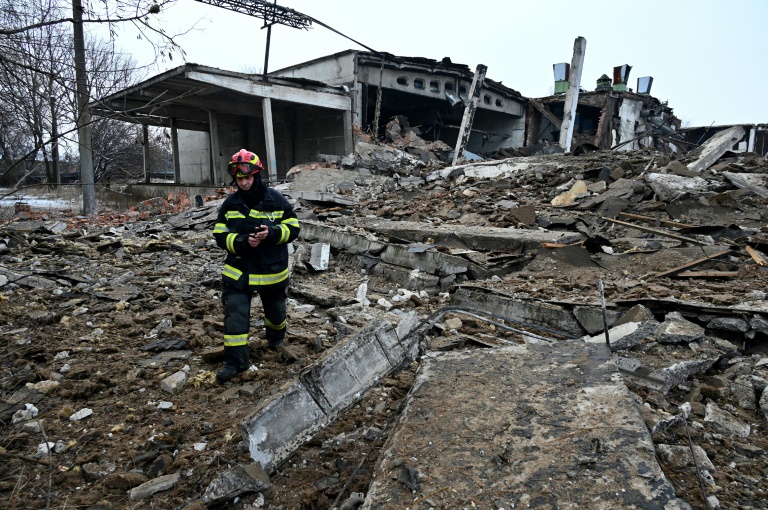
Ukraine worked Saturday to restore electricity and water supplies after Russia’s latest wave of attacks pitched multiple cities into darkness and forced people to endure sub-zero temperatures without heating or running water.

The volley of missiles unleashed Friday came as President Vladimir Putin held extensive meetings with the military top brass overseeing Russia’s invasion of Ukraine, where Moscow has stepped up bombardments.

Ukrainian President Volodymyr Zelensky said late Saturday electricity had been restored to almost six million Ukrainians, but noted ongoing problems with heat and water supplies, and “large-scale outages” in many regions.

“The main thing today is energy,” he said in his nightly address. “There is still a lot of work to do to stabilise the system.”

In the capital Kyiv, the metro had stopped running so that people wrapped in winter coats could take shelter at underground stations, but Mayor Vitali Klitschko said Saturday the service had resumed. 

Water supply had also been restored and 75 percent of the city’s population had their heating supply back.

In the eastern city of Kharkiv, power had also been fully returned, regional governor Oleg Sinegubov said on Saturday, after the strikes had left Ukraine’s second city without electricity.

Ukraine’s national energy provider Ukrenergo had imposed emergency blackouts in response to the strikes, warning the extent of the damage in the north, south and centre of the country meant it could take longer to restore supplies than after previous attacks.

The country’s energy system “continues to recover”, it said on Saturday.

– ‘Barbaric’ attacks –

In Russia, Putin sought proposals from his military commanders on how to proceed with the Ukraine offensive, according to the Kremlin.

The Kremlin released footage Friday of Putin presiding over a round-table meeting with Defence Minister Sergei Shoigu and Chief of General Staff Valery Gerasimov among other top brass.

After a series of humiliating battlefield defeats, Russia has since October pursued an aerial campaign against what Moscow says are military-linked facilities.

But France and the European Union have said the suffering inflicted on freezing civilians constitutes war crimes, with the bloc’s foreign policy chief calling the bombings “barbaric”.

Russia’s defence ministry said Saturday the strikes had targeted Ukraine’s military and energy facilities, while also disrupting “the transfer of weapons and ammunition of foreign production”.

“All assigned targets were hit,” the ministry said in its daily briefing.

Russia fired 74 — mainly cruise — missiles Friday, 60 of which were shot down by anti-aircraft defences, according to the Ukrainian army.

Ukraine’s military command said in a statement Saturday: “The enemy continues to focus its efforts on conducting offensive actions in the Bakhmut and Avdiivka directions”, referring to two cities in the eastern Donetsk region.

Russian troops were also trying to regain lost ground around Lymanskyi, in the south, the statement added.

Zelensky said the strikes hit power and water supplies in Kyiv and 14 regions.

Regional officials said their air defence forces had shot down 37 out of 40 missiles.

In the central city of Kryvyi Rig, where Zelensky was born, Friday’s air strikes hit a residential building.

The missiles killed a 64-year-old woman and a young couple with a son, governor Valentyn Reznichenko said Saturday, wounding 13 others.

In the south, fresh Russian shelling in Kherson, recently recaptured by Ukraine, killed a 36-year-old man and injured a 70-year-old woman, governor Yaroslav Yanushevich said Saturday morning.

A separate strike hit a geriatric centre in the village of Stepanivka just north of Kherson, he added later, but there were no casualties reported.

Kherson has been subjected to persistent Russian shelling since Moscow’s forces retreated in November, and power was cut in the city earlier this week.

– Protracted war –

Moscow has said the strikes on Ukrainian infrastructure are a response to an explosion on the Kerch bridge connecting the Russian mainland to the Crimean peninsula, annexed from Ukraine in 2014.

Ukrainian defence officials said this week that their forces had downed over a dozen Iranian-made attack drones launched at Kyiv, a sign that Western-supplied systems are having an impact.

The country’s military leaders have also warned Moscow is preparing for a major winter offensive, including a fresh attempt to take Kyiv.

Russia meanwhile on Saturday accused Moldova of “political censorship” after it suspended the broadcasting licence of six television channels over accusations of misinformation.

Moldova — which sits on Ukraine’s southwestern border — said on Friday the decision was made because of the “lack of correct information” in their coverage of national events and Russia’s military campaign in Ukraine.

Moscow also responded to the EU’s decision Friday to impose further sanctions, adding restrictions on the export of drone engines to Russia or countries like Iran looking to supply Moscow with weapons.

The new package of “illegitimate unilateral restrictive measures” would not achieve its goal, Russia’s foreign ministry said Saturday.

Ukraine races to restore power after Russian missiles batter grid

Ukraine worked Saturday to restore electricity and water supplies after Russia’s latest wave of attacks pitched multiple cities into darkness and forced people to endure sub-zero temperatures without heating or running water.

The volley of missiles unleashed Friday came as President Vladimir Putin held extensive meetings with the military top brass overseeing Russia’s invasion of Ukraine, where Moscow has stepped up bombardments.

Ukrainian President Volodymyr Zelensky said late Saturday electricity had been restored to almost six million Ukrainians, but noted ongoing problems with heat and water supplies, and “large-scale outages” in many regions.

“The main thing today is energy,” he said in his nightly address. “There is still a lot of work to do to stabilise the system.”

In the capital Kyiv, the metro had stopped running so that people wrapped in winter coats could take shelter at underground stations, but Mayor Vitali Klitschko said Saturday the service had resumed. 

Water supply had also been restored and 75 percent of the city’s population had their heating supply back.

In the eastern city of Kharkiv, power had also been fully returned, regional governor Oleg Sinegubov said on Saturday, after the strikes had left Ukraine’s second city without electricity.

Ukraine’s national energy provider Ukrenergo had imposed emergency blackouts in response to the strikes, warning the extent of the damage in the north, south and centre of the country meant it could take longer to restore supplies than after previous attacks.

The country’s energy system “continues to recover”, it said on Saturday.

– ‘Barbaric’ attacks –

In Russia, Putin sought proposals from his military commanders on how to proceed with the Ukraine offensive, according to the Kremlin.

The Kremlin released footage Friday of Putin presiding over a round-table meeting with Defence Minister Sergei Shoigu and Chief of General Staff Valery Gerasimov among other top brass.

After a series of humiliating battlefield defeats, Russia has since October pursued an aerial campaign against what Moscow says are military-linked facilities.

But France and the European Union have said the suffering inflicted on freezing civilians constitutes war crimes, with the bloc’s foreign policy chief calling the bombings “barbaric”.

Russia’s defence ministry said Saturday the strikes had targeted Ukraine’s military and energy facilities, while also disrupting “the transfer of weapons and ammunition of foreign production”.

“All assigned targets were hit,” the ministry said in its daily briefing.

Russia fired 74 — mainly cruise — missiles Friday, 60 of which were shot down by anti-aircraft defences, according to the Ukrainian army.

Ukraine’s military command said in a statement Saturday: “The enemy continues to focus its efforts on conducting offensive actions in the Bakhmut and Avdiivka directions”, referring to two cities in the eastern Donetsk region.

Russian troops were also trying to regain lost ground around Lymanskyi, in the south, the statement added.

Zelensky said the strikes hit power and water supplies in Kyiv and 14 regions.

Regional officials said their air defence forces had shot down 37 out of 40 missiles.

In the central city of Kryvyi Rig, where Zelensky was born, Friday’s air strikes hit a residential building.

The missiles killed a 64-year-old woman and a young couple with a son, governor Valentyn Reznichenko said Saturday, wounding 13 others.

In the south, fresh Russian shelling in Kherson, recently recaptured by Ukraine, killed a 36-year-old man and injured a 70-year-old woman, governor Yaroslav Yanushevich said Saturday morning.

A separate strike hit a geriatric centre in the village of Stepanivka just north of Kherson, he added later, but there were no casualties reported.

Kherson has been subjected to persistent Russian shelling since Moscow’s forces retreated in November, and power was cut in the city earlier this week.

– Protracted war –

Moscow has said the strikes on Ukrainian infrastructure are a response to an explosion on the Kerch bridge connecting the Russian mainland to the Crimean peninsula, annexed from Ukraine in 2014.

Ukrainian defence officials said this week that their forces had downed over a dozen Iranian-made attack drones launched at Kyiv, a sign that Western-supplied systems are having an impact.

The country’s military leaders have also warned Moscow is preparing for a major winter offensive, including a fresh attempt to take Kyiv.

Russia meanwhile on Saturday accused Moldova of “political censorship” after it suspended the broadcasting licence of six television channels over accusations of misinformation.

Moldova — which sits on Ukraine’s southwestern border — said on Friday the decision was made because of the “lack of correct information” in their coverage of national events and Russia’s military campaign in Ukraine.

Moscow also responded to the EU’s decision Friday to impose further sanctions, adding restrictions on the export of drone engines to Russia or countries like Iran looking to supply Moscow with weapons.

The new package of “illegitimate unilateral restrictive measures” would not achieve its goal, Russia’s foreign ministry said Saturday.

China set to offer compromise to save summit nature accord

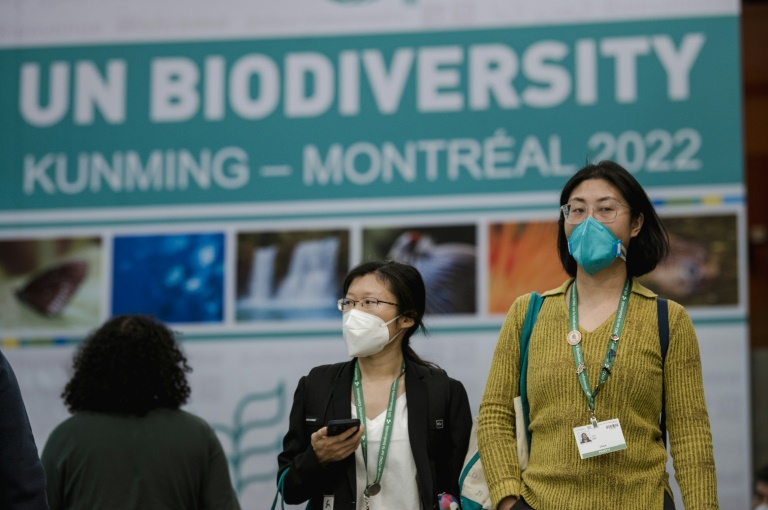
China, which chairs a high-stakes UN biodiversity summit in Montreal, is due to present a long-awaited compromise text on Sunday in an attempt to seal the “peace pact with nature” that the planet sorely needs.

More than 10 days of fraught biodiversity negotiations look to be coming to a head as delegates prepare to wrangle over the compromise draft agreement.

“It is not a perfect document, not a document that will make everyone happy, however it is a document that is based on the efforts of all of us over the last four years,” said China’s Environment Minister Huang Rinqiu.

“It is a document that must be adopted at this meeting that is highly expected by the international community.”

Observers had warned the COP15 conference risked collapse as countries squabbled over how much the rich world should pay to fund the efforts, with developing countries walking out of talks at one point.

But conference leaders turned upbeat Saturday on their chances of securing a deal.

Huang said he was “greatly confident” of a consensus and his Canadian counterpart Steven Guilbeault said “tremendous progress” had been made.

Huang said he would publish a draft agreement at 8:00 am EST (1300 GMT) on Sunday and hear lead delegates’ feedback later in the day.

The negotiations officially run until December 19, but could go longer if needed.

“Now is not the time for small decisions, let’s go big!” tweeted French President Emmanuel Macron.

“Let’s work together to achieve the most ambitious agreement possible. The world is depending on it.”

– Million species threatened –

Delegates are working to roll back the destruction and pollution that threaten an estimated one million plant and animal species with extinction, according to scientists that report to the UN.

The text is meant to be a roadmap for nations through 2030. The last 10-year plan, signed in Aichi, Japan in 2010, did not achieve any of its objectives — a failure blamed widely on its lack of monitoring mechanisms.

Major goals in the draft under discussion include a cornerstone pledge to protect 30 percent of the world’s land and oceans by 2030.

The more than 20 targets also include reducing environmentally destructive farming subsidies, requiring businesses to assess and report on their biodiversity impacts, and tackling the scourge of invasive species.

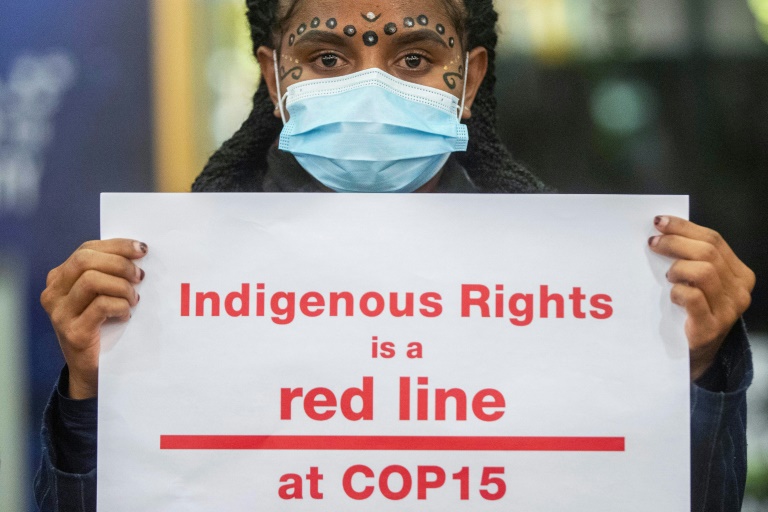
Representatives of Indigenous communities, who safeguard 80 percent of the world’s remaining biodiversity, want their rights to practice stewardship of their lands to be enshrined in the final agreement.

“We are the ones doing the work. We protect biodiversity,” said Valentin Engobo, leader of the Lokolama community in the Congo Basin, in a statement released by Greenpeace. “You won’t replace us. We won’t let you.”

– Money matters –

The issue of how much money the rich countries will send to the developing world, home to most of the world’s biodiversity, has been the biggest sticking point.

Several countries have announced new commitments. The European Union has committed seven billion euros ($7.4 billion) for the period until 2027, double its prior pledge.

But campaigners and developing countries say more is needed — and delegates have not reached agreement on what form the new funding flows should take.

Brazil has proposed flows of $100 billion annually, compared to the roughly $10 billion at present.

“We will be able to specify our financial ambitions once we have seen the text,” France’s Environment Minister Christophe Bechu told AFP on Saturday.

“An agreement on paper without numbers would be worse than no agreement. We need an ambitious agreement that is quantified and with verifiable aims and dates.”

'Be good ancestors,' youth activists tell ministers at UN nature talks

As the world’s environment ministers try to thrash out a new deal for nature, youth activists gathered at a UN summit in Montreal are making it clear that actions taken today will affect generations to come.

Here is what some had to say.

– Prisca Daka –

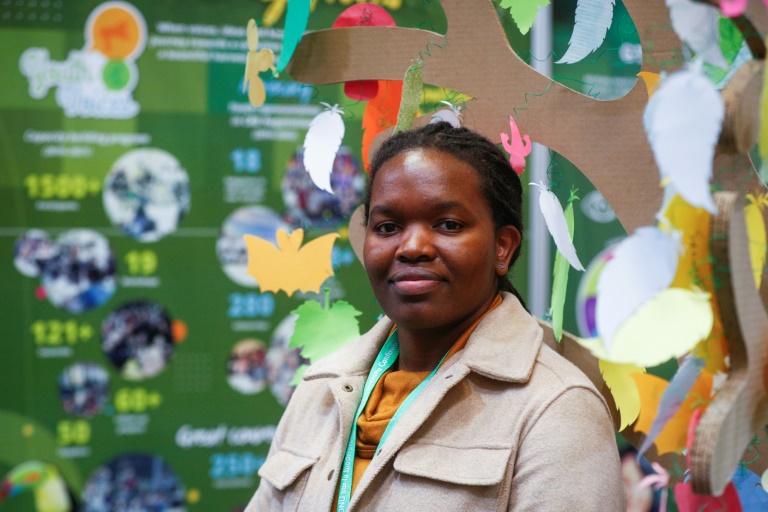
Prisca Daka, a 31-year-old from Zimbabwe now based in the US, is regional coordinator for Global Youth Biodiversity Network (GYBN) Africa. 

She works with local communities to help preserve the Samango monkey, a species that is unique to Zimbabwe but whose habitat is being threatened by deforestation and banana plantations.

Daka has been formally involved in activism since 2017, but says her love of nature began when she was six years old and visited national parks with her family.

“We don’t talk much about biodiversity, which is the web of life — everything we see, the air we breathe, the water we drink,” she said. 

“Extinction is forever, so as young people we’re bringing attention to the biodiversity crisis and showing what the future could look like if we do not act now.”

She added she felt proud that this COP has more African youth than ever before, something she hopes will “become the norm.”

– Eshadi Mendis –

As a member of GYBN in Sri Lanka, Eshadi Mendis, 30, focuses on beach and ocean clean-up projects in her island nation.

“Because of the way Sri Lanka is situated, all the inland pollution is going to the sea. So we need to find ways to clean it and stop it,” she says.

Unfortunately, she adds, awareness about the COP15 summit is limited in her home country, something Mendis is working hard to change.

She also thinks it’s important for the United Nations to stop treating climate and biodiversity as distinct issues requiring distinct summits, with the latter receiving less attention as a result.

“They’re very interconnected,” she says. Her take-home message, though, is to prioritize young people in the negotiation process.

“Our word should be considered… older people should know that they should be good ancestors for us so when they leave this Earth, we have something to utilize as well.”

– Flavia Gonzales –

Flavia Gonzales studied biology to understand “how I could save nature”. Along the way, she realized that the best way was to make people aware of their own relationship with the environment.

The Bolivian activist, who wears her hair in colored braids, was moved as a teenager by the mistreatment of animals in her hometown La Paz. But “little by little you see that not only animals are being mistreated, but all of nature is being mistreated.”

Now 24 years old, she has dedicated herself to educating people about the environment, empowering girls and young people about their rights.

Gonzales was one of a few dozen youths who painted their faces and took part in a protest outside the Montreal Convention Centre on Friday, demanding policymakers reach a deal that “achieves the objectives that can help us improve as a society.”

“If we don’t, what’s the point?”

Dam plans threatens China's migratory bird haven

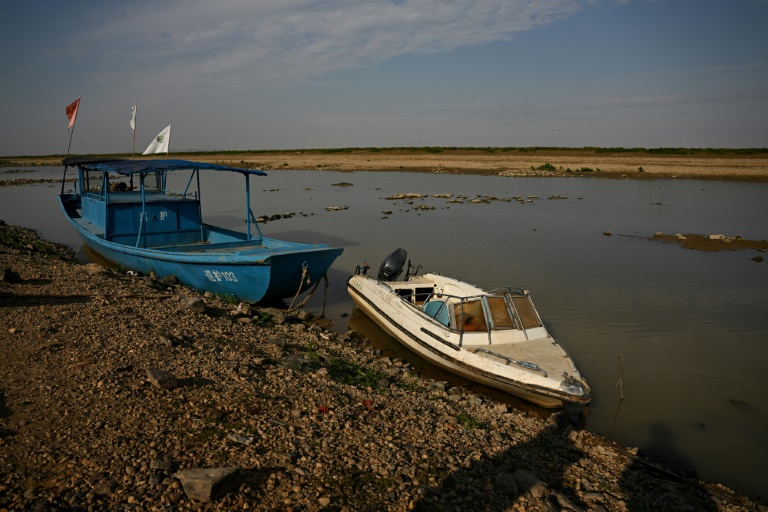
Spooked by a historic drought, local authorities in China have renewed controversial plans to dam the country’s biggest freshwater lake.

But environmentalists warn damming Poyang Lake, a winter stopover for over half a million birds, would threaten the fragile ecosystem and the endangered birds and other wildlife it supports.

China is currently chairing UN biodiversity talks in Montreal, billed as the “last best chance” to save the planet’s species and their habitats from irreversible human destruction.

The Poyang dam, which is slowly recovering after shrinking to less than a third of its usual size, shows how fraught such efforts are in China.

Conservationist Zhang Daqian said that if realised, the 3,000-metre-long sluice gate across one of the lake’s channels would cut it off from the river Yangtze, “leaving Poyang a dead lake”.

China has built more than 50,000 dams in the Yangtze basin in the past 70 years — including the Three Gorges, which came in the face of widespread opposition from environmentalists.

Over the same period at least 70 percent of the river’s wetlands have vanished, according to data from the environment ministry.

When the project was initially proposed, complaints from ecologists succeeded in shelving it.

But the looming spectre of droughts — which are becoming ever more frequent and severe in the area thanks to climate change — has altered the calculus.

Poyang supplies water to Jiangxi province’s 4.8 million residents, and the local government says damming it will conserve water, irrigate more farmland and improve navigation.

An environmental impact assessment (EIA) published in May gave experts just two weeks to review 1,200 pages of documents and lodge complaints.

– Winter visitors –

In a normal wet season, Poyang can be three times the size of Los Angeles. 

Its mud flats are the primary winter feeding grounds for hundreds of thousands of birds flying south to escape the chill every autumn. 

They include the critically endangered Siberian crane, the population of which has shrunk to about 4,000.

This year’s drought was the worst in 70 years, with the region entering the dry season three months sooner than usual. 

Still, hundreds of birds were gathering at small pools of water left on the cracked riverbed when AFP visited a reserve in Yongxiu County in early November. 

“Migratory birds are still coming to Poyang, because it’s their habitual winter home,” said an employee surnamed Chen, looking across the dry expanse littered with empty mussel shells and fish skeletons. 

“But there are no fish or shrimp for them to eat. Many birds flock to nearby fields and farmers have been told to leave a bit of their paddy unharvested for the birds,” Chen said.

Officials have pumped water from nearby reservoirs to form small butterfly-shaped watering holes for the birds.

“There are no conflicts (between residents and birds), because migratory birds are nationally-protected animals, and people will not harm them,” He Fangjin, an employee at another wetland park, told AFP. 

At nearby Zhupao Hill, a popular bird-watching spot, about 90,000 migratory birds were spotted from October to early December, up from about 62,000 birds in the same period last year.

– Damage to ecosystem –

It’s not clear what stage of development the dam is currently in, and neither local authorities nor the environment ministry responded to questions put to them by AFP. 

But were they to go ahead, the sluice gate would disrupt the lake’s natural ebb and flow with the Yangtze, potentially threatening the tidal flats the birds feed on, said Lu Xixi, a geography professor at the National University of Singapore.

Losing its natural water circulation could also hurt Poyang’s ability to flush out nutrients, risking an algae build-up that could disrupt the food chain, Lu added.

The dam could also affect another critically endangered species that calls the lake its home — the Yangtze finless porpoise. There are just over 1,000 left in the wild.

During the drought, the porpoises took refuge in the same channel the dam would cut off, a ranger from the Beijing Environmental Protection Prairie League, who has patrolled the lake for over a month, told AFP.

Beijing-based Friends of Nature said the dam EIA failed to do a comprehensive evaluation of whether the porpoises’ migration would be blocked.

“Without comprehensive scientific evidence and before eliminating the environmental risks, the project should not be pushed forward,” the group said in a statement.

Key points from the Capitol Hill assault investigation

After a year and a half of hearings and more than 1,000 depositions, the committee that investigated Donald Trump’s responsibility in the early 2021 attack on the US Capitol delivers its findings on Monday.

At a public hearing at 1 pm (18:00 GMT), the elected members of the House January 6 committee will present the eight chapters of its long investigation and will vote to recommend prosecution.  

Here are some of the main elements of the investigation. 

– ‘An attempted coup’ – 

The commission, comprising seven Democrats and two Republicans, was tasked with shedding light on the former president’s actions before and during January 6, 2021, the day that shook the pillars of American democracy.

The probe attempted to show that  Trump’s rejection of the November 2020 presidential election results was not simply a tantrum of a sore loser but a core part of a careful strategy to defy the constitution and retain power. 

Trump was “at the center” of “an attempted coup,” the head of the committee, Representative Bennie Thompson said of the events on January 6, 2021.

– Pressure on the vice president –

In a series of high-profile hearings, the committee provided evidence that it was impossible for Trump not to know that he had lost the election to Joe Biden.

His “voter fraud” theories did not convince several members of his inner circle, including a series of advisers, his attorney general and even his own daughter Ivanka, who spoke in on-camera testimony.

In an attempt to invalidate the presidential election, Trump pressured election officials, particularly in Georgia and Arizona. The commission revealed the extent of this intimidation, inviting several of them to testify in person. 

The Republican then called on his vice president, Mike Pence, to block the January 6, 2021, certification by Congress of his rival Joe Biden’s victory.

“What the former president was willing to sacrifice — potentially the vice president — in order to stay in power is pretty jarring,” Democratic panel member Pete Aguilar said at one of the hearings.  

– Passivity on January 6 –

Trump summoned his supporters to come to Washington on January 6, calling on them to “fight like hell.”

In the crowd gathered a short distance from the White House, Trump knew that some of the protesters were armed and potentially dangerous, former White House aide Cassidy Hutchinson told a hearing in June.

Trump nevertheless sought to join the throng on its way to Congress, attempting to grab the wheel of the presidential SUV from a Secret Service agent, according to Hutchinson’s explosive testimony.

He then spent three hours watching television images of the unfolding violence on Capitol Hill without intervening.

The members of the committee deemed that he had, at the very least, engaged in “complete dereliction of duty” as commander in chief. 

– Recommending charges –

The committee will conduct its final public hearing Monday, in which it will recommend charges over the insurrection, and issue its final report on Wednesday.  

Several legal experts said Trump could be criminally prosecuted  for “obstructing an official government proceeding” or on a broader charge of “conspiracy to defraud” the government by disrupting the functioning of institutions.

The decision to press charges will ultimately rest with Attorney General Merrick Garland, who in mid-November appointed a special prosecutor to independently investigate Trump.

The commission may also make legislative recommendations to protect the process of certifying election results so that the events of January 6, 2021, can never happen again.

Key things to know about legal cannabis in New York

As New York state prepares to open its first legal cannabis stores, possibly before the end of the year, AFP details what you need to know about the new market.

– Offenders and non-profits –

Adult recreational use of Cannabis is already legal in about 20 American states. In terms of social equity, New York’s policy goes further than most, according to observers.

The state plans to grant the first 150 licenses to people previously convicted for possession or sale of the drug, and associations who help such offenders.

The intention is to offer reparations of sorts to African-American and Hispanic communities who were disproportionately arrested and charged during the decades weed was illegal.

Some 900 applications have been filed and 28 permits issued to businesses. Eight associations have also received licenses.

What could be the first official store is backed by the Housing Works non-profit, which helps ex-prisoners, the homeless and people with HIV and AIDS.

– Deliveries and restrictions –

After the first 150 licenses are granted, the market will open up to all businesses but with rules to reduce market dominance.

Specifically, a company that grows or processes cannabis will not be allowed to distribute the drug and vice versa. Retailers will be allowed to deliver cannabis but will be restricted to 25 employees for that purpose.

As with alcohol, sales are only allowed to people over 21 years old. An adult can possess up to 85 grams of cannabis flower or 24 grams of concentrated cannabis, which is more potent. A store cannot sell someone more than this limit. 

Cannabis is theoretically still prohibited under US federal law, meaning it is illegal to possess it when crossing state lines or entering and leaving the country.

– Potency tax –

In addition to the taxes paid by the consumer at purchase, New York plans to tax vendors based on the plant’s psychoactive content. Higher tetrahydrocannabinol, or THC, means higher taxes.

Dan Livingston, director of the Cannabis Association of New York, fears this will lead to high prices and competition from illegal sellers. He also worries it will encourage vendors to sell stronger cannabis.  

“The consumer could end up getting a lot more high than they really anticipated,” he said.

New York state promises to use tax revenues generated by the sale of cannabis for addiction prevention, education and grants to associations who help users.

In a 2018 report, it estimated the illegal market was worth between $1.7 billion and $3.5 billion annually, equating to between $248 million and $677 million in potential annual taxes. 

– Legal challenge –

The granting of licenses has been slowed down because of a legal challenge by a company whose application was rejected, mainly on the grounds that its majority owner was convicted of a cannabis-related offense in the state of Michigan and not in New York.

A federal judge hearing the case has ordered that no licenses be issued in the five jurisdictions involved in the dispute, including Brooklyn, New York City’s most populous borough.

In New York, previously convicted get first cannabis licenses

Naiomy Guerrero’s brother was stopped by police often and was once convicted on drug charges when marijuana was illegal in New York. Now, she is setting up a legal cannabis business, a promising new market fraught with pitfalls.

New York state is offering its first 150 licenses for the legal sale of cannabis to people — and their relatives — who have been convicted of offenses related to the drug, including selling.

The policy, implemented by the state’s Democratic leaders, seeks to compensate African-American and Hispanic communities whose members were disproportionately arrested and convicted during the decades weed was illegal.

“It’s such an exciting moment for my family,” said 31-year-old Guerrero, a PhD art history student whose parents are from the Dominican Republic.

“Especially given where we come from and everything we have been through, with the discriminatory policies that the city has had, like stop and frisk,” she told AFP.

Last month, Guerrero was one of the first 28 successful applicants who received their license to open an official store and sell locally-grown cannabis.

The licenses come more than a year after New York state, home to 20 million people, legalized cannabis use.

In New York city, the smell of weed is now about as ubiquitous as yellow taxis and shiny skyscrapers.

The city government expects the legal cannabis industry to generate $1.3 billion in sales as early as next year and between 19,000 and 24,000 jobs in three years. That represents much-needed tax revenues.

– Racial disparities –

Jeremy Rivera, is another New Yorker looking to profit. He was convicted of a “non-violent drug offense including cannabis” in 2016. He was released from prison in 2018 and has vowed never to go back.

The 36-year-old wants to put his knowledge of cannabis and business acumen to use by opening a weed shop east of the city on Long Island.

The heavily tattooed Rivera, who grew up surrounded by crime in the borough of Queens, hopes to be among the next group of licensees.

“I want to become that beacon of light that shows people, ‘Hey listen, I’ve done it. I was a 20-year gang member, I was a year-long-round drug dealer. I made the decision to leave that lifestyle,'” he told AFP.

As well as the cannabis conviction, applicants must also own a profitable business to be eligible for one of the first 150 licenses, which will precede a full opening of the market.

In 2018, a state report estimated that there had been 800,000 arrests for marijuana possession in the previous 20 years.

In 2017, most of those arrested were Black (48 percent), while Hispanics made up 38 percent of arrests.

“Prohibition denied people opportunities, it caused divestment in communities, it broke up families,” said Tremaine Wright, chairwoman of the control board for New York’s Office of Cannabis Management (OCM).

Guerrero says that in the 2000s, the New York Police Department’s infamous stop-and-frisk policy, which disproportionately targeted people of color, meant “we couldn’t be outside without getting picked up by the police.

“It was just living in a constant, constant state of surveillance and harassment,” she recalled.

While the cannabis program is ambitious, experts say implementation will have its challenges.

“We’re still at the very beginning of our journey of social equity. We need education, we need funding,” said Desmon Lewis, co-founder of The Bronx Community Foundation, which is assisting applicants.

– Illegal sales –

Last week, local media outlet NY Cannabis Insider reported that the team tasked with raising $150 million from private investors for the state’s $200 million fund to support retailers had missed a key deadline set by the state.

That raises concerns that candidates may not receive the ready-made stores they had been promised.

“For some people, it is very confusing. They are relying on this location and these funds. Now it’s like the sand is shifting below their feet”, said Eli Northrup of the Bronx Defenders non-profit. 

Also causing concern is strong competition from unlicensed sellers, who have been emboldened by decriminalization.

They have taken advantage of the lack of controls since legalization, selling on the street, in parks, as well as in smoke shops which are already selling THC edibles, pre-rolls and flower.

But Rivera sees only opportunities.

“You’re also going to have people who never felt comfortable purchasing from the illicit market that are now going to want to purchase from a reputable licensed provider,” he said.

“This is the beginning of the next 100 years of cannabis sales,” he added, taking a puff on a long joint.

What campaigners want to see in UN nature deal

As high-stakes UN biodiversity talks in Montreal draw to a close, delegates will be presented Sunday with a draft deal to safeguard the planet’s ecosystems and species by 2030.

Will it amount to the “peace pact with nature” that UN chief Antonio Guterres said the world desperately needs? Campaigners say the devil lies in the details. Here’s what they’re looking out for:

– ’30 by 30′ –

The cornerstone of the agreement is the so-called 30 by 30 goal — a pledge to protect 30 percent of the world’s land and seas by 2030. 

Currently, only about 17 percent of land and seven percent of oceans are protected.

And some experts say 30 percent is a low aim, insisting that protecting 50 percent would be better. 

So far, more than 100 countries have publicly pledged support for the 30 by 30 target, and observers say it has received broad support among negotiators. 

“For COP15 to be a success, we need to hold the line on our existing level of ambition,” Alfred DeGemmis, of the Wildlife Conservation Society, told AFP.

Brian O’Donnell of the Campaign for Nature added it was key that the text applies to oceans, as well as land, which had been in doubt.

– Indigenous rights –

The question of Indigenous rights will be crucial. 

About 80 percent of the Earth’s remaining biodiverse land is currently managed by Indigenous people, and it’s broadly recognized that biodiversity is better respected on Indigenous territory. 

Many activists want to make sure their rights are not trampled in the name of conservation — previous efforts to safeguard land have seen Indigenous communities marginalized or displaced in what has been dubbed “green colonialism.”

Advocates say therefore these rights have to be adequately addressed throughout the text, including within the 30 by 30 pledge, so that Indigenous people are not subject to mass evictions.

Failure on this front would be a “complete red line for us,” said O’Donnell.

“We are the ones doing the work. We protect biodiversity. You won’t replace us. We won’t let you,” said Valentin Engobo, leader of the Lokolama community in the Congo Basin, which protects the world’s largest tropical peatland.

“You can be our partners, if you want. But you cannot push us out.”

– Loopholes matter –

As a general principle, it is vital that the targets envisioned in the text aren’t significantly weakened through loopholes that will weaken actual implementation, said Georgina Chandler of the Royal Society for the Protection of Birds.

For example, during some plenary sessions, some ministers had suggested stripping out language about numerical targets for ecosystem restoration.

“Keeping those measurable elements…and making sure that they are ambitious, is really, really important,” said Chandler.

Other things she’ll be watching include whether there will be a commitment to halve pesticide use, and whether businesses will be mandated to assess and report on the biodiversity impacts.

– Finance –

As ever, money remains a difficult question. 

Developing countries say developed nations grew rich by exploiting their resources and the South should be paid to preserve its ecosystems.

Several countries have announced new commitments either at the COP or recently, with Europe emerging as a key leader. The European Union has committed seven billion euros ($7.4 billion) for the period until 2027, double its prior pledge.

But Brazil has led a charge by developing countries for far more, proposing flows of $100 billion annually, compared to the roughly $10 billion at present.

Developing countries are also seeking a new funding mechanism, as a signal of the rich world’s commitment to this goal. 

Whether international aid is delivered via a new fund, an existing mechanism called the Global Environment Facility (GEF), or a halfway solution involving a new “trust fund” within the GEF is still up for debate.

Close Bitnami banner
Bitnami