AFP

Ukraine downs swarm of attack drones over Kyiv

Ukraine said Wednesday it had shot down more than a dozen Iranian-made drones in Moscow’s latest assault on Kyiv. 

The attack came as the Kremlin promised no let-up to fighting over Christmas and as Ukrainian President Volodymyr Zelensky urged European leaders to assist in setting up a court to try Russian leaders over the war.

“The terrorists started this morning with 13 Shaheds,” Zelensky said, referring to the Iran-made weapons.

“All 13 were shot down,” he added, urging residents to heed air raid sirens.

The national energy provider Ukrenergo said no electricity facilities had been damaged in the attack, crediting Ukrainian air defences for their “brilliant” work.

Such defense forces appeared set for a boost with ally Washington preparing to send a batch of Patriot missile defense batteries to Kyiv.

Ukraine has been subjected to frequent and deadly aerial attacks in the 10 months since Russia invaded Ukraine in February and tried to capture the capital. 

But since a series of key battlefield setbacks this summer and autumn, Russia began systematically targeting critical infrastructure in Ukraine.

With temperatures dropping, the missile and drone attacks have disrupted electricity, water and heat to millions of Ukrainians.

– ‘Nearly 7 million children’ at risk –

The strikes targeting energy infrastructure have piled pressure on Ukraine’s power grid, whose operators have for weeks been forced to implement rolling blackouts.

That left “nearly seven million children without sustained access to electricity, heating and water, putting them at increased risk”, UNICEF, the UN children’s agency said Wednesday.

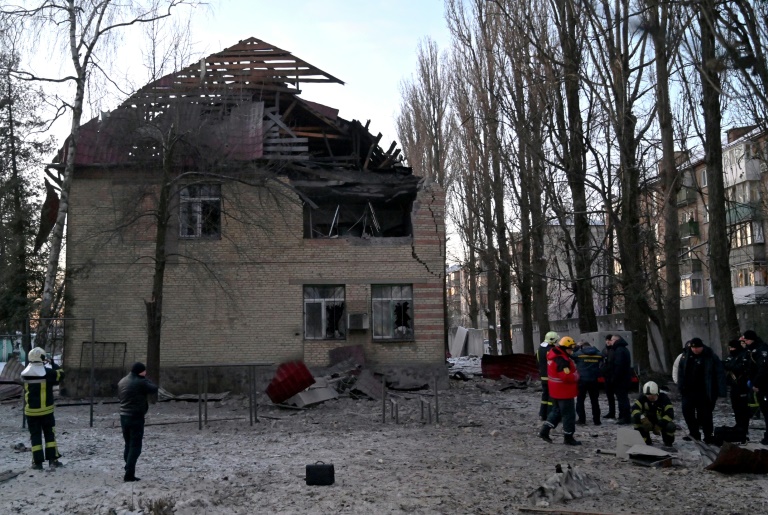
Explosions rang out over central Kyiv and AFP journalists later saw law enforcement and emergency service workers inspecting metal fragments at a snow-covered impact site.

City officials said debris from the downed drones had damaged residential homes and a local administrative building. 

No one was reported injured or killed, but residents cleaning up broken window glass and assessing damage vented their frustration at the Russian barrages.

“Winter is coming, how can people survive?” asked Svetlana, a local resident who described how a drone rumbled over homes before she heard a loud explosion.

“They do not let Ukrainians live.”

The latest round of attacks came a day after dozens of countries and international organisations meeting in Paris responded to Zelensky’s plea to help the country withstand Russia’s onslaught on its energy grid with 1 billion euros ($1.1 billion).

In a video message from Kyiv, Zelensky said Ukraine needed assistance for its battered energy sector and spare parts for repairs, high-capacity generators, extra gas and increased electricity imports.

Foreign Minister Dmytro Kuleba called on Ukraine’s allies to provide his country with more weapons to help it “fight through the winter” and sustain Kyiv’s military advances.

The United States has been a major contributor to Ukraine’s arsenal throughout the war, and a US official confirmed to AFP that Washington is finalising plans to send batteries of the advanced Patriot missile system to Ukraine.

The public announcement on the Patriot, described by the US Army as its “most advanced air defense system,” could come as soon as Thursday.

– US citizen freed –

Ukraine separately said Wednesday it had secured the release of a US citizen as well as 64 Ukrainian members of the military in its latest prisoner swap with Russian forces.

Russia’s state-run TASS news agency earlier reported that the American, Suedi Murekezi, had been arrested in the eastern Donetsk region of Ukraine in June and charged with attending anti-Russian protests.

After nearly 10 months of fighting, Russia has yet to fulfil any of its stated key goals in what it refers to as its “special military operation” in Ukraine, including seizing the capital or the eastern Donbas region.

But the Moscow-installed leader of Ukraine’s Donetsk province on Wednesday called for Russia to widen its goals and annex two more areas of Ukraine: the Black Sea region of Odessa and Chernigiv in the north.

Kremlin spokesman Dmitry Peskov said a ceasefire was not on Moscow’s agenda, and that it had not received proposals from Kyiv to pause fighting during the upcoming holiday period.

Meanwhile on Wednesday, Zelensky accepted the European Union Sakharov Prize for human rights on behalf of Ukraine’s people.

As he accepted the EU’s top rights award, he urged Europe to help set up a tribunal swiftly to try Russia’s leadership for the “crime of aggression”.

Zelensky also warned the International Olympic Committee against welcoming back Russian athletes to international competition, after US Olympic officials signaled they were open to the idea.

The only response is “the complete isolation of the terrorist state on the international stage,” Ukraine’s leader told IOC president Thomas Bach in a statement.

Suspect in Paul Pelosi assault: 'pretty amicable' before hammer attack

The man accused of attacking the husband of US House Speaker Nancy Pelosi told investigators the incident had been “pretty amicable” until he hit the 82-year-old with a hammer, a court heard on Wednesday.

David DePape, 42, appeared in a San Francisco courtroom for a hearing to determine if the case against him will go to trial.

The former public nudity activist has denied attempted murder and other charges in connection with a break-in in October, during which he had intended to kidnap Nancy Pelosi, he told police.

Instead, he found her 82-year-old husband, Paul, whom he is alleged to have bludgeoned with a hammer.

Prosecutors played Judge Stephen Murphy parts of an interview DePape gave to investigators from hospital.

The suspect, a Canadian citizen, said he had told Paul Pelosi that he had no intention of surrendering, the San Francisco Chronicle reported.

“I had threatened him a couple of times but for the most part it was pretty amicable,” DePape said on the recording.

But when he lunged at Pelosi, he did so with “full force,” the Chronicle said.

The US Justice Department has said DePape intended to tie up Nancy Pelosi, one of the most powerful politicians in the United States, and break her kneecaps with a hammer if she did not confess to Democratic “lies.”

DePape had tape, rope, zip ties and other materials with him, the Justice Department said.

Nancy Pelosi — who is second in line to the US presidency after the vice president — was not in San Francisco at the time of the attack.

Paul Pelosi had managed to call police while his assailant was in the house.

Officers were able to subdue the attacker, but not before he had fractured Paul Pelosi’s skull, knocking him unconscious.

Prosecutors on Wednesday showed body camera footage from one of the officers, the Chronicle reported.

DePape could be heard saying “Uh, nope,” after he was ordered to drop the hammer before the attack and subsequent tussle.

“A sound that appeared to be Pelosi’s snoring was heard loudly at the end of the video,” the Chronicle reported.

The assault and attempted kidnapping came just days before the high-stakes midterm elections, with America’s febrile political atmosphere being regularly fed by outlandish conspiracy theories from national figures.

If the state trial goes ahead, and if he is convicted, DePape would face 13 years to life in prison, San Francisco District Attorney Brooke Jenkins has previously said.

A separate federal case against DePape is ongoing. He has denied charges of kidnap and assault levied there.

Paul Pelosi spent almost a week in hospital after the attack, where he underwent surgery.

Nancy Pelosi later said he was facing “a long recovery process.”

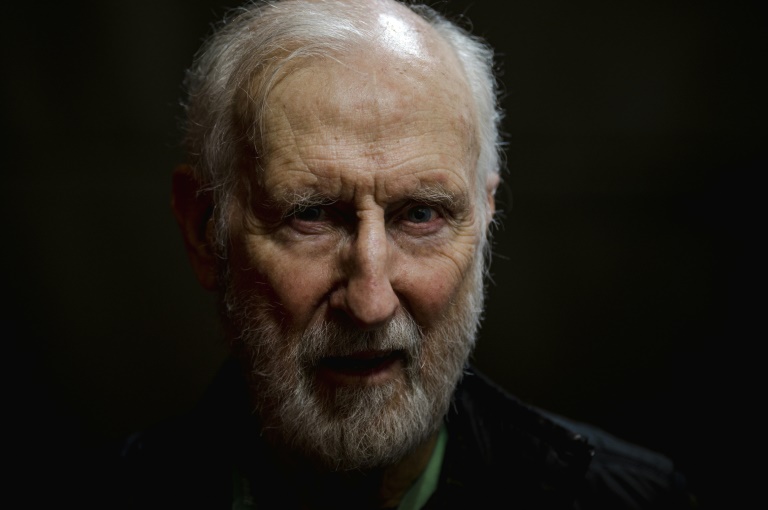
Actor James Cromwell bashes world leaders for absence at UN nature summit

A high-stakes UN summit in Canada seen as vital to saving the world’s biodiversity has failed to attract a single world leader beyond the host country’s prime minister Justin Trudeau.

It was left therefore to actor James Cromwell, a man who has played a US president four times on screen, to lend the event some star power and try to inject a sense of urgency into talks.

At stake is the future of the planet as habitat destruction, pollution, and the climate crisis imperil ecosystems and drive a million species that depend on them to the brink of extinction.

“Capitalism is a cancer that has metastasized from its origins in Europe, and now covers every aspect of our lives all over the entire world,” said the lanky 82-year-old, in fiery remarks that channeled his anti-corporate character in the HBO series Succession.

“It is rapacious. It is cruel, it is destructive. And it does not work,” he added.

“We’re in now the Sixth Mass extinction,” he went on, “brought on by the stupidity and the unwillingness of human beings, mostly white human beings, to take responsibility for what they’ve created. What they have created is a goddamn mess!”

Cromwell, who recalled his own activism from the Civil Rights and anti-Vietnam war movements of the 1960s to recent arrests while campaigning for animal rights issues (he became vegan while shooting the 1995 film “Babe”), said it was “deplorable” that heads of state and government had snubbed the UN meeting, called COP15.

By contrast, more than 120 leaders attended UN climate talks in Egypt in November.

“It’s tragic that it takes an actor to come up here to talk about issues,” he said, calling out French President Emmanuel Macron for choosing to fly to Qatar to watch the soccer World Cup instead of coming to the COP. “Have you no shame?”

Cromwell was invited to attend by outspoken nonprofit Avaaz,  which also gathered messages of support from other celebrities including Olivia Colman, Joaquin Phoenix and Jack Black.

“Once we raise awareness, we raise also the pressure and accountability of governments,” said Oscar Soria of Avaaz.

US Fed downshifts campaign to tame inflation but still 'some ways to go'

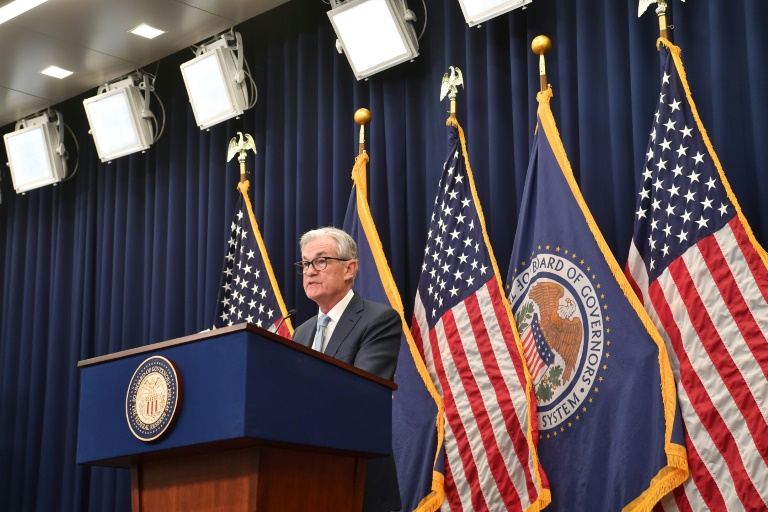
The Federal Reserve moderated its all-out campaign to cool US inflation Wednesday, lifting the benchmark lending rate by a half percentage point though warning there is still “some ways to go.”

America’s central bank has taken aggressive moves to ease demand in the world’s biggest economy, hiking rates seven times this year with interest-sensitive sectors like housing already reeling from tightening policy.

Its latest increase takes the rate to 4.25-4.50 percent, the highest since 2007.

But officials signaled that their battle to cool the US economy is not yet over.

In a statement, the Fed’s policy-setting Federal Open Market Committee (FOMC) said it “anticipates that ongoing increases in the target range will be appropriate” to reach a stance restrictive enough to rein in inflation.

A quarterly forecast released with Wednesday’s decision also saw policymakers downgrade US economic growth to 0.5 percent in 2023, just narrowly avoiding a contraction.

They also raised their unemployment and inflation estimates for next year.

“Fifty basis points is still a historically large increase, and we still have some ways to go,” Fed Chair Jerome Powell told reporters in a press briefing after the rate announcement, and markets slumped on the central bank’s signals.

In their projections, policymakers expect rates would land higher than expected at 5.1 percent next year, according to a median forecast.

“I wouldn’t see us considering rate cuts until the committee is confident that inflation is moving down to two percent in a sustained way,” Powell said.

– ‘More evidence’ –

While consumer inflation eased in October and November, Powell said “it will take substantially more evidence to give confidence that inflation is on a sustained downward path.”

Households have been squeezed by red-hot prices, with conditions worsened by surging food and energy costs after Russia’s invasion of Ukraine, and fallout from China’s zero-Covid measures.

To make borrowing more expensive, the Fed has raised interest rates seven times including four bumper 0.75-point increases.

Asked if a “soft landing” for the economy remains achievable, Powell said this would be more likely if lower inflation readings persist.

Nancy Vanden Houten of Oxford Economics said: “The projections don’t explicitly call for a recession, although a rise in the unemployment rate by as much as the Fed now forecasts is consistent with a recession.”

The Fed lifted its median jobless rate forecast to 4.6 percent on Wednesday.

But Powell said: “I don’t think anyone knows whether we’re going to have a recession or not, and if we do, whether it’s going to be a deep one or not.”

– ‘Hawkish’ –

“The new forecasts are more hawkish than we expected,” said economist Ian Shepherdson of Pantheon Macroeconomics, referring to the higher inflation and unemployment rate expectations, and lower GDP growth projection.

“If policymakers implement all the hikes they now expect, they will have done too much,” he cautioned.

Analysts have warned that further tightening by the Fed risks cooling the economy at a time when it is already under pressure heading into 2023.

The latest increase suggests the Fed has “moved to phase two of its rate hiking cycle,” said Rubeela Farooqi of High Frequency Economics in a note.

This means it is shifting from its more aggressive path to “a slower pace of rate increases until rates are in a sufficiently restrictive stance,” she said.

Powell added Wednesday that the Fed’s focus now is “on moving our policy stance to one that is restrictive enough to ensure a return of inflation to our two percent goal over time.”

Consumer inflation came in at 7.1 percent year-on-year in November, according to government figures.

“We think that we’ll have to maintain a restrictive stance of policy for some time,” Powell said. 

“Historical experience cautions strongly against prematurely loosening policy,” he added.

US Fed downshifts campaign to tame inflation but still 'some ways to go'

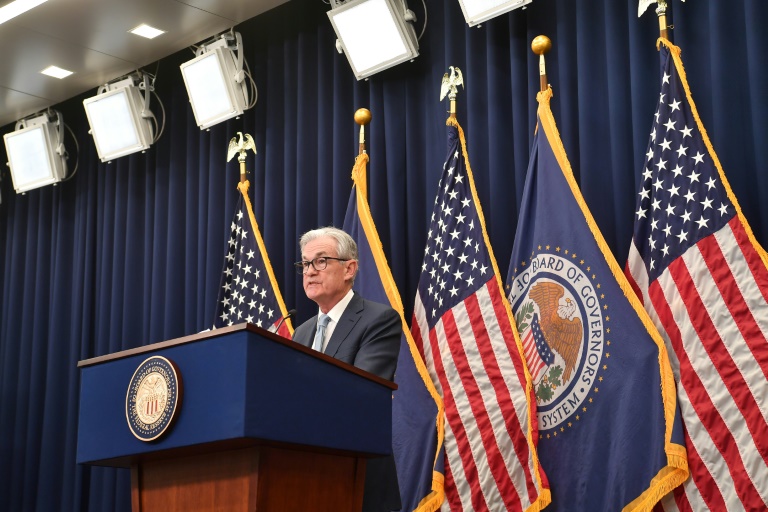
The Federal Reserve moderated its all-out campaign to cool US inflation Wednesday, lifting the benchmark lending rate by a half percentage point though warning there is still “some ways to go.”

America’s central bank has taken aggressive moves to ease demand in the world’s biggest economy, hiking rates seven times this year with interest-sensitive sectors like housing already reeling from tightening policy.

Its latest increase takes the rate to 4.25-4.50 percent, the highest since 2007.

But officials signaled that their battle to cool the US economy is not yet over.

In a statement, the Fed’s policy-setting Federal Open Market Committee (FOMC) said it “anticipates that ongoing increases in the target range will be appropriate” to reach a stance restrictive enough to rein in inflation.

A quarterly forecast released with Wednesday’s decision also saw policymakers downgrade US economic growth to 0.5 percent in 2023, just narrowly avoiding a contraction.

They also raised their unemployment and inflation estimates for next year.

“Fifty basis points is still a historically large increase, and we still have some ways to go,” Fed Chair Jerome Powell told reporters in a press briefing after the rate announcement, and markets slumped on the central bank’s signals.

In their projections, policymakers expect rates would land higher than expected at 5.1 percent next year, according to a median forecast.

“I wouldn’t see us considering rate cuts until the committee is confident that inflation is moving down to two percent in a sustained way,” Powell said.

– ‘More evidence’ –

While consumer inflation eased in October and November, Powell said “it will take substantially more evidence to give confidence that inflation is on a sustained downward path.”

Households have been squeezed by red-hot prices, with conditions worsened by surging food and energy costs after Russia’s invasion of Ukraine, and fallout from China’s zero-Covid measures.

To make borrowing more expensive, the Fed has raised interest rates seven times including four bumper 0.75-point increases.

Asked if a “soft landing” for the economy remains achievable, Powell said this would be more likely if lower inflation readings persist.

Nancy Vanden Houten of Oxford Economics said: “The projections don’t explicitly call for a recession, although a rise in the unemployment rate by as much as the Fed now forecasts is consistent with a recession.”

The Fed lifted its median jobless rate forecast to 4.6 percent on Wednesday.

But Powell said: “I don’t think anyone knows whether we’re going to have a recession or not, and if we do, whether it’s going to be a deep one or not.”

– ‘Hawkish’ –

“The new forecasts are more hawkish than we expected,” said economist Ian Shepherdson of Pantheon Macroeconomics, referring to the higher inflation and unemployment rate expectations, and lower GDP growth projection.

“If policymakers implement all the hikes they now expect, they will have done too much,” he cautioned.

Analysts have warned that further tightening by the Fed risks cooling the economy at a time when it is already under pressure heading into 2023.

The latest increase suggests the Fed has “moved to phase two of its rate hiking cycle,” said Rubeela Farooqi of High Frequency Economics in a note.

This means it is shifting from its more aggressive path to “a slower pace of rate increases until rates are in a sufficiently restrictive stance,” she said.

Powell added Wednesday that the Fed’s focus now is “on moving our policy stance to one that is restrictive enough to ensure a return of inflation to our two percent goal over time.”

Consumer inflation came in at 7.1 percent year-on-year in November, according to government figures.

“We think that we’ll have to maintain a restrictive stance of policy for some time,” Powell said. 

“Historical experience cautions strongly against prematurely loosening policy,” he added.

Erdogan backs Turkmen gas link easing dependence on Russia

Turkish President Recep Tayyip Erdogan on Wednesday backed the creation of a new natural gas pipeline that could ease Europe’s dependence on Russia by linking up with energy-rich Turkmenistan.

The Turkish leader’s remarks came during a three-way summit with the presidents of Turkmenistan and Azerbaijan in the isolated Central Asian state’s city of Awaza.

The meeting came with Europe trying to end its dependence on Russian energy following the Kremlin’s invasion of Ukraine.

Erdogan has tried to play a role of a middle man in the conflict by maintaining close working relations with Russian President Vladimir Putin while supplying Kyiv with arms.

He has backed Putin’s idea of creating a new “gas hub” in Turkey that could supply European clients while bypassing existing pipelines running through Ukraine and under the Baltic Sea.

But he also lent his support on Wednesday to a new project that could link Turkmenistan with an existing pipeline running from Turkey to Azerbaijan.

“We carry Caspian Sea gas to Europe via (the existing) corridor, which is the backbone of the Trans-Anatolian natural gas pipeline,” Erdogan said in remarks released by his office.

“We need to launch work on transporting Turkmen natural gas to Western markets in the same way.”

The US Energy Information Administration lists Turkmenistan as the world’s sixth-largest holder of proven natural gas reserves.

Much of its past gas volumes have reached world markets via pipeline running to Russia.

But its has also been ramping up supplies to China and is looking for ways to access other markets via Turkey.

Erdogan has long dreamt of using Turkey’s location on the edges of the Middle East and Europe to turn it into one of the world’s main centres of the energy trade.

Central Asian countries have also been reassessing their once-close relations with Moscow since Russia’s war on Ukraine.

Russia’s decision to limit gas supplies in retaliation for Western sanctions have left European countries scambling for supplies as they head into the cold winter months.

Migrants amass on Mexico-US border as health policy to expire

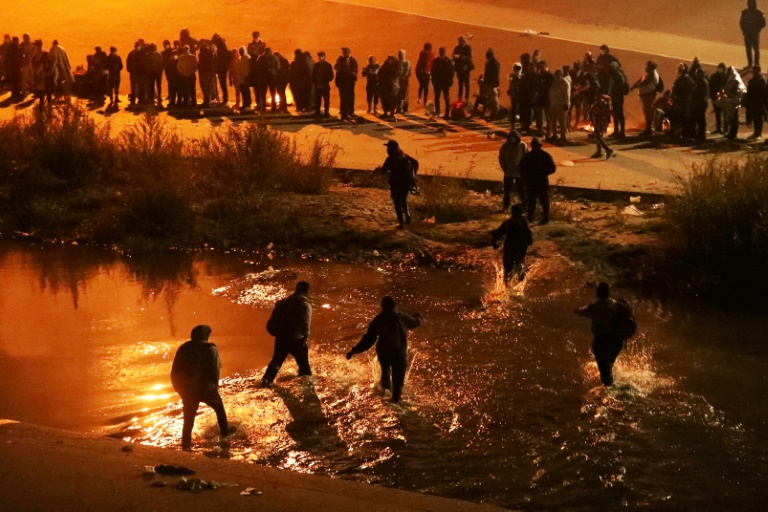
Hundreds of migrants amassed Wednesday on the Mexican border, waiting for the expiry next week of a Covid-19 health measure that automatically blocks asylum seekers from entering the United States.

Long lines of migrants from Nicaragua, Venezuela, Colombia, Cuba, and elsewhere in Latin America began forming on Sunday in freezing temperatures, in the hopes of being allowed to seek asylum in the United States.

“We are seeing hundreds of people who are very cold, do not have food, and are trying to warm themselves a bit,” said Fernando Garcia of the NGO Border Network for Human Rights.

The unusual influx comes after a US federal judge in November ruled that the government could no longer use the controversial public health rules under Title 42 to block the entry of asylum seekers.

The measure, originally placed on the books in the 19th century to control contagious diseases, allows for the immediate removal of any foreigner or non-resident trying to enter the country without a visa.

It has been used to expel hundreds of thousands of people since being invoked by former president Donald Trump in the early days of the Covid-19 pandemic, and has been criticized as cruel and ineffective.

The measure expires at midnight on December 21, which has prompted migrants to amass at the border to try to enter the United States.

“This should not have been the case,” said Garcia. “It is the breakdown of the migration policy of the United States and Mexico.”

S.Africa's power utility CEO resigns amid energy crisis

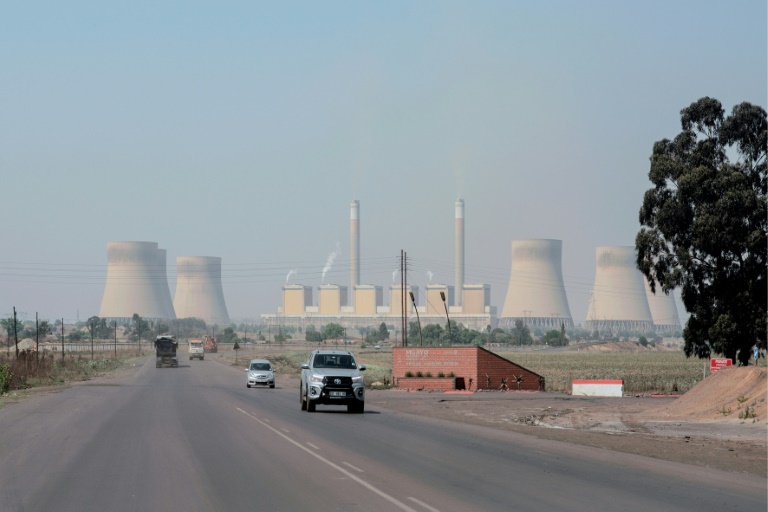
The head of South Africa’s beleaguered state-owned power utility Eskom, Andre de Ruyter, has resigned, the company said on Wednesday, as the country suffers from a worsening energy crisis. 

De Ruyter, a former packaging executive who took over as CEO in 2020, will stay on until the end of March next year to give the firm time to look for a successor, Mpho Makwana, the chairman of Eskom’s board said in a statement. 

“It has been an honour and privilege to serve Eskom and South Africa. I wish all the hard working people of Eskom well,” said De Ruyter.

Scheduled blackouts have burdened Africa’s most industrialised economy for years, with Eskom failing to keep pace with demand and maintain its ageing coal power infrastructure.

But the outages reached new extremes this year. 

Record power cuts have cost the country hundreds of millions of dollars in lost output, disrupting commerce and industry and angering the population, with lights going off often several times a day for a few hours. 

Last month, Eskom, which is struggling under a 400-billion-rand ($23.3 billion) debt — half of which the government has pledged to take on — said it had run out of funds to buy diesel to stabilise the system. 

De Ruyter had come under pressure from some government ministers that accused the company of not properly attending to the crisis, which analysts say is the result of years of mismanagement, disrepair and corruption.

“At a time when de Ruyter needed all the support he could muster and a free hand to deal with the most pressing challenge facing the country, he has been sacrificed at the altar of political expediency,” said Ghaleb Cachalia a lawmaker with the opposition Democratic Alliance (DA) party.

Public Enterprises Minister, Pravin Gordhan thanked De Ruyter for his “sacrifice and resilience in a difficult job”.

Red Cross fears 'enormous suffering' in 2023

The head of the International Committee of the Red Cross warned Wednesday “an enormous level of suffering” awaits the world in 2023 with famine spreading.

Mirjana Spoljaric, who took over at the ICRC in October, told a Geneva press conference: “We expect an enormous level of suffering.

“As the world is trending at the moment we don’t see any easing of the humanitarian pressures, they will be immense potentially,” she said.

“There is a possibility that we will see very high levels of hunger in many parts of the world and insecurity in general.”

Not only will prices be high for food, it will “simply not be available in the same amounts due to a lack of fertilisers and due to, again, the impact of climate change.”

She cited Somalia as a country of particular concern.

“In our four hospitals we have seen a tenfold increase of wounds caused by violence, violent, armed violence, conflict and we are also witnessing a three fold increase of malnutrition in children.

“The situation is extremely alarming,” Spoljaric said, adding her next trip would be to the Horn of Africa were some 20 million people are suffering from malnutrition.

The ICRC is seeking 2.8 billion euros for next year, up on last year’s 2.4 billion.

But the ICRC chief said it might not be enough, “depending on how the situation evolves”.

Red Cross fears 'enormous suffering' in 2023

The head of the International Committee of the Red Cross warned Wednesday “an enormous level of suffering” awaits the world in 2023 with famine spreading.

Mirjana Spoljaric, who took over at the ICRC in October, told a Geneva press conference: “We expect an enormous level of suffering.

“As the world is trending at the moment we don’t see any easing of the humanitarian pressures, they will be immense potentially,” she said.

“There is a possibility that we will see very high levels of hunger in many parts of the world and insecurity in general.”

Not only will prices be high for food, it will “simply not be available in the same amounts due to a lack of fertilisers and due to, again, the impact of climate change.”

She cited Somalia as a country of particular concern.

“In our four hospitals we have seen a tenfold increase of wounds caused by violence, violent, armed violence, conflict and we are also witnessing a three fold increase of malnutrition in children.

“The situation is extremely alarming,” Spoljaric said, adding her next trip would be to the Horn of Africa were some 20 million people are suffering from malnutrition.

The ICRC is seeking 2.8 billion euros for next year, up on last year’s 2.4 billion.

But the ICRC chief said it might not be enough, “depending on how the situation evolves”.

Close Bitnami banner
Bitnami