AFP

China Covid 'explosion' began before restrictions eased: WHO

The flare-up in Covid-19 cases in China was well underway before the government began easing restrictions, the World Health Organization said on Wednesday.

Officials in China warned that cases are rising rapidly in Beijing after the government abruptly abandoned its zero-Covid policy, scrapping mass testing and quarantines after nearly three years of attempting to stamp out the virus.

“The explosion of cases in China is not due to the lifting of Covid restrictions. The explosion of cases in China had started long before any easing of the zero-Covid policy,” WHO emergencies chief Michael Ryan told reporters.

“There’s a narrative that, in some way, China lifted the restrictions and all of a sudden, the disease is out of control,” he added at the UN health agency’s headquarters in Geneva.

“The disease was spreading intensively because the control measures in themselves were not stopping the disease. 

“I believe the Chinese authorities have decided strategically that that, for them, is not the best option anymore,” he said, referring to the control measures.

Ryan said the Omicron variant of the virus, which was first detected around a year ago, meant China-style restrictions were not as useful as they had been against previous strains circulating when vaccination coverage was low.

“The super-transmissibility of Omicron really took away the opportunity for using public health and social measures aimed at full containment of the virus,” he told a press conference with the UN correspondents’ association.

Ryan said such measures had been primarily used to protect health systems while vaccination levels increased, but now their usefulness had changed.

“There is data from places like Hong Kong that show that the inactivated Chinese vaccines, with the addition of a third dose, performed very, very well. But it did require that third dose to show that effect,” he said.

And he stressed: “The increased intensity of transmission was occurring long before there was any change in the policy.”

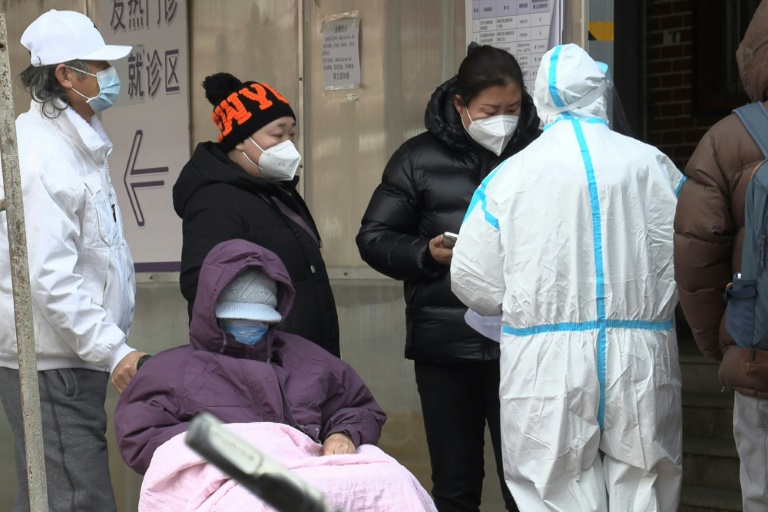
Chinese leaders are determined to press ahead even though the country is facing a surge in cases that experts fear it is ill-equipped to manage. 

Millions of vulnerable elderly people are still not fully vaccinated and underfunded hospitals lack the resources to deal with an influx of infected patients.
Germany signs contract to buy F-35 jets

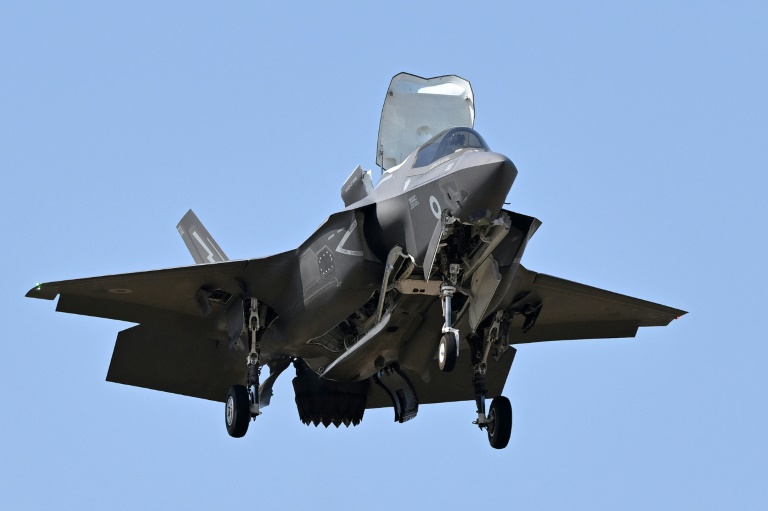
Germany on Wednesday signed a deal to buy dozens of US-made F-35 fighter jets, US officials said, part of the country’s military overhaul following Russia’s invasion of Ukraine. 

“The German F-35 programme will ensure the continuation of Germany’s alliance commitments and guarantee NATO’s credible deterrence in the future,” said the US embassy in Berlin in a statement. 

The 35 jets, the world’s most advanced warplanes, should be delivered between 2026 and 2029, it said. 

Berlin had announced in March the planned purchase of the aircraft made by Lockheed Martin to replace its ageing Tornado fleet. 

But the defence ministry in Berlin earlier this month raised concerns about the plan, warning of “delays and additional costs” in the nearly 10 billion euro ($10.5 billion) acquisition, in a letter to parliament’s budget committee. 

Germany’s lower house of parliament still decided to press ahead and approve the acquisition on Wednesday. 

“The German-US defence partnership has never been stronger and is a central pillar of NATO’s transatlantic partnership,” said the embassy statement. 

The cost of the jets is to come from a planned 100 billion euro investment in the armed forces, unveiled following the outbreak of the Ukraine war in a bid to overhaul Germany’s underfunded military.

COP15's key aim: protect 30% of the planet

Headlining the COP15 biodiversity talks is a drive to secure 30 percent of Earth’s land and oceans as protected zones by 2030 — the most disputed item on the agenda.

Some campaigners say the so-called “30×30” target is nature’s equivalent of the landmark 1.5C global warming target set at climate talks under the Paris Agreement.

But delegates negotiating a broad accord for protecting nature are divided over how to pay for “30×30” and how the measure would be applied. 

Here are some facts about the initiative, one of numerous targets under discussion at the talks taking place in Montreal until December 19.

– Too much? –

Fearful that COP15 will end with a less ambitious agreement, scientists and environmentalists insist 30 percent must be a minimum target for protecting nature, not a ceiling.

Currently, 17 percent of land and eight percent of the seas have protected status.

South Africa, Russia, and Saudi Arabia have argued for a target of 20 percent. Other countries, such as China, Japan and South Korea support 30 percent for land but want a less arduous target of 20 percent for the seas.

The target would be applied worldwide, so countries with big populations or small shorelines would not be obliged to contribute a disproportionate share.

Some countries would shoulder higher percentages, particularly ones that are home to areas of rich biodiversity, or places of strategic importance for arresting climate change — such as the Amazon and the Congo Basin.

– Not enough? –

Some say the 30 percent target is not ambitious enough.

“Thirty percent would be a laudatory goal if the year were 1952. But it’s 2022 and we don’t have the luxury of waiting,” said Eric Dinerstein, a biologist who authored “Global Safety Net,” a study on areas in need of protection.

“The simplest way to say it, as we biologists would like to put it, is that 50 percent is our 1.5 degrees.”

Oscar Soria of the civil campaign group Avaaz called too for a 50-percent target, in line with other NGOs such as Wild Foundation and One Earth.

He argued that if governments recognized indigenous peoples’ and other communities’ rights over their territory, the 30 percent protection target would have already been achieved.

Accounting for six percent of the world’s population and occupying 25 percent of its land, indigenous people are key players in the Montreal talks.

“We are here to send the message that we cannot achieve ambitious conservation aims unless our rights are fully taken into account,” said Jennifer Corpuz, a lawyer and member of the International Indigenous Forum on Biodiversity.

– Subject to conditions –

Many NGOs say they will accept a 30 percent target if certain criteria are met, such as only including ecologically significant land in the protected areas and ensuring effective protection measures.

Some are demanding that a fixed percentage of the land be classed as strongly or totally protected — with barely any human activity.

Most of these elements have yet to be approved in the draft agreements under discussion.

Campaigners are therefore pressing for action from one of the negotiating blocs at COP15: the High Ambition Coalition for Nature and People. The bloc is jointly led by Costa Rica, France and Britain and backed by 130 countries that support the 30 percent target.

Some are limiting the scope of these demands, however.

“If the criteria are too restrictive, countries will go and protect areas that are not of great interest for biodiversity,” said one Western negotiator who asked not to be named.

“But the richest areas are also the ones with the best resources: they have to be managed sustainably but not prohibited,” the negotiator added.

“There is a lot of talk about 30 percent, but what is key is also what is done to nature in the remaining 70 percent.”

Other key aims at stake in the talks are defending biodiversity in land management, reducing the use of pesticides, and restoring damaged land.

Twitter suspends account tracking Elon Musk's jet

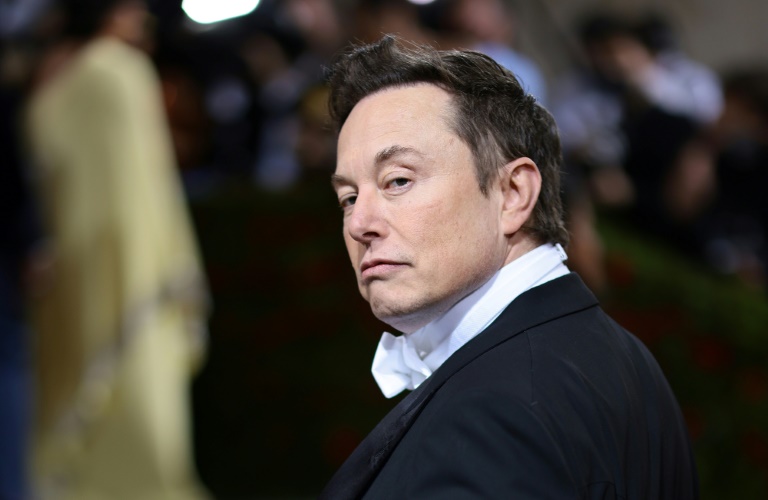
A Twitter account that tracked flights of Elon Musk’s private jet put out word Wednesday that it was suspended by the platform despite the billionaire’s talk of free speech.

“Well it appears @ElonJet is suspended,” creator Jack Sweeney tweeted from his personal @JxckSweeney account.

Sweeney attracted attention with his Twitter account that tracks the movements of the billionaire’s plane and even rejected Musk’s offer of $5,000 to shut down @ElonJet, which had hundreds of thousands of followers.

Musk had gone public saying he would not touch the account after buying Twitter in a $44 billion deal as part of his commitment to free speech at the platform.

Sweeney referred people to accounts he runs at social media services such as Instagram, Facebook and Mastodon for his latest posts regarding Musk’s jet.

Musk’s jet “flew from LA to Austin last night after my account was suspended on Twitter,” he said in an Instagram post Wednesday.

Flight-following websites and several Twitter accounts offer real-time views of air traffic, but that exposure draws pushback ranging from complaints to equipment seizures.

US rules require planes in designated areas be equipped with ADS-B technology that broadcasts aircraft positions using signals that relatively simple devices can pick up.

Figuring out or confirming to whom a plane actually belongs can require some sleuthing, said Sweeney, who filed a public records request with the US government in order to confirm Musk’s ownership of his plane.

Suspension of the account came a day after Twitter co-founder and former chief Jack Dorsey published an online post defending the tech firm’s workers, who Musk has criticized for decisions regarding content moderation.

“I’m a strong believer that any content produced by someone for the internet should be permanent until the original author chooses to delete it,” Dorsey wrote.

“It should be always available and addressable. Content takedowns and suspensions should not be possible.”

tWitch, Ellen DeGeneres DJ, dies in apparent LA suicide

Stephen “tWitch” Boss, the DJ from “The Ellen DeGeneres Show,” has died, his wife has said, in what Los Angeles media reported was an apparent suicide.

Entertainment website TMZ said the DJ and dancer was found in a hotel in the city on Tuesday with what appeared to be a self-inflicted gunshot wound.

The outlet said the 40-year-old’s wife, Allison Holker, had contacted police because she was concerned for her husband.

His body was discovered a short time later.

“It is with the heaviest of hearts that I have to share my husband Stephen has left us,” Holker, 34, said, according to multiple media.

“Stephen lit up every room he stepped into. He valued family, friends and community above all else, and leading with love and light was everything to him. He was the backbone of our family, the best husband and father, and an inspiration to his fans.”

A spokesman for Los Angeles Police Department said officers had responded to a call mid-morning Tuesday involving the death of a man.

The Los Angeles County coroner’s office said an autopsy was due to be carried out on 40-year-old Stephen Boss, who they said died Tuesday at a “hotel/motel.”

Boss became a fixture on “The Ellen DeGeneres Show” after he joined in 2014.

He stayed with the program until it ended this year.

He had also appeared on dance competition show “So You Think You Can Dance”, and had roles in movies “Step Up” and “Magic Mike XXL.”

Along with his wife Holker, he hosted reality show “Disney’s Fairy Tale Weddings.” 

The couple, who married in 2013, have three children.

“To say he left a legacy would be an understatement, and his positive impact will continue to be felt,” Holker said in her statement. 

“I am certain there won’t be a day that goes by that we won’t honor his memory.”

DeGeneres took to social media after news of the tragedy broke, posting a picture of her and Boss hugging.

“I’m heartbroken,” she wrote on Instagram.

“tWitch was pure love and light. He was my family, and I loved him with all my heart. I will miss him.”

EU vows investment in push to boost SE Asia ties

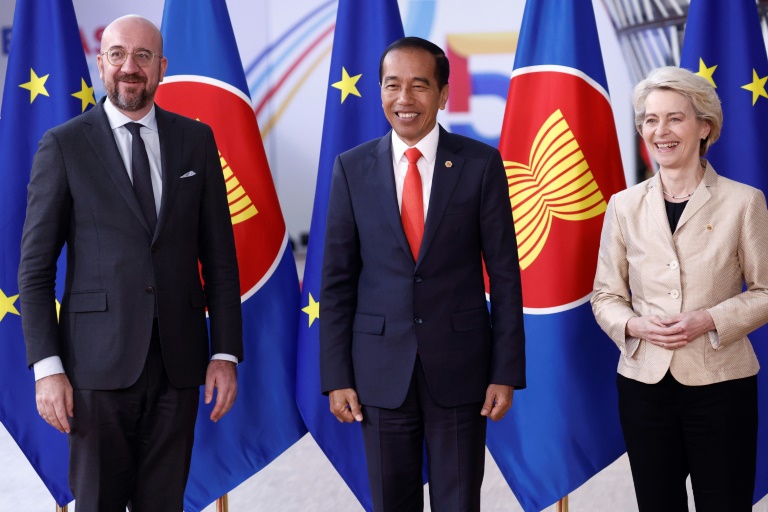
The EU vowed billions of dollars of investment in southeast Asia Wednesday, as leaders looked to bolster ties at a summit in the face of the Ukraine war and challenges from China. 

The European Union billed its first full summit with the Association of Southeast Asian Nations (ASEAN) in Brussels as a chance to push trade relations with the region’s fast-growing economies. 

“There might be many, many miles that divide us, but there are much more values that unite us,” European Commission President Ursula von der Leyen told the gathered leaders.

But different opinions over Russia’s war in Ukraine and concerns about tensions with China over a key shipping route for global trade loomed over the meeting. 

The EU has been on a diplomatic push to galvanise a global front against Moscow as its invasion has sent economic and political shock waves around the world. 

ASEAN’s 10 nations — nine of which were represented, after Myanmar’s junta was not invited — have been divided in their response to the Kremlin’s war on Ukraine.

Singapore has gone along with Western sanctions on Russia, while Vietnam and Laos, which have close military ties to Moscow, have remained more neutral. 

Along with Thailand, they abstained from a United Nations vote in October condemning Russia’s attempted annexation of regions of Ukraine seized since February.    

The diverging views led to intense wrangling over a declaration from the summit as the EU pushed for stronger language to condemn Moscow.

The final statement said “most members” decried Russia’s war, but conceded there were also “other views and different assessments”. 


– China looms –

While Europe pressed for a tougher response to Russia, another global giant figured prominently at the summit. 

Chinese claims over the South China Sea have set it against some neighbours and sparked fears in Europe over trade flows through the key global thoroughfare. 

But China remains the biggest trade partner for ASEAN and many in the region are wary of distancing themselves from their giant neighbour.

The EU is keen to pitch itself as a reliable partner for southeast Asia’s dynamic economies amid the growing rivalry between Beijing and Washington. 

The EU and ASEAN are each other’s third-largest trading partner and Europe sees the region as a key source for raw materials and wants to increase access to its booming markets.

EU nations are pushing to diversify key supply chains away from China as the war in Ukraine has highlighted Europe’s vulnerabilities. 

Von der Leyen offered an investment package over the next five years worth 10 billion euros ($10.6 billion) under the EU’s Global Gateway strategy designed as a counterweight to China’s largesse.

But ASEAN leaders insisted they would not be forced to make a choice between the global players competing for influence.  

“We absolutely refuse to go back to the situation of the Cold War where we have to pick sides in terms of who the superpower is that we are aligned with,” said Filipino President Ferdinand Marcos Jr.

– Sex law furore –

ASEAN and the EU suspended their push for a joint trade deal over a decade ago — but the bloc’s top officials said they hoped to relaunch efforts for a broad agreement. 

So far deals with Vietnam and Singapore are in place, and the EU is looking now to make progress with ASEAN’s largest economy Indonesia and to resume talks with Malaysia, Philippines and Thailand.

One issue that had risked clouding discussions was a new law in Indonesia criminalising sex outside marriage that has sparked fears for foreign visitors to the country.

But Indonesia’s President Joko Widodo pointedly insisted that the EU-ASEAN relationship needed to be based more on “equality”. 

“There must be no imposition of views,” he said. “There must not be one who dictates over the other and thinks that my standard is better than yours.”

EU vows investment in push to boost SE Asia ties

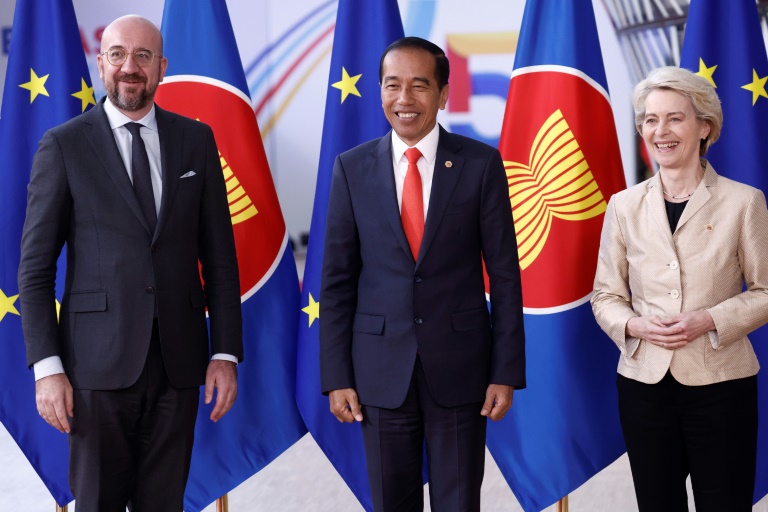
The EU vowed billions of dollars of investment in southeast Asia Wednesday, as leaders looked to bolster ties at a summit in the face of the Ukraine war and challenges from China. 

The European Union billed its first full summit with the Association of Southeast Asian Nations (ASEAN) in Brussels as a chance to push trade relations with the region’s fast-growing economies. 

“There might be many, many miles that divide us, but there are much more values that unite us,” European Commission President Ursula von der Leyen told the gathered leaders.

But different opinions over Russia’s war in Ukraine and concerns about tensions with China over a key shipping route for global trade loomed over the meeting. 

The EU has been on a diplomatic push to galvanise a global front against Moscow as its invasion has sent economic and political shock waves around the world. 

ASEAN’s 10 nations — nine of which were represented, after Myanmar’s junta was not invited — have been divided in their response to the Kremlin’s war on Ukraine.

Singapore has gone along with Western sanctions on Russia, while Vietnam and Laos, which have close military ties to Moscow, have remained more neutral. 

Along with Thailand, they abstained from a United Nations vote in October condemning Russia’s attempted annexation of regions of Ukraine seized since February.    

The diverging views led to intense wrangling over a declaration from the summit as the EU pushed for stronger language to condemn Moscow.

The final statement said “most members” decried Russia’s war, but conceded there were also “other views and different assessments”. 


– China looms –

While Europe pressed for a tougher response to Russia, another global giant figured prominently at the summit. 

Chinese claims over the South China Sea have set it against some neighbours and sparked fears in Europe over trade flows through the key global thoroughfare. 

But China remains the biggest trade partner for ASEAN and many in the region are wary of distancing themselves from their giant neighbour.

The EU is keen to pitch itself as a reliable partner for southeast Asia’s dynamic economies amid the growing rivalry between Beijing and Washington. 

The EU and ASEAN are each other’s third-largest trading partner and Europe sees the region as a key source for raw materials and wants to increase access to its booming markets.

EU nations are pushing to diversify key supply chains away from China as the war in Ukraine has highlighted Europe’s vulnerabilities. 

Von der Leyen offered an investment package over the next five years worth 10 billion euros ($10.6 billion) under the EU’s Global Gateway strategy designed as a counterweight to China’s largesse.

But ASEAN leaders insisted they would not be forced to make a choice between the global players competing for influence.  

“We absolutely refuse to go back to the situation of the Cold War where we have to pick sides in terms of who the superpower is that we are aligned with,” said Filipino President Ferdinand Marcos Jr.

– Sex law furore –

ASEAN and the EU suspended their push for a joint trade deal over a decade ago — but the bloc’s top officials said they hoped to relaunch efforts for a broad agreement. 

So far deals with Vietnam and Singapore are in place, and the EU is looking now to make progress with ASEAN’s largest economy Indonesia and to resume talks with Malaysia, Philippines and Thailand.

One issue that had risked clouding discussions was a new law in Indonesia criminalising sex outside marriage that has sparked fears for foreign visitors to the country.

But Indonesia’s President Joko Widodo pointedly insisted that the EU-ASEAN relationship needed to be based more on “equality”. 

“There must be no imposition of views,” he said. “There must not be one who dictates over the other and thinks that my standard is better than yours.”

Study explains surprise surge in methane during pandemic lockdown

A mysterious surge in planet-heating atmospheric methane in 2020 despite Covid lockdowns that reduced many human-caused sources can be explained by a greater release from nature and, surprisingly, reduced air pollution, scientists said Wednesday.

Methane stays in the atmosphere only a fraction as long as carbon dioxide, but is far more efficient at trapping heat and is responsible for roughly 30 percent of the global rise in temperatures to date.

Released from the oil and gas, waste and agriculture sectors, as well as through biological processes in wetlands, the powerful greenhouse gas is a key target for efforts to curb global warming. 

But a new study published in the journal Nature suggests that cutting methane may be even more of a challenge — and more urgent — than is currently understood. 

Researchers in China, France, the US and Norway found that efforts to reduce CO2 emissions and air pollution will affect the atmospheric process that scrubs methane from the air. That means the planet-heating gas will linger longer and accumulate faster.

If the world is to meet the challenge of keeping warming to under 2 degrees Celsius since the pre-industrial era, “we will have to act even more quickly and even more strongly to reduce methane”, said Philippe Ciais who co-led the research at France’s Laboratory for the Sciences of Climate and Environment (LSCE).

The researchers focused on the mystery of the concentrations of methane in the atmosphere in 2020, which had their biggest increase on record even as Covid-19 lockdowns saw carbon dioxide emissions fall.

– ‘Bad news’ –

What they found is potentially two pieces of “bad news” for climate change, said co-author Marielle Saunois of (LSCE). 

Firstly, they looked at inventories to assess fossil fuel and agricultural methane emissions and found that human sources of methane did indeed fall slightly in 2020.

Then they used ecosystem models to estimate that warmer and wetter conditions over parts of the northern hemisphere caused a surge in emissions from wetlands.

That confirms other research and is worrying because the more methane released, the more warming, potentially creating a feedback loop largely outside of human control. 

But that is only half of the story, the researchers found.

Researchers also looked at changes in atmospheric chemistry, because this provides a “sink” for methane, effectively cleaning it out of the air in a relatively short period by converting it to water and CO2 when it reacts with the hydroxyl radical (OH).

These hydroxyl radicals are present in tiny quantities and have a lifetime of less than a second, but they remove about 85 percent of methane from the atmosphere. 

They are the “Pac-Man of the atmosphere”, said Ciais: “As soon as they see something they eat it and then disappear.”

– ‘Dramatic’ –

The researchers simulated changes in OH using human sources of carbon monoxide, hydrocarbons and nitrogen oxide emissions that altogether affect the production and loss of hydroxyl radicals in the atmosphere. 

They found that OH concentrations decreased by around 1.6 percent in 2020 from the year before, largely because of a fall in nitrogen oxide (NOx) emissions caused by the Covid lockdowns. Nitrogen oxide is emitted into the air primarily from burning fuel. 

A 20 percent reduction in NOx could increase methane twice as fast, Cias told a press briefing, adding: “This has surprised us greatly.”

The researchers said their study helps to solve the riddle of the rise in methane in the atmosphere in 2020.

But they acknowledged that more work would have to be done to answer the next mystery: why the rise in methane concentrations hit a new record in 2021. 

Ciais said lower nitrogen oxide emissions from transport in the United States and India, as well as continued low levels of air travel due to the pandemic may have played a part. 

Euan Nisbet, a professor of Earth Sciences at Royal Holloway University who was not involved in the research, said the jump in methane in 2020 was a “major shock”.  

“Even more worrying is the rise in methane in 2021 — this was after the major Coronavirus shutdowns when the economy was recovering,” he told AFP. 

“As yet we don’t have detailed studies but something very dramatic seems to be going on.” 

Ukraine downs swarm of attack drones over Kyiv

Ukraine said Wednesday it had shot down more than a dozen Iranian-made drones launched at the capital by Russian forces in their latest assault on Kyiv. 

The attack came as the Kremlin promised no let-up to fighting over Christmas and as Ukraine leader Volodymyr Zelensky urged European leaders to back a court to try Russian officials.

“The terrorists started this morning with 13 Shaheds,” Ukrainian President Volodymyr Zelensky said, referring to the Iran-made weapons.

“All 13 were shot down” he added, urging residents to heed air raid sirens.

The national energy provider Ukrenergo said no electricity facilities had been damaged in the attack, crediting Ukrainian air defences for their “brilliant” work.

Ukraine has been subjected to nearly 10 months of air raid sirens and frequent aerial attacks since Russia invaded Ukraine in February and tried to capture the capital. 

But since a series of key battlefield setbacks this summer and autumn, Russia switched began systematically targeting critical infrastructure in Ukraine.

As temperatures drop, the missile and drone attacks disrupted electricity, water and heat to millions in Ukraine.

– ‘Nearly 7 million children’ at risk –

The strikes targeting Ukrainian energy infrastructure have piled pressure on the country’s power grid, whose operators have for weeks been forced to implement rolling blackouts.

They left “nearly seven million children without sustained access to electricity, heating and water, putting them at increased risk”, UNICEF, the UN children’s agency said Wednesday.

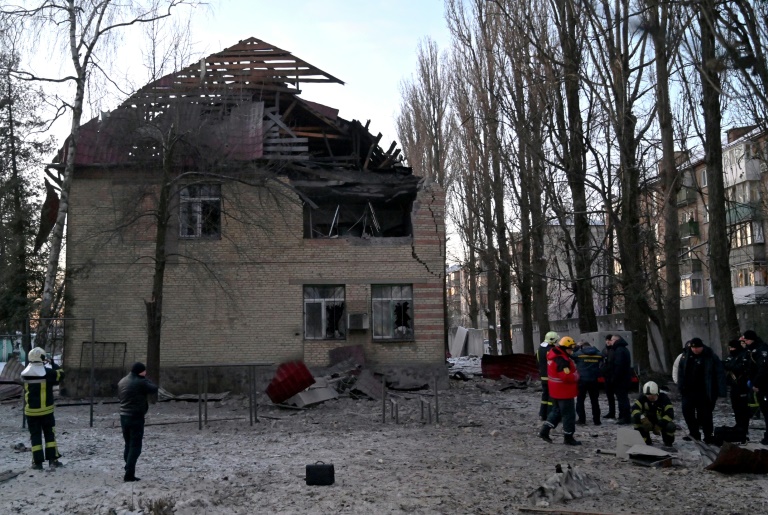
Explosions rang out over central Kyiv and AFP journalists later saw law enforcement and emergency service workers inspecting metal fragments at a snow-covered impact site.

City officials said debris from the downed drones had damaged residential homes and an local administrative building. No one was reported injured or killed.  

The latest round of attacks came a day after dozens of countries and international organisations meeting up in Paris responded to a plea from Zelensky to help the country withstand Russia’s onslaught on its energy grid with 1 billion euros ($1.1 billion).

In a video message from Kyiv, Zelensky said Ukraine needed assistance for its battered energy sector and spare parts for repairs, high-capacity generators, extra gas and increased electricity imports.

Foreign Minister Dmytro Kuleba called on Ukraine’s allies to provide his country with more weapons to help it “fight through the winter” and sustain Kyiv’s military advances.

– US citizen freed –

Ukraine separately said Wednesday it had secured the release of US citizen Suedi Murekezi as well as 64 Ukrainian members of the military in its latest prisoner swap with Russian forces.

Russia’s state-run TASS news agency earlier reported that Murekezi had been arrested in the eastern Donetsk region of Ukraine in June and charged with attending anti-Russian protests.

After nearly 10 months of fighting, Russia has yet to fulfil any of its stated key goals in what it refers to as its “special military operation” in Ukraine, including seizing the capital or the eastern Donbas region.

The Moscow-installed leader of Ukraine’s Donetsk region on Wednesday however called for Russia to widen its goals and annex two more areas of Ukraine, the Black Sea region of Odessa and Chernigiv in the north.

The Kremlin said a ceasefire was not on Moscow’s agenda, and that it had not received any proposals from Kyiv to pause fighting in Ukraine during the upcoming holiday period.

“No, no proposals have been received from anyone and no topic of this kind is on the agenda,” the Kremlin’s spokesman Dmitry Peskov. 

Meanwhile on Wednesday, Zelensky accepted the European Union Sakharov Prize for human rights on behalf of the people of Ukraine. 

As he accepted the EU’s top rights award, he urged Europe to help set up a tribunal swiftly to try Russia’s leadership for the “crime of aggression”.

Polish fish farm fights 'myth of Russian caviar'

With Moscow blacklisted since it invaded Ukraine, Europe’s main producer of caviar wants to put an end, once and for all, to the delicacy’s traditional association with Russia.

“For most people, caviar means Russia, but that hasn’t been the case for a long time now,” said Agata Lakomiak-Winnicka, marketing and sales manager for Poland’s Antonius Caviar. 

Based in the northeastern village of Rus, the company is one of the world’s top makers of the luxury food, having produced 42 tonnes of black caviar last year — more than any one firm in Italy or France and almost as much as those in China.

“We used to get clients who couldn’t locate Poland on a map. Today we’re on a whole different level,” Lakomiak-Winnicka said.

The company exports mostly to the United Arab Emirates, the United States, France and Denmark and also supplies Michelin-starred restaurants around the world.

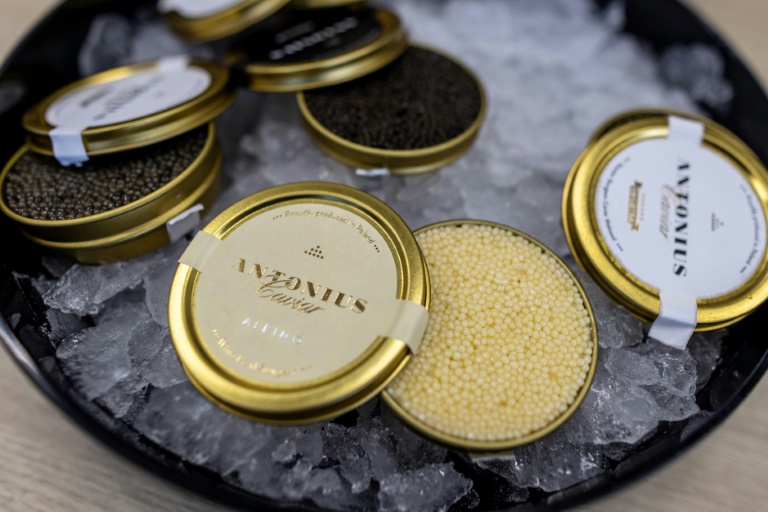
Retail prices range from 1,200 to 2,400 euros ($1,275-2,550) for sturgeon caviar and up to 8,000 euros for the albino kind.

The company’s challenge now, one faced by producers worldwide, is the battle against “the myth of Russian caviar”. 

“Take any box of caviar that reads ‘Russian tradition’ or ‘Russian method’ and you’ll see that 99 percent of the time it doesn’t actually come from Russia,” Lakomiak-Winnicka said. 

– Russia boycott –

Traditionally, caviar was made from eggs from wild sturgeon in the Caspian and Black seas with the best-known producers in Russia and Iran.

But years of overfishing and pollution left the sturgeon at risk of extinction, and it is now a protected species. 

Most caviar today is produced on fish farms and has nothing to do with Russia.

But consumers still associate the two — a challenge for those who out of solidarity for Ukraine no longer want to buy Russian.

“Because of the war… clients ask about the provenance of the caviar,” said Wiktoria Yerystova-Rostkowska, who owns a Russian shop outside Warsaw.

“They want good caviar but it can’t be Russian,” she told AFP, adding that she sources hers from Germany.

The EU and United States have banned Russian caviar as part of their sanctions against Moscow, but it was already practically impossible to buy due to restrictions to protect wild sturgeon.

– Aquaculture –

The green and black boxes of caviar are on display in the shop window. 

Featuring a drawing of the fish, the label reads “malossol” — the Russian for “lightly salted” and the name of the traditional method used to preserve caviar.

Yerystova-Rostkowska said the boycott of Russian products has left her struggling to stay open.

“It’s no longer profitable. I’m down 80 percent in revenue,” she said. 

Lakomiak-Winnicka for her part sees the boycott as an opportunity. 

“It’s a chance to explain that caviar no longer comes from Russia,” she said.

It has been years since wild Russian caviar was available on the international market.

“The Caspian Sea no longer has any importance in caviar production,” said Antonius head Marek Szczukowski.

“The vast majority of caviar sold around the world is derived from aquaculture,” including in Russia, he added.

– Sturgeon ‘on vacation’ –

On the Antonius fish farm in Rus, thousands of sturgeon — some more than a metre (three feet) in length — swim around in canals fed by the crystal clear water of a nearby river.

The company initially farmed trout there, but because of climate change they switched to sturgeon, which prefer warmer water.

“The sturgeon are on vacation here, like they’re in Hawaii,” Szczukowski said. 

The caviar is harvested after the fish reach maturity, with the entire operation taking under 20 minutes.  

Workers extract the caviar, wash and salt it, then box it up.

The label reads: “Proudly produced in Poland”. 

It used to also include the word “Russian” — to denote the fish species — but from now on it will just say “sturgeon caviar”. 

“At the express request of clients, we’re changing the labels, leaving no room for doubt,” Lakomiak-Winnicka said.  

Close Bitnami banner
Bitnami