AFP

Asian markets extend US rally after inflation boost, eyes on Fed

Asian markets rose Wednesday and the dollar struggled to recover as investors welcomed softer-than-expected US inflation data that could allow the Federal Reserve to slow down its pace of interest rate hikes.

The reading provided some much-needed Christmas cheer on trading floors and came the day before the US central bank’s last policy decision of the year, which will be pored over for clues about its plans for 2023.

There is also some focus on China as it continues to roll back its strict zero-Covid strategy that has battered the world’s number two economy, though fears of a sharp surge in infections is causing some unease among dealers.

All three main indexes on Wall Street ended in positive territory Tuesday in reaction to data showing consumer prices rose 7.1 percent last month, less than forecast and the slowest pace since December 2021.

The reading followed an October slowdown and fuelled hopes that inflation has finally peaked, after several months of Fed rate hikes.

“Last month’s positive surprise came with the caveat that it was ‘just one month of data’ but the November numbers add further weight to the interpretation that the long-awaited goods disinflation is showing up in the data,” said National Australia Bank’s Taylor Nugent.

Asian markets tracked Wall Street higher, though the gains were limited ahead of the Fed meeting.

Hong Kong, Tokyo, Shanghai, Sydney, Seoul, Singapore, Taipei, Manila and Jakarta all rose.

And the dollar held the losses suffered Tuesday in reaction to the inflation report, with the yen, euro and pound the main beneficiaries.

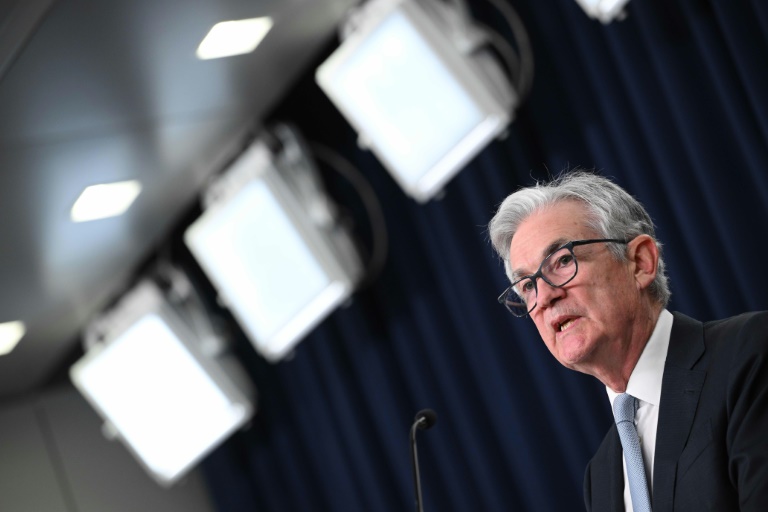
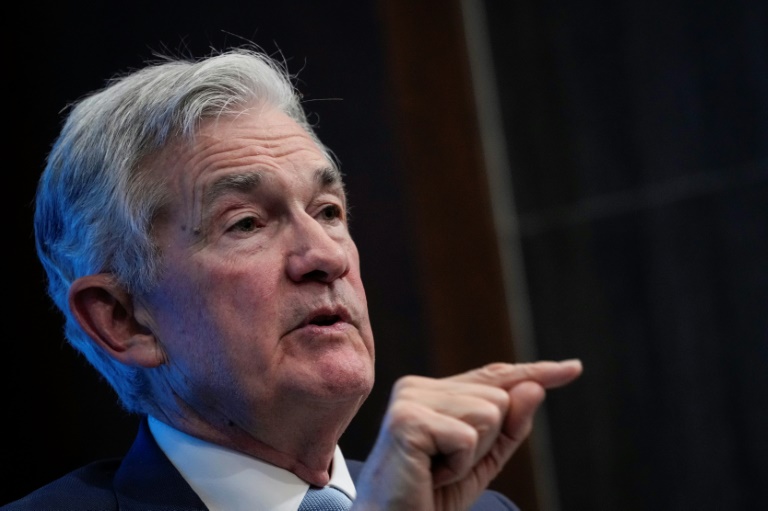
While the Fed is widely expected to increase borrowing costs 50 basis points Wednesday — after four successive 75-point rises — its post-meeting statement and boss Jerome Powell’s comments are the main focus for traders.

And while the slower inflation print was welcomed, there is still a growing concern among investors that the US economy will tip into recession next year as rates will remain elevated until prices are brought under control and within the bank’s target around two percent.

Silvia Dall’Angelo, at Federated Hermes, said monetary policymakers would slow the pace of hikes so they could “assess the impact on the real economy from the large cumulative tightening that has taken place since March.

“However, the Fed will stress that it is still far from mission accomplished with respect to its fight (against) high inflation, and more hikes will follow in coming months,” she added.

“Our expectation is that while inflation will decline over 2023, it will remain above target, which will prevent the Fed from easing next year.”

Oil prices edged down slightly after rallying on the back of the weaker dollar, though Brent held above $80.

– Key figures around 0230 GMT –

Tokyo – Nikkei 225: UP 0.7 percent at 28,141.41 (break)

Hong Kong – Hang Seng Index: UP 0.3 percent at 19,662.40

Shanghai – Composite: UP 0.1 percent at 3,178.01

Euro/dollar: DOWN at $1.0633 from $1.0635 on Tuesday

Dollar/yen: DOWN at 135.44 yen from 135.59 yen

Pound/dollar: DOWN at $1.2353 from $1.2366

Euro/pound: UP at 86.08 pence from 85.96 pence

West Texas Intermediate: DOWN 0.5 percent at $75.00 per barrel

Brent North Sea crude: DOWN 0.6 percent at $80.18 per barrel

New York – Dow: UP 0.3 percent at 34,108.64 (close)

London – FTSE 100: UP 0.8 percent at 7,502.89 (close)
Asian markets extend US rally after inflation boost, eyes on Fed

Asian markets rose Wednesday and the dollar struggled to recover as investors welcomed softer-than-expected US inflation data that could allow the Federal Reserve to slow down its pace of interest rate hikes.

The reading provided some much-needed Christmas cheer on trading floors and came the day before the US central bank’s last policy decision of the year, which will be pored over for clues about its plans for 2023.

There is also some focus on China as it continues to roll back its strict zero-Covid strategy that has battered the world’s number two economy, though fears of a sharp surge in infections is causing some unease among dealers.

All three main indexes on Wall Street ended in positive territory Tuesday in reaction to data showing consumer prices rose 7.1 percent last month, less than forecast and the slowest pace since December 2021.

The reading followed an October slowdown and fuelled hopes that inflation has finally peaked, after several months of Fed rate hikes.

“Last month’s positive surprise came with the caveat that it was ‘just one month of data’ but the November numbers add further weight to the interpretation that the long-awaited goods disinflation is showing up in the data,” said National Australia Bank’s Taylor Nugent.

Asian markets tracked Wall Street higher, though the gains were limited ahead of the Fed meeting.

Hong Kong, Tokyo, Shanghai, Sydney, Seoul, Singapore, Taipei, Manila and Jakarta all rose.

And the dollar held the losses suffered Tuesday in reaction to the inflation report, with the yen, euro and pound the main beneficiaries.

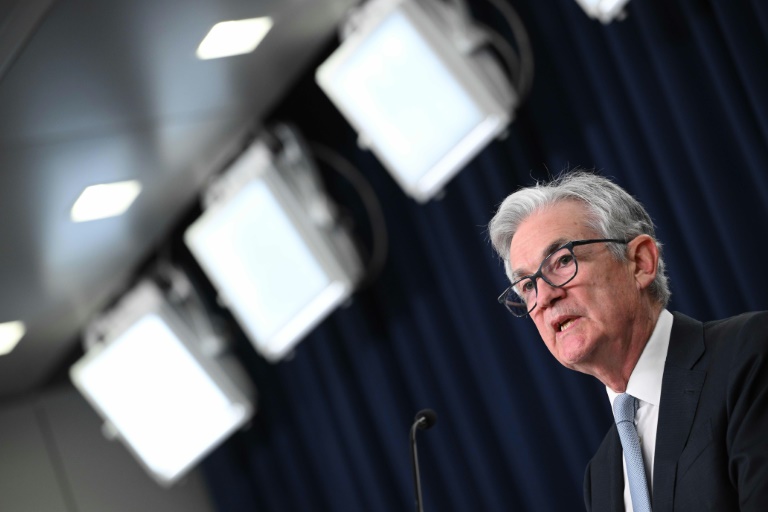
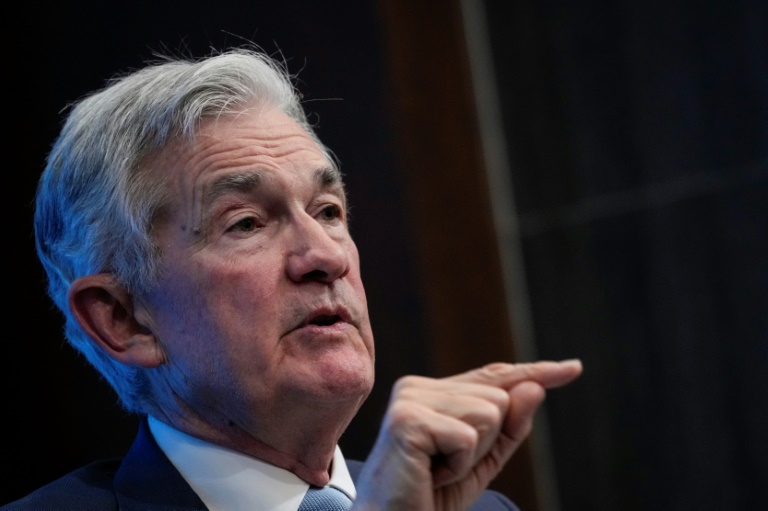
While the Fed is widely expected to increase borrowing costs 50 basis points Wednesday — after four successive 75-point rises — its post-meeting statement and boss Jerome Powell’s comments are the main focus for traders.

And while the slower inflation print was welcomed, there is still a growing concern among investors that the US economy will tip into recession next year as rates will remain elevated until prices are brought under control and within the bank’s target around two percent.

Silvia Dall’Angelo, at Federated Hermes, said monetary policymakers would slow the pace of hikes so they could “assess the impact on the real economy from the large cumulative tightening that has taken place since March.

“However, the Fed will stress that it is still far from mission accomplished with respect to its fight (against) high inflation, and more hikes will follow in coming months,” she added.

“Our expectation is that while inflation will decline over 2023, it will remain above target, which will prevent the Fed from easing next year.”

Oil prices edged down slightly after rallying on the back of the weaker dollar, though Brent held above $80.

– Key figures around 0230 GMT –

Tokyo – Nikkei 225: UP 0.7 percent at 28,141.41 (break)

Hong Kong – Hang Seng Index: UP 0.3 percent at 19,662.40

Shanghai – Composite: UP 0.1 percent at 3,178.01

Euro/dollar: DOWN at $1.0633 from $1.0635 on Tuesday

Dollar/yen: DOWN at 135.44 yen from 135.59 yen

Pound/dollar: DOWN at $1.2353 from $1.2366

Euro/pound: UP at 86.08 pence from 85.96 pence

West Texas Intermediate: DOWN 0.5 percent at $75.00 per barrel

Brent North Sea crude: DOWN 0.6 percent at $80.18 per barrel

New York – Dow: UP 0.3 percent at 34,108.64 (close)

London – FTSE 100: UP 0.8 percent at 7,502.89 (close)

Ten years after Sandy Hook, a mother's grief and healing

Jenny Hubbard struggles to believe that 10 years have passed since her six-year-old daughter’s murder at Sandy Hook Elementary during the deadliest school shooting in US history.

Catherine Violet Hubbard was among 20 children and six adults gunned down by Adam Lanza in the five-minute killing spree in Newtown, Connecticut, on December 14, 2012.

The massacre shocked America and the world, sparked heightened security measures at schools, and renewed a contentious fight for gun control laws that continues a decade later.

“It’s a reminder that time is so fleeting,” Hubbard, 50, says of Wednesday’s anniversary, which, like every year, will be marked with quiet reflection in the town of just 27,000 people.

“It’s been a lifetime because from that day to now, my life is totally different, and yet at the same time it was like it was yesterday,” she tells AFP. 

Hubbard remembers Catherine and her eight-year-old son’s excitement as she put them on the school bus that morning, with Christmas just around the corner.

“They were over the moon for the holidays. It was one of those mornings where I look back on, and I think it was rushed and chaotic, but it was also one of the best mornings that we had,” she recalls.

At 9:30 am (1430 GMT), 20-year-old Lanza entered the school armed with a Bushmaster AR-15 assault rifle and two pistols after shooting dead his mother at home.

“The phone call came in that something had happened, and the rest of the day was just a long fog of knowing that something terrible had happened but not understanding the magnitude of what that was,” says Hubbard.

– ‘The unthinkable loss’-

Lanza fired more than 150 times in the corridors and classrooms, killing 20 six-and-seven-year-olds, and six women who worked at the school, before committing suicide.

At a nearby firehouse, where authorities had taken children to be picked up by their parents, Hubbard learned that Catherine had died.

“Most people were just frozen. (It was) the unthinkable loss,” she says.

Slowly, over time, Hubbard says she has been able to heal, thanks to accepting the kindness of others and religious faith.

“The first step was just getting out of bed, and that was because of my son. I had to get up because he had a right to live his life. Then every single day, there was just one more step that I would take,” she says.

Difficult days include the first school day of every year and when other mass shootings occur, like at Robb Elementary School in Uvalde, Texas, in May when 19 children and two teachers were killed.

“I know that the journey that the families are about to take is not easy, and it’s lonely, and it’s dark at times,” says Hubbard.

Following Sandy Hook, described by Barack Obama as the worst day of his presidency, schools reinforced doors and windows, upped teaching children how to respond to an “active shooter,” and boosted staff training on how to barricade classrooms.

But tougher national restrictions on guns did not follow until after Uvalde, when Congress passed legislation that expanded background checks and reinforced measures to get firearms out of the hands of potentially dangerous people.

A stricter law that expired in 2004, banning military-style rifles with large capacity magazines, remains elusive amid opposition from Republicans who cite the constitutional right to gun ownership.

“Civilians should not have access to weapons that we give to armed soldiers to fight foreign enemies,” Connecticut Against Gun Violence executive director Jeremy Stein, told AFP.

– A gentle animal lover –

A circular memorial pool honoring the Sandy Hook victims opened near the school last month. Single white roses rested on each name this week.

Nearby, sits the 34-acre Catherine Violet Hubbard Animal Sanctuary that Hubbard founded in honor of her daughter, who loved animals.

Hubbard remembers Catherine as “fiercely determined,” “gentle” and “compassionate.”

Sometimes, she finds herself wanting to know what 16-year-old Catherine would be like, but tries to stop herself.

“I will never understand why that’s not possible in my life, but I carry with me the six years that she shared with me and the memories,” Hubbard says.

US Fed expected to slow pace of rate hikes as inflation eases

US central bankers open the second day of a key policy meeting Wednesday, with mounting anticipation of a smaller hike to its benchmark lending rate as inflation showed signs of easing.

The Federal Reserve has embarked on an all-out campaign to cool demand in the world’s biggest economy, raising rates six times this year with interest-sensitive sectors like housing already reeling from tightening policy.

But there have been positive signs, with consumer inflation in the United States easing in November, according to government data released Tuesday.

The consumer price index, a key gauge of inflation, logged its smallest annual increase in nearly a year, fueling optimism that the Fed could soon moderate its efforts.

Households have been squeezed by red-hot prices, with conditions worsened by surging food and energy costs after Russia’s invasion of Ukraine, and fallout from China’s zero-Covid measures.

To make borrowing more expensive, the Fed has raised interest rates six times, including four bumper 0.75-point increases, bringing the rate to between 3.75 percent and four percent.

Analysts widely expect the Fed to adopt a smaller, half-point hike on Wednesday, with Ian Shepherdson of Pantheon Macroeconomics calling it a “a done deal” in an analysis.

While this marks a step down from earlier 0.75-point increases, it would still be a steep jump.

Shepherdson cautioned that Fed Chair Jerome Powell is “in no hurry to say what markets want to hear.”

“(Powell) is unlikely to deviate from his clear line that the Fed will do whatever is necessary to squeeze out inflation, and that some pain will be necessary,” Shepherdson added.

– ‘Not yet proof’ –

Recent easing in inflation data is welcome news to policymakers, but this is “not yet proof that inflation has sustainably cooled to levels consistent with the inflation target,” cautioned economist Edoardo Campanella of UniCredit Bank in a note.

The Fed has a longer-term inflation target of two percent.

“The Fed will likely further slow the pace of rate hikes early next year to 25 basis points,” Campanella added.

“However, with the labor market still very tight… and with broad financial conditions easing, the Fed will likely say that their job is not done,” he said.

Neil Saunders, managing director of GlobalData, added that the Fed is taking a “hawkish view on inflation” and will likely conclude further tightening is needed, based on the continued strength of underlying demand in the economy.

“As much as this action may have the desired effect, it will cool the economy at a time when it is already under pressure heading into 2023,” said Saunders.

The Fed’s further rate hike will also mark “a new phase” in its tightening cycle, said Nationwide chief economist Kathy Bostjancic in a note Monday.

This comes as officials look to adjust policy now that it is “within the range considered restrictive.”

Financial markets will be watching for signals of how high rates might go, and “the path for rates beyond that peak,” she added.

US Fed expected to slow pace of rate hikes as inflation eases

US central bankers open the second day of a key policy meeting Wednesday, with mounting anticipation of a smaller hike to its benchmark lending rate as inflation showed signs of easing.

The Federal Reserve has embarked on an all-out campaign to cool demand in the world’s biggest economy, raising rates six times this year with interest-sensitive sectors like housing already reeling from tightening policy.

But there have been positive signs, with consumer inflation in the United States easing in November, according to government data released Tuesday.

The consumer price index, a key gauge of inflation, logged its smallest annual increase in nearly a year, fueling optimism that the Fed could soon moderate its efforts.

Households have been squeezed by red-hot prices, with conditions worsened by surging food and energy costs after Russia’s invasion of Ukraine, and fallout from China’s zero-Covid measures.

To make borrowing more expensive, the Fed has raised interest rates six times, including four bumper 0.75-point increases, bringing the rate to between 3.75 percent and four percent.

Analysts widely expect the Fed to adopt a smaller, half-point hike on Wednesday, with Ian Shepherdson of Pantheon Macroeconomics calling it a “a done deal” in an analysis.

While this marks a step down from earlier 0.75-point increases, it would still be a steep jump.

Shepherdson cautioned that Fed Chair Jerome Powell is “in no hurry to say what markets want to hear.”

“(Powell) is unlikely to deviate from his clear line that the Fed will do whatever is necessary to squeeze out inflation, and that some pain will be necessary,” Shepherdson added.

– ‘Not yet proof’ –

Recent easing in inflation data is welcome news to policymakers, but this is “not yet proof that inflation has sustainably cooled to levels consistent with the inflation target,” cautioned economist Edoardo Campanella of UniCredit Bank in a note.

The Fed has a longer-term inflation target of two percent.

“The Fed will likely further slow the pace of rate hikes early next year to 25 basis points,” Campanella added.

“However, with the labor market still very tight… and with broad financial conditions easing, the Fed will likely say that their job is not done,” he said.

Neil Saunders, managing director of GlobalData, added that the Fed is taking a “hawkish view on inflation” and will likely conclude further tightening is needed, based on the continued strength of underlying demand in the economy.

“As much as this action may have the desired effect, it will cool the economy at a time when it is already under pressure heading into 2023,” said Saunders.

The Fed’s further rate hike will also mark “a new phase” in its tightening cycle, said Nationwide chief economist Kathy Bostjancic in a note Monday.

This comes as officials look to adjust policy now that it is “within the range considered restrictive.”

Financial markets will be watching for signals of how high rates might go, and “the path for rates beyond that peak,” she added.

Vietnam factory workers laid off as West cuts imports

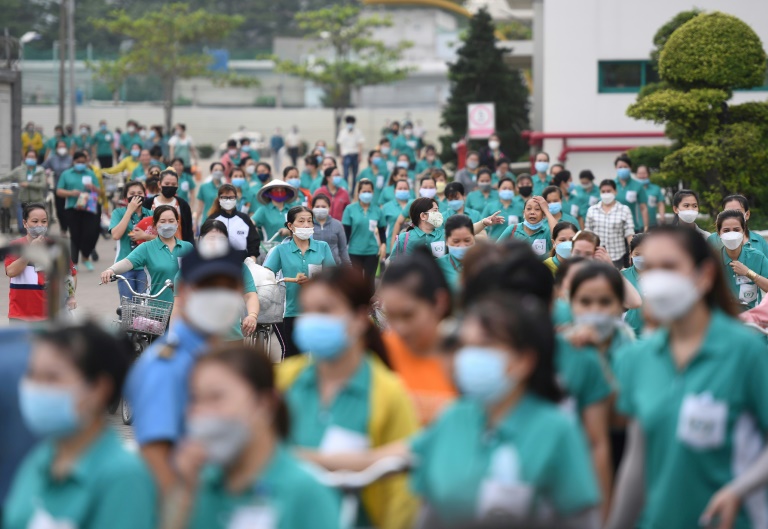
Phan Thi Nhieu has spent a decade assembling shoes for worldwide brands such as Timberland and K-Swiss, but she is now among tens of thousands of Vietnamese factory workers laid off as Western consumers cut spending.

Almost half a million others have been forced to work fewer hours as orders fall in the Southeast Asian country, one of the world’s largest exporters of clothing, footwear and furniture.

The cost-of-living crisis in Europe and the United States — major markets for Vietnamese-produced goods — has seen the buying power of Western shoppers plunge.

Women factory workers, who make up 80 percent of the labour force in Vietnam’s garment industry, have been hit the hardest by the knock-on effect.

Early last month, 31-year-old Nhieu — who lives in a nine-square-metre (100 square feet) room in Ho Chi Minh City with her two young sons and husband — was told she was no longer needed at Ty Hung Company, a Taiwanese shoemaker that supplies big Western labels.

“They told us they did not have enough orders,” she said of Ty Hung’s announcement that it would fire 1,200 of its 1,800 staff. 

“I was so, so shocked and so scared, I cried, but I can do nothing, I have to accept it.”

The job earned Nhieu just $220 a month in an expensive city where the average monthly income is $370, but the money was regular and a step up from the mushroom picking she did as a teenager in the heat of the Mekong Delta.

– ‘Worse than Covid’ –

Now, with just two months’ severance pay to survive on, Nhieu must feed her family on a few dollars a day, and her kids are struggling to get enough to eat.

“We have no one to help us. I will have to get us through this on my own.”

Since September, more than 1,200 companies — mostly foreign businesses in the garment, footwear and furniture sectors — have been forced to sack staff or cut working hours, according to the Vietnam General Confederation of Labour. 

Compared with last year, orders are down 30-40 percent from the United States and 60 percent from Europe, where inflation and energy bills have soared because of the war in Ukraine.

More than 470,000 workers have had their hours slashed in the last four months of the year while about 40,000 people have lost their jobs — 30,000 of them women aged 35 or older, the confederation said.

Taiwanese giant Pouyuen, a Nike shoe producer, has put 20,000 of its workers on paid leave in rotation, while reports said Vietnam’s largest foreign investor, Samsung Electronics, has started reducing its smartphone production at factories in the north.

The situation is bleaker than during the Covid-19 pandemic, say workers, who were helped out with food donations when strict quarantine measures forced them to stay home — and were quickly in demand again once restrictions lifted at the end of 2021.

“It’s not easy to find a new job like before (following the pandemic),” said Nguyen Thi Thom, 35, who was laid off from a South Korean garment firm that makes clothes for US retail giant Walmart.

– No dream –

Since her factory work finished, Thom, who has three young children, spends her days on the streets of a shiny new suburban district of Ho Chi Minh City, selling dried noodles, shrimp sauce and oranges to passers-by.

The slowdown has come as a shock because export businesses in Vietnam were running at “their fullest capacity” for the first half of 2022, according to Tran Viet Anh, deputy head of Ho Chi Minh City’s Business Association. 

“At the start of the third quarter, due to global inflation, consumption demands have shrunk, leading to the suspension of orders… and huge stock surplus,” he told AFP.

But the downturn in Vietnam will likely only be temporary, Viet Anh added. 

A cut in production during the pandemic led to a shortage of goods in the first six months of 2022, and the situation will likely repeat a year on.

Viet Anh said that “2023 will be a period where we increase production to compensate”.

Until then, women like Nhieu and Thom, who form the backbone of a low-paid workforce that has helped Vietnam become a key manufacturing hub seen as an alternative to China, must find another way to keep their families afloat.

“I have never had the luxury of dreaming what I want from life. I have only one wish, of earning enough to survive,” Nhieu said.

Vietnam factory workers laid off as West cuts imports

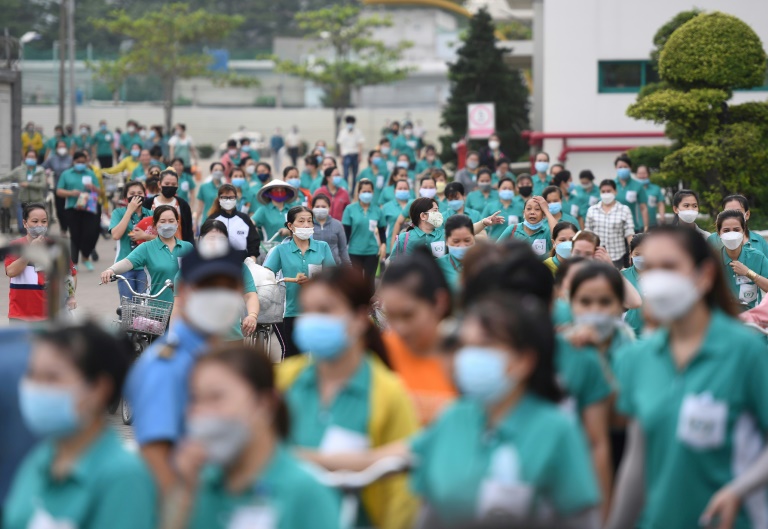
Phan Thi Nhieu has spent a decade assembling shoes for worldwide brands such as Timberland and K-Swiss, but she is now among tens of thousands of Vietnamese factory workers laid off as Western consumers cut spending.

Almost half a million others have been forced to work fewer hours as orders fall in the Southeast Asian country, one of the world’s largest exporters of clothing, footwear and furniture.

The cost-of-living crisis in Europe and the United States — major markets for Vietnamese-produced goods — has seen the buying power of Western shoppers plunge.

Women factory workers, who make up 80 percent of the labour force in Vietnam’s garment industry, have been hit the hardest by the knock-on effect.

Early last month, 31-year-old Nhieu — who lives in a nine-square-metre (100 square feet) room in Ho Chi Minh City with her two young sons and husband — was told she was no longer needed at Ty Hung Company, a Taiwanese shoemaker that supplies big Western labels.

“They told us they did not have enough orders,” she said of Ty Hung’s announcement that it would fire 1,200 of its 1,800 staff. 

“I was so, so shocked and so scared, I cried, but I can do nothing, I have to accept it.”

The job earned Nhieu just $220 a month in an expensive city where the average monthly income is $370, but the money was regular and a step up from the mushroom picking she did as a teenager in the heat of the Mekong Delta.

– ‘Worse than Covid’ –

Now, with just two months’ severance pay to survive on, Nhieu must feed her family on a few dollars a day, and her kids are struggling to get enough to eat.

“We have no one to help us. I will have to get us through this on my own.”

Since September, more than 1,200 companies — mostly foreign businesses in the garment, footwear and furniture sectors — have been forced to sack staff or cut working hours, according to the Vietnam General Confederation of Labour. 

Compared with last year, orders are down 30-40 percent from the United States and 60 percent from Europe, where inflation and energy bills have soared because of the war in Ukraine.

More than 470,000 workers have had their hours slashed in the last four months of the year while about 40,000 people have lost their jobs — 30,000 of them women aged 35 or older, the confederation said.

Taiwanese giant Pouyuen, a Nike shoe producer, has put 20,000 of its workers on paid leave in rotation, while reports said Vietnam’s largest foreign investor, Samsung Electronics, has started reducing its smartphone production at factories in the north.

The situation is bleaker than during the Covid-19 pandemic, say workers, who were helped out with food donations when strict quarantine measures forced them to stay home — and were quickly in demand again once restrictions lifted at the end of 2021.

“It’s not easy to find a new job like before (following the pandemic),” said Nguyen Thi Thom, 35, who was laid off from a South Korean garment firm that makes clothes for US retail giant Walmart.

– No dream –

Since her factory work finished, Thom, who has three young children, spends her days on the streets of a shiny new suburban district of Ho Chi Minh City, selling dried noodles, shrimp sauce and oranges to passers-by.

The slowdown has come as a shock because export businesses in Vietnam were running at “their fullest capacity” for the first half of 2022, according to Tran Viet Anh, deputy head of Ho Chi Minh City’s Business Association. 

“At the start of the third quarter, due to global inflation, consumption demands have shrunk, leading to the suspension of orders… and huge stock surplus,” he told AFP.

But the downturn in Vietnam will likely only be temporary, Viet Anh added. 

A cut in production during the pandemic led to a shortage of goods in the first six months of 2022, and the situation will likely repeat a year on.

Viet Anh said that “2023 will be a period where we increase production to compensate”.

Until then, women like Nhieu and Thom, who form the backbone of a low-paid workforce that has helped Vietnam become a key manufacturing hub seen as an alternative to China, must find another way to keep their families afloat.

“I have never had the luxury of dreaming what I want from life. I have only one wish, of earning enough to survive,” Nhieu said.

'Love is love': Biden signs same-sex marriage protections into law

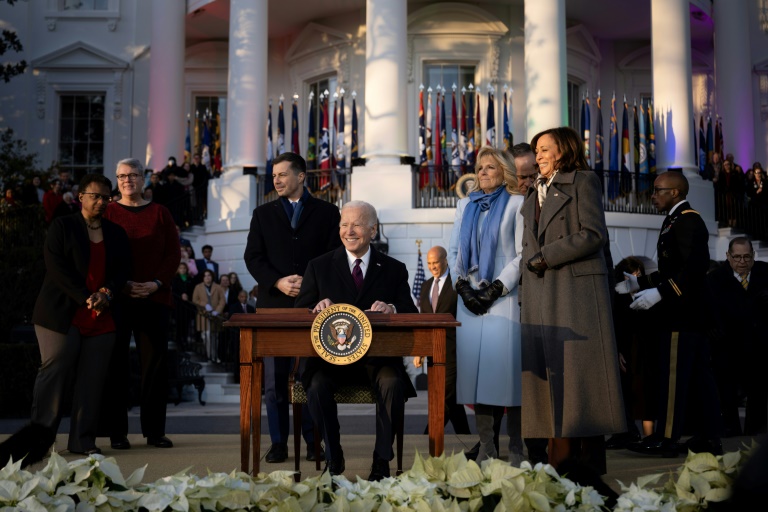
US President Joe Biden on Tuesday signed into law a bill granting federal protections to same-sex marriage, with a large crowd of guests gathered at the White House to celebrate the legislative milestone.

Biden — who as vice president took a public stand in favor of same-sex unions well before they became legal throughout the United States in a 2015 Supreme Court decision — touted the landmark law as a rights victory.  

“America takes a vital step toward equality, for liberty and justice, not just for some, but for everyone,” he said during the signing ceremony Tuesday afternoon.

“Love is love. Right is right. Justice is justice,” he said.

After the US Supreme Court — now significantly more conservative — overturned longstanding abortion rights last June, lawmakers from the left and right came together to prevent any subsequent move to curb same-sex marriage rights.

The legislation’s final adoption by Congress last week marked a rare show of bipartisanship in deeply divided Washington.

In celebration, Biden gathered with a group of Republican and Democratic lawmakers on the White House grounds, along with advocates and plaintiffs in marriage equality cases across the country, as Lady Gaga’s “Born This Way” roared from the speakers.

Tammy Baldwin, the first openly gay US senator, said she was “overcome with joy” at the signing of the law, which she helped draft in Congress.

“Today, we are making history and making a difference for millions of Americans,” she said in a statement.

– Growing support –

The legislation, White House spokesperson Karine Jean-Pierre said Monday, “will give peace of mind to millions of LGBTQI+ and interracial couples who will finally be guaranteed the rights and protections to which they and their children are entitled.”

Jean-Pierre herself made history as the first openly gay White House press secretary.

Hundreds of thousands of same-sex couples have married since the Supreme Court’s 2015 decision legalizing the unions throughout the United States.

Public acceptance has grown dramatically in recent decades, with polls now showing a strong majority of Americans supporting same-sex marriage.

Some conservatives and the religious right remain opposed.

The new Respect for Marriage Act does not mandate states to legalize same-sex marriage but does require them to recognize a marriage so long as it was valid in the state where it was performed.

It repeals previous legislation defining marriage as a union between a man and a woman, and also protects interracial couples by requiring states to recognize legal marriages without regard to “sex, race, ethnicity or national origin.”

In the House of Representatives, 39 Republicans joined a united Democratic majority in supporting the bill, while 169 Republicans voted against. It was previously adopted in the evenly split Senate by 61 votes to 36.

– True colors –

Jean-Pierre said Monday that Biden believes “there is much more work to be done to protect LGBTQI+ individuals across the country.”

She recalled that the 80-year-old Democrat was among the first American political leaders to publicly support same-sex unions at the highest levels of government.

Back in 2012, Biden caused a stir by candidly declaring his support for same-sex unions — when Barack Obama’s White House was still looking for the best way to make the president’s position official as he sought reelection to a second term.

Following his own presidential election in 2020, Biden tapped Pete Buttigieg to become his transport secretary — the first openly gay person to be confirmed by the Senate to a cabinet post.

Beyond marriage, the Biden administration has taken a strong stance in support of LGBTQ rights — notably towards the transgender community whose push for greater rights has become a US political flashpoint.

The administration has introduced gender-neutral passports — allowing people who identify neither as male nor female to select the gender “X” — and it lifted a ban on transgender people serving in the military, introduced under Biden’s predecessor Donald Trump.

Pop icon and LGBTQ rights advocate Cyndi Lauper, who sang at Tuesday’s White House ceremony, said she was pleased that the concerns of so many American families have been eased with the new law.

“We can rest easy tonight because our families are validated and because now we’re allowed to love who we love,” she said.

US plans to send Patriot missiles to Ukraine: media

The Pentagon is finalizing plans to send Patriot missile batteries that can shoot down incoming missiles to Ukraine, US media reported Tuesday.

As Russia has ramped up missile strikes on key Ukrainian infrastructure, the administration of President Joe Biden could announce the deployment as early as this week, US officials told The New York Times and CNN.  

Ukraine’s air defenses have played a key role during Russia’s invasion, but with Moscow stepping up strikes on energy infrastructure as it faces growing losses on the ground, Kyiv has repeatedly pressed other countries — especially the United States — for the Patriot system.

The US Army describes Patriot — which consists of multiple parts including a radar, a control station, power generating equipment and up to eight launchers — as its “most advanced air defense system.”

While dozens of personnel are assigned to a battery, only three are required to operate it in combat.

The US Army’s first Patriot battalion was activated in 1982, but the system was not used in combat until 1991 during Operation Desert Storm, the international air and ground offensive against Iraqi forces who had invaded Kuwait.

Patriot has intercepted more than 150 ballistic missiles in combat since 2015, and has also undergone more than 3,000 ground and 1,400 flight tests, primary contractor Raytheon says.

When Russia invaded in February, Ukraine’s air defenses largely consisted of Soviet-era planes and missile systems, which Kyiv used effectively to deny Moscow air superiority.

They have since been significantly augmented: the United States provided NASAMS and Germany offered IRIS-T — two advanced systems — while older equipment such as the S-300 and HAWK systems and Stinger missiles have also been donated.

Confidence falls among Japan's major manufacturers

Business confidence fell slightly among Japan’s largest manufacturers for the fourth straight quarter, a closely watched Bank of Japan survey showed Wednesday.

Optimism grew among non-manufacturers, however, and both readings beat market expectations.

The BoJ’s quarterly Tankan survey — considered the broadest indicator of how Japanese businesses are faring — showed that major manufacturers still feel much more upbeat than during the depths of the Covid-19 pandemic.

Confidence among large manufacturers stood at plus seven, down slightly from plus eight three months earlier.

A positive figure means more manufacturers see business conditions as favourable than those that consider them unfavourable.

Economists had forecast plus six for Wednesday’s reading.

“Weak demand in overseas markets including China, which was hit by its zero-Covid policy, was a headwind for manufacturers,” chief economist Saisuke Sakai of Mizuho Research & Technologies, told AFP.

The reading has been falling since April after nearly two years of improving sentiment, which had plunged to minus 34 in June 2020 as Covid-19 restrictions pummelled the economy.

Among large non-manufacturers, business confidence improved to 19 from a previous reading of 14, the Tankan showed. Market economists had forecast plus 16.

For non-manufacturers, “the government’s tourism campaign subsidies as well as loosening of border controls prompted recovery in demand,” Sakai said, noting that recent indicators showed a solid recovery in consumption.

“On the whole, the economy is not in bad shape, but looking ahead, the prospect of a global economic slowdown is a risk,” said Shinke Yoshiki, chief economist of Dai-ichi Life Research Institute.

Sakai agreed and said that inflation, fuelled by high energy costs and the weak yen, would also continue to weigh on Japan’s economy.

Inflation hit a four-decade high of 3.6 percent in October, ramping up pressure on Japan’s central bank to move away from its ultra-loose monetary policies.

The government in October pledged to spend $260 billion on a stimulus package to cushion the economy from the impact of inflation and the lower yen.

Close Bitnami banner
Bitnami