AFP

Youth of African diaspora consider climate solutions at US summit

A group of young Black Americans and their peers from African countries on Tuesday highlighted their common anxieties over climate change, shared as members of the global African diaspora. 

They were gathered at the African and Diaspora Young Leaders Forum in Washington, held on the sidelines of the Biden administration’s US-Africa Leaders Summit, in which some 50 leaders from the continent are participating this week. 

Michael Regan, the first Black American head of the US Environmental Protection Agency, called on the people in attendance to throw themselves into humanity’s fight against a warming world. 

“Young people have always been at the forefront of movements to change, and the environmental movement is absolutely no exception,” he said. 

“Your generation is leading the charge and fighting to secure a healthier, more just tomorrow.”

For activist Wafa May Elamin, society must “allow young people to really take charge” to tackle the “massive” climate challenges ahead. 

Elamin, a 30-year-old Sudanese-American, said she had been waiting for such an event for “a really long time” — the most recent iteration of this summit was organized eight years ago, during Barack Obama’s presidency. 

Other attendees of Tuesday’s meeting, which was organized by the National Museum of African American History and Culture, included Vice President Kamala Harris, the first Black, South Asian and female US vice president, and Ghanaian President Nana Akufo-Addo.

– ‘Guardians of our planet’ –

Speaking at the convention, actress and activist Sabrina Elba — a United Nations goodwill ambassador for the International Fund for Agricultural Development — said the environmental conservation of the immense African continent is especially close to the hearts of people whose ancestors came from Africa.

Elba recalled how her mother, who immigrated from Somalia to Canada, instilled in her a remembrance of their ancestral home: “As early as I can remember, she would say ‘give back, give back, give back, give back to the continent, so we can go back.'”

It was this relationship to Africa that inspired Elba — whose husband, the British actor Idris Elba, also spoke Tuesday — to get involved with the UN.

“It only took one visit back home to see a drought or famine or people really being affected by an issue that they have very little output towards,” she said. 

For her, the priority is to support the people living in areas in need of preservation.

“These people are the custodians of our planet,” she said.

– ‘Not a monolith’ –

But according to Elamin, funding for the fight against climate change is not distributed fairly. 

Regan acknowledged the unequal realities of working for a better planet.

“Countries should be required, in some way, shape or fashion, to ensure certain resources absolutely reach those who have been disproportionately impacted,” the EPA director said.

Jamaji Nwanaji-Enwerem, a doctor and assistant public health professor of environmental health at Emory University in Atlanta, was among those in attendance.

“African is not a monolith,” the 32-year-old said.

“So being able to just hear the stories and hear about other people’s experiences goes a long way in helping to develop solutions that are meaningful for all of us,” she explained. 

As the attendees discussed such possible solutions, Regan announced the United States would allocate $4 million for Peace Corps volunteers to work on projects combatting climate change in 24 Sub-Saharan African countries. 

“Are we doing enough? No. Should we be doing more? Yes, but in a democracy, it’s slow,” he said. 

Youth of African diaspora consider climate solutions at US summit

A group of young Black Americans and their peers from African countries on Tuesday highlighted their common anxieties over climate change, shared as members of the global African diaspora. 

They were gathered at the African and Diaspora Young Leaders Forum in Washington, held on the sidelines of the Biden administration’s US-Africa Leaders Summit, in which some 50 leaders from the continent are participating this week. 

Michael Regan, the first Black American head of the US Environmental Protection Agency, called on the people in attendance to throw themselves into humanity’s fight against a warming world. 

“Young people have always been at the forefront of movements to change, and the environmental movement is absolutely no exception,” he said. 

“Your generation is leading the charge and fighting to secure a healthier, more just tomorrow.”

For activist Wafa May Elamin, society must “allow young people to really take charge” to tackle the “massive” climate challenges ahead. 

Elamin, a 30-year-old Sudanese-American, said she had been waiting for such an event for “a really long time” — the most recent iteration of this summit was organized eight years ago, during Barack Obama’s presidency. 

Other attendees of Tuesday’s meeting, which was organized by the National Museum of African American History and Culture, included Vice President Kamala Harris, the first Black, South Asian and female US vice president, and Ghanaian President Nana Akufo-Addo.

– ‘Guardians of our planet’ –

Speaking at the convention, actress and activist Sabrina Elba — a United Nations goodwill ambassador for the International Fund for Agricultural Development — said the environmental conservation of the immense African continent is especially close to the hearts of people whose ancestors came from Africa.

Elba recalled how her mother, who immigrated from Somalia to Canada, instilled in her a remembrance of their ancestral home: “As early as I can remember, she would say ‘give back, give back, give back, give back to the continent, so we can go back.'”

It was this relationship to Africa that inspired Elba — whose husband, the British actor Idris Elba, also spoke Tuesday — to get involved with the UN.

“It only took one visit back home to see a drought or famine or people really being affected by an issue that they have very little output towards,” she said. 

For her, the priority is to support the people living in areas in need of preservation.

“These people are the custodians of our planet,” she said.

– ‘Not a monolith’ –

But according to Elamin, funding for the fight against climate change is not distributed fairly. 

Regan acknowledged the unequal realities of working for a better planet.

“Countries should be required, in some way, shape or fashion, to ensure certain resources absolutely reach those who have been disproportionately impacted,” the EPA director said.

Jamaji Nwanaji-Enwerem, a doctor and assistant public health professor of environmental health at Emory University in Atlanta, was among those in attendance.

“African is not a monolith,” the 32-year-old said.

“So being able to just hear the stories and hear about other people’s experiences goes a long way in helping to develop solutions that are meaningful for all of us,” she explained. 

As the attendees discussed such possible solutions, Regan announced the United States would allocate $4 million for Peace Corps volunteers to work on projects combatting climate change in 24 Sub-Saharan African countries. 

“Are we doing enough? No. Should we be doing more? Yes, but in a democracy, it’s slow,” he said. 
Flooding kills more than 120 in DR Congo capital

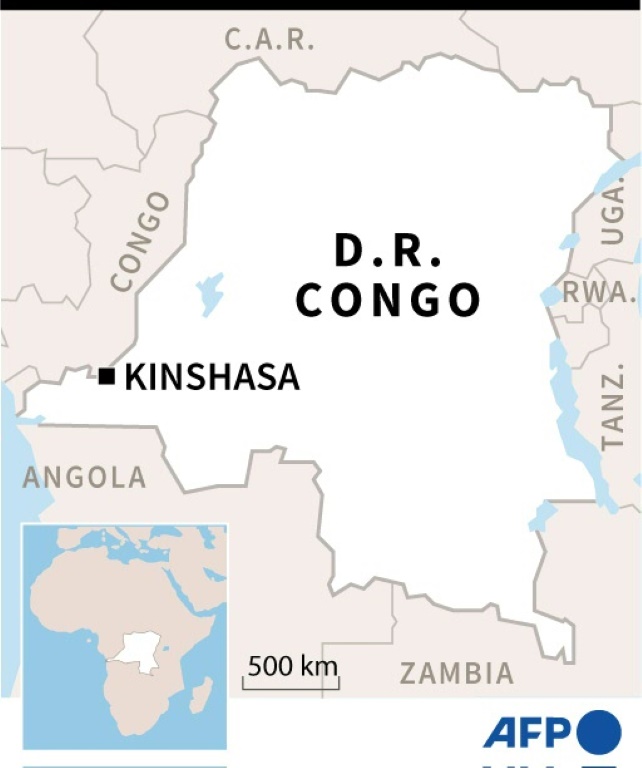
More than 120 people were killed Tuesday as the worst floods in years battered DR Congo’s capital Kinshasa following an all-night downpour, authorities said in a provisional assessment.

Major roads in the centre of Kinshasa, a city of some 15 million people, were submerged for hours, and a key supply route was cut off.

The death toll — which was first estimated in the late afternoon to be at least 55 — jumped to more than 120 by nightfall. 

The government has announced three days of national mourning beginning Wednesday, according to a statement from Prime Minister Jean-Michel Sama Lukonde’s office.

City police chief General Sylvano Kasongo told AFP that the bulk of people dead were on hillside locations where there had been landslides.

An AFP reporter saw the bodies of nine members of the same family — including young children — who had died after the collapse of their home in the Binza Delvaux district.

“We were woken up at around 4:00 am (0300 GMT) by water entering the house,” a relative said.

“We drained the water out, and thinking that there was no more danger we went back indoors to sleep — we were soaked,” he said.

The family went back to bed and “just afterwards, the wall collapsed”.

Located on the Congo River, Kinshasa has seen a huge population influx in recent years.

Many dwellings are shanty houses built on flood-prone slopes, and the city suffers from inadequate drainage and sewerage. 

A major landslide occurred in the hilly district of Mont-Ngafula, smothering National Highway 1, a key supply route linking the capital with Matadi, a port further down the Congo River and a crucial outlet to the Atlantic Ocean.

Lukonde told reporters at the scene that about 20 people there had died when “homes were swept away”.

Searches are continuing for survivors, he said.

The highway should be reopened to small vehicles within the next day, but it could take “three or four days” for trucks, the prime minister said.

The streets of the up-market Gombe district — home to government buildings and usually spared the problems affecting other areas of Kinshasa such as inadequate waste disposal and power supplies — were also inundated.

– ‘Disaster’ –

In November 2019, around 40 people in Kinshasa died in floods and landslides.

Mont-Ngafula was one of the worst-hit areas, but a local resident said the flooding this time was even worse.

“We’ve never seen a flood here on this scale,” said Blanchard Mvubu, who lives in the Mont-Ngafula neighbourhood of CPA Mushie.

“I was asleep and I could feel water in the house… it’s a disaster — we’ve lost all our possessions in the house, nothing could be saved.”

He added: “People are building big houses and that blocks up the drains. The water can’t move freely and that’s what causes the floods.”

Another man, who gave his name as Freddy, said everything in his home was underwater,

“Shoes, food stocks, clothes — everything is lost, there’s nothing to be saved,” he said.

Close by, a young man was asking for 500 Congolese francs (24 US cents) from passers-by to carry them on his back across the submerged street.

Another man, who identified himself as a teacher, was walking barefoot in the water, holding a pair of shoes in one hand and a plastic bag containing documents in the other.

“I’ve got no other choice,” he said. “I have to give schoolchildren an exam.”

Landslides  are common in Mont-Ngafula, often triggered by heavy rainfall and rampant urban development.

Snakes have clitorises, scientists say, slamming research 'taboo'

Female snakes have clitorises, according to the first detailed study on the subject Wednesday, in which the scientists lashed out at how little female sex organs have been researched compared to males across species.

Previous research had hypothesised that the organs on female snakes were scent glands, under-developed versions of penises, or were even there to stimulate males, rather than the other way around.

But the new study said it has “definitively” ruled out such theories, offering the first complete description of snake clitorises.

The findings suggest that clitorises may be common across squamates, the largest order of reptiles which includes snakes, and could play an essential role in how they reproduce.

However comparatively little research on the subject has been carried out, as in the case for the clitorises of pretty much all animals — including humans.

“Female genitalia are conspicuously overlooked in comparison to their male counterparts, limiting our understanding of sexual reproduction across vertebrate lineages,” wrote the authors of the study published in the journal Proceedings of the Royal Society B.

Since the 1800s it has been known that male squamates have a dual sex organ called a hemipenis.

However it was not until 1995 that German herpetologist Wolfgang Boehme, who was researching monitor lizards, first described the female sexual organ, the hemiclitores.

Megan Folwell, a PhD candidate at the University of Adelaide in Australia and the new study’s lead author, told AFP she started off by analysing the hemiclitores of a common death adder.

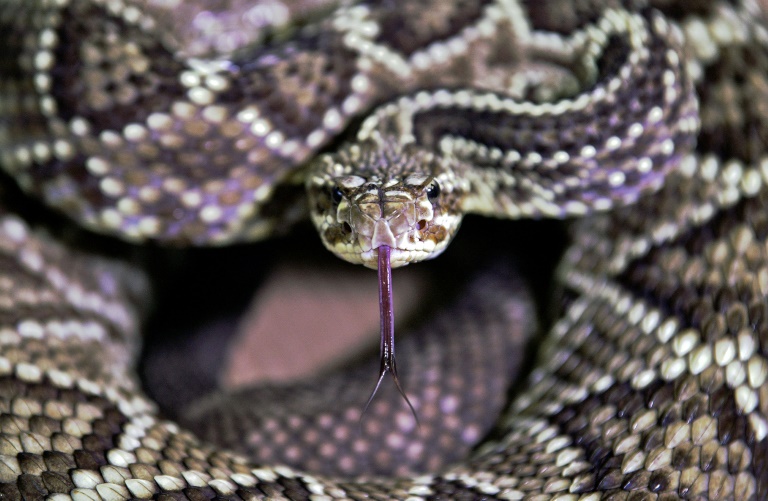
The team of Australian and American researchers went on to dissect 10 snakes from nine different species, including the carpet python, puff adder and Mexican moccasin. 

They found that snakes have two individual clitorises — hemiclitores — separated by tissue and hidden by skin on the underside of the tail.

For the death adder, the organ forms a triangle shape “like a heart”, Folwell said.

Some are quite thin while others take up almost all the area around the cloaca, the tiny opening for the digestive, urinary and reproductive tract. Sizes ranged from less than a millimetre to seven millimetres.

The organs have erectile tissue that likely swells with blood as well as nerve bundles which “may be indicative of tactile sensitivity, similar to the mammalian clitoris,” the study said.

– ‘Taboo subject’ –

“Snakes are very tactile animals,” Folwell said, “so there’s quite a high chance that they would get quite a lot of sensation even through the skin.”

If the snakes’ hemiclitores are stimulated during sex, it likely prompts longer and more frequent mating, resulting in a greater chance of reproductive success.

“Pleasure is such an important part of reproduction,” Folwell said.

It could lead to lubrication to prevent damage from the “very spiny hemipenis” of male snakes, she said, adding that “we don’t know”.

So why did it take so long for scientists to get here?

“It’s quite a taboo subject, female genitalia is not the easiest topic to bring up and be respected,” Folwell said.

“There’s also the fact that it is not the easiest structure to find,” she said. “Especially if you don’t know what you’re looking for or where.”

The study comes after a research abstract presented in the United States earlier this year said that the human clitoris has between 9,850-1,100 nerve fibres — around 20 percent more than the previously widely cited number of 8,000, which reportedly came from research carried out on cows.

DR Congo leader blames climate change for devastating floods

The president of the Democratic Republic of Congo joined the United States on Tuesday in blaming climate change for major floods that have claimed around 100 lives in the capital Kinshasa.

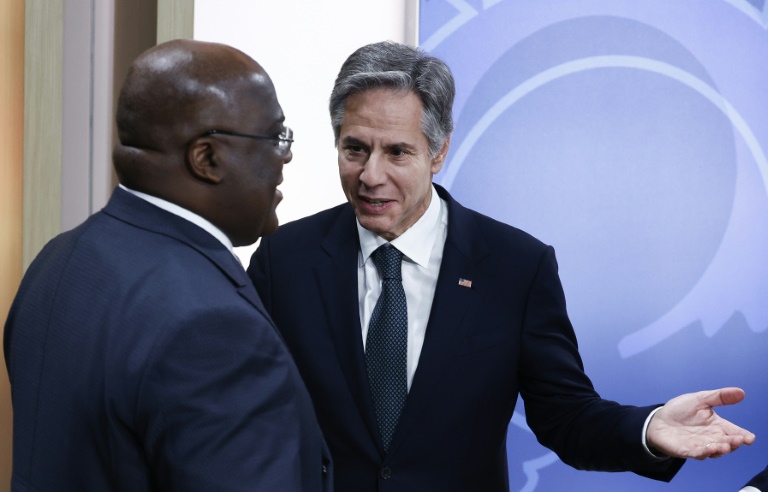
“The DRC is under pressure but unfortunately it’s not sufficiently heard or supported,” President Felix Tshisekedi told Secretary of State Antony Blinken as they met at a US-Africa summit in Washington.

The flooding is an example of “what we have been deploring for some time,” he said.

“Support must come from countries that pollute and unfortunately trigger the harmful consequences in our countries that lack the means to protect themselves,” he said.

Blinken offered condolences for the deaths, saying the flooding was “further evidence of the challenges we are facing with climate and something we need to work on together.”

Despite a series of international conferences, scientists say the planet is far off course from meeting a UN-blessed goal of checking warming at 1.5 degrees Celsius (2.7 Fahrenheit) above pre-industrial levels.

Blinken was also speaking to Tshisekedi as the United States puts pressure on Rwanda to stop alleged support for M23 rebels who have made rapid advances in the eastern DRC.

“Our country is unfortunately the victim of a secret aggression by Rwanda through the M23 movement,” Tshisekedi said.

“It is causing serious destabilization in part of our country that is already in distress, with hundreds of thousands of displaced living in precarious conditions.”

Rwanda, whose President Paul Kagame is also in Washington, denies support to the M23, which is mostly made of Congolese Tutsis. 

Relations between Rwanda and DR Congo have been strained since the mass arrival in the eastern DRC of Rwandan Hutus accused of slaughtering Tutsis during the 1994 genocide in Rwanda.

Rich nations oppose new biodiversity fund

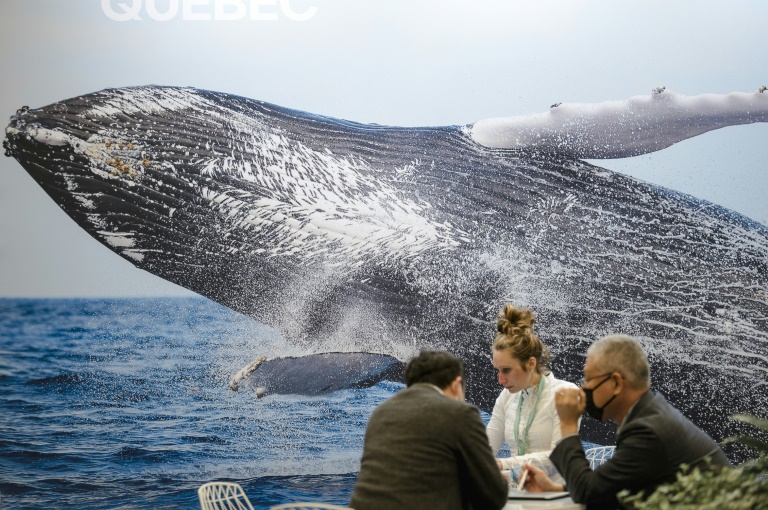
Creating a new global fund for biodiversity — a core demand of developing countries at UN talks in Montreal — “would take years” and be less effective than reforming existing financial mechanisms, Canada’s environment minister said Tuesday.

Ottawa’s position reflects the consensus among developed nations on the thorny issue, which has emerged as a key sticking point in negotiations to hammer out a new global pact for nature at the meeting, known as COP15. 

Delegates from around the world have gathered for the December 7-19 summit aiming to secure a new deal: a 10-year framework aimed at saving Earth’s forests, oceans and species before it’s too late. 

Draft targets include a cornerstone pledge to protect 30 percent of the world’s land and seas by 2030, eliminating harmful fishing and agriculture subsidies and tackling invasive species and reducing pesticides.

Dozens of countries, led by Brazil, India, Indonesia and African nations, are demanding financial subsidies of at least $100 billion a year until 2030, or one percent of global GDP, to protect ecosystems. The current figure is around $10 billion annually.

“The countries of the North understand that ambition must be accompanied by financial resources,” Canadian Minister of Environment and Climate Change Steven Guilbeault said at a press conference held halfway through the talks.

But “my concern is that the creation of new funding could take years, and during those years, countries in the South wouldn’t be receiving any money from that fund,” he added.

He recalled the Global Environment Facility, currently the main multilateral mechanism for biodiversity, took seven years to create. Donors have pledged $5.3 billion to this fund for its current cycle, 2022-2026.

“So I think it would be better to use existing funds” while pursuing reforms that would make money more accessible, he said.

“On the other hand, we have to agree on the fact that it cannot only be public money,” said Guilbeault, stressing that private and philanthropic contributions must come into play, as well as multilateral lenders such as the World Bank and IMF.

“We all need to push harder this week,” he concluded, after the first week of talks ended in stalemate.

– Yawning funding gap –

The divide between developed and developing nations on the issue of creating a new biodiversity fund mirrors a similar debate during recent UN climate talks in Egypt on creating a “loss and damages” fund for the most climate-vulnerable nations — though that demand was eventually met.

Given this precedent, Basile van Havre, co-chair of one of COP15’s working groups, did not rule out a similar decision for biodiversity. 

“The landscape or the context now is a lot more favorable,” he told AFP, acknowledging growing political momentum for such a move.

Whatever the final mechanism, the gap in expectations over resource mobilization that would allow lower income nations to hold up their side of the biodiversity deal remains a sore spot.

“The EU says it hears the needs of the Global South and the Africa Group, and recognizes that current finances are not enough. So what is the hold up?” said Greenpeace policy advisory Anna Ogniewska.

United Airlines announces huge Boeing 787 order

United Airlines on Tuesday unveiled an order of 100 new Boeing 787 Dreamliners, with options for an additional 100 jets, as the company banks on rebounding demand for international travel following a years-long pandemic slowdown.

The huge order, the largest by an American carrier for this class of aircraft, marks a victory for Boeing after 346 people died in two major 737 MAX crashes that grounded the jet globally for more than a year and a half.

Boeing has targeted mid-decade to return to its pre-pandemic financial health after the 737 MAX scandal and other woes.

United Chief Executive Scott Kirby, who also announced a giant Boeing and Airbus order in June 2021 ahead of rivals, predicted the airline’s ambitious 787 plan would pay off for the carrier during a capacity-constrained period.

“United is really uniquely positioned to grow in a way that’s going to be a huge challenge for others,” Kirby told reporters.

Speaking at a signing ceremony, Kirby said that Boeing remained a vital company for the United States and that the order was a vote of confidence that the company had turned the corner after a difficult period.

“As much as anything, I trust you and I trust your company,” Kirby told a crowd of Boeing employees, most donning blue Boeing t-shirts.

United expects the jets to be delivered between 2024 and 2032, with the new aircraft targeted to replace the 767 fleet that will be removed from service by 2030. 

The Dreamliner saves 25 percent of the carbon emission compared with the jets being retired.

United executives did not offer an estimate of the total potential cost of the contracts, but projected that capital spending would rise to $9 billion in 2023 and $11 billion in 2024.

United said it also exercised options for an additional 44 737 MAX planes between 2024 and 2026, and ordered 56 more MAX jets for 2027 and 2028.

Stan Deal, head of Boeing’s commercial aviation division, said the United 787 contract supports some 120,000 jobs at the company and throughout its supply chain.

“It builds security around the rate,” Deal said of the United contract.

Boeing plans to lift 787 output from a monthly rate of low single digits now to 10 in the 2025 timeframe.

– Production ramp-up –

After the 737 MAX, the 787 Dreamliner — which flies transatlantic journeys and other international itineraries — has been Boeing’s other leading source of orders and deliveries.

United officials said beefing up the fleet of 787s made sense at a time when the carrier already flies the jet, making it an easy transition for pilots and helping the company add capacity quickly.

But United officials praised the A350, the rival wide-body offering from European aerospace giant Airbus, and said they still plan to take delivery of 45 of the Airbus jets from 2030.

For Boeing, the United order signals a victory for the 787, for which production was slowed to a trickle while the company halted deliveries of new jets for more than a year while addressing production problems.

Boeing resumed 787 deliveries in August after getting the green light from the Federal Aviation Administration, which has heavily scrutinized Boeing processes in the aftermath of the 737 MAX crisis.

“This is an opportunity for Boeing to ramp up at Charleston, perhaps with two production shifts,” said Michel Merluzeau, director of aerospace and defense analysis at AIR consultancy.

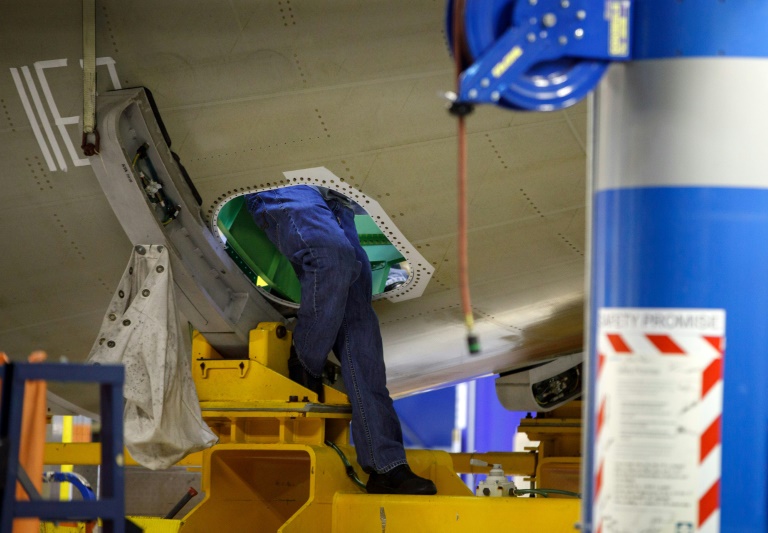
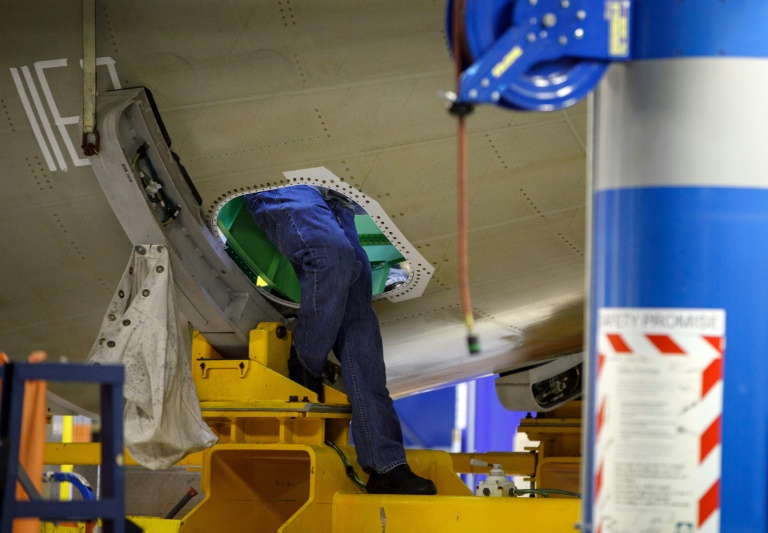
At the Charleston, South Carolina factory, Boeing fabricates composite materials that are then used to construct part of the fuselage at the plant. The facility also does final assembly of the jets, which includes major body parts built in other locales around the world.

In October 2020, Boeing consolidated assembly of the 787 to Charleston, after previously also assembling the wide-body jet in Washington state.

Boeing currently employs about 5,000 in South Carolina, down from peak levels. Deal expects “gradual” growth of the workforce at the factory, but did not project specifics. 

At its investor day in November, Boeing officials outlined a plan to restore 787 production to 10 passenger jets per month.

Shares of Boeing gained 0.5 percent to $187.13 Tuesday, while United rose briefly before dropping nearly 7 percent to $41.17.

United’s decline came as rivals such as American and Delta also tumbled after JetBlue said in a securities filing that it expects fourth-quarter revenues per available seat mile to be on the low end of its forecast due to weaker than expected demand in December.

United’s Kirby said he continues to see strong demand, but that the carrier is planning for a “mild recession” in 2023, citing Federal Reserve policies to slow the economy.

United Airlines announces huge Boeing 787 order

United Airlines on Tuesday unveiled an order of 100 new Boeing 787 Dreamliners, with options for an additional 100 jets, as the company banks on rebounding demand for international travel following a years-long pandemic slowdown.

The huge order, the largest by an American carrier for this class of aircraft, marks a victory for Boeing after 346 people died in two major 737 MAX crashes that grounded the jet globally for more than a year and a half.

Boeing has targeted mid-decade to return to its pre-pandemic financial health after the 737 MAX scandal and other woes.

United Chief Executive Scott Kirby, who also announced a giant Boeing and Airbus order in June 2021 ahead of rivals, predicted the airline’s ambitious 787 plan would pay off for the carrier during a capacity-constrained period.

“United is really uniquely positioned to grow in a way that’s going to be a huge challenge for others,” Kirby told reporters.

Speaking at a signing ceremony, Kirby said that Boeing remained a vital company for the United States and that the order was a vote of confidence that the company had turned the corner after a difficult period.

“As much as anything, I trust you and I trust your company,” Kirby told a crowd of Boeing employees, most donning blue Boeing t-shirts.

United expects the jets to be delivered between 2024 and 2032, with the new aircraft targeted to replace the 767 fleet that will be removed from service by 2030. 

The Dreamliner saves 25 percent of the carbon emission compared with the jets being retired.

United executives did not offer an estimate of the total potential cost of the contracts, but projected that capital spending would rise to $9 billion in 2023 and $11 billion in 2024.

United said it also exercised options for an additional 44 737 MAX planes between 2024 and 2026, and ordered 56 more MAX jets for 2027 and 2028.

Stan Deal, head of Boeing’s commercial aviation division, said the United 787 contract supports some 120,000 jobs at the company and throughout its supply chain.

“It builds security around the rate,” Deal said of the United contract.

Boeing plans to lift 787 output from a monthly rate of low single digits now to 10 in the 2025 timeframe.

– Production ramp-up –

After the 737 MAX, the 787 Dreamliner — which flies transatlantic journeys and other international itineraries — has been Boeing’s other leading source of orders and deliveries.

United officials said beefing up the fleet of 787s made sense at a time when the carrier already flies the jet, making it an easy transition for pilots and helping the company add capacity quickly.

But United officials praised the A350, the rival wide-body offering from European aerospace giant Airbus, and said they still plan to take delivery of 45 of the Airbus jets from 2030.

For Boeing, the United order signals a victory for the 787, for which production was slowed to a trickle while the company halted deliveries of new jets for more than a year while addressing production problems.

Boeing resumed 787 deliveries in August after getting the green light from the Federal Aviation Administration, which has heavily scrutinized Boeing processes in the aftermath of the 737 MAX crisis.

“This is an opportunity for Boeing to ramp up at Charleston, perhaps with two production shifts,” said Michel Merluzeau, director of aerospace and defense analysis at AIR consultancy.

At the Charleston, South Carolina factory, Boeing fabricates composite materials that are then used to construct part of the fuselage at the plant. The facility also does final assembly of the jets, which includes major body parts built in other locales around the world.

In October 2020, Boeing consolidated assembly of the 787 to Charleston, after previously also assembling the wide-body jet in Washington state.

Boeing currently employs about 5,000 in South Carolina, down from peak levels. Deal expects “gradual” growth of the workforce at the factory, but did not project specifics. 

At its investor day in November, Boeing officials outlined a plan to restore 787 production to 10 passenger jets per month.

Shares of Boeing gained 0.5 percent to $187.13 Tuesday, while United rose briefly before dropping nearly 7 percent to $41.17.

United’s decline came as rivals such as American and Delta also tumbled after JetBlue said in a securities filing that it expects fourth-quarter revenues per available seat mile to be on the low end of its forecast due to weaker than expected demand in December.

United’s Kirby said he continues to see strong demand, but that the carrier is planning for a “mild recession” in 2023, citing Federal Reserve policies to slow the economy.

US Capitol probe panel to release final report on Dec 21

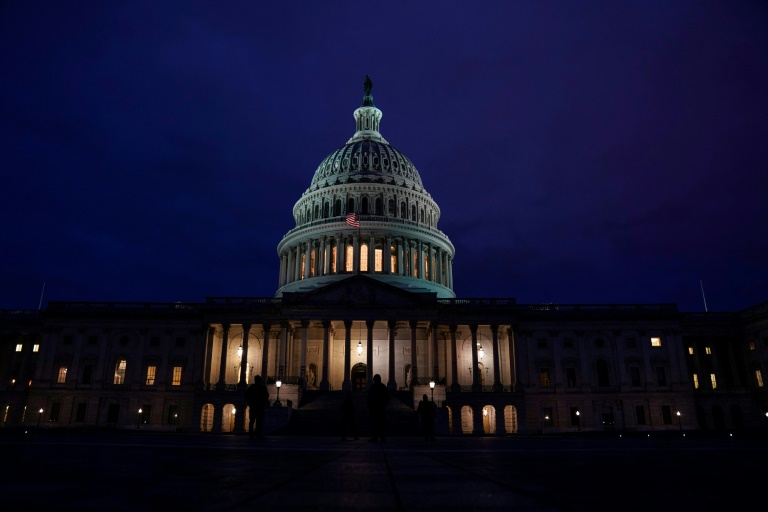
The House panel investigating the attack on the US Capitol by supporters of former president Donald Trump will hold its final meeting on December 19 and release its report two days later, the committee chairman said Tuesday.

Bennie Thompson, a lawmaker from Mississippi, told reporters the committee will vote at the meeting on whether to refer any individuals to the Justice Department for potential criminal charges.

The panel cannot itself file charges but can make recommendations to the Justice Department, which has appointed a special counsel to look into Trump’s role in the January 6, 2021 assault on Congress and his efforts to overturn the 2020 presidential election won by Democrat Joe Biden.

Among the potential charges believed to be under consideration are obstruction of an official proceeding, conspiracy to defraud the United States, perjury and witness tampering. 

Trump, who has announced plans to run for president again in 2024, was subpoenaed by the House committee but has declined to testify.

The panel has interviewed dozens of witnesses and held several public hearings.

Hundreds of people have been arrested for involvement in the assault on the Capitol, and two members of a far-right militia, the Oath Keepers, were convicted of sedition in the most high-profile case yet stemming from the attack.

Trump was impeached by the Democratic-majority House of Representatives for “incitement of insurrection” after the January 6 attack on the Capitol, but was acquitted by the Senate.

US Congress scrambles to avoid government shutdown

Negotiations to ward off a US government shutdown went into overdrive Tuesday, with lawmakers struggling to craft a temporary budget bill that needs approval by Friday to avoid paralysis of federal services.

Democrats unveiled a text which would extend federal spending at current levels until December 23. It could be voted on in the House of Representatives as early as Wednesday.

There is growing urgency, since members of Congress have until midnight Friday to adopt a new budget, otherwise all funding for federal services will be cut and operations across swathes of the government will screech to a halt.

Departments and other federal buildings but also national parks, some museums and a multitude of organizations would be impacted, forcing the furlough of hundreds of thousands of federal workers. 

A winter 2018-2019 shutdown, the longest in US history, even affected baggage screening at airports. 

Despite strong partisan divisions, most elected officials on both sides do not want a shutdown, which risks creating chaos before the holidays.

The two parties are currently unable to agree on a final budget for the fiscal year 2023. 

“While we are close to a final agreement to create American jobs, help working families with the cost of living, and protect our national security, we need additional time,” said the leading Democrat in the talks, congresswoman Rosa DeLauro. 

The temporary budget bill would give Congress another week to reach a compromise.

Close Bitnami banner
Bitnami