AFP

More financing needed for IMF climate change fund: director

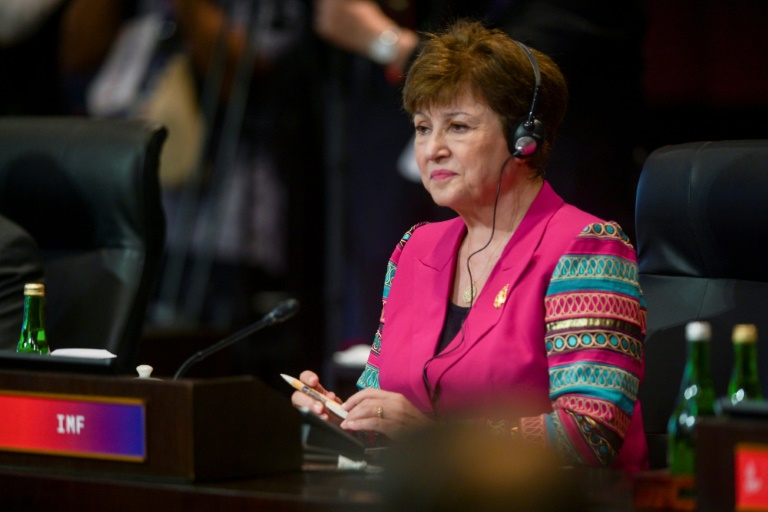
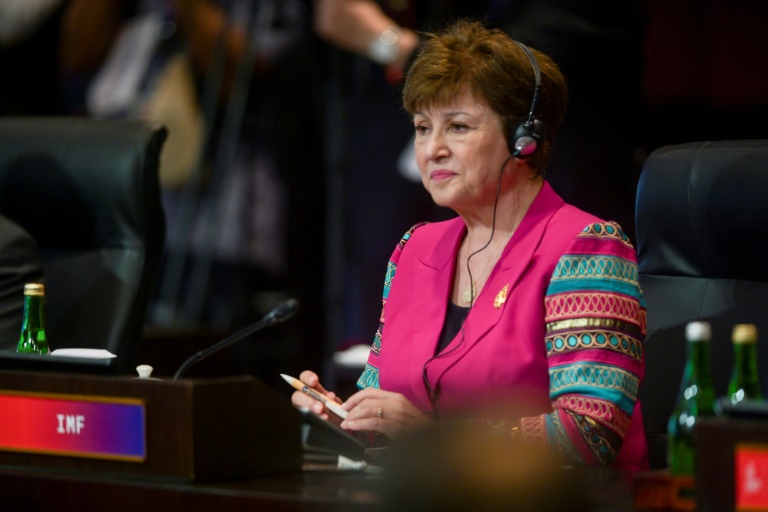
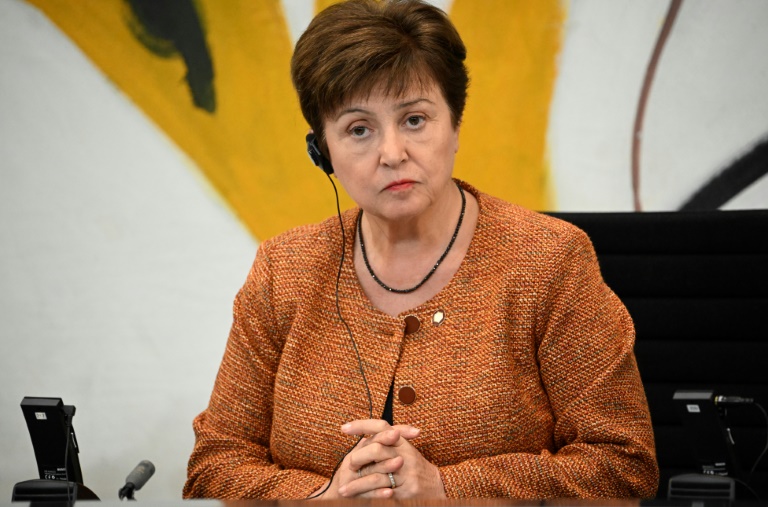
A new fund helping low-income countries tackle the impacts of climate change already has around $40 billion worth of commitments, but this is “nothing in comparison with the needs,” IMF chief Kristalina Georgieva said Tuesday.

Several countries have won loan deals from the International Monetary Fund’s Resilience and Sustainability Trust (RST), but global leaders are urging that more be done to aid nations grappling with the costly fallout from climate change.

“If we do nothing to move financing… by 2030, 66 percent of carbon emissions will come from the developing world,” Georgieva said in an interview with AFP.

“If we want to succeed in our fight against climate change, it is paramount to move financing to where it would make a difference,” she added, on the sidelines of a panel discussion on the RST.

For now, the three countries that have crossed the finish line with RST financing are Costa Rica, Barbados and Rwanda, while a deal with Bangladesh is headed for further approval.

“The interest is very significant from both low-income countries and vulnerable middle-income countries, especially small island states,” Georgieva said.

She added that the IMF expects more members to commit resources “so we don’t end up having to ration support for countries.”

At the panel in Washington, Barbados Prime Minister Mia Mottley said long-term capital is needed for many issues, adding that debt sustainability metrics could be revisited.

“Every dollar of debt is not equivalent. A dollar of debt to build a school does not give me the same rate of return as quickly as a dollar of debt to build a geothermal facility,” she said.

World Trade Organization Director-General Ngozi Okonjo-Iweala also stressed at the event the importance of supply chains when it comes to building resilience in developing countries.

“Supply chains for certain products are highly concentrated. Eighty percent of vaccines are exported from 10 countries,” she said, adding that similar situations may apply to items like solar panels and chips.

“Why can’t we… diversify manufacturing… so we have supply chains that are global, and diversified, and more resilient?” Okonjo-Iweala said.
Nuclear fusion: harnessing the power of the stars

US researchers have finally surpassed an important milestone for nuclear fusion technology: getting more energy out than was put in.

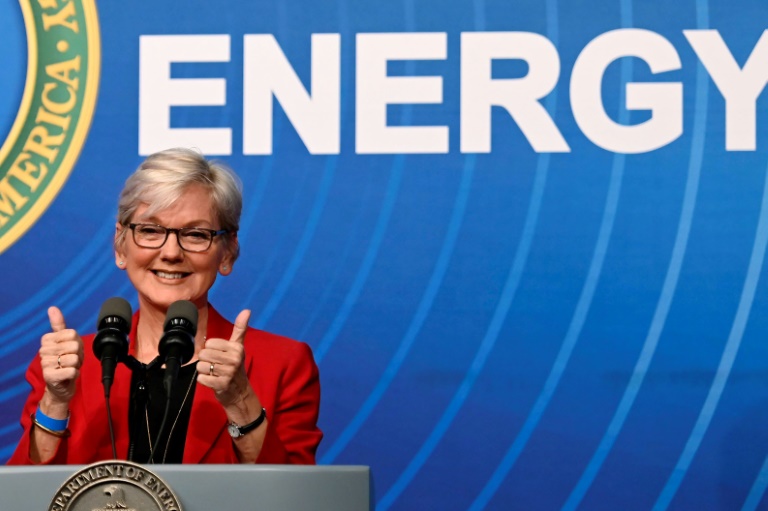
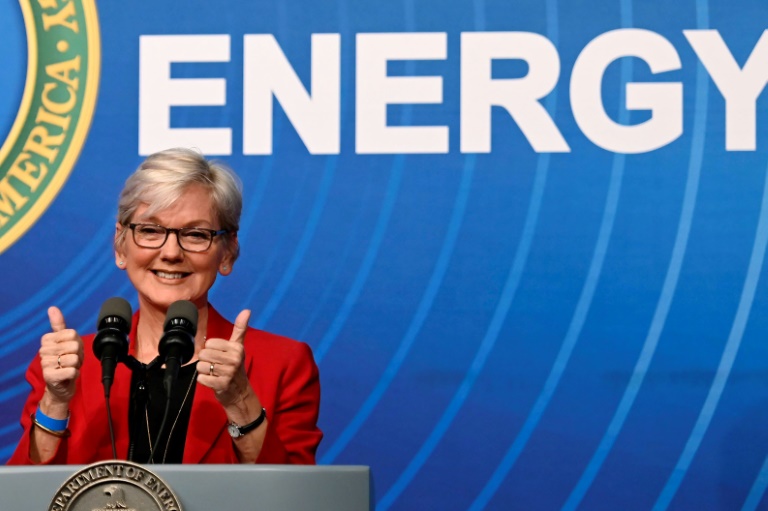
The US Department of Energy announced on Tuesday that it had made a historic breakthrough with what some consider to be the energy of the future.

Here is an update on how nuclear fusion — which produces no greenhouse gases and leaves little waste — works, what projects are underway and estimates on when they could be completed:

– Energy of the stars –

Fusion differs from fission, the technique currently used in nuclear power plants, by fusing two atomic nuclei instead of splitting one.

In fact, fusion is the process that powers the sun.

Two light hydrogen atoms, when they collide at very high speeds, fuse together into one heavier element, helium, releasing energy in the process.

“Controlling the power source of the stars is the greatest technological challenge humanity has ever undertaken,” tweeted physicist Arthur Turrell, author of “The Star Builders.”

– Two distinct methods –

Producing fusion reactions on Earth is only possible by heating matter to extremely high temperatures — over 100 million degrees Celsius (180 million Fahrenheit).

“So we have to find ways to isolate this extremely hot matter from anything that could cool it down. This is the problem of containment,” Erik Lefebvre, project leader at the French Atomic Energy Commission (CEA), told AFP.

One method is to “confine” the fusion reaction with magnets.

In a huge donut-shaped reactor, light hydrogen isotopes (deuterium and tritium) are heated until they reach the state of plasma, a very low density gas.

Magnets confine the swirling plasma gas, preventing it from coming into contact with the chamber’s walls, while the atoms collide and begin fusing.

This is the type of reactor used in the major international project known as ITER, currently under construction in France, as well as the Joint European Torus (JET) near Oxford, England.

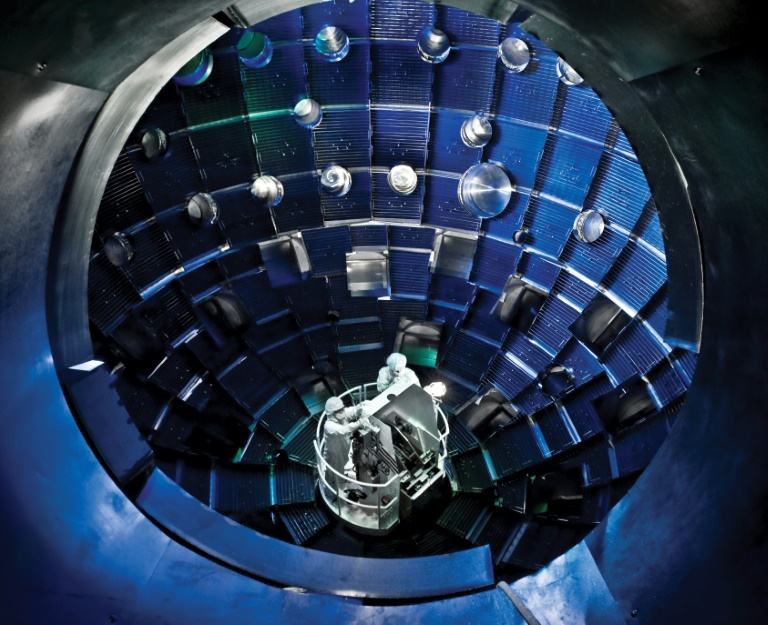
A second method is inertial confinement fusion, in which high energy lasers are directed simultaneously into a thimble-sized cylinder containing the hydrogen.

This is the technique used by scientists at the National Ignition Facility (NIF) at Lawrence Livermore National Laboratory (LLNL) in California who were behind Tuesday’s announcement.

Inertial confinement is used to demonstrate the physical principles of fusion, while magnetic confinement seeks to mimic future industrial-scale reactors.

– State of research –

For decades, scientists had attempted to achieve what is known as “net energy gain” — in which more energy is produced by the fusion reaction than it takes to activate it.

LLNL director Kim Budil cautioned that much remains to be done before it can be commercially viable.

“There are very significant hurdles, not just in the science but in technology,” Budil said. “A few decades of research on the underlying technologies could put us in a position to build a power plant.”

To get there, researchers must first increase the efficiency of the lasers and reproduce the experiment more frequently. 

– Fusion’s benefits –

The NIF’s success has sparked great excitement in the scientific community, which is hoping the technology could be a game-changer for global energy production.

Unlike fission, fusion carries no risk of nuclear accidents.

“If a few lasers are missing and they don’t go off at the right time, or if the confinement of the plasma by the magnetic field… is not perfect,” the reaction will simply stop, Lefebvre says.

Nuclear fusion also produces much less radioactive waste than current power plants, and above all, emits no greenhouse gases.

“It is an energy source that is totally carbon-free, generates very little waste, and is intrinsically extremely safe,” according to Lefebvre, who says fusion could be “a future solution for the world’s energy problems.”

Regardless of Tuesday’s announcement, however, the technology is still a far way off from producing energy on an industrial scale, and cannot therefore be relied on as an immediate solution to the climate crisis.

Hawaii volcano goes quiet after spectacular display

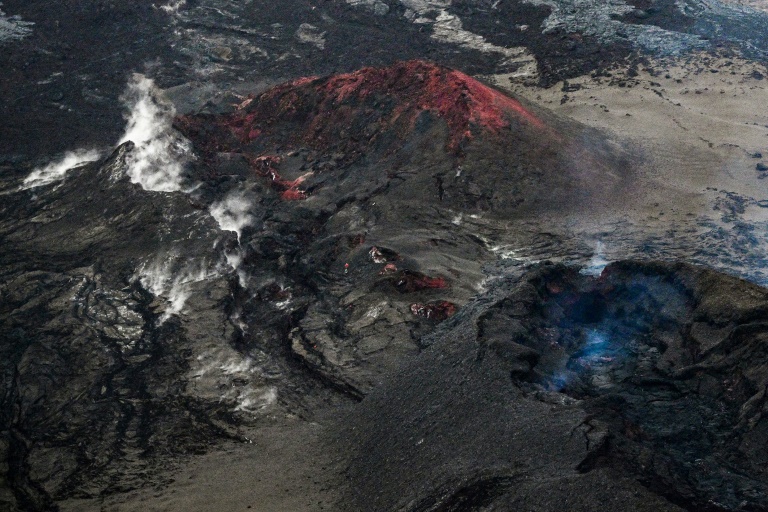
The world’s largest volcano, which has offered a spectacular weeks-long show in its first eruption for almost four decades, has gone quiet, scientists in Hawaii said Tuesday.

At the height of the flare-up, Mauna Loa spewed fountains of lava 200 feet (60 meters) into the sky, and sent rivers of molten rock gushing down its sides, wowing vulcanologists and helicopter-riding tourists.

Huge fissures on the volcano, which makes up the bulk of Hawaii’s Big Island, vented tons of gas, and sprayed slivers of volcanic glass — known as Pele’s Hair.

But on Tuesday, experts at the US Geological Survey said the show was largely over.

“Mauna Loa is no longer erupting,” an update said.

“Lava supply to the fissure 3 vent on the Northeast Rift Zone ceased on December 10 and sulfur dioxide emissions have decreased to near pre-eruption background levels.

“Volcanic tremor and earthquakes associated with the eruption are greatly diminished.”

But such is the volume — and intense heat — of the viscous rock that issued from the Earth’s belly, that hot spots could remain visible for weeks.

“Spots of incandescence may remain near the vent, along channels, and at the flow front for days or weeks as the lava flows cool,” the scientists said.

“However, eruptive activity is not expected to return based on past eruptive behavior.”

– ‘Long Mountain’ –

The biggest volcano on Earth by volume, Mauna Loa, whose name means “Long Mountain,” is larger than the rest of the Hawaiian islands combined.

The volcano’s submarine flanks stretch for miles to an ocean floor that is in turn depressed by Mauna Loa’s great mass — making its summit some 11 miles above its base, according to the USGS. 

One of six active volcanoes on the Hawaiian islands, Mauna Loa has erupted 33 times since 1843.

Before this one, its most recent eruption, in 1984, lasted 22 days.

Kilauea, a volcano on the southeastern flank of Mauna Loa, erupted almost continuously between 1983 and 2019, and a minor eruption there has been ongoing for months.

Growth downgrade for China 'very likely' on Covid surge: IMF chief

A lower growth forecast is “very likely” for China this year and next, with easing Covid-19 restrictions expected to bring a surge in infections and temporary difficulties, IMF chief Kristalina Georgieva told AFP Tuesday.

Her comments on the sidelines of a panel about a newly-created IMF fund come as the world’s second biggest economy grapples with soaring coronavirus cases, as it loosens virus controls after nearly three years.

While China’s zero-Covid policy has battered its economy, “the easing of restrictions is going to create some difficulties over the next months” as well, Georgieva said.

This is because a spike in infections will be inevitable, with more people temporarily unable to participate in the labor force.

“But it is likely that as China overcomes this in the second half of the year, there could be some improvement in growth prospects,” she said.

The zero-Covid policy, characterized by snap lockdowns, international travel restrictions and mass testing, took a heavy toll on consumers and businesses, with demonstrations against the measures eventually erupting in major Chinese cities.

The IMF earlier warned that tough virus restrictions have been especially hard on China’s residents.

Chinese officials said Monday that Covid cases are surging in Beijing, with a sharp spike in people visiting hospitals across the capital city. Rising infections in smaller cities were also discussed on social media.

The fund cut its growth projection for China in October to 3.2 percent this year — the lowest in decades — while expecting growth to rise to 4.4 percent next year.

But “very likely, we will be downgrading our growth projections for China, both for 2022 and for 2023,” Georgieva said.

– Adjusting policy –

For now, the country has to adjust its Covid policy, such as by being more targeted with restrictions and boosting vaccinations, especially to elderly populations. There is also a need to use more antiviral treatments, Georgieva added.

“In other words, retool the health system towards treating people rather than isolating, which has been the case for the last years,” she said.

Global economic leaders last week hailed China’s move away from its hardline virus strategy, with hopes that relaxation would also help to shore up a world economy struggling with fallout from the pandemic and Russia’s invasion of Ukraine.

With 2023 set to be a “very difficult year” as well, Georgieva reiterated that the likelihood of further downgrades in IMF growth projections will be “high.”

Apart from challenges in China, the US and European Union are also expected to slow simultaneously, with projections for half of the European Union to be in recession next year, she said.

While Washington-based fund earlier said there was a one-in-four chance global growth would fall below two percent next year, Georgieva added Tuesday that this probability has gone up.

Growth downgrade for China 'very likely' on Covid surge: IMF chief

A lower growth forecast is “very likely” for China this year and next, with easing Covid-19 restrictions expected to bring a surge in infections and temporary difficulties, IMF chief Kristalina Georgieva told AFP Tuesday.

Her comments on the sidelines of a panel about a newly-created IMF fund come as the world’s second biggest economy grapples with soaring coronavirus cases, as it loosens virus controls after nearly three years.

While China’s zero-Covid policy has battered its economy, “the easing of restrictions is going to create some difficulties over the next months” as well, Georgieva said.

This is because a spike in infections will be inevitable, with more people temporarily unable to participate in the labor force.

“But it is likely that as China overcomes this in the second half of the year, there could be some improvement in growth prospects,” she said.

The zero-Covid policy, characterized by snap lockdowns, international travel restrictions and mass testing, took a heavy toll on consumers and businesses, with demonstrations against the measures eventually erupting in major Chinese cities.

The IMF earlier warned that tough virus restrictions have been especially hard on China’s residents.

Chinese officials said Monday that Covid cases are surging in Beijing, with a sharp spike in people visiting hospitals across the capital city. Rising infections in smaller cities were also discussed on social media.

The fund cut its growth projection for China in October to 3.2 percent this year — the lowest in decades — while expecting growth to rise to 4.4 percent next year.

But “very likely, we will be downgrading our growth projections for China, both for 2022 and for 2023,” Georgieva said.

– Adjusting policy –

For now, the country has to adjust its Covid policy, such as by being more targeted with restrictions and boosting vaccinations, especially to elderly populations. There is also a need to use more antiviral treatments, Georgieva added.

“In other words, retool the health system towards treating people rather than isolating, which has been the case for the last years,” she said.

Global economic leaders last week hailed China’s move away from its hardline virus strategy, with hopes that relaxation would also help to shore up a world economy struggling with fallout from the pandemic and Russia’s invasion of Ukraine.

With 2023 set to be a “very difficult year” as well, Georgieva reiterated that the likelihood of further downgrades in IMF growth projections will be “high.”

Apart from challenges in China, the US and European Union are also expected to slow simultaneously, with projections for half of the European Union to be in recession next year, she said.

While Washington-based fund earlier said there was a one-in-four chance global growth would fall below two percent next year, Georgieva added Tuesday that this probability has gone up.

EU energy ministers push gas price talks into next week

EU ministers meeting in Brussels on Tuesday narrowed differences over a proposed cap on natural gas prices, but kicked talks on the issue into next week to finalise “technical” details.

They did agree two other measures to mitigate Europe’s energy crunch, on joint gas purchases and speeding up authorisations for renewable energy installations, but their adoption was contingent on the price cap being settled.

“I was hoping to open a Champagne today to celebrate the agreement. But apparently, we still need to keep the bottles in the fridge for a while,” said Czech Industry Minister Jozef Sikela, who chaired the meeting under his country’s EU presidency.

He told journalists, “Our aim is to approve all three items in a package on Monday,” when energy ministers next meet.

The issue is urgent because Europe has entered a bitingly cold winter with fewer energy options because Russia has reduced gas supplies in retaliation for EU sanctions imposed over its war in Ukraine.

Gas prices are high, albeit lower than during the middle of the year, spurring worries that European homes and businesses could face blackouts or unpayable bills, if not this winter then next.

Sikela indicated the initial gas price-cap proposal, drawn up by the European Commission, would be modified to bridge a division between the bloc’s member states.

Several EU countries, including France, Poland and Spain, criticised the commission proposal as being designed so  the price cap could never be triggered.

The commission had suggested a price ceiling of 275 euros per megawatt hour, but only if the price remains above that level for at least two weeks, and then only if the price for liquified natural gas (LNG) goes above 58 euros for 10 days within that same two-week period.

Other EU countries including Germany, the Netherlands and Austria, viewed a too-rigid a price cap as a threat to supplies, carrying a risk that deliveries could be diverted from Europe to more lucrative markets in Asia.

Sikela said the price cap was “extremely sensitive” and had exposed a “fragile balance” in the European Union.

“Some of the countries believe that if we are wrong with the mechanism, it can basically cause like a much bigger problem that we want to prevent,” he said.

Some of those in favour of a viable price cap stressed the need for swift agreement.

“The time for consultation has run out,” the Italian minister for European affairs, Raffaele Fitto, said as he went into the meeting.

“European citizens are in agony, European businesses are closing…. All of us must heed to our responsibilities and agree without delay on the market correction mechanism and energy solidarity.”

EU leaders holding a summit in Brussels on Thursday had the option of taking up the issue themselves, but Sikela said that so far “nobody asked for it”.

He added: “We simply agreed that we will deal with the topic and we will finish the topic on Monday.”

Sam Bankman-Fried: crypto rock star facing life in jail

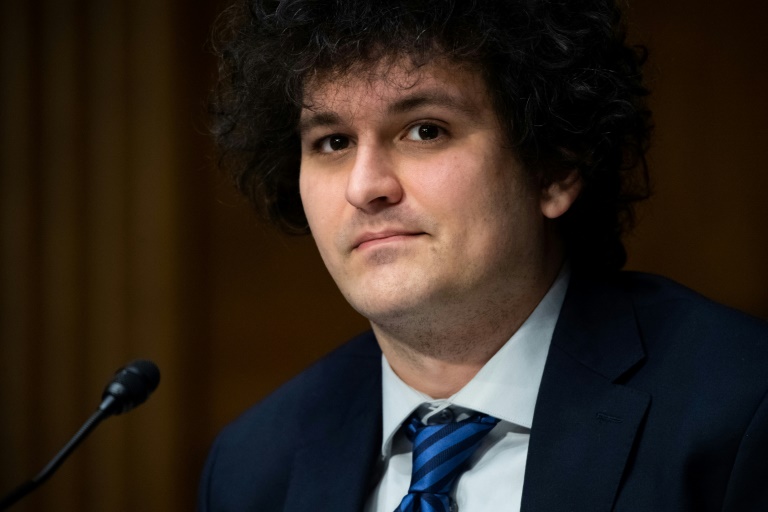
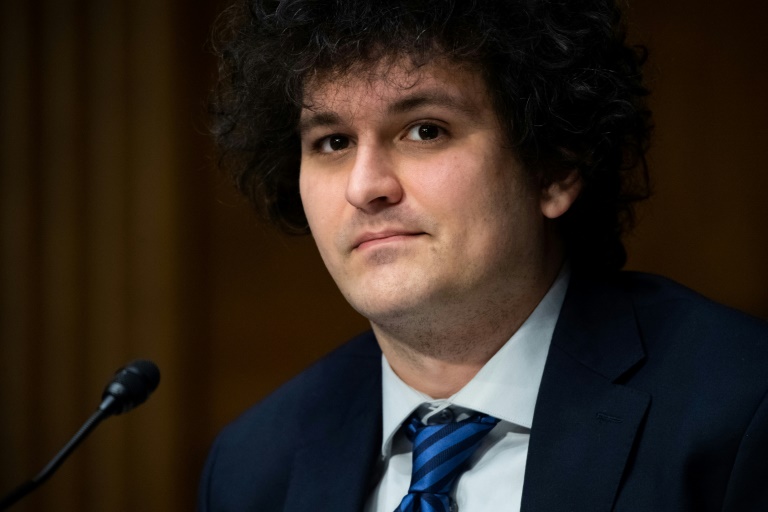
Sam Bankman-Fried has had a dizzying fall from top of the heap in the world of cryptocurrencies to staring down a hefty jail sentence on a raft of fraud charges.

The 30-year-old billionaire founder of the FTX crypto exchange once partnered with celebrities and rubbed shoulders with politicians as he tried to legitimize cryptocurrency as more than just a shady get-rich-quick scheme.

However, his company, valued at $32 billion earlier this year, suddenly imploded in November after filing for bankruptcy protection, inviting scrutiny from regulators, prosecutors and furious clients. 

To authorities, it was a rotten, billion-dollar house of cards that had come crashing down.

Bankman-Fried is a vegan who reportedly sleeps four hours a night, and usually dresses in a hoodie and dark T-shirt. He has said he maintains a spartan lifestyle, and has donated millions of dollars to causes such as animal welfare, reducing global warming, and combating neglected tropical diseases.

His personal fortune was once at nearly $25 billion, according to Forbes magazine. 

– Prestigious partnerships –

The son of Stanford Law School professors and a graduate of the elite Massachusetts Institute of Technology (MIT), Bankman-Fried worked as a broker on Wall Street before turning to cryptocurrencies in 2017. 

He created a cryptocurrency investment fund, Alameda Research, moved to Hong Kong and then launched FTX.

Bankman-Fried, known on social media as SBF, was a vocal advocate for smoother access to the crypto market for the general public, particularly in the United States. 

The success of FTX enabled the platform to forge prestigious partnerships, including with the newly retired American football legend Tom Brady and his wife, the Brazilian ex-model Gisele Bundchen. 

Bankman-Fried moved the company to the Bahamas, where taxes are almost nonexistent, saying the Caribbean nation is one of the few countries that has a comprehensive licensing regime for cryptocurrencies.

As his star rose, Fortune magazine wondered if he would be the new Warren Buffet.

However, things quickly went sour.

– Fall from grace – 

FTX’s implosion was swift following a November 2 report on the cryptocurrency news site CoinDesk on ties between FTX and Alameda.

The report exposed that Alameda’s balance sheet was heavily built on the FTT currency — a token created by FTX and with no independent value. 

The price of FTT plunged in early November, roiling both Alameda and FTX, where Alameda had large trading positions.

Reeling from customer withdrawals and short some $8 billion, FTX and some 100 related entities filed for bankruptcy protection on November 11.

Among the revelations, FTX propped up Alameda with billions of dollars in customer funds that are now likely lost forever. 

Questions also linger over whether Bankman-Fried engaged in market manipulation, or illegally provided inside information to Alameda.

Despite the questions hanging over his company’s activities, Bankman-Fried defied legal advice and kept appearing on talk shows and conference panels, offering his version of his company’s sudden failure, usually by video link from the Bahamas.

Then came his arrest on Monday in the idyllic archipelago, at the request of the United States, and charges of money laundering, wire fraud, and violating campaign finance laws.

The US Securities and Exchange Commission said the onetime crypto wunderkind was “responsible for fraudulently raising billions of dollars from investors in FTX and misusing funds belonging to FTX’s trading customers.”

Bankman-Fried has acknowledged poor corporate controls and mistakes, however, denies any criminal wrongdoing.

“I didn’t ever try to commit fraud on anyone,” Bankman-Fried told a New York Times conference on November 30. “Clearly I made a lot of mistakes or things I would be able to give anything to be able to do over again.”

Instead of boosting investor confidence in cryptocurrency, Bankman-Fried’s downfall sent major cryptocurrencies plunging, only raising further doubt over the young and turbulent sector.

Sam Bankman-Fried: crypto rock star facing life in jail

Sam Bankman-Fried has had a dizzying fall from top of the heap in the world of cryptocurrencies to staring down a hefty jail sentence on a raft of fraud charges.

The 30-year-old billionaire founder of the FTX crypto exchange once partnered with celebrities and rubbed shoulders with politicians as he tried to legitimize cryptocurrency as more than just a shady get-rich-quick scheme.

However, his company, valued at $32 billion earlier this year, suddenly imploded in November after filing for bankruptcy protection, inviting scrutiny from regulators, prosecutors and furious clients. 

To authorities, it was a rotten, billion-dollar house of cards that had come crashing down.

Bankman-Fried is a vegan who reportedly sleeps four hours a night, and usually dresses in a hoodie and dark T-shirt. He has said he maintains a spartan lifestyle, and has donated millions of dollars to causes such as animal welfare, reducing global warming, and combating neglected tropical diseases.

His personal fortune was once at nearly $25 billion, according to Forbes magazine. 

– Prestigious partnerships –

The son of Stanford Law School professors and a graduate of the elite Massachusetts Institute of Technology (MIT), Bankman-Fried worked as a broker on Wall Street before turning to cryptocurrencies in 2017. 

He created a cryptocurrency investment fund, Alameda Research, moved to Hong Kong and then launched FTX.

Bankman-Fried, known on social media as SBF, was a vocal advocate for smoother access to the crypto market for the general public, particularly in the United States. 

The success of FTX enabled the platform to forge prestigious partnerships, including with the newly retired American football legend Tom Brady and his wife, the Brazilian ex-model Gisele Bundchen. 

Bankman-Fried moved the company to the Bahamas, where taxes are almost nonexistent, saying the Caribbean nation is one of the few countries that has a comprehensive licensing regime for cryptocurrencies.

As his star rose, Fortune magazine wondered if he would be the new Warren Buffet.

However, things quickly went sour.

– Fall from grace – 

FTX’s implosion was swift following a November 2 report on the cryptocurrency news site CoinDesk on ties between FTX and Alameda.

The report exposed that Alameda’s balance sheet was heavily built on the FTT currency — a token created by FTX and with no independent value. 

The price of FTT plunged in early November, roiling both Alameda and FTX, where Alameda had large trading positions.

Reeling from customer withdrawals and short some $8 billion, FTX and some 100 related entities filed for bankruptcy protection on November 11.

Among the revelations, FTX propped up Alameda with billions of dollars in customer funds that are now likely lost forever. 

Questions also linger over whether Bankman-Fried engaged in market manipulation, or illegally provided inside information to Alameda.

Despite the questions hanging over his company’s activities, Bankman-Fried defied legal advice and kept appearing on talk shows and conference panels, offering his version of his company’s sudden failure, usually by video link from the Bahamas.

Then came his arrest on Monday in the idyllic archipelago, at the request of the United States, and charges of money laundering, wire fraud, and violating campaign finance laws.

The US Securities and Exchange Commission said the onetime crypto wunderkind was “responsible for fraudulently raising billions of dollars from investors in FTX and misusing funds belonging to FTX’s trading customers.”

Bankman-Fried has acknowledged poor corporate controls and mistakes, however, denies any criminal wrongdoing.

“I didn’t ever try to commit fraud on anyone,” Bankman-Fried told a New York Times conference on November 30. “Clearly I made a lot of mistakes or things I would be able to give anything to be able to do over again.”

Instead of boosting investor confidence in cryptocurrency, Bankman-Fried’s downfall sent major cryptocurrencies plunging, only raising further doubt over the young and turbulent sector.

US researchers announce historic nuclear fusion breakthrough

US researchers announced a historic nuclear fusion breakthrough on Tuesday, hailing a “landmark achievement” in the quest for a source of unlimited, clean power and an end to reliance on fossil fuels.

The Lawrence Livermore National Laboratory (LLNL) said it had used the world’s largest laser to create, for the first time, a fusion reaction that replicated the process that powers the sun and generated more energy than it took to produce -– a goal pursued by scientists for decades.

Nuclear fusion has been touted by its supporters as a clean, abundant and safe source of energy that could eventually allow humanity to break its dependence on coal, crude oil, natural gas and other hydrocarbons driving a global climate crisis.

The US Department of Energy described the achievement of fusion ignition as a “major scientific breakthrough” that will lead to “advancements in national defense and the future of clean power.”

However, there is still a long way to go before fusion is viable on an industrial scale, providing power to homes and businesses.

“There are very significant hurdles, not just in the science but in technology,” Kim Budil, the LLNL director, said at a press conference.

“A few decades of research on the underlying technologies could put us in a position to build a power plant,” she said.

The LLNL, which is based in California, said a team at its National Ignition Facility had achieved what is known as “net energy gain” in an experiment this month, producing more energy from fusion than the laser energy used to drive it.

“They shot a bunch of lasers at a pellet of fuel and more energy was released from that fusion ignition than the energy of the lasers,” explained White House science advisor Arati Prabhakar.

– More developments needed –

For the experiment, researchers at LLNL used 192 ultra-powerful lasers to deliver 2.05 megajoules of energy to a tiny capsule smaller than a pea containing isotopes of hydrogen.

It produced 3.15 megajoules of fusion energy output.

While the result was a net energy gain, 300 megajoules of energy was needed from the electrical grid to power the lasers.

“Our calculations suggest that it’s possible with a laser system at scale to achieve hundreds of megajoules of yield,” Budil said.

“So there is a pathway to a target that produces enough yield, but we’re very distant from that right now.”

Nuclear power plants around the world currently use fission — the splitting of a heavy atom’s nucleus — to produce energy.

Fusion on the other hand combines two light hydrogen atoms to form one heavier helium atom, releasing a large amount of energy in the process.

That’s the process that occurs inside stars, including our sun.

On Earth, fusion reactions can be provoked by heating hydrogen to extreme temperatures inside specialized devices.

Like fission, fusion is carbon-free during operation, but has many more advantages: it poses no risk of nuclear disaster and produces much less radioactive waste.

Other nuclear fusion projects are also in development around the world, including the major international project known as ITER, which is currently under construction in France.

Instead of lasers, ITER will use a technique known as magnetic confinement, containing a swirling mass of fusing hydrogen plasma within a massive donut-shaped chamber.

US researchers announce historic nuclear fusion breakthrough

US researchers announced a historic nuclear fusion breakthrough on Tuesday, hailing a “landmark achievement” in the quest for a source of unlimited, clean power and an end to reliance on fossil fuels.

The Lawrence Livermore National Laboratory (LLNL) said it had used the world’s largest laser to create, for the first time, a fusion reaction that replicated the process that powers the sun and generated more energy than it took to produce -– a goal pursued by scientists for decades.

Nuclear fusion has been touted by its supporters as a clean, abundant and safe source of energy that could eventually allow humanity to break its dependence on coal, crude oil, natural gas and other hydrocarbons driving a global climate crisis.

The US Department of Energy described the achievement of fusion ignition as a “major scientific breakthrough” that will lead to “advancements in national defense and the future of clean power.”

However, there is still a long way to go before fusion is viable on an industrial scale, providing power to homes and businesses.

“There are very significant hurdles, not just in the science but in technology,” Kim Budil, the LLNL director, said at a press conference.

“A few decades of research on the underlying technologies could put us in a position to build a power plant,” she said.

The LLNL, which is based in California, said a team at its National Ignition Facility had achieved what is known as “net energy gain” in an experiment this month, producing more energy from fusion than the laser energy used to drive it.

“They shot a bunch of lasers at a pellet of fuel and more energy was released from that fusion ignition than the energy of the lasers,” explained White House science advisor Arati Prabhakar.

– More developments needed –

For the experiment, researchers at LLNL used 192 ultra-powerful lasers to deliver 2.05 megajoules of energy to a tiny capsule smaller than a pea containing isotopes of hydrogen.

It produced 3.15 megajoules of fusion energy output.

While the result was a net energy gain, 300 megajoules of energy was needed from the electrical grid to power the lasers.

“Our calculations suggest that it’s possible with a laser system at scale to achieve hundreds of megajoules of yield,” Budil said.

“So there is a pathway to a target that produces enough yield, but we’re very distant from that right now.”

Nuclear power plants around the world currently use fission — the splitting of a heavy atom’s nucleus — to produce energy.

Fusion on the other hand combines two light hydrogen atoms to form one heavier helium atom, releasing a large amount of energy in the process.

That’s the process that occurs inside stars, including our sun.

On Earth, fusion reactions can be provoked by heating hydrogen to extreme temperatures inside specialized devices.

Like fission, fusion is carbon-free during operation, but has many more advantages: it poses no risk of nuclear disaster and produces much less radioactive waste.

Other nuclear fusion projects are also in development around the world, including the major international project known as ITER, which is currently under construction in France.

Instead of lasers, ITER will use a technique known as magnetic confinement, containing a swirling mass of fusing hydrogen plasma within a massive donut-shaped chamber.

Close Bitnami banner
Bitnami