AFP

Guatemala volcano eruption eases after forcing airport closure

One of the most active volcanoes in Central America erupted over the weekend, spewing lava and ash and forcing Guatemalan authorities to briefly close the country’s largest airport before activity eased on Sunday.

The volcano named Fuego — Spanish for fire — rumbled into activity overnight Saturday into Sunday, with molten rock oozing down its slopes and ash belching two kilometers (more than a mile) into the sky. Winds carried the ash toward Guatemala City, 35 kilometers (22 miles) away.

La Aurora international airport, six kilometers south of the capital, was temporarily closed at mid-morning, the General Directorate of Civil Aeronautics said in a statement, citing the presence of ash near the runway.

At least two incoming flights had to be diverted, aviation sources said, before it reopened around midday local time after winds changed direction and sent ash away from the facility.

In addition, a road that connects southern and central Guatemala was closed as a precaution, said Carlos Aquino, a spokesman for the highway police. It reopened Sunday afternoon as the volcano’s activity subsided.

The volcano sits about 16 kilometers from Antigua, the country’s picturesque former capital and biggest tourist attraction.

Fuego erupts every four to five years on average. In 2018, an eruption sent rivers of lava pouring down its sides, devastating the village of San Miguel Los Lotes, killing 215 people and leaving a similar number missing.

Authorities said they were monitoring the latest eruption closely, but that no one had been evacuated.

“With what happened in 2018, now the authorities are already more alert and more active,” said Jose Sul, a resident of Alotenango, which lies at the eastern base of Fuego.

Locals saw a sudden expulsion of lava on Saturday night that reddened the sky. “People here are used to experiencing this, and they look at it as normal,” Demetrio Pamal, a 28-year-old Indigenous Mayan farmer, told AFP.

Many local families have a backpack ready with food, water, a flashlight and medicine so they can evacuate for up to three days at the drop of a hat.

Sunday afternoon, the Guatemalan volcanological institute said that “activity has decreased; there are no longer pyroclastic flows or the emission of lava or eruptive columns loaded with ash.”

“After several hours of relative calm, this eruptive activity can be considered over,” said Roberto Merida, a technician at the volcanological institute.

Guatemala has two other active volcanoes — Santiaguito in the west of the country and Pacaya in the south.

Fuego also adjoins the inactive Acatenango volcano — at 3,500 meters.

Unlike South America’s Andean volcanoes, Guatemala’s are not snow-capped because of Central America’s warmer climate.

Central America has more than 100 volcanoes, many of which are wildly popular tourist attractions, even though they occasionally cause death and destruction. 
Alleged Lockerbie bombmaker in US custody

A Libyan man accused of making the bomb that destroyed a Pan Am flight over Scotland in 1988, killing 270 people, has been taken into US custody, authorities said on Sunday.

Abu Agila Mohammad Masud was charged by the United States two years ago for the Lockerbie bombing — in which Americans made up a majority of the victims. He had previously been held in Libya for alleged involvement in a 1986 attack on a Berlin nightclub.

The US Justice Department confirmed in a statement that Masud was in American custody, following an announcement by Scottish prosecutors, without saying how the suspect ended up in US hands.

A department spokesperson said Masud was expected to make an initial appearance, at a time yet to be specified, in a federal court in the US capital. 

According to The New York Times, Masud was arrested by the FBI and is in the process of being extradited to the United States to face prosecution.

Only one individual has so far been prosecuted for the bombing of Pan Am flight 103 on December 21, 1988 — which remains the deadliest terror attack on British soil.

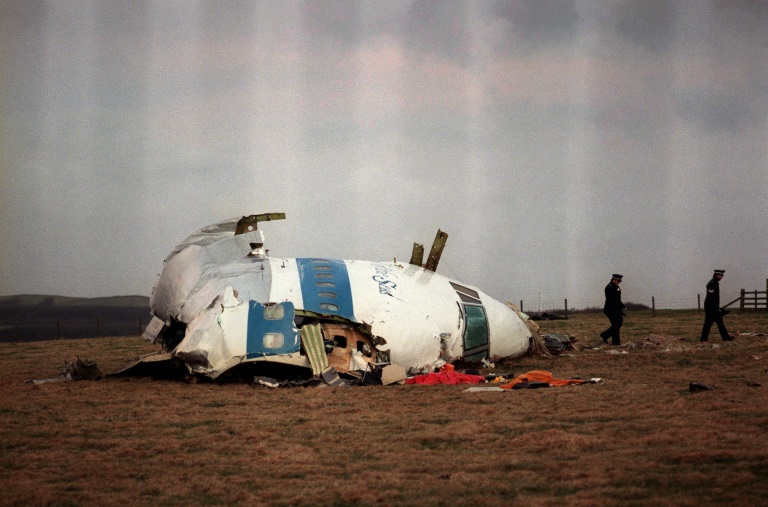
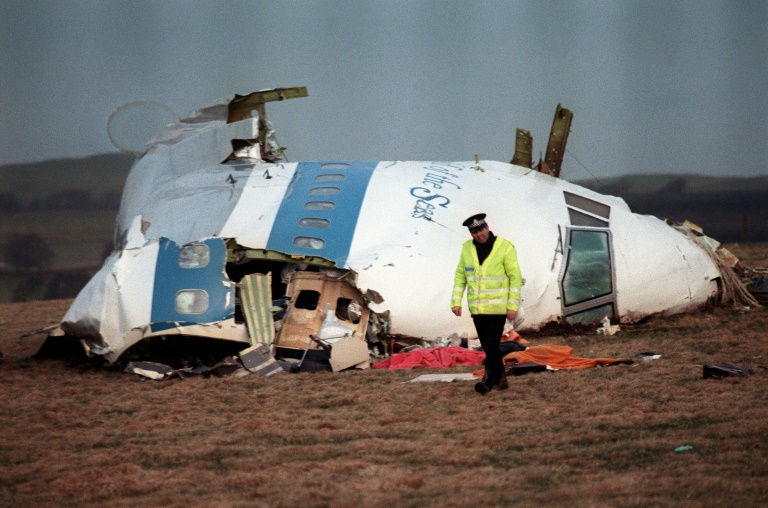
The New York-bound aircraft was blown up 38 minutes after it took off from London, sending the main fuselage plunging to the ground in the town of Lockerbie and spreading debris over a vast area.

The bombing killed 259 people including 190 Americans on board, and 11 people on the ground.

Former Libyan intelligence officer Abdelbaset Ali Mohmet al-Megrahi spent seven years in a Scottish prison after his conviction in 2001. 

He died in Libya in 2012, always maintaining his innocence.

“The families of those killed in the Lockerbie bombing have been told that the suspect Abu Agila Mohammad Masud Kheir Al-Marimi … is in US custody,” a spokesperson for Scotland’s Crown Office and Procurator Fiscal Service said.

“Scottish prosecutors and police, working with UK government and US colleagues, will continue to pursue this investigation, with the sole aim of bringing those who acted along with al-Megrahi to justice.”

The families thanked US and British law enforcement officials.

“Our loved ones will never be forgotten, and those who are responsible for their murder on December 21, 1988 must face justice,” they said in a statement.

– Libyan connection –

Scottish officials gave no information on when Masud was handed over, and his fate has been tied up in the warring factionalism of Libyan politics.

He was kidnapped by a Libyan militia group, according to reports last month cited by the BBC, following his detention for the Berlin attack which killed two US soldiers and a Turkish citizen.

Masud was reputedly a leading bombmaker for Libyan dictator Moamer Kadhafi. According to the US indictment, he assembled and programmed the bomb that brought down the Pan Am jumbo jet.

The investigation was relaunched in 2016 when Washington learned of Masud’s arrest, following Kadhafi’s ouster and death in 2011, and his reported confession of involvement to the new Libyan regime in 2012.

However, the Libyan connection to Lockerbie has long been disputed by some.

In January 2021, Megrahi’s family lost a posthumous appeal in Scotland against his conviction, following an independent review that said a possible miscarriage of justice may have occurred.

The family wants UK authorities to declassify documents that are said to allege that Iran used a Syria-based Palestinian proxy to build the bomb that downed flight 103.

In that narrative, the Lockerbie bombing was retaliation for the downing of an Iranian passenger jet by a US Navy missile in July 1988 that killed 290 people.

After the news of Masud being in US custody, lawyers for Megrahi’s son issued a statement again trying to cast doubt on the Libyan connection.

The US indictment says, for instance, that Masud bought clothes used to fill the suitcase containing the bomb that brought down the airliner, lawyer Aamer Anwar said in a statement.

But the owner of the store in Malta who sold those clothes said they were purchased by Megrahi — and this was central to the case against him.

“How can both Megrahi and Masud now be held responsible?,” the lawyer wrote.

Lockerbie: mid-air blast led to worldwide probe

Just after 7:00 pm on Wednesday, December 21, 1988, Pan Am Flight 103 from London to New York was blown apart over the Scottish town of Lockerbie, killing all 259 people on board. 

Another 11 people died on the ground as burning debris and liquid fuel from the disintegrating Boeing 747 rained down from an altitude of some 9,400 metres (31,000 feet).

The bodies of the dead were scattered over a wide radius and pieces of the plane were found up to 130 kilometres (80 miles) from its final point of impact.

British and US investigators trying to piece together what caused the atrocity carried out some 12,000 interrogations in 54 countries.

Finally in 1990, in a Toshiba radio-cassette player inside a Samsonite suitcase, they found traces of the explosive Semtex and fragments of an electronic detonator that pointed the finger at Tripoli.

Detectives identified the fibres of clothing used to surround the Semtex and traced them to Malta where, they believe, a Libyan checked in the suitcase full of explosives that was eventually placed aboard Flight 103 in Frankfurt.

In November 1991, Britain and the United States charged two Libyans, Abdelbaset Ali Mohmet al-Megrahi and Al Amin Khalifa Fhimah, with responsibility for the bombing.

– Trial, conviction, appeals –

Libya refused to allow the two suspects to stand trial in Britain or the United States and in response, the United Nations Security Council ordered an air and arms embargo and a freeze on Libya’s financial assets abroad.

In August 1998, London and Washington agreed to hold the trial of Megrahi and Fhimah on neutral territory, in the Netherlands, on condition the case would be heard “by a Scottish court, with Scottish judges, under Scottish law”.

The trial of Megrahi and Fhimah began on May 5, 2000, in the former US airbase of Camp Zeist near Utrecht in the central Netherlands. The territory of Camp Zeist was officially Scottish for the duration of the case.

On January 31, 2001, the court sentenced Megrahi to life in prison and acquitted Fhimah. An appeal by Megrahi failed in 2002.

In 2003, Libya agreed compensation for the victims of the bombing after lengthy talks with British and US officials, leading the UN to lift sanctions later that year.

Megrahi dropped a second appeal in 2009, as Scottish authorities prepared to decide his fate.

Soon afterwards, the Scottish government released Megrahi on compassionate grounds, as he was suffering from terminal cancer, provoking outrage in Washington.

He died in Libya in 2012, still maintaining his innocence.

His family lodged a bid for a posthumous appeal to clear his name in 2017, but Scotland’s High Court upheld his conviction in 2021.

NASA capsule Orion splashes down after record-setting lunar voyage

NASA’s Orion space capsule splashed down safely in the Pacific on Sunday, completing the Artemis 1 mission — a more than 25-day journey around the Moon with an eye to returning humans there in just a few years.

After racing through the Earth’s atmosphere at a speed of 40,000 kilometers per hour (25,000 mph), the uncrewed capsule floated down to the sea with the help of three large red and white parachutes, as seen on NASA TV. 

After a few hours of tests, the vessel will be recovered by a US Navy ship in waters off the coast of Mexico’s Baja California.

The capsule shaped like a gumdrop had to withstand a temperature 2,800 degrees Centigrade (5,000 Fahrenheit) — about half that of the surface of the sun — as it entered the Earth’s atmosphere.

The main goal of this mission was to test Orion’s heat shield — for the day when it is humans and not test mannequins riding inside.

Achieving success in this mission was key for NASA, which has invested tens of billions of dollars in the Artemis program due to take people back to the Moon and prepare for an onward trip, someday, to Mars.

A first test of the capsule was carried out in 2014 but that time it stayed in Earth’s orbit, coming back into the atmosphere at a slower speed of around 20,000 miles per hour.

– Choppers, divers and boats – 

The USS Portland was positioned to recover the Orion capsule in an exercise NASA has been rehearsing for years. Helicopters and inflatable boats were also deployed for this task.  

The falling spacecraft eased to a speed of 20 miles (30 kilometers) per hour as it finally hit the blue waters of the Pacific.

NASA will now let Orion float for two hours — a lot longer than if astronauts were inside — so as to collect data.

“We’ll see how the heat soaks back into the crew module and how that affects the temperature inside,” Jim Geffre, NASA’s Orion vehicle integration manager, said last week.

Divers will then attach cables to hoist Orion onto the USS Portland, which is an amphibious transport dock vessel, the rear of which will be partly submerged. This water will be pumped out slowly so the spacecraft can rest on a platform designed to hold it.

This should all take about four to six hours after splashdown.

The Navy ship will then head for San Diego, California where the spacecraft will be unloaded a few days later.

Upon returning to Earth, the spacecraft has traveled 1.4 million miles since it took off November 16 with the help of a monstrous rocket called SLS.

At its nearest point to the Moon it flew less than 80 miles (130 kilometers) from the surface. And it broke the distance record for a habitable capsule, venturing 268,000 miles (432,000 kilometers) from our planet.

– Artemis 2 and 3 –

Recovering the spacecraft will allow NASA to gather data that is crucial for future missions.

This includes information on the condition of the vessel after its flight, data from monitors that measure acceleration and vibration, and the performance of a special vest put on a mannequin in the capsule to test how to protect people from radiation while flying through space.

Some capsule components should be good for reuse in the Artemis 2 mission, already in advanced stages of planning.

This next mission planned for 2024 will take a crew toward the Moon but still without landing on it. NASA is expected to name the astronauts selected soon.

Artemis 3, scheduled for 2025, will see a spacecraft land for the first time on the south pole of the Moon, which features water in the form of ice.

Only 12 people — all of them white men — have set foot on the Moon. They did this during the Apollo missions, the last of which was in 1972.

Artemis is scheduled to send a woman and a person of color to the Moon for the first time.

NASA’s goal is to establish a lasting human presence on the Moon, through a base on its surface and a space station circling around it. Having people learn to live on the Moon should help engineers develop technologies for a years-long trip to Mars, maybe in the late 2030s.

NASA capsule Orion splashes down after record-setting lunar voyage

NASA’s Orion space capsule splashed down safely in the Pacific on Sunday, completing the Artemis 1 mission — a more than 25-day journey around the Moon with an eye to returning humans there in just a few years.

After racing through the Earth’s atmosphere at a speed of 40,000 kilometers per hour (25,000 mph), the uncrewed capsule floated down to the sea with the help of three large red and white parachutes, as seen on NASA TV. 

After a few hours of tests, the vessel will be recovered by a US Navy ship in waters off the coast of Mexico’s Baja California.

The capsule shaped like a gumdrop had to withstand a temperature 2,800 degrees Centigrade (5,000 Fahrenheit) — about half that of the surface of the sun — as it entered the Earth’s atmosphere.

The main goal of this mission was to test Orion’s heat shield — for the day when it is humans and not test mannequins riding inside.

Achieving success in this mission was key for NASA, which has invested tens of billions of dollars in the Artemis program due to take people back to the Moon and prepare for an onward trip, someday, to Mars.

A first test of the capsule was carried out in 2014 but that time it stayed in Earth’s orbit, coming back into the atmosphere at a slower speed of around 20,000 miles per hour.

– Choppers, divers and boats – 

The USS Portland was positioned to recover the Orion capsule in an exercise NASA has been rehearsing for years. Helicopters and inflatable boats were also deployed for this task.  

The falling spacecraft eased to a speed of 20 miles (30 kilometers) per hour as it finally hit the blue waters of the Pacific.

NASA will now let Orion float for two hours — a lot longer than if astronauts were inside — so as to collect data.

“We’ll see how the heat soaks back into the crew module and how that affects the temperature inside,” Jim Geffre, NASA’s Orion vehicle integration manager, said last week.

Divers will then attach cables to hoist Orion onto the USS Portland, which is an amphibious transport dock vessel, the rear of which will be partly submerged. This water will be pumped out slowly so the spacecraft can rest on a platform designed to hold it.

This should all take about four to six hours after splashdown.

The Navy ship will then head for San Diego, California where the spacecraft will be unloaded a few days later.

Upon returning to Earth, the spacecraft has traveled 1.4 million miles since it took off November 16 with the help of a monstrous rocket called SLS.

At its nearest point to the Moon it flew less than 80 miles (130 kilometers) from the surface. And it broke the distance record for a habitable capsule, venturing 268,000 miles (432,000 kilometers) from our planet.

– Artemis 2 and 3 –

Recovering the spacecraft will allow NASA to gather data that is crucial for future missions.

This includes information on the condition of the vessel after its flight, data from monitors that measure acceleration and vibration, and the performance of a special vest put on a mannequin in the capsule to test how to protect people from radiation while flying through space.

Some capsule components should be good for reuse in the Artemis 2 mission, already in advanced stages of planning.

This next mission planned for 2024 will take a crew toward the Moon but still without landing on it. NASA is expected to name the astronauts selected soon.

Artemis 3, scheduled for 2025, will see a spacecraft land for the first time on the south pole of the Moon, which features water in the form of ice.

Only 12 people — all of them white men — have set foot on the Moon. They did this during the Apollo missions, the last of which was in 1972.

Artemis is scheduled to send a woman and a person of color to the Moon for the first time.

NASA’s goal is to establish a lasting human presence on the Moon, through a base on its surface and a space station circling around it. Having people learn to live on the Moon should help engineers develop technologies for a years-long trip to Mars, maybe in the late 2030s.

Russia sought to swap ex-US Marine for 'assassin' held in Germany

US efforts to negotiate the freedom of a former Marine held in Russia as part of the swap involving basketball star Brittney Griner were thwarted by Moscow’s demand for the release of a convicted murderer held in Germany, according to a top US official and media reports.

The swap of Griner for convicted Russian arms dealer Viktor Bout raised questions as to why the US side had failed to secure the simultaneous release of Paul Whelan, a former Marine accused by Moscow of spying — a charge Washington flatly rejects.

White House national security spokesman John Kirby was asked Sunday about reports negotiations stumbled over a demand for the release of Vadim Krasikov, a former colonel in Russia’s domestic spy organization serving a life sentence for murder in Germany.

Kirby acknowledged on ABC’s “This Week” that “there was a claim that they wanted a man named Mr Krasikov, that the Germans have held in custody.”

“That just wasn’t considered a serious offer,” said Kirby, who characterized Krasikov as “an assassin.”

Kirby had told CNN in late July that including Krasikov in any deal was “a bad-faith attempt (by Moscow) to avoid a very serious offer” from the US side.

On Friday, White House spokeswoman Karine Jean-Pierre declined to comment on the Krasikov matter.

Krasikov is serving a life sentence in Germany for murdering a Chechen fighter in a park in Berlin in 2019, a killing which German authorities say was ordered by Russian intelligence services.

Some US diplomats believe the demand for Krasikov’s release originated with President Vladimir Putin, who was wary of providing a political boost to President Joe Biden at a time of fierce hostility over Ukraine, The New York Times reported.

Roger Carstens, special US presidential envoy for hostage affairs, told CNN he had spoken to Whelan on Friday, the day after the Griner-Bout swap, and Whelan expressed his “frustration.” 

“Here’s what I told him. I said: ‘Paul, you have the commitment of this president. The president’s focused. The secretary of state’s focused.'”

“‘Keep the faith. We’re coming to get you.'”

Carstens also provided some of the first details of Griner’s demeanor during her flight back to the United States from the United Arab Emirates, following a flight from Russia.

After boarding, he said, he offered to give Griner space to “decompress” after her 10 months in captivity — but she was having none of it.

“Oh, no,” she told him. “I’ve been in prison for 10 months now listening to Russian, I want to talk,” — and Griner did so for perhaps 12 of the 18 hours the flight lasted, Carstens said, talking about “everything under the sun.”

But first, he said, she insisted on meeting the others on the plane. 

She “went to every member on that crew, looked them in the eyes, shook their hands and asked about them, got their names…. It was really amazing.”

He added: “I was left with the impression that this is an intelligent, passionate, compassionate, humble, interesting person, a patriotic person, but above all, authentic.” 

He said he “felt blessed having had a chance to get to know her.”

Alleged Lockerbie bombmaker in US custody

A Libyan man accused of making the bomb that destroyed a Pan Am flight over Scotland in 1988, killing 270 people, has been taken into US custody, authorities said on Sunday.

Abu Agila Mohammad Masud was charged by the United States two years ago for the Lockerbie bombing — in which Americans made up a majority of the victims. He had previously been held in Libya for alleged involvement in a 1986 attack on a Berlin nightclub.

The US Justice Department confirmed in a statement that Masud was in American custody, following an announcement by Scottish prosecutors, without saying how the suspect ended up in US hands.

A department spokesperson said Masud was expected to make an initial appearance in a federal court in the US capital. They did not specify a date but said details would be forthcoming.

According to The New York Times, Masud was arrested by the FBI and is in the process of being extradited to the United States to face prosecution.

Only one individual has so far been prosecuted for the bombing of Pan Am flight 103 on December 21, 1988 — which remains the deadliest terror attack on British soil.

The New York-bound aircraft was blown up 38 minutes after it took off from London, sending the main fuselage plunging to the ground in Lockerbie and spreading debris over a vast area.

The bombing killed 259 people including 190 Americans on board, and 11 people on the ground.

Former Libyan intelligence officer Abdelbaset Ali Mohmet al-Megrahi spent seven years in a Scottish prison after his conviction in 2001. 

He died in Libya in 2012, always maintaining his innocence.

“The families of those killed in the Lockerbie bombing have been told that the suspect Abu Agila Mohammad Masud Kheir Al-Marimi … is in US custody,” a spokesperson for Scotland’s Crown Office and Procurator Fiscal Service said.

“Scottish prosecutors and police, working with UK government and US colleagues, will continue to pursue this investigation, with the sole aim of bringing those who acted along with al-Megrahi to justice.”

– Libyan connection –

Scottish officials gave no information on when Masud was handed over, and his fate has been tied up in the warring factionalism of Libyan politics.

He was kidnapped by a Libyan militia group, according to reports last month cited by the BBC, following his detention for the Berlin attack which killed two US soldiers and a Turkish citizen.

Masud was reputedly a leading bombmaker for Libyan dictator Moamer Kadhafi. According to the US indictment, he assembled and programmed the bomb that brought down the Pan Am jumbo jet.

The investigation was relaunched in 2016 when Washington learned of Masud’s arrest after Kadhafi’s ouster and death in 2011, and his reported confession of involvement to the new Libyan regime in 2012.

However, the Libyan connection to Lockerbie has long been disputed by some.

In January 2021, Megrahi’s family lost a posthumous appeal in Scotland against his conviction, following an independent review that said a possible miscarriage of justice may have occurred.

The family wants UK authorities to declassify documents that are said to allege that Iran used a Syria-based Palestinian proxy to build the bomb that downed flight 103.

In that narrative, the Lockerbie bombing was retaliation for the downing of an Iranian passenger jet by a US Navy missile in July 1988 that killed 290 people.

After the news of Masud being in US custody, lawyers for Megrahi’s son issued a statement again trying to cast doubt on the Libyan connection.

The US indictment says for instance that Masud bought clothes used to fill the suitcase containing the bomb that brought down the airliner, lawyer Aamer Anwar said in a statement.

But the owner of the store in Malta who sold those clothes said they were purchased by Megrahi — and this was central to the case against him.

“How can both Megrahi and Masud now be held responsible?,” the lawyer wrote.

Alleged Lockerbie bombmaker in US custody

A Libyan man accused of making the bomb that destroyed a Pan Am flight over Scotland in 1988, killing 270 people, has been taken into US custody, the Justice Department confirmed Sunday.

Abu Agila Mohammad Masud was charged by the US two years ago for the Lockerbie bombing. He had previously been held in Libya for his alleged involvement in a 1986 attack on a Berlin nightclub.

The Justice Department confirmed in a statement that Masud was in US custody, following an announcement by Scottish prosecutors, without saying how the suspect ended up in US hands.

A department spokesperson said Masud was expected to make an initial appearance in the US District Court for the District of Columbia, but did not specify when.

Only one individual has so far been prosecuted for the bombing of Pan Am flight 103 on December 21, 1988 — which remains the deadliest terror attack in British history.

Former Libyan intelligence officer Abdelbaset Ali Mohmet al-Megrahi spent seven years in a Scottish prison after his conviction in 2001. 

He died in Libya in 2012, always maintaining his innocence.

“The families of those killed in the Lockerbie bombing have been told that the suspect Abu Agila Mohammad Masud Kheir Al-Marimi … is in US custody,” a spokesperson for Scotland’s Crown Office and Procurator Fiscal Service said.

“Scottish prosecutors and police, working with UK government and US colleagues, will continue to pursue this investigation, with the sole aim of bringing those who acted along with al-Megrahi to justice.”

– Libyan connection –

Scottish officials gave no information on when Masud was handed over, and his fate has been tied up in the warring factionalism of Libyan politics.

He was kidnapped by a Libyan militia group, according to reports last month cited by the BBC, following his detention for the Berlin attack which killed two US soldiers and a Turkish citizen.

Masud was reputedly a leading bombmaker for Libyan dictator Moamer Kadhafi. According to the US indictment, he assembled and programmed the bomb that brought down the Pan Am jumbo jet.

The investigation was relaunched in 2016 when Washington learned of Masud’s arrest after Kadhafi’s ouster and death in 2011, and his reported confession of involvement to the new Libyan regime in 2012.

However, the Libyan connection to Lockerbie has long been disputed by some.

In January 2021, Megrahi’s family lost a posthumous appeal in Scotland against his conviction, following an independent review that said a possible miscarriage of justice may have occurred.

The family wants UK authorities to declassify documents that are said to allege that Iran used a Syria-based Palestinian proxy to build the bomb that downed flight 103.

In that narrative, the Lockerbie bombing was retaliation for the downing of an Iranian passenger jet by a US Navy missile in July 1988 that killed 290 people.

Cash crops: Dutch use bitcoin mining to grow tulips

Tulips and bitcoin have both been associated with financial bubbles in their time, but in a giant greenhouse near Amsterdam the Dutch are trying to make them work together.

Engineer Bert de Groot inspects the six bitcoin miners as they perform complex sums to earn cryptocurrency, filling the air with a noisy whine along with a blast of warmth.

That warmth is now heating the hothouse where rows of tulips grow, cutting the farmers’ reliance on gas whose price has soared since Russia’s invasion of Ukraine.

The servers in turn are powered by solar energy from the roof, reducing the normally huge electricity costs for mining, and cutting the impact on the environment.

Meanwhile both the farmers and de Groot’s company, Bitcoin Brabant, are earning crypto, which is still attracting investors despite a recent crash in the market.

“We think with this way of heating our greenhouse but also earning some bitcoin we have a win-win situation,” flower farmer Danielle Koning, 37, told AFP.

The Netherlands’ love of tulips caused the first stock market crash in the 17th century when speculation bulb prices caused prices to soar, only to later collapse.

Now the Netherlands is the world’s biggest tulip producer and also the second biggest agricultural exporter overall after the United States, with much grown in greenhouses.

– ‘Improving the environment’ –

But the low-lying country is keenly aware of the effect of the agricultural industry on climate change, while farmers are struggling with high energy prices.

Mining for cryptocurrency meanwhile requires huge amounts of electricity to power computers, leading to an environmental impact amid global efforts to tackle climate change. 

De Groot, 35, who only started his business earlier this year and now has 17 clients including restaurants and warehouses, says this makes bitcoin and tulips a perfect fit.

“This operation is actually carbon negative, as are all the operations I basically build,” says the long-haired de Groot, sporting an orange polo shirt with his firm’s logo.

“We’re actually improving the environment.”

He is also selling tulips online for bitcoin via a business called Bitcoinbloem.

The collaboration started when Koning saw a Twitter video de Groot had made about bitcoin mining, and called him up.

Now there are six servers at their hothouse, whose exact location Koning asked to keep secret to avoid thieves targeting the 15,000-euro machines.

Koning’s company owns half of them and keeps the bitcoin they produce, while de Groot is allowed to keep his three servers there in exchange for monthly visits to clean dust and insects out of the servers’ fans.

With a 20 degree Celsius difference between the air entering the machine and leaving them, this provides the heat needed to grow the tulips, and to dry the bulbs that produce them.

– ‘No worries’ –

“The most important thing we get out of it is, we save on natural gas,” says Koning. “Secondly, well, we earn Bitcoin by running them in the greenhouse.”

Huge energy costs have driven some Dutch agricultural firms that often rely on greenhouses to stop growing this year, while others have even gone bankrupt, says Koning.

Meanwhile, the philosopher Nassim Nicholas Taleb, who developed the idea of the unpredictable but historic “black swan” event, has compared Bitcoin to the “Tulipmania” that engulfed the Netherlands nearly 400 years ago.

This saw prices for a single bulb rise to more than 100 times the average annual income at the time before the bubble burst in 1637, causing banks to fail and people to lose their life savings.

The cryptocurrency sector is currently reeling from the collapse of a major exchange — with Bitcoin currently worth around $16,300 per unit, down from a high of $68,000 in November 2021 — but De Groot isn’t worried.

“I have absolutely no worries about the long-term value proposition of an immutable monetary system,” he says.

“Bitcoin will last for ever.” 

Cash crops: Dutch use bitcoin mining to grow tulips

Tulips and bitcoin have both been associated with financial bubbles in their time, but in a giant greenhouse near Amsterdam the Dutch are trying to make them work together.

Engineer Bert de Groot inspects the six bitcoin miners as they perform complex sums to earn cryptocurrency, filling the air with a noisy whine along with a blast of warmth.

That warmth is now heating the hothouse where rows of tulips grow, cutting the farmers’ reliance on gas whose price has soared since Russia’s invasion of Ukraine.

The servers in turn are powered by solar energy from the roof, reducing the normally huge electricity costs for mining, and cutting the impact on the environment.

Meanwhile both the farmers and de Groot’s company, Bitcoin Brabant, are earning crypto, which is still attracting investors despite a recent crash in the market.

“We think with this way of heating our greenhouse but also earning some bitcoin we have a win-win situation,” flower farmer Danielle Koning, 37, told AFP.

The Netherlands’ love of tulips caused the first stock market crash in the 17th century when speculation bulb prices caused prices to soar, only to later collapse.

Now the Netherlands is the world’s biggest tulip producer and also the second biggest agricultural exporter overall after the United States, with much grown in greenhouses.

– ‘Improving the environment’ –

But the low-lying country is keenly aware of the effect of the agricultural industry on climate change, while farmers are struggling with high energy prices.

Mining for cryptocurrency meanwhile requires huge amounts of electricity to power computers, leading to an environmental impact amid global efforts to tackle climate change. 

De Groot, 35, who only started his business earlier this year and now has 17 clients including restaurants and warehouses, says this makes bitcoin and tulips a perfect fit.

“This operation is actually carbon negative, as are all the operations I basically build,” says the long-haired de Groot, sporting an orange polo shirt with his firm’s logo.

“We’re actually improving the environment.”

He is also selling tulips online for bitcoin via a business called Bitcoinbloem.

The collaboration started when Koning saw a Twitter video de Groot had made about bitcoin mining, and called him up.

Now there are six servers at their hothouse, whose exact location Koning asked to keep secret to avoid thieves targeting the 15,000-euro machines.

Koning’s company owns half of them and keeps the bitcoin they produce, while de Groot is allowed to keep his three servers there in exchange for monthly visits to clean dust and insects out of the servers’ fans.

With a 20 degree Celsius difference between the air entering the machine and leaving them, this provides the heat needed to grow the tulips, and to dry the bulbs that produce them.

– ‘No worries’ –

“The most important thing we get out of it is, we save on natural gas,” says Koning. “Secondly, well, we earn Bitcoin by running them in the greenhouse.”

Huge energy costs have driven some Dutch agricultural firms that often rely on greenhouses to stop growing this year, while others have even gone bankrupt, says Koning.

Meanwhile, the philosopher Nassim Nicholas Taleb, who developed the idea of the unpredictable but historic “black swan” event, has compared Bitcoin to the “Tulipmania” that engulfed the Netherlands nearly 400 years ago.

This saw prices for a single bulb rise to more than 100 times the average annual income at the time before the bubble burst in 1637, causing banks to fail and people to lose their life savings.

The cryptocurrency sector is currently reeling from the collapse of a major exchange — with Bitcoin currently worth around $16,300 per unit, down from a high of $68,000 in November 2021 — but De Groot isn’t worried.

“I have absolutely no worries about the long-term value proposition of an immutable monetary system,” he says.

“Bitcoin will last for ever.” 

Close Bitnami banner
Bitnami