AFP

EU starts WTO action against China over Lithuania, patents

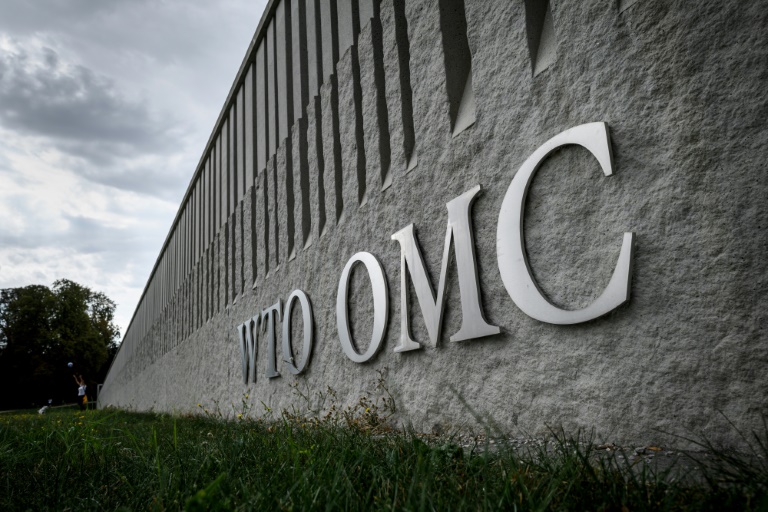
The EU on Wednesday escalated disputes with China to the WTO, requesting panels be assembled to hear two cases, one over trade restrictions on Lithuania and the other on legal recourses for EU patent holders.

“In both cases, the Chinese measures are highly damaging to European businesses” and, in the Lithuania case, “impact the functioning of the EU internal market,” the European Commission said in a statement.

China is the European Union’s biggest trading partner, and the litigation burdens the World Trade Organization with a thorny challenge at a time its dispute settlement system is badly weakened. 

The Lithuania case is over trade restrictions China has been applying to that EU member country because of Lithuania’s strengthening ties with Taiwan, which China views as part of its territory.

Beijing has denied taking coercive measures against Lithuania.

But Lithuanian exports to China have dropped 80 percent over the past year, ever since Chinese authorities started rejecting many Lithuanian imports.

The commission said that Chinese claims made in February that bans on Lithuanian alcohol, beef, dairy products, logs, peat and wheat were on health grounds were not justified.

Consultations with China early this year failed to address that issue, the commission said.

On the patents matter, the European Union is challenging decisions made by Chinese courts in August 2020 that barred EU owners of high-tech patents from turning to EU courts to protect their intellectual property.

The commission said that “Chinese manufacturers requested these anti-suit injunctions to pressure patent right holders to grant them cheaper access to European technology”.

– ‘Litigation stage’ –

An EU official briefing details to journalists on condition of anonymity said: “By requesting a panel, we’re essentially taking these two cases to the litigation stage.”

He added that “one of the reasons that we’re taking this course of action is because we see that they (Chinese authorities) take their WTO obligations seriously and we see that they have a good record of compliance”.

The WTO’s dispute settlement body will discuss the EU’s request for the panels on December 20. China can oppose it, but the EU can then renew its request, and the panels would then be established on January 30 next year.

A panel is the first WTO port of call for countries wanting to have a dispute adjudicated. They are typically composed of three experts but can have five in some cases. 

The commission said the panels’ deliberations could last up to a year and a half.

The WTO’s dispute settlement system, however, is in a fragile state after the United States, under then president Donald Trump, in 2019 blocked the appointment of new judges to the body’s appeals tribunal.

Current US President Joe Biden has not lifted the block, insisting that the WTO must reform to be more efficient.

To ensure disputes can still be appealed, 16 WTO member countries in 2020 set up a separate and temporary appeal system called the Multiparty Interim Appeal Arbitration Arrangement (MPIA), to which China is a party.

The United States is seeking to get the European Union onside with its harsher stance against China, over trade, human rights and Beijing’s increasingly assertive military posture.

Washington has pledged to give Taiwan the military means to defend itself in the event of a Chinese invasion. 

It has also barred Chinese telecom and tech companies from US networks.

The EU official briefing journalists said the United States, as well as Australia, Britain, Canada, Japan and Taiwan had sought to join the consultation phase of its disputes with China, but Beijing refused.

Those countries can ask to join the panels phase of the dispute as third parties, however, and China does not have the power to stop them.

“We would expect a reasonable number of WTO members to come in as third parties,” the official said.
China announces nationwide loosening of Covid restrictions

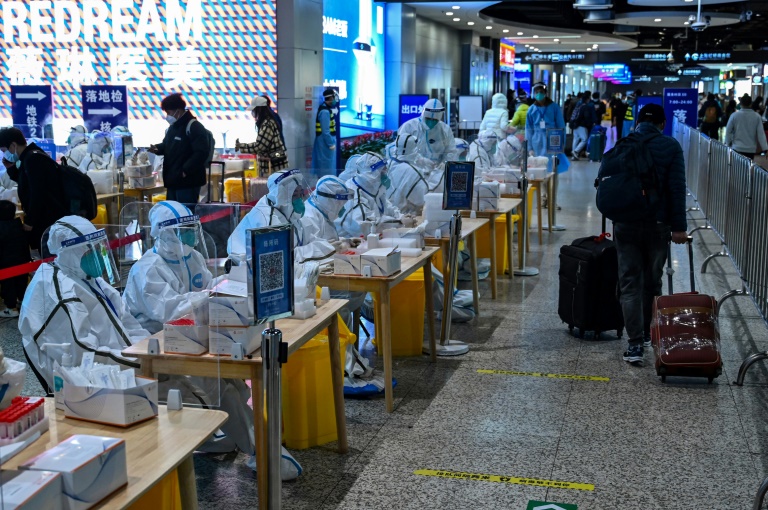
China announced Wednesday a nationwide loosening of its hardline Covid restrictions that had hammered the world’s second biggest economy and ignited rare protests against the ruling Communist Party.

The new rules are a major relaxation of President Xi Jinping’s signature zero-Covid policy, three years into the pandemic and long after the rest of the world had largely learnt to live with the virus.

However, with vaccination rates remaining low among China’s elderly and a health system still regarded as ill-prepared for a wave of infections, Xi has not abandoned travel curbs and heavy testing completely.

Under the new guidelines announced by the National Health Commission, the frequency and scope of PCR testing — long a tedious mainstay of life in zero-Covid China — will be reduced.

Lockdowns — a major source of public anger — will also be limited to as small a scope as is feasible, and authorities are required to free areas that show no positive cases after five days.

People with non-severe Covid infections can isolate at home instead of centralised government facilities.

And people will no longer be required to show a green health code on their phone to enter public buildings and spaces, except for “nursing homes, medical institutions, kindergartens, middle and high schools”.

China will also accelerate vaccination of the elderly, the health commission said, long seen as a major obstacle to the relaxation of zero-Covid.

Beijing said the new rules would serve to “correct pronounced problems faced by pandemic prevention and control currently”.

Past policy had “received strong response from the public”, National Health Commission expert Li Bin told a press conference Wednesday.

– ‘It’s about time’ –

Until recently, Xi and the Chinese propaganda apparatus had hailed zero-Covid as a triumph of communist rule that had kept deaths low compared with democratic countries such as the United States.

But rare demonstrations against the strategy broke out across China late last month, with people railing against the restrictions.

The protests expanded into calls for more political freedoms, with some even calling for Xi to resign, turning into the most widespread opposition to communist rule since the 1989 democracy uprising that the military crushed.

All the while, a stream of data showed the massive impacts of zero-Covid on China’s economy — with spill on effects for the world.

The government released data just before Wednesday’s announcement stating imports in November had fallen 10.6 percent year-on-year, the biggest drop since May 2020. Exports fell 8.7 percent over the same period.

Authorities quickly cracked down on the demonstrations, sending security forces into the streets and deploying its high-tech surveillance system against protesters.

However they also began easing restrictions, with some Chinese cities tentatively rolling back mass testing and curbs on movement.

And once dominated by coverage of the dangers of the virus and scenes of pandemic chaos abroad, China’s state-run media dramatically shifted tone to support a moving away from zero-Covid.

There were immediate signs of relief in China following Wednesday’s announcement.

“It’s about time to open up, it’s been three years already, we should open up fully,” one Beijing resident who asked to remain anonymous told AFP.

“People need to work and eat, you can’t just tell people not to leave their homes anymore,” they added.

“If people are worried now, they should stay home and avoid coming out, other people need to work and get on with life.”

Others were more nervous about an outbreak.

“We are very worried, now we fully open up, the government doesn’t care anymore, what should we do if the epidemic situation becomes more serious?” migrant worker Meng Qingcheng, 60, told AFP.

“It will make it harder for us to find a job,” he added. “We are also afraid, we don’t want to be infected.”

Searches on the country’s biggest travel app, Ctrip, for flight tickets ahead of Chinese New Year hit a three-year-high, state-run media outlet The Paper reported.

Analysts at Japanese firm Nomura said they projected China’s GDP would rebound next year in the wake of the relaxations.

But, they warned, China “does not appear to be well prepared for a massive wave of Covid infections”.

“It may have to pay for its procrastination on embracing a ‘living with Covid’ approach,” they said in an email.

Chinese flags flutter in Saudi capital ahead of Xi visit

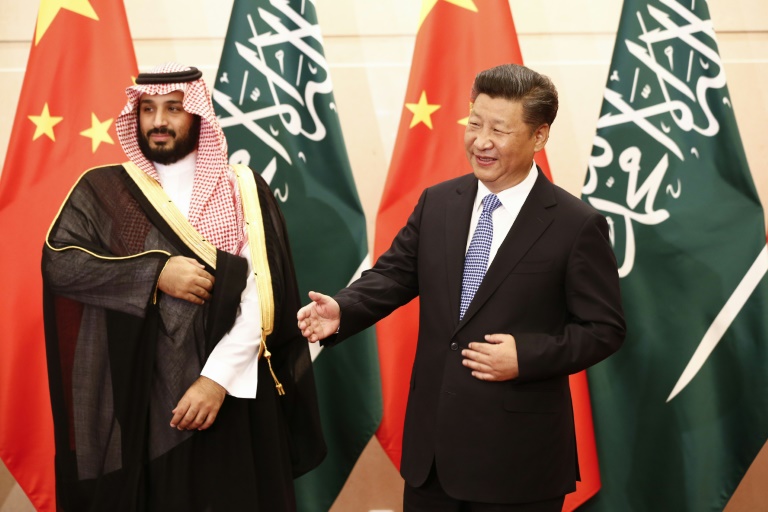
The Saudi capital was bedecked with Chinese flags ahead of President Xi Jinping’s visit on Wednesday that is likely to focus on energy ties but also follows months of tensions with the United States.

The red-and-gold Chinese emblem alternated with the green flag of Saudi Arabia along major roads in Riyadh, while Xi was pictured on the front pages of newspapers that highlighted the trip’s potential economic benefits.

China, the world’s second-biggest economy, is the top customer for oil from Saudi Arabia, the leading exporter of crude, and both sides appear keen to expand their relationship at a time of economic turmoil and geopolitical realignment.

The three-day trip — only Xi’s third overseas journey since the coronavirus pandemic began, and his first to Saudi Arabia since 2016 — comes after US President Joe Biden’s visit in July, when he pleaded in vain for higher oil production.

It will feature bilateral meetings with Saudi King Salman and Crown Prince Mohammed bin Salman, the de facto ruler, as well as a summit with the six-member Gulf Cooperation Council and a wider China-Arab summit.

The programme represents the “largest-scale diplomatic activity between China and the Arab world since the founding of the PRC”, or People’s Republic of China, foreign ministry spokeswoman Mao Ning said on Wednesday.

The official Saudi Press Agency said the kingdom accounted for more than 20 percent of Chinese investment in the Arab world between 2005 and 2020, “making it the biggest Arab country to receive Chinese investments during that period”. 

Oil markets are expected to be a top agenda item for talks between China and Saudi Arabia, especially given the turbulence the markets have experienced since Russia invaded Ukraine in February.

The G7 and European Union on Friday agreed to a $60-per-barrel price cap on Russian oil in an attempt to deny the Kremlin war resources, injecting further uncertainty into the markets.

On Sunday, the OPEC+ oil cartel led jointly by Saudi Arabia and Russia opted to keep in place production cuts of two million barrels per day approved in October.

Saudi and Chinese officials have provided scant information about the agenda, though Ali Shihabi, a Saudi analyst close to the government, said he expected “a number of agreements to be signed”.

Beyond energy, analysts say leaders from the two countries will likely discuss potential deals that could see Chinese firms become more deeply involved in mega-projects that are central to Prince Mohammed’s vision of diversifying the Saudi economy away from oil.

They include a futuristic $500 billion megacity known as NEOM, a so-called cognitive city that will depend heavily on facial recognition and surveillance technology.

– Tensions with Washington –

The OPEC+ production cuts approved in October represented the latest blow to the longtime partnership between Saudi Arabia and the United States, which said they amounted to “aligning with Russia” on the war in Ukraine. 

Xi’s visit is expected to be closely watched in Washington, which entered into what is often described as an oil-for-security partnership with Saudi Arabia towards the end of World War II.

While the Biden administration has smarted over the production cuts, Riyadh has at times accused the United States of failing to hold up the security end of the bargain, notably after strikes in September 2019 claimed by Yemen’s Huthi rebels temporarily halved the kingdom’s crude output.

China and Saudi Arabia already work together on arms sales and production. 

Yet analysts say Beijing cannot provide the same security assurances Washington does — nor does it wish to. 

Nevertheless, if the Saudis are “looking to extract more security guarantees from the US… signalling that they have the opportunity of strengthening ties with China is something that suits them well,” said Torbjorn Soltvedt, of the risk intelligence firm Verisk Maplecroft.

The GCC-China summit will be held in Riyadh on Friday, the bloc said in a statement. 

Turkey seeks proof of insurance from Russian oil tankers

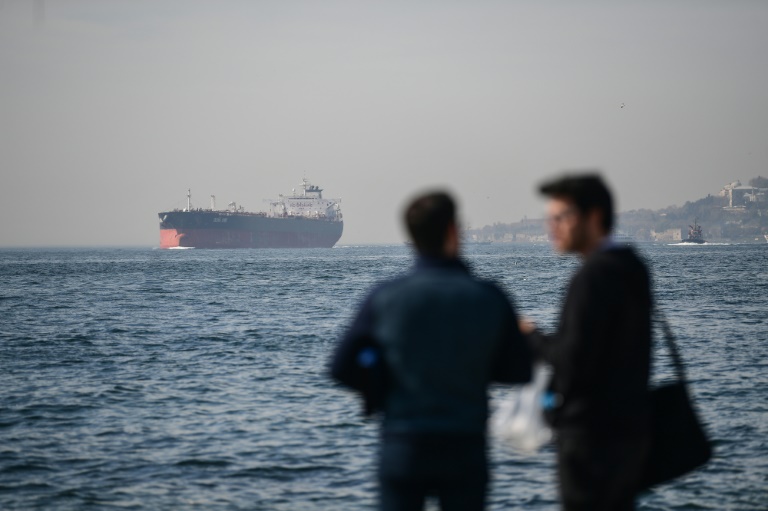
Turkey said Wednesday it has started requesting proof of insurance from tankers loaded with Russian crude oil after Western powers imposed a price cap to punish the Kremlin for its war on Ukraine.

But a Turkish official denied that the measure was slowing the passage of oil ships to world markets through the Bosphorus and Dardanelle straits.

The European Union and the Group of Seven leading industrialised nations agreed last week to block Western insurers from covering ships that intend to sell Russian oil for more than $60 a barrel.

Australia has also joined the new sanctions aimed at depriving Russia of one of its main sources of revenue.

The TankerTracker.com industry monitor said early Wednesday that Russian seaborne crude oil exports had halved in the past 48 hours.

One source told AFP that Turkish officials began requesting proof of insurance from tankers passing from Russia at the start of the month.

“We want to be sure about the coverage because they have started to cancel it,” an official source told AFP on condition of anonymity.

An unnamed Turkish official told the Anadolu state news agency that “the majority of international insurers” no longer provide coverage for Russian crude.

“God forbid, if an accident happens in the straits, who would cover the damages that can reach billions of dollars? Who would be responsible?” the Turkish official asked.

But the official also rejected Western media reports suggesting that Turkey’s new rules have created a logjam of Russian ships in the two straits.

The official said there were no “significant” changes to marine traffic and that Turkey could take extra measures to “prevent congestion”.

A 1936 treaty guarantees the freedom of navigation to merchant vessels passing through Turkey’s two straits.

But it also gives Turkey the right to regulate security — a provision it is now using to make sure the oil ships are insured against spillage and other accidents.

The Financial Times reported that Russia has assembled a separate “shadow fleet” of more than 100 vessels that try to circumnavigate the Western sanctions regime.

These ships are reportedly using non-Western insurers and selling oil at higher prices to countries that have not subscribed to the new sanctions.

The Financial Times said Turkey was waving through these ships but holding up the ones with Western insurance coverage.

Turkish officials did not immediately respond to the report.

Democrats capture Senate seat in Georgia runoff

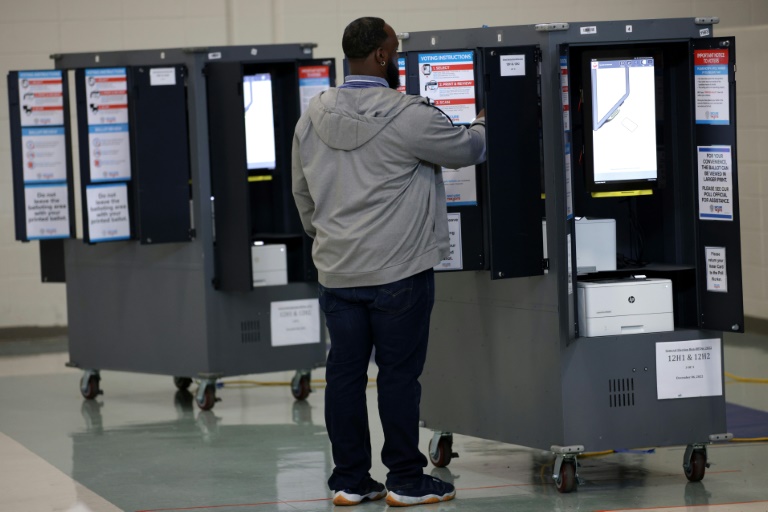
US President Joe Biden celebrated the strengthening of his party’s majority in the Senate on Tuesday after Democrat Raphael Warnock was declared the winner of a runoff election in Georgia.

The incumbent senator defeated Republican Herschel Walker, a former football star and protege of former president Donald Trump, according to projections by television networks.

Warnock’s win confirms the very slim Democratic majority — 51 to 49 — in the upper house of Congress.

“Tonight Georgia voters stood up for our democracy, rejected Ultra MAGAism, and most importantly: sent a good man back to the Senate. Here’s to six more years,” Biden tweeted.

The party’s electoral triumph does not change the balance of power in the Senate, of which Democrats had already secured control on November 8.

But the win by Warnock, a pastor at the Atlanta church where civil rights leader Martin Luther King Jr once preached, hands Democrats greater control in committees and curbs the power of any individual Democratic senator to sink Biden initiatives.

“After a hard-fought campaign –- or should I say campaigns –- it is my honor to utter the four most powerful words ever spoken in a democracy: The people have spoken,” Warnock said in a victory speech.

“I often say that a vote is a kind of prayer for the world we desire for ourselves and for our children,” he told a packed Atlanta ballroom. “You have put in the hard work and here we are standing together.”

The Republicans took back the House last month but with a much smaller majority than expected.

Warnock, 53, and Walker, 60, both African American, faced voters after neither earned more than 50 percent in the November 8 midterm vote.

Democrats retained control of the Senate in that vote with 50 seats, Vice President Kamala Harris’s tie-breaking vote giving them the edge in the 100-seat chamber.

Warnock’s win significantly curbs the power of centrist Democratic Senator Joe Manchin, who has already blocked several major Biden initiatives in the first two years of the president’s term.

With 700 days to go before the 2024 presidential election, Republicans hope to stymie Biden’s momentum after his party performed much better than expected in November.

– Obama to the rescue –

Determined to win the race, Democrats called on their top gun: charismatic former president Barack Obama, who campaigned alongside Warnock in Atlanta last week.

And in yet another sign of how high the stakes were, $400 million was spent on the Georgia race to make it the most expensive campaign of the midterms.

Some 1.9 million people voted early, many of them likely Democratic voters, while Republicans were expected to turn out in force on Tuesday.

Polls had the race too close to call.

Georgia, historically a Republican state, took America by surprise when voters chose Biden over Trump in the 2020 presidential election and then sent two Democrats to the Senate two months later in another runoff.

– Polar opposites –

Both the candidates this time are natives of Georgia but the men are polar opposites.

Warnock grew up in poverty, born the eleventh of 12 children to a former soldier and preacher father and a mother who worked in the cotton fields.

He remained as a senior pastor at Martin Luther King’s Ebenezer Baptist Church even after his election and holds a doctorate in theology.

Walker is a latecomer to politics with his 2022 Senate run.

The 60-year-old conservative is considered one of the best players in the history of American college football — a near-religious institution in the South — and went on to have a stellar career in the National Football League.

Walker, who is staunchly anti-abortion even in cases of rape, has been the subject of several recent scandals, having been accused of paying for abortions for two women he had relationships with.

'Call of Duty' to be released on Nintendo Switch, Microsoft says

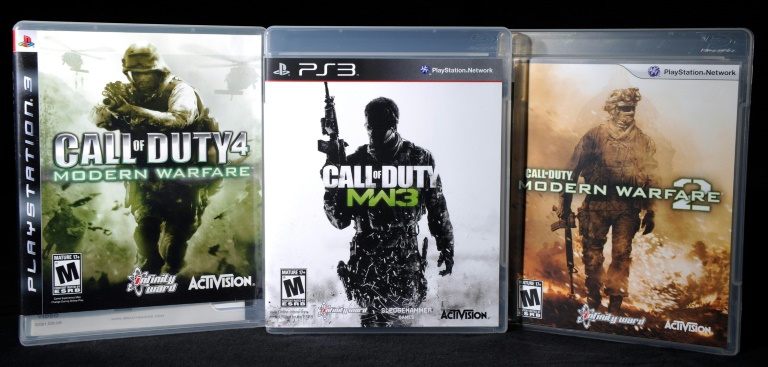
The hugely popular “Call of Duty” game franchise will become available on Nintendo’s Switch console if the acquisition of its developer goes ahead, a Microsoft executive said Wednesday.

The US tech giant is in the process of buying the game maker Activision Blizzard, but the huge $69-billion purchase has yet to be finalised while it is examined by antitrust authorities.

“Microsoft is committed to helping bring more games to more people — however they choose to play,” Xbox head Phil Spencer tweeted, in what analysts called an attempt to show competition would not be affected by the acquisition deal.

“Call of Duty” is a blazingly successful first-person shooter franchise with hordes of devotees that play it on Microsoft’s Xbox consoles or Sony’s PlayStation.

The games are also available on PC and mobile, as well as Nintendo’s older Wii and DS consoles.

Spencer said Microsoft had “entered into a 10-year commitment to bring Call of Duty to Nintendo following the merger of Microsoft and Activision Blizzard King”.

New titles in the series will also continue to be sold on Steam, a platform for downloading games, as soon as they are released on Xbox “after we have closed the merger”, he added.

Serkan Toto of consulting agency Kantan Games told AFP that the timing of the announcement was “clearly a publicity stunt” linked to ongoing negotiations over the Activision purchase.

Nintendo’s Switch, which was launched in 2017, had more than 110 million users in the past year.

“So if Activision was really interested in bringing ‘Call of Duty’ to a Nintendo platform, to the Nintendo Switch, they could have done it three or four years ago,” Toto said.

Earlier this week, Microsoft president Brad Smith wrote in a Wall Street Journal article that the company had offered to strike a new contract with Sony in a similar 10-year deal. However, Spencer told Bloomberg that Sony has so far rebuffed the offer.

Stocks hit as recession fears overshadow China reopening hope

Most stocks suffered more selling Wednesday while oil held losses on growing fears Federal Reserve monetary tightening will tip the US economy into recession.

The drop followed another day deep in the red for New York’s three main indexes after the heads of Wall Street’s leading banks warned of tough times ahead in 2023.

JPMorgan Chase chief Jamie Dimon tipped a “mild to hard recession” and Goldman Sachs’ David Solomon said jobs and pay would be hit, while Morgan Stanley and Bank of America were also uneasy about the outlook.

The comments added to the downbeat mood that has coursed through trading floors at the start of the week, after forecast-beating reports on jobs and the giant US services sector fanned worries the Fed will have to push interest rates higher than hoped.

Markets had been rising healthily ahead of Friday’s employment figures after a weaker-than-expected inflation reading for October suggested the almost year-long tightening campaign was finally affecting prices.

“Any hopes that the Fed would turn more dovish in the months ahead have been dashed significantly as the vast US services industry is where sticky inflation hangs out,” said SPI Asset Management’s Stephen Innes.

He added that the latest readings suggest rates will go above five percent before the Fed stops hiking, while several observers have suggested they will not be reduced until 2024.

Hong Kong, Tokyo, Shanghai, Sydney, Seoul, Singapore, Mumbai, Bangkok, Manila and Jakarta all dropped. London opened slightly higher, Paris was flat and Frankfurt slipped.

And Lauren Goodwin, at New York Life Investments, saw further pain ahead for markets.

“We have not yet seen the bottom on equity prices,” she said, according to Bloomberg News. “While this phase of equity market volatility is likely to end in the next few months, earnings have not yet adapted to a recessionary environment.”

The sombre outlook overshadowed China’s moves to wind back some of its harsh Covid rules that traders hope will kickstart the world’s number two economy, which has been battered this year by months of lockdowns and other containment measures.

In a sign of the impact the zero-Covid strategy has had, data Wednesday showed that imports and exports and imports plunged far more than expected in November.

On Wednesday officials announced for the first time a nationwide loosening of restrictions, including a reduction in mandatory PCR tests and allowing some positive cases to quarantine at home.

But while the country edges back to normality, Zhiwei Zhang, of Pinpoint Asset Management, warned that it would take time.

“The zero-Covid policy has been loosened, but mobility has not recovered much on the national level,” he said. “I expect exports will stay weak in the next few months as China goes through a bumpy reopening process.

“As global demand weakens in 2023, China will have to rely more on domestic demand.”

And other observers said the recent rally fuelled by the reopening may have gone too far and traders were now taking a step back as they contemplate a likely spike in infections in the country.

Oil prices remained stuck at lows not seen for around a year as demand expectations tumble.

Brent on Tuesday sank below $80 for the first time since January, while WTI was at its lowest since December, having plunged from the 14-year highs of around $140 touched in March after Russia invaded Ukraine. Both contracts were only slightly higher in Asian trade.

“The crude demand outlook is getting crushed as we are in a slowdown basically across all the major economies,” said OANDA’s Edward Moya.

“Supplies seem plentiful over the near term and that has everyone hesitating on what was one of the easiest trades of the year.”

– Key figures around 0820 GMT –

Tokyo – Nikkei 225: DOWN 0.7 percent at 27,686.40 (close)

Hong Kong – Hang Seng Index: DOWN 3.2 percent at 18,814.82 (close)

Shanghai – Composite: DOWN 0.4 percent at 3,199.62 (close)

London – FTSE 100: UP 0.5 percent at 7,558.09

Euro/dollar: DOWN at $1.0458 from $1.0470 on Tuesday

Dollar/yen: UP at 137.48 yen from 137.04 yen

Pound/dollar: DOWN at $1.2126 from $1.2133

Euro/pound: DOWN at 86.20 pence from 86.26 pence

West Texas Intermediate: UP 0.2 percent at $74.38 per barrel

Brent North Sea crude: UP 0.3 percent at $79.59 per barrel

New York – Dow: DOWN 1.0 percent at 33,596.34 (close)

Stocks hit as recession fears overshadow China reopening hope

Most stocks suffered more selling Wednesday while oil held losses on growing fears Federal Reserve monetary tightening will tip the US economy into recession.

The drop followed another day deep in the red for New York’s three main indexes after the heads of Wall Street’s leading banks warned of tough times ahead in 2023.

JPMorgan Chase chief Jamie Dimon tipped a “mild to hard recession” and Goldman Sachs’ David Solomon said jobs and pay would be hit, while Morgan Stanley and Bank of America were also uneasy about the outlook.

The comments added to the downbeat mood that has coursed through trading floors at the start of the week, after forecast-beating reports on jobs and the giant US services sector fanned worries the Fed will have to push interest rates higher than hoped.

Markets had been rising healthily ahead of Friday’s employment figures after a weaker-than-expected inflation reading for October suggested the almost year-long tightening campaign was finally affecting prices.

“Any hopes that the Fed would turn more dovish in the months ahead have been dashed significantly as the vast US services industry is where sticky inflation hangs out,” said SPI Asset Management’s Stephen Innes.

He added that the latest readings suggest rates will go above five percent before the Fed stops hiking, while several observers have suggested they will not be reduced until 2024.

Hong Kong, Tokyo, Shanghai, Sydney, Seoul, Singapore, Mumbai, Bangkok, Manila and Jakarta all dropped. London opened slightly higher, Paris was flat and Frankfurt slipped.

And Lauren Goodwin, at New York Life Investments, saw further pain ahead for markets.

“We have not yet seen the bottom on equity prices,” she said, according to Bloomberg News. “While this phase of equity market volatility is likely to end in the next few months, earnings have not yet adapted to a recessionary environment.”

The sombre outlook overshadowed China’s moves to wind back some of its harsh Covid rules that traders hope will kickstart the world’s number two economy, which has been battered this year by months of lockdowns and other containment measures.

In a sign of the impact the zero-Covid strategy has had, data Wednesday showed that imports and exports and imports plunged far more than expected in November.

On Wednesday officials announced for the first time a nationwide loosening of restrictions, including a reduction in mandatory PCR tests and allowing some positive cases to quarantine at home.

But while the country edges back to normality, Zhiwei Zhang, of Pinpoint Asset Management, warned that it would take time.

“The zero-Covid policy has been loosened, but mobility has not recovered much on the national level,” he said. “I expect exports will stay weak in the next few months as China goes through a bumpy reopening process.

“As global demand weakens in 2023, China will have to rely more on domestic demand.”

And other observers said the recent rally fuelled by the reopening may have gone too far and traders were now taking a step back as they contemplate a likely spike in infections in the country.

Oil prices remained stuck at lows not seen for around a year as demand expectations tumble.

Brent on Tuesday sank below $80 for the first time since January, while WTI was at its lowest since December, having plunged from the 14-year highs of around $140 touched in March after Russia invaded Ukraine. Both contracts were only slightly higher in Asian trade.

“The crude demand outlook is getting crushed as we are in a slowdown basically across all the major economies,” said OANDA’s Edward Moya.

“Supplies seem plentiful over the near term and that has everyone hesitating on what was one of the easiest trades of the year.”

– Key figures around 0820 GMT –

Tokyo – Nikkei 225: DOWN 0.7 percent at 27,686.40 (close)

Hong Kong – Hang Seng Index: DOWN 3.2 percent at 18,814.82 (close)

Shanghai – Composite: DOWN 0.4 percent at 3,199.62 (close)

London – FTSE 100: UP 0.5 percent at 7,558.09

Euro/dollar: DOWN at $1.0458 from $1.0470 on Tuesday

Dollar/yen: UP at 137.48 yen from 137.04 yen

Pound/dollar: DOWN at $1.2126 from $1.2133

Euro/pound: DOWN at 86.20 pence from 86.26 pence

West Texas Intermediate: UP 0.2 percent at $74.38 per barrel

Brent North Sea crude: UP 0.3 percent at $79.59 per barrel

New York – Dow: DOWN 1.0 percent at 33,596.34 (close)

China announces nationwide loosening of Covid restrictions

China announced Wednesday a nationwide loosening of its hardline Covid restrictions that had hammered the world’s second biggest economy and ignited rare protests against the ruling Communist Party.

The new rules are a major relaxation of President Xi Jinping’s signature zero-Covid policy, three years into the pandemic and long after the rest of the world had largely learnt to live with the virus.

However, with vaccination rates remaining low among China’s elderly and a health system still regarded as ill-prepared for a wave of infections, Xi has not abandoned travel curbs and heavy testing completely.

Under the new guidelines announced by the National Health Commission, the frequency and scope of PCR testing — long a tedious mainstay of life in zero-Covid China — will be reduced.

Lockdowns — a major source of public anger — will also be limited to as small a scope as is feasible, and authorities are required to free areas that show no positive cases after five days.

People with non-severe Covid infections can isolate at home instead of centralised government facilities.

And people will no longer be required to show a green health code on their phone to enter public buildings and spaces, except for “nursing homes, medical institutions, kindergartens, middle and high schools”.

China will also accelerate the vaccination of the elderly, the health commission said, long seen as a major obstacle to the relaxation zero-Covid.

– ‘It’s about time’ –

Until recently, Xi and the Chinese propaganda apparatus had hailed zero-Covid as a triumph of communist rule that had kept deaths low compared with democratic countries such as the United States.

But rare demonstrations against the strategy broke out across China late last month, with people railing against the restrictions.

The protests expanded into calls for more political freedoms, with some even calling for Xi to resign, turning into the most widespread opposition to communist rule since the 1989 democracy uprising that the military crushed.

All the while, a stream of data showed the massive impacts of zero-Covid on China’s economy — with spill on effects for the world.

The government released data just before Wednesday’s announcement stating imports in November had fallen 10.6 percent year-on-year, the biggest drop since May 2020. 

Exports fell 8.7 percent over the same period.

Authorities quickly cracked down on the demonstrations, sending security forces into the streets and deploying its high-tech surveillance system against protesters.

However they also began easing restrictions, with some Chinese cities tentatively rolling back mass testing and curbs on movement.

And once dominated by coverage of the dangers of the virus and scenes of pandemic chaos abroad, China’s state-run media dramatically shifted tone to support a moving away from zero-Covid.

There were immediate signs of relief in China following Wednesday’s announcement.

“It’s about time to open up, its been three years already, we should open up fully,” one Beijing resident who asked to remain anonymous told AFP. 

“People need to work and eat, you can’t just tell people not to leave their homes anymore,” they added.

“If people are worried now, they should stay home and avoid coming out, other people need to work and get on with life.”

Searches on the country’s biggest travel app, Ctrip, for flight tickets ahead of next month’s Chinese New Year hit a three-year-high, state-run media outlet The Paper reported.

Analysts at Japanese firm Nomura said they projected China’s GDP would rebound next year in the wake of the relaxations.

But, they warned, China “does not appear to be well prepared for a massive wave of Covid infections”. 

“It may have to pay for its procrastination on embracing a ‘living with Covid’ approach,” they said in an email.

Vietnam's VinFast files for US IPO as it targets global market

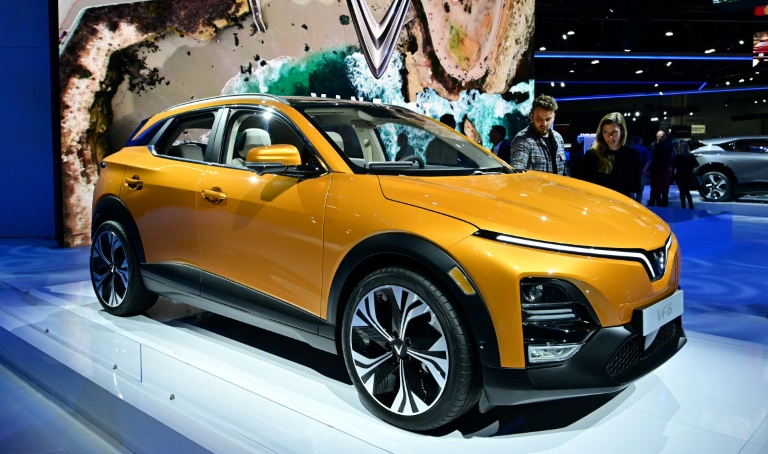
Vietnam’s homegrown carmaker VinFast, which plans to sell the first ever Vietnamese car in the United States, said Wednesday it has filed for an initial public offering (IPO) in the country.

Vinfast, which is part of conglomerate Vingroup, owned by Vietnam’s richest man Pham Nhat Vuong, will deliver its first electric SUVs to Americans later this month.

On Wednesday, the company said it “intends to list its ordinary shares on the Nasdaq Global Select Market under the symbol ‘VFS'”.

No decision has been made on the number of shares to be offered and the price range for the proposed offering, it added. 

The pivot to the United States is a bold move by chairman Vuong, who started out selling dried noodles in the former Soviet Union before amassing his $5 billion fortune in a range of sectors including real estate, tourism and education.

VinFast already has electric vehicles (EVs) on the streets of Hanoi, but is using an unusual battery leasing model to hook customers in the crowded and difficult US market, which is dominated by Elon Musk’s Tesla.

The upfront payment for the VF8 and VF9 — the two models sold in the US — will be $42,000 and $57,500 respectively. Tesla’s SUVs start at around $65,000.

In July, VinFast opened six showrooms in California, including a flagship store at one of the trendiest malls in upmarket Santa Monica.

It said it planned for 30 in total by the end of the year, while it has also broken ground on a $2 billion electric vehicle and battery plant in North Carolina that it says will produce 150,000 cars a year when fully up and running.

Vinfast has also opened showrooms in Europe — one in Cologne, Germany, and another in Paris — and is targeting several other European cities. 

Close Bitnami banner
Bitnami