AFP

Vietnam's VinFast files for US IPO as it targets global market

Vietnam’s homegrown carmaker VinFast, which plans to sell the first ever Vietnamese car in the United States, said Wednesday it has filed for an initial public offering (IPO) in the country.

Vinfast, which is part of conglomerate Vingroup, owned by Vietnam’s richest man Pham Nhat Vuong, will deliver its first electric SUVs to Americans later this month.

On Wednesday, the company said it “intends to list its ordinary shares on the Nasdaq Global Select Market under the symbol ‘VFS'”.

No decision has been made on the number of shares to be offered and the price range for the proposed offering, it added. 

The pivot to the United States is a bold move by chairman Vuong, who started out selling dried noodles in the former Soviet Union before amassing his $5 billion fortune in a range of sectors including real estate, tourism and education.

VinFast already has electric vehicles (EVs) on the streets of Hanoi, but is using an unusual battery leasing model to hook customers in the crowded and difficult US market, which is dominated by Elon Musk’s Tesla.

The upfront payment for the VF8 and VF9 — the two models sold in the US — will be $42,000 and $57,500 respectively. Tesla’s SUVs start at around $65,000.

In July, VinFast opened six showrooms in California, including a flagship store at one of the trendiest malls in upmarket Santa Monica.

It said it planned for 30 in total by the end of the year, while it has also broken ground on a $2 billion electric vehicle and battery plant in North Carolina that it says will produce 150,000 cars a year when fully up and running.

Vinfast has also opened showrooms in Europe — one in Cologne, Germany, and another in Paris — and is targeting several other European cities. 

China announces nationwide loosening of Covid restrictions

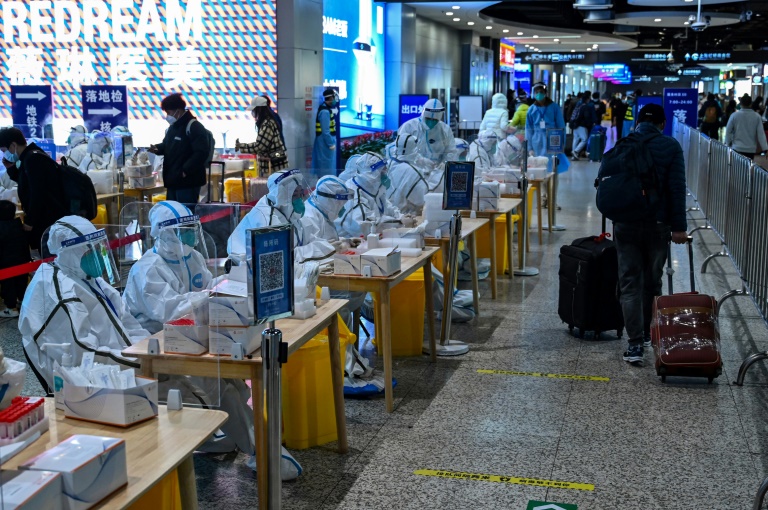
China announced Wednesday a nationwide loosening of Covid restrictions following protests against the hardline strategy that grew into calls for greater political freedoms.

Anger over China’s zero-Covid policy — which involved mass lockdowns, constant testing and quarantines even for people who are not infected — stoked unrest not seen since the 1989 pro-democracy protests.

Under the new guidelines announced by the National Health Commission, the frequency and scope of PCR testing — long a tedious mainstay of life in zero-Covid China — will be reduced.

Lockdowns will also be scaled down and people with non-severe Covid cases can isolate at home instead of centralised government facilities.

And people will no longer be required to show a green health code on their phone to enter public buildings and spaces, except for “nursing homes, medical institutions, kindergartens, middle and high schools”.

The new rules scrap the forced quarantines for people with no symptoms or with mild cases.

“Asymptomatic infected persons and mild cases who are eligible for home isolation are generally isolated at home, or they can voluntarily choose centralised isolation for treatment,” the new rules read.

“Mass PCR testing only carried out in schools, hospitals, nursing homes and high-risk work units; scope and frequency of PCR testing to be further reduced,” they added. 

“People travelling across provinces do not need to provide a 48h test result and do not need to test upon arrival.”

China will also accelerate the vaccination of the elderly, the NHC said, long seen as a major obstacle to the relaxation of Beijing’s no-tolerance approach to Covid.

Rare demonstrations against the ruling Communist Party’s zero-Covid strategy broke out across China late last month.

They expanded into calls for more political freedoms, with some even calling for President Xi Jinping to resign.

Authorities cracked down on subsequent efforts to protest while easing a number of restrictions, with some Chinese cities tentatively rolling back mass testing and curbs on movement.

The capital Beijing, where many businesses have fully reopened, said this week that commuters were no longer required to show a negative virus test taken within 48 hours to use public transport.

Financial hub Shanghai — which underwent a brutal two-month lockdown this year — announced the same rules, with residents able to enter outdoor venues such as parks and tourist attractions without a recent test.

And once dominated by doom and gloom coverage of the dangers of the virus and scenes of pandemic chaos abroad, China’s tightly controlled media dramatically shifted tone to support a tentative moving away from zero-Covid.

The prevalent Omicron strain is “not at all like last year’s Delta variant”, Guangzhou-based medicine professor Chong Yutian said in an article published by the Communist Party-run China Youth Daily.

“After infection with the Omicron variant, the vast majority will have no or light symptoms, and very few will go on to have severe symptoms, this is already widely known,” he assured readers.

But analysts at Japanese firm Nomura on Monday calculated that 53 cities — home to nearly a third of China’s population — still had some restrictions in place.

Wednesday’s announcement came hours after the government released further data showing the crippling economic impacts of zero-Covid.

Imports and exports plunged in November to levels not seen since early 2020.

Imports in November fell 10.6 percent year-on-year, the biggest drop since May 2020, according to the General Administration of Customs. Exports fell 8.7 percent over the same period.

E-cigarette maker Juul reaches settlement with 10,000 plaintiffs

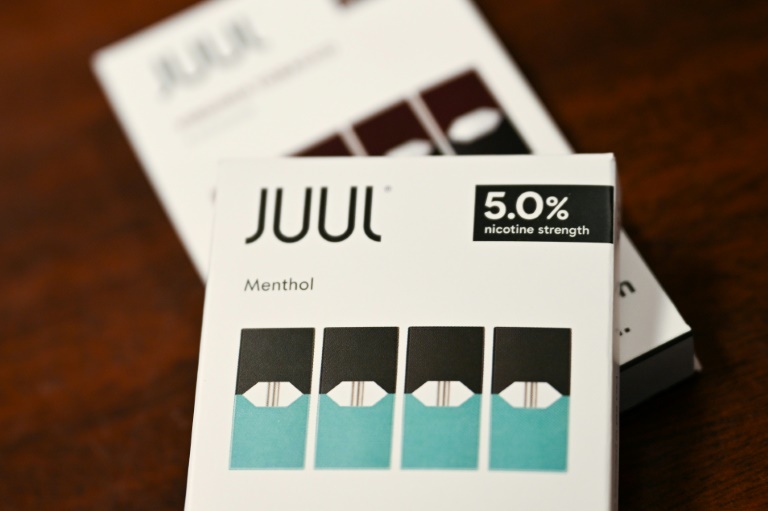
US e-cigarette manufacturer Juul Labs said on Tuesday it had reached a settlement with about 10,000 plaintiffs in California after the company was accused of marketing its products to teenagers.

The vaping giant did not disclose the amount of the settlements, which it said were related to more than 5,000 cases, but said the agreements “represent a major step toward strengthening Juul Labs’ operations and securing the company’s path forward.”

The complaints had been filed for personal injury, with some in consumer class action lawsuits, and others filed by government entities or Native American tribes.

Juul is battling to stay afloat after the US Food and Drug Administration found the company had failed to address safety concerns and ordered all its products off the market in the United States.

The company has appealed the decision but announced last month it had been forced to lay off around 400 employees and cut its operating budget by up to 40 percent.

Juul said in November it had secured financing from early investors to maintain its operations.

Democrats capture Senate seat in Georgia runoff

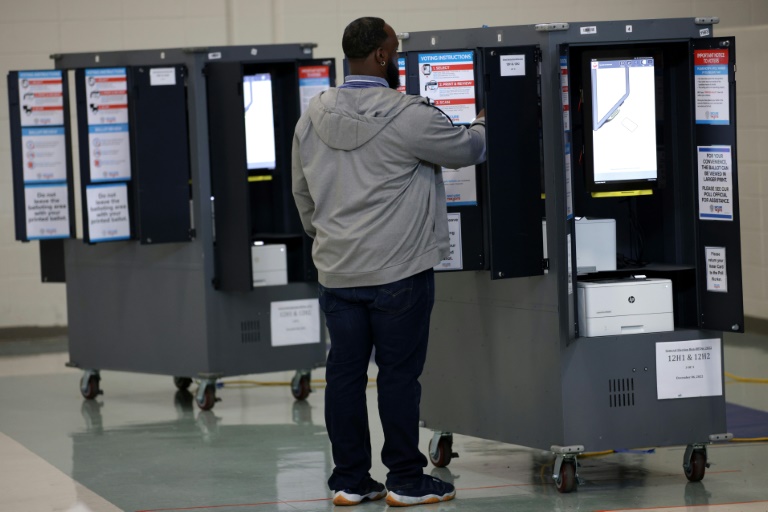
US President Joe Biden celebrated the strengthening of his party’s majority in the Senate on Tuesday after Democrat Raphael Warnock was declared the winner of a runoff election in Georgia.

The incumbent senator defeated Republican Herschel Walker, a former football star and protege of former president Donald Trump, according to projections by television networks.

Warnock’s win confirms the very slim Democratic majority — 51 to 49 — in the upper house of Congress.

“Tonight Georgia voters stood up for our democracy, rejected Ultra MAGAism, and most importantly: sent a good man back to the Senate. Here’s to six more years,” Biden tweeted.

The party’s electoral triumph does not change the balance of power in the Senate, of which Democrats had already secured control on November 8.

But the win by Warnock, a pastor at the Atlanta church where civil rights leader Martin Luther King Jr once preached, hands Democrats greater control in committees and curbs the power of any individual Democratic senator to sink Biden initiatives.

The Republicans took back the House last month but with a much smaller majority than expected.

Warnock, 53, and Walker, 60, both African American, faced voters after neither earned more than 50 percent in the November 8 midterm vote.

Democrats retained control of the Senate in that vote with 50 seats, Vice President Kamala Harris’s tie-breaking vote giving them the edge in the 100-seat chamber.

Warnock’s win significantly curbs the power of centrist Democratic senator Joe Manchin, who has already blocked several major Biden initiatives in the first two years of the president’s term.

With 700 days to go before the 2024 presidential election, Republicans hope to stymie Biden’s momentum after his party performed much better than expected in November.

– Obama to the rescue –

Determined to win the race, Democrats called on their top gun: charismatic former president Barack Obama, who campaigned alongside Warnock in Atlanta last week.

And in yet another sign of how high the stakes were, $400 million was spent on the Georgia race to make it the most expensive campaign of the midterms.

Some 1.9 million people voted early, many of them likely Democratic voters, while Republicans were expected to turn out in force on Tuesday.

Polls had the race too close to call.

Georgia, historically a Republican state, took America by surprise when voters chose Biden over Trump in the 2020 presidential election and then sent two Democrats to the Senate two months later in another runoff.

– Polar opposites –

Both the candidates this time are natives of Georgia but the men are polar opposites.

Warnock grew up in poverty, born the eleventh of 12 children to a former soldier and preacher father and a mother who worked in the cotton fields.

He remained as a senior pastor at Martin Luther King’s Ebenezer Baptist Church even after his election and holds a doctorate in theology.

Walker is a latecomer to politics with his 2022 Senate run.

The 60-year-old conservative is considered one of the best players in the history of American college football — a near-religious institution in the South — and went on to have a stellar career in the National Football League.

Walker, who is staunchly anti-abortion even in cases of rape, has been the subject of several recent scandals, having been accused of paying for abortions for two women he had relationships with.

China's November imports, exports plunge due to Covid rules

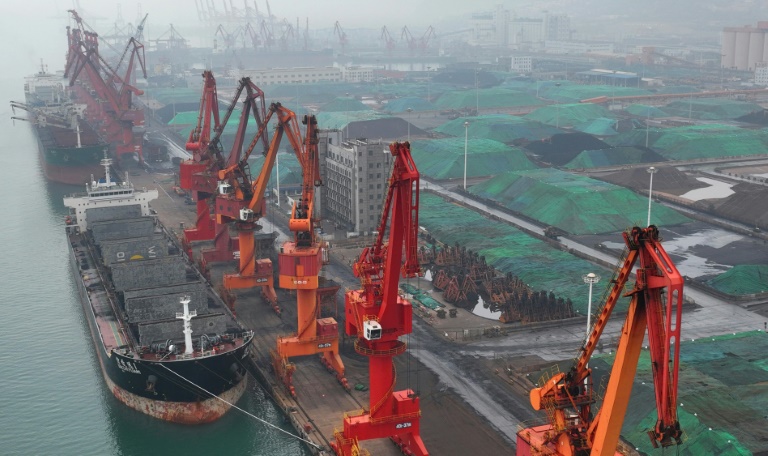
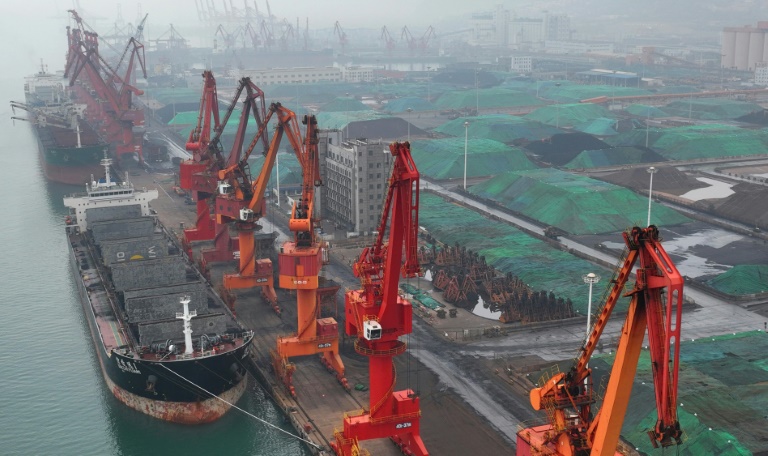
China’s imports and exports plunged in November to levels not seen since early 2020, official figures showed Wednesday, as severe Covid restrictions hit the economy hard.

The last major economy still wedded to a zero-tolerance virus policy, Beijing’s snap lockdowns, travel curbs and mass testing have stifled business activity, disrupted supply chains and dampened consumption.

Imports in November fell 10.6 percent year-on-year, the biggest drop since May 2020, according to the General Administration of Customs.

Meanwhile, exports fell 8.7 percent over the same period — the steepest decline since February 2020, when the country was mired in the early stages of the pandemic.

“Weakening domestic and foreign demand, Covid disruptions and a rising comparison base lead to a perfect but well-expected storm to China’s exports and imports,” Bruce Pang, chief economist at Jones Lang LaSalle, told Bloomberg News.

The figures are the latest in a string of gloomy economic indicators as the world’s number two economy charts a faltering path out of zero-Covid.

Official data last week showed China’s factory activity shrank for a second straight month in November, as large swathes of the country were hit by lockdowns and transport disruptions.

The Purchasing Managers’ Index — a key gauge of manufacturing — fell to 48.0 from 49.2 the month prior, well below the 50-point mark separating growth from contraction, according to the National Bureau of Statistics.

“In November, the pandemic had a negative impact on the production and operation of some enterprises, production somewhat slowed, and product order volumes decreased,” the bureau’s senior statistician Zhao Qinghe said.

Some suppliers had complained of transport and logistics problems, while demand from both the domestic and overseas markets fell, he added.

– ‘Bumpy reopening’ –

China’s ruling Communist Party has signalled a shift in Covid messaging since the country’s largest protests in decades took aim last week at lockdowns and other measures.

Local authorities have begun easing testing requirements and other restrictions, but travel between provinces remains complicated and health measures continue to vary from place to place.

“The zero-Covid policy has been loosened, but mobility has not recovered much on the national level,” said Zhiwei Zhang, chief economist of Pinpoint Asset Management.

“I expect exports will stay weak in the next few months as China goes through a bumpy reopening process,” he added.

“As global demand weakens in 2023, China will have to rely more on domestic demand.”

Chinese leaders have set an annual economic growth target of about 5.5 percent, but many observers think the country will struggle to hit it, despite announcing a better-than-expected 3.9 percent expansion in the third quarter.

Heat will stay on in Europe this winter, but after?

Europe is likely to scrape through this winter without cutting off gas customers despite reduced Russian supplies, but even adjusting to colder homes and paying more may not be enough in coming years, analysts say.

“I like a hot house, I have to admit… I really used a lot of gas,” said Sofie de Rous, who until this year kept her home on the Belgian coast at a toasty 21 degrees Celsius (70F).

But like millions of other Europeans, the 41-year-old employee at an architectural firm has had to turn down the thermostat after energy prices surged following Russia’s invasion of Ukraine in February.

Russia’s progressive reduction of gas supplies to Europe via pipeline triggered a bidding war for liquefied natural gas (LNG), sending prices sharply higher.

If certain countries like France and Spain froze prices for consumers, others like Belgium let suppliers more or less pass along the higher costs.

“I was a little panicked in the beginning,” said de Rous, who saw the gas bill to heat her 90-square-metre (970-square-foot) house in Oostduinkerke jump from 120 euros ($126) per month to 330 euros.

She has lowered her thermostat to 18 degrees and is looking into installing double-pane windows and a solar panel.

Like de Rous, the lack of concern about energy consumption of a whole generation of Europeans ended abruptly in 2022, and everyone is mindful of where their thermostat is set.

If previously natural gas was cheap and plentiful, it is now scarce and expensive.

The European wholesale reference price used to fluctuate little, hovering around 20 euros per megawatt hour. This year, it shot as high as 300 euros before dropping back to around 100 euros.

“It’s the most chaotic time I’ve witnessed in all of those years,” Graham Freedman, a European gas analyst at energy consultancy Wood Mackenzie, told AFP.

– Big drops in consumption –

Sky-high energy prices have caused numerous factories, particularly in Germany’s chemicals sector which was highly dependent upon cheap Russian gas, to halt operations.

But European nations were able to fill their gas reservoirs and no one has been cut off yet.

“Until February, the very idea of Europe without Russian energy was seen as impossible,” said Simone Tagliapietra, a senior fellow at the Bruegel think tank in Brussels.

“What was impossible became possible.”

A warm autumn that allowed many consumers to put off turning on their heating also helped put Europe in better position for the winter.

Overall, the reduction in EU gas consumption by consumers and industry was around 25 percent in October compared to the 2019-2021 average for the month, according to calculations by Bruegel.

In Germany, where half the households use gas for heat, data shows consumption down by 20 to 35 percent depending on the week.

“That’s much more than anyone expected,” said Lion Hirth, a professor of energy policy at the Hertie School in Berlin.

“And that’s completely contradictory to the talk that we’ve been hearing from doomsday talkers saying, people just don’t respond. People just keep heating. People don’t change their behaviour. People don’t respond to prices.”

In the space of several months Russia has lost its top gas customer, Europe, with purchases passing from 191 billion cubic metres in 2019 to 90 billion this year. 

Wood Mackenzie forecasts deliveries will fall to 38 billion cubic metres next year.

The EU has been able to import large quantities of LNG, but only by outbidding South Asian nations like Pakistan and India.

This has pushed these nations to increase their dependence on coal — negatively impacting global efforts to curb climate change.

– In 2023? –

Europe’s ability to import LNG has been limited by a lack of infrastructure. 

While France and Spain each had several terminals to unload LNG from tankers and convert it back into gas at the start of the Ukraine conflict, Germany didn’t have one.

And while construction of more LNG terminals is under way, in 2023, unlike at the beginning of this year, Europe will mostly have to do without Russian gas to fill its reservoirs.

This could set up an even fiercer bidding war between European and Asian nations for supplies.

“The key factor is most certainly going to be: what is the weather going to be like this winter,” said Laura Page, a gas analyst at commodity data firm Kpler.

“If we have a cold winter in Asia, and we have a cold winter in Europe… this fight will intensify.”

The problem is that LNG supplies are limited.

“There isn’t enough gas in the world at the moment to actually cope with that loss of supply from Russia,” said Wood Mackenzie’s Freedman.

New LNG projects to boost supply won’t be able to come on line before 2025, meaning Europeans will have to get used to living with homes heated to just 18 degrees.


China's November imports, exports plunge owing to Covid rules

China’s imports and exports plunged in November to levels not seen since early 2020, as strict Covid restrictions hit the economy hard, according to official figures released Wednesday. 

Beijing’s strict zero-Covid policy of snap lockdowns, travel curbs and daily mass testing has left businesses reeling, disrupted supply chains and dampened consumption. 

November imports fell 10.6 percent year-on-year, the biggest collapse since May 2020. 

Exports fell by 8.7 percent year-on-year, the biggest drop since February 2020, when the country was mired in the early stages of the pandemic. 

The threat of recession in the United States and Europe, coupled with soaring energy prices, is weakening demand for Chinese products. 

After nationwide anti-lockdown protests last week, the government has signalled a shift in messaging and local authorities have begun easing some restrictions — which may brighten the outlook in the coming months.   

But travel between provinces remains complicated and an economic recovery may take time, with health measures highly variable across the country. 

China’s factory activity shrank for a second straight month in November, official data last week showed, as large swathes of the country were hit by lockdowns and transport disruptions.

The Purchasing Managers’ Index — a key gauge of manufacturing in the world’s second-biggest economy — came in at 48.0, down from October’s 49.2 and well below the 50-point mark separating growth from contraction, according to the National Bureau of Statistics.

Chinese leaders have set an annual economic growth target of about 5.5 percent, but many observers think the country will struggle to hit it, despite announcing a better-than-expected 3.9 percent expansion in the third quarter.

China's November imports, exports plunge owing to Covid rules

China’s imports and exports plunged in November to levels not seen since early 2020, as strict Covid restrictions hit the economy hard, according to official figures released Wednesday. 

Beijing’s strict zero-Covid policy of snap lockdowns, travel curbs and daily mass testing has left businesses reeling, disrupted supply chains and dampened consumption. 

November imports fell 10.6 percent year-on-year, the biggest collapse since May 2020. 

Exports fell by 8.7 percent year-on-year, the biggest drop since February 2020, when the country was mired in the early stages of the pandemic. 

The threat of recession in the United States and Europe, coupled with soaring energy prices, is weakening demand for Chinese products. 

After nationwide anti-lockdown protests last week, the government has signalled a shift in messaging and local authorities have begun easing some restrictions — which may brighten the outlook in the coming months.   

But travel between provinces remains complicated and an economic recovery may take time, with health measures highly variable across the country. 

China’s factory activity shrank for a second straight month in November, official data last week showed, as large swathes of the country were hit by lockdowns and transport disruptions.

The Purchasing Managers’ Index — a key gauge of manufacturing in the world’s second-biggest economy — came in at 48.0, down from October’s 49.2 and well below the 50-point mark separating growth from contraction, according to the National Bureau of Statistics.

Chinese leaders have set an annual economic growth target of about 5.5 percent, but many observers think the country will struggle to hit it, despite announcing a better-than-expected 3.9 percent expansion in the third quarter.

World economy faces more pain in 2023 after a gloomy year

This was supposed to be the comeback year for the world economy following the Covid pandemic.

Instead, 2022 was marked by a new war, record inflation and climate-linked disasters. It was a “polycrisis” year, a term popularised by historian Adam Tooze.

Get ready for more gloom in 2023.

“The number of crises has increased since the start of the century,” said Roel Beetsma, professor of macroeconomics at the University of Amsterdam

“Since World War Two we have never seen such a complicated situation,” he told AFP.

After the Covid-induced economic crisis of 2020, consumer prices began to rise in 2021 as countries emerged from lockdowns or other restrictions.

Central bankers insisted that high inflation would only be temporary as economies returned to normal. But Russia’s invasion of Ukraine in late February sent energy and food prices soaring.

Many countries are now grappling with cost-of-living crises because wages are not keeping up with inflation, forcing households to make difficult choices in their spending.

“Everything has become more expensive, from cream to wine and electricity,” said Nicole Eisermann from her stand at the Frankfurt Christmas market.

Central banks played catch-up. They started to raise interest rates this year in an effort to tame galloping inflation — at the risk of tipping countries into deep recessions, since higher borrowing costs mean slower economic activity.

Inflation has finally started to slow down in the United States and the eurozone. 

– Careful spending –

Consumer prices in the Group of 20 developed and emerging nations are expected to reach eight percent in the fourth quarter before falling to 5.5 percent next year, according to the Organisation for Economic Cooperation and Development.

The OECD encourages governments to provide aid to bring relief to households.

In the 27-nation European Union, 674 billion euros ($704 billion) have been earmarked so far to shield consumers from high energy prices, according to the Bruegel think tank.

Germany, Europe’s biggest economy and the most dependent on Russia energy supplies, accounts for 264 billion euros of that total.

One in two Germans say they now only spend on essential items, according to a survey by EY consultancy.

“I am very careful but I have a lot of children and grandchildren,” said Guenther Blum, a shopper at the Frankfurt Christmas market.

Rising interest rates have also hurt consumers and businesses, though US Federal Reserve chairman Jerome Powell signalled last week that the pace of hikes could ease “as soon as” December.

He warned, however, that policy will probably have to remain tight for some time to restore price stability.

For her part, European Central Bank president Christine Lagarde sent a clear signal that the ECB would maintain its tightening policy, saying that eurozone inflation had yet to peak.

Economists expect Germany and another major eurozone economy, Italy, to fall into recession. Britain’s economy is already shrinking. Rating agency S&P Global foresees stagnation for the eurozone in 2023.

But the International Monetary Fund still expects the world economy to expand in 2023, with growth of 2.7 percent. The OECD is forecasting 2.2-percent growth.

The coronavirus pandemic, meanwhile, remains a wildcard for the global economy.

China’s zero-Covid policy restrained growth in the world’s second biggest economy, but the authorities have started to relax restrictions following nationwide protests.

– Climate costs –

But for Beetsma, the biggest crisis is climate change, which is “happening in slow motion”.

Natural and man-made catastrophes have caused $268 billion in economic losses so far in 2022, according to reinsurance giant Swiss Re. Hurricane Ian alone cost an estimated insured loss of $50-65 billion.

Floods in Pakistan resulted in $30 billion in damage and economic loss this year.

Governments agreed at United Nations climate talks (COP27) in Egypt in November to create a fund to cover the losses suffered by vulnerable developing countries devastated by natural disasters.

But the COP27 summit ended without new commitments to phase out the use of fossil fuels, despite the need to cut greenhouse gas emissions and slow global warming.

“It is not an acute crisis but a very long-term crisis, protracted,” Beetsma said. “If we don’t do enough this will hit us in unprecedented scale.”

World economy faces more pain in 2023 after a gloomy year

This was supposed to be the comeback year for the world economy following the Covid pandemic.

Instead, 2022 was marked by a new war, record inflation and climate-linked disasters. It was a “polycrisis” year, a term popularised by historian Adam Tooze.

Get ready for more gloom in 2023.

“The number of crises has increased since the start of the century,” said Roel Beetsma, professor of macroeconomics at the University of Amsterdam

“Since World War Two we have never seen such a complicated situation,” he told AFP.

After the Covid-induced economic crisis of 2020, consumer prices began to rise in 2021 as countries emerged from lockdowns or other restrictions.

Central bankers insisted that high inflation would only be temporary as economies returned to normal. But Russia’s invasion of Ukraine in late February sent energy and food prices soaring.

Many countries are now grappling with cost-of-living crises because wages are not keeping up with inflation, forcing households to make difficult choices in their spending.

“Everything has become more expensive, from cream to wine and electricity,” said Nicole Eisermann from her stand at the Frankfurt Christmas market.

Central banks played catch-up. They started to raise interest rates this year in an effort to tame galloping inflation — at the risk of tipping countries into deep recessions, since higher borrowing costs mean slower economic activity.

Inflation has finally started to slow down in the United States and the eurozone. 

– Careful spending –

Consumer prices in the Group of 20 developed and emerging nations are expected to reach eight percent in the fourth quarter before falling to 5.5 percent next year, according to the Organisation for Economic Cooperation and Development.

The OECD encourages governments to provide aid to bring relief to households.

In the 27-nation European Union, 674 billion euros ($704 billion) have been earmarked so far to shield consumers from high energy prices, according to the Bruegel think tank.

Germany, Europe’s biggest economy and the most dependent on Russia energy supplies, accounts for 264 billion euros of that total.

One in two Germans say they now only spend on essential items, according to a survey by EY consultancy.

“I am very careful but I have a lot of children and grandchildren,” said Guenther Blum, a shopper at the Frankfurt Christmas market.

Rising interest rates have also hurt consumers and businesses, though US Federal Reserve chairman Jerome Powell signalled last week that the pace of hikes could ease “as soon as” December.

He warned, however, that policy will probably have to remain tight for some time to restore price stability.

For her part, European Central Bank president Christine Lagarde sent a clear signal that the ECB would maintain its tightening policy, saying that eurozone inflation had yet to peak.

Economists expect Germany and another major eurozone economy, Italy, to fall into recession. Britain’s economy is already shrinking. Rating agency S&P Global foresees stagnation for the eurozone in 2023.

But the International Monetary Fund still expects the world economy to expand in 2023, with growth of 2.7 percent. The OECD is forecasting 2.2-percent growth.

The coronavirus pandemic, meanwhile, remains a wildcard for the global economy.

China’s zero-Covid policy restrained growth in the world’s second biggest economy, but the authorities have started to relax restrictions following nationwide protests.

– Climate costs –

But for Beetsma, the biggest crisis is climate change, which is “happening in slow motion”.

Natural and man-made catastrophes have caused $268 billion in economic losses so far in 2022, according to reinsurance giant Swiss Re. Hurricane Ian alone cost an estimated insured loss of $50-65 billion.

Floods in Pakistan resulted in $30 billion in damage and economic loss this year.

Governments agreed at United Nations climate talks (COP27) in Egypt in November to create a fund to cover the losses suffered by vulnerable developing countries devastated by natural disasters.

But the COP27 summit ended without new commitments to phase out the use of fossil fuels, despite the need to cut greenhouse gas emissions and slow global warming.

“It is not an acute crisis but a very long-term crisis, protracted,” Beetsma said. “If we don’t do enough this will hit us in unprecedented scale.”

Close Bitnami banner
Bitnami