AFP

Biden celebrates US manufacturing comeback at giant semiconductor project

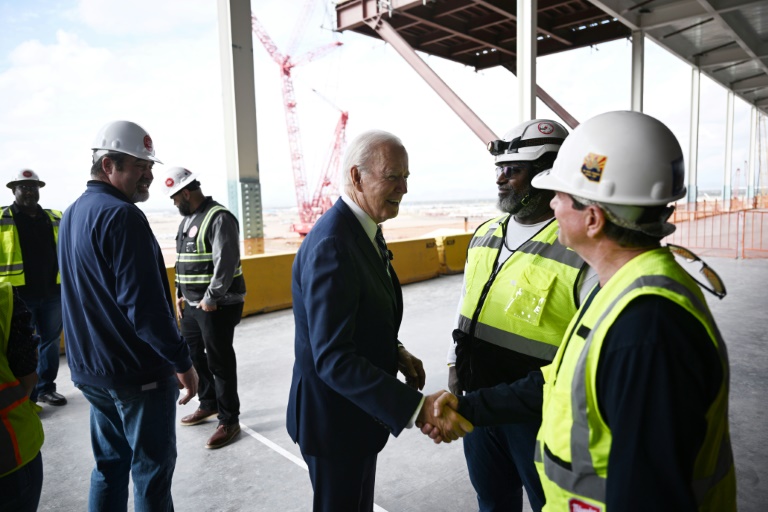
President Joe Biden declared the comeback of US manufacturing Tuesday at the site of a mammoth expansion to a Taiwanese-owned semiconductor plant aimed at breaking risky US dependency on foreign-based producers for the vital component.

“American manufacturing is back, folks. American manufacturing is back,” Biden said at the plant in Phoenix, Arizona, accompanied by senior political allies and titans of the corporate world, including Apple CEO Tim Cook and Micron CEO Sanjay Mehrotra.

The project by TSMC, the world’s biggest maker of leading-edge chips, would go a long way to meeting the US goal of ending reliance on foreign-located factories — particularly in Taiwan, which is under constant threat of being absorbed or even invaded by China.

TSMC, or Taiwan Semiconductor Manufacturing Company, announced it is building a second Phoenix plant by 2026, ballooning its investment in Arizona from $12 billion to $40 billion, with a target of producing some 600,000 microchips a year. 

About 10,000 high-tech jobs will be created once both plants are working, the company said.

White House National Economic Council Director Brian Deese said the “major milestone” is one of the largest foreign direct investments in US history, while TSMC chairman Mark Liu heralded “a giant step forward to help build a vibrant semiconductor ecosystem in the United States.”

Biden clearly hoped to get political credit for the investment influx, pointing to the effect of his signature CHIPS Act, which sets aside almost $53 billion for subsidies and research in the semiconductors sector.

It’s a message he’ll want to spread in Arizona, which was long a Republican-dominated state but has turned into a battleground where the president’s Democrats do increasingly well.

– Size matters –

Most of the current US supply of microchips comes from overseas. Although the companies are largely based in reliable US allies in Asia, the sheer distance and, especially, the geopolitical tensions around Taiwan, have the US government and companies like Apple nervous.

“Virtually every large tech firm, including automotive firms and any company that uses technology is sweating bullets that something’s going to happen between Taiwan and China. And so there’s a massive rush to shift manufacturing out of both countries,” technology analyst Rob Enderle said.

The miniscule, hard-to-make gadgets are at the heart of almost every modern appliance, vehicle and advanced weapon.

While sheer quantity matters, quality — sophistication and small size — is also increasingly important. Even typical smartphones require the higher-end semiconductors.

The new TSMC plant will produce state-of-the-art 3-nanometer chips, while the existing facility will start reducing the size of its current 5-nanometer chips to a more sophisticated 4 nanometers.

The twin plants “could meet the entire US demand for advanced chips when they’re completed. That’s the definition of supply chain resilience,” Ronnie Chatterji, National Economic Council deputy director for industrial policy, told reporters.

Biden framed the TSMC investment in a broader context of revitalizing US-based manufacturing — one of his presidency’s key themes.

“Over 30 years ago, America had more than 30 percent of the global chip production. Then something happened,” he said.

“American manufacturing, the backbone of our economy, began to get hollowed out. Companies moved jobs overseas. Today we’re down to producing only around 10 percent of the world’s chips, despite leading the world in research and design.”

Deese, one of Biden’s most senior advisors, said Biden’s signature public investment policies — the CHIPS Act and the giant Inflation Reduction Act — are revolutionizing the way the government works with private companies.

For almost four decades, the idea was “trickle down,” where government would “get out the way” and cut taxes for big companies to attract investment, he said.

Now the goal is to use the public money to kickstart activity and “crowd in” investors.

The goal is not to exclude “private companies, but in fact, encouraging private investment at historic scale,” Deese said.
Biden celebrates US manufacturing comeback at giant semiconductor project

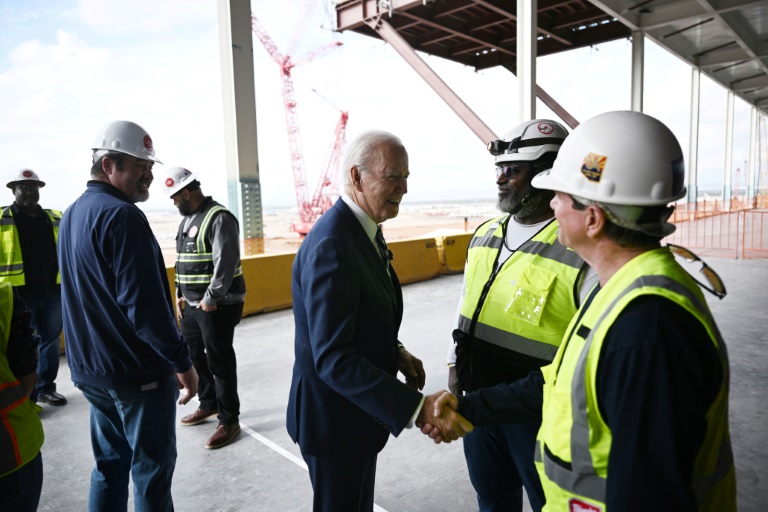
President Joe Biden declared the comeback of US manufacturing Tuesday at the site of a mammoth expansion to a Taiwanese-owned semiconductor plant aimed at breaking risky US dependency on foreign-based producers for the vital component.

“American manufacturing is back, folks. American manufacturing is back,” Biden said at the plant in Phoenix, Arizona, accompanied by senior political allies and titans of the corporate world, including Apple CEO Tim Cook and Micron CEO Sanjay Mehrotra.

The project by TSMC, the world’s biggest maker of leading-edge chips, would go a long way to meeting the US goal of ending reliance on foreign-located factories — particularly in Taiwan, which is under constant threat of being absorbed or even invaded by China.

TSMC, or Taiwan Semiconductor Manufacturing Company, announced it is building a second Phoenix plant by 2026, ballooning its investment in Arizona from $12 billion to $40 billion, with a target of producing some 600,000 microchips a year. 

About 10,000 high-tech jobs will be created once both plants are working, the company said.

White House National Economic Council Director Brian Deese said the “major milestone” is one of the largest foreign direct investments in US history, while TSMC chairman Mark Liu heralded “a giant step forward to help build a vibrant semiconductor ecosystem in the United States.”

Biden clearly hoped to get political credit for the investment influx, pointing to the effect of his signature CHIPS Act, which sets aside almost $53 billion for subsidies and research in the semiconductors sector.

It’s a message he’ll want to spread in Arizona, which was long a Republican-dominated state but has turned into a battleground where the president’s Democrats do increasingly well.

– Size matters –

Most of the current US supply of microchips comes from overseas. Although the companies are largely based in reliable US allies in Asia, the sheer distance and, especially, the geopolitical tensions around Taiwan, have the US government and companies like Apple nervous.

“Virtually every large tech firm, including automotive firms and any company that uses technology is sweating bullets that something’s going to happen between Taiwan and China. And so there’s a massive rush to shift manufacturing out of both countries,” technology analyst Rob Enderle said.

The miniscule, hard-to-make gadgets are at the heart of almost every modern appliance, vehicle and advanced weapon.

While sheer quantity matters, quality — sophistication and small size — is also increasingly important. Even typical smartphones require the higher-end semiconductors.

The new TSMC plant will produce state-of-the-art 3-nanometer chips, while the existing facility will start reducing the size of its current 5-nanometer chips to a more sophisticated 4 nanometers.

The twin plants “could meet the entire US demand for advanced chips when they’re completed. That’s the definition of supply chain resilience,” Ronnie Chatterji, National Economic Council deputy director for industrial policy, told reporters.

Biden framed the TSMC investment in a broader context of revitalizing US-based manufacturing — one of his presidency’s key themes.

“Over 30 years ago, America had more than 30 percent of the global chip production. Then something happened,” he said.

“American manufacturing, the backbone of our economy, began to get hollowed out. Companies moved jobs overseas. Today we’re down to producing only around 10 percent of the world’s chips, despite leading the world in research and design.”

Deese, one of Biden’s most senior advisors, said Biden’s signature public investment policies — the CHIPS Act and the giant Inflation Reduction Act — are revolutionizing the way the government works with private companies.

For almost four decades, the idea was “trickle down,” where government would “get out the way” and cut taxes for big companies to attract investment, he said.

Now the goal is to use the public money to kickstart activity and “crowd in” investors.

The goal is not to exclude “private companies, but in fact, encouraging private investment at historic scale,” Deese said.
Recession fears weigh on stocks as US oil prices hit 2022 low

Wall Street stocks fell again Tuesday, tumbling after leading bankers warned of rising recession risks, while worries of an oil-supply glut sent the US benchmark to its lowest level of 2022.

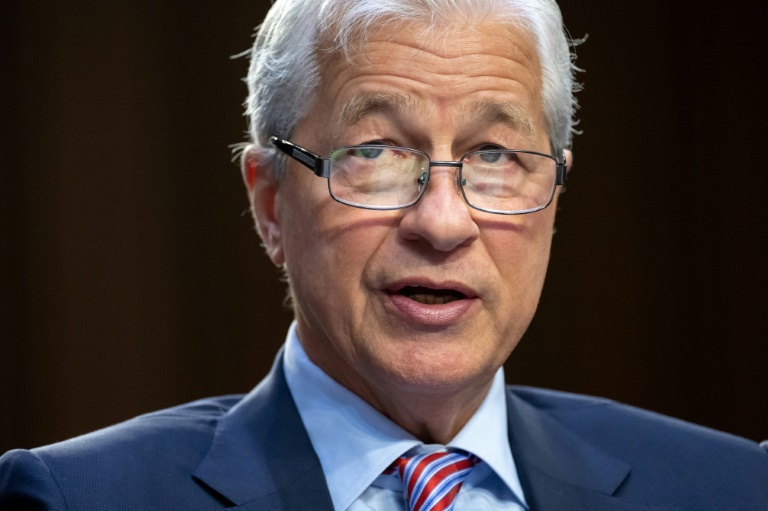
JPMorgan Chase Chief Executive Jamie Dimon said in an interview with CNBC that he saw the chance for a “mild to hard recession” next year, while Goldman Sachs chief David Solomon offered a similar appraisal in a public appearance.

“The outlook is clearly darkening and that has many traders scaling down their risky bets,” said Edward Moya at OANDA trading group.

All three major US indices finished decisively lower, with the S&P 500 losing 1.4 percent.

Tuesday’s losses added to the toll this week after major indices fell more than one percent on Monday, over worries that a recent batch of solid US economic data will prolong the Federal Reserve’s aggressive policies to counter inflation.

“The data looks increasingly like 2023 is going to include a recession,” said Merk Investment’s Nick Reece. “I don’t think a recession has been… adequately priced into the markets.”

Earlier, London, Frankfurt and Paris equity markets all closed lower after Asia mostly fell. 

Recession worries also weighed on the oil market, where US benchmark West Texas Intermediate finished at $74.25 a barrel, down 3.5 percent, in its lowest closing level of the year.

During the session, WTI slumped as low as $73.41 a barrel.

The drop has come despite signs that China at last appears to be retreating from its zero-tolerance policy to counter Covid-19.

But CMC Markets analyst Michael Hewson said traders were unsure how much of an economic boost Beijing’s shift will translate to. 

“Hopes of a demand boost from a China reopening have been tempered by the realization that while infection rates remain high any recovery will be muted at best,” he said.

Moreover, the oil market has “lost” its tightness compared with earlier this year, said OANDA’s Moya.

“It seems to have happened quickly but the crude demand outlook is getting crushed as we are in a slowdown basically across all the major economies,” Moya added.

“Supplies seem plentiful over the near-term and that has everyone hesitating on what was one of the easiest trades of the year,” he said.

– Key figures around 2150 GMT –

New York – Dow: DOWN 1.0 percent at 33,596.34 (close)

New York – S&P 500: DOWN 1.4 percent at 3,941.26 (close)

New York – Nasdaq: DOWN 2.0 percent at 11,014.89 (close)

London – FTSE 100: DOWN 0.6 percent at 7,521.39 (close)

Frankfurt – DAX: DOWN 0.7 percent at 14,343.19 (close)

Paris – CAC 40: DOWN 0.1 percent at 6,687.79 (close)

EURO STOXX 50: DOWN 0.4 percent at 3,939.19 (close)

Tokyo – Nikkei 225: UP 0.2 percent at 27,885.87 (close)

Hong Kong – Hang Seng Index: DOWN 0.4 percent at 19,441.18 (close)

Shanghai – Composite: FLAT at 3,212.53 (close)

Euro/dollar: DOWN at $1.0470 from $1.0491 on Monday

Dollar/yen: UP at 137.04 yen from 136.75 yen

Pound/dollar: DOWN at $1.2133 from $1.2190

Euro/pound: UP at 86.26 pence from 86.07 pence

West Texas Intermediate: DOWN 3.5 percent at $74.25 per barrel

Brent North Sea crude: DOWN 4.0 percent at $79.35 per barrel

burs-jmb/bys

Recession fears weigh on stocks as US oil prices hit 2022 low

Wall Street stocks fell again Tuesday, tumbling after leading bankers warned of rising recession risks, while worries of an oil-supply glut sent the US benchmark to its lowest level of 2022.

JPMorgan Chase Chief Executive Jamie Dimon said in an interview with CNBC that he saw the chance for a “mild to hard recession” next year, while Goldman Sachs chief David Solomon offered a similar appraisal in a public appearance.

“The outlook is clearly darkening and that has many traders scaling down their risky bets,” said Edward Moya at OANDA trading group.

All three major US indices finished decisively lower, with the S&P 500 losing 1.4 percent.

Tuesday’s losses added to the toll this week after major indices fell more than one percent on Monday, over worries that a recent batch of solid US economic data will prolong the Federal Reserve’s aggressive policies to counter inflation.

“The data looks increasingly like 2023 is going to include a recession,” said Merk Investment’s Nick Reece. “I don’t think a recession has been… adequately priced into the markets.”

Earlier, London, Frankfurt and Paris equity markets all closed lower after Asia mostly fell. 

Recession worries also weighed on the oil market, where US benchmark West Texas Intermediate finished at $74.25 a barrel, down 3.5 percent, in its lowest closing level of the year.

During the session, WTI slumped as low as $73.41 a barrel.

The drop has come despite signs that China at last appears to be retreating from its zero-tolerance policy to counter Covid-19.

But CMC Markets analyst Michael Hewson said traders were unsure how much of an economic boost Beijing’s shift will translate to. 

“Hopes of a demand boost from a China reopening have been tempered by the realization that while infection rates remain high any recovery will be muted at best,” he said.

Moreover, the oil market has “lost” its tightness compared with earlier this year, said OANDA’s Moya.

“It seems to have happened quickly but the crude demand outlook is getting crushed as we are in a slowdown basically across all the major economies,” Moya added.

“Supplies seem plentiful over the near-term and that has everyone hesitating on what was one of the easiest trades of the year,” he said.

– Key figures around 2150 GMT –

New York – Dow: DOWN 1.0 percent at 33,596.34 (close)

New York – S&P 500: DOWN 1.4 percent at 3,941.26 (close)

New York – Nasdaq: DOWN 2.0 percent at 11,014.89 (close)

London – FTSE 100: DOWN 0.6 percent at 7,521.39 (close)

Frankfurt – DAX: DOWN 0.7 percent at 14,343.19 (close)

Paris – CAC 40: DOWN 0.1 percent at 6,687.79 (close)

EURO STOXX 50: DOWN 0.4 percent at 3,939.19 (close)

Tokyo – Nikkei 225: UP 0.2 percent at 27,885.87 (close)

Hong Kong – Hang Seng Index: DOWN 0.4 percent at 19,441.18 (close)

Shanghai – Composite: FLAT at 3,212.53 (close)

Euro/dollar: DOWN at $1.0470 from $1.0491 on Monday

Dollar/yen: UP at 137.04 yen from 136.75 yen

Pound/dollar: DOWN at $1.2133 from $1.2190

Euro/pound: UP at 86.26 pence from 86.07 pence

West Texas Intermediate: DOWN 3.5 percent at $74.25 per barrel

Brent North Sea crude: DOWN 4.0 percent at $79.35 per barrel

burs-jmb/bys

'Avatar 2' gets world premiere in London

One of the most delayed sequels in blockbuster history finally hit the big screen on Tuesday as “Avatar: The Way of Water” got its much-anticipated world premiere in London. 

The 13-year wait for a follow-up to “Avatar”, the biggest-grossing film of all time, cannot come too soon for cinemas around the world still struggling from the impact of the Covid pandemic.

The public will get to see James Cameron’s three-hour opus next week, with the director hoping it will justify his dream of establishing a franchise on a par with “Star Wars” and the “Marvel” juggernaut. 

The legendary filmmaker admitted to having some nerves ahead of the premiere.

“I’ve always been nervous every time before we put a movie out into the marketplace and this is a particularly fraught time because, after the pandemic, the market has contracted somewhat,” he told the BBC from the red carpet.

But Cameron added he was confident that the sequel to his 2009 blockbuster delivers. 

“The film is a good ride. It’s a good experience. It’s powerful. It’s emotional. People are crying, they’re weeping their eyes out coming out of the theatre in a good way.”

Having been re-released around the world in recent months, the first “Avatar” is now just shy of $3 billion in worldwide revenue. 

But Cameron’s initial hopes of having a sequel out by 2014 saw repeated delays as his technical ambitions grew.

– ‘Big fan’ –

The second film continues the mix of sci-fi and eco-politics — returning to the planet Pandora where the Na’vi characters struggle to fend off rapacious humans — as well as the groundbreaking use of 3D and cutting-edge cinematic wizardry that made the original such a box office hit.

Stars Sam Worthington, Zoe Saldana and Sigourney Weaver return, alongside new additions including Kate Winslet, a quarter-century after her world-beating collaboration with Cameron for “Titanic”. 

Some fans arrived in central London early to land a precious wristband providing access to the red carpet at the evening screening.

Dobrinka Perry had even painted her face blue in honour of the budding franchise’s Na’vi characters.

“I’m a big fan,” she told AFP, drawing comparisons with plotlines and her own life, such as environmental campaigning.

“I am also a fighter, I fight for the tree of my family, for my Pandora… and especially for what we are going to leave to our kids later.”

Nelly Szabo, 23, had also turned out for the premiere with high hopes.

“We’ve been waiting a long time for it,” she said of the sequel. She added that the first one “was amazing so our expectations are very high.”

The follow-up remains a huge bet for Cameron and for Disney, who have ploughed hundreds of millions of dollars not only into this film, but a third instalment that has already been shot. 

That is not the end: Cameron has planned the series through to a fifth entry, with new films due every two years until 2028. 

Cameron said he was “reasonably confident” they would be released. 

“We did well with the first film and that allows us to go on… we got to see what happens.”

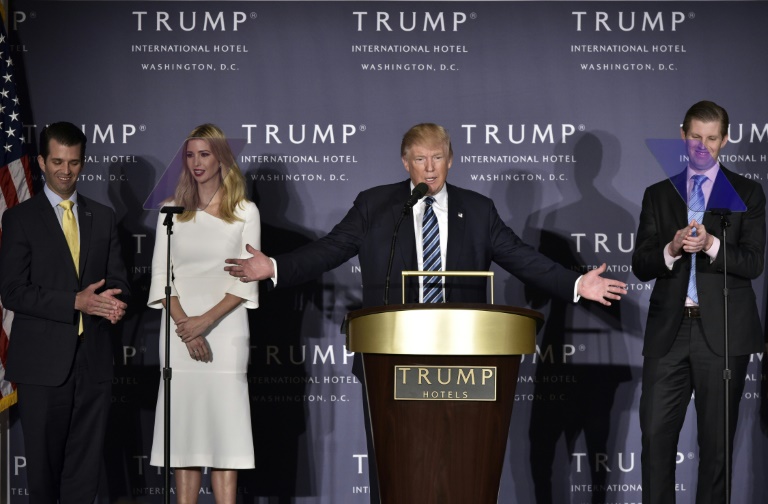
NY jury finds Trump Organization guilty of fraud

Donald Trump’s family business was found guilty of tax fraud by a New York jury Tuesday, dealing a blow to the ex-president as he eyes the White House again.

The Trump Organization was found guilty on all nine counts, marking the first time it had ever been convicted of crimes, prosecutors said in a statement.

“This was a case about greed and cheating. In Manhattan, no corporation is above the law,” said Manhattan District Attorney Alvin Bragg.

Trump’s company faces a fine of around $1.5 million, a paltry sum to the billionaire real estate developer but one likely to inflict damage to his reputation as he seeks the presidency in 2024.

The Trump Organization and separate Trump entity the Trump Payroll Corp were convicted of running a 13-year-scheme to defraud and evade taxes by falsifying business records.

Jurors agreed with prosecutors that the Trump Organization — currently run by Trump’s two adult sons, Donald Jr and Eric Trump — hid compensation it paid to top executives between 2005 and 2021.

Longtime CFO Allen Weisselberg, had already pleaded guilty to 15 counts of tax fraud, and testified against his former company as part of a plea bargain.

A close friend of the Trump family, the 75-year-old Weisselberg admitted he schemed with the company to receive undeclared benefits such as a rent-free apartment in a posh Manhattan neighborhood, luxury cars for him and his wife and private school tuition for his grandchildren.

According to his plea deal, Weisselberg agreed to pay nearly $2 million in fines and penalties and complete a five-month prison sentence in exchange for testimony during the trial, which started in October.

Trump, who had slammed the charges as a “witch hunt” by rivals,” was himself not named in the case.

“For 13 years the Trump Corporation and the Trump Payroll Corporation got away with a scheme that awarded high-level executives with lavish perks and compensation while intentionally concealing the benefits from the taxing authorities to avoid paying taxes,” said Bragg.

“Today’s verdict holds these Trump companies accountable for their long-running criminal scheme,” he added.

Meta expected to face new fines after EU privacy ruling

Meta is expected to face another large fine after Europe’s data watchdog on Tuesday imposed binding decisions concerning the treatment of personal data by the owner of Facebook, Instagram and WhatsApp. 

The European Data Protection Supervisor (EDPS) said in a statement that the rulings concerned Meta’s use of data for targeted advertising, but did not give details or recommend fines. 

Authorities in Ireland, where Meta has its European headquarters, have a month to impose the ruling.

Previous interventions by the EDPS have led to large fines on tech platforms, including a 405-million-euro fine on Instagram in September over a breach in the handling of children’s data.

The latest case follows complaints by privacy campaigning group Noyb that Meta’s three apps fail to meet Europe’s strict rules on data protection. 

Noyb says they flouted the landmark General Data Protection Regulation (GDPR) that came into force in May 2018 by failing to give users the option of holding back their personal data and blocking targeted advertising.

Facebook argues these are vital to its functioning.

“This is not the final decision and it is too early to speculate,” said a Meta spokesman, adding that EU law left open a possibility for targeted ads.  

In October 2021, the Irish Data Protection Authority (DPC) recommended a fine of just 28 to 36 million euros for lack of transparency. 

But this was rejected as far too low by France’s CNIL (the National Commission for Technology and Freedoms) and other national watchdogs, who asked the EDPS to investigate the case. 

“The EU regulators’ decision, if it is upheld, would have a dramatic impact on Meta’s revenue in Europe,” said Debra Aho Williamson, an analyst at Insider Intelligence.

The decision would be a “kneecapping” of Meta’s ability to sell targeted advertising and given the stakes, Meta will “fight vigorously to defend its business”, she said.

According to the Politico news site, internal documents show that Meta earmarked three billion euros for possible European fines in 2022 and 2023.

As well as the Instagram fine in September, Meta was fined a further 265 million euros last month over a data leak that saw half a billion users’ details published on a hacking website.

That adds to a 60-million-euro fine in France in January over its use of “cookies”, the digital trackers used to target advertising.

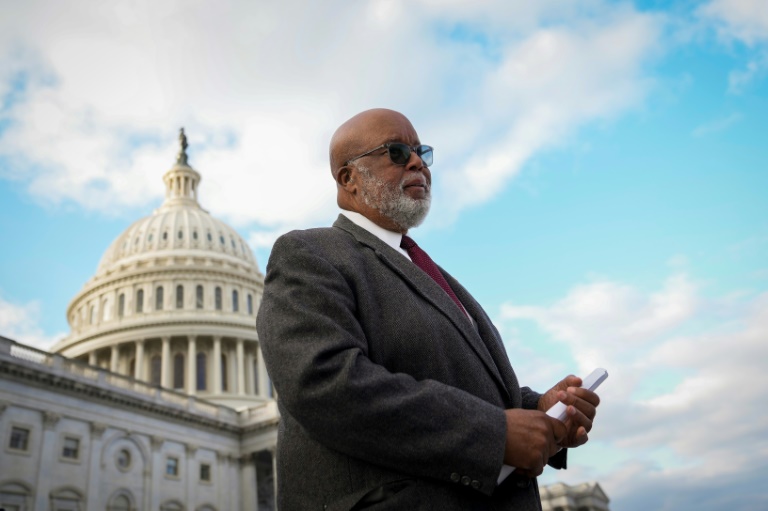
US Capitol probe panel will make criminal referrals: chairman

The House committee investigating the attack on the US Capitol by supporters of former president Donald Trump plans to make criminal referrals to the Justice Department, the committee chairman said Tuesday.

The House panel cannot file criminal charges but can make recommendations to the Justice Department, which recently appointed a special counsel to look into Trump’s role in the January 6, 2021 assault on Congress and his efforts to overturn the 2020 presidential election won by Democrat Joe Biden.

“We have made decisions on criminal referrals,” Bennie Thompson, a Democrat from Mississippi, told CNN and other US media outlets.

Thompson did not identify any of the individuals who could be subject to criminal referral by the committee, which plans to meet later Tuesday.

Among the potential charges believed to be under consideration are obstruction of an official proceeding, conspiracy to defraud the United States, perjury and witness tampering. 

Trump, who announced plans last month to run for president again in 2024, was subpoenaed by the House committee but has declined to testify.

The panel, which has interviewed dozens of witnesses and held several public hearings, is expected to release its report in the next few weeks.

Hundreds of people have been arrested for involvement in the assault on the Capitol, and two members of a far-right militia, the Oath Keepers, were convicted of sedition last week in the most high-profile case yet stemming from the attack.

Trump was impeached by the Democratic-majority House of Representatives for “incitement of insurrection” after the January 6 attack on the Capitol, but was acquitted by the Senate.

Markets drop as Fed worries offset China's Covid easing

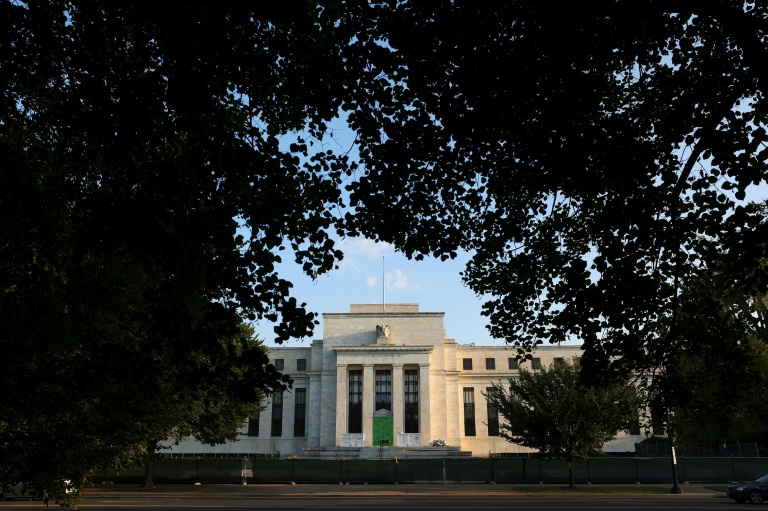
Stock markets fell on Tuesday as investors were split between fears that the US Federal Reserve will maintain its aggressive anti-inflation measures and growing optimism over China’s economic reopening.

Meanwhile, oil prices tumbled, with the price of Brent crude briefly falling below $80 for the first time since January, when prices began to rise ahead of Russia’s invasion of Ukraine.

London, Frankfurt and Paris equity markets all closed lower after Asia mostly fell.

Wall Street extended losses in late morning trading following a sell-off the previous day.

Data showing a forecast-busting jump in activity in the US services sector last month raised the prospect that the Fed will not back down from sharp rate increases when it meets next week.

Monday’s data followed robust jobs figures last week and a jump in wages that give the central bank more room to cool the US economy.

Market analyst Michael Hewson at CMC Markets said the strength of the services sector data “appears to have upset the conventional wisdom that inflation might come down quite quickly, given the resilience of the numbers, as well as the rebound in wages growth seen in Friday’s payrolls report.” 

That has investors spooked again over what the Fed will do and the possibility it may push the US economy into a deep recession to tame inflation.

“Worries that the Fed could unwrap an unwelcome present of another super-sized rate hike when policymakers meet next week are sprinkling Christmas fear on indices,” said Susannah Streeter, senior investment and markets analyst at Hargreaves Lansdown.

“Speculation is swirling that central banks will have to be more Scrooge-like and make borrowing even more expensive to rein in inflation,” she said.

Markets had been running higher ahead of the jobs figures after a surprise drop in inflation and comments from Fed boss Jerome Powell that the bank was likely to raise rates at a slower pace.

Bets have increased on borrowing costs rising higher than five percent next year — from the current range of 3.75-4.0 percent — before the bank pauses, with no cuts seen until 2024.

“There is a prominent undercurrent of concern that the Fed is going to overtighten and trigger a deeper economic setback,” said Briefing.com analyst Patrick O’Hare.

Analysts said concerns over the Fed have overshadowed China’s easing of zero-Covid policies following nationwide protests over the measures, which have hammered the world’s second biggest economy.

Despite the prospect of higher Chinese demand for oil as the economy reopens, crude prices fell as an EU embargo on Russian oil and a G7-EU price cap on the country’s exports came into force on Monday.

“It seems that the only thing guaranteed in the oil market for now is volatility,” said OANDA trading platform analyst Craig Erlam.

After European stock markets closed, the price of Brent crude briefly fell below $80 for the first time since January, as the market is swept by volatility over the price cap and worries about global demand as central banks jack up interest rates.

CMC Markets’s Hewson said traders were also doubting how much of an economic boost the Chinese measures will provide. 

“Hopes of a demand boost from a China reopening have been tempered by the realisation that while infection rates remain high any recovery will be muted at best,” he said.

The dollar lost ground against other major currencies after gains on Monday.

– Key figures around 1630 GMT –

New York – Dow: DOWN 0.7 percent at 33,723.65 points

EURO STOXX 50: DOWN 0.4 percent at 3,939.19

London – FTSE 100: DOWN 0.6 percent at 7,521.39 

Frankfurt – DAX: DOWN 0.7 percent at 14,343.19

Paris – CAC 40: DOWN 0.1 percent at 6,687.79

Tokyo – Nikkei 225: UP 0.2 percent at 27,885.87 (close)

Hong Kong – Hang Seng Index: DOWN 0.4 percent at 19,441.18 (close)

Shanghai – Composite: FLAT at 3,212.53 (close)

Euro/dollar: UP at $1.0518 from $1.0495 on Monday

Dollar/yen: DOWN at 136.52 yen from 136.78 yen

Pound/dollar: UP at $1.2237 from $1.2186

Euro/pound: DOWN at 85.96 pence from 86.06 pence

West Texas Intermediate: DOWN 2.7 percent at $74.87 per barrel

Brent North Sea crude: DOWN 2.8 percent at $80.35 per barrel

burs-rl/kjm

Markets drop as Fed worries offset China's Covid easing

Stock markets fell on Tuesday as investors were split between fears that the US Federal Reserve will maintain its aggressive anti-inflation measures and growing optimism over China’s economic reopening.

Meanwhile, oil prices tumbled, with the price of Brent crude briefly falling below $80 for the first time since January, when prices began to rise ahead of Russia’s invasion of Ukraine.

London, Frankfurt and Paris equity markets all closed lower after Asia mostly fell.

Wall Street extended losses in late morning trading following a sell-off the previous day.

Data showing a forecast-busting jump in activity in the US services sector last month raised the prospect that the Fed will not back down from sharp rate increases when it meets next week.

Monday’s data followed robust jobs figures last week and a jump in wages that give the central bank more room to cool the US economy.

Market analyst Michael Hewson at CMC Markets said the strength of the services sector data “appears to have upset the conventional wisdom that inflation might come down quite quickly, given the resilience of the numbers, as well as the rebound in wages growth seen in Friday’s payrolls report.” 

That has investors spooked again over what the Fed will do and the possibility it may push the US economy into a deep recession to tame inflation.

“Worries that the Fed could unwrap an unwelcome present of another super-sized rate hike when policymakers meet next week are sprinkling Christmas fear on indices,” said Susannah Streeter, senior investment and markets analyst at Hargreaves Lansdown.

“Speculation is swirling that central banks will have to be more Scrooge-like and make borrowing even more expensive to rein in inflation,” she said.

Markets had been running higher ahead of the jobs figures after a surprise drop in inflation and comments from Fed boss Jerome Powell that the bank was likely to raise rates at a slower pace.

Bets have increased on borrowing costs rising higher than five percent next year — from the current range of 3.75-4.0 percent — before the bank pauses, with no cuts seen until 2024.

“There is a prominent undercurrent of concern that the Fed is going to overtighten and trigger a deeper economic setback,” said Briefing.com analyst Patrick O’Hare.

Analysts said concerns over the Fed have overshadowed China’s easing of zero-Covid policies following nationwide protests over the measures, which have hammered the world’s second biggest economy.

Despite the prospect of higher Chinese demand for oil as the economy reopens, crude prices fell as an EU embargo on Russian oil and a G7-EU price cap on the country’s exports came into force on Monday.

“It seems that the only thing guaranteed in the oil market for now is volatility,” said OANDA trading platform analyst Craig Erlam.

After European stock markets closed, the price of Brent crude briefly fell below $80 for the first time since January, as the market is swept by volatility over the price cap and worries about global demand as central banks jack up interest rates.

CMC Markets’s Hewson said traders were also doubting how much of an economic boost the Chinese measures will provide. 

“Hopes of a demand boost from a China reopening have been tempered by the realisation that while infection rates remain high any recovery will be muted at best,” he said.

The dollar lost ground against other major currencies after gains on Monday.

– Key figures around 1630 GMT –

New York – Dow: DOWN 0.7 percent at 33,723.65 points

EURO STOXX 50: DOWN 0.4 percent at 3,939.19

London – FTSE 100: DOWN 0.6 percent at 7,521.39 

Frankfurt – DAX: DOWN 0.7 percent at 14,343.19

Paris – CAC 40: DOWN 0.1 percent at 6,687.79

Tokyo – Nikkei 225: UP 0.2 percent at 27,885.87 (close)

Hong Kong – Hang Seng Index: DOWN 0.4 percent at 19,441.18 (close)

Shanghai – Composite: FLAT at 3,212.53 (close)

Euro/dollar: UP at $1.0518 from $1.0495 on Monday

Dollar/yen: DOWN at 136.52 yen from 136.78 yen

Pound/dollar: UP at $1.2237 from $1.2186

Euro/pound: DOWN at 85.96 pence from 86.06 pence

West Texas Intermediate: DOWN 2.7 percent at $74.87 per barrel

Brent North Sea crude: DOWN 2.8 percent at $80.35 per barrel

burs-rl/kjm

Close Bitnami banner
Bitnami