AFP

Meta expected to face new fines after EU privacy ruling

Meta is expected to face another large fine after Europe’s data watchdog on Tuesday imposed binding decisions concerning the treatment of personal data by the owner of Facebook, Instagram and WhatsApp. 

The European Data Protection Supervisor (EDPS) said in a statement that the rulings concerned Meta’s use of data for targeted advertising, but did not give details of its ruling or recommended fines. 

Authorities in Ireland, where Meta has its European headquarters, have a month to impose the ruling.

Previous interventions by the EDPS have led to large fines on tech platforms, including a 405-million-euro fine on Instagram in September over a breach in the handling of children’s data.

The latest case follows complaints by privacy campaigning group Noyb that Meta’s three apps fail to meet Europe’s strict rules on data protection. 

Noyb says they flouted the landmark General Data Protection Regulation (GDPR) that came into force in May 2018 by failing to give users the option of holding back their personal data and blocking targeted advertising.

Facebook argues these are vital to its functioning.

In October 2021, the Irish Data Protection Authority (DPC) recommended a fine of just 28 to 36 million euros for lack of transparency. 

But this was rejected as far too low by France’s CNIL (the National Commission for Technology and Freedoms) and other regional watchdogs, who asked the EDPS to investigate the case. 

Meta did not respond to requests for comment on Tuesday.  

According to the Politico news site, internal documents show that Meta earmarked three billion euros for possible European fines in 2022 and 2023.

As well as the Instagram fine in September, Meta was fined a further 265 million euros last month over a data leak that saw half a billion users’ details published on a hacking website.

That adds to a 60-million-euro fine in France in January over its use of “cookies”, the digital trackers used to target advertising.

Hawaii deploys National Guard in volcano eruption response

Hawaii has activated its National Guard to support the response to the first eruption of the world’s biggest volcano in almost 40 years, with lava threatening a key highway.

Twenty National Guard members were deployed “to assist Hawaii County with traffic control and other roles in the Mauna Loa eruption,” the Pacific island state’s emergency management agency announced in a tweet Monday.

Mauna Loa, on the US archipelago’s largest island, erupted on November 27 and continues to spew rivers of molten rock on its northern slope. 

While the flow has slowed significantly in recent days as it hit flatter ground — now at an average rate of about 20 feet per hour (6 meters per hour), according to the US Geological Survey — the volcano continues to pump out a steady supply of lava. 

The eruption so far has not threatened any homes but flows have been creeping toward the Daniel K. Inouye Highway, known as Saddle Road.

Lava was 2.2 miles (3.5 kilometers) from the thoroughfare — the closure of which would force residents to make long detours — as of Monday afternoon, a USGS bulletin said.

Conditions have made it “difficult to estimate when or if the flow will impact Daniel K. Inouye Highway,” the bulletin published Monday added.

The USGS added that sulfur dioxide emissions are down but are still high enough to have “moderate to severe impacts on regional air quality, depending on plume rise rate and wind direction.”

The largest volcano on Earth by volume, Mauna Loa, whose name means “Long Mountain,” accounts for half of the entire island of Hawaii, known as the Big Island, and is larger than the rest of the Hawaiian islands combined.

One of six active volcanoes on the archipelago, Mauna Loa has not erupted since 1984.

Kilauea, a volcano on the southeastern flank of Mauna Loa, erupted almost continuously between 1983 and 2019, and a minor eruption there has been ongoing for months.

Georgia runoff Senate vote a new test for Biden

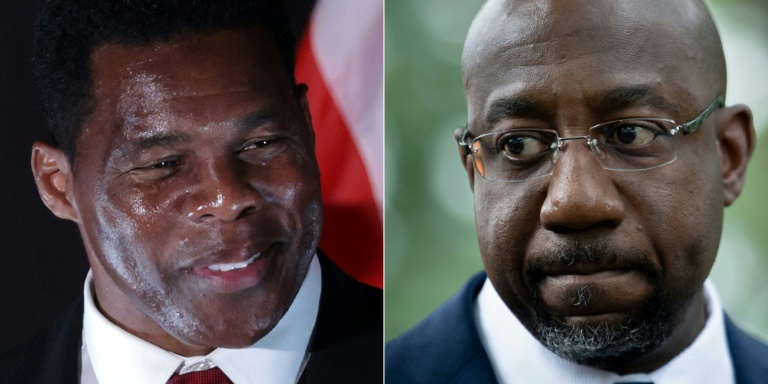
Voters were casting ballots in the southern US state of Georgia on Tuesday to choose between a pastor and a former American football star in a Senate race with high stakes for Joe Biden’s presidency.

A victory by incumbent Democratic senator Raphael Warnock would allow his camp to consolidate their paper-thin majority in the chamber and wield greater influence on key committees.

Republicans see the Georgia Senate seat as an opportunity to boost their ability to block Biden’s policies, having won back control of the House of Representatives in the November midterm election.

Warnock, pastor at the Atlanta church where civil rights icon Martin Luther King Jr once preached, is being challenged by Republican Herschel Walker, who is backed by former president Donald Trump.

Warnock and Walker, who are both African American, are in a runoff election after neither earned more than 50 percent in the November 8 midterm vote.

Polls opened at 7:00 am (1200 GMT) and close at 7:00 pm (0000 GMT).

With Warnock, 53, and Walker, 60, running neck and neck, Biden urged Georgians on Tuesday to turn out and vote.

“Georgia, today is Election Day — and the eyes of the nation are on you. Head to the polls and help send @ReverendWarnock back to the US Senate,” the president tweeted.

Democrats retained control of the Senate in last month’s vote — but just barely, winning 50 seats.

Vice President Kamala Harris’s tie-breaking vote gives Democrats the edge in the 100-seat chamber.

A Warnock win would give Democrats 51 seats and significantly curb the power of centrist Democratic senator Joe Manchin, who has already blocked several major Biden initiatives in the first two years of his term.

With 700 days to go before the 2024 presidential election, Republicans hope to stymie Biden’s momentum, after his party performed much better than expected in November.

– Obama to the rescue –

Determined to win the race, Democrats called on their top gun: charismatic former president Barack Obama, who campaigned alongside Warnock in Atlanta last week.

And in yet another sign of how high the stakes are, $400 million has been spent in the campaign, making the Georgia race the most expensive in all of the midterms.

Some 1.9 million people voted early, many of them likely Democratic voters, while Republicans are expected to turn out in force on Tuesday.

With the two candidates running head to head, according to most recent polls, the outcome is hard to predict.

Historically a Republican state, Georgia took America by surprise when voters chose Biden over Trump in the 2020 presidential election and then sent two Democrats to the Senate two months later in another runoff.

– Polar opposites –

This time, while both of the candidates are natives of Georgia, the men are polar opposites.

Born the eleventh of 12 children to a former soldier and preacher father and a mother who worked in the cotton fields, Warnock grew up in poverty.

Even after his election, Warnock remained as a senior pastor at Martin Luther King’s Ebenezer Baptist Church. He holds a doctorate in theology.

Walker is a latecomer to politics with his 2022 Senate run.

The 60-year-old conservative is considered one of the best players in the history of American college football — a near-religious institution in the South — and went on to have a stellar career in the National Football League.

Walker, who is staunchly anti-abortion, even in cases of rape, has been the subject of several recent scandals, having been accused of paying for abortions for two women he had relationships with.

Ukraine war revives EU wish to bring Balkans into its fold

European Union leaders vowed on Tuesday to strengthen ties with the Western Balkans, a drive reinvigorated by Russia’s war on Ukraine.

The war has underscored the importance for the EU of bringing the Balkans into its orbit, to stabilise the region and counter the influence there of both Russia and China.

“The future of our children will be safe and more prosperous with the Western Balkans within the EU, and we are working very hard in order to make progress,” EU Council president Charles Michel told reporters as he arrived at a meeting in Tirana of EU and Balkan leaders.

The summit was called to discuss requests by six states — Albania, Bosnia, Montenegro, Kosovo, North Macedonia and Serbia — to join the 27-nation EU and examine areas where they can cooperate. 

The Balkan bids to join the EU “have gained momentum again”, said Ursula von der Leyen, the president of the EU’s executive arm, the European Commission.

She urged the Balkan nations to choose camps.

“Russia is trying to exert influence (in the Western Balkans). China tries to influence”, von der Leyen said. 

“We (the EU) are the largest investor. We are the closest partner and that is why the discussion is also about you having to decide which side you are on, the side of democracy,” von der Leyen stressed.

Balkan countries have been stuck in the EU waiting room for years. 

They have regularly expressed frustration at the long and demanding membership process, especially since the EU moved so rapidly this year to accept Ukraine and Moldova as official candidates to join the bloc.

The EU was expected on Tuesday to confirm its “commitment to the European Union membership (prospects) of the Western Balkans” and call for negotiations to be speeded up.

– ‘Stick together’ –

Expanding the EU has again become a priority, European Commissioner Oliver Varhelyi noted on Friday. 

Dutch Prime Minister Mark Rutte echoed that, saying EU and Balkan nations needed “to stick together and work together” in the face of Russia’s war on Ukraine.

In July Brussels finally began membership talks with North Macedonia and Albania, which applied in 2005 and 2014 respectively. 

Negotiations have been underway for several years with Montenegro and Serbia, while in October Brussels recommended making Bosnia an official candidate.

Kosovo, the sixth would-be member, faces challenges on its path to joining the EU. 

It split from Serbia in 2008 but Belgrade has not recognised its declaration of independence. 

Neither, crucially, do five EU member countries — Cyprus, Greece, Romania, Slovakia and Spain. 

– Solidarity and migration –

Pro-European sentiment in the Balkans could do with a boost, noted Lukas Macek of the Jacques Delors Institute in Paris.

“The pro-European camp is getting a little desperate,” he said. A show of support from Brussels could help sway public opinion.

“There is a window of opportunity to reverse the trend but it will not necessarily last very long and it must be fleshed out with something tangible,” he said.

The EU is expected in Tirana to confirm a package of subsidies worth around one billion euros (dollars) to help the Balkans weather the energy crisis triggered by the Ukraine war.

The subsidies should help attract public and private investments and raise at least 2.5 billion euros in total.

The EU is also due to sign a deal with the region’s telecom operators to reduce roaming charges between the bloc and the Balkan states in 2023 and phase them out by 2027.

And it will also examine ways of cooperating on security issues, particularly on preventing the kind of cyber attacks that have plagued the Balkans.

Illegal migration remains a key concern. 

The dangerous “Balkans route” is one of the main conduits used by millions of would-be asylum seekers, many from conflict zones, to try and reach Western Europe.

The numbers arriving by this route rose by almost 170 percent in the first 10 months of 2022 compared to last year. That spike prompted the Commission on Monday to propose sending the EU border force Frontex to help police the Balkan borders.

The EU, for its part, wants Balkan countries to align their visa policies with its own. 

Serbia has been accused of contributing to an increase in the number of migrants from Cuba, Burundi, India and Tunisia entering the EU. 

These nationals can arrive at Belgrade airport without a visa and then continue their journey to the bloc by land. 

Under EU pressure, Serbian President Aleksandar Vucic has announced an end to visa exemptions for Tunisians and Burundians.


Niger finance minister rebuffs pressure to drop oil drive

Niger’s finance minister says lack of support from rich countries makes it impossible for his impoverished nation to abandon revenue from oil.

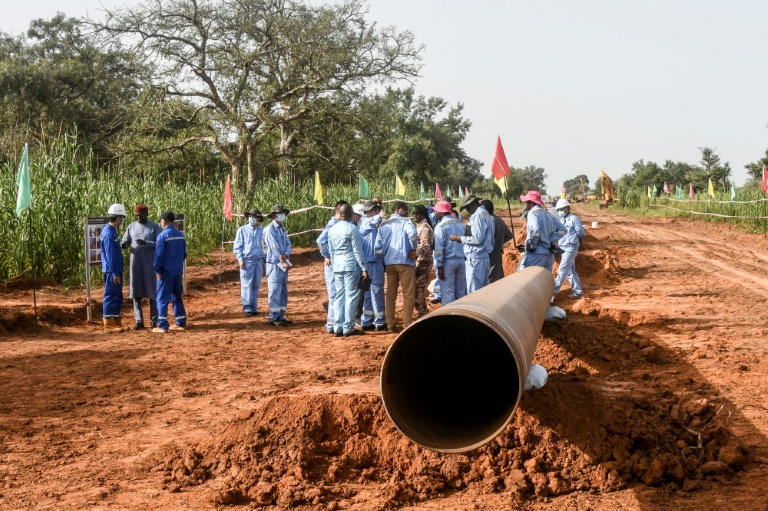
The landlocked Sahel state has launched a scheme to build Africa’s longest pipeline, shuttling crude oil over nearly 2,000 kilometres (1,250 miles) to a port in Benin.

Environmental campaigners are dismayed about initiatives that perpetuate the use of climate-damaging fossil fuels.

But in an interview with AFP, Finance Minister Ahmat Jidoud said Niger had no alternative.

“Right now it’s not possible,” he said.

“It is important for us to be able to exploit our own resources until the conditions are there for the climate transition to unfold,” he said.

Niger’s 26 million people are the poorest in the world, according to the benchmark of the UN’s Human Development Index.

The population is also one of the fast-growing in the world, expanding by 3.7 percent annually.

Without income from oil, “our development is compromised,” Jidoud said, warning of a “social (time-) bomb.”

Niger became an oil producer in 2011, with the China National Petroleum Corporation (CNPC) sending crude by pipeline to refineries in Zinder in the south-centre of the country.

The new $6-billion pipeline will connect wells in the eastern region of Agadem with the Beninese port of Seme.

Launched in 2019, the project was supposed to be completed in 2022, but was hampered by the Covid-19 pandemic.

More than 600 km of pipeline has already been laid, and Niger is on track to sell crude on the international market from next July, according to the ministry of petroleum and energy.

Jidoud spoke to AFP on the sidelines of a conference in Paris aimed at mustering public and private funds to support Niger’s 2022-26 $29.6-billion development plan.

The blueprint, unveiled on Monday by President Mohamed Bazoum, aims to reduce the poverty rate from 43 percent to 35 percent.

It says the state can count on $13.35 billion from its own resources, a figure that is crucially dependent on oil exports.

Thanks to the new pipeline, oil sales by the end of 2023 should rise from 20,000 barrels per day to 110,000, according to his plan.

Under this scenario, oil income would account for half of the country’s fiscal revenue and a quarter of GDP.

Income from oil compares starkly with the funds channelled by rich countries to help poorer nations move to a climate-friendlier path, said Jidoud.

“You can’t talk to us about the energy transition if the support promised by the G20 countries doesn’t show up,” he said.

He pointed to a promise, first made by rich economies at the 2009 Copenhagen climate summit, to muster $100 billion a year in support — a vow that remains unfulfilled.

In addition to entrenched poverty, Niger is battling climate extremes in a deeply arid region, and struggling with two jihadist insurgencies.

Jidoud said that in early commitments on Monday, the African Development Bank (AfDB) had promised 2.4 billion euros (dollars), the West African Development Bank (WADB) 680 million euros and France — Niger’s former colonial power and ally — 550 million.

Markets drop as Fed worries offset China's Covid easing

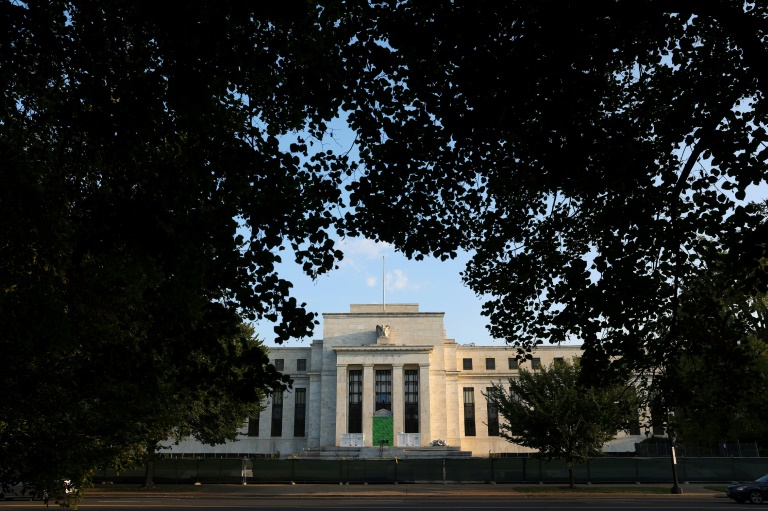
Stock markets fell on Tuesday as investors were split between fears that the US Federal Reserve will maintain its aggressive anti-inflation measures and growing optimism over China’s economic reopening.

London, Frankfurt and Paris were down in afternoon trades after Asia mostly fell.

Wall Street extended losses as it opened lower following a sell-off the previous day.

Data showing a forecast-busting jump in activity in the US services sector last month raised the prospect that the Fed will not back down from sharp rate increases when it meets next week.

Monday’s data followed robust jobs figures last week and a jump in wages that give the central bank more room to cool the US economy, fuelling investor concerns that the Fed’s actions could cause a deep recession.

“Worries that the Fed could unwrap an unwelcome present of another super-sized rate hike when policymakers meet next week are sprinkling Christmas fear on indices,” said Susannah Streeter, senior investment and markets analyst at Hargreaves Lansdown.

“Speculation is swirling that central banks will have to be more Scrooge-like and make borrowing even more expensive to rein in inflation,” she said.

Markets had been running higher ahead of the jobs figures after a surprise drop in inflation and comments from Fed boss Jerome Powell that the bank was likely to raise rates at a slower pace.

Bets have increased on borrowing costs rising higher than five percent next year — from the current range of 3.75-4.0 percent — before the bank pauses, with no cuts seen until 2024.

“There is a prominent undercurrent of concern that the Fed is going to overtighten and trigger a deeper economic setback,” said Briefing.com analyst Patrick O’Hare.

Analysts said concerns over the Fed have overshadowed China’s easing of zero-Covid policies following nationwide protests over the measures, which have hammered the world’s second biggest economy.

Despite the prospect of higher Chinese demand for oil as the economy reopens, crude prices fell as an EU embargo on Russian oil and a G7-EU price cap on the country’s exports came into force on Monday.

“It seems that the only thing guaranteed in the oil market for now is volatility,” said OANDA trading platform analyst Craig Erlam.

The dollar lost ground against other major currencies after gains on Monday.

– Key figures around 1445 GMT –

New York – Dow: DOWN 0.3 percent at 33,837.66 points

London – FTSE 100: DOWN 0.3 percent at 7,545.95 

Frankfurt – DAX: DOWN 0.5 percent at 14,379.00

Paris – CAC 40: DOWN 0.2 percent at 6,683.24

EURO STOXX 50: DOWN 0.3 percent at 3,944.32

Tokyo – Nikkei 225: UP 0.2 percent at 27,885.87 (close)

Hong Kong – Hang Seng Index: DOWN 0.4 percent at 19,441.18 (close)

Shanghai – Composite: FLAT at 3,212.53 (close)

Euro/dollar: UP at $1.0510 from $1.0495 on Monday

Dollar/yen: DOWN at 136.49 yen from 136.78 yen

Pound/dollar: UP at $1.2193 from $1.2186

Euro/pound: UP at 86.19 pence from 86.06 pence

West Texas Intermediate: DOWN 0.7 percent at $76.40 per barrel

Brent North Sea crude: DOWN 0.7 percent at $82.08 per barrel

Markets drop as Fed worries offset China's Covid easing

Stock markets fell on Tuesday as investors were split between fears that the US Federal Reserve will maintain its aggressive anti-inflation measures and growing optimism over China’s economic reopening.

London, Frankfurt and Paris were down in afternoon trades after Asia mostly fell.

Wall Street extended losses as it opened lower following a sell-off the previous day.

Data showing a forecast-busting jump in activity in the US services sector last month raised the prospect that the Fed will not back down from sharp rate increases when it meets next week.

Monday’s data followed robust jobs figures last week and a jump in wages that give the central bank more room to cool the US economy, fuelling investor concerns that the Fed’s actions could cause a deep recession.

“Worries that the Fed could unwrap an unwelcome present of another super-sized rate hike when policymakers meet next week are sprinkling Christmas fear on indices,” said Susannah Streeter, senior investment and markets analyst at Hargreaves Lansdown.

“Speculation is swirling that central banks will have to be more Scrooge-like and make borrowing even more expensive to rein in inflation,” she said.

Markets had been running higher ahead of the jobs figures after a surprise drop in inflation and comments from Fed boss Jerome Powell that the bank was likely to raise rates at a slower pace.

Bets have increased on borrowing costs rising higher than five percent next year — from the current range of 3.75-4.0 percent — before the bank pauses, with no cuts seen until 2024.

“There is a prominent undercurrent of concern that the Fed is going to overtighten and trigger a deeper economic setback,” said Briefing.com analyst Patrick O’Hare.

Analysts said concerns over the Fed have overshadowed China’s easing of zero-Covid policies following nationwide protests over the measures, which have hammered the world’s second biggest economy.

Despite the prospect of higher Chinese demand for oil as the economy reopens, crude prices fell as an EU embargo on Russian oil and a G7-EU price cap on the country’s exports came into force on Monday.

“It seems that the only thing guaranteed in the oil market for now is volatility,” said OANDA trading platform analyst Craig Erlam.

The dollar lost ground against other major currencies after gains on Monday.

– Key figures around 1445 GMT –

New York – Dow: DOWN 0.3 percent at 33,837.66 points

London – FTSE 100: DOWN 0.3 percent at 7,545.95 

Frankfurt – DAX: DOWN 0.5 percent at 14,379.00

Paris – CAC 40: DOWN 0.2 percent at 6,683.24

EURO STOXX 50: DOWN 0.3 percent at 3,944.32

Tokyo – Nikkei 225: UP 0.2 percent at 27,885.87 (close)

Hong Kong – Hang Seng Index: DOWN 0.4 percent at 19,441.18 (close)

Shanghai – Composite: FLAT at 3,212.53 (close)

Euro/dollar: UP at $1.0510 from $1.0495 on Monday

Dollar/yen: DOWN at 136.49 yen from 136.78 yen

Pound/dollar: UP at $1.2193 from $1.2186

Euro/pound: UP at 86.19 pence from 86.06 pence

West Texas Intermediate: DOWN 0.7 percent at $76.40 per barrel

Brent North Sea crude: DOWN 0.7 percent at $82.08 per barrel

Airlines to return to profit in 2023: IATA

Airlines are expected to return to profit next year for the first time since 2019 despite slowing global growth as they recover from a Covid-induced crisis, an industry group said Tuesday.

After cutting losses this year, airlines are forecast to make $4.7 billion in net profits in 2023, according to the International Air Transport Association (IATA).

This is still far off the $26.4 billion profit the industry reported in 2019, before Covid prompted countries to enact travel restrictions that have since been eased in most nations.

“Resilience has been the hallmark for airlines in the Covid-19 crisis,” IATA director general Willie Walsh said in a statement.

“As we look to 2023, the financial recovery will take shape with a first industry profit since 2019. That is a great achievement considering the scale of the financial and economic damage caused by government imposed pandemic restrictions,” he said.

Governments in numerous countries had to bail out airlines as travel was brought to a halt to slow the spread of the virus, and the industry suffered $137.7 billion in losses in 2020 at the height of the restrictions.

Airlines are expected to post $779 billion in revenues in 2023, meaning the $4.7 billion profit constitutes a razor-thin net profit margin of just 0.6 percent. 

Walsh said many airlines are “sufficiently profitable” to attract capital as the industry seeks to decarbonise its operations.

But many others are struggling due to “onerous regulation, high costs, inconsistent government policies, inefficient infrastructure and a value chain where the rewards of connecting the world are not equitably distributed,” he said.

Passenger traffic was slightly lower than forecast in 2022 due to slowing economies and China’s zero-Covid restrictions. 

– ‘Optimistic about 2023’ –

But the IATA expects passenger traffic to return to 85.5 percent of its pre-crisis level in 2023.

And that expected improvement comes as global GDP growth slows, according to IATA’s forecast, to 1.3 percent from 2.9 percent in 2022. 

“Despite the economic uncertainties, there are plenty of reasons to be optimistic about 2023,” said Walsh.

Airlines should not be as affected by rising jet fuel prices as they were in 2022, while continuing to benefit from pent-up travel demand.

A recent IATA poll found that more than two-thirds of travellers surveyed in 11 global markets are travelling as much or more than before the pandemic. 

And while 85 percent said they are concerned about the economic situation, 57 percent said have no intention to curb their travel habits.

But Walsh also warned that with such thin margins, “even an insignificant shift in any one of these variables has the potential to shift the balance into negative territory.”

IATA sees airlines squeaking out a profit thanks to revenues growing faster than costs next year. 

While rising interest rates may crimp demand for travel, IATA sees that as likely leading to lower oil prices, thus reducing costs for airlines.

– Help for green transition –

On a regional level, airlines in North America are expected to post $9.9 billion in profits this year, thanks to carriers benefitting from fewer and shorter-lasting travel restrictions in the region. For 2023, profits are seen as climbing to $11.4 billion.

European carriers are forecast to post $3.1 billion in losses as some airlines had to curtail operations due to Russia’s war in Ukraine while others faced limitations imposed by airports. IATA sees European airlines posting $621 million in profit in 2023.

Asia-Pacific airlines are expected to suffer $10 billion in losses this year, primarily due to China’s zero Covid policy. In 2023, they are expected to narrow that to $6.6 billion. 

But IATA noted it expects “strong pent-up demand to fuel a quick rebound in the wake of any” relaxation in Covid travel restrictions by China.

Walsh said that the airline industry remains committed to reaching net zero carbon emissions by 2050, but given its thin profit margins, pleaded for government help. 

“We’ll need all the resources we can muster, including government incentives, to finance this enormous energy transition,” said Walsh.

“More taxes and higher charges would be counter-productive,” he added.

Airlines to return to profit in 2023: IATA

Airlines are expected to return to profit next year for the first time since 2019 despite slowing global growth as they recover from a Covid-induced crisis, an industry group said Tuesday.

After cutting losses this year, airlines are forecast to make $4.7 billion in net profits in 2023, according to the International Air Transport Association (IATA).

This is still far off the $26.4 billion profit the industry reported in 2019, before Covid prompted countries to enact travel restrictions that have since been eased in most nations.

“Resilience has been the hallmark for airlines in the Covid-19 crisis,” IATA director general Willie Walsh said in a statement.

“As we look to 2023, the financial recovery will take shape with a first industry profit since 2019. That is a great achievement considering the scale of the financial and economic damage caused by government imposed pandemic restrictions,” he said.

Governments in numerous countries had to bail out airlines as travel was brought to a halt to slow the spread of the virus, and the industry suffered $137.7 billion in losses in 2020 at the height of the restrictions.

Airlines are expected to post $779 billion in revenues in 2023, meaning the $4.7 billion profit constitutes a razor-thin net profit margin of just 0.6 percent. 

Walsh said many airlines are “sufficiently profitable” to attract capital as the industry seeks to decarbonise its operations.

But many others are struggling due to “onerous regulation, high costs, inconsistent government policies, inefficient infrastructure and a value chain where the rewards of connecting the world are not equitably distributed,” he said.

Passenger traffic was slightly lower than forecast in 2022 due to slowing economies and China’s zero-Covid restrictions. 

– ‘Optimistic about 2023’ –

But the IATA expects passenger traffic to return to 85.5 percent of its pre-crisis level in 2023.

And that expected improvement comes as global GDP growth slows, according to IATA’s forecast, to 1.3 percent from 2.9 percent in 2022. 

“Despite the economic uncertainties, there are plenty of reasons to be optimistic about 2023,” said Walsh.

Airlines should not be as affected by rising jet fuel prices as they were in 2022, while continuing to benefit from pent-up travel demand.

A recent IATA poll found that more than two-thirds of travellers surveyed in 11 global markets are travelling as much or more than before the pandemic. 

And while 85 percent said they are concerned about the economic situation, 57 percent said have no intention to curb their travel habits.

But Walsh also warned that with such thin margins, “even an insignificant shift in any one of these variables has the potential to shift the balance into negative territory.”

IATA sees airlines squeaking out a profit thanks to revenues growing faster than costs next year. 

While rising interest rates may crimp demand for travel, IATA sees that as likely leading to lower oil prices, thus reducing costs for airlines.

– Help for green transition –

On a regional level, airlines in North America are expected to post $9.9 billion in profits this year, thanks to carriers benefitting from fewer and shorter-lasting travel restrictions in the region. For 2023, profits are seen as climbing to $11.4 billion.

European carriers are forecast to post $3.1 billion in losses as some airlines had to curtail operations due to Russia’s war in Ukraine while others faced limitations imposed by airports. IATA sees European airlines posting $621 million in profit in 2023.

Asia-Pacific airlines are expected to suffer $10 billion in losses this year, primarily due to China’s zero Covid policy. In 2023, they are expected to narrow that to $6.6 billion. 

But IATA noted it expects “strong pent-up demand to fuel a quick rebound in the wake of any” relaxation in Covid travel restrictions by China.

Walsh said that the airline industry remains committed to reaching net zero carbon emissions by 2050, but given its thin profit margins, pleaded for government help. 

“We’ll need all the resources we can muster, including government incentives, to finance this enormous energy transition,” said Walsh.

“More taxes and higher charges would be counter-productive,” he added.

Biden celebrates giant TSMC semiconductor project

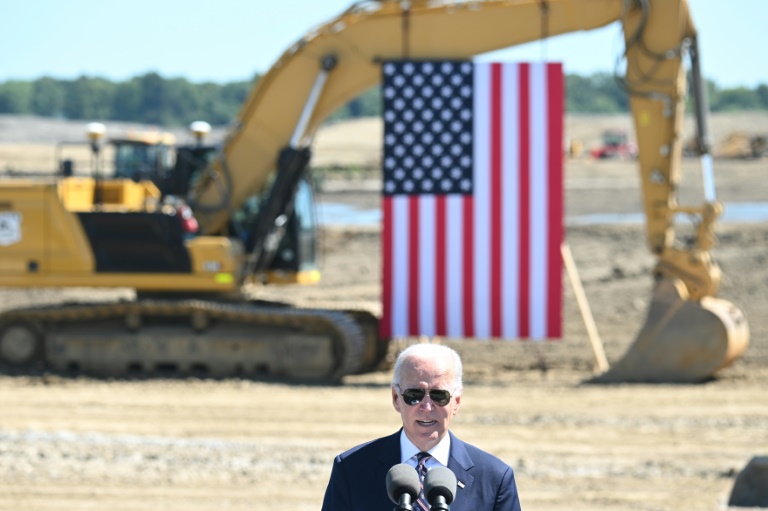
President Joe Biden flies Tuesday to Arizona to celebrate the mammoth expansion of a Taiwanese semiconductor plant, citing the project as proof the United States is finally breaking dangerous dependency on foreign manufacturers for the vital component.

TSMC announced it is building a second facility in Phoenix by 2026, ballooning its investment from $12 billion to $40 billion. About 10,000 high-tech jobs will be created once both plants are working, the company said.

With a target of producing some 600,000 microchips a year in the twin facilities, TSMC’s project would go a long way to meeting the US goal of ending reliance on factories based abroad — particularly in Taiwan, which is under constant threat of being absorbed or even invaded by China.

The “major milestone” adds up to “the largest foreign direct investment in Arizona history and it’s one of the largest in US history,” White House National Economic Council Director Brian Deese told reporters.

Biden will speak at the TSMC site, accompanied by senior political figures and titans of the corporate world, including Apple CEO Tim Cook, TSMC’s founder Morris Chang and Micron CEO Sanjay Mehrotra.

The Democrat will seek to take credit for the investment influx, pointing to the effect of his signature CHIPS Act, which sets aside almost $53 billion for subsidies and research in the semiconductors sector. 

It’s a message he’ll be especially keen to spread in Arizona, which was long a Republican-dominated state but has turned into a battleground where Democrats do increasingly well.

The plant expansion — coming on top of other significant microchip manufacturing projects dotted around the country — is part of an overall plan by the Biden administration to shift the center of gravity in the increasingly strategic, global industry.

Most supply currently comes from companies based in reliable US allies in Asia, but the sheer distance from producers and, especially, the geopolitical tensions around Taiwan are triggering a push to shrink the supply chain.

“Virtually every large tech firm, including automotive firms and any company that uses technology is sweating bullets that something’s going to happen between Taiwan and China. And so there’s a massive rush to shift manufacturing out of both countries,” technology analyst Rob Enderle said.

– Smaller the better –

In the high-stakes world of microchips, sheer quantity is important. The miniscule, hard-to-make gadgets are at the heart of almost every modern appliance, vehicle and advanced weapon.

But quality — and small size — is also increasingly important for sophisticated everyday devices like smartphones and on that front the White House says it has good news.

The new TSMC plant will produce tiny 3 nanometer chips, while the existing facility will start reducing the size of its current 5 nanometer chips to 4 nanometers.

Building a plant, or a “fab,” takes several years. But once “at scale, these two fabs could meet the entire US demand for advanced chips when they’re completed. That’s the definition of supply chain resilience,” Ronnie Chatterji, National Economic Council deputy director for industrial policy, told reporters.

Deese, one of Biden’s most senior advisors, said the broader message from the White House is that US industrial strategy is undergoing a rebirth.

For almost four decades, the idea was “trickle down,” where government would “get out the way” and cut taxes for big companies to attract investment, he said.

Instead, Biden’s policy — both through the CHIPS Act and the giant Inflation Reduction Act — uses public money to attract, or “crowd in” private investment.

The goal is not to exclude “private companies, but in fact, encouraging private investment at historic scale,” Deese said.

Close Bitnami banner
Bitnami