AFP

Putin ally joins tech giant Yandex

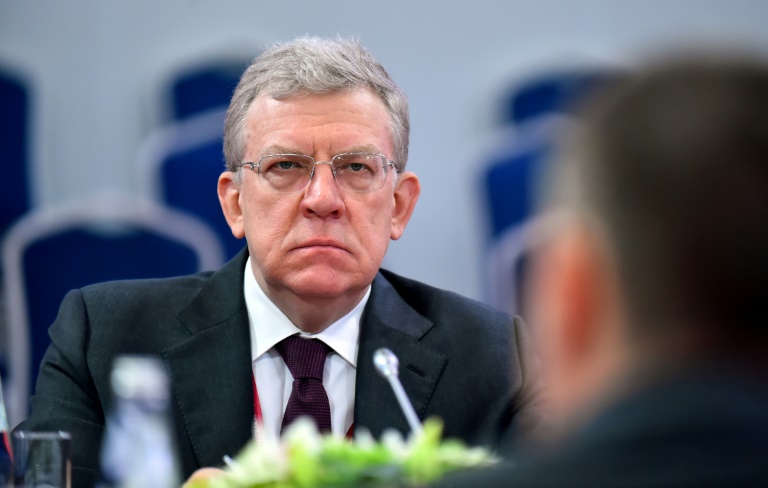
A long-time ally of President Vladimir Putin, Alexei Kudrin, said Monday he will be joining Yandex as the Kremlin seeks to tighten its grip on Russia’s top technology giant. 

The announcement from the former finance minister comes after months of instability at the internet company, with employees fleeing due to the military offensive in Ukraine and its founder hit by Western sanctions.

Russia’s top internet company and most popular search engine is being divided into Russian and international businesses because of Western penalties.

Analysts say that the move will cement government control over what was once seen as one of Russia’s top success stories.

Last week Kudrin announced he was stepping down as head of Russia’s Audit Chamber to focus on private initiatives with “significant impact on people”. 

“I accepted an offer from Yandex to become a corporate development adviser,” Kudrin said on Monday.

He added that in his role he will work to “ensure the long-term and sustainable development of the company on all markets, including international ones”. 

Kudrin is expected to oversee the operations of the restructured company, while its founder, Arkady Volozh, who was hit by EU sanctions in June, will develop a number of Yandex businesses outside Russia.

In recent years Russian authorities have steadily ramped up control over the internet — once considered the last bastion of free speech.

All major media organisations are already either state-owned or closely toe the Kremlin line.

– Staff exodus –

In August, Yandex sold its news feed Yandex News to state-affiliated rival VK, the owner of Russia’s largest social network.

“The state has decided to speed up the creation of purely Russian services and increasingly limit the access of Russians to foreign services,” economist Sergei Khestanov told AFP, referring to the authorities’s growing control over the internet in Russia.

He said that with Kudrin at the helm of Yandex authorities could create an internet “firewall” to shield the government from criticism.

In March, Russia banned Facebook and Instagram for “extremist activity” as part of efforts to clamp down on social media during Moscow’s assault on Ukraine.

Moscow’s military intervention in Ukraine triggered an exodus of Russians from the country, including many from Yandex and the IT sector.

Brussels describes Yandex as “promoting state media and narratives in its search results.”

The EU said that Volozh, 58, was “supporting, materially or financially” the Russian government in its assault on Ukraine.

When the sanctions were announced Volozh immediately stepped down as CEO and resigned from the board of directors to avoid the firm also being hit by sanctions.

The Bell, a respected Russian-language media outlet, reported earlier that Volozh turned to Kudrin for help in securing Putin’s support for the restructuring plan.

– ‘Too close to Putin’ –

Kudrin served as finance minister between 2000 and 2011 and was famously fired by then-president Dmitry Medvedev for insubordination in 2011 and later appointed chairman of the Audit Chamber.

The 62-year-old was seen as one of the government’s most prominent liberals in the earlier years of Putin’s rule and he supported opposition protests against widespread claims of election fraud in 2011-2012.

For Kudrin, Yandex offers an opportunity to distance himself from the government after Putin sent troops to Ukraine, said Tatiana Stanovaya, founder of the R.Politik political analysis firm.

“He has nowhere to go,” Stanovaya told AFP before the announcement was made. 

“He is too close to Putin. His departure would be seen as an act of betrayal.”

The Bell, citing sources, reported that Kudrin will have to “guarantee” to the Kremlin that Yandex and its technologies remain Russia-based.

But at the same time, the sources said, he will have to make sure that the company does not become another state-run behemoth, like technologies conglomerate Rostec.

Last month, Yandex confirmed plans to overhaul “the group’s ownership and governance in light of the current geopolitical environment.”

The company said this could include developing some of its services — including self-driving technologies, cloud computing and data labelling — “independently from Russia.”
Stocks rise as China eases more Covid measures

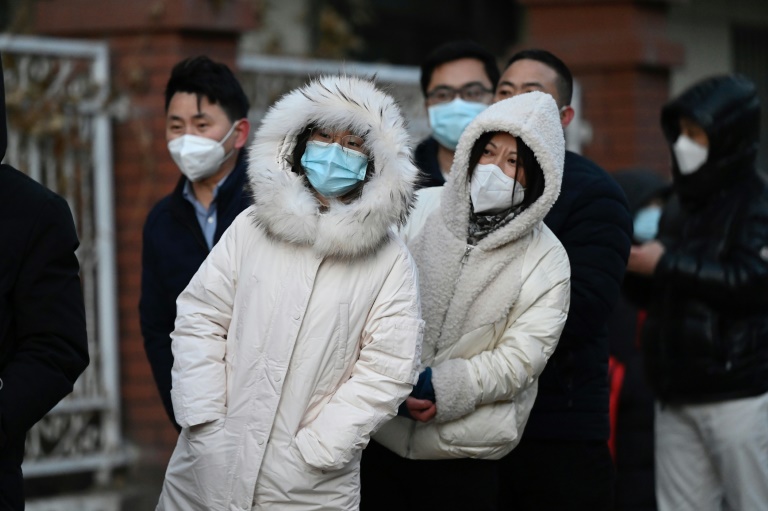
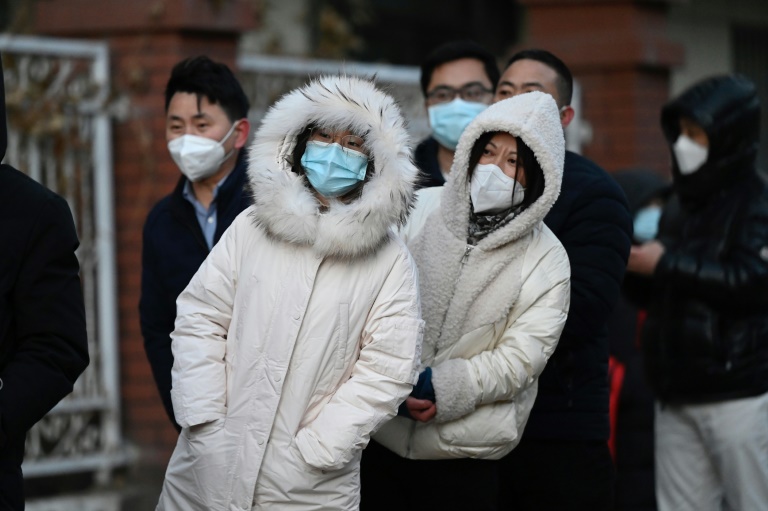
Most stocks rose on Monday as traders welcomed more easing of strict Covid containment measures in China that have hammered the world’s number-two economy.

The moves helped offset a forecast-busting US jobs report that dented hopes that the Federal Reserve will take a softer approach to hiking interest rates in its battle against inflation.

Investor sentiment has picked up considerably in recent weeks on indications the US central bank will slow down its monetary tightening as price rises appear to be slowing and the economy weakens.

That has come as Chinese leaders take a more pragmatic approach to fighting Covid after recent protests across the country that also called for more political freedoms.

The harsh zero-Covid strategy — which saw major cities including Shanghai locked down for months — has been blamed for a sharp slowdown in economic growth this year and sent shudders through markets.

The move to reopening helped fuel “market optimism about the tailwinds of a likely acceleration in growth in 2023 for China-sensitive assets”, said SPI Asset Management’s Stephen Innes.

“Although there have been several local changes to Covid policies, China has yet to shift away from the zero-Covid policy officially. Instead, they are trying to balance the expected reopening surge in Omicron cases against minimising economic and social costs.”

The brighter outlook lifted Asian markets with Hong Kong leading the way, jumping more than four percent while Shanghai put on more than one percent.

There were also gains in Tokyo, Sydney, Wellington, Singapore, Taipei and Manila.

London opened marginally higher, though Paris and Frankfurt inched down.

The prospect of the world’s number-two economy kicking back into gear helped traders overcome data on Friday showing far more jobs than expected were created in the United States in November.

A big jump in wages added to concerns that the economy remained hot, meaning the Fed still had plenty of work to do to get inflation down to its two percent target.

“If next week’s consumer price index data stays hot… then our forecast for the Fed funds rate to be raised by 50 basis points each in December and February to hit 4.75-5.00 percent may prove too low,” said Mansoor Mohi-uddin, of Bank of Singapore.

“If the Fed instead needs to keep hiking well into 2023 then the near-term outlook for risk assets will remain challenging for investors.”

Still, the dollar remained under pressure against its main peers as investors lower their expectations for US borrowing costs.

China’s yuan was among the best performers, breaking below the seven per dollar level for the first time in almost three months.

The reopening of China also lifted oil prices as demand expectations improved, while a decision by OPEC and top producers to not lift output also boosted the commodity.

Still, Innes added: “One major obstacle to prompt oil prices is that a widespread official reopening is unlikely to occur until spring. So, demand could remain exceptionally soft, including in the initial stages of a broader reopening of the economy.”

– Key figures around 0820 GMT –

Tokyo – Nikkei 225: UP 0.2 percent at 27,820.40 (close)

Hong Kong – Hang Seng Index: UP 4.5 percent at 19,518.29 (close)

Shanghai – Composite: UP 1.8 percent at 3,211.81 (close)

London – FTSE 100: FLAT at 7,556.74

Euro/dollar: UP at $1.0545 from $1.0531 on Friday

Dollar/yen: UP at 134.90 yen from 134.27 yen

Pound/dollar: UP at $1.2300 from $1.2296

Euro/pound: UP at 85.79 pence from 85.73 pence

West Texas Intermediate: UP 0.7 percent at $80.50 per barrel

Brent North Sea crude: UP 0.6 percent at $86.04 per barrel

New York – Dow: UP 0.1 percent at 34,429.88 (close)

Stocks rise as China eases more Covid measures

Most stocks rose on Monday as traders welcomed more easing of strict Covid containment measures in China that have hammered the world’s number-two economy.

The moves helped offset a forecast-busting US jobs report that dented hopes that the Federal Reserve will take a softer approach to hiking interest rates in its battle against inflation.

Investor sentiment has picked up considerably in recent weeks on indications the US central bank will slow down its monetary tightening as price rises appear to be slowing and the economy weakens.

That has come as Chinese leaders take a more pragmatic approach to fighting Covid after recent protests across the country that also called for more political freedoms.

The harsh zero-Covid strategy — which saw major cities including Shanghai locked down for months — has been blamed for a sharp slowdown in economic growth this year and sent shudders through markets.

The move to reopening helped fuel “market optimism about the tailwinds of a likely acceleration in growth in 2023 for China-sensitive assets”, said SPI Asset Management’s Stephen Innes.

“Although there have been several local changes to Covid policies, China has yet to shift away from the zero-Covid policy officially. Instead, they are trying to balance the expected reopening surge in Omicron cases against minimising economic and social costs.”

The brighter outlook lifted Asian markets with Hong Kong leading the way, jumping more than four percent while Shanghai put on more than one percent.

There were also gains in Tokyo, Sydney, Wellington, Singapore, Taipei and Manila.

London opened marginally higher, though Paris and Frankfurt inched down.

The prospect of the world’s number-two economy kicking back into gear helped traders overcome data on Friday showing far more jobs than expected were created in the United States in November.

A big jump in wages added to concerns that the economy remained hot, meaning the Fed still had plenty of work to do to get inflation down to its two percent target.

“If next week’s consumer price index data stays hot… then our forecast for the Fed funds rate to be raised by 50 basis points each in December and February to hit 4.75-5.00 percent may prove too low,” said Mansoor Mohi-uddin, of Bank of Singapore.

“If the Fed instead needs to keep hiking well into 2023 then the near-term outlook for risk assets will remain challenging for investors.”

Still, the dollar remained under pressure against its main peers as investors lower their expectations for US borrowing costs.

China’s yuan was among the best performers, breaking below the seven per dollar level for the first time in almost three months.

The reopening of China also lifted oil prices as demand expectations improved, while a decision by OPEC and top producers to not lift output also boosted the commodity.

Still, Innes added: “One major obstacle to prompt oil prices is that a widespread official reopening is unlikely to occur until spring. So, demand could remain exceptionally soft, including in the initial stages of a broader reopening of the economy.”

– Key figures around 0820 GMT –

Tokyo – Nikkei 225: UP 0.2 percent at 27,820.40 (close)

Hong Kong – Hang Seng Index: UP 4.5 percent at 19,518.29 (close)

Shanghai – Composite: UP 1.8 percent at 3,211.81 (close)

London – FTSE 100: FLAT at 7,556.74

Euro/dollar: UP at $1.0545 from $1.0531 on Friday

Dollar/yen: UP at 134.90 yen from 134.27 yen

Pound/dollar: UP at $1.2300 from $1.2296

Euro/pound: UP at 85.79 pence from 85.73 pence

West Texas Intermediate: UP 0.7 percent at $80.50 per barrel

Brent North Sea crude: UP 0.6 percent at $86.04 per barrel

New York – Dow: UP 0.1 percent at 34,429.88 (close)

Ghana offers local debt swap as part of IMF talks

Ghana offered investors a domestic debt swap on Monday to ease a crunch in payments as the government negotiates an IMF bailout during its worse economic crisis in decades.

The West African state is in talks for up to $3 billion in credit from the International Monetary Fund to help shore up its public finances.

Inflation is at more than 40 percent and the cedi currency has lost 50 percent in value this year, helping push up debt by $6 billion in 2022.

As part of IMF negotiations, Ghana’s government is seeking to make its debt more sustainable after facing warnings about the risks of it defaulting on obligations.

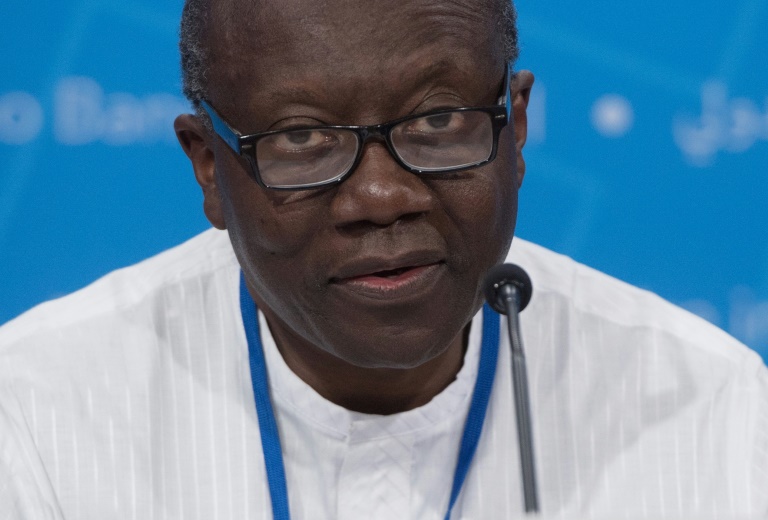
Finance Minister Kenneth Ofori-Atta said in a recorded statement late on Sunday on social media the debt exchange starting Monday would swap current debt for four new bonds maturing between 2027 and 2037.

“Our commitment to Ghanaians and the investor community, in line with the negotiations with the IMF is to restore macroeconomic stability in the shortest possible time,” he said.

A foreign debt restructuring programme would be presented later, he said.

Ghana, a top cocoa and gold producer, has oil and gas reserves but its debt payments are high and its revenues weak. Like the rest of Africa, it has been hit by economic fallout from the global pandemic and the Ukraine war. 

Ofori-Atta said the government had worked to minimise the swap impact on investors holding government bonds, especially small investors and other vulnerable groups. 

There will be no “haircuts” on principle value of bonds, he said.

The minister said the government recognised banks and financial institutions hold a large amount of local government debt, but regulatory agencies and the central bank would help ease the impact on them.

“These are difficult times and we count on the support of all Ghanaians and the investment community to make this exercise successful,” he said.

President Nana Akufo-Addo and his economic team have come under growing pressure over the crisis, after the government earlier this year did a U-turn and said it would go to the IMF for help.

Lawmakers have moved to censure Ofori-Atta over his economic performance and parliament is still reviewing that motion.

Last month, Akufo-Addo fired the government’s junior finance minister, Charles Adu Boahen, over corruption allegations after he appeared in a documentary on illegal gold mining.

More people flee after eruption of Indonesia's Mount Semeru

Rescuers evacuated more people Monday from nearby villages after the eruption of Indonesia’s Mount Semeru, with officials warning of danger from cooling lava despite less activity from the volcano.

More than 2,400 villagers have now fled their homes and taken shelter in 11 evacuation centres after the highest mountain on the country’s main island of Java erupted early morning Sunday.

“The military, police, local disaster and village officials keep evacuating people in Curah Kobokan where the hot ash cloud and cold lava might travel,” Abdul Muhari, a spokesman for Indonesia’s disaster mitigation agency, told local television.

“So far the total number of evacuees is 2,489.”

Officials have announced a state of emergency for the next two weeks and authorities have been distributing free masks to protect against ash in the air while setting up public kitchens for evacuees.

On Monday morning, dozens of evacuees in Lumajang district where Semeru is located ventured back to their ash-covered homes to retrieve important belongings, before returning to shelters, according to an AFP journalist.

Some shepherded livestock while others carried appliances such as TVs and refrigerators as the volcano spewed ash in the background.

Muhari said visual observation of Semeru on Monday morning indicated less intense volcanic activity but he warned of potential danger from lava flows that had cooled after heavy rain.

“What we worry about is economic activities such as sand mining. We want to make sure the route where the hot ash cloud and the cold lava might travel is completely free of activity,” he said.

The government’s alert status indicating danger from the volcano was raised to its highest level Sunday. It had previously been at its second-highest level since a major eruption last December.

Last year’s eruption killed 51 people and damaged more than 5,000 homes while forcing nearly 10,000 people to seek refuge.

Many of the victims from that disaster were sand miners working high on the slopes of the volcano.

Indonesia sits on the Pacific “Ring of Fire” where the meeting of continental plates causes substantial volcanic and seismic activity. The Southeast Asian archipelago nation has nearly 130 active volcanoes.

Ex-Wirecard CEO goes on trial over 'unparalleled' fraud

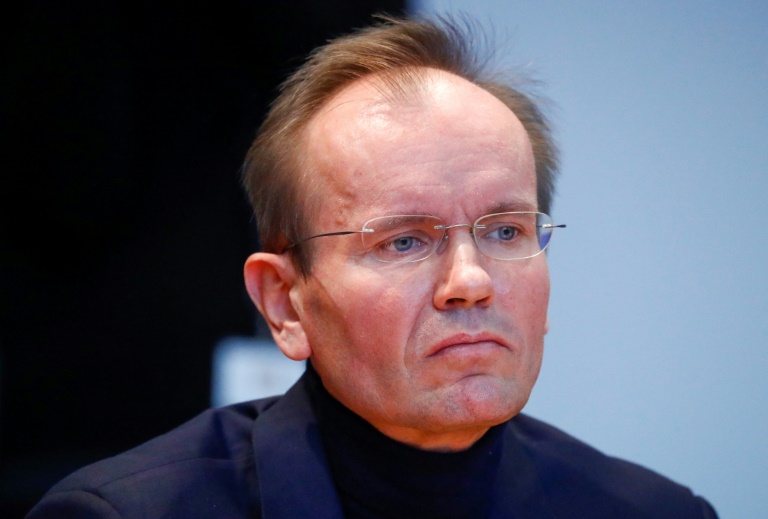
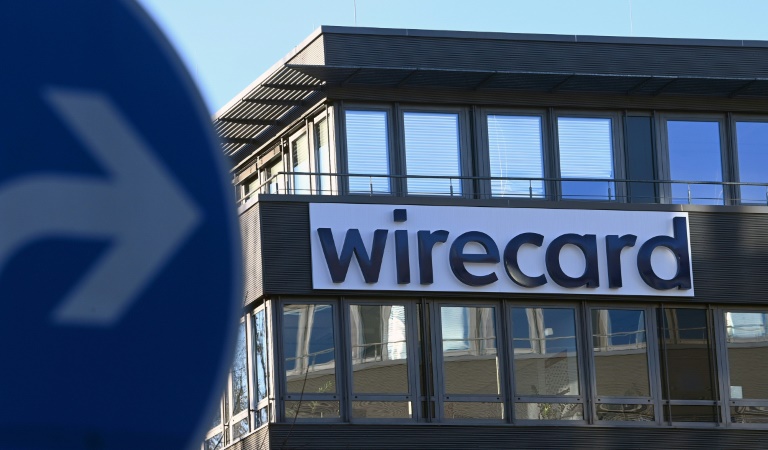
Ex-Wirecard CEO Markus Braun goes on trial in Munich this week for his role in the collapse of the once celebrated payments firm, brought down by the biggest accounting fraud scandal in German corporate history.

Austrian-born Braun and two other former Wirecard executives will appear in the dock from Thursday on charges of commercial gang fraud, breach of trust, market manipulation and accounting manipulation.

The Munich district court has scheduled 100 court dates for the mammoth trial.

Wirecard, once hailed as a standard-bearer for the German tech industry, imploded spectacularly in 2020 after admitting that 1.9 billon euros ($2 billion) missing from its accounts probably didn’t exist.

Chancellor Olaf Scholz, who was finance minister at the time, described the scandal as “unparalleled” in post-war Germany. 

Braun, who has been in custody for over two years, denies any wrongdoing.

The 53-year-old has pointed the finger at Wirecard’s fugitive former chief operating officer, Jan Marsalek, a shadowy figure with alleged ties to foreign intelligence agencies. 

Marsalek was reported earlier this year to be hiding out in Russia.

A senior Wirecard employee, however, told a German parliamentary inquiry last year that nothing happened at Wirecard without Braun’s knowledge.

“The group was shaped by Markus Braun, and so was the corporate culture. He decided everything, he dictated everything,” Rainer Wexeler told lawmakers.

– ‘Incorrect’ accounts –

On trial alongside Braun are Oliver Bellenhaus, the former head of Wirecard’s Dubai subsidiary, and ex-accounting boss Stephan von Erffa.

They face several years in prison if convicted.

Bellenhaus has admitted wrongdoing and will serve as a key witness for the prosecution.

It took German investigators more than 20 months to unravel the complex web of fraudulent transactions implicating Wirecard subsidiaries and third-party companies across the globe.

Prosecutors say the accused presented “incorrect” financial results from 2015 to 2018, by including fabricated revenues and profits from partner companies in Dubai, the Philippines and Singapore, and using forged documents to make Wirecard appear more successful than it was. 

Among the victims of the fraud were banks that had provided credit of 1.7 billion euros to Wirecard. Bonds worth 1.4 billion euros were also issued and are unlikely to be repaid.

– Fall from grace –

Founded in 1999, the Bavarian start-up Wirecard started out processing payments for porn and gambling sites and grew into a respectable electronic payments provider that edged traditional lender Commerzbank out of the blue-chip DAX index.

Rumours about possible cheating at Wirecard surfaced now and again over the years, including from shortsellers doing research on companies they suspected might be overvalued.

But Wirecard’s problems began in earnest with a series of Financial Times articles in 2019 alleging irregularities in its Asian division, based on revelations from former employees and leaked documents.

The company was initially able to fend off the claims, with the FT’s journalists themselves coming under investigation from German regulators.

But the scam finally unravelled in June 2020 when long-time auditor EY said it had discovered a 1.9-billion-euro hole in Wirecard’s accounts.

The sum, which made up a quarter of the balance sheet, was meant to be sitting in trustee accounts at two Filippino banks.

But the Philippines’ central bank has said the cash never entered its monetary system and both Asian banks, BDO and BPI, denied having a relationship with Wirecard.

– Regulatory overhaul –

Wirecard filed for insolvency soon after, becoming the first DAX company to fail.

Wirecard’s dramatic downfall sent shockwaves through Germany and prompted an overhaul of the country’s finance watchdog Bafin, heavily criticised for ignoring early warning signs about Wirecard.

The fallout also embarrassed Germany’s political establishment, with former chancellor Angela Merkel coming under fire for promoting Wirecard during a 2019 trip to China — when journalists were already raising doubts about the company.

In a grilling last year by lawmakers, Merkel said there was “no reason at that time” to believe there were “serious irregularities at Wirecard”.

Climate change supercharges threat from forest-eating bug

Deep in the Finnish woods, the moss and blueberry shrubs hide a deadly threat to the boreal forests that are as important to the planet as the Amazon rainforest.

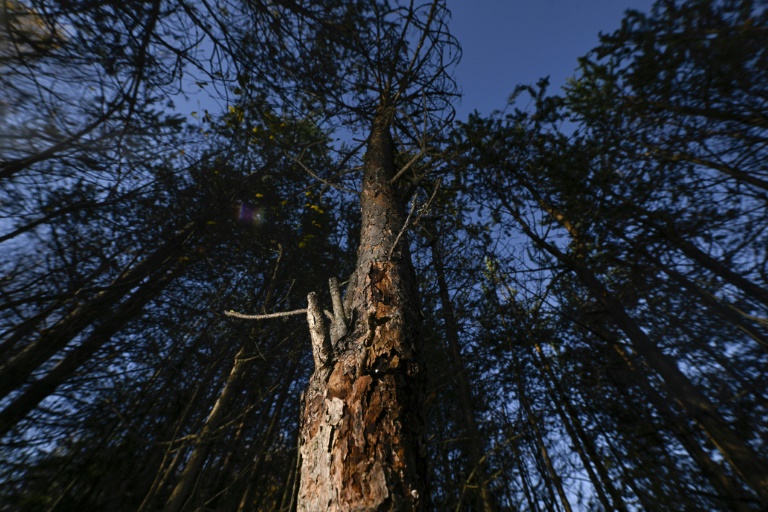
With chunks of their bark peeling off and needles falling from dying branches, more and more trees are being killed by the spruce bark beetle, which is venturing further and further north with climate change.

The tiny brown insects attack the Picea abies, one of Finland’s most common tree species, and can cause massive damage to forests.

Burrowing through the bark to lay their eggs, the beetles eat their way around the spruce and kill it by stopping water and nutrients reaching the higher branches.

“The species has caused huge damage across Central and Eastern Europe, especially since 2018,” Markus Melin, a scientist at the Natural Resources Institute Finland, told AFP.

With climate change, the risk of the beetle spreading is a “lot higher now”, Melin added.

“We have to accept it and adapt to it. Things are changing fast up here.”

While the threat is greatest in southern Finland, the sweltering summer of 2021 saw bark beetle damage “unusually high up north” in the Kainuu region of northern Finland.

– ‘Nasty loop’ –

“It is well known that the spruce bark beetle is one of the species that benefit most from global warming,” Melin said.

The beetles thrive on weakened trees. Hot summers mean there are more water-starved spruce, while warm winters mean there is no frozen ground to brace the trees against storms.

Warm weather also speeds up the life cycle of the beetles, meaning they can reproduce faster.

“Extreme warm summers benefit the bark beetle directly. They have less mortality, reproduction is faster,” Melin said.

While the beetles normally go for weak trees, once their numbers reach a tipping point they can start attacking healthy ones.

“It becomes a nasty loop,” Melin said.

If foresters do not react in time by removing weakened spruce, “suddenly there are so many beetles that they can attack healthy trees” further speeding the “cycle of destruction”, Melin said. 

Ex-Wirecard CEO goes on trial over 'unparalleled' fraud

Ex-Wirecard CEO Markus Braun goes on trial in Munich this week for his role in the collapse of the once celebrated payments firm, brought down by the biggest accounting fraud scandal in German corporate history.

Austrian-born Braun and two other former Wirecard executives will appear in the dock from Thursday on charges of commercial gang fraud, breach of trust, market manipulation and accounting manipulation.

The Munich district court has scheduled 100 court dates for the mammoth trial.

Wirecard, once hailed as a standard-bearer for the German tech industry, imploded spectacularly in 2020 after admitting that 1.9 billon euros ($2 billion) missing from its accounts probably didn’t exist.

Chancellor Olaf Scholz, who was finance minister at the time, described the scandal as “unparalleled” in post-war Germany. 

Braun, who has been in custody for over two years, denies any wrongdoing.

The 53-year-old has pointed the finger at Wirecard’s fugitive former chief operating officer, Jan Marsalek, a shadowy figure with alleged ties to foreign intelligence agencies. 

Marsalek was reported earlier this year to be hiding out in Russia.

A senior Wirecard employee, however, told a German parliamentary inquiry last year that nothing happened at Wirecard without Braun’s knowledge.

“The group was shaped by Markus Braun, and so was the corporate culture. He decided everything, he dictated everything,” Rainer Wexeler told lawmakers.

– ‘Incorrect’ accounts –

On trial alongside Braun are Oliver Bellenhaus, the former head of Wirecard’s Dubai subsidiary, and ex-accounting boss Stephan von Erffa.

They face several years in prison if convicted.

Bellenhaus has admitted wrongdoing and will serve as a key witness for the prosecution.

It took German investigators more than 20 months to unravel the complex web of fraudulent transactions implicating Wirecard subsidiaries and third-party companies across the globe.

Prosecutors say the accused presented “incorrect” financial results from 2015 to 2018, by including fabricated revenues and profits from partner companies in Dubai, the Philippines and Singapore, and using forged documents to make Wirecard appear more successful than it was. 

Among the victims of the fraud were banks that had provided credit of 1.7 billion euros to Wirecard. Bonds worth 1.4 billion euros were also issued and are unlikely to be repaid.

– Fall from grace –

Founded in 1999, the Bavarian start-up Wirecard started out processing payments for porn and gambling sites and grew into a respectable electronic payments provider that edged traditional lender Commerzbank out of the blue-chip DAX index.

Rumours about possible cheating at Wirecard surfaced now and again over the years, including from shortsellers doing research on companies they suspected might be overvalued.

But Wirecard’s problems began in earnest with a series of Financial Times articles in 2019 alleging irregularities in its Asian division, based on revelations from former employees and leaked documents.

The company was initially able to fend off the claims, with the FT’s journalists themselves coming under investigation from German regulators.

But the scam finally unravelled in June 2020 when long-time auditor EY said it had discovered a 1.9-billion-euro hole in Wirecard’s accounts.

The sum, which made up a quarter of the balance sheet, was meant to be sitting in trustee accounts at two Filippino banks.

But the Philippines’ central bank has said the cash never entered its monetary system and both Asian banks, BDO and BPI, denied having a relationship with Wirecard.

– Regulatory overhaul –

Wirecard filed for insolvency soon after, becoming the first DAX company to fail.

Wirecard’s dramatic downfall sent shockwaves through Germany and prompted an overhaul of the country’s finance watchdog Bafin, heavily criticised for ignoring early warning signs about Wirecard.

The fallout also embarrassed Germany’s political establishment, with former chancellor Angela Merkel coming under fire for promoting Wirecard during a 2019 trip to China — when journalists were already raising doubts about the company.

In a grilling last year by lawmakers, Merkel said there was “no reason at that time” to believe there were “serious irregularities at Wirecard”.

Five things to know about the Wirecard scandal

More than two years after the dramatic collapse of German digital payments firm Wirecard, ex-CEO Markus Braun and two former managers will go on trial for fraud.

Here are key things to know about the scandal, which has drawn comparisons with the massive accounting fraud that brought down US energy giant Enron in the early 2000s.

– Porn and gambling –

Founded in 1999 near Munich, Wirecard started out processing online payments for porn and gambling websites. The stable stream of revenues helped it survive the dotcom crisis. 

As more savoury forms of online commerce ramped up over the years, Wirecard’s star rose. 

With Braun in charge from 2002, the company grew at breakneck speed, expanding its services into banking and buying up smaller payment companies, especially in Asia.

– DAX darling –

In 2018, Wirecard elbowed traditional lender Commerzbank out of the blue-chip DAX index, reinforcing its reputation as a rare German success story in the booming fintech sector.

At its peak, the company was valued at more than 24 billion euros ($25 billion), outweighing even Deutsche Bank.

But Wirecard’s share price suffered when a series of articles in the Financial Times in 2019 alleged accounting irregularities at Wirecard’s Asian units.

In June 2020, the company admitted to auditor EY that 1.9 billion euros in cash meant to be held in two Philippine accounts likely didn’t exist. 

Wirecard’s share price tanked by 99 percent. It became the first DAX company to go bust and was booted off the index soon after.

– Web of deceit –

Wirecard stands accused of inflating earnings through fictitious transactions involving a complex web of subsidiaries and partner companies.

German prosecutors say Braun and his co-defendants presented inaccurate financial results for 2015-2018 by including revenues from so-called third party acquirers (TPAs) — businesses that processed payments for Wirecard where it lacked its own license to operate.

But revenues from these TPA companies in Dubai, the Philippines and Singapore “did not actually exist”, prosecutors say.

An FT investigation found that TPA firms accounted for around half of Wirecard’s reported revenues and a large chunk of its profits. But an address for one such firms led to a family home in the Philippines. Another was a Manila bus company.

FT journalist Dan McCrum said that’s when he knew Wirecard was faking it. “None of it’s real. It’s just an incredible bluff,” he said in a Netflix documentary.

– German blind spot –

The Wirecard revelations sparked fierce criticism of Germany’s market regulator Bafin, which failed to spot the trickery despite suspicions raised by journalists and shortsellers.

In fact, when the FT’s articles wreaked havoc on Wirecard’s stock price, Bafin’s response was to impose a temporary ban on shorting Wirecard shares.

The watchdog even filed criminal complaints against two FT journalists, claiming market manipulation. The complaints were dropped after Wirecard collapsed.

“Many didn’t want to believe that fraudsters were at work at Wirecard,” Volker Bruehl, a professor at the Center for Financial Studies in Frankfurt, told AFP. 

Bafin has since undergone a major shake-up, with a new president at the helm and tougher oversight powers.

Wirecard’s auditor EY also came under scrutiny, having signed off on the firm’s accounts for a decade. EY now faces legal action from Wirecard shareholders.

– Stranger than fiction –

The Wirecard saga has spawned a slew of articles, books, documentaries and a film starring popular German actor Christoph Maria Herbst as Braun, the geeky Wirecard boss with a penchant for black turtlenecks.

In the Netflix documentary “Skandal! Bringing Down Wirecard”, journalist McCrum chronicles his dogged pursuit of the story, which finally broke wide open when a whistleblowing ex-employee handed him a cache of leaked documents.

But with former COO Jan Marsalek still on the run, perhaps the most gripping part of the Wirecard tale remains untold.

Braun has painted fellow Austrian Marsalek as the mastermind behind the fraud, and himself as an unknowing victim.

With his connections to Russian intelligence agencies and his one-time bid to assemble a Libyan militia, the party-loving Marsalek remains shrouded in mystery.

Australia starts building 'momentous' radio telescope

Australia on Monday started building a vast network of antennas in the Outback, its section of what planners say will eventually become one of the most powerful radio telescopes in the world.

When complete, the antennas in Australia and a network of dishes in South Africa will form the Square Kilometre Array (SKA), a massive instrument that will aim to untangle mysteries about the creation of stars, galaxies and extraterrestrial life.

The idea for the telescope was first conceived in the early 1990s, but the project was plagued by delays, funding issues and diplomatic jockeying.

The SKA Observatory’s Director-General Philip Diamond described the beginning of its construction as “momentous”.

The telescope “will be one of humanity’s biggest-ever scientific endeavours”, he said.

Its name is based on the planners’ original aim, a telescope that could observe a one-square-kilometre surface, but the current South African and Australian sections will have a combined collecting area of just under half that, according to the observatory.

Both countries have huge expanses of land in remote areas with little radio disturbance — ideal for such telescopes.

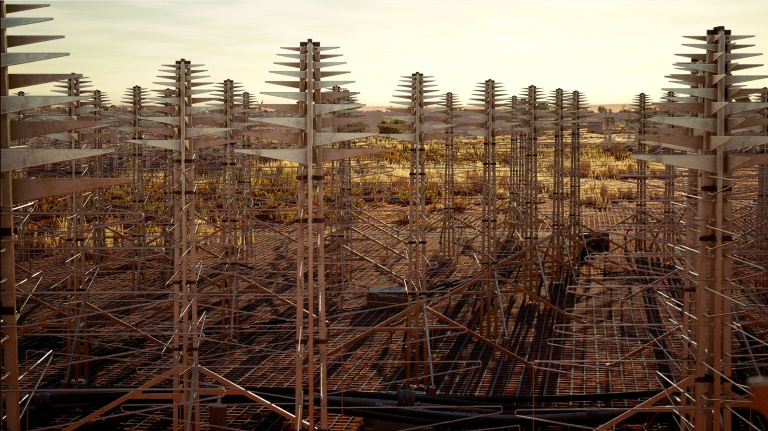
More than 130,000 Christmas tree-shaped antennas  are planned in Western Australia, to be built on the traditional lands of the Wajarri Aboriginal people.

They have dubbed the site “Inyarrimanha Ilgari Bundara”, or “sharing sky and stars”.

“We honour their willingness to share their skies and stars with us as we seek to find answers to some of the most fundamental science questions we face,” said Diamond.

The South African site will feature nearly 200 dishes in the remote Karoo region, according to the organisation.

Comparison between radio telescopes is difficult as they operate in different frequencies, according to SKA’s planners.

But they have said that the two sites will give SKA higher sensitivity over single-dish radio telescopes because its arrays are spread out, forming a much bigger “virtual dish”.

The project will help in “charting the birth and death of galaxies, searching for new types of gravitational waves and expanding the boundaries of what we know about the universe”, said telescope director Sarah Pearce.

Danny Price from the Curtin Institute of Radio Astronomy said the telescope would be extremely powerful.

“To put the sensitivity of the SKA into perspective, the SKA could detect a mobile phone in the pocket of an astronaut on Mars, 225 million kilometres away,” he said.

The SKA Observatory, headquartered at Jodrell Bank in Britain, has said the telescope should start making scientific observations by the late 2020s.

The organisation has 14 members: Britain, Australia, South Africa, Canada, China, France, Germany, India, Italy, New Zealand, Spain, Sweden, Switzerland, and The Netherlands.

Close Bitnami banner
Bitnami