AFP

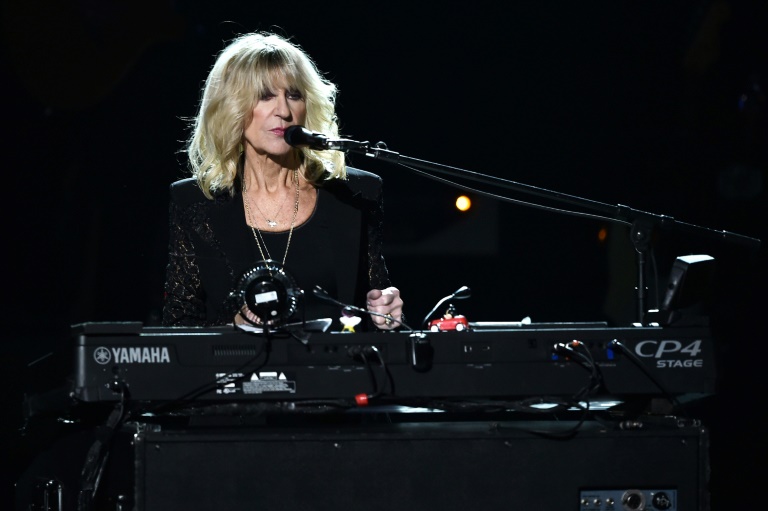
Christine McVie of Fleetwood Mac dead at 79

Christine McVie, the English hitmaker and keyboardist who found fame in the 1970s as a member of Fleetwood Mac, died Wednesday, the band and her family said. She was 79 years old.

A family statement posted on McVie’s social media said the artist died “peacefully” while hospitalized “following a short illness.”

In a separate statement from Fleetwood Mac, the legendary band called McVie — who joined the group behind “Rumours” in 1970 and penned a number of their hits — “truly one-of-a-kind, special and talented beyond measure.”

“She was the best musician anyone could have in their band and the best friend anyone could have in their life,” the statement continued. 

“She will be so very missed.”

Born Christine Anne Perfect on July 12, 1943 in England, the artist studying sculpture fell in with musicians in Britain’s blues scene and her nascent career in rock began.

In 1967 she joined the blues band Chicken Shack, which routinely came across Fleetwood Mac, and played piano as a session musician on a number of Peter Green’s songs off the latter band’s second album “Mr. Wonderful.”

She married member and bassist John McVie in 1968, and joined the group officially in 1970, becoming a mainstay member as a lyricist, lead vocalist and keyboardist.

When the group went stateside and added members Stevie Nicks and Lindsey Buckingham, McVie penned a number of hit songs off their 1975 self-titled album, including “Over My Head” and “Say You Love Me.”

Her biggest hit was “Don’t Stop,” off the seminal “Rumours” album, which also included her songs “Songbird” and “You Make Loving Fun,” a track about her affair with the band’s lighting director.

The McVies divorced by the end of the tour — a closing chapter to one of many of Fleetwood’s well-known, tumultuous love stories that inspired their hit music.

Despite its ever-changing lineup and juicy internal drama, Fleetwood Mac is one of the most popular and influential bands of the 1970s and 1980s.

McVie was inducted alongside fellow band members into the Rock & Roll Hall of Fame in 1998.
At NASA, France's Macron and US vow strong space cooperation

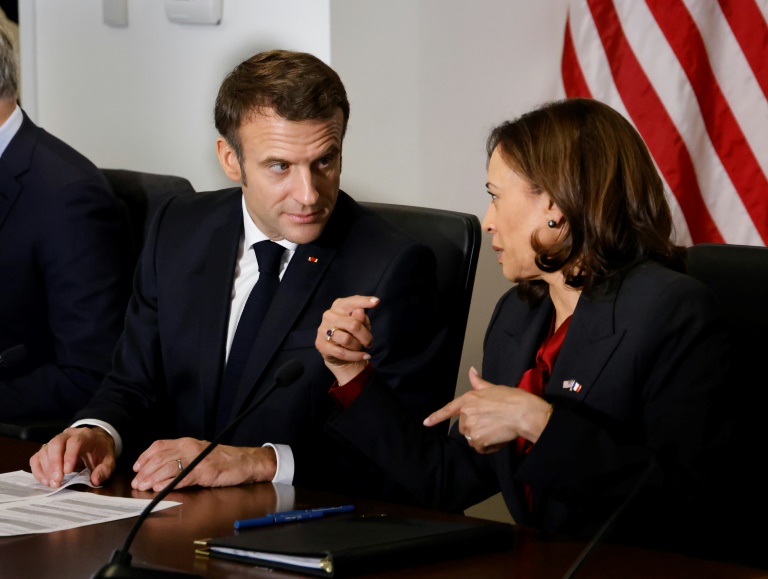
Paris and Washington pledged Wednesday to reenforce their cooperation in space, particularly on exploration and climate, during a visit by France’s Emmanuel Macron to NASA headquarters alongside US Vice President Kamala Harris.

The French president, on a state visit to the United States, highlighted the American lunar program Artemis, whose first uncrewed test mission launched in mid-November with participation of the European Space Agency (ESA).

“We are very keen” to participate, he told Harris, adding with a smile: “It’s very important for us, as long as you can propose a French leader to fly to the Moon quite rapidly,” he said, in a nod to French astronaut Thomas Pesquet, who joined Macron for the NASA visit.

The two ally nations are also collaborating on the recently launched James Webb Space Telescope, whose initial images have already shaken up our understandings of the universe.

On the climate front, Macron mentioned the scheduled December 12 liftoff of the Surface Water and Ocean Topography (SWOT) mission, a NASA satellite developed in partnership with France’s CNES which aims to monitor the levels of oceans, lakes and rivers.

“We are so very proud to work with France,” Harris, who chairs the White House’s National Space Council, said, noting how the two countries have partnered on space exploration for more than 60 years.

“In this time, we have made great strides and yet in so many ways we are beginning a new journey together,” she said.

When she visited Paris last year, the deputy to President Joe Biden joined Macron to “launch a strategic dialogue on space,” the French leader recalled.

With Macron suggesting that outer space could become a point of international contention, he and Harris stressed the importance of developing new norms of conduct in space.

France in June joined the Artemis accords promoted by the United States — a series of principles governing conduct in deep space by different nations. The policies are aimed at deconfliction of activities, implementation of safety zones, registration of space objects and coordination on emergency assistance.

On Tuesday France also pledged not to conduct anti-satellite missile tests, which cause space debris that can then threaten orbiting spacecraft and satellites. The United States made the pledge earlier this year.

US rate hikes could slow 'as soon as' December: Fed chair

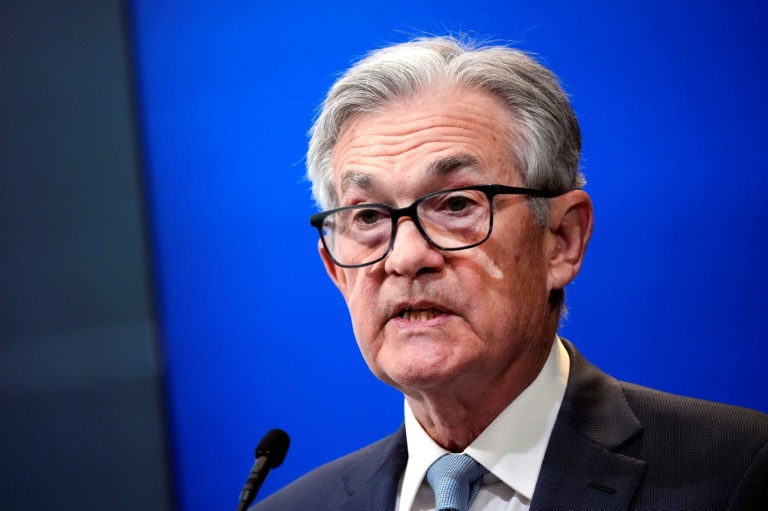
The Federal Reserve could ease its pace of interest rate hikes “as soon as” December, chair Jerome Powell said Wednesday, as the US central bank’s campaign to cool prices trickles through the world’s largest economy.

With American households grappling with soaring consumer costs, the Fed has waged an all-out battle to tame inflation that has hit levels not seen since the 1980s — while trying to avoid tipping the United States into a recession.

“The time for moderating the pace of rate increases may come as soon as the December meeting” of Fed policymakers, Powell said in a speech at the Brookings Institution think tank.

He added that the full effects of the bank’s moves are yet to be felt, but also warned that its policy will likely have to remain tight “for some time” to restore price stability.

Monetary policy affects the economy and inflation with “uncertain lags,” he said.

“Thus, it makes sense to moderate the pace of our rate increases as we approach the level of restraint that will be sufficient to bring inflation down,” he added.

He however stressed that the Fed would “stay the course until the job is done,” noting that history cautions strongly against loosening policy prematurely.

Following Powell’s remarks, US stocks rallied, with the tech-rich Nasdaq Composite Index surging more than three percent.

The central bank has raised the benchmark lending rate by 0.75 percentage points four consecutive times in recent months, out of six rate hikes this year in an aggressive effort to rein in prices.

The latest increase in November took the benchmark lending rate to 3.75-4.0 percent, the highest since January 2008.

– Soft landing ‘plausible’ –

Policymakers aim to put the brakes on spending by making it more costly to borrow, bringing demand more into balance with supply, which has been battered by global logistics problems and Russia’s war in Ukraine.

For now, there are early signs that prices are cooling, but annual consumer inflation remained at 7.7 percent in October, underscoring the heightened cost of living.

Powell said Wednesday that inflation remains “far too high,” and there is still a need to raise interest rates to a “sufficiently restrictive” level.

Despite tighter policy and slower growth in the past year, there is still not “clear progress” on easing inflation, he said.

But amid fears of a downturn, Powell said he continues to “believe that there’s a path to a soft or softish landing,” referring to a scenario where unemployment rises but the country avoids a severe recession.

“I think that’s very plausible,” he said.

In recent days, there has been a growing chorus of voices, including some Fed officials, advocating for smaller steps in coming months.

In separate remarks on Wednesday, Fed Governor Lisa Cook said “it would be prudent to move in smaller steps” going forward as well, as the Fed tries to bring inflation back to its longer-term target of two percent.

“Given the tightening already in the pipeline, I am mindful that monetary policy works with long lags,” she added.

US House approves bill to avert freight rail strike

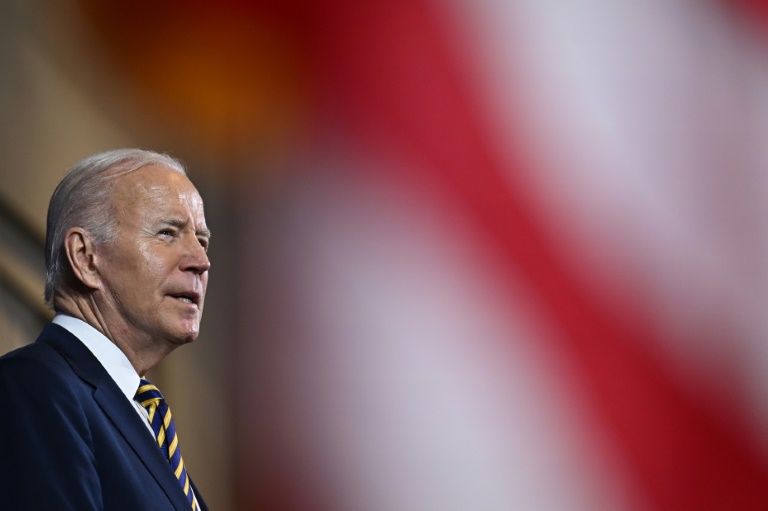
Lawmakers in the US House of Representatives voted Wednesday to prevent a potentially catastrophic freight rail strike, stepping in to break an impasse between workers and executives during a critical pre-holiday period.

The bill effectively forces hold-out unions to accept a September deal on increased wages, which a majority of unions had already agreed to. 

The House measure — which passed with decisive bipartisan support — now moves to the Senate.

Should the bill ultimately clear Congress and reach President Joe Biden’s desk for his signature, it would avert a strike that could have cost the US economy an estimated $2 billion per day.

The Biden administration had taken a hands-on approach to the long-running deadlock over a contract between organized labor and railroads, with cabinet secretaries participating in all-night negotiations in September alongside union leaders and rail executives.

After that marathon session, leaders from the two sides announced a tentative agreement.

Since that time, members of eight of the 12 rail unions approved the deal, while four voted it down.

The agreement includes a 24 percent pay increase for workers. But critics in organized labor have slammed a lack of guaranteed paid sick time, an omission that has been seen as evidence of “unchecked corporate greed,” as one leading union put it.

The failure of the agreement to win universal approval among the unions set the stage for a potential strike on December 9, putting the White House in an awkward spot.

Biden, who has been dubbed “Union Joe” for his affinity for organized labor, called for congressional action on Monday night.

“As a proud pro-labor president, I am reluctant to override the ratification procedures and the views of those who voted against the agreement,” Biden said. 

“But in this case — where the economic impact of a shutdown would hurt millions of other working people and families — I believe Congress must use its powers to adopt this deal.”

Since Monday, at least two of the four unions that voted down the agreement have publicly criticized Biden’s stance.

The Brotherhood of Maintenance of Way Employees, part of the Teamsters, said it was “deeply disappointed” by the president’s action, while the Brotherhood of Railroad Signalmen also expressed disappointment as it encouraged the Biden administration “to stick to its pro-worker roots” and insist that guaranteed paid sick leave be included in the deal.

Both unions backed a separate resolution championed by House Democrat Donald Payne Jr. to add seven days of paid sick leave to the agreement.

Payne, in proposing the measure, described it as “about fairness” in light of the sacrifices made by rail workers and other essential workers during the pandemic.

“Without paid sick time, railroad workers are forced to make a choice between their health, or the health of their families, and their paychecks,” Payne said.

But Republican congressman Sam Graves said the existing agreement was “more than fair for rail workers” as he urged lawmakers to reject adding sick leave to the pact.

Graves said he was voting on the resolution to avert an “economically ruinous” rail strike as he blamed the Biden administration for the issue, saying it had “failed” to lead on the impasse.

US House approves bill to avert freight rail strike

Lawmakers in the US House of Representatives voted Wednesday to prevent a potentially catastrophic freight rail strike, stepping in to break an impasse between workers and executives during a critical pre-holiday period.

The bill effectively forces hold-out unions to accept a September deal on increased wages, which a majority of unions had already agreed to. 

The House measure — which passed with decisive bipartisan support — now moves to the Senate.

Should the bill ultimately clear Congress and reach President Joe Biden’s desk for his signature, it would avert a strike that could have cost the US economy an estimated $2 billion per day.

The Biden administration had taken a hands-on approach to the long-running deadlock over a contract between organized labor and railroads, with cabinet secretaries participating in all-night negotiations in September alongside union leaders and rail executives.

After that marathon session, leaders from the two sides announced a tentative agreement.

Since that time, members of eight of the 12 rail unions approved the deal, while four voted it down.

The agreement includes a 24 percent pay increase for workers. But critics in organized labor have slammed a lack of guaranteed paid sick time, an omission that has been seen as evidence of “unchecked corporate greed,” as one leading union put it.

The failure of the agreement to win universal approval among the unions set the stage for a potential strike on December 9, putting the White House in an awkward spot.

Biden, who has been dubbed “Union Joe” for his affinity for organized labor, called for congressional action on Monday night.

“As a proud pro-labor president, I am reluctant to override the ratification procedures and the views of those who voted against the agreement,” Biden said. 

“But in this case — where the economic impact of a shutdown would hurt millions of other working people and families — I believe Congress must use its powers to adopt this deal.”

Since Monday, at least two of the four unions that voted down the agreement have publicly criticized Biden’s stance.

The Brotherhood of Maintenance of Way Employees, part of the Teamsters, said it was “deeply disappointed” by the president’s action, while the Brotherhood of Railroad Signalmen also expressed disappointment as it encouraged the Biden administration “to stick to its pro-worker roots” and insist that guaranteed paid sick leave be included in the deal.

Both unions backed a separate resolution championed by House Democrat Donald Payne Jr. to add seven days of paid sick leave to the agreement.

Payne, in proposing the measure, described it as “about fairness” in light of the sacrifices made by rail workers and other essential workers during the pandemic.

“Without paid sick time, railroad workers are forced to make a choice between their health, or the health of their families, and their paychecks,” Payne said.

But Republican congressman Sam Graves said the existing agreement was “more than fair for rail workers” as he urged lawmakers to reject adding sick leave to the pact.

Graves said he was voting on the resolution to avert an “economically ruinous” rail strike as he blamed the Biden administration for the issue, saying it had “failed” to lead on the impasse.

Crabs and tea cups: UK show lifts the lid on Covid vaccine race

From a scientist’s laptop to the syringe used to inject the UK’s first Covid vaccine dose, an exhibition that opened Wednesday in London recounts the quest to produce a coronavirus jab through objects.

The “Injecting Hope” show at the Science Museum “explores the worldwide effort to develop vaccines at pandemic speed”, looking at key moments in their design, trial, manufacture and rollout, says deputy director Julia Knights.

Items on display include artworks, notes taken by UK vaccine chief Kate Bingham during early meetings to decide the country’s strategy, and the syringe used to administer its first dose.

Machines used to manufacture the vaccine are also on show along with personal artefacts of those at the heart of the battle to beat the virus.

They include the laptop and mug that Teresa Lambe, co-developer of the Oxford University/AstraZeneca vaccine, relied upon during a weekend of intense work to calculate what its chemical composition should be.

“Once they had an understanding of the genetic make-up of this new virus, she essentially sat at home, on her laptop, in her pyjamas, drinking lots of cups of tea, designing a vaccine,” explained exhibition curator Stewart Emmens.

“We have a laptop, we have a mug and we have a T-shirt on display here. It’s nice, in amongst all the science, to really drive it home that there are people behind this, just normal people doing their jobs.”

The museum began collecting objects related to Covid in February 2020 as “objects associated with epidemics and pandemics are largely missing from historic collections”, said Emmens.

– ‘Crucial’ crabs –

The first section features news footage of lockdowns and images of deserted capital cities, empty shelves, at-home schoolchildren and food delivery apps, taking visitors back to the pre-vaccine world.

After exploring the development and testing of the products, visitors then get a glimpse into the unprecedented plans to administer the vaccine to Britain’s 67 million citizens.

Along with Bingham’s scribbled notes are maps integral to the UK’s successful rollout.

“When we collected these, they were just plastered on the walls of NHS headquarters,” explained Emmens.

“Most people would think… vaccinating countries would be a very much a digital project, very much a big data, number-crunching exercise. 

“But here we have these physical maps, which were used quite early to work out where best to place vaccine centres.”

He also hopes that the show will reassure those nervous about taking the vaccine due to its speedy arrival on the market.

“Nothing focuses the mind like a global pandemic,” said Emmens. 

“The vaccines were following the same processes of approval, and trialing and testing as would normally be the case,” he said.

“But very cleverly, things were streamlined, overlapped in a way that gave the same results as you would get normally, without cutting corners.”

Sitting incongruously among the gleaming machines are also a collection of crabs.

“We do have some examples of horseshoe crabs within the exhibition, which many visitors will be very surprised by,” said Emmens.

The blood from the horseshoe crabs is highly sensitive to bacterial contamination, and is used to make sure the vaccine and the vials that carry it are clean, he explained.

“So they’ve played a… crucial if unlikely role in the vaccine story.”

Brazilian Amazon deforestation falls, but up 60% under Bolsonaro

Deforestation in the Brazilian Amazon destroyed an area bigger than Qatar in the 12 months through July, according to official figures released Wednesday, which showed a decline from the year before — but a sharp increase overall under outgoing President Jair Bolsonaro.

In the latest grim news on the world’s biggest rainforest, satellite monitoring showed 11,568 square kilometers (4,466 square miles) of forest cover was destroyed in the Brazilian Amazon from August 2021 to July 2022, according to national space agency INPE’s annual deforestation tracking program, PRODES.

The figure was a decrease of 11.3 percent from the year before, when INPE detected 13,038 square kilometers of deforestation — a 15-year high.

But it closed out four years of what environmentalists call disastrous management of the Amazon under the far-right Bolsonaro, whose successor, veteran leftist Luiz Inacio Lula da Silva, has vowed to work toward zero deforestation when he takes office on January 1.

Under agribusiness ally Bolsonaro, average annual deforestation rose by 59.5 percent from the previous four years, and by 75.5 percent from the previous decade, according to INPE figures.

“The Bolsonaro government was a forest-destroying machine… The only good news is that it’s about to end,” said Marcio Astrini, executive secretary of the Climate Observatory, a coalition of environmental groups.

“The devastation remains out of control. Jair Bolsonaro will hand his successor a filthy legacy of surging deforestation and an Amazon in flames,” he said in a statement, urging ex-president Lula (2003-2010) — who has faced criticism over his own environmental record — to show “zero tolerance” for environmental crimes.

Experts say the vast majority of the clear-cutting and fires erasing the Amazon is aimed at turning rainforest into farmland — especially for cattle ranches in Brazil, the world’s top beef exporter.

Activists accuse Bolsonaro of gutting Brazil’s environmental protection programs and encouraging the destruction with his pro-agribusiness and pro-mining policies.

“The Amazon is getting closer and closer to a tipping point,” Mariana Napolitano, science director at the World Wildlife Fund (WWF) Brazil office, said in a statement.

“Significantly reducing deforestation… is imperative for humankind in the face of the twin climate and nature crises the world is facing.”

Germany, Norway seek NATO-led hub for key undersea structures

Germany and Norway want to start a NATO-led alliance to protect critical underwater infrastructure, their leaders said on Wednesday, weeks after explosions hit two key gas pipelines in the fallout from the war in Ukraine.

“We are in the process of asking the NATO Secretary General to set up a coordination office for the protection of underwater infrastructure,” German Chancellor Olaf Scholz told a press conference in Berlin.

“We take the protection of our critical infrastructure very seriously and nobody should believe that attacks will remain without consequences,” he said.

Norwegian Prime Minister Jonas Gahr Store said the alliance would be “an informal initiative to exchange between civilian and also military actors” with NATO providing “a centre, a coordination point”.

Underwater cables and pipelines were “arteries of the modern economy” and it was necessary to create “a coordinated joint effort to ensure security for this infrastructure”, he said.

Scholz said he and Store would propose the plan to NATO Secretary General Jens Stoltenberg, who is due in Berlin for a security conference.

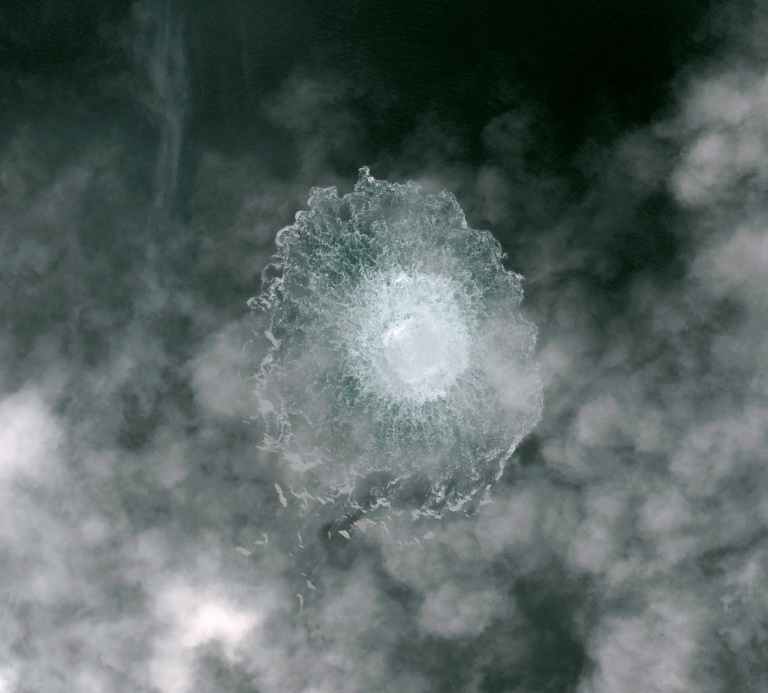
The Nord Stream 1 and 2 gas pipelines off the Danish island of Bornholm were targeted by two huge explosions at the end of September.

The pipelines, which connect Russia to Germany, had been at the centre of geopolitical tensions as Moscow cut gas supplies to Europe in suspected retaliation to Western sanctions over the invasion of Ukraine.

Although they were not in operation when the leaks occurred, they both still contained gas which spewed up through the water and into the atmosphere.

Russia and Western countries, particularly the United States, have traded bitter barbs over who is responsible for the blasts.

Several European countries have since taken steps to increase security around critical infrastructure.

The G7 interior ministers warned earlier this month at a meeting in Germany that the Nord Stream explosions had highlighted “the need to better protect our critical infrastructure”.

Airbus pays 15.9 mn euros to close French corruption probe

A French judge on Wednesday allowed European aerospace firm Airbus to pay 15.9 million euros ($16.4 million) to avoid a corruption probe into aircraft deals in Libya and Kazakhstan between 2006 and 2011.

Prosecutors from France’s national financial crime unit (PNF), which reached the deal with Airbus earlier this month, said the fine was “fair and appropriate”.

They had earlier highlighted the “repeated character of corrupt activities” by the plane giant, but said the firm had cooperated on the “dated” allegations.

Making the payment — the same amount paid to go-betweens during the suspect aircraft deals — allows Airbus to avoid acknowledging criminal activity, meaning it can continue to bid for public contracts.

The company in January 2020 reached a plea bargain to pay a total of 3.6 billion euros ($3.7 billion at current rates) in fines to Britain, France and the United States to settle corruption claims over several contracts involving middlemen.

But the company said earlier this month that the Libya and Kazakhstan probe had not been covered by that agreement “because of procedural issues”.

The payments dated back to a “bygone era” at Airbus, PNF chief Jean-Francois Bohnert said.

In one case, investigators looking into suspected illegal financing by Libya of Nicolas Sarkozy’s 2007 campaign for the French presidency noted a 2006 sale of 12 Airbus planes to the regime of Moamer Kadhafi.

Three weeks after the deal was closed, a transfer of two million euros was made to a known middleman, Alexandre Djouhri, by a former Airbus executive who was charged last March.

Sarkozy, who has faced a string of legal inquiries since leaving office in 2012, has denied any illegal campaign financing from Libya.

The other corruption inquiry involves suspected kickbacks for several contracts between France and Kazakhstan in 2009 and 2010, while Sarkozy was president.

The deals included the purchase of two satellites from Airbus’ former Astrium unit, where investigators discovered traces of an 8.8-million-euro payment to a Singapore account held by a Hong Kong-based offshore vehicle, Caspian Corp.

Caspian is linked to a Tunisian middleman, Lyes Ben Chedli, who was charged in July 2021 along with a former Airbus executive, Olivier Brun.

US Democrats elect Hakeem Jeffries as first Black congressional party leader

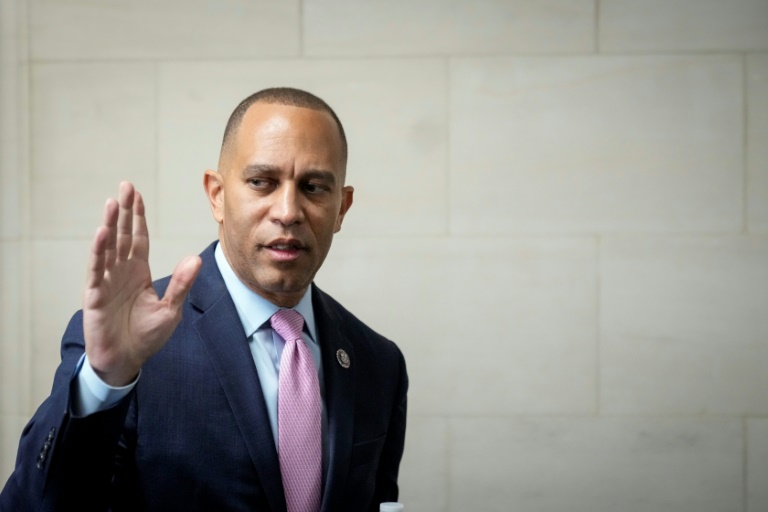
Democratic lawmakers on Wednesday chose Hakeem Jeffries to succeed Nancy Pelosi as their leader in the House of Representatives, making him the first Black person to ever lead a US congressional caucus.

The 52-year-old, who has been in Democratic leadership since 2019, ran unopposed in the closed-door vote, which also saw new faces elected to the number two and three positions.

With Jeffries 30 years Pelosi’s junior, the New York congressman’s election marks a generational shift for the Democrats.

“This new generation of leaders reflects the vibrancy and diversity of our great nation,” Pelosi said in a congratulatory statement after the Wednesday vote.

Pelosi announced earlier in November she would step down from her post as leader in January, when her term as speaker of the House ends and Republicans take control of the chamber after their midterm election wins.

The 82-year-old, who was first elected as congressional party leader in 2003 and became the first woman House speaker in 2007, will stay on as representative for her northern California district.

Jeffries will become leader with his party in the minority after Democrats lost control of the lower chamber in the November 8 midterm elections, giving up their two-year total control of government. 

Even with a smaller majority than they had hoped for, Republicans will be able to use their new-found power to block President Joe Biden’s legislative agenda.

They have said they plan to initiate several investigations, including of Biden’s handling of the Covid pandemic and the United States’ withdrawal from Afghanistan.

Democrats, however, will keep control of the Senate, with a divided government meaning neither side will have a clear path to push through their legislative priorities.

Close Bitnami banner
Bitnami