AFP

Macron welcomed as 'vital ally' as US state visit ramps up

France’s President Emmanuel Macron underlined US-French cooperation with a tour of NASA headquarters Wednesday, but tough talks on trade and China are expected when he meets Joe Biden for the main part of a rare state visit.

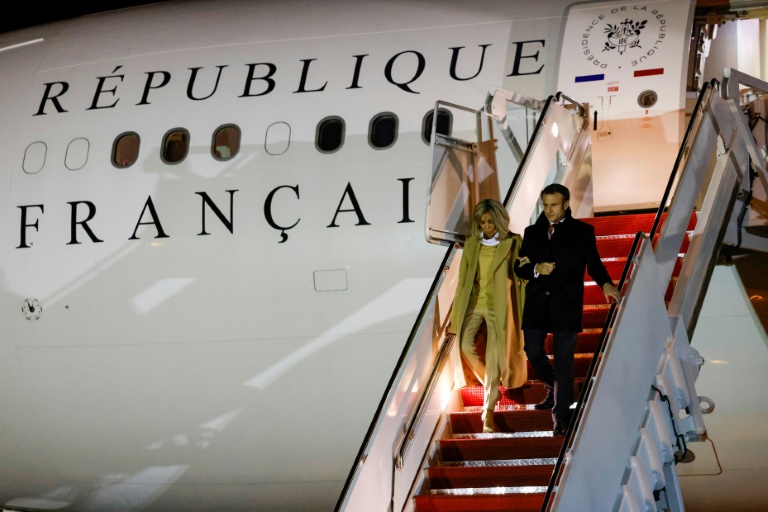
The French leader, who arrived late Tuesday with his wife Brigitte, joined Vice President Kamala Harris at the NASA facility in Washington to discuss cooperation in space.

“France is a vital ally to the United States and this visit demonstrates the strength of our partnership, our friendship…, one that is based on shared democratic principles and values,” Harris told Macron.

Macron will stay in the high-tech sphere later when he attends a meeting on civilian nuclear energy.

The busy schedule, which also includes a working lunch to discuss biodiversity and clean energy, and a visit to the historic Arlington National Cemetery, illustrates the ambitions set for the trip — the first formal state visit by a foreign leader to Washington since Biden took office nearly two years ago.

The core of the visit will be on Thursday, including a White House military honor guard, Oval Office talks with Biden, a joint press conference and a banquet where Grammy-award-winning American musician Jon Batiste will perform.

Compared to Macron’s awkward experience as the guest of Donald Trump in 2018, this trip will be a carefully choreographed display of transatlantic friendship.

– EU-US trade tensions –

Tensions, however, are rising over trade as Europeans nervously watch the rollout of Biden’s signature green industry policy — the Inflation Reduction Act.

The IRA is set to pump billions of dollars into climate-friendly technologies, with strong backing for American-made products. A similar effort is being put into microchip manufacturing.

Europeans fear an unfair US advantage in the sectors just as they are reeling from the economic consequences of the war in Ukraine and Western attempts to end reliance on Russian energy supplies.

Talk in Europe is now increasingly on whether the bloc should respond with its own subsidies and championing of homegrown products, effectively starting a trade war.

Another gripe in Europe is the high cost of US liquid natural gas exports — which have surged to help compensate for canceled Russian deliveries.

White House National Security Council spokesman John Kirby told reporters that the US side wants to defuse tensions, promising “transparent, forthright” discussions.

“We certainly will stay open to listening” to the EU concerns, he said.

– Strategizing on China, Ukraine –

The breadth of Macron’s entourage — including the foreign, defense and finance ministers, as well as business leaders and astronauts — illustrates the importance Paris has put on the visit.

At the White House, however, a senior official said the main goal is to nurture the “personal relationship, the alliance relationship” with France — and between Biden and Macron.

That more modest-sounding goal will include improving coordination on helping Ukraine to repel Russia and the even more vexing question of how to manage the rise of superpower China.

“We are not allies on the same page,” one adviser to Macron told AFP, forecasting “challenging” talks with Biden.

Despite his strong support for Kyiv, Macron’s insistence on continuing to maintain dialogue with Russian President Vladimir Putin has irked American diplomats.

The China question — with Washington pursuing a more hawkish tone and EU powers trying to find a middle ground — is unlikely to see much progress.

“Europe has since 2018 its own, unique strategy for relations with China,” tweeted French embassy spokesman Pascal Confavreux in Washington.

Kirby said China will be “very high on the agenda” this week but stressed that both countries share a broad approach.

“We believe that not only France, but every other member of the G7 — frankly, our NATO allies too — see the threats and challenges posed by China in the same way.”

Macron welcomed as 'vital ally' as US state visit ramps up

France’s President Emmanuel Macron underlined US-French cooperation with a tour of NASA headquarters Wednesday, but tough talks on trade and China are expected when he meets Joe Biden for the main part of a rare state visit.

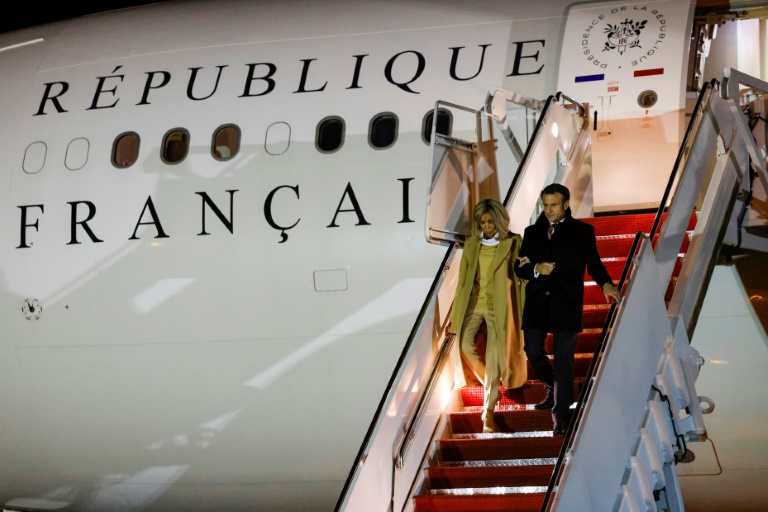
The French leader, who arrived late Tuesday with his wife Brigitte, joined Vice President Kamala Harris at the NASA facility in Washington to discuss cooperation in space.

“France is a vital ally to the United States and this visit demonstrates the strength of our partnership, our friendship…, one that is based on shared democratic principles and values,” Harris told Macron.

Macron will stay in the high-tech sphere later when he attends a meeting on civilian nuclear energy.

The busy schedule, which also includes a working lunch to discuss biodiversity and clean energy, and a visit to the historic Arlington National Cemetery, illustrates the ambitions set for the trip — the first formal state visit by a foreign leader to Washington since Biden took office nearly two years ago.

The core of the visit will be on Thursday, including a White House military honor guard, Oval Office talks with Biden, a joint press conference and a banquet where Grammy-award-winning American musician Jon Batiste will perform.

Compared to Macron’s awkward experience as the guest of Donald Trump in 2018, this trip will be a carefully choreographed display of transatlantic friendship.

– EU-US trade tensions –

Tensions, however, are rising over trade as Europeans nervously watch the rollout of Biden’s signature green industry policy — the Inflation Reduction Act.

The IRA is set to pump billions of dollars into climate-friendly technologies, with strong backing for American-made products. A similar effort is being put into microchip manufacturing.

Europeans fear an unfair US advantage in the sectors just as they are reeling from the economic consequences of the war in Ukraine and Western attempts to end reliance on Russian energy supplies.

Talk in Europe is now increasingly on whether the bloc should respond with its own subsidies and championing of homegrown products, effectively starting a trade war.

Another gripe in Europe is the high cost of US liquid natural gas exports — which have surged to help compensate for canceled Russian deliveries.

White House National Security Council spokesman John Kirby told reporters that the US side wants to defuse tensions, promising “transparent, forthright” discussions.

“We certainly will stay open to listening” to the EU concerns, he said.

– Strategizing on China, Ukraine –

The breadth of Macron’s entourage — including the foreign, defense and finance ministers, as well as business leaders and astronauts — illustrates the importance Paris has put on the visit.

At the White House, however, a senior official said the main goal is to nurture the “personal relationship, the alliance relationship” with France — and between Biden and Macron.

That more modest-sounding goal will include improving coordination on helping Ukraine to repel Russia and the even more vexing question of how to manage the rise of superpower China.

“We are not allies on the same page,” one adviser to Macron told AFP, forecasting “challenging” talks with Biden.

Despite his strong support for Kyiv, Macron’s insistence on continuing to maintain dialogue with Russian President Vladimir Putin has irked American diplomats.

The China question — with Washington pursuing a more hawkish tone and EU powers trying to find a middle ground — is unlikely to see much progress.

“Europe has since 2018 its own, unique strategy for relations with China,” tweeted French embassy spokesman Pascal Confavreux in Washington.

Kirby said China will be “very high on the agenda” this week but stressed that both countries share a broad approach.

“We believe that not only France, but every other member of the G7 — frankly, our NATO allies too — see the threats and challenges posed by China in the same way.”
Archeologists find ancient Peruvian fresco, lost for a century

Archeologists have rediscovered a pre-Hispanic fresco depicting mythological scenes in northern Peru that they had only seen in black and white photographs that were more than a century old.

“It’s an exceptional discovery, first of all, because it is rare to unearth wall paintings of such quality in pre-Colombian archeology,” said Sam Ghavami, the Swiss archeologist who led excavations that uncovered the mural in October.

Ghavami spent four years looking for the rock painting, which he believes could be around 1,000 years old, with a team of Peruvian students.

“The composition of this painting is unique in the history of mural art in pre-Hispanic Peru,” added the archaeologist, who trained at the University of Freiburg in Germany.

The fresco forms part of the Huaca Pintada temple, which belonged to the Moche civilization that flourished between the 1st and 8th centuries, and venerated the Moon, the rain, iguanas, and spiders.

The uncovered mural is about 30 meters (98 feet) long, and its images in blue, brown, red, white, and mustard yellow paint remain extremely well preserved.

In one section, a procession of warriors can be seen heading toward a birdlike deity.

The painted images “appear to be inspired by the idea of a sacred hierarchy built around a cult of ancestors and their intimate links with the forces of nature,” said Ghavami.

He told AFP that deciphering the mural’s message would form part of his research, but he believes it “could be interpreted as a metaphorical image of the political and religious order of the region’s ancient inhabitants.”

The discovery is also unusual as it shows a mixture of styles and elements of two pre-Incan cultures: the Moche and the Lambayeque, who lived on Peru’s north coast between 900 and 1350 AD.

The mural’s existence was only known via black and white photos taken in 1916 by the German ethnologist Hans Heinrich Bruning, who was living in Peru when he heard of the site after treasure hunters tried to loot it, but found nothing of value.

As the years went on, thick foliage took over, and no one had tried to look for the paintings until it piqued Ghavami’s interest and he went in search of the long-lost fresco.

However, first he had a long battle to obtain permission from the family who own the land where the mural was found.

Stocks diverge ahead of next Fed rate signal

Stock markets fluctuated on Wednesday as eurozone inflation slowed for the first time in 17 months and investors awaited fresh signals about the US central bank’s interest rate plans.

Markets were also buoyed by hopes that China will further ease its strict Covid containment measures following widespread protests, though gains were tempered by leaders’ warnings of a crackdown on dissent.

Traders were awaiting a key speech by Federal Reserve chief Jerome Powell, with many expecting him to outline plans for future interest rate hikes to tackle high US consumer prices.

“Will he adopt a more hawkish-minded tone like he did after the last FOMC (Fed policy) meeting or will he have a less hawkish tone?” said Briefing.com analyst Patrick O’Hare.

“His tone is going to move the market’s thinking with respect to the path of monetary policy,” he said.

Powell was due to speak after government data on Wednesday showed that the US economy grew more than initially reported in the third quarter, reflecting upward revisions to retail spending and some forms of investment.

London, Paris and Frankfurt closed in the green, but the Down Jones lost around 0.4 percent.

Eurozone inflation eased to 10 percent in November, the first drop in 17 months, according to official data.

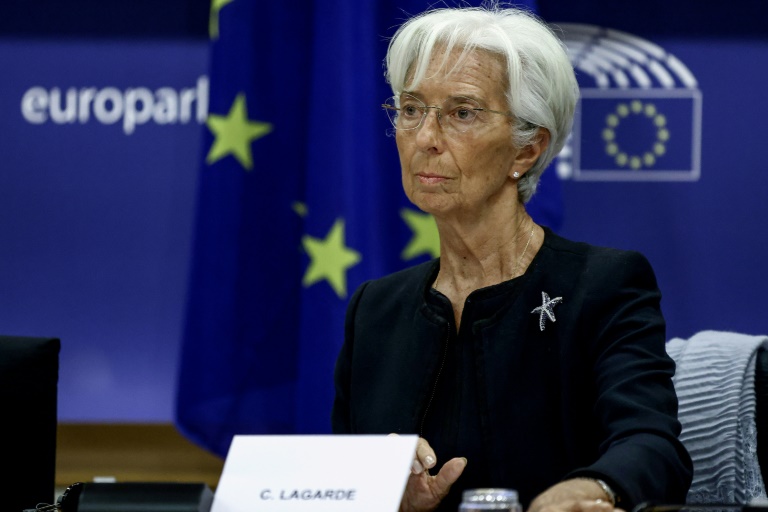
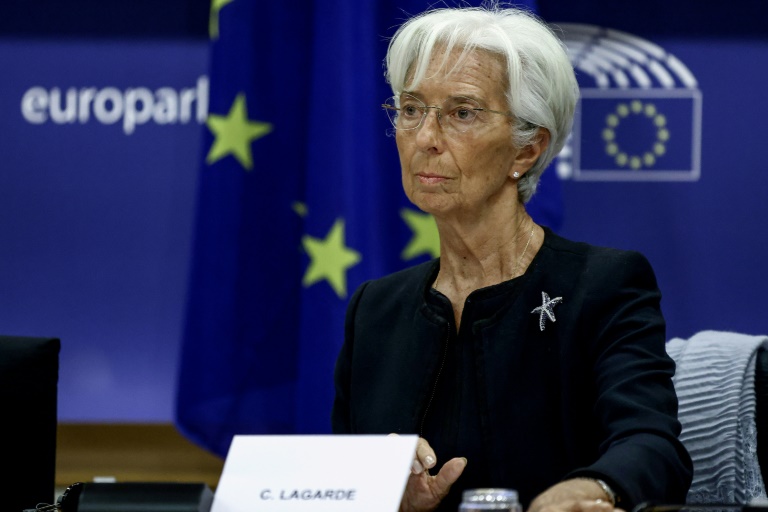
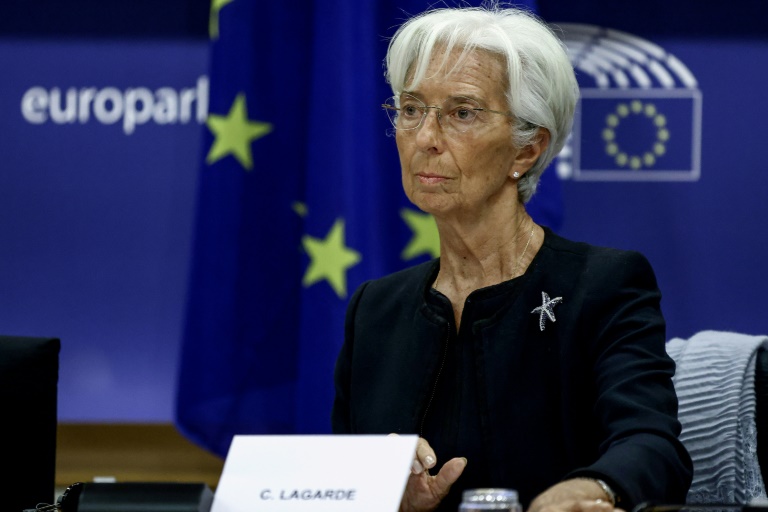
But this may not lead to an easing of European Central Bank policy as ECB president Christine Lagarde has expressed scepticism that inflation has peaked.

Inflation in the bloc had hit a record 10.6 percent in October, boosted also by soaring energy and food bills in the wake of Russia’s war in Ukraine.

“Euro area inflation figures surprised on the downside, providing an early indication that the record price pressures seen in recent months may have peaked,” said CEBR economist Karl Thompson.

However, he warned that “inflation is nonetheless likely to remain elevated throughout 2023” and forecast rising rates next month.

The inflation figure was still “extraordinarily high” but offered “hope that inflation may have peaked and the deceleration could be faster than anticipated”, said Craig Erlam, senior market analyst at OANDA.

Global central banks, including the Fed, have ramped up borrowing costs this year in a bid to dampen red-hot inflation that was fuelled also as economies reopened from the pandemic.

– ‘Intensifying headwinds’ –

In Asia, stocks mostly rebounded as investors looked past weekend demonstrations in China after officials announced moves aimed at softening the zero-Covid strategy.

But in a sign that the leadership was determined to maintain its authority, the country’s top security body called for a “crackdown” against “hostile forces”.

New clashes broke out in China’s southern city of Guangzhou on Tuesday night and into Wednesday, according to witnesses and social media footage verified by AFP.

Data showing China’s factory activity shrank further in November underscored the impact the zero-Covid approach has had on the world’s second-biggest economy.

“The headwinds facing China are intensifying and the protests of recent days could make it even more challenging to navigate… Even the best-case scenario is one of significant turbulence,” added Erlam.

Elsewhere, oil prices jumped by around three percent, with the international benchmark, Brent, reaching almost $87 per barrel.

– Key figures around 1630 GMT –

New York – Dow: DOWN 0.4 percent at 33,717.64 points

London – FTSE 100: UP 1.0 percent at 7,587.51 (close)

Frankfurt – DAX: UP 0.3 percent at 14,397.04 (close)

Paris – CAC 40: UP 1.0 percent at 6,738.55 (close)

EURO STOXX 50: UP 0.8 percent at 3,964.72

Tokyo – Nikkei 225: DOWN 0.2 percent at 27,968.99 (close)

Hong Kong – Hang Seng Index: UP 2.2 percent at 18,597.23 (close)

Shanghai – Composite: UP 0.1 percent at 3,151.34 (close)

Euro/dollar: DOWN at $1.0318 from $1.0330 on Tuesday

Dollar/yen: UP at 139.36 yen from 138.63 yen

Pound/dollar: DOWN at $1.1937 from $1.1952

Euro/pound: UP at 86.43 pence from 86.42 pence

Brent North Sea crude: UP 3.1 percent at $86.82 per barrel

West Texas Intermediate: UP 3.0 percent at $80.51 per barrel

Stocks diverge ahead of next Fed rate signal

Stock markets fluctuated on Wednesday as eurozone inflation slowed for the first time in 17 months and investors awaited fresh signals about the US central bank’s interest rate plans.

Markets were also buoyed by hopes that China will further ease its strict Covid containment measures following widespread protests, though gains were tempered by leaders’ warnings of a crackdown on dissent.

Traders were awaiting a key speech by Federal Reserve chief Jerome Powell, with many expecting him to outline plans for future interest rate hikes to tackle high US consumer prices.

“Will he adopt a more hawkish-minded tone like he did after the last FOMC (Fed policy) meeting or will he have a less hawkish tone?” said Briefing.com analyst Patrick O’Hare.

“His tone is going to move the market’s thinking with respect to the path of monetary policy,” he said.

Powell was due to speak after government data on Wednesday showed that the US economy grew more than initially reported in the third quarter, reflecting upward revisions to retail spending and some forms of investment.

London, Paris and Frankfurt closed in the green, but the Down Jones lost around 0.4 percent.

Eurozone inflation eased to 10 percent in November, the first drop in 17 months, according to official data.

But this may not lead to an easing of European Central Bank policy as ECB president Christine Lagarde has expressed scepticism that inflation has peaked.

Inflation in the bloc had hit a record 10.6 percent in October, boosted also by soaring energy and food bills in the wake of Russia’s war in Ukraine.

“Euro area inflation figures surprised on the downside, providing an early indication that the record price pressures seen in recent months may have peaked,” said CEBR economist Karl Thompson.

However, he warned that “inflation is nonetheless likely to remain elevated throughout 2023” and forecast rising rates next month.

The inflation figure was still “extraordinarily high” but offered “hope that inflation may have peaked and the deceleration could be faster than anticipated”, said Craig Erlam, senior market analyst at OANDA.

Global central banks, including the Fed, have ramped up borrowing costs this year in a bid to dampen red-hot inflation that was fuelled also as economies reopened from the pandemic.

– ‘Intensifying headwinds’ –

In Asia, stocks mostly rebounded as investors looked past weekend demonstrations in China after officials announced moves aimed at softening the zero-Covid strategy.

But in a sign that the leadership was determined to maintain its authority, the country’s top security body called for a “crackdown” against “hostile forces”.

New clashes broke out in China’s southern city of Guangzhou on Tuesday night and into Wednesday, according to witnesses and social media footage verified by AFP.

Data showing China’s factory activity shrank further in November underscored the impact the zero-Covid approach has had on the world’s second-biggest economy.

“The headwinds facing China are intensifying and the protests of recent days could make it even more challenging to navigate… Even the best-case scenario is one of significant turbulence,” added Erlam.

Elsewhere, oil prices jumped by around three percent, with the international benchmark, Brent, reaching almost $87 per barrel.

– Key figures around 1630 GMT –

New York – Dow: DOWN 0.4 percent at 33,717.64 points

London – FTSE 100: UP 1.0 percent at 7,587.51 (close)

Frankfurt – DAX: UP 0.3 percent at 14,397.04 (close)

Paris – CAC 40: UP 1.0 percent at 6,738.55 (close)

EURO STOXX 50: UP 0.8 percent at 3,964.72

Tokyo – Nikkei 225: DOWN 0.2 percent at 27,968.99 (close)

Hong Kong – Hang Seng Index: UP 2.2 percent at 18,597.23 (close)

Shanghai – Composite: UP 0.1 percent at 3,151.34 (close)

Euro/dollar: DOWN at $1.0318 from $1.0330 on Tuesday

Dollar/yen: UP at 139.36 yen from 138.63 yen

Pound/dollar: DOWN at $1.1937 from $1.1952

Euro/pound: UP at 86.43 pence from 86.42 pence

Brent North Sea crude: UP 3.1 percent at $86.82 per barrel

West Texas Intermediate: UP 3.0 percent at $80.51 per barrel

Stocks diverge ahead of next Fed rate signal

Stock markets fluctuated on Wednesday as eurozone inflation slowed for the first time in 17 months and investors awaited fresh signals about the US central bank’s interest rate plans.

Markets were also buoyed by hopes that China will further ease its strict Covid containment measures following widespread protests, though gains were tempered by leaders’ warnings of a crackdown on dissent.

Traders were awaiting a key speech by Federal Reserve chief Jerome Powell, with many expecting him to outline plans for future interest rate hikes to tackle high US consumer prices.

“Will he adopt a more hawkish-minded tone like he did after the last FOMC (Fed policy) meeting or will he have a less hawkish tone?” said Briefing.com analyst Patrick O’Hare.

“His tone is going to move the market’s thinking with respect to the path of monetary policy,” he said.

Powell was due to speak after government data on Wednesday showed that the US economy grew more than initially reported in the third quarter, reflecting upward revisions to retail spending and some forms of investment.

London, Paris and Frankfurt closed in the green, but the Down Jones lost around 0.4 percent.

Eurozone inflation eased to 10 percent in November, the first drop in 17 months, according to official data.

But this may not lead to an easing of European Central Bank policy as ECB president Christine Lagarde has expressed scepticism that inflation has peaked.

Inflation in the bloc had hit a record 10.6 percent in October, boosted also by soaring energy and food bills in the wake of Russia’s war in Ukraine.

“Euro area inflation figures surprised on the downside, providing an early indication that the record price pressures seen in recent months may have peaked,” said CEBR economist Karl Thompson.

However, he warned that “inflation is nonetheless likely to remain elevated throughout 2023” and forecast rising rates next month.

The inflation figure was still “extraordinarily high” but offered “hope that inflation may have peaked and the deceleration could be faster than anticipated”, said Craig Erlam, senior market analyst at OANDA.

Global central banks, including the Fed, have ramped up borrowing costs this year in a bid to dampen red-hot inflation that was fuelled also as economies reopened from the pandemic.

– ‘Intensifying headwinds’ –

In Asia, stocks mostly rebounded as investors looked past weekend demonstrations in China after officials announced moves aimed at softening the zero-Covid strategy.

But in a sign that the leadership was determined to maintain its authority, the country’s top security body called for a “crackdown” against “hostile forces”.

New clashes broke out in China’s southern city of Guangzhou on Tuesday night and into Wednesday, according to witnesses and social media footage verified by AFP.

Data showing China’s factory activity shrank further in November underscored the impact the zero-Covid approach has had on the world’s second-biggest economy.

“The headwinds facing China are intensifying and the protests of recent days could make it even more challenging to navigate… Even the best-case scenario is one of significant turbulence,” added Erlam.

Elsewhere, oil prices jumped by around three percent, with the international benchmark, Brent, reaching almost $87 per barrel.

– Key figures around 1630 GMT –

New York – Dow: DOWN 0.4 percent at 33,717.64 points

London – FTSE 100: UP 1.0 percent at 7,587.51 (close)

Frankfurt – DAX: UP 0.3 percent at 14,397.04 (close)

Paris – CAC 40: UP 1.0 percent at 6,738.55 (close)

EURO STOXX 50: UP 0.8 percent at 3,964.72

Tokyo – Nikkei 225: DOWN 0.2 percent at 27,968.99 (close)

Hong Kong – Hang Seng Index: UP 2.2 percent at 18,597.23 (close)

Shanghai – Composite: UP 0.1 percent at 3,151.34 (close)

Euro/dollar: DOWN at $1.0318 from $1.0330 on Tuesday

Dollar/yen: UP at 139.36 yen from 138.63 yen

Pound/dollar: DOWN at $1.1937 from $1.1952

Euro/pound: UP at 86.43 pence from 86.42 pence

Brent North Sea crude: UP 3.1 percent at $86.82 per barrel

West Texas Intermediate: UP 3.0 percent at $80.51 per barrel

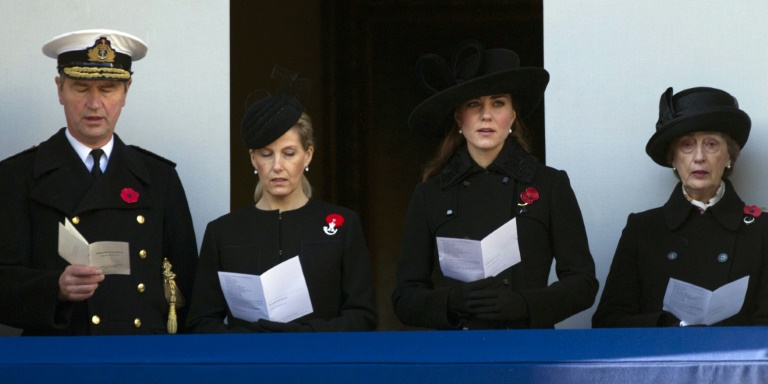
UK royals in new race row as William and Kate head to US

A godmother of Prince William quit the royal household on Wednesday and apologised for repeatedly asking a black British woman where she was “really” from, plunging Buckingham Palace into a fresh racism row.

Susan Hussey’s resignation came just as William and his wife Kate made their first visit to the United States in eight years and after racism claims from his brother Harry and mixed-race sister-in-law, Meghan.

In Boston, a spokesman for the royal couple told reporters: “Racism has no place in our society.

“These comments were unacceptable, and it’s right that the individual has stepped aside with immediate effect.”

William was not involved in the decision but “believes it’s the right course of action to be taken”, the spokesman added.

“He won’t be commenting further.”

Hussey, 83, is a longstanding former lady-in-waiting to William’s late grandmother, queen Elizabeth II and was a courtier to Queen Consort Camilla. She is one of William’s six godparents.

Ngozi Fulani, the chief executive of the London-based Sistah Space group which campaigns for survivors of domestic abuse, said the comments came as she attended a palace reception on Tuesday.

Asked where she was from, Fulani said Hackney, northeast London, prompting the woman whom she identified only as “Lady SH” to ask: “No, what part of Africa are you from?”

Fulani said she was born and raised in the UK and was British but the woman persisted.

“Where do you really come from, where do your people come from?… When did you first come here?” she was asked.

Fulani repeated that she was a British national born in the UK and was forced to say she was “of African heritage, Caribbean descent”.

The exchange, she wrote on Twitter, left her with “mixed feelings” about the reception, which was hosted by Camilla to highlight violence against women and girls.

Women’s Equality Party leader Mandu Reid, who witnessed the exchange, called it “grim” and like an “interrogation”.

She said it felt as if they were “not being treated as if we belong” or “as if we are British”.

– ‘Unacceptable’ –

Buckingham Palace said it took the incident “extremely seriously” and called the comments “unacceptable and deeply regrettable”.

“We have reached out to Ngozi Fulani on this matter, and are inviting her to discuss all elements of her experience in person if she wishes,” a statement read.

“In the meantime, the individual concerned would like to express her profound apologies for the hurt caused and has stepped aside from her honorary role with immediate effect.

“All members of the Household are being reminded of the diversity and inclusivity policies which they are required to uphold at all times.”

British media outlets all quoted palace sources as confirming it was Hussey who made the remarks.

As lady-in-waiting to the queen, Hussey was described as one of the late monarch’s most trusted aides. 

Camilla has scrapped the formal roles of ladies in waiting, but Hussey, whose late husband was a former BBC chairman, was kept on as a royal retainer by King Charles III.

– East Coast rivalry –

William and Kate are on a three-day visit to Boston, where Charles’s heir will award the Earthshot Prize for initiatives to tackle climate change.

Last year, William insisted “we are very much not a racist family”, after Harry and Meghan alleged that an unidentified royal had asked what colour skin their baby would have.

William has since praised the “immense contribution” of the “Windrush” generation of Caribbean migrants, who helped Britain to rebuild after World War II.

Despite arriving legally, many were later wrongly detained and even deported under the Conservative government’s hardline immigration policies.

As William and Kate visit Boston, Harry and Meghan are due in New York for another awards ceremony, although the feuding brothers have reportedly no plans to meet.

Harry and Meghan quit royal life in early 2020 and moved to California, winning many fans among younger people and in the black community for taking on the British establishment.

The UK media, though, has repeatedly accused them of exaggerating their unhappy plight as members of the royal family but the couple may point to the latest allegations as vindication.

The palace was earlier this year accused of being tone deaf to calls from Caribbean countries which still have Charles as head of state to acknowledge Britain’s past role in slavery.

William and Kate’s visit to Jamaica was also criticised for smacking of colonialism.

UK unions announce ambulance strike as stoppages widen

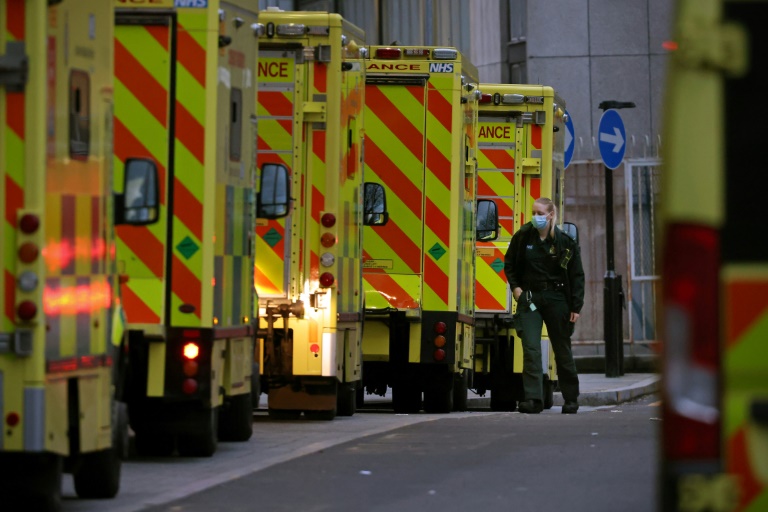
Britain’s government on Wednesday rejected union pay demands after ambulance workers joined nurses in voting to go on strike.

“Our economic circumstances mean unions’ demands are not affordable,” Health Secretary Steve Barclay said, after the Unison and GMB unions confirmed the ambulance service faced its biggest strike in 30 years.

Paramedics, ambulance technicians and emergency call handlers will walk out for 24 hours before Christmas, Unison announced late Tuesday after its members held a strike ballot.

The strike will affect London and four other regions of England as the ambulance service joins nurses across most of Britain in striking over government pay offers, which fall well short of double-digit inflation.

The Royal College of Nursing is holding the first strike in its 106-year history on December 15 and 20.

Unison general secretary Christina McAnea said it was a “tough call” for ambulance workers to strike too.

“But thousands of ambulance staff and their NHS (National Health Service) colleagues know delays won’t lessen, nor waiting times reduce, until the government acts on wages,” she said.

The nurses’ strike will be sandwiched between the first of a series of two-day walkouts by national railway workers, while postal service employees will stage fresh stoppages in the run-up to Christmas.

The GMB union meanwhile on Wednesday said its members working in the ambulance service had also voted to strike across nine regions.

The union will meet in the coming days to discuss potential strike dates before Christmas.

“Ambulance workers –- like other NHS workers –- are on their knees,” said Rachel Harrison, GMB national secretary.

“No one in the NHS takes strike action lightly -– today shows just how desperate they are,” she added.

Numerous other public and private sector staff, from lawyers to airport ground personnel, have also held strikes this year as Britain contends with its worst cost-of-living crisis in generations.

France sees hottest year on record in 2022

France this year experienced the hottest year since records began, the country’s national weather service said Wednesday, as global warming stokes temperatures globally. 

A cascade of extreme weather exacerbated by climate change devastated communities across the globe this year, including sweltering heat and drought across Europe that wilted crops, drove forest fires and saw major rivers shrink to a trickle.

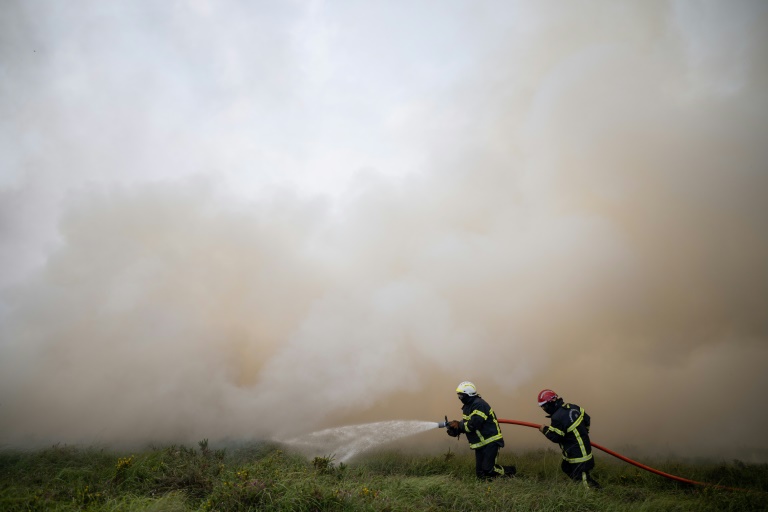
France saw temperatures surge repeatedly in successive heatwaves from May and into October, accompanied by extreme events like wildfires in areas like north-western Brittany, and damaging marine heat waves in the Mediterranean.   

“2022 will be the hottest year recorded in France since measurements began — so since at least 1900 — that is a certainty,” even if December is very cold, said Matthieu Sorel, a climatologist at Meteo France, in a briefing. 

It estimated the average temperature for the year as a whole would be between 14.2 degrees Celsius and 14.6C degrees depending on December temperatures. That is a significant increase from the previous record of 14.07C seen in 2020, and the highest since records began in 1990.   

Annual rainfall is expected to be as much as 25 percent lower than normal, with precipitation in July 85 percent below average. The driest year in France was 1989, which saw a 25 percent rainfall deficit.

Eight months of drought in France is already the country’s third longest dry spell on record, following 17 months in 1989 to 1990 and nine months in 2005.

Across Europe, exceptionally high summer temperatures led to the worst drought the continent has witnessed since the Middle Ages. 

Crops withered in European breadbaskets, as the historic dry spell drove record wildfire intensity and placed severe pressure on the continent’s power grid. 

China and North America also experienced unusually high temperatures and exceptionally low rainfall over the June-August period.

An analysis by an international team of climate scientists in October found that human-caused climate change made the drought across the Northern Hemisphere at least 20 times more likely, and warned such extreme dry periods will become increasingly common with global heating. 

Earth has warmed more than 1.1 degrees Celsius since the late 19th century, with roughly half of that increase occurring in the past 30 years, the World Meteorological Organization said in a report in November.

Globally, if projections for the rest of 2022 hold, the United Nations says that each of the last eight years will be hotter than any year prior to 2015. 

Greenhouse gases accounting for more than 95 percent of warming are all at record levels, the WMO’s annual State of the Global Climate found.

In the European Alps, glacier melt records have been shattered in 2022, with average thickness losses of between three and over four metres (between 9.8 and over 13 feet), the most ever recorded.

Switzerland has lost more than a third of its glacier volume since 2001.

HSBC shuts more UK branches as banking goes online

HSBC on Wednesday announced plans to permanently shut more than a quarter of its remaining bank branches in the UK as customers increasingly switch to making transactions online.

The global bank will from April close 114 branches, it said in a statement, having shut around 150 since last year.

Around 100 staff are expected to lose their jobs following the latest closures, mirroring action being taken by other high-street banks in the UK.

“People are changing the way they bank and footfall in many branches is at an all-time low, with no signs of it returning,” said the bank’s managing director of UK distribution, Jackie Uhi. 

“Banking remotely is becoming the norm for the vast majority of us.”

Consumer watchdog Which? said banks and building societies have closed or have scheduled to close more than 5,200 branches since the start of 2015 — at the rate of about 54 every month.

By the end of next year, the NatWest Group, which runs NatWest, Royal Bank of Scotland and Ulster Bank, will have shut more than 1,200.

More than 920 Lloyds, Halifax and Bank of Scotland branches — all part of the Lloyds Banking Group — will have gone in the next 12 months.

Barclays has closed or will have closed more than 960 branches by the end of this year, Which? said on Tuesday.

The closures have alarmed consumer groups who said the moves will hit those who predominantly still use cash, particularly the elderly.

The trend towards cashless payments and online banking has accelerated since the coronavirus pandemic.

Close Bitnami banner
Bitnami