AFP

Bird flu kills almost 14,000 pelicans, seabirds in Peru

The highly contagious H5N1 avian flu virus has killed thousands of pelicans, blue-footed boobies and other seabirds in Peru, according to the National Forestry and Wildlife Service (SERFOR).

The current bird flu outbreak began in Canada and spread to the United States, which has seen a record 50 million avian deaths, according to the US Centers for Disease Control and Prevention.

Peru first issued a health alert last Thursday after confirming three cases of H5B1 in pelicans, and since then thousands have been found dead in coastal areas.

“The latest official report carried out at a national level shows more than 13,869 wild seabirds killed by the dangerous H5N1 avian flu virus,” said a SERFOR statement released late Tuesday.

This number includes 10,257 pelicans, 2,919 sea boobies and 614 blue-footed boobies, among other species.

Meanwhile, the national agricultural health agency SENASA said it had quarantined the town of Gallito in the northern coastal Lambayeque region to control the first bird flu outbreak on a poultry farm.

SENASA said the health alert was a precaution because the virus arriving from North American migratory birds could spread to “backyard birds,” such as ducks and chickens, as well as to commercial farms.

The United Nations’ Food and Agriculture Organization (FAO) earlier this year warned countries in South and Central America to be on “high alert” for the virus spreading via migratory birds.

There is no treatment for bird flu, which spreads naturally between wild birds and can also infect domestic poultry. Avian influenza viruses do not typically infect humans, although there have been rare cases.


France sees hottest year on record in 2022

France this year experienced the hottest year since records began, the country’s national weather service said Wednesday, as global warming stokes temperatures globally. 

A cascade of extreme weather exacerbated by climate change devastated communities across the globe this year, including sweltering heat and drought across Europe that wilted crops, drove forest fires and saw major rivers shrink to a trickle.

France saw temperatures surge repeatedly in successive heatwaves from May and into October, accompanied by extreme events like wildfires in areas like north-western Brittany, and damaging marine heat waves in the Mediterranean.   

“All the months of the year have been warmer than normal, except January and April,” said Meteo France in a statement.

It estimated the average temperature for the year as a whole would be between 14.2 degrees Celsius and 14.6C degrees depending on December temperatures. That is a significant increase from the previous record of 14.07C seen in 2020, and the highest since records began in 1990.   

Annual rainfall is expected to be as much as 25 percent lower than normal, with precipitation in July 85 percent below average. The driest year in France was 1989, which saw a 25 percent rainfall deficit.

Globally, if projections for the rest of 2022 hold, the United Nations says that each of the last eight years will be hotter than any year prior to 2015. 

Earth has warmed more than 1.1 degrees Celsius since the late 19th century, with roughly half of that increase occurring in the past 30 years, the World Meteorological Organization said in a report in November.

Greenhouse gases accounting for more than 95 percent of warming are all at record levels, the WMO’s annual State of the Global Climate found.

In the European Alps, glacier melt records have been shattered in 2022, with average thickness losses of between three and over four metres (between 9.8 and over 13 feet), the most ever recorded.

Switzerland has lost more than a third of its glacier volume since 2001.

US private hiring eases more than expected in November: survey

US employers eased their hiring pace in November, with job creation slowing the most since early 2021, as the central bank’s interest rate hikes trickle through the economy, payroll firm ADP said Wednesday.

Private employment rose by 127,000 jobs this month, much less than analysts expected and below the 239,000-job increase in October, with firms no longer in “hyper-replacement mode,” the survey showed.

As the Federal Reserve battles to tamp down surging inflation and cool the world’s biggest economy, one concern was an uptick in wages over the past year as companies competed to find and retain workers in a tight labor market.

But in November, job creation slowed by the most since January 2021, ADP said.

This was led by construction and other sectors sensitive to interest rate hikes, while consumer-facing segments such as health care and hospitality proved to be “bright spots.”

“Turning points can be hard to capture in the labor market, but our data suggest that Federal Reserve tightening is having an impact on job creation and pay gains,” said ADP chief economist Nela Richardson in a statement.

Richardson added that the post-pandemic recovery is also “stabilizing” with fewer people quitting their jobs.

Employees saw annual pay gains moderate further to 7.6 percent in November, according to ADP’s recently revamped report which includes wage data.

For those who changed jobs, the median change in annual pay was up 15.1 percent, but the report noted that job changers had the smallest increase in pay since January as well.

“Overall, the trend in job growth remains positive and the labor market remains tight. But there are some initial signs of softening,” said economist Rubeela Farooqi of High Frequency Economics in a note.

While she expects job growth to remain positive for now, the pace is “expected to slow further in response to Fed hikes, which will… slow demand and economic activity over time.”

The ADP data also comes before key employment figure is released by the Labor Department on Friday.

US private hiring eases more than expected in November: survey

US employers eased their hiring pace in November, with job creation slowing the most since early 2021, as the central bank’s interest rate hikes trickle through the economy, payroll firm ADP said Wednesday.

Private employment rose by 127,000 jobs this month, much less than analysts expected and below the 239,000-job increase in October, with firms no longer in “hyper-replacement mode,” the survey showed.

As the Federal Reserve battles to tamp down surging inflation and cool the world’s biggest economy, one concern was an uptick in wages over the past year as companies competed to find and retain workers in a tight labor market.

But in November, job creation slowed by the most since January 2021, ADP said.

This was led by construction and other sectors sensitive to interest rate hikes, while consumer-facing segments such as health care and hospitality proved to be “bright spots.”

“Turning points can be hard to capture in the labor market, but our data suggest that Federal Reserve tightening is having an impact on job creation and pay gains,” said ADP chief economist Nela Richardson in a statement.

Richardson added that the post-pandemic recovery is also “stabilizing” with fewer people quitting their jobs.

Employees saw annual pay gains moderate further to 7.6 percent in November, according to ADP’s recently revamped report which includes wage data.

For those who changed jobs, the median change in annual pay was up 15.1 percent, but the report noted that job changers had the smallest increase in pay since January as well.

“Overall, the trend in job growth remains positive and the labor market remains tight. But there are some initial signs of softening,” said economist Rubeela Farooqi of High Frequency Economics in a note.

While she expects job growth to remain positive for now, the pace is “expected to slow further in response to Fed hikes, which will… slow demand and economic activity over time.”

The ADP data also comes before key employment figure is released by the Labor Department on Friday.

H&M to cut 1,500 jobs worldwide

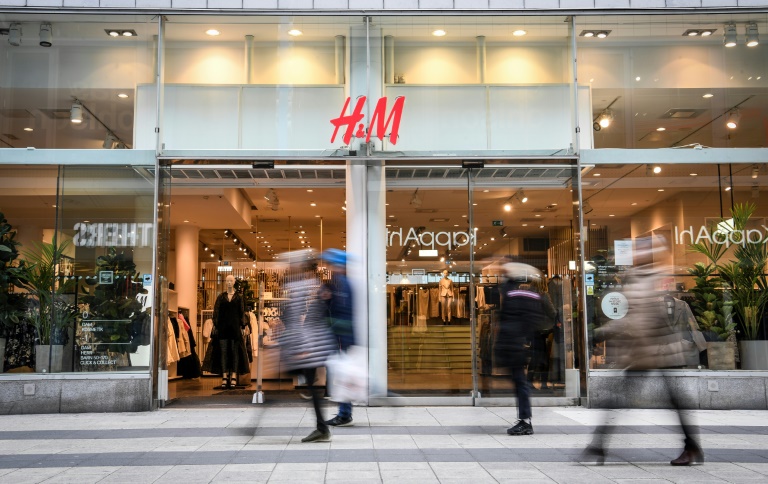
Swedish fashion retailer H&M said Wednesday it would cut some 1,500 jobs worldwide as a result of a cost-cutting programme launched following its decision to leave the Russian market.

“The programme relates to administrative and overhead costs, and also entails reducing the workforce by around 1,500 positions,” the company said in a statement.

The restructuring programme was announced in September, as the clothing giant announced a sizeable drop in third quarter profits, which was largely impacted by the company’s decision to “wind down the business in Russia” following the invasion of Ukraine.

“The cost and efficiency programme that we have initiated involves reviewing our organisation and we are very mindful of the fact that colleagues will be affected by this,” CEO Helena Helmersson said in the statement Wednesday.

According to H&M, the programme is expected to cost some 800 million Swedish kronor ($76 million) but would provide annual savings of around two billion kronor.

In September, H&M said it had closed just over 30 of its 172 shops in Russia.

Losses deepen at crisis-hit SAS airline

Troubled Scandinavian airline SAS, which has filed for bankruptcy in the United States, reported Wednesday deeper losses in the fourth quarter.

Net losses amounted to more than 1.2 billion Swedish kronor ($117 million) in the August-October period, compared to a loss of 744 million kronor a year earlier, the company said in a statement.

“As with previous quarters in 2022, the currencies (foreign exchange) and jet-fuel price have brought strong headwinds for our business,” said SAS chief executive Anko van der Werff.

The airline, however, saw the “highest number” of passengers since the beginning of the Covid pandemic, with healthy demand in the summer, van der Werff said.

The airline, which cut 5,000 jobs in 2020, is preparing for “substantial recruitments and rehirings” to meet the expected increase in demand next summer, he added.

SAS filed for Chapter 11 bankruptcy proceedings in the United States in July — a move allowing a company to restructure its debts under court supervision.

Van der Werff said the airline expected to complete the court-supervised process during the second half of 2023.

Kenya's Ruto launches flagship credit scheme for poor

Kenyan President William Ruto on Wednesday launched a low-interest credit scheme to boost financial access for the country’s poorest citizens, fulfilling a key campaign promise made to voters. 

Ruto, who once sold chickens on the roadside, had painted the August 9 poll as a battle between ordinary “hustlers” and elite political dynasties and had vowed to lift the lives of Kenyans battling high inflation and unemployment.

The 50-billion-shilling ($408-million) “hustler fund” will offer personal loans of up to 50,000 shillings to any Kenyan with a cellphone and a mobile money account, with interest charged at eight percent a year.

Ruto said the fund was part of his government’s plan “to create opportunities for millions at the bottom of our economic pyramid to work their way up and fulfil their aspirations.”

“More affordable credit will promote borrower confidence and inject significant amounts of money into productive activity throughout the economy,” he told reporters.

The fund will eventually also offer small-scale enterprises and start-ups access to credit, with those loans set to be launched by the end of May next year.

The new fund will require borrowers to set up a savings account, with five percent of the loan amount automatically going into a personal savings scheme, to which the government will contribute a maximum of 6,000 shillings per year.

Since his inauguration in September, Ruto has struggled to implement his campaign promises in a country facing record drought, a cost of living crisis and a $70-billion debt mountain.

He has slashed food and fuel subsidies introduced by his predecessor Uhuru Kenyatta and pledged to overhaul Kenya’s income tax regime so high earners will have to pay more to help reduce inequality.

Kenya is the most dynamic economy in East Africa but many of its people endure financial hardship, with about a third of the population living in poverty. 

Prices for basic goods rocketed following the Covid pandemic and in response to the war in Ukraine, and unemployment remains a major problem, particularly among the young.

Inflation soared to a five-year high of 9.6 percent in October, while the currency is at record lows at around 122 shillings to the US dollar.

India growth slows to 6.3% as pandemic bounceback wanes

India’s growth slowed to 6.3 percent in the September quarter, official figures showed Wednesday, with rising rates and higher consumer prices both dragging on Asia’s third-largest economy.

This year India bounced back strongly from the coronavirus pandemic but it is now grappling with the same headwinds buffeting the global economy.

The pace of expansion fell dramatically from 13.5 percent year-on-year GDP growth in the previous quarter, a figure more illustrative of the shock to activity during the height of last year’s coronavirus wave. 

India imports more than 80 percent of its crude oil needs and rising petrol costs since Russia’s February invasion of Ukraine have hit the wallets of the country’s 1.4 billion people.

Consumer inflation has consistently overshot the central bank’s two-to-six percent target range this year, hitting an eight-year high of 7.79 percent in April.

Official data showed consumer inflation moderating slightly to 6.77 percent in October after reaching a five-month high of 7.41 percent in September.

The Reserve Bank of India (RBI) in September raised interest rates for the fourth time in five months — up a total 190 basis points this year — with a further rate hike expected next week.

Merchandise exports hit a 20-month low of $29.78 billion in October, as high inflation and recession fears hit demand in key overseas markets.

‘Resilient progress’ –

Elevated crude oil prices and a falling rupee have left India struggling with a deteriorating trade balance as import costs rise.

The Indian rupee has hit record lows this year, plunging up to 10 percent against the US dollar as the greenback rallied on risk-averse market sentiment.

But India’s currency has proven more resilient than its Asian peers, aided by regular central bank intervention.

Analysts also say pent-up consumer demand and expectations of higher government expenditure will support growth in the face of headwinds.

“Several indicators suggest that the Indian economy is making resilient progress,” State Bank of India Chief Economic Adviser Soumya Kanti Ghosh said in a note.

“Growth impulses continue to be strong and it may be better to look through the GDP headline numbers for a couple of quarters before arriving at a definitive conclusion about the growth trajectory.”

The International Monetary Fund forecasts 6.1 percent growth for India next year, down from 6.8 percent in 2022 but still significantly higher than every other major economy.

India’s benchmark Sensex index closed 0.67 percent higher in Mumbai ahead of the GDP data release.

Europe stocks, euro rise on elevated eurozone inflation

European equities and the euro rose Wednesday as eurozone inflation slowed but remained elevated on high energy costs.

Markets were also buoyed by hopes that China will further ease its strict Covid containment measures following widespread protests, though gains were tempered by leaders’ warnings of a crackdown on dissent.

Traders were awaiting a key speech by Federal Reserve chief Jerome Powell, with many expecting him to outline plans for future interest rate hikes to tackle high US consumer prices.

Eurozone inflation eased to 10 percent in November, the first drop in 17 months but holding in double figures, the EU statistics agency said.

– Focus on rising rates –

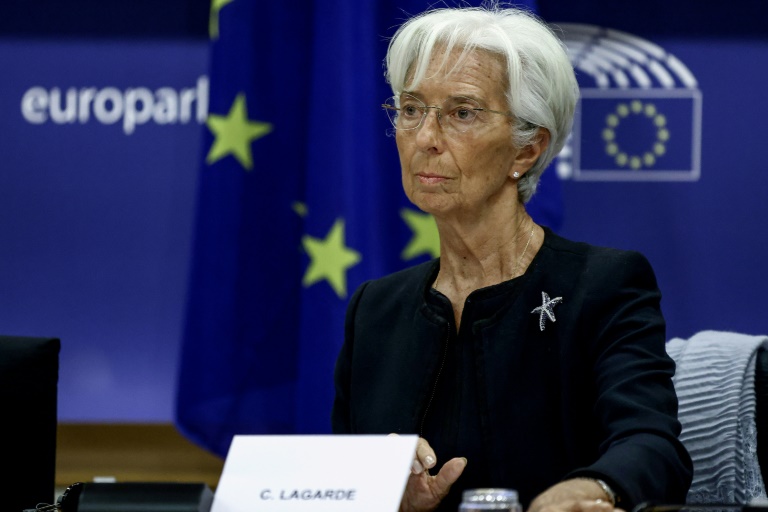
European Central Bank president Christine Lagarde has expressed scepticism that inflation has peaked.

“The ECB is still increasing (interest) rates and this is what traders are focused on,” AvaTrade analyst Naeem Aslam told AFP, in reference to market reaction following the data.

Inflation in the bloc had hit a record 10.6 percent in October, boosted also by soaring energy and food bills in the wake of Russia’s war in Ukraine.

“Euro area inflation figures surprised on the downside, providing an early indication that the record price pressures seen in recent months may have peaked,” added CEBR economist Karl Thompson.

However, he warned that “inflation is nonetheless likely to remain elevated throughout 2023” and forecast rising rates next month.

Global central banks, including the Fed, have ramped up borrowing costs this year in a bid to dampen red-hot inflation that was fuelled also as economies reopened from the pandemic.

Meanwhile on Wednesday, Asian stocks mostly rebounded as investors looked past weekend demonstrations in China after officials announced moves aimed at softening the zero-Covid strategy.

But in a sign that the leadership was determined to maintain its authority, the country’s top security body called for a “crackdown” against “hostile forces”.

Data showing China’s factory activity shrank further in November underscored the impact the zero-Covid approach has had on the world’s second-biggest economy. 

– Key figures around 1145 GMT –

London – FTSE 100: UP 0.7 percent at 7,563.21 points

Frankfurt – DAX: UP 0.4 percent at 14,411.52

Paris – CAC 40: UP 0.6 percent at 6,710.48

EURO STOXX 50: UP 0.6 percent at 3,958.81

Tokyo – Nikkei 225: DOWN 0.2 percent at 27,968.99 (close)

Hong Kong – Hang Seng Index: UP 2.2 percent at 18,597.23 (close)

Shanghai – Composite: UP 0.1 percent at 3,151.34 (close)

New York – Dow: FLAT at 33,852.53 (close)

Euro/dollar: UP at $1.0366 from $1.0330 on Tuesday

Dollar/yen: UP at 138.76 yen from 138.63 yen

Pound/dollar: UP at $1.2013 from $1.1952

Euro/pound: DOWN at 86.28 pence from 86.42 pence

Brent North Sea crude: UP 2.5 percent at $85.14 per barrel

West Texas Intermediate: UP 2.3 percent at $80.01 per barrel

Europe stocks, euro rise on elevated eurozone inflation

European equities and the euro rose Wednesday as eurozone inflation slowed but remained elevated on high energy costs.

Markets were also buoyed by hopes that China will further ease its strict Covid containment measures following widespread protests, though gains were tempered by leaders’ warnings of a crackdown on dissent.

Traders were awaiting a key speech by Federal Reserve chief Jerome Powell, with many expecting him to outline plans for future interest rate hikes to tackle high US consumer prices.

Eurozone inflation eased to 10 percent in November, the first drop in 17 months but holding in double figures, the EU statistics agency said.

– Focus on rising rates –

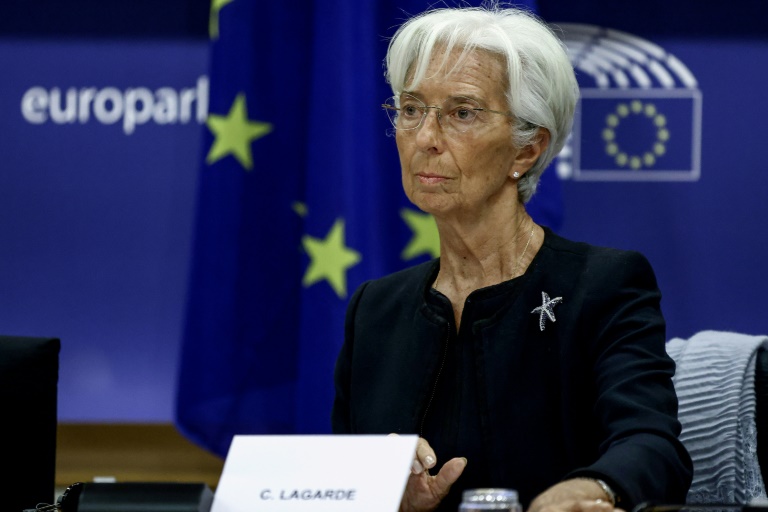
European Central Bank president Christine Lagarde has expressed scepticism that inflation has peaked.

“The ECB is still increasing (interest) rates and this is what traders are focused on,” AvaTrade analyst Naeem Aslam told AFP, in reference to market reaction following the data.

Inflation in the bloc had hit a record 10.6 percent in October, boosted also by soaring energy and food bills in the wake of Russia’s war in Ukraine.

“Euro area inflation figures surprised on the downside, providing an early indication that the record price pressures seen in recent months may have peaked,” added CEBR economist Karl Thompson.

However, he warned that “inflation is nonetheless likely to remain elevated throughout 2023” and forecast rising rates next month.

Global central banks, including the Fed, have ramped up borrowing costs this year in a bid to dampen red-hot inflation that was fuelled also as economies reopened from the pandemic.

Meanwhile on Wednesday, Asian stocks mostly rebounded as investors looked past weekend demonstrations in China after officials announced moves aimed at softening the zero-Covid strategy.

But in a sign that the leadership was determined to maintain its authority, the country’s top security body called for a “crackdown” against “hostile forces”.

Data showing China’s factory activity shrank further in November underscored the impact the zero-Covid approach has had on the world’s second-biggest economy. 

– Key figures around 1145 GMT –

London – FTSE 100: UP 0.7 percent at 7,563.21 points

Frankfurt – DAX: UP 0.4 percent at 14,411.52

Paris – CAC 40: UP 0.6 percent at 6,710.48

EURO STOXX 50: UP 0.6 percent at 3,958.81

Tokyo – Nikkei 225: DOWN 0.2 percent at 27,968.99 (close)

Hong Kong – Hang Seng Index: UP 2.2 percent at 18,597.23 (close)

Shanghai – Composite: UP 0.1 percent at 3,151.34 (close)

New York – Dow: FLAT at 33,852.53 (close)

Euro/dollar: UP at $1.0366 from $1.0330 on Tuesday

Dollar/yen: UP at 138.76 yen from 138.63 yen

Pound/dollar: UP at $1.2013 from $1.1952

Euro/pound: DOWN at 86.28 pence from 86.42 pence

Brent North Sea crude: UP 2.5 percent at $85.14 per barrel

West Texas Intermediate: UP 2.3 percent at $80.01 per barrel

Close Bitnami banner
Bitnami