AFP

Lights go out on Hungary stadiums, theatres as energy crisis bites

Rocketing energy bills are forcing Hungary to shutter libraries, theatres, swimming pools and even its new football stadiums for winter.

The state-of-the-art grounds — symbols of right-wing nationalist Prime Minister Viktor Orban’s 12 years in power — are among a long list of buildings no longer able to cope with rising energy prices in the central European country.

Despite being one of the country’s richest cities and being run by Orban’s own party, Szekesfehervar is one of many closing its museums, libraries and theatres.

Its new 14,000-capacity city-run stadium also pulled down its shutters this month to save costs, said mayor Andras Cser-Palkovics.

“Community spaces are what make a city. No one was happy about the measures but they accepted that they are needed,” Cser-Palkovics, a member of Orban’s ruling Fidesz party, told AFP in Szekesfehervar’s City Hall.

– ‘Won’t wait for miracles’ –

Like other cities, Szekesfehervar, 60 kilometres (37 miles) southwest of the capital Budapest, has tried to mitigate the effects of these closures.

The next Hungarian league games are in late January, so no football matches have had to be called off because of the stadium’s closure. 

Local side Fehervar FC, which usually trains at the stadium during the winter, can use other pitches in the city.

“Fehervar FC’s professional work is not particularly affected by the drastic decision to save energy,” the club said.

Cser-Palkovics said the plan is for the stadium, only built in 2018, to reopen in mid-January, adding that he has asked the league to reschedule evening games in the New Year to save on pitch heating and floodlight costs.

“We should not wait for miracles, we can help ourselves by our own measures,” he said.

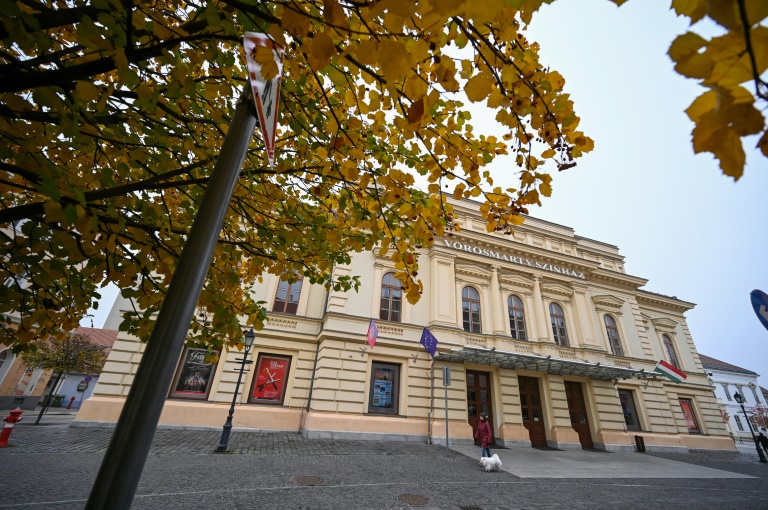
Elsewhere in the city, the Vorosmarty Theatre will close after performing its Christmas and New Year programme and will reopen in March when the spring season kicks off, said its head Janos Szikora.

“We won’t sit around desperately thinking, ‘Oh my God what will happen,'” Szikora told AFP, adding that while the theatre is closed actors will find other spaces to rehearse.

– Blaming Brussels –

The energy crisis — a ripple effect from the Ukraine war — has piled pressure on nationalist premier Orban, who has made low household utility bills a core policy over the last decade. 

Inflation in Hungary reached 21.6 percent in October, its highest level since 1996, and the third highest in the EU, according to Eurostat.  

Government-mandated price caps on basic foodstuffs and fuel aimed at stemming price rises have led to shortages in some shops and petrol stations.

With recession looming — GDP contracted by 0.4 percent in the third quarter — EU funds totalling more than 14 billion euros ($14.4 billion) have been withheld over corruption and rule-of-law concerns.

“Rising energy bills and even more so inflation are affecting everyone — the question is who Hungarians will blame for these economic hardships,” said Andrea Virag, strategy director of the Budapest-based Republikon think tank.

A government billboard campaign accuses the EU, saying “Brussels sanctions are ruining us”, while a government “national consultation” survey sent to households poses leading questions also critical of the sanctions.  

“It is clear that the tactic of the Hungarian government and Orban is to put all the blame on Brussels,” Virag told AFP. “There is some research that suggests that a huge amount of people believe Fidesz’s narrative.” 

It remains to be seen how many businesses will be forced to close for good in the months to come.

While industrial Szekesfehervar is relatively wealthy, other municipalities particularly in poorer eastern regions are threatened by bankruptcy unless they get state support, according to mayor Cser-Palkovics.

Geza Deli, a pensioner walking on Szekesfehervar’s main street, told AFP he agreed with City Hall’s strategy of reducing services deemed non-essential. 

“Obviously there are some basic public services which need support — primarily education and healthcare. It is more important that a doctor can take care of me than I can go to a football match,” the 72-year-old said.

Biden monitoring China Covid unrest as US rallies pop up

US President Joe Biden is monitoring unrest in China by protesters demanding an end to Covid lockdowns and greater political freedoms, the White House said Monday, as rallies popped up in solidarity around the United States.

The comments came after hundreds of people took to the streets in China’s major cities over the weekend, in a rare outpouring of public frustration that has spread to international Chinese-speaking communities.

“He’s monitoring this. We all are,” National Security Council spokesman John Kirby told reporters Monday.

Kirby would not describe Biden’s reaction to the demonstrators’ demands, saying: “The president’s not going to speak for protesters around the world. They’re speaking for themselves.”

But he stressed US support for the demonstrators’ rights.

“People should be allowed the right to assemble and to peacefully protest policies or laws or dictates that they take issue with,” Kirby said.

Earlier Monday, the US State Department implied that China’s strict lockdown policies were excessive, with a spokesperson saying “it’s going to be very difficult” for China to “contain this virus through their zero-Covid strategy.”

Discontent has been brewing for months in China over harsh coronavirus control measures, with relentless testing, localized lockdowns and travel restrictions pushing many to the brink.

That frustration was brought to a head after a deadly fire broke out last week in Urumqi, the capital of northwest China’s Xinjiang region, with many blaming Covid-19 lockdowns for hampering rescue efforts.

Around the United States, notably on university campuses, rallies sprang up Monday in support of the protests in China.

– ‘Solidarity’ –

Around 100 people, many of them students, gathered in Washington to call for greater freedoms and mourn those who died in Urumqi.

“(Officials) are borrowing the pretext of Covid, but using excessively strict lockdowns to control China’s population. They disregarded human lives,” said a Chinese student surnamed Chen.

“I came here to grieve,” the 21-year-old added.

Referring to protests across China, another student Zhou, 22, said: “My friends and I never imagined things would develop so rapidly.”

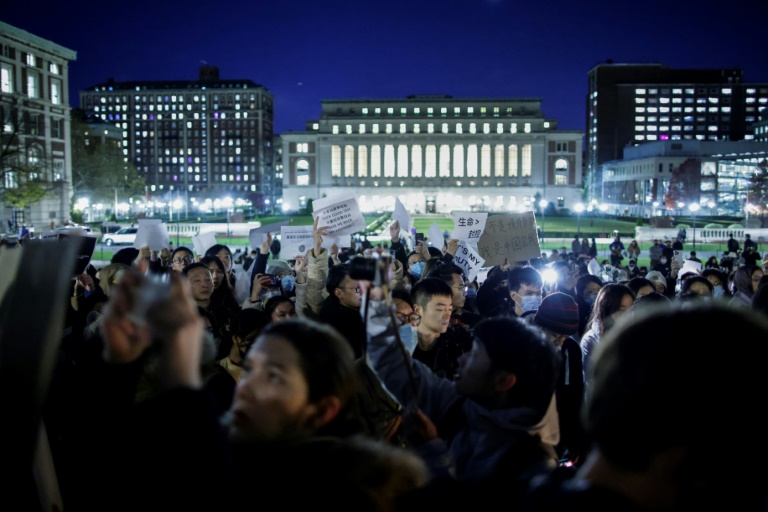
Attendees held white sheets of paper symbolizing censorship and chanted slogans including “Freedom of speech! Freedom of assembly! Tear down the firewall!”

In the evening, similar rallies were held in New York, on the campus of Columbia University, as well as at North Carolina’s Duke University.

Like at the protests in China, some in the crowds called for the resignation of Chinese leader Xi Jinping, who recently secured a historic third term while consolidating power over the country’s billion-plus population.

Dozens of people gathered at the University of California’s Berkeley campus chanted in Mandarin “Xi Jinping, step down!”

There were also shouts in English of “Free China!,” while one protester was seen carrying a drawing of Xi with the slogan “Death to the dictator.”

Earlier on Monday in Washington, around 25 members of the Uyghur community gathered outside the State Department, and called on the United States and other democracies to apply further pressure on Beijing.

“We want them to issue a formal statement condemning the loss of lives, Uyghur lives, and to call for full transparency on the real number of deaths that occurred,” said Salih Hudayar, a Uyghur-American who campaigns for Xinjiang independence.

“We’re hoping that the international community supports these protesters in demanding accountability from the Chinese government,” he added of protests in China.

US, Iran face off in winner-takes-all World Cup showdown

The United States and Iran meet in a politically charged winner-takes-all World Cup clash on Tuesday as England aim to reach the last 16 as group winners with victory over Wales.

Ever since the draw for the tournament was made in April, the Group B game between the US and Iran has stood out as one of the highlights of the first phase in Qatar.

Even with little riding on the result, the game at Thumama Stadium would have been loaded with political overtones, only the third meeting on a football field of two nations who share more than 40 years of ideological enmity.

But Tuesday’s match carries an additional dimension with both teams knowing that a win will see one of them advance to the knockout rounds while the loser is eliminated.

As if that wasn’t enough, simmering tensions flared up at the weekend after the US Soccer federation posted a modified version of the Iranian flag on their social media feeds.

The move infuriated Iranian football chiefs, who lodged a complaint with world governing body FIFA demanding sanctions. 

US Soccer initially said the altered flag was intended as a gesture to show support for women protesters in Iran, before subsequently deleting the various posts.

Coach Gregg Berhalter said on Monday his players and team staff had been in the dark about the flag gesture and sought to de-escalate tensions by emphasising that politics would not be a factor on Tuesday.

“When I think about this match I know that a lot of other constituents have a lot of other feelings towards it,” Berhalter said. 

“But for us it’s a soccer game against a good team and it’s not much more than that. It’s a knockout game between two good teams that want to get to the next round.” 

Iran counterpart Carlos Queiroz brushed off suggestions that the flag furore would be used to motivate his players.

“If after 42 years in this game as a coach I still believe I can win games with those mental games, I think I’ve learned nothing about the game,” the Portuguese coach said.

– Wales need miracle –

In Tuesday’s other Group B game England will be looking for a win over Wales as they bid to qualify for the last 16 as group winners.

England made a flying start to the tournament with a 6-2 demolition of Iran but were then held to a 0-0 draw by the USA in a laboured performance.

England manager Gareth Southgate is expected to tweak his starting line-up to rest some of his star men against a Welsh team who need a miracle to qualify.

In other games on Tuesday, the Netherlands face already eliminated hosts Qatar as the Dutch strive to finish top of Group A. 

Ecuador, who are level with the Dutch on four points, will finish top of the group if they come up with a better result against Senegal than the Netherlands manage against Qatar. 

The winners of Group A will face the runners-up from Group B in the last 16. Failure to top the group could conceivably see the Netherlands face England in the second round.

Holland manager Louis van Gaal is unfazed by whoever his team meets in the next round.

“If you want to become world champions you have to be capable of beating anyone,” van Gaal said.

China cities under heavy policing after protests

China’s major cities of Beijing and Shanghai were blanketed with security on Tuesday in the wake of nationwide rallies calling for political freedoms and an end to Covid lockdowns.

The country’s leadership is facing a wave of protest not seen in decades, fuelled by anger over the unrelenting lockdowns as well as deep-rooted frustrations over China’s political direction.

A deadly fire last week in Urumqi, the capital of northwest China’s Xinjiang region, was the catalyst for public outrage, with protesters taking to the streets of cities around the country over the weekend.

The demonstrators said Covid restrictions were to blame for hampering rescue efforts — claims the government denied as it accused “forces with ulterior motives” of linking the fire to the strict virus measures.

– ‘So many police’ –

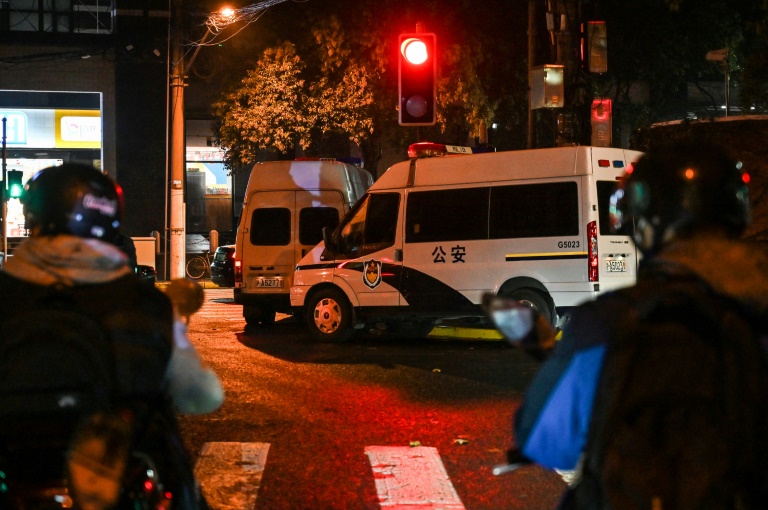
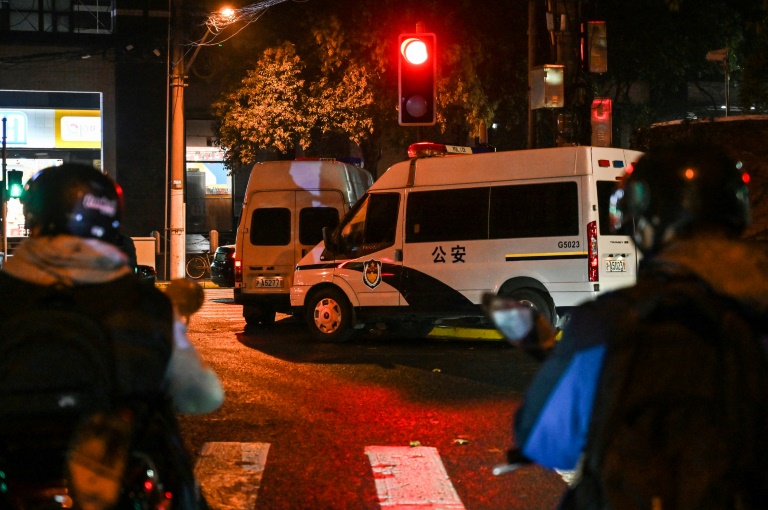
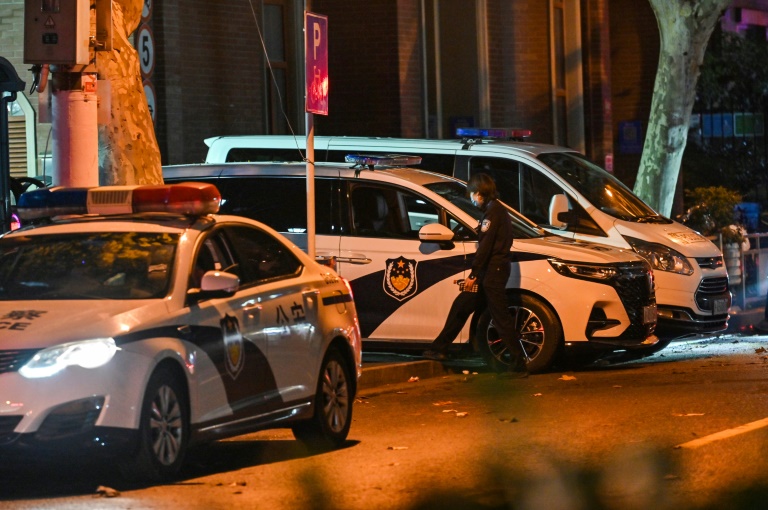
Several protests were planned for Monday night but did not materialise, with AFP journalists in Beijing and Shanghai noting a heavy police presence of hundreds of vehicles and officers on the streets.

People who had attended rallies over the weekend told AFP Monday they had received phone calls from law enforcement demanding information about their movements.

In Shanghai, near a site where weekend protests saw bold calls for the resignation of President Xi Jinping, bar staff told AFP they had been ordered to close at 10:00 pm (1400 GMT) for “disease control”. 

Small clusters of officers stood outside each metro exit.

Throughout the day AFP journalists saw officers detaining four people, later releasing one, with a reporter counting 12 police cars within 100 metres along Wulumuqi street in Shanghai, the focal point of Sunday’s rally.

“The atmosphere tonight is nervy. There are so many police around,” a man in his early 30s told AFP as evening fell.

And with police cars, foot patrols, a network of surveillance cameras, and aided by the icy wind, Beijing authorities also appeared Monday to have deterred fresh gatherings.

Elsewhere, some rallies did go ahead. In semi-autonomous Hong Kong, where mass democracy protests erupted in 2019, dozens gathered at the Chinese University to mourn the victims of the Urumqi fire.

“Don’t look away. Don’t forget,” protesters shouted.

And in Hangzhou, just over 170 kilometres (106 miles) southwest of Shanghai, there was strict security and sporadic protests in the city’s downtown, footage circulating on social media and partly geolocated by AFP showed.

– ‘Many died in vain’ –

China’s strict control of information and continued travel curbs has made verifying the numbers of protesters across the vast country challenging.

But such widespread rallies are exceptionally rare, with authorities harshly clamping down on all opposition to the central government.

US President Joe Biden is monitoring the unrest, the White House said Monday.

Around the world, solidarity protests have also mushroomed.

In the United States, Chinese-speaking and Uyghur communities came together in vigils.

“Officials are borrowing the pretext of Covid, but using excessively strict lockdowns to control China’s population,” one 21-year-old Chinese attendant who gave only his surname, Chen, told AFP.

“They disregarded human lives and caused many to die in vain,” he said.

– ‘No longer afraid’ –

China’s leaders have remained steadfast in their commitment to zero-Covid, which compels local authorities to impose snap lockdowns, quarantine orders, and limit freedom of movement in response to minor outbreaks.

But there are signs that some local authorities are taking steps to relax some of the rules and dampen the unrest.

In Urumqi, an official said Tuesday the city would give a one-off payment of 300 yuan ($42) to each person with “low income or no income”, and announced a five-month rent exemption for some households. 

People in the city of four million, some of whom have been confined to their homes for weeks on end, can also travel around on buses to run errands within their home districts starting Tuesday, officials said.

In Beijing, state media reported authorities had apologised for delayed deliveries to residents as online shopping demand surges due to repeated lockdowns.

The city has also banned “the practice of barring building gates in closed-off residential compounds”, Xinhua said on Sunday.

The practice has fuelled public anger as people found themselves locked in their homes during minor outbreaks. 

And an influential state media commentator suggested that Covid controls could be further relaxed — while insisting the public “will soon calm down”.

“I can give an absolute prediction: China will not become chaotic or out of control,” Hu Xijian, a columnist with the state-run tabloid Global Times said on Twitter, which is banned in China.

“China may walk out of the shadow of Covid-19 sooner than expected.”

China cities under heavy policing after protests

China’s major cities of Beijing and Shanghai were blanketed with security on Tuesday in the wake of nationwide rallies calling for political freedoms and an end to Covid lockdowns.

The country’s leadership is facing a wave of protest not seen in decades, fuelled by anger over the unrelenting lockdowns as well as deep-rooted frustrations over China’s political direction.

A deadly fire last week in Urumqi, the capital of northwest China’s Xinjiang region, was the catalyst for public outrage, with protesters taking to the streets of cities around the country over the weekend.

The demonstrators said Covid restrictions were to blame for hampering rescue efforts — claims the government denied as it accused “forces with ulterior motives” of linking the fire to the strict virus measures.

– ‘So many police’ –

Several protests were planned for Monday night but did not materialise, with AFP journalists in Beijing and Shanghai noting a heavy police presence of hundreds of vehicles and officers on the streets.

People who had attended rallies over the weekend told AFP Monday they had received phone calls from law enforcement demanding information about their movements.

In Shanghai, near a site where weekend protests saw bold calls for the resignation of President Xi Jinping, bar staff told AFP they had been ordered to close at 10:00 pm (1400 GMT) for “disease control”. 

Small clusters of officers stood outside each metro exit.

Throughout the day AFP journalists saw officers detaining four people, later releasing one, with a reporter counting 12 police cars within 100 metres along Wulumuqi street in Shanghai, the focal point of Sunday’s rally.

“The atmosphere tonight is nervy. There are so many police around,” a man in his early 30s told AFP as evening fell.

And with police cars, foot patrols, a network of surveillance cameras, and aided by the icy wind, Beijing authorities also appeared Monday to have deterred fresh gatherings.

Elsewhere, some rallies did go ahead. In semi-autonomous Hong Kong, where mass democracy protests erupted in 2019, dozens gathered at the Chinese University to mourn the victims of the Urumqi fire.

“Don’t look away. Don’t forget,” protesters shouted.

And in Hangzhou, just over 170 kilometres (106 miles) southwest of Shanghai, there was strict security and sporadic protests in the city’s downtown, footage circulating on social media and partly geolocated by AFP showed.

– ‘Many died in vain’ –

China’s strict control of information and continued travel curbs has made verifying the numbers of protesters across the vast country challenging.

But such widespread rallies are exceptionally rare, with authorities harshly clamping down on all opposition to the central government.

US President Joe Biden is monitoring the unrest, the White House said Monday.

Around the world, solidarity protests have also mushroomed.

In the United States, Chinese-speaking and Uyghur communities came together in vigils.

“Officials are borrowing the pretext of Covid, but using excessively strict lockdowns to control China’s population,” one 21-year-old Chinese attendant who gave only his surname, Chen, told AFP.

“They disregarded human lives and caused many to die in vain,” he said.

– ‘No longer afraid’ –

China’s leaders have remained steadfast in their commitment to zero-Covid, which compels local authorities to impose snap lockdowns, quarantine orders, and limit freedom of movement in response to minor outbreaks.

But there are signs that some local authorities are taking steps to relax some of the rules and dampen the unrest.

In Urumqi, an official said Tuesday the city would give a one-off payment of 300 yuan ($42) to each person with “low income or no income”, and announced a five-month rent exemption for some households. 

People in the city of four million, some of whom have been confined to their homes for weeks on end, can also travel around on buses to run errands within their home districts starting Tuesday, officials said.

In Beijing, state media reported authorities had apologised for delayed deliveries to residents as online shopping demand surges due to repeated lockdowns.

The city has also banned “the practice of barring building gates in closed-off residential compounds”, Xinhua said on Sunday.

The practice has fuelled public anger as people found themselves locked in their homes during minor outbreaks. 

And an influential state media commentator suggested that Covid controls could be further relaxed — while insisting the public “will soon calm down”.

“I can give an absolute prediction: China will not become chaotic or out of control,” Hu Xijian, a columnist with the state-run tabloid Global Times said on Twitter, which is banned in China.

“China may walk out of the shadow of Covid-19 sooner than expected.”

World's largest volcano erupts in Hawaii

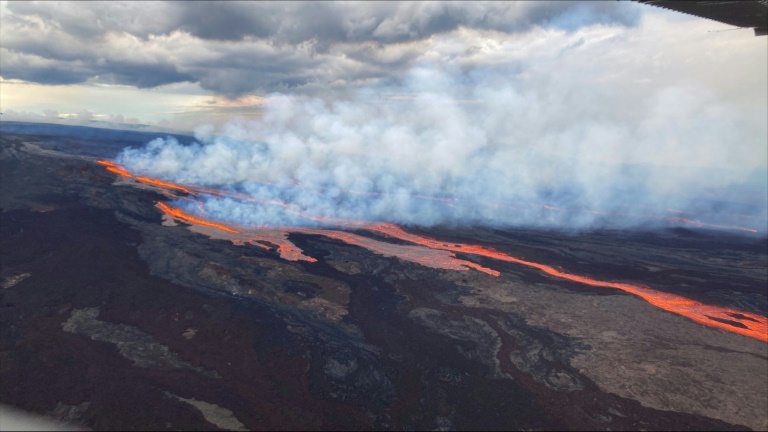
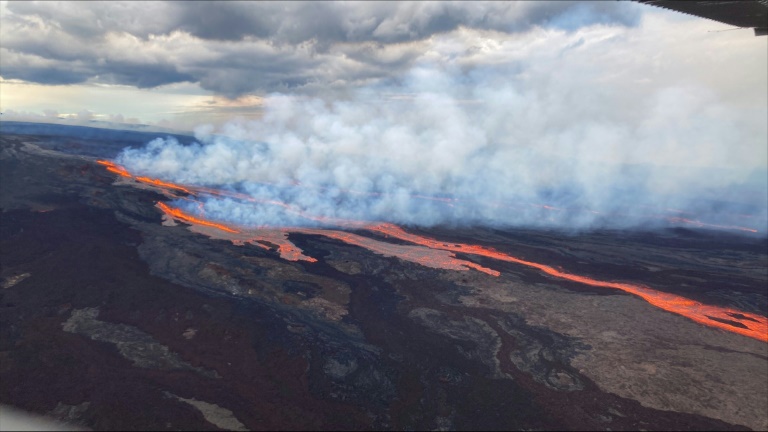
The world’s largest active volcano burst into life for the first time in 40 years, spewing lava and hot ash Monday in a spectacular display of nature’s fury by Mauna Loa in Hawaii.

Rivers of molten rock could be seen high up on the volcano, venting huge clouds of steam and smoke at the summit on Big Island, and sparking warnings the situation could change rapidly.

Pressure has been building at Mauna Loa for years, according to the United States Geological Survey, which reported the eruption could be seen from 45 miles (72 kilometers) away, in the town of Kona the west coast of Hawaii’s main island.

The eruption, which began shortly before midnight Sunday, was initially contained within the caldera — the concave area at the top of the volcano — but vulcanologists said Monday lava was now escaping from cracks in its side.

“The eruption of Mauna Loa has migrated from the summit to the Northeast Rift Zone where fissures are feeding several lava flows,” the USGS said on its website.

The agency said there was currently no threat to people living below the eruption zone, but warned that the volcano was volatile.

“Based on past events, the early stages of a Mauna Loa rift zone eruption can be very dynamic, and the location and advance of lava flows can change rapidly.”

Experts also cautioned that winds could carry volcanic gas and fine ash downslope, as well as Pele’s Hair — the name given to fine strands of volcanic glass formed when lava skeins cool quickly in the air.

Named after Pele, the Hawaiian goddess of volcanoes, the strands can be very sharp and pose potential danger to skin and eyes.

– ‘Long Mountain’ –

Authorities in Hawaii have not issued any evacuation orders, although the summit area and several roads in the region were closed, and two shelters have been opened as a precaution.

An ashfall advisory has been issued downwind of the volcano, with a light accumulation of ash expected on ships in ocean waters along the Big Island’s southeast.

Vulcanologist Robin George Andrews said the eruption had originally been contained, but was now spreading.

“Oof. Lava is now erupting from fresh vents on the slopes along Mauna Loa’s Northeast Rift Zone, or NERZ. That brings a new hazardous dimension to the eruption,” he wrote on Twitter.

“The fact that it is a hazardous mountain that hasn’t erupted since 1984 — the longest eruptive pause in its recorded history — is why we should all keep an eye on it.” 

But Andrews predicted that unless the lava flow rate picks up dramatically, the city of Hilo to the northeast, home to about 44,000 people, “will be okay.”

The largest volcano on Earth by volume, Mauna Loa, whose name means “Long Mountain,” covers half of the Big Island and is larger than the rest of the Hawaiian islands combined.

The volcano’s submarine flanks stretch for miles to an ocean floor that is in turn depressed by Mauna Loa’s great mass — making its summit some 17 kilometers (10.5 miles) above its base, according to the USGS. 

One of six active volcanoes on the Hawaiian islands, Mauna Loa has erupted 33 times since 1843.

Its most recent eruption, in 1984, lasted 22 days and produced lava flows which reached to within about seven kilometers (four miles) of Hilo.

Kilauea, a volcano on the southeastern flank of Mauna Loa, erupted almost continuously between 1983 and 2019, and a minor eruption there has been ongoing for months.

World's largest volcano erupts in Hawaii

The world’s largest active volcano burst into life for the first time in 40 years, spewing lava and hot ash Monday in a spectacular display of nature’s fury by Mauna Loa in Hawaii.

Rivers of molten rock could be seen high up on the volcano, venting huge clouds of steam and smoke at the summit on Big Island, and sparking warnings the situation could change rapidly.

Pressure has been building at Mauna Loa for years, according to the United States Geological Survey, which reported the eruption could be seen from 45 miles (72 kilometers) away, in the town of Kona the west coast of Hawaii’s main island.

The eruption, which began shortly before midnight Sunday, was initially contained within the caldera — the concave area at the top of the volcano — but vulcanologists said Monday lava was now escaping from cracks in its side.

“The eruption of Mauna Loa has migrated from the summit to the Northeast Rift Zone where fissures are feeding several lava flows,” the USGS said on its website.

The agency said there was currently no threat to people living below the eruption zone, but warned that the volcano was volatile.

“Based on past events, the early stages of a Mauna Loa rift zone eruption can be very dynamic, and the location and advance of lava flows can change rapidly.”

Experts also cautioned that winds could carry volcanic gas and fine ash downslope, as well as Pele’s Hair — the name given to fine strands of volcanic glass formed when lava skeins cool quickly in the air.

Named after Pele, the Hawaiian goddess of volcanoes, the strands can be very sharp and pose potential danger to skin and eyes.

– ‘Long Mountain’ –

Authorities in Hawaii have not issued any evacuation orders, although the summit area and several roads in the region were closed, and two shelters have been opened as a precaution.

An ashfall advisory has been issued downwind of the volcano, with a light accumulation of ash expected on ships in ocean waters along the Big Island’s southeast.

Vulcanologist Robin George Andrews said the eruption had originally been contained, but was now spreading.

“Oof. Lava is now erupting from fresh vents on the slopes along Mauna Loa’s Northeast Rift Zone, or NERZ. That brings a new hazardous dimension to the eruption,” he wrote on Twitter.

“The fact that it is a hazardous mountain that hasn’t erupted since 1984 — the longest eruptive pause in its recorded history — is why we should all keep an eye on it.” 

But Andrews predicted that unless the lava flow rate picks up dramatically, the city of Hilo to the northeast, home to about 44,000 people, “will be okay.”

The largest volcano on Earth by volume, Mauna Loa, whose name means “Long Mountain,” covers half of the Big Island and is larger than the rest of the Hawaiian islands combined.

The volcano’s submarine flanks stretch for miles to an ocean floor that is in turn depressed by Mauna Loa’s great mass — making its summit some 17 kilometers (10.5 miles) above its base, according to the USGS. 

One of six active volcanoes on the Hawaiian islands, Mauna Loa has erupted 33 times since 1843.

Its most recent eruption, in 1984, lasted 22 days and produced lava flows which reached to within about seven kilometers (four miles) of Hilo.

Kilauea, a volcano on the southeastern flank of Mauna Loa, erupted almost continuously between 1983 and 2019, and a minor eruption there has been ongoing for months.

Asian markets mostly rise after calm night in China

Asian equities rose and the dollar weakened Tuesday as China avoided another night of protests after a weekend of unrest across the country fuelled uncertainty in the world’s number two economy.

The gains were led by a rally in Hong Kong and Shanghai, with property firms enjoying a much-needed surge on the back of moves to ease funding restrictions on troubled developers.

However, sentiment was tempered by warnings from top Federal Reserve policymakers that US interest rates would rise further and could go higher than initially thought to fight inflation.

The remarks were partly to blame for big losses of more than one percent in Wall Street’s three main indexes.

China was rocked by demonstrations at the weekend calling for more political freedoms and an end to the country’s long-running and economically painful zero-Covid strategy that has seen millions thrown into lockdown for months.

Several arrests were made and security forces were out in force Monday to prevent a repeat of the protests, which were the most widespread since pro-democracy demonstrations were crushed in 1989.

The return of some calm helped Hong Kong stocks rally more than three percent and Shanghai more than one percent, with some commentators suggesting the unrest could actually help push leaders to ease some of the strict containment measures. 

Property firms were among the best performers after China said it would end a ban on firms raising cash by selling stocks, marking the latest measure to ease pressure on the sector, which has seen several companies collapse and threatens the wider economy.

Sydney, Seoul, Singapore, Wellington, Taipei and Jakarta were also in positive territory, though Tokyo dipped with Manila.

Attention is turning to the United States this week with a number of Fed officials due to speak, including boss Jerome Powell, while Friday sees the release of key jobs data, which could provide an idea about the bank’s plans for monetary policy.

Bets on a slowdown in its pace of rate hikes have boosted markets for the past weeks, but some high-ranking members on Monday looked to play down the chances of a more dovish pivot.

St. Louis Fed chief James Bullard warned “markets are underpricing a little bit the risk that the (policy board) will have to be more aggressive rather than less aggressive in order to contain the very substantial inflation that we have in the US”.

And Richmond Fed president Thomas Barkin added: “I’m very supportive of a path that is slower, probably longer and potentially higher than where we were before.”

The officials indicated borrowing costs would not likely come down until the end of next year or in 2024.

– Key figures around 0230 GMT –

Tokyo – Nikkei 225: DOWN 0.6 percent at 27,999.82 (break)

Hong Kong – Hang Seng Index: UP 3.6 percent at 17,920.01

Shanghai – Composite: UP 1.6 percent at 3,128.24

Euro/dollar: UP at $1.0357 from $1.0347 on Monday

Dollar/yen: DOWN at 138.85 yen from 138.87 yen

Pound/dollar: UP at $1.1992 from $1.1952

Euro/pound: DOWN at 86.40 pence from 86.50 pence

West Texas Intermediate: FLAT at $77.24 per barrel

Brent North Sea crude: UP 0.2 percent at $83.34 per barrel

New York – Dow: DOWN 1.5 percent at 33,849.46 (close)

London – FTSE 100: DOWN 0.2 percent at 7,474.02 (close)

Asian markets mostly rise after calm night in China

Asian equities rose and the dollar weakened Tuesday as China avoided another night of protests after a weekend of unrest across the country fuelled uncertainty in the world’s number two economy.

The gains were led by a rally in Hong Kong and Shanghai, with property firms enjoying a much-needed surge on the back of moves to ease funding restrictions on troubled developers.

However, sentiment was tempered by warnings from top Federal Reserve policymakers that US interest rates would rise further and could go higher than initially thought to fight inflation.

The remarks were partly to blame for big losses of more than one percent in Wall Street’s three main indexes.

China was rocked by demonstrations at the weekend calling for more political freedoms and an end to the country’s long-running and economically painful zero-Covid strategy that has seen millions thrown into lockdown for months.

Several arrests were made and security forces were out in force Monday to prevent a repeat of the protests, which were the most widespread since pro-democracy demonstrations were crushed in 1989.

The return of some calm helped Hong Kong stocks rally more than three percent and Shanghai more than one percent, with some commentators suggesting the unrest could actually help push leaders to ease some of the strict containment measures. 

Property firms were among the best performers after China said it would end a ban on firms raising cash by selling stocks, marking the latest measure to ease pressure on the sector, which has seen several companies collapse and threatens the wider economy.

Sydney, Seoul, Singapore, Wellington, Taipei and Jakarta were also in positive territory, though Tokyo dipped with Manila.

Attention is turning to the United States this week with a number of Fed officials due to speak, including boss Jerome Powell, while Friday sees the release of key jobs data, which could provide an idea about the bank’s plans for monetary policy.

Bets on a slowdown in its pace of rate hikes have boosted markets for the past weeks, but some high-ranking members on Monday looked to play down the chances of a more dovish pivot.

St. Louis Fed chief James Bullard warned “markets are underpricing a little bit the risk that the (policy board) will have to be more aggressive rather than less aggressive in order to contain the very substantial inflation that we have in the US”.

And Richmond Fed president Thomas Barkin added: “I’m very supportive of a path that is slower, probably longer and potentially higher than where we were before.”

The officials indicated borrowing costs would not likely come down until the end of next year or in 2024.

– Key figures around 0230 GMT –

Tokyo – Nikkei 225: DOWN 0.6 percent at 27,999.82 (break)

Hong Kong – Hang Seng Index: UP 3.6 percent at 17,920.01

Shanghai – Composite: UP 1.6 percent at 3,128.24

Euro/dollar: UP at $1.0357 from $1.0347 on Monday

Dollar/yen: DOWN at 138.85 yen from 138.87 yen

Pound/dollar: UP at $1.1992 from $1.1952

Euro/pound: DOWN at 86.40 pence from 86.50 pence

West Texas Intermediate: FLAT at $77.24 per barrel

Brent North Sea crude: UP 0.2 percent at $83.34 per barrel

New York – Dow: DOWN 1.5 percent at 33,849.46 (close)

London – FTSE 100: DOWN 0.2 percent at 7,474.02 (close)

Great Barrier Reef risks 'in danger' World Heritage listing

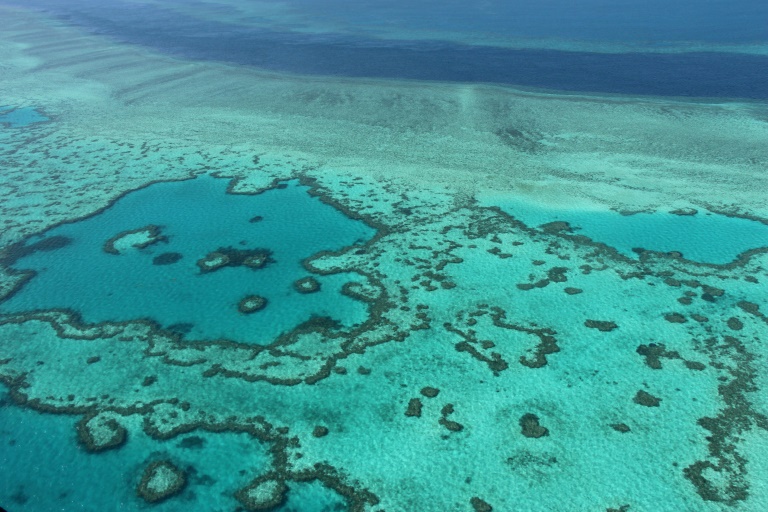
Australia’s Great Barrier Reef should be added to a list of “in danger” World Heritage sites, according to UN experts who warned the fading wonder has been “significantly impacted” by climate change.

A UNESCO-tasked report said on Monday warming seas and agricultural pollution had put the reef at risk and that its resilience had been “substantially compromised”.

The Great Barrier Reef is one of Australia’s premier tourist drawcards and putting it on the in-danger list could substantially tarnish its allure for international visitors. 

UNESCO considered listing the reef after a damning report in 2021 but held off following intense lobbying from Australia’s previous conservative government.

It first raised the alarm about the reef’s deterioration in 2010. 

The Australian Marine Conservation Society said the reef supported 60,000 jobs and generated Aus$6 billion ($4 billion) in revenue every year. 

Australian Environment Minister Tanya Plibersek acknowledged the reef was under threat but said putting it on UNESCO’s “World Heritage in Danger” list would be a step too far. 

“We’ll clearly make the point to UNESCO that there is no need to single the Great Barrier Reef out in this way,” she told reporters. 

“If this World Heritage Site is in danger, then most World Heritage Sites around the world are in danger from climate change.” 

World Wildlife Fund spokesman Richard Leck said the UNESCO recommendations should be accepted by the government. 

“These UNESCO recommendations are a reminder it is our choice to give the world’s most iconic reef the best chance of survival,” he said. 

Marine biologist Jodie Rummer said the UNESCO report showed Australia had more work to do. 

“Our action now will determine the frequency and severity of marine heatwaves the reef will face over the coming years,” she said. 

The report, written by experts from the International Union for Conservation of Nature and UNESCO, acknowledged Australia’s commitment to protecting the reef. 

But it found that despite the “unparalleled science and management efforts”, the reef still faced “considerable pressures” linked to climate change and pollution from agricultural runoff.

Australian scientists reported in May that 91 percent of the reef’s coral had been damaged by bleaching after a prolonged summer heatwave. 

It was the first time on record the reef had suffered bleaching during a La Nina weather cycle, when cooler ocean temperatures would normally be expected. 

Conservative prime minister Scott Morrison was voted out earlier this year in favour of a centre-left government promising greener policies and greater climate action. 

A UNESCO spokesperson told AFP that “a constructive dialogue is ongoing with the current government”.

A site must have “outstanding universal value” to be included on UNESCO’s world heritage list.

A spot on the list usually means boosted tourism and improved access to funds and scientific expertise. 

Only three sites have ever been dropped from the heritage list completely.

burs-sft/arb/pbt

Close Bitnami banner
Bitnami