AFP

Macron heads to US for wide-ranging state visit

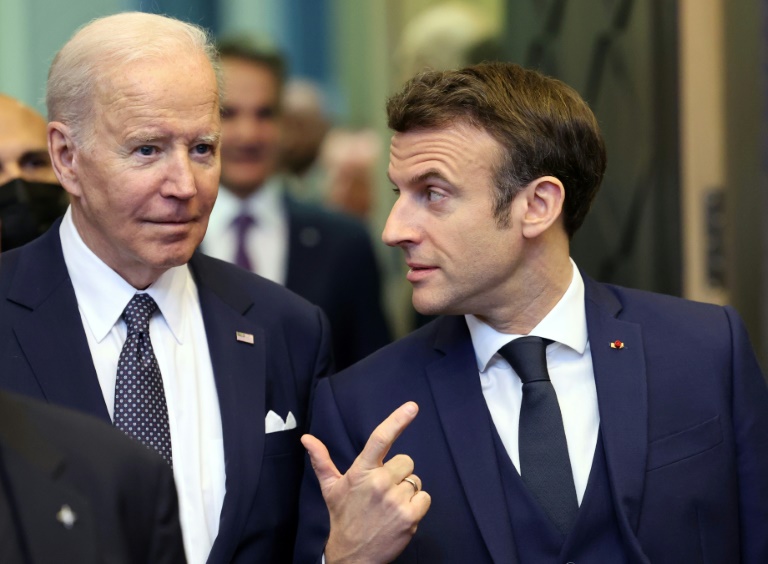
French President Emmanuel Macron heads to Washington Tuesday to discuss a slew of issues with US counterpart Joe Biden, ranging from aligning policy on Russia’s invasion of Ukraine to easing trade spats.

Macron, in a rare honour the first French leader to be invited for two US state visits, can look forward to another 21-gun salute and ostentatious White House dinner that ex-president Donald Trump provided in 2018.

His travelling entourage of foreign, defence and finance ministers, as well as business leaders and astronauts, illustrates the range of transatlantic cooperation Paris hopes to push forward.

But one senior American official told AFP that while there might be concrete “progress” in some fields, “this visit is about the personal relationship, the alliance relationship” with France.

“There are enormous opportunities to cooperate between the Biden administration and the Macron government,” said Martin Quencez, deputy director of the Paris office of think-tank GMF.

“But for various reasons, cooperation and coordination haven’t gone as far as one might imagine”.

The tone between Paris and Washington has calmed since a year ago, when the United States snatched a lucrative contract to supply Australia with submarines from under French noses — and launched a new US-UK-Australia alliance in the Pacific, dubbed AUKUS, that excluded France.

This week’s visit could be seen as the capstone of US efforts to placate a NATO ally which is one of the strongest voices calling for European “strategic autonomy”, said Celia Belin, a researcher at the Brookings Institution.

“The French aren’t always easy to manage, but when the French and the Americans agree, that moves things forward a great deal.”

– ‘Not on the same page’ –

As things stand, however, “we are not allies on the same page,” one adviser to Macron told AFP, promising “challenging” talks with Biden.

Despite his support for Kyiv, Macron’s insistence on continuing to talk with Moscow throughout Russia’s invasion of Ukraine has raised American hackles.

Another adviser told reporters last week that Macron would speak to Russian President Vladimir Putin soon — but not until after his US visit.

The conversation comes just as some US officials including Pentagon chief Mark Milley have raised the possibility of a negotiated peace.

Putin’s war has also set France and the United States at odds on the economy, intensifying existing disagreements over issues like the green transition and competing with China.

Massive US weapons deliveries to Ukraine — far outstripping the combined efforts of the European Union — have highlighted the country’s pre-eminence as an arms producer, while Franco-German joint efforts flounder.

That could be highlighted still further if a divided US Congress refuses to authorise the same level of aid to Kyiv from next year.

And as the United States plans massive investments and subsidies under its Inflation Reduction Act (IRA), Europeans fear distorting effects on competition with their own firms in sectors like electric cars, batteries and clean energy.

Macron will tell Biden “there’s a contradiction between an administration that constantly talks of alliances… and at the same time takes a decision like the IRA that will impact allies’ economies and industry,” researcher Quencez said.

A senior Biden administration official, speaking on condition of anonymity, stressed that even with the disagreements, the transatlantic partnership remains strong.

On divergences over the more hawkish US policy towards China, the official said European views are “not identical, but I think there is a strong view that we should be speaking from a common script in response to China.”

As for US subsidies for domestic green technology companies, the official said they do not shut out EU competitors and that a “very constructive set of conversations” was underway on how to work together.

– EU subsidies to come? –

Nevertheless, “We won’t stand idly by” while the United States engages in alleged protectionism, Macron’s Prime Minister Elisabeth Borne has said.

A joint statement last week from finance ministers in Berlin and Paris underscored the “urgent need for investments in Europe” to reduce energy dependencies and tackle climate and digital transitions.

The communique was read by some observers as potentially heralding a wave of EU subsidies.

“China favours its own products: America favours its own products. It might be time for Europe to favour its own products,” French Finance Minister Bruno Le Maire told France 3 radio on Sunday.

In the immediate term, Europeans are angered by the swingeing prices they must now pay for US exports of ship-borne liquefied natural gas — replacing cheaper Russian pipeline gas cut off during the invasion of Ukraine.

France in particular has suffered a double energy blow as much of its fleet of nuclear power plants is offline for maintenance or due to flaws uncovered in their cooling systems.

With Luc Remont, the newly installed head of state-controlled energy firm EDF, on Macron’s plane to Washington, some support for the civil nuclear industry could be on the cards.

Macron is also expected to announce a fund to support French language teaching on a later leg of his visit that will take him to New Orleans.

burs/tgb/sjw/imm/st/jh
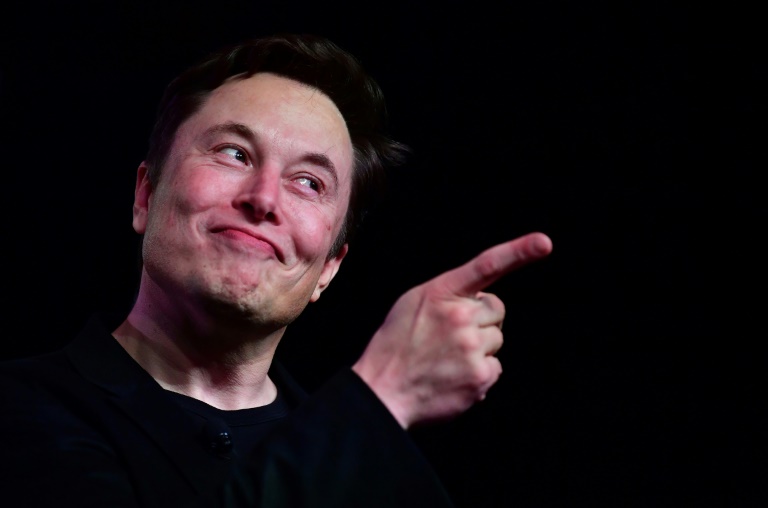
Twitter owner Musk signals new 'war' against Apple

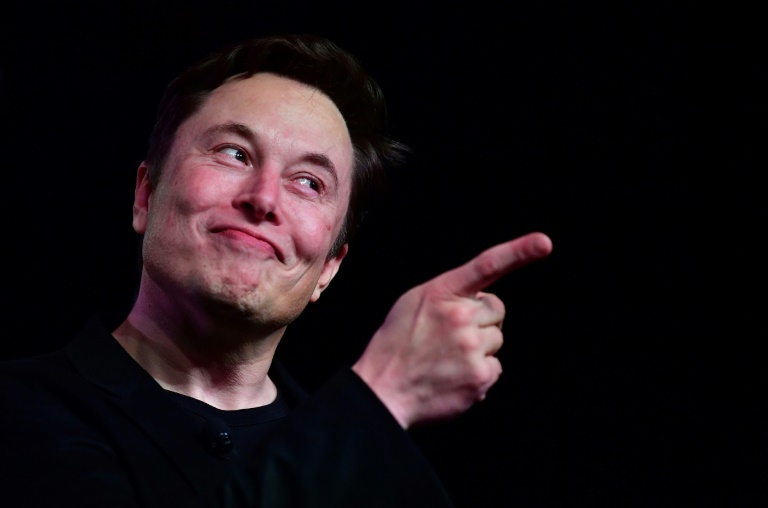
Twitter owner Elon Musk on Monday opened fire against Apple over its tight control of what is allowed on the App Store, saying the iPhone maker has threatened to oust his recently acquired social media platform.

Musk also joined the chorus crying foul over a 30 percent fee Apple collects on transactions via its App Store — the sole gateway for applications to get onto its billion plus mobile devices.

A series of tweets fired off by Musk included a meme of a car with his first name on it veering onto a highway off-ramp labeled “Go to War,” instead of continuing onwards towards “Pay 30%.”

The billionaire CEO also tweeted that Apple has “threatened to withhold Twitter from its App Store, but won’t tell us why.”

Apple did not immediately reply to an AFP request for comment.

Both Apple and Google require social networking services on their app stores to have effective systems for moderating harmful or abusive content.

But since taking over Twitter last month, Musk has cut around half of Twitter’s workforce, including many employees tasked with fighting disinformation, while an unknown number of others have voluntarily quit.

He has also reinstated previously banned accounts, including that of former president Donald Trump.

Yoel Roth, the former head of trust and safety at Twitter who left after Musk took over, wrote in a New York Times op-ed that “failure to adhere to Apple’s and Google’s guidelines would be catastrophic,” and risk “expulsion from their app stores.”

Describing himself as a “free speech absolutist,” Musk believes that all content permitted by law should be allowed on Twitter, and on Monday described his actions as a “revolution against online censorship in America.”

He also tweeted that he planned to publish “Twitter Files on free speech suppression,” but without clarifying what data he had in mind to share with the public.

Though Musk says Twitter is seeing record high engagement with him at the helm, his approach has startled the company’s major moneymaker — advertisers.

In recent weeks, half of Twitter’s top 100 advertisers have announced they are suspending or have otherwise “seemingly stopped advertising on Twitter,” an analysis conducted by nonprofit watchdog group Media Matters found.

Musk on Monday accused Apple of also having “mostly stopped advertising on Twitter.”

“Do they hate free speech in America?” he asked, before replying with a tweet tagging Apple CEO Tim Cook.

In the first three months of 2022, Apple was the top advertiser on Twitter, spending some $48 million on ads which accounted for more than 4 percent of the social media platform’s revenue, according to a Washington Post report citing an internal Twitter document.

Sarah Roberts, an information studies expert at University of California, Los Angeles, told AFP that “Musk didn’t understand that Twitter itself was a brand, had cachet.”

“Now companies don’t even want to be associated with it. It’s not even that they worry about the content. Twitter is a tainted brand, a brand non grata companies don’t want to be associated with,” she added.

– Tarnishing Tesla? –

Musk on Monday also called Apple’s fee on transactions through its App Store a “secret 30% tax.”

He shared a video released last year by Fortnite maker Epic Games that portrayed Apple as an oppressor in a mocking spin on a famous “1984” ad for Macintosh computers.

Apple has clashed in court with Epic, which has sought to break Apple’s grip on the App Store, accusing the iPhone maker of operating a monopoly in its shop for digital goods or services.

A federal judge last year ordered Apple to loosen control of its App Store payment options, but said Epic had failed to prove that antitrust violations had taken place.

Musk’s controversial moves at Twitter, along with the possibility he will need to sell more Tesla shares to keep the social media platform afloat, has taken shine off of the electric car company and its stock, according to Wedbush analyst Dan Ives.

“The Musk vs Apple new battle is not what investors want to see,” Ives said in a tweet.

“(Wall) Street wants less drama, not more as this Twitter situation remains the gift that keeps on giving for the Tesla bears with every day a new chapter.”

Twitter owner Musk signals new 'war' against Apple

Twitter owner Elon Musk on Monday opened fire against Apple over its tight control of what is allowed on the App Store, saying the iPhone maker has threatened to oust his recently acquired social media platform.

Musk also joined the chorus crying foul over a 30 percent fee Apple collects on transactions via its App Store — the sole gateway for applications to get onto its billion plus mobile devices.

A series of tweets fired off by Musk included a meme of a car with his first name on it veering onto a highway off-ramp labeled “Go to War,” instead of continuing onwards towards “Pay 30%.”

The billionaire CEO also tweeted that Apple has “threatened to withhold Twitter from its App Store, but won’t tell us why.”

Apple did not immediately reply to an AFP request for comment.

Both Apple and Google require social networking services on their app stores to have effective systems for moderating harmful or abusive content.

But since taking over Twitter last month, Musk has cut around half of Twitter’s workforce, including many employees tasked with fighting disinformation, while an unknown number of others have voluntarily quit.

He has also reinstated previously banned accounts, including that of former president Donald Trump.

Yoel Roth, the former head of trust and safety at Twitter who left after Musk took over, wrote in a New York Times op-ed that “failure to adhere to Apple’s and Google’s guidelines would be catastrophic,” and risk “expulsion from their app stores.”

Describing himself as a “free speech absolutist,” Musk believes that all content permitted by law should be allowed on Twitter, and on Monday described his actions as a “revolution against online censorship in America.”

He also tweeted that he planned to publish “Twitter Files on free speech suppression,” but without clarifying what data he had in mind to share with the public.

Though Musk says Twitter is seeing record high engagement with him at the helm, his approach has startled the company’s major moneymaker — advertisers.

In recent weeks, half of Twitter’s top 100 advertisers have announced they are suspending or have otherwise “seemingly stopped advertising on Twitter,” an analysis conducted by nonprofit watchdog group Media Matters found.

Musk on Monday accused Apple of also having “mostly stopped advertising on Twitter.”

“Do they hate free speech in America?” he asked, before replying with a tweet tagging Apple CEO Tim Cook.

In the first three months of 2022, Apple was the top advertiser on Twitter, spending some $48 million on ads which accounted for more than 4 percent of the social media platform’s revenue, according to a Washington Post report citing an internal Twitter document.

Sarah Roberts, an information studies expert at University of California, Los Angeles, told AFP that “Musk didn’t understand that Twitter itself was a brand, had cachet.”

“Now companies don’t even want to be associated with it. It’s not even that they worry about the content. Twitter is a tainted brand, a brand non grata companies don’t want to be associated with,” she added.

– Tarnishing Tesla? –

Musk on Monday also called Apple’s fee on transactions through its App Store a “secret 30% tax.”

He shared a video released last year by Fortnite maker Epic Games that portrayed Apple as an oppressor in a mocking spin on a famous “1984” ad for Macintosh computers.

Apple has clashed in court with Epic, which has sought to break Apple’s grip on the App Store, accusing the iPhone maker of operating a monopoly in its shop for digital goods or services.

A federal judge last year ordered Apple to loosen control of its App Store payment options, but said Epic had failed to prove that antitrust violations had taken place.

Musk’s controversial moves at Twitter, along with the possibility he will need to sell more Tesla shares to keep the social media platform afloat, has taken shine off of the electric car company and its stock, according to Wedbush analyst Dan Ives.

“The Musk vs Apple new battle is not what investors want to see,” Ives said in a tweet.

“(Wall) Street wants less drama, not more as this Twitter situation remains the gift that keeps on giving for the Tesla bears with every day a new chapter.”

Biden's ambitious climate plan stokes tension with EU allies

Certain provisions in US President Joe Biden’s landmark climate action plan, the Inflation Reduction Act (IRA), have provoked strong responses from the European Union, which fears it could hurt its industry.

With the IRA set to be one of the main topics discussed during French President Emmanuel Macron’s state visit to Washington this week, AFP answers some key questions about the spat.

– What are the measures in the IRA? –

The IRA, a behemoth piece of legislation that largely focuses on climate and social spending, provides more than $430 billion in US investments.

Of that sum, $370 billion will go toward reducing greenhouse gas emissions 40 percent by 2030, making it the largest-ever US program to combat climate change.

Some of the investments are in the form of tax cuts for companies that invest in clean energy, but there are also significant subsidies for electric vehicles, batteries and renewable energy projects — if they are manufactured in the United States. 

One is a $7,500 subsidy for households buying US-made electric vehicles, while another gives benefits to manufacturers of wind turbines and solar panels who use US steel.

– Why is the IRA ruffling European feathers? –

The IRA has caused a stir at EU headquarters in Brussels as well as in other European capitals, which see the various subsidies as “discriminatory,” in particular against the bloc’s auto manufacturers.

“This is unacceptable for the EU. As it stands, this text is extremely protectionist, to the detriment of European exports” said Czech industry minister Jozef Sikela, whose country currently holds the rotating EU presidency.

He did, however, stress the “goodwill on both sides” after a meeting of EU ministers with US Trade Ambassador Katherine Tai.

In early November, EU Internal Market Commissioner Thierry Breton threatened to “go before the WTO” and consider “retaliatory measures” if the United States did not reverse its subsidies. 

“In some cases, the subsidies that the Biden administration offers are four to 10 times the maximum amount authorized by the European Commission,” said French Finance Minister Bruno Le Maire, who called on the Commission to create “European preferential measures or to accelerate the use of reciprocity instruments.” 

According to a French official briefing reporters ahead of Macron’s state visit, the hot button issue will be on the table. 

“We fully understand the US desire to be more independent,” said the official Monday, “but the problems come from the fact that in Europe we do not have this type of discriminatory instrument, we respect the rules of the WTO in this area.”

The official said that France wanted “Europe too, not just the United States, to emerge stronger” from the period of multiple crises that the continent is going through.

– Is there leeway to amend the IRA? –

Even if Biden wanted to walk back certain measures, or to broaden the number of beneficiaries, his legislative options are quite limited.

Any action will be more complicated when his Democratic Party loses their House of Representatives majority in January, after their loss in the November midterms.

It’s also not clear that Biden is even thinking about touching a key plank of his presidential legacy, which he salvaged only after protracted negotiations in the Senate. 

Biden’s initial proposal, the Build Back Better Act, was even more ambitious, providing $1.7 trillion dollars of investment. That plan cleared the House at the end of 2021 but was blocked in the Senate. 

The subsidies in question are also very popular, especially in states such as Ohio and Michigan, where the automotive industry remains powerful and their “swing state” status gives them considerable political clout. 

However, the United States is hoping to smooth things over with its European partners.

After a virtual exchange with France’s Le Maire, US Trade Representative Tai on Monday said that the countries are “working together to strengthen common understanding of legislation.”

For his part, Macron hopes to go further and obtain from his US counterpart “exemptions for a certain number of European industries, perhaps on the model of what it already agrees for Mexico and Canada,” according to an adviser.

The two US neighbors, who share a free trade pact with the United States, received carve-outs in the IRA for electric vehicle subsidies.

Biden's ambitious climate plan stokes tension with EU allies

Certain provisions in US President Joe Biden’s landmark climate action plan, the Inflation Reduction Act (IRA), have provoked strong responses from the European Union, which fears it could hurt its industry.

With the IRA set to be one of the main topics discussed during French President Emmanuel Macron’s state visit to Washington this week, AFP answers some key questions about the spat.

– What are the measures in the IRA? –

The IRA, a behemoth piece of legislation that largely focuses on climate and social spending, provides more than $430 billion in US investments.

Of that sum, $370 billion will go toward reducing greenhouse gas emissions 40 percent by 2030, making it the largest-ever US program to combat climate change.

Some of the investments are in the form of tax cuts for companies that invest in clean energy, but there are also significant subsidies for electric vehicles, batteries and renewable energy projects — if they are manufactured in the United States. 

One is a $7,500 subsidy for households buying US-made electric vehicles, while another gives benefits to manufacturers of wind turbines and solar panels who use US steel.

– Why is the IRA ruffling European feathers? –

The IRA has caused a stir at EU headquarters in Brussels as well as in other European capitals, which see the various subsidies as “discriminatory,” in particular against the bloc’s auto manufacturers.

“This is unacceptable for the EU. As it stands, this text is extremely protectionist, to the detriment of European exports” said Czech industry minister Jozef Sikela, whose country currently holds the rotating EU presidency.

He did, however, stress the “goodwill on both sides” after a meeting of EU ministers with US Trade Ambassador Katherine Tai.

In early November, EU Internal Market Commissioner Thierry Breton threatened to “go before the WTO” and consider “retaliatory measures” if the United States did not reverse its subsidies. 

“In some cases, the subsidies that the Biden administration offers are four to 10 times the maximum amount authorized by the European Commission,” said French Finance Minister Bruno Le Maire, who called on the Commission to create “European preferential measures or to accelerate the use of reciprocity instruments.” 

According to a French official briefing reporters ahead of Macron’s state visit, the hot button issue will be on the table. 

“We fully understand the US desire to be more independent,” said the official Monday, “but the problems come from the fact that in Europe we do not have this type of discriminatory instrument, we respect the rules of the WTO in this area.”

The official said that France wanted “Europe too, not just the United States, to emerge stronger” from the period of multiple crises that the continent is going through.

– Is there leeway to amend the IRA? –

Even if Biden wanted to walk back certain measures, or to broaden the number of beneficiaries, his legislative options are quite limited.

Any action will be more complicated when his Democratic Party loses their House of Representatives majority in January, after their loss in the November midterms.

It’s also not clear that Biden is even thinking about touching a key plank of his presidential legacy, which he salvaged only after protracted negotiations in the Senate. 

Biden’s initial proposal, the Build Back Better Act, was even more ambitious, providing $1.7 trillion dollars of investment. That plan cleared the House at the end of 2021 but was blocked in the Senate. 

The subsidies in question are also very popular, especially in states such as Ohio and Michigan, where the automotive industry remains powerful and their “swing state” status gives them considerable political clout. 

However, the United States is hoping to smooth things over with its European partners.

After a virtual exchange with France’s Le Maire, US Trade Representative Tai on Monday said that the countries are “working together to strengthen common understanding of legislation.”

For his part, Macron hopes to go further and obtain from his US counterpart “exemptions for a certain number of European industries, perhaps on the model of what it already agrees for Mexico and Canada,” according to an adviser.

The two US neighbors, who share a free trade pact with the United States, received carve-outs in the IRA for electric vehicle subsidies.

Blair House, US president's guest home, to welcome the Macrons

Blair House, the historic Washington residence where select foreign visitors are sumptuously housed, and where one US president escaped an assassination attempt, is gearing up for a state visit by France’s Emmanuel Macron.

The French president and his wife Brigitte Macron, who arrive Tuesday, will be following in the footsteps of Charles de Gaulle, Queen Elizabeth II and the emperor of Japan when they move into the venerable brick structure across Pennsylvania Avenue from the White House, in the heart of the federal capital.

Behind its rather austere three-story facade, Blair House actually comprises four contiguous buildings, forming a complex of 70,000 square feet (6,500 square meters) — larger than the White House itself — including 119 opulently decorated rooms dedicated to welcoming foreign leaders or providing a venue for high-stakes diplomatic talks.

In the back, a quiet garden with a fountain, park benches and ivy-covered walls allows visitors a chance to enjoy fresh air far from the tourists who swarm Pennsylvania Avenue.

The president’s guest house, as it is often described, has been the scene of marathon negotiating sessions over the Israeli-Palestinian conflict, and yearly meetings of G7 finance ministers.

It also played host to a colorful visit in the 1990s by heavy-drinking Russian president Boris Yeltsin who, according to Bill Clinton, was seen one day in 1995 hailing a taxi out front in his underwear and, a day later, mistaken for a drunken intruder wandering in the building’s basement.

And in 1998, British Prime Minister Tony Blair played on the similarity in names, quipping that he felt “kind of at home” when he stayed at Blair House.

– Guns and cigar smoke –

In addition to welcoming foreign dignitaries, it is in Blair House where a US president-elect traditionally spends the last few days before his inauguration.

That gave rise to a minor kerfuffle in 2009. Democratic president-elect Barack Obama arrived from Chicago with his family and hoped to move into Blair House early while preparing for the mammoth celebration around his historic January 20 inauguration. 

But the Republican administration of George W. Bush said he could not move in before the 15th, offering the excuse that a former Australian prime minister, in town to receive an award, was still there — an excuse that met with skepticism from some commentators.

Despite a lack of extensive security surrounding Blair House at the time, President Harry Truman and his family spent years there (1948-1952) while the White House was undergoing a major renovation.

That minimal protective layer made it possible on November 1, 1950 for two armed Puerto Rican independence activists to break in in a vain attempt to assassinate Truman. One assailant and a policeman were killed.

Inadequate security was also blamed when, in September 2000, an intruder managed to reach the room where the Indian prime minister, Atal Behari Vajpayee, was staying. Vajpayee was not present at the time.

Built in 1824, Blair House was soon purchased by Francis Preston Blair, editor in chief of the Washington Globe newspaper and a close advisor of President Andrew Jackson, who used the building as a venue for a sort of salon for the city’s elite.

In 1942, the US government purchased Blair House at the urging of president Franklin D. Roosevelt, whose patience had been tried by White House visitor Winston Churchill, who would fill the mansion’s hallways with acrid cigar smoke and once tried to rouse FDR at three in the morning for a chat.

Congress must step in to prevent 'devastating' US rail strike: Biden

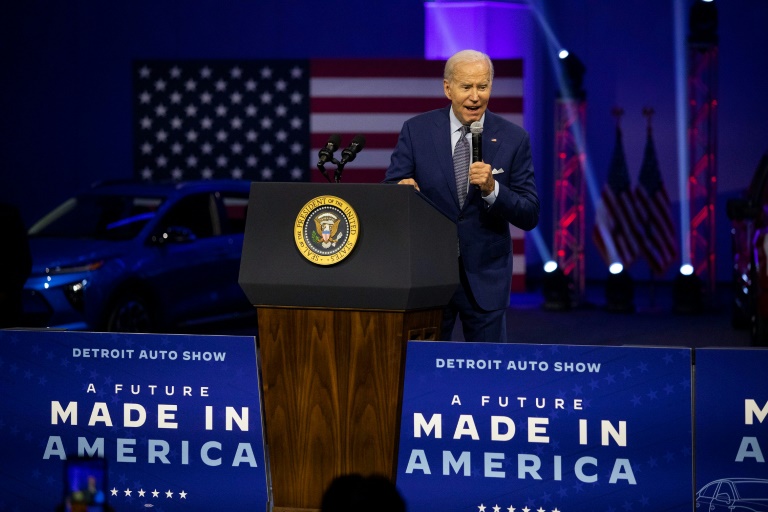
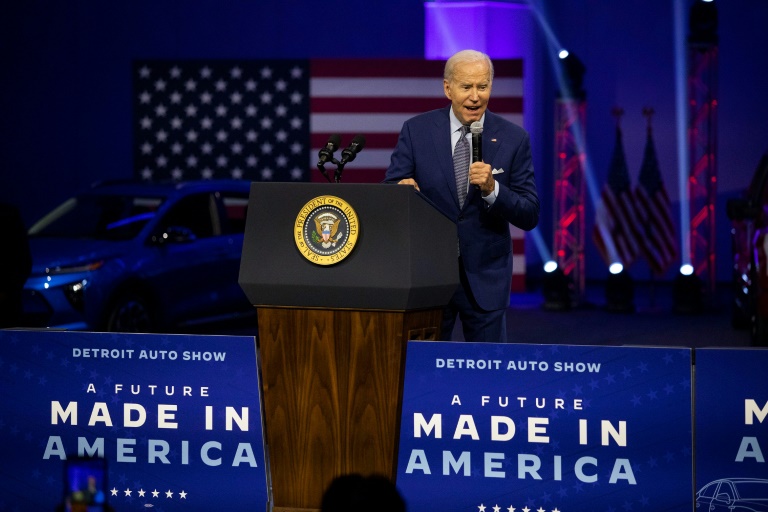
US President Joe Biden on Monday called on Congress to intervene urgently to prevent a strike by railroad workers that he warned would “devastate our economy.”

Biden asked Congress to deploy rarely used legislative powers to force adoption of a preliminary deal which freight rail companies and workers had struck in September before some of the trade unions backed off, returning to their threat to go on strike.

While noting his pro-union credentials, the Democratic party leader said there was no alternative to forcing through the contested deal, which covers wage increases and working conditions.

“Let me be clear: a rail shutdown would devastate our economy. Without freight rail, many US industries would shut down. My economic advisors report that as many as 765,000 Americans — many union workers themselves — could be put out of work in the first two weeks alone,” Biden said in a statement.

If an agreement is not reached by December 9, the world’s largest economy could see nearly 7,000 freight trains grind to a halt, at a cost of more than $2 billion a day, according to the American Association of Railroads.

Alluding to the crucial role played by trains in serving the continent-spanning country, Biden said a strike would mean that “communities could lose access to chemicals necessary to ensure clean drinking water. Farms and ranches across the country could be unable to feed their livestock.”

– December 9 deadline –

A dispute between workers and freight companies has been simmering for months. A strike was narrowly averted in September after Biden and his top aides intervened in marathon negotiations.

However four of the 12 unions involved later failed to ratify the deal, sparking the new crisis.

“As a proud pro-labor president, I am reluctant to override the ratification procedures and the views of those who voted against the agreement,” Biden said. “But in this case — where the economic impact of a shutdown would hurt millions of other working people and families — I believe Congress must use its powers to adopt this deal.”

Biden acknowledged union concerns over lack of sick leave in the deal but said now was not the time to try and fix an issue plaguing workplaces across the economy.

“I share workers’ concern,” he said, “but at this critical moment for our economy, in the holiday season, we cannot let our strongly held conviction for better outcomes for workers deny workers the benefits of the bargain they reached, and hurl this nation into a devastating rail freight shutdown.”

Biden urged Congress to pass the legislation “well in advance of December 9th so we can avoid disruption.”

Nancy Pelosi, the Democratic speaker of the House until January, when Republicans take over, said the bill would be put to a vote “this week.”

It will then go to the Senate, where the Democrats hold a narrow majority.

Congress must step in to prevent 'devastating' US rail strike: Biden

US President Joe Biden on Monday called on Congress to intervene urgently to prevent a strike by railroad workers that he warned would “devastate our economy.”

Biden asked Congress to deploy rarely used legislative powers to force adoption of a preliminary deal which freight rail companies and workers had struck in September before some of the trade unions backed off, returning to their threat to go on strike.

While noting his pro-union credentials, the Democratic party leader said there was no alternative to forcing through the contested deal, which covers wage increases and working conditions.

“Let me be clear: a rail shutdown would devastate our economy. Without freight rail, many US industries would shut down. My economic advisors report that as many as 765,000 Americans — many union workers themselves — could be put out of work in the first two weeks alone,” Biden said in a statement.

If an agreement is not reached by December 9, the world’s largest economy could see nearly 7,000 freight trains grind to a halt, at a cost of more than $2 billion a day, according to the American Association of Railroads.

Alluding to the crucial role played by trains in serving the continent-spanning country, Biden said a strike would mean that “communities could lose access to chemicals necessary to ensure clean drinking water. Farms and ranches across the country could be unable to feed their livestock.”

– December 9 deadline –

A dispute between workers and freight companies has been simmering for months. A strike was narrowly averted in September after Biden and his top aides intervened in marathon negotiations.

However four of the 12 unions involved later failed to ratify the deal, sparking the new crisis.

“As a proud pro-labor president, I am reluctant to override the ratification procedures and the views of those who voted against the agreement,” Biden said. “But in this case — where the economic impact of a shutdown would hurt millions of other working people and families — I believe Congress must use its powers to adopt this deal.”

Biden acknowledged union concerns over lack of sick leave in the deal but said now was not the time to try and fix an issue plaguing workplaces across the economy.

“I share workers’ concern,” he said, “but at this critical moment for our economy, in the holiday season, we cannot let our strongly held conviction for better outcomes for workers deny workers the benefits of the bargain they reached, and hurl this nation into a devastating rail freight shutdown.”

Biden urged Congress to pass the legislation “well in advance of December 9th so we can avoid disruption.”

Nancy Pelosi, the Democratic speaker of the House until January, when Republicans take over, said the bill would be put to a vote “this week.”

It will then go to the Senate, where the Democrats hold a narrow majority.

Missouri man to be executed for murder of police officer

A Missouri man convicted of murder is to be put to death in the midwestern US state on Tuesday in an execution that his 19-year-old daughter has been barred from witnessing.

Kevin Johnson, a 37-year-old African-American, was sentenced to death for the 2005 murder of a white policeman in a suburb of St Louis.

Johnson is to be put to death by lethal injection at 6:00 pm Central Time (0000 GMT) in a prison in the town of Bonne Terre.

Johnson’s daughter, Corionsa “Khorry” Ramey, sued to be allowed to witness her father’s execution but a federal court turned down her request because she is below the minimum state age of 21.

“I’m heartbroken that I won’t be able to be with my dad in his last moments,” Ramey said in a statement following the court decision.

“My dad is the most important person in my life,” she said. “He has been there for me my whole life, even though he’s been incarcerated.

“He is a good father, the only parent I have left,” Ramey said. “He has worked very hard to rehabilitate himself in prison.”

Corene Kendrick, a lawyer for Ramey and the American Civil Liberties Union, condemned the court’s refusal to allow her to attend the execution.

“Compounding her pain and grief by barring her from being with her father will do nothing to provide closure or healing to anyone else,” Kendrick said.

“If 19 is not old enough to witness an execution, then the state should spare Mr. Johnson’s life for what he did when he was 19.”

Johnson was convicted of shooting and killing a white police sergeant on July 5, 2005, two hours after the death of Johnson’s 12-year-old brother from a seizure.

Police officers were at the family home at the time to serve an arrest warrant on Johnson and he blamed the police for his brother’s death.

Johnson’s lawyers have filed last-minute appeals in a bid to save his life, arguing that his 2007 conviction and death sentence were tainted by racial discrimination.

A special prosecutor appointed to look into the case has asked for a stay of execution, citing evidence of racial discrimination on the part of the state prosecutor.

The Missouri Supreme Court was hearing arguments in the case on Monday.

If the court declines to halt the execution and it goes ahead, Johnson would be the 17th inmate put to death in the United States this year.

Kim Kardashian 're-evaluating' Balenciaga ties after controversial ads

Reality show star and social media titan Kim Kardashian said she is “re-evaluating” her involvement with luxury fashion house Balenciaga, after it apologized for ads featuring children holding teddy bears wearing what critics called bondage gear.

The French brand, part of the luxury Kering group, last week withdrew the photos from the Spring/Summer 2023 advertising campaign. Two of them showed young children holding handbags in the shape of teddy bears, which were wearing black leather straps with silver studs.

Internet commentators noticed another photo from a Balenciaga-Adidas ad collaboration showed printed documents from a US Supreme Court ruling on child pornography.

After that revelation, Balenciaga filed a $25 million lawsuit against the company that produced the advertisements, according to reports. 

“As a mother of four, I have been shaken by the disturbing images,” Kardashian, a celebrity ambassador for the brand, wrote on Instagram Sunday night, adding that she had spent the last few days talking with the Balenciaga team “to understand for myself how this could have happened.”

“The safety of children must be held with the highest regard and any attempts to normalize child abuse of any kind should have no place in our society — period,” she wrote.

“As for my future with Balenciaga, I am currently re-evaluating my relationship with the brand,” the star posted to her account, which has 74 million followers.

Last week, Balenciaga posted an apology on its own Instagram account. 

“Our plush bear bags should not have been featured with children in this campaign. We have immediately removed the campaign from all platforms,” the post said. 

They then posted another apology, this time addressing the ad that featured the court documents referencing child pornography laws.  

“We apologize for displaying unsettling documents in our campaign. We take this matter very seriously and are taking legal action against the parties responsible for creating the set and including unapproved items for our Spring 23 campaign photoshoot,” the post said.

The New York Post reported that Balenciaga had filed a $25 million lawsuit against production company North Six and set designer Nicholas Des Jardins.

Amelia Brankov, a lawyer for Des Jardins, said there “certainly was no malevolent scheme going on.”

“As Balenciaga is aware, numerous boxes of documents simply were sourced from a prop house as rental items,” she told AFP.

“Moreover, representatives from Balenciaga were present at the shoot, overseeing it and handling papers and props, and Des Jardins as a set designer was not responsible for image selection from the shoot,” the lawyer added.

For Balenciaga, who apologized again on Monday following Kardashian’s comments, the controversy comes at a bad time.

It had ended its partnership with Kardashian’s ex-husband, rapper and designer Kanye West, last month after West, also known as Ye, posted an anti-Semitic tweet and appeared at a Paris fashion show wearing a shirt with the slogan “White Lives Matter,” a rebuke to the Black Lives Matter racial equality movement.

Close Bitnami banner
Bitnami