AFP

'Forgotten' Afghan stories highlighted in two new films from Netflix, Nat Geo

The world’s focus has shifted to the war in Ukraine, but two major new documentaries aim to throw the spotlight back on Afghanistan, and the people left behind by the United States’ rapid withdrawal last year.

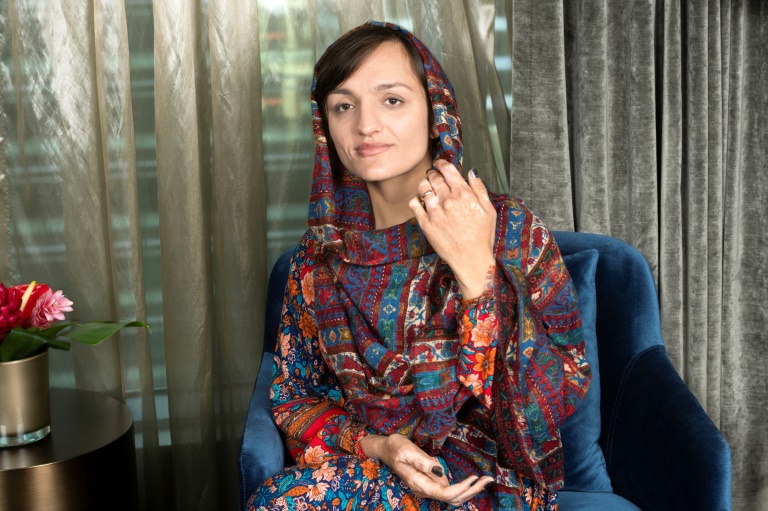
National Geographic’s “Retrograde” follows an Afghan general who tried in vain to hold back the Taliban advance in 2021, while Netflix’s “In Her Hands” tells the story of the country’s youngest woman mayor, who had to flee as the Islamists took over.

“We’ve forgotten about this story — when was the last time we discussed the war in Afghanistan, or read an article about it?” said “Retrograde” director Matthew Heineman. 

“Obviously there’s still some coverage of it, but… not that many people are talking about this country that we left behind.”

Zarifa Ghafari, the former mayor spotlighted by “In Her Hands,” told AFP that back under the Taliban, Afghanistan is “the only country around the world nowadays where a woman can sell their body, their children, anything else, but are not able to go to school.”

But at international political meetings, “Afghanistan is out of those discussions.”

Both movies begin in the months before the US withdrawal, as their subjects tried to build a safer and more egalitarian future for their country.

The two films end with their central characters forced to watch from abroad as the Taliban rapidly erases all their work.

“Retrograde” began as a documentary with rare inside access to US special forces.

In one early scene, US troops are shown having to destroy — or retrograde — their equipment and wastefully fire off excess ammunition that was sorely needed by their Afghan allies.

After the Americans left their base in Helmand, Afghan general Sami Sadat agreed to let Heineman’s cameras stay and follow him, as he took charge of the ultimately doomed effort to stave off Taliban advances.

In one scene, Sadat — stubbornly determined to rally his men to fight on as the situation crumbles around them — chides his aide for bringing to his war office persistent reports of nearby Afghan troops downing their weapons.

“Every neon sign was saying ‘stop, give up, this is over,’ and he had this blind faith that maybe, just maybe, if he held on to Lashkar Gah or Helmand, that they could beat back the Taliban,” recalled Heineman. 

Sadat eventually had to flee, and the filmmakers shifted their lens again, to desperate scenes at Kabul airport as Afghans fought for spaces on the last American planes out.

“It was one of the most difficult things I’ve ever witnessed in my career,” added Heineman, who was nominated for an Oscar for 2015’s “Cartel Land.”

“Discussions around wars in public policy and foreign policy, they’re often talked about and discussed without the human element,” said the director.

“One of the things I’ve tried to do throughout my career is take these large, amorphous subjects and put a human face to them.”

– ‘Murder’ –

Former mayor Ghafari had survived assassination attempts and seen her father gunned down by the Taliban before she too left Afghanistan as the Islamists moved in. 

“Talking about that moment, I’m still not able to stop crying… it was something that I really never wanted to do,” said Ghafari, who drew the Taliban’s ire by campaigning for girls’ education after being appointed mayor of Maidan Shahr aged 24.

“I had some personal responsibilities, especially after the murder of my dad… to help secure my family.”

The directors of “In Her Hands,” which counts Hillary Clinton among its executive producers, returned to Afghanistan and filmed Ghafari’s former driver Massoum, now unemployed and living under the Taliban.

In unsettling scenes, he is seen bonding with the same fighters who once attacked the car in which he was driving Ghafari.

“The story of Massoum represents the story of all Afghanistan’s crisis… why people are feeling betrayed,” said Ghafari.

– ‘Share their pain’ –

Though the conflicts in Afghanistan and Ukraine are vastly different in nature, both films offer a cautionary tale about what can happen once the West’s focus shifts.

“Obviously, that’s happened throughout history, and will continue to happen long into the future. And so what can we learn from this experience?” said Heineman.

Ghafari said: “Whatever happens in Ukraine and happened in Ukraine, it’s the same thing that we have been going through for like 60 years.

“The same thing, again and again. So we share their pain.”
Rescuers search for missing after landslide on Italian island kills one

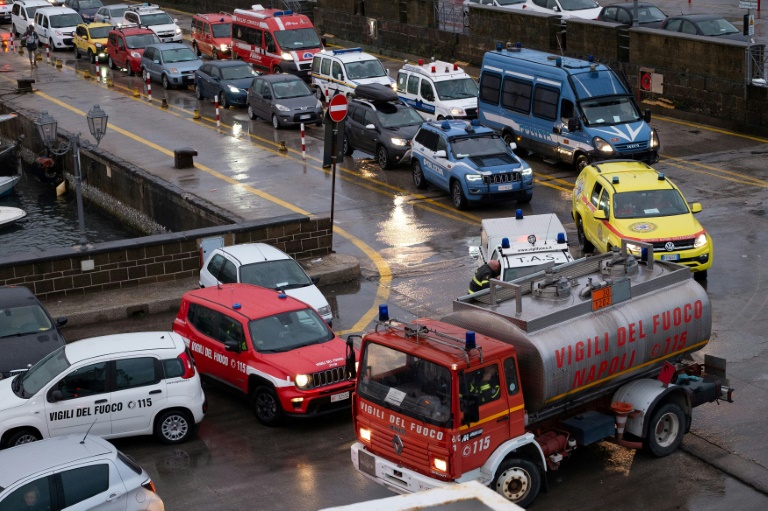
Italian rescuers were searching for a dozen missing people on the southern island of Ischia on Sunday after a landslide killed at least one person, as the government scheduled an emergency meeting.

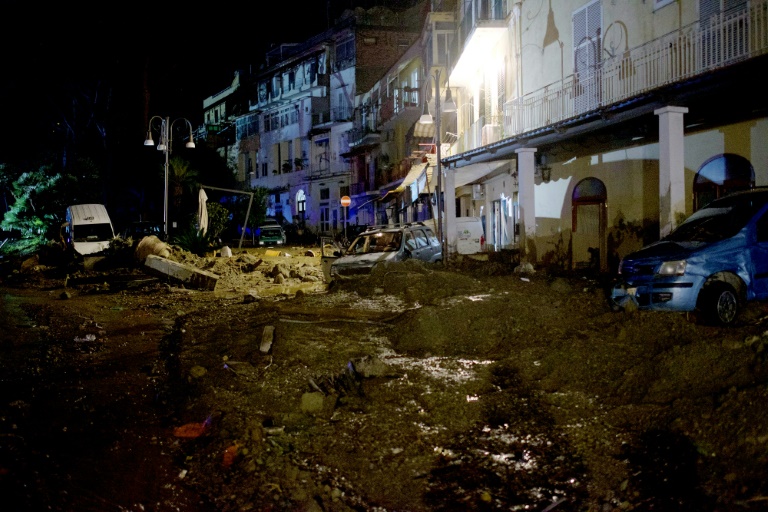
A wave of mud and debris swept through the small town of Casamicciola Terme early Saturday morning, engulfing at least one house and sweeping cars down to the sea, local media and emergency services said.

Rescuers had recovered the body of a 31-year-old woman, according to Italian news agency AGI, with other local media reporting that 13 people had been injured in the incident.

About a dozen people were still unaccounted for by early Saturday evening, according to Claudio Palomba, prefect of Naples, of which the island is part.

But some people who had earlier been reported missing had since been found safe, including one family with a newborn baby, he said.

Prime Minister Giorgia Meloni tweeted her sympathy to those affected, saying she had called an extraordinary cabinet meeting on Sunday to discuss the disaster.

“We are afraid that there might be other victims, but so far the current figure is one dead,” Luca Cari, a spokesman for the fire service, told AFP.

The rescue effort was hampered by rain and high winds, which also delayed ferries bringing reinforcements from the mainland.

Interior Minister Matteo Piantedosi had earlier warned there were people trapped in the mud, saying it was a “very serious” situation.

However, he denied a statement by his colleague Matteo Salvini, the deputy prime minister and infrastructure minister, that eight people had died, saying this had not been confirmed.

– Complex rescue operation –

Heavy rain sent torrents of mud through the streets of Casamicciola Terme, a settlement on the north of Ischia, a lush island near Capri that is thronged with tourists in summer.

Trees were upturned and cars left battered on the side of the road or in the water, according to AFP journalists.

The fire service said earlier one house had been overwhelmed by the mud and two people had been rescued from a car that had been swept into the sea.

In the worst-affected area of the town, at least 30 families were trapped in their homes without water or electricity, with mud and debris blocking the road, ANSA news agency reported.

Officials said they expected to evacuate and find temporary homes for between 150 and 200 people by Saturday evening.

“The rescue effort remains complex due to the weather conditions,” said the department for civil protection, but it stressed teams would keep working through the night.

Local authorities called on residents of Ischia to stay inside to avoid hindering the rescue operation.

Casamicciola Terme was hit by an earthquake in 2017, in which two people died.

The devastation in Ischia comes just weeks after 11 people died in heavy rain and flooding in the central Italian region of Marche.

Breakthrough in Venezuela talks spurs US to ease embargo

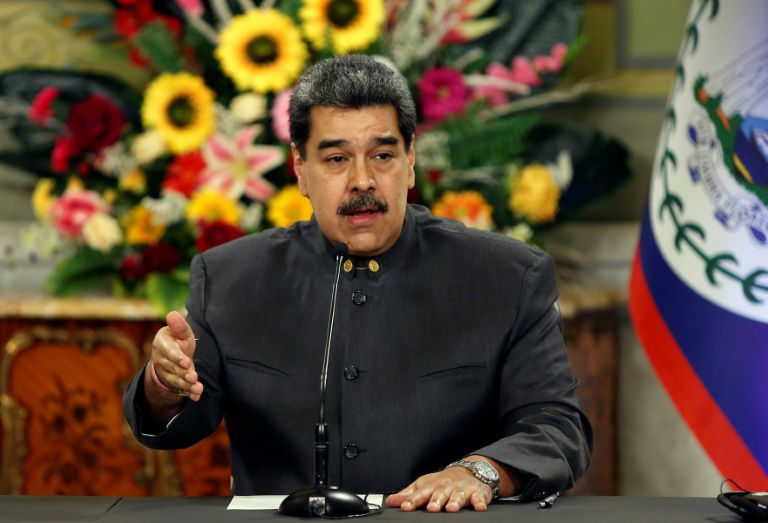
The government of Nicolas Maduro and the Venezuelan opposition broke a political stalemate Saturday with a broad social accord, and the US government responded by allowing a major US oil company to resume operations in Venezuela.

The accord heralded a potential easing of a grinding economic and political crisis in Venezuela.

It paves the way for the United Nations to oversee a trust fund of frozen assets of the Maduro government to be used for a variety of social projects in the South American country, including programs related to education, health, food security, flood response and electricity.

“We have identified a set of resources belonging to the Venezuelan state, frozen in the global financial system, to which it is possible to access,” said Dag Nylander, an envoy from Norway, which facilitated the negotiations. The amount to be released was not specified.

The agreement, signed in Mexico, ended 15 months of stalemate between the two sides, potentially easing a massive flow of refugees from Venezuela throughout the region and even impacting world oil markets.

Maduro praised the deal on Twitter, saying it “opens the way for a new chapter for Venezuela, to keep advancing towards the peace and well-being that all Venezuelans yearn for.”

And UN deputy spokesman Farhan Haq said in a statement that Secretary-General Antonio Guterres was committed to supporting the parties, calling the breakthrough “an important milestone that has the potential to deliver broader benefits for the people of Venezuela.”

The US Treasury Department said the accord marks “important steps in the right direction to restore democracy” in Venezuela, and responded by issuing a license to Chevron Corp. to resume limited oil extraction operations in Venezuela.

– World’s largest oil reserves –

The license will remain in effect for six months while the Biden administration assesses whether the Maduro government meets commitments made in the accord, Treasury said.

Chevron said it would “continue supporting social investment programs aimed at providing humanitarian relief” in the country and that the “decision brings added transparency to the Venezuelan oil sector.”

The relaxation of curbs on Chevron’s operations in Venezuela, which has the world’s largest oil reserves, would allow the nation to move toward re-entering global oil markets. 

International efforts to resolve the Venezuelan crisis have gained strength since Russia’s invasion of Ukraine and the pressure it has placed on global energy supplies.

A joint statement by Canada, the United States, Britain and the EU pledged “willingness to review sanctions” on Venezuela but demanded that it release political prisoners, respect press freedom and guarantee independence of the judiciary and electoral bodies. 

The powerful Democratic chairman of the US Senate Foreign Relations Committee, Robert Menendez, said the Biden administration should move slowly.   


– ‘Criminal dictatorship’ –

“If Maduro again tries to use these negotiations to buy time to further consolidate his criminal dictatorship, the United States… must snap back the full force of our sanctions that brought his regime to the negotiating table in the first place,” Menendez said in a statement. 

Despite its huge oil reserves, Venezuela suffers grinding poverty and a political crisis that has led a UN-estimated seven million Venezuelans to flee the country in recent years. Food, medicine and such basics as soap and toilet paper are often in short supply. 

Saturday’s accord made no headway on a critical issue: How to move ahead toward presidential elections scheduled for 2024.

Venezuela’s political crisis has worsened since Maduro declared himself victor of contested 2018 elections, which were widely seen as fraudulent, and generated widespread street protests.

Maduro’s opposition is seeking free and fair presidential elections while Caracas wants the international community to recognize Maduro as the rightful president and to lift sanctions, particularly a US oil embargo and freeze on the nation’s overseas assets.

After the contested 2018 elections, almost 60 countries, including the United States, recognized opposition leader Juan Guaido as acting president.

The Unitary Platform opposition group has not reached consensus over the conditions it requires to take part in the vote, a source close to the negotiations told AFP.

Guaido’s influence has waned in recent years, and he has lost key allies both at home and in the region, where many countries have since elected leftist presidents.

White House blasts Trump for meeting with white supremacist

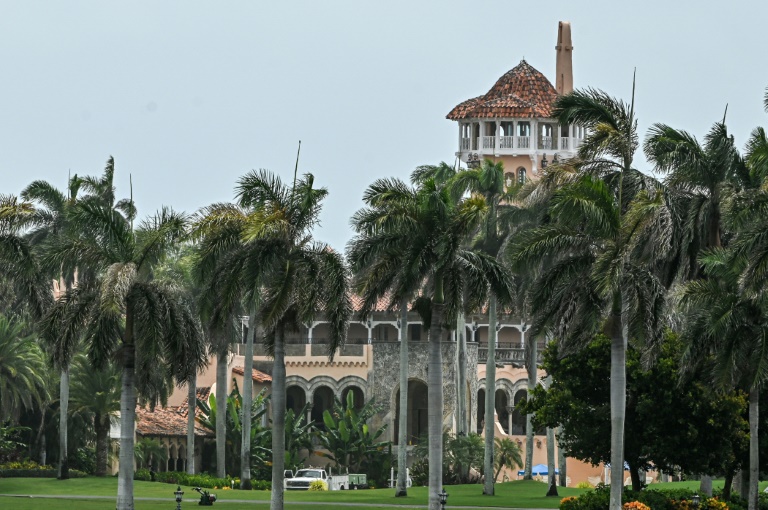
The White House on Saturday condemned former president Donald Trump for meeting at his Florida estate with a renowned white supremacist and with rapper Kanye West who is embroiled in a storm over anti-Semitic remarks.

Trump acknowledged having dinner with West, who now is known as Ye, on Tuesday night at Mar-a-Lago, and said he brought along friends, one of whom was Nick Fuentes, an outspoken anti-Semite and racist.

“I didn’t know Nick Fuentes,” Trump posted on his Truth Social account late Friday.

White House deputy press secretary Andrews Bates condemned Trump’s meeting with Fuentes.

“Bigotry, hate, and anti-Semitism have absolutely no place in America — including at Mar-a-Lago. Holocaust denial is repugnant and dangerous, and it must be forcefully condemned,” Bates told CNN.

President Joe Biden, who is spending the holiday weekend in Nantucket, ducked a question about Trump’s dinner: “You don’t wanna hear what I think.”

Fuentes is a Holocaust denier whose YouTube channel was permanently suspended in early 2020 for violating the platform’s hate speech policy.

Trump announced his plans in mid-November to seek reelection in 2024, and his embrace of a white nationalist unsettled some of his onetime administration officials.

David Friedman, who was Trump’s former ambassador to Israel, blasted the dinner at Mar-a-Lago.

“Even a social visit from an antisemite like Kanye West and human scum like Nick Fuentes is unacceptable,” Friedman said in one of several tweets. 

“Antisemites deserve no quarter among American leaders, right or left,” he said.

Axios, a news website, cited what it said was a source familiar with the dinner who said Trump “seemed very taken” with Fuentes even though he didn’t seem to know anything about his background.

West, who is now known legally as Ye, has lost major brand partnerships with the German sportwear company Adidas and US retailer Gap over recent anti-Semitic statements and associations with extremists.

Equatorial Guinea's poor lose hope in promised social housing

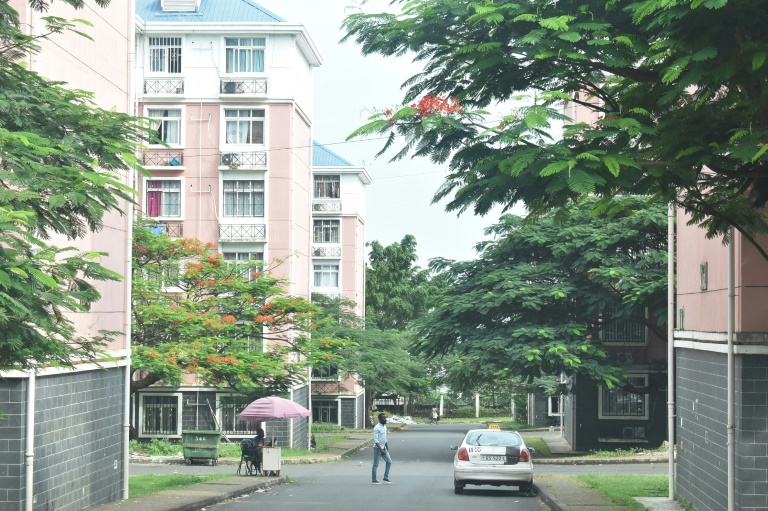
Brand new homes intended for Equatorial Guinea’s lower-income families have cropped up across the capital Malabo, but shanty town residents say they are going to the middle class and wealthy instead.

President Teodoro Obiang Nguema Mbasogo on Saturday won a sixth term in office, a much-expected result in an authoritarian country with next to no political opposition.

The 80-year-old has been in power for 43 years — the longest rule of any leader alive in the world today except monarchs.

During his election campaign in 2009, Obiang promised “social housing for all” in the oil-rich central African state.

Obiang planned to provide enough housing to raise Malabo’s shanty towns, including Nubili, a mass of tin-roofed shacks along narrow paths that is home to thousands of families in the heart of the city.

Since, some 20,000 housing projects have sprung up in the country of around 1.5 million residents.

But sitting outside his shack in Nubili, 70-year-old Julio Ondo said none of them appeared to be for people like him.

“They’ve made fools of the poor,” he said. I’ve lost all hope of one day living in “dignified housing”.

Most people live in poverty in Equatorial Guinea, the World Bank estimates, while wealth is concentrated in the hands of just a few families.

– ‘I’ll be dead’ –

In some parts of Malabo today, lines of identical apartment blocks have sprung up as far as the eye can see, built with the profits of high international oil prices.

In the suburb of Buena Esperanza, some 2,300 small detached homes appeared during the 2010s, supposed to welcome families from Nubili.

But today, shiny four-wheel drives and other expensive cars line the neighbourhood’s streets, appearing to indicate the wealth of its new residents.

The homes are being sold for around $15,500, payable in monthly instalments of $78.

But that is astronomical for many in Nubili.

Plantain farmer Antonio Omecha, 72, is one of many who had hoped the housing plan would allow him to leave a slum plagued with disease and frequent fires.

He said he did receive a housing coupon to go and live in Buena Esperanza.

“But we had to pay 1.5 million francs (more than $2,350)” upfront first, he said.

It was impossible on his monthly income of $30.

His neighbour Tobias Ondo, 65, said the new homes were simply too expensive.

“Do you really think someone who works seven days and barely makes 2,000 francs can afford to own such a home?” he said.

“I’ll be dead before I go and live in the public housing promised by the president.”

– ‘Powerful’ landlords –

Equatorial Guinea is the region’s third richest country, with a GDP per capita of $8,462 last year, after the Seychelles and Mauritius, the World Bank says.

But in 2006, when the oil boom was in full swing, more than three quarters of the population lived in “extreme poverty”, or on less than $1.90 a day, the international financial body said. There have been no new figures since.

The country ranked 172 out of 180 in Transparency International’s 2021 Corruption Perceptions Index.

During his election campaign at the start of the month, Obiang admitted that social housing intended for “people without great means” had been snapped up instead by “people able to build their own home”.

But he did not offer a solution.

Martinez Obiang, of micro-financing firm Atom Finances, says he thinks the homes should have cost no more than the equivalent of $780, payable in tiny monthly instalments of less than $3.

Sociologist Nsogo Eyi said the new homes, including those in Buena Esperanza, did not seem to be serving their intended purpose.

“Some powerful men have bought them to rent them out, including to expats,” he said.

AFP reached out to several of these new owners, but they refused to comment.

sam-lad-gir-tg/ah/imm

Breakthrough in Venezuela talks spurs US to ease embargo

The government of Nicolas Maduro and the Venezuelan opposition broke a political stalemate Saturday with a broad social accord, and the US government responded by allowing a major US oil company to resume operations in Venezuela.

The breakthrough signaled a potential easing of a grinding economic and political crisis in Venezuela. It will impact world oil markets and could ease a massive flow of refugees from Venezuela throughout the region.

The accord reached at a meeting room in a hotel in Mexico City represents “hope for all of Latin America,” said Mexican Foreign Minister Marcelo Ebrard, who helped bring the talks about.

The two sides in the Venezuelan crisis signed a humanitarian agreement focused on education, health, food security, flood response and electricity programs.

They also agreed to continue talks on presidential elections scheduled for 2024.

Venezuela’s political crisis has worsened since Maduro declared himself victor of a contested 2018 elections, which were widely seen as fraudulent. 

Immediately following the signing of the agreement in Mexico City, the US Treasury Department issued a license to oil major Chevron to resume limited oil extraction operations in Venezuela, which has the world’s largest reserves of crude.

The license will remain in effect for six months while the Biden administration judges whether the Maduro government meets commitments made in the accord signed Saturday, Treasury said.

International efforts to resolve the Venezuelan crisis have gained strength since Russia’s invasion of Ukraine and the pressure it has placed on global energy supplies.

Despite its huge oil reserves, Venezuela suffers grinding poverty and a political crisis that has led a UN-estimated seven million Venezuelans to flee the country in recent years. Food, medicine and such basics as soap and toilet paper are often in short supply. 

Maduro’s opposition is seeking free and fair presidential elections, next due in 2024, while Caracas wants the international community to recognize Maduro as the rightful president and to lift sanctions, particularly a US oil embargo.

Government negotiator Jorge Rodriguez told reporters after arriving in Mexico City that one of his objectives was to ink a “broad social agreement” with the opposition.

The government side said earlier that the pact was expected to establish a mechanism to restore access to funds frozen in the international financial system.

The money would be used to improve public health care and the power grid, according to a statement released by Rodriguez, who did not specify the amount or where the funds were blocked. 

– ‘Live in peace’ –

After the contested 2018 elections, almost 60 countries, including the United States, recognized opposition leader Juan Guaido as acting president.

Rodriguez, who also presides over the National Assembly, said before departure from a Caracas airbase that his team will defend “the right that we have… to live in peace.”

For its part, the Unitary Platform opposition group demanded concrete steps to resolve “the humanitarian crisis, respect for human rights… and especially (guarantees for) free and observable elections.”

Nevertheless, a source close to the negotiating process told AFP that the opposition has not reached consensus over the conditions it requires to take part in a 2024 vote.

Guaido’s influence has waned in recent years, and he has lost key allies both at home and in the region, where many countries have since elected leftist presidents.

Colombian leader Gustavo Petro has become a new actor in the talks since taking the reins as his country’s first leftist president in August.

He has worked to improve his country’s relationship with Venezuela, resuming diplomatic ties for the first time since 2019, when then president Ivan Duque refused to recognize Maduro’s election.

One dead, others still missing in landslide on Italian island

One woman died and other people were still missing Saturday after heavy rains caused a landslide on the Italian island of Ischia, a local official said.

A wave of mud and debris swept through the small town of Casamicciola Terme in the early hours of the morning, engulfing at least one house and sweeping cars down to the sea, media reports and emergency services said.

The first victim was confirmed to be a woman whose body was found by rescuers, according to a media briefing by the prefect of Naples, Claudio Palomba.

He said some of those reported missing earlier were later found safe, including one family with a newborn baby, but around 10 other people were still unaccounted for mid-afternoon.

The rescue effort was hampered by continued rain and high winds, which also delayed ferries bringing reinforcements from the mainland.

Interior Minister Matteo Piantedosi had earlier warned there were people trapped in the mud, saying it was a “very serious” situation.

However, he denied a statement by his colleague Matteo Salvini, the deputy prime minister and infrastructure minister, that eight people had died, saying this had not been confirmed.

– Complex rescue operation –

The heavy rain sent torrents of mud through the streets of Casamicciola Terme, on the north of Ischia, a lush island located near Capri that is thronged with tourists in the summer months.

Trees were upturned and cars left battered on the side of the road or in the water, according to images published by emergency services and local media.

The fire service earlier said one house had been overwhelmed by the mud and that two people had been rescued from a car swept into the sea.

In the worst affected area of Casamicciola Terme, at least 30 families were trapped in their homes without water or electricity, with mud and debris blocking the road, the ANSA news agency reported.

Officials later said they expected to evacuate and find temporary homes for between 150 and 200 people by Saturday evening.

“The rescue effort remains complex due to the weather conditions,” said the department for civil protection, but stressed teams would keep working through the night using headlights.

Local authorities have called on residents of Ischia to stay inside so as not to hinder the rescue operation.

Prime Minister Giorgia Meloni said she was following the situation, offering her thoughts to those affected.

Casamicciola Terme was hit by an earthquake in 2017, in which two people died.

The devastation in Ischia came just weeks after 11 people died in heavy rain and flooding in central eastern Italy.

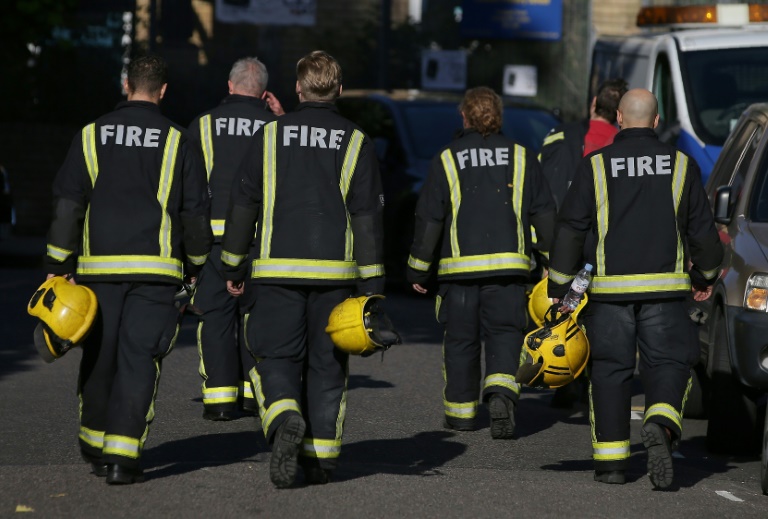
Union 'sceptical' of reforms to scandal-hit London fire service

The union representing UK firefighters said Saturday it was “sceptical” London Fire Brigade (LFB) leaders would implement reforms after an independent review concluded the service was institutionally misogynistic and racist.

The LFB has promised a “zero tolerance approach to discrimination, harassment and bullying” and accepted around two dozen recommendations from the damning review led by former senior prosecutor Nazir Afzal.

He discovered dozens of examples of racism, bullying and misogyny, including a female firefighter’s helmet being filled with urine and a black employee finding a noose above his locker.

In its response the Fire Brigades Union, the trade union for firefighters and other staff, noted it had “raised concerns about many of the issues contained within this report historically”.

Gareth Cook, its regional organiser for London, said the union was “committed to working to address these serious concerns” but that “we remain sceptical about the changes senior leaders will implement with regards to their own behaviours”.

“We aim to improve the working conditions of our members and protect them from discrimination and unfair or illegal treatment by representing them in the workplace,” he said.

London Fire Commissioner Andy Roe apologised late Friday “for the harm that has been caused” after the report’s contents were leaked by The Sunday Times.

The service’s response includes launching an external complaints system, and piloting the use of bodycams for when staff meet the public on home fire safety visits.

London Mayor Sadiq Khan called the review “a watershed moment” and the findings “abhorrent”.

He demanded “significant and necessary changes to root out all those found to be responsible for sexism, racism, misogyny, homophobia, bullying or harassment — and to support members of staff to speak out”.

The report has echoes of the 1999 Macpherson inquiry into London’s Metropolitan Police, following the racist murder of teenager Stephen Lawrence. 

That report condemned the force for “institutional racism”.

A quarter century on, the Met is still grappling with problems of racial and gender biases, amid a recent slew of allegations of sexual misconduct and discrimination.

Afzal said on Saturday staff working in other public bodies — including other police forces, the National Health Service (NHS) and the BBC — had come forward in the last 24 hours with “serious concerns” about their treatment.

He called for an expanded probe into sexism and racism across public bodies.

“There needs to be a national inquiry, particularly in relation to misogyny because this is a subject that hasn’t had the attention that it deserves,” Afzal added.

Union 'sceptical' of reforms to scandal-hit London fire service

The union representing UK firefighters said Saturday it was “sceptical” London Fire Brigade (LFB) leaders would implement reforms after an independent review concluded the service was institutionally misogynistic and racist.

The LFB has promised a “zero tolerance approach to discrimination, harassment and bullying” and accepted around two dozen recommendations from the damning review led by former senior prosecutor Nazir Afzal.

He discovered dozens of examples of racism, bullying and misogyny, including a female firefighter’s helmet being filled with urine and a black employee finding a noose above his locker.

In its response the Fire Brigades Union, the trade union for firefighters and other staff, noted it had “raised concerns about many of the issues contained within this report historically”.

Gareth Cook, its regional organiser for London, said the union was “committed to working to address these serious concerns” but that “we remain sceptical about the changes senior leaders will implement with regards to their own behaviours”.

“We aim to improve the working conditions of our members and protect them from discrimination and unfair or illegal treatment by representing them in the workplace,” he said.

London Fire Commissioner Andy Roe apologised late Friday “for the harm that has been caused” after the report’s contents were leaked by The Sunday Times.

The service’s response includes launching an external complaints system, and piloting the use of bodycams for when staff meet the public on home fire safety visits.

London Mayor Sadiq Khan called the review “a watershed moment” and the findings “abhorrent”.

He demanded “significant and necessary changes to root out all those found to be responsible for sexism, racism, misogyny, homophobia, bullying or harassment — and to support members of staff to speak out”.

The report has echoes of the 1999 Macpherson inquiry into London’s Metropolitan Police, following the racist murder of teenager Stephen Lawrence. 

That report condemned the force for “institutional racism”.

A quarter century on, the Met is still grappling with problems of racial and gender biases, amid a recent slew of allegations of sexual misconduct and discrimination.

Qatari World Cup streaming service partly inaccessible in Saudi

The official streaming platform of the World Cup is inaccessible in much of Saudi Arabia, subscribers told AFP on Saturday, saying they had received no explanation for the outage.

The platform, Tod TV, is owned by the Qatari broadcaster beIN Media Group, which was banned in Saudi Arabia for several years during a row between the two countries but was restored in October 2021. 

“Due to matters beyond our control, we are experiencing an outage in the Kingdom of Saudi Arabia, which is currently impacting TOD.tv, the official streaming partner of the FIFA World Cup Qatar 2022. Additional information will be provided as soon as it is available,” beIN said in a message sent to partners and subscribers. 

The Saudi government did not respond to a request for comment about the disruption, while beIN declined to comment. 

Tod TV is the official World Cup streaming service in 24 countries in the Middle East and North Africa. 

Several subscribers in Saudi Arabia told AFP on Saturday they had been unable to access the service since the World Cup began on November 20. 

One said the service cut out fully about an hour before the broadcast of the opening ceremony. 

Another said the service still works briefly but for no more than 10 minutes before an error message appears. 

“Sorry, the requested page is violating the regulations of Ministry of Media,” the error message says. 

“I want my money,” one subscriber told AFP, saying efforts to get a refund on the service, which costs about 300 Saudi riyals (roughly $80) per month, had been unsuccessful. 

beIN is broadcasting 22 World Cup matches for free in Saudi Arabia, including those of the Saudi Green Falcons, who stunned the world on Tuesday with their 2-1 defeat of Argentina.

The Saudi side were set to face Poland on Saturday afternoon.

– Mending ties –

Crown Prince Mohammed bin Salman, Saudi Arabia’s 37-year-old de facto ruler, orchestrated a regional boycott of Qatar beginning in June 2017, the same month he became first in line to the throne. 

Saudi Arabia, the United Arab Emirates, Bahrain and Egypt cut ties with Doha over allegations it supported extremists and was too close to arch-rival Iran — allegations Doha denied.

During the boycott, beIN Media Group was banned in Saudi Arabia. 

But Riyadh announced in October last year it was lifting the ban, smoothing the way for the takeover of England’s Newcastle United football club by a Saudi-backed consortium.

The kingdom’s sovereign wealth fund paid $408 million for an 80 percent stake in the Premier League club.

The Saudi purchase of Newcastle proved deeply controversial, with critics quick to deride it as an example of “sportswashing”, or using athletics to distract from human rights abuses. 

The sovereign wealth fund, known as the Public Investment Fund, is now considering investing in beIN, Bloomberg reported last month.

Media Minister Majid al-Qasabi is a member of the fund’s board. 

Prince Mohammed attended the World Cup opening ceremony where he posed with its emir, Sheikh Tamim bin Hamad Al Thani, while wearing a Qatar scarf. 

Prince Mohammed also ordered all government ministries and agencies “to provide any additional support or facilities required by Qatar” to host the event, according to a sports ministry statement.

Close Bitnami banner
Bitnami