AFP

Macau casino giants win licence renewals, Malaysia's Genting loses bid

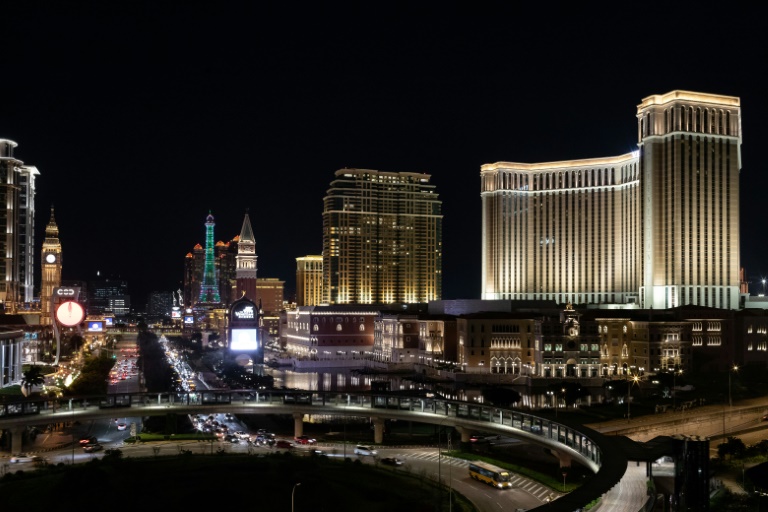
Macau said Saturday it has renewed the licences of its six major casino operators, with the city aiming for terms that would help diversify its economy away from gambling.

The former Portuguese colony is the only territory in China where casinos are allowed, and it issues just six operating concessions for a multi-billion-dollar industry that, until the pandemic hit, was bigger than Las Vegas.

The six current operators — including the subsidiaries of Las Vegas giants MGM, Wynn and Sands — had submitted renewal applications but a firm linked with Malaysian gaming and resorts giant Genting challenged the long-running oligopoly with a surprise bid.

That attempt failed, however, as Macau’s leader Ho Iat-seng announced that the existing licence holders have been granted provisional concessions.

“Development of non-gaming businesses is the most important factor” in the government’s decision, Andre Cheong, Macau’s administration and justice minister, told reporters.

He did not provide details about what licence holders would be required to invest and where.

The government said it will negotiate details with the six operators and the new licences will take effect from the beginning of next year.

Macau has long been keen to diversify away from gambling into tourism and leisure.

The city’s casinos were battered by pandemic-era restrictions that drove away the mainland Chinese gamblers who made up the vast majority of customers.

“The source of our tourists is too concentrated,” Cheong said Saturday, describing the situation as “not healthy”.

Gross gaming revenue was down 98 percent from pre-pandemic levels and fell to a record low in July, officials earlier announced.

– Scrutiny and reform –

Even if pandemic measures are fully lifted, it is unlikely Macau’s casinos will see a return to their headiest, freewheeling days.

Chinese President Xi Jinping has spearheaded an anti-corruption campaign that has seen increased scrutiny of the high rollers and officials who travel to gamble in Macau, where cases of money laundering are common.

For decades, Macau’s gaming industry was run as a monopoly by casino magnate Stanley Ho, but in 2002 more operators were brought in and issued 20-year concessions as part of a liberalisation effort. 

In January, authorities slashed the concession period of gaming licences to 10 years and unveiled regulations seeking to increase local ownership and government supervision.

Those factors did not deter the bid from GMM, a company controlled by Malaysian tycoon and Genting chairman Lim Kok Thay.

Best known for its resort in the Malaysian highlands, Genting also operates in Las Vegas and Singapore. It backed a ski resort in China that hosted this year’s Winter Olympics.

Macau casino giants win licence renewals, Malaysia's Genting loses bid

Macau said Saturday it has renewed the licences of its six major casino operators, with the city aiming for terms that would help diversify its economy away from gambling.

The former Portuguese colony is the only territory in China where casinos are allowed, and it issues just six operating concessions for a multi-billion-dollar industry that, until the pandemic hit, was bigger than Las Vegas.

The six current operators — including the subsidiaries of Las Vegas giants MGM, Wynn and Sands — had submitted renewal applications but a firm linked with Malaysian gaming and resorts giant Genting challenged the long-running oligopoly with a surprise bid.

That attempt failed, however, as Macau’s leader Ho Iat-seng announced that the existing licence holders have been granted provisional concessions.

“Development of non-gaming businesses is the most important factor” in the government’s decision, Andre Cheong, Macau’s administration and justice minister, told reporters.

He did not provide details about what licence holders would be required to invest and where.

The government said it will negotiate details with the six operators and the new licences will take effect from the beginning of next year.

Macau has long been keen to diversify away from gambling into tourism and leisure.

The city’s casinos were battered by pandemic-era restrictions that drove away the mainland Chinese gamblers who made up the vast majority of customers.

“The source of our tourists is too concentrated,” Cheong said Saturday, describing the situation as “not healthy”.

Gross gaming revenue was down 98 percent from pre-pandemic levels and fell to a record low in July, officials earlier announced.

– Scrutiny and reform –

Even if pandemic measures are fully lifted, it is unlikely Macau’s casinos will see a return to their headiest, freewheeling days.

Chinese President Xi Jinping has spearheaded an anti-corruption campaign that has seen increased scrutiny of the high rollers and officials who travel to gamble in Macau, where cases of money laundering are common.

For decades, Macau’s gaming industry was run as a monopoly by casino magnate Stanley Ho, but in 2002 more operators were brought in and issued 20-year concessions as part of a liberalisation effort. 

In January, authorities slashed the concession period of gaming licences to 10 years and unveiled regulations seeking to increase local ownership and government supervision.

Those factors did not deter the bid from GMM, a company controlled by Malaysian tycoon and Genting chairman Lim Kok Thay.

Best known for its resort in the Malaysian highlands, Genting also operates in Las Vegas and Singapore. It backed a ski resort in China that hosted this year’s Winter Olympics.

Russian shelling kills 15 in Kherson as Ukraine battles to restore power

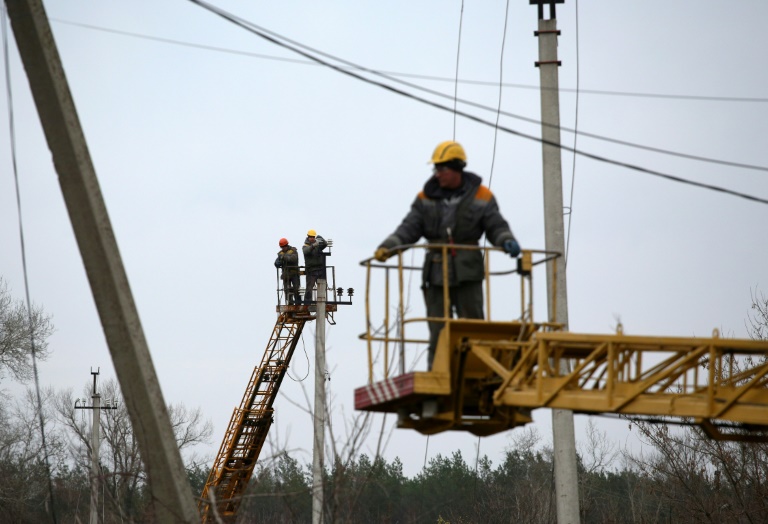
Russian shelling of the southern Ukrainian city of Kherson killed 15 civilians Friday, officials said, as engineers across the country sought to restore heat, water and power to major cities.

Throughout the country, Russian air strikes in recent weeks have brought Ukraine’s energy infrastructure to its knees as winter approaches and temperatures near freezing, spurring fears of a health crisis and a further exodus.

Ukrainian President Volodymyr Zelensky said more than six million households in the country were still affected by power cuts, two days after targeted Russian strikes on Ukraine’s energy infrastructure.

The country’s national energy company, Ukrenergo, said late Friday that the grid was still facing a 30 percent deficit, with its technicians working “around the clock” to restore power. But it said it expected to increase coverage over the weekend, boosted by additional nuclear power.

The attack on Kherson, a key southeastern city recently recaptured by Ukrainian forces, marked the deadliest Russian bombardment in recent days.

A total of “15 residents were killed and 35 injured, including one child, as a result of enemy shelling”, city official Galyna Lugova said. Several “private houses and high-rise buildings” had been damaged, she added.

“The Russian invaders opened fire on a residential area with multiple rocket launchers. A large building caught fire,” said Yarovslav Yanushovich, head of the Kherson military administration.

Earlier Friday, the region’s governor said patients in the city hospital and others from a psychiatric unit had been evacuated because of “constant Russian shelling”.

The Kherson city council said it was offering to evacuate civilians to other regions.

The attacks on power stations and other infrastructure resources throughout Ukraine are Russia’s latest attempt to force Ukrainian capitulation after Moscow’s forces failed to topple the government and capture Kyiv in the war’s early stages.

– Critical infrastructure –

In the capital, where about half of residents were still without power two days after Russian strikes hammered the country’s energy grid, engineers worked to restore services.

“We have to endure this winter, a winter that everyone will remember,” Zelensky said on social media, as UK Foreign Secretary James Cleverly visited to announce a new aid package.

Ukrainian Prime Minister Denys Shmygal told a government meeting, “Almost all Ukraine’s critical infrastructure has been reconnected.” 

Critical infrastructure includes water utilities, heat generation plants, hospitals and emergency services.

But Shmygal said ordinary consumers continued to face scheduled power cuts across every region of the country.

Ukraine’s Western allies have denounced the Russian attacks on energy infrastructure as a “war crime”. The strikes have come in the wake of a string of military setbacks for Russia on the frontlines.

Moscow insists it is targeting only military-linked infrastructure and has blamed Kyiv for the blackouts, saying Ukraine can end the suffering by agreeing to Russian demands.

– Putin meets mothers –

Meanwhile, for the first time since he launched the war in February, Russian President Vladimir Putin met the mothers of soldiers fighting in Ukraine, assuring those whose children had been killed that he and Russia’s elite “share this pain”.

“I want you to know I, personally, and the entire leadership of the country share this pain,” he told them.

He said that many reports about the conflict could not be trusted, describing them as “fake news, deceit and lies”.

Russia has introduced legislation that effectively bans public criticism of the war. 

Kremlin critics accuse authorities of concealing the real number of dead and wounded Russian troops.

Anger and concern have built across Russia since the Kremlin announced in September that hundreds of thousands of well-trained and well-equipped conscripts would be sent to the battlefield to bolster Moscow’s struggling campaign.

But chaos ensued, with widespread reports of exempted men — including the elderly and infirm — being dispatched to the front and conscripts dying after receiving nearly no training, forcing the Kremlin to concede “mistakes”.

Putin’s meeting with the soldiers’ mothers is a sign the Kremlin takes the growing malaise seriously.

Visiting Kyiv on Friday, Britain’s foreign minister announced new aid for Ukraine, including ambulances and support for victims of sexual violence by Russian soldiers.

“Russia is continuing to try and break Ukrainian resolve through its brutal attacks on civilians, hospitals and energy infrastructure,” Cleverly said.

“Russia will fail,” he said, vowing UK support “will continue for as long as it takes”.

Meanwhile, the head of Russian mercenary outfit Wagner, Yevgeny Prigozhin, said Friday that a former US Marine general and several British and Finnish fighters were operating with the group in Ukraine.

“(Finns) are fighting in a British battalion (as part of Wagner PMC), which is commanded by a US citizen, a former general of the Marine Corps,” Prigozhin’s press service said he told Finnish newspaper Helsingin Sanomat.

South Korean capital launches self-driving bus experiment

South Korea’s capital launched its first self-driving bus route on Friday, part of an experiment that engineers said aims to make people feel more comfortable with driverless vehicles on the roads.

The new vehicle does not look like a regular bus and has rounded edges as well as large windows that make it appear more like a toy than a technological breakthrough.

This design is intentional, said Jeong Seong-gyun, head of autonomous driving at 42 Dot, the start-up responsible for the self-driving technology that is now owned by auto giant Hyundai.

“This is the future,” he told AFP, adding that the bus required “a considerable new type of design”.

The bus looks a bit “like Lego” and is made of composite parts to help keep costs down and make it easy to replicate, he said.

It uses cameras and radar to navigate the way instead of expensive sensors, Seong-gyun added.

The company’s goal was to make the technology low-cost, safe and easily transferable to many types of vehicles in the future, for example, delivery trucks.

For now — with a safety driver monitoring closely — the bus will drive itself around a small 3.4-kilometre (2.1-mile) circuit in downtown Seoul that takes around 20 minutes.

The public can board at two designated stops after booking a free seat through an app.

“I feel like I’ve just hopped into a time machine to visit the future,” said Kim Yi hae-ran, 68, after her 20-minute ride during the launch of the bus Friday.

“I thought it might make me dizzy from a sudden acceleration but I didn’t feel any of it.”

The ride felt “very smooth and safe”, which she said made her feel proud of the technological progress the South Korean company has made.

South Korean capital launches self-driving bus experiment

South Korea’s capital launched its first self-driving bus route on Friday, part of an experiment that engineers said aims to make people feel more comfortable with driverless vehicles on the roads.

The new vehicle does not look like a regular bus and has rounded edges as well as large windows that make it appear more like a toy than a technological breakthrough.

This design is intentional, said Jeong Seong-gyun, head of autonomous driving at 42 Dot, the start-up responsible for the self-driving technology that is now owned by auto giant Hyundai.

“This is the future,” he told AFP, adding that the bus required “a considerable new type of design”.

The bus looks a bit “like Lego” and is made of composite parts to help keep costs down and make it easy to replicate, he said.

It uses cameras and radar to navigate the way instead of expensive sensors, Seong-gyun added.

The company’s goal was to make the technology low-cost, safe and easily transferable to many types of vehicles in the future, for example, delivery trucks.

For now — with a safety driver monitoring closely — the bus will drive itself around a small 3.4-kilometre (2.1-mile) circuit in downtown Seoul that takes around 20 minutes.

The public can board at two designated stops after booking a free seat through an app.

“I feel like I’ve just hopped into a time machine to visit the future,” said Kim Yi hae-ran, 68, after her 20-minute ride during the launch of the bus Friday.

“I thought it might make me dizzy from a sudden acceleration but I didn’t feel any of it.”

The ride felt “very smooth and safe”, which she said made her feel proud of the technological progress the South Korean company has made.

Costa Rica crocodiles survive in 'most polluted' river

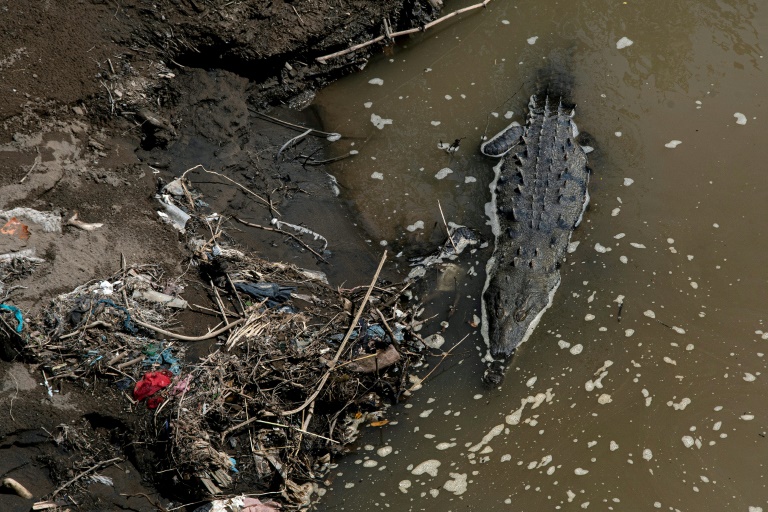
In one of the most polluted rivers in Central America, a vulnerable crocodile species is thriving despite living in waters that have become a sewer for Costa Rica’s capital, experts say.

Every day, trash and wastewater from San Jose households and factories flood into the Tarcoles River, which vomits tires and plastic into the surrounding mangroves.

Nevertheless, some 2,000 American Crocodiles have adapted to life in the toxic river that bears witness to the country’s decades-long battle with waste management.

“It is a super-contaminated area, but this has not affected the crocodile population,” said Ivan Sandoval, a biologist with the National University of Costa Rica.

“The Tarcoles River is the most polluted river in Costa Rica, and one of the most contaminated in Central America. Heavy metals, nitrites, nitrates, and a large amount of human waste can be found,” added the crocodile expert.

According to the International Union for Conservation of Nature (IUCN), there are only about 5,000 of the crocodile species — found in 18 countries — left in the world after decades of hunting and habitat loss.

The organization lists the Crocodylus acutus as “vulnerable,” but says its numbers have increased in recent years. The Costa Rica population is “healthy and robust.”

Indeed, the large reptiles — basking in the sun and occasionally feeding on fish that come up the channel from the sea — appear unphased by some 150 types of bacteria that Sandoval says have been detected in the river.

He describes the carnivores as “living fossils” with the capacity to survive very tough conditions. 

“They haven’t had to change anything in millions of years, they are perfectly designed.”

– Laws not applied –

Sandoval said that since 1980, Costa Rica’s population of the crocodiles “are recovering,” and warns of the threat of tourist activities.

The river’s crocodiles are a major draw for foreign visitors, who take boat tours to see the creatures up close.

Some feed the animals, which is prohibited, and Sandoval worries about them getting too used to being close to people. 

Juan Carlos Buitrago, 48, who captains one of the tour boats, says he and other locals regularly pull hundreds of tires and plastic waste from the water.

He delights in the fauna of the river, with macaws flying over ahead at sunset, but wishes his countrymen would stop polluting his “office.”

“We cannot hide the pollution,” he tells AFP.

Costa Rica has impressive environmental credentials, with a third of its territory marked for protection, 98 percent renewable energy, and 53 percent forest cover, according to the UN’s environmental agency.

However, the law is not always strictly applied, as in the case of the Tarcoles River.

Lawyer and environmentalist Walter Brenes, 34, said that all of Costa Rica’s rules and regulations “do not solve the problem.”

He said the country needs “real public policy that is completely aimed at protecting wildlife.”

Inflation clouds 'Black Friday' kickoff of US holiday shopping season

US retailers unveiled a trove of fresh promotions Friday, as they try to coax sales from reticent shoppers whose holiday cheer has been tempered by inflation and worries over a softening economy.

“Black Friday,” the unofficial start of the US holiday shopping season, announced itself with the annual day-after-Thanksgiving deluge of online deals and early store openings.

Traffic was steady at Macy’s flagship store in midtown Manhattan, where crowds braved drizzly, chilly weather to survey the mammoth department store and take in holiday windows that feature a Santa surrounded by disco balls and fox family of stuffed animals clad in plaid.

But industry experts have been cautious about this year’s prospects, in light of price pressures that have exacerbated concerns about an oversupply of goods.  

A year ago, retailers faced product shortfalls in the wake of shipping backlogs and factory closures related to Covid-19. To avert a repeat, the industry front-loaded holiday imports this year, leaving it vulnerable to oversupply at a time when consumers are cutting back.

“Today’s problem is having too much stuff,” said Neil Saunders, managing director for consultancy GlobalData Retail.

Saunders said retailers have made progress in reducing excess inventories, but oversupply will mean deep discounts in many categories, including electronics and apparel.

“This is a holiday season where retailers are going to have to work very hard for very small gains,” he said.

The dynamic has created opportunities for savvy shoppers like Carla Forbes, who began scouring for holiday discounts weeks ago. She nabbed a jacket Friday at Macy’s for $79, down from an original price of $225.

While promotions on watches and jewelry have got “better,” she noted that such deals are not available for staples like food, for which prices have soared.

“You just have to buy it if you want (it),” Forbes said.

– Diminishing savings –

Leading forecasts from Deloitte and the National Retail Federation project a single-digit percentage rise in sales, but this is unlikely to exceed the inflation rate.

Adobe expects an overall holiday sales increase of 2.5 percent, less than a third of last year’s level. Besides inflation, Adobe cited higher Federal Reserve interest rates and an uptick in brick-and-mortar shopping as factors.

Consumers spent  $7.28 billion up through 6:00 pm Eastern time (2300 GMT) for Black Friday, according to Adobe. The company anticipates that when the final tally is in, consumers will spend between $9 billion and $9.2 billion for the day, setting a new record for online sales on Black Friday.

Countries like Britain and France have been marking Black Friday too, but with soaring inflation, merchants there face a similar dilemma.

“The worry is that it could turn out to be more of a Bleak Friday,” said Hargreaves Lansdown analyst Susannah Streeter.

Anne Campbell, who was visiting New York from Scotland, said the mood felt very different from home, where worries about energy security and a weakening economy dominated.

“Things are very tight in the UK for a lot of people,” she said, contrasting this with spending in the US.

US shoppers have remained resilient throughout the pandemic, often spending more than expected even when consumer sentiment surveys suggested gloominess.

Part of the reason has been the unusually robust state of savings, with many households banking government pandemic aid payments at a time of reduced consumption due to virus restrictions.

But that cushion is starting to whittle away. After hitting $2.5 trillion in excess savings in mid-2021, the benchmark fell to $1.7 trillion in the second quarter, according to Moody’s.

Accompanying this drop has been a rise in credit card debt visible in Fed data and anecdotally described by chains that report more purchases made with food stamps.

– Mixed picture –

Recent earnings reports from retailers paint a mixed picture on consumer health.

Target stood on the downcast side, pointing to a sharp decline in shopping activity in late October, potentially portending a weak holiday season.

“We’ve had a consumer who has been dealing with very stubborn inflation for quarter after quarter now,” Chief Executive Brian Cornell told a conference call with analysts.

He added that customers are “shopping very carefully on a budget.”

But Lowe’s, another US chain specializing in home-improvement, described the same late-October period as “strong.”

Friday’s crowds in New York were more robust compared with a year ago, said shopper Marvin Thomas, who also ventured out for Black Friday in 2021.

Inflation is a “big problem,” he told AFP, catching his breath outdoors after finding a deal on a hat at Foot Locker.

“I’m not going to deny that it has affected me, but you gotta do what you gotta do.”

Inflation clouds 'Black Friday' kickoff of US holiday shopping season

US retailers unveiled a trove of fresh promotions Friday, as they try to coax sales from reticent shoppers whose holiday cheer has been tempered by inflation and worries over a softening economy.

“Black Friday,” the unofficial start of the US holiday shopping season, announced itself with the annual day-after-Thanksgiving deluge of online deals and early store openings.

Traffic was steady at Macy’s flagship store in midtown Manhattan, where crowds braved drizzly, chilly weather to survey the mammoth department store and take in holiday windows that feature a Santa surrounded by disco balls and fox family of stuffed animals clad in plaid.

But industry experts have been cautious about this year’s prospects, in light of price pressures that have exacerbated concerns about an oversupply of goods.  

A year ago, retailers faced product shortfalls in the wake of shipping backlogs and factory closures related to Covid-19. To avert a repeat, the industry front-loaded holiday imports this year, leaving it vulnerable to oversupply at a time when consumers are cutting back.

“Today’s problem is having too much stuff,” said Neil Saunders, managing director for consultancy GlobalData Retail.

Saunders said retailers have made progress in reducing excess inventories, but oversupply will mean deep discounts in many categories, including electronics and apparel.

“This is a holiday season where retailers are going to have to work very hard for very small gains,” he said.

The dynamic has created opportunities for savvy shoppers like Carla Forbes, who began scouring for holiday discounts weeks ago. She nabbed a jacket Friday at Macy’s for $79, down from an original price of $225.

While promotions on watches and jewelry have got “better,” she noted that such deals are not available for staples like food, for which prices have soared.

“You just have to buy it if you want (it),” Forbes said.

– Diminishing savings –

Leading forecasts from Deloitte and the National Retail Federation project a single-digit percentage rise in sales, but this is unlikely to exceed the inflation rate.

Adobe expects an overall holiday sales increase of 2.5 percent, less than a third of last year’s level. Besides inflation, Adobe cited higher Federal Reserve interest rates and an uptick in brick-and-mortar shopping as factors.

Consumers spent  $7.28 billion up through 6:00 pm Eastern time (2300 GMT) for Black Friday, according to Adobe. The company anticipates that when the final tally is in, consumers will spend between $9 billion and $9.2 billion for the day, setting a new record for online sales on Black Friday.

Countries like Britain and France have been marking Black Friday too, but with soaring inflation, merchants there face a similar dilemma.

“The worry is that it could turn out to be more of a Bleak Friday,” said Hargreaves Lansdown analyst Susannah Streeter.

Anne Campbell, who was visiting New York from Scotland, said the mood felt very different from home, where worries about energy security and a weakening economy dominated.

“Things are very tight in the UK for a lot of people,” she said, contrasting this with spending in the US.

US shoppers have remained resilient throughout the pandemic, often spending more than expected even when consumer sentiment surveys suggested gloominess.

Part of the reason has been the unusually robust state of savings, with many households banking government pandemic aid payments at a time of reduced consumption due to virus restrictions.

But that cushion is starting to whittle away. After hitting $2.5 trillion in excess savings in mid-2021, the benchmark fell to $1.7 trillion in the second quarter, according to Moody’s.

Accompanying this drop has been a rise in credit card debt visible in Fed data and anecdotally described by chains that report more purchases made with food stamps.

– Mixed picture –

Recent earnings reports from retailers paint a mixed picture on consumer health.

Target stood on the downcast side, pointing to a sharp decline in shopping activity in late October, potentially portending a weak holiday season.

“We’ve had a consumer who has been dealing with very stubborn inflation for quarter after quarter now,” Chief Executive Brian Cornell told a conference call with analysts.

He added that customers are “shopping very carefully on a budget.”

But Lowe’s, another US chain specializing in home-improvement, described the same late-October period as “strong.”

Friday’s crowds in New York were more robust compared with a year ago, said shopper Marvin Thomas, who also ventured out for Black Friday in 2021.

Inflation is a “big problem,” he told AFP, catching his breath outdoors after finding a deal on a hat at Foot Locker.

“I’m not going to deny that it has affected me, but you gotta do what you gotta do.”

NASA Orion spacecraft enters lunar orbit: officials

NASA’s Orion spacecraft was placed in lunar orbit Friday, officials said, as the much-delayed Moon mission proceeded successfully.

A little over a week after the spacecraft blasted off from Florida bound for the Moon, flight controllers “successfully performed a burn to insert Orion into a distant retrograde orbit,” the US space agency said on its web site.

The spacecraft is to take astronauts to the Moon in the coming years — the first to set foot on its surface since the last Apollo mission in 1972. 

This first test flight, without a crew on board, aims to ensure that the vehicle is safe.

“The orbit is distant in that Orion will fly about 40,000 miles above the Moon,” NASA said.

While in lunar orbit, flight controllers will monitor key systems and perform checkouts while in the environment of deep space, the agency said.

It will take Orion about a week to complete half an orbit around the Moon. It will then exit the orbit for the return journey home, according to NASA.

On Saturday, the ship is expected to go up to 40,000 miles beyond the Moon, a record for a habitable capsule. The current record is held by the Apollo 13 spacecraft at 248,655 miles (400,171 km) from Earth.

It will then begin the journey back to Earth, with a landing in the Pacific Ocean scheduled for December 11, after just over 25 days of flight. 

The success of this mission will determine the future of the Artemis 2 mission, which will take astronauts around the Moon without landing, then Artemis 3, which will finally mark the return of humans to the lunar surface. 

Those missions are scheduled to take place in 2024 and 2025, respectively. 

NASA Orion spacecraft enters lunar orbit: officials

NASA’s Orion spacecraft was placed in lunar orbit Friday, officials said, as the much-delayed Moon mission proceeded successfully.

A little over a week after the spacecraft blasted off from Florida bound for the Moon, flight controllers “successfully performed a burn to insert Orion into a distant retrograde orbit,” the US space agency said on its web site.

The spacecraft is to take astronauts to the Moon in the coming years — the first to set foot on its surface since the last Apollo mission in 1972. 

This first test flight, without a crew on board, aims to ensure that the vehicle is safe.

“The orbit is distant in that Orion will fly about 40,000 miles above the Moon,” NASA said.

While in lunar orbit, flight controllers will monitor key systems and perform checkouts while in the environment of deep space, the agency said.

It will take Orion about a week to complete half an orbit around the Moon. It will then exit the orbit for the return journey home, according to NASA.

On Saturday, the ship is expected to go up to 40,000 miles beyond the Moon, a record for a habitable capsule. The current record is held by the Apollo 13 spacecraft at 248,655 miles (400,171 km) from Earth.

It will then begin the journey back to Earth, with a landing in the Pacific Ocean scheduled for December 11, after just over 25 days of flight. 

The success of this mission will determine the future of the Artemis 2 mission, which will take astronauts around the Moon without landing, then Artemis 3, which will finally mark the return of humans to the lunar surface. 

Those missions are scheduled to take place in 2024 and 2025, respectively. 

Close Bitnami banner
Bitnami