AFP

Stocks mixed as China Covid spike offsets rosier US rate outlook

Stock markets traded mixed Friday, as fresh Covid lockdown fears in China offset hopes that the Federal Reserve would tone down US interest-rate hikes.

Trading was light after the Thanksgiving day break in the United States with few catalysts to drive action on trading floors and investors looking ahead to the release of US jobs data next week.

Most of Europe’s major stock markets were up at the end of the day’s trading while Asian indices closed mixed.

Similarly Wall Street stocks opened undecided Friday with analysts expecting a quiet trading session with markets closing around midday.

The focus will likely be on Black Friday purchases and so this “could concentrate some of today’s thin trading interest on the retail stocks”, Patrick O’Hare of Briefing.com said in a note.

The euro was also mixed against main rivals, as official data showed Germany’s economy grew more than previously thought in the third quarter despite high inflation and an energy crisis.

Oil prices fell again Friday after heavy losses earlier in the week.

– Mood picking up –

The mood across markets has picked up this month as a series of indicators suggested the US economy, the world’s largest, was showing signs of weakness after the Fed ramped up interest rates.

The standout reports were consumer and wholesale inflation, which came in much lower than forecast and provided the US central bank with room to row back on its hawkishness.

And while a selection of Fed officials lined up to warn there was more tightening to come, there is an expectation that the days of bumper 75 basis-point increases are gone.

That has slightly eased worries that the sharp rise in borrowing costs could tip the US economy into recession — though many observers still see a contraction coming.

SPI Asset Management’s Stephen Innes said there was a “market consensus bias to believe that US headline inflation will continue to ease substantially over the next month or two and that the tail risks around (more than five percent interest rates) have dropped sharply”.

“After all, a step down to 50 basis points in December would be an unambiguous signal that peak hawkishness has passed.”

Focus was also on fears about the spike in Covid cases in China, which authorities are trying to contain with a series of targeted measures in big cities including Beijing and Shanghai, though they are short of full-on lockdowns.

Still, Innes said there appeared to be less concern about the government’s reaction as it looks to ease parts of its strict Covid-zero strategy.

“Stock and currency market investors are tentatively looking through the current lockdown regime while betting on the more optimistic interpretation that China is hitting the limits of ‘Covid-zero’ and the authorities’ efforts to loosen restrictions will continue,” he added.

– Key figures around 1645 GMT –

New York – Dow: UP 0.5 percent at 34,375.76

EURO STOXX 50: UP 0.4 percent at 3,962.41

London – FTSE 100: UP 0.3 percent at 7,486.67 points (close)

Paris – CAC 40: UP 0.1 percent at 6,712.48 (close)

Frankfurt – DAX: FLAT at 14,541.38 (close)

Tokyo – Nikkei 225: DOWN 0.4 percent at 28,283.03 (close)

Hong Kong – Hang Seng Index: DOWN 0.5 percent at 17,573.58 (close)

Shanghai – Composite: UP 0.4 percent at 3,101.69 (close)

Euro/dollar: DOWN at $1.0400 from $1.0411 on Thursday

Dollar/yen: UP at 139.25 yen from 138.39 yen

Pound/dollar: DOWN at $1.2089 from $1.2131

Euro/pound: UP at 86.03 pence from 85.82 pence

Brent North Sea crude: DOWN 0.4 percent at $85.01 per barrel

West Texas Intermediate: DOWN 0.2 percent at $77.80 per barrel

burs-raz/rox

Stocks mixed as China Covid spike offsets rosier US rate outlook

Stock markets traded mixed Friday, as fresh Covid lockdown fears in China offset hopes that the Federal Reserve would tone down US interest-rate hikes.

Trading was light after the Thanksgiving day break in the United States with few catalysts to drive action on trading floors and investors looking ahead to the release of US jobs data next week.

Most of Europe’s major stock markets were up at the end of the day’s trading while Asian indices closed mixed.

Similarly Wall Street stocks opened undecided Friday with analysts expecting a quiet trading session with markets closing around midday.

The focus will likely be on Black Friday purchases and so this “could concentrate some of today’s thin trading interest on the retail stocks”, Patrick O’Hare of Briefing.com said in a note.

The euro was also mixed against main rivals, as official data showed Germany’s economy grew more than previously thought in the third quarter despite high inflation and an energy crisis.

Oil prices fell again Friday after heavy losses earlier in the week.

– Mood picking up –

The mood across markets has picked up this month as a series of indicators suggested the US economy, the world’s largest, was showing signs of weakness after the Fed ramped up interest rates.

The standout reports were consumer and wholesale inflation, which came in much lower than forecast and provided the US central bank with room to row back on its hawkishness.

And while a selection of Fed officials lined up to warn there was more tightening to come, there is an expectation that the days of bumper 75 basis-point increases are gone.

That has slightly eased worries that the sharp rise in borrowing costs could tip the US economy into recession — though many observers still see a contraction coming.

SPI Asset Management’s Stephen Innes said there was a “market consensus bias to believe that US headline inflation will continue to ease substantially over the next month or two and that the tail risks around (more than five percent interest rates) have dropped sharply”.

“After all, a step down to 50 basis points in December would be an unambiguous signal that peak hawkishness has passed.”

Focus was also on fears about the spike in Covid cases in China, which authorities are trying to contain with a series of targeted measures in big cities including Beijing and Shanghai, though they are short of full-on lockdowns.

Still, Innes said there appeared to be less concern about the government’s reaction as it looks to ease parts of its strict Covid-zero strategy.

“Stock and currency market investors are tentatively looking through the current lockdown regime while betting on the more optimistic interpretation that China is hitting the limits of ‘Covid-zero’ and the authorities’ efforts to loosen restrictions will continue,” he added.

– Key figures around 1645 GMT –

New York – Dow: UP 0.5 percent at 34,375.76

EURO STOXX 50: UP 0.4 percent at 3,962.41

London – FTSE 100: UP 0.3 percent at 7,486.67 points (close)

Paris – CAC 40: UP 0.1 percent at 6,712.48 (close)

Frankfurt – DAX: FLAT at 14,541.38 (close)

Tokyo – Nikkei 225: DOWN 0.4 percent at 28,283.03 (close)

Hong Kong – Hang Seng Index: DOWN 0.5 percent at 17,573.58 (close)

Shanghai – Composite: UP 0.4 percent at 3,101.69 (close)

Euro/dollar: DOWN at $1.0400 from $1.0411 on Thursday

Dollar/yen: UP at 139.25 yen from 138.39 yen

Pound/dollar: DOWN at $1.2089 from $1.2131

Euro/pound: UP at 86.03 pence from 85.82 pence

Brent North Sea crude: DOWN 0.4 percent at $85.01 per barrel

West Texas Intermediate: DOWN 0.2 percent at $77.80 per barrel

burs-raz/rox

Twitter aims to diversify beyond advertising, but can it be done?

Is it a pipe dream or a possibility? Elon Musk wants to meaningfully diversify Twitter’s revenue stream beyond advertising, but no major social network has managed so far to go without ads altogether. 

Something of a gold standard, social media ads can be fine-tuned and tailored to individual users on a mass scale, and have been particularly lucrative for Meta’s Facebook and Instagram, as well as Google.

“Facebook pretty much set the standard for having an ad model for social networks,” said Jasmine Enberg, an analyst at Insider Intelligence. “But that doesn’t necessarily have to be the way that social platforms monetize.”

Social networks are facing budget cuts from inflation-afflicted advertisers and increased regulations on the use of lucrative personal data, so it makes sense for them “to be exploring new, non-ad monetization techniques,” she said.

The issue is delicate for Twitter, whose revenue is 90 percent dependent on advertising. Advertisers, on the other hand, do not necessarily need Twitter and can turn to other social networks.

The advertising situation at Twitter has been particularly dire since Musk took over the company in late October.

In recent weeks, half of Twitter’s 100 top advertisers have announced they are suspending or have otherwise “seemingly stopped advertising on Twitter,” an analysis conducted by nonprofit watchdog group Media Matters found.

They fear being associated with toxic content as Musk, who describes himself as a “free speech absolutist,” advocates for laxer moderation.

“Musk didn’t understand that Twitter itself was a brand, had cachet,” said Sarah Roberts, an information studies expert at University of California, Los Angeles.

“Now companies don’t even want to be associated with it. It’s not even that they worry about the content. Twitter is a tainted brand, a brand non grata companies don’t want to be associated with,” she added.

– Alternate solutions –

Social media sites are testing two alternate solutions in particular: charging everyday users and charging content creators. 

The forum platform Reddit has deployed a hybrid model, making money via advertising, paid subscriptions and digital coins that allow users access to special privileges.

That said, “It’s always hard to charge for something that used to be free,” said Carolina Milanesi of research firm Creative Strategies. 

“Unless you give something different or create a different product, you can’t go from not charging to charging,” she said.

While Twitter has been offering a paid subscription with additional features since last year, Musk aimed to raise the price to $8 a month and include account verification in the plan’s perks. 

A partial launch was chaotic, however, and prompted the proliferation of so many fake accounts that the rollout of so-called Twitter Blue has now been paused.

Musk has now tweeted that this feature called Verified will be launched next week.

“Figuring out a way to charge users for premium features and make money off of users is not a bad idea,” Enberg said.

But she said the benefits Twitter offered may not have been enticing enough, and that the verification aspect should be more of a security feature than a monetizable feature.

Finally, because paid subscribers — arguably the most active on the network — would see 50 percent less advertising than non-paying users, the plan would “dilute the quality and the size of the addressable audience for advertisers.”

Some newer platforms are trying to do without advertising altogether, with no guarantee of long-term viability.

For example, on Discord, a live-discussion social network, subscribers have access to more emoticons.

And the fledgling photo-sharing app BeReal is hoping to not have to sell ads by making money through in-app purchases instead, the Financial Times reported. 

– ‘Big-name influencers’ –

Twitter had some 230 million daily active users as of June, and Musk continues to congratulate himself on growing that number since taking over.

But increased users do not necessarily translate into dollars.

Snapchat, which also launched a paid version in June, has gained more and more users, but not necessarily money. Most users do not pay anything and advertizers have cut spending on this app.

Faced with this reality, platforms are competing for content creators to attract and retain audiences — and either taking commission or making them pay for the promotion of their messages and videos.

This represents “a really big opportunity” for Twitter, Enberg said. 

Twitter “does have a lot of celebrities and big-name influencers, politicians and journalists” with whom it could form a mutually financially beneficial relationship, she said.

Milanesi added that while the network already offers some promotional tools, they are “quite expensive, and not very effective.”

Twitter aims to diversify beyond advertising, but can it be done?

Is it a pipe dream or a possibility? Elon Musk wants to meaningfully diversify Twitter’s revenue stream beyond advertising, but no major social network has managed so far to go without ads altogether. 

Something of a gold standard, social media ads can be fine-tuned and tailored to individual users on a mass scale, and have been particularly lucrative for Meta’s Facebook and Instagram, as well as Google.

“Facebook pretty much set the standard for having an ad model for social networks,” said Jasmine Enberg, an analyst at Insider Intelligence. “But that doesn’t necessarily have to be the way that social platforms monetize.”

Social networks are facing budget cuts from inflation-afflicted advertisers and increased regulations on the use of lucrative personal data, so it makes sense for them “to be exploring new, non-ad monetization techniques,” she said.

The issue is delicate for Twitter, whose revenue is 90 percent dependent on advertising. Advertisers, on the other hand, do not necessarily need Twitter and can turn to other social networks.

The advertising situation at Twitter has been particularly dire since Musk took over the company in late October.

In recent weeks, half of Twitter’s 100 top advertisers have announced they are suspending or have otherwise “seemingly stopped advertising on Twitter,” an analysis conducted by nonprofit watchdog group Media Matters found.

They fear being associated with toxic content as Musk, who describes himself as a “free speech absolutist,” advocates for laxer moderation.

“Musk didn’t understand that Twitter itself was a brand, had cachet,” said Sarah Roberts, an information studies expert at University of California, Los Angeles.

“Now companies don’t even want to be associated with it. It’s not even that they worry about the content. Twitter is a tainted brand, a brand non grata companies don’t want to be associated with,” she added.

– Alternate solutions –

Social media sites are testing two alternate solutions in particular: charging everyday users and charging content creators. 

The forum platform Reddit has deployed a hybrid model, making money via advertising, paid subscriptions and digital coins that allow users access to special privileges.

That said, “It’s always hard to charge for something that used to be free,” said Carolina Milanesi of research firm Creative Strategies. 

“Unless you give something different or create a different product, you can’t go from not charging to charging,” she said.

While Twitter has been offering a paid subscription with additional features since last year, Musk aimed to raise the price to $8 a month and include account verification in the plan’s perks. 

A partial launch was chaotic, however, and prompted the proliferation of so many fake accounts that the rollout of so-called Twitter Blue has now been paused.

Musk has now tweeted that this feature called Verified will be launched next week.

“Figuring out a way to charge users for premium features and make money off of users is not a bad idea,” Enberg said.

But she said the benefits Twitter offered may not have been enticing enough, and that the verification aspect should be more of a security feature than a monetizable feature.

Finally, because paid subscribers — arguably the most active on the network — would see 50 percent less advertising than non-paying users, the plan would “dilute the quality and the size of the addressable audience for advertisers.”

Some newer platforms are trying to do without advertising altogether, with no guarantee of long-term viability.

For example, on Discord, a live-discussion social network, subscribers have access to more emoticons.

And the fledgling photo-sharing app BeReal is hoping to not have to sell ads by making money through in-app purchases instead, the Financial Times reported. 

– ‘Big-name influencers’ –

Twitter had some 230 million daily active users as of June, and Musk continues to congratulate himself on growing that number since taking over.

But increased users do not necessarily translate into dollars.

Snapchat, which also launched a paid version in June, has gained more and more users, but not necessarily money. Most users do not pay anything and advertizers have cut spending on this app.

Faced with this reality, platforms are competing for content creators to attract and retain audiences — and either taking commission or making them pay for the promotion of their messages and videos.

This represents “a really big opportunity” for Twitter, Enberg said. 

Twitter “does have a lot of celebrities and big-name influencers, politicians and journalists” with whom it could form a mutually financially beneficial relationship, she said.

Milanesi added that while the network already offers some promotional tools, they are “quite expensive, and not very effective.”

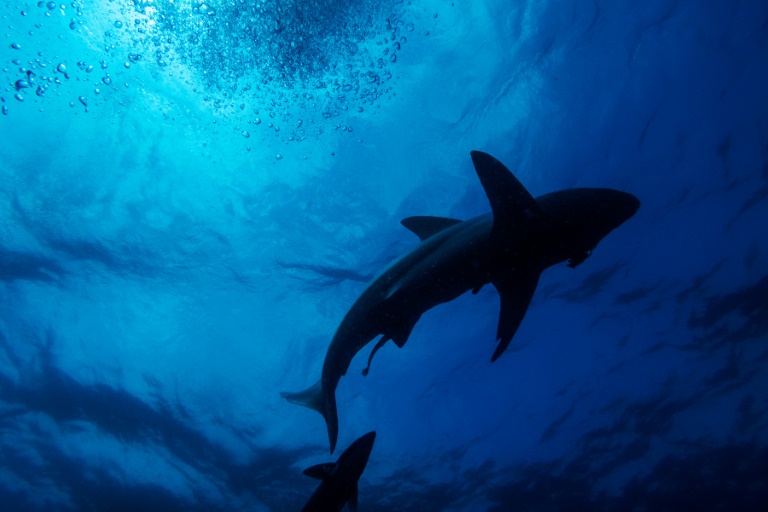
Global wildlife summit approves shark protections

Delegates at a global summit on trade in endangered species on Friday approved a plan to protect 54 more shark species, a move that could drastically reduce the lucrative and cruel shark fin trade.

Members of the requiem shark and the hammerhead shark families will now have their trade tightly controlled under the Convention on International Trade in Endangered Species (CITES).

The binding resolutions were adopted by consensus on the final day of the two-week meeting by delegates from 183 countries and the European Union, which takes place every two or three years.

“Proposal 37 approved,” said Panamanian delegate and head of the plenary Shirley Binder of the requiem shark proposal, after Japan failed in getting the blue shark removed from the measure.

The proposal regarding the hammerhead shark passed without debate.

Binder earlier told AFP the “historic decision” would mean up to 90 percent of sharks in the market would now be protected. 

Insatiable appetite in Asia for shark fins, which make their way onto dinner tables in Hong Kong, Taiwan and Japan, has spurred their trade.

Despite being described as almost tasteless and gelatinous, shark fin soup is viewed as a delicacy and is enjoyed by the very wealthy, often at weddings and expensive banquets.

Shark fins, representing a market of about $500 million per year, can sell for about $1,000 a kilogram (2.2 pounds).

“This will be remembered as the day we turned the tide to prevent the extinction of the world’s sharks and rays,” said Luke Warwick, director of shark protection for the NGO Wildlife Conservation Society (WCS).

The shark species will now be listed on what is known as CITES Appendix II, which is for species that may not yet be threatened with extinction but may become so unless trade in them is closely controlled.

“The crucial next step will be to implement these listings, and ensure they result in stronger fisheries management and trade measures as soon as possible,” Warwick said.

– From villain to darling –

Sharks have long been seen as the villain of the seas they have occupied for more than 400 million years, drawing horror with their depiction in films such as “Jaws” and occasional attacks on humans.

However, these ancient predators have undergone an image makeover in recent years as conservationists have highlighted the crucial role they play in regulating the ocean ecosystem.

Joaquin de la Torre of the International Fund for Animal Welfare (IFAW), told AFP that more than 100 million sharks are killed every year.

“Sharks and rays are the most threatened species, more even than elephants and big cats.”

With many shark species taking more than 10 years to reach sexual maturity, and having a low fertility rate, the constant hunting of the species has decimated their numbers.

In many parts of the world, fisherman lop the shark’s fins off at sea, tossing the shark back into the ocean for a cruel death by suffocation or blood loss.

The efforts by conservationists led to a turning point in 2013, when CITES imposed the first trade restrictions on some shark species. 

– Ongoing over-exploitation –

Delegates have been considering 52 proposals to change the protection levels of more than 600 species. 

They also approved new protections for the guitarfish ray, crocodiles, frogs, and some turtle species.

“Many of the proposals adopted here reflect there is ongoing over-exploitation and unsustainable trade, and escalating illegal trade, and some are due to complex interactions of other threats reducing species populations in the wild, including climate change, disease, infrastructure development, and habitat loss,” said Susan Liberman of WCS.

CITES, which came into force in 1975, has set international trade rules for more than 36,000 wild species. 

Its signatories include 183 countries and the European Union. 

Half of Kyiv still without electricity after Russian strikes

Nearly half of Kyiv residents were still without electricity on Friday as engineers battled to restore services two days after Russian strikes hammered the country’s energy grid.

After nine months of war, Russian President Vladimir Putin met for the first time with women whose children are fighting in Ukraine, assuring those who had lost sons that he and Russia’s elite “share this pain”.

And in the southern region of Kherson, the governor there said Russian shelling had forced the evacuation of patients from hospitals in the city of Kherson.

The systematic and targeted Russian attacks over recent weeks have brought Ukraine’s energy infrastructure to its knees as winter approaches, spurring fears of a health crisis and a further exodus.

Utility workers were still working Friday to reconnect the heating and water as temperatures in Kyiv approached freezing, as UK Foreign Secretary James Cleverly visited to announce a new aid package.

“We have to endure this winter –- a winter that everyone will remember,” Ukraine President Volodymyr Zelensky said on social media.

“We have to do everything so that we remember it — not because of what it threatened us with — but because of what we managed to do to protect ourselves from this threat.”

Ukraine Prime Minister Denys Shmygal told a government meeting that electricity providers were now providing 70 percent cover.

“Almost all Ukraine’s critical infrastructure has been reconnected,” he said.

But, he added: “On average, from 200,000 to 400,000 consumers are cut off power in each region at certain hours.”

Cars queued outside petrol stations in Kyiv on Friday to stock up, AFP journalists said. Mobile networks in some areas were still experiencing disruption.

– ‘We live like this now’ –

Millions of Ukrainians have endured the cold without power since Russia fired dozens of missiles and launched drone attacks at water and electricity facilities on Wednesday.

“Yes, this is a difficult situation and yes, it can happen again,” presidential advisor Mykhailo Podolyak said on television.

“But Ukraine can cope.”

With gas for cooking and heating disconnected in her Kyiv apartment, Albina Bilogub told AFP that she and her children all slept in the same room to stay warm.

“In our building, very few people have gas, so we go to the woman that I work for — I change her clothes because she is disabled — and we cook there,” she said.

“This is our life. One sweater, a second, a third. We live like this now.”

In northern Kyiv, a vet in blue scrubs and a face mask shone a light over an operating table in a darkened clinic as colleagues operated on an ailing dog late Thursday.

“We were in the middle of an operation and our lights turned off because a rocket fell not far away, so there was a power cut,” said Oleksiy Yankovenko.

“I had to finish the operation under the flashlights,” he added.

– ‘Brutal attacks’ –

Putin meanwhile met the mothers of soldiers fighting in Ukraine at his residence near Moscow.

“I want you to know: I personally and the entire leadership of the country share this pain,” he told them.

He warned them that a lot of news reports about the conflict could not be trusted, describing them as “fake news, deceit and lies”.

But Russia would achieve its goals in Ukraine, he added.

On Thursday, Ukraine’s presidency said Russian shelling had killed 11 people and wounded nearly 50 across the southern Kherson region Thursday.

On Friday, the region’s governor said hospital patients in the city of Kherson had been evacuated to nearby regions because of “constant Russian shelling”. Patients at a psychiatric facility in the region also had to be evacuated.

Ukraine’s forces recaptured the city from Russian forces earlier this month.

Ukraine’s Western allies have denounced the Russian attacks on energy as a “war crime”, coming in the wake of a string of military setbacks for Russia on the frontlines.

Moscow insists it targets only military linked infrastructure and has blamed Kyiv for the blackouts, saying Ukraine can end the suffering by agreeing to Russian demands.

Britain’s foreign minister announced new aid for Ukraine during his visit to Kyiv, including ambulances and support for victims of sexual violence by Russian soldiers.

“As winter sets in, Russia is continuing to try and break Ukrainian resolve through its brutal attacks on civilians, hospitals and energy infrastructure,” Cleverly said.

“Russia will fail,” he said, vowing UK support “will continue for as long as it takes”.

The attacks on Ukraine’s grid are Russia’s latest strategy designed to force Ukrainian capitulation after Moscow’s forces failed to topple the government and capture Kyiv nine months after launching their invasion.

Although they have captured swathes of territory in the south and east and the Kremlin claimed to annex four regions, Ukrainian troops are clawing back territory.

US city authorities release note penned by Walmart gunman

Virginia authorities on Friday released a “death note” in which the Walmart manager who shot and killed six people at his store complained of being harassed at work and asked God for forgiveness.

Andre Bing, 31, an overnight manager at a Walmart in Chesapeake, Virginia, committed suicide after Tuesday’s shooting rampage.

The attack in a store full Thanksgiving shoppers took place two days before the holiday and on the heels of a weekend shooting at an LGBTQ nightclub in Colorado that killed five people.

The authorities in Chesapeake, 150 miles (240 kilometers) southeast of the US capital Washington, released a message on Friday titled “death note” that they said was found on Bing’s phone.

“Sorry God I’ve failed you, this was not your fault but my own,” it said. “I was harassed by idiots with low intelligence and a lack of wisdom.

“I was just as guilty and failed my management team and everyone that ever loved me by convincing them that I was normal,” the note said.

Bing apologized for his actions saying “Sorry everyone but I did not plan this. I promise things just fell in place like I was led by the Satan.

“I wish that I could have saved everyone from myself,” he said. “May God forgive me for what I’m going to do.”

The Chesapeake city authorities also said on Friday that Bing had legally purchased the 9mm handgun used in the shooting the same day as the attack.

Six people were killed and four wounded when Bing entered a staff break room around 10:00 pm and opened fire, according to police.

It was the second mass shooting in Virginia this month.

Three University of Virginia football players were shot dead and two other students wounded by a classmate after a school field trip on November 13.

So far in 2022, the Gun Violence Archive website has tracked more than 600 mass shootings in the United States — defined as an incident with four or more people shot or killed, not including the shooter.

Global wildlife summit approves shark protections

Delegates at a global summit on trade in endangered species on Friday approved a plan to  protect 54 more shark species, a move that could drastically reduce the lucrative and cruel shark fin trade.

Members of the requiem shark and the hammerhead shark families will now have their trade tightly controlled under the Convention on International Trade in Endangered Species (CITES).

The proposal was adopted by consensus on the final day of the two-week meeting by delegates from 183 countries and the European Union.

Delegates have been considering 52 proposals to change species’ protection levels. Other species debated were glass frogs, crocodiles, guitarfish, and some turtle species.

Panamanian delegate Shirley Binder told AFP the “historic decision” would mean a large number of sharks making up 90 percent of the market would now be protected. 

Insatiable appetite in Asia for shark fins, which make their way onto dinner tables in Hong Kong, Taiwan and Japan, has spurred their trade.

Despite being described as almost tasteless and gelatinous, shark fin soup is viewed as a delicacy and is enjoyed by the very wealthy, often at weddings and expensive banquets.

Shark fins, representing a market of about $500 million per year, can sell for about $1,000 a kilogram (2.2 pounds).

“This will be remembered as the day we turned the tide to prevent the extinction of the world’s sharks and rays,” said Luke Warwick, director of shark protection for the NGO Wildlife Conservation Society (WCS).

“The crucial next step will be to implement these listings, and ensure they result in stronger fisheries management and trade measures as soon as possible.”

– From villain to darling –

Sharks have long been seen as the villain of the seas they have occupied for more than 400 million years, drawing horror with their depiction in films such as “Jaws” and occasional attacks on humans.

However, these ancient predators have undergone an image makeover in recent years as conservationists have highlighted the crucial role they play in regulating the ocean ecosystem.

According to the Pew Environment Group, between 63 million and 273 million sharks are killed every year, mainly for their fins and other parts.

With many shark species taking more than 10 years to reach sexual maturity, and having a low fertility rate, the constant hunting of the species has decimated their numbers.

In many parts of the world, fisherman lop the shark’s fins off at sea, tossing the shark back into the ocean for a cruel death by suffocation or blood loss.

The efforts by conservationists led to a turning point in 2013, when CITES imposed the first trade restrictions on some shark species. 

“We are in the middle of a very large shark extinction crisis,” said Warwick earlier in the summit.

The decision follows heated debate after Japan and Peru tried to reduce the number of species that would be protected.

However, their suggestions were rejected.

CITES, which came into force in 1975, has set international trade rules for more than 36,000 wild species. 

Its signatories include 183 countries and the European Union. 

Inflation clouds 'Black Friday' kickoff of US holiday shopping season

Retailers unveiled a trove of fresh seasonal promotions Friday, as they try to coax sales from reticent shoppers whose holiday cheer has been tempered by inflation and worries over a softening economy.

“Black Friday,” the unofficial start of the US holiday shopping season, announced itself with the annual day-after-Thanksgiving deluge of online promotions and early store openings.

But industry experts have been cautious about this year’s prospects, in light of price pressures that have exacerbated concerns about an oversupply of goods.  

A year ago, retailers faced product shortfalls in the wake of shipping backlogs and factory closures related to Covid-19. To avert a repeat, the industry front-loaded its holiday imports this year, leaving it vulnerable to oversupply at a time when consumers are cutting back.

“Supply shortages was yesterday’s problem,” said Neil Saunders, managing director for GlobalData Retail, a consultancy. “Today’s problem is having too much stuff.”

Saunders said retailers have made progress in reducing excess inventories, but oversupply will mean deep discounts in many categories, including electronics, home improvement and apparel.

Online shoppers spent $5.3 billion on Thanksgiving Day itself, according to an Adobe report early Friday, up 2.9 percent from a year ago.

Higher costs for gasoline and household staples like meat and cereal are a nationwide issue, and they do not burden everyone equally.

“The lower incomes are definitely hit worst by the higher inflation,” said Claire Li, senior analyst at Moody’s. “People have to spend on the essential items.” 

– Diminishing savings –

Leading forecasts from Deloitte and the National Retail Federation project a single-digit percentage rise in sales, but this is unlikely to exceed the inflation rate.

Adobe has forecast an overall holiday sales increase of 2.5 percent, less than a third of the level from last year. Besides inflation, Adobe cited higher Federal Reserve interest rates and an uptick in brick-and-mortar shopping as factors.

European countries like Britain and France have been marking Black Friday for a few years now too, but with soaring inflation, merchants there face a similar dilemma.

“Retailers are desperate for some spending cheer but the worry is that it could turn out to be more of a Bleak Friday,” said Hargreaves Lansdown analyst Susannah Streeter.

US shoppers have remained resilient throughout the pandemic, often spending more than expected even when consumer sentiment surveys suggest they are in a gloomy mood.

Part of the reason has been the unusually robust state of savings, with many households banking government pandemic aid payments at a time of reduced consumption due to virus restrictions.

But that cushion is starting to whittle away. After hitting $2.5 trillion in excess savings in mid-2021, the benchmark fell to $1.7 trillion in the second quarter, according to Moody’s.

Accompanying this drop has been a rise in credit card debt visible in Federal Reserve data and anecdotally described by chains that also report more purchases made with food stamps.

– Mixed picture –

Recent earnings reports from retailers paint a mixed picture on consumer health.

Target stood on the downcast side, pointing to a sharp decline in shopping activity in late October, potentially portending a weak holiday season.

The big-box chain expects a “very promotional” holiday season, said Chief Executive Brian Cornell.

“We’ve had a consumer who has been dealing with very stubborn inflation for quarter after quarter now,” Cornell said on a conference call with analysts.

He added that customers are “shopping very carefully on a budget.”

But Lowe’s, another big US chain specializing in home-improvement, offered a different view, describing the same late-October period as “strong.”

“We are not seeing anything that feels or looks like a trade down or consumer pullback,” said Lowe’s Chief Executive Marvin Ellison.

Consumers like Charmaine Taylor, who checks airline websites frequently, are staying vigilant.

Taylor, who works in child care, has had her travel plans thwarted due to exorbitant plane ticket prices — and she is unsure of how much she can spend on family this year.

“I’m trying to give them some little gifts,” she said at a park in Harlem earlier this week. “I don’t know if I’ll be able to. Inflation is hitting pretty hard.”

Inflation clouds 'Black Friday' kickoff of US holiday shopping season

Retailers unveiled a trove of fresh seasonal promotions Friday, as they try to coax sales from reticent shoppers whose holiday cheer has been tempered by inflation and worries over a softening economy.

“Black Friday,” the unofficial start of the US holiday shopping season, announced itself with the annual day-after-Thanksgiving deluge of online promotions and early store openings.

But industry experts have been cautious about this year’s prospects, in light of price pressures that have exacerbated concerns about an oversupply of goods.  

A year ago, retailers faced product shortfalls in the wake of shipping backlogs and factory closures related to Covid-19. To avert a repeat, the industry front-loaded its holiday imports this year, leaving it vulnerable to oversupply at a time when consumers are cutting back.

“Supply shortages was yesterday’s problem,” said Neil Saunders, managing director for GlobalData Retail, a consultancy. “Today’s problem is having too much stuff.”

Saunders said retailers have made progress in reducing excess inventories, but oversupply will mean deep discounts in many categories, including electronics, home improvement and apparel.

Online shoppers spent $5.3 billion on Thanksgiving Day itself, according to an Adobe report early Friday, up 2.9 percent from a year ago.

Higher costs for gasoline and household staples like meat and cereal are a nationwide issue, and they do not burden everyone equally.

“The lower incomes are definitely hit worst by the higher inflation,” said Claire Li, senior analyst at Moody’s. “People have to spend on the essential items.” 

– Diminishing savings –

Leading forecasts from Deloitte and the National Retail Federation project a single-digit percentage rise in sales, but this is unlikely to exceed the inflation rate.

Adobe has forecast an overall holiday sales increase of 2.5 percent, less than a third of the level from last year. Besides inflation, Adobe cited higher Federal Reserve interest rates and an uptick in brick-and-mortar shopping as factors.

European countries like Britain and France have been marking Black Friday for a few years now too, but with soaring inflation, merchants there face a similar dilemma.

“Retailers are desperate for some spending cheer but the worry is that it could turn out to be more of a Bleak Friday,” said Hargreaves Lansdown analyst Susannah Streeter.

US shoppers have remained resilient throughout the pandemic, often spending more than expected even when consumer sentiment surveys suggest they are in a gloomy mood.

Part of the reason has been the unusually robust state of savings, with many households banking government pandemic aid payments at a time of reduced consumption due to virus restrictions.

But that cushion is starting to whittle away. After hitting $2.5 trillion in excess savings in mid-2021, the benchmark fell to $1.7 trillion in the second quarter, according to Moody’s.

Accompanying this drop has been a rise in credit card debt visible in Federal Reserve data and anecdotally described by chains that also report more purchases made with food stamps.

– Mixed picture –

Recent earnings reports from retailers paint a mixed picture on consumer health.

Target stood on the downcast side, pointing to a sharp decline in shopping activity in late October, potentially portending a weak holiday season.

The big-box chain expects a “very promotional” holiday season, said Chief Executive Brian Cornell.

“We’ve had a consumer who has been dealing with very stubborn inflation for quarter after quarter now,” Cornell said on a conference call with analysts.

He added that customers are “shopping very carefully on a budget.”

But Lowe’s, another big US chain specializing in home-improvement, offered a different view, describing the same late-October period as “strong.”

“We are not seeing anything that feels or looks like a trade down or consumer pullback,” said Lowe’s Chief Executive Marvin Ellison.

Consumers like Charmaine Taylor, who checks airline websites frequently, are staying vigilant.

Taylor, who works in child care, has had her travel plans thwarted due to exorbitant plane ticket prices — and she is unsure of how much she can spend on family this year.

“I’m trying to give them some little gifts,” she said at a park in Harlem earlier this week. “I don’t know if I’ll be able to. Inflation is hitting pretty hard.”

Close Bitnami banner
Bitnami