AFP

Carrefour still sells beef tied to Brazil deforestation: NGO

French retail giant Carrefour is still selling Brazilian beef products linked to destruction of the Amazon rainforest despite committing to end such sales, the US activist group Mighty Earth said Friday.

Carrefour suspended beef supplies from two slaughterhouses owned by the JBS company that were linked to deforestation in the Amazon after the NGO called on the supermarket chain to clean up its supply chains in September.

It said JBS would no longer supply its stores in Brazil.

Mighty Earth sought to verify this by analysing 310 products sold in the chain’s 10 stores in seven Brazilian cities in October.

“The results are implacable, Carrefour has not applied this suspension in all of its stores. Mighty Earth identified 12 products sold that came from the two slaughterhouses in four of the group’s shops”, including the Atacadao brand, the group said in a statement.

Carrefour acknowledged there had been a “failure in the suspension instructions”, in particular those relating to two stores that were transferred from the Maxxi brand belonging to Brazilian retailer Grupo BIG to Atacadao. Carrefour acquired Grupo Big earlier this year.

“We regret this and we are checking whether other stores, which source their supplies directly at the local level, are affected,” a Carrefour spokeswoman said.

She added that the retail giant was “making an enormous effort to resolve the issues on a case-by-case basis”.

Carrefour renewed its vow earlier this month to make sure the beef it sells is “deforestation-free” by 2026.

Mighty Earth said that after leftist Luiz Inacio Lula da Silva won the presidential election last month, Carrefour must commit to “zero deforestation and ensure the robustness of its implementation”, especially in its supply chains.

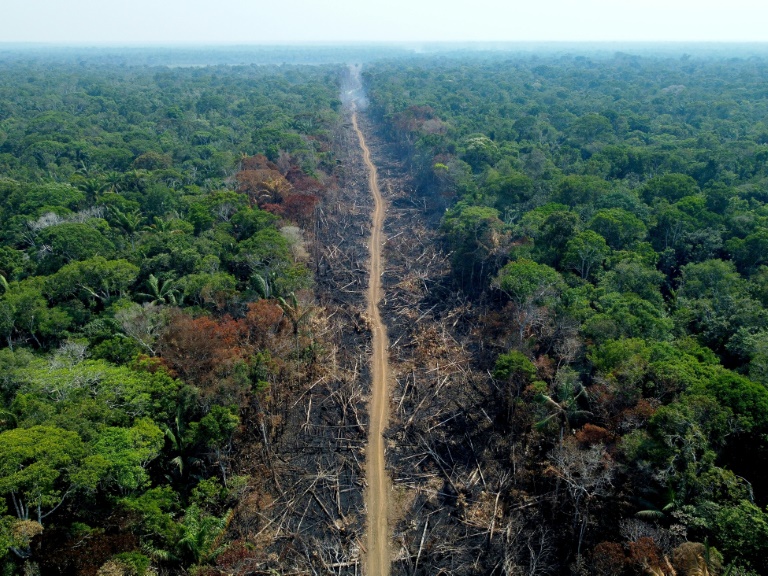
According to Brazil’s INPE space research institute, which measures the level of Amazon deforestation, 2022 is already a record year.

So far this year almost 9,500 square kilometres (2.3 million acres) have been destroyed, compared to 9,200 square kilometres in 2021.
Carrefour still sells beef tied to Brazil deforestation: NGO

French retail giant Carrefour is still selling Brazilian beef products linked to destruction of the Amazon rainforest despite committing to end such sales, the US activist group Mighty Earth said Friday.

Carrefour suspended beef supplies from two slaughterhouses owned by the JBS company that were linked to deforestation in the Amazon after the NGO called on the supermarket chain to clean up its supply chains in September.

It said JBS would no longer supply its stores in Brazil.

Mighty Earth sought to verify this by analysing 310 products sold in the chain’s 10 stores in seven Brazilian cities in October.

“The results are implacable, Carrefour has not applied this suspension in all of its stores. Mighty Earth identified 12 products sold that came from the two slaughterhouses in four of the group’s shops”, including the Atacadao brand, the group said in a statement.

Carrefour acknowledged there had been a “failure in the suspension instructions”, in particular those relating to two stores that were transferred from the Maxxi brand belonging to Brazilian retailer Grupo BIG to Atacadao. Carrefour acquired Grupo Big earlier this year.

“We regret this and we are checking whether other stores, which source their supplies directly at the local level, are affected,” a Carrefour spokeswoman said.

She added that the retail giant was “making an enormous effort to resolve the issues on a case-by-case basis”.

Carrefour renewed its vow earlier this month to make sure the beef it sells is “deforestation-free” by 2026.

Mighty Earth said that after leftist Luiz Inacio Lula da Silva won the presidential election last month, Carrefour must commit to “zero deforestation and ensure the robustness of its implementation”, especially in its supply chains.

According to Brazil’s INPE space research institute, which measures the level of Amazon deforestation, 2022 is already a record year.

So far this year almost 9,500 square kilometres (2.3 million acres) have been destroyed, compared to 9,200 square kilometres in 2021.
Wolves emboldened by parasite more likely to lead pack: study

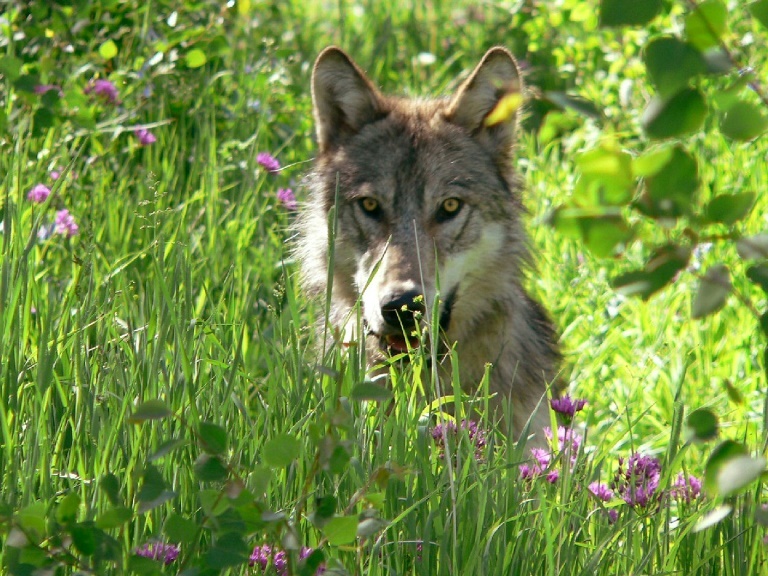
Wolves infected with a common parasite are far more likely to become the leader of their pack, according to a new study, suggesting that the brain-dwelling intruder emboldens its host to take more risks.

The single-celled parasite, Toxoplasma gondii, only sexually reproduces in cats but can infect all warm-blooded animals.

Between 30-50 percent of people worldwide are estimated to be infected with the parasite, which remains for life as dormant tissue cysts. However people with a healthy immune system rarely have any symptoms.

While some studies have reported an association between people having the parasite in their brain and increased risk-taking, other research has disputed these findings and no definitive link has been proven.

The new study, published in the journal Communications Biology on Thursday, took advantage of 26 years’ worth of data on grey wolves living in the Yellowstone National Park in the United States to investigate how the parasite could affect their behaviour.

The researchers from the Yellowstone Wolf Project analysed the blood samples of nearly 230 wolves and 62 cougars — the big cats are known spreaders of the parasite.

They found that infected wolves were more likely to foray deeper into cougar territory than uninfected wolves.

Infected wolves were also 11 times more likely to leave their pack than wolves without the parasite, the study said, indicating a higher rate of risk-taking.

And an infected wolf is up to 46 times more likely to become pack leader, the researchers estimated, adding that the role is normally won by more aggressive animals. 

Study co-author Kira Cassidy told AFP that while “being bolder is not necessarily a bad thing,” it can “lower survival for the most bold animals as they might make decisions that put them in danger more often.”

“Wolves do not have the survival space to take too many more risks than they already do.”

Cassidy said it was only the second study on T. gondii’s effect on a wild animal, after research last year found increased boldness in infected hyena cubs made them more likely to get closer to — and killed by — lions in Kenya.

Laboratory research has also found that rodents with the parasite lose their instinctual fear of cats — driving them into the hands of the only host where T. gondii can reproduce.

William Sullivan, a professor of pharmacology and toxicology at the Indiana University School of Medicine who has been studying T.gondii for more than 25 years, called the wolf paper “a rare gem”.

However he warned that such an observational study could not show causation.

“A wolf that is a born risk-taker may simply be more likely to venture into cougar territory and contract Toxoplasma,” he said.

But “if the findings are correct, they suggest we may be underestimating the impact Toxoplasma has on ecosystems around the world,” he added.

– What about humans? –

“That’s the million-dollar question,” Sullivan said, adding that “no one knows for sure and the literature is mixed”.

Ajai Vyas, a T. gondii expert at Singapore’s Nanyang Technological University, warned against inferring that infection could increase risk-taking in people.

“There is a lot about human behaviour that is different from other animals,” he told AFP.

People often get infected by T. gondii from eating undercooked meat — or via their pet cat, particularly when cleaning out their litter boxes.

In some cases, especially in people with weakened immune systems, T. gondii can lead to toxoplasmosis, a disease that can cause brain and eye damage. 

Stocks mixed as China Covid spike offsets rosier US rate outlook

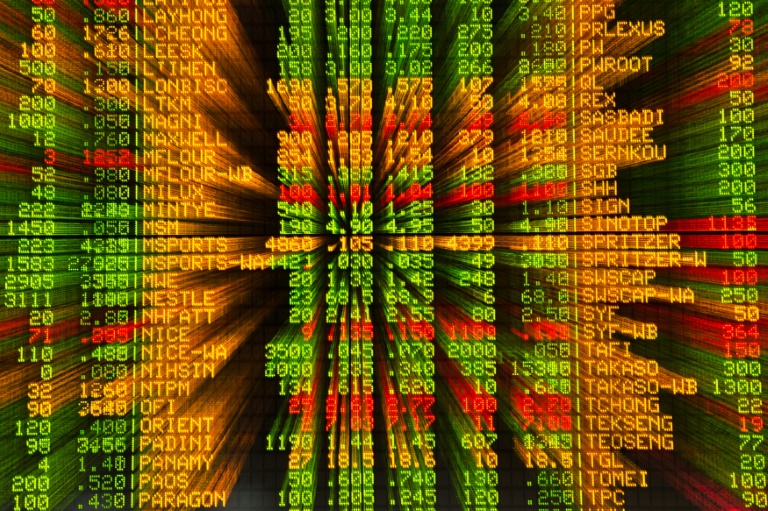
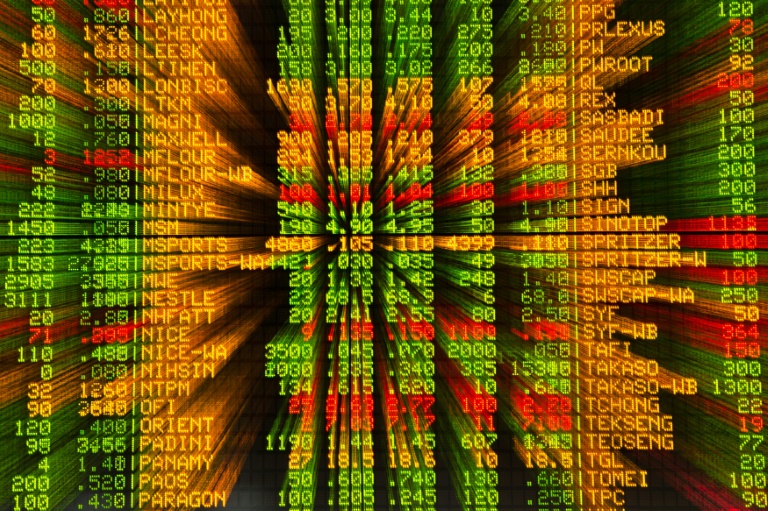
Stock markets traded mixed Friday, as fresh Covid lockdown fears in China offset hopes that the Federal Reserve would tone down US interest-rate hikes.

With Wall Street closed for the Thanksgiving break, trading was light with few catalysts to drive action on trading floors and investors looking ahead to the release of US jobs data next week.

Europe’s major stock markets rose nearing the half-way mark after Asian indices closed mixed.

The euro was also mixed against main rivals, as official data showed Germany’s economy grew more than previously thought in the third quarter despite high inflation and an energy crisis.

Oil prices firmed after heavy losses earlier in the week.

The mood across markets has picked up this month as a series of indicators suggested the US economy, the world’s largest, was showing signs of weakness after the Fed ramped up interest rates.

The standout reports were consumer and wholesale inflation, which came in much lower than forecast and provided the US central bank with room to row back on its hawkishness.

And while a selection of Fed officials lined up to warn there was more tightening to come, there is an expectation that the days of bumper 75 basis-point increases are gone.

That has slightly eased worries that the sharp rise in borrowing costs could tip the US economy into recession, though many observers still see a contraction coming.

SPI Asset Management’s Stephen Innes said there was a “market consensus bias to believe that US headline inflation will continue to ease substantially over the next month or two and that the tail risks around (more than five percent interest rates) have dropped sharply”.

“After all, a step down to 50 basis points in December would be an unambiguous signal that peak hawkishness has passed.”

Focus was also on fears about the spike in Covid cases in China, which authorities are trying to contain with a series of targeted measures in big cities including Beijing and Shanghai, though they are short of full-on lockdowns.

Still, Innes said there appeared to be less concern about the government’s reaction as it looks to ease parts of its strict Covid-zero strategy.

“Stock and currency market investors are tentatively looking through the current lockdown regime while betting on the more optimistic interpretation that China is hitting the limits of ‘Covid-zero’ and the authorities’ efforts to loosen restrictions will continue,” he added.

– Key figures around 1130 GMT –

London – FTSE 100: UP 0.3 percent at 7,487.76 points

Paris – CAC 40: UP 0.2 percent at 6,720.44

Frankfurt – DAX: UP 0.1 percent at 14,551.88

EURO STOXX 50: UP 0.2 percent at 3,969.84

Tokyo – Nikkei 225: DOWN 0.4 percent at 28,283.03 (close)

Hong Kong – Hang Seng Index: DOWN 0.5 percent at 17,573.58 (close)

Shanghai – Composite: UP 0.4 percent at 3,101.69 (close)

New York – Dow: Closed for a holiday

Euro/dollar: DOWN at $1.0401 from $1.0411 on Thursday

Dollar/yen: UP at 139.31 yen from 138.39 yen

Pound/dollar: DOWN at $1.2106 from $1.2131

Euro/pound: UP at 85.95 pence from 85.82 pence

Brent North Sea crude: UP 1.7 percent at $86.80 per barrel

West Texas Intermediate: UP 2.1 percent at $79.56 per barrel

Stocks mixed as China Covid spike offsets rosier US rate outlook

Stock markets traded mixed Friday, as fresh Covid lockdown fears in China offset hopes that the Federal Reserve would tone down US interest-rate hikes.

With Wall Street closed for the Thanksgiving break, trading was light with few catalysts to drive action on trading floors and investors looking ahead to the release of US jobs data next week.

Europe’s major stock markets rose nearing the half-way mark after Asian indices closed mixed.

The euro was also mixed against main rivals, as official data showed Germany’s economy grew more than previously thought in the third quarter despite high inflation and an energy crisis.

Oil prices firmed after heavy losses earlier in the week.

The mood across markets has picked up this month as a series of indicators suggested the US economy, the world’s largest, was showing signs of weakness after the Fed ramped up interest rates.

The standout reports were consumer and wholesale inflation, which came in much lower than forecast and provided the US central bank with room to row back on its hawkishness.

And while a selection of Fed officials lined up to warn there was more tightening to come, there is an expectation that the days of bumper 75 basis-point increases are gone.

That has slightly eased worries that the sharp rise in borrowing costs could tip the US economy into recession, though many observers still see a contraction coming.

SPI Asset Management’s Stephen Innes said there was a “market consensus bias to believe that US headline inflation will continue to ease substantially over the next month or two and that the tail risks around (more than five percent interest rates) have dropped sharply”.

“After all, a step down to 50 basis points in December would be an unambiguous signal that peak hawkishness has passed.”

Focus was also on fears about the spike in Covid cases in China, which authorities are trying to contain with a series of targeted measures in big cities including Beijing and Shanghai, though they are short of full-on lockdowns.

Still, Innes said there appeared to be less concern about the government’s reaction as it looks to ease parts of its strict Covid-zero strategy.

“Stock and currency market investors are tentatively looking through the current lockdown regime while betting on the more optimistic interpretation that China is hitting the limits of ‘Covid-zero’ and the authorities’ efforts to loosen restrictions will continue,” he added.

– Key figures around 1130 GMT –

London – FTSE 100: UP 0.3 percent at 7,487.76 points

Paris – CAC 40: UP 0.2 percent at 6,720.44

Frankfurt – DAX: UP 0.1 percent at 14,551.88

EURO STOXX 50: UP 0.2 percent at 3,969.84

Tokyo – Nikkei 225: DOWN 0.4 percent at 28,283.03 (close)

Hong Kong – Hang Seng Index: DOWN 0.5 percent at 17,573.58 (close)

Shanghai – Composite: UP 0.4 percent at 3,101.69 (close)

New York – Dow: Closed for a holiday

Euro/dollar: DOWN at $1.0401 from $1.0411 on Thursday

Dollar/yen: UP at 139.31 yen from 138.39 yen

Pound/dollar: DOWN at $1.2106 from $1.2131

Euro/pound: UP at 85.95 pence from 85.82 pence

Brent North Sea crude: UP 1.7 percent at $86.80 per barrel

West Texas Intermediate: UP 2.1 percent at $79.56 per barrel

India's Adani defends media bid after press freedom fears

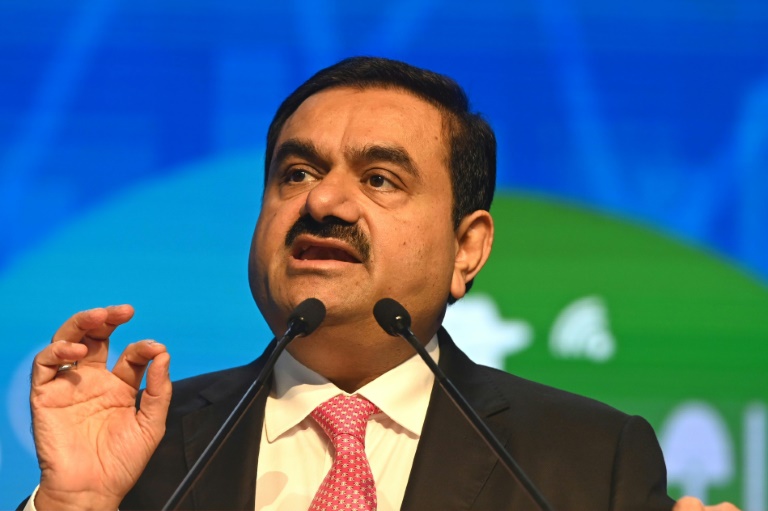
Indian tycoon Gautam Adani said Friday that media should have the “courage” to support the government when warranted, after his hostile takeover bid for one of the country’s top broadcasters sparked press freedom fears.

Adani, 60, is the world’s third-richest person, with an estimated net worth of $134 billion and interests ranging from Australian coal mines to India’s busiest ports.

He is also seen as a close acolyte of Hindu nationalist Prime Minister Narendra Modi, often publicly supporting his policies.

A company from his Adani Group revealed in August that it had indirectly bought 29 percent of NDTV, against the wishes of the broadcaster’s management, and is moving to buy a majority stake next month.

In a wide-ranging interview with the Financial Times, Adani said his foray into media was a “responsibility” rather than a business opportunity.

He added that it was time for India to have a global news conglomerate on par with Al Jazeera and said the channel should support the government when appropriate.

“Independence means if government has done something wrong, you say it’s wrong,” Adani told the British broadsheet.

“But at the same time, you should have courage when the government is doing the right thing every day. You have to also say that.”

NDTV’s two channels, one in Hindi and one in English, stand out among India’s myriad rolling news broadcasters for inviting on critics of the government as well as their hard-hitting reporting.

It has already been hit by a slew of legal cases that its owners said were a result of its reporting.

Under Modi, India has slipped 10 places in the Reporters Without Borders global press freedom ranking and is now 150 out of 180 surveyed countries. 

Critical reporters often find themselves behind bars and hounded on social media by supporters of Modi’s ruling Bharatiya Janata Party (BJP).

– Aggressive expansion –

Self-made billionaire Adani, 60, this year overtook fellow Indian Mukesh Ambani to become Asia’s richest man.

Like Modi, Adani hails from western Gujarat state, and his conglomerate has expanded aggressively in recent years, including into new areas like airports and renewable energy.

But its growth into capital-intensive businesses has raised alarm, with analysts from Fitch Group’s CreditSights warning in August that the group was “deeply overleveraged”.

On Friday, the group’s Adani Enterprises approved plans to raise $2.45 billion through a follow-on public offer — set to be India’s biggest ever, subject to regulatory approval.

The fresh funds will be key to reducing debt and fuelling further business expansion for the flagship entity, shares in which have surged nearly 1,000 percent over the past two years.

India's Adani defends media bid after press freedom fears

Indian tycoon Gautam Adani said Friday that media should have the “courage” to support the government when warranted, after his hostile takeover bid for one of the country’s top broadcasters sparked press freedom fears.

Adani, 60, is the world’s third-richest person, with an estimated net worth of $134 billion and interests ranging from Australian coal mines to India’s busiest ports.

He is also seen as a close acolyte of Hindu nationalist Prime Minister Narendra Modi, often publicly supporting his policies.

A company from his Adani Group revealed in August that it had indirectly bought 29 percent of NDTV, against the wishes of the broadcaster’s management, and is moving to buy a majority stake next month.

In a wide-ranging interview with the Financial Times, Adani said his foray into media was a “responsibility” rather than a business opportunity.

He added that it was time for India to have a global news conglomerate on par with Al Jazeera and said the channel should support the government when appropriate.

“Independence means if government has done something wrong, you say it’s wrong,” Adani told the British broadsheet.

“But at the same time, you should have courage when the government is doing the right thing every day. You have to also say that.”

NDTV’s two channels, one in Hindi and one in English, stand out among India’s myriad rolling news broadcasters for inviting on critics of the government as well as their hard-hitting reporting.

It has already been hit by a slew of legal cases that its owners said were a result of its reporting.

Under Modi, India has slipped 10 places in the Reporters Without Borders global press freedom ranking and is now 150 out of 180 surveyed countries. 

Critical reporters often find themselves behind bars and hounded on social media by supporters of Modi’s ruling Bharatiya Janata Party (BJP).

– Aggressive expansion –

Self-made billionaire Adani, 60, this year overtook fellow Indian Mukesh Ambani to become Asia’s richest man.

Like Modi, Adani hails from western Gujarat state, and his conglomerate has expanded aggressively in recent years, including into new areas like airports and renewable energy.

But its growth into capital-intensive businesses has raised alarm, with analysts from Fitch Group’s CreditSights warning in August that the group was “deeply overleveraged”.

On Friday, the group’s Adani Enterprises approved plans to raise $2.45 billion through a follow-on public offer — set to be India’s biggest ever, subject to regulatory approval.

The fresh funds will be key to reducing debt and fuelling further business expansion for the flagship entity, shares in which have surged nearly 1,000 percent over the past two years.

Musk announces gold, gray and blue badges for Twitter accounts

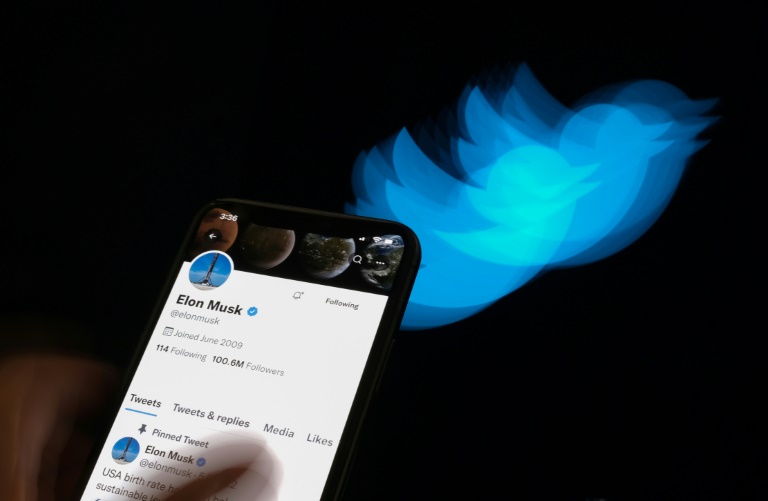
Twitter’s billionaire owner Elon Musk announced Friday that the platform would be launching differently colored badges to distinguish between accounts.

“Sorry for the delay, we’re tentatively launching Verified on Friday next week,” he tweeted. 

“Gold check for companies, grey check for government, blue for individuals (celebrity or not) and all verified accounts will be manually authenticated before check activates.”

In another tweet, Musk said that all verified individual accounts would have the same blue check, but some would eventually be able to display a “secondary tiny logo showing they belong to an org(anization) if verified as such by that org(anization)”.

The Tesla and SpaceX boss’ proposal for users to be able to pay to be “verified” and obtain a blue badge on their profiles has caused confusion since he acquired the social media giant last month.

Musk proposed a subscription fee of $8 a month to allow users to obtain the blue check — which was previously free but reserved for organizations and public figures in an attempt to avoid impersonation and misinformation. 

The first rollout of Musk’s subscription plan in early November quickly went south, with many accounts paying for the blue check and then impersonating world leaders, celebrities or companies.

Responding to the backlash, Musk initially postponed the launch date to November 29, before delaying it once more. It now appears the feature will launch on December 2. 

Musk has said that he wants to charge users for subscriptions to the social media platform to diversify its income stream. Twitter currently depends on advertising for 90 percent of its revenue.

Several major brands have withdrawn from advertising on the platform since Musk bought it, fearing that his promised relaxation of content moderation could open their companies up to being associated with objectionable content.

According to the NGO Media Matters, half of Twitter’s top 100 advertisers have announced that they are suspending or “have apparently suspended” their spending on the social network. 

Musk announces gold, gray and blue badges for Twitter accounts

Twitter’s billionaire owner Elon Musk announced Friday that the platform would be launching differently colored badges to distinguish between accounts.

“Sorry for the delay, we’re tentatively launching Verified on Friday next week,” he tweeted. 

“Gold check for companies, grey check for government, blue for individuals (celebrity or not) and all verified accounts will be manually authenticated before check activates.”

In another tweet, Musk said that all verified individual accounts would have the same blue check, but some would eventually be able to display a “secondary tiny logo showing they belong to an org(anization) if verified as such by that org(anization)”.

The Tesla and SpaceX boss’ proposal for users to be able to pay to be “verified” and obtain a blue badge on their profiles has caused confusion since he acquired the social media giant last month.

Musk proposed a subscription fee of $8 a month to allow users to obtain the blue check — which was previously free but reserved for organizations and public figures in an attempt to avoid impersonation and misinformation. 

The first rollout of Musk’s subscription plan in early November quickly went south, with many accounts paying for the blue check and then impersonating world leaders, celebrities or companies.

Responding to the backlash, Musk initially postponed the launch date to November 29, before delaying it once more. It now appears the feature will launch on December 2. 

Musk has said that he wants to charge users for subscriptions to the social media platform to diversify its income stream. Twitter currently depends on advertising for 90 percent of its revenue.

Several major brands have withdrawn from advertising on the platform since Musk bought it, fearing that his promised relaxation of content moderation could open their companies up to being associated with objectionable content.

According to the NGO Media Matters, half of Twitter’s top 100 advertisers have announced that they are suspending or “have apparently suspended” their spending on the social network. 

Vehicle pollution zone to cover all of London

Heavily polluting vehicles will have to pay to enter the entire metropolitan area of London from next year, the British capital’s mayor said Friday.

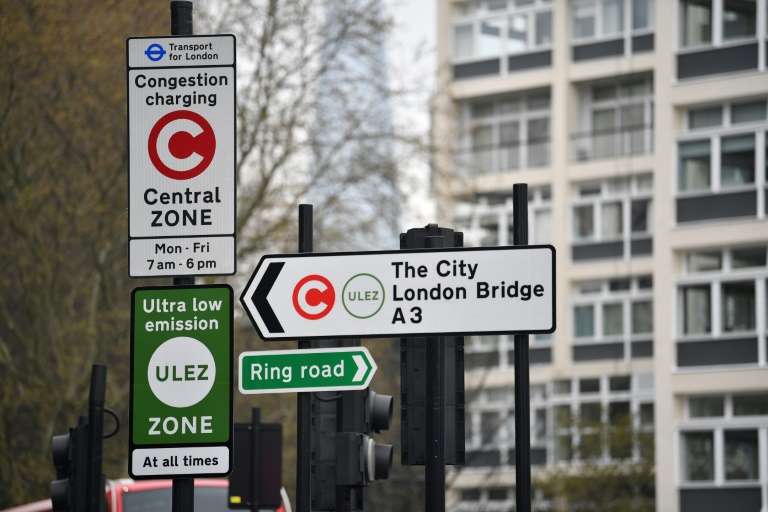
Sadiq Khan said the ultra-low emission zone (ULEZ) would be expanded from August 29 beyond its current confines, to take in the entire nine million people of Greater London.

Announcing a parallel expansion of bus services in outer London, he argued that air pollution from older vehicles was making Londoners “sick from cradle to the grave”.

The ULEZ had already proven “transformational”, the mayor said, and its extension would mean “five million more people will be able to breathe cleaner air and live healthier lives”. 

The zone has already been expanded once since it was introduced in April 2019, and today covers a large area within London’s North and South Circular inner ring-roads and the city centre.

Unless their vehicles are exempt, drivers entering the zone have to pay a daily charge of £12.50 ($15).

Petrol cars first registered after 2005, and diesel cars after September 2015, typically meet the ULEZ standards for nitrous oxide emissions and are exempt.

Air pollution caused around 1,000 annual hospital admissions for asthma and serious lung conditions in London between 2014 and 2016, according to a 2019 report.

A coroner ruled in 2020 that air pollution made a “material contribution” to the death of a nine-year-old London girl in 2013 — the first time in Britain that air pollution was officially listed as a cause of death.

Air pollution is “affecting children before they’re even born, and giving them lifelong health issues”, the campaign group Mums for Lungs tweeted.

“Good news for the health of all Londoners,” it said in response to the ULEZ announcement.

Billionaire businessman Michael Bloomberg, a UN climate envoy and former mayor of New York, said Khan was “helping to clean London’s air and set an example for cities around the world”.

But opponents of the ULEZ argue it amounts to a “tax” on poorer drivers least able to afford to replace their polluting vehicles, and has hurt small businesses.

The announcement will be “a hammer-blow for desperate drivers and businesses already struggling with crippling fuel costs” during a cost-of-living crisis, said the head of roads policy for motoring body the RAC, Nicholas Lyes.

All cars and vans entering central London during the day time also have to pay a “congestion charge” of £15, a measure first introduced in 2003.

Similar schemes have been set up in several other British towns and cities to reduce emission levels and improve air quality, 

Close Bitnami banner
Bitnami