AFP

EU frets over Twitter job losses as hate speech grows

The European Union on Thursday expressed concern about layoffs at Twitter since its takeover by Elon Musk, after the reported closure of the tech firm’s lobbying office in Brussels.

“We have concerns about the decisions to have less and less people working at the company,” EU justice commissioner Didier Reynders told reporters in Dublin, where Twitter and other US tech groups have their European headquarters.

“When we discuss hate speech, I am sure we need human resources,” he added after a meeting with unidentified representatives from Twitter.

A new EU evaluation showed the number of hate speech notifications reviewed by major social media companies within 24 hours has fallen from 90 percent in 2020, to 81 percent in 2021 and 64 percent in 2022.

The numbers showed only YouTube improved its removal rate for offensive content — as defined by an EU code of conduct — while Twitter and other tech companies’ efforts fell.

Concerns at Twitter’s post-takeover direction intensified Thursday with the Financial Times reporting that the company has dismantled its Brussels office, following the departure of executives who were in charge of efforts to comply with the EU’s online rules.

“It’s an additional concern, because to us to have a team dedicated to the relation with the European institutions is very important,” Reynders said reacting to the FT report.

However, the official added he was “optimistic by nature” and had been given commitments that Twitter’s team in Dublin would step into the Brussels role. 

Tech entrepreneur Musk moved to cut around half of Twitter’s 7,500 workforce, including many employees tasked with fighting disinformation, following his acquisition of the firm last month.

While in Dublin, Reynders is due to meet with representatives from Meta, the owner of Facebook, on Friday.

Mark Zuckerberg’s social media behemoth said this month that it plans to lay off more than 11,000 staff amid an advertising slump.

Both Meta and Twitter’s EU operations are based in Ireland, along with those of Google, Apple and Microsoft, making Ireland’s data protection agency the lead regulator responsible for holding them to account in Europe.
EU fails to agree gas price cap amid deep divisions

EU energy ministers failed Thursday to agree a cap on gas prices to mitigate the energy crunch in Europe, amid deep divisions over an initial proposal slammed by many as a “joke”.

The ministers will now meet in the first half of December to try to bridge differences, said Czech Industry Minister Jozef Sikela, whose country currently holds the rotating presidency of the EU.

During the “heated discussions” ministers did manage to adopt a couple of other “important measures”, including joint gas purchases to avoid intra-EU competition driving up prices, supply solidarity in times of need, and hastening authorisation of renewable energy sources, Sikela said.

Several ministers going into Thursday’s meeting complained that the gas price cap proposal on the table, unveiled by the European Commission just two days earlier, was clearly designed to never be used.

The Polish and Spanish energy ministers called the proposal a “joke”. 

The price cap plan — which the commission was never keen on — sets a maximum threshold of 275 euros per megawatt hour.

But it comes with so many conditions attached that it would not even have been activated back in August, when the gas price briefly soared above 300 euros, alarming Europe used to historic prices around 10 percent of that.

The cap proposal would only be triggered if the 275-euro limit was breached continuously for at least two weeks, and then only if the price for liquified natural gas (LNG) rose above 58 euros for 10 days within that same two-week period.

The price of wholesale gas in Europe on Thursday was around 124 euros, according to the main TTF benchmark.

The commission’s proposed price cap was seen as neutered under pressure from members including Germany and the Netherlands, which feared a cap could divert gas supplies to more lucrative markets, especially Asia.

Yet at least 15 EU countries — more than half the bloc — want some form of workable ceiling on wholesale gas prices to tackle a crunch in supply forced by Russia’s war in Ukraine.

– ‘Not about one number’ –

EU energy minister Kadri Simson said the European Commission was bound by “parameters” it was given by EU capitals in its formulation of a price cap, and that those governments were free to agree on a change to the parameters if they wished.

While the proposed cap “is not about one number,” she stressed the aim was to have a capping mechanism that, once activated, would stay in place for “a longer time period” and not turn on and off according to daily trading.

She also said that it was designed for next year’s gas filling season, when international competition for supplies could skyrocket.

“All signs are hinting that next year that global competition might be even significantly fiercer than it was this summer and autumn,” when European prices soared, she said.

While the European Union hasn’t banned Russian gas, the Kremlin has been turning off the taps in retaliation for sanctions imposed by Brussels in the wake of Moscow’s invasion. 

Before the war, Russian gas supplies accounted for more than 40 percent of all imported gas into the European Union, with export powerhouse Germany particularly needy.

That has now dropped to less than 10 percent. 

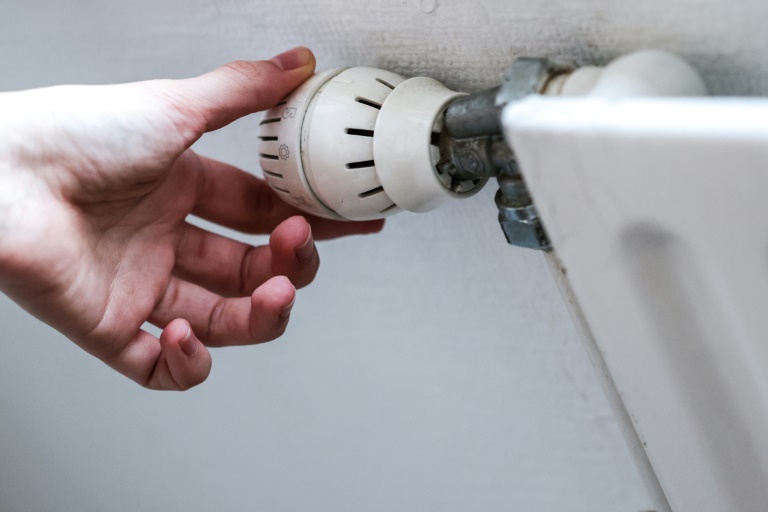
But alternative sources — such as LNG shipped from the United States and the Gulf — cannot make up the shortfall, and Europe faces a pricey heating bill for winter.

The price cap plan, if adopted, would start in January. It would run alongside a voluntary initiative for EU member states to cut natural gas use by 15 percent over the northern hemisphere winter.

Wildlife summit to vote on shark protections

Delegates at a global summit on trade in endangered species will decide Thursday whether to approve a proposal to protect sharks, a move that could drastically reduce the lucrative and often cruel shark fin trade.

The proposal would place dozens of species of the requiem shark and the hammerhead shark families on Appendix II of the Convention on International Trade in Endangered Species (CITES).

The appendix lists species that may not yet be threatened with extinction but may become so unless trade in them is closely controlled.  

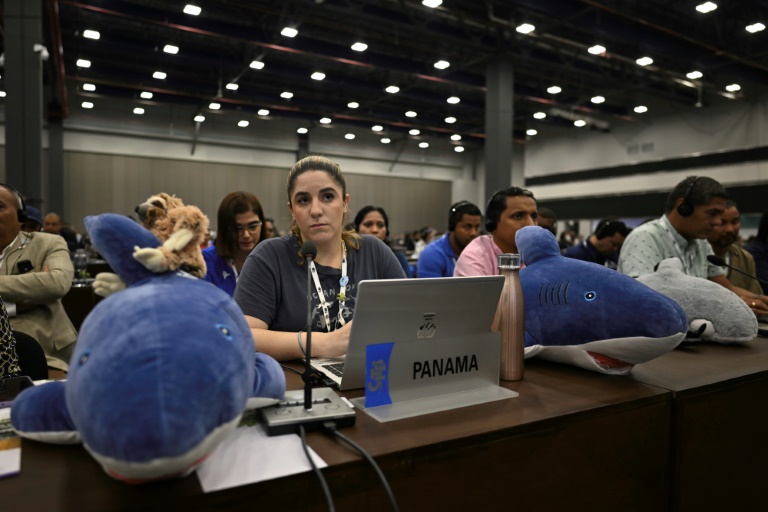
If Thursday’s plenary meeting gives the green light, “it would be a historic decision,” Panamanian delegate Shirley Binder told AFP.

“For the first time CITES would be handling a very large number of shark species, which would be approximately 90 percent of the market,” she said. 

Spurring the trade is the insatiable Asian appetite for shark fins, which make their way onto dinner tables in Hong Kong, Taiwan, and Japan.

Despite being described as almost tasteless and gelatinous, shark fin soup is viewed as a delicacy and is enjoyed by the very wealthy, often at weddings and expensive banquets.

Shark fins, representing a market of about $500 million per year, can sell for about $1,000 a kilogram.

– From villain to conservation darling –

Sharks have long been seen as the villain of the seas they have occupied for more than 400 million years, drawing horror with their depiction in films such as “Jaws,” and occasional attacks on humans.

However, these ancient predators have undergone an image makeover in recent years as conservationists have highlighted the crucial role they play in regulating the ocean ecosystem.

According to the Pew Environment Group, between 63 million and 273 million sharks are killed every year, mainly for their fins and other parts.

With many shark species taking more than 10 years to reach sexual maturity, and having a low fertility rate, the constant hunting of the species has decimated their numbers.

In many parts of the world, fisherman lop the sharks fins off at sea, tossing the shark back into the ocean for a cruel death by suffocation or blood loss.

The efforts by conservationists led to a turning point in 2013, when CITES imposed the first trade restrictions on some shark species. 

“We are in the middle of a very large shark extinction crisis,” Luke Warwick, director of shark protection for the NGO Wildlife Conservation Society (WCS), told AFP at the beginning of the summit. 

– Heated debate –

Thursday’s vote followed a fierce debate that lasted nearly three hours, with Japan and Peru seeking to reduce the number of shark species that would be protected. 

Japan had proposed that the trade restriction be reduced to 19 species of requiem sharks, and Peru called for the blue shark to be removed from the list. 

However, both suggestions were rejected.

“We hope that nothing extraordinary happens and that these entire families of sharks are ratified for inclusion in Annex II,” Chilean delegate Ricardo Saez told AFP. 

Several delegations, including hosts Panama, displayed stuffed toy sharks on their tables during the earlier Committee I debate.

The plenary will also vote on ratifying a proposal to protect guitarfish, a species of ray.

The shark initiative was one of the most discussed at this year’s CITES summit in Panama, with the proposal co-sponsored by the European Union and 15 countries. 

Participants at the summit considered 52 proposals to change species protection levels.

CITES, which came into force in 1975, has set international trade rules for more than 36,000 wild species. 

Its signatories include 183 countries and the European Union. 

French MPs vote to enshrine abortion rights in constitution

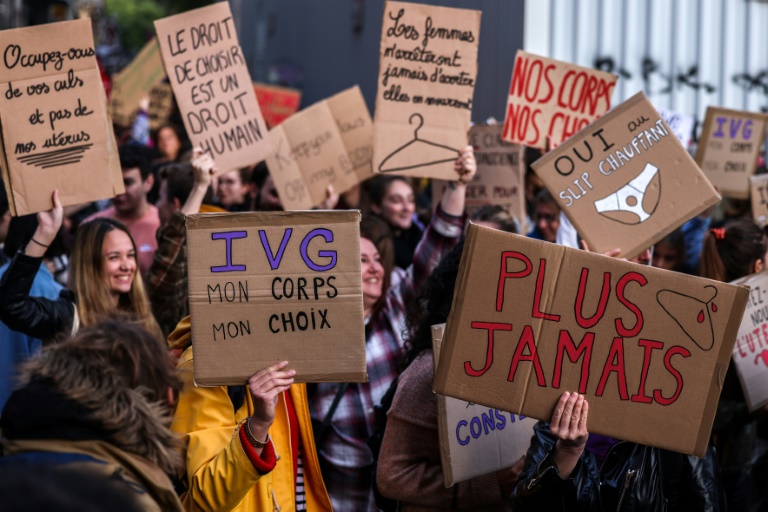
Lawmakers in the French parliament voted Thursday to add the right to abortion to the constitution in response to recent changes in Poland and the United States.

MPs from the left-wing France Unbowed (LFI) party and the ruling centrist coalition struck a deal on the wording of the new clause, which passed with a huge majority.

“The law guarantees the effectiveness and equal access to the right to voluntarily end a pregnancy,” reads the proposed constitutional addition to article 66.

It was approved with 337 votes for and 32 against, with the bill now set to be sent to the conservative-majority Senate for approval.

The initiative was prompted by the US Supreme Court’s explosive decision this year to overturn the nationwide right to termination procedures for Americans.

The conservative government of Poland has also heavily restricted abortion rights.

“The assembly is speaking to the world, our country is speaking to the world,” said jubilant MP Mathilde Panot from LFI, dedicating the vote to women in Hungary, Poland and the United States. 

Panot, who spearheaded the legislation along with a member of President Emmanuel Macron’s party, said the move was necessary in France to protect “against a regression”.

Abortion was legalised in France in 1974 in a law championed by health minister Simone Veil, a women’s rights icon granted the rare honour of burial at the Pantheon by Macron upon her death in 2018.

– Legal for 48 years –

A previous attempt to inscribe the right to abortion as well as contraception into the French constitution, with different wording, was rejected by the Senate in October. 

This second attempt will also need a green light in the upper chamber and must then be voted on in a national referendum.

“It’s a big step… but it’s just the first step,” said centrist MP Sacha Houlie from Macron’s Renaissance party.

Thursday’s agreement was a rare instance of harmony between the hard-left LFI and Macron’s centrist allies in the hung and often bad-tempered National Assembly.

Macron’s minority government has repeatedly struggled to pass legislation, finding cooperation with the different political factions difficult.

Many conservative and Catholic politicians had announced their misgivings about the abortion change, seeing it as unnecessary given the legal protections already in place.

Far-right leader Marine Le Pen, whose National Rally is the biggest single opposition party in parliament, had called it “totally misplaced” earlier this week because abortion rights were not under threat in France.

She missed the vote on Thursday “for medical reasons”, a spokesperson said.

The parliamentary voting system initially indicated by error that she had voted in favour of the text.

Stocks rise, dollar slips as Fed signals softer rate hike pace

Stock markets mostly rose Thursday and the dollar largely weakened after minutes from the Federal Reserve’s latest policy meeting suggested it could slow the pace of its rate hikes.

The news provided traders with a cushion against concerns about surging Covid-19 cases in China that have fanned speculation authorities will revert to lockdowns and other economically debilitating measures to fight the outbreak.

Oil prices rallied slightly later Thursday after earlier extending sharp losses from the previous day fuelled by worries about the impact on demand from China’s Covid outbreaks.

Wednesday’s much-anticipated minutes showed most US central bank chiefs felt smaller increases would “likely soon be appropriate” as the economy shows signs of weakness following almost a year of monetary tightening.

“Equities are revelling in the wake of the… minutes after the Fed telegraphed a downshift from jumbo to extra-large rate hikes,” said SPI Asset Management’s Stephen Innes.

“A commitment to moving toward restrictive monetary policy remains intact, but the (policy board) is ready to slow the path toward that destination.”

He added that a less aggressive Fed “should pave the runway for take-off in Asia, fuelled by expectations of China’s reopening by March next year”.

Bets were growing on officials announcing a 50-basis-point lift at their December gathering, down from four straight 75-point hikes.

The latest indicators showed the manufacturing and services sectors continued to contract last month, while jobless claims picked up.

The developments allowed Wall Street traders to head off to their Thanksgiving break with a spring in their step, the S&P 500 ending at a two-month high as they finally see a glimmer of light at the end of the tunnel after a painful year.

Asia and Europe mostly followed suit.

Kuala Lumpur surged more than three percent and the ringgit held gains after opposition leader Anwar Ibrahim was named prime minister, ending a days-long leadership impasse after inconclusive polls that had rattled Malaysia’s markets.

The more risk-on environment was also reflected in a further drop in the dollar against its peers, having surged for much of the year as traders bet on ever-higher US interest rates.

Investors were keeping a close watch also on China after it announced a record number of new Covid cases, as authorities worked to curb the spread with snap lockdowns, mass testing and travel restrictions.

While officials are trying more targeted measures to contain the disease, concerns remain that they will resort to the painful city-wide shutdowns seen in Shanghai earlier this year as part of the zero-Covid strategy, which hammered the economy.

However, that worry has been tempered somewhat after China signalled fresh support measures aimed at boosting growth, with the State Council saying tools would be used to ensure liquidity in markets.

The comments led to talk of another cut in the amount of cash that banks must keep in reserve, freeing them to lend more.

– Key figures around 1630 GMT –

London – FTSE 100: FLAT at 7,466.60 points (close)

Paris – CAC 40: UP 0.4 percent at 6,707.32 (close)

Frankfurt – DAX: UP 0.8 percent at 14,539.56 (close)

EURO STOXX 50: UP 0.4 percent at 3,961.99

Tokyo – Nikkei 225: UP 1.0 percent at 28,383.09 (close)

Hong Kong – Hang Seng Index: UP 0.8 percent at 17,660.90 (close)

Shanghai – Composite: DOWN 0.3 percent at 3,089.31 (close)

New York – Dow: UP 0.3 percent at 34,194.06 (close)

Euro/dollar: UP at $1.411 from $1.0401 on Wednesday

Dollar/yen: DOWN at 138.39 yen from 139.52 yen

Pound/dollar: UP at $1.2131 from $1.2064

Euro/pound: DOWN at 85.82 pence from 86.18 pence

West Texas Intermediate: FLAT at $77.91 per barrel

Brent North Sea crude: DOWN 0.4 percent at $85.10 per barrel

Stocks rise, dollar slips as Fed signals softer rate hike pace

Stock markets mostly rose Thursday and the dollar largely weakened after minutes from the Federal Reserve’s latest policy meeting suggested it could slow the pace of its rate hikes.

The news provided traders with a cushion against concerns about surging Covid-19 cases in China that have fanned speculation authorities will revert to lockdowns and other economically debilitating measures to fight the outbreak.

Oil prices rallied slightly later Thursday after earlier extending sharp losses from the previous day fuelled by worries about the impact on demand from China’s Covid outbreaks.

Wednesday’s much-anticipated minutes showed most US central bank chiefs felt smaller increases would “likely soon be appropriate” as the economy shows signs of weakness following almost a year of monetary tightening.

“Equities are revelling in the wake of the… minutes after the Fed telegraphed a downshift from jumbo to extra-large rate hikes,” said SPI Asset Management’s Stephen Innes.

“A commitment to moving toward restrictive monetary policy remains intact, but the (policy board) is ready to slow the path toward that destination.”

He added that a less aggressive Fed “should pave the runway for take-off in Asia, fuelled by expectations of China’s reopening by March next year”.

Bets were growing on officials announcing a 50-basis-point lift at their December gathering, down from four straight 75-point hikes.

The latest indicators showed the manufacturing and services sectors continued to contract last month, while jobless claims picked up.

The developments allowed Wall Street traders to head off to their Thanksgiving break with a spring in their step, the S&P 500 ending at a two-month high as they finally see a glimmer of light at the end of the tunnel after a painful year.

Asia and Europe mostly followed suit.

Kuala Lumpur surged more than three percent and the ringgit held gains after opposition leader Anwar Ibrahim was named prime minister, ending a days-long leadership impasse after inconclusive polls that had rattled Malaysia’s markets.

The more risk-on environment was also reflected in a further drop in the dollar against its peers, having surged for much of the year as traders bet on ever-higher US interest rates.

Investors were keeping a close watch also on China after it announced a record number of new Covid cases, as authorities worked to curb the spread with snap lockdowns, mass testing and travel restrictions.

While officials are trying more targeted measures to contain the disease, concerns remain that they will resort to the painful city-wide shutdowns seen in Shanghai earlier this year as part of the zero-Covid strategy, which hammered the economy.

However, that worry has been tempered somewhat after China signalled fresh support measures aimed at boosting growth, with the State Council saying tools would be used to ensure liquidity in markets.

The comments led to talk of another cut in the amount of cash that banks must keep in reserve, freeing them to lend more.

– Key figures around 1630 GMT –

London – FTSE 100: FLAT at 7,466.60 points (close)

Paris – CAC 40: UP 0.4 percent at 6,707.32 (close)

Frankfurt – DAX: UP 0.8 percent at 14,539.56 (close)

EURO STOXX 50: UP 0.4 percent at 3,961.99

Tokyo – Nikkei 225: UP 1.0 percent at 28,383.09 (close)

Hong Kong – Hang Seng Index: UP 0.8 percent at 17,660.90 (close)

Shanghai – Composite: DOWN 0.3 percent at 3,089.31 (close)

New York – Dow: UP 0.3 percent at 34,194.06 (close)

Euro/dollar: UP at $1.411 from $1.0401 on Wednesday

Dollar/yen: DOWN at 138.39 yen from 139.52 yen

Pound/dollar: UP at $1.2131 from $1.2064

Euro/pound: DOWN at 85.82 pence from 86.18 pence

West Texas Intermediate: FLAT at $77.91 per barrel

Brent North Sea crude: DOWN 0.4 percent at $85.10 per barrel

Bid to ban bullfighting abandoned in France

A bid to ban bullfighting in France was abandoned Thursday in parliament, spelling relief for lovers of the traditional blood sport and dismay for animal rights’ activists. 

The 577-seat national assembly had looked set to vote on draft legislation that would have made the practice illegal.

But after lawmakers filed more than 500 amendments, many of them designed to take up parliamentary time and obstruct the vote, the MP behind the bill withdrew it.

“I’m so sorry,” Aymeric Caron, a left-wing MP, vegan and animal rights’ campaigner, told the national assembly as he announced the decision in raucous and bad-tempered scenes.

Though public opinion is firmly in favour of outlawing the practice, the bill had already been expected to be rejected by a majority of lawmakers who are wary about stirring up the bullfighting heartlands in the south of the country. 

“We need to go towards a conciliation, an exchange,” President Emmanuel Macron said on Wednesday, adding that he did not expect the draft law to pass. “From where I am sitting, this is not a current priority.” 

His government has urged members of the ruling centrist coalition not to support the text from the opposition France Unbowed party, even though many members are known to personally favour it. 

During a first debate of the parliament’s law commission last week, a majority voted against the proposal by Caron, who denounced the “barbarism” of a tradition that was imported from Spain in the 1850s.

“Caron has antagonised people instead of trying to smooth it over,” a lawmaker from Macron’s party told AFP on condition of anonymity.

The bill proposes modifying an existing law penalising animal cruelty to remove exemptions for bullfights that can be shown to be “uninterrupted local traditions”.

These are granted in towns such as Bayonne and Mont-de-Marsan in southwest France and along the Mediterranean coast including Arles, Beziers and Nimes. 

Around 1,000 bulls are killed each year in France, according to the National Observatory of Bull Cultures.

– ‘Tackling death’ –

Many so-called “bull towns” depend on the shows for tourism and see the culture of bull-breeding and the spectacle of the fight as part of their way of life — idolised by artists from Ernest Hemingway to Pablo Picasso.

They organised demonstrations last Saturday, while animal rights protesters gathered in Paris — highlighting the north-south and rural-versus-Paris divide at the heart of the debate. 

“Caron, in a very moralising tone, wants to explain to us, from Paris, what is good or bad in the south,” the mayor of Mont-de-Marsan, Charles Dayot, told AFP recently.

Other defenders of “la Corrida” in France view the focus on the sport as hypocritical when factory farms and industrial slaughter houses are overlooked.

“These animals die too and we don’t talk enough about it,” said Dalia Navarro, who formed the pro-bullfighting group Les Andalouses in southern Arles.

Modern society “has more and more difficulty in accepting seeing death. But la Corrida tackles death, which is often a taboo subject,” she told AFP.

Previous judicial attempts to outlaw bullfighting have repeatedly failed, with courts routinely rejecting lawsuits lodged by animal rights activists, most recently in July 2021 in Nimes.

The debate in France about the ethics of killing animals for entertainment is echoed in other countries with bullfighting histories, including Spain and Portugal as well as Mexico, Colombia and Venezuela.

In June, a judge in Mexico City ordered an indefinite suspension of bullfighting in the capital’s historic bullring, the largest in the world.

The first bullfight took place in France in 1853 in Bayonne to honour Eugenie de Montijo, the Spanish wife of Napoleon III.

adc-cs-iw-adp/sjw/pvh

Ukraine battles to reconnect millions in the cold and dark

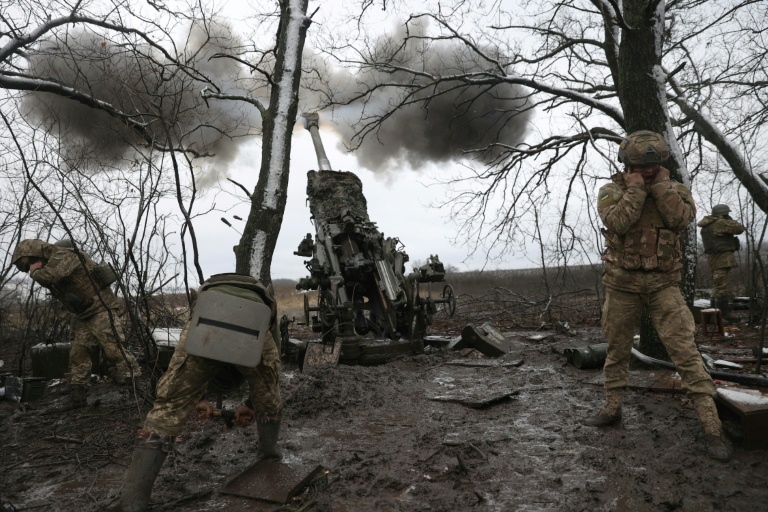
Ukraine battled Thursday to reconnect water and electricity services to millions of people cut off after Russia launched dozens of cruise missiles that battered Ukraine’s already crippled electricity grid.

The energy system in Ukraine is on the brink of collapse and millions have been subjected to emergency blackouts over recent weeks after systematic Russian bombardments of the grid.

The World Health Organisation has warned of “life-threatening” consequences and estimated that millions could leave their homes as a result.

Twenty-four hours after the Russian strikes smashed Kyiv, city officials said 70 percent of homes were still suffering emergency outages but that water services had been fully restored.

“Energy companies are making every effort to return (services) as soon as possible,” Kyiv Mayor Vitali Klitschko said earlier.

The strikes knocking out electricity come at a precarious time, with winter setting in and temperatures in the capital hovering just above freezing.

Ukraine accused Russian forces of launching around 70 cruise missiles as well as drones in attacks that left 10 dead and around 50 wounded.

But Russia’s defence ministry denied striking any targets inside Kyiv and said damage in the capital was caused by Ukrainian and foreign air defence systems.

– ‘Scariest day’ –

“Not a single strike was made on targets within the city of Kyiv,” it said.

Moscow’s is targeting power facilities in an apparent effort to force capitulation after nine months of war that has seen Russian forces fail in most of their stated territorial objectives.

“The way they fight and target civil infrastructure, it can cause nothing but fury,” said Oleksiy Yakovlenko, the chief administrator at a hospital in the eastern Ukraine city of Kramatorsk.

But even as blackouts there become more frequent, Yakovlenko said his resolve was unwavering.

“If they expect us to fall on our knees and crawl to them it won’t happen,” Yakovlenko told AFP. 

The wave of attacks on Ukraine’s grid come as Russian troops suffer a wave of battlefield defeats. This month they withdrew from the only regional capital they had captured, destroying key infrastructure as they retreated from Kherson in the south. 

Ukraine prosecutors said Thursday authorities had discovered a total of nine torture sites used by the Russians in Kherson as well as “the bodies of 432 killed civilians”.

Wednesday’s attacks disconnected three Ukrainian nuclear plants automatically from the national grid and triggered blackouts in neighbouring Moldova, where the energy network is linked to Ukraine.

The energy ministry said that all three nuclear facilities had been reconnected by Thursday morning.

And power was nearly entirely back online in ex-Soviet Moldova and its pro-European president Maia Sandu convened a meeting of her security council to discuss energy.

The mayor of Ukraine’s second largest city, Kharkiv, near the border with Russia, said water was being restored to homes and municipal workers were reconnecting public transport. 

“We’ve restarted power supplies. Believe me, it was very difficult,” said Mayor Igor Terekhov.

But there were still disruptions across the country and even the central bank warned the outages could impact banks.

“There is danger of complete inability of banks to work due to prolonged absence of electricity supply,” it said.

– ‘Shutdowns’ –

The Kremlin said Ukraine was ultimately responsible for the fallout from the strikes and that Kyiv could end the strikes by acquiescing to Russian demands.

Ukraine “has every opportunity to settle the situation, to fulfil Russia’s demands and as a result, end all possible suffering of the civilian population,” spokesman Dmitry Peskov said.

Moscow announced separately it had issued tens of thousands of Russian passports to residents of four Ukrainian territories, which President Vladimir Putin claimed to have annexed in September.

“More than 80,000 people received passports as citizens of the Russian Federation,” Valentina Kazakova, a migration official with the interior ministry, said in remarks carried by Russian news agencies. 

In September, Russia held so-called referendums in Donetsk, Lugansk, Zaporizhzhia and Kherson and claimed residents had voted in favour of becoming subjects of Russia.

Putin formally annexed the territories at a ceremony in the Kremlin later that month, even though his forces have never had full control over them.

Adidas probing allegations about Kanye West's behaviour

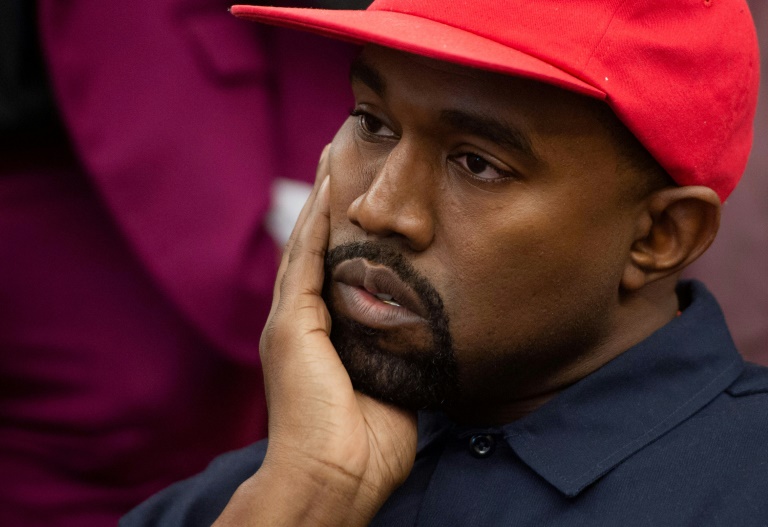
Adidas said Thursday it was investigating claims against Kanye West after a report detailed alleged inappropriate behaviour, just weeks after the German sportswear giant ended its partnership with the rapper.

US magazine Rolling Stone reported claims that the rapper played pornography to Adidas staff in meetings, and discussed porn and showed an intimate photo of ex-wife Kim Kardashian in job interviews.

It said former members of the team involved in “Yeezy” — the product line designed with the rapper — had released a letter alleging Adidas executives were aware of the behaviour, which went on for years, but turned a blind eye.

“It is currently not clear whether the accusations made in an anonymous letter are true,” Adidas said in a statement.

“However, we take these allegations very seriously and have taken the decision to launch an independent investigation of the matter immediately to address the allegations.”

The Rolling Stone report, citing unnamed former staff, alleged the rapper used intimidation tactics with employees, which were often directed towards women.

In the letter, the ex-Yeezy employees urged Adidas to address “the toxic and chaotic environment that Kanye West created”.

The new revelations came after Adidas last month terminated its lucrative tie-up with West — known formally as Ye — after a series of anti-Semitic outbursts by the star. 

At the time, the company said his comments were “unacceptable, hateful and dangerous”.

– Controversial rapper –

The sports outfitter took a heavy financial blow from the move, which it forecast would cuts its 2022 net income in half. 

In its latest statement Thursday, Adidas said it has been and continues to be “actively engaged in conversations with our employees about the events that lead to our decision to end the partnership.

“They have our full support and as we’re working through the details of the termination.”

Adidas began a review of its relationship with West after he appeared at a Paris fashion show wearing a shirt emblazoned with “White Lives Matter”, a slogan created as a backlash to the Black Lives Matter movement.

Days later he was locked out of Twitter and Instagram over anti-Semitic threats.

The artist was associated with rival sportswear company Nike for years but broke away in 2013, lending his name to Adidas as they launched their first Yeezy shoe in 2015 — a partnership that went on to make him a billionaire.

Along with Beyonce, Stella McCartney and Pharrell Williams, West has been one of the top names used by Adidas to boost sales, especially online.

But rights campaigners and entertainment world figures had heaped pressure on Adidas to stop working with the rapper.

US clothing company Gap and Paris-based fashion house Balenciaga have also recently ended tie-ups with West.

Earlier this month, Adidas named a new CEO — Bjorn Gulden, chief of rival outfitter Puma. As well as the fallout from the West controversy, he faces the task of improving sales that have been hit by Covid restrictions in key market China. 

Struggling Ghana plans tax rise, debt swap to secure IMF aid

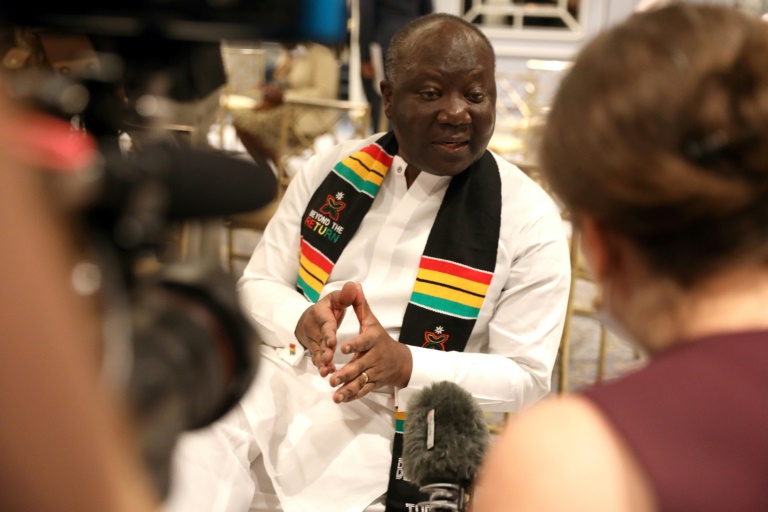
Ghana’s finance minister, Kenneth Ofori-Atta, presented the 2023 budget to parliament on Thursday, hiking tax and planning a debt swap as the country’s negotiates an International Monetary Fund (IMF) loan.

Ofori-Atta is facing calls for his dismissal as the West African state battles an economic crisis, with inflation at more than 40 percent and the cedi currency falling sharply.

Ghana hopes to secure up to $3 billion in IMF credit this year to shore up public finances after the government initially said it would not need to go to the multilateral lender.

“The challenges we face are daunting,” the minister said in a statement to lawmakers. “I, therefore, ask all of us to play a constructive role in getting our nation back on track.”

To increase revenues, the 2023 budget will raise value-added tax by 2.5 percent to 15 percent. The so-called E-levy on electronic transactions will be reduced from 1.5 percent to 1.0 percent in a bid to encourage more transactions.

The government will also freeze hiring of public workers for next year.

Ghana, a top cocoa and gold producer, also has oil and gas reserves but its debt service payments are high and its revenues low. Like the rest of Africa, it has been hit hard by economic fallout from the global pandemic and the Ukraine war. 

Since the start of the year, the cedi currency has depreciated more than 53 percent. That compared to an average seven percent average annual depreciation between 2017 and 2021, the finance minister said. 

Inflation in October hit 40.2 percent.

The local currency’s depreciation against the dollar has increasing Ghana’s foreign debt stock by 93 billion cedi or $6 billion this year alone, the minister said. 

He said the government would start a debt exchange programme but did not give details of how that would happen.

Earlier this year, President Nana Akufo-Addo reversed his government’s position and said the country would go to the IMF for help.

Critics have questioned what austerity measures may have to accompany any loan deal. Ghanaians already struggling with high costs of living.

Ofori-Atta said the IMF talks had made “substantial progress”, with agreement on “fiscal adjustment path, debt strategy and financing”.

The government is under increasing pressure over the country’s economic woes and Ofori-Atta faced an enquiry from lawmakers last week over his financial management.

Speaking in parliament on Friday, he apologised to Ghanaians for the struggles they faced. 

Earlier this month, Akufo-Addo fired the government’s junior finance minister, Charles Adu Boahen, over graft allegations after he appeared in a documentary on illegal gold mining.

Close Bitnami banner
Bitnami