AFP

Chile's unique Atacama desert sullied by world's junk

It may be one of the driest places on Earth — a brutal, alien landscape where life seems impossible. 

But Chile’s massive Atacama desert is a unique and fragile ecosystem that experts say is being threatened by piles of trash dumped there from around the world.

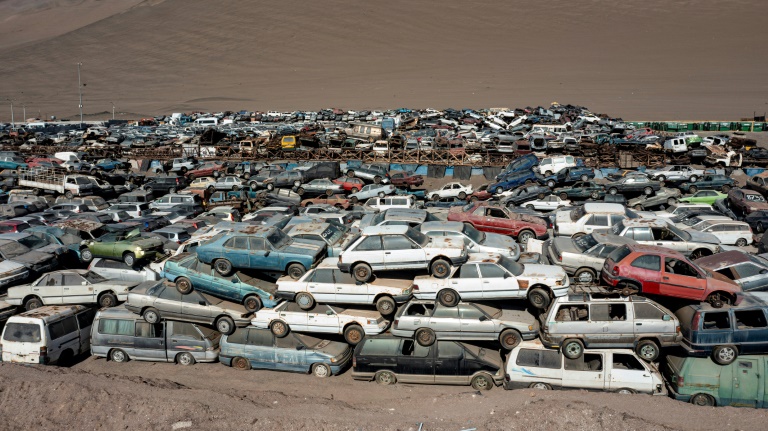
Mountains of discarded clothing, a graveyard of shoes, and rows upon rows of scrapped tires and cars blight at least three regions of the desert in northern Chile.

“We are no longer just the local backyard, but rather the world’s backyard, which is worse,” Patricio Ferreira, mayor of the desert town of Alto Hospicio, told AFP.

The Atacama, with its striking otherworldly beauty and expansive salt flats, has also been transformed by intensive mining for copper and lithium.

Carmen Serrano, head of the Endemic Roots environmental NGO, said that most people see the Atacama as nothing more than “bare hills” where they can “extract resources or fill their pockets.”

– ‘Lack of global awareness’-

Chile has long been a hub for secondhand and unsold clothing from Europe, Asia, and the United States, which is either sold on throughout Latin America, or ends up in rubbish dumps in the desert.

Spurred on by the world’s insatiable appetite for fast fashion, this chain last year saw over 46,000 tonnes of used clothing funneled into northern Chile’s Iquique free trade zone.

Full of chemicals and taking up to 200 years to biodegrade, activists say the clothing pollutes the soil, air and underground water.

The heaps of hand-me-downs are sometimes even set alight. 

“The material is highly flammable. The fires are toxic,” said lawyer and activist Paulin Silva, 34, who has filed a complaint at the country’s environmental court over the damage caused by the mountains of trash and clothing.

“It seems to me we need to find those responsible,” she said, standing amid the discarded items which she said were “dangerous, an environmental risk, a danger to people’s health.”

Used cars also flood into the country from the free trade zone. Many are exported to Peru, Bolivia or Paraguay, while others end up dumped in graveyards kilometers wide in the surrounding desert.

Piles of abandoned tires are also scattered across the desert.

The mayor Ferreira lamented a “lack of global awareness, a lack of ethical responsibility and environmental protection” from “the unscrupulous of the world.”

“We feel abandoned. We feel that our land has been sacrificed.”

– A ‘very fragile’ ecosystem’-

For more than eight million years, the 100,000 square kilometer expanse of the Atacama has been the most arid desert in the world. 

Rain is rare, and in some parts, non-existent.

The driest part is the Yungay district in the city of Antofagasta. Here, scientists have found extreme forms of life, microorganisms that have adapted to a practically waterless world, high levels of solar radiation, and barely any nutrients.

Scientists believe these microorganisms may harbor secrets to evolution and survival on Earth and other planets.

NASA considers the Yungay district to be Earth’s most similar landscape to Mars, and uses it to test its robotic vehicles.

While it doesn’t receive much rain, large banks of fog roll across the desert, allowing some plants — and some of the world’s hardiest lichens, fungi, and algae — to grow. 

Scores of brightly colored wildflower species bloom when it gets above average rain in a spectacular display that happens every five to seven years, most recently in 2021.

It is an ecosystem that is “very fragile, because any change or decrease in the pattern of precipitation and fog has immediate consequences for the species that live there,” said Pablo Guerrero, a researcher at the Institute of Ecology and Biodiversity and expert in desert cactus.

“There are cactus species which are considered extinct” as a result of pollution, climate change, and human settlement.

“Unfortunately, it is something we are seeing on a massive scale, with systematic deterioration in recent years.”
Grinding inflation clouds 'Black Friday' shopping bonanza

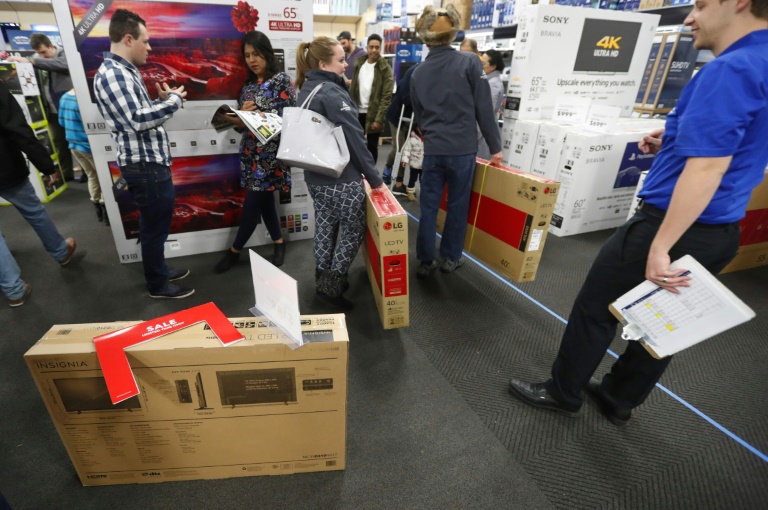
Retailers braced for their biggest test of the year: Will US consumers open their wallets wide for the Black Friday sales that kick off the holiday shopping season?

Consumer confidence is precarious, rattled by soaring inflation in the world’s biggest economy, casting uncertainty on this festive shopping season that starts the day after Thursday’s Thanksgiving holiday.

A year ago, retailers faced product shortfalls in the wake of shipping backlogs and Covid-19-related factory closures. To avert a repeat, the industry front-loaded its holiday imports this year, leaving it vulnerable to oversupply at a time when consumers are cutting back.

“Supply shortages was yesterday’s problem,” said Neil Saunders, managing director for GlobalData Retail, a consultancy. “Today’s problem is having too much stuff.”

Saunders said retailers have made progress in recent months in reducing excess inventories but that oversupply created banner conditions for bargain-hunters in many categories, including electronics, home improvement and apparel.

Juameelah Henderson always checks for sales, “but more so now,” she said while exiting an Old Navy store in New York with four bags of items.

The clothing chain’s prices were “pretty good,” she said. “If it’s not on sale, I really don’t need it.”

Higher costs for gasoline and household staples like meat and cereal are an economy-wide issue, but do not burden everyone equally.

“The lower incomes are definitely hit worst by the higher inflation,” said Claire Li, a senior analyst at Moody’s. “People have to spend on the essential items.” 

– Diminishing savings –

Leading forecasts from Deloitte and the National Retail Federation project a single-digit percentage increase, but it likely won’t exceed the inflation rate.

The consumer price index has been up about eight percent on an annual basis, which means that a similar size increase in holiday sales would equate with lower volumes.

European countries like Britain and France have been marking Black Friday for a few years now, too, and are also enduring sky high inflation. So merchants there face a similar dilemma.

“Retailers are desperate for some spending cheer but the worry is that it could turn out to be more of a Bleak Friday,” said Susannah Streeter, senior investment and markets analyst, Hargreaves Lansdown, said in London.

US shoppers have remained resilient throughout the myriad stages of the Covid-19 pandemic, often spending more than expected, even when consumer sentiment surveys suggest they are in a gloomy mood.

Part of the reason has been the unusually robust state of savings, with many households banking government pandemic aid payments at a time of reduced consumption due to Covid-19 restrictions.

But that cushion is starting to whittle away. After hitting $2.5 trillion in excess savings in mid-2021, the benchmark fell to $1.7 trillion in the second quarter, according to Moody’s.

Consumers with incomes below $35,000 were affected the most, with their excess savings falling nearly 39 percent between the fourth quarter of 2021 and mid-2022, according to Moody’s.

Accompanying this drop has been a rise in credit card debt visible in Federal Reserve data and anecdotally described by chains that also report more purchases made with food stamps.

“We’re seeing continued pressure,” said Michael Witynski, chief executive of Dollar Tree, a discount retailer that has seen “shifts” in shoppers, “where they’re very consumable and needs-based focused to try and make that budget work and stretch it over the month.”

– Mixed picture –

Earnings reports from retailers in recent days have painted a mixed picture on consumer health.

Target stood on the downcast side of the ledger, pointing to a sharp decline in shopping activity in late October, potentially portending a weak holiday season.

The big-box chain expects a “very promotional” holiday season, said Chief Executive Brian Cornell.

“We’ve had a consumer who has been dealing with very stubborn inflation for quarter after quarter now,” Cornell said on a conference call with analysts. 

“They’re shopping very carefully on a budget, and I think they’re looking at discretionary categories and saying, ‘All right, if I’m going to buy, I’m looking for a great deal and a great value.'”

But Lowe’s, another big US chain specializing in home-improvement, offered a very different view, describing the same late-October period as “strong” and seeing no evidence of consumer deterioration.

“We are not seeing anything that feels or looks like a trade down or consumer pullback,” said Lowe’s Chief Executive Marvin Ellison.

Consumers like Charmaine Taylor, who checks airline websites frequently, are staying vigilant

Taylor thus far has been thwarted in her travel aspirations due to  exorbitant plane ticket prices. Taylor, who works in child care, isn’t sure how much she’ll be able to spend on family this year

“I’m trying to give them some little gifts,” Taylor said at a park in Harlem earlier this week. “I don’t know if I’ll be able to. Inflation is hitting pretty hard.”

jmb/tjj/dw

Grinding inflation clouds 'Black Friday' shopping bonanza

Retailers braced for their biggest test of the year: Will US consumers open their wallets wide for the Black Friday sales that kick off the holiday shopping season?

Consumer confidence is precarious, rattled by soaring inflation in the world’s biggest economy, casting uncertainty on this festive shopping season that starts the day after Thursday’s Thanksgiving holiday.

A year ago, retailers faced product shortfalls in the wake of shipping backlogs and Covid-19-related factory closures. To avert a repeat, the industry front-loaded its holiday imports this year, leaving it vulnerable to oversupply at a time when consumers are cutting back.

“Supply shortages was yesterday’s problem,” said Neil Saunders, managing director for GlobalData Retail, a consultancy. “Today’s problem is having too much stuff.”

Saunders said retailers have made progress in recent months in reducing excess inventories but that oversupply created banner conditions for bargain-hunters in many categories, including electronics, home improvement and apparel.

Juameelah Henderson always checks for sales, “but more so now,” she said while exiting an Old Navy store in New York with four bags of items.

The clothing chain’s prices were “pretty good,” she said. “If it’s not on sale, I really don’t need it.”

Higher costs for gasoline and household staples like meat and cereal are an economy-wide issue, but do not burden everyone equally.

“The lower incomes are definitely hit worst by the higher inflation,” said Claire Li, a senior analyst at Moody’s. “People have to spend on the essential items.” 

– Diminishing savings –

Leading forecasts from Deloitte and the National Retail Federation project a single-digit percentage increase, but it likely won’t exceed the inflation rate.

The consumer price index has been up about eight percent on an annual basis, which means that a similar size increase in holiday sales would equate with lower volumes.

European countries like Britain and France have been marking Black Friday for a few years now, too, and are also enduring sky high inflation. So merchants there face a similar dilemma.

“Retailers are desperate for some spending cheer but the worry is that it could turn out to be more of a Bleak Friday,” said Susannah Streeter, senior investment and markets analyst, Hargreaves Lansdown, said in London.

US shoppers have remained resilient throughout the myriad stages of the Covid-19 pandemic, often spending more than expected, even when consumer sentiment surveys suggest they are in a gloomy mood.

Part of the reason has been the unusually robust state of savings, with many households banking government pandemic aid payments at a time of reduced consumption due to Covid-19 restrictions.

But that cushion is starting to whittle away. After hitting $2.5 trillion in excess savings in mid-2021, the benchmark fell to $1.7 trillion in the second quarter, according to Moody’s.

Consumers with incomes below $35,000 were affected the most, with their excess savings falling nearly 39 percent between the fourth quarter of 2021 and mid-2022, according to Moody’s.

Accompanying this drop has been a rise in credit card debt visible in Federal Reserve data and anecdotally described by chains that also report more purchases made with food stamps.

“We’re seeing continued pressure,” said Michael Witynski, chief executive of Dollar Tree, a discount retailer that has seen “shifts” in shoppers, “where they’re very consumable and needs-based focused to try and make that budget work and stretch it over the month.”

– Mixed picture –

Earnings reports from retailers in recent days have painted a mixed picture on consumer health.

Target stood on the downcast side of the ledger, pointing to a sharp decline in shopping activity in late October, potentially portending a weak holiday season.

The big-box chain expects a “very promotional” holiday season, said Chief Executive Brian Cornell.

“We’ve had a consumer who has been dealing with very stubborn inflation for quarter after quarter now,” Cornell said on a conference call with analysts. 

“They’re shopping very carefully on a budget, and I think they’re looking at discretionary categories and saying, ‘All right, if I’m going to buy, I’m looking for a great deal and a great value.'”

But Lowe’s, another big US chain specializing in home-improvement, offered a very different view, describing the same late-October period as “strong” and seeing no evidence of consumer deterioration.

“We are not seeing anything that feels or looks like a trade down or consumer pullback,” said Lowe’s Chief Executive Marvin Ellison.

Consumers like Charmaine Taylor, who checks airline websites frequently, are staying vigilant

Taylor thus far has been thwarted in her travel aspirations due to  exorbitant plane ticket prices. Taylor, who works in child care, isn’t sure how much she’ll be able to spend on family this year

“I’m trying to give them some little gifts,” Taylor said at a park in Harlem earlier this week. “I don’t know if I’ll be able to. Inflation is hitting pretty hard.”

jmb/tjj/dw

Wildlife summit to vote on shark protections

Delegates at a global summit on trade in endangered species have postponed until Friday a vote on whether to approve a proposal to protect sharks, a move that could drastically reduce the lucrative and often cruel shark fin trade.

The proposal would place dozens of species of the requiem shark and the hammerhead shark families on Appendix II of the Convention on International Trade in Endangered Species (CITES).

The appendix lists species that may not yet be threatened with extinction but may become so unless trade in them is closely controlled.  

If the plenary meeting gives the green light, “it would be a historic decision,” Panamanian delegate Shirley Binder, who presided over the meeting, told AFP.

“For the first time CITES would be handling a very large number of shark species, which would be approximately 90 percent of the market,” she said.

Although a vote had been expected Thursday, Binder suspended the session late in the afternoon and pushed it to Friday, as debate over the hippo trade between the European Union and African countries dragged on.

Insatiable appetite in Asia for shark fins, which make their way onto dinner tables in Hong Kong, Taiwan and Japan, has spurred their trade.

Despite being described as almost tasteless and gelatinous, shark fin soup is viewed as a delicacy and is enjoyed by the very wealthy, often at weddings and expensive banquets.

Shark fins, representing a market of about $500 million per year, can sell for about $1,000 a kilogram.

– From villain to darling –

Sharks have long been seen as the villain of the seas they have occupied for more than 400 million years, drawing horror with their depiction in films such as “Jaws,” and occasional attacks on humans.

However, these ancient predators have undergone an image makeover in recent years as conservationists have highlighted the crucial role they play in regulating the ocean ecosystem.

According to the Pew Environment Group, between 63 million and 273 million sharks are killed every year, mainly for their fins and other parts.

With many shark species taking more than 10 years to reach sexual maturity, and having a low fertility rate, the constant hunting of the species has decimated their numbers.

In many parts of the world, fisherman lop the shark’s fins off at sea, tossing the shark back into the ocean for a cruel death by suffocation or blood loss.

The efforts by conservationists led to a turning point in 2013, when CITES imposed the first trade restrictions on some shark species. 

“We are in the middle of a very large shark extinction crisis,” Luke Warwick, director of shark protection for the NGO Wildlife Conservation Society (WCS), told AFP at the beginning of the summit.

– Heated debate –

During hours-long fierce debate Thursday, Japan and Peru sought to reduce the number of shark species that would be protected. 

Japan had proposed that the trade restriction be reduced to 19 species of requiem sharks, and Peru called for the blue shark to be removed from the list. 

However, both suggestions were rejected.

“We hope that nothing extraordinary happens and that these entire families of sharks are ratified for inclusion in Annex II,” Chilean delegate Ricardo Saez told AFP. 

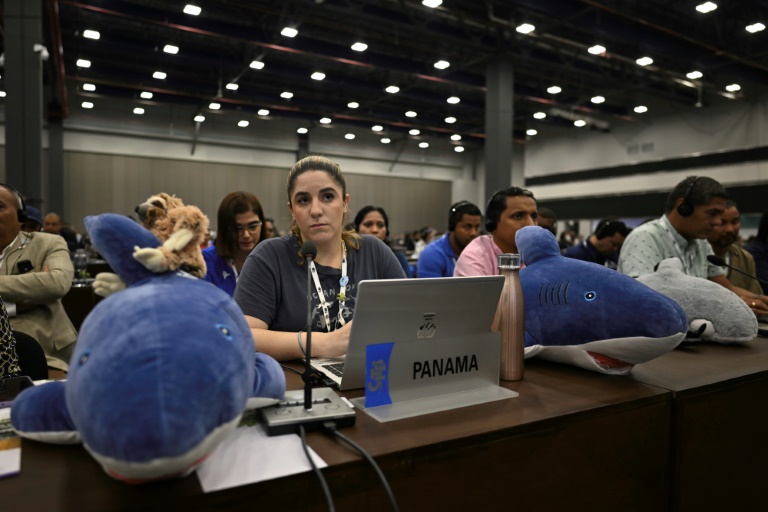
Several delegations, including hosts Panama, displayed stuffed toy sharks on their tables during the earlier Committee I debate.

The plenary will also vote Friday on ratifying a proposal to protect guitarfish, a species of ray.

The shark initiative was one of the most discussed at this year’s CITES summit in Panama, with the proposal co-sponsored by the European Union and 15 countries. 

Participants at the summit considered 52 proposals to change species’ protection levels.

All are up for ratification.

CITES, which came into force in 1975, has set international trade rules for more than 36,000 wild species. 

Its signatories include 183 countries and the European Union. 

Musk announces 'amnesty' for banned Twitter accounts after poll

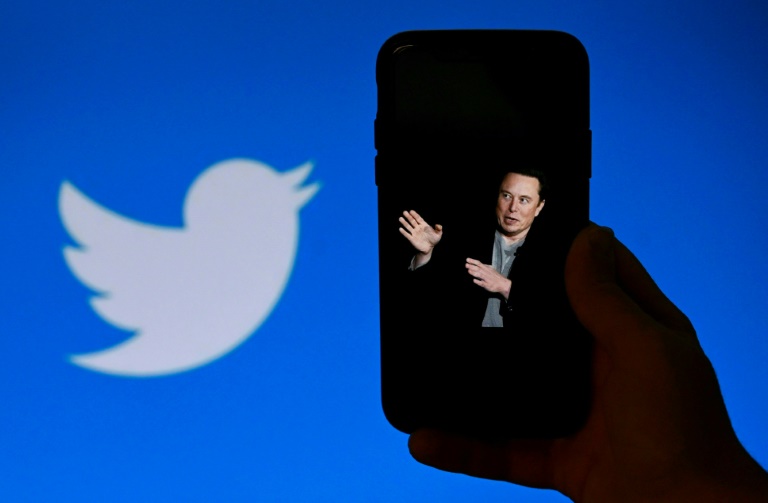
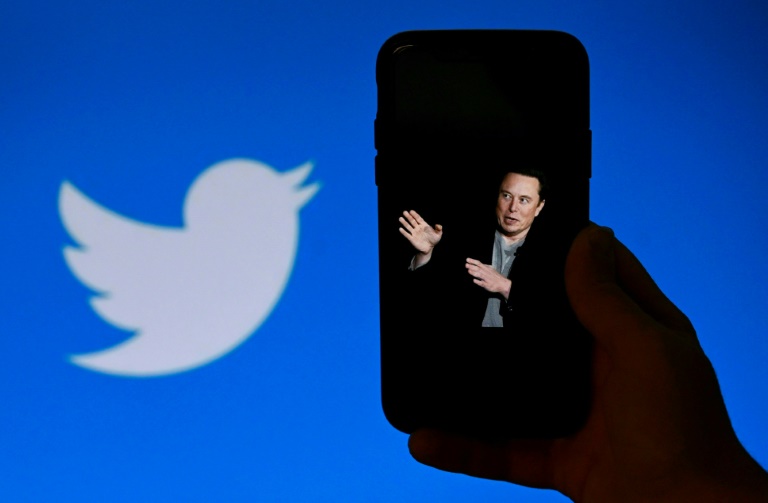
Elon Musk said Thursday many previously suspended Twitter accounts would be allowed back on the platform after a landslide of users responding to an informal poll by the  new owner voted in favor of the move.

The announcement comes as Musk faces pushback that his criteria for content moderation is subject to his personal whim, with reinstatements decided for certain accounts and not others.

“The people have spoken. Amnesty begins next week,” Musk tweeted, responding to the poll. 

“Vox Populi, Vox Dei,” he added, repeating a Latin adage meaning “The voice of the people is the voice of God,” that he has used when talking about other Twitter polls.

Of 3.16 million respondents to Musk’s Wednesday poll question, 72.4 percent said Twitter should allow suspended accounts back on Twitter as long as they have not broken laws or engaged in “egregious spam,” Musk posted.

It was the same type of “yes/no” informal poll of Twitter users that Musk devised to decide in favor of reinstating former president Donald Trump on the platform.

Trump’s Twitter account was reinstated Saturday after a narrow majority of respondents supported the move.

Polls on Twitter are open to all users and are unscientific and potentially targeted by fake accounts and bots.

Moreover, while Musk has 118 million followers, many of Twitter’s 450 million monthly active users might never have seen the poll question.

A blanket amnesty for suspended accounts could potentially alarm government authorities that are keeping a close look at Musk’s handling of hateful speech since he bought the influential platform for $44 billion.

It could also spook Apple and Google, tech titans that have the power to ban Twitter from their mobile app stores over content concerns.

Trump was banned from the platform early last year for his role in the January 6 attack on the US Capitol by a mob of his supporters seeking to overturn the results of the 2020 election.

– ‘No mercy’ –

Musk’s reinstatement of Trump followed that of other banned accounts including a conservative parody site and a psychologist who had violated Twitter’s rules on language identifying transgender people.

The CEO of Tesla and SpaceX has said that conspiracy theorist Alex Jones will not be returning to Twitter and will remain banned from the platform.

Musk on Sunday said he had “no mercy for anyone who would use the deaths of children for gain, politics or fame” due to his own experience with the death of his first child.

Jones has been ordered to pay hundreds of millions of dollars in damages for his lies about the 2012 Sandy Hook Elementary School shooting that killed 26 people, mostly children.

Musk, who closed his buyout of Twitter in late October, did not make clear whether the bans to be lifted by the poll were permanent suspensions or temporary ones.

The future of content moderation on Twitter has become an urgent concern, with major advertisers keeping away from the site after a failed relaunch earlier this month saw a proliferation of fake accounts, causing embarrassment. 

Meanwhile the teams in charge of keeping nefarious activity off the site have been gutted, victims of Musk-led layoffs that saw half of total employees leave the company.

John Wihbey, a media professor at Northeastern University, speculated that all the chaos might be because Musk is seeking to “buy himself time.”

“Regulators are certainly going to come after him, both in Europe and maybe the United States… and therefore a lot of what he’s doing is trying to frame those fights,” Wihbey said.

Musk announces 'amnesty' for banned Twitter accounts after poll

Elon Musk said Thursday many previously suspended Twitter accounts would be allowed back on the platform after a landslide of users responding to an informal poll by the  new owner voted in favor of the move.

The announcement comes as Musk faces pushback that his criteria for content moderation is subject to his personal whim, with reinstatements decided for certain accounts and not others.

“The people have spoken. Amnesty begins next week,” Musk tweeted, responding to the poll. 

“Vox Populi, Vox Dei,” he added, repeating a Latin adage meaning “The voice of the people is the voice of God,” that he has used when talking about other Twitter polls.

Of 3.16 million respondents to Musk’s Wednesday poll question, 72.4 percent said Twitter should allow suspended accounts back on Twitter as long as they have not broken laws or engaged in “egregious spam,” Musk posted.

It was the same type of “yes/no” informal poll of Twitter users that Musk devised to decide in favor of reinstating former president Donald Trump on the platform.

Trump’s Twitter account was reinstated Saturday after a narrow majority of respondents supported the move.

Polls on Twitter are open to all users and are unscientific and potentially targeted by fake accounts and bots.

Moreover, while Musk has 118 million followers, many of Twitter’s 450 million monthly active users might never have seen the poll question.

A blanket amnesty for suspended accounts could potentially alarm government authorities that are keeping a close look at Musk’s handling of hateful speech since he bought the influential platform for $44 billion.

It could also spook Apple and Google, tech titans that have the power to ban Twitter from their mobile app stores over content concerns.

Trump was banned from the platform early last year for his role in the January 6 attack on the US Capitol by a mob of his supporters seeking to overturn the results of the 2020 election.

– ‘No mercy’ –

Musk’s reinstatement of Trump followed that of other banned accounts including a conservative parody site and a psychologist who had violated Twitter’s rules on language identifying transgender people.

The CEO of Tesla and SpaceX has said that conspiracy theorist Alex Jones will not be returning to Twitter and will remain banned from the platform.

Musk on Sunday said he had “no mercy for anyone who would use the deaths of children for gain, politics or fame” due to his own experience with the death of his first child.

Jones has been ordered to pay hundreds of millions of dollars in damages for his lies about the 2012 Sandy Hook Elementary School shooting that killed 26 people, mostly children.

Musk, who closed his buyout of Twitter in late October, did not make clear whether the bans to be lifted by the poll were permanent suspensions or temporary ones.

The future of content moderation on Twitter has become an urgent concern, with major advertisers keeping away from the site after a failed relaunch earlier this month saw a proliferation of fake accounts, causing embarrassment. 

Meanwhile the teams in charge of keeping nefarious activity off the site have been gutted, victims of Musk-led layoffs that saw half of total employees leave the company.

John Wihbey, a media professor at Northeastern University, speculated that all the chaos might be because Musk is seeking to “buy himself time.”

“Regulators are certainly going to come after him, both in Europe and maybe the United States… and therefore a lot of what he’s doing is trying to frame those fights,” Wihbey said.

Nurses join other striking UK staff in two December walkouts

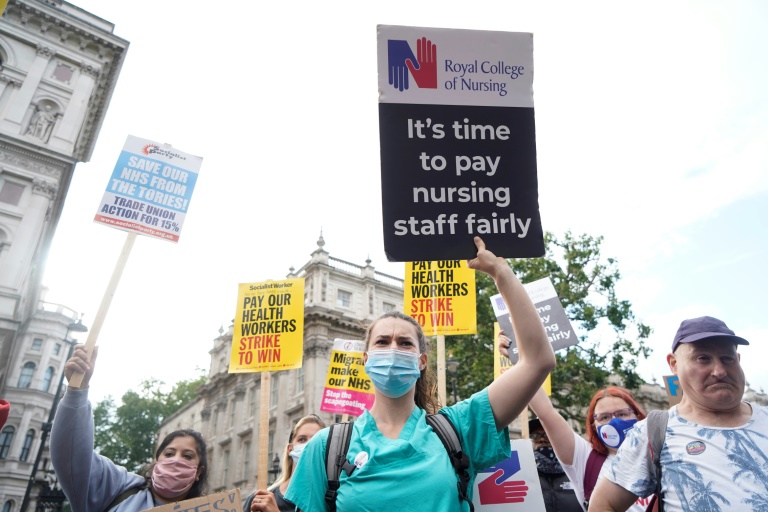
Nurses across most of Britain will next month hold the first strikes in their union’s 106-year history, joining a host of other UK workers taking industrial action over pay.

Staff in England, Wales and Northern Ireland — but not Scotland — will walk out on December 15 and 20, after the Royal College of Nursing (RCN) union said the government had turned down an offer of negotiations.

It will be the latest industrial action in Britain, where decades-high inflation and a cost-of-living crisis has prompted staff in various sectors to demand pay rises to keep up with spiralling prices.

The nurses’ strike will be sandwiched between the first of a series of two-day walkouts by national railway workers, while postal service employees will stage fresh stoppages in the run-up to Christmas.

Numerous other public and private sector staff, from lawyers to airport ground personnel, have also held strikes this year.

“Nursing staff have had enough of being taken for granted, enough of low pay and unsafe staffing levels, enough of not being able to give our patients the care they deserve,” said RCN head Pat Cullen.

The union, which wants a pay rise significantly above inflation, announced earlier this month that a ballot of its more than 300,000 members had found a majority in favour of strikes.

“Ministers have had more than two weeks since we confirmed that our members felt such injustice that they would strike for the first time,” Cullen said, adding that an offer of formal negotiations was declined.

“They have the power and the means to stop this by opening serious talks that address our dispute.”

The RCN will next week announce which particular arms of Britain’s sprawling state-funded National Health Service (NHS) will be affected by the walkouts.

– ‘Challenging times ‘ –

Amid the waves of industrial action, British inflation has continued its recent surge, reaching a 41-year high of 11.1 percent in October on soaring energy and food bills.

Bosses in the NHS said in September that nurses were skipping meals to feed and clothe their children and struggling to afford rising transport costs.

One in four hospitals had set up foodbanks to support staff, according to NHS Providers, which represents hospital groups in England.

The government says it has accepted independent pay recommendations, and given over one million NHS workers a pay rise of at least £1,400 ($1,590) this year. 

That follows on from a three-percent increase last year when public sector pay was frozen.

But the RCN says this leaves experienced nurses worse off by 20 percent in real terms due to successive below-inflation awards since 2010.

In Scotland, the union has paused announcing strike action after the devolved government in Edinburgh, which has responsibility for health policy, reopened pay talks.

UK health minister Steve Barclay said he was “hugely grateful for the hard work and dedication” of nurses and regretted the strikes.

The NHS has “tried and tested plans” to minimise disruption and ensure emergency services continue to operate, he added.

“These are challenging times for everyone and the economic circumstances mean the RCN’s demands, which on current figures are a 19.2 percent pay rise, costing £10 billion a year, are not affordable,” he said.

The RCN has questioned the UK government’s economic rationale, noting it spends billions of pounds on agency staff to plug workforce gaps.

It points to independent research it commissioned indicating that the finance ministry would recoup 81 percent of the initial outlay of a significant pay rise through higher tax receipts and savings on future recruitment and retention costs.

In the last year, 25,000 nursing staff left the Nursing and Midwifery Council (NMC) register, it said. 

Other UK health unions are also balloting workers for industrial action, while ambulance staff in Scotland are due to walk out on Monday.

Meanwhile, across the wider economy, numerous sectors look set to continue their strikes into the new year.

Ottawa rolls out CAN$1.6 bn plan to adapt to climate change

The Canadian government on Thursday unveiled a CAN$1.6 billion (US$1.2 billion) plan to help the country deal with the looming dangers of a warming world, such as floods, wildfires and extreme heat.

The so-called climate adaptation strategy will fund programs to help Canadians shield themselves from heat waves, protect coastlines from rising seas and safeguard infrastructure, including in the far north, which is facing the thaw of permafrost, officials said.

“Climate change is hitting all communities right across Canada,” Emergency Preparedness Minister Bill Blair told a news conference from Prince Edward Island, a province hit hard by Hurricane Fiona in September.

The storm — said to be the costliest to hit Canada’s Atlantic coast — was just a taste of what’s to come, according to the government, which forecasts annual costs of natural disasters in Canada to rise to Can$15.4 billion by 2030.

“We are seeing in the last few years, not just in Canada but around the world, an increase in the frequency and severity of climate related events,” said Blair, citing extreme weather events that killed hundreds and devastated communities across the country.

The adaptation strategy, which the government presented as a work-in-progress, was hailed as a “great step forward” by Greenpeace, while the Insurance Bureau of Canada, which represents home, car and business insurers, called it “ambitious.”

Its goals also include making Canadians more aware of the risks of natural disasters in their communities, establishing 15 new urban national parks, conserving 30 percent of Canada’s lands and waters to stem biodiversity loss, and preventing all future deaths from extreme heat.

Adaptation measures, according to a government statement, could result in up to Can$15 in savings for every dollar spent.

New construction standards in fire and flood zones alone would save an estimated Can$4.7 billion a year, the government said, while noting that urban forests in Toronto — Canada’s largest city — have lowered cooling costs, improved air quality and reduced strains on stormwater sewers.

The new funding builds on more than Can$8 billion already committed by Ottawa for adaptation and disaster relief since 2009.

A fraught United Nations climate summit wrapped up on Sunday with a landmark deal on funding to help vulnerable countries cope with devastating climate impacts.

But it failed to push ahead on further cutting emissions in order to keep alive the aspirational goal of limiting global warming to 1.5 degrees Celsius from pre-industrial levels.

EU frets over Twitter job losses as hate speech grows

The European Union on Thursday expressed concern about layoffs at Twitter since its takeover by Elon Musk, after the reported closure of the tech firm’s lobbying office in Brussels.

“We have concerns about the decisions to have less and less people working at the company,” EU justice commissioner Didier Reynders told reporters in Dublin, where Twitter and other US tech groups have their European headquarters.

“When we discuss hate speech, I am sure we need human resources,” he added after a meeting with unidentified representatives from Twitter.

A new EU evaluation showed the number of hate speech notifications reviewed by major social media companies within 24 hours has fallen from 90 percent in 2020, to 81 percent in 2021 and 64 percent in 2022.

The numbers showed only YouTube improved its removal rate for offensive content — as defined by an EU code of conduct — while Twitter and other tech companies’ efforts fell.

Concerns at Twitter’s post-takeover direction intensified Thursday with the Financial Times reporting that the company has dismantled its Brussels office, following the departure of executives in charge of efforts to comply with the EU’s online rules.

“It’s an additional concern, because to us to have a team dedicated to the relation with the European institutions is very important,” Reynders said, reacting to the FT report.

However, he said he was “optimistic by nature” and had been given commitments that Twitter’s team in Dublin would step into the Brussels role. 

EU commission Vice President Vera Jourova reiterated the bloc’s worries.

“If you want to effectively detect and take action against #disinformation & propaganda, this requires resources,” she tweeted, linking to the FT story.

Tech entrepreneur Musk cut around half of Twitter’s 7,500 workforce, including many employees tasked with fighting disinformation, following his acquisition of the firm last month.

While in Dublin, Reynders is due to meet representatives from Meta, the owner of Facebook, on Friday.

Mark Zuckerberg’s social media behemoth said this month it planned to lay off more than 11,000 staff amid an advertising slump.

Both Meta and Twitter’s EU operations are based in Ireland, along with those of Google, Apple and Microsoft, making Ireland’s data protection agency the lead regulator responsible for holding them to account in Europe.

French MPs vote to enshrine abortion rights in constitution

Lawmakers in the French parliament voted Thursday to add the right to abortion to the constitution in response to recent changes in Poland and the United States.

MPs from the left-wing France Unbowed (LFI) party and the ruling centrist coalition struck a deal on the wording of the new clause, which passed with a huge majority.

“The law guarantees the effectiveness and equal access to the right to voluntarily end a pregnancy,” reads the proposed constitutional addition to article 66.

It was approved with 337 votes for and 32 against, with the bill now set to be sent to the conservative-majority Senate for approval.

The initiative was prompted by the US Supreme Court’s explosive decision this year to overturn the nationwide right to termination procedures for Americans.

The conservative government of Poland has also heavily restricted abortion rights.

“The assembly is speaking to the world, our country is speaking to the world,” said jubilant MP Mathilde Panot from LFI, dedicating the vote to women in Hungary, Poland and the United States. 

Panot, who spearheaded the legislation along with a member of President Emmanuel Macron’s party, said the move was necessary in France to protect “against a regression”.

Abortion was legalised in France in 1974 in a law championed by health minister Simone Veil, a women’s rights icon granted the rare honour of burial at the Pantheon by Macron upon her death in 2018.

– Legal for 48 years –

A previous attempt to inscribe the right to abortion as well as contraception into the French constitution, with different wording, was rejected by the Senate in October. 

This second attempt will also need a green light in the upper chamber and must then be voted on in a national referendum.

“It’s a big step… but it’s just the first step,” said centrist MP Sacha Houlie from Macron’s Renaissance party.

Thursday’s agreement was a rare instance of harmony between the hard-left LFI and Macron’s centrist allies in the hung and often bad-tempered National Assembly.

Macron’s minority government has repeatedly struggled to pass legislation, finding cooperation with the different political factions difficult.

Many conservative and Catholic politicians had announced their misgivings about the abortion change, seeing it as unnecessary given the legal protections already in place.

Far-right leader Marine Le Pen, whose National Rally is the biggest single opposition party in parliament, had called it “totally misplaced” earlier this week because abortion rights were not under threat in France.

She missed the vote on Thursday “for medical reasons”, a spokesperson said.

The parliamentary voting system initially indicated by error that she had voted in favour of the text.

— Due to the error in the parliamentary voting system, an earlier version of this story stated in the final paragraph that Marine Le Pen had voted in favour of the proposal. She was absent for the vote. —

Close Bitnami banner
Bitnami