AFP

Russian strikes batter grid as first snow hits Ukraine

Fresh Russian strikes hit cities across Ukraine on Thursday, the latest in a wave of attacks that have crippled the country’s energy infrastructure as winter sets in and temperatures drop.

Repeated barrages have been disrupting electricity and water supplies to millions of Ukrainians, but the Kremlin blamed civilians’ suffering on Kyiv’s refusal to negotiate, rather than on Russian missiles.

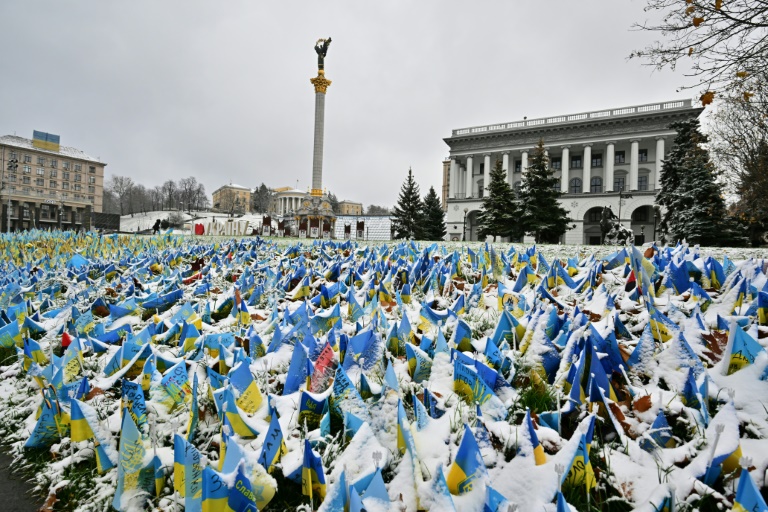
AFP journalists in several Ukraine cities said the fresh strikes had hit with snow falling for the first time this season and after officials in Kyiv warned of “difficult” days ahead with a cold spell approaching.

The salvoes also came as Moscow and Kyiv confirmed the extension of an agreement allowing Ukraine to export grain through the Black Sea, which aims to help ease pressure on the global supply of food.

Ukraine has faced a pounding series of strikes against its power grid following battlefield victories against Russia, the latest being Moscow’s retreat from the southern city of Kherson.

“Four missiles and five Shahed drones were shot down over Kyiv,” the Kyiv regional administration announced, referring to the Iranian-made suicide drones that Moscow has been deploying against Ukraine targets in swarms.

An earlier stage of the war engulfing the nation saw Malaysia Airlines flight MH17 brought down over Ukraine in 2014, killing all 298 people on board.

A Dutch court on Thursday sentenced two Russians and a Ukrainian to life in prison over the plane’s downing with a Russian-supplied missile, but none of the suspects were in court.

President Volodymyr Zelensky hailed the “important” ruling but said it the people ultimately responsible must be brought to justice too.

– ‘Difficult situation’ –

As Russia’s full-scale invasion of Ukraine continues, the head of the central region of Dnipropetrovsk Valentyn Reznichenko said strikes had hit the administrative centre of Dnipro. 

“An industrial enterprise has been hit. There is a big fire,” he said, later announcing that 23 people were injured, including a 15-year-old girl.

In the southern Odessa region, a Russian strike targeted infrastructure and the governor warned residents of the threat of a “massive” missile attack” urging them to seek shelter.

The eastern region of Kharkiv was also struck, governor Oleg Synegubov announced, adding that Russia hit “critical infrastructure” in strikes that injured at least three people.

Zelensky in response described Russia as a “terrorist state” and said Moscow “wants to bring Ukrainians only more pain and suffering.”

The Kremlin however said that ultimately Kyiv was to blame for the fallout from the blackouts.

“The unwillingness of the Ukrainian side to settle the problem, to start negotiations, its refusal to seek common ground — this is their consequence,” Kremlin spokesman Dmitry Peskov said.

The largest wave of Russian missiles on cities across Ukraine earlier this week cut power to millions of homes, but supplies were largely restored to people cut off within hours.

Ukrainian energy company Ukrenergo however said Thursday that the “cold snap” had brought increased demand in regions where electricity was recently restored.

“This has further complicated the already difficult situation with the power system,” the company said.

Energy advisor to the Ukrainian government Oleksandr Kharchenko told local media that some 50 percent of Ukrainians were experiencing disruptions and that the west of the country was the worst hit. 

“Unfortunately, the attacks are quite effective, and the losses are accumulating,” he was cited as saying.

– ‘Russia bears full responsibility’ –

Tensions spiked earlier this week after a missile landed in a Polish town on the border with Ukraine, and there was a flurry of blame over who was responsible for the blast that killed two.

Zelensky, after previously saying a Russian missile was to blame, seemed to soften his public comments on the incident that had raised worries of a dangerous escalation.

“I don’t know what happened. We don’t know for sure. The world does not know,” Zelensky said.

“But I am sure that it was a Russian missile, I am sure that we fired from air defence systems. But it is impossible to talk about something specific today — that it was the air defence of Ukraine,” he added.

Ukraine’s foreign minister Dmytro Kuleba, also appeared to roll back Kyiv’s determined position that it was a Russian missile that struck Poland following a call with US Secretary of State Antony Blinken.

Separately, a monitoring group said Thursday that Russia’s use of newly-produced landmines in Ukraine poses the greatest challenge to the landmark Mine Ban Treaty struck 25 years.

The monitor said it had confirmed evidence that Russian troops had planted “victim-activated booby-traps and improvised explosive devices in Ukraine… prior to retreating and abandoning their positions”.
UK unveils recession budget triggered by markets chaos

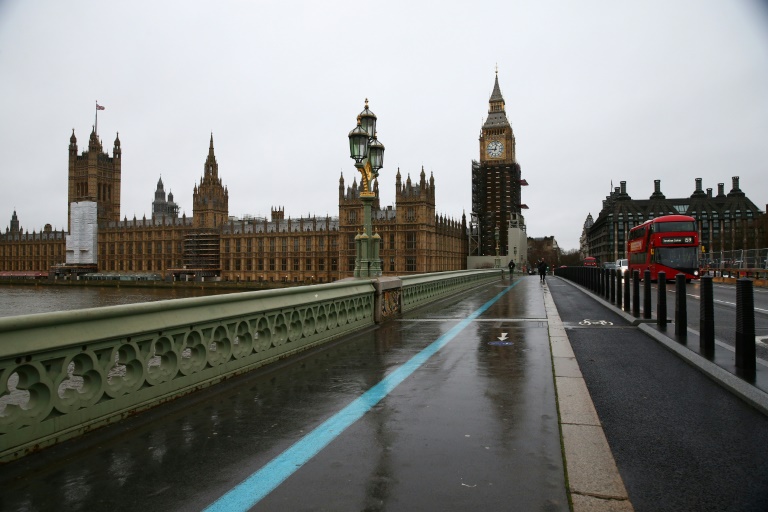
Britain’s government Thursday unveiled a painful budget with £55 billion ($65 billion) of tax hikes and spending cuts despite confirming the country was in recession.

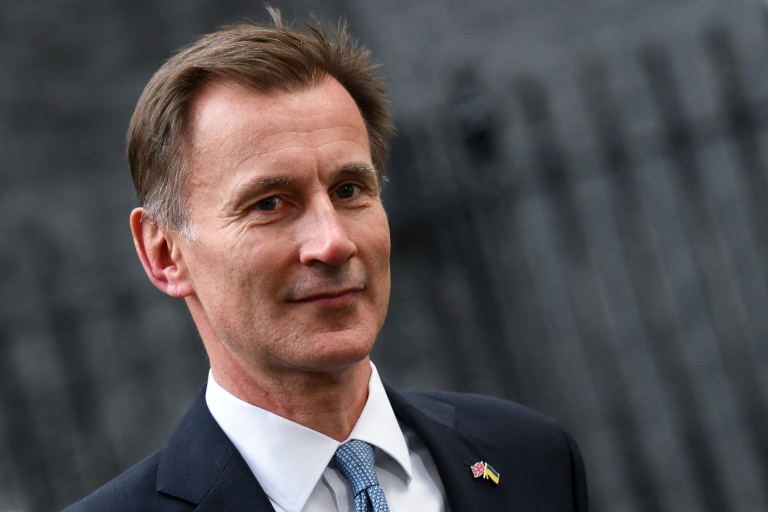
Finance minister Jeremy Hunt said the measures were needed to bring financial stability and shore up public finances after recent markets turmoil, insisting they would alleviate rather than aggravate the downturn. 

Market were not entirely convinced, however, with sterling trading down more than one percent against the dollar.

A day after official data showed UK inflation rocketing to a 41-year high above 11 percent, Hunt triggered a fresh era of austerity following the calamitous and short-lived tenure of former prime minister Liz Truss.

– ‘UK in recession’ –

Britain’s Office for Budget Responsibility (OBR) judged “that the UK, like other countries, is now in recession”, Chancellor of the Exchequer Hunt told parliament Thursday.

Despite the downturn, Hunt and Prime Minister Rishi Sunak insist tough action is needed after Truss unleashed a package of unfunded tax cuts that caused panic on financial markets.

The pound had hit a record-low close to parity against the dollar in late September after Truss failed to reveal the impact of her tax cuts on growth and inflation.

Her budget also triggered temporary purchases of UK government bonds by the Bank of England (BoE) to stabilise the market.

Pantheon Macroeconomics analyst Samuel Tombs warned the budget risked “amplifying the recession already underway”, while other experts said the pound’s slide Thursday was owing to the bleak economic outlook.

Hunt said the UK economy was set to shrink 1.4 percent next year.

The BoE, which is raising interest rates to combat sky-high inflation, has warned the UK economy may experience a record-long recession until mid-2024.

Despite this, Hunt confirmed tax rises for workers alongside spending cutbacks.

He pledged, however, to increased outlay on the cherished National Health Service amid a severe backlog in patient operations.

The chancellor added that benefits for the unemployed and pensioners would increase close to the inflation rate, and the minimum wage would climb.

At the same time, the government prolonged a freeze on its international aid budget introduced during the coronavirus pandemic in a move condemned by charities.

Hunt also ramped up a windfall tax on oil and gas giants, whose profits have surged on fallout from the Ukraine war, to help fund support for consumers hit by rocketing energy bills.

Energy giants such as BP and Shell will face an exceptional tax on profits of 35 percent, up from 25 percent, lasting an additional three years to 2028.

The government will also impose a new temporary levy on electricity generation companies.

The conflict in Ukraine has helped push worldwide inflation to its highest levels in decades. Prices are also up on supply constraints fuelled by Covid.

Britain’s economy is additionally being impacted by Brexit, the OBR said a day after similar comments by BoE governor Andrew Bailey.

– Scrooge –

Hunt at the weekend likened himself to the penny-pinching miser Ebenezer Scrooge in Charles Dickens’ festive favourite “A Christmas Carol”, but argued his plan would “make sure Christmas is never cancelled”.

He told MPs on Thursday: “In the face of unprecedented global headwinds, families, pensioners, businesses, teachers, nurses and many others are worried about the future.

“So today we deliver a plan to tackle the cost-of-living crisis and rebuild our economy.”

It comes as UK workers across various sectors have gone on strike this year to demand pay rises to compensate for surging inflation.

State-employed nurses and firefighters could be the latest groups to carry out industrial action, joining further walkouts this winter by rail workers and postal staff.

Rachel Reeves, economy spokeswoman for the main opposition Labour party, slammed the budget.

“The Conservatives have crashed our economy, given up on growth and sent inflation through the roof.

“As usual, it is ordinary working people who are paying the price,” she added.

The government added that a cap on average annual household fuel bills would rise by a fifth to £3,000.

Salvadoran president vows to buy "one #Bitcoin every day'

President Nayib Bukele of El Salvador, the first country to make bitcoin legal tender, said Thursday the nation would buy one unit of the currency every day, doubling down in the face of public criticism of his embrace of the crypto money. 

“We are buying one #Bitcoin every day starting tomorrow,” the president tweeted. 

Bitcoin traded at about $16,500 per unit on Thursday, down from $45,000 in September 2021 when El Salvador adopted the cryptocurrency, and some $68,000 two months later — its highest historic value. 

Bukele’s idea was to give more Salvadorans access to banking services and to promote crypto money transfers from some three million expats, mainly in the United States, to relatives back home.  

Remittances make up more than a quarter of El Salvador’s gross domestic product.  

But according to data from the Salvadoran Central Bank a year after the introduction of bitcoin, “less than two percent” of remittances were made using the cryptocurrency. 

The measure has been questioned by International Monetary Fund and World Bank due, among other things, to the currency’s notorious volatility. 

Taking advantage of the plummeting prices, Bukele bought 80 bitcoin with public funds for $19,000 each in July, bringing the Central American country’s total reserves to 2,381 units. 

But an opinion poll last month showed more than three-quarters of Salvadorans thought Bukele’s adoption of the coin was a “failure,” and fewer than a quarter used it.

The study, conducted by the University of Central America, found that nearly 80 percent of Salvadorans believe their president “should not continue to spend public money to buy bitcoin.”  

On Wednesday, El Salvador’s ambassador in Washington Milena Mayorga, a Bitcoin promotor, told state TV Canal 10 its use “is a process, first we have to get to know it, education is the key.” 

FTX had 'complete failure' of controls, new CEO says

Collapsed cryptocurrency exchange FTX suffered a “complete failure of corporate controls” under founder Sam Bankman-Fried, the company’s new chief executive said Thursday, calling the situation “unprecedented.”

The scathing condemnation came in a filing in US bankruptcy court from John J. Ray — an executive with 40 years of experience in corporate restructurings including the infamous implosion of Enron in 2001.

Ray lambasted the failures of oversight, incomplete records, missing and unreliable financial statements and “potentially compromised” leadership at FTX, which declared bankruptcy last week — a stunning downfall for a firm recently valued at $32 billion.

“Never in my career have I seen such a complete failure of corporate controls and such a complete absence of trustworthy financial information as occurred here,” Ray said in the filing. 

“From compromised systems integrity and faulty regulatory oversight abroad, to the concentration of control in the hands of a very small group of inexperienced, unsophisticated and potentially compromised individuals, this situation is unprecedented,” he said.

The downfall of FTX came amid growing doubts over its financial stability, with attention focused on the relationship between the exchange and Alameda Research, a trading house also owned by Bankman-Fried, and reports he shifted funds out of the exchange, even as he tried to fill a $7 billion financing gap.

Binance, the world’s biggest cryptocurrency platform, backed out of a buyout deal that could have stemmed the fall amid reports about mismanagement of client funds and potential investigations by regulators.

US officials are now calling for more oversight of the industry, and Congress plans to hold hearings to investigate.

Ray said he has “substantial concerns” about the reliability of financial statements and related entities, and noted that there were “at least $372 million of unauthorized transfers.”

Executives at the firm — many of whom Ray said “were not aware of the shortfalls or potential commingling of digital assets” –“have located and secured only a fraction of the digital assets of the FTX Group that they hope to recover.”

The implosion was a spectacular reversal of fortune for the founder and one-time cryptocurrency wunderkind Bankman-Fried.

Ray slammed the former CEO saying he “often communicated by using applications that were set to auto-delete,” and making clear he no longer speaks for FTX notwithstanding his frequent public declarations.

Bankman-Fried “continues to make erratic and misleading public statements,” Ray said, pointing to comments published by Vox on Thursday in which the disgraced executive said he regretted filing for bankruptcy.

“F*** regulators they make everything worse,” Bankman-Fried said in a direct message on Twitter to the Vox reporter.

He later tweeted that he was “venting” and his comments were meant to remain private.

FTX had 'complete failure' of controls, new CEO says

Collapsed cryptocurrency exchange FTX suffered a “complete failure of corporate controls” under founder Sam Bankman-Fried, the company’s new chief executive said Thursday, calling the situation “unprecedented.”

The scathing condemnation came in a filing in US bankruptcy court from John J. Ray — an executive with 40 years of experience in corporate restructurings including the infamous implosion of Enron in 2001.

Ray lambasted the failures of oversight, incomplete records, missing and unreliable financial statements and “potentially compromised” leadership at FTX, which declared bankruptcy last week — a stunning downfall for a firm recently valued at $32 billion.

“Never in my career have I seen such a complete failure of corporate controls and such a complete absence of trustworthy financial information as occurred here,” Ray said in the filing. 

“From compromised systems integrity and faulty regulatory oversight abroad, to the concentration of control in the hands of a very small group of inexperienced, unsophisticated and potentially compromised individuals, this situation is unprecedented,” he said.

The downfall of FTX came amid growing doubts over its financial stability, with attention focused on the relationship between the exchange and Alameda Research, a trading house also owned by Bankman-Fried, and reports he shifted funds out of the exchange, even as he tried to fill a $7 billion financing gap.

Binance, the world’s biggest cryptocurrency platform, backed out of a buyout deal that could have stemmed the fall amid reports about mismanagement of client funds and potential investigations by regulators.

US officials are now calling for more oversight of the industry, and Congress plans to hold hearings to investigate.

Ray said he has “substantial concerns” about the reliability of financial statements and related entities, and noted that there were “at least $372 million of unauthorized transfers.”

Executives at the firm — many of whom Ray said “were not aware of the shortfalls or potential commingling of digital assets” –“have located and secured only a fraction of the digital assets of the FTX Group that they hope to recover.”

The implosion was a spectacular reversal of fortune for the founder and one-time cryptocurrency wunderkind Bankman-Fried.

Ray slammed the former CEO saying he “often communicated by using applications that were set to auto-delete,” and making clear he no longer speaks for FTX notwithstanding his frequent public declarations.

Bankman-Fried “continues to make erratic and misleading public statements,” Ray said, pointing to comments published by Vox on Thursday in which the disgraced executive said he regretted filing for bankruptcy.

“F*** regulators they make everything worse,” Bankman-Fried said in a direct message on Twitter to the Vox reporter.

He later tweeted that he was “venting” and his comments were meant to remain private.

Pelosi to reveal 'future plans' after Republicans take US House

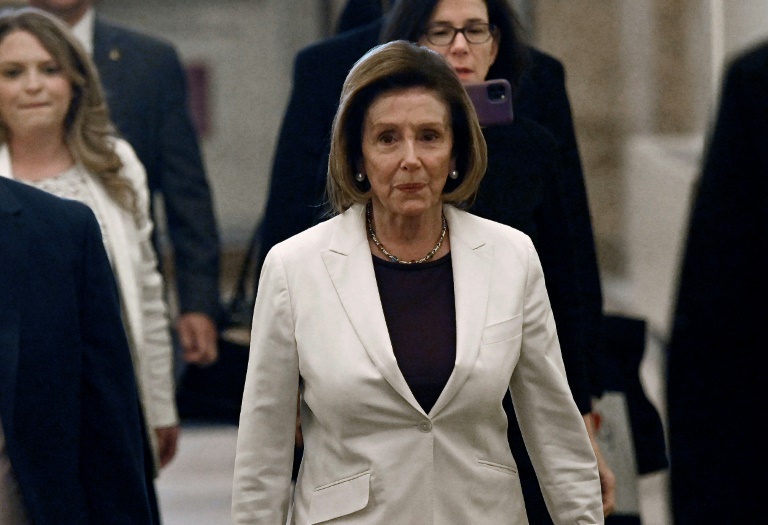
Nancy Pelosi, the veteran Washington powerbroker and longtime leader of the Democrats in Congress, was set to “address her future plans” Thursday, one day after Republicans secured a slim majority in the House of Representatives. 

With congressional control now split and Pelosi unseated as leader in the House, the 82-year-old Californian — known for keeping a tight grip on party ranks as the first woman speaker — faces a tough choice. 

Pelosi, who was elected to Congress in 1987, first became speaker in 2007 and presided over both impeachments of Donald Trump during her second stint in the role, has previously indicated her time as a lawmaker might be up. 

Currently second in the line of succession to President Joe Biden, Pelosi said last week her final decision — should Democrats lose the House — would be influenced by the brutal attack on her elderly husband in the runup to the November 8 midterms.

Paul Pelosi, who is also 82, was left hospitalized with serious injuries after an intruder — possibly looking for the speaker — broke into their San Francisco home and attacked him with a hammer.

“The Speaker plans to address her future plans tomorrow to her colleagues,” Pelosi spokesman Drew Hammill tweeted Wednesday night. “Stay tuned.”

Pelosi was seen arriving at the Capitol early Thursday and NBC reported she would be delivering an address on the House floor, whose timing remained unclear.

On Wednesday Pelosi praised Democrats’ better-than-expected performance in the midterm contest, saying the party “defied expectations.”

Republicans failed to take control of the Senate, and recaptured the House with a far smaller majority than they had been counting on, in a historically weak performance in the November 8 midterms.

“In the next Congress, House Democrats will continue to play a leading role in supporting President Biden’s agenda — with strong leverage over a scant Republican majority,” Pelosi said in a statement. 

In congratulating top House Republican Kevin McCarthy — who will now have the ability to block parts of Biden’s agenda — the president said he was “ready to work with House Republicans to deliver results for working families.”

McCarthy, who has his eye on the speaker’s gavel, said for his part that “Americans are ready for a new direction, and House Republicans are ready to deliver.”

And House Republicans immediately signaled they would wield their new power to make Biden’s life more difficult — convening a press conference to announce plans to investigate the “national security” implications of the president’s family business connections.

– Speaker vote looms –

With inflation surging and Biden’s popularity ratings cratering, Republicans had hoped to see a “red wave” wash over America, giving them control of both houses and hence an effective block over most of Biden’s legislative plans.

But instead, Democratic voters — galvanized by the Supreme Court’s overturning of abortion rights and wary of Trump-endorsed candidates who openly rejected the result of the 2020 presidential election — turned out in force. 

And Republicans lost ground with candidates rejected by moderate voters as too extreme.

Biden’s party secured an unassailable majority in the upper chamber with 50 seats plus Vice President Kamala Harris’ tie-breaking vote, and a Senate runoff in Georgia could yet see the Democrats improve their majority in the upper house.

The Senate oversees the confirmation of federal judges and cabinet members, and having the 100-seat body in his corner will be a major boon for Biden.

Meanwhile on Tuesday McCarthy won his party’s leadership vote by secret ballot, putting him in prime position to be the next speaker.

But potential far-right defections could yet complicate the 57-year-old’s path when the House of Representatives’ 435 newly elected members — Democrats and Republicans — choose their new speaker in January.

UK austerity budget stings markets

A British austerity budget hit the pound and gilts on Thursday, with stocks suffering worldwide on the glum economic outlook and the prospect of painfully high interest rates to curb inflation.

Britain unveiled a painful budget with £55 billion ($65 billion) of tax hikes and spending cuts despite confirming its economy was already in recession.

Finance minister Jeremy Hunt said the measures were needed to bring financial stability after recent turmoil in the markets, insisting they would alleviate rather than aggravate the downturn.

But the measures didn’t reassure British markets, with the pound falling and government borrowing costs rising. Losses on London stocks deepened, before later easing.

CMC Markets analyst Michael Hewson said  upheaval in markets in September over the profligate fiscal policies of the previous government had largely subsided, meaning a budget that makes Britain a worse place to do business was no longer necessary.

“Today’s budget should have walked the line between pushing inflation lower, without completely crushing demand in the economy with too many tax rises, and spending cuts,” Hewson said in a note to investors. 

“Initial analysis of today’s package suggests that we’ve got a lot of the former, and not too much of the latter, which is bad news if you’re looking to get businesses to invest,” he added.

The pound was down around one percent to $1.1799 in afternoon trading. 

London’s blue-chip FTSE 100 index was down 0.5 percent.

Traders fear the budget will worsen Britain’s cost-of-living crisis after inflation spiked to a 1981 peak of 11.1 percent, and the government confirmed that the British economy was already in a recession that could last two years.

Wall Street opened sharply lower as investors worried the US Federal Reserve will continue to aggressively raise interest rates to lower rampant inflation, even if it means pushing the economy in recession.

Investors have been reassured by some data suggesting inflationary pressures are diminishing, as well as the overall economy is holding up well, but statements by some Fed policymakers spooked traders. 

“Concerns that the Fed will overtighten and force the U.S. economy into a hard landing were partly behind yesterday’s selling and widening inversion of the yield curve,” said Patrick O’Hare at Briefing.com

“Those concerns remain in place today and have been heightened by remarks made this morning by some voting” members of the Fed’s monetary policymaking committee, he added.

The Fed’s main interest rate is currently at 3.75 to 4.0 percent, but one Fed member said it may need to go as high as 7.0 percent. Another said a contraction in the economy may be needed.

Oil prices fell back on worries about Chinese demand.

“China remains a downside risk for oil in the near term, despite its recent relaxation of certain Covid curbs,” said Craig Erlam at OANDA online trading platform.

“A surge in cases in major cities, mass testing, and restrictions will hit economic activity despite recent measures which will weigh on demand in the world’s second-largest economy,” he added.

– Key figures around 1330 GMT –

London – FTSE 100: DOWN 0.5 percent at 7,316.23 points

Paris – CAC 40: DOWN 1.0 percent at 6,538.53

Frankfurt – DAX: DOWN 0.3 percent at 14,186.35

EURO STOXX 50: DOWN 0.8 percent at 3,850.90

New York – Dow: DOWN 0.8 percent at 33,283.40

Tokyo – Nikkei 225: DOWN 0.4 percent at 27,930.57 (close)

Hong Kong – Hang Seng Index: DOWN 1.2 percent at 18,045.66 (close)

Shanghai – Composite: DOWN 0.2 percent at 3,115.43 (close)

Pound/dollar: DOWN at $1.1799 from $1.1914 on Wednesday

Euro/dollar: DOWN at $1.0331 from $1.0395

Dollar/yen: UP at 140.38 yen from 139.54 yen

Euro/pound: UP at 87.55 from 87.21 pence

Brent North Sea crude: DOWN 1.2 percent at $91.72 per barrel

West Texas Intermediate: DOWN 1.9 percent at $83.97 per barrel

burs-rl/bp

UK austerity budget stings markets

A British austerity budget hit the pound and gilts on Thursday, with stocks suffering worldwide on the glum economic outlook and the prospect of painfully high interest rates to curb inflation.

Britain unveiled a painful budget with £55 billion ($65 billion) of tax hikes and spending cuts despite confirming its economy was already in recession.

Finance minister Jeremy Hunt said the measures were needed to bring financial stability after recent turmoil in the markets, insisting they would alleviate rather than aggravate the downturn.

But the measures didn’t reassure British markets, with the pound falling and government borrowing costs rising. Losses on London stocks deepened, before later easing.

CMC Markets analyst Michael Hewson said  upheaval in markets in September over the profligate fiscal policies of the previous government had largely subsided, meaning a budget that makes Britain a worse place to do business was no longer necessary.

“Today’s budget should have walked the line between pushing inflation lower, without completely crushing demand in the economy with too many tax rises, and spending cuts,” Hewson said in a note to investors. 

“Initial analysis of today’s package suggests that we’ve got a lot of the former, and not too much of the latter, which is bad news if you’re looking to get businesses to invest,” he added.

The pound was down around one percent to $1.1799 in afternoon trading. 

London’s blue-chip FTSE 100 index was down 0.5 percent.

Traders fear the budget will worsen Britain’s cost-of-living crisis after inflation spiked to a 1981 peak of 11.1 percent, and the government confirmed that the British economy was already in a recession that could last two years.

Wall Street opened sharply lower as investors worried the US Federal Reserve will continue to aggressively raise interest rates to lower rampant inflation, even if it means pushing the economy in recession.

Investors have been reassured by some data suggesting inflationary pressures are diminishing, as well as the overall economy is holding up well, but statements by some Fed policymakers spooked traders. 

“Concerns that the Fed will overtighten and force the U.S. economy into a hard landing were partly behind yesterday’s selling and widening inversion of the yield curve,” said Patrick O’Hare at Briefing.com

“Those concerns remain in place today and have been heightened by remarks made this morning by some voting” members of the Fed’s monetary policymaking committee, he added.

The Fed’s main interest rate is currently at 3.75 to 4.0 percent, but one Fed member said it may need to go as high as 7.0 percent. Another said a contraction in the economy may be needed.

Oil prices fell back on worries about Chinese demand.

“China remains a downside risk for oil in the near term, despite its recent relaxation of certain Covid curbs,” said Craig Erlam at OANDA online trading platform.

“A surge in cases in major cities, mass testing, and restrictions will hit economic activity despite recent measures which will weigh on demand in the world’s second-largest economy,” he added.

– Key figures around 1330 GMT –

London – FTSE 100: DOWN 0.5 percent at 7,316.23 points

Paris – CAC 40: DOWN 1.0 percent at 6,538.53

Frankfurt – DAX: DOWN 0.3 percent at 14,186.35

EURO STOXX 50: DOWN 0.8 percent at 3,850.90

New York – Dow: DOWN 0.8 percent at 33,283.40

Tokyo – Nikkei 225: DOWN 0.4 percent at 27,930.57 (close)

Hong Kong – Hang Seng Index: DOWN 1.2 percent at 18,045.66 (close)

Shanghai – Composite: DOWN 0.2 percent at 3,115.43 (close)

Pound/dollar: DOWN at $1.1799 from $1.1914 on Wednesday

Euro/dollar: DOWN at $1.0331 from $1.0395

Dollar/yen: UP at 140.38 yen from 139.54 yen

Euro/pound: UP at 87.55 from 87.21 pence

Brent North Sea crude: DOWN 1.2 percent at $91.72 per barrel

West Texas Intermediate: DOWN 1.9 percent at $83.97 per barrel

burs-rl/bp

India fact-checkers face threats, jail in misinformation fight

Hunched over laptops in small office cubicles, a group of Indian fact-checkers is on the frontlines of a war against misinformation, braving online abuse and legal threats.

India has the world’s largest number of certified fact-checking organisations, but many feel outnumbered and outgunned in a country with hundreds of millions of internet users and a climate of growing religious intolerance, hate speech and declining press freedom.

BOOM Live is among the organisations methodically debunking some of the tsunami of falsehoods, but their efforts can feel like a drop in the bucket.

“It’s an unequal fight,” Jency Jacob, managing editor of BOOM Live, told AFP in the firm’s cramped office in a defunct Mumbai industrial complex.  

“Fact-checkers are always going to be the underdogs who are going to fight this out… with limited resources.”

On a recent workday in October, Jacob huddled with his small team as an air conditioner blasted cool air and a generator hummed in the background.  

The team scoured WhatsApp groups –- a leading source of misinformation in India -– and trawled the internet for potential stories to debunk: a politician claiming religious minorities were the biggest users of condoms; rumours that the central bank had misplaced bank notes worth millions; footage showing a political party’s rally drew fewer crowds than it claimed.

– ‘Harassment’ –  

BOOM, which launched in 2016 and has 15 fact-checkers across India, has its task cut out in a country where hundreds of millions of smartphones, low data costs and a lack of digital literacy have accelerated the spread of internet falsehoods.  

Press freedom in the world’s biggest democracy is also increasingly under attack under Hindu nationalist Prime Minister Narendra Modi, activists say. 

India fell eight spots this year to 150 out of 180 countries in the World Press Freedom Index compiled by Reporters Without Borders.  

Fact-checkers are no exception. They say they are increasingly experiencing vicious trolling and online abuse, especially when tackling posts that seek to inflame religious hatred.  

Geeta Seshu, co-founder of Indian media watchdog Free Speech Collective, points the finger at a motivated right wing as well as vigilante groups who know they have been caught out.  

“(They are) worried that they (the fact-checkers) have managed to very successfully and very quickly point out the kind of disinformation and fake news that is being put out,” Seshu told AFP.  

A growing number of fact-checkers face “targeted harassment and threats of litigation”, Enock Nyariki of the International Fact-Checking Network (IFCN) at the Poynter Institute in the United States told AFP.  

In June, Mohammed Zubair, co-founder of fact-checking organisation Alt News and a prominent thorn in the side of Modi’s government, was jailed after an anonymous Twitter user accused him of insulting a Hindu god in a four-year-old tweet.  

Amid a torrent of abuse by right-wing campaigners, he was granted bail weeks later after battling a pile of cases that left him shuttling between various courts.

Pratik Sinha, the other co-founder of Alt News, said the court battle as well as a slew of defamation notices had added to the financial burden of his organisation, which is entirely funded by donor contributions.  

Sinha alleged that those giving money feared retribution after a fintech firm handling the payment gateway to receive donations shared donor data with police following Zubair’s arrest.  

“Many (donors) have asked: ‘Is there a way we could give you money indirectly?'” Sinha told AFP.  

– ‘Psychological impact’ –    

India, with a population of 1.4 billion people, has 17 IFCN-certified fact-checking organisations, the most of any country. The United States by comparison has 12.

AFP has a team of journalists in India who debunk misinformation as part of Meta’s third-party fact-checking programme.

The proliferation of misinformation — in hundreds of regional languages — has massively outpaced the growth in fact-checking operations in the country.

The consequences of viral misinformation can be deadly. In 2018, dozens of people were killed in a series of lynchings that rocked the country after false rumours of child kidnapping spread on smartphones.

A 2019 study by Microsoft said India had more internet hoaxes and falsehoods than the rest of the world. It showed that 64 percent of Indians had encountered “fake news” compared with a global average of 57 percent.  

As in other countries, Indian fact-checkers operate in an ecosystem where internet lies travel faster than truth, and posts peddling misinformation often get more traction than real news.  

BOOM’s recent debunking of false reports of a coup in China –- fuelled by multiple Indian accounts as well as some mainstream television channels — highlighted the disturbing reality of misinformation profiteers.  

The baseless rumour got so much traction that some online retailers began using the #Chinacoup hashtag to boost posts advertising furniture, cooking ware and appliances, further propelling the lie.

Facing growing pressures, Seshu noted the “psychological impact” on fact-checkers, especially as the job often involves poring over graphic content for long hours.

“It’s not easy,” Seshu said. 

Russian strikes batter grid as first snow hits Ukraine

Fresh Russian strikes hit cities across Ukraine on Thursday, the latest in a wave of attacks that have crippled the country’s energy infrastructure as winter sets in and temperatures drop.

Repeated barrages have been disrupting electricity and water supplies to millions of Ukrainians, but the Kremlin blamed civilians’ suffering on Kyiv’s refusal to negotiate, rather than Russian missiles.

AFP journalists in several Ukraine cites said the fresh strikes had come with snow falling for the first time this season and after officials in Kyiv warned of “difficult” days ahead with a cold spell approaching.

The salvoes came as Moscow and Kyiv confirmed the extension of an agreement allowing Ukraine to export grain through the Black Sea, which aims to help the global supply of food. 

Ukraine has faced a pounding series of strikes against its power grid following battlefield victories against Russia, the latest being Moscow’s retreat from the southern city of Kherson.

“Two cruise missiles were shot down over Kyiv. Information about any casualties and damage is being clarified,” the Kyiv regional administration announced, adding that Russian forces had also deployed Iran-made drones.

– ‘Difficult situation’ –

The head of the central region of Dnipropetrovsk Valentyn Reznichenko said Russian strikes hit the administrative centre of Dnipro. 

“An industrial enterprise has been hit. There is a big fire,” he said, later announcing that 14 people were injured, including a 15-year-old girl.

In the southern Odessa region, a Russian strike also targeted infrastructure and the governor warned residents of the threat of a “massive” missile attack on the Black Sea territory.

“I ask the residents of the region to stay in shelters,” Maksym Marchenko said.

The eastern region of Kharkiv was also struck, governor Oleg Synegubov announced, adding that Russia hit “critical infrastructure” in strikes that injured three people.

President Volodymyr Zelensky published amateur footage of what he said showed a Russian strike on Dnipro, calling Moscow a “terrorist state” and saying Moscow “wants to bring Ukrainians only more pain and suffering.”

The Kremlin however said that ultimately Kyiv was to blame for the fallout from the blackouts.

“The unwillingness of the Ukrainian side to settle the problem, to start negotiations, its refusal to seek common ground, this is their consequence,” Kremlin spokesman Dmitry Peskov said.

The largest wave of Russian missiles on cities across Ukraine earlier this week cut power to millions of homes but supplies were largely restored to people cut off within hours.

Ukrainian energy company Ukrenergo however said that “a cold snap” had brought increased demand in regions where electricity was recently restored.

“This has further complicated the already difficult situation with the power system,” the company said.

– ‘We don’t know for sure’ –

Tensions spiked earlier this week after a missile landed in a Polish town on the border with Ukraine, and there was a flurry of blame over who was responsible for the blast that killed two.

Zelensky, after previously saying a Russian missile was to blame, seemed to soften his public comments on the matter that had raised worries of a dangerous escalation.

“I don’t know what happened. We don’t know for sure. The world does not know,” Zelensky said.

“But I am sure that it was a Russian missile, I am sure that we fired from air defence systems. But it is impossible to talk about something specific today — that it was the air defence of Ukraine,” he added.

Ukraine’s foreign minister Dmytro Kuleba, also appeared to roll back Kyiv’s determined position that it was a Russian missile that struck Poland following a call with US Secretary of State Antony Blinken.

“We share the view that Russia bears full responsibility for its missile terror and its consequences on the territory of Ukraine, Poland and Moldova,” Kuleba said on Twitter.

Russia said images from the impact site showed a missile fired by Kyiv and said its strikes had targeted sites 35 kilometres (20 miles) from Poland’s border.

Close Bitnami banner
Bitnami