AFP

US retail sales bounce in October on auto and gas

US retail sales jumped more than expected in October, bumped up by higher gas prices and auto sales while pointing to resilience in spending in the face of price pressures, according to government data released Wednesday.

The uptick came after sales flatlined the month before, as American consumers grappled with surging costs that have made everything from groceries to clothing more expensive.

Faced with decades-high inflation levels, the US Federal Reserve has rapidly raised its benchmark lending rate this year, including four consecutive super-sized hikes, even at the risk of tipping the world’s biggest economy into recession.

But retail sales in October picked up 1.3 percent from September to $694.5 billion, the Commerce Department reported.

This was driven by a 1.5 percent uptick in autos, as well as a 4.1 percent jump in sales at gasoline stations as fuel prices edged up.

Prices at the gas pump surged after Russia’s invasion of Ukraine this year, although they have eased from a record high and drifted lower in recent weeks.

Sales at restaurants and bars remained resilient too in October, rising 1.6 percent from the month prior, the report showed.

The data are seasonally adjusted but do not take into account changes in prices, so as costs rise, a shopping dollar does not stretch as far and American families have had to use more of their earnings on staple goods and seek out bargains.

Overall, retail sales were 8.3 percent higher than in the same month of last year.

Despite signs of trouble in the tech industry, including layoffs and ecommerce giant Amazon, sales at online retailers increased 1.2 percent last month.

Apart from rising prices, “people have chosen to draw down on savings accumulated during the pandemic to maintain consumption, despite significant pressure on real incomes,” said Ian Shepherdson of Pantheon Macroeconomics in a recent analysis ahead of the report.

He expects the process can “continue for some time yet” as excess personal savings from the Covid-19 period still stood at $1.3 trillion in September.

“Whether people are willing to run down savings further, however, is less clear,” he said.

Poland says blast likely caused by Ukraine missile in accident

Poland on Wednesday said a deadly blast that killed two people in a village near the border with Ukraine was likely caused by a stray Ukrainian air defence missile launched against a Russian barrage.

Polish President Andrzej Duda played down international fears of a further escalation in the war in Ukraine saying there was “no indication that this was an intentional attack on Poland”.

Duda said it was “very likely” the Soviet-era missile was launched by Ukraine in what he called an “unfortunate accident” but he said the blame lay with Russia because of its attacks on Ukraine.

After emergency talks of the NATO military alliance, its chief Jens Stoltenberg also said there was “no indication of a deliberate attack” on Poland. 

The blast occurred in the village of Przewodow in eastern Poland at 1440 GMT on Tuesday, killing two farm workers.

“I’m scared. I didn’t sleep all night,” Anna Magus, a 60-year-old teacher at the local elementary school, told AFP.

“I hope it was a stray missile because otherwise we’re helpless,” she said.

An image released by police showed investigators working inside a large crater next to an overturned vehicle.

NATO member Poland put its military on heightened alert and summoned Russia’s ambassador late Tuesday but had cautioned against reaching any hasty conclusions as to the origin of the Soviet-era missile.

– ‘Nothing to do with’ Russia –

Western powers voiced solidarity with Poland in intensive rounds of diplomacy, including on the sidelines of the G20 summit in Indonesia’s Bali.

NATO ambassadors held emergency talks in Brussels, while the Kremlin said it had “nothing to do with” the missile blast.

“Photographs of the wreckage… were unequivocally identified by Russian military experts as fragments of a guided anti-aircraft missile of a Ukrainian S-300 air defence system,” the Russian defence ministry said in a statement.

It added that its own strikes “were carried out on targets only on the territory of Ukraine and at a distance of no closer than 35 kilometres from the Ukrainian-Polish border.”

Ex-president Dmitry Medvedev, deputy head of Russia’s security council, said on Twitter that the incident “proves just one thing: waging a hybrid war against Russia, the West moves closer to the world war”.

Poland is protected by NATO’s commitment to collective defence — enshrined in Article 5 of its founding treaty — but the alliance’s response will likely be heavily influenced by whether the incident was accidental or intentional.

Warsaw has said it may invoke Article 4 of the treaty under which any member can call urgent talks when it feels its “territorial integrity, political independence or security” are at risk.

– ‘Consequence of Russia’s actions’ –

Russia invaded Ukraine on February 24 and still holds swathes of territory despite a series of recent battlefield defeats.

The conflict has caused deep unease in neighbouring Poland where memories of Soviet domination are still very raw.

Poland shares a 530-kilometre (329-mile) border with Ukraine and has taken a lead in providing military and humanitarian aid to Ukraine and sanctioning Russia.

Despite the likelihood a Ukrainian missile was involved, the Polish government was clear it still held Russia responsible.

Polish Deputy Foreign Minister Pawel Jablonski told RMF radio that “in all likelihood, we are dealing with a consequence of Russia’s actions”.

He also responded to criticism of Poland’s own air defences.

“Missile defence systems around the world are never one hundred percent effective systems that protect each millimetre of every country’s territory,” he said.

Ukrainian Foreign Minister Dmytro Kuleba had on Tuesday rejected as a “conspiracy theory” the idea that it may have been a Ukrainian missile.

– ‘Slap in the face’ of G20 –

President Volodymyr Zelensky sent “condolences over the death of Polish citizens from Russian missile terror”.

The explosion came after a wave of Russian missiles hit cities across Ukraine on Tuesday, including Lviv, near the border with Poland.

Zelensky said the strikes cut power to some 10 million people, though it was later restored to eight million of them, and also triggered automatic shutdowns at two nuclear power plants.

He said Russia had fired 85 missiles at energy facilities across the country, condemning the strikes as an “act of genocide” and a “cynical slap in the face” of the G20.

burs/dt/yad

European equities slip on Ukraine fears

European stock markets slid Wednesday, with investors spooked over a deadly missile blast in Poland near the border with Ukraine.

London dipped 0.1 percent, also on news that UK inflation spiked to a 41-year peak in October on rocketing energy bills and food prices.

Frankfurt fell 0.9 percent and Paris stocks sank 0.5 percent after Asia closed mostly in the red. 

The dollar fell against the euro and pound but rose against the yen, while oil advanced.

“Fears that the conflict in Ukraine could escalate after a Russian missile appeared to hit a village in Poland, a NATO member country, have held back gains on global markets,” said Hargreaves Lansdown analyst Susannah Streeter.

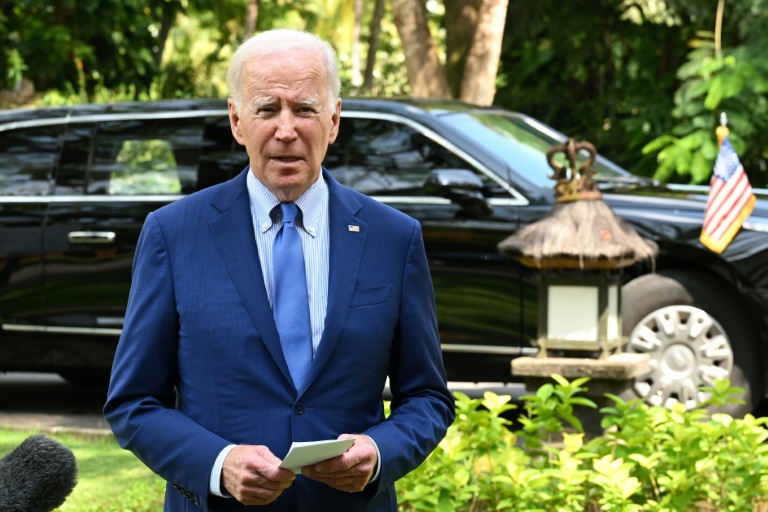
“There will be reassurance in words from (US President) Joe Biden that it was ‘unlikely’ to have come from Russia,” she added.

The Kremlin has accused Ukraine of a deadly blast in Poland, with Belgium saying it was probably caused by Kyiv’s air defences firing at Moscow’s incoming missiles.

Back in Britain, official data showed that UK inflation surged in October to 11.1 percent, the highest level since 1981 in a worsening cost-of-living crisis.

The grim news came on the eve of a gloomy UK government budget that is likely to ramp up taxes and slash spending.

“The UK is reeling from yet another super-hot inflation reading as soaring food and energy prices take their toll on household budgets,” added Streeter.

This year, the Ukraine war has massively contributed to worldwide inflation soaring to the highest level in decades. Prices are up also on pandemic-fuelled supply constraints.

Rocketing inflation has forced central banks to raise interest rates by big amounts, risking a global recession.

There has been some relief from data showing US consumer prices rose much less than expected in October, suggesting months of monetary tightening by the Federal Reserve was kicking in.

This was followed by data Tuesday showing a below-forecast reading on wholesale prices.

Sentiment was further boosted by China’s pledge to provide much-needed support to the country’s beleaguered property sector, as well as ease some of the strict Covid-19 restrictions that have played a major role in dragging the economy down.

– Key figures around 1120 GMT –

London – FTSE 100: DOWN 0.1 percent at 7,365.72 points

Frankfurt – DAX: DOWN 0.9 percent at 14,253.73

Paris – CAC 40: DOWN 0.5 percent at 6,610.72

EURO STOXX 50: DOWN 0.5 percent at 3,895.45

Tokyo – Nikkei 225: UP 0.1 percent at 28,028.30 (close)

Hong Kong – Hang Seng Index: DOWN 0.5 percent at 18,256.48 (close)

Shanghai – Composite: DOWN 0.5 percent at 3,119.98 (close)

New York – Dow: UP 0.2 percent at 33,592.92 points (close)

Euro/dollar: UP at $1.0427 from $1.0349 on Tuesday

Pound/dollar: UP at $1.1910 from $1.1865 

Dollar/yen: UP at 139.41 yen from 139.28 yen

Euro/pound: UP at 87.52 pence from 87.22 pence

Brent North Sea crude: UP 0.6 percent at $94.43 per barrel

West Texas Intermediate: UP 0.5 percent at $87.37 per barrel

European equities slip on Ukraine fears

European stock markets slid Wednesday, with investors spooked over a deadly missile blast in Poland near the border with Ukraine.

London dipped 0.1 percent, also on news that UK inflation spiked to a 41-year peak in October on rocketing energy bills and food prices.

Frankfurt fell 0.9 percent and Paris stocks sank 0.5 percent after Asia closed mostly in the red. 

The dollar fell against the euro and pound but rose against the yen, while oil advanced.

“Fears that the conflict in Ukraine could escalate after a Russian missile appeared to hit a village in Poland, a NATO member country, have held back gains on global markets,” said Hargreaves Lansdown analyst Susannah Streeter.

“There will be reassurance in words from (US President) Joe Biden that it was ‘unlikely’ to have come from Russia,” she added.

The Kremlin has accused Ukraine of a deadly blast in Poland, with Belgium saying it was probably caused by Kyiv’s air defences firing at Moscow’s incoming missiles.

Back in Britain, official data showed that UK inflation surged in October to 11.1 percent, the highest level since 1981 in a worsening cost-of-living crisis.

The grim news came on the eve of a gloomy UK government budget that is likely to ramp up taxes and slash spending.

“The UK is reeling from yet another super-hot inflation reading as soaring food and energy prices take their toll on household budgets,” added Streeter.

This year, the Ukraine war has massively contributed to worldwide inflation soaring to the highest level in decades. Prices are up also on pandemic-fuelled supply constraints.

Rocketing inflation has forced central banks to raise interest rates by big amounts, risking a global recession.

There has been some relief from data showing US consumer prices rose much less than expected in October, suggesting months of monetary tightening by the Federal Reserve was kicking in.

This was followed by data Tuesday showing a below-forecast reading on wholesale prices.

Sentiment was further boosted by China’s pledge to provide much-needed support to the country’s beleaguered property sector, as well as ease some of the strict Covid-19 restrictions that have played a major role in dragging the economy down.

– Key figures around 1120 GMT –

London – FTSE 100: DOWN 0.1 percent at 7,365.72 points

Frankfurt – DAX: DOWN 0.9 percent at 14,253.73

Paris – CAC 40: DOWN 0.5 percent at 6,610.72

EURO STOXX 50: DOWN 0.5 percent at 3,895.45

Tokyo – Nikkei 225: UP 0.1 percent at 28,028.30 (close)

Hong Kong – Hang Seng Index: DOWN 0.5 percent at 18,256.48 (close)

Shanghai – Composite: DOWN 0.5 percent at 3,119.98 (close)

New York – Dow: UP 0.2 percent at 33,592.92 points (close)

Euro/dollar: UP at $1.0427 from $1.0349 on Tuesday

Pound/dollar: UP at $1.1910 from $1.1865 

Dollar/yen: UP at 139.41 yen from 139.28 yen

Euro/pound: UP at 87.52 pence from 87.22 pence

Brent North Sea crude: UP 0.6 percent at $94.43 per barrel

West Texas Intermediate: UP 0.5 percent at $87.37 per barrel

Liftoff! NASA launches mega Moon rocket, ushering new era of exploration

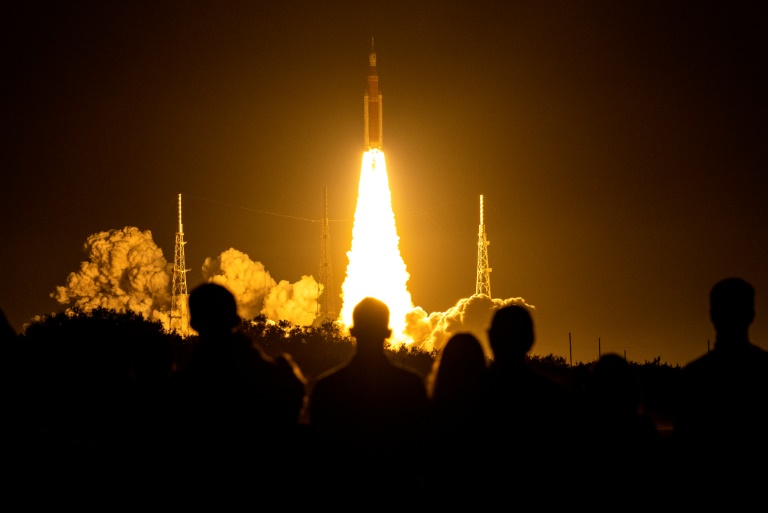
NASA launched the most powerful rocket ever built on a journey to the Moon on Wednesday, in a spectacular blaze of light and sound that marked the start of the space agency’s new flagship program, Artemis.

The 32-story tall Space Launch System (SLS) blasted off from the Kennedy Space Center in Florida at 01:47 am (0647 GMT), producing a record 8.8 million pounds (39 meganewtons) of thrust.

“What you have done today will inspire generations to come, thank you!” Charlie Blackwell-Thompson, NASA’s first female launch director, told cheering teammates. 

Fixed to the rocket’s top was the uncrewed Orion spaceship that will orbit Earth’s nearest neighbor, in a test run for later flights that should see the first woman and first person of color touch down on lunar soil by the mid-2020s.

About two hours after launch, NASA said the spacecraft was on its trajectory to the Moon, and later released the first images taken of Earth receding behind the craft.

“Now we are going back to the Moon, not just for the sake of going to the Moon, but to learn how to live on the Moon in order to prepare to send humans all the way to Mars,” NASA administrator Bill Nelson told a news conference after the launch.

“This is the next beginning, this is the Artemis generation,” added Nelson, who said he watched the launch from the roof of the rocket assembly building along with a group of astronauts.

America last sent astronauts to the Moon during the Apollo era, from 1969-1972. 

This time it hopes to build a sustained presence — including a lunar space station — to help prepare for an eventual mission to Mars in the 2030s.

There were nervous moments as teams worked to overcome technical issues that ate into the two-hour launch window, which opened at 1:04 am.

First, engineers were forced to pause the flow of liquid hydrogen into the core stage Tuesday night because of a valve leak, but a team sent to the launch pad resolved the issue after about an hour, by tightening loose bolts. 

Later, the space agency reported that a radar site monitoring the rocket’s flight path was experiencing problems due to a faulty ethernet switch, which had to be replaced.

It was third time lucky for NASA after two previous launch attempts were canceled for technical reasons. The launch was also delayed due to weather setbacks including Hurricane Ian, which battered Florida in late September.

– ‘Extremely excited’ –

About 100,000 people were expected to have gathered along the coast to witness the historic event.

Todd Garland drove from Frankfurt, Kentucky to watch from Cocoa Beach. 

Wearing an Artemis T-shirt, the 55-year-old told AFP tearfully: “This has been an experience I’ve looked forward to all my life. 

“My first memory is my mother waking me up at two years old to watch the Moon landing and I’ve always wanted to see a launch ever since, and now I have.”

Kerry Warner, 59, a grandmother and semi-retired educator who lives in Florida, added the launch was “part of America and what America is all about.”

– Far side of the Moon –

The Orion crew capsule was lifted by two boosters and four powerful engines under the core stage, which detached after just a few minutes.

A final push from the upper stage set the capsule on its way to the Moon, though it will take several days to reach its destination. 

The upper stage will meanwhile release 10 CubeSats to carry out science experiments, including one that will unfurl a sail-powered by sunlight and perform asteroid reconnaissance work.

Rather than landing on the Moon, Orion will assume a distant orbit, venturing 40,000 miles (64,000 kilometers) beyond the far side — further than any other habitable spacecraft so far.

Finally, the spaceship will embark on the return leg of its journey. When passing through the atmosphere, the capsule’s heat shield will need to withstand a temperature half as hot as the Sun’s surface.

Though Orion isn’t carrying humans this time, it has three sensor-equipped dummies on board to help gather safety data for future crew members.

The mission will last 25-and-a-half days, with a splashdown in the Pacific Ocean on December 11.

NASA is banking on a successful mission after developing the SLS rocket for more than a decade. 

It will have invested more than $90 billion in its new lunar program by the end of 2025, according to a public audit.

Artemis 2 will involve a flyby of the Moon with astronauts in 2024, while Artemis 3 will see boots on lunar soil, no sooner than 2025. 

NASA hopes to settle into a yearly launch schedule, and will include international partners from Japan, Canada and Europe.

Kevin Spacey faces further sex offence charges in UK

Prosecutors in London on Wednesday said they have approved seven new sexual offence charges against the Oscar-winning Hollywood actor Kevin Spacey. 

The Crown Prosecution Service (CPS) said the “House of Cards” and “American Beauty” star has been charged over “a number of sexual assaults against one man between 2001 and 2004”.

It also authorised “one charge of causing a person to engage in sexual activity without consent” against the 63-year-old actor, who lives in the United States.

The CPS, which is responsible for bringing prosecutions in England and Wales, said the seven new charges refer to alleged crimes committed before and after 2003, when new legislation on sexual offences entered force. 

This means Spacey is now facing a total of 11 charges of sexual assault in Britain.

Spacey in July pleaded not guilty at London’s Old Bailey court to four charges of sexual assault against three men between 2005 and 2013 in London and Gloucestershire in western England.

None of the alleged victims can be identified under English law. Reporting restrictions prevent further details being disclosed before trial.

Spacey voluntarily appeared at a London court when the first charges were brought and vowed to defend himself against the charges.

Those allegations referred to a period when he was artistic director of London’s Old Vic Theatre, between 2004 and 2015.

A New York court last month dismissed a $40 million sexual misconduct lawsuit brought against Spacey by an actor, Anthony Rapp, who claimed the Hollywood star targeted him when he was 14.

A judge had ruled that Rapp had brought the case too late for a criminal charge.

Spacey’s acting career ended five years ago when Rapp’s allegations emerged and he was dropped from the final season of “House of Cards” and other upcoming projects.

Allegations against him emerged in the wake of the #MeToo movement that saw numerous claims of sexual assault and harassment in the movie industry.

He has always denied allegations of sexual abuse.

In 2019, charges against the actor of indecent assault and sexual assault were dropped in Massachusetts. 

Indonesia proposes nickel producer bloc at Canada G20 talks

Indonesia has proposed the establishment of a bloc of the world’s top nickel producers similar to the oil cartel OPEC in talks with Canada, its investment minister said.

The Southeast Asian nation is the world’s top nickel producer, while Canada is also a major producer of the mineral, according to United States Geological Survey data.

“Through such collaboration, we hope all nickel-producing countries will be able to profit through a fair added value creation,” Bahlil Lahadalia said, according to a ministry statement. 

The proposal was raised when Lahadalia met Canada’s trade minister Mary Ng on the sidelines of the G20 summit in Bali.  

He said an organisation similar to OPEC, a group of 13 oil-producing countries, could help organise and streamline policies on nickel, a key mineral used to make batteries — including for electric vehicles, stainless steel and mobile phones.

Lahadalia previously floated the idea of such a grouping in an interview with the Financial Times in October, saying at the time that Indonesia was still formulating the group’s structure.

Ng said in the statement that the two countries could explore the collaboration proposal, adding that Indonesia and Canada shared a similar vision for optimising their resources in a sustainable way. 

Indonesia has banned exports of raw nickel ore since 2020 in a move to encourage investments in downstream industries in the country, which also sparked a trade dispute with the European Union. 

The Indonesian government has touted plans to turn the country into an electric-vehicle hub. Nickel is used in lithium batteries that power petrol-free cars.

It has attracted investment from some foreign firms in nickel-battery processing plants, including China’s Tsingshan Holding Group.

Indonesia proposes nickel producer bloc at Canada G20 talks

Indonesia has proposed the establishment of a bloc of the world’s top nickel producers similar to the oil cartel OPEC in talks with Canada, its investment minister said.

The Southeast Asian nation is the world’s top nickel producer, while Canada is also a major producer of the mineral, according to United States Geological Survey data.

“Through such collaboration, we hope all nickel-producing countries will be able to profit through a fair added value creation,” Bahlil Lahadalia said, according to a ministry statement. 

The proposal was raised when Lahadalia met Canada’s trade minister Mary Ng on the sidelines of the G20 summit in Bali.  

He said an organisation similar to OPEC, a group of 13 oil-producing countries, could help organise and streamline policies on nickel, a key mineral used to make batteries — including for electric vehicles, stainless steel and mobile phones.

Lahadalia previously floated the idea of such a grouping in an interview with the Financial Times in October, saying at the time that Indonesia was still formulating the group’s structure.

Ng said in the statement that the two countries could explore the collaboration proposal, adding that Indonesia and Canada shared a similar vision for optimising their resources in a sustainable way. 

Indonesia has banned exports of raw nickel ore since 2020 in a move to encourage investments in downstream industries in the country, which also sparked a trade dispute with the European Union. 

The Indonesian government has touted plans to turn the country into an electric-vehicle hub. Nickel is used in lithium batteries that power petrol-free cars.

It has attracted investment from some foreign firms in nickel-battery processing plants, including China’s Tsingshan Holding Group.

UK inflation accelerates to 41-year peak

British inflation has jumped to a 41-year high on soaring energy and food bills in a worsening cost-of-living crisis, data showed Wednesday on the eve of a key budget.

The Consumer Prices Index hit 11.1 percent in October, reaching the highest level since 1981, the Office for National Statistics (ONS) said in a statement.

That compared with 10.1 percent in September, which matched the level in July and had already been the highest in 40 years.

Domestic fuel bills rocketed again despite the UK government’s energy price freeze as the market faced more fallout from key producer Russia’s invasion of Ukraine.

The October figure beat market expectations of 10.7 percent and was higher than the Bank of England’s forecast peak.

“Rising gas and electricity prices drove headline inflation to its highest level for over 40 years, despite the Energy Price Guarantee,” said ONS chief economist Grant Fitzner.

Over the last year, gas prices have leapt by 130 percent and electricity prices by 66 percent, according to the ONS.

Runaway inflation comes despite state energy support, which sought to limit annual energy bills at an average of £2,500 per year.

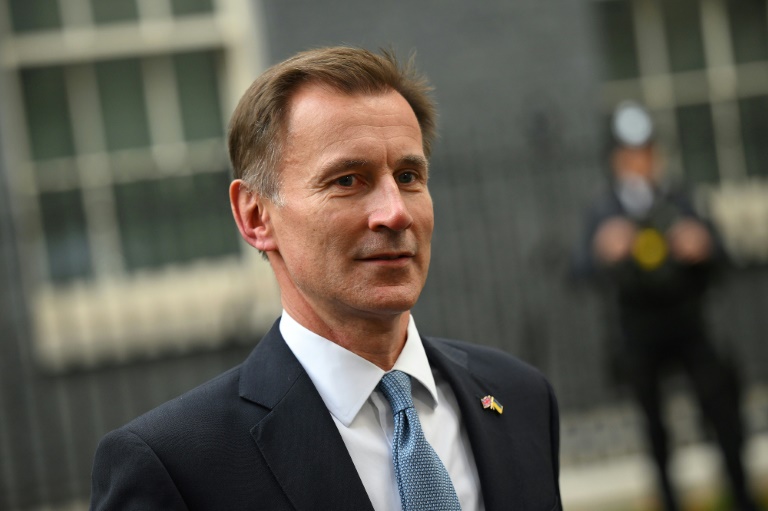
Finance minister Jeremy Hunt blamed Russian President Vladimir Putin’s war in Ukraine for spiking prices, as well as the easing of pandemic curbs.

– ‘Tough’ decisions –

Hunt is expected Thursday to hike taxes and slash spending, despite the cost-of-living squeeze, as Prime Minister Rishi Sunak attempts to fix economic chaos wrought by predecessor Liz Truss.

“The aftershock of Covid and Putin’s invasion of Ukraine is driving up inflation in the UK and around the world,” Hunt said Wednesday.

“This… is eating into pay cheques, household budgets and savings, while thwarting any chance of long-term economic growth.”

The Ukraine conflict has also sent inflation soaring to the highest level in decades worldwide, sparking economic turmoil.

That has forced major central banks to raise interest rates, risking the prospect of recession as higher borrowing costs hurt businesses and consumers.

The Bank of England this month sprang its biggest rate hike since 1989 to combat sky-high inflation — and warned the UK economy may experience a record-long recession until mid-2024.

The BoE lifted borrowing costs by 0.75 percentage points to 3.0 percent — the highest since the 2008 global financial crisis — to cool UK inflation that it saw peaking at almost 11 percent.

Hunt added that “tough” decisions would be needed in Thursday’s budget to help the BoE meet its 2.0-percent inflation target. 

“We cannot have long-term, sustainable growth with high inflation,” he said.

The UK has meanwhile been blighted by strikes this year, as workers protest over wages that have failed to keep pace with surging inflation.

The retail prices index — an inflation measure which includes mortgage interest payments and is used by trade unions and employers when negotiating wage increases — rocketed to 14.2 percent in October from 12.6 percent in September, data showed Wednesday.

Liftoff! NASA launches mega Moon rocket, ushering new era of exploration

NASA launched the most powerful rocket ever built on a journey to the Moon on Wednesday, in a spectacular blaze of light and sound that marked the start of the space agency’s new flagship program, Artemis.

The 32-story tall Space Launch System (SLS) blasted off from the storied Kennedy Space Center in Florida at 01:47 am (0647 GMT), producing a record 8.8 million pounds (39 meganewtons) of thrust.

“What you have done today will inspire generations to come, thank you!” Charlie Blackwell-Thompson, NASA’s first female launch director, told cheering teammates. 

Fixed to the rocket’s top was the uncrewed Orion spaceship that will orbit Earth’s nearest neighbor, in a test run for later flights that should see the first woman and first person of color touch down on lunar soil by the mid-2020s.

About two hours after launch, NASA said the spacecraft had completed a propulsive maneuver to escape the pull of Earth’s gravity and was on its path to the Moon.

“Trans-lunar injection burn complete! NASA Orion is on its way to the Moon!” tweeted Jim Free, NASA’s associate administrator for exploration systems.

America last sent astronauts to the Moon during the Apollo era, from 1969-1972. 

This time it hopes to build a sustained presence — including a lunar space station — to help prepare for an eventual mission to Mars in the 2030s.

There were nervous moments as teams worked to overcome technical issues that ate into the two-hour launch window, which opened at 1:04 am.

First, engineers were forced to pause the flow of liquid hydrogen into the core stage Tuesday night because of a valve leak, but a team sent to the launch pad resolved the issue after about an hour, by tightening loose bolts. 

Later, the space agency reported that a radar site monitoring the rocket’s flight path was experiencing problems due to a faulty ethernet switch, which had to be replaced.

It was third time lucky for NASA after two previous launch attempts were canceled for technical reasons. The launch was also delayed due to weather setbacks including Hurricane Ian, which battered Florida in late September.

– ‘Extremely excited’ –

About 100,000 people were expected to have gathered along the coast to witness the historic event.

Todd Garland drove from Frankfurt, Kentucky to watch from Cocoa Beach. 

Wearing an Artemis T-shirt, the 55-year-old told AFP tearfully: “This has been an experience I’ve looked forward to all my life. 

“My first memory is my mother waking me up at two years old to watch the Moon landing and I’ve always wanted to see a launch ever since, and now I have.”

Kerry Warner, 59, a grandmother and semi-retired educator who lives in Florida, added the launch was “part of America and what America is all about.”

– Far side of the Moon –

The Orion crew capsule was lifted by two boosters and four powerful engines under the core stage, which detached after just a few minutes.

A final push from the upper stage set the capsule on its way to the Moon, though it will take several days to reach its destination. 

The upper stage will meanwhile release 10 CubeSats to carry out science experiments, including one that will unfurl a sail-powered by sunlight and perform asteroid reconnaissance work.

Rather than landing on the Moon, Orion will assume a distant orbit, venturing 40,000 miles (64,000 kilometers) beyond the far side — further than any other habitable spacecraft so far.

Finally, the spaceship will embark on the return leg of its journey. When passing through the atmosphere, the capsule’s heat shield will need to withstand a temperature half as hot as the Sun’s surface.

Though Orion isn’t carrying humans this time, it has three sensor-equipped dummies on board to help gather safety data for future crew members.

The mission will last 25-and-a-half days, with a splashdown in the Pacific Ocean on December 11.

NASA is banking on a successful mission after developing the SLS rocket for more than a decade. 

It will have invested more than $90 billion in its new lunar program by the end of 2025, according to a public audit.

Artemis 2 will involve a flyby of the Moon with astronauts in 2024, while Artemis 3 will see boots on lunar soil, no sooner than 2025. 

NASA hopes to settle into a yearly launch schedule, and will include international partners from Japan, Canada and Europe.

Close Bitnami banner
Bitnami