AFP

Biden to set 'guardrails' in talks with Xi

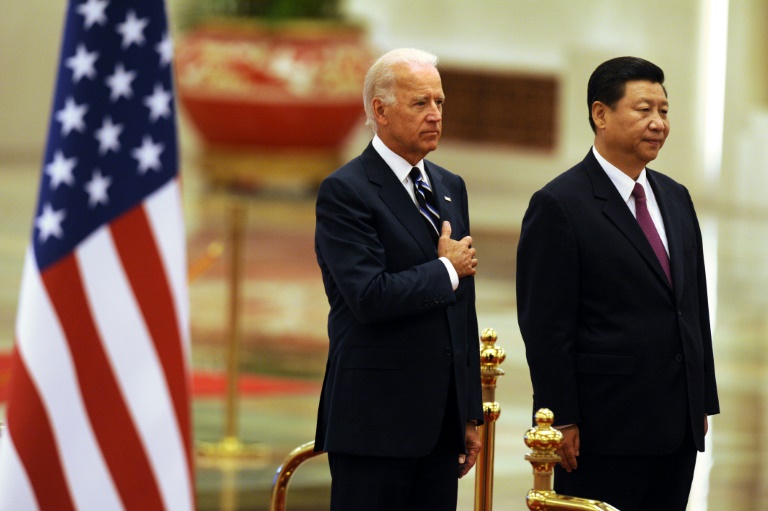
US President Joe Biden will meet China’s Xi Jinping in Bali on Monday to set “guardrails” for relations between the countries, as the world’s 20 largest economies hold their first major post-pandemic summit.

In the last three years, the rivalry between China and the United States has intensified sharply as Beijing has become more powerful and more assertive about replacing the US-led order that has prevailed since World War II.

Monday’s talks on the margins of the G20 have the air of the icy Cold War conclaves between American and Soviet leaders at Potsdam, Vienna or Yalta that decided the fate of millions.

Biden has spoken about the meeting establishing each country’s “red lines”.

The overarching goal will be setting “guardrails” and “clear rules of the road” a senior White House official told reporters hours before the meeting.

“We do all of that to ensure that competition does not veer into conflict.”

Biden is expected to push China to rein in ally North Korea after a record-breaking spate of missile tests raised fears Pyongyang will soon carry out its seventh nuclear test.

Xi may be in no mood to help. He enters the meeting buoyed from recently securing a landmark third term in office, cementing him as the most powerful Chinese leader for generations.

Biden has been boosted by news that his Democratic party retained control of the US Senate after performing better than expected at the midterm elections, although he remains vulnerable on domestic politics.

– Putin staying away –

The superpower sitdown is likely to dominate the G20 summit, which comes with food and fuel prices spiking worldwide, Ukraine mired in conflict and the renewed threat of nuclear war casting a menacing pall. 

There will be one conspicuous absence around the table — Russian President Vladimir Putin.

His botched nine-month-old invasion of Ukraine has made the trip to Bali logistically difficult and politically fraught.

With members of his inner circle quarrelling publicly and his once ironclad domestic authority tarnished, Putin instead elected to send veteran foreign minister Sergei Lavrov.

Officially, neither the war in Ukraine, nor Putin’s dark threats to use nuclear weapons are on the summit agenda. 

But while the ex-KGB man will not be at the summit table, his war will certainly be on the menu.

Soaring energy and food prices have hit richer and poorer G20 members alike –- and both are directly fuelled by the conflict.

On Monday, US Treasury Secretary Janet Yellen said an end to the conflict was “a moral imperative and the single best thing we can do for the global economy”.

And ahead of his departure to Bali, British Prime Minister Rishi Sunak said he would “call out Putin’s regime”.

There is likely to be pressure on Russia to extend a deal allowing Ukrainian grain and fertiliser shipments through the Black Sea when the current agreement expires on November 19. 

– ‘Never been this complex’ –

At a minimum, Biden and his allies would also like to see the G20 make it clear to Putin that nuclear war is unacceptable. 

Even that once uncontroversial position is likely to be blocked by a mixture of Russian opposition and Chinese unwillingness to break ranks with its ally in Moscow or give Washington a win.

The G20 — a disparate and unwieldy grouping born in 1999 after the Asian financial crisis — has always been most comfortable discussing finance and economics rather than security.

Moscow would like it to stay that way.

“We categorically reject the politicisation of the G20,” the Russian foreign ministry said Sunday, offering a taste of what leaders might hear from the famously unbending Lavrov.

“We are convinced that the G20 is meant to deal specifically with socio-economic issues.”

A string of G20 ministerial meetings leading to the summit failed to agree a final joint communique — a procedural-sounding tradition that can be important in driving cooperation.

“Honestly, I think the global situation has never been this complex,” said Indonesian government minister Luhut Binsar Pandjaitan on the eve of the summit. 

“If eventually (the G20) leaders do not produce a communique, that’s that, it’s ok.”

Fort McKay: where Canada's boreal forest gave way to oil sands

The acrid stench of gasoline permeates the air. And the soot coats everything in sight: the trees, the bushes, even the snow in winter. And all day long, explosions send the birds soaring to safety.

At Fort McKay near Fort McMurray in western Canada, in the heart of the country’s boreal forest, the pines and the people were long ago cleared out to make way for huge open-pit mines dedicated to excavation of oil sands.

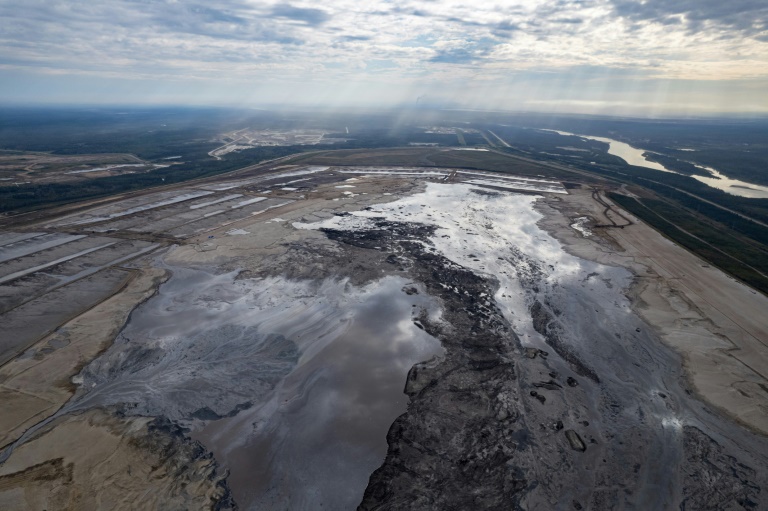
It’s one of the biggest industrial projects in the world: as seen from above, the zone is in stark contrast to the vast expanse of green surrounding it. Huge black holes are gouged in the brown earth — they are giant pools of water.

Then there is the network of roads on which hundreds of trucks drive every day, and the immense factories, with smoke spewing from wide chimneys.

On the ground, the noise is deafening. And it’s quite a scene for the uninitiated: in the middle of the huge basins dug to capture the polluted waters stand huge metal scarecrows clad in helmets and security vests.

The ghoulish creatures are designed to scare away millions of migratory birds that arrive every year in this northern part of Alberta province. Adding to the mayhem: airhorns that are used several times a minute.

The mines have made the people left in Fort McKay — many of them Indigenous Canadians — very rich. But the installations have also profoundly altered and damaged the land on which their ancestors relied for centuries.

“Everything has changed, everything’s destroyed to me now,” says 74-year-old Margie Lacorde who lives in the center of town in a house chock full of knick knacks and framed photographs.

The talkative Lacorde, who belongs to the Metis people, is sad to see the parched, yellowing leaves due to drought, and wishes she could still swim in the rivers and gather berries in the forest like she did in her youth.

The hunting grounds are long gone — the land was sold for industrial use.

“The pollution is killing our nature,” Lacorde tells AFP, though she herself worked in the oil industry for years to provide for her family.

She remembers her childhood with a significant bit of nostalgia. 

Back then, families gathered snow and melted it to use as drinking and cooking water. Such a thing would be impossible today — once the snow hits the ground, it’s immediately filthy, covered in the dust that filters down from the factories.

– ‘Desecrated’ –

“We’re First Nations and this is our territory that is all being desecrated by the oil industry for the sake of the dollar, money, prosperity,” says Jean L’Hommecourt, an environmental activist who took up the fight her parents once championed.

Even if agreements were reached with Indigenous communities to create jobs and protect some natural resources, the ecological impact of mining the oil sands have been so great that the 59-year-old woman says her people are now at risk.

“I lost my prosperity when the industry came in and took over all our lands and our waters and our access to our wildlife… everything that we depend on to sustain our culture has been compromised by industry,” she says bitterly.

The area is a far cry from the picture postcard ideal of the Canadian West. There are no crystalline blue waterways or fish-filled rivers here. 

Instead, Moose Lake — sacred to L’Hommecourt’s Dene people — is now only accessible by all-terrain vehicle, a five-hour drive on a road pockmarked by potholes that runs in between the mines.

When she was growing up, L’Hommecourt’s family cabin was in the middle of the forest, far away from the noise and bustle. But after the first oil sands mine was built in 1967, development proceeded at a rapid pace.

Today, the active oil sands extraction sites form a chain that is more than 60 kilometers (40 miles) long, hugging the shores of the Athabasca River. 

Fort McKay — population, 800 or so — is a tiny speck on a map of this industrial complex.

Canada is home to 10 percent of the world’s known crude oil reserves — much of that is found in the oil sands of Alberta.

Every day, nearly three million barrels of crude are extracted from the sands, according to official government data, helping to make Canada the world’s fourth largest oil producer, and the primary exporter of crude to the United States.

In all, more than 4,800 square kilometers are used for oil sands mining.

At first, local populations were consulted and their fears were noted, L’Hommecourt says.

“And then they just said okay, well, we collected the information, we collected their concerns and everything else and we’ll mitigate with the money,” she added.

– Pollution –

Many environmental activists say the impact of the oil industry is so great that the term “ecocide” is not too strong. Beyond the tangible destruction of the boreal forest, there is the massive amount of pollution in the air.

The oil and gas sector accounts for a quarter of Canada’s greenhouse gas emissions, according to the latest official figures released this year. Of that total, the oil sands are responsible for 12 percent.

And traces of other toxic emissions, such as sulfur and nitrogen oxides, have been detected in the soil and the snow dozens of kilometers from the mining zone.

The industry also consumes a massive amount of water, taken from nearby rivers and lakes.

“There’s still a lot we need to do on recognizing the harm from cleaning up existing operations,” says Keith Stewart of the environmental pressure group Greenpeace, slamming companies that drag their feet on such matters.

Stewart nevertheless acknowledges a “huge shift” on protecting the environment in recent years.

“For a long time, even the notion that we could limit expansion was viewed as crazy and now… the idea of large-scale expansion now seems crazy,” he said.

That reversal is not uniformly popular, as not everyone here sees the oil sands as a bad thing.

“The reality is that they shut off the oil sands tomorrow, my community would starve,” says Ron Quintal, chief of the Fort McKay Metis, noting that nearly everyone around works in or for the industry.

For Quintal, “Indigenous communities have spent 30 to 40 years… trying to get their foot in the door” so it would be “very difficult for us to try to take our people backward.”

He added matter-of-factly: “The development of the oil has empowered us to be able to do things that weren’t possible before.”

In Canada's boreal forest, one man works to save caribou

Even though he lives in the middle of Canada’s boreal forest, Jean-Luc Kanape can sometimes go weeks without seeing a single caribou. But for as long as he can remember, the animals have been part of his life.

For centuries, “our ancestors survived thanks to the caribous — using its meat, pelts and tools made from its bones,” says Kanape, a member of the Innu Indigenous group.

“Now, it’s our turn to help them.”

The caribou is a symbol of the power of the subarctic boreal forest, but also the beating heart of Canada’s Indigenous culture.

But the broad-snouted deer is “at risk,” Kanape says, notably because of the loss of its natural habitat.

In Quebec province, the animal’s future is threatened by the lumber industry, which is crucial in some areas, providing 60,000 jobs, but which also contributes to mass deforestation.

Governments “are supposed to protect all living beings in their territory” but “do nothing” for the caribous, says Kanape, who helps the community identify and tag the remaining herds.

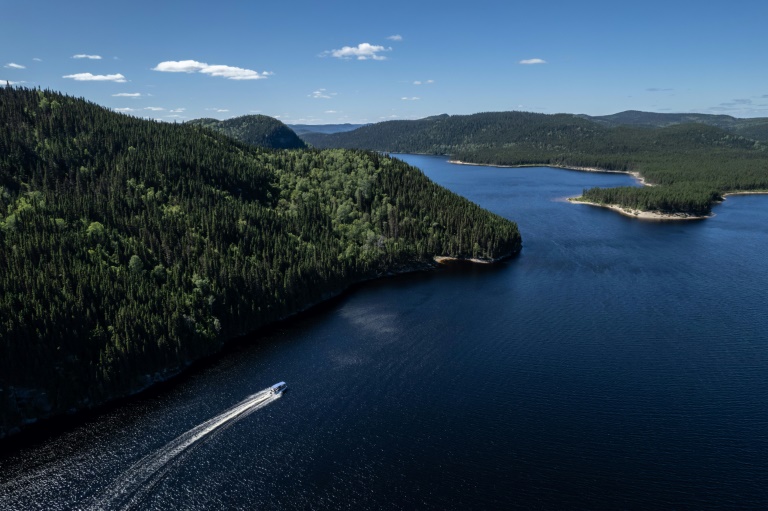
All around the 47-year-old’s cabin, located not far from the St Lawrence River but a two-hour drive from the nearest village, there is evidence of deforestation — the once lush mass of spruces and poplars has been hacked up.

As seen from above, the woods look like a jigsaw puzzle that has been taken apart. In some areas, trees line the ground — they will be chopped up and taken away. for the most part, they are pulped to make paper or used in construction.

– Predators –

Recent data suggests that caribous, which are called reindeer in Europe, have a better chance of survival if at least 65 percent of their living habitat is preserved.

But in this part of Canada, roughly 80 percent of their habitat has been disturbed in some way. Tree harvesting helps renew the forest, but that also brings about changes in the native flora and fauna.

Moose have arrived en masse — which also means the animals that prey on them have arrived too, notably wolves, whose migration has been facilitated by paths cut in the wilderness by the lumber companies. 

When new trees sprout up, the tiny fruit bushes that crop up alongside them also bring bears — another hunter of caribous — to the area. 

When Kanape heads out to track caribou herds, he uses both ancestral teachings and surveillance data collected by drones.

Whether traveling by boat along the river, in his pickup truck or on foot, he scours the ground for hoof prints. Each autumn, those hoofs adapt, their edges sharpening to allow the caribous to break through the ice to get at a major food source: lichen.

In recent weeks, Kanape was tracking a female caribou and her calf, who were living in a partially deforested area — putting them at risk.

“How can I make them understand that they’d be better off in more wooded areas?” says Kanape. “She came here because she knows the area, which is totally normal.” 

He sometimes chases away the wolves to give the caribous a better chance to survive through the summer.

As things stands now, a precipitous fall in the calf population of the region’s caribous makes their long-term survival not very likely, experts from Quebec’s forests ministry warn.

– Growth –

From the Canadian Rockies in the west to Quebec’s forests in the east, the caribou has seen its territory dwindle over the last 150 years, and the population has declined — a shift that nothing seems to reverse.

Since 2003, the caribou has been listed as a species at risk of extinction, and is one of the most studied animals in North America.

In Canada, its survival will depend on the expansion of the oil, lumber and mining industries. The country has struggled to implement viable plans to protect the species, researchers say.

Overall, experts are concerned that the fate of the caribou is a “tipping point” — and thus that the animal should be considered an “umbrella species” worthy of protecting, so that other animals in their habitat are indirectly saved.

“Dozens of species that don’t get the same attention also need ancestral forests — it’s a natural habitat that is vital for many,” explains Martin-Hugues Saint-Laurent, a biologist at the University of Quebec in Rimouski.

Canada’s boreal forest is home to 85 species of mammals, 130 species of fish and 300 different bird species, many of them migratory.

“The forest is not just about the trees,” says Louis De Grandpre, a scientist who has been researching the issue for 30 years.

“We are just barely starting to understand the scope of what’s happening under our feet in the forest subsoil, where bacteria, mushrooms and a myriad of microorganisms are all at work.”

The Innu people, who believe they are just as much a part of the forest ecosystem as all other living creatures, advocate for the creation of a protected forest zone. 

Kanape has a far-reaching, philosophical outlook — the animal kingdom will ultimately triumph.

“When humans disappear from the Earth, the planet will be even more beautiful — it will reclaim itself,” he says.

Subarctic boreal forest, vital for the planet, is at risk

It burns, it drifts, it falls victim to insects. And it’s shrinking.

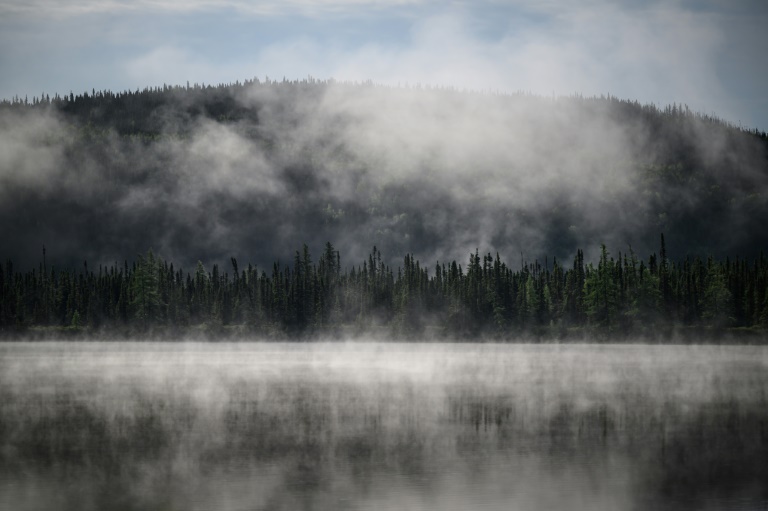
The boreal forest, which is second only to the Amazon in terms of its vital role in ensuring the future of the planet, encircles the Arctic — and it is in just as much danger from climate change as the South American rainforest.

The deep, verdant green ring — which stretches across Canada, Scandinavia, Russia and Alaska — has been weakened by increasing forest fires, the melting of permafrost, intensifying insect infestations and warming temperatures.

Experts are categorical in their warnings: the forest is encroaching on the tundra, and the prairies are slowly taking the place of the trees.

In his cabin in Quebec, not far from the banks of the St Lawrence River amid the trembling aspen and black spruces, Jean-Luc Kanape, a member of the Innu Indigenous group, says he likes to feel the “energy of the wind, the cold.”

“When I’m in the heart of the forest, I feel like I’m part of it. The trees are like my roots,” says the brawny 47-year-old, his hair askew and his skin bronzed from the sun.

Kanape has dedicated his life to the protection of the caribou, a species whose habitat is under threat because of the effects of deforestation and global warming. And he is worried. 

“We often say we need to save the planet, but that’s not true,” he says, suggesting humanity’s own existence is what is at stake.

The forest — named for Boreas, the Greek god of the north wind — covers 10 percent of the world’s land surface and has a decisive impact on the globe’s northern oceans and overall climate.

Its 1.2 billion hectares (nearly three billion acres), which account for nearly a third of all forested land in the world, help slow global warming by absorbing a significant amount of carbon emissions.

The boreal forest holds twice as much carbon as all tropical forests combined, and also helps purify a massive amount of freshwater. 

There have always been natural changes to its makeup, but scientists are now concerned that those changes are happening more often, and are even becoming the norm.

– ‘Monster’ fire –

Dead tree trunks stretch towards the sky — ghostly white shadows staining the green canopy in this corner of Alberta province. 

On the ground, shrubs and grass battle to stay alive.

“I’ll never again see a spruce tree in these hills,” laments Harvey Sykes, a 70-year-old former oil industry worker who lives in the Fort McMurray area, home to the world’s biggest oil sands production complex.

Here, the boreal forest still bears the signs of a huge fire in May 2016 that sent 90,000 residents scrambling for safety from a wall of flames along a lone access road.

“This one was a monster,” recalls Sykes, pointing to the hills where the blaze began. “A fire like that, you don’t confront it… you get out of there.”

Like many in the region, Sykes lost everything in the inferno — his house, his belongings and a lifetime of mementos.

The wildfire remains the most destructive natural disaster in Canada’s history, with 2,500 buildings destroyed and damages totalling nearly 10 billion Canadian dollars ($7.4 billion US).

It was the first time in the country’s history that residents found themselves in danger as a direct result of the consequences of climate change on the boreal forest.

– Adaptation –

Today, wildfires are multiplying in Alaska, Canada and Siberia. They are one of the greatest threats to northern woodlands even if, paradoxically, they are also essential to the forest’s survival and evolution.

Fires release precious nutrients into the forest soil, and create holes in the tree canopy that allow sunlight to break through, contributing to the growth of new trees.

In the boreal forest, the most prevalent type of fire is a crown fire, which spreads quickly from treetop to treetop. These blazes are more intense and more difficult to fight than fires on the ground.

Fires can burn all winter under the snow, producing toxic smoke and significant amounts of carbon monoxide.

The forest’s plants are resistant to the bitter Canadian cold, and have adapted to the recurrent fires — the trembling aspen burn quickly but regenerate easily.

Some species even depend on the fires — jack pines or black spruces have sap-coated cones that open up to deposit seeds as the flames spread, ensuring their survival.

But data collected over the last few decades indicates that the increasing frequency and intensity of the fires have reached an abnormal level.

“We now have a wildfire season that is longer and more severe. They are more fierce, and cover larger areas,” explains Yan Boulanger, a researcher in forest ecology at Canada’s ministry of natural resources.

Fires are now regularly twice as destructive in terms of surface area as they were a century ago, and 70 percent of the land consumed in fires over the last 20 years was in the boreal forest, according to satellite data made public in August.

Experts from Global Forest Watch, the World Resources Institute and the University of Maryland — who collected the data — also revealed that extreme heat waves are five times as likely as they were 150 years ago.

Global warming is having an especially devastating effect on northern lands including the boreal zone, as temperatures are increasing two or three times quicker than on the rest of the planet.

Extreme heat leads to more lightning, which in turn sparks the worst fires, Boulanger says. Destruction of forested lands in these blazes leads to massive greenhouse gas emissions, which fuel climate change.

While forest fires are one of the most extreme and visible results of warming temperatures, the actual increase in heat has even worse implications.

– ‘Drunken trees’ –

They are known as “drunken trees” — tilted sideways due to melting permafrost. Eventually, the soil will completely erode away from the roots, and the trees will tumble.

This buckling and sinking is because of the degradation of the permafrost, ground that has remained frozen for at least two years in a row.

“You have potential for large shifts,” says Diana Stralberg, an Edmonton-based researcher for the natural resources ministry. Sometimes areas “might be flooded and lose forests,” she explains, becoming bogs or lakes.

As the ground is thawing, bacteria eat away at the biomass compiled for thousands of years, generating carbon and methane emissions that are contributing to the acceleration of global warming.

Elsewhere, in the far north of the boreal zone, trees are crowding the tundra, which features better conditions for their survival.

Scientists recently discovered that white spruces were being displaced towards the north in Alaska, to a part of the Arctic tundra that had not seen such tree growth in thousands of years.

In a decade, the tree cover advanced a whopping four kilometers (2.5 miles).

On the southern edge of the boreal forest, drought has reduced stands of trees to shrubs and high grasses.

“In the west, we could end up with forests that simply become prairies because the extent of the drought or the frequency of climatic change is too great to sustain the tree population,” Boulanger warns.

Stralberg remembers seeing computer maps modeling the effects of climate change for the first time when she started working on issues related to the boreal forest a few years ago.

“I thought it was just wrong, because it was just so extreme,” she says. 

And then her colleagues started reaching the same conclusions: that the boreal forest was rapidly shifting north, absorbing a part of the tundra and losing ground to the prairies at the southern edge.

The displacement of an ecosystem is not without consequences.

“You can lose forest a lot faster than it can grow and provide habitat for wildlife,” says the 52-year-old Stralberg. 

As the mercury rises, evaporation occurs more easily and plants lose water more quickly due to transpiration. They close the pores of their leaves and battle to survive. 

But by slowing their own growth, the plants lose some of their capacity to eliminate carbon dioxide from the atmosphere — a vicious circle indeed.

– ‘Snowball effect’ –

In the western part of Quebec province, government research scientist David Pare and his team are studying tree litter — the decomposing organic material on the forest floor that has acted as a giant carbon sink for centuries.

Here, the sun struggles to break through due to the twisting, intertwined tree canopy. Thousands of pine needles cover the mossy ground.

Tree litter can store five to six times as much carbon dioxide as other plant matter, and Pare wants to see how resilient the ground is. 

A plethora of experiments are being carried out across Canada to better understand the tree litter and predict its future role in reducing the amount of greenhouse gases in the atmosphere.

In some areas, the subsoil is heated, and in others, the amount of organic matter on the ground is varied. Tree roots are cut elsewhere.

Dozens of tiny orange flags and wooden trays embedded in the fallen pine needles mark off the various trials that have been in place for six years.

“We want to know how much carbon has accumulated in the soil and how it happens,” Pare explains.

“Because if global warming is diminishing the carbon sink, that will only lead to more warming,” says the 59-year-old Pare. 

Scientists are fearful of such a “snowball effect,” which could eventually lead to significant loss of the boreal forest’s role as a carbon sink. 

But the forest is also at risk of falling victim to another phenomenon brought on by higher temperatures: insect infestations.

– The curious case of the hemlock looper –

It’s a surprising sight: on a green hillside peppered with vibrant trees, there is a square marked off by dead trees stripped of their limbs, their dried out trunks stretching skyward.

“It’s like a bomb went off. All the trees are dead in this area, killed by the hemlock looper,” says Pare, his white hair covered by a construction helmet.

The hemlock looper is a moth native to North America that can devour all leaves and needles on trees in one season, explains the researcher as he walks through the raspberry bushes that have cropped up in the area.

Several events linked to global warming seem to be converging and could explain the insect infestations, which are also happening in Scandinavian forests.

Trees are already weakened by drought and so struggle to fend off the voracious bugs who take advantage of longer summers and warmer winters.

Hundreds of thousands of hectares of forest land have been devastated by the eastern spruce budworm, another species native to Canada and the eastern United States that mainly attacks fir trees.

“As global warming progresses, the budworm now can reach areas that it could not get to in the past,” says researcher Louis De Grandpre, who has studied the boreal forest for 30 years.

The key now is to measure the long-term effects of these infestations “because we really don’t know what the future of these forests will look like,” he added.

– Tipping point? –

For Pare, “there is a limit to how much trees can endure.”

For now, scientists are pondering whether the boreal forest is approaching a so-called “tipping point,” a threshold beyond which carbon and methane emissions are inevitable and changes to the ecosystem are irreversible.

Experts say they still hope for the ecosystem’s continued resilience.

Stralberg believes the damage can still be limited.

“We looked at areas that will remain cooler and wetter in a warming world, like the shores of large interior lakes, large peatland complexes and north-facing hillsides,” she explains.

“These are areas where we can buy time for cold-adapted species like spruce trees and caribou to adjust to climate change in the near term.”

Careful monitoring, reforestation, legal protections, technological progress and time-honored Indigenous methods can help maintain the carbon sink.

“I think that cultural burning can be one of the solutions… combined with some of the new technology,” says Amy Cardinal Christianson, a research scientist with the Canadian Forest Service who studies how fires affect Indigenous communities.

Cultural burning, long practiced by Indigenous communities, can help reduce the impact of forest fires by eliminating ground cover. Christianson, a member of the Metis people, explains the burning as “a slow fire, a cool burn.”

Unlike in the Amazon, in this inhospitable cold-climate forest, human action — like deforestation or oil sands mining — is less detrimental to the environment than natural phenomena caused by climate change.

Experts say that in order for the boreal forest to maintain its essential role in ensuring the survival of the planet, the solution must be a global one. 

For Boulanger, the government forest researcher, we must “have faith in the next generation.”

Ending Ukraine war 'best thing' to mend world economy: Yellen

US Treasury Secretary Janet Yellen heaped pressure on Russia on Monday ahead of the G20 summit in Indonesia, saying the best way to end world economic tumult was to stop the Ukraine war.

“Ending Russia’s war is a moral imperative and the single best thing we can do for the global economy,” Yellen told reporters as she met French counterpart Bruno Le Maire in Nusa Dua, on the resort island of Bali. 

High fuel and food prices are among the top issues set to be discussed at the summit and few G20 countries have escaped the economic pain.

Yellen will hope to build diplomatic pressure for an end to the war by blaming Russia. 

Host Indonesia has called for talks and a peaceful resolution to the conflict but, like fellow G20 members China, South Africa and India, has largely avoided criticising Russia directly. 

The summit is also expected to discuss the need to extend a Turkish and UN-brokered agreement allowing vital Ukrainian grain and fertiliser exports to transit safely through the Black Sea. 

Ukraine is one of the world’s largest producers of both products. Russian President Vladimir Putin had appeared to walk away from the agreement but faced a sharp backlash from developing countries.

The current agreement expires on November 19. Le Maire underscored the need to counteract the effects of Russia’s invasion, namely on soaring fuel prices in Europe. 

“I really think that the first issue that we have on the table is how to bring down energy prices and how to get rid of inflation,” he said. 

'Black Panther' sequel scores huge opening, at home and abroad

Disney and Marvel’s highly anticipated “Black Panther: Wakanda Forever” had a huge opening this weekend, taking in an estimated $180 million in North American theaters, industry watcher Exhibitor Relations reported Sunday.

That domestic opening — the 13th highest all-time, according to BoxOfficePro.com — came as the film was raking in an impressive $330 million worldwide, a major boost for Hollywood after a lackluster October.

“This is a sensational opening,” said David A. Gross of Franchise Entertainment Research. “Reviews and audience scores are excellent — Wakanda should dominate moviegoing… into December.” 

The film pays heartfelt tribute to the star of the original “Black Panther,” Chadwick Boseman, who died from cancer in 2020 at age 43. He makes several flashback appearances as the fictional Wakanda fights against an underwater kingdom after the death of Boseman’s character, King T’Challa. 

Letitia Wright, as T’Challa’s sister Shuri, and Angela Bassett, as Queen Ramonda, struggle to fill the king’s shoes. Also starring are Lupita Nyong’o, Danai Gurira and Winston Duke.

The original “Black Panther,” the first major black superhero movie, became a cultural phenomenon, with a $202 million opening and a best-picture Oscar nomination.

Far, far behind in second place this weekend was Warner Bros.’ “Black Adam,” at $8.6 million — not even one-twentieth the “Wakanda” total. The Dwayne Johnson vehicle, a spinoff from 2019’s “Shazam!,” has now taken in $141.1 million domestically.

Universal’s rom-com “Ticket to Paradise,” powered by mega-stars Julia Roberts and George Clooney, managed to defy the superhero trend to place third, taking in $6.1 million in its fourth week out.

A family-friendly film, Sony’s live-action/computer animated musical comedy “Lyle, Lyle, Crocodile,” placed fourth at $3.2 million. 

And Paramount’s horror movie “Smile” continued to find viewers in its seventh week out, coming in fifth. With an estimated take of $2.3 million for the Friday-through-Sunday period, its domestic total bumped up to $102 million.

Rounding out the top 10 were:

“Prey for the Devil” ($2.0 million)

“The Banshees of Inisherin” ($1.7 million)

“One Piece Film: Red” ($1.4 million)

“Till” ($618,000)

“Armageddon Time” ($352,000)

US Democrats celebrate Senate win over distraught Republicans

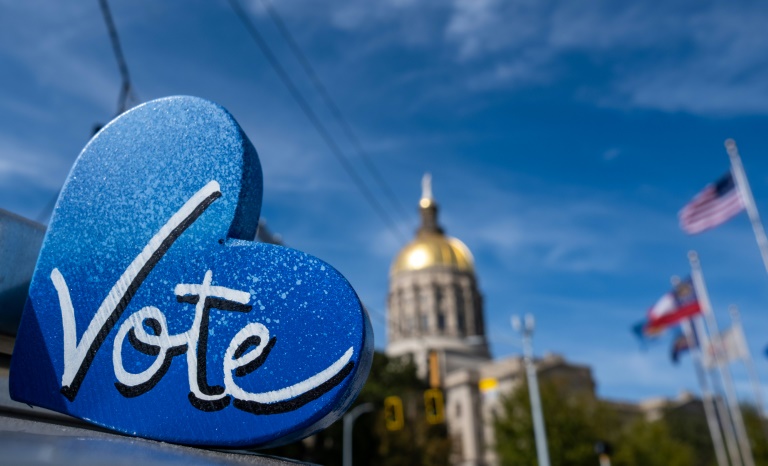
Democrats celebrated Sunday a stunning victory to hold the US Senate, leaving Republicans in disarray and providing a critical base of political and legislative support for the remainder of Joe Biden’s presidency.

Although the fate of the lower House of Representatives is still up in the air, retaining control of the upper chamber in a midterm election many predicted they would lose by a wide margin is, in itself, a major triumph.

“I feel good and I’m looking forward to the next couple years,” said Biden, who was attending a summit of Southeast Asian leaders in Cambodia.

The Senate oversees the confirmation of federal judges and cabinet members, and having the 100-seat body in his corner will be a major boon for Biden as he seeks to keep his policy agenda on track.

US midterms traditionally deliver a rejection of the party in power, and with inflation surging and Biden’s popularity ratings cratering, Republicans had been expecting to ride a mighty “red wave” and capture both houses of Congress in Tuesday’s vote.

The deciding moment in the battle for control of the Senate came late Saturday, when US networks called the Nevada race for Democratic incumbent Catherine Cortez Masto, giving the party the 50 seats it needs for an effective majority.

Vice President Kamala Harris can cast the tie-breaking vote if the chamber is evenly split 50-50.

One Senate race remains undecided — a runoff in Georgia set for December 6, in which the Democrats could add to their majority.

Senate Majority Leader Chuck Schumer said the result was a “vindication” of Democrats’ achievements, and a clear rejection of the “anti-democratic, authoritarian, nasty and divisive direction” offered by former president Donald Trump and his loyalists.

Trump was the biggest Republican draw on the midterms campaign trail, and the party’s performance — with many candidates he personally endorsed losing their high-profile races — was a damaging blow.

Trump is widely expected to declare his 2024 White House bid on Tuesday — an announcement he had planned as a triumphant follow-on to an expected crushing election victory by the party he still dominates.

– Republicans’ ‘tiny trickle’ –

On Sunday House Speaker Nancy Pelosi toasted her Democrats for their strong performance, noting on CNN how the Republican “red wave” that had been predicted by pundits and the GOP collapsed into “a little tiny trickle.”

Republicans, meanwhile, are left to consider what went wrong, given the fair political winds they had at their backs going into the ballot.

After the Senate result was projected, Republican Senator from Missouri Josh Hawley called for the party to “build something new.” 

“The old party is dead. Time to bury it,” he tweeted.

Trump’s response has been to double down on unfounded claims of ballot rigging, posting on his Truth Social platform that the results were a “scam” — and pointing a finger of blame at Senate Republican leader Mitch McConnell.

“It’s Mitch McConnell’s fault,” he posted, saying the Kentuckian had badly allocated campaign funds and pursued a flawed legislative agenda. 

“He blew the Midterms, and everyone despises him,” said Trump, who has long been at loggerheads with McConnell.

Republicans are slightly favored to eventually take control of the House of Representatives, but with a far smaller majority than they had envisaged going into Tuesday’s election.

It remains to be seen just how strong an impact the poor Republican performance will have on Trump’s standing in the party — and on his aspirations for a return to the White House.

While there are already senior party voices suggesting the time has come to move away from Trump’s conspiracy-fueled, hard-right leadership style, the former president still enjoys major grassroots support, and running against him for the presidential nomination would be a formidable task.

One possible challenger, Maryland’s outgoing Republican Governor Larry Hogan, said the party had to switch direction and move on.

“It’s basically the third election in a row that Donald Trump has cost us the race, and it’s like, three strikes and you’re out,” Hogan, a vocal Trump critic, said Sunday on CNN’s State of the Union talk show.

“The definition of insanity is doing the same thing over and over again, expecting a different result.

“Donald Trump kept saying, we’re gonna be winning so much, we’ll get tired of winning. Well, I’m tired of losing. I mean, that’s all he’s done,” Hogan said.

Six dead in mid-air collision at Texas WWII show: authorities

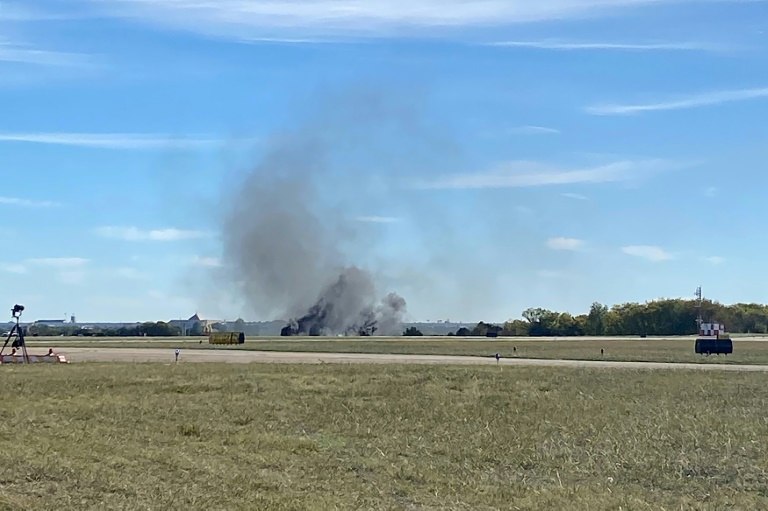
Six people were killed when a pair of World-War-II-era planes collided in mid-air at a show in Texas and crashed to the ground in a ball of fire, authorities said Sunday. 

“According to our Dallas County Medical Examiner, there are a total of 6 fatalities from yesterday’s Wings over Dallas air show incident,” Dallas County Judge Clay Jenkins said Sunday on Twitter.

The incident at Dallas Executive Airport involved a Boeing B-17 Flying Fortress and a smaller Bell P-63 Kingcobra, the Federal Aviation Administration said Saturday.

Dallas Mayor Eric Johnson called the incident “a terrible tragedy,” adding that videos of the incident “are heartbreaking.”

Multiple videos posted on social media showed dramatic scenes of the smaller plane descending toward the lower-flying B-17 and crashing into it as both flew in loops around the airport. 

After the collision, the planes appeared to break apart into several large pieces before crashing to the ground and exploding in a ball of fire, creating a huge plume of black smoke.

The crash scattered debris across the airport grounds as well as on a strip mall and a nearby highway, which was closed for hours, Johnson said.

Fire and rescue vehicles were already at the show in case of an emergency and responded immediately, authorities said.

An estimated 5,000 people were in attendance at the event Saturday, a few miles south of downtown Dallas. Air show events planned for Sunday were canceled.

The FAA said its agents and the National Transportation Safety Board would investigate the incident.

Hank Coates, the chief executive of the Commemorative Air Force (CAF), whose planes were involved in the accident, said the B-17 “normally has a crew of four or five,” while the P-63 is operated by a single pilot.

He said the pilots who operate the planes during such shows are experienced volunteers with “very thorough training” and are often retired military pilots.

The Allied Pilots Association, the collective bargaining agent for American Airlines, confirmed earlier that two of its retired members died in the accident. 

Both planes were based in Houston, the Dallas Morning News reported.

The CAF has some 180 vintage aircraft that fly roughly 6,500 hours per year in air shows, tributes to veterans, and training flights, according to Coates.

The B-17, a four-engined bomber, played a major role in winning the air war against Germany in World War II. With a workhorse reputation, it became one of the most produced bombers ever.

The CAF said the B-17 involved in the crash, which bore a Texas Raiders logo on its nose, was one of only five of the bombers that could still fly out of the 12,731 initially built.

The P-63 Kingcobra was a fighter aircraft developed during the same war by Bell Aircraft, but it was used in combat only by the Soviet Air Force.

Safety has long been a concern at air shows. 

Seven people died on October 2, 2019 when a B-17 crashed during a vintage aircraft show in Connecticut.

US Democrats celebrate Senate win over distraught Republicans

Democrats celebrated Sunday a stunning victory to hold the US Senate, leaving Republicans in disarray and providing a critical base of political and legislative support for the remainder of Joe Biden’s presidency.

Although the fate of the lower House of Representatives is still up in the air, retaining control of the upper chamber in a midterm election many predicted they would lose by a wide margin is, in itself, a major triumph.

“I feel good and I’m looking forward to the next couple years,” said Biden, who is attending a summit of Southeast Asian leaders in Cambodia.

The Senate oversees the confirmation of federal judges and cabinet members, and having the 100-seat body in his corner will be a major boon for Biden as he seeks to keep his policy agenda on track.

US midterms traditionally deliver a rejection of the party in power, and with inflation surging and Biden’s popularity ratings cratering, Republicans had been expecting to ride a mighty “red wave” and capture both houses of Congress in Tuesday’s vote.

The deciding moment in the battle for control of the Senate came late Saturday, when US networks called the Nevada race for Democratic incumbent Catherine Cortez Masto, giving the party the 50 seats it needs for an effective majority.

Vice President Kamala Harris can cast the tie-breaking vote if the chamber is evenly split 50-50.

One Senate race remains undecided — a runoff in Georgia set for December 6, in which the Democrats could add to their majority.

Senate Majority Leader Chuck Schumer said the result was a “vindication” of Democrats’ achievements, and a clear rejection of the “anti-democratic, authoritarian, nasty and divisive direction” offered by former president Donald Trump and his loyalists.

Trump was the biggest Republican draw on the midterms campaign trail, and the party’s performance– with many candidates he personally endorsed losing their high-profile races — was a damaging blow.

Trump is widely expected to declare his 2024 White House bid on Tuesday — an announcement he had planned as a triumphant follow-on to an expected crushing election victory by the party he still dominates.

– Republicans’ ‘tiny trickle’ –

On Sunday House Speaker Nancy Pelosi toasted her Democrats for their strong performance, noting on CNN how the Republican “red wave” that had been predicted by pundits and the GOP collapsed into “a little tiny trickle.”

Republicans, meanwhile, are left to consider what went wrong, given the fair political winds they had at their backs going into the ballot.

After the Senate result was projected, Republican Senator from Missouri Josh Hawley called in a tweet for the party to “build something new.” 

“The old party is dead. Time to bury it,” he said.

Trump’s response has been to double down on unfounded claims of ballot rigging, posting on his Truth Social platform that the results were a “scam” and down to “voter fraud.”

Republicans are slightly favored to eventually take control of the House of Representatives, but with a far smaller majority than they had envisaged going into Tuesday’s election.

It remains to be seen just how strong an impact the poor Republican performance will have on Trump’s standing in the party — and on his aspirations for a return to the White House.

While there are already senior party voices suggesting the time has come to move away from Trump’s conspiracy-fuelled, hard-right leadership style, the former president still enjoys major grassroots support and running against him for the presidential nomination would be a formidable task.

One possible challenger, Maryland’s outgoing Republican Governor Larry Hogan, said the party had to switch direction and move on.

“It’s basically the third election in a row that Donald Trump has cost us the race and it’s like, three strikes and you’re out,” Hogan, a vocal Trump critic, said on CNN’s State of the Union talk show Sunday.

“The definition of insanity is doing the same thing over and over again, expecting a different result.

“Donald Trump kept saying, we’re gonna be winning so much, we’ll get tired of winning. Well, I’m tired of losing. I mean, that’s all he’s done,” Hogan said.

FTX working to secure assets after 'unauthorized' transactions

The new chief executive of troubled cryptocurrency platform FTX said Saturday the company was making “every effort to secure all assets” following unauthorized transactions potentially worth hundreds of millions of dollars.

“Unauthorized access to certain assets has occurred,” CEO John Ray said in a statement posted to Twitter by FTX’s general counsel, Ryne Miller.

FTX officials did not detail the quantity of unauthorized transactions made, but cryptocurrency analysis firm Elliptic said in a report published Saturday that “$477 million is suspected to have been stolen.”

More than “$663 million in various tokens” had been drained from FTX’s wallets only 24 hours after it filed for bankruptcy, Elliptic said, with the difference “believed to have been moved into secure storage by FTX themselves.”

FTX US and FTX.com “continue to make every effort to secure all assets, wherever located,” Ray, who specializes in corporate turnarounds, said in the statement.

The announcement comes a day after FTX filed for bankruptcy, part of a stunning collapse that has reverberated through the relatively young sector, sending other cryptocurrencies plummeting and drawing scrutiny from government regulators.

Additionally, the platform’s chief executive, 30-year-old Sam Bankman-Fried, once considered a star in the freewheeling cryptocurrency world, resigned.

As recently as 10 days ago, FTX was considered the world’s second-largest cryptocurrency platform, at one point valued at $32 billion.

But the company is now left trying to reassure a skeptical public.

– Fall from grace –

“Among other things, we are in the process of removing trading and withdrawal functionality and moving as many digital assets as can be identified to a new cold wallet custodian,” Ray said in the statement.

“Cold storage” refers to moving cryptocurrency assets to a hardware “wallet” unconnected to the Internet — to assure its security. 

Ray added that “an active fact review and mitigation exercise was initiated immediately in response” to the unauthorized transactions.

Overnight, Miller had tweeted about an investigation into anomalies and other unclear movements, and by Saturday morning indicated that “unauthorized transactions” had occurred.

FTX’s troubles first surfaced amid press reports that its Alameda Research trading house was involved in a risky financial arrangement with FTX.com that appeared to involve grave conflicts of interest. 

Financial media reported that FTX executives knew the platform was using billions in customer funds to prop up Alameda.

Adding to the drama, Binance, the world’s largest crypto exchange, agreed to buy FTX.com on Tuesday — before scrapping the takeover just a day later. 

FTX is being investigated by both the US Securities and Exchange Commission (SEC) and the New York state Justice Department, according to The New York Times, which cited sources close to those probes.

The fall from grace even stretched to the world of sports, where the Miami Heat announced its FTX Arena is set for a rename and the Mercedes Formula One team said it had suspended a sponsorship deal with FTX and removed the company’s logos from its cars ahead of this weekend’s Sao Paulo Grand Prix.

Close Bitnami banner
Bitnami