AFP

Asian shares surge as investors cheer slower US inflation

Asian markets surged on Friday after a bumper session on Wall Street as lower US inflation dimmed expectations of more aggressive Federal Reserve rate hikes.

Hong Kong stocks rocketed six percent at the open while Tokyo’s key Nikkei index jumped more than three percent, although both had retreated slightly by mid-morning.

The gains extended global rallies after the US consumer price index (CPI) showed that the annual pace of inflation was a lower-than-expected 7.7 percent in October, down from 8.2 percent in September.

As US residents reel from sky-high costs, the central bank has moved forcefully to lower demand by raising the benchmark lending rate six times this year.

The latest inflation data should be welcome news to Fed policymakers, because prices are “finally showing some response” to the steep rate hikes, said Rubeela Farooqi of High Frequency Economics.

“Inflation has finally started to drop like a rock in the US and this is the best news that anyone can expect,” added AvaTrade analyst Naeem Aslam.

The dollar slumped against rival currencies following the data release, and shares rallied as investors cheered the prospect of less hawkish moves by the central bank.

The Dow was up 3.7 at the close and the tech-heavy Nasdaq index soared 7.4 percent, while European markets also ended higher.

Most Asian markets matched the upbeat mood.

Taipei jumped 3.5 percent, Seoul was up 2.8 percent and Sydney climbed 2.6 percent.

Singapore rose 1.4 percent, Shanghai was up 1.1 percent and Wellington put on 2.0 percent, but Bangkok lost 0.2 percent.

“As expected, buying in Asia tech is standing out this morning,” Stephen Innes of SPI Asset Management said.

“But with investors still looking over their shoulders at the crypto schism and rising Covid cases in China, that tide that was lifting all boats is starting to recede in places,” he cautioned.

Trade may also be “dominated by profit-taking and position squaring” after the rallies overnight and ahead of a US market holiday on Friday.

The crypto world has meanwhile been rocked by a surprise decision from Binance, the world’s biggest cryptocurrency platform, to scrap a possible acquisition of rival FTX.com — plunging bitcoin to a two-year low.

– Key figures around 0230 GMT –

Tokyo – Nikkei 225: UP 2.7 percent at 28,200.75 (break)

Hong Kong – Hang Seng Index: UP 5.2 percent at 16,925.56

Shanghai – Composite: UP 1.1 percent at 3,071.43

Pound/dollar: UP at $1.1678 from $1.1642 on Thursday

Euro/dollar: DOWN at $1.0188 from $1.0131

Dollar/yen: DOWN at 142.13 yen from 143.15 yen

Euro/pound: UP at 87.26 pence from 87.20 pence

West Texas Intermediate: UP 0.3 percent at $86.75 per barrel

Brent North Sea crude: UP 0.3 percent at $93.95 per barrel

New York – Dow: UP 3.7 percent at 33,715.37 points (close)

London – FTSE 100: UP 1.1 percent at 7,375.34 (close)
Twitter chaos deepens as key executives quit

Elon Musk’s ownership of Twitter descended ever deeper into chaos on Thursday as key security executives resigned from the platform, drawing a sharp warning from US regulators.

The walkouts came a day after the turbulent launch of new features introduced by Tesla and SpaceX owner Musk following his $44 billion buyout of the influential messaging app.

Musk on Thursday warned employees that the site was burning dangerously through cash, raising the specter of bankruptcy if the situation was not turned around.

“I’ve made the hard decision to leave Twitter,” tweeted chief security officer Lea Kissner, who reportedly stepped down with other key privacy or security executives.

In the most extraordinary exit, US media reported that Yoel Roth, the site’s head of trust and safety stepped down just a day after staunchly defending Musk’s content moderation policy to advertisers.

The convulsions followed the unveiling of the site’s long-awaited Twitter Blue subscription service, which allows users to pay $7.99 per month for a coveted blue tick, as well as a separate gray “official” badge for some high-profile accounts.

But the release descended into tumult on Wednesday when Musk scrapped the new gray label almost immediately, overshadowing the launch of the pay service, which is currently only available on the mobile app on iPhones and in the United States.

The launch also saw the emergence of a flurry of fake accounts as users used the opportunity to impersonate celebrities and politicians such as NBA star LeBron James or former British prime minister Tony Blair.

Early media reports also said Robin Wheeler, who held a key role linking Twitter with advertisers and was considered a key Musk ally inside the company, was leaving but late Thursday she tweeted: “I’m still here.”

– ‘Deep concern’ –

The chaos drew a rare warning from the Federal Trade Commission, the US authority that oversees consumer safety which had put Twitter under watch for past security and privacy breaches.

“We are tracking recent developments at Twitter with deep concern,” a spokesperson for the FTC said in a statement.

“No CEO or company is above the law, and companies must follow our consent decrees,” the spokesperson added, referring to past commitments by Twitter to obey US privacy rules.

Violating FTC decisions could cost Twitter millions of dollars in fines.

The 51-year-old entrepreneur fired half of the 7,500 employees of the California company a week ago, 10 days after buying the site and becoming its sole owner.

For the first time since the layoffs, Musk on Thursday addressed his remaining employees and urged them to help the site reach one billion users, according to employee text messages seen by AFP.

Musk also warned that the company was bleeding cash and expressed fear about the effects of the poor economy on his newly bought business.

“You may have noticed I sold a bunch of Tesla stock. The reason I did that is to save Twitter,” he is reported to have said.

Wedbush analyst Dan Ives meanwhile warned that the Twitter episode could have serious repercussions for electric car manufacturer Tesla.

“Brand destruction is our biggest worry with this Twitter circus show. It’s that simple and I can’t ignore it for Tesla stock,” Ives wrote on the site.

Twitter is also crippled by the decision of advertisers to stay away from the platform, concerned about Musk’s plans.

The tycoon announced he was ending work-from-home policies at Twitter, which had been a widespread practice at the San Francisco-based company.

“If you don’t show up at the office, resignation accepted,” he told employees.

Twitter chaos deepens as key executives quit

Elon Musk’s ownership of Twitter descended ever deeper into chaos on Thursday as key security executives resigned from the platform, drawing a sharp warning from US regulators.

The walkouts came a day after the turbulent launch of new features introduced by Tesla and SpaceX owner Musk following his $44 billion buyout of the influential messaging app.

Musk on Thursday warned employees that the site was burning dangerously through cash, raising the specter of bankruptcy if the situation was not turned around.

“I’ve made the hard decision to leave Twitter,” tweeted chief security officer Lea Kissner, who reportedly stepped down with other key privacy or security executives.

In the most extraordinary exit, US media reported that Yoel Roth, the site’s head of trust and safety stepped down just a day after staunchly defending Musk’s content moderation policy to advertisers.

The convulsions followed the unveiling of the site’s long-awaited Twitter Blue subscription service, which allows users to pay $7.99 per month for a coveted blue tick, as well as a separate gray “official” badge for some high-profile accounts.

But the release descended into tumult on Wednesday when Musk scrapped the new gray label almost immediately, overshadowing the launch of the pay service, which is currently only available on the mobile app on iPhones and in the United States.

The launch also saw the emergence of a flurry of fake accounts as users used the opportunity to impersonate celebrities and politicians such as NBA star LeBron James or former British prime minister Tony Blair.

Early media reports also said Robin Wheeler, who held a key role linking Twitter with advertisers and was considered a key Musk ally inside the company, was leaving but late Thursday she tweeted: “I’m still here.”

– ‘Deep concern’ –

The chaos drew a rare warning from the Federal Trade Commission, the US authority that oversees consumer safety which had put Twitter under watch for past security and privacy breaches.

“We are tracking recent developments at Twitter with deep concern,” a spokesperson for the FTC said in a statement.

“No CEO or company is above the law, and companies must follow our consent decrees,” the spokesperson added, referring to past commitments by Twitter to obey US privacy rules.

Violating FTC decisions could cost Twitter millions of dollars in fines.

The 51-year-old entrepreneur fired half of the 7,500 employees of the California company a week ago, 10 days after buying the site and becoming its sole owner.

For the first time since the layoffs, Musk on Thursday addressed his remaining employees and urged them to help the site reach one billion users, according to employee text messages seen by AFP.

Musk also warned that the company was bleeding cash and expressed fear about the effects of the poor economy on his newly bought business.

“You may have noticed I sold a bunch of Tesla stock. The reason I did that is to save Twitter,” he is reported to have said.

Wedbush analyst Dan Ives meanwhile warned that the Twitter episode could have serious repercussions for electric car manufacturer Tesla.

“Brand destruction is our biggest worry with this Twitter circus show. It’s that simple and I can’t ignore it for Tesla stock,” Ives wrote on the site.

Twitter is also crippled by the decision of advertisers to stay away from the platform, concerned about Musk’s plans.

The tycoon announced he was ending work-from-home policies at Twitter, which had been a widespread practice at the San Francisco-based company.

“If you don’t show up at the office, resignation accepted,” he told employees.

Twitter chaos deepens as key executives quit

Elon Musk’s ownership of Twitter descended ever deeper into chaos on Thursday as key security executives resigned from the platform, drawing a sharp warning from US regulators.

The walkouts came a day after the turbulent launch of new features introduced by Tesla and SpaceX owner Musk following his $44 billion buyout of the influential messaging app.

Musk on Thursday warned employees that the site was burning dangerously through cash, raising the specter of bankruptcy if the situation was not turned around.

“I’ve made the hard decision to leave Twitter,” tweeted chief security officer Lea Kissner, who reportedly stepped down with other key privacy or security executives.

In the most extraordinary exit, US media reported that Yoel Roth, the site’s head of trust and safety stepped down just a day after staunchly defending Musk’s content moderation policy to advertisers.

The convulsions followed the unveiling of the site’s long-awaited Twitter Blue subscription service, which allows users to pay $7.99 per month for a coveted blue tick, as well as a separate gray “official” badge for some high-profile accounts.

But the release descended into tumult on Wednesday when Musk scrapped the new gray label almost immediately, overshadowing the launch of the pay service, which is currently only available on the mobile app on iPhones and in the United States.

The launch also saw the emergence of a flurry of fake accounts as users used the opportunity to impersonate celebrities and politicians such as NBA star LeBron James or former British prime minister Tony Blair.

Early media reports also said Robin Wheeler, who held a key role linking Twitter with advertisers and was considered a key Musk ally inside the company, was leaving but late Thursday she tweeted: “I’m still here.”

– ‘Deep concern’ –

The chaos drew a rare warning from the Federal Trade Commission, the US authority that oversees consumer safety which had put Twitter under watch for past security and privacy breaches.

“We are tracking recent developments at Twitter with deep concern,” a spokesperson for the FTC said in a statement.

“No CEO or company is above the law, and companies must follow our consent decrees,” the spokesperson added, referring to past commitments by Twitter to obey US privacy rules.

Violating FTC decisions could cost Twitter millions of dollars in fines.

The 51-year-old entrepreneur fired half of the 7,500 employees of the California company a week ago, 10 days after buying the site and becoming its sole owner.

For the first time since the layoffs, Musk on Thursday addressed his remaining employees and urged them to help the site reach one billion users, according to employee text messages seen by AFP.

Musk also warned that the company was bleeding cash and expressed fear about the effects of the poor economy on his newly bought business.

“You may have noticed I sold a bunch of Tesla stock. The reason I did that is to save Twitter,” he is reported to have said.

Wedbush analyst Dan Ives meanwhile warned that the Twitter episode could have serious repercussions for electric car manufacturer Tesla.

“Brand destruction is our biggest worry with this Twitter circus show. It’s that simple and I can’t ignore it for Tesla stock,” Ives wrote on the site.

Twitter is also crippled by the decision of advertisers to stay away from the platform, concerned about Musk’s plans.

The tycoon announced he was ending work-from-home policies at Twitter, which had been a widespread practice at the San Francisco-based company.

“If you don’t show up at the office, resignation accepted,” he told employees.

Biden faces high expectations at UN climate talks

US President Joe Biden flies into UN climate talks in Egypt on Friday armed with major domestic achievements against global warming but under pressure to do more for countries reeling from natural disasters.

Biden will only spend a few hours at COP27 in the Red Sea resort of Sharm el-Sheikh, three days after US midterm elections that have raised questions about what the result could mean for US climate policy.

The US leader’s climate agenda was given a major boost this year when Congress passed a landmark spending bill, the Inflation Reduction Act, which includes $369 billion for clean energy and climate initiatives.

But at COP27, talk has been dominated by the need for wealthy nations to stop stalling on helping developing countries green their economies and prepare for future impacts — as well as calls to provide financial help for the damage already being caused by climate-induced catastrophes.

“The world needs the United States to be a climate leader in our fight for climate justice,” prominent Ugandan climate activist Vanessa Nakate told AFP.

“The message is for President Biden to stand with the people on the planet and the coming generations,” said the 25-year-old Goodwill Ambassador for UNICEF.

Biden is attending COP27 three days after 100 other world leaders addressed the summit.

A senior US official said Biden was heading to Egypt “with historic momentum” on the back of the spending bill and his goal to cut greenhouse gas emissions by up to 52 percent by 2030 from 2005 levels.

So far at the Egypt talks, US climate envoy John Kerry has presented a public-private partnership aimed at supporting the transition to renewable energy in developing nations and based on a carbon credit system.

The plan has been panned by activists wary of firms using these to “offset” their carbon emissions.

– Climate-sceptic Republicans –

Biden also may have a chance to revive cooperation with China when he meets President Xi Jinping during G20 talks next week, with another US official saying he would seek to discuss how to “advance our work together on climate change”.

Beijing cut off climate talks with Washington after US House Speaker Nancy Pelosi visited Taiwan in August.

Cooperation between the world’s two biggest polluters has been crucial to global efforts to limit global warming to 1.5 degrees Celsius.

But with Republicans apparently poised to retake the House of Representatives, part of Biden’s climate agenda could take a hit. Democrats have a chance to retain the Senate.

Biden pledged to contribute $11.4 billion to a $100 billion per year scheme through which rich countries will help developing ones transition to renewable energies and build resilience against climate change.

But Democrats would have to rush it through Congress before climate-sceptic Republicans take office in January.

“We’re going to be pressing for passage of the appropriations bills,” US lawmaker Kathy Castor, who chairs a special climate crisis committee in the House, told AFP.

“Hopefully Republicans in the Congress will not block it,” she said.

– ‘Loss and damage’ –

The United States has also for years resisted attempts to establish a “loss and damage” fund in which rich polluters would compensate developing nations for the destruction from climate-related disasters.

Emerging countries successfully put the issue on the official COP27 agenda and fraught negotiations are likely before the talks end on November 18.

Biden will also use the trip to meet with Egyptian President Abdel Fattah al-Sisi and discuss the human rights situation in the country, where the case of jailed dissident Alaa Abdel Fattah was raised by other leaders earlier this week.

Ahead of his trip, the White House expressed “deep concern” for the jailed British-Egyptian activist, who is on a hunger strike.

After COP27, Biden will head to an ASEAN regional summit in Cambodia at the weekend before travelling to Indonesia for G20 talks.

Hurricane causes only minor damage to Artemis rocket

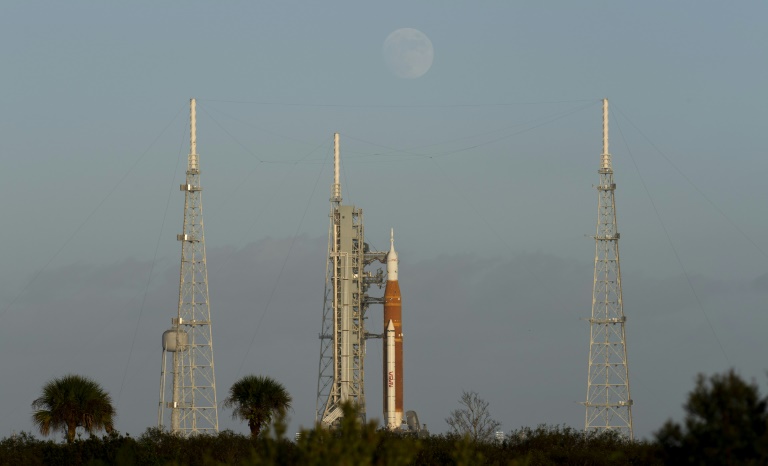
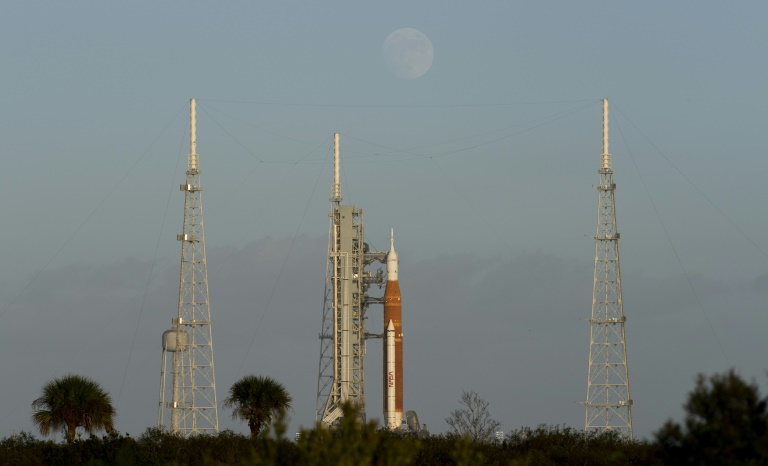
After initial visual inspections, NASA said on Thursday that its new mega moon rocket apparently suffered no major damage after Hurricane Nicole hit Florida.

But employees must conduct further checks on site as soon as possible to confirm the initial assessment, said Jim Free, associate administrator at the US space agency.

Free said that NASA teams employing cameras at the launch pad at Kennedy Space Center found “very minor damage such as loose caulk and tears in weather coverings.”

Nicole made landfall Wednesday night on Florida’s Atlantic Coast as a Category 1 hurricane.

Free said wind sensors detected gusts up to 82 miles (132 kilometers) per hour along the rocket’s body, which is “within the rocket’s capability” to withstand.

The uncrewed Artemis 1 mission, slated now to blast off on November 16, will mark the very first flight of a highly-anticipated US program of returning to the moon. NASA hopes to use an Artemis rocket to send astronauts to the lunar surface as soon as 2025, assuming the program goes to plan.

Such a feat would mark the first time humans walk on the Moon since Apollo 17 in 1972.

Hurricane causes only minor damage to Artemis rocket

After initial visual inspections, NASA said on Thursday that its new mega moon rocket apparently suffered no major damage after Hurricane Nicole hit Florida.

But employees must conduct further checks on site as soon as possible to confirm the initial assessment, said Jim Free, associate administrator at the US space agency.

Free said that NASA teams employing cameras at the launch pad at Kennedy Space Center found “very minor damage such as loose caulk and tears in weather coverings.”

Nicole made landfall Wednesday night on Florida’s Atlantic Coast as a Category 1 hurricane.

Free said wind sensors detected gusts up to 82 miles (132 kilometers) per hour along the rocket’s body, which is “within the rocket’s capability” to withstand.

The uncrewed Artemis 1 mission, slated now to blast off on November 16, will mark the very first flight of a highly-anticipated US program of returning to the moon. NASA hopes to use an Artemis rocket to send astronauts to the lunar surface as soon as 2025, assuming the program goes to plan.

Such a feat would mark the first time humans walk on the Moon since Apollo 17 in 1972.

At US universities, power shifts from teachers to students

The recent dismissal of an American professor, whose students said he graded too harshly, has ignited debate in the United States about universities that bend too much to the wishes of their students.

Maitland Jones, who taught organic chemistry at New York University (NYU), was dismissed in August without a prior interview or clear explanation, leaving him “baffled,” he told AFP.

Eighty-two of his students signed a petition to complain about his grading, which they considered too harsh.

“The students who wrote the petition were… not able to accept the fact that they were not doing well… They looked around for someone to blame,” Jones told AFP.

Jones estimated that only a quarter of his 350 students failed to achieve a passing grade.

Jones’ dismissal at age 84 might have gone unnoticed without an article in the New York Times in early October, which sparked a heated debate. Prior to serving as an adjunct professor at NYU, a private university, Jones held prestigious teaching posts at Princeton and Yale. 

Many other professors have offered support to Jones, decrying what they see as the disproportionate weight of the opinion of students, some with sensitivities heightened by social tensions and Covid-related lockdowns.

– ‘Power has shifted’ –

Marty Ross, a professor emeritus at Northeastern University in Boston, believes that some private universities patronize students in a country where students are routinely asked for feedback about professors and courses.

These “clients,” he said, tend to feel hostility toward hard subjects or ones outside their major, such as organic chemistry, and “develop a ‘why do we need this course?’ attitude.”

“If (they are) struggling, they give the course poor ratings and may go so far as to formally lodge complaints,” he told AFP.

In contrast, the retired environmental scientist said he knows of incompetent professors who manage to fill their classes just by having a reputation for being “easy graders.” 

In the end, Ross said, “the power has shifted from faculty to students, which is not the best way to run a college. It is as though patients suddenly are telling surgeons how to operate.”

The deferential relationship between students and professors seen elsewhere doesn’t really exist in US faculties, said Karin Fischer, a journalist and research associate at UC Berkeley’s Center for Studies in Higher Education.

“In the United States, there’s this notion that you’re supposed to challenge authority in the classroom. You’re supposed to ask questions to your professors. You’re not supposed to assume that everything is through the gospel of them,” she said. “Debating and having discussions and questioning is part of the critical thinking mindset of the American university.” 

Souradeep Banerjee, a young instructor at Temple University who spent most of his studies in India, said he first became aware of the power of US students when he was assigned the task of grading papers.

The professor of a course with 300 students in it sat Banerjee and three other teaching assistants down and told them they had to go easier in grading “because Temple’s finances and how the university runs basically depends on the enrollment of the students, right?”

– Skyhigh tuition –

This business relationship is paramount to some students and their parents, who demand a quality of education commensurate with the sacrifices they make to attend college.

In the United States, it is common for a college student to pay up to $60,000 a year in tuition, not including housing, transportation, or food expenses. Many students take out large loans to finance their college education.

“The fact that they’ve had to borrow heavily does put a lot of pressure on them to get good grades,” Fischer said. Students want to do well “so they’re not having to spend additional semesters in college.”

Before enrolling in classes, Temple University freshman Daniela James said she considers how professors grade and checks out comments at RateMyProfessors.com.

“It puts a lot of pressure on me because I can’t afford to waste my time. I’m paying so much,” said James, who juggles two odd jobs outside of class, one on campus and one at a major US fashion chain.

Climate change escalates risk of conflict, demands on US forces

The fallout from climate change threatens to fuel conflicts around the world, adding to the suffering caused by the direct effects of a rapidly warming planet.

Competition will grow as droughts make food and water increasingly scarce, people will flee hard-hit areas, and melting Arctic ice is opening up new areas for countries to vie for resources and influence — all factors that expand the potential for conflict.

As climate change presents new security threats, it also poses significant challenges for the US military as it operates around the world deterring adversaries and addressing crises.

Storms and flooding have already caused billions of dollars in damage to US bases and the threat will only worsen. At the same time, more frequent disasters are increasing demands on troops and more extreme environmental conditions may require changes to training and equipment.

“Rising temperatures, changing precipitation patterns and more frequent, extreme and unpredictable weather conditions caused by climate change are worsening existing security risks and creating new challenges,” US Defense Secretary Lloyd Austin wrote in the forward to a 2022 progress report on efforts to adapt to climate change.

“Climate change is increasing the demand and scope for military operations at home and around the world. At the same time, it is undermining military readiness and imposing increasingly unsustainable costs on the Department of Defense,” Austin said.

Morgan Higman, a fellow in the CSIS Energy Security and Climate Change Program, said there are already tensions over how to address climate change, while its physical effects will “create the potential for conflict within and across country borders.”

– Damaged bases –

“Many countries are facing hardship associated with drought and water scarcity, sea-level rise, and/or extreme heat — impacts which will reduce economic productivity, exacerbate migration and require increasing levels of humanitarian assistance,” she said.

Gregory Pollock, principal director of the Pentagon’s Office of Arctic and Global Resilience Policy, which is responsible for addressing the national security implications of climate change, said the United States is “closely monitoring” potential increased competition over resources.

A climate-driven rise in migration “bears the potential to destabilize various parts of the world,” he said, while the opening of the Arctic — and increased competition in the region — is another possible source of instability.

As various countries pursue objectives in the region, “our concern is that that could lead to a change in the security environment in that part of the world. The Arctic has historically been a peaceful region; we wish to keep it that way,” Pollock said.

Aside from the increased potential for conflict, climate change — the topic of high-level talks this week at the COP27 summit in Egypt — is presenting other challenges for the US military.

Pollock said three US bases suffered some $9 billion in hurricane and flood damage from 2018 to 2019, and there are key sites around the world that “are likely to be increasingly compromised by forces associated with climate change, whether it’s coastal erosion, or flooding, or increased hurricanes or typhoons.”

– ‘Erodes readiness’ –

Climate change also means troops may be fighting in tougher conditions — a situation the Defense Department acknowledges could require shifts in training and equipment.

The US military is “preparing combat forces capable of operating under the most extreme and adverse weather and terrain conditions,” its climate adaptation progress report said.

It is currently “assessing and reviewing testing and training programs, equipment, exercises and acquisition for integration of climate change considerations.”

US forces are already responding to a rising number of disasters, both abroad and at home.

“We’re… seeing increased frequency of disasters, and therefore increased demand on US military forces to contribute to response operations,” especially in Asia in recent years, Pollock said.

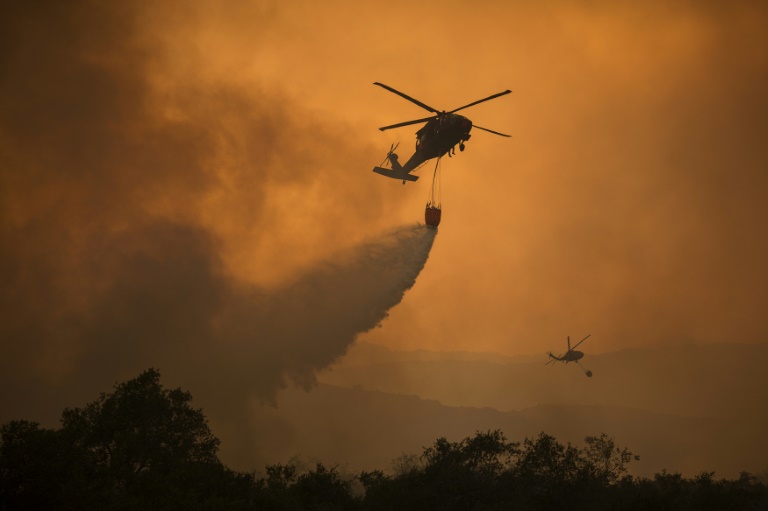
Inside the United States, National Guard forces are now being tasked with combating wildfires throughout the year as opposed to throughout a season, which is “taxing on our force, and it erodes readiness,” he said.

There is more than $3 billion in climate-related funding in the proposed 2023 defense budget, and the US military highlighted the threat posed by climate change in its 2022 National Defense Strategy.

But a change in who holds the White House could lead to decreased emphasis on the challenges posed by climate change — something Higman said the Pentagon needs to avoid.

“The military can’t not think about climate change,” she said. “The hazards are too great and too numerous.”

'Watch me' run: Biden confidence grows in his 2024 odds

It’s far from official but if recent statements are any indication, President Joe Biden is girding for a 2024 showdown with former opponent Donald Trump — a duel for which most Americans have little appetite.

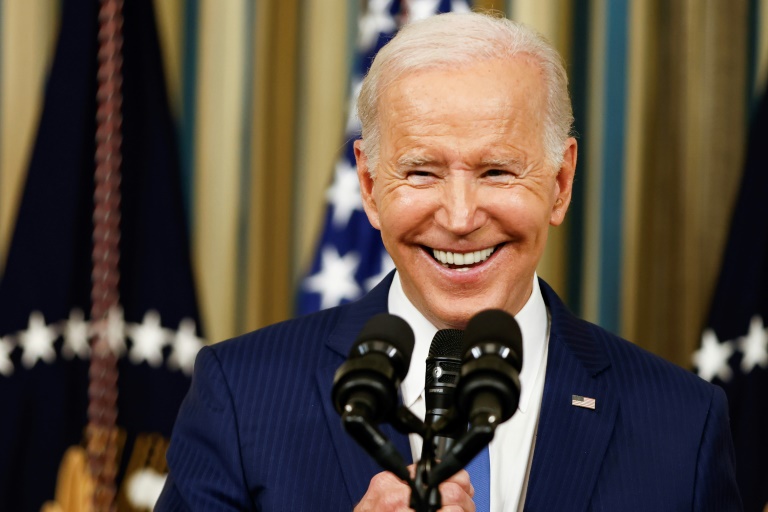
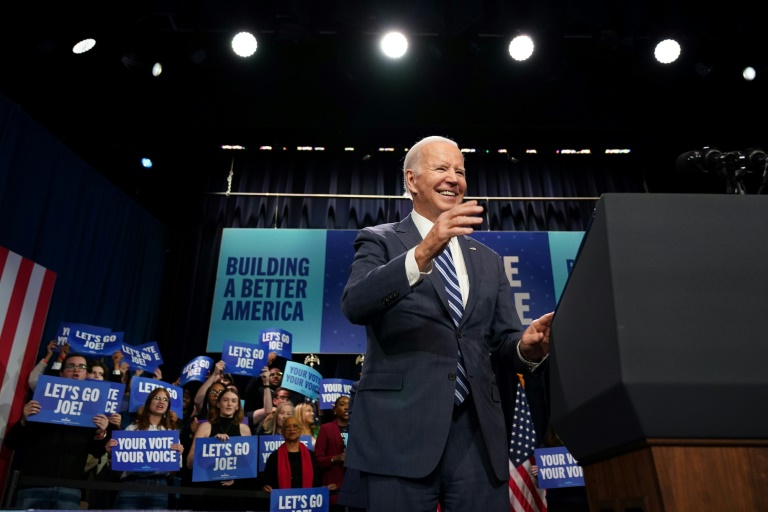
Speaking Wednesday Biden even went so far as to say it was his “intention to run again.”

The 79-year-old Democrat’s new tone — confident and upbeat — evinces the opportunity he now senses on the horizon.

While the balance of Congress still remains unknown, the Republicans’ much desired “red wave” failed to materialize in Tuesday’s midterm elections, and they did not sweep as many candidates into office as hoped.

Despite Biden’s new optimism, a majority of Americans — 56 percent according to a YouGov/The Economist poll from early November and even more according to some exit polls — do not want him to run again.

When asked about this by one journalist, a self-assured Biden responded: “Watch me.”

While he has said he will hold off on a confirmation until “early next year,” Biden has already laid a strong foundation to appeal to the electorate via reforms he hopes will propel him beyond his current low approval rating of 41 percent, according to polling aggregator FiveThirtyEight.

Asked what he would change to sway public opinion, Biden responded: “Nothing, because (Americans are) just finding out what we’re doing. The more they know about what we’re doing, the more support there is.”

New highways, faster internet, cheaper insulin — these are the perks which Biden hopes will win over voters.

And he believes that time is on his side too. There is no rush to declare, he feels, even as Trump, 74, repeatedly promotes a “big announcement” next Tuesday.

A majority of Americans also do not want the real estate billionaire to run again — 53 percent according to the YouGov/The Economist poll.

Biden has often said and certainly continues to believe that he is the person best positioned to beat Trump again.

And according to exit polls he is right.

“Biden’s approval rating, while low, was higher than Trump’s by just about the same margin” as between their 2020 presidential scores, said political science professor Wendy Schiller of Brown University.

Biden has so far not weighed in on other possible opponents, such as rising Republican star Ron DeSantis, the 44-year-old Republican governor of Florida.

Asked whether he would prefer to face DeSantis or Trump, Biden said only: “It’d be fun watching them take on each other.”

– ‘Has to commit’ –

Optimism is, after all, the hallmark of Biden’s long career, which has involved two failed bids for the White House.

Despite these political setbacks, Biden never quit believing in his odds, which also seems to be his modus operandi in the face of Father Time, with Biden to turn 80 later this month.

His doctor a year ago said he was healthy — particularly given that Biden’s pace could easily bring a younger man to his knees.

But with thinner hair, a stiffer gait and more numerous verbal hesitations, the president is beginning to look the part of an octogenarian.

Even so, “being the leader of the party, it would be political malpractice for him to announce now that he was not seeking reelection because it would destroy any remaining leverage he has over Congress and in the public arena,” Schiller said.

“If for no other reason than to uphold and protect what he has already accomplished, he has to commit to seeking reelection,” Schiller added.

And at least for the moment, momentum is also on his side.

Close Bitnami banner
Bitnami