AFP

Why does US ballot counting take so long?

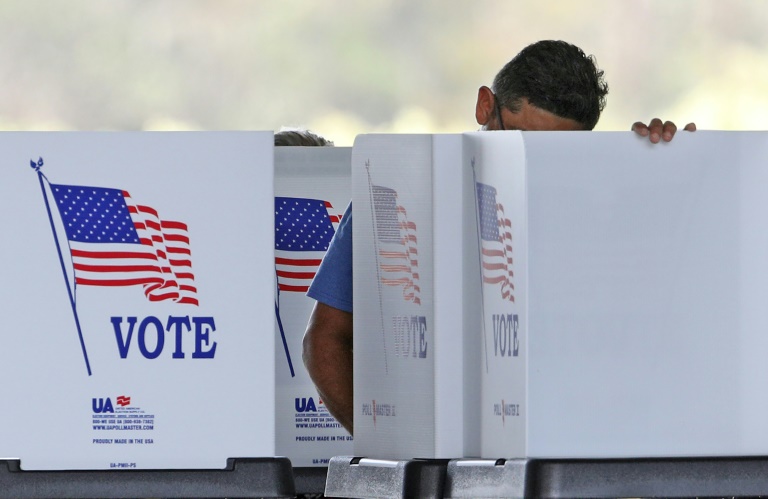
The balance of power in the US Congress following Tuesday’s midterm elections is still up in the air, with several key races yet to be called some 48 hours after many polls closed.

A cliffhanger-style multi-day wait for results is far from unusual in the United States, where it is the media that generally first calls elections, based on votes tabulated by county clerks and other officials as well as statistical analysis.

While the long delays can exasperate American voters, and raise questions from curious international observers, there are several reasons why the process can stretch out.

– Patchwork of rules –

For starters, US elections are largely decentralized, and each of the 50 states has its own rules.

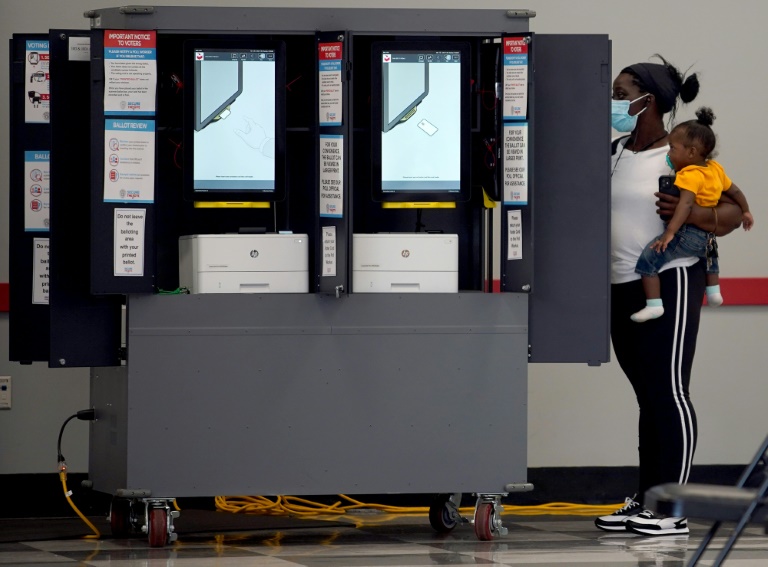
Some Americans vote on machines, others with paper ballots. Some vote in person, others by mail.

Some vote on election day, others in advance. Many citizens take advantage of ballot drop boxes.

As election officials in multiple states urged patience with the vote counting, Republican US Senator Marco Rubio of Florida aired his complaints.

“If #Florida can count 7.5 million ballots in 5 hours how can it take days for some states to count less than 2 million?” Rubio tweeted Wednesday.

Ballots, on which Americans generally vote for a variety of candidates and initiatives, can take a while to tally.

With voting by mail widely popularized during the Covid-19 pandemic, things are taking even longer — the ballots can arrive at counting stations several days after the election. Ohio and Alaska count those that arrive up to 10 days later.

Compounding matters, in many states election officials are not even allowed to begin counting mail-in votes in advance.

The extended time needed to carry out the process fuels conspiracy theories, especially after the 2020 election, which president Donald Trump falsely claimed was rigged against him.

That race between Trump and eventual winner Joe Biden was not known for four days.

– Georgia nail-biter –

The southeastern state of Georgia played a special role in 2020, as the balance of the US Senate hung on a second-round election in the state.

This year is proving to be a case of deja vu.

With no one candidate surpassing the 50 percent threshold on Tuesday to prevent a second round, the two leading candidates, Democratic incumbent Raphael Warnock and Republican challenger Herschel Walker are headed to a December 6 runoff.

Organizing elections in a country of some 333 million citizens is in itself a logistical challenge.

– Unforeseen hiccups –

The process rarely goes off without a few small hiccups. This year for example, the electoral machines in one Arizona county encountered operational problems, disrupting the vote.

Some Republicans — including Trump himself — pointed to it as evidence of fraud, a claim immediately dismissed by authorities.

Even without technical incident, races can simply be extremely close, as several in Tuesday’s election are turning out to be.

Twenty states have laws mandating a recount if the margin between candidates is too thin.

In one stand-out case in 2000, the country held its breath for 36 days with the entire election hinging on delayed results from one state, Florida, as Texas governor George W. Bush and vice president Al Gore vied for the White House.

At the heart of the civic imbroglio was a razor-thin vote that prompted a highly contested hand recount. In the end, the battle wound its way to the Supreme Court, which issued a decision favoring Bush that December.

In 2008, a race for a US Senate seat in Minnesota resulted in an epic legal battle. The result was finally known some eight months later.

Chase Oliver, the obscure candidate who could impact US national politics

Few voted for him, but he has plunged American politics into uncertainty: Libertarian Party candidate Chase Oliver won just enough votes in his Senate election race to force a runoff that could shape the rest of Joe Biden’s presidency.

Oliver grabbed some two percent or 81,000 votes in Georgia’s Senate poll at Tuesday’s midterm elections — enough to prevent his more powerful rivals, Democrat Raphael Warnock and Republican Herschel Walker, from taking the seat outright.

Now that sliver of support for Oliver, a 37-year-old Star Trek fan who ran his campaign from his basement, could determine the winner of Warnock and Walker’s December 6 runoff — and therefore, potentially, control of the upper house of the US legislature.

Despite the frustration levelled at Oliver for the costly runoff and keeping US politics on a knife edge for weeks, he’s not upset. 

“You can’t blame a candidate for just being an option on the ballot,” he told Vice News this week. 

He told the New York Times: “I don’t think you can spoil something that’s already rotten … And I think that’s what the two-party system in Washington, DC, currently is — it’s rotten.”

– ‘Armed and gay’ –

Oliver, who describes himself on Twitter as “armed and gay”, is not your typical political candidate.

He is categorically pro-gun, fiscally conservative, but also pro-reproductive rights, pro-legalization of cannabis and against the death penalty. 

In Fayetteville, a small town of 19,000 inhabitants in the suburbs of Atlanta, most of the people who spoke to AFP knew little about him — save that he had caused the runoff. 

“If it hadn’t been for him, one of the two other candidates would have won,” said Joe, a retiree who would not give his last name. “It’s a waste of money.” 

Others have reproached him similarily on Twitter. “Why do you hate democracy?” he replied to one.

Oliver has insisted his candidacy is about giving voters more choice than simply the bipartisan divide of Republicans or Democrats.

As for the money — he told Vice he spent “like $10,000” on his campaign while working two jobs.

“So right now my ‘cost per vote’ is about 14 cents. That’s compared to a billion dollars spent by my opponents, much if it on negative attack ads,” he tweeted on Wednesday.

Democrats and Republicans have spent a combined total of more than $241 million on the race so far, according to the Wall Street Journal — around $30 for each of Georgia’s 7.8 million voters.

– Kingmaker? No, thanks – 

The midterm elections count is ongoing, but Republicans appear on track to win the lower House of Representatives — and if they take the Senate too, it will leave Biden a lame duck.

One Senate seat could make all the difference. Barring a Democratic victory in both Nevada and Arizona — which is still possible — it is in Georgia that Senate control will be decided.

Warnock and Walker are separated by just 35,000 votes, but he says he has no interest in endorsing either of them.

“They ignored the people who voted for me and they ignored the issues I support,” he told Vice. 

His message seems to have resonated with some voters in Fayetteville. 

“I’m fine with him running in the election. The more options the better,” said Susan Cromie, a 67-year-old retiree who nevertheless is not thrilled with the idea of a runoff. 

“I don’t want to vote again. I’m tired of the ads,” she said while mimicking putting a gun to her head. “But that said, it’s a necessary evil.” 

'Crash' director Paul Haggis loses New York rape case

A New York jury on Thursday found Oscar-winning Canadian filmmaker Paul Haggis liable for raping a publicist in 2013, ordering him to pay her at least $7.5 million in damages.

The jurors ruled against Haggis, who wrote and directed “Crash,” in the rape lawsuit following a two-week civil trial in Manhattan.

The 69-year-old was accused in 2017 by film publicist Haleigh Breest of abusing and raping her in 2013, when she was 26 years old.

With the #MeToo movement gaining ground, three more women subsequently accused Haggis — who also penned the screenplay for “Million Dollar Baby” — of sexual assault.

More recently, Haggis was arrested in June in southern Italy on suspicion of aggravated sexual assault in a different case. He denied any wrongdoing and was soon released.

In her suit, Breest said that on the evening of January 31, 2013, after a film screening in Manhattan, the director insisted she have a drink at his home, even though she preferred to go to a bar. 

Once in his apartment, Haggis made multiple advances before making her perform oral sex and then raping her, she said.

“I am grateful that I had the opportunity to seek justice and accountability in court and that the jury chose to follow the facts and believed me,” Breest said in a statement.

During the trial, the filmmaker’s lawyers suggested that her suit was guided by the Church of Scientology, which Haggis left and has since criticized, according to US media.

The plaintiff’s lawyers denied the accusation.

Haggis does not face criminal charges in the case.

Known for being one of the creators of the “Walker Texas Ranger” television series, Haggis received an Oscar for best picture and best original screenplay in 2006 for “Crash.”

He was additionally the screenwriter for “Flags of Our Fathers” and “Letters from Iwo Jima,” as well as James Bond films “Casino Royale” and “Quantum of Solace.”

Alleged LockBit ransomware operator arrested in Canada

A dual Russian-Canadian national allegedly involved in the LockBit global ransomware campaign has been arrested in Canada, US and European authorities announced on Thursday.

Mikhail Vasiliev, 33, of Bradford, Ontario, is now awaiting extradition to the United States, the US Justice Department said in a statement.

“This arrest is the result of over two-and-a-half-years of investigation into the LockBit ransomware group, which has harmed victims in the United States and around the world,” US Deputy Attorney General Lisa Monaco said.

Europol said the arrest resulted from a complex investigation involving law enforcement in France, Canada and the United States.

It said LockBit has been used to carry out attacks against critical infrastructure and large industrial groups around the world, with ransom demands ranging from €5 million to €70 million ($5.1 mln to $71.4 mln)

According to a criminal complaint filed against Vasiliev in New Jersey, LockBit, which first appeared in January 2020, has been deployed against as many as 1,000 victims in the United States and other countries.

LockBit members have extracted tens of millions of dollars in ransom payments from their victims, it said.

Vasiliev faces up to five years in prison if convicted of conspiring to damage protected computers and transmit ransom demands.

Europol said two other alleged LockBit members were arrested in Ukraine in September.

Ukraine says dozens of villages recaptured amid Russian retreat

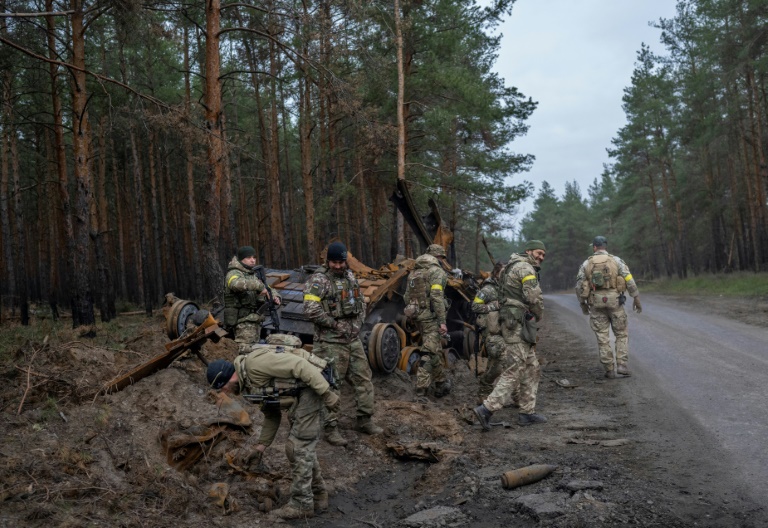
Kyiv forces have recaptured over 40 towns and villages in southern Ukraine, President Zelensky said Thursday, as Moscow signaled its army had begun retreating from the strategic city of Kherson.

The United States meanwhile announced a new $400 million security assistance package for Kyiv, which will include defense systems and surface-to-air missiles as Ukraine is reeling from massive recent Russian airstrikes targeting key infrastructure.

“Today we have good news from the south,” Zelensky said in his daily address to the nation. “The number of Ukrainian flags returning to their rightful place as part of the ongoing defense operation is already dozens.”

Zelensky said 41 settlements have been “liberated” from Russian occupation.

Moscow said it had made the “difficult decision” to pull forces from Kherson, and Russia’s defence ministry on Thursday said its units were manoeuvring in the area.

Ukrainian troops have for weeks been capturing villages en route to Kherson city in the eponymous region, where Kremlin-installed leaders have been pulling out civilians in what Kyiv has called illegal deportations.

The retreat would be a major Russian setback in a region Vladimir Putin claimed to have annexed, but officials in Kyiv have remained wary, saying Russia was unlikely to leave Kherson without a fight.

– Battlefield… and diplomacy? –

In his speech, Zelensky, who has been facing pressure from Western capitals to resume peace talks with Russia, hinted that negotiations were not ruled out if Ukraine regains all its territory.

“We have to go all the way on the battlefield and through diplomacy so that all over our land, along our entire internationally recognised border, our flags — Ukrainian flags — are installed,” Zelensky said.

He also thanked US President Joe Biden and the American people for the air defense systems.

“Together we’re building an air shield to protect civilians,” Zelensky said on Twitter. “We’re bringing victory over the aggressor closer!”

US media have reported in recent days that the Biden administration has been urging Zelensky to publicly declare a willingness to talk to Russia.

And on Wednesday top US general Mark Milley said that military victory may not be possible in the war.

“There’s… an opportunity here, a window of opportunity for negotiation,” he said.

– ‘Can you trust a thing they say?’ –

On the battlefield, in the southern city of Mykolaiv, which Russian forces have pounded with artillery and missiles for months, there was little belief the Russians would retreat.

“How can you trust a thing they say?” asked Volodymyr Vypritskiy, a 55-year-old driver. “How can you trust people that always told us they were our brothers? People who start killing their brothers — can you really believe them?”

Zelensky has suggested Russia could be strategically feigning rather than experiencing a major setback.

Military officials in Kyiv reiterated that caution on Thursday.

“At this point, we can’t confirm or deny information about the retreat of Russian troops from Kherson,” said Oleksiy Gromov, from the Ukrainian armed forces’ general staff.

Russia losing the Kherson region would return to Ukraine important access to the Sea of Azov and leave Putin with little to show from a campaign that has turned him into a pariah in Western eyes.

The retreat will put pressure on Russian control of the rest of the Kherson region, which forms a land bridge from Russia to Crimea, the peninsula that Moscow annexed in 2014.

– Massive casualties –

Kherson was one of four Ukrainian regions that Russia declared it had annexed in September, shortly after being forced to withdraw from swathes of territory in the northeastern Kharkiv region.

The United States this week estimated more than 100,000 Russian military personnel have been killed or wounded in Ukraine.

Kyiv’s forces have likely suffered similar casualties, according to General Milley.

Russia has been pushing to capture the eastern Donbas city of Bakhmut, with the battered town famous for wine and salt mines coming under intensive fire for weeks.

“It has become harder these past three days. The Russians are pushing more and more. But our boys are holding their positions,” 26-year-old soldier Vitaliy told AFP in Bakhmut.

Around half of the 70,000 people living in the city have stayed despite the fighting, mostly in the east of the city, for the past four months.

US inflation eases in October but still near decades-high

US consumer prices cooled in October but remained at decades-high levels, according to government data released Thursday, keeping the pressure on President Joe Biden as his Democratic party struggles to retain control of Congress.

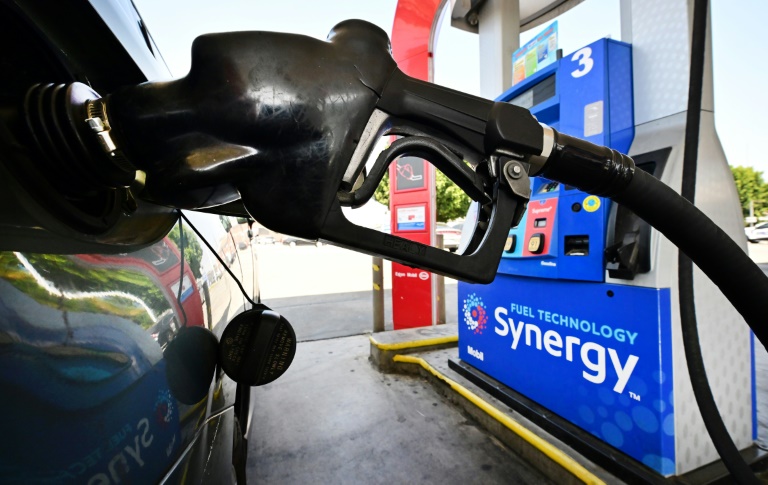
The closely-watched report showed more evidence of rising costs, including a rebound in gasoline prices, in a year when surging inflation topped voter concerns, and as Americans headed to the polls in this week’s midterm elections.

But there were positive signs in the consumer price index (CPI), which showed annual inflation slowed to 7.7 percent in October, even while underscoring a heightened cost of living, the Labor Department reported.

That was the lowest annual increase since January, fueling hopes that soaring costs will start to pull back and causing Wall Street stocks to rally.

Biden welcomed the data, saying it showed “a much-needed break in inflation at the grocery store as we head into the holidays.” 

But he cautioned in a statement that it will “take time to get inflation back to normal levels,” with potential setbacks along the way, and vowed to keep helping households with living costs.

While the annual inflation rate was down from a harsh 9.1 percent in June — the highest in 40 years — latest numbers are unlikely to bring quick reprieve from the Federal Reserve’s aggressive moves to cool the economy.

Russia’s war in Ukraine has sent food and fuel prices soaring, and the energy index surged 17.6 percent over the past 12 months, according to the data.

Excluding volatile food and energy prices, “core” CPI rose 6.3 percent in October from a year ago, slightly below the rate in September.

– ‘Uncomfortably high’ –

As residents reel from soaring costs, the US central bank has moved forcefully to lower demand and bring prices down.

The Fed has raised the benchmark lending rate six times this year, including four consecutive giant rate hikes, despite fears it could trigger a recession.

Fed Chair Jerome Powell last week said it was premature to consider pausing the hikes, but there is a growing chorus of voices, including some Fed officials, advocating for smaller steps in coming months.

Dallas Fed President Lorie Logan said Thursday that she believes “it may soon be appropriate to slow the pace of rate increases” so policymakers can assess how conditions are changing.

But she warned that “a slower pace should not be taken to represent easier policy.”

Another official, Cleveland Fed President Loretta Mester, added in separate remarks that inflation remains persistent and monetary policy needs to become restrictive and stay that way for some time.

While headline data “surprised to the downside,” consumer prices “remain uncomfortably high,” said economist Rubeela Farooqi of High Frequency Economics.

Still, the numbers will be welcome news to Fed policymakers, with prices “finally showing some response” to the steep rate hikes, supporting a step-down in the pace moving forward, she said in an analysis.

Stephen Innes, managing partner at SPI Asset Management, said the inflation data “should mean the beginning of the end for inflation fears.”

Monthly CPI rose 0.4 percent in October, the same as in September, while the core rate slowed to 0.3 percent, half the pace of the prior month, data showed.

Housing costs contributed to over half of the overall monthly increase in October, while gasoline also resumed its upward move, the Labor Department said.

The energy index rose 1.8 percent in October, following three consecutive declines, including a 4.0 percent jump in gasoline.

But food prices, especially food at home, eased last month.

Ryan Sweet of Oxford Economics cautioned that the deceleration in the monthly CPI was likely affected by a methodology change in estimating health insurance prices, which created a “bigger drag” than expected.

But analysts are hopeful of some softening ahead as housing and other costs ease. 

Ian Shepherdson of Pantheon Macroeconomics said “the fever appears to be breaking in rents” and this should gradually transmit to headline numbers.

US equities rallied on the news, ending the day with steep gains.

“One good core CPI print proves nothing, but we see good reasons to think this one is the real deal,” Shepherdson said.

US inflation eases in October but still near decades-high

US consumer prices cooled in October but remained at decades-high levels, according to government data released Thursday, keeping the pressure on President Joe Biden as his Democratic party struggles to retain control of Congress.

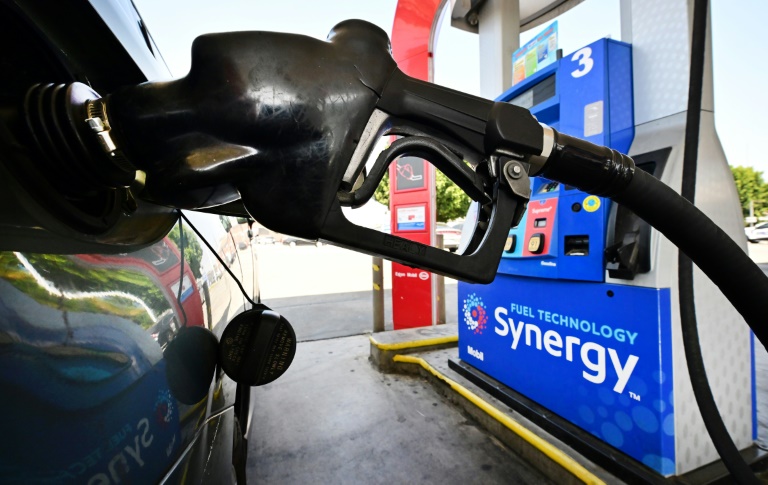
The closely-watched report showed more evidence of rising costs, including a rebound in gasoline prices, in a year when surging inflation topped voter concerns, and as Americans headed to the polls in this week’s midterm elections.

But there were positive signs in the consumer price index (CPI), which showed annual inflation slowed to 7.7 percent in October, even while underscoring a heightened cost of living, the Labor Department reported.

That was the lowest annual increase since January, fueling hopes that soaring costs will start to pull back and causing Wall Street stocks to rally.

Biden welcomed the data, saying it showed “a much-needed break in inflation at the grocery store as we head into the holidays.” 

But he cautioned in a statement that it will “take time to get inflation back to normal levels,” with potential setbacks along the way, and vowed to keep helping households with living costs.

While the annual inflation rate was down from a harsh 9.1 percent in June — the highest in 40 years — latest numbers are unlikely to bring quick reprieve from the Federal Reserve’s aggressive moves to cool the economy.

Russia’s war in Ukraine has sent food and fuel prices soaring, and the energy index surged 17.6 percent over the past 12 months, according to the data.

Excluding volatile food and energy prices, “core” CPI rose 6.3 percent in October from a year ago, slightly below the rate in September.

– ‘Uncomfortably high’ –

As residents reel from soaring costs, the US central bank has moved forcefully to lower demand and bring prices down.

The Fed has raised the benchmark lending rate six times this year, including four consecutive giant rate hikes, despite fears it could trigger a recession.

Fed Chair Jerome Powell last week said it was premature to consider pausing the hikes, but there is a growing chorus of voices, including some Fed officials, advocating for smaller steps in coming months.

Dallas Fed President Lorie Logan said Thursday that she believes “it may soon be appropriate to slow the pace of rate increases” so policymakers can assess how conditions are changing.

But she warned that “a slower pace should not be taken to represent easier policy.”

Another official, Cleveland Fed President Loretta Mester, added in separate remarks that inflation remains persistent and monetary policy needs to become restrictive and stay that way for some time.

While headline data “surprised to the downside,” consumer prices “remain uncomfortably high,” said economist Rubeela Farooqi of High Frequency Economics.

Still, the numbers will be welcome news to Fed policymakers, with prices “finally showing some response” to the steep rate hikes, supporting a step-down in the pace moving forward, she said in an analysis.

Stephen Innes, managing partner at SPI Asset Management, said the inflation data “should mean the beginning of the end for inflation fears.”

Monthly CPI rose 0.4 percent in October, the same as in September, while the core rate slowed to 0.3 percent, half the pace of the prior month, data showed.

Housing costs contributed to over half of the overall monthly increase in October, while gasoline also resumed its upward move, the Labor Department said.

The energy index rose 1.8 percent in October, following three consecutive declines, including a 4.0 percent jump in gasoline.

But food prices, especially food at home, eased last month.

Ryan Sweet of Oxford Economics cautioned that the deceleration in the monthly CPI was likely affected by a methodology change in estimating health insurance prices, which created a “bigger drag” than expected.

But analysts are hopeful of some softening ahead as housing and other costs ease. 

Ian Shepherdson of Pantheon Macroeconomics said “the fever appears to be breaking in rents” and this should gradually transmit to headline numbers.

US equities rallied on the news, ending the day with steep gains.

“One good core CPI print proves nothing, but we see good reasons to think this one is the real deal,” Shepherdson said.

Stocks rally, dollar slumps after US inflation slows

Stocks rallied while the dollar slumped against rival currencies on Thursday after news of lower US inflation dimmed expectations of more aggressive Federal Reserve rate hikes.

The consumer price index (CPI), a key measure of inflation, rose at an annual pace of 7.7 percent in October.

That was below analyst expectations and a dip from the 8.2 percent rate recorded in September.

The dollar plunged more than four percent against the yen, while the pound jumped 3.2 percent against the greenback and the euro rose two percent.

Meanwhile, Wall Street stocks surged, with the Dow ending 3.7 percent higher with a nearly 1,200-point jump.

The broader S&P 500 jumped 5.5 percent and the tech-heavy Nasdaq Composite index soared 7.4 percent.

“I don’t recall having ever seeing the Nasdaq being up seven percent ever (and) I’ve been watching the markets for over 50 years,” Peter Cardillo of Spartan Capital Securities told AFP.

“Inflation has finally started to drop like a rock in the US and this is the best news that anyone can expect,” added AvaTrade analyst Naeem Aslam.

He expects that the Fed will still continue with rate hikes, though at a slower pace.

The Fed’s benchmark lending rate currently stands at between 3.75 to 4.0 percent, the highest since January 2008.

Investors have been keenly watching for signs that Fed policymakers will pivot away from their aggressive 0.75 percentage point hikes or pause them altogether.

Matt Weller at StoneX said that after the softer inflation reading, traders are now pricing in an 80 percent chance that the Fed will shift down to a 0.50 percentage point interest rate hike and now see rates peaking below 5.0 percent.

“There’s optimism that the worst of the selling may be behind us,” on equity markets, which are down heavily this year.

– Covid and crypto –

Markets are grappling also with the impact of strict zero-Covid measures in China, with supply chains and activity slowed by harsh lockdowns and testing policies.

“China’s domestic demand is weak and their key trading partners are entering recession territory,” said Edward Moya at OANDA trading group.

The crypto world has meanwhile been rocked by a surprise decision from Binance — the world’s biggest cryptocurrency platform — to scrap a possible acquisition of rival FTX.com a day after disclosing it had signed a non-binding letter of intent to buy it.

The near-collapse of FTX has plunged bitcoin to a two-year low.

“FTX’s slump from over a $32 billion valuation to zero in less than a few days raises numerous issues,” said Stephen Innes at SPI Asset Management.

“Prominent investors are wearing eggs on their faces after diving in head first.”

He added that gold and silver would be the biggest beneficiaries of the crypto fallout with investors looking to the trusted precious metals for stability.

– Key figures around 2130 GMT –

New York – Dow: UP 3.7 percent at 33,715.37 points (close)

New York – S&P 500: UP 5.5 percent at 3,956.37 (close)

New York – Nasdaq: UP 7.4 percent at 11,114.15 (close)

EURO STOXX 50: UP 3.2 percent at 3,846.56 (close)

London – FTSE 100: UP 1.1 percent at 7,375.34 (close)

Frankfurt – DAX: UP 3.5 percent at 14,146.09 (close)

Paris – CAC 40: UP 2.0 percent at 6,556.83 (close)

Tokyo – Nikkei 225: DOWN 1.0 percent at 27,446.10 (close) 

Hong Kong – Hang Seng Index: DOWN 1.7 percent at 16,081.04 (close)

Shanghai – Composite: DOWN 0.4 percent at 3,036.13 (close)

Euro/dollar: UP at $1.0219 from $1.0076 Wednesday 

Pound/dollar: UP at $1.1724 from $1.1544

Dollar/yen: DOWN at 140.67 yen from 145.58 yen

Euro/pound: DOWN at 87.10 pence from 87.26 pence

West Texas Intermediate: UP 0.7 percent at $86.47 per barrel

Brent North Sea crude: UP 1.1 percent at $93.67 per barrel

burs-rl-bys/dw

Stocks rally, dollar slumps after US inflation slows

Stocks rallied while the dollar slumped against rival currencies on Thursday after news of lower US inflation dimmed expectations of more aggressive Federal Reserve rate hikes.

The consumer price index (CPI), a key measure of inflation, rose at an annual pace of 7.7 percent in October.

That was below analyst expectations and a dip from the 8.2 percent rate recorded in September.

The dollar plunged more than four percent against the yen, while the pound jumped 3.2 percent against the greenback and the euro rose two percent.

Meanwhile, Wall Street stocks surged, with the Dow ending 3.7 percent higher with a nearly 1,200-point jump.

The broader S&P 500 jumped 5.5 percent and the tech-heavy Nasdaq Composite index soared 7.4 percent.

“I don’t recall having ever seeing the Nasdaq being up seven percent ever (and) I’ve been watching the markets for over 50 years,” Peter Cardillo of Spartan Capital Securities told AFP.

“Inflation has finally started to drop like a rock in the US and this is the best news that anyone can expect,” added AvaTrade analyst Naeem Aslam.

He expects that the Fed will still continue with rate hikes, though at a slower pace.

The Fed’s benchmark lending rate currently stands at between 3.75 to 4.0 percent, the highest since January 2008.

Investors have been keenly watching for signs that Fed policymakers will pivot away from their aggressive 0.75 percentage point hikes or pause them altogether.

Matt Weller at StoneX said that after the softer inflation reading, traders are now pricing in an 80 percent chance that the Fed will shift down to a 0.50 percentage point interest rate hike and now see rates peaking below 5.0 percent.

“There’s optimism that the worst of the selling may be behind us,” on equity markets, which are down heavily this year.

– Covid and crypto –

Markets are grappling also with the impact of strict zero-Covid measures in China, with supply chains and activity slowed by harsh lockdowns and testing policies.

“China’s domestic demand is weak and their key trading partners are entering recession territory,” said Edward Moya at OANDA trading group.

The crypto world has meanwhile been rocked by a surprise decision from Binance — the world’s biggest cryptocurrency platform — to scrap a possible acquisition of rival FTX.com a day after disclosing it had signed a non-binding letter of intent to buy it.

The near-collapse of FTX has plunged bitcoin to a two-year low.

“FTX’s slump from over a $32 billion valuation to zero in less than a few days raises numerous issues,” said Stephen Innes at SPI Asset Management.

“Prominent investors are wearing eggs on their faces after diving in head first.”

He added that gold and silver would be the biggest beneficiaries of the crypto fallout with investors looking to the trusted precious metals for stability.

– Key figures around 2130 GMT –

New York – Dow: UP 3.7 percent at 33,715.37 points (close)

New York – S&P 500: UP 5.5 percent at 3,956.37 (close)

New York – Nasdaq: UP 7.4 percent at 11,114.15 (close)

EURO STOXX 50: UP 3.2 percent at 3,846.56 (close)

London – FTSE 100: UP 1.1 percent at 7,375.34 (close)

Frankfurt – DAX: UP 3.5 percent at 14,146.09 (close)

Paris – CAC 40: UP 2.0 percent at 6,556.83 (close)

Tokyo – Nikkei 225: DOWN 1.0 percent at 27,446.10 (close) 

Hong Kong – Hang Seng Index: DOWN 1.7 percent at 16,081.04 (close)

Shanghai – Composite: DOWN 0.4 percent at 3,036.13 (close)

Euro/dollar: UP at $1.0219 from $1.0076 Wednesday 

Pound/dollar: UP at $1.1724 from $1.1544

Dollar/yen: DOWN at 140.67 yen from 145.58 yen

Euro/pound: DOWN at 87.10 pence from 87.26 pence

West Texas Intermediate: UP 0.7 percent at $86.47 per barrel

Brent North Sea crude: UP 1.1 percent at $93.67 per barrel

burs-rl-bys/dw

Transit strikes snarl London, Paris as workers seek raises

Commuters in London and Paris scrambled for alternatives Thursday — or just stayed home — as public transport workers went on strike for higher pay, the latest industrial action seeking relief from soaring prices in Europe.

Spreading labour unrest is a growing problem for governments that are already spending billions trying to blunt the worst effects of rising prices, at least for the most vulnerable.

“I took my car, the train and now I have to cycle,” said 36-year-old Nicco Hogg in London.

The action in Britain, by members of the Rail, Maritime and Transport (RMT) and Unite unions, followed several walkouts this year amid a long-running dispute over job cuts, pensions and working conditions.

Some commuters were sympathetic to their cause.

“They are defending their working conditions and their pay so it’s fair enough,” said 28-year-old Pema Monaghan, a writer also working in publishing.

Others doubted that the action would have much impact on politicians.

“They have loads of strikes,” said Daniel Osei, 26, who works in mental health for children in the London borough of Fulham.

“They’re not really affecting the government as much as they are affecting us.”

In France, the strike aims also to ratchet up pressure on President Emmanuel Macron before he brings a controversial pensions overhaul bill to parliament, which would require millions of people to work beyond the current retirement age of 62.

“It’s to show that if we want to take action, we know how to take action,” said Frederic Souillot, head of France’s FO union.

– ‘Calm and patient’ –

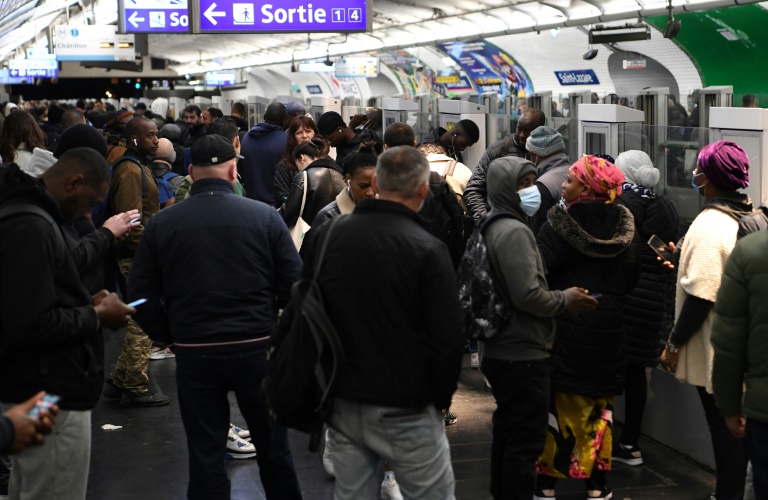
Five Paris Metro lines were completely shut down, with most others operating with only limited rush-hour service — one two automated lines without drivers were running normally.

Many commuters appeared to heed the call by transit operator RATP to postpone trips or work from home, making transport less chaotic than many had feared, while the city’s growing network of bike lanes saw a surge of cyclists.

Others decided to book a day off ahead of a long weekend thanks to Friday’s French bank holiday.

As a result, “apart from a few angry commuters, everybody is being calm and patient”, said Nolwenn, a 21-year-old transit agent deployed at Saint-Lazare station in Paris, one of Europe’s busiest commuter hubs.

But the two main suburban rail lines called RER A and B, which connect central Paris with Disneyland Paris and the Charles de Gaulle and Orly airports, saw more severe disruptions.

Trains on the metro lines still open were packed, with some running only every 15-20 minutes instead of the usual three-minute rhythm.

“It’s a mess,” said Sylvie, 46, after failing to board a metro on the number seven line because of the crowds.

Authorities in London also said the Underground system was “severely disrupted”, with limited or no services running, and advised people to avoid trying to use the network.

Reports said many buses were packed to capacity, while roads were more congested than usual.

– ‘Return to the roundabouts’ – 

French unions have staged strikes across several sectors in recent weeks seeking pay hikes or increased hiring as spiralling energy costs feed into widespread inflation.

Thursday’s strike included a protest march in the capital that shut down major traffic avenues.

But the Paris transport strike did not spill over into other sectors, with only the hard-line CGT union calling for general work stoppages.

“Let’s unite, let’s be as many as possible, even if we have to return to the roundabouts,” said Communist Party leader Fabien Roussel, a reference to the “Yellow Vests” movement starting in 2018 that had anti-government protesters gather at busy traffic circles. 

Unions representing the RATP’s nearly 70,000 employees say they are feeling the pinch of soaring prices, but are also overstretched because of insufficient hiring, resulting in increased sick leave.

That has led to more service delays or lower frequency on busy metro lines in recent months, causing headaches for the system’s roughly 12 million daily users.

In neighbouring Spain, meanwhile, an association of independent truck drivers called for an unlimited strike starting Monday to protest against delays in the implementation of a charter protecting their incomes.

The call comes eight months after an earlier strike in the sector had a major impact on the Spanish economy.

Close Bitnami banner
Bitnami