AFP

Tata Motors extends losses on chip woes, weak exports

India’s Tata Motors announced a seventh consecutive quarter of losses Wednesday as chip shortages and weak demand in export markets hurt sales.

Net losses at the Mumbai-headquartered automaker narrowed to 9.45 billion rupees ($116 million) in the July-to-September quarter, compared to a loss of 44.42 billion rupees in the same period last year.

But revenue from operations rose nearly 30 percent year-on-year to 796.11 billion rupees, as wholesale demand improved despite continued supply chain bottlenecks, such as semiconductor chip shortages.

“Demand continues to remain strong,” the company said in a stock exchange filing, but warned it remained vulnerable to “global uncertainties”.

Covid-19 lockdowns in China have also hurt sales this year.

But Tata Motors said “improving chip supply and cooling commodity prices” will aid business recovery in the quarters ahead.

Revenues at British subsidiary Jaguar Land Rover (JLR) rose 35.9 percent to £5.26 billion ($6 billion) in the quarter as production of new Range Rover models improved, but it still lost £173 million.

“Demand for our most profitable and desired vehicles remains strong,” JLR chief Thierry Bollore said in a statement.

“We expect to continue to improve our performance in the second half of the year, as new agreements with semiconductor partners take effect,” he added.

Pending orders at JLR, Britain’s biggest carmaker, stood at 205,000 units at the end of September, as chip supply constraints persisted.

Revenue from Tata Motors’ commercial vehicle business jumped 35 percent year-on-year to 164.20 billion rupees, as India bounced back from a 2021 pandemic sales dent.

But commercial vehicle exports fell 22 percent in the quarter, impacted by “financial crisis in (a) few export markets”, with commodity price inflation and foreign exchange movements also eating into profit margins.

Demand for passenger vehicles remained strong, with revenues up 71 percent on-year to 125.47 billion rupees, buoyed by Indian festival season demand during the quarter.

Shares in Tata Motors closed 0.44 percent lower in Mumbai ahead of the earnings announcement.

Stocks drop with eyes on China, US midterms

Stock markets fell Wednesday following weak Chinese data and as traders assessed results of US midterm elections.

The dollar rose strongly versus the British pound — a currency under pressure owing to the UK’s bleak economic outlook.

Oil prices retreated as official data from China showed the world’s second-largest economy languishing under its strict zero-Covid policy.

Bitcoin continued to slide on fallout from the near-collapse of cryptocurrency platform FTX, reaching the lowest level for two years at $17,172.43.

Eyes will be on Facebook owner Meta at the reopening of Wall Street after the company said it would lay off 11,000 staff, in a move which follows a recent plunge of its valuation.

– US midterms –

Republican hopes for a sweeping rebuke of President Joe Biden in congressional elections failed to materialise, with both parties picking up seats following a campaign fought against a backdrop of stubbornly high inflation and fears for US democracy.

Biden, who framed the race as a clash between defenders of democracy and the “extremist” camp of Donald Trump, spent election night in back-to-back calls with Democrats savouring their wins in Senate, House and gubernatorial races around the country.

“The bigger takeaway from the election may well be what support there is for Trump-backed candidates and what that does for his own re-election hopes in two years. But that’s unlikely to sway the markets now, not with so much else to focus on,” noted Oanda analyst Craig Erlam.

“Investors are more focused on the inflation data on Thursday and whether that will pave the way for a slower pace of (US interest rate) tightening in December and early next year.” 

– ‘No good news from China’ –

In China, speculation over how long Beijing will keep its harsh lockdown-and-testing Covid-19 policies has fuelled volatility on markets, despite the government vowing it will not change course.

The restrictions have taken a toll on the Chinese economy. Data Wednesday showed China’s producer price index (PPI) fell by 1.3 percent on-year in October, pushing it into negative territory for the first time since December 2020.

The consumer price index (CPI) — the main gauge for retail inflation — rose 2.1 percent year-on-year in October, moderating slightly from September’s two-year high of 2.8 percent.

“The economy’s slowing, confirmed by the CPI data,” Iris Pang, chief economist for Greater China at ING Wholesale Banking, told AFP. 

“I don’t see any good news from China.”

– Key figures around 1115 GMT –

London – FTSE 100: DOWN 0.2 percent at 7,293.33 points

Frankfurt – DAX: DOWN 0.5 percent at 13,620.61

Paris – CAC 40: DOWN 0.2 percent at 6,428.74

EURO STOXX 50: DOWN 0.4 percent at 3,725.09

Tokyo – Nikkei 225: DOWN 0.6 percent at 27,716.43 (close)

Hong Kong – Hang Seng Index: DOWN 1.2 percent at 16,358.52 (close)

Shanghai – Composite: DOWN 0.5 percent at 3,048.17 (close)

New York – Dow: UP 1.0 percent at 33,160.83 (close)

Pound/dollar: DOWN at $1.1456 from $1.1468 on Tuesday

Euro/dollar: UP at $1.0059 from $1.0005

Dollar/yen: DOWN at 145.61 yen from 146.26 yen

Euro/pound: UP at 87.77 pence from 87.23 pence

West Texas Intermediate: DOWN 0.6 percent at $88.41 per barrel

Brent North Sea crude: DOWN 0.5 percent at $94.92 per barrel

Stocks drop with eyes on China, US midterms

Stock markets fell Wednesday following weak Chinese data and as traders assessed results of US midterm elections.

The dollar rose strongly versus the British pound — a currency under pressure owing to the UK’s bleak economic outlook.

Oil prices retreated as official data from China showed the world’s second-largest economy languishing under its strict zero-Covid policy.

Bitcoin continued to slide on fallout from the near-collapse of cryptocurrency platform FTX, reaching the lowest level for two years at $17,172.43.

Eyes will be on Facebook owner Meta at the reopening of Wall Street after the company said it would lay off 11,000 staff, in a move which follows a recent plunge of its valuation.

– US midterms –

Republican hopes for a sweeping rebuke of President Joe Biden in congressional elections failed to materialise, with both parties picking up seats following a campaign fought against a backdrop of stubbornly high inflation and fears for US democracy.

Biden, who framed the race as a clash between defenders of democracy and the “extremist” camp of Donald Trump, spent election night in back-to-back calls with Democrats savouring their wins in Senate, House and gubernatorial races around the country.

“The bigger takeaway from the election may well be what support there is for Trump-backed candidates and what that does for his own re-election hopes in two years. But that’s unlikely to sway the markets now, not with so much else to focus on,” noted Oanda analyst Craig Erlam.

“Investors are more focused on the inflation data on Thursday and whether that will pave the way for a slower pace of (US interest rate) tightening in December and early next year.” 

– ‘No good news from China’ –

In China, speculation over how long Beijing will keep its harsh lockdown-and-testing Covid-19 policies has fuelled volatility on markets, despite the government vowing it will not change course.

The restrictions have taken a toll on the Chinese economy. Data Wednesday showed China’s producer price index (PPI) fell by 1.3 percent on-year in October, pushing it into negative territory for the first time since December 2020.

The consumer price index (CPI) — the main gauge for retail inflation — rose 2.1 percent year-on-year in October, moderating slightly from September’s two-year high of 2.8 percent.

“The economy’s slowing, confirmed by the CPI data,” Iris Pang, chief economist for Greater China at ING Wholesale Banking, told AFP. 

“I don’t see any good news from China.”

– Key figures around 1115 GMT –

London – FTSE 100: DOWN 0.2 percent at 7,293.33 points

Frankfurt – DAX: DOWN 0.5 percent at 13,620.61

Paris – CAC 40: DOWN 0.2 percent at 6,428.74

EURO STOXX 50: DOWN 0.4 percent at 3,725.09

Tokyo – Nikkei 225: DOWN 0.6 percent at 27,716.43 (close)

Hong Kong – Hang Seng Index: DOWN 1.2 percent at 16,358.52 (close)

Shanghai – Composite: DOWN 0.5 percent at 3,048.17 (close)

New York – Dow: UP 1.0 percent at 33,160.83 (close)

Pound/dollar: DOWN at $1.1456 from $1.1468 on Tuesday

Euro/dollar: UP at $1.0059 from $1.0005

Dollar/yen: DOWN at 145.61 yen from 146.26 yen

Euro/pound: UP at 87.77 pence from 87.23 pence

West Texas Intermediate: DOWN 0.6 percent at $88.41 per barrel

Brent North Sea crude: DOWN 0.5 percent at $94.92 per barrel

IMF agrees $4.5 billion support package for Bangladesh

The International Monetary Fund said Wednesday it reached a preliminary agreement to provide Bangladesh with a $4.5 billion support package to help it cope with soaring energy and food prices.

Bangladesh in common with other Asian economies has been hit hard by the sharp rise in prices in the wake of Russia’s invasion of Ukraine, prompting angry street protests.

The South Asian nation of around 170 million people approached the IMF earlier this year for support.

An IMF delegation and Dhaka representatives “reached a staff-level agreement to support Bangladesh’s economic policies” with a total of $4.5 billion under various facilities, the institution said in a statement, adding the deal was subject to IMF management approval.

Bangladesh plans to use the IMF loan to prop up its foreign exchange reserves, which have nosedived from $46 billion to $34 billion.

The Bangladeshi taka has depreciated some 25 percent against the greenback in recent months, while according to official figures inflation has approached 10 percent — but independent economists say the true figure is closer to 20 percent.

Household budgets have been hit hard and the government has pledged to cap the price of several staple foods, including rice, to quell public discontent.

“Bangladesh’s robust economic recovery from the pandemic has been interrupted by Russia’s war in Ukraine, leading to a sharp widening of the current account deficit, rapid decline of foreign exchange reserves, rising inflation and slowing growth,” said IMF team leader Rahul Anand.

“Even as Bangladesh tackles these immediate challenges, addressing long-standing structural issues remains critical, including threats to macroeconomic stability from climate change,” he added.

– Power cuts –

The depreciating currency and dwindling foreign exchange reserves have left Bangladesh unable to import sufficient fossil fuels.

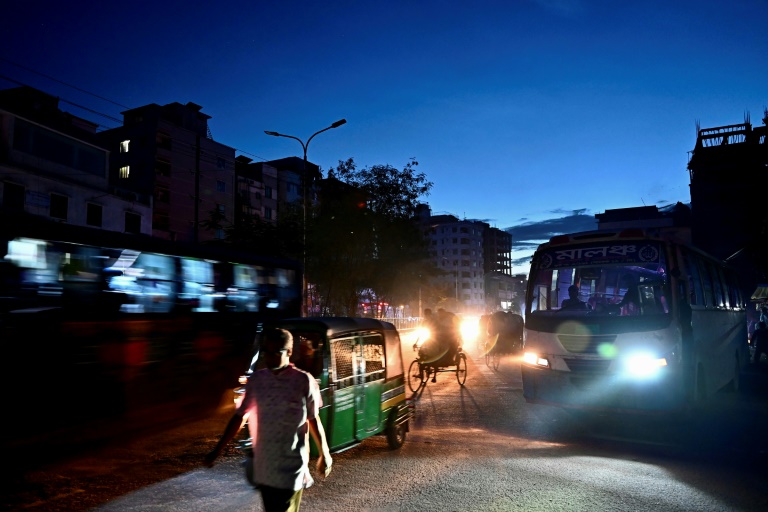
Prime Minister Sheikh Hasina’s government has been forced to close diesel plants, leave some gas-fired power stations idle and impose lengthy power cuts of up to 13 hours a day to conserve existing stocks.

Last month at least 130 million people were left without power after a grid failure caused widespread blackouts.

And tens of thousands of mosques around the Muslim-majority country have been asked to curtail the use of air conditioners to ease pressure on the electricity grid.

The blackouts have sparked widespread public anger and helped mobilise large demonstrations on the streets of Dhaka.

At least three people were killed in one demonstration and around 100 others injured in another in a police crackdown.

In August the government raised the prices of petroleum and diesel by up to 50 percent.

Bangladesh’s precarious financial position was compounded this year by unprecedented floods in the northeast, inundating the homes of more than seven million people and causing nearly $10 billion in damage, according to government estimates.

The opposition Bangladesh Nationalist Party has blamed the government for the crisis, accusing it of squandering cash on multibillion-dollar vanity projects.

It has organised a series of rallies demanding Hasina’s resignation and a general election under a caretaker government.

Bangladesh hopes to graduate from Least Developed Country status and become a “middle-income” nation by 2031.

Hasina’s government has put together a programme, which the IMF said it supports, to achieve the goal, as well as measures to contain inflation, change its monetary policy framework, and strengthen the financial sector.

Bangladesh will also support large-scale climate investments and seek additional climate financing.

Elsewhere in the region, Sri Lanka has also sought a bailout from the IMF, its economic crisis — which saw its president ousted by street protests — exacerbated by the global rise in energy and food prices.

IMF agrees $4.5 billion support package for Bangladesh

The International Monetary Fund said Wednesday it reached a preliminary agreement to provide Bangladesh with a $4.5 billion support package to help it cope with soaring energy and food prices.

Bangladesh in common with other Asian economies has been hit hard by the sharp rise in prices in the wake of Russia’s invasion of Ukraine, prompting angry street protests.

The South Asian nation of around 170 million people approached the IMF earlier this year for support.

An IMF delegation and Dhaka representatives “reached a staff-level agreement to support Bangladesh’s economic policies” with a total of $4.5 billion under various facilities, the institution said in a statement, adding the deal was subject to IMF management approval.

Bangladesh plans to use the IMF loan to prop up its foreign exchange reserves, which have nosedived from $46 billion to $34 billion.

The Bangladeshi taka has depreciated some 25 percent against the greenback in recent months, while according to official figures inflation has approached 10 percent — but independent economists say the true figure is closer to 20 percent.

Household budgets have been hit hard and the government has pledged to cap the price of several staple foods, including rice, to quell public discontent.

“Bangladesh’s robust economic recovery from the pandemic has been interrupted by Russia’s war in Ukraine, leading to a sharp widening of the current account deficit, rapid decline of foreign exchange reserves, rising inflation and slowing growth,” said IMF team leader Rahul Anand.

“Even as Bangladesh tackles these immediate challenges, addressing long-standing structural issues remains critical, including threats to macroeconomic stability from climate change,” he added.

– Power cuts –

The depreciating currency and dwindling foreign exchange reserves have left Bangladesh unable to import sufficient fossil fuels.

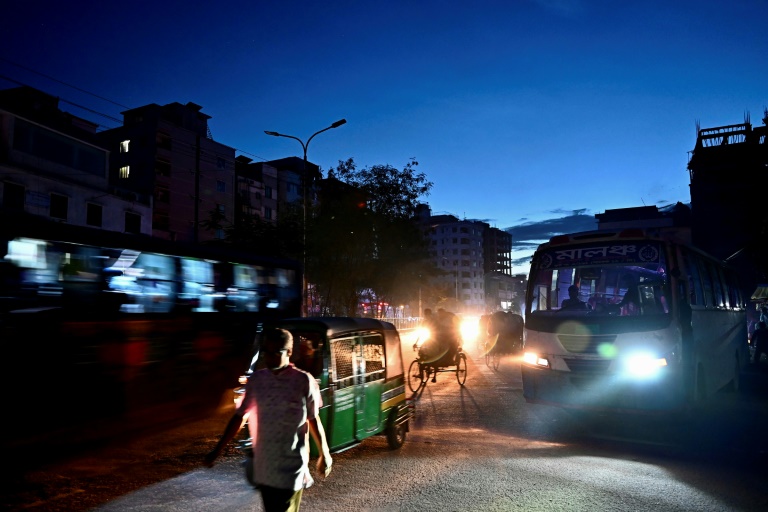
Prime Minister Sheikh Hasina’s government has been forced to close diesel plants, leave some gas-fired power stations idle and impose lengthy power cuts of up to 13 hours a day to conserve existing stocks.

Last month at least 130 million people were left without power after a grid failure caused widespread blackouts.

And tens of thousands of mosques around the Muslim-majority country have been asked to curtail the use of air conditioners to ease pressure on the electricity grid.

The blackouts have sparked widespread public anger and helped mobilise large demonstrations on the streets of Dhaka.

At least three people were killed in one demonstration and around 100 others injured in another in a police crackdown.

In August the government raised the prices of petroleum and diesel by up to 50 percent.

Bangladesh’s precarious financial position was compounded this year by unprecedented floods in the northeast, inundating the homes of more than seven million people and causing nearly $10 billion in damage, according to government estimates.

The opposition Bangladesh Nationalist Party has blamed the government for the crisis, accusing it of squandering cash on multibillion-dollar vanity projects.

It has organised a series of rallies demanding Hasina’s resignation and a general election under a caretaker government.

Bangladesh hopes to graduate from Least Developed Country status and become a “middle-income” nation by 2031.

Hasina’s government has put together a programme, which the IMF said it supports, to achieve the goal, as well as measures to contain inflation, change its monetary policy framework, and strengthen the financial sector.

Bangladesh will also support large-scale climate investments and seek additional climate financing.

Elsewhere in the region, Sri Lanka has also sought a bailout from the IMF, its economic crisis — which saw its president ousted by street protests — exacerbated by the global rise in energy and food prices.

FTX collapse gives crypto sector 'another black eye'

Even for a sector regularly rocked by bankruptcies, the collapse of FTX –- a cryptocurrency platform worth $32 billion at the beginning of the year — came as a shock. 

FTX founder Sam Bankman-Fried had cultivated friends in Washington and basked in glowing tributes when he stepped in to rescue other ailing crypto companies earlier in the year.

Yet, all it took for his firm to unravel was a report on a specialist website raising doubts about FTX’s accounts, followed by a few tweets from his big rival Changpeng Zhao, boss of Binance.

Just days later, Zhao — who had feuded for weeks on Twitter with Bankman-Fried — announced on Tuesday he had signed a letter of intent to buy FTX after the firm asked him for help owing to a “major liquidity crisis”. 

Bitcoin fell in the process to its lowest level in two years. 

“This is another black eye for the industry,” said David Holt, a cryptocurrency industry expert at CFRA. 

Other spectacular collapses this year include virtual currency terra, which was supposed to be pegged to the US dollar, and cryptocurrency investment platform Celsius. 

With questions swirling about the viability of many crypto projects and the broader drop in tech investment since the rise in interest rates, Holt questioned the “longevity and overall survival of a lot of these companies”.

– ‘Red flag’ –

FTX fell quickly when Zhao said he would get rid of Binance’s holdings of FTX’s in-house token FTT, sparking a collapse in its value and evaporation of confidence in the firm. 

Dan Dolev, an analyst for Mizuho, said the failure showed “liquidity in crypto exchanges could be very fickle”. 

“There is little actual capital backing crypto tokens,” he said in a note. 

And he added that FTX’s rapid fall was a “red flag” for platforms such as Coinbase, which mainly offers token and digital currency trading. 

Fans of cryptocurrencies and blockchain-related technologies have become used to a vicious cycle of booms and busts since bitcoin was launched in 2009. 

The notional value of the cryptocurrency market rose to $3 trillion in November 2021 before falling back below $1 trillion in June. 

It is still too early to determine the wider impact of FTX’s rout, said Jamiel Sheikh, founder of several companies in the crypto world. 

“Centralized exchange balance sheets are opaque, and so it is impossible to determine which exchange can withstand a run,” he said. 

But he added that Binance was offering to take over FTX’s assets one-for-one, which showed “some confidence” in the business. 

– ‘A lot of craziness’ –

For Kevin March, co-founder of brokerage Floating Point Group, the question now is who will fill the void left by FTX. 

“Binance, who already controls half the market? Or the hoard of similar but less successful exchange players offering offshore derivatives,” he asked. 

He speculated that the event “could certainly accelerate US market regulation”.

There is a “need for clear custody disclosure requirements from exchanges and a sensible story around what happens in the case of bankruptcy”, said March. 

But Sam Lessin of the venture capital firm Slow Ventures saw some positives in bitter rivals Bankman-Fried and Zhao coming together in a time of crisis.

“These guys can both simultaneously deeply compete with each other but they all have such a vested interest overall in the ecosystem they’ll help each other out as well,” he told CNBC. 

But he added that the sector was still in effect the Wild West where “there’s a lot of craziness, there’s a lot of volatility, and there’s a lot of scams, alongside a lot of deep innovation and really valuable stuff for the future”. 

FTX collapse gives crypto sector 'another black eye'

Even for a sector regularly rocked by bankruptcies, the collapse of FTX –- a cryptocurrency platform worth $32 billion at the beginning of the year — came as a shock. 

FTX founder Sam Bankman-Fried had cultivated friends in Washington and basked in glowing tributes when he stepped in to rescue other ailing crypto companies earlier in the year.

Yet, all it took for his firm to unravel was a report on a specialist website raising doubts about FTX’s accounts, followed by a few tweets from his big rival Changpeng Zhao, boss of Binance.

Just days later, Zhao — who had feuded for weeks on Twitter with Bankman-Fried — announced on Tuesday he had signed a letter of intent to buy FTX after the firm asked him for help owing to a “major liquidity crisis”. 

Bitcoin fell in the process to its lowest level in two years. 

“This is another black eye for the industry,” said David Holt, a cryptocurrency industry expert at CFRA. 

Other spectacular collapses this year include virtual currency terra, which was supposed to be pegged to the US dollar, and cryptocurrency investment platform Celsius. 

With questions swirling about the viability of many crypto projects and the broader drop in tech investment since the rise in interest rates, Holt questioned the “longevity and overall survival of a lot of these companies”.

– ‘Red flag’ –

FTX fell quickly when Zhao said he would get rid of Binance’s holdings of FTX’s in-house token FTT, sparking a collapse in its value and evaporation of confidence in the firm. 

Dan Dolev, an analyst for Mizuho, said the failure showed “liquidity in crypto exchanges could be very fickle”. 

“There is little actual capital backing crypto tokens,” he said in a note. 

And he added that FTX’s rapid fall was a “red flag” for platforms such as Coinbase, which mainly offers token and digital currency trading. 

Fans of cryptocurrencies and blockchain-related technologies have become used to a vicious cycle of booms and busts since bitcoin was launched in 2009. 

The notional value of the cryptocurrency market rose to $3 trillion in November 2021 before falling back below $1 trillion in June. 

It is still too early to determine the wider impact of FTX’s rout, said Jamiel Sheikh, founder of several companies in the crypto world. 

“Centralized exchange balance sheets are opaque, and so it is impossible to determine which exchange can withstand a run,” he said. 

But he added that Binance was offering to take over FTX’s assets one-for-one, which showed “some confidence” in the business. 

– ‘A lot of craziness’ –

For Kevin March, co-founder of brokerage Floating Point Group, the question now is who will fill the void left by FTX. 

“Binance, who already controls half the market? Or the hoard of similar but less successful exchange players offering offshore derivatives,” he asked. 

He speculated that the event “could certainly accelerate US market regulation”.

There is a “need for clear custody disclosure requirements from exchanges and a sensible story around what happens in the case of bankruptcy”, said March. 

But Sam Lessin of the venture capital firm Slow Ventures saw some positives in bitter rivals Bankman-Fried and Zhao coming together in a time of crisis.

“These guys can both simultaneously deeply compete with each other but they all have such a vested interest overall in the ecosystem they’ll help each other out as well,” he told CNBC. 

But he added that the sector was still in effect the Wild West where “there’s a lot of craziness, there’s a lot of volatility, and there’s a lot of scams, alongside a lot of deep innovation and really valuable stuff for the future”. 

DeSantis wins Florida in landslide, setting stage for 2024 run

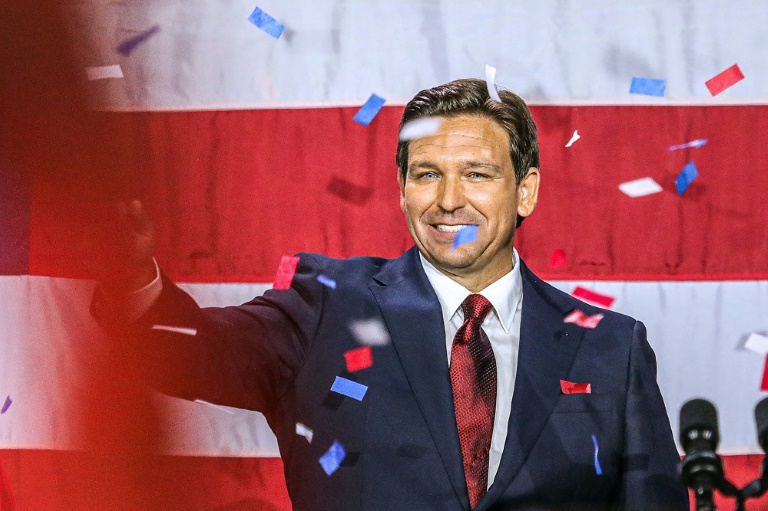
Florida Governor Ron DeSantis won a landslide election victory over his Democratic rival, securing a second term, cementing his status as a Republican presidential contender, and confirming the one-time swing state’s tilt to the right.

Although neither he nor his erstwhile backer Donald Trump have announced their candidacy for the White House, the race for the 2024 Republican nomination may well have unofficially begun with Tuesday’s midterms.

“We’ve got so much more to do and I have only begun to fight,” the 44-year-old DeSantis — who emerged as perhaps the biggest winner of Election Day 2022 — said in his victory speech.

According to unofficial results, the man who ran an incendiary campaign against President Joe Biden’s administration and turned Florida into a laboratory for right-wing policies won nearly 60 percent of the vote against Democrat Charlie Crist.

“I believe the survival of the American experiment requires a revival of true American principles. Florida has proved that it can be done,” DeSantis said to cheers from his supporters.

He did not mention Trump, whose support gave DeSantis a boost in his first race for the governor’s mansion in 2018.

The former president seems both aware and visibly annoyed by the threat posed by the rise of Florida’s popular leader.

Trump gave a brief speech Tuesday night in which he congratulated himself on some Republican victories in the hotly contested midterm elections, but was careful not to mention the win by the politician who is already seen as his primary rival.

On Monday, Trump sought to discourage DeSantis from entering the race for the White House in 2024.

“I think he would be making a mistake, I think the base would not like it,” Fox News quoted Trump as saying. “I don’t think it would be good for the party.”

As he often does with his opponents, Trump has branded DeSantis with a derogatory moniker: Ron DeSanctimonious.

– Florida’s rightward tilt –

The resounding DeSantis victory also confirms a clear shift to the right in Florida, long considered a swing state that could go to either Democrats or Republicans.

The governor was not mistaken when he said on Tuesday that “we not only won election, we have rewritten the political map.”

“It’s clearly apparent that this election we will have garnered a significant number of votes from people who may not have voted for me four years ago,” DeSantis said.

In a result that would have been all but unthinkable a few years ago, DeSantis won the predominantly Hispanic county of Miami-Dade, which no Republican gubernatorial candidate had carried in two decades.

Democrats are concerned that while Hispanics have traditionally voted for their party, more and more are now being drawn to the other side, with many in the Cuban and Venezuelan communities especially sensitive to Republicans’ anti-socialist rhetoric.

DeSantis’ handling of the Covid-19 pandemic may have also boosted his appeal and contributed to his decisive victory.

The governor, who fiercely opposed mandatory vaccination and masks, allowed Florida businesses and schools to reopen well before many other areas of the country.

He also recently caused controversy — and delighted many Republicans — by sending dozens of migrants to Martha’s Vineyard in the Democratic-led state of Massachusetts.

And he is one of the loudest voices in the culture wars that divide the country, signing the so-called “Don’t say gay” bill, which prohibits discussing LGBTQ topics in classrooms, into law earlier this year.

In recent days, a video tweeted by his wife Casey has also garnered extensive attention: the short black-and-white clip presents the governor as being invested with a divine mission.

Midterms offer Biden hope in defeat

Joe Biden’s Democrats seem to have escaped a feared drubbing in Tuesday’s midterm elections, but it remains to be seen whether that will revive the US president’s flagging fortunes until 2024 — or beyond.

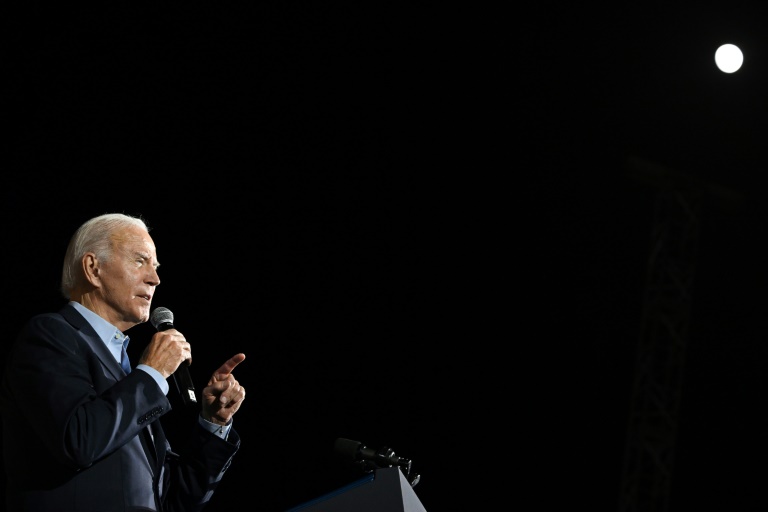
The 79-year-old, who framed the race as a clash between defenders of democracy and the “extremist” camp of Donald Trump, spent election night in back-to-back calls with Democrats savoring their wins in Senate, House and gubernatorial races around the country.

“Just got off the phone with some of tonight’s winners — including some folks I saw on the road this year,” Biden tweeted as the results came in — alongside a picture of himself in a turtle neck and baseball cap, seeming happy to take at least some of the credit.

White House staff, according to the former press secretary Jen Psaki, were “giddy and gleeful” as results came in.

The outcome taking shape was far from ideal for Democrats, who stand to lose the House of Representatives in what Biden has admitted will make his life much more “difficult” — likely hobbling parts of his agenda.

But if overnight predictions hold and the Democrats lose the House by a handful of seats, with the Senate still in play, Biden’s camp will have vastly outperformed expectations.

– Choppy waters –

The president’s party has traditionally lost seats in midterm elections and with Biden’s approval ratings stuck in the low 40s, and sky-high inflation topping voter concerns, Republicans had high hopes of seizing both chambers of Congress in a “red wave.”

Such a drubbing would have raised tough questions on whether America’s oldest-ever president, who turns 80 this month, should run again.

Instead Biden stands to emerge in much better shape than either of his Democratic predecessors, Barack Obama or Bill Clinton, who both took a hammering at the midterms.

Nevertheless, Biden will be headed into choppy waters if the House flips.

In a country whose divisions run deeper than ever, even a longtime senator and moderate Democrat like Biden will likely struggle to find common ground with a Republican-led chamber.

Large parts of his legislative agenda could utterly stall as a result.

Another open question is whether a new Republican leadership would keep its promise to aggressively hold the president to account — which even a slim House majority gives it the power to do.

That could easily translate into endless congressional investigations targeting Biden, his record and his family.

One of the loudest voices, far-right Representative Marjorie Taylor Greene, has already promised stepped-up scrutiny of Biden’s son Hunter, who Republicans accuse of exploiting his father’s connections to do business with Ukraine and China.

– Eyes on 2024 –

With control of the House, Republicans would also be able to apply considerable budgetary pressure on the president — with the potential to cut funding to the federal government.

As for the Senate — which confers greater powers — its fate still hangs in the balance.

But beyond, the big question facing Biden — and his Democrats — is who will carry the party’s colors into the 2024 White House race.

Until now the US president has consistently said he intends to seek a second term, and any suggestion to the contrary would have immediately undermined his authority.

But there is little appetite among the US public — or within his own party — for a second White House run by an octogenarian commander in chief.

Biden leaves Friday on a diplomatic marathon taking him from the COP27 climate conference in Egypt, to Cambodia for an ASEAN summit, and on to Indonesia for the G20 gathering. 

The veteran Democrat may keep America guessing some time yet about his intentions for 2024.

But with the president far from US shores, his rival Trump will be pressing ahead — promising a big reveal, widely expected to be a new White House run, next Tuesday in Florida.

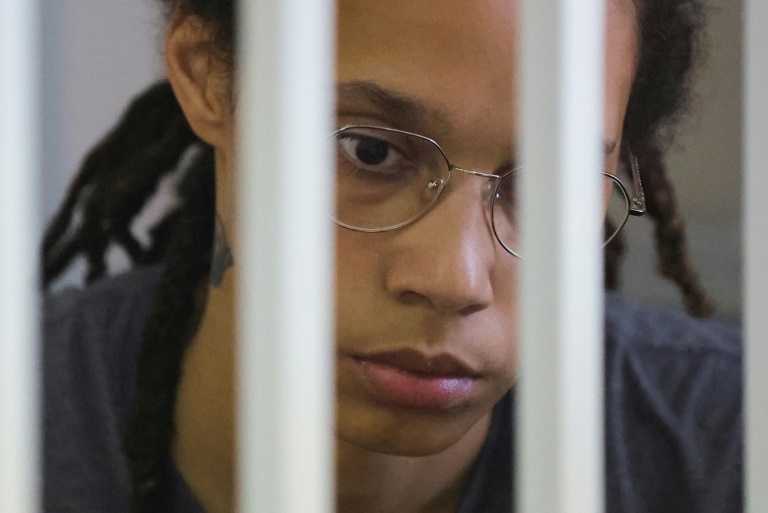
US livid as basketball star Griner moved to Russian penal colony

Russia is moving US basketball star Brittney Griner to a penal colony after she lost an appeal against a drug conviction, her lawyers said Wednesday, drawing a sharp rebuke from the White House.

Griner, who has been jailed for nine years for possession of a small quantity of cannabis oil, was transferred out of a detention centre on November 4, her legal team said.

She “is now on her way to a penal colony,” lawyers Maria Blagovolina and Alexander Boykov said in a statement.

“We do not have any information on her exact current location or her final destination,” they added.

Russia generally notifies of a prisoner’s transfer to a different address by mail, taking up to two weeks, the lawyers said.

Griner’s case has drawn outrage in the United States, with Secretary of State Antony Blinken seeking a deal with Russia to free her despite soaring tensions over Moscow’s offensive in Ukraine.

White House Press Secretary Karine Jean-Pierre reiterated that the United States had put forward a “substantial offer” to Russia to resolve her case.

– ‘Wrongful detention’ –

“Every minute that Brittney Griner must endure wrongful detention in Russia is a minute too long,” Jean-Pierre said.

“As the administration continues to work tirelessly to secure her release, the president has directed the administration to prevail on her Russian captors to improve her treatment and the conditions she may be forced to endure in a penal colony.”

Griner, a two-time Olympic basketball gold medallist and Women’s NBA champion, had been in Russia to play for the professional Yekaterinburg team during her off-season from the Phoenix Mercury Women’s National Basketball Association side.

She said the cannabis in vape cartridges was to treat pain from her sporting injuries, but Russia does not allow medical marijuana use.

Observers have suggested that Griner and another American jailed in Russia, Paul Whelan — a retired US Marine arrested in December 2018 and accused of spying — could be traded for Viktor Bout, a famed Russian arms trafficker serving 25 years in prison on a 2012 conviction.

– ‘Totalitarian system’ – 

Prisoners’ rights activist Vladimir Osechkin said conditions in penal colonies are much harsher than in detention centres. 

“It is a more totalitarian system with Gulag uniforms and 100 people per room in barracks,” Osechkin, who founded the Gulagu.net rights group, told AFP, warning that prison officials routinely orchestrate conflicts and fights between inmates. 

“If the Kremlin decides not to torture the basketball player and creates VIP conditions for her, she will be allowed to eat separately, play sports and keep fit,” said Osechkin.

“But if a decision is made and the federal prison service receives an order to put pressure on her then of course her life and health will be in danger.”

Activists say abuse and torture are frequent in Russia’s vast network of prisons run by the Federal Penitentiary Service (FSIN), a successor to the notorious Gulag system of the Stalin era.

Penal colonies are the most common type of prisons and are known for their harsh treatment of inmates, unsanitary conditions and lack of access to proper healthcare.

Prison officials also often limit inmates’ contact with lawyers and family. Harassment of prisoners sometimes leads to prison riots.

A number of US citizens including Whelan are currently behind bars in Russia. 

Whelan’s brother David regularly describes Paul’s life in the IK-17 colony in the central region of Mordovia, saying he has undergone sleep deprivation and that suicides are common in prisons.

The treatment of the jailed opposition leader Alexei Navalny has also highlighted abuses in prisons, activists say.

The 46-year-old has been repeatedly placed in solitary confinement, which his supporters say amounts to torture.

Anti-torture project Gulagu.net has drawn attention to what it calls systemic abuse and sexual violence towards prisoners.

Last year it released harrowing video footage of a naked man being raped with what appeared to be a broom stick at a prison hospital.

Close Bitnami banner
Bitnami