AFP

US livid as basketball star Griner moved to Russian penal colony

Russia is moving US basketball star Brittney Griner to a penal colony after she lost an appeal against a drug conviction, her lawyers said Wednesday, drawing a sharp rebuke from the White House.

Griner, who has been jailed for nine years for possession of a small quantity of cannabis oil, was transferred out of a detention centre on November 4, her legal team said.

She “is now on her way to a penal colony,” lawyers Maria Blagovolina and Alexander Boykov said in a statement.

“We do not have any information on her exact current location or her final destination,” they added.

Russia generally notifies of a prisoner’s transfer to a different address by mail, taking up to two weeks, the lawyers said.

Griner’s case has drawn outrage in the United States, with Secretary of State Antony Blinken on Wednesday describing her transfer as “another injustice layered on her ongoing unjust and wrongful detention”.

Blinken has sought a deal with Russia to free her despite soaring tensions over Moscow’s offensive in Ukraine.

White House Press Secretary Karine Jean-Pierre reiterated that the United States had made Russia a “substantial offer” to resolve her case.

– ‘Wrongful detention’ –

“Every minute that Brittney Griner must endure wrongful detention in Russia is a minute too long,” Jean-Pierre said.

Griner — a two-time Olympic basketball gold medallist and Women’s NBA champion — had been in Russia to play for the professional Yekaterinburg team during her off-season from the Phoenix Mercury Women’s National Basketball Association side.

She said the cannabis in vape cartridges was to treat painful sports injuries, but Russia does not allow medical marijuana use.

Observers have suggested that Griner and another American jailed in Russia, Paul Whelan — a retired US Marine arrested in December 2018 and accused of spying — could be traded for Viktor Bout, a famed Russian arms trafficker serving 25 years in prison on a 2012 conviction.

– ‘Totalitarian system’ – 

Activists say abuse and torture are frequent in Russia’s vast network of prisons run by the Federal Penitentiary Service (FSIN), a successor to the notorious Gulag system of the Stalin era.

Penal colonies are the most common type of prisons and are known for their harsh treatment of inmates, insanitary conditions and lack of access to proper healthcare.

Prison officials also often limit inmates’ contact with lawyers and family. Harassment of prisoners sometimes leads to prison riots.

Prisoners’ rights activist Vladimir Osechkin said conditions in penal colonies are much harsher than in detention centres. 

“It is a more totalitarian system with Gulag uniforms and 100 people per room in barracks,” Osechkin, who founded the Gulagu.net rights group, told AFP, warning that prison officials routinely orchestrate conflicts and fights between inmates. 

“If the Kremlin decides not to torture the basketball player and creates VIP conditions for her, she will be allowed to eat separately, play sports and keep fit,” said Osechkin.

But if “the federal prison service receives an order to put pressure on her then of course her life and health will be in danger.”

A number of US citizens including Whelan are currently behind bars in Russia. 

Whelan’s brother David regularly describes Paul’s life in the IK-17 colony in the central region of Mordovia, saying he has undergone sleep deprivation and that suicides are common in prisons.

The treatment of the jailed opposition leader Alexei Navalny has also highlighted abuses in prisons, activists say.

The 46-year-old has been repeatedly placed in solitary confinement, which his supporters say amounts to torture.

Anti-torture project Gulagu.net has drawn attention to what it calls systemic abuse and sexual violence towards prisoners.

Last year it released harrowing video footage of a naked man being raped with what appeared to be a broom stick at a prison hospital.


Germany blocks sale of two chipmakers to China

Germany on Wednesday blocked the sale of two chipmakers to Chinese investors because of a potential threat to security.

“We must look very closely at company takeovers when it relates to important infrastructure or when there is a danger that the technology would flow to buyers from non-EU countries,” said Economy Minister Robert Habeck.

Chinese company Sai MicroElectronics had been seeking to buy the Dortmund factory of Elmos through its Swedish subsidiary Silex. 

The German government had rejected the planned takeover because “the purchase could endanger the order and security of Germany,” said the economy ministry.

Other ways of reducing the risks, including allowing the acquisition under certain conditions, were “unable to eliminate the identified dangers”, it added.

A second acquisition had been turned down, Habeck said, without naming the companies involved because of “trade secrets”.

But Germany’s minister for research Bettina Stark-Watzinger named the company as Bavaria-based ERS Electronic, which supplies a cooling technology to wafer manufacturers.

Fears have been growing in Europe’s economic powerhouse about an over-reliance on Beijing, and letting critical infrastructure fall into the hands of Chinese state-linked companies.

Russia’s invasion of Ukraine and its subsequent dwindling of crucial gas supplies to Europe has further accentuated the concerns.

In particular, the microchip industry has come under scrutiny, as it produces key components used across industry from consumer electronics to battery-powered vehicles.

Earlier this year, the European Union unveiled a multibillion euro “Chips Act” aimed at doubling Europe’s market share in semiconductors and reducing dependence on supplies from Asia. 

– ‘Not naive’ –

Elmos, which primarily builds components for the automobile industry, said late last year it intended to sell the production facility at its headquarters.

Silex was seeking to buy the site for 85 million euros ($85.4 million).

But business weekly Wirtschaftswoche said Elmos had been the recipient of 5.9 million euros from the German state for two research projects. It had also received 8.1 million euros from an EU project on autonomous driving.

Habeck said that Germany remained open to investors, but that “we are also not naive”. 

Beijing has been trying to glean knowledge about production and development, underlined the minister, saying that the “statements from China are very clear”.

Habeck, of the ecologist Greens party, has recently locked horns with Chancellor Olaf Scholz over investments from China.

He deeply opposed a plan by Chinese shipping firm Cosco to buy a stake in a Hamburg port terminal, forcing Scholz to pull rank to force through the deal by allowing the purchase of a reduced stake.

Scholz has repeatedly underlined the importance of strong trade ties with Beijing, something that German industry leaders have also stressed.

China is a major market for German goods, particularly for auto giants Volkswagen, BMW and Mercedes-Benz, and many jobs in Europe’s top economy depend directly on the relationship.

On a controversial visit to Beijing last week, Scholz, accompanied by a delegation of German business bosses, told Chinese leaders that Berlin expected equal treatment on trade.

But Scholz’s trip has sparked controversy for coming so soon after Xi Jinping strengthened his hold on power in China last month.

With tensions between the West and Beijing running high on issues ranging from Taiwan to alleged human rights abuses, there had been concerns that the high-profile trip may have unsettled both the United States and the European Union.

Germany blocks sale of two chipmakers to China

Germany on Wednesday blocked the sale of two chipmakers to Chinese investors because of a potential threat to security.

“We must look very closely at company takeovers when it relates to important infrastructure or when there is a danger that the technology would flow to buyers from non-EU countries,” said Economy Minister Robert Habeck.

Chinese company Sai MicroElectronics had been seeking to buy the Dortmund factory of Elmos through its Swedish subsidiary Silex. 

The German government had rejected the planned takeover because “the purchase could endanger the order and security of Germany,” said the economy ministry.

Other ways of reducing the risks, including allowing the acquisition under certain conditions, were “unable to eliminate the identified dangers”, it added.

A second acquisition had been turned down, Habeck said, without naming the companies involved because of “trade secrets”.

But Germany’s minister for research Bettina Stark-Watzinger named the company as Bavaria-based ERS Electronic, which supplies a cooling technology to wafer manufacturers.

Fears have been growing in Europe’s economic powerhouse about an over-reliance on Beijing, and letting critical infrastructure fall into the hands of Chinese state-linked companies.

Russia’s invasion of Ukraine and its subsequent dwindling of crucial gas supplies to Europe has further accentuated the concerns.

In particular, the microchip industry has come under scrutiny, as it produces key components used across industry from consumer electronics to battery-powered vehicles.

Earlier this year, the European Union unveiled a multibillion euro “Chips Act” aimed at doubling Europe’s market share in semiconductors and reducing dependence on supplies from Asia. 

– ‘Not naive’ –

Elmos, which primarily builds components for the automobile industry, said late last year it intended to sell the production facility at its headquarters.

Silex was seeking to buy the site for 85 million euros ($85.4 million).

But business weekly Wirtschaftswoche said Elmos had been the recipient of 5.9 million euros from the German state for two research projects. It had also received 8.1 million euros from an EU project on autonomous driving.

Habeck said that Germany remained open to investors, but that “we are also not naive”. 

Beijing has been trying to glean knowledge about production and development, underlined the minister, saying that the “statements from China are very clear”.

Habeck, of the ecologist Greens party, has recently locked horns with Chancellor Olaf Scholz over investments from China.

He deeply opposed a plan by Chinese shipping firm Cosco to buy a stake in a Hamburg port terminal, forcing Scholz to pull rank to force through the deal by allowing the purchase of a reduced stake.

Scholz has repeatedly underlined the importance of strong trade ties with Beijing, something that German industry leaders have also stressed.

China is a major market for German goods, particularly for auto giants Volkswagen, BMW and Mercedes-Benz, and many jobs in Europe’s top economy depend directly on the relationship.

On a controversial visit to Beijing last week, Scholz, accompanied by a delegation of German business bosses, told Chinese leaders that Berlin expected equal treatment on trade.

But Scholz’s trip has sparked controversy for coming so soon after Xi Jinping strengthened his hold on power in China last month.

With tensions between the West and Beijing running high on issues ranging from Taiwan to alleged human rights abuses, there had been concerns that the high-profile trip may have unsettled both the United States and the European Union.

Indonesia revokes licences of drug firms over syrups linked to child deaths

Indonesia’s food and drug agency on Wednesday revoked the licences of two chemical firms to distribute materials used in syrup medicines linked to a wave of child deaths caused by kidney failure or damage.

The move comes as the Southeast Asian country suffers a spike in cases of acute kidney injury that has killed nearly 200 children since the end of August, prompting an investigation and ban on the sale of some syrup medicines.

PT Mega Setia Agung Kimia and PT Tirta Buana Kemindo were barred from distributing raw pharmaceutical materials after two potentially harmful chemicals — diethylene glycol and ethylene glycol — were found in their supplies of propylene glycol, agency chief Penny Lukito told reporters.

The two chemical compounds are used in industrial products such as antifreeze and have been linked with recent cases of acute kidney injury.

Their distribution licences were revoked for “failing to comply with the requirements,” Lukito said.

“They distribute products contaminated with ethylene glycol and diethylene glycol. They also did not conduct inspection to guarantee the quality of the solvents,” said Lukito.

The food and drug agency (BPOM) also ordered the recall of syrup medicines from two other pharmaceutical companies — PT Samco Farma and PT Ciubros Farma — after tests revealed excessive amounts of those chemicals in their products.

“To those two firms, BPOM has ordered the recall of syrup medicines from distribution across Indonesia and the destruction of batches of products that contain ethylene glycol and diethylene glycol that were above safe levels,” Lukito said.

The agency on Sunday ordered the recall and destruction of syrup-based medicines from three other pharmaceutical companies after tests revealed the products contained ethylene glycol “beyond safe levels”.

Police have launched an investigation into the three companies and two of them have temporarily lost their licence to produce syrup medicines.

The World Health Organization has said it found an “unacceptable amount” of diethylene glycol and ethylene glycol in four Indian-made cough syrups and warned they could be linked to the deaths of nearly 70 children in Gambia due to AKI.

Strikes flare in Europe as cost of living spirals

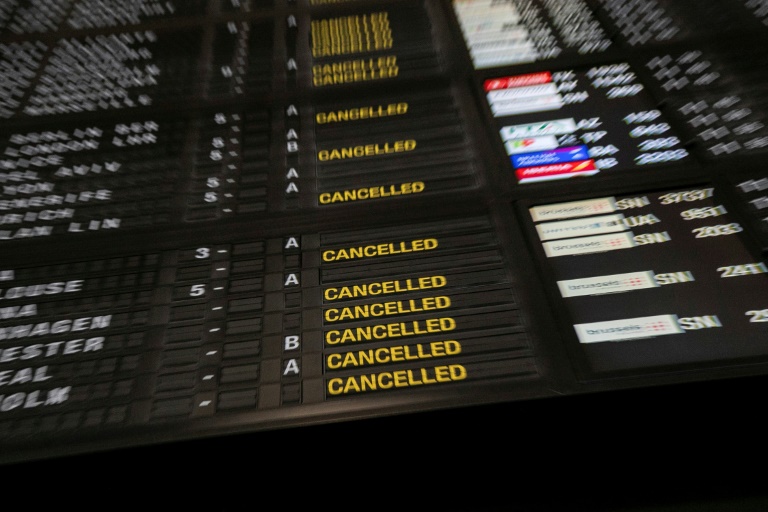
European workers squeezed by the soaring cost of living went on strike in Belgium and Greece on Wednesday, with stoppages threatening to paralyse parts of Britain, France and Spain in coming days.

Spreading industrial unrest poses a problem for governments which are already spending billions trying to blunt the worst effects of rising prices, at least for the most vulnerable.

Europe is acutely affected by the fall-out of the war in Ukraine, which is exacerbating a global energy crisis, inflation and a scarcity of some food products.

The onset of winter, when energy bills spike, and repeated predictions of a looming, continent-wide recession are souring the labour mood even further.

Belgium and Greece saw general strikes on Wednesday, disrupting transport in their respective capitals, impacting businesses.

In Brussels, home to the European Commission and other EU institutions, workers were protesting inflation running higher than 12 percent — well above the 10.7 percent average across the eurozone.

The country’s biggest union, the FGTB, is demanding greater leeway to negotiate pay rises. 

But the Belgian government counters that Belgian salaries are already indexed to inflation — an arrangement not seen in most other countries.

The strike cut train services by 75 percent and closed the airport in the southern city of Charleroi, the main hub in the country for Europe’s leading airline Ryanair.

– Strikes in Britain and France –

In Greece, ferries serving its many islands were among the transport lines halted by a general strike, the second to hit the country since September.

Greek unions are insisting on salary rises to cope with inflation which nationally has risen to 12 percent.

“The cost of living is untenable,” read a large poster for the country’s biggest union, the GSEE, calling for “social protection for all”.

Stoppages were to be felt on Thursday in Britain and France, with the underground urban rail networks and busses in London and Paris to be severely affected.

A French union leader, Celine Verzeletti of the CGT confederation, predicted up to 200 “demonstration points”, roughly the same as the last national strike in France, on October 18, when more than 100,000 people protested.

France is not as badly affected by inflation as its European peers, as the state holds stakes in the main energy companies and has minimised how far energy bills can rise.

Inflation in France is just over six percent — better than elsewhere — but with economic activity across the eurozone nosediving, hatches are being battened for what looks like a period of stagflation.

In Britain, where inflation is above 10 percent, worker protests over not being able to make ends meet are coming to a crescendo.

The Bank of England predicts the country is headed for a two-year recession, even though it was forced to hike interest rates, making it even tougher for UK households.

– EU energy moves –

On top of Thursday’s stoppage in London’s Underground, British nurses are to hold the first strike in the 106-year history of their RCN union at a date yet to be announced.

Late next week, hundreds of workers at Heathrow airport are to down tools for three days, between November 18 and 21, to demand better pay.

Their action could force the cancellation of flights to Qatar, which is to host the World Cup football tournament that kicks off on November 20.

British dockers, university staff, postal employees and the legal profession have all held, or threaten to continue strikes over pay eaten away by inflation.

In Spain, truck drivers have called an indefinite strike from next Monday. Their last stoppage, in March, led to empty supermarket shelves.

With labour protests mounting, the EU is looking at ways to take some of the sting out of energy prices.

The European Commission and member states are working on proposals to promote the joint purchase of gas and possibly impose a mechanism to cap the price of wholesale gas within the EU.

Details are not expected to be finalised until late this month, but the steps — and unseasonably warm weather last month — contributed to a fall in gas prices, though they are expected to rise again as winter bites.

The head of the European Central Bank, Christine Lagarde, said last week a “mild” eurozone recession looked likely — but warned it would not be enough to bring down record-high inflation.

Germany's huge Wirecard fraud trial to start in December

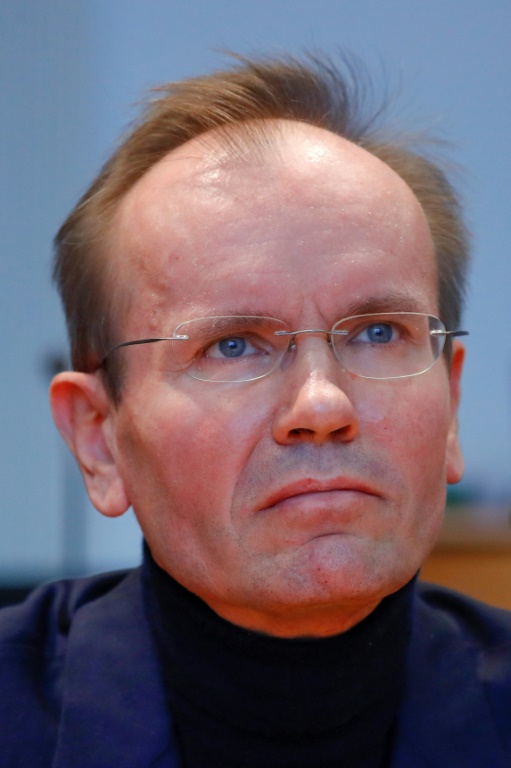
Wirecard’s former CEO Markus Braun will go on trial from December 8 to answer fraud charges in Germany’s biggest-ever accounting scandal, a Munich court said Wednesday.

Austrian-born Braun, 53, stands accused of “commercial gang fraud”, embezzlement and market manipulation for his role in Wirecard’s spectacular collapse two years ago.

The higher regional court in Munich said it had scheduled 100 court dates for the mammoth trial.

Once the standard-bearer for the German tech industry, payments firm Wirecard was plunged into chaos in 2020 after admitting that 1.9 billion euros ($1.9 billion) missing from its balance sheets likely didn’t exist.

The scandal was “unparallelled” in Germany’s post-war history, according to then finance minister Olaf Scholz, who is now chancellor.

Braun, who has been in custody for over two years, denies the allegations.

Two other Wirecard managers, accounting boss Stephan von Erffa and Oliver Bellenhaus, the former head of Wirecard’s Dubai subsidiary, were also charged with fraud last March.

The trio had worked “in an industrial fashion” to commit the fraud, German prosecutors said at the time. The accused face “several years” in prison if found guilty, they added.

Wirecard’s chief operating officer Jan Marsalek, who has been on the run since the firm’s collapse, is still wanted by German prosecutors.

He was reported earlier this year to be hiding out in Moscow.

– Germany’s Enron –

The time it took for German prosecutors to file formal charges against Braun underlined the complex web of fraudulent transactions implicating Wirecard subsidiaries and third-party companies that took investigators across the world to unravel.

Among victims of the fraud were banks that had provided credit of 1.7 billion euros to Wirecard. Bonds worth 1.4 billion euros had also been issued and are unlikely to be repaid.

“All the accused group members were acting in an industrial fashion… that is how they secured their own salaries, including partially profit-related portions,” prosecutors said.

Braun for instance, received at least 5.5 million euros in dividends, they said.

The Wirecard drama has drawn comparisons with the Enron accounting scandal in the US in the early 2000s.

Founded in 1999, the Bavarian start-up Wirecard rose from being a company piping cash to pornography and gambling sites to a respectable electronic payments provider that edged traditional lender Commerzbank out of the prestigious DAX index.

It boasted a market valuation of more than 23 billion euros at one point — outweighing even giant Deutsche Bank.

Wirecard’s troubles began in 2019 with a series of articles in the Financial Times alleging accounting irregularities in its Asian division, headed by Marsalek.

But the company was able, at that time, to fend off the claims and the FT’s journalists themselves came under investigation over the reports. 

The huge scam unravelled in June 2020 when auditors EY said they were unable to find 1.9 billion euros of cash in the company’s accounts.

The sum, which made up a quarter of the balance sheet, was supposedly held to cover risks in trading carried out by third parties on Wirecard’s behalf and was meant to be sitting in trustee accounts at two Filippino banks.

But the Philippines’ central bank has said the cash never entered its monetary system and both Asian banks, BDO and BPI, denied having a relationship with Wirecard.

Wirecard filed for insolvency soon after and was booted off Germany’s blue-chip DAX index after its share price plummeted by 98 percent. 

It became the first DAX company to fail, and the company’s collapse was a major embarrassment to Germany and its financial services industry.

The country’s finance watchdog Bafin was overhauled in the wake of the scandal, after coming under scrutiny for missing early warning signs of wrongdoing at Wirecard.

Facebook owner Meta to lay off 11,000 staff

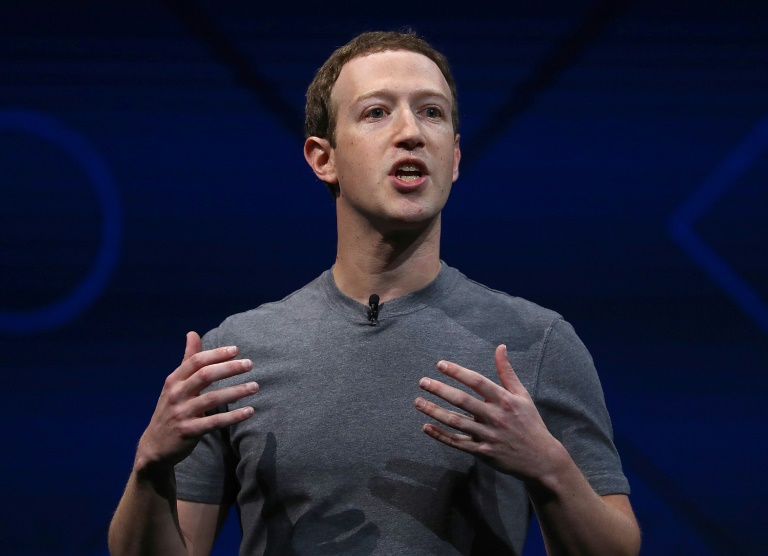
Facebook owner Meta will lay off more than 11,000 of its staff in “the most difficult changes we’ve made in Meta’s history”, boss Mark Zuckerberg said on Wednesday.

He said the cuts represented 13 percent of the social media titan’s workforce and would affect its research lab focusing on the metaverse as well as its apps, which include Facebook, Instagram and Whatsapp.

The tech industry is in a serious slump and several major firms have announced mass layoffs — Twitter’s new owner Elon Musk fired half its staff last week.

“I want to take accountability for these decisions and for how we got here,” Zuckerberg said in a note to staff.

“I know this is tough for everyone, and I’m especially sorry to those impacted.”

Ad-supported platforms such as Facebook and Google are suffering with advertisers looking to cut costs as they struggle with inflation and rising interest rates.

Zuckerberg told staff he had expected the boost in e-commerce and online activity during the Covid pandemic to continue, but added: “I got this wrong, and I take responsibility for that.”

– Metaverse woes –

The downturn has affected companies across the sector, with Apple and Amazon also recently announcing results that disappointed investors.

But Meta also faces some unique problems of its own.

Investors have been worried about Zuckerberg’s decision to devote billions of dollars to developing the metaverse, an immersive version of the web accessed via virtual reality headsets.

Zuckerberg renamed the company to Meta a year ago to reflect the commitment to the project, but the division working on metaverse technology has since made losses of more than $3.5 billion.

He has hinted several times this year that belt-tightening measures were just around the corner and said in his letter on Wednesday that staff layoffs were a “last resort”.

Meta would also keep a hiring freeze going into next year, he said, and other spending cuts were envisaged.

“Fundamentally, we’re making all these changes for two reasons: our revenue outlook is lower than we expected at the beginning of this year, and we want to make sure we’re operating efficiently,” he wrote.

Last month, Meta announced profits of $4.4 billion in the third quarter, a 52 percent decrease year-on-year, causing its stock price to fall 25 percent.

The slump in profits comes despite its platforms dominating the world in terms of users — Facebook alone claims to have around two billion people who log on daily. 

Facebook owner Meta to lay off 11,000 staff

Facebook owner Meta will lay off more than 11,000 of its staff in “the most difficult changes we’ve made in Meta’s history”, boss Mark Zuckerberg said on Wednesday.

He said the cuts represented 13 percent of the social media titan’s workforce and would affect its research lab focusing on the metaverse as well as its apps, which include Facebook, Instagram and Whatsapp.

The tech industry is in a serious slump and several major firms have announced mass layoffs — Twitter’s new owner Elon Musk fired half its staff last week.

“I want to take accountability for these decisions and for how we got here,” Zuckerberg said in a note to staff.

“I know this is tough for everyone, and I’m especially sorry to those impacted.”

Ad-supported platforms such as Facebook and Google are suffering with advertisers looking to cut costs as they struggle with inflation and rising interest rates.

Zuckerberg told staff he had expected the boost in e-commerce and online activity during the Covid pandemic to continue, but added: “I got this wrong, and I take responsibility for that.”

– Metaverse woes –

The downturn has affected companies across the sector, with Apple and Amazon also recently announcing results that disappointed investors.

But Meta also faces some unique problems of its own.

Investors have been worried about Zuckerberg’s decision to devote billions of dollars to developing the metaverse, an immersive version of the web accessed via virtual reality headsets.

Zuckerberg renamed the company to Meta a year ago to reflect the commitment to the project, but the division working on metaverse technology has since made losses of more than $3.5 billion.

He has hinted several times this year that belt-tightening measures were just around the corner and said in his letter on Wednesday that staff layoffs were a “last resort”.

Meta would also keep a hiring freeze going into next year, he said, and other spending cuts were envisaged.

“Fundamentally, we’re making all these changes for two reasons: our revenue outlook is lower than we expected at the beginning of this year, and we want to make sure we’re operating efficiently,” he wrote.

Last month, Meta announced profits of $4.4 billion in the third quarter, a 52 percent decrease year-on-year, causing its stock price to fall 25 percent.

The slump in profits comes despite its platforms dominating the world in terms of users — Facebook alone claims to have around two billion people who log on daily. 

Democrats hold back 'red wave' in cliff-hanger US midterms

Republican hopes of a “red wave” carrying them to power in the US Congress faded Wednesday as Joe Biden’s Democrats put up a stronger-than-expected defense in a midterm contest headed for a cliff-hanger finish.

With a majority of Tuesday’s races called, Republicans seemed on track to reclaim the House of Representatives for the first time since 2018, but the Senate was still in play, with forecasts tentatively leaning Democratic.

And the midterms delivered a decidedly mixed bag for Donald Trump, who though not on the ballot loomed large over the contest, teasing a 2024 run and airing unsubstantiated allegations of Election Day fraud.

While the night saw wins by more than 100 Republicans embracing Trump’s “Big Lie” that Biden stole the 2020 election, several high-profile, election-denying acolytes of the former president came up short.

Aiming to deliver a rebuke of Biden’s presidency, against a backdrop of sky-high inflation and bitter culture wars, Republicans needed one extra seat to wrest control of the evenly divided Senate.

But by early Wednesday the only seat to change party hands went to the Democrats, with John Fetterman, a burly champion of progressive economic policies, triumphing in Pennsylvania.

In the House, early results suggested Republicans were on track for a majority — but only by a handful of seats, a far cry from their predictions.

Top Republican Kevin McCarthy — who hopes to be the lower chamber’s next speaker — struck an upbeat note, telling supporters in the early hours: “It is clear that we are going to take the House back.”

But Senator Lindsey Graham, a top Trump ally, bluntly conceded to NBC that the election is “definitely not a Republican wave, that’s for darn sure.”

– Four key races –

The president’s party has traditionally lost seats in midterm elections, and with Biden’s ratings stuck in the low 40s and Republicans pounding him over inflation and crime, pundits had predicted a drubbing.

That would have raised tough questions on whether America’s oldest-ever commander in chief, who turns 80 this month, should run again.

Instead Biden stands to emerge in much better shape than either of his Democratic predecessors, Barack Obama or Bill Clinton, who both took a hammering at the midterms.

Control of the Senate hinged early Wednesday on four key races that were still on a knife-edge.

Democrats need two more wins to successfully hold the chamber, while Republicans need three to flip it.

In Arizona, Nevada and Wisconsin, counting the remaining votes for Senate could take days. And Georgia may well go to a runoff scheduled for December 6. 

– Florida swings right –

On a night of close contests, one of the most decisive wins was for rising Republican star Ron DeSantis, who won the gubernatorial race overwhelmingly in Florida, cementing his status as a top potential White House candidate in 2024.

DeSantis, who has railed against Covid-19 mitigation measures and transgender rights, was projected to have won by nearly 20 points against a folksy ex-governor, four years after squeaking by in his longtime swing state.

“We will never, ever surrender to the woke mob,” DeSantis told a victory party, using a derisive term for social justice campaigners.

But if the 44-year-old views his victory as a presidential mandate, he will likely face a stiff challenge from another Florida resident — Trump, who has teased an “exciting” announcement on November 15.

Among other races, Maura Healey will make history as the first openly lesbian governor in the United States, and in New York, where recent polls unnerved Democrats, Governor Kathy Hochul fended off a Republican challenge.

– Trump alleges fraud –

Trump, who faces criminal probes over taking top secret documents from the White House and trying to overturn the 2020 election, returned to his playbook of airing unsubstantiated claims of fraud.

In Arizona, Trump and his chosen candidate for governor, Kari Lake, alleged irregularities after problems with voting machines.

Officials in the most populous county of Maricopa said about 20 percent of the 223 polling stations experienced difficulties related to printers but that no one was denied the right to vote.

Biden has warned that Republicans pose a dire threat to democracy, calling out their growing embrace of voter conspiracy theories that fueled last year’s storming of the Capitol.

In the run-up to the election, an intruder espousing far-right beliefs broke into the San Francisco home of House Speaker Nancy Pelosi and bludgeoned her husband with a hammer.

Voting in Phoenix, Kenneth Bellows, a 32-year-old law student, said runaway inflation is “hurting Americans who are just trying to get by.”

“We don’t need any of the crazy woke rhetoric that’s going on right now. What we really need is focusing on everyday kitchen-table politics, to make sure taxes are low,” he said.

But at a restaurant serving up soul food in Pittsburgh, Lasaine Latimore, 77, said Democrats were best placed to help Americans.

“I just want my medical insurance and more money for dental and glasses,” she said.

A Republican victory could derail Biden’s legislative agenda, with Congress scuttling his ambitions on climate change and scrutinizing the billions of US dollars to help Ukraine fight Russia.

Tata Motors extends losses on chip woes, weak exports

India’s Tata Motors announced a seventh consecutive quarter of losses Wednesday as chip shortages and weak demand in export markets hurt sales.

Net losses at the Mumbai-headquartered automaker narrowed to 9.45 billion rupees ($116 million) in the July-to-September quarter, compared to a loss of 44.42 billion rupees in the same period last year.

But revenue from operations rose nearly 30 percent year-on-year to 796.11 billion rupees, as wholesale demand improved despite continued supply chain bottlenecks, such as semiconductor chip shortages.

“Demand continues to remain strong,” the company said in a stock exchange filing, but warned it remained vulnerable to “global uncertainties”.

Covid-19 lockdowns in China have also hurt sales this year.

But Tata Motors said “improving chip supply and cooling commodity prices” will aid business recovery in the quarters ahead.

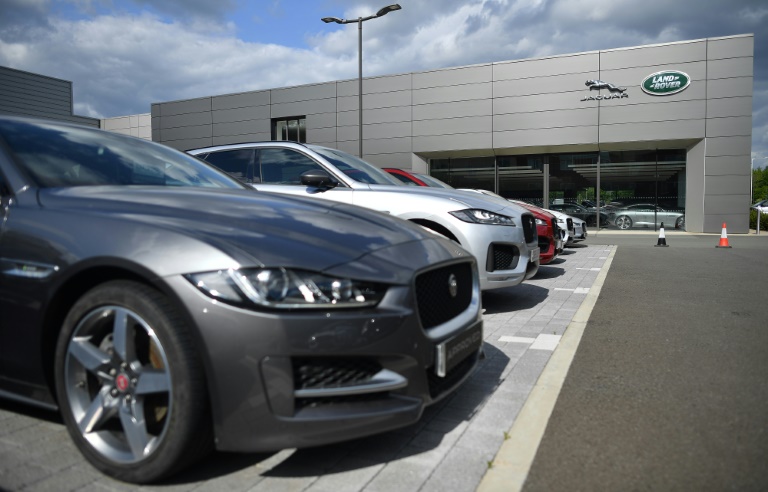
Revenues at British subsidiary Jaguar Land Rover (JLR) rose 35.9 percent to £5.26 billion ($6 billion) in the quarter as production of new Range Rover models improved, but it still lost £173 million.

“Demand for our most profitable and desired vehicles remains strong,” JLR chief Thierry Bollore said in a statement.

“We expect to continue to improve our performance in the second half of the year, as new agreements with semiconductor partners take effect,” he added.

Pending orders at JLR, Britain’s biggest carmaker, stood at 205,000 units at the end of September, as chip supply constraints persisted.

Revenue from Tata Motors’ commercial vehicle business jumped 35 percent year-on-year to 164.20 billion rupees, as India bounced back from a 2021 pandemic sales dent.

But commercial vehicle exports fell 22 percent in the quarter, impacted by “financial crisis in (a) few export markets”, with commodity price inflation and foreign exchange movements also eating into profit margins.

Demand for passenger vehicles remained strong, with revenues up 71 percent on-year to 125.47 billion rupees, buoyed by Indian festival season demand during the quarter.

Shares in Tata Motors closed 0.44 percent lower in Mumbai ahead of the earnings announcement.

Close Bitnami banner
Bitnami