AFP

Tense US midterm race sparks fear of misinformation surge

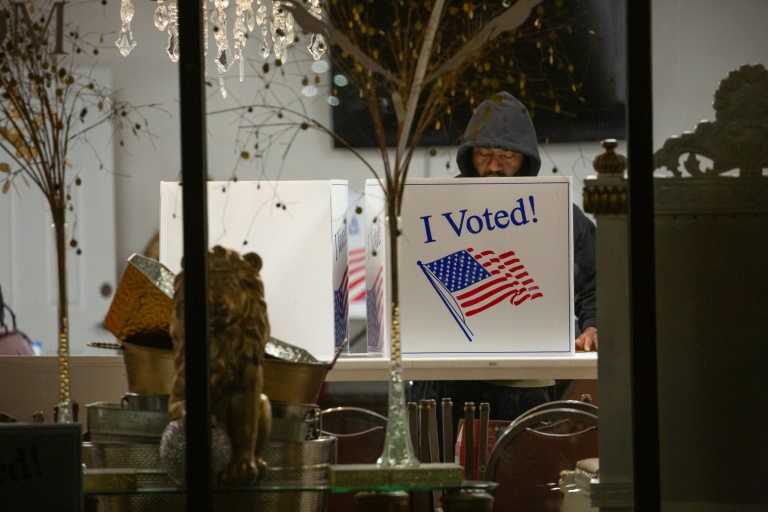
A gush of misinformation around US midterm elections could turn into a torrent after voting ends, experts warn, as tensions grow around key razor-tight races.

Some results are not expected to be declared for days or weeks, a delay that could trigger what observers fear will be a flood of bitter challenges and unfounded claims of election malpractice.

Far-right Republican candidates -– who endorse former president Donald Trump’s baseless claim that the 2020 election was stolen from him –- have already seized on isolated voting machine glitches to launch what many saw as preemptive efforts to discredit the results.

“After election night, the focus will narrow,” the Election Integrity Partnership (EIP), a non-partisan research group, said in a report.

“As the public wakes up on Wednesday… to find some races still in play and some races in which their candidate unexpectedly lost, partisans will swing their attention to the rumors most relevant to those races, seeking to amplify them and spin them into larger stories.”

The main focus is on the tight races in battleground states — including Georgia, Pennsylvania, Nevada and Arizona -– with a single seat enough to swing control of the Senate. 

“If we have close elections, particularly if they involve party control of the US Senate, disinformation will get worse,” Rick Hasen, a professor and director of the “Safeguarding Democracy Project” at UCLA law school, told AFP.

“It has now become common among Trump’s supporters to believe that election theft in the US is common, despite all reliable evidence to the contrary. And these kinds of claims could well arise again in close elections.”

– Threat of violence –

The disputes could set the stage for a prolonged period of uncertainty, particularly as more than half the Republican midterm candidates are “election deniers” who have repeated Trump’s debunked claims of fraud in the 2020 polls.

“If candidates do not concede, or decide to litigate the election, this period will extend, with each day selecting some piece of election-day or counting-period evidence to amplify or extend,” the EIP report said.  

Experts also warn that right-wing “election observers” –- mobilized by Trump supporters to hunt for voter fraud — could baselessly claim that they were unable to spot it after legal curbs on their activities, raising the possibility of violent confrontation.

The misinformation flooding social media has already included some calls for violence by election conspiracy theorists.

The SITE Intelligence Group, which monitors online extremists, said ultranationalists were encouraging an “armed, violent intervention” at Georgia ballot counting centers.

The call, reports said, came in response to news that the deadline for mail-in ballots in one state county had been extended after a logistical hiccup.

– ‘Stream of disinformation’ –

The Center for American Progress, a non-partisan think-tank, said misinformation tends to “not only continue but change and worsen in the post-election environment.”

“Election deniers may loudly launch baseless legal challenges. Politically motivated election officials may refuse to certify sound election results,” the think-tank said in a report.

“And most obviously, former President Trump may declare his intent to run for president in 2024, even before any newly elected officials are seated, giving him and his constant stream of disinformation increased media attention.”

Republican politicians, including Trump, began casting doubts on the integrity of the midterm election after technical problems with voting machines were reported in one part of Arizona.

“Can this possibly be true when a vast majority of Republicans waited for today to Vote?” Trump said on his Truth Social platform.

“Here we go again? The people will not stand for it!!!”

He was not alone.

“Hard to know if we’re seeing incompetence or something worse,” Blake Masters, a Trump-endorsed Senate candidate from Arizona, wrote on Twitter.

“All we know right now is that the Democrats are hoping you will get discouraged and go home.”

On Tuesday, officials in Arizona’s Maricopa County said about 20 percent of the 223 polling stations there were experiencing difficulties but it would not affect the accuracy of the vote.

“People have been spreading misinformation about our elections in the past few months,” the Maricopa County Recorder’s Office wrote on Twitter.

“In the weeks ahead (we anticipate) more of that. We’re prepared to combat misinformation with the truth.”
Asian markets turn tepid after China factory data

Asian stocks made a positive start Wednesday following gains on Wall Street but lost momentum as factory gate prices in China fell for the first time in nearly two years.

Shares in Tokyo and Hong Kong rose at the open, with the United States bracing for a tense night of midterm election results.

But they dipped in mid-morning trade after official data showed the world’s second-largest economy languishing under Beijing’s strict zero-Covid policy.

Markets had climbed in New York and Europe on Tuesday as polls opened in crucial US elections that will shape the political fortunes of President Joe Biden.

Biden’s Democrats are facing a gargantuan struggle to hang onto control of Congress, and a Republican victory could pave the way for a White House comeback bid by Donald Trump.

Such a result could also lead to political deadlock in Washington — a prospect welcomed by investors “as it prevents any significant shifts in policy,” according to Scope Markets analyst James Hughes.

At the same time, market players are eying US inflation data due on Thursday, causing the dollar to retreat, said Edward Moya, senior market analyst at OANDA.

“The dollar got crushed today as a short-covering move accelerated as investors embraced risk appetite ahead of the midterm elections and Thursday’s pivotal inflation report,” he said in a note late Tuesday.

Tokyo was down 0.2 percent at the break, while Hong Kong lost 0.1 percent in morning trade, with Shanghai up 0.3 percent.

Other Asian markets were mostly higher, with Taipei up 1.4 percent, Seoul gaining 1.1 percent and Singapore up 0.3 percent. Sydney rose 0.6 percent while Jakarta was flat.

Speculation over how long Beijing will stick with its harsh lockdown-and-testing policies designed to stamp out Covid-19 has fuelled volatility in Chinese markets in recent days.

Official data showed Wednesday that China’s producer price index (PPI) fell by 1.3 percent on-year in October, pushing it into negative territory for the first time since December 2020.

The consumer price index (CPI) — the main gauge for retail inflation — rose by 2.1 percent on-year in October, moderating slightly from September’s two-year high of 2.8 percent.

Some stocks turned negative after “China inflation data printed a rather gloomy picture, with PPI remaining deflationary and CPI much weaker than expected, pointing to waning demand,” Stephen Innes of SPI Asset Management said in a note.

“Rolling lockdowns in China, as Covid cases rebound, are catching oil traders leaning the wrong way,” he added. Both main crude indexes were down more than 2.5 percent.

– Key figures around 0230 GMT –

Tokyo – Nikkei 225: DOWN 0.2 percent at 27,827.16 (break)

Hong Kong – Hang Seng Index: DOWN 0.1 percent at 16,539.83

Shanghai – Composite: UP 0.3 percent at 3,072.68

Pound/dollar: UP at $1.1544 from $1.1468 on Tuesday

Euro/dollar: UP at $1.0074 from $1.0005

Dollar/yen: DOWN at 145.465 yen from 146.26 yen

Euro/pound: UP at 87.28 pence from 87.23 pence

West Texas Intermediate: DOWN 3.3 percent at $88.79 per barrel

Brent North Sea crude: DOWN 2.6 percent at $95.32 per barrel

New York – Dow: UP 1.0 percent at 33,160.83 (close)

London – FTSE 100: UP 0.1 percent at 7,306.14 (close)

Asian markets turn tepid after China factory data

Asian stocks made a positive start Wednesday following gains on Wall Street but lost momentum as factory gate prices in China fell for the first time in nearly two years.

Shares in Tokyo and Hong Kong rose at the open, with the United States bracing for a tense night of midterm election results.

But they dipped in mid-morning trade after official data showed the world’s second-largest economy languishing under Beijing’s strict zero-Covid policy.

Markets had climbed in New York and Europe on Tuesday as polls opened in crucial US elections that will shape the political fortunes of President Joe Biden.

Biden’s Democrats are facing a gargantuan struggle to hang onto control of Congress, and a Republican victory could pave the way for a White House comeback bid by Donald Trump.

Such a result could also lead to political deadlock in Washington — a prospect welcomed by investors “as it prevents any significant shifts in policy,” according to Scope Markets analyst James Hughes.

At the same time, market players are eying US inflation data due on Thursday, causing the dollar to retreat, said Edward Moya, senior market analyst at OANDA.

“The dollar got crushed today as a short-covering move accelerated as investors embraced risk appetite ahead of the midterm elections and Thursday’s pivotal inflation report,” he said in a note late Tuesday.

Tokyo was down 0.2 percent at the break, while Hong Kong lost 0.1 percent in morning trade, with Shanghai up 0.3 percent.

Other Asian markets were mostly higher, with Taipei up 1.4 percent, Seoul gaining 1.1 percent and Singapore up 0.3 percent. Sydney rose 0.6 percent while Jakarta was flat.

Speculation over how long Beijing will stick with its harsh lockdown-and-testing policies designed to stamp out Covid-19 has fuelled volatility in Chinese markets in recent days.

Official data showed Wednesday that China’s producer price index (PPI) fell by 1.3 percent on-year in October, pushing it into negative territory for the first time since December 2020.

The consumer price index (CPI) — the main gauge for retail inflation — rose by 2.1 percent on-year in October, moderating slightly from September’s two-year high of 2.8 percent.

Some stocks turned negative after “China inflation data printed a rather gloomy picture, with PPI remaining deflationary and CPI much weaker than expected, pointing to waning demand,” Stephen Innes of SPI Asset Management said in a note.

“Rolling lockdowns in China, as Covid cases rebound, are catching oil traders leaning the wrong way,” he added. Both main crude indexes were down more than 2.5 percent.

– Key figures around 0230 GMT –

Tokyo – Nikkei 225: DOWN 0.2 percent at 27,827.16 (break)

Hong Kong – Hang Seng Index: DOWN 0.1 percent at 16,539.83

Shanghai – Composite: UP 0.3 percent at 3,072.68

Pound/dollar: UP at $1.1544 from $1.1468 on Tuesday

Euro/dollar: UP at $1.0074 from $1.0005

Dollar/yen: DOWN at 145.465 yen from 146.26 yen

Euro/pound: UP at 87.28 pence from 87.23 pence

West Texas Intermediate: DOWN 3.3 percent at $88.79 per barrel

Brent North Sea crude: DOWN 2.6 percent at $95.32 per barrel

New York – Dow: UP 1.0 percent at 33,160.83 (close)

London – FTSE 100: UP 0.1 percent at 7,306.14 (close)

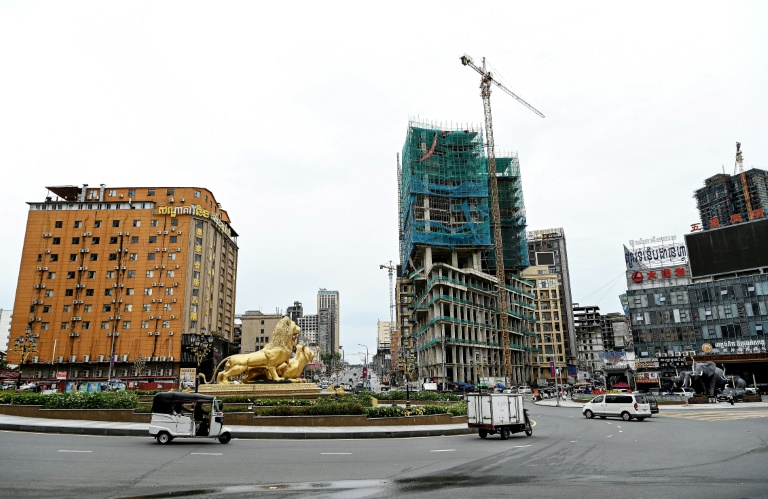
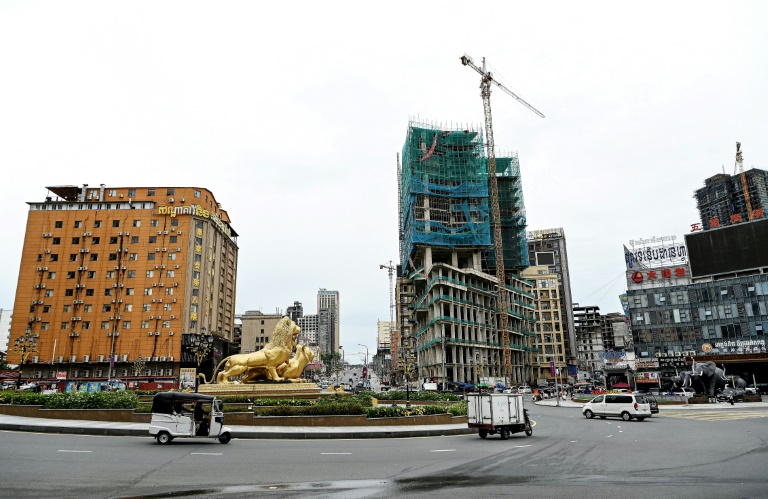
Inside the 'living hell' of Cambodia's scam operations

Trafficked, beaten and locked up far from his family in China, Lu was one of thousands of people in Cambodia forced to operate online scams to line their captors’ pockets.

Covid shutdowns had left the builder out of work, so when he heard he could earn $2,000 a month on a construction project in Cambodia, he jumped at the chance.

But he soon realised he had been lured by a scamming gang to a compound in the seaside resort of Sihanoukville, along with hundreds of others.

There he was forced to work 12 to 16 hour shifts, trawling social media and dating apps on a hunt for victims to scam out of huge sums.

“Once I arrived it was too late to escape,” Lu told AFP. “But as long as I was alive, I would keep trying.”

People from countries around Asia — including Vietnam, the Philippines, Thailand, Malaysia, China, Taiwan, Hong Kong, Bangladesh and India — have been sucked into similar operations.

Some, like 34-year-old Lu, have made it out, though thousands of others are feared still trapped.

In August, the UN special rapporteur on the situation of human rights in Cambodia, Vitit Muntarbhorn, said the trafficking victims “were experiencing a living hell often resulting in torture and even death”.

– Metal bars and barbed wire – 

Sihanoukville was once a sleepy resort town, but it was transformed by a vast influx of Chinese investment.

Dozens of casinos sprang up in recent years, making it a hub for Chinese gamblers and drawing in international crime groups.

As travel restrictions bit during the pandemic, these groups shifted their focus.

Jeremy Douglas, of the United Nations Office for Drugs and Crime (UNODC), said “criminal groups moved casino businesses online, and some then did a pivot and added online and phone scams”.

One gang member told AFP on condition of anonymity that the first people to fall prey to operations like his were Chinese nationals already in Cambodia.

Then gangs started trafficking people into the country.

Douglas of the UNODC said “thousands, and some have estimated possibly tens of thousands” of people have been ensnared.

To stop victims from escaping, compounds were installed with metal window bars and barbed wire.

“Once they arrived in the compound, they could not leave,” the gang member said.

“People were beaten or tortured and sold if they refused to scam others.”

Within Cambodia, some were sold on to other gangs, the source said. Those with good IT or English-language skills could be sold for up to $50,000.

– ‘The real mafia’ – 

AFP interviewed four trafficking victims who said they too received lucrative job offers during the pandemic.

A 38-year-old Malaysian Chinese man called Roy described flying to Phnom Penh and being met by a woman in smart office wear who whisked him through immigration and into a car for the five-hour drive to Sihanoukville.

There, he was taken to a complex of apartment blocks a dozen or so storeys tall, housing a mix of accommodation and office rooms.

“It just looked like a normal office, with three rows of tables with monitors and keyboards, just like a cybercafe,” Roy told AFP.

But he said “once you get in you know you’re not doing customer service”.

Roy and others like him had their passports taken away, and were instructed to set up fake profiles on apps and dating sites including TikTok, Facebook, Instagram and WhatsApp.

Under the constant threat of violence, they would groom targets to pour money into crypto currency or other investment platforms.

Others were forced to build online “love” relationships with their targets and to scam them under the guise of needing help to pay debts off.

There are no reliable figures on how much money the gangs have netted from the scams, though the UN’s Douglas said the numbers are “staggering”.

It is not clear where the money ends up, he added, though criminal proceeds are often bundled together with online betting profits, with many of the scam compounds located near legal gambling businesses.

The gang member in Sihanoukville told AFP he did not know who he was ultimately working for.

“We don’t know who is who,” he said. “They are the real mafia.”

– ‘Shock, kick, shock’ –

Forced scammers who resisted paid a high price. Construction worker Lu said he was “beaten quite often” because he was caught trying to escape.

Others said gang members used electric batons to inflict shocks, or forced workers into rooms too small to stand in, depriving them of water, food and light for hours.

“They ask someone to lie down and then kick them, like a dog,” Roy said.

“Sometimes (they would) get an electric shock, kick and shock. They would get a five-minute to 10-minute beating.”

Some, like Roy, were fortunate.

After being told he would have to buy his way out for $20,000, he was rescued after contacting Taiwanese victims group the Global Anti-Trafficking Organisation (GASO).

The group works with Cambodian officials to facilitate rescues and repatriate citizens.

Others have taken a more dramatic approach — in August dozens of Vietnamese workers escaped a casino in southern Kandal province and swam across a river back to their homeland.

Attention on the issue has grown: in July the United States downgraded Cambodia in its annual human trafficking report.

After months of official denials, Prime Minister Hun Sen ordered a hunt for ringleaders and authorities launched a string of high-profile raids in August.

In September, police freed more than 1,000 foreigners from three Sihanoukville compounds.

At one site, a swoop netted nearly 9,000 mobile phones, 800 computers — and chillingly, handcuffs and electric shock instruments.

It was during one such raid that Lu was released.

– Crackdown or relocation? – 

Still, international observers and rights groups are sceptical of the depth of the government’s crackdown.

Jacob Sims, International Justice Mission’s Cambodia director, said the efforts need to go further than raids and rescues.

“Criminal accountability for the ringleaders of the transnational organised crime networks is absolutely essential if we hope to eradicate this issue,” he said.

There are fears that rather than shutting down, the groups are simply relocating.

“Today it is an operation in Cambodia, but tomorrow a gang under pressure uproots and shifts to Myanmar, Laos or the Philippines — and this has happened,” the UN’s Douglas said.

Back in Cambodia, those rescued by police, like Lu, face an uncertain future.

While he has evaded immigration detention, he told AFP he cannot afford to return to his wife and nine-year-old child in China.

A spokesperson for China’s foreign ministry told AFP the government was working with Cambodia and other countries to fight transnational crime, and that it “resolutely upholds both the safety and legal rights and privileges of Chinese citizens abroad”.

Lu said he had received no help from the Chinese embassy.

“The Chinese embassy only has one thing to say: ‘Adults have to pay for their decisions,'” he said.

burs-rbu/pdw/ser

Inside the 'living hell' of Cambodia's scam operations

Trafficked, beaten and locked up far from his family in China, Lu was one of thousands of people in Cambodia forced to operate online scams to line their captors’ pockets.

Covid shutdowns had left the builder out of work, so when he heard he could earn $2,000 a month on a construction project in Cambodia, he jumped at the chance.

But he soon realised he had been lured by a scamming gang to a compound in the seaside resort of Sihanoukville, along with hundreds of others.

There he was forced to work 12 to 16 hour shifts, trawling social media and dating apps on a hunt for victims to scam out of huge sums.

“Once I arrived it was too late to escape,” Lu told AFP. “But as long as I was alive, I would keep trying.”

People from countries around Asia — including Vietnam, the Philippines, Thailand, Malaysia, China, Taiwan, Hong Kong, Bangladesh and India — have been sucked into similar operations.

Some, like 34-year-old Lu, have made it out, though thousands of others are feared still trapped.

In August, the UN special rapporteur on the situation of human rights in Cambodia, Vitit Muntarbhorn, said the trafficking victims “were experiencing a living hell often resulting in torture and even death”.

– Metal bars and barbed wire – 

Sihanoukville was once a sleepy resort town, but it was transformed by a vast influx of Chinese investment.

Dozens of casinos sprang up in recent years, making it a hub for Chinese gamblers and drawing in international crime groups.

As travel restrictions bit during the pandemic, these groups shifted their focus.

Jeremy Douglas, of the United Nations Office for Drugs and Crime (UNODC), said “criminal groups moved casino businesses online, and some then did a pivot and added online and phone scams”.

One gang member told AFP on condition of anonymity that the first people to fall prey to operations like his were Chinese nationals already in Cambodia.

Then gangs started trafficking people into the country.

Douglas of the UNODC said “thousands, and some have estimated possibly tens of thousands” of people have been ensnared.

To stop victims from escaping, compounds were installed with metal window bars and barbed wire.

“Once they arrived in the compound, they could not leave,” the gang member said.

“People were beaten or tortured and sold if they refused to scam others.”

Within Cambodia, some were sold on to other gangs, the source said. Those with good IT or English-language skills could be sold for up to $50,000.

– ‘The real mafia’ – 

AFP interviewed four trafficking victims who said they too received lucrative job offers during the pandemic.

A 38-year-old Malaysian Chinese man called Roy described flying to Phnom Penh and being met by a woman in smart office wear who whisked him through immigration and into a car for the five-hour drive to Sihanoukville.

There, he was taken to a complex of apartment blocks a dozen or so storeys tall, housing a mix of accommodation and office rooms.

“It just looked like a normal office, with three rows of tables with monitors and keyboards, just like a cybercafe,” Roy told AFP.

But he said “once you get in you know you’re not doing customer service”.

Roy and others like him had their passports taken away, and were instructed to set up fake profiles on apps and dating sites including TikTok, Facebook, Instagram and WhatsApp.

Under the constant threat of violence, they would groom targets to pour money into crypto currency or other investment platforms.

Others were forced to build online “love” relationships with their targets and to scam them under the guise of needing help to pay debts off.

There are no reliable figures on how much money the gangs have netted from the scams, though the UN’s Douglas said the numbers are “staggering”.

It is not clear where the money ends up, he added, though criminal proceeds are often bundled together with online betting profits, with many of the scam compounds located near legal gambling businesses.

The gang member in Sihanoukville told AFP he did not know who he was ultimately working for.

“We don’t know who is who,” he said. “They are the real mafia.”

– ‘Shock, kick, shock’ –

Forced scammers who resisted paid a high price. Construction worker Lu said he was “beaten quite often” because he was caught trying to escape.

Others said gang members used electric batons to inflict shocks, or forced workers into rooms too small to stand in, depriving them of water, food and light for hours.

“They ask someone to lie down and then kick them, like a dog,” Roy said.

“Sometimes (they would) get an electric shock, kick and shock. They would get a five-minute to 10-minute beating.”

Some, like Roy, were fortunate.

After being told he would have to buy his way out for $20,000, he was rescued after contacting Taiwanese victims group the Global Anti-Trafficking Organisation (GASO).

The group works with Cambodian officials to facilitate rescues and repatriate citizens.

Others have taken a more dramatic approach — in August dozens of Vietnamese workers escaped a casino in southern Kandal province and swam across a river back to their homeland.

Attention on the issue has grown: in July the United States downgraded Cambodia in its annual human trafficking report.

After months of official denials, Prime Minister Hun Sen ordered a hunt for ringleaders and authorities launched a string of high-profile raids in August.

In September, police freed more than 1,000 foreigners from three Sihanoukville compounds.

At one site, a swoop netted nearly 9,000 mobile phones, 800 computers — and chillingly, handcuffs and electric shock instruments.

It was during one such raid that Lu was released.

– Crackdown or relocation? – 

Still, international observers and rights groups are sceptical of the depth of the government’s crackdown.

Jacob Sims, International Justice Mission’s Cambodia director, said the efforts need to go further than raids and rescues.

“Criminal accountability for the ringleaders of the transnational organised crime networks is absolutely essential if we hope to eradicate this issue,” he said.

There are fears that rather than shutting down, the groups are simply relocating.

“Today it is an operation in Cambodia, but tomorrow a gang under pressure uproots and shifts to Myanmar, Laos or the Philippines — and this has happened,” the UN’s Douglas said.

Back in Cambodia, those rescued by police, like Lu, face an uncertain future.

While he has evaded immigration detention, he told AFP he cannot afford to return to his wife and nine-year-old child in China.

A spokesperson for China’s foreign ministry told AFP the government was working with Cambodia and other countries to fight transnational crime, and that it “resolutely upholds both the safety and legal rights and privileges of Chinese citizens abroad”.

Lu said he had received no help from the Chinese embassy.

“The Chinese embassy only has one thing to say: ‘Adults have to pay for their decisions,'” he said.

burs-rbu/pdw/ser

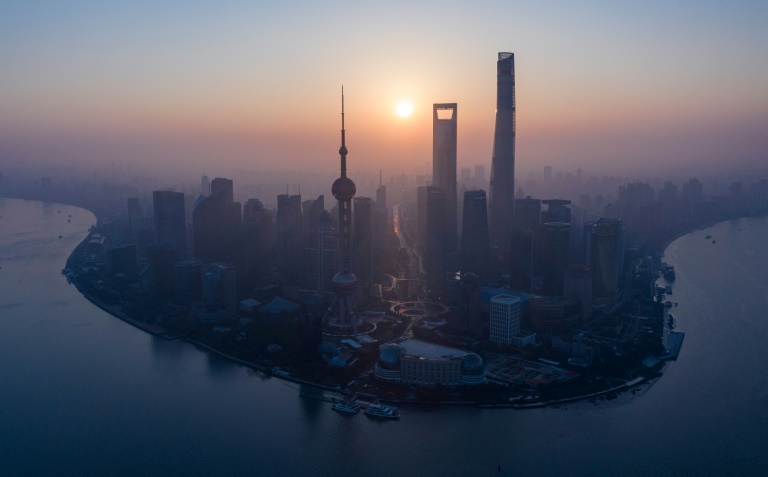
China's ultra-rich squeezed by slowing economy: Hurun ranking

The wealth of China’s billionaires this year dropped by the largest amount in more than two decades, according to an annual ranking, as zero-Covid curbs and a property market crisis stall the world’s second-largest economy.

The Hurun China Rich List, released Tuesday, said the total wealth of all individuals with a minimum net worth of 5 billion yuan ($691 million) dropped by 18 percent to $3.5 trillion.

Only 1,305 people made it onto the list — an 11 percent net decrease compared with last year, and the biggest drop in 24 years. 

The fortunes of China’s ultra-rich have been battered by Beijing’s harsh zero-Covid policy, which has heavily disrupted production and supply chains.

They have also taken a hit from stock market routs during a two-year crackdown on the tech industry, and suffered from geopolitical volatility caused by events such as the war in Ukraine.

The property and healthcare sectors were hit especially hard, according to the list.

Property developer Yang Huiyan of Country Garden Holdings lost the most personal wealth at $15.7 billion this year, while Pony Ma, founder of tech and gaming giant Tencent, lost $14.6 billion after a sweeping crackdown on the gaming industry last year.

China’s three richest people stayed the same as last year, with Zhong Shanshan, founder of bottled water company Nongfu Spring, increasing his wealth by 17 percent to $65 billion.

Zhang Yiming, the founder of TikTok parent ByteDance, retained second place but saw his wealth drop by 28 percent to $35 billion after the company’s valuation dropped.

Alibaba founder Jack Ma fell from fifth to ninth place after losing 29 percent of his wealth to $25.7 billion, while Pony Ma slipped from fourth place to fifth.

Nearly 300 individuals listed last year were absent from this year’s list, most from the property industry, which has faced a spiralling debt crisis after the government imposed borrowing curbs in 2020. 

The chairman of property giant Evergrande, Xu Jiayin, fell out of the 100 richest to 172nd place as his company sagged under over $300 billion of debt.

The International Monetary Fund has predicted that China’s annual GDP growth will only reach 3.2 percent this year.

China's ultra-rich squeezed by slowing economy: Hurun ranking

The wealth of China’s billionaires this year dropped by the largest amount in more than two decades, according to an annual ranking, as zero-Covid curbs and a property market crisis stall the world’s second-largest economy.

The Hurun China Rich List, released Tuesday, said the total wealth of all individuals with a minimum net worth of 5 billion yuan ($691 million) dropped by 18 percent to $3.5 trillion.

Only 1,305 people made it onto the list — an 11 percent net decrease compared with last year, and the biggest drop in 24 years. 

The fortunes of China’s ultra-rich have been battered by Beijing’s harsh zero-Covid policy, which has heavily disrupted production and supply chains.

They have also taken a hit from stock market routs during a two-year crackdown on the tech industry, and suffered from geopolitical volatility caused by events such as the war in Ukraine.

The property and healthcare sectors were hit especially hard, according to the list.

Property developer Yang Huiyan of Country Garden Holdings lost the most personal wealth at $15.7 billion this year, while Pony Ma, founder of tech and gaming giant Tencent, lost $14.6 billion after a sweeping crackdown on the gaming industry last year.

China’s three richest people stayed the same as last year, with Zhong Shanshan, founder of bottled water company Nongfu Spring, increasing his wealth by 17 percent to $65 billion.

Zhang Yiming, the founder of TikTok parent ByteDance, retained second place but saw his wealth drop by 28 percent to $35 billion after the company’s valuation dropped.

Alibaba founder Jack Ma fell from fifth to ninth place after losing 29 percent of his wealth to $25.7 billion, while Pony Ma slipped from fourth place to fifth.

Nearly 300 individuals listed last year were absent from this year’s list, most from the property industry, which has faced a spiralling debt crisis after the government imposed borrowing curbs in 2020. 

The chairman of property giant Evergrande, Xu Jiayin, fell out of the 100 richest to 172nd place as his company sagged under over $300 billion of debt.

The International Monetary Fund has predicted that China’s annual GDP growth will only reach 3.2 percent this year.

W.House hopeful DeSantis boosts 2024 chances with Florida reelection

Florida Governor Ron DeSantis appeared headed for a landslide victory Tuesday over his Democratic rival, boosting his chances of successfully challenging Donald Trump for the 2024 Republican presidential nomination.

Florida’s unofficial election night results put the 44-year-old DeSantis more than 20 points ahead of Democrat Charlie Crist — a margin of nearly 1.5 million votes, with ballots still being counted.

“Thanks to the overwhelming support of the people of Florida we not only won re-election, we have rewritten the political map,” DeSantis said in Tampa in a victory speech cheered on by supporters.

Hailing his “landslide victory,” the governor launched into a searing critique of the “woke agenda” of liberal politicians.

“We have embraced freedom. We have maintained law and order, we have protected the rights of parents. We have respected our taxpayers and we reject woke ideology,” DeSantis said.

“We fight the woke in the legislature, we fight the woke in the schools, we fight the woke in the corporations. We will never, ever surrender to the woke mob. Florida is where woke goes to die.”

While DeSantis has not declared his candidacy for president, he is clearly keeping his options open, refusing to commit to serving out a full second term as governor.

Trump took aim at his potential presidential rival’s prospects, telling Fox News the day before the vote that if DeSantis runs for the White House, “he could hurt himself very badly. I really believe he could hurt himself badly.”

“I think he would be making a mistake, I think the base would not like it,” Trump said, adding: “I don’t think it would be good for the party.”

DeSantis gained national attention for his opposition to strict measures aimed at slowing the spread of Covid-19, and has made himself a standard bearer of the conservative backlash to growing tolerance for LGBTQ rights.

The Florida governor also signed a 15-week abortion ban into law earlier this year, joining a nationwide push by conservatives to restrict reproductive rights.

In another appeal to hardline conservative politics, he sent dozens of undocumented migrants by plane to wealthy Martha’s Vineyard in Massachusetts — a move that sparked a class action lawsuit against him in the Democratic-led state.

Crist, 66, served as Florida’s governor from 2007 to 2011 as a Republican, but later switched parties, winning election to the US House of Representatives as a Democrat before resigning and pursuing his gubernatorial bid.

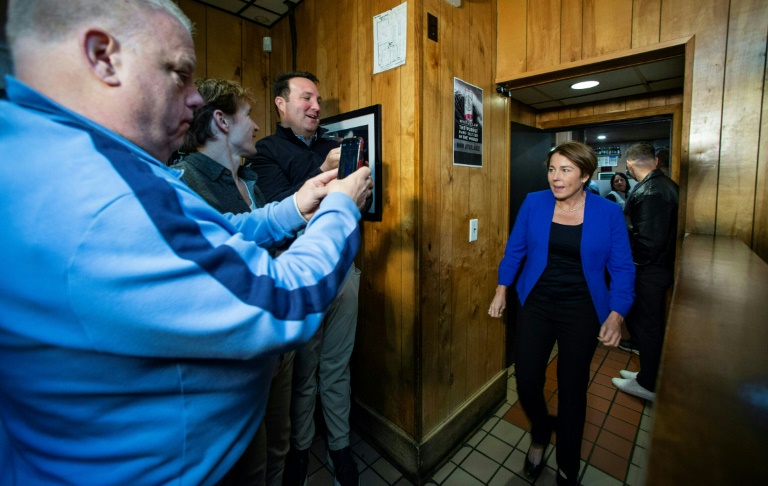
Maura Healey elected US's first openly lesbian governor

The US state of Massachusetts on Tuesday elected Democrat Maura Healey as America’s first openly lesbian governor, TV networks said.

Healey, 51, flipped the seat from the Republicans, comfortably defeating opponent Geoff Diehl, according to projections by NBC, Fox News and CNN.

She told cheering supporters at her election night party in Boston that she was “proud” of her historic victory.

“To every little girl and every LGBTQ person out there, you can be anything you want to be,” Healey said. 

LGBTQ+ rights group the Human Rights Campaign hailed her triumph.

“Massachusetts embraced a platform of equality and inclusion by electing a pro-equality champion,” the organization’s interim president Joni Madison, said in a statement.

Healey’s win returns the state’s governorship to Democrats after eight years of Republican leadership under Charlie Baker, who opted not to seek a third term.

She was on track to heavily beat Diehl, who had been endorsed by former president Donald Trump.

The result had been widely expected, with Healey — Massachusetts’ attorney general since 2014 — comfortably ahead in the polls in the runup to the vote.

Healey will also become Massachusetts’ first ever female governor. Her victory with running mate Kim Driscoll means that women will serve as both governor and lieutenant governor of a state for the first time, according to the Center for American Women and Politics at Rutgers University.

LGBTQ candidates are running in all 50 states and the capital Washington for the first time in this year’s midterm election, as the community becomes an increasingly powerful voting constituency.

Democrat Tina Kotek, who is also lesbian, was bidding to match Healey’s win in Oregon on Tuesday in a governor’s race regarded as a toss-up.

Almost 90 percent of the LGBTQ candidates who entered this year’s primary races are Democrats.

China factory gate prices fall for first time in nearly two years

Factory gate prices in China were down for the first time in nearly two years last month, official data showed Wednesday, as falling global commodity prices made their mark on an economy ailing under strict Covid controls.

The producer price index (PPI) fell by 1.3 percent on-year in October, according to the National Bureau of Statistics (NBS), pushing it into negative territory for the first time since December 2020.

The figure represented a reduction from September’s 0.9 percent rise.

“In October, demand in some industries rose, and the national PPI rose slightly month-on-month,” said NBS statistician Dong Lijuan.

“But owing to the high comparison base from the same period last year, the year-on-year figure went from growth into decline.”

“Factory-gate inflation is likely to continue falling over the coming quarters due to a further decline in global commodity prices and a higher base for comparison,” said Julian Evans-Pritchard, senior China economist at Capital Economics.

“We expect it to stay in negative territory through the final months of the year and much of 2023.”

The consumer price index — the main gauge for retail inflation — rose by 2.1 percent on-year in October, the NBS said, moderating slightly from September’s two-year high of 2.8 percent.

Consumers in China have been largely spared the impact of a global surge in food and energy costs following Russia’s invasion of Ukraine.

“Under the impact of factors including a drop in consumer demand after the (National Day) holiday and last year’s high base of comparison, the rise in consumer prices somewhat fell back,” Dong said.

– Zero-Covid impact –

China is the last major economy wedded to a zero-Covid strategy, stamping out emerging outbreaks as they occur through snap lockdowns, mass testing and strict quarantines.

Authorities in areas where cases arise frequently invoke the policy to shut down businesses and confine people to their homes at short notice.

Much of the country also remains under a patchwork of travel restrictions, roiling international supply chains and hammering domestic demand.

The Chinese economy beat expectations to grow 3.9 percent in the third quarter, but analysts expect that it will fall well below this year’s official growth target of around 5.5 percent.

Close Bitnami banner
Bitnami