AFP

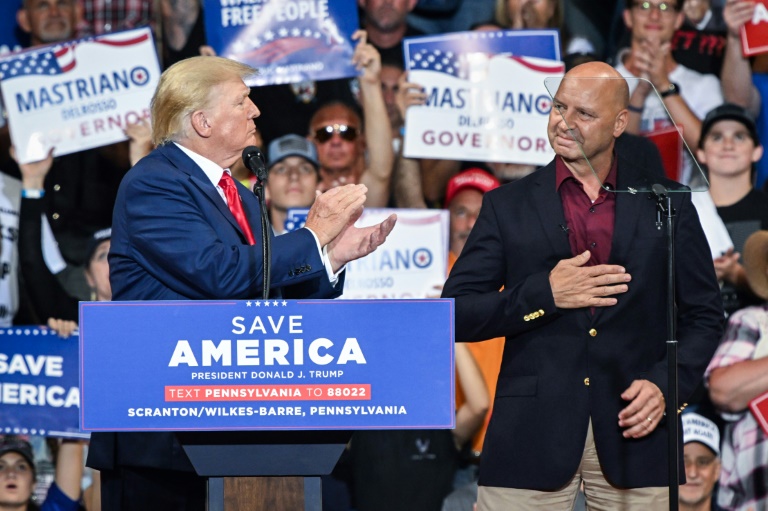
Trump devotee Mastriano loses Pennsylvania governor's race

Donald Trump acolyte, 2020 election result denier and far-right Christian nationalist Doug Mastriano lost his bid to become the Republican governor of Pennsylvania, US media projected Tuesday.

Mastriano, 58, was one of the most polarizing candidates to receive Trump’s backing.

The retired military officer has been pictured with white supremacist groups and in Confederate uniform.

On the campaign trail he repeatedly insisted that the presidential election two years ago was stolen and endorsed the idea that state legislatures have the legal authority to override the popular vote.

Mastriano brought dozens of supporters with him to Washington for the January 6, 2021 protest against Joe Biden’s victory that turned into an insurrection — and was accused of crossing police lines during the violence.

He has talked dismissively of the “myth of the separation of church and state” and in 2019 starred in an independent film he helped fund set during World War II.

The movie cast evangelical Christians as members of a religious minority in Germany who were persecuted along with Jews, according to a recent New Yorker profile of Mastriano.

Mastriano plays an American military spy helping to evacuate them from the country and during one scene fights off a Nazi played by his son, the article said.

Mastriano has spoken at conferences that promote the QAnon conspiracy theory, which posits that Trump is fighting satanists and child sex traffickers in the Democratic Party, government and Hollywood.

Mastriano, who has served in the Pennsylvania senate since 2019, was poised to lose the governor’s race to Democratic candidate Josh Shapiro, NBC and Fox News projected.

Shapiro will succeed another Democrat, Tom Wolf, who has reached the state’s limit of two consecutive terms.

The 49-year-old Shapiro had led Mastriano in the polls in the runup to the vote.

Democratic governor holds off Republican challenge in New York

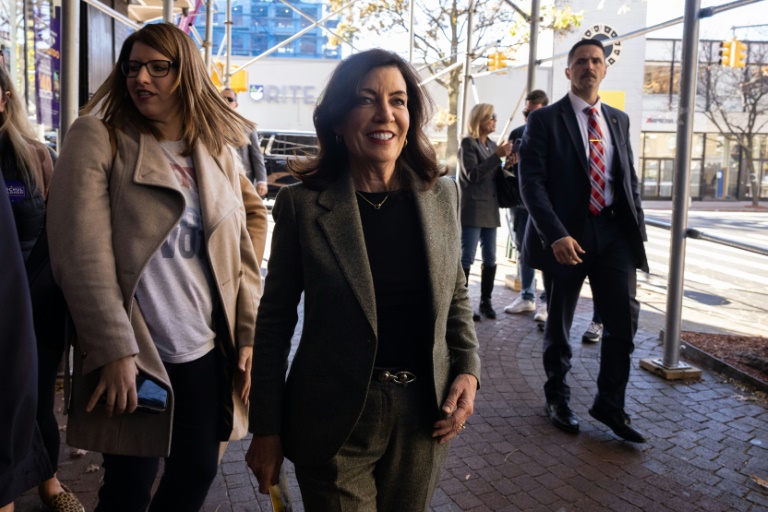
New York Governor Kathy Hochul, the Democratic incumbent and the first woman to serve in the post, on Tuesday fended off a stiff challenge from Republican congressman Lee Zeldin to win election, US networks projected.

Hochul, who took office after scandal-hit Andrew Cuomo resigned in August 2021, bested Zeldin, an ally of former president Donald Trump who voted against certifying Joe Biden’s 2020 election win.

The projections from ABC and NBC showed Hochul with a healthy lead over Zeldin, who in recent weeks had surged in polling, triggering handwringing from Democrats that the race in New York — long considered a reliable stronghold for the left — might prove far more competitive than expected.

It was an eyebrow-raising development in a state where twice as many residents are registered as Democrats as Republicans.

Democrats flew in their heaviest hitters — including President Joe Biden, Vice President Kamala Harris and the Clintons — for last-minute barnstorming on behalf of Hochul, 64.

Zeldin was extremely well-funded, particularly from the billionaire cosmetics heir Ronald Lauder, who spent more than $11 million in support of the right-winger’s candidacy, including attack ads on Hochul.

But along with visits from the Democratic party’s top brass, it appeared a strong push from progressives had supported the city turnout Hochul needed to secure her win.

“We’re proud that the NYWFP played a critical role in defeating the extreme right and protecting our communities. Now, Governor Hochul must respond to the call of voters and truly deliver for working New Yorkers,” tweeted the left-wing Working Families Party, which maintains a ballot line in the state and this year endorsed Hochul. 

Tuesday’s win for the Democrats also marks the first time New York state elected a woman to the governor’s mansion, as her previous time in the office was due to the resignation of Cuomo, whom she served under as lieutenant governor.

“I’m deeply honored to be elected Governor of the State of New York,” tweeted Hochul, a relatively conservative Democrat who hails from Republican-friendly upstate New York.

Eric Adams, New York City’s mayor who must work closely with the governor, heralded the news, saying that “history has been made!”

“Tonight, women and girls across the Empire State have seen another glass ceiling shattered.”

Trump-backed Vance wins US Senate seat in Ohio, boosting Republicans

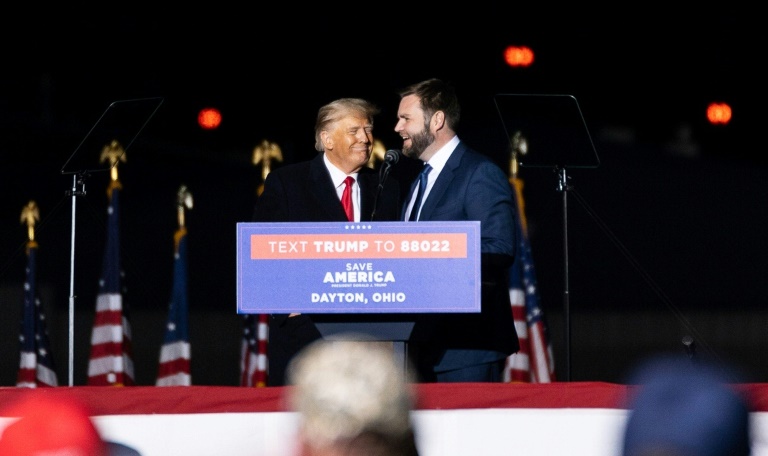
Republican J.D. Vance, the best-selling “Hillbilly Elegy” author backed by former president Donald Trump, won a contentious race for Ohio’s open US Senate seat Tuesday, networks projected, in a disappointment for Democratic President Joe Biden.

The win for the Republicans does not represent a gain of a seat in the 100-member Senate, as Vance and rival Tim Ryan, a Democratic congressman, were vying to replace retiring Republican Rob Portman.

But it marks a failure of Biden’s Democrats to flip a competitive seat in the all-important battle for control of the Senate, which is currently evenly split but held by Democrats because of Vice President Kamala Harris’s tie-breaking vote.

And it keeps Republican hopes alive of wresting control of the upper chamber from the opposing party in Tuesday’s midterm elections.

ABC and NBC both called the Ohio contest in Vance’s favor. With 93 percent of votes in and counted, he was ahead of Ryan by more than seven points.

Vance, 37, earned national attention — and acclaim — in 2016 with his memoir about his modest and chaotic childhood in a working-class town in Ohio that has become a symbol of the industrial decline of the American Rust Belt.

A military veteran who became a venture capitalist in California, Vance entered politics last year and won his party’s primary by drawing close to Trump, with whom he has had a topsy-turvy relationship.

Trump — always keen on burnishing his own brand — mocked the candidate at a September rally in Ohio, saying “J.D. is kissing my ass he wants my support so bad.”

Despite the humiliation, Vance welcomed Trump back to the Midwestern state Monday for a rally in Dayton on the eve of the election.

Vance’s fealty to Trump in red-leaning Ohio helped him remain competitive in the Senate race against Ryan, a working-class Democratic congressman who has kept his distance from Biden.

Trailblazers secure big wins in US midterms

From the first openly lesbian governor to the first Generation Z member-elect of Congress, early results in the US midterms heralded a good night for diversity.

– ‘Proud’ –

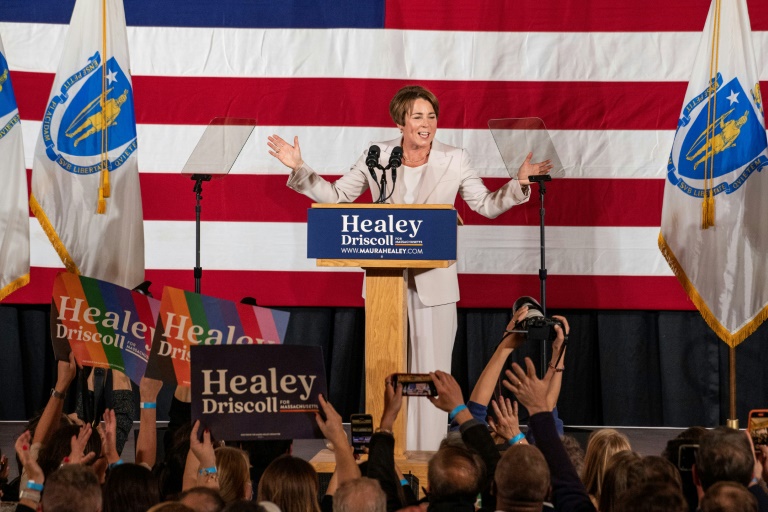
In Massachusetts, voters elected Democrat Maura Healey as America’s first out lesbian governor, TV networks projected.

The 51-year-old defeated Geoff Diehl, who had been endorsed by ex-president Donald Trump, to flip the office from the Republicans.

She said she was “proud” of her historic victory, telling cheering supporters that it sent a message “to every little girl and every LGBTQ person out there, you can be anything you want to be.”

Healey will also become Massachusetts’ first ever female governor. Her victory with running mate Kim Driscoll means that women will serve as both governor and lieutenant governor of a state for the first time.

– Gen Z –

In Florida, Democrat Maxwell Frost became the first member of Generation Z to be elected to Congress when he won a seat in the US House of Representatives.

The 25-year-old defeated Republican Calvin Wimbish in a district that leans solidly Democratic.

“We made history for Floridians, for Gen Z, and for everyone who believes we deserve a better future,” the African American tweeted.

In New Hampshire, another Gen Z candidate, 25-year-old Karoline Leavitt, is also running for Congress, although she hails from the opposite side of the political spectrum — and was in a more competitive race.

– Transgender man –

New Hampshire, meanwhile, became the first in US history to elect a transgender man to a state legislature, the Washington Post reported.

Democrat James Roesener was one of a record number of trans candidates on the ballot this year.

Roesener won’t become the first openly trans lawmaker as a number of transgender women have been elected before.

– Other notables –

Alabama elected Republican Katie Britt as its first female senator while Sarah Huckabee Sanders was projected to win the gubernatorial race in Arkansas to become its first female governor. 

Maryland elected its first Black governor, Democrat Wes Moore, while Markwayne Mullin will serve as the first Native American senator from Oklahoma in almost 100 years.

Turbulence ahead: Airline on the block in Sri Lanka reforms

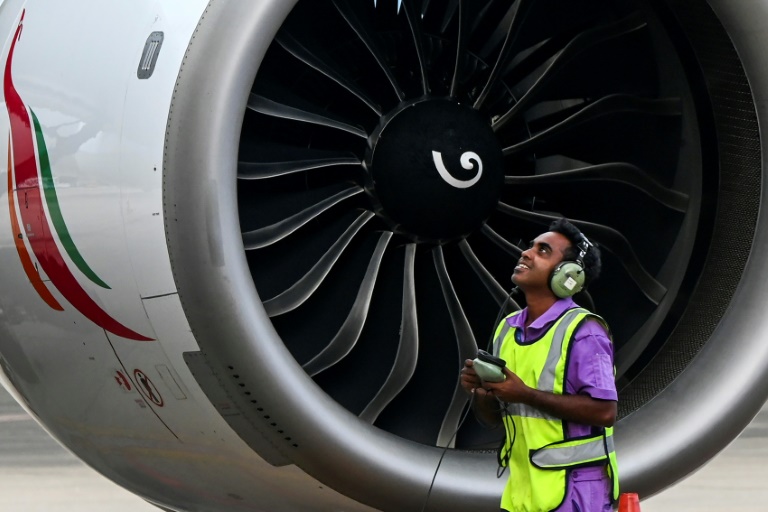
Dozens of state-owned Sri Lankan companies employing tens of thousands of people could be restructured or closed as part of an IMF bailout of the bankrupt country, with the country’s airline top of the list for reform.

With nearly 6,000 staff, SriLankan Airlines is the biggest and most expensive of the cash-haemorrhaging, sclerotic companies that have drained the budget and compounded the worst financial crisis in national history.

According to treasury figures, the carrier was losing $4.50 for every dollar it earned at the start of this year. It has not turned a profit since 2008, when its chief executive was sacked for offending the country’s then-leader.

“Even those who have never stepped into a Sri Lankan aircraft are paying to subsidise the airline,” government spokesman Manusha Nanayakkara told reporters this month. 

“We can’t continue like this.”

Sri Lanka defaulted on its $51 billion foreign debt in April and is now neck-deep in the arduous process of renegotiating its obligations with creditors.

Its 22 million people suffered through months of food and fuel shortages, and at the peak of the crisis, a furious mob stormed government buildings and chased Sri Lanka’s former president into exile. 

The International Monetary Fund (IMF) has given preliminary approval to a $2.9 billion bailout, and the government hopes to be able to access the first tranche by the end of the year.

Terms of the deal have yet to be released, but IMF cash is usually conditional on painful reforms, such as tax hikes, removing consumer subsidies, and privatising or closing underperforming state firms.

The country has more than 300 state enterprises, ranging from nut farms to fuel retailers, and the top 52 firms lost nearly $2.4 billion between January and April — around $140 million a week.

SriLankan Airline’s future is the most urgent priority, and the government last month instructed the finance ministry to begin its restructuring, ideally by attracting outside investment.

But finding a company willing to pour money into the airline will be immensely challenging, analysts say, given its history of interference, mismanagement and turbulent partnerships.

– ‘It’s even more difficult now’ –

In 1998, Emirates bought a minority stake in the carrier and took over its management. 

It stayed in the black for most of the next decade, although one of its most profitable years was — ironically — 2001, when the Tamil Tigers separatist movement attacked the country’s main international airport. 

Several of the airline’s planes were destroyed in the July attack, but insurance payouts and the removal of excess capacity offset a downturn in ticket sales. 

But the partnership was terminated and the chief executive sacked by then-president Mahinda Rajapaksa in 2008 after the carrier refused to bump fare-paying passengers to make room for members of his family returning from a jaunt in London. 

The leader packed SriLankan’s management with relatives and loyalists, several of whom now face corruption charges, and the airline has bled cash since.

Rajapaksa even started a rival state-owned airline named after himself, a colossal failure that was eventually merged into SriLankan — along with its accumulated losses.

Authorities tried to sell a 49 percent stake in SriLankan back in 2017 when the island nation’s tourism market was booming, but even then private equity firm TPG eventually withdrew its bid after deciding it was not a viable operation.

Airlines are “generally not that attractive” to investors, Singapore-based aviation analyst Brendan Sobie told AFP, “particularly airlines that are government owned and have a lot of legacy issues, have a lot of debt, like SriLankan does”.

“There’s not many foreign airlines, particularly in this post-Covid environment, that are even looking or considering buying stakes in airlines overseas,” he added, and the track record for strategic investments in the sector was “very bad”.

“It’s very difficult,” he said.

– ‘We are a bankrupt country’ –

SriLankan chairman Ashok Pathirage acknowledges the airline’s current balance sheet is not an attractive proposition.

“If you try to privatise the whole thing, people will come and ask the government to take half of the debt,” Pathirage told AFP. 

But he said SriLankan could settle about half of its liabilities by splitting off and selling profitable business arms, including its virtual monopoly on catering and ground handling at Colombo airport.

Trade union leaders and employees support a restructuring along those lines, on the condition that no jobs are cut.

“The airline is losing money not because of the staff, but expensive leases and poor financial structures,” a cabin crew member, who requested anonymity, told AFP.

But selling off the airline’s profitable divisions would leave the rump operations generating even bigger losses for the government.

Former state finance minister Eran Wickramaratne told AFP that if authorities could not find an investor, the airline should be grounded permanently before it could burden the public further.

“We are a bankrupt country,” he said. “We have not been able to service our debt and that reality has struck home.”

Turbulence ahead: Airline on the block in Sri Lanka reforms

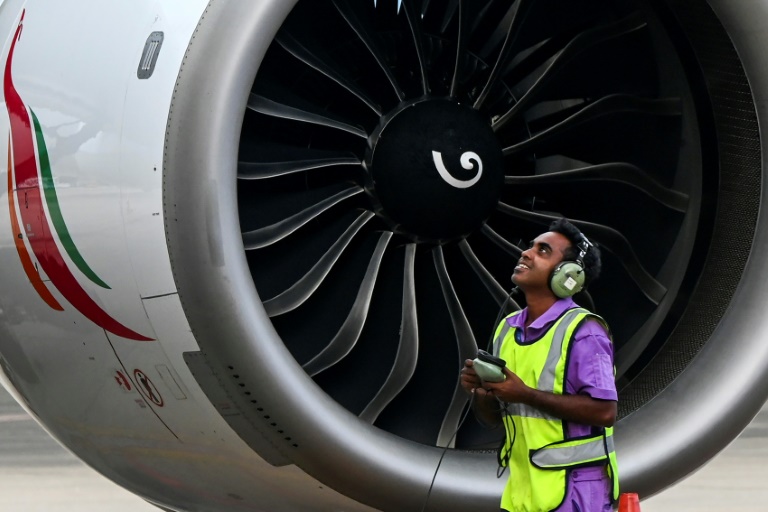
Dozens of state-owned Sri Lankan companies employing tens of thousands of people could be restructured or closed as part of an IMF bailout of the bankrupt country, with the country’s airline top of the list for reform.

With nearly 6,000 staff, SriLankan Airlines is the biggest and most expensive of the cash-haemorrhaging, sclerotic companies that have drained the budget and compounded the worst financial crisis in national history.

According to treasury figures, the carrier was losing $4.50 for every dollar it earned at the start of this year. It has not turned a profit since 2008, when its chief executive was sacked for offending the country’s then-leader.

“Even those who have never stepped into a Sri Lankan aircraft are paying to subsidise the airline,” government spokesman Manusha Nanayakkara told reporters this month. 

“We can’t continue like this.”

Sri Lanka defaulted on its $51 billion foreign debt in April and is now neck-deep in the arduous process of renegotiating its obligations with creditors.

Its 22 million people suffered through months of food and fuel shortages, and at the peak of the crisis, a furious mob stormed government buildings and chased Sri Lanka’s former president into exile. 

The International Monetary Fund (IMF) has given preliminary approval to a $2.9 billion bailout, and the government hopes to be able to access the first tranche by the end of the year.

Terms of the deal have yet to be released, but IMF cash is usually conditional on painful reforms, such as tax hikes, removing consumer subsidies, and privatising or closing underperforming state firms.

The country has more than 300 state enterprises, ranging from nut farms to fuel retailers, and the top 52 firms lost nearly $2.4 billion between January and April — around $140 million a week.

SriLankan Airline’s future is the most urgent priority, and the government last month instructed the finance ministry to begin its restructuring, ideally by attracting outside investment.

But finding a company willing to pour money into the airline will be immensely challenging, analysts say, given its history of interference, mismanagement and turbulent partnerships.

– ‘It’s even more difficult now’ –

In 1998, Emirates bought a minority stake in the carrier and took over its management. 

It stayed in the black for most of the next decade, although one of its most profitable years was — ironically — 2001, when the Tamil Tigers separatist movement attacked the country’s main international airport. 

Several of the airline’s planes were destroyed in the July attack, but insurance payouts and the removal of excess capacity offset a downturn in ticket sales. 

But the partnership was terminated and the chief executive sacked by then-president Mahinda Rajapaksa in 2008 after the carrier refused to bump fare-paying passengers to make room for members of his family returning from a jaunt in London. 

The leader packed SriLankan’s management with relatives and loyalists, several of whom now face corruption charges, and the airline has bled cash since.

Rajapaksa even started a rival state-owned airline named after himself, a colossal failure that was eventually merged into SriLankan — along with its accumulated losses.

Authorities tried to sell a 49 percent stake in SriLankan back in 2017 when the island nation’s tourism market was booming, but even then private equity firm TPG eventually withdrew its bid after deciding it was not a viable operation.

Airlines are “generally not that attractive” to investors, Singapore-based aviation analyst Brendan Sobie told AFP, “particularly airlines that are government owned and have a lot of legacy issues, have a lot of debt, like SriLankan does”.

“There’s not many foreign airlines, particularly in this post-Covid environment, that are even looking or considering buying stakes in airlines overseas,” he added, and the track record for strategic investments in the sector was “very bad”.

“It’s very difficult,” he said.

– ‘We are a bankrupt country’ –

SriLankan chairman Ashok Pathirage acknowledges the airline’s current balance sheet is not an attractive proposition.

“If you try to privatise the whole thing, people will come and ask the government to take half of the debt,” Pathirage told AFP. 

But he said SriLankan could settle about half of its liabilities by splitting off and selling profitable business arms, including its virtual monopoly on catering and ground handling at Colombo airport.

Trade union leaders and employees support a restructuring along those lines, on the condition that no jobs are cut.

“The airline is losing money not because of the staff, but expensive leases and poor financial structures,” a cabin crew member, who requested anonymity, told AFP.

But selling off the airline’s profitable divisions would leave the rump operations generating even bigger losses for the government.

Former state finance minister Eran Wickramaratne told AFP that if authorities could not find an investor, the airline should be grounded permanently before it could burden the public further.

“We are a bankrupt country,” he said. “We have not been able to service our debt and that reality has struck home.”
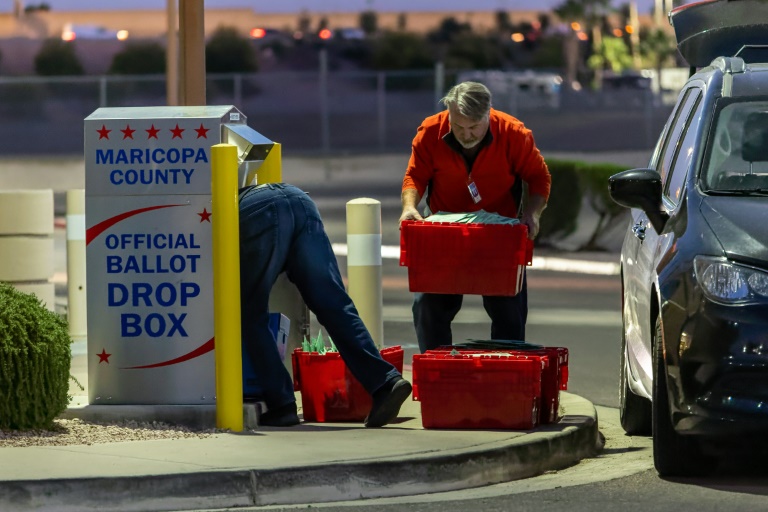
Officials scramble after balloting problems in US poll

Unsubstantiated allegations of fraud, prompted by isolated voting issues and amplified by Donald Trump, left US election officials vying to defend the integrity of Tuesday’s midterm poll.

Officials said the hiccups were not expected to change the vote’s outcome — but that didn’t stop some figures on the right from seizing on them.

Republicans in Arizona’s bitterly contested Maricopa County unsuccessfully sued to extend voting hours, with Trump and his allies calling a few non-functioning tabulation machines evidence of a fix.

“The widespread issues… are completely unacceptable, especially as Republicans flock to the polls to vote in-person,” said a statement from the Republican National Committee, announcing the lawsuit.

A judge denied the suit and the polls closed on schedule.

Officials in Maricopa County — which includes Phoenix, the fifth most populous US city — said early in the day a minority of the 223 polling stations had experienced difficulties. 

The county became ground zero for Trump-driven election denialism after his 2020 loss.

President Joe Biden won Arizona by a razor-thin 10,000 votes that year, with clutch support from densely populated Maricopa.

But in rural parts of Arizona, a state that previously leaned Republican, that result sparked conspiracy theories.

Maricopa County Board of Supervisors Chairman Bill Gates said “we’ve got about 20 percent of the locations out there where there’s an issue with the tabulator.”

By early afternoon Maricopa County Elections Department tweeted they had resolved the issues at several polling centers.

Gates said the broken-down machines would not impact the poll’s reliability, adding that paper ballots would be transferred in a secure box to a central election facility for tabulation.

– Trump’s groundless claims –

Trump and his supporters for two years have pushed groundless ballot stuffing claims despite numerous investigations, including one funded by Republicans, that found no evidence of fraud.

Republican candidates for Arizona’s secretary of state, governor and a US Senate seat all subscribe to the debunked theory, and say they would not have certified Biden’s win.

Masked poll watchers, some of them armed, have monitored early voting drop boxes in what they dubbed an effort to prevent ballot stuffing, until a judge ordered them to keep their distance.

Nonpartisan county officials have mounted a huge voter confidence operation, holding open meetings and inviting citizens to inspect security procedures.

But some social media users took Tuesday’s breakdowns as proof there was cheating afoot, with videos of election workers explaining the malfuction viewed millions of times.

Trump-endorsed candidate for secretary of state, Kari Lake, acknowleged she had voted without difficulty but lashed out at the disruptions, hinting they may have been deliberate.

“This is incompetency. I hope it’s not malice,” she said.

On the Truth Social platform Trump denounced the county.

“Reports are coming in from Arizona that the Voting Machines are not properly working in predominantly Republican/Conservative areas,” he wrote.

“Can this possibly be true when a vast majority of Republicans waited for today to Vote? Here we go again? The people will not stand for it!!!”

– Texas, Georgia –

In Georgia — where Trump-endorsed former National Football League star Herschel Walker is battling incumbent Raphael Warnock — officials in Cobb County shipped hundreds of forms to voters overnight after a clerical error affected more than 1,000 people who requested absentee ballots.

Some have since opted to cast their vote by another method. The rest will have their votes counted as long as they are postmarked by election day.

In Harris County, Texas’s third most populous, voters found closed gates, long lines and non-operational voting machines, the Washington Post reported.

County elections office spokesperson Nadia Hakim cited complaints from more than half a dozen polling stations, including a crowded spot where one-third of the 60 voting machines were not working, creating long lines.

Hakim said the issue was particularly noticeable there because the polling location is the county’s busiest.

The machines were fixed by mid-morning, according to the Post.

Nonpartisan organization Vote.org praised “transparency” from election officials and said the country’s isolated incidents were not expected to alter the ballot.

“There are reports in several states that some voting machines are having technical problems,” CEO Andrea Hailey said.

“Officials are working hard to resolve those issues and ensure voters have other options.”

Elon Musk sells nearly $4bn in Tesla stock: SEC filing

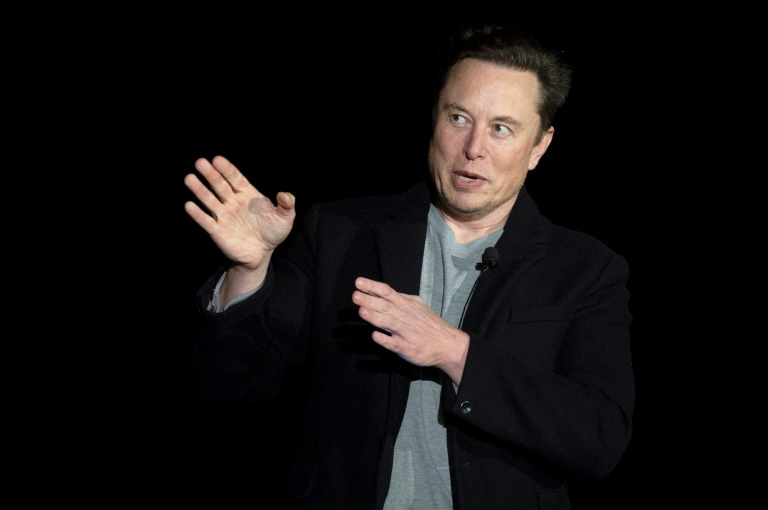
Tesla chief Elon Musk sold nearly $4 billion worth of shares in the electric car company, SEC filings showed Tuesday, more than a week after he closed his $44 billion acquisition of Twitter.

Musk has been pushing for ways to pay for the massive deal, for which he took on billions of dollars in debt and earlier sold $15.5 billion worth of shares in Tesla.

On Tuesday, documents filed with the US Securities and Exchange Commission (SEC) indicated that he had disposed of more than another 19 million shares, worth in excess of $3.9 billion.

Musk took control of Twitter and fired its top executives in late October, after a drawn-out back-and-forth between the world’s richest person and the influential social media company.

The billionaire initially tried to step back from the deal after his unsolicited offer was accepted in April.

He said in July that he was canceling the contract because he had been misled by Twitter over the number of fake “bot” accounts, allegations rejected by the company.

After Musk sought to terminate the sale, Twitter filed a lawsuit to hold the entrepreneur to the agreement. With a trial looming, he revived his takeover plan.

– Overhaul –

On Friday, Twitter sacked half of its 7,500-strong staff as its new owner launched an overhaul of the company.

Jack Dorsey, who co-founded Twitter in 2006 and stepped down as CEO last year, tweeted to apologize for growing the site too quickly, following news of the firings.

Musk has been searching for ways for the social media platform to make money after the buyout, including an idea to charge users $8 a month for verified accounts.

The move would help overcome a potential loss of advertisers, Twitter’s main source of revenue, after many top brands put their ad buys on hold, uneasy about Musk’s well-known disdain for content controls.

Musk’s actions and statements since taking over the reins of Twitter have prompted concern, including warnings from the United Nations.

UN rights chief Volker Turk has urged Musk to make respect for human rights a priority for the social network.

Musk has insisted that content moderation remains a priority for Twitter and that he would create a council dedicated to the task.

Musk’s decision to pull Twitter off the stock market has allowed him to make major changes quickly, but it also took the company more heavily into debt, a risky choice for a money-losing business.

Elon Musk sells nearly $4bn in Tesla stock: SEC filing

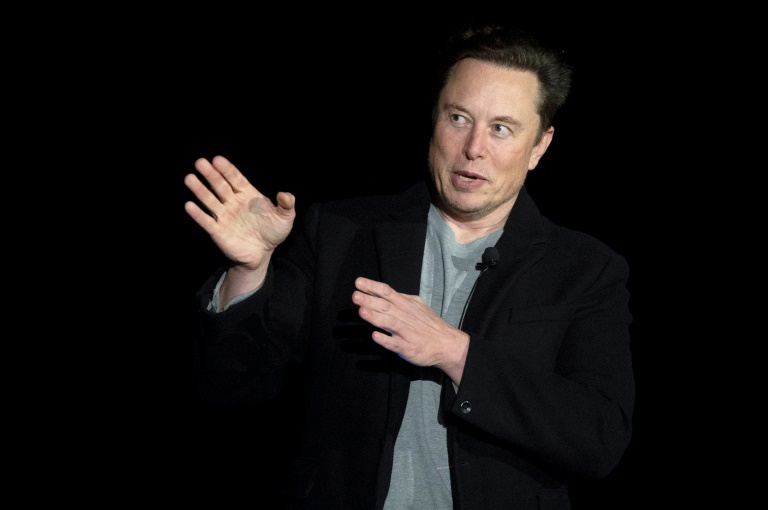
Tesla chief Elon Musk sold nearly $4 billion worth of shares in the electric car company, SEC filings showed Tuesday, more than a week after he closed his $44 billion acquisition of Twitter.

Musk has been pushing for ways to pay for the massive deal, for which he took on billions of dollars in debt and earlier sold $15.5 billion worth of shares in Tesla.

On Tuesday, documents filed with the US Securities and Exchange Commission (SEC) indicated that he had disposed of more than another 19 million shares, worth in excess of $3.9 billion.

Musk took control of Twitter and fired its top executives in late October, after a drawn-out back-and-forth between the world’s richest person and the influential social media company.

The billionaire initially tried to step back from the deal after his unsolicited offer was accepted in April.

He said in July that he was canceling the contract because he had been misled by Twitter over the number of fake “bot” accounts, allegations rejected by the company.

After Musk sought to terminate the sale, Twitter filed a lawsuit to hold the entrepreneur to the agreement. With a trial looming, he revived his takeover plan.

– Overhaul –

On Friday, Twitter sacked half of its 7,500-strong staff as its new owner launched an overhaul of the company.

Jack Dorsey, who co-founded Twitter in 2006 and stepped down as CEO last year, tweeted to apologize for growing the site too quickly, following news of the firings.

Musk has been searching for ways for the social media platform to make money after the buyout, including an idea to charge users $8 a month for verified accounts.

The move would help overcome a potential loss of advertisers, Twitter’s main source of revenue, after many top brands put their ad buys on hold, uneasy about Musk’s well-known disdain for content controls.

Musk’s actions and statements since taking over the reins of Twitter have prompted concern, including warnings from the United Nations.

UN rights chief Volker Turk has urged Musk to make respect for human rights a priority for the social network.

Musk has insisted that content moderation remains a priority for Twitter and that he would create a council dedicated to the task.

Musk’s decision to pull Twitter off the stock market has allowed him to make major changes quickly, but it also took the company more heavily into debt, a risky choice for a money-losing business.

Elon Musk sells nearly $4bn in Tesla stock: SEC filing

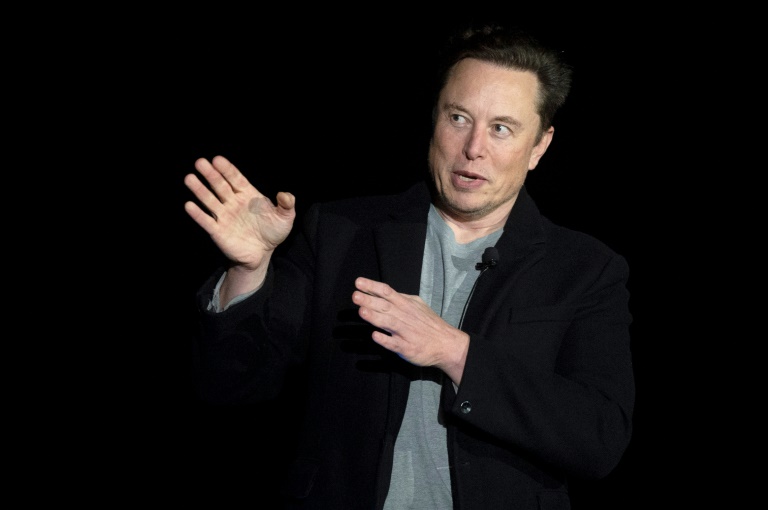
Tesla chief Elon Musk sold nearly $4 billion worth of shares in the electric car company, SEC filings showed Tuesday, more than a week after he closed his $44 billion acquisition of Twitter.

Musk has been pushing for ways to pay for the massive deal, for which he took on billions of dollars in debt and earlier sold $15.5 billion worth of shares in Tesla.

On Tuesday, documents filed with the US Securities and Exchange Commission (SEC) indicated that he had disposed of more than another 19 million shares, worth in excess of $3.9 billion.

Musk took control of Twitter and fired its top executives in late October, after a drawn-out back-and-forth between the world’s richest person and the influential social media company.

The billionaire initially tried to step back from the deal after his unsolicited offer was accepted in April.

He said in July that he was canceling the contract because he had been misled by Twitter over the number of fake “bot” accounts, allegations rejected by the company.

After Musk sought to terminate the sale, Twitter filed a lawsuit to hold the entrepreneur to the agreement. With a trial looming, he revived his takeover plan.

– Overhaul –

On Friday, Twitter sacked half of its 7,500-strong staff as its new owner launched an overhaul of the company.

Jack Dorsey, who co-founded Twitter in 2006 and stepped down as CEO last year, tweeted to apologize for growing the site too quickly, following news of the firings.

Musk has been searching for ways for the social media platform to make money after the buyout, including an idea to charge users $8 a month for verified accounts.

The move would help overcome a potential loss of advertisers, Twitter’s main source of revenue, after many top brands put their ad buys on hold, uneasy about Musk’s well-known disdain for content controls.

Musk’s actions and statements since taking over the reins of Twitter have prompted concern, including warnings from the United Nations.

UN rights chief Volker Turk has urged Musk to make respect for human rights a priority for the social network.

Musk has insisted that content moderation remains a priority for Twitter and that he would create a council dedicated to the task.

Musk’s decision to pull Twitter off the stock market has allowed him to make major changes quickly, but it also took the company more heavily into debt, a risky choice for a money-losing business.

Close Bitnami banner
Bitnami