AFP

UN chief warns world leaders against 'collective suicide' on climate

UN chief Antonio Guterres warned world leaders at a climate summit in Egypt on Monday that humanity faces a stark choice between working together or “collective suicide” in the battle against global warming.

Nearly 100 heads of state and government are meeting for two days in the Red Sea resort of Sharm el-Sheikh, facing calls to deepen emissions cuts and financially back developing countries already devastated by the effects of rising temperatures.

“Humanity has a choice: cooperate or perish,” Guterres told the UN COP27 summit. 

“It is either a Climate Solidarity Pact or a Collective Suicide Pact,” Guterres said, urging richer polluting nations to come to the aid of poorer countries least responsible for the emission of heat-trapping gases.

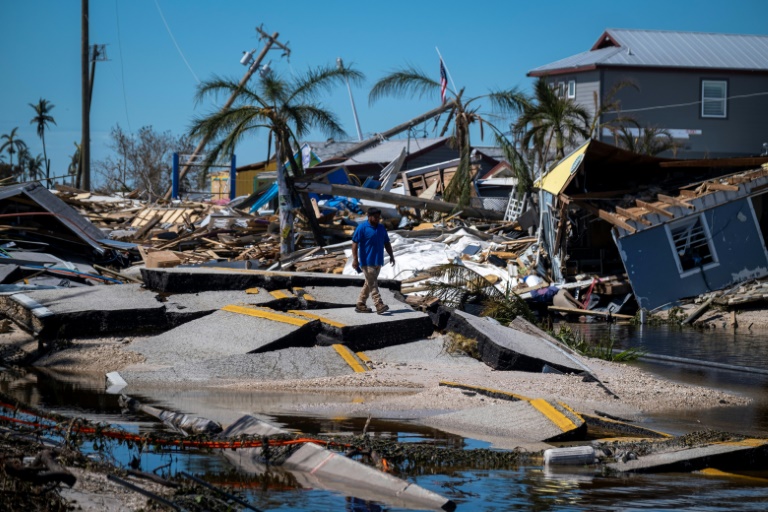
Nations worldwide are coping with increasingly intense natural disasters that have taken thousands of lives this year alone and cost billions of dollars — from devastating floods in Nigeria and Pakistan to droughts in the United States and Africa and unprecedented heatwaves across three continents.

“We have seen one catastrophe after another,” said Egyptian President Abdel Fattah al-Sisi. “As soon as we tackle one catastrophe another one arises — wave after wave of suffering and loss.

“Is it not high time to put an end to all this suffering?”

But a multitude of other crises, from Russia’s war in Ukraine to soaring inflation and the lingering effects of the Covid pandemic, has raised concerns that climate change will drop on the priority list of governments. 

Guterres however told world leaders climate change could not be put on the “back burner”.

He called for a “historic” deal between rich emitters and emerging economies that would see countries double down on emissions, holding the rise in temperatures to the more ambitions Paris Agreement target of 1.5 degrees Celsius above the pre-industrial era.   

Current trends would see carbon pollution increase 10 percent by the end of the decade and Earth’s surface heat up 2.8C.

“We are on a highway to climate hell with our foot still on the accelerator,” Guterres said.

– ‘Moral imperative’ –

The UN secretary general said the target should be to provide renewable and affordable energy for all, calling on the United States and China in particular to lead the way.

He also said it was a “moral imperative” for richer polluters to help vulnerable countries.

Chinese leader Xi Jinping, whose country is the world’s top emitter of greenhouse gases, is not attending the summit.

US President Joe Biden, whose country ranks second on the top-polluters list, will join COP27 later this week after midterm elections on Tuesday that could put Republicans hostile to international action on climate change in charge of Congress.

French President Emmanuel Macron urged the United States, China and other non-European rich nations to “step up” their efforts to cut emissions and provide financial aid to other countries.

“Europeans are paying,” Macron told French and African climate campaigners on the sidelines of COP27. “We are the only ones paying.”

– ‘Loss and damage’ –

On Sunday, the heads of developing nations won a small victory when delegates agreed to put the controversial issue of compensation for “loss and damage” on the summit agenda.

Pakistan, which chairs the powerful G77+China negotiating bloc of more than 130 developing nations, has made the issue a priority.

The United States and the European Union have dragged their feet for years on the proposal, fearing it would create an open-ended reparations framework.

Guterres said COP27 must agree on a “clear, time-bound roadmap” for loss and damage that delivers “effective institutional arrangements for financing”.

“Getting concrete results on loss and damage is a litmus test of the commitment of governments to the success of COP27,” he said.

Rich nations will also be expected to set a timetable for the delivery of $100 billion per year to help developing countries green their economies and build resilience against future climate change. 

The promise is already two years past due and remains $17 billion short, according to the OECD.

COP27 is scheduled to continue until November 18 with ministerial joining the fray during Week Two.

Security is tight at the meeting, with Human Rights Watch saying authorities have arrested dozens of people and restricted the right to demonstrate in the days leading up to COP27.

Tanzania pays tearful tribute to plane crash victims

Grieving Tanzanians paid emotional tribute Monday to 19 people killed when a passenger plane plunged into Lake Victoria in the country’s deadliest air crash in decades.

The Precision Air flight from the financial capital Dar es Salaam crashed on Sunday morning while trying to land in the northwestern city of Bukoba.

Bad weather was blamed for the accident.

Prime Minister Kassim Majaliwa was among hundreds of people who gathered at Kaitaba Stadium in Bukoba, with Muslim and Christian clerics leading prayers for the dead as onlookers wiped away tears.

The ceremony to hand over the bodies of the victims to their families is expected to take hours, with local broadcasters running live telecasts from the stadium.

Twenty-four survivors were plucked to safety out of the 43 people aboard flight PW 494, with investigators from Precision Air and the Tanzania Airports Authority arriving in the lakeside city on Sunday.

Precision Air, a publicly listed company and Tanzania’s largest private carrier, said the aircraft was an ATR 42-500, manufactured by Toulouse-based Franco-Italian firm ATR, and had 39 passengers — including an infant — and four crew members on board.

AFP journalists saw the plane largely submerged on Sunday as rescuers, including fishermen, waded through water to bring people to safety.

Emergency workers attempted to lift the aircraft out of the water using ropes, assisted by cranes as residents also sought to help.

President Samia Suluhu Hassan on Monday expressed her condolences to victims’ families, hailing emergency workers and volunteers for acting quickly to save lives.

“I congratulate those who participated in the rescue, including the people of Bukoba,” she said on Twitter. 

“I pray for the deceased to rest in peace and for the injured to recover quickly.”

Precision Air, which is partly owned by Kenya Airways, was founded in 1993 and operates domestic and regional flights as well as private charters to popular tourist destinations such as Serengeti National Park and the Zanzibar archipelago.

The accident comes five years after 11 people died when a plane belonging to safari company Coastal Aviation crashed in northern Tanzania.

In 1999, a dozen people, including 10 US tourists, died in a plane crash in northern Tanzania while flying between Serengeti National Park and Kilimanjaro airport.

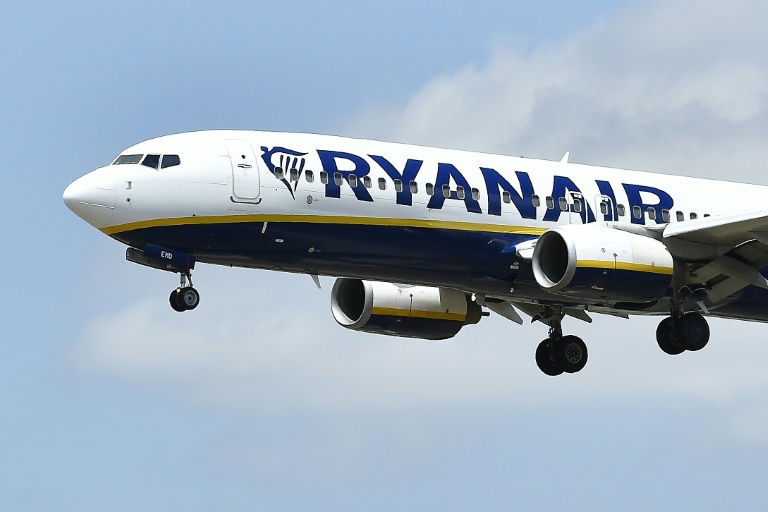
Ryanair flies into profit, eyes strong outlook

Irish airline Ryanair flew back into a first-half profit Monday and forecast a strong outlook despite recession headwinds in Europe, as air travel rebounds after the lifting of Covid restrictions.

Profit after tax came in at 1.37 billion euros (dollars) in the six months to the end of September after a net loss of 48 million euros a year earlier, the Dublin-based carrier said in a statement.

Ryanair said it expected full-year profit of between 1.0 and 1.2 billion euros, adding that it did not expect the no-frills carrier to suffer from Europe’s cost-of-living crisis caused by soaring inflation.

“The recovery for the remainder of full-year 2022/23 remains fragile and could yet be impacted by new Covid variants or adverse geopolitical events such as Ukraine,” Ryanair chief executive Michael O’Leary said in the statement.  

“However forward bookings, both traffic and fares, remain strong… into the peak Christmas travel period.”

Ryanair’s key market outside Ireland is the UK, which the Bank of England has warned could face a two-year long recession until the middle of 2024.

O’Leary on Monday said he hoped the aviation sector would avoid a repeat of last year’s lockdowns caused by Covid’s Omicron variant “which damaged last Christmas at such short notice”. 

He added that “concerns about the impact of recession and rising consumer price inflation on Ryanair’s business model have been greatly exaggerated”.  

O’Leary said he expects the airline “to grow strongly in a recession as consumers won’t stop flying, but rather they will become more price sensitive”.  

Ryanair said it flew 95 million passengers in its first half, up from 39 million one year earlier.

Revenue more than trebled to 6.6 billion euros.

– ‘Pent-up demand’ –

“Although the winter will be challenging for Ryanair, it enjoyed an impressive summer performance thanks to the release of pent-up demand for international travel post pandemic,” noted Victoria Scholar, head of investment at Interactive Investor.

The recovery for Ryanair, which flies mainly throughout Europe, mirrors a strong rebound for the aviation sector worldwide.

Airlines are dealing with soaring jet fuel costs by increasing ticket prices, although Ryanair on Monday claimed that it was still a market leader on fares.

“Like Aldi, Lidl, Ikea and other price leaders, our very strong post-Covid recovery shows that price will continue to drive market share gains,” O’Leary said.

Ryanair was benefitting also from an ability to provide more seats compared with its rivals, he added.

“As Europe recovers from the two-year Covid pandemic there has been a considerable contraction of short haul capacity, much of which will not return in the medium term,” the CEO said.  

“Most of our EU competitors have cut capacity by up to 20 percent this winter while Ryanair will offer 10-percent more seats than pre-Covid.”

World leaders gather for climate talks under cloud of crises

World leaders gathered Monday for climate talks in Egypt facing pressure to deepen cuts in emissions and financially back developing countries already devastated by the effects of rising temperatures.

The UN’s COP27 climate summit in the Red Sea resort of Sharm el-Sheikh comes as nations worldwide are facing increasingly intense natural disasters that have taken thousands of lives this year alone and cost billions of dollars.

At the opening ceremony on Sunday, COP27 officials urged governments to keep up efforts to combat climate change despite soaring inflation, the energy crunch linked to Russia’s war on Ukraine and the persistent Covid-19 pandemic.

“The fear is other priorities take precedence,” top United Nations climate change official Simon Stiell told a news conference.

The “fear is that we lose another day, another week, another month, another year — because we can’t”, he said.

The world must slash greenhouse emissions by 45 percent by 2030 to cap global warming at 1.5 degrees Celsius above late-19th-century levels.

But current trends would see carbon pollution increase 10 percent by the end of the decade and Earth’s surface heat up 2.8C, according to findings unveiled in recent days.

Only 29 of 194 countries have presented improved climate plans, as called for at the UN talks in Glasgow last year, Stiell noted.

Nearly 100 heads of state and government began to arrive for two days of talks, with the notable absence of Chinese leader Xi Jinping, whose country is the world’s top emitter of greenhouse gases.

US President Joe Biden, whose country ranks second on the top-polluters list, will join COP27 later this week after midterm elections on Tuesday that could put Republicans hostile to international action on climate change in charge of Congress.

French President Emmanuel Macron urged the United States, China and other non-European rich nations to “step up” their efforts to cut emissions and provide financial aid to other countries.

“Europeans are paying,” Macron told French and African climate campaigners on the sidelines of COP27. “We are the only ones paying.”

– ‘Loss and damage’ –

Fresh from his own election victory, Brazil’s Luiz Inacio Lula da Silva is expected to attend the summit later on, with hopes high that he will protect the Amazon from deforestation after defeating climate-sceptic President Jair Bolsonaro.

Another new leader, British Prime Minister Rishi Sunak, reversed a decision not to attend the talks and is due to urge countries to move “further and faster” in transitioning away from fossil fuels.

On Sunday, the heads of developing nations won a small victory when delegates agreed to put the controversial issue of money for “loss and damage” on the summit agenda.

Pakistan, which chairs the powerful G77+China negotiating bloc of more than 130 developing nations, has made the issue a priority.

“We definitely regard this as a success for the parties,” said Egypt’s Sameh Shoukry, who chairs the COP27.

The United States and the European Union have dragged their feet on the issue for years, fearing it would create an open-ended reparations framework.

But European Commission Vice President Frans Timmermans welcomed the inclusion of loss and damage, tweeting that the “climate crisis has impacts beyond what vulnerable countries can shoulder alone”.

– Protests restricted –

Rich nations will also be expected to set a timetable for the delivery of $100 billion per year to help developing countries green their economies and build resilience against future climate change. 

The promise is already two years past due and remains $17 billion short, according to the OECD.

COP27 is scheduled to continue until November 18 with ministerial meetings.

Security is tight at the meeting, with Human Rights Watch saying authorities have arrested dozens of people for calling for protests and restricted the right to demonstrate in the days leading up to COP27.
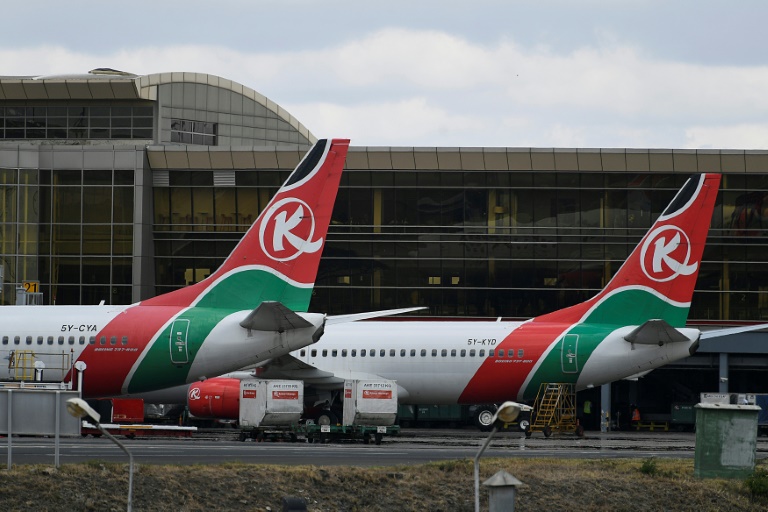
Kenya Airways cancels 'most flights' over pilots' strike

Kenya Airways cancelled most flights  Monday as a pilots’ strike entered its third day, with thousands of travellers stranded and the government threatening disciplinary action if staff don’t return to work.

The pilots launched the strike at Nairobi’s Jomo Kenyatta International Airport at 06:00 am (0300 GMT) on Saturday, defying a court order against industrial action and leaving thousands of passengers stranded.

“Due to the ongoing unlawful industrial action by Kenya Airline Pilots Association (KALPA), most of our flights have been cancelled,” the carrier said in a statement, which came hours after the country’s transport minister threatened the protesting staff with disciplinary action.

The strike has exacerbated the woes facing the troubled national carrier, which has been running losses for years, despite the government pumping in millions of dollars to keep it afloat.

The airline, which is part owned by the government and Air France-KLM, is one of the biggest in Africa, connecting multiple countries to Europe and Asia. 

On Sunday, Transport Minister Kipchumba Murkomen urged the pilots to return to work, warning them against “defying a court order”.

“Considering the defiance of KALPA and their total disregard for the existing court order –- which is at the heart of the rule of law — the Ministry of Labour now has to activate the procedures governing industrial relations,” the newly-appointed minister said.

KALPA has not responded to the government warning but said earlier on Sunday that the strike would continue for the foreseeable future.

“The public should expect major flight disruptions t continue,” it said on Twitter, blaming the airline’s management for failing to resolve the stalemate.

On Sunday, the airline said 56 flights had been cancelled due to the strike, disrupting 12,000 passengers’ plans.

The protesting pilots, who make up 10 percent of the workforce, are pressing for the reinstatement of contributions to a provident fund and payment of all salaries stopped during the Covid-19 pandemic.

Last week, the airline won a court injunction stopping the strike, but an official at KALPA, which has 400 members, told AFP the pilots “were acting within the provisions of the law” and that they were yet to be served with a court order.

The carrier has warned that the strike would jeopardise its recovery, estimating losses at $2.5 million per day if the pilots went ahead with their plans.

The airline was founded in 1977 following the demise of East African Airways, and flies more than four million passengers to 42 destinations annually.

It has been operating in large part thanks to state bailouts following years of losses.

Asian markets rise despite China's zero-Covid pledge

Asian stocks made gains on Monday, with a fresh rally seen in Hong Kong even after China reaffirmed its commitment to its economically painful zero-Covid policy.

Global markets and oil prices were buoyant last week on hopes that Beijing may begin to roll back policies aimed at stamping out the disease within its borders.

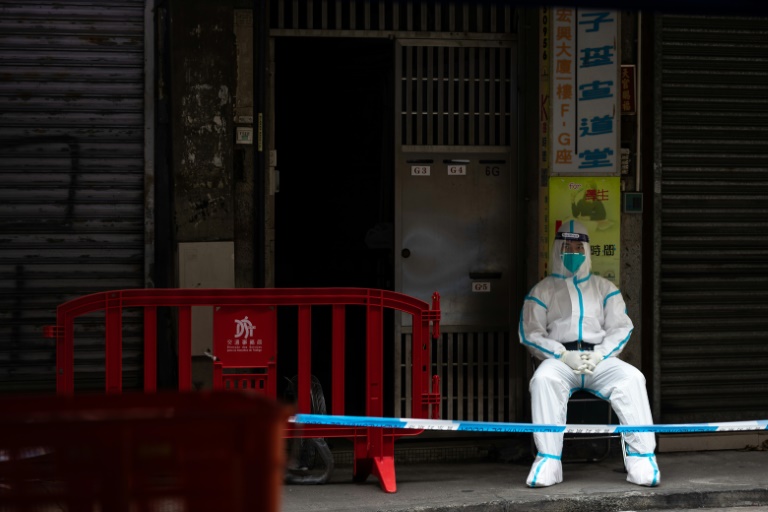
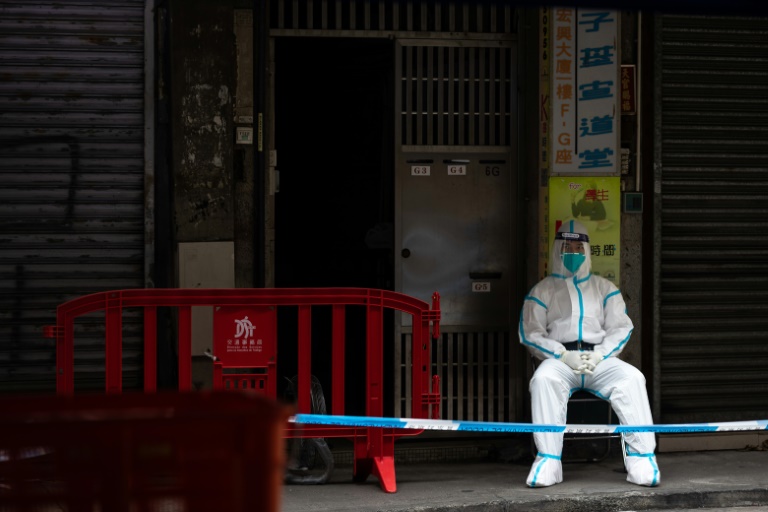
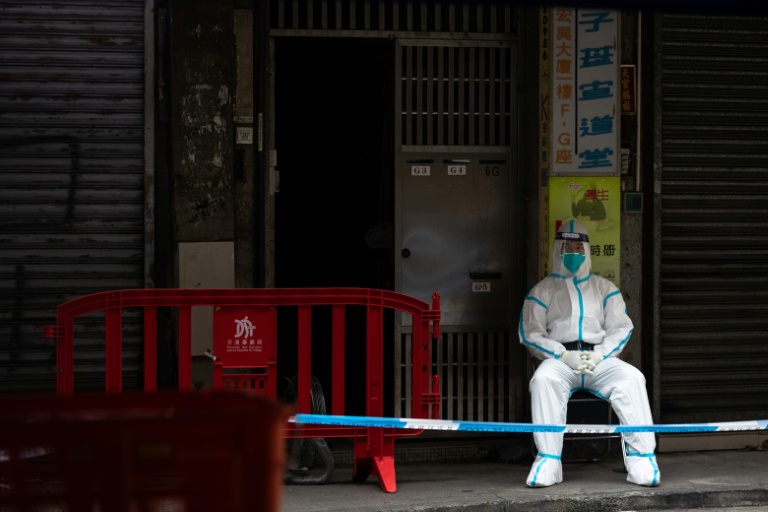
But on Saturday, the Chinese government said it would “unswervingly” stick to its current plan, which involves harsh lockdowns, and strict quarantine and testing regimens for even the smallest clusters of cases.

Despite the official stance, “there are still hopes in the market” that Beijing may relax Covid-19 restrictions in the coming months, Iris Pang, chief economist for Greater China at ING Wholesale Banking, told AFP.

“Traders believe that the Chinese government cannot permanently hold these existing Covid measures, and therefore the only direction is… looser Covid measures,” she said.

Ongoing large-scale events, such as the China International Import Expo in Shanghai, are also seen by investors as “a kind of water-testing” by Beijing, to see if cases and deaths rise significantly, Pang added.

On Friday, Wall Street equities ended a volatile session higher after the latest US jobs data showed that hiring remained resilient and wages continued to rise, though at a slower pace.

The data, released days ahead of critical US midterm elections, raised hopes of a soft landing for the world’s biggest economy despite aggressive Fed rate hikes aimed at taming inflation.

– Vaccine ‘game-changer’ –

All three main US indexes ended around 1.3 percent higher on Friday, and Tokyo shares extended those gains, with the benchmark Nikkei index ending 1.2 percent higher on Monday.

Hong Kong shares dipped slightly at the open, then rocketed 2.7 percent at the close, adding to a jump of more than five percent in the previous session.

Bourses in Shanghai and Shenzhen edged up 0.2 percent and 0.4 percent respectively. However, as European trading began, London lost 0.2 percent and Paris fell 0.7 percent.

China is the last major economy wedded to a strategy of extinguishing Covid-19 outbreaks as they emerge, despite the widespread disruption to businesses and international supply chains.

“Last week, the financial market was stirring on rumours of China reopening,” Raymond Yeung and Zhaopeng Xing of ANZ Research said in a note.

“Obviously, China feels the urgency to normalise the economy… But the political leadership will not adopt ‘living with Covid’,” the pair said.

“In our view, the availability of locally developed new vaccines will be a game-changer”.

Seoul closed up by 1.0 percent, Taipei rose 1.5 percent and Sydney ended up 0.6 percent. Jakarta added 0.8 percent and Singapore inched up 0.1 percent.

Dashed hopes of a Chinese reopening also drove down oil prices, which had rallied on Friday on the optimism that Beijing could soon change course, pushing up demand for crude.

– Key figures around 0400 GMT –

Tokyo – Nikkei 225: UP 2.7 percent at 27,527.64 (close)

Hong Kong – Hang Seng Index: UP 2.9 percent at 16,595.91 (close)

Shanghai – Composite: UP 0.2 percent at 3,077.82 (close)

London – FTSE 100: DOWN 0.2 percent at 7,318.61

Pound/dollar: UP at $1.1365 from $1.1309

Euro/dollar: DOWN at $0.9930 from $0.9964

Dollar/yen: DOWN at 147.13 from 147.44 yen

Euro/pound: DOWN at 87.62 pence from 87.80 pence

West Texas Intermediate: DOWN 1.3 percent at $91.42 per barrel

Brent North Sea crude: DOWN 1.0 percent at $97.57 per barrel

New York – Dow: UP 1.3 percent at 32,403.22 (close)

Asian markets rise despite China's zero-Covid pledge

Asian stocks made gains on Monday, with a fresh rally seen in Hong Kong even after China reaffirmed its commitment to its economically painful zero-Covid policy.

Global markets and oil prices were buoyant last week on hopes that Beijing may begin to roll back policies aimed at stamping out the disease within its borders.

But on Saturday, the Chinese government said it would “unswervingly” stick to its current plan, which involves harsh lockdowns, and strict quarantine and testing regimens for even the smallest clusters of cases.

Despite the official stance, “there are still hopes in the market” that Beijing may relax Covid-19 restrictions in the coming months, Iris Pang, chief economist for Greater China at ING Wholesale Banking, told AFP.

“Traders believe that the Chinese government cannot permanently hold these existing Covid measures, and therefore the only direction is… looser Covid measures,” she said.

Ongoing large-scale events, such as the China International Import Expo in Shanghai, are also seen by investors as “a kind of water-testing” by Beijing, to see if cases and deaths rise significantly, Pang added.

On Friday, Wall Street equities ended a volatile session higher after the latest US jobs data showed that hiring remained resilient and wages continued to rise, though at a slower pace.

The data, released days ahead of critical US midterm elections, raised hopes of a soft landing for the world’s biggest economy despite aggressive Fed rate hikes aimed at taming inflation.

– Vaccine ‘game-changer’ –

All three main US indexes ended around 1.3 percent higher on Friday, and Tokyo shares extended those gains, with the benchmark Nikkei index ending 1.2 percent higher on Monday.

Hong Kong shares dipped slightly at the open, then rocketed 2.7 percent at the close, adding to a jump of more than five percent in the previous session.

Bourses in Shanghai and Shenzhen edged up 0.2 percent and 0.4 percent respectively. However, as European trading began, London lost 0.2 percent and Paris fell 0.7 percent.

China is the last major economy wedded to a strategy of extinguishing Covid-19 outbreaks as they emerge, despite the widespread disruption to businesses and international supply chains.

“Last week, the financial market was stirring on rumours of China reopening,” Raymond Yeung and Zhaopeng Xing of ANZ Research said in a note.

“Obviously, China feels the urgency to normalise the economy… But the political leadership will not adopt ‘living with Covid’,” the pair said.

“In our view, the availability of locally developed new vaccines will be a game-changer”.

Seoul closed up by 1.0 percent, Taipei rose 1.5 percent and Sydney ended up 0.6 percent. Jakarta added 0.8 percent and Singapore inched up 0.1 percent.

Dashed hopes of a Chinese reopening also drove down oil prices, which had rallied on Friday on the optimism that Beijing could soon change course, pushing up demand for crude.

– Key figures around 0400 GMT –

Tokyo – Nikkei 225: UP 2.7 percent at 27,527.64 (close)

Hong Kong – Hang Seng Index: UP 2.9 percent at 16,595.91 (close)

Shanghai – Composite: UP 0.2 percent at 3,077.82 (close)

London – FTSE 100: DOWN 0.2 percent at 7,318.61

Pound/dollar: UP at $1.1365 from $1.1309

Euro/dollar: DOWN at $0.9930 from $0.9964

Dollar/yen: DOWN at 147.13 from 147.44 yen

Euro/pound: DOWN at 87.62 pence from 87.80 pence

West Texas Intermediate: DOWN 1.3 percent at $91.42 per barrel

Brent North Sea crude: DOWN 1.0 percent at $97.57 per barrel

New York – Dow: UP 1.3 percent at 32,403.22 (close)

Asian markets rise despite China's zero-Covid pledge

Asian stocks made gains on Monday, with a fresh rally seen in Hong Kong even after China reaffirmed its commitment to its economically painful zero-Covid policy.

Global markets and oil prices were buoyant last week on hopes that Beijing may begin to roll back policies aimed at stamping out the disease within its borders.

But on Saturday, the Chinese government said it would “unswervingly” stick to its current plan, which involves harsh lockdowns, and strict quarantine and testing regimens for even the smallest clusters of cases.

Despite the official stance, “there are still hopes in the market” that Beijing may relax Covid-19 restrictions in the coming months, Iris Pang, chief economist for Greater China at ING Wholesale Banking, told AFP.

“Traders believe that the Chinese government cannot permanently hold these existing Covid measures, and therefore the only direction is… looser Covid measures,” she said.

Ongoing large-scale events, such as the China International Import Expo in Shanghai, are also seen by investors as “a kind of water-testing” by Beijing, to see if cases and deaths rise significantly, Pang added.

On Friday, Wall Street equities ended a volatile session higher after the latest US jobs data showed that hiring remained resilient and wages continued to rise, though at a slower pace.

The data, released days ahead of critical US midterm elections, raised hopes of a soft landing for the world’s biggest economy despite aggressive Fed rate hikes aimed at taming inflation.

– Vaccine ‘game-changer’ –

All three main US indexes ended around 1.3 percent higher on Friday, and Tokyo shares extended those gains, with the benchmark Nikkei index ending 1.2 percent higher on Monday.

Hong Kong shares dipped slightly at the open, then rocketed 2.7 percent at the close, adding to a jump of more than five percent in the previous session.

Bourses in Shanghai and Shenzhen edged up 0.2 percent and 0.4 percent respectively. However, as European trading began, London lost 0.2 percent and Paris fell 0.7 percent.

China is the last major economy wedded to a strategy of extinguishing Covid-19 outbreaks as they emerge, despite the widespread disruption to businesses and international supply chains.

“Last week, the financial market was stirring on rumours of China reopening,” Raymond Yeung and Zhaopeng Xing of ANZ Research said in a note.

“Obviously, China feels the urgency to normalise the economy… But the political leadership will not adopt ‘living with Covid’,” the pair said.

“In our view, the availability of locally developed new vaccines will be a game-changer”.

Seoul closed up by 1.0 percent, Taipei rose 1.5 percent and Sydney ended up 0.6 percent. Jakarta added 0.8 percent and Singapore inched up 0.1 percent.

Dashed hopes of a Chinese reopening also drove down oil prices, which had rallied on Friday on the optimism that Beijing could soon change course, pushing up demand for crude.

– Key figures around 0400 GMT –

Tokyo – Nikkei 225: UP 2.7 percent at 27,527.64 (close)

Hong Kong – Hang Seng Index: UP 2.9 percent at 16,595.91 (close)

Shanghai – Composite: UP 0.2 percent at 3,077.82 (close)

London – FTSE 100: DOWN 0.2 percent at 7,318.61

Pound/dollar: UP at $1.1365 from $1.1309

Euro/dollar: DOWN at $0.9930 from $0.9964

Dollar/yen: DOWN at 147.13 from 147.44 yen

Euro/pound: DOWN at 87.62 pence from 87.80 pence

West Texas Intermediate: DOWN 1.3 percent at $91.42 per barrel

Brent North Sea crude: DOWN 1.0 percent at $97.57 per barrel

New York – Dow: UP 1.3 percent at 32,403.22 (close)

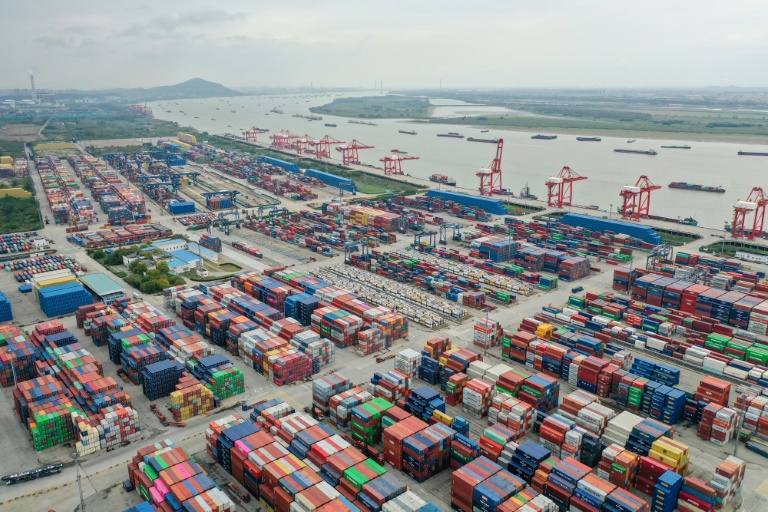
China exports fall in October, first decline since 2020

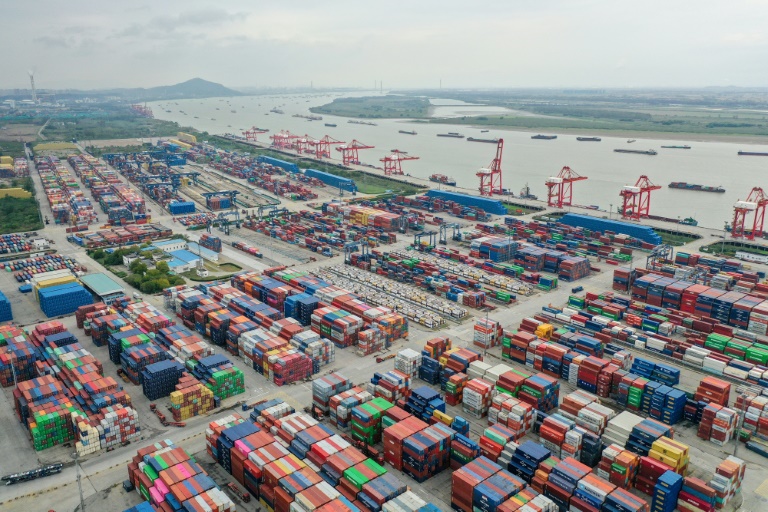
China’s exports shrank in October, the first such decline since mid-2020, customs authorities said Monday, as a domestic slowdown and the threat of global recession hit international trade.

Exports fell 0.3 percent year-on-year in October, according to the General Administration of Customs, a steep drop from September’s 5.7 percent increase and well below analysts’ expectations.

Year-on-year imports were down 0.7 percent in October, negative for the first time since March this year and down from September’s 0.3 percent growth.

The slowdown in trade comes as global demand for Chinese products weakens, with energy prices soaring and the United States facing the threat of recession.

Sporadic Covid-19 lockdowns have also hurt consumer enthusiasm and business confidence in the world’s second-largest economy.

Analysts surveyed by Bloomberg forecast export growth of 4.3 percent in October, but expected only 0.1 percent growth in imports in the face of weakening demand at home.

“The recent decline in export volumes appears to reflect a reversal in the pandemic-era surge in global demand for Chinese goods,” Capital Economics analyst Zichun Huang said in a note on Monday.

Import volumes are “likely to continue weakening given the challenging domestic outlook”, Huang said.

– Domestic challenges –

Nomura analysts on Monday said they expected China’s export downturn to extend in the next two months.

“As strong export growth has been the single-largest GDP growth driver in China since spring 2020, the contraction of exports will inevitably weigh on growth, employment and investment,” they said.

China’s factory activity shrank in October, official data showed last week, which the National Bureau of Statistics blamed on virus outbreaks last month.

Factory activity has been in contraction territory for six months of the year so far, as sweeping Covid restrictions paralysed major industrial cities such as Shanghai, Shenzhen and Chengdu.

Apple on Monday warned of delayed shipments after Covid restrictions “temporarily impacted” production at its massive factory in Zhengzhou, central China.

Chinese leaders have set out an annual economic growth target of about 5.5 percent, but many observers think the country will struggle to hit the target, despite announcing a better-than-expected 3.9 percent expansion in the third quarter.

It is the last major economy wedded to a strategy of extinguishing Covid outbreaks as they emerge, imposing snap lockdowns, mass testing and lengthy quarantines despite the widespread disruption to businesses and international supply chains.

And authorities poured cold water on speculation that the policy could be relaxed Saturday, with National Health Commission (NHC) spokesperson Mi Feng saying that Beijing would “stick unswervingly to… the overall policy of dynamic zero-Covid”.

Authorities had imposed enhanced virus curbs on a total area accounting for more than 10 percent of China’s overall gross domestic product as of Thursday, according to Nomura.

China exports fall in October, first decline since 2020

China’s exports shrank in October, the first such decline since mid-2020, customs authorities said Monday, as a domestic slowdown and the threat of global recession hit international trade.

Exports fell 0.3 percent year-on-year in October, according to the General Administration of Customs, a steep drop from September’s 5.7 percent increase and well below analysts’ expectations.

Year-on-year imports were down 0.7 percent in October, negative for the first time since March this year and down from September’s 0.3 percent growth.

The slowdown in trade comes as global demand for Chinese products weakens, with energy prices soaring and the United States facing the threat of recession.

Sporadic Covid-19 lockdowns have also hurt consumer enthusiasm and business confidence in the world’s second-largest economy.

Analysts surveyed by Bloomberg forecast export growth of 4.3 percent in October, but expected only 0.1 percent growth in imports in the face of weakening demand at home.

“The recent decline in export volumes appears to reflect a reversal in the pandemic-era surge in global demand for Chinese goods,” Capital Economics analyst Zichun Huang said in a note on Monday.

Import volumes are “likely to continue weakening given the challenging domestic outlook”, Huang said.

– Domestic challenges –

Nomura analysts on Monday said they expected China’s export downturn to extend in the next two months.

“As strong export growth has been the single-largest GDP growth driver in China since spring 2020, the contraction of exports will inevitably weigh on growth, employment and investment,” they said.

China’s factory activity shrank in October, official data showed last week, which the National Bureau of Statistics blamed on virus outbreaks last month.

Factory activity has been in contraction territory for six months of the year so far, as sweeping Covid restrictions paralysed major industrial cities such as Shanghai, Shenzhen and Chengdu.

Apple on Monday warned of delayed shipments after Covid restrictions “temporarily impacted” production at its massive factory in Zhengzhou, central China.

Chinese leaders have set out an annual economic growth target of about 5.5 percent, but many observers think the country will struggle to hit the target, despite announcing a better-than-expected 3.9 percent expansion in the third quarter.

It is the last major economy wedded to a strategy of extinguishing Covid outbreaks as they emerge, imposing snap lockdowns, mass testing and lengthy quarantines despite the widespread disruption to businesses and international supply chains.

And authorities poured cold water on speculation that the policy could be relaxed Saturday, with National Health Commission (NHC) spokesperson Mi Feng saying that Beijing would “stick unswervingly to… the overall policy of dynamic zero-Covid”.

Authorities had imposed enhanced virus curbs on a total area accounting for more than 10 percent of China’s overall gross domestic product as of Thursday, according to Nomura.

Close Bitnami banner
Bitnami