AFP

Vietnam struggles to break one of world's biggest coal addictions

Despite Vietnam’s solar boom and ambitious climate targets, the fast-growing economy is struggling to quit dirty energy — leaving one of the world’s biggest coal power programmes largely intact.

During the COP26 climate summit last year, the government boldly promised to end the construction of new coal plants and phase out the dirtiest of those already running, even as energy demands soar in the manufacturing powerhouse.

“But this is not actually what Vietnam is doing at a national level,” Nandini Das, an energy research and policy analyst at Climate Analytics, told AFP.

Vietnam pledged to reach net-zero carbon emissions by 2050, but with coal and gas still a major part of its energy mix one year later, that commitment is on shaky ground, she said. 

The authoritarian communist state has also jailed four green activists this year, including anti-coal campaigner Nguy Thi Khanh, alarming environmentalists who argue it will be even harder for Vietnam to banish dirty energy without them. 

“With the climate leaders in prison I think there’s grave doubt about the country’s ability to achieve its goals,” said Michael Sutton, director of the Goldman Environmental Foundation. 

He said “leaders like Khanh are instrumental in building public support” for radical change to Vietnam’s economy.

– Solar boom – 

After China and India, Vietnam has the world’s third-largest pipeline of new coal power projects. 

But at COP27 this week, G7 countries could announce billions of dollars in funding to help steer Vietnam away from fossil fuels and the country could attract billions more in clean energy investment as part of the Just Energy Transition Partnership.

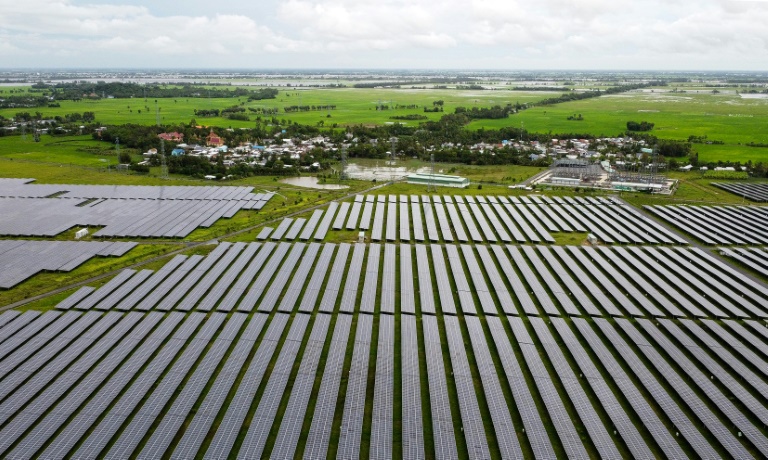
The rise of solar energy in the Southeast Asian nation has also been meteoric.

The share of electricity generated by solar saw the biggest rise in the world in 2021, jumping to 10 percent from two percent a year earlier, according to independent energy think tank Ember. 

Last year, the country ranked in the top 10 globally for solar energy capacity.

In the Mekong Delta, farmer Doan Van Tien — whose community is poor, remote and has little access to the national grid — is one of those who benefited.  

For most of his life, he relied on a costly oil generator, until the arrival of 14 solar power batteries funded by Green ID, the non-profit environmental group founded by activist Khanh.

“It changed my life a lot,” he told AFP, gesturing to his lucrative avocado and mandarin crops.

“In the past we wanted to grow these fruit trees but we could not (afford to power) the water pump,” he said. Now he waters his plants for free.

Others jumped on solar thanks to generous feed-in tariffs, but its success has hit a roadblock: infrastructure limitations mean transmission lines cannot handle supply spikes, forcing a limit on how much power operators can feed into the grid.

– Changing mindsets –

In other strides down a greener path, the environment ministry’s latest climate targets, issued in July, are “clear and much more ambitious than previous” goals, according to Thang Do, a research fellow at the Crawford School of Public Policy at the Australian National University. 

The ministry’s new strategy boosted the reduction target for greenhouse gases by 2030 from last year’s goal of nine percent relative to business as usual, to 43.5 percent. Emissions are expected to peak in 2035 before falling to net-zero in 2050.

The problem, Das argued, is that the new policies have yet to be implemented.

“We’ll give it six months to see,” she said.

The arrests of climate campaigners have made Vietnam’s energy intentions even more difficult to decipher.

Khanh worked closely with the government to find a way to reduce coal use, while Dang Dinh Bach, an NGO worker, made it his mission to inform residents about the health impacts of potential power plant projects.

He “offered advice to them so they understood their rights and could practice those rights”, Bach’s wife Tran Phuong Thao told AFP.

In 2017, Bach and his non-profit group Law & Policy of Sustainable Development helped push the government into a rare climbdown over a power plant in Binh Thuan province that it had permitted to sink a million cubic metres of coal sludge into the sea.

He was arrested in June 2021, and sentenced this year to five years in prison.

Although there is little time to waste for Vietnam, one of the countries most vulnerable to climate change due to its long and densely populated coastline, researcher Thang believes there is no choice but to be patient.

“The whole economy is now dependent on coal so that makes it very challenging to change,” he said.

“It’s not an easy decision to make to just close a coal power plant and tomorrow we’ll open a solar and wind, it takes a lot of time and resources and also mindsets to be changed.”
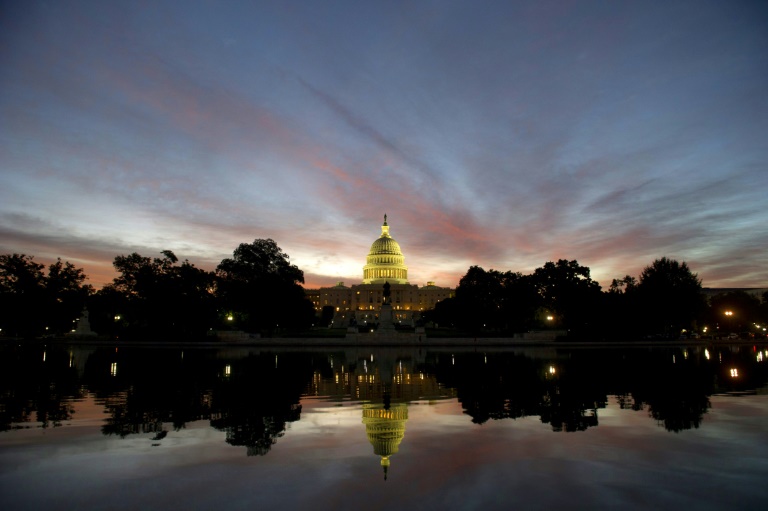
US midterms: Five pivotal Senate battlegrounds

The US midterm elections have been seen for much of the year as a likely landslide victory for Republicans, with President Joe Biden’s approval ratings slumping amid spiraling inflation, record migrant arrivals and rising violent crime.

The Democrats narrowed the polling gap over the summer and were hoping for a much closer contest amid a series of legislative wins and improving gas prices — but momentum appears to have swung back to the right just before the contests on November 8.   

The midterms don’t get the attention that presidential elections command, but they are crucial in determining which party has control of Congress — and the power to advance or frustrate the president’s agenda. 

All 435 seats in the House of Representatives — the lower chamber — are up for grabs, while a third of senators vie for re-election. 

The evenly divided 100-member upper chamber — controlled by Democrats thanks to Vice President Kamala Harris’ tie-breaking vote — is considered the more powerful and prestigious, with its statewide constituencies and six-year terms.

At least eight of the 35 Senate races are considered competitive, but the battle for control of the chamber is likely to come down to five key states. 

– Pennsylvania –

Democrat John Fetterman’s commanding lead over Republican celebrity medic Mehmet Oz has all but evaporated, turning the race into a margin-of-error tussle. 

Fetterman is recovering from a stroke in May and his shaky performance in the only debate of the campaign has further blunted his momentum.

The pair are duking it out for the seat held by a retiring Republican, in what remains Democrats’ top target for flipping a seat.

Democrats have characterized Oz as an opportunistic New Jersey carpet-bagger with tenuous local ties and a penchant for gaffes that demonstrate he is out of touch.

Fetterman, meanwhile, faces scrutiny over his health and has come under fire about his law enforcement record as lieutenant governor, which opponents say was overly lenient.

– Nevada –

In Nevada, for some time the country’s closest race, Republican challenger Adam Laxalt leads Democratic Senator Catherine Cortez Masto by a narrow 0.6 points in the polling average compiled by RealClearPolitics.

Democratic strategists have sounded the alarm over turnout, with many Latinos threatening to sit out the election despite Cortez Masto being the first-ever Latina woman elected to the US Senate.    

“It’s what’s keeping me up at night,” Melissa Morales, president of the pro-Cortez Masto Somos PAC, told NBC.

“What I’m looking at is: Do Latinos actually turn out to vote this year? If we see high turnout, we win in Nevada.”

The National Republican Senatorial Committee launched Spanish language ad messages in the summer, again focusing on the Democratic candidate’s criminal justice record when she was the state’s attorney general.

– Georgia –

In Georgia, Republican challenger Herschel Walker was looking like the Republicans’ best bet for a pick-up against incumbent freshman Democrat and pastor Raphael Warnock.

Walker’s name recognition as a former football star has kept him in the race despite a series of missteps overshadowing his campaign, and he leads Warnock by 1.4 points in the polling average.

Warnock has focused on cutting prescription drug charges, addressing climate change and helping restore abortion rights. 

Walker has focused on the economy and hardline anti-abortion messages. 

But his campaign has been beset by allegations of past domestic abuse, an exaggerated resume, fathering children outside of his marriage and paying to have two previous girlfriends’ pregnancies terminated.

– Ohio –

The race to replace retiring Republican Rob Portman was once seen as the Democrats’ best opportunity for a pick-up, but Republican J.D. Vance has maintained a consistent if narrow lead since a faltering start to his campaign.

Democrat Tim Ryan — who has represented the Buckeye State for the last two decades in the US Congress — has won just two of 15 major polls against Silicon Valley venture capitalist and author, who holds an average two-point lead.

Economic issues top the list of voters’ concerns, as they do nationwide, with inflation and the cost of living animating Ohioans the most, followed by abortion.

“It’s much better to be a Republican candidate right now than a Democratic one,” said Brent Buchanan of polling firm Cygnal.

“Voters are looking at the issue landscape and their candidate options and prioritizing issues that directly affect them, which is driving more undecided voters to the (Republicans).”

– Wisconsin –

In Wisconsin, Republican Senator Ron Johnson struggled in the summer but pulled ahead of Democratic challenger Mandela Barnes in mid-September and is up by 3.3 points in an average of the last 16 polls.

A recent Fox News poll found that 44 percent of Wisconsin voters think Barnes’s political positions are “too extreme” — against 43 percent for Johnson. 

Like Fetterman, Barnes is a lieutenant governor who has been accused of being soft on crime, primarily because of his advocacy for making bail conditions less onerous.

“Under Mandela Barnes, Wisconsin has released 784 violent criminals back into our communities,” Johnson tweeted.

“Including 270 murders and attempted murderers. Mandela Barnes’ policies make our communities more dangerous. He is too extreme for Wisconsin.” 

Former president Barack Obama, campaigning for Barnes in the last days of the campaign, blasted Johnson as someone who “understands giving tax breaks for private planes more than he understands making sure that seniors who’ve worked all their lives are able to retire with dignity and respect.”

The US midterm election for dummies

Two years since US President Joe Biden was swept to power in one of the most fraught elections Washington has witnessed, all eyes are on the next nationwide vote.

Biden isn’t up for re-election until 2024, but candidates vying for positions large and small — from county commissioner or tribal chief to US senator — will be sweating the outcome of the midterm elections on Tuesday. 

As Democratic and Republican nominees duke it out in the final hours of the campaign, here is a guide to what’s at stake. 

– What are the midterms? –

US voters decide every two years who gets the majority in both chambers of Congress — and whether the president will get any new policies passed or if the opposition will be able to frustrate the agenda.

All 435 seats in the House of Representatives are on the ballot, as well as 35 of the 100 Senate seats. 

Governors’ mansions are also up for grabs in 36 states, and there are elections for state-level lawmakers, secretaries of state and attorneys general. 

Those more local contests will affect state policies on a range of issues from abortion access to voting rights and Covid-19 restrictions.

– The horse race –

In a typical midterm, the party in the White House suffers double-digit losses in the House — 26 on average since World War II — and around four Senate seats as voters seek a check on the president’s power.

For much of 2022 the traditional indicators were pointing to business as usual, with Biden’s approval rating hovering around 40 percent, the pandemic dragging into a third year and inflation at a 40-year high.

Democrats were emboldened by a summer sea-change in the political outlook, buoyed by a spate of legislative achievements, unpopular Republican curbs on abortion and falling gas prices. 

But polling is once again indicating a decisive victory for the Republicans. 

Neutral analysts expect a gain for House Republicans of 15 to 25 seats — enough to win back control of the chamber comfortably.

The Senate remains a toss-up. Analysts see a small swing to Republicans or a continued 50-50 split as the most likely outcome, meaning Democrats could keep control with Vice President Kamala Harris’s tie-breaking vote.

– Abortion and other campaign issues –

Both parties acknowledge that reproductive rights animated Democratic engagement like no other issue after the Supreme Court’s June withdrawal of the federally guaranteed right to abortion. 

Some Republicans have floated plans to consider a nationwide abortion ban after 15 weeks of pregnancy should they retake Congress.

This is despite 85 percent of Americans believing abortion should be legal in all or some circumstances, according to a long-running survey by Gallup.

The issue’s salience has diminished since the summer, though, and it now trails behind inflation, crime and immigration among voters’ stated priorities. 

Economic issues are also a bigger factor than concerns about voting rights and democracy, according to all of the latest polling. 

Republicans are focusing on portraying Democrats as “soft on crime” in many of the tightest swing states, and are reminding voters of record immigration figures and stubbornly high inflation, despite a cooling in gas prices. 

Democrats are banking on getting credit for the White House finally clinching legislation boosting domestic manufacturing, tackling climate change and lowering prescription drug prices. 

– The Trump factor –

Like Biden, former president Donald Trump is not on the ballot but he remains a headache for Republicans — both for his mushrooming legal woes and his endorsements.

The issue that has sucked much of the oxygen out of the room in the final months is the hoard of government secrets that were found at his Mar-a-Lago club in Florida in a search by the FBI.

A civil investigation of his family’s finances, a criminal probe of his attempts to overturn his election defeat and the barrage of misconduct allegations from the 2021 US Capitol insurrection hearings could discourage moderate Republicans from turning out.

Meanwhile, Trump has inserted himself front and center in the election, making more than 200 endorsements, often of election conspiracy theorists and far-right candidates in swing states.

Senior Republicans have privately bemoaned the quality of Trump-backed Senate candidates in several tight races, although all remain competitive.

Apple says iPhone production hit by China Covid lockdown

Apple warned customers would face longer wait times for iPhones with the holiday season approaching, after Covid restrictions in central China “temporarily impacted” production at the world’s largest factory producing the smartphone.

Foxconn, Apple’s principal subcontractor, locked down its massive factory in Zhengzhou last month after a spike in infections — in line with China’s zero-Covid policy. 

In a separate statement Monday, the Taiwanese firm said its fourth quarter earnings this year would take a hit from the coronavirus lockdowns.

Panicking workers last week had fled the site on foot in the wake of allegations of poor conditions at the facility, which employs hundreds of thousands of workers.

“Covid-19 restrictions have temporarily impacted the primary iPhone 14 Pro and iPhone 14 Pro Max assembly facility located in Zhengzhou, China,” California-based Apple said in a statement late Sunday.

“The facility is currently operating at significantly reduced capacity.”

Despite strong demand for Apple’s products ahead of the holiday season, “we now expect lower iPhone 14 Pro and iPhone 14 Pro Max shipments than we previously anticipated”, it said. 

“Customers will experience longer wait times to receive their new products.” 

Foxconn is China’s biggest private sector employer, with more than a million people working across the country in about 30 factories and research institutes.

But Zhengzhou is the Taiwanese company’s crown jewel, churning out iPhones in quantities not seen anywhere else.

“In a normal situation, almost all the iPhone production is happening in Zhengzhou,” Ivan Lam, an analyst with specialist firm Counterpoint, told AFP.

The company was initially “cautiously optimistic” about its fourth quarter earnings, it said. 

“But due to the pandemic affecting some of our operations in Zhengzhou, the company will ‘revise down’ the outlook for the fourth quarter,” Foxconn said in a statement. 

“Foxconn is now working with the government in (a) concerted effort to stamp out the pandemic and resume production to its full capacity as quickly as possible,” the company said. 

It did not give any statistical projection for how badly it expected earnings to be hit.

“This is a dark sign of the zero-Covid policy in China impacting production for Apple with Foxconn,” Dan Ives, analyst at Wedbush Securities, told AFP.

“It confirms the Street’s fears with Apple this quarter and will be an albatross on the tech market this week.”

– ‘We are drowning’ –

Local authorities locked down the area surrounding the factory on Wednesday, but not before reports emerged of a lack of adequate medical care at the plant.

Multiple workers have recounted scenes of chaos and increasing disorganisation at Foxconn’s complex of workshops and dormitories, which form a city-within-a-city near Zhengzhou’s airport.

“People with fevers are not guaranteed to receive medicine,” a 30-year-old Foxconn worker, who asked to remain anonymous, told AFP.

“We are drowning,” he said.

China is the last major economy wedded to a strategy of extinguishing Covid outbreaks as they emerge, imposing snap lockdowns, mass testing and lengthy quarantines despite the widespread disruption to businesses and international supply chains.

And authorities poured cold water on speculation that the policy could be relaxed Saturday, with National Health Commission (NHC) spokesperson Mi Feng saying that Beijing would “stick unswervingly to… the overall policy of dynamic zero-Covid”.

“At present, China is still facing the dual threat of imported infections and the spread of domestic outbreaks,” Mi said at a press briefing.

“The disease control situation is as grim and complex as ever,” he said. “We must continue to put people and lives first.”

Apple says iPhone production hit by China Covid lockdown

Apple warned customers would face longer wait times for iPhones with the holiday season approaching, after Covid restrictions in central China “temporarily impacted” production at the world’s largest factory producing the smartphone.

Foxconn, Apple’s principal subcontractor, locked down its massive factory in Zhengzhou last month after a spike in infections — in line with China’s zero-Covid policy. 

In a separate statement Monday, the Taiwanese firm said its fourth quarter earnings this year would take a hit from the coronavirus lockdowns.

Panicking workers last week had fled the site on foot in the wake of allegations of poor conditions at the facility, which employs hundreds of thousands of workers.

“Covid-19 restrictions have temporarily impacted the primary iPhone 14 Pro and iPhone 14 Pro Max assembly facility located in Zhengzhou, China,” California-based Apple said in a statement late Sunday.

“The facility is currently operating at significantly reduced capacity.”

Despite strong demand for Apple’s products ahead of the holiday season, “we now expect lower iPhone 14 Pro and iPhone 14 Pro Max shipments than we previously anticipated”, it said. 

“Customers will experience longer wait times to receive their new products.” 

Foxconn is China’s biggest private sector employer, with more than a million people working across the country in about 30 factories and research institutes.

But Zhengzhou is the Taiwanese company’s crown jewel, churning out iPhones in quantities not seen anywhere else.

“In a normal situation, almost all the iPhone production is happening in Zhengzhou,” Ivan Lam, an analyst with specialist firm Counterpoint, told AFP.

The company was initially “cautiously optimistic” about its fourth quarter earnings, it said. 

“But due to the pandemic affecting some of our operations in Zhengzhou, the company will ‘revise down’ the outlook for the fourth quarter,” Foxconn said in a statement. 

“Foxconn is now working with the government in (a) concerted effort to stamp out the pandemic and resume production to its full capacity as quickly as possible,” the company said. 

It did not give any statistical projection for how badly it expected earnings to be hit.

“This is a dark sign of the zero-Covid policy in China impacting production for Apple with Foxconn,” Dan Ives, analyst at Wedbush Securities, told AFP.

“It confirms the Street’s fears with Apple this quarter and will be an albatross on the tech market this week.”

– ‘We are drowning’ –

Local authorities locked down the area surrounding the factory on Wednesday, but not before reports emerged of a lack of adequate medical care at the plant.

Multiple workers have recounted scenes of chaos and increasing disorganisation at Foxconn’s complex of workshops and dormitories, which form a city-within-a-city near Zhengzhou’s airport.

“People with fevers are not guaranteed to receive medicine,” a 30-year-old Foxconn worker, who asked to remain anonymous, told AFP.

“We are drowning,” he said.

China is the last major economy wedded to a strategy of extinguishing Covid outbreaks as they emerge, imposing snap lockdowns, mass testing and lengthy quarantines despite the widespread disruption to businesses and international supply chains.

And authorities poured cold water on speculation that the policy could be relaxed Saturday, with National Health Commission (NHC) spokesperson Mi Feng saying that Beijing would “stick unswervingly to… the overall policy of dynamic zero-Covid”.

“At present, China is still facing the dual threat of imported infections and the spread of domestic outbreaks,” Mi said at a press briefing.

“The disease control situation is as grim and complex as ever,” he said. “We must continue to put people and lives first.”

Apple says iPhone production hit by China Covid lockdown

Apple warned customers would face longer wait times for iPhones with the holiday season approaching, after Covid restrictions in central China “temporarily impacted” production at the world’s largest factory producing the smartphone.

Foxconn, Apple’s principal subcontractor, locked down its massive factory in Zhengzhou last month after a spike in infections — in line with China’s zero-Covid policy. 

In a separate statement Monday, the Taiwanese firm said its fourth quarter earnings this year would take a hit from the coronavirus lockdowns.

Panicking workers last week had fled the site on foot in the wake of allegations of poor conditions at the facility, which employs hundreds of thousands of workers.

“Covid-19 restrictions have temporarily impacted the primary iPhone 14 Pro and iPhone 14 Pro Max assembly facility located in Zhengzhou, China,” California-based Apple said in a statement late Sunday.

“The facility is currently operating at significantly reduced capacity.”

Despite strong demand for Apple’s products ahead of the holiday season, “we now expect lower iPhone 14 Pro and iPhone 14 Pro Max shipments than we previously anticipated”, it said. 

“Customers will experience longer wait times to receive their new products.” 

Foxconn is China’s biggest private sector employer, with more than a million people working across the country in about 30 factories and research institutes.

But Zhengzhou is the Taiwanese company’s crown jewel, churning out iPhones in quantities not seen anywhere else.

“In a normal situation, almost all the iPhone production is happening in Zhengzhou,” Ivan Lam, an analyst with specialist firm Counterpoint, told AFP.

The company was initially “cautiously optimistic” about its fourth quarter earnings, it said. 

“But due to the pandemic affecting some of our operations in Zhengzhou, the company will ‘revise down’ the outlook for the fourth quarter,” Foxconn said in a statement. 

“Foxconn is now working with the government in (a) concerted effort to stamp out the pandemic and resume production to its full capacity as quickly as possible,” the company said. 

It did not give any statistical projection for how badly it expected earnings to be hit.

“This is a dark sign of the zero-Covid policy in China impacting production for Apple with Foxconn,” Dan Ives, analyst at Wedbush Securities, told AFP.

“It confirms the Street’s fears with Apple this quarter and will be an albatross on the tech market this week.”

– ‘We are drowning’ –

Local authorities locked down the area surrounding the factory on Wednesday, but not before reports emerged of a lack of adequate medical care at the plant.

Multiple workers have recounted scenes of chaos and increasing disorganisation at Foxconn’s complex of workshops and dormitories, which form a city-within-a-city near Zhengzhou’s airport.

“People with fevers are not guaranteed to receive medicine,” a 30-year-old Foxconn worker, who asked to remain anonymous, told AFP.

“We are drowning,” he said.

China is the last major economy wedded to a strategy of extinguishing Covid outbreaks as they emerge, imposing snap lockdowns, mass testing and lengthy quarantines despite the widespread disruption to businesses and international supply chains.

And authorities poured cold water on speculation that the policy could be relaxed Saturday, with National Health Commission (NHC) spokesperson Mi Feng saying that Beijing would “stick unswervingly to… the overall policy of dynamic zero-Covid”.

“At present, China is still facing the dual threat of imported infections and the spread of domestic outbreaks,” Mi said at a press briefing.

“The disease control situation is as grim and complex as ever,” he said. “We must continue to put people and lives first.”

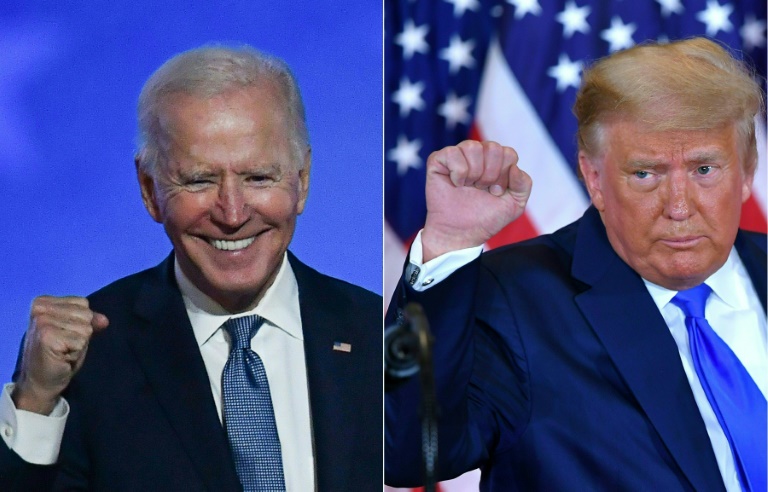
Biden, Trump rally troops on eve of crucial midterms

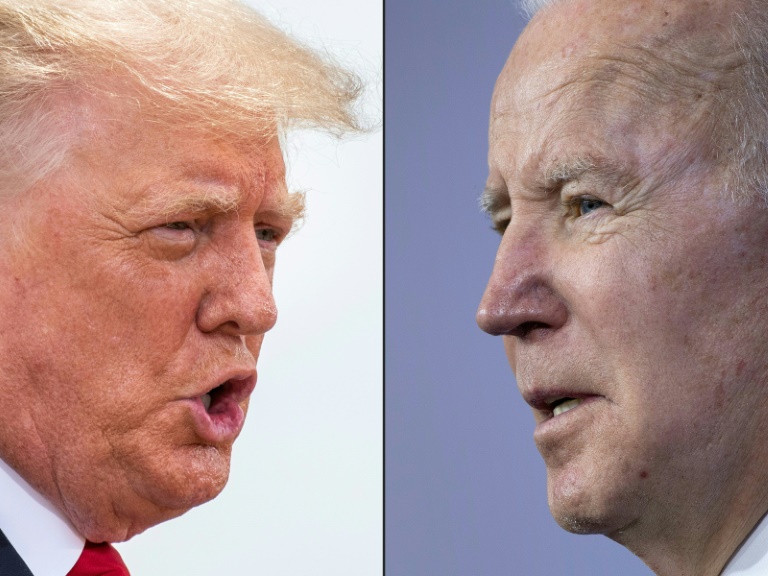
Joe Biden and Donald Trump headline a frantic last day of campaigning Monday on the eve of a midterm election that will shape the rest of the US president’s term — and could pave the way for a White House comeback by his predecessor.

Biden’s Democrats are facing a gargantuan struggle to hang on to Congress, after a race the president has cast as a “defining” moment for US democracy — though kitchen-table issues like inflation have largely dominated the campaign.

Republicans are comfortably placed to snatch a House majority on Tuesday, and many Democrats fear the Senate also slipping away in a defeat that would see Biden’s foes in near total charge of legislation during his last two years in the White House.

Polls show most Americans are anxious about the economy and feel the country is on the wrong track, emboldening Republican candidates in districts that once looked out of reach.

With all 435 seats in the House of Representatives up for grabs alongside a third of the 100-member Senate and a slew of state posts, Democrats were putting a brave face on their prospects.

“The party in the White House usually loses during midterms but the reality is we still have a very strong pathway, not just to keeping the Senate but really picking up seats,” New Jersey’s Cory Booker told ABC on Sunday.

Democratic candidates have been lent star power on the campaign trail by the party’s most popular elder statesmen, including previous presidents Barack Obama and Bill Clinton.

Republicans have tapped a narrower roster of their own political big hitters, with the campaign spotlight turning in recent weeks to Trump — who has been teasing a probable new run for the presidency in 2024.

Biden and Trump will go head-to-head on election eve: the president with a rally near the capital in Maryland, while Trump will be campaigning in a turbulent Senate race in Ohio.

– ‘Wake-up call’ –

The political landscape has been tilting away from Democrats since the summer, with polls showing Republicans odds-on for a double-digit majority in the House.

“This is going to be a wake-up call to President Biden,” was the bullish weekend prediction of Glenn Youngkin, the Republican governor of Virginia.

The Senate is more of a toss-up but Democratic hopes of keeping the upper chamber, which they control thanks to tiebreaking votes from Vice President Kamala Harris, hang in the balance.

Races in Pennsylvania, Nevada, Wisconsin, Georgia, New Hampshire and Ohio have narrowed to projected photo finishes, and any one of them could swing the balance of power.

Democrats have focused their closing arguments on voting rights, protecting abortion access and welfare — and in Biden’s case, on the threat posed by growing support among Trump’s Republicans for political conspiracy theories.

The Republicans counter that a vote for Democrats means no end to soaraway inflation and rising violent crime, seeking to make the midterms a referendum on the president.

With his approval rating marooned around 42 percent, Biden has largely avoided the most contentious states.

But he rallied alongside his former boss Obama in Pennsylvania Saturday, as part of a hectic agenda of late stump stops that has also taken him to Illinois, Florida and New York.

The president rebuked extremist supporters of “defeated president” Trump, telling the crowd: “Your right to choose is on the ballot. Your right to vote is on the ballot.”

– ‘Decline and fall’ –

Staging a rival weekend rally in the swing state, Trump — who continues to push false claims the 2020 election was stolen — accused the “radical, crazy” Democrats of bringing about “the decline and fall of America.”

The US president has major achievements to tout, including curbs on prescription drug pricing, ramped-up microchip manufacturing and record investments in infrastructure.

Democrats have struggled to turn these legislative victories into enthusiasm in the US heartland.

But Amy Klobuchar, a 2016 presidential hopeful, pushed back Sunday on the suggestion Democrats had lost the messaging war, projecting a good night for her party. 

Forty-eight percent of likely voters said they prefer a Democratic-controlled Congress in the final national NBC News poll of the campaign, while 47 percent want Republicans in charge.

But 80 percent of Republican-leaning voters say they are certain to turn out or have already done so, according to a new Washington Post-ABC News poll, six points above the Democratic figure.

Turnout forecasters always keep a keen eye on Election Day weather, which looks to be warmer than average in most of the country.

About 40 million Americans had cast early votes as of Sunday afternoon, according to the United States Elections Project, narrowly surpassing the figure for 2018.

New Zealand locks horns with Canada in dairy trade row

New Zealand’s trade minister accused Canada on Monday of having “locked out” his nation’s farmers in a dispute over dairy exports destined to be settled by an independent panel.

Damien O’Connor said the Canadians are “not living up” to promises made under a 2018 trans-Pacific free trade agreement to allow dairy products into Canada.  

“This is impacting New Zealand exporters, who remain effectively locked out of the Canadian market,” O’Connor said in a statement.

The Comprehensive and Progressive Agreement for Trans-Pacific Partnership was signed in 2018 by Canada, New Zealand and nine other countries in the Asia-Pacific region.

New Zealand first said in May it had beef with Canada’s administration of tariff rate quotas to allow dairy products to be imported with lower import taxes.

New Zealand started dispute settlement proceedings against the Canadians over lost dairy market access — worth about $40 million over two years — which “did not resolve matters”, O’Connor said.

“New Zealand has therefore made the decision to request the establishment of a panel to hear and decide the dispute,” he said.

New Zealand Prime Minister Jacinda Ardern revealed Monday that she had already told her Canadian counterpart Justin Trudeau “to his face” that her nation would escalate the trade dispute.

“I think it would be unusual that given the amount of contact we have for me not to raise the issue. Our relationship with Canada means I can be very forthright,” Ardern told reporters in Wellington.

She said she had told Trudeau “we were at an impasse” and that Ardern didn’t “see any reason why we should have officials continue a back and forth” which would only “waste time”. 

“If we can speak frankly as leaders and know we are between ourselves not going to be able to resolve it, it was time to escalate. That’s what we’ve done,” Ardern added.

There has been no official response from Canadian representatives. Diplomatic officials in Wellington said a response would have to come from Ottawa. 

The government in Wellington wants three experts on the neutral panel, to be chosen by Canada and New Zealand, to settle the row.

Global dairy exports contributed $10.96 billion to New Zealand’s economy in 2021 which was around 23 percent of total exports.

China exports fall in October, first decline since 2020

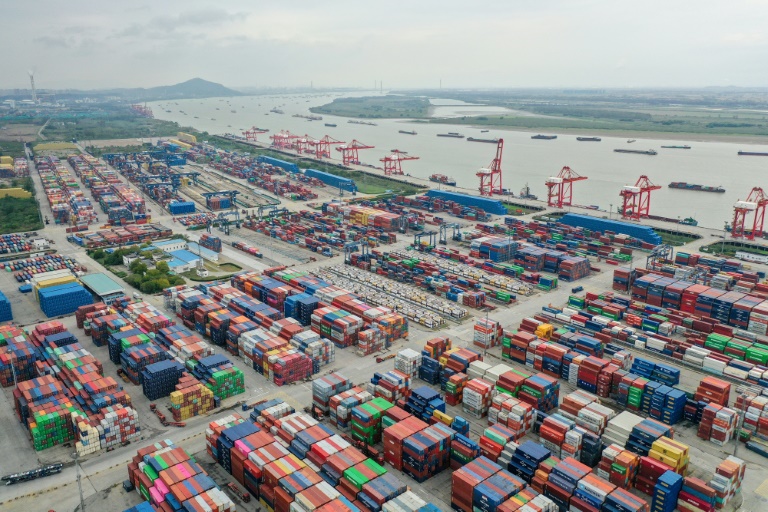
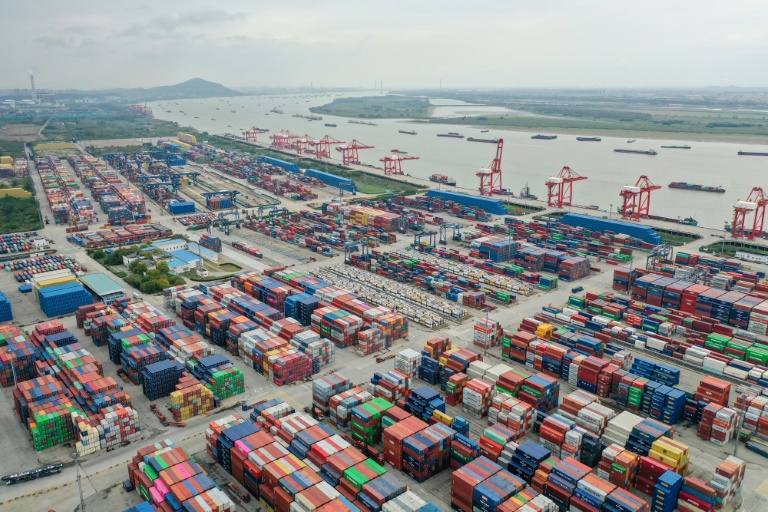
China’s exports shrank in October, the first such decline since mid-2020, customs authorities said Monday, as a domestic slowdown and the threat of global recession hit international trade.

Exports fell 0.3 percent year-on-year in October, according to the General Administration of Customs, a steep drop from September’s 5.7 percent increase and well below analysts’ expectations.

Year-on-year imports were down 0.7 percent in October, negative for the first time since March this year and down from September’s 0.3 percent growth.

The slowdown in trade comes as global demand for Chinese products weakens with energy prices soaring and the United States facing the threat of recession.

Sporadic Covid-19 lockdowns have also hurt consumer enthusiasm and business confidence in the world’s second-largest economy.

Analysts surveyed by Bloomberg forecast export growth of 4.3 percent in October, but expected only 0.1 percent growth in imports amid weakening demand at home.

“The recent decline in export volumes appears to reflect a reversal in the pandemic-era surge in global demand for Chinese goods,” Capital Economics analyst Zichun Huang said in a note on Monday.

Import volumes are “likely to continue weakening given the challenging domestic outlook”, Huang said.

– Domestic challenges –

China’s factory activity shrank in October, official data showed last week, which the National Bureau of Statistics blamed on virus outbreaks last month.

Factory activity has been in contraction territory for six months of the year so far, as sweeping Covid restrictions paralysed major industrial cities such as Shanghai, Shenzhen and Chengdu.

Apple on Monday warned of delayed shipments after Covid restrictions “temporarily impacted” production at its massive factory in Zhengzhou, central China.

Chinese leaders have set out an annual economic growth target of about 5.5 percent, but many observers think the country will struggle to hit the target, despite announcing a better-than-expected 3.9 percent expansion in the third quarter.

It is the last major economy wedded to a strategy of extinguishing Covid outbreaks as they emerge, imposing snap lockdowns, mass testing and lengthy quarantines despite the widespread disruption to businesses and international supply chains.

And authorities poured cold water on speculation that the policy could be relaxed Saturday, with National Health Commission (NHC) spokesperson Mi Feng saying that Beijing would “stick unswervingly to… the overall policy of dynamic zero-Covid”.

Authorities had imposed enhanced virus curbs on a total area accounting for more than 10 percent of China’s overall gross domestic product as of Thursday, according to Nomura analysts.

China exports fall in October, first decline since 2020

China’s exports shrank in October, the first such decline since mid-2020, customs authorities said Monday, as a domestic slowdown and the threat of global recession hit international trade.

Exports fell 0.3 percent year-on-year in October, according to the General Administration of Customs, a steep drop from September’s 5.7 percent increase and well below analysts’ expectations.

Year-on-year imports were down 0.7 percent in October, negative for the first time since March this year and down from September’s 0.3 percent growth.

The slowdown in trade comes as global demand for Chinese products weakens with energy prices soaring and the United States facing the threat of recession.

Sporadic Covid-19 lockdowns have also hurt consumer enthusiasm and business confidence in the world’s second-largest economy.

Analysts surveyed by Bloomberg forecast export growth of 4.3 percent in October, but expected only 0.1 percent growth in imports amid weakening demand at home.

“The recent decline in export volumes appears to reflect a reversal in the pandemic-era surge in global demand for Chinese goods,” Capital Economics analyst Zichun Huang said in a note on Monday.

Import volumes are “likely to continue weakening given the challenging domestic outlook”, Huang said.

– Domestic challenges –

China’s factory activity shrank in October, official data showed last week, which the National Bureau of Statistics blamed on virus outbreaks last month.

Factory activity has been in contraction territory for six months of the year so far, as sweeping Covid restrictions paralysed major industrial cities such as Shanghai, Shenzhen and Chengdu.

Apple on Monday warned of delayed shipments after Covid restrictions “temporarily impacted” production at its massive factory in Zhengzhou, central China.

Chinese leaders have set out an annual economic growth target of about 5.5 percent, but many observers think the country will struggle to hit the target, despite announcing a better-than-expected 3.9 percent expansion in the third quarter.

It is the last major economy wedded to a strategy of extinguishing Covid outbreaks as they emerge, imposing snap lockdowns, mass testing and lengthy quarantines despite the widespread disruption to businesses and international supply chains.

And authorities poured cold water on speculation that the policy could be relaxed Saturday, with National Health Commission (NHC) spokesperson Mi Feng saying that Beijing would “stick unswervingly to… the overall policy of dynamic zero-Covid”.

Authorities had imposed enhanced virus curbs on a total area accounting for more than 10 percent of China’s overall gross domestic product as of Thursday, according to Nomura analysts.

Close Bitnami banner
Bitnami