AFP

Escape from Foxconn: Workers recount Covid chaos at iPhone factory

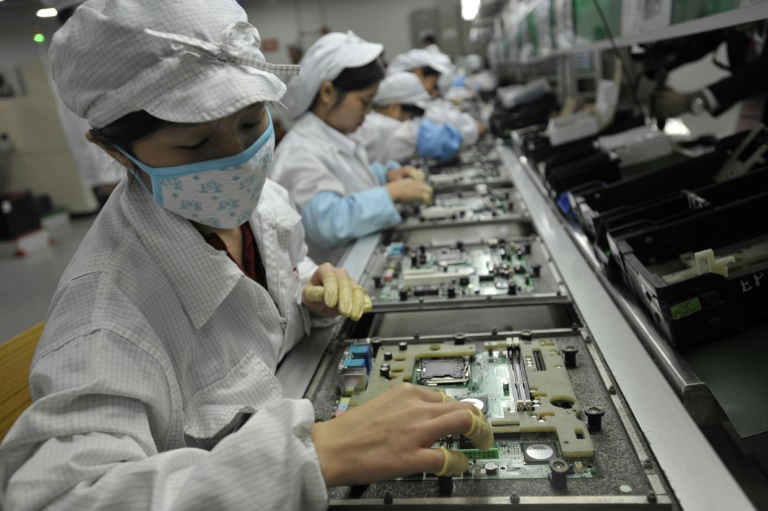
Zhang Yao recalls the moment he realised something had gone deeply wrong at the Chinese mega-factory where he and hundreds of thousands of other workers assembled iPhones and other high-end electronics.

In early October, supervisors suddenly warned him that 3,000 colleagues had been taken into quarantine after someone tested positive for Covid-19 at the factory.

“They told us not to take our masks off,” Zhang, speaking under a pseudonym for fear of retaliation, told AFP by telephone.

What followed was a weeks-long ordeal including food shortages and the ever-present fear of infection, before he finally escaped on Tuesday.

Zhang’s employer, Taiwanese tech giant Foxconn, has said it faces a “protracted battle” against infections and imposed a “closed loop” bubble around its sprawling campus in central China’s Zhengzhou city.

Local authorities locked down the area surrounding the major Apple supplier’s factory on Wednesday, but not before reports emerged of employees fleeing on foot and a lack of adequate medical care at the plant.

China is the last major economy committed to a zero-Covid strategy, persisting with snap lockdowns, mass testing and lengthy quarantines in a bid to stamp out emerging outbreaks.

But new variants have tested officials’ ability to snuff out flare-ups and dragged down economic activity with the threat of sudden disruptions.

– Desperation –

Multiple workers have recounted scenes of chaos and increasing disorganisation at Foxconn’s complex of workshops and dormitories, which form a city-within-a-city near Zhengzhou’s airport.

Zhang told AFP that “positive tests and double lines (on antigen tests) had become a common sight” in his workshop before he left.

“Of course we were scared, it was so close to us.”

“People with fevers are not guaranteed to receive medicine,” another Foxconn worker, a 30-year-old man who also asked to remain anonymous, told AFP.

“We are drowning,” he said.

Those who decided to stop working were not offered meals at their dormitories, Zhang said, adding that some were able to survive on personal stockpiles of instant noodles.

Kai, a worker at in the complex who gave an interview to state-owned Sanlian Lifeweek, told the magazine Foxconn’s “closed loop” involved cordoning off paths between dormitory compounds and the factory, and complained he was left to his own devices after being thrown in quarantine.

TikTok videos geolocated by AFP showed mounds of uncollected rubbish outside buildings in late October, while employees in N95 masks squeezed onto packed shuttle buses taking them from dormitories to their work stations.

A 27-year-old woman working at Foxconn, who asked not to be named, told AFP a roommate who tested positive for Covid was sent back to her dormitory on Thursday morning, crying, after she decided to hand in her notice while in quarantine.

“Now the three of us are living in the same room: one a confirmed case and two of us testing positive on the rapid test, still waiting for our nucleic acid test results,” the worker told AFP.

Many became so desperate by the end of last month that they attempted to walk back to their hometowns to get around Covid transport curbs.

As videos of people dragging their suitcases down motorways and struggling up hills spread on Chinese social media, the authorities rushed in to do damage control.

The Zhengzhou city government on Sunday said it had arranged for special buses to take employees back to their hometowns.

Surrounding Henan province has officially reported a spike of more than 600 Covid cases since the start of this week.

– Distrust –

When Zhang finally attempted to leave the Foxconn campus on Tuesday, he found the company had set up obstacle after obstacle.

“There were people with loudspeakers advertising the latest Foxconn policy, saying that each day there would be a 400 yuan ($55) bonus,” Zhang told AFP.

A crowd of employees gathered at a pick-up point in front of empty buses but were not let on.

People in hazmat suits, known colloquially as “big whites” in China, claimed they had been sent by the city government.

“They tried to persuade people to stay in Zhengzhou… and avoid going home,” Zhang said.

“But when we asked to see their work ID, they had nothing to show us, so we suspected they were actually from Foxconn.”

Foxconn pointed to the local government’s lockdown orders from Wednesday when asked by AFP if it attempted to stop employees from leaving, without giving any further response.

The company had on Sunday said it was “providing employees with complimentary three meals a day” and cooperating with the government to provide transport home.

Eventually, the crowd of unhappy workers who had gathered decided to take matters into their own hands and walked over seven kilometres on foot to the nearest highway entry ramp.

There, more people claiming to be government officials pleaded with the employees to wait for the bus.

The crowd had no choice as the road was blocked.

Buses eventually arrived at five in the afternoon — nearly nine hours after Zhang had begun his attempt to secure transport.

“They were trying to grind us down,” he said.

Back in his hometown, Zhang is now waiting out the home quarantine period required by the local government.

“All I feel is, I’ve finally left Zhengzhou,” he told AFP.
Most Asian markets rise, dollar holds gains ahead of US jobs data

Most Asian investors tentatively stepped back into the markets Friday after the previous day’s Federal Reserve-induced sell-off, while the dollar held gains as focus turned to the release of key US jobs data.

Fed boss Jerome Powell’s pushback against expectations of a softer approach to monetary tightening sent shivers through trading floors and ramped up fears of a global recession.

The governor told a news conference that while the size of increases would likely come down, they would top out at a higher level than expected, dealing a blow to talk of an end soon.

The decision came as other central banks have signalled they will tone down their hawkishness, even in the face of decades- or record-high inflation.

The Bank of England became the latest on Thursday when it lifted borrowing costs by their most in 33 years — and to a 14-year high — but said they would not go as high as markets had priced in.

It also warned that the UK economy faced a prolonged recession — possibly into 2024 — as it battles high prices caused by the Ukraine war.

The comments skewered the pound — already under severe pressure after recent turmoil in Westminster — and sent it tumbling against the dollar and euro, while it struggled to bounce back in Asia.

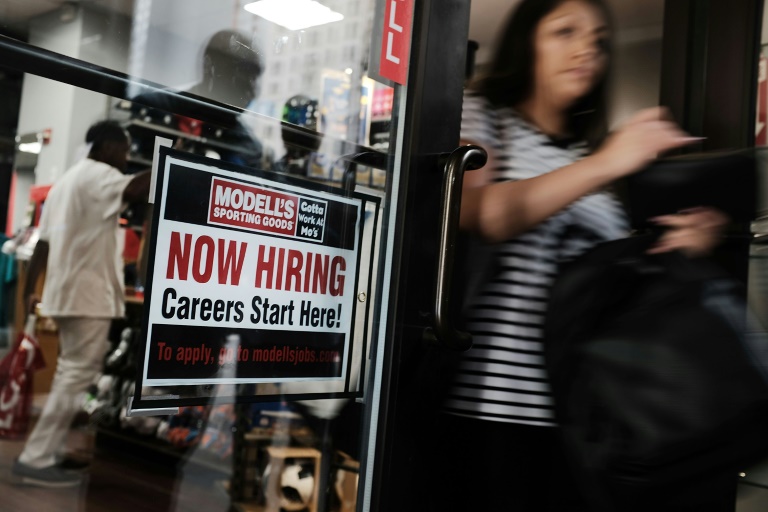
Still, regional equity markets mostly turned positive as investors picked up bargains and awaited the non-farm payrolls data later in the day, which could provide fresh insight into the state of the world’s top economy.

With the Fed pointing to a still-strong labour market as a key reason for not shifting from its rate-hike strategy, traders are nervous that a big figure in the report will give officials room to tighten more.

“After initial jobless claims came in line with expectations, Friday’s payrolls will be the last vital data point this week, as signals on the labour market remain crucial to the Fed’s path forward, and many stock pickers are dearly hoping for ‘bad news is good news’ close to the week,” said SPI Asset Management’s Stephen Innes.

In early trade, Hong Kong jumped nearly four percent on lingering hopes that China will soon begin rolling back its zero-Covid strategy of lockdowns that has hammered the world’s second-largest economy.

While it retreated with others Thursday, the Hang Seng Index has surged since an unverified statement earlier this week suggested officials in Beijing were discussing a change. Shanghai was up more than one percent

The gains continue despite pushback from authorities in China.

Elsewhere, Sydney, Seoul, Singapore and Wellington rose.

However, Tokyo was deep in the red as traders played catch-up with Thursday’s losses after returning from a one-day holiday. Taipei, Manila and Jakarta also fell.

– Key figures around 0230 GMT –

Tokyo – Nikkei 225: DOWN 2.0 percent at 27,103.17 (break)

Hong Kong – Hang Seng Index: UP 3.9 percent at 15,936.89 

Shanghai – Composite: UP 1.5 percent at 3,041.59

Pound/dollar: UP at $1.1202 from $1.1160 Thursday

Euro/dollar: UP at $0.9767 from $0.9751

Dollar/yen: DOWN at 148.13 yen from 148.25 yen

Euro/pound: DOWN at 87.21 pence from 87.73 pence

West Texas Intermediate: UP 0.5 percent at $88.64 per barrel

Brent North Sea crude: UP 0.5 percent at $95.15 per barrel

New York – Dow: DOWN 0.5 percent at 32,001.25 (close)

London – FTSE 100: UP 0.6 percent at 7,188.63 (close)

Most Asian markets rise, dollar holds gains ahead of US jobs data

Most Asian investors tentatively stepped back into the markets Friday after the previous day’s Federal Reserve-induced sell-off, while the dollar held gains as focus turned to the release of key US jobs data.

Fed boss Jerome Powell’s pushback against expectations of a softer approach to monetary tightening sent shivers through trading floors and ramped up fears of a global recession.

The governor told a news conference that while the size of increases would likely come down, they would top out at a higher level than expected, dealing a blow to talk of an end soon.

The decision came as other central banks have signalled they will tone down their hawkishness, even in the face of decades- or record-high inflation.

The Bank of England became the latest on Thursday when it lifted borrowing costs by their most in 33 years — and to a 14-year high — but said they would not go as high as markets had priced in.

It also warned that the UK economy faced a prolonged recession — possibly into 2024 — as it battles high prices caused by the Ukraine war.

The comments skewered the pound — already under severe pressure after recent turmoil in Westminster — and sent it tumbling against the dollar and euro, while it struggled to bounce back in Asia.

Still, regional equity markets mostly turned positive as investors picked up bargains and awaited the non-farm payrolls data later in the day, which could provide fresh insight into the state of the world’s top economy.

With the Fed pointing to a still-strong labour market as a key reason for not shifting from its rate-hike strategy, traders are nervous that a big figure in the report will give officials room to tighten more.

“After initial jobless claims came in line with expectations, Friday’s payrolls will be the last vital data point this week, as signals on the labour market remain crucial to the Fed’s path forward, and many stock pickers are dearly hoping for ‘bad news is good news’ close to the week,” said SPI Asset Management’s Stephen Innes.

In early trade, Hong Kong jumped nearly four percent on lingering hopes that China will soon begin rolling back its zero-Covid strategy of lockdowns that has hammered the world’s second-largest economy.

While it retreated with others Thursday, the Hang Seng Index has surged since an unverified statement earlier this week suggested officials in Beijing were discussing a change. Shanghai was up more than one percent

The gains continue despite pushback from authorities in China.

Elsewhere, Sydney, Seoul, Singapore and Wellington rose.

However, Tokyo was deep in the red as traders played catch-up with Thursday’s losses after returning from a one-day holiday. Taipei, Manila and Jakarta also fell.

– Key figures around 0230 GMT –

Tokyo – Nikkei 225: DOWN 2.0 percent at 27,103.17 (break)

Hong Kong – Hang Seng Index: UP 3.9 percent at 15,936.89 

Shanghai – Composite: UP 1.5 percent at 3,041.59

Pound/dollar: UP at $1.1202 from $1.1160 Thursday

Euro/dollar: UP at $0.9767 from $0.9751

Dollar/yen: DOWN at 148.13 yen from 148.25 yen

Euro/pound: DOWN at 87.21 pence from 87.73 pence

West Texas Intermediate: UP 0.5 percent at $88.64 per barrel

Brent North Sea crude: UP 0.5 percent at $95.15 per barrel

New York – Dow: DOWN 0.5 percent at 32,001.25 (close)

London – FTSE 100: UP 0.6 percent at 7,188.63 (close)

Twitter says layoffs to begin Friday

Twitter said it will start laying off employees on Friday, as the new billionaire owner Elon Musk moves quickly after his big takeover to make the messaging platform financially sound.

A company-wide email seen by AFP says Twitter employees will receive word via email at the start of business Friday, California time, as to what their fate is.

It does not give a number but the Washington Post and New York Times reported that about half of Twitter’s 7,500 employees will be let go.

“In an effort to place Twitter on a healthy path, we will go through the difficult process of reducing our global work force,” the email said.

Twitter employees have been bracing for this kind of bad news since Musk completed his mammoth $44 billion acquisition late last week and quickly set about dissolving its board and firing its chief executive and top managers.

A workplace and employee review and other projects ordered by Musk were reportedly so exhaustive and grueling that some engineers slept at Twitter headquarters over the weekend.

The email sent Thursday told workers to go home and not report for work on Friday.

“Our offices will be temporarily closed and all badge access will be suspended,” the email said. Those on the way to the office should turn around and return home.”

The email acknowledged that Twitter is going through “an incredibly challenging experience.”

“We recognize that this will impact a number of individuals who have made valuable contributions to Twitter, but this action is unfortunately necessary to ensure the company’s success moving forward,” it added.

Saddled with the purchase of Twitter, for which Musk has said he overpaid, the tycoon is looking for ways for Twitter to make money — and fast.

His most recent idea was to charge $8 a month to anyone on Twitter who would receive a blue “verified” badge assuring the public that the account is authentic.

A news report this week said Musk wanted to charge $20 a month but faced a backlash, including from bestselling novelist Stephen King, who tweeted: “$20 a month to keep my blue check?” It was followed by an expletive.

Musk responded on Twitter, seemingly bargaining with King: “we need to pay the bills somehow! Twitter cannot rely entirely on advertisers. How about $8?”

Musk has said he wants to increase Twitter’s revenue from $5 billion last year to more than $26 billion in 2028. 

Top global companies, including General Mills and Volkswagen, suspended their advertising on Twitter on Thursday as pressure builds on Musk to turn his platform into a succesful business.

US auto giant General Motors last week was the first major advertiser to suspend advertising following the takeover.

Officials and civil rights groups have expressed worry that Musk will open the site to uncontrolled hate speech and misinformation as well as reinstate banned accounts, including that of former US president Donald Trump.

Advertisers are Twitter’s main source of revenue and Musk has tried to calm the nerves by reassuring that the site would not become a “free-for-all hellscape”.

juj/tjj/dw

Twitter says layoffs to begin Friday

Twitter said it will start laying off employees on Friday, as the new billionaire owner Elon Musk moves quickly after his big takeover to make the messaging platform financially sound.

A company-wide email seen by AFP says Twitter employees will receive word via email at the start of business Friday, California time, as to what their fate is.

It does not give a number but the Washington Post and New York Times reported that about half of Twitter’s 7,500 employees will be let go.

“In an effort to place Twitter on a healthy path, we will go through the difficult process of reducing our global work force,” the email said.

Twitter employees have been bracing for this kind of bad news since Musk completed his mammoth $44 billion acquisition late last week and quickly set about dissolving its board and firing its chief executive and top managers.

A workplace and employee review and other projects ordered by Musk were reportedly so exhaustive and grueling that some engineers slept at Twitter headquarters over the weekend.

The email sent Thursday told workers to go home and not report for work on Friday.

“Our offices will be temporarily closed and all badge access will be suspended,” the email said. Those on the way to the office should turn around and return home.”

The email acknowledged that Twitter is going through “an incredibly challenging experience.”

“We recognize that this will impact a number of individuals who have made valuable contributions to Twitter, but this action is unfortunately necessary to ensure the company’s success moving forward,” it added.

Saddled with the purchase of Twitter, for which Musk has said he overpaid, the tycoon is looking for ways for Twitter to make money — and fast.

His most recent idea was to charge $8 a month to anyone on Twitter who would receive a blue “verified” badge assuring the public that the account is authentic.

A news report this week said Musk wanted to charge $20 a month but faced a backlash, including from bestselling novelist Stephen King, who tweeted: “$20 a month to keep my blue check?” It was followed by an expletive.

Musk responded on Twitter, seemingly bargaining with King: “we need to pay the bills somehow! Twitter cannot rely entirely on advertisers. How about $8?”

Musk has said he wants to increase Twitter’s revenue from $5 billion last year to more than $26 billion in 2028. 

Top global companies, including General Mills and Volkswagen, suspended their advertising on Twitter on Thursday as pressure builds on Musk to turn his platform into a succesful business.

US auto giant General Motors last week was the first major advertiser to suspend advertising following the takeover.

Officials and civil rights groups have expressed worry that Musk will open the site to uncontrolled hate speech and misinformation as well as reinstate banned accounts, including that of former US president Donald Trump.

Advertisers are Twitter’s main source of revenue and Musk has tried to calm the nerves by reassuring that the site would not become a “free-for-all hellscape”.

juj/tjj/dw

TikTok a hotbed of US election misinformation, analysts say

Election misinformation is spreading on TikTok ahead of the US midterms despite the company’s policies — and watchdogs are concerned about its effect on young voters as more Americans use the platform as a source of news.

Posts spreading unfounded claims of voter fraud, falsehoods about mail-in ballots and misleading videos about different state laws have found a home on the immensely popular app. 

Perhaps more troubling: TikTok has approved paid political advertisements containing blatant misinformation, a practice the company said in 2019 it had banned.

“Hackers can easily change the election results! Don’t bother voting in the midterms,” says one such ad.

It was one of several created by researchers at the non-profit Global Witness and New York University to test TikTok’s prohibition on paid political posts. The social media company approved 90 percent of ads the team submitted containing election misinformation.

“We were relatively shocked by that result,” said Jon Lloyd, a senior advisor at Global Witness, who described TikTok as “bottom of the class” compared to other social media platforms tackling election misinformation.

Such falsehoods coincide with more than eight million young US citizens being newly eligible to vote in the November 8 elections.

TikTok’s parent company, Beijing-based ByteDance, has rules aimed at limiting the spread of conspiracy theories about elections. But experts question how effective they are.

“Just because they had these policies in place, it doesn’t mean that they’re being enforced well,” Lloyd said, arguing that TikTok’s business model is based on “amplifying and driving people” towards content.

Although that criticism could be aimed at all social networks, a Pew Research Center survey found more than a quarter of Americans aged 18-29 regularly get news from TikTok — despite a sizeable minority of videos presented in search results containing misinformation, according to media monitor NewsGuard.

The platform’s powerful algorithm makes it possible for videos to quickly garner thousands of views, even without an established following.

And the sheer volume of content on TikTok makes it “more likely that users in general — especially more young, impressionable users — are going to come into contact with potentially divisive, polarizing, objectionable content,” said Matt Navarra, a social media industry analyst and consultant based in Britain.

– Falsehoods slip through cracks –

TikTok removes content that could mislead on “civic processes, public health or safety,” according to its integrity policies — including falsehoods about voting. The platform also prohibits campaign fundraising and recently launched an in-app election center.

“We take our responsibility to protect the integrity of our platform and elections with utmost seriousness,” a spokesperson for the company told AFP in an emailed statement. “We continue to invest in our policy, safety and security teams to counter election misinformation.”

However, baseless claims of ballot fraud and conspiracy theories shared by midterm election candidates are still circulating. It is not the first time TikTok has been used to spread election falsehoods.

Earlier this year, influencer campaigns on the platform played a role in the Philippines’ presidential contest. In Germany, accounts posed as parliament and public officials, and in Kenya, the app was a den for propaganda, hate speech and misinformation.

In the second quarter of 2022, TikTok removed 113 million videos for violating its community guidelines — an amount that represents about one percent of all videos uploaded to the platform. A small fraction of the posts were removed for violating the company’s integrity policies.

Reminded of how platforms such as Facebook have served as vectors for misinformation, including baseless claims from former president Donald Trump that the 2020 US election was “stolen” from him, analysts express little faith in TikTok’s incentive and ability to address the problem.

“That a company can actually make Facebook look good when it comes to misinformation and disinformation is an amazing achievement,” said NewsGuard CEO Steven Brill.

– Perfect breeding ground –

The format of TikTok posts makes it easier to create misinformation, experts say — and harder for users to tell fact from fiction.

“It’s very quick, very easy, very simple to create content and to build a substantial following,” Navarra said.

Posts are short, highly edited and often contain music, captions and voiceovers that analysts say make it hard to understand nuance.

NewsGuard senior analyst Jack Brewster said the threat to the democratic process was particularly stark, given TikTok’s young audience and many users’ inexperience in identifying credible information.

“If young people are searching for election news on the platform, the videos are inherently short, so context is often lost,” he said. “There’s little to no information often about the sources.”

US judge appoints monitor to prevent more fraud at Trump Organization

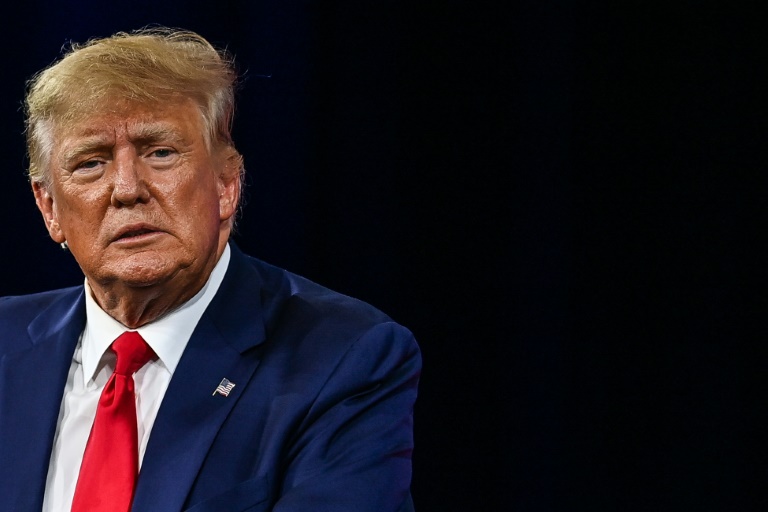
A New York judge ruled Thursday that an independent monitor must be named to avoid “further fraud” within Donald Trump’s family business.

This is a stinging setback for the Trump Organization and supports the civil suit brought against the company by New York state attorney general Letitia James.

James was seeking the appointment of such a monitor as part of her civil proceedings against the former president and his three eldest children.

She accuses the Trump Organization of inflating the value of its assets to get better loan terms or lowering them to pay less in taxes.

This lawsuit, which has yet to go to trial, is separate from a trial that opened recently against the Trump Organization itself — not Trump the man — on fraud and tax evasion charges.

One of the implicated executives, longtime chief financial officer Allen Weisselberg, has already pleaded guilty to 15 counts of tax fraud, and is expected to testify against his former company as part of a plea bargain.

On Thursday Judge Arthur Engoron said there were “persistent misrepresentations” by Trump between 2011 and 2021 in documents called statements of financial condition. 

“This court finds that the appointment of an independent monitor is the most prudent and narrowly tailored mechanism to ensure there is no further fraud or illegality that violates” New York state law, the judge said.

He said some of the examples cited by James were “particularly compelling.” One involves Trump’s triplex apartment in the Trump Tower on 5th Avenue in New York and an overevaluation of approximately $200 million, Engoron said.

Trump and his adult children are barred from “selling, transferring, or otherwise disposing of any non-cash asset listed on the 2021 Statement of Financial Condition of Donald J Trump” without first giving 14 days notice, the judge said.

In her separate lawsuit James is seeking $250 million in damages.

Pelosi husband released from hospital after attack

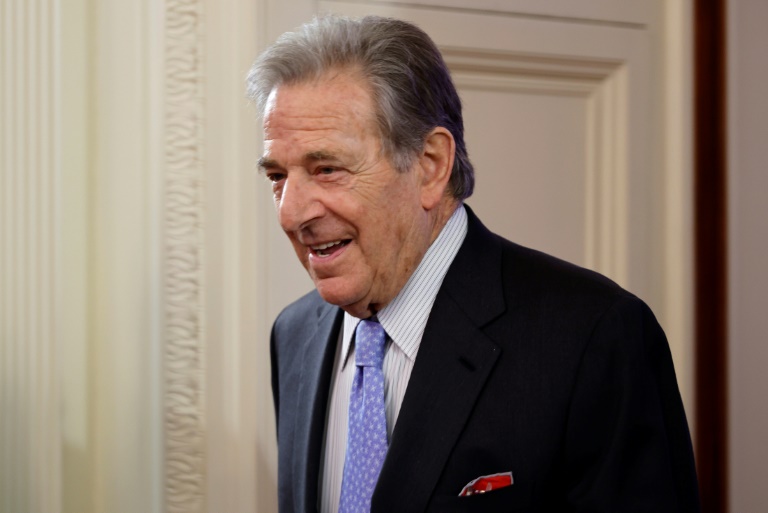
House Speaker Nancy Pelosi’s husband has been released from hospital, the US politician said Thursday, following an attack in which a man broke into the couple’s home and hit her spouse on the head with a hammer.

The man accused of the violent episode, David DePape, 42, allegedly intended to tie up Pelosi and break her kneecaps, but found only her 82-year-old husband, Paul Pelosi.

“Paul remains under doctors’ care as he continues to progress on a long recovery process and convalescence,” the speaker said in a press release. “He is now home surrounded by his family who request privacy.”

DePape was arrested last week and ordered to be held in custody after he pleaded not guilty to attempted murder and other charges during his arraignment Tuesday at a San Francisco court.

“Paul is grateful to the 911 operator, emergency responders, trauma care team, ICU staff, and the entire… medical staff” at the San Francisco hospital where he received care, Nancy Pelosi said.

“The Pelosi family is thankful for the beautiful outpouring of love, support and prayers from around the world,” she added.

According to the state prosecutors’ filing, DePape startled Paul Pelosi awake from his bed in the early hours of Friday, holding a hammer and several plastic zip ties.

He told Paul Pelosi he had come to find Nancy Pelosi because she is “number two in line for the presidency,” and “we’ve got to take them all out.”

In a speech Wednesday, US President Joe Biden linked the attack to the political violence unleashed by ex-president Donald Trump’s supporters against Congress on January 6, 2021.

Republicans, he said, have “emboldened violence and intimidation of voters and election officials.”

“That is the path to chaos in America,” he said.

Canada sees lower deficit in updated fiscal plan, possible 2023 recession

Canada’s government announced modest new spending in an updated fiscal plan Thursday, as windfall revenues allow it to slash its budget deficit ahead of a possible economic downturn.

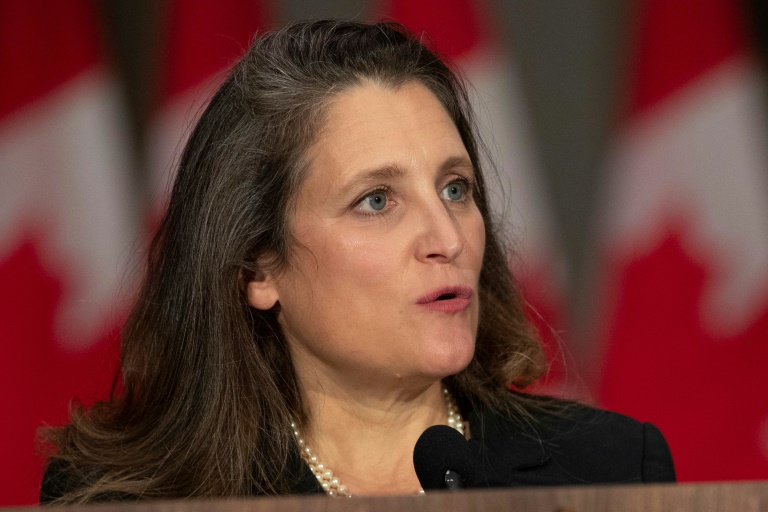
Under pressure to tighten the belt, Finance Minister Chrystia Freeland said spending measures, including eliminating interest on student loans and lowering credit card transaction fees for small businesses — amounting to about Can$30 billion (US$22 billion) over six years — would not fuel inflation.

She also introduced investment tax credits for clean energy projects such as the production of hydrogen from renewable sources, and taxes on corporate share buy-backs.

“Canada cannot avoid the global slowdown to come, any more than we could have prevented Covid from reaching our shores once it had begun to infect the world,” Freeland said in a speech to parliament. 

“But we will be ready.”

The minister pointed to “targeted inflation relief” for those in need, adding that “we cannot support every single Canadian in the way we did with emergency measures at the height of the pandemic.”

Continued robust economic stimulus spending, she explained, would run counter to the central bank’s fight against surging consumer prices.

Inflation soared to a June peak of 8.1 percent before falling bit by bit to 6.9 percent in September.

The Bank of Canada responded with several outsized interest rate hikes, to 3.75 percent, and signaled more to come.

That is sure to cool the economy and possibly send it into a recession, after it roared back from a relatively brief pandemic downturn.

In the government’s April budget, the economy was forecast to grow 3.9 percent this year. In Freeland’s fiscal update, growth is now expected to come in at 3.2 percent and 0.7 percent next year.

In a worst case scenario, Canada could enter “a mild recession” at the beginning of 2023, it noted.

Canada’s main opposition Conservatives have pressed the ruling Liberals to act on inflation and the resulting high cost of living, and demanded the government end its pandemic splurge.

In her April budget, Freeland had already slashed spending after the government doled out significant pandemic aid that pushed the national debt to a record Can$1.16 trillion this year.

On Thursday, she reported a 30 percent lower deficit in fiscal 2022-2023 than originally forecast to Can$36 billion.

Canada’s debt-to-GDP ratio, meanwhile, is expected to narrow a bit more than previously stated, to 42.3 percent.

Russian strikes leave 4.5 million without power in Ukraine: Zelensky

Ukrainian President Volodymyr Zelensky said Thursday that Russia’s campaign against Ukraine’s energy network has left around 4.5 million people without power.

The two sides’ forces continued to battle without significant change on the ground on the eastern and southern Ukraine fronts, with preparations building for a fight over the southern hub of Kherson.

Shipments of Ukraine grain to global markets meanwhile resumed after Moscow returned to a deal allowing their safe passage following international pressure.

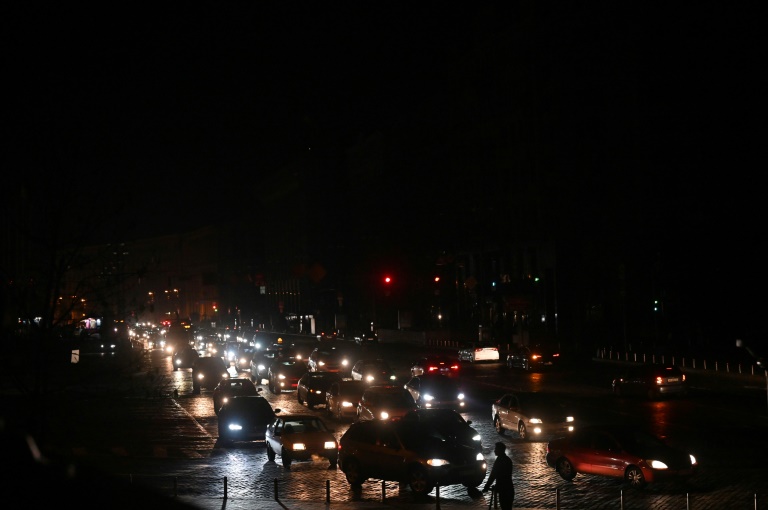
“Tonight, about 4.5 million consumers have been temporarily disconnected from energy consumption,” Zelensky said in his daily address.

“The very fact that Russia is resorting to energy terrorism shows the weakness of our enemy. They cannot beat Ukraine on the battlefield, so they try to break our people this way,” Zelensky said. 

For weeks Russian forces have rained missiles and explosive drones onto Ukraine infrastructure, apparently hoping to turn sentiment among the Ukrainian public and its neighbors against the war during the cold of winter. 

Russian strikes over the past month have destroyed around a third of the country’s power stations. The government has urged Ukrainians to conserve electricity as much as possible.

Ahead of Thursday’s meeting of the Group of Seven industrialised powers, German Foreign Minister Annalena Baerbock said the G7 will help Ukraine with items including generators and heaters to survive the winter.

– Grain exports moving –

Russia resumed allowing exports of grain and other foodstuffs from Ukraine after a one-day halt, which followed  Ukraine’s air-and-sea drone  attack on Russian vessels in Crimea, which Moscow said was aided by Britain.

The UN said Thursday that seven vessels were transiting through the Black Sea shipping corridor after the trade was resumed.

But Moscow said it had yet to decide whether to extend the grain deal beyond November 19,  the renewal date to the agreement brokered by the UN and Turkey.

UN trade negotiator Rebeca Grynspan told reporters in Geneva Thursday that she had “hope that the parties will be responsible and will extend and expand the Black Sea grain initiative”.

Ukraine is one of the world’s top producers and the Russian invasion had blocked 20 million tonnes of grain in its ports until the safe passage deal was agreed in July.

Negotiations underway to unblock fertiliser exports from Russia have made “important steps forward,” Grynspan said, but acknowledged there was still a way to go.

Moscow has complained its grain and fertiliser exports continue to face issues over sanctions imposed after its February invasion of Ukraine, despite exceptions made for agriculture-related products.

– Forced relocation –

As  fighting focused increasingly on Russia-held Kherson, Kyiv on Thursday condemned the “mass forced relocation” of its citizens living in regions occupied by Russia. 

“The Russian occupation administration began mass forced relocation of residents of the left-bank of the Kherson region… to the temporarily occupied Crimea or to Russia,” the Ukrainian foreign ministry said in a statement.

“Similar deportations are also being carried out by Russia in the Zaporizhzhia, Lugansk and Donetsk regions, as well as in Crimea.”

Moscow-installed Kherson governor Vladimir Saldo said he was moving people further into the region or to Russia because of the risks of a “massive missile attack.”

Moscow-installed authorities in Kherson said last week 70,000 civilians had left their homes on the right bank of the Dnipro. 

– IAEA: ‘No dirty bomb’ –

Meanwhile, the UN’s IAEA nuclear watchdog said its inspectors had found no indications of any “undeclared nuclear activities” at three locations they had inspected in Ukraine. 

The inspectors inspected at the sites at Kyiv’s request to refute Moscow’s allegations that Ukraine was preparing to use dirty bombs against Russian troops.

Kyiv has raised fears Moscow itself might resort to using a dirty bomb in a “false flag” attack.

Zelensky said Thursday that the IAEA’s conclusion is “obvious.” 

“We have given them full freedom of action at the relevant facilities, and we have clear and irrefutable evidence that no one in Ukraine has created or is creating any ‘dirty bombs.'”

– Returning to normalcy –

Meanwhile some semblance of normality was gradually returning to areas of southern and eastern Ukraine recently recaptured by Ukrainian troops although the humanitarian situation remains fragile.

In the village of Lymany in southern Ukraine, an aid volunteer said she was concerned that so many residents were returning despite the dangers.

“It would be a lot easier if these people were not out here,” said Yulia Pogrebna, 32, as she distributed food boxes to residents.

Close Bitnami banner
Bitnami