AFP

Pilot strike adds to Kenya Airways woes

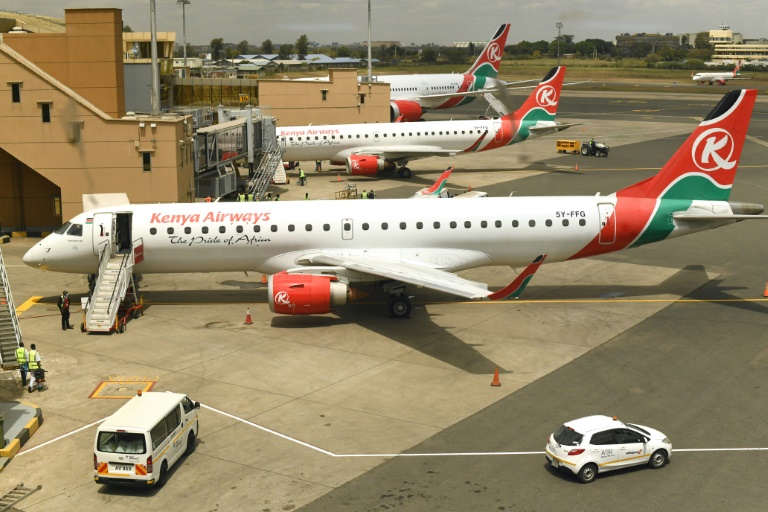
Pilots at Kenya Airways plan to go on strike from Saturday to seek better working conditions in defiance of a court order, adding to the woes of the troubled national carrier.

The airline, part owned by the government and Air France-KLM, is one of the biggest in Africa, connecting multiple countries to Europe and Asia, but it is facing turbulent times, including years of losses.

The Kenya Airlines Pilots Association (KALPA) said a series of meetings with airline management had failed to resolve grievances.

No Kenya Airways flight flown by KALPA pilots will depart Nairobi’s Jomo Kenyatta International Airport from 6:00 am (0300 GMT) on Saturday, said union secretary general Murithi Nyaga, without specifying how long the strike would last.

“Kenya Airways management’s actions have left us with no other option,” Nyaga said, adding that a 14-day notice on the industrial action had ended without a solution.

“We had hoped that the management of the airline would soften its stance and engage in negotiation on the issues raised.”

The pilots, who have had a particularly fraught relationship with management, are pressing for the reinstatement of contributions to a provident fund.

They also want back payment of all salaries stopped during the Covid-19 pandemic.

– ‘Delay and disrupt’ –

Kenya Airways on Wednesday warned the strike would jeopardise its recovery and said the pilots’ grievances did not warrant such action.

“Industrial action is unnecessary,” board chairman Michael Joseph said. “It will delay and disrupt the financial and operational recovery and cause reputational damage to Kenya Airways.”

On Monday, the airline won a court injunction stopping the strike, but the pilots’ union has nevertheless vowed to down tools.

An official at KALPA, which has 400 members, told AFP the pilots “were acting within the provisions of the law” and that they were yet to be served with a court injunction. 

Earlier this week, Kenya Airways estimated losses at $2.5 million per day if the strike goes ahead.

The airline was founded in 1977 following the demise of East African Airways and flies over four million passengers to 42 destinations annually.

But its slogan “The Pride of Africa” rings hollow as it operates thanks to state bailouts following years of losses.

Like other carriers around the world, Kenya Airways saw its revenue nosedive after the pandemic grounded planes worldwide because of stringent travel restrictions, devastating the aerospace and tourism industries.

Despite the gloom, its cargo operations grew slightly in 2020 as it switched to delivering Covid vaccines and maximised its expertise in flying fresh roses to Europe.

– ‘Joke of the continent’ –

In August, the airline reported a $81.5 million half-year loss citing high fuel costs, albeit a marked improvement on the $94.6 million loss in the same period last year.

This is despite the Kenyan government injecting some $520 million to keep the airline afloat.

On Wednesday, the airline’s management said it was on a path to recovery, flying at least 250,000 passengers each month, and aiming to cut its overall operating costs by 10 percent before the end of next year.

Kenya’s tourism arrivals, a major foreign exchange earner, have jumped more than 90 percent to 924,000, the government said in September, projecting that the number could hit 1.4 million by December.

Analysts say a misguided expansion strategy launched in 2011 is the root of the firm’s problems, a move that called for the purchase of new Boeing planes with the objective of doubling the size of its network.

A plan to nationalise the carrier, which would see it exempt from paying taxes on engines, maintenance and fuel, remains unimplemented.

On Tuesday, Kenya’s leading newspaper the Daily Nation called for a forensic audit of the state bailouts, saying the carrier had become “the joke of the continent.”

“It’s like pouring public funds down the drain,” the paper wrote in an editorial.
Red Bull names trio to run firm after founder's death

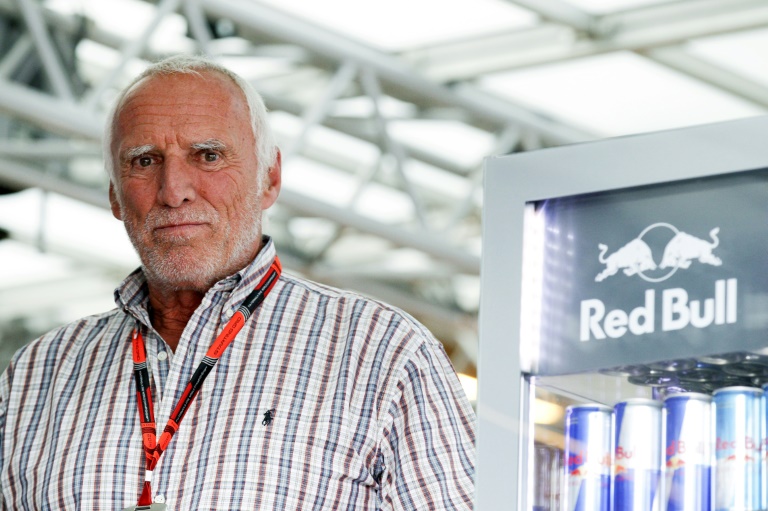
Red Bull named on Friday a board of three directors to lead the energy drink giant following the death of Austrian founder Dietrich Mateschitz.

Mateschitz, who made the energy drink a global phenomenon and forged a title-winning Formula One team and a sports empire, died on October 22 aged 78.

Following his death, speculation abounded as to who would take over the business, with Austrian media reporting Mateschitz’ Thai partners, the Yoovidhya family, were looking to take on more control. 

“As proposed and desired by both my father and myself, and supported by our Thai partners, a board of directors will manage the business affairs of Red Bull,” Mateschitz’ only son, Mark Mateschitz, said in a letter to employees disseminated to media.

The three directors are Franz Watzlawick, the CEO of the company’s beverage business, chief financial officer Alexander Kirchmayr and Oliver Mintzlaff, the CEO of corporate projects and investments, the letter said, describing them as a “dream team”.

Mark Mateschitz, who now owns Distribution and Marketing GmbH, said he would resign from his current managerial position in the company to “concentrate on my role as a shareholder”.

Distribution and Marketing holds 49 percent of Red Bull shares. The Thai Yoovidhya family holds the rest. The company is based in Fuschl-am-See in western Austria.

Dietrich Mateschitz was named as Austria’s richest person by Forbes in 2022 with an estimated net worth of $27.4 billion.

He made his fortune when he took a sweet drink that was already popular in Asia and adapted it for the Western market with huge success.

Mateschitz invested heavily in sport to give his brand global exposure.

Stock markets rise as China hopes boost Hong Kong

Asian and European markets rose Friday with Hong Kong leading the way fuelled by hopes China will roll back some of its economically painful zero-Covid policies.

The gains come after Federal Reserve boss Jerome Powell’s pushback against expectations of a softer approach to interest rate hikes sent shivers through trading floors and ramped up fears of a global recession.

However, the mood lightened in Asia on Friday, as Hong Kong jumped more than five percent on lingering hopes that China will soon begin rolling back its zero-Covid strategy of lockdowns that has hammered the world’s second-largest economy. Shanghai ended up more than two percent.

The Hang Seng Index has jumped almost nine percent this week since an unverified statement earlier this week suggested officials in Beijing were discussing a change.

The gains continued despite pushback from authorities, and after President Xi Jinping reasserted the zero-Covid strategy at a major Communist Party gathering last month.

“What we are guessing is China in the future will model the reopening on the back of Hong Kong,” Jack Siu, Greater China chief investment officer at Credit Suisse, told Bloomberg Television.

“To fully reopen, we are still at least nine months away from today.”

Tech firms were the big winners in Hong Kong, with Alibaba and Tencent up by double digits on reports of progress in US auditing of Chinese firms listed in New York.

Alibaba and Tencent among others have faced delisting from Wall Street owing to a standoff between securities authorities as part of the wider China-US row.

Elsewhere, Sydney, Seoul, Singapore, Taipei, Manila, Jakarta, Bangkok and Wellington rose.

However, Tokyo was deep in the red as traders played catch-up with Thursday’s losses after returning from a one-day holiday. Mumbai also fell.

The ongoing optimism about an easing of China’s Covid policy lifted oil prices on an expectation that demand will build as the giant economy picks up speed again.

The dollar held gains made after Powell’s comments Wednesday. The governor told a news conference that while the size of rate increases would likely come down, they would top out at a higher level than expected, dealing a blow to talk of an end soon.

The decision came as other central banks have signalled they will tone down their hawkishness, even in the face of decades- or record-high inflation.

The Bank of England became the latest on Thursday when it lifted borrowing costs by their most in 33 years — and to a 14-year high — but said they would not go as high as markets had priced in.

It also warned that the UK economy faced a prolonged recession — possibly into 2024 — as it battles high prices caused by the Ukraine war.

The comments skewered the pound — already under severe pressure after recent turmoil in Westminster — and sent it tumbling against the dollar and euro, while it struggled to bounce back in Asia.

Investors are now awaiting the release of jobs data later in the day, which could provide fresh insight into the state of the world’s top economy.

With the Fed pointing to a still-strong labour market as a key reason for not shifting from its rate-hike strategy, traders are nervous that a big figure in the report will give officials room to tighten more.

“After initial jobless claims came in line with expectations, Friday’s payrolls will be the last vital data point this week, as signals on the labour market remain crucial to the Fed’s path forward, and many stock pickers are dearly hoping for ‘bad news is good news’ close to the week,” said SPI Asset Management’s Stephen Innes.

– Key figures around 0820 GMT –

Tokyo – Nikkei 225: DOWN 1.7 percent at 27,199.74 (close)

Hong Kong – Hang Seng Index: UP 5.4 percent at 16,161.14 (close) 

Shanghai – Composite: UP 2.4 percent at 3,070.80 (close)

London – FTSE 100: UP 0.7 percent at 7,237.13

Pound/dollar: UP at $1.1216 from $1.1160 Thursday

Euro/dollar: UP at $0.9773 from $0.9751

Dollar/yen: DOWN at 147.76 yen from 148.25 yen

Euro/pound: DOWN at 87.16 pence from 87.73 pence

West Texas Intermediate: UP 2.2 percent at $90.07 per barrel

Brent North Sea crude: UP 1.9 percent at $96.44 per barrel

New York – Dow: DOWN 0.5 percent at 32,001.25 (close)

Stock markets rise as China hopes boost Hong Kong

Asian and European markets rose Friday with Hong Kong leading the way fuelled by hopes China will roll back some of its economically painful zero-Covid policies.

The gains come after Federal Reserve boss Jerome Powell’s pushback against expectations of a softer approach to interest rate hikes sent shivers through trading floors and ramped up fears of a global recession.

However, the mood lightened in Asia on Friday, as Hong Kong jumped more than five percent on lingering hopes that China will soon begin rolling back its zero-Covid strategy of lockdowns that has hammered the world’s second-largest economy. Shanghai ended up more than two percent.

The Hang Seng Index has jumped almost nine percent this week since an unverified statement earlier this week suggested officials in Beijing were discussing a change.

The gains continued despite pushback from authorities, and after President Xi Jinping reasserted the zero-Covid strategy at a major Communist Party gathering last month.

“What we are guessing is China in the future will model the reopening on the back of Hong Kong,” Jack Siu, Greater China chief investment officer at Credit Suisse, told Bloomberg Television.

“To fully reopen, we are still at least nine months away from today.”

Tech firms were the big winners in Hong Kong, with Alibaba and Tencent up by double digits on reports of progress in US auditing of Chinese firms listed in New York.

Alibaba and Tencent among others have faced delisting from Wall Street owing to a standoff between securities authorities as part of the wider China-US row.

Elsewhere, Sydney, Seoul, Singapore, Taipei, Manila, Jakarta, Bangkok and Wellington rose.

However, Tokyo was deep in the red as traders played catch-up with Thursday’s losses after returning from a one-day holiday. Mumbai also fell.

The ongoing optimism about an easing of China’s Covid policy lifted oil prices on an expectation that demand will build as the giant economy picks up speed again.

The dollar held gains made after Powell’s comments Wednesday. The governor told a news conference that while the size of rate increases would likely come down, they would top out at a higher level than expected, dealing a blow to talk of an end soon.

The decision came as other central banks have signalled they will tone down their hawkishness, even in the face of decades- or record-high inflation.

The Bank of England became the latest on Thursday when it lifted borrowing costs by their most in 33 years — and to a 14-year high — but said they would not go as high as markets had priced in.

It also warned that the UK economy faced a prolonged recession — possibly into 2024 — as it battles high prices caused by the Ukraine war.

The comments skewered the pound — already under severe pressure after recent turmoil in Westminster — and sent it tumbling against the dollar and euro, while it struggled to bounce back in Asia.

Investors are now awaiting the release of jobs data later in the day, which could provide fresh insight into the state of the world’s top economy.

With the Fed pointing to a still-strong labour market as a key reason for not shifting from its rate-hike strategy, traders are nervous that a big figure in the report will give officials room to tighten more.

“After initial jobless claims came in line with expectations, Friday’s payrolls will be the last vital data point this week, as signals on the labour market remain crucial to the Fed’s path forward, and many stock pickers are dearly hoping for ‘bad news is good news’ close to the week,” said SPI Asset Management’s Stephen Innes.

– Key figures around 0820 GMT –

Tokyo – Nikkei 225: DOWN 1.7 percent at 27,199.74 (close)

Hong Kong – Hang Seng Index: UP 5.4 percent at 16,161.14 (close) 

Shanghai – Composite: UP 2.4 percent at 3,070.80 (close)

London – FTSE 100: UP 0.7 percent at 7,237.13

Pound/dollar: UP at $1.1216 from $1.1160 Thursday

Euro/dollar: UP at $0.9773 from $0.9751

Dollar/yen: DOWN at 147.76 yen from 148.25 yen

Euro/pound: DOWN at 87.16 pence from 87.73 pence

West Texas Intermediate: UP 2.2 percent at $90.07 per barrel

Brent North Sea crude: UP 1.9 percent at $96.44 per barrel

New York – Dow: DOWN 0.5 percent at 32,001.25 (close)

Kenya Airways pilots to strike from Saturday

Pilots at troubled national flag carrier Kenya Airways plan to go on strike from Saturday to seek better working conditions despite a court order suspending the industrial action, their union said Friday.

The airline, partly owned by the government as well as Dutch carrier KLM, is one of the continent’s biggest, connecting multiple nations within Africa to Europe and Asia, but it is facing turbulent times.

The Kenya Airlines Pilots Association (KALPA) said a series of meetings with the airline management had failed to resolve the pilots’ grievances.

No Kenya Airways flight will depart Nairobi’s Jomo Kenyatta International Airport from 6:00 am (0300 GMT) on Saturday, said the union’s secretary general, Captain Murithi Nyaga. 

“Kenya Airways management’s actions have left us with no other option,” Nyaga said, adding that a 14-day notice on the action had ended without a solution.

“We had hoped that the management of the airline would soften its stance and engage in negotiation on the issues raised.”

The pilots, who have had a particularly fraught relationship with management, are pressing for the reinstatement of contributions to a provident fund. 

They also want back payment of all salaries stopped during the Covid pandemic.

Kenya Airways on Wednesday warned the strike would jeopardise its recovery and said none of the grievances by the pilots merited a strike.

“Industrial action is unnecessary at this point, as it will delay and disrupt the financial and operational recovery and cause reputational damage to Kenya Airways,” board chairman Michael Joseph said in a statement.

On Monday, the airline won a court injunction stopping the strike but the pilots’ union have nevertheless vowed to down tools.

An official at KALPA told AFP the pilots “were acting within the provisions of the law”, referring to the expiry of the strike notice.

Kenya Airways was founded in 1977 following the demise of East African Airways and flies over four million passengers to 42 destinations annually.

But its “Pride of Africa” slogan rings hollow as it is operating thanks to state bailouts following years of losses.

Nets' Irving, suspended in anti-semitism furore, apologizes

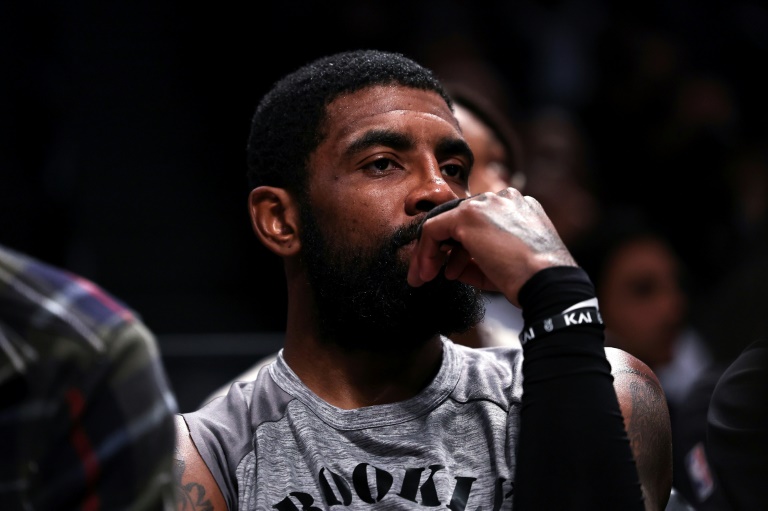
Brooklyn star Kyrie Irving, banned by the Nets for at least five games over his “failure to disavow anti-semitism,” issued an apology late on Thursday for the social media post that sparked the furore.

Irving had declined to apologize when talking to reporters at the NBA team’s training facility earlier in the day, prompting the Nets to deem him “currently unfit to be associated with” the team.

Irving has been under scrutiny since a social media post last week in which he offered a link to the film “Hebrews to Negroes: Wake Up Black America” — a 2018 film widely lambasted for containing a range of anti-semitic tropes.

The Nets said in a statement they had made repeated efforts over the past several days to work with Irving on the issue to “help him understand the harm and danger of his words and actions”.

The team said it was “dismayed today, when given an opportunity in a media session, that Kyrie refused to unequivocally say he has no anti-semitic beliefs, nor acknowledge specific hateful material in the film.” 

The statement went on to say that “failure to disavow anti-semitism when given a clear opportunity to do so is deeply disturbing, is against the values of our organization, and constitutes conduct detrimental to the team.”

The Nets’ announcement came after NBA commissioner Adam Silver expressed his disappointment that Irving had failed to apologize or denounce “the vile and harmful content” in the film.

Following those developments, Irving finally offered an apology on Instagram late Thursday night.

– Irving apology –

“To All Jewish families and Communities that are hurt and affected from my post, I am deeply sorry to have caused you pain, and I apologize,” Irving wrote. 

“I initially reacted out of emotion to being unjustly labeled Anti-Semitic, instead of focusing on the healing process of my Jewish Brothers and Sisters that were hurt from the hateful remarks made in the Documentary.

“I want to clarify any confusion on where I stand fighting against Anti-semitism by apologizing for posting the documentary without context and a factual explanation outlining the specific beliefs in the Documentary I agreed with and disagreed with.

“I had no intentions to disrespect any Jewish cultural history regarding the Holocaust or perpetuate any hate.”

Irving, widely regarded as one of the best players in the league, had sought to make amends a day earlier when he pledged a $500,000 donation to groups working to eradicate hate.

The donation was, however, rejected by the Anti-Defamation League.

– ‘Beacon of light’ –

“Just because I post a documentary doesn’t mean I’m anti-semitic, and it doesn’t mean I’m automatically standing with everyone that’s believing it,” Irving said at the press conference earlier on Thursday.

“When I repeat myself that I’m not going to stand down it has nothing to do with dismissing any other race or group of people. I’m just so proud of my heritage and what we’ve been though,” added Irving, who is of African American and Native American descent.

Irving spoke about Black history and slavery, calling himself a “beacon of light” in darkness.

“I’ve been growing up in a country that told me I wasn’t worth anything and I came from a slave class,” Irving said. “So I’m not here to compare anyone’s atrocities or tragic events that their families have dealt with for generations of time.

“I’m just here to continue to expose things that our world continues to put in darkness.”

Irving, 30, has been at the center of controversy before.

He was sidelined much of last season because he refused to be vaccinated against Covid-19 and called vaccine mandates a human rights violation.

In October, he was criticized by NBA legend Kareem Abdul-Jabbar for sharing a video from far-right conspiracy theorist Alex Jones.

His post last week referencing the film drew a sharp response from Nets owner Joe Tsai and the team said Thursday Irving would be suspended without pay “until he satisfies a series of objective remedial measures that address the harmful impact of his conduct.”

Most Asian markets rise as China hopes boost Hong Kong

Most Asian markets rose Friday after the previous day’s Federal Reserve-induced sell-off, with Hong Kong leading the way with another big rally fuelled by hopes China will roll back some of its painful zero-Covid policies.

Fed boss Jerome Powell’s pushback against expectations of a softer approach to monetary tightening sent shivers through trading floors and ramped up fears of a global recession.

The governor told a news conference that while the size of increases would likely come down, they would top out at a higher level than expected, dealing a blow to talk of an end soon.

The decision came as other central banks have signalled they will tone down their hawkishness, even in the face of decades- or record-high inflation.

The Bank of England became the latest on Thursday when it lifted borrowing costs by their most in 33 years — and to a 14-year high — but said they would not go as high as markets had priced in.

It also warned that the UK economy faced a prolonged recession — possibly into 2024 — as it battles high prices caused by the Ukraine war.

The comments skewered the pound — already under severe pressure after recent turmoil in Westminster — and sent it tumbling against the dollar and euro, while it struggled to bounce back in Asia.

Still, regional equity markets mostly turned positive as investors picked up bargains and awaited the non-farm payrolls data later in the day, which could provide fresh insight into the state of the world’s top economy.

With the Fed pointing to a still-strong labour market as a key reason for not shifting from its rate-hike strategy, traders are nervous that a big figure in the report will give officials room to tighten more.

“After initial jobless claims came in line with expectations, Friday’s payrolls will be the last vital data point this week, as signals on the labour market remain crucial to the Fed’s path forward, and many stock pickers are dearly hoping for ‘bad news is good news’ close to the week,” said SPI Asset Management’s Stephen Innes.

Hong Kong jumped more than five percent on lingering hopes that China will soon begin rolling back its zero-Covid strategy of lockdowns that has hammered the world’s second-largest economy. 

Shanghai was up more than two percent Friday.

The Hang Seng Index has jumped almost 10 percent this week since an unverified statement earlier this week suggested officials in Beijing were discussing a change. 

The gains continue despite pushback from authorities, and after President Xi Jinping reasserted the zero-Covid strategy at a major Communist Party gathering last month.

“What we are guessing is China in the future will model the reopening on the back of Hong Kong,” Jack Siu, Greater China chief investment officer at Credit Suisse, told Bloomberg Television.

“To fully reopen, we are still at least nine months away from today.”

Elsewhere, Sydney, Seoul, Singapore, Mumbai, Bangkok and Wellington rose.

However, Tokyo was deep in the red as traders played catch-up with Thursday’s losses after returning from a one-day holiday. Taipei, Manila and Jakarta also fell.

– Key figures around 0710 GMT –

Tokyo – Nikkei 225: DOWN 2.0 percent at 27,107.23

Hong Kong – Hang Seng Index: UP 5.7 percent at 16,213.68 (break)

Shanghai – Composite: UP 2.1 percent at 3,060.39 (break)

Pound/dollar: UP at $1.1208 from $1.1160 Thursday

Euro/dollar: UP at $0.9773 from $0.9751

Dollar/yen: DOWN at 148.09 yen from 148.25 yen

Euro/pound: DOWN at 87.18 pence from 87.73 pence

West Texas Intermediate: UP 0.8 percent at $88.85 per barrel

Brent North Sea crude: UP 0.7 percent at $95.32 per barrel

New York – Dow: DOWN 0.5 percent at 32,001.25 (close)

London – FTSE 100: UP 0.6 percent at 7,188.63 (close)

Most Asian markets rise as China hopes boost Hong Kong

Most Asian markets rose Friday after the previous day’s Federal Reserve-induced sell-off, with Hong Kong leading the way with another big rally fuelled by hopes China will roll back some of its painful zero-Covid policies.

Fed boss Jerome Powell’s pushback against expectations of a softer approach to monetary tightening sent shivers through trading floors and ramped up fears of a global recession.

The governor told a news conference that while the size of increases would likely come down, they would top out at a higher level than expected, dealing a blow to talk of an end soon.

The decision came as other central banks have signalled they will tone down their hawkishness, even in the face of decades- or record-high inflation.

The Bank of England became the latest on Thursday when it lifted borrowing costs by their most in 33 years — and to a 14-year high — but said they would not go as high as markets had priced in.

It also warned that the UK economy faced a prolonged recession — possibly into 2024 — as it battles high prices caused by the Ukraine war.

The comments skewered the pound — already under severe pressure after recent turmoil in Westminster — and sent it tumbling against the dollar and euro, while it struggled to bounce back in Asia.

Still, regional equity markets mostly turned positive as investors picked up bargains and awaited the non-farm payrolls data later in the day, which could provide fresh insight into the state of the world’s top economy.

With the Fed pointing to a still-strong labour market as a key reason for not shifting from its rate-hike strategy, traders are nervous that a big figure in the report will give officials room to tighten more.

“After initial jobless claims came in line with expectations, Friday’s payrolls will be the last vital data point this week, as signals on the labour market remain crucial to the Fed’s path forward, and many stock pickers are dearly hoping for ‘bad news is good news’ close to the week,” said SPI Asset Management’s Stephen Innes.

Hong Kong jumped more than five percent on lingering hopes that China will soon begin rolling back its zero-Covid strategy of lockdowns that has hammered the world’s second-largest economy. 

Shanghai was up more than two percent Friday.

The Hang Seng Index has jumped almost 10 percent this week since an unverified statement earlier this week suggested officials in Beijing were discussing a change. 

The gains continue despite pushback from authorities, and after President Xi Jinping reasserted the zero-Covid strategy at a major Communist Party gathering last month.

“What we are guessing is China in the future will model the reopening on the back of Hong Kong,” Jack Siu, Greater China chief investment officer at Credit Suisse, told Bloomberg Television.

“To fully reopen, we are still at least nine months away from today.”

Elsewhere, Sydney, Seoul, Singapore, Mumbai, Bangkok and Wellington rose.

However, Tokyo was deep in the red as traders played catch-up with Thursday’s losses after returning from a one-day holiday. Taipei, Manila and Jakarta also fell.

– Key figures around 0710 GMT –

Tokyo – Nikkei 225: DOWN 2.0 percent at 27,107.23

Hong Kong – Hang Seng Index: UP 5.7 percent at 16,213.68 (break)

Shanghai – Composite: UP 2.1 percent at 3,060.39 (break)

Pound/dollar: UP at $1.1208 from $1.1160 Thursday

Euro/dollar: UP at $0.9773 from $0.9751

Dollar/yen: DOWN at 148.09 yen from 148.25 yen

Euro/pound: DOWN at 87.18 pence from 87.73 pence

West Texas Intermediate: UP 0.8 percent at $88.85 per barrel

Brent North Sea crude: UP 0.7 percent at $95.32 per barrel

New York – Dow: DOWN 0.5 percent at 32,001.25 (close)

London – FTSE 100: UP 0.6 percent at 7,188.63 (close)

Biden, Trump come out firing in last days before midterms

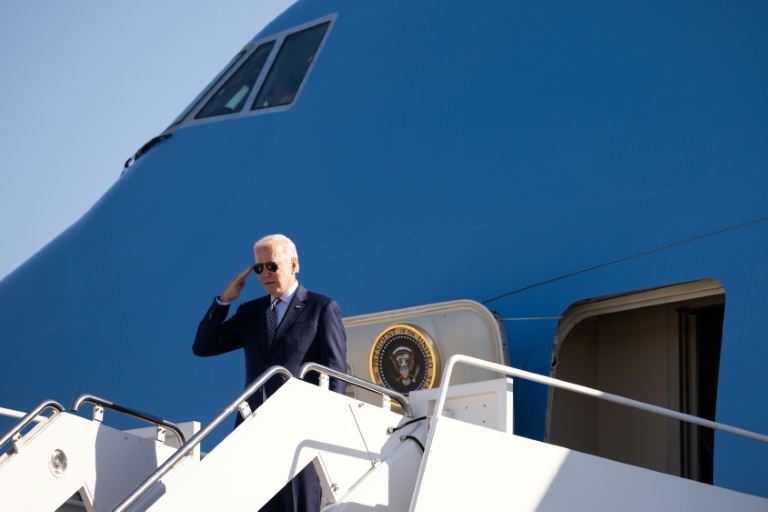
President Joe Biden and Donald Trump launched multi-state campaign blitzes Thursday ahead of midterm elections that could end up hobbling the Democrat’s next two years, while setting the stage for a Trump comeback attempt.

Biden used a visit to a community college in New Mexico to tout his administration’s bid to ease crushing student debt and other policies that have “delivered enormous progress for the nation.”

Over three days, he is flying on to California, Chicago and finally Pennsylvania, where popular former president Barack Obama — for whom he served as vice president for eight years — will join him at a rally Saturday.

Biden’s big final push comes on the heels of a speech Wednesday warning that Trump and the increasingly dominant far-right wing of the Republican Party are threatening the survival of US democracy with conspiracy theories aimed at undermining confidence in election results.

But Trump — who remains the Republican party’s de facto leader and possible 2024 presidential candidate despite losing the 2020 election and being under investigation for stashing top secret presidential documents at his Florida golf resort and for other reasons — is on the offensive.

Hitting four key electoral states in five days — Iowa on Thursday, then Florida, Pennsylvania and finally Ohio on Monday — Trump is reinforcing his role as Republican overlord. If his efforts pay off with victories for his preferred candidates on Tuesday, he will not only expand his powerful group in Congress but create momentum for what many believe is a likely announcement that he’s seeking a second presidential term in 2024.

Trump stopped short of announcing his candidacy during an 80-minute speech in Sioux City, Iowa on Thursday. But only just.

“This is the year we’re going to take back the House,” he told a cheering crowd. 

“We’re going to take back the Senate. We’re going to take back America and then in 2024, most importantly, we are going to take back our magnificent White House,” he said. 

“I will very very, very probably do it again.” 

For Biden, the personal stakes are also high.

If Republicans seize control of Congress, Biden will likely face a permanent political dog fight and legislative gridlock over the next two years of his administration.

It’s believed that declaration of a Trump presidential candidacy would also strongly motivate Biden to seek his own second term, despite already being the oldest person in the job ever and turning 80 this month.

– Democracy at stake –

Biden passionately argues that refusals by Republicans to accept election defeats — starting with Trump’s unprecedented attempt to overturn the 2020 election — imperils the nation’s democratic survival.

In New Mexico Wednesday, Biden linked a brutal home invasion and attack on the husband of Democratic House Speaker Nancy Pelosi to the political violence unleashed by Trump supporters against Congress on January 6, 2021.

Republicans, he said, have “emboldened violence and intimidation of voters and election officials.”

“That is the path to chaos in America,” he said.

Hours later, he took up the theme on the stump in San Diego, saying there were “five days to one of the most important elections in our lifetime.”

It’s “going to determine the direction of the country for at least a decade.

“A choice between two fundamentally different versions of America.”

But polls show Americans paying far more attention to what they see as more immediate issues, starting with the highest inflation in four decades, which has driven up costs of staples like food and fuel.

More than half of Americans say the price of fuel and consumer goods is the economic issue that worries them the most in a new Quinnipiac University national poll.

Republicans have also successfully energized their base with messaging on spikes in illegal immigration and crime, often conflating the two issues to portray the country, and white people in particular, as under assault. 

“From surging crime, uncomfortably high inflation, and an open border, New Mexico families deserve better than Biden’s failures,” said Republican National Committee chairwoman Ronna McDaniel as Biden landed in the southwestern state.

“Democrats are desperate,” she said. “Bringing in Biden to stump for them will only backfire.”

With Republicans clear favorites to take control of the House, all eyes are on the Senate.

Two months ago, Republicans appeared to have lost hope of getting back the upper chamber, amid concerns over the quality of a slate of gaffe-prone, election-denying, Trump-backed candidates who were struggling in swing states.

But a late spending surge has kept most competitive.

The nonpartisan Cook Political Report has Georgia, Nevada, Arizona, Pennsylvania and Wisconsin — any one of which could tip the balance of power in the upper chamber of Congress — as “toss-ups.” 

Escape from Foxconn: Workers recount Covid chaos at iPhone factory

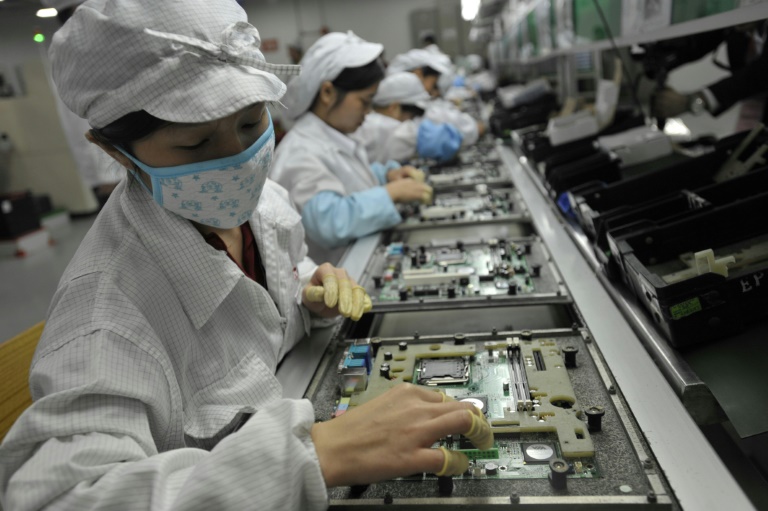
Zhang Yao recalls the moment he realised something had gone deeply wrong at the Chinese mega-factory where he and hundreds of thousands of other workers assembled iPhones and other high-end electronics.

In early October, supervisors suddenly warned him that 3,000 colleagues had been taken into quarantine after someone tested positive for Covid-19 at the factory.

“They told us not to take our masks off,” Zhang, speaking under a pseudonym for fear of retaliation, told AFP by telephone.

What followed was a weeks-long ordeal including food shortages and the ever-present fear of infection, before he finally escaped on Tuesday.

Zhang’s employer, Taiwanese tech giant Foxconn, has said it faces a “protracted battle” against infections and imposed a “closed loop” bubble around its sprawling campus in central China’s Zhengzhou city.

Local authorities locked down the area surrounding the major Apple supplier’s factory on Wednesday, but not before reports emerged of employees fleeing on foot and a lack of adequate medical care at the plant.

China is the last major economy committed to a zero-Covid strategy, persisting with snap lockdowns, mass testing and lengthy quarantines in a bid to stamp out emerging outbreaks.

But new variants have tested officials’ ability to snuff out flare-ups and dragged down economic activity with the threat of sudden disruptions.

– Desperation –

Multiple workers have recounted scenes of chaos and increasing disorganisation at Foxconn’s complex of workshops and dormitories, which form a city-within-a-city near Zhengzhou’s airport.

Zhang told AFP that “positive tests and double lines (on antigen tests) had become a common sight” in his workshop before he left.

“Of course we were scared, it was so close to us.”

“People with fevers are not guaranteed to receive medicine,” another Foxconn worker, a 30-year-old man who also asked to remain anonymous, told AFP.

“We are drowning,” he said.

Those who decided to stop working were not offered meals at their dormitories, Zhang said, adding that some were able to survive on personal stockpiles of instant noodles.

Kai, a worker at in the complex who gave an interview to state-owned Sanlian Lifeweek, told the magazine Foxconn’s “closed loop” involved cordoning off paths between dormitory compounds and the factory, and complained he was left to his own devices after being thrown in quarantine.

TikTok videos geolocated by AFP showed mounds of uncollected rubbish outside buildings in late October, while employees in N95 masks squeezed onto packed shuttle buses taking them from dormitories to their work stations.

A 27-year-old woman working at Foxconn, who asked not to be named, told AFP a roommate who tested positive for Covid was sent back to her dormitory on Thursday morning, crying, after she decided to hand in her notice while in quarantine.

“Now the three of us are living in the same room: one a confirmed case and two of us testing positive on the rapid test, still waiting for our nucleic acid test results,” the worker told AFP.

Many became so desperate by the end of last month that they attempted to walk back to their hometowns to get around Covid transport curbs.

As videos of people dragging their suitcases down motorways and struggling up hills spread on Chinese social media, the authorities rushed in to do damage control.

The Zhengzhou city government on Sunday said it had arranged for special buses to take employees back to their hometowns.

Surrounding Henan province has officially reported a spike of more than 600 Covid cases since the start of this week.

– Distrust –

When Zhang finally attempted to leave the Foxconn campus on Tuesday, he found the company had set up obstacle after obstacle.

“There were people with loudspeakers advertising the latest Foxconn policy, saying that each day there would be a 400 yuan ($55) bonus,” Zhang told AFP.

A crowd of employees gathered at a pick-up point in front of empty buses but were not let on.

People in hazmat suits, known colloquially as “big whites” in China, claimed they had been sent by the city government.

“They tried to persuade people to stay in Zhengzhou… and avoid going home,” Zhang said.

“But when we asked to see their work ID, they had nothing to show us, so we suspected they were actually from Foxconn.”

Foxconn pointed to the local government’s lockdown orders from Wednesday when asked by AFP if it attempted to stop employees from leaving, without giving any further response.

The company had on Sunday said it was “providing employees with complimentary three meals a day” and cooperating with the government to provide transport home.

Eventually, the crowd of unhappy workers who had gathered decided to take matters into their own hands and walked over seven kilometres on foot to the nearest highway entry ramp.

There, more people claiming to be government officials pleaded with the employees to wait for the bus.

The crowd had no choice as the road was blocked.

Buses eventually arrived at five in the afternoon — nearly nine hours after Zhang had begun his attempt to secure transport.

“They were trying to grind us down,” he said.

Back in his hometown, Zhang is now waiting out the home quarantine period required by the local government.

“All I feel is, I’ve finally left Zhengzhou,” he told AFP.

Close Bitnami banner
Bitnami