AFP

Make glasses cool with new emojis, urges UK schoolgirl

British schoolgirl Lowri Moore is just 13 but has achieved a lot in her short life, championing children who like her wear glasses.

Aged nine, she persuaded Disney to create a bespectacled heroine for the first time, in the hit film “Encanto”.

Her #GlassesOn campaign has meanwhile struck a chord with thousands of young people and their parents around the world.

Now she has another US giant in her sights.

The teenager from Nottinghamshire, central England, is urging the body responsible for all new emojis to give people the option to put glasses on them.

She says many people believe that children being stigmatised for wearing glasses is a thing of the past.

But she argues many children still resist wearing their glasses for fear of appearing “different or uncool”.

Research shows children with spectacles are over 35 percent more likely to be bullied at school, and not wearing them can have far-reaching consequences.

“We are in touch with a professor who works in Botswana to give children glasses and he said that most of the children that get glasses don’t want to wear them for fear of being different and not cool,” Lowri told AFP.

– ‘Biggest fan’ –

She said that without glasses you need, “you won’t be able to learn and that will limit your job options and you will probably really struggle in life all because you didn’t wear your glasses. That’s not fair.”

Lowri’s latest campaign was sparked when her mother Cyrilyn tried to find an emoji relevant to her daughter.

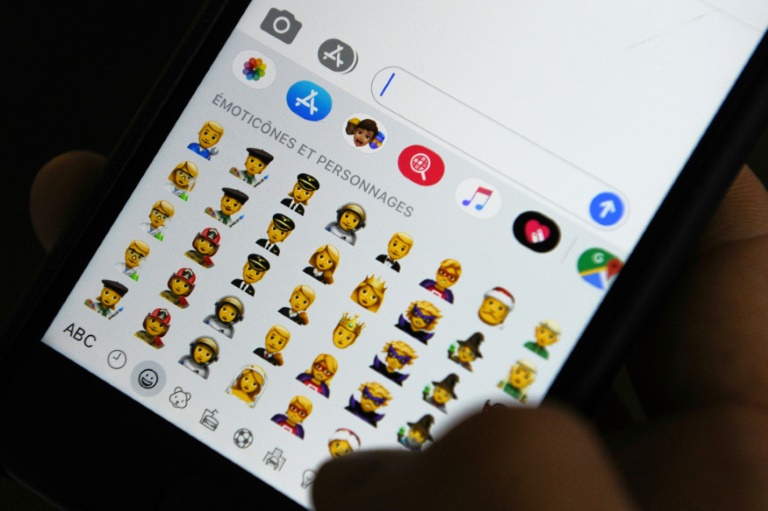
“She was looking for an emoji that would represent me but all she found was a nerd.

“She kept on looking and there was a granny and a teacher but obviously that doesn’t represent me,” she said.

Lowri said it was great there were some bespectacled emojis, but three was not enough.

“It’s not really positive so we’re just asking for the option of putting glasses onto already existing emojis,” she said after handing in copies of her letter at the London offices of tech giants Google and Meta on Wednesday.

Lowri’s campaigning began in 2019 when she wrote to Disney calling for more characters with glasses in their films.

Two years later, the “Encanto” character Mirabel Madrigal hit the big screen.

Director Jared Bush revealed he had been inspired by the schoolgirl’s letter, telling her: “I am your biggest fan, I’m so impressed by you.”

The director also said he had wanted to let her know much earlier, but had to keep it secret until the movie was in the bag.

– ‘Negative stereotypes’ –

In her latest letter, Lowri praised the Unicode Consortium, the non-profit organisation based in California that oversees new emojis, for offering users more choice.

But she urged them to go further.

“I’d love to see the option to add glasses to face emojis, similar to changing skin colour or hair colour as you have already made available,” she wrote.

Having the current “nerd” emoji as the only one available for young people could be “damaging as it helps to confirm the negative stereotype and stigma that we are trying hard to destroy”, she added.

Lowri’s campaigning success was recognised earlier this year when she was named “Campaigner of the Year” by the International Agency for the Prevention of Blindness (IAPB).

Failing to wear glasses can prevent children’s eyes from developing normally and lead to avoidable eye conditions.

Jessica Thompson of the IAPB, which works in over 100 countries worldwide, said Lowri’s advocacy was helping to highlight the damage to children’s futures of not wearing glasses.

“If you struggle to see, you struggle to learn,” she told AFP.

Wearing glasses was the single “most effective” health intervention for schoolchildren, “reducing the odds of failing a class by 44 percent”, she added.
Bank of England delivers biggest rate hike in 33 years

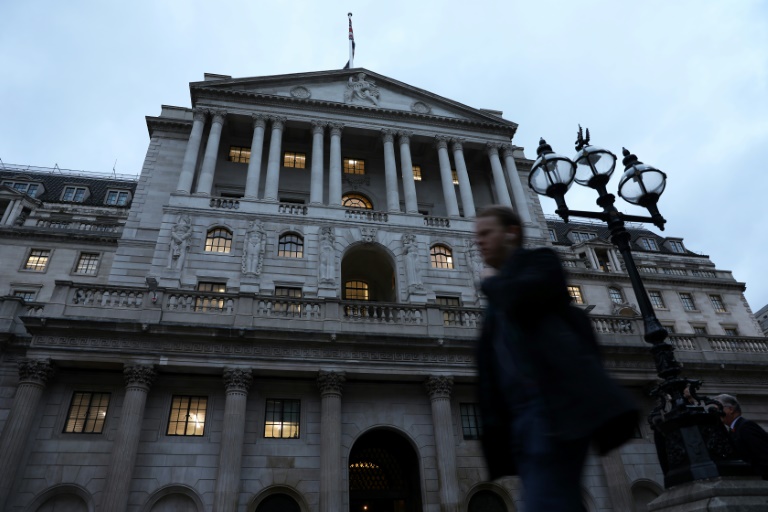
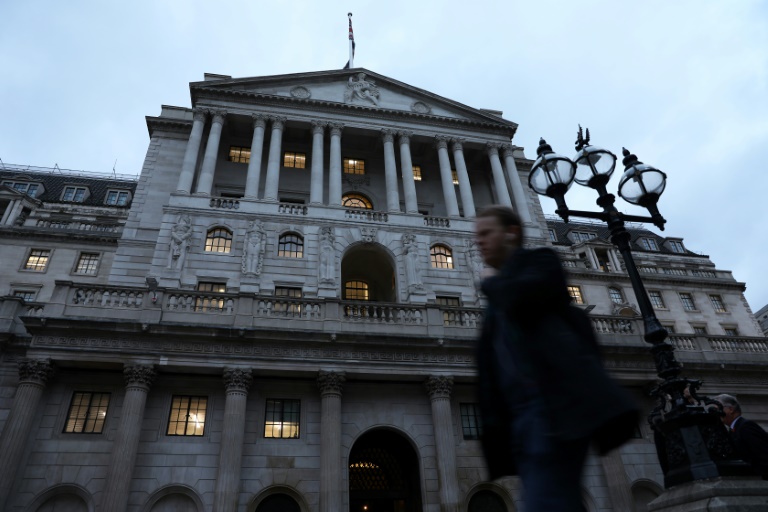
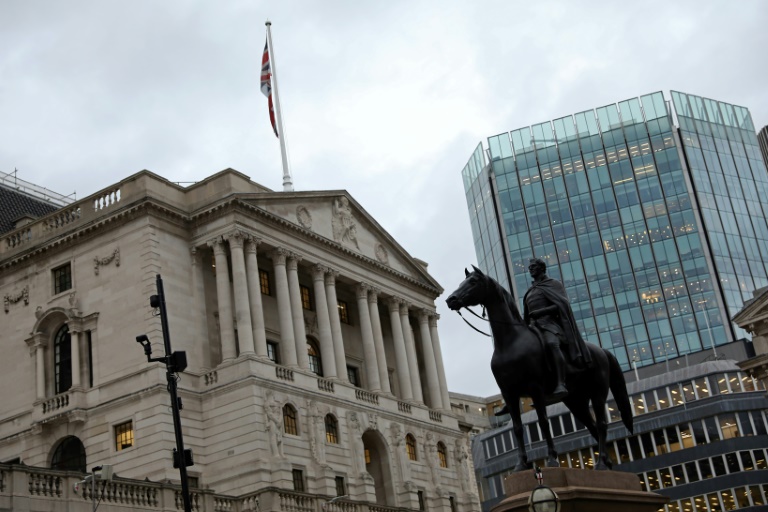
The Bank of England delivered Thursday its biggest interest rate hike since 1989 to combat soaring inflation and warned that Britain faced a recession set to last until mid-2024.

Britain’s economy has entered a recession set to last until mid-2024, the Bank of England said Thursday as it hiked its key interest rate by the biggest amount since 1989.

Following a regular meeting, the BoE said it was lifting borrowing costs by 0.75 percentage points to three percent — the highest level since the 2008 global financial crisis — with UK inflation at a four-decade high above 10 percent.

The latest rate hike mirrors aggressive rate-tightening by central banks worldwide as economies battle the highest prices in decades.

On Wednesday, the US Federal Reserve sprang a fourth consecutive hike of 0.75 percentage points — and its boss Jerome Powell suggested they would go higher than expected.

The BoE said British inflation would peak at 10.9 percent this year.

Minutes of its meeting said the economy was “likely to be entering recession”. 

They added: “Importantly, most of the tightening in policy over the past year was yet to feed through to the real economy.”

– Cost-of-living crisis –

The BoE rate increase is set to worsen a cost-of-living crisis for millions of Britons as hikes by central banks see retail lenders push up interest rates on their own loans.

“The central bank has had the unenviable job of fighting soaring inflation amid enormous economic and political uncertainty,” said Craig Erlam, analyst at trading platform OANDA.

Repayments on UK mortgages have surged in recent weeks also after the debt-fuelled budget of previous British prime minister Liz Truss spooked markets, forcing her to resign and triggering emergency buying of UK government bonds by the BoE.

Her successor Rishi Sunak has attempted to bring calm to markets by hinting at tax rises in a fresh budget on November 17, even if such a move further harms Britain’s economy.

“I think everyone knows we do face a challenging economic outlook and difficult decisions will need to be made,” Sunak, a former UK finance minister, told parliament on Wednesday.

British annual inflation stands at 10.1 percent, the highest level in 40 years, on soaring food prices and energy bills.

As the Covid-19 pandemic began in early 2020, the BoE slashed its key interest rate to a record-low 0.1 percent and also pumped massive sums of new cash into the economy.

The Bank of England started raising rates last December and Thursday’s hike was the eighth increase in a row.

Europe could face gas shortage next year: IEA

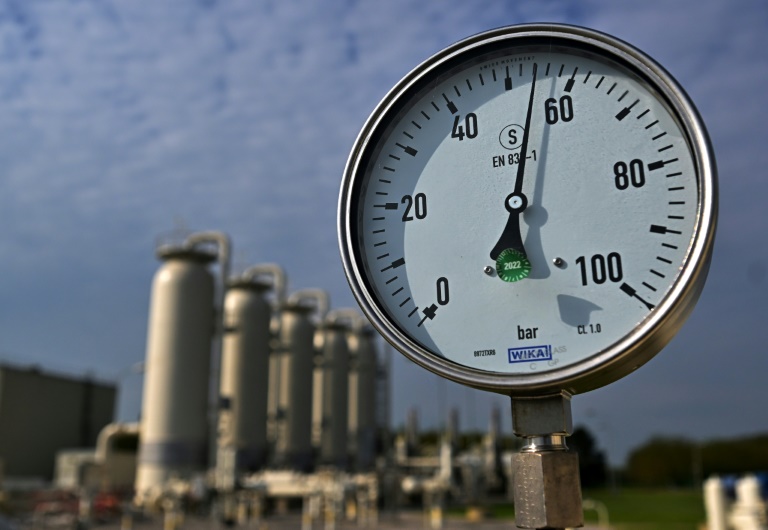
Europe must act immediately to prevent a shortage of natural gas next year as Russia slashes deliveries in the wake of the Ukraine war, the International Energy Agency warned Thursday.

The IEA said the shortfall would occur if Russia stops pipelines deliveries completely and China steps up its imports of liquefied natural gas, which Europe has relied upon to replace Russian supplies.

The region could lack 30 billion cubic metres that it needs “to fuel its economy and sufficiently refill storage sites during the summer of 2023, jeopardising its preparations for the winter of 2023-24,” the Paris-based agency said in a report.

Russia drastically cut supplies to Europe in suspected retaliation against Western sanctions over its invasion of Ukraine, but the region was able to fill storage sites for this upcoming winter.

Moscow delivered 60 billion cubic metres of gas to Europe this year, but the IEA said that it is “highly unlikely” that Russia will provide the same amount in 2023 and could cease deliveries entirely.

And while Chinese LNG imports were lower in the first 10 months of this year, the world’s second biggest economy could grab 85 percent of the expected increase in global LNG supplies if its purchases recover next year.

“With the recent mild weather and lower gas prices, there is a danger of complacency creeping into the conversation around Europe’s gas supplies, but we are by no means out of the woods yet,” IEA Executive Director Fatih Birol said in a statement.

Birol warned that Europe will face “an even sterner challenge” next winter.

“This is why governments need to be taking immediate action to speed up improvements in energy efficiency and accelerate the deployment of renewables and heat pumps — and other steps to structurally reduce gas demand,” he said.

Birol told reporters that Europe’s gas storage sites may only be 65 percent full in 2023, compared to 95 percent this year.

Stock markets sink, dollar jumps on central bank watch

Asian and European stock markets sank and the dollar rallied Thursday after the Federal Reserve warned US interest rates would go higher than previously expected in its fight against decades-high inflation.

The Fed on Wednesday unveiled a fourth straight 0.75-percentage-point increase as expected — the sixth hike this year to cool rampant prices.

The dollar on Thursday rose strongly against main rival including the pound and as the Bank of England was set to deliver its own bumper interest-rate hike in a decision due at 1200 GMT. 

The BoE is tipped to lift its key rate by 0.75 percentage points to three percent — the most in 33 years and putting British borrowing costs at the highest level since 2008.

Norway’s central bank raised its policy rate for a fourth consecutive time, with a quarter-point increase that took it to its highest level since 2009 at 2.5 percent.

Oil prices also fell heavily on Thursday as aggressive rate hikes increase expectations of a global recession.

Hong Kong led stock market losses as the city’s central bank hiked rates in line with the Fed, owing to their policy link via the dollar peg.

Traders gave back a chunk of the previous two days’ gains, which came on the back of speculation China was planning to roll back some of its painful zero-Covid policies.

Adding to the selling was confirmation from Beijing’s health authority that it intended to stick to the strategy.

– ‘Some way to go’ –

“Stocks fell… after the Federal Reserve raised benchmark interest rates and warned that there was still some ways to go in its efforts to tame inflation,” said Mark Haefele, chief investment officer at UBS Global Wealth Management.

Before the Fed announcement, stocks had rallied for more than a week on speculation the US central bank would indicate that its rate tightening could soon reach a peak as the world’s biggest economy showed signs of slowing.

Yet Powell poured cold water on those hopes, telling a news conference that “incoming data since our last meeting suggests that ultimate level of interest rates will be higher than previously expected”.

He added that “we still have some ways” until borrowing costs were at the necessary level and that it “is very premature to be thinking about pausing”.

Investors now expect Fed rates to top out at more than five percent, compared with four percent previously.

Global equities have slumped this year on mounting fears that rising borrowing costs will curtail consumer and business spending and spark a global recession.

“The Federal Reserve… didn’t offer any real crumbs of comfort for traders or indeed the global economy when it came to how rapidly the now relentless — and potentially damaging — run of rate hikes may conclude,” said Scope Markets analyst James Hughes.

– Key figures around 1030 GMT –

London – FTSE 100: DOWN 0.4 percent at 7,113.98 points

Frankfurt – DAX: DOWN 0.8 percent at 13,156.90

Paris – CAC 40: DOWN 0.6 percent at 6,238.31

EURO STOXX 50: DOWN 0.8 percent at 3,593.41

Hong Kong – Hang Seng Index: DOWN 3.1 percent at 15,339.49 (close)

Shanghai – Composite: DOWN 0.2 percent at 2,997.81 (close)

Tokyo – Nikkei 225: Closed for a holiday

New York – Dow: DOWN 1.6 percent at 32,147.76 (close)

Pound/dollar: DOWN at $1.1258 from $1.1390 Wednesday

Euro/dollar: DOWN at $0.9754 from $0.9816 

Dollar/yen: UP at 148.16 yen from 147.90 yen

Euro/pound: UP at 86.64 pence from 86.17 pence

Brent North Sea crude: DOWN 1.4 percent at $94.80 per barrel

West Texas Intermediate: DOWN 1.8 percent at $88.40 per barrel

Stock markets sink, dollar jumps on central bank watch

Asian and European stock markets sank and the dollar rallied Thursday after the Federal Reserve warned US interest rates would go higher than previously expected in its fight against decades-high inflation.

The Fed on Wednesday unveiled a fourth straight 0.75-percentage-point increase as expected — the sixth hike this year to cool rampant prices.

The dollar on Thursday rose strongly against main rival including the pound and as the Bank of England was set to deliver its own bumper interest-rate hike in a decision due at 1200 GMT. 

The BoE is tipped to lift its key rate by 0.75 percentage points to three percent — the most in 33 years and putting British borrowing costs at the highest level since 2008.

Norway’s central bank raised its policy rate for a fourth consecutive time, with a quarter-point increase that took it to its highest level since 2009 at 2.5 percent.

Oil prices also fell heavily on Thursday as aggressive rate hikes increase expectations of a global recession.

Hong Kong led stock market losses as the city’s central bank hiked rates in line with the Fed, owing to their policy link via the dollar peg.

Traders gave back a chunk of the previous two days’ gains, which came on the back of speculation China was planning to roll back some of its painful zero-Covid policies.

Adding to the selling was confirmation from Beijing’s health authority that it intended to stick to the strategy.

– ‘Some way to go’ –

“Stocks fell… after the Federal Reserve raised benchmark interest rates and warned that there was still some ways to go in its efforts to tame inflation,” said Mark Haefele, chief investment officer at UBS Global Wealth Management.

Before the Fed announcement, stocks had rallied for more than a week on speculation the US central bank would indicate that its rate tightening could soon reach a peak as the world’s biggest economy showed signs of slowing.

Yet Powell poured cold water on those hopes, telling a news conference that “incoming data since our last meeting suggests that ultimate level of interest rates will be higher than previously expected”.

He added that “we still have some ways” until borrowing costs were at the necessary level and that it “is very premature to be thinking about pausing”.

Investors now expect Fed rates to top out at more than five percent, compared with four percent previously.

Global equities have slumped this year on mounting fears that rising borrowing costs will curtail consumer and business spending and spark a global recession.

“The Federal Reserve… didn’t offer any real crumbs of comfort for traders or indeed the global economy when it came to how rapidly the now relentless — and potentially damaging — run of rate hikes may conclude,” said Scope Markets analyst James Hughes.

– Key figures around 1030 GMT –

London – FTSE 100: DOWN 0.4 percent at 7,113.98 points

Frankfurt – DAX: DOWN 0.8 percent at 13,156.90

Paris – CAC 40: DOWN 0.6 percent at 6,238.31

EURO STOXX 50: DOWN 0.8 percent at 3,593.41

Hong Kong – Hang Seng Index: DOWN 3.1 percent at 15,339.49 (close)

Shanghai – Composite: DOWN 0.2 percent at 2,997.81 (close)

Tokyo – Nikkei 225: Closed for a holiday

New York – Dow: DOWN 1.6 percent at 32,147.76 (close)

Pound/dollar: DOWN at $1.1258 from $1.1390 Wednesday

Euro/dollar: DOWN at $0.9754 from $0.9816 

Dollar/yen: UP at 148.16 yen from 147.90 yen

Euro/pound: UP at 86.64 pence from 86.17 pence

Brent North Sea crude: DOWN 1.4 percent at $94.80 per barrel

West Texas Intermediate: DOWN 1.8 percent at $88.40 per barrel

Norway brings climate ambitions in line with EU

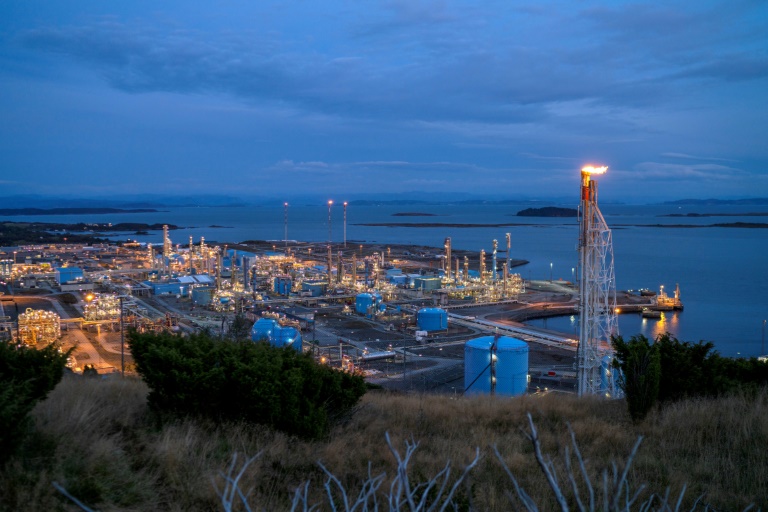
Norway, the largest oil producer in Western Europe, on Thursday announced it intended to cut 1990 emissions levels “at least 55 percent” by 2030, in line with EU goals.

Just days before the COP27 climate conference in Egypt, the announcement is in line with commitments made by the centre-left coalition government when it took power in 2021.

While not a member of the European Union, the Scandinavian country’s new target brings Oslo in line with the overall target set by the 27-member bloc. Oslo also announced that it would present climate plans each year going forward.

Norway’s climate target was previously to reduce emissions by between 50 and 55 percent of 1990 levels.

“This sends a strong signal to other countries, and we hope that more will up their targets,” Prime Minister Jonas Gahr Store said on Thursday.

Store’s Labour Party and its ally, the Centre Party, rule out dismantling the oil sector, which is a major part of the national economy.

The war in Ukraine and the reduction in Russian exports have seen Norway become the leading gas supplier to Britain and the European Union.

“The demand for fossil fuel energy will fall and renewable energy production must increase. This has to go hand in hand,” Store told a news conference.

He stressed that the planet would still need oil in years to come and argued it was “not a bad thing that some of it comes from the Norwegian continental shelf, which has the lowest emissions.” 

Last week, the United Nations said current country climate pledges leave the world on track to heat by as much as 2.6 degrees Celsius this century, warning that emissions must fall 45 percent this decade to limit disastrous global warming.

A day earlier, the UN’s climate change agency had said governments were doing “nowhere near” enough to keep global heating to 1.5C and would steer a world already wracked by increasing floods, heatwaves and storms towards “catastrophic” warming.

iPhone factory lockdown shows risks of China dependence, analysts say

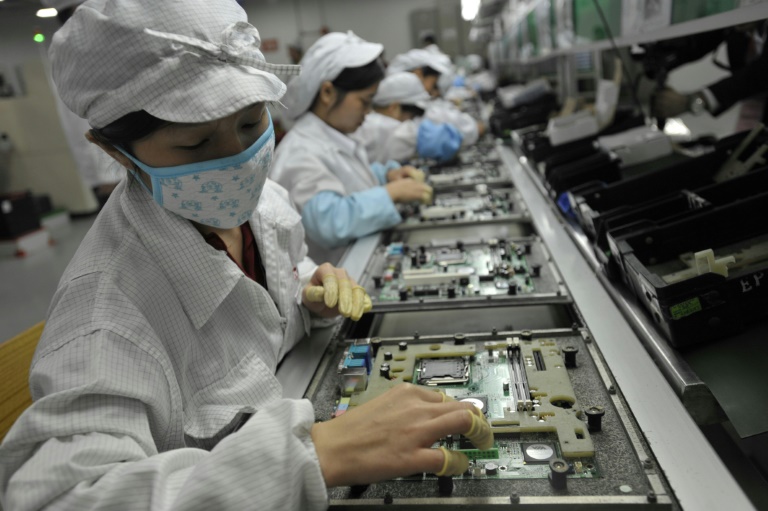
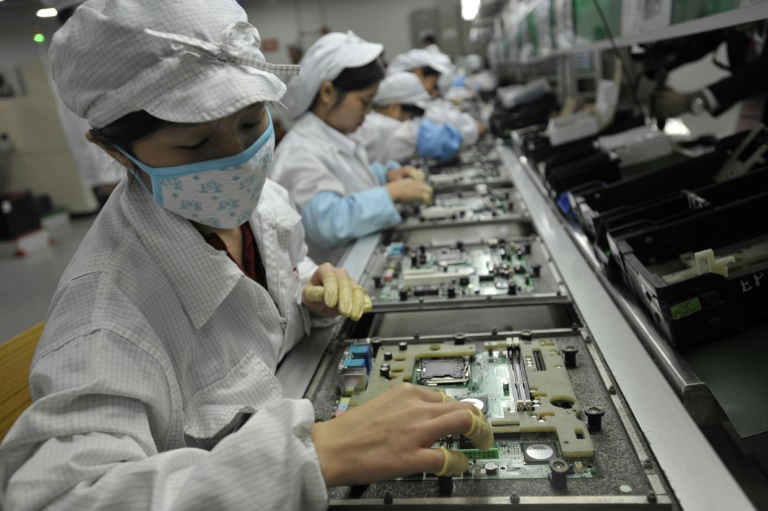
The lockdown of Foxconn’s Zhengzhou factory, the world’s biggest producer of iPhones, has highlighted some of the risks of relying on zero-Covid China’s manufacturing sector, analysts told AFP.

Foxconn, Apple’s principal subcontractor, has seen a surge in Covid-19 cases at its Zhengzhou site, leading the company to lock down the vast complex in a bid to keep the virus in check.

Images then emerged of panicking workers fleeing the site on foot in the wake of allegations of poor conditions at the facility, which employs hundreds of thousands of workers.

Foxconn is China’s biggest private sector employer, with over a million people working across the country in its around thirty factories and research institutes.

But Zhengzhou is the Taiwanese giant’s crown jewel, churning out iPhones in quantities not seen anywhere else.

“In a normal situation, almost all the iPhone production is happening in Zhengzhou,” said Ivan Lam, an analyst with specialist firm Counterpoint.

– Risk of ‘strong dependence’ –

Apple manufactures more than 90 percent of its products in China, which is also one of its most important markets.

“For Apple, it is once again a bad example in terms of the stability of production chains,” Alicia Garcia Herrero, Asia-Pacific manager for Natixis bank, told AFP.

Experts say the company’s heavy dependence on China “brings potential risks, especially when the US-China trade war shows no signs of de-escalating,” according to Dezan Shira & Associates, a consulting firm.

Opened in 2010, the Zhengzhou factory employs up to 300,000 people who live on-site all year round  — creating a sprawling tech hub known as “iPhone city”.

It is made up of three factories, one of which produces the iPhone 14 — Apple’s newest handset model.

Apple did not respond to AFP’s request for comment on how exactly the lockdown will affect its production.

Analyst Lam estimates the partial stopping of work at the site resulted in a loss of “10 to 30 percent” of output, but said part of the production has also been temporarily moved to other Foxconn sites in China.

According to Foxconn, the site is currently operating a “closed loop” with the workers avoiding all contact with the outside world, while their daily bonuses have been quadrupled.

“This incident may have a limited impact,” on worldwide iPhone production, estimated analyst Ming-Chi Kuo, who specialises in Apple products.

“But suppliers in China must learn to improve closed-loop production efficiency in response to the zero-Covid policy,” he added.

– Looking elsewhere –

China is the last major economy committed to a zero-Covid strategy, persisting with snap lockdowns, mass testing and lengthy quarantines in a bid to stamp out emerging outbreaks.

But new variants have tested local officials’ ability to snuff out flare-ups faster than they can spread, causing much of the country to live under an ever-changing mosaic of Covid curbs.

Apple has already begun outsourcing part of its production to India and is eyeing Vietnam in a bid to wean itself off Chinese manufacturing — a trend accelerated by Covid.

But that’s not so simple — last year, nearly 7.5 million iPhones were made in India, just three percent of Apple’s total production.

“Increasing the capacity of factories (in India) is difficult,” Lam said.

iPhone factory lockdown shows risks of China dependence, analysts say

The lockdown of Foxconn’s Zhengzhou factory, the world’s biggest producer of iPhones, has highlighted some of the risks of relying on zero-Covid China’s manufacturing sector, analysts told AFP.

Foxconn, Apple’s principal subcontractor, has seen a surge in Covid-19 cases at its Zhengzhou site, leading the company to lock down the vast complex in a bid to keep the virus in check.

Images then emerged of panicking workers fleeing the site on foot in the wake of allegations of poor conditions at the facility, which employs hundreds of thousands of workers.

Foxconn is China’s biggest private sector employer, with over a million people working across the country in its around thirty factories and research institutes.

But Zhengzhou is the Taiwanese giant’s crown jewel, churning out iPhones in quantities not seen anywhere else.

“In a normal situation, almost all the iPhone production is happening in Zhengzhou,” said Ivan Lam, an analyst with specialist firm Counterpoint.

– Risk of ‘strong dependence’ –

Apple manufactures more than 90 percent of its products in China, which is also one of its most important markets.

“For Apple, it is once again a bad example in terms of the stability of production chains,” Alicia Garcia Herrero, Asia-Pacific manager for Natixis bank, told AFP.

Experts say the company’s heavy dependence on China “brings potential risks, especially when the US-China trade war shows no signs of de-escalating,” according to Dezan Shira & Associates, a consulting firm.

Opened in 2010, the Zhengzhou factory employs up to 300,000 people who live on-site all year round  — creating a sprawling tech hub known as “iPhone city”.

It is made up of three factories, one of which produces the iPhone 14 — Apple’s newest handset model.

Apple did not respond to AFP’s request for comment on how exactly the lockdown will affect its production.

Analyst Lam estimates the partial stopping of work at the site resulted in a loss of “10 to 30 percent” of output, but said part of the production has also been temporarily moved to other Foxconn sites in China.

According to Foxconn, the site is currently operating a “closed loop” with the workers avoiding all contact with the outside world, while their daily bonuses have been quadrupled.

“This incident may have a limited impact,” on worldwide iPhone production, estimated analyst Ming-Chi Kuo, who specialises in Apple products.

“But suppliers in China must learn to improve closed-loop production efficiency in response to the zero-Covid policy,” he added.

– Looking elsewhere –

China is the last major economy committed to a zero-Covid strategy, persisting with snap lockdowns, mass testing and lengthy quarantines in a bid to stamp out emerging outbreaks.

But new variants have tested local officials’ ability to snuff out flare-ups faster than they can spread, causing much of the country to live under an ever-changing mosaic of Covid curbs.

Apple has already begun outsourcing part of its production to India and is eyeing Vietnam in a bid to wean itself off Chinese manufacturing — a trend accelerated by Covid.

But that’s not so simple — last year, nearly 7.5 million iPhones were made in India, just three percent of Apple’s total production.

“Increasing the capacity of factories (in India) is difficult,” Lam said.

Turkish inflation tops 85%, highest since 1997

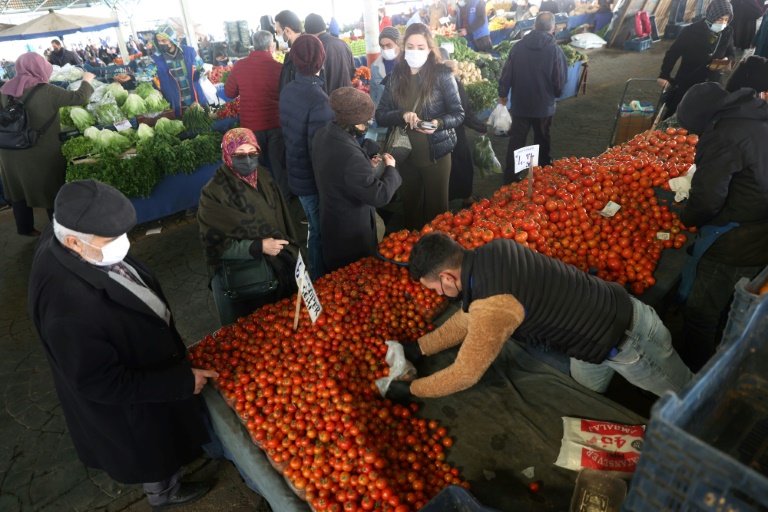
Turkish inflation surged past 85 percent in October, its highest level since 1997, official data showed Thursday, as President Recep Tayyip Erdogan sticks to unorthodox policies to combat a cost-of-living crisis.

Central banks worldwide are raising borrowing costs in efforts to tame soaring consumer prices, but Turkey has bucked the global trend, with Erdogan calling higher interest rates his “biggest enemy”.

Last month, Turkey’s central bank cut its policy rate for a third consecutive time, bringing it down to 10.5 percent from 12 percent.

With an election looming next year, Erdogan argues that high rates are the cause of inflation, not the opposite, in defiance of orthodox economic theories.

Turkey’s inflation has steadily risen since reaching a low of 16.6 percent in May 2021.

It hit 85.51 percent in October, according to state statistics agency TUIK, up from 83.45 percent in September.

Independent economists, however, say the rate is more than twice as high.

At the same time, the Turkish lira has plunged against the dollar.

Despite soaring consumer prices, Erdogan praised the state of the country’s economy in an address to his ruling AKP lawmakers in parliament on Wednesday.

“Thank God, the wheels of the economy are turning,” he said. 

“Our economic model, which we have summarised as growth through investment, employment, production, export and current account surplus, is bearing fruit.”

The head of the central bank, however, has said that success could not be declared.

“We cannot consider ourselves very successful in the fight against inflation,” central bank governor Sahap Kavcioglu said last month. 

“If there is inflation, there is a problem, it is not right to talk about success there, we know the distress of the citizens very closely, we take measures, we believe that we will see the result in a very short time,” he added. 

The October surge was fuelled by a 117 percent rise in transportation prices and a 99 percent jump for food.

The central bank has raised its inflation forecast for the full year from 60.4 percent to 65.2 percent.

– ‘Disguise the real figure’ –

Many Turks and the opposition question the credibility of the official government data. 

According to a respected monthly study released by independent economists from Turkey’s ENAG research institute, the annual rate of consumer price increases reached 185.34 percent in October.  

Opposition leader Kemal Kilicdaroglu accused the government of hiding the real inflation while setting public employees’ salaries. 

“Why does TUIK (statistics agency) disguise the real figure?” he asked last month.

“Because when it gives the real figure, the pensions will be determined accordingly. Workers’ wages will be determined accordingly. Civil servants’ salaries will be determined accordingly. If you show it low, it will give a low raise,” he argued.

Erdogan’s government blames inflation on outside factors such as the global spike in food and energy prices caused by Russia’s invasion of Ukraine.

The central bank is expected to cut rates again at its next policy meeting and then end the easing cycle, as Erdogan has said the rate should be in single digits.

Liam Peach, senior emerging markets economist at London-based Capital Economics, said the bank would remain “under pressure” from Erdogan for looser policy.

While the central bank has said that it will deliver one more 150-basis-point rate cut at its meeting later this month, “there is a risk of further easing beyond that, adding more downward pressure onto the lira,” he said in a note to clients. 

Bank of England set for biggest rate hike in 33 years

The Bank of England is widely expected to hike its key interest rate on Thursday by the biggest amount since 1989 as it bids to cool sky-high British inflation.

Following a regular meeting, the BoE is expected to lift borrowing costs by 0.75 percentage points to three percent, according to market consensus, which would be the highest level since the 2008 global financial crisis.

Some analysts, however, are predicting a rise of one percentage point, also a 33-year high.

The move would mirror aggressive rate-tightening by central banks worldwide as economies battle the highest prices in decades.

Ahead of the UK decision, the London stock market opened sharply lower after the US Federal Reserve sprang a fourth consecutive hike of 0.75 percentage points — and its boss Jerome Powell suggested they would go higher than expected.

– ‘Unenviable job’ –

The BoE rate call, due at 1200 GMT, is set to worsen a cost-of-living crisis for millions of Britons as hikes by central banks see retail lenders push up interest rates on their own loans.

“The Bank of England will likely join the Fed in raising rates by 75 basis points,” said Oanda analyst Craig Erlam.

“The central bank has had the unenviable job of fighting soaring inflation amid enormous economic and political uncertainty.”

Repayments on UK mortgages have surged in recent weeks also after the debt-fuelled budget of previous British prime minister Liz Truss spooked markets, forcing her to resign and triggering emergency buying of UK government bonds by the BoE.

Her successor Rishi Sunak has attempted to bring calm to markets by hinting at tax rises in a fresh budget on November 17, even if such a move further harms Britain’s economy.

“I think everyone knows we do face a challenging economic outlook and difficult decisions will need to be made,” Sunak, a former UK finance minister, told parliament on Wednesday.

British annual inflation stands above 10 percent, the highest level in 40 years, on soaring food prices and energy bills.

– Inflation update –

The BoE will also give its latest inflation and growth forecasts, with analysts indicating that the UK economy may already be in recession.

“The Bank of England is expected to hike its interest rate by no more than 75 basis points, on conviction that the Sunak government would opt for some fiscal austerity, and nothing too crazy to wreak havoc, again,” forecast Swissquote analyst Ipek Ozkardeskaya.

As the Covid-19 pandemic began in early 2020, the BoE slashed its key interest rate to a record-low 0.1 percent and also pumped massive sums of new cash into the economy.

The Bank of England started raising rates last December and another hike Thursday would be the eighth increase in a row.

Ruth Gregory, senior UK economist at Capital Economics, predicts that the BoE will raise its interest rate by one percentage point on Thursday and by the same amount in December.

“If we are right that domestic inflation will be sticky, it may mean that the Bank of England ultimately has to act more aggressively further ahead,” she added.

Close Bitnami banner
Bitnami