AFP

Race for Pennsylvania Senate seat is a bare-knuckle battle

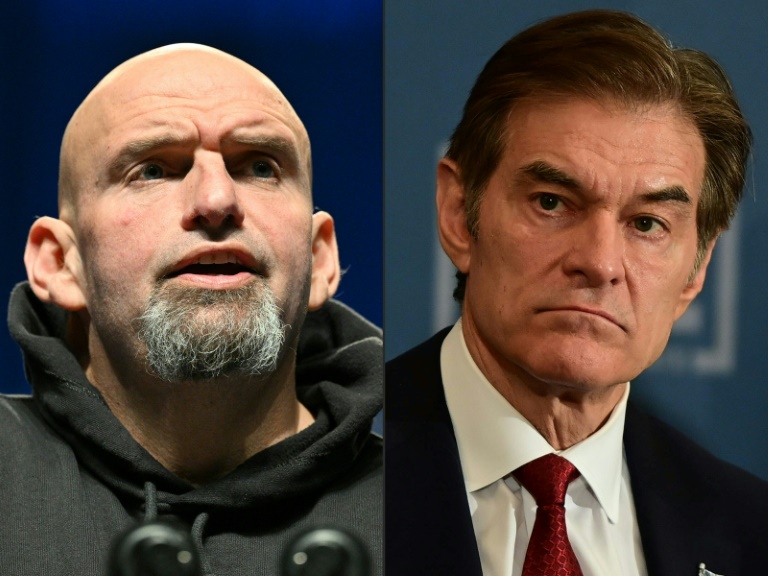
One rose to prominence as a TV show host, the other is recognizable by his imposing stature: The candidates in Pennsylvania’s US Senate seat battle are almost as unforgettable as the race is consequential.

Republican Mehmet Oz and Democrat John Fetterman are facing off in a race that could prove decisive not only for control of the upper chamber but also for the outcome of the rest of President Joe Biden’s term.

A heart surgeon who became a TV personality before entering politics, “Dr. Oz,” as he is widely known, enjoys the enthusiastic support of ex-US president Donald Trump. 

“Brilliant and well-known,” he “will never let you down,” said Trump, a former reality TV star himself.

Fetterman, an imposing 6-foot-8 (2.03 meters) in height, is lieutenant governor of Pennsylvania, a key state that can swing the elections. 

He carries the hopes of the Democratic camp, and is this “great guy” with “integrity,” in Biden’s words. “We need John badly.”

A once-wide gap between the two candidates favored the Democrat, but the race has tightened in recent weeks. In May, Fetterman, 53, suffered a stroke that forced him to scale back.

The two men, who crossed swords last week in their only televised debate, have clashed frequently in recent months on social media, using dagger-sharp quips and memes to mock and troll each other. 

– Medical star –

To explain his entry into politics, the 62-year-old Oz spins a medical metaphor. “Today, America’s heartbeat is in a code red in need of a defibrillator to shock it back to life,” he says on his website.

Fetterman portrays Oz as a wealthy outsider from New Jersey, where he lived in mansions until recently, who is out of touch with the working class of Pennsylvania.

“I’ve got green bananas that have been in Pennsylvania longer than Dr. Oz lol,” Fetterman tweeted.

Although a supporter of the very divisive Trump, Oz says he brings “civility and balance.” He also says he supports America’s “energy independence” and wants to “fix” the health care system. 

While Fetterman defends the “non-negotiable” right to abortion, Oz believes that this explosive issue should be played out between “women, doctors (and) local political leaders.”

In the 2000s, his career was launched by Oprah Winfrey, the talk show queen who invited him on as an expert. From 2009 to early 2022, he had his own program, “The Dr. Oz Show,” which made him a celebrity and affable expert quick to offer anti-aging and weight-loss advice.

The son of Turkish immigrants, Oz has been married for 37 years, is the father of four children, and earlier this year won a coveted star on the famous Hollywood Walk of Fame.

But his health recommendations, sometimes described as “magic” or “miracle,” have earned him criticism from fellow medical doctors, who say he has promoted ineffective or potentially dangerous treatments and dietary supplements, including for Covid.

– ‘Coolest’ mayor –

Voters in Braddock, a former industrial town near Pittsburgh that fell on hard times with the decline of the steel industry, elected Fetterman their mayor in 2006, and he served in the post until 2019. 

A Pennsylvania native, Fetterman’s identity with the town is obvious to all: Its zip code is tattooed on his arm.

Once called the “coolest” mayor in America, Fetterman, who shaves his head and often wears hoodies, tried to revive the town with youth programs and green spaces.

He fosters an image as a  man of the people even though he grew up in an affluent family and has a master’s degree from Harvard University.

The Oz campaign points out that Fetterman’s parents helped him financially until he was 49 years old – his salary as mayor was $150 a month – even after he married and had three children.

For his part, Fetterman accuses the wealthy Oz of spending lavishly to “buy” the Senate seat.

Fetterman claims to have tackled crime during his tenure in Braddock, boasting that the town passed “five and a half years without a gun death.” Oz counters that Fetterman is soft on crime — a Republican leitmotif — and wants to “let murderers out of jail.”

Fetterman blames “corporate greed” for stoking inflation, and says he wants a fairer tax code to keep big business from “scamming the system.” He supports universal health coverage and the legalization of cannabis.

His campaign has been hampered by the stroke he had earlier this year and questions about his abilities, especially after television interviews in which he used a teleprompter to read the questions he was asked because of auditory problems.

“If John Fetterman had ever eaten a vegetable in his life, then maybe he wouldn’t have had a major stroke,” an aide to Oz said in a biting statement.

That came after Fetterman had mocked Oz for using the French word “crudites” in a television ad about inflation, which made the Republican seem out of touch with the more vernacular “veggie trays.” It was a tit-for-tat exchange typical of the bare-knuckle tone of the race.
Arizona Republican who crossed Trump sees bad omens

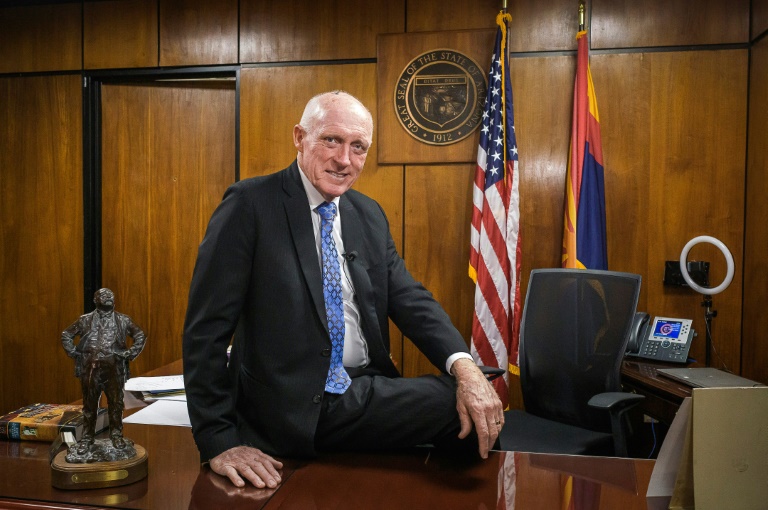
In three decades of involvement in conservative politics, Rusty Bowers has never been so worried by the gap between perception and reality that currently plagues Arizona’s Republican Party.

Ahead of the November 8 midterm elections, masked poll watchers, some of them armed, have been looming over ballot drop boxes in a bid to prevent a repeat of the vote-fixing they are convinced took Donald Trump’s presidency away from them in 2020.

No such conspiracy exists, says Bowers, and a party that was once more pragmatist than propagandist is now fully in thrall to unhinged theories — and it’s dangerous. 

“It’s intimidation,” Bowers — the 70-year-old speaker of the Arizona House of Representatives — says of the men and women wearing paramilitary gear who set up camp at ballot boxes in parts of the southwestern state.

“If you take voting away and make it insecure, and you increase the violence, to me that’s a fertile ground for fascism,” he tells AFP in an interview in Arizona’s state Capitol.

On Tuesday a judge this week ordered the self-appointed poll watchers to keep their distance from the drop boxes. But a toxic political climate that has swirled since the last election has persisted, and ensnared Bowers.

In November 2020, after campaigning for Trump in the presidential race, Bowers watched with dismay as Joe Biden’s vote tally in Arizona squeaked past those of the GOP incumbent.

A mere 10,000 ballots separated the two candidates, but under the first-past-the-post rules, the state’s electoral college votes all went to Biden, helping tip the Democrat over the national line and into the White House.

Multiple investigations, including a recount organized by the Republican Party, found no evidence of wrongdoing; nothing to throw any doubt on the results.

In line with his constitutional duty as leader of the state House, Bowers readied to certify the results. And that should have been that.

But then his phone rang.

On the other end, Trump and his lawyer Rudy Giuliani set about assuring Bowers that an old Arizona law — which he has never found — allowed the Republican-controlled assembly to change the state’s electors, the people responsible for formally electing the president after the election, in defiance of the popular vote.

“I said, ‘Mr. Trump, I voted for you, I walked for you, I campaigned for you, I was at your campaigns with you, but I will do nothing illegal for you,'” he recalls.

“When they asked me to break my vow to the Constitution, it’s like saying: ‘We want you to throw away your religion, your faith, the foundation of who you are.'”

– ‘RINO coward’? –

Bowers stuck to his guns, and Arizona’s electoral college votes went to Biden.

As it has for others before and since who have taken a principled stand in defiance of Trump, that decision tipped his world upside down.

Bowers is no wilting liberal; he is fiercely pro-life, wants the southern US border strictly controlled, and wears his Mormonism proudly.

Since Trump smeared him as a “RINO coward” — a Republican In Name Only — Bowers has been besieged by death threats and a torrent of abusive emails.

The father-of-seven was called to Washington to testify before the committee investigating the January 6 US Capitol assault about the pressure he came under to rig the election.

For weeks, Trump supporters and far-right militia members demonstrated in front of his home, sometimes armed, sometimes carrying signs that accused him of paedophilia and other insults favored by QAnon conspiracists.

Even as the physical intimidation died down, Bowers found himself the target of a political assassination.

Like many who cross Trump, he was faced with a far-right challenge in the Republican primary for a state senate seat.

He lost.

But until he leaves office in January, Bowers says he will keep fighting.

A Republican state bill introduced this session would have given the Arizona House authority to summarily dismiss the results of a popular election, Bowers said, calling it “dangerous legislation.”

“It doesn’t say they may ‘if….’, it doesn’t say they may ‘when….’, or why. Nothing, no criteria,” according to Bowers.

“I killed it,” he says. 

Whether it stays dead is another matter.

Arizona voters are being offered Republican candidates for governor, secretary of state and US senator who all subscribe wholly to Trump’s election denialism.

“The strength of the leadership of the current party is just anger,” Bowers says, adding it is “leaning towards the Mussolini model,” referring to Italy’s WWII-era Fascist leader.

And that, he concludes, is not good for the country as a whole, whose polity is hanging by a thread.

“It’s a very shallow civilization,” he says, gesturing with his thumb and his forefinger squeezed tightly together.

“About that thick.”

Bank of England set for biggest rate hike in 33 years

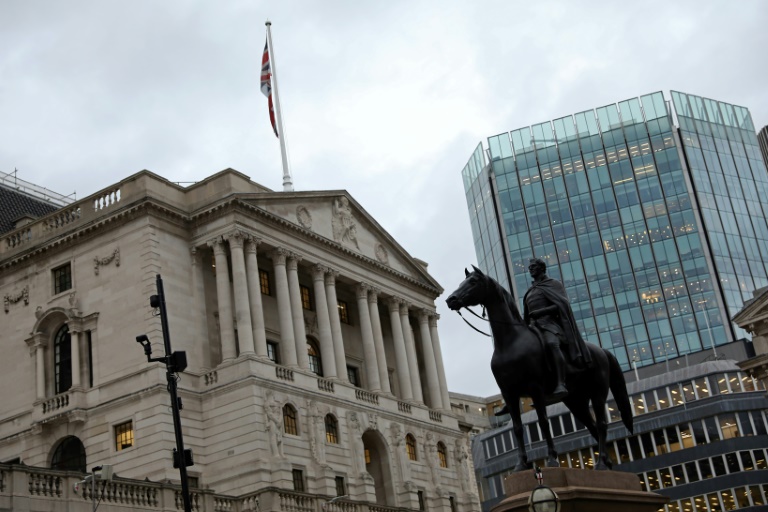
The Bank of England is widely expected to hike its key interest rate on Thursday by the biggest amount since 1989 as it bids to cool sky-high British inflation.

Following a regular meeting, the BoE is seen lifting borrowing costs by 0.75 percentage points to three percent, according to market consensus, which would be the highest level since the 2008 global financial crisis. 

Some analysts, however, are predicting a rise of one percentage point, also a 33-year high.

The move would mirror aggressive rate-tightening by central banks worldwide as economies battle the highest prices in decades.

The US Federal Reserve on Wednesday announced a fourth consecutive hike of 0.75 percentage points, taking its benchmark lending rate to 3.75-4.0 percent.

While calling further interest rate increases “appropriate” to tamp down inflation, the Fed also opened the door to smaller hikes.

The BoE decision at 1200 GMT is set to add to a cost-of-living crisis for millions of Britons as hikes by central banks see retail lenders push up the rate of interest on their own loans.

Repayments on UK mortgages have surged in recent weeks also after the debt-fuelled budget of previous British prime minister Liz Truss spooked markets, forcing her to resign and triggering emergency buying of UK government bonds by the BoE.

Her successor Rishi Sunak has attempted to bring calm to markets by hinting at tax rises in a fresh budget on November 17, even if such a move further harms Britain’s economy.

“I think everyone knows we do face a challenging economic outlook and difficult decisions will need to be made,” Sunak, a former UK finance minister, told parliament on Wednesday.

British annual inflation stands above 10 percent, the highest level in 40 years, on soaring food prices and energy bills.

– Inflation update –

Alongside its rate call, the BoE will give its latest inflation and growth forecasts, with analysts indicating that the UK economy may already be in recession.

“The BoE is expected to hike its interest rate by no more than 75 basis points, on conviction that the Sunak government would opt for some fiscal austerity, and nothing too crazy to wreak havoc, again,” forecast Swissquote analyst Ipek Ozkardeskaya.

As the Covid-19 pandemic began in early 2020, the BoE slashed its key interest rate to a record-low 0.1 percent and also pumped massive sums of new cash into the economy.

The Bank of England started raising rates last December and another hike Thursday would be the eighth increase in a row.

Ruth Gregory, senior UK economist at Capital Economics, predicts that the BoE will raise its interest rate by one percentage point on Thursday and by the same amount in December.

“If we are right that domestic inflation will be sticky, it may mean that the Bank of England ultimately has to act more aggressively further ahead,” she added.

Controversial monkey study reignites animal testing debate

Mother monkeys permanently separated from their newborns sometimes find comfort in plush toys: this recent finding from Harvard experiments has set off intense controversy among scientists and reignited the ethical debate over animal testing. 

The paper, “Triggers for mother love” was authored by neuroscientist Margaret Livingstone and appeared in the Proceedings of the National Academy of Sciences (PNAS) in September to little fanfare or media coverage.

But once news of the study began spreading on social media, it provoked a firestorm of criticism and eventually a letter to PNAS signed by over 250 scientists calling for a retraction.

Animal rights groups meanwhile recalled Livingstone’s past work, that included temporarily suturing shut the eyelids of infant monkeys in order to study the impact on their cognition.

“We cannot ask monkeys for consent, but we can stop using, publishing, and in this case actively promoting cruel methods that knowingly cause extreme distress,” wrote Catherine Hobaiter, a primatologist at the University of St Andrews, who co-authored the retraction letter.

Hobaiter told AFP she was awaiting a response from the journal before further comment, but expected news soon. 

Harvard and Livingstone, for their part, have strongly defended the research.

Livingstone’s observations “can help scientists understand maternal bonding in humans and can inform comforting interventions to help women cope with loss in the immediate aftermath of suffering a miscarriage or experiencing a still birth,” said Harvard Medical School in a statement. 

Livingstone, in a separate statement, said: “I have joined the ranks of scientists targeted and demonized by opponents of animal research, who seek to abolish lifesaving research in all animals.” 

Such work routinely attracts the ire of groups such as People for the Ethical Treatment of Animals (PETA), which opposes all forms of animal testing.

This controversy has notably provoked strong responses in the scientific community, particularly from animal behavior researchers and primatologists, said Alan McElligot of the City University of Hong Kong’s Centre for Animal Health and a co-signer of the PNAS letter.

He told AFP that Livingstone appears to have replicated research performed by Harry Harlow, a notorious American psychologist, from the mid-20th century. 

Harlow’s experiments on maternal deprivation in rhesus macaques were considered groundbreaking, but may have also helped catalyze the early animal liberation movement.

“It just ignored all of the literature that we already have on attachment theory,” added Holly Root-Gutteridge, an animal behavior scientist at the University of Lincoln in Britain.

– Harm reduction – 

McElligot and Root-Gutteridge argue the case was emblematic of a wider problem in animal research, in which questionable studies and papers continue to pass institutional reviews and are published in high impact journals.

McElligot pointed to a much-critiqued 2020 paper extolling the efficiency of foot snares to capture jaguars and cougars for scientific study in Brazil.

More recently, experiments on marmosets that included invasive surgeries have attracted controversy. 

The University of Massachusetts Amherst team behind the work says studying the tiny monkeys, which have 10-year-lifespans and experience cognitive decline in their old age, are essential to better understand Alzheimers in people.

Opponents argue results rarely translate across species.

When it comes to testing drugs, there is evidence the tide is turning against animal trials.

In September, the US Senate passed the bipartisan FDA Modernization Act, which would end a requirement that experimental medicines first be tested on animals before any human trials.

The vast majority of drugs that pass animal tests fail in human trials, while new technologies such as tissue cultures, mini organs and AI models are also reducing the need for live animals.

Opponents also say the vast sums of money that flow from government grants to universities and other institutes — $15 billion annually, according to watchdog group White Coat Waste — perpetuate a system in which animals are viewed as lab resources.

“The animal experimenters are the rainmaker within the institutions, because they’re bringing in more money,” said primatologist Lisa Engel-Jones, who worked as a lab researcher for three decades but now opposes the practice and is a science advisor for PETA.

“There’s financial incentive to keep doing what you’ve been doing and just look for any way you can to get more papers published, because that means more funding and more job security,” added Emily Trunnel, a neuroscientist who experimented on rodents and also now works for PETA.

Most scientists do not share PETA’s absolutist stance, but instead say they adhere to the “three Rs” framework — refine, replace and reduce animal use.

On Livingstone’s experiment, Root-Gutteridge said the underlying questions might have been studied on wild macaques who naturally lost their young, and urged neuroscientists to team up with animal behaviorists to find ways to minimize harm.

Non-binary category allows marathon runners to compete 'as authentic self'

Nick Dill is a veteran marathon runner, but this weekend’s race in New York will be the first time they participate in the non-binary category, after contest organizers added the option in response to demands for better representation and inclusion.

A professional dancer who now works as an acupuncturist, Dill has already run the 26.2-mile distance in less than three hours, previously racing in the men’s category.

“I was born a male, I identified as a male for many years,” the 28-year-old told AFP.

But since coming out as non-binary in January, Dill said they felt “discomfort” and “confusion” over having to decide between the races for men and women. 

“I’m kind of both and kind of neither… it feels really comforting to be able to race in the category that I identify with.”

Growing up as a dancer and gymnast, Dill didn’t take up running until adulthood. 

“I was nervous to get into racing because of this kind of toxic masculine energy,” they said. “Kind of still having those fears of like, not fitting in.”

A 2021 study from the Williams Institute at the University of California, Los Angeles found that approximately 1.2 million people identify as non-binary across the United States.

Notable figures including singers Sam Smith and Demi Lovato along with actress Emma Corrin, who played Princess Diana in “The Crown,” are among those who’ve adopted the terminology.

According to a list maintained by activist Jake Fedorowski, more than 200 road or trail racing events in the US now offer three gender categories.

“For somebody who doesn’t identify as either male or female, having to register with no other options already kind of creates either a mental barrier or just another obstacle for them being able to fully participate,” said Kerin Hempel, director of the New York Road Runners organization behind the city’s famed marathon, which was the first event of its kind to expand the categories.

– ‘More visibility’ –

In 2021 the New York marathon included 16 non-binary runners. This year it counts more than 60. Several other major races, including Boston and London, have since taken similar steps to expand options.

Jake Caswell, a 25-year-old clinical analyst who was a top athlete for Columbia University, said crossing the finish line earlier this year for the first time as a non-binary runner was “freeing.”

“I think it’s just being able to run as your authentic self” they said, to “create a space for, you know, a group of people that that space was never there before.”

This year the New York marathon has financially endowed its newest category, with a $5,000 prize for the first-place runner.

Nancy Hogshead-Makar of the organization ChampionWomen, sees this new category as “one step” towards inclusion, that could extend to “more categories” including one for transgender athletes “that have male-sport advantage.” 

She, along with other activists, favors limiting the women’s category to transgender athletes who “have taken steps to roll back their male puberty advantage with hormones and/or surgery” — a stance widely criticized within the LGBTQ community.

It’s a topic that’s provoked significant controversy in the US. Debate roiled after the transgender swimmer Lia Thomas won a university title in March, and the International Swimming Federation banned from women’s categories all athletes who have transitioned after the age of 12. 

And a number of states controversially have adopted legislation forbidding transgender athletes from participating in youth sports.

But so far, creating non-binary categories generally has provoked positive reaction.

Caswell did say they were booed during a race on Staten Island in New York, but took it in stride.

“It happens… welcome to America,” they said. “Not everybody is going to agree with the system. And some people were very vocal about it.”

Fellow athlete Dill said much of the criticism they’ve seen has been online.

“I think it’s just a lack of education… as people learn more and except more, and as there’s more visibility, I think it’ll be more accepted,” they said.

Much of the resistance to expanding inclusion comes from older people, Dill said, including within the LGBTQ community.

Older generations can be “stuck in this kind of black and white” concept, they said, whereas “non-binary is getting into that gray space.”

For Dill, the marathon on November 6 will be “a celebration,” citing “a sense of community.”

“We all kind of are really taking part in this like, uplifting of each other.”

Fear, burnout plague harassed US poll workers

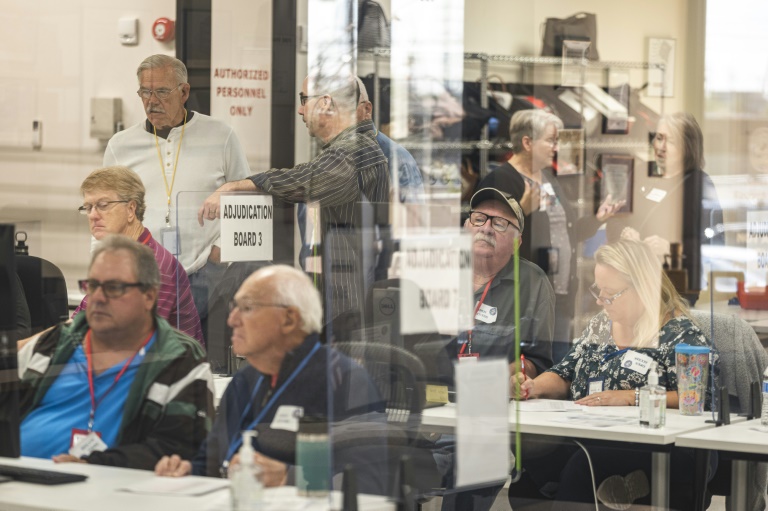
Many are burning out, others fear for their safety: conspiracy theories born in the 2020 election are fueling harassment of poll workers across the United States — complicating their work and stoking fears of violence in the November 8 midterms.

Egged on by baseless claims of fraud from former president Donald Trump and others, many voters are taking matters into their own hands, with officials warning of real consequences for the democratic process.

“The only problems we have had, honestly, have been dealing with misinformation,” said Richard Keech, deputy registrar in Loudoun County, Virginia, outside Washington.

Voters streamed into the county Office of Elections when AFP visited on October 28, casting ballots early in a swing state where Republicans hope to pick up seats in Congress.

One asked if the voting machines were connected to the internet, echoing a huge, false narrative that spread online in 2020. Voting machines are not typically online — and thus are not vulnerable to hacking while polls are open.

However benign, questions like that can slow election workers down. Others are less innocent, veering into harassment.

Since August, Loudoun County has fielded more than 200 freedom of information requests about voting equipment and procedures, the highest number ever received — sapping precious resources. 

A local group of “digital warriors” circulated a video falsely claiming county officials were storing photos of ballots.

“Within 24 hours, we had voters showing up at the front counter insisting to see the picture of their ballot to show that their vote was counted properly,” said Keech, who has worked for the elections office for over a decade.

In Arizona, ballot watchers inspired by a popular conspiracy film about the 2020 election have staked out and recorded activity at drop boxes.

In other battleground states such as Florida and Michigan, the Republican National Committee has recruited poll workers from groups that deny President Joe Biden’s 2020 victory was legitimate.

And in Pennsylvania, poll officials say they are concerned for their safety.

“There’s definitely a gravity weighing on us just kind of knowing what’s happening in other counties,” said Dori Sawyer, voter services director in Montgomery County, near Philadelphia. “Kind of, you know, wondering: When is it our turn?”

– ‘Threats and harassment’ –

Despite reports about vulnerabilities in electronic voting systems, Jen Easterly, director of the Cybersecurity and Infrastructure Security Agency, said last month that the agency is “not aware of any specific or credible threats to compromise or disrupt election infrastructure.”

That said, “the current election threat environment is more complex than it has ever been,” she told reporters, pointing to potential harassment targeting officials and “insider threats” from poll workers.

After Trump’s presidential election loss, local officials became the target of unfounded claims about malfeasance. Some had to go into hiding due to death threats, as they recounted in congressional testimony.

The US Department of Justice has pledged to crack down on such threats going into the midterms, but the intimidation has already taken a toll.

“It’s kind of exacerbated the tensions around elections in a way that I’ve never seen before — and I’ve been doing this for almost 20 years,” said Tammy Patrick, senior advisor to the elections program at the nonprofit Democracy Fund and a former Arizona election official.

“We have seen states where a quarter of their election officials, a third of their election officials have resigned.”

According to Keech, about a third of the poll workers in Virginia’s Loudoun County are new this year. Other US states have not replaced those who resigned after 2020, and the job for the top election official in Fulton County, Georgia — which includes Atlanta — remains empty.

Experts warn this attrition spells trouble, as mistakes from inexperienced poll workers could be misconstrued as wrongdoing. And in some places, staffing gaps are being filled by members of election denial groups.

“Whenever you bring on a lot of temporary workers in the run-up to an election cycle, by the very nature you increase the possibility of that insider threat,” said David Levine, a fellow at the Alliance For Securing Democracy, a national security group, and a former Idaho election official.

– ‘Safeguarding’ –

Some voting processes have been changed as a result of harassment.

“We’ve made some additional physical security enhancements to our building or locations,” Keech said, including new locks at the Office of Elections. 

He said Loudoun County also “further strengthened” chain-of-custody procedures for ballots.

In Montgomery County, Sawyer said she has had security briefings with local law enforcement and FBI agents. Her staff will also be present at drop boxes to explain how they are secured.

When voters call with “really intense concerns” about the election process, Sawyer said she reminds them that “we’re real people.”

“I care about democracy,” she said. “We get to choose our leaders. We kind of get to write our own destiny. I think that is worth safeguarding.”

Republican denial of election results a 'path to chaos': Biden

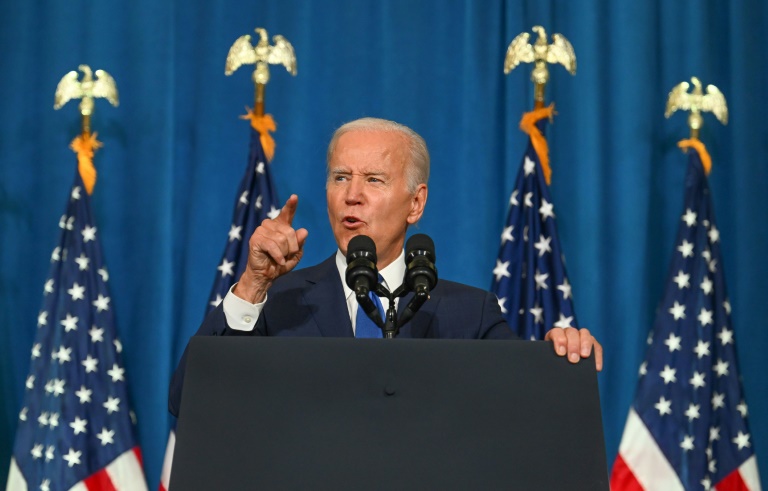
President Joe Biden warned US voters Wednesday that the future of democracy was at stake in next week’s midterms, with the steadfast refusal of some Republican candidates to accept election results opening a “path to chaos in America.”

With conservatives hammering his administration over the state of the economy, the 79-year-old Democrat took aim squarely at Republicans who have cast their lot with former president Donald Trump in denying Biden’s 2020 election victory.

“There are candidates running for every level of office in America… who won’t commit to accepting the results of the elections they’re in,” Biden said in a televised address to the nation.

Their goal, he said, was to follow Trump’s lead and try to “subvert the electoral system itself” — noting there are more than 300 Republican election deniers on the ballot in races across the country this year.

“They’ve emboldened violence and intimidation of voters and election officials,” he charged– less than two years after a mob of Trump supporters ransacked the US Capitol to try to overturn the 2020 result.

“That is the path to chaos in America,” he said. “It’s unprecedented. It’s unlawful. And, it is un-American.”

Biden’s dire warning of threats to democracy comes six days ahead of Tuesday’s vote, in which Republicans are heavily favored to capture the House of Representatives and possibly the Senate.

In the wake of a violent attack on the husband of the Democratic House speaker, Nancy Pelosi, which dramatically heightened concerns about heated political rhetoric, Biden urged Americans to unite in defense of democracy. 

“We must with an overwhelming voice stand against political violence and voter intimidation, period,” he said.

“We have to face this problem,” he said. “We can’t pretend it’s just going to solve itself.”

But nearly 22 months after the Capitol insurrection, polling shows that American voters are more concerned with the economy. 

More than half say the price of gas and consumer goods is the economic issue that worries them the most in a new Quinnipiac University national poll.

Democrats are being attacked on inflation and fears of a looming recession, with the Federal Reserve repeatedly hiking interest rates — and Biden acknowledged Wednesday that “inflation is still hurting” at a White House event with union workers and employers.

His admission came as the US central bank delivered another steep rate hike, raising the benchmark borrowing rate by 0.75 percentage points — the fourth straight increase of that size and the sixth hike this year.

– Balancing act –

Biden, whose approval rating has been underwater for more than a year, has been relatively inconspicuous on the campaign trail.

But he entered the fray in the home stretch with Wednesday’s address, ahead of stump speeches in Pennsylvania, New Mexico, California and Maryland.

Democrats have some major legislative victories to tout, but they have been hamstrung since Biden’s election win by internecine fights between progressives and moderates.

A huge row sparked by the party’s leftist flank calling on Biden to negotiate with President Vladimir Putin over Russia’s invasion of Ukraine was the most recent example of Democratic dysfunction.

Before settling on a “kitchen sink” strategy of talking about the cash in voters’ pockets, Democrats spent much of the campaign pulling in different directions on the importance of abortion rights, climate change, reproductive freedoms and the war in Ukraine.

But polling consistently shows voters more focused on their pocketbooks, and internal divisions left Democrats without a cohesive response to Republican attacks that they have mishandled the economy.

The nonpartisan Cook Political Report moved 10 House races toward the Republicans on Tuesday in the solidly Democratic states of New York, New Jersey, Oregon, California and Illinois.

If all of the races in Cook’s Republican column go as predicted, the party would need to win just six of the 35 “toss up” races to take the majority. Democrats would need 29. 

Twitter's new path unclear as Musk says 'weeks' for banned accounts' return

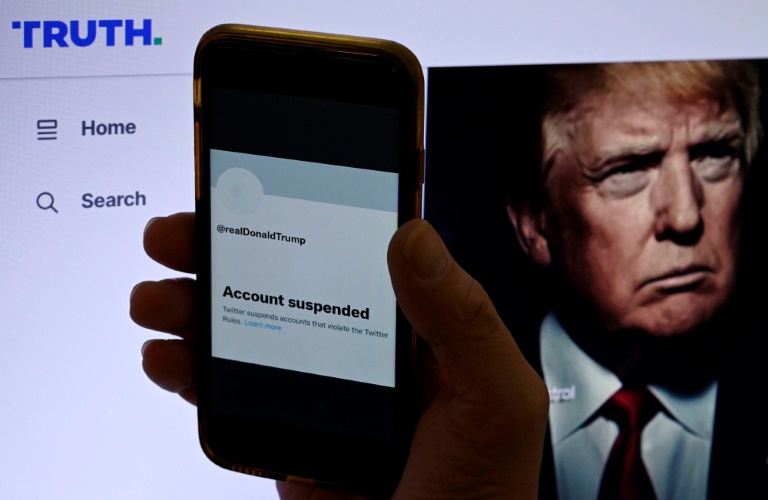
The road ahead for Twitter remained as murky as ever after new owner Elon Musk said Wednesday that it could take weeks to reinstate banned accounts — such as that of former US president Donald Trump.

Twitter users have been watching closely to see whether Musk will reinstate Trump, banned for inciting last year’s attack on the Capitol by a mob seeking to overturn the results of the 2020 election, and other deplatformed users.

The potential reinstatement of such accounts banned for violating the site’s content moderation rules has been seen as a bellwether of where Musk, a self-described “free speech absolutist,” wants to take the site he describes as a global town square.

But on Wednesday the South African billionaire said the wait will have to continue a little while longer. 

“Twitter will not allow anyone who was de-platformed for violating Twitter rules back on platform until we have a clear process for doing so, which will take at least a few more weeks,” he tweeted.

That would delay a return of Trump until after crucial November 8 midterm elections in the United States, which will determine control of Congress. 

Trump, once a prolific tweeter, retains a powerful hold on his Republican Party, and has reopened his 2020 playbook by questioning the integrity of the upcoming election.

Since Musk took Twitter private last week, Trump has suggested he would be happier sticking with his own Truth Social messaging platform.

But the former president’s network has financial issues and many political strategists believe he would find it hard to resist the influence offered by Twitter, where he was once one of the site’s biggest global draws.

The financial fate of Truth Social could be determined at a crucial meeting expected on Thursday that could see one of the site’s key backers dissolved.

The announcement comes only days after the world’s wealthiest man took sole control of the social media giant in a contentious $44 billion deal, vowing to dial back content moderation.

But the huge sum paid for Twitter has heaped pressure on Musk to keep advertisers on board and keep a lid on offensive content.

Musk in his tweet on Wednesday also said he had talked to civil society leaders “about how Twitter will continue to combat hate & harassment & enforce its election integrity policies.”

This followed his reassurance over the weekend that the site would not become a “free-for-all hellscape,” and announced the formation of a content moderation council.

However on Sunday, Musk himself tweeted an anti-LGBT conspiracy theory about what happened the night US Speaker Nancy Pelosi’s husband was attacked, then hours later deleted the post.

– ‘Most accurate’ –

In a sign that the approach to content moderation was a key concern, Musk praised the site for its handling of a White House tweet that users said exaggerated a claim that Biden had increased retirement benefits.

The White House deleted the tweet after Twitter users flagged the post as lacking context.

“Our goal is to make Twitter the most accurate source of information on Earth, without regard to political affiliation,” Musk said.

US conservatives complain of censorship on the major social networks and Musk staunchly defends looser moderation of content on Twitter in the name of free speech.

Twitter’s finances also remain a mystery going forward, with Musk on the hook to make huge loan repayments after his buyout.

Musk on Tuesday said the site will charge $8 per month to verify users’ accounts, arguing the plan would solve the platform’s issues with bots and trolls while creating a new revenue stream for the company.

Some users warned that they would simply leave the site if they were made to pay.

Twitter's new path unclear as Musk says 'weeks' for banned accounts' return

The road ahead for Twitter remained as murky as ever after new owner Elon Musk said Wednesday that it could take weeks to reinstate banned accounts — such as that of former US president Donald Trump.

Twitter users have been watching closely to see whether Musk will reinstate Trump, banned for inciting last year’s attack on the Capitol by a mob seeking to overturn the results of the 2020 election, and other deplatformed users.

The potential reinstatement of such accounts banned for violating the site’s content moderation rules has been seen as a bellwether of where Musk, a self-described “free speech absolutist,” wants to take the site he describes as a global town square.

But on Wednesday the South African billionaire said the wait will have to continue a little while longer. 

“Twitter will not allow anyone who was de-platformed for violating Twitter rules back on platform until we have a clear process for doing so, which will take at least a few more weeks,” he tweeted.

That would delay a return of Trump until after crucial November 8 midterm elections in the United States, which will determine control of Congress. 

Trump, once a prolific tweeter, retains a powerful hold on his Republican Party, and has reopened his 2020 playbook by questioning the integrity of the upcoming election.

Since Musk took Twitter private last week, Trump has suggested he would be happier sticking with his own Truth Social messaging platform.

But the former president’s network has financial issues and many political strategists believe he would find it hard to resist the influence offered by Twitter, where he was once one of the site’s biggest global draws.

The financial fate of Truth Social could be determined at a crucial meeting expected on Thursday that could see one of the site’s key backers dissolved.

The announcement comes only days after the world’s wealthiest man took sole control of the social media giant in a contentious $44 billion deal, vowing to dial back content moderation.

But the huge sum paid for Twitter has heaped pressure on Musk to keep advertisers on board and keep a lid on offensive content.

Musk in his tweet on Wednesday also said he had talked to civil society leaders “about how Twitter will continue to combat hate & harassment & enforce its election integrity policies.”

This followed his reassurance over the weekend that the site would not become a “free-for-all hellscape,” and announced the formation of a content moderation council.

However on Sunday, Musk himself tweeted an anti-LGBT conspiracy theory about what happened the night US Speaker Nancy Pelosi’s husband was attacked, then hours later deleted the post.

– ‘Most accurate’ –

In a sign that the approach to content moderation was a key concern, Musk praised the site for its handling of a White House tweet that users said exaggerated a claim that Biden had increased retirement benefits.

The White House deleted the tweet after Twitter users flagged the post as lacking context.

“Our goal is to make Twitter the most accurate source of information on Earth, without regard to political affiliation,” Musk said.

US conservatives complain of censorship on the major social networks and Musk staunchly defends looser moderation of content on Twitter in the name of free speech.

Twitter’s finances also remain a mystery going forward, with Musk on the hook to make huge loan repayments after his buyout.

Musk on Tuesday said the site will charge $8 per month to verify users’ accounts, arguing the plan would solve the platform’s issues with bots and trolls while creating a new revenue stream for the company.

Some users warned that they would simply leave the site if they were made to pay.

After lengthy slump, Boeing outlines path to comeback

After years of stumbles and weak results, Boeing said Wednesday it expects to return at mid-decade to operational health and a more robust financial performance.

The aerospace giant — which has reported losses the last three years — guided investors to 2025-26 as the timeframe when they should expect a strong financial performance resembling those the company posted prior to the 737 MAX and Covid-19 crises.

Investors cheered the outlook, sending shares up more than seven percent at one point as Boeing signaled a more normal level of production and plane deliveries within the foreseeable future.

“We are on the right path to return to the operational and financial strength we expect of ourselves,” said Chief Executive Dave Calhoun at the outset of the company’s first investor day since 2016.

Boeing’s difficult period began in October 2018 with a deadly Lion Air crash of the 737 MAX, the first of two fatal crashes of the plane that together claimed nearly 350 lives and led to a global grounding of more than a year and a half.

The company’s problems mushroomed when the coronavirus pandemic decimated global travel beginning in 2020.

Demand has recovered strongly and the MAX has been cleared for service by most leading regulators.

But Boeing has struggled to fully exploit the improving environment due in part to supply chain problems and heavier scrutiny from US air safety regulators. These issues have forced the company to curtail production and delayed the certification of new aircraft.

The forecast released Wednesday includes a gradual improvement in Boeing plane deliveries and production in 2023 and 2024 and hitting its stride after that, boosting revenues.

Stan Deal, head of Boeing’s commercial division, told analysts he expects to liquidate most of a backlog of undelivered planes by 2024, with a few spilling into 2025. This includes 787 Dreamliner planes, in addition to MAX aircraft.

Deal also updated the timeframe on the certification of the 737 MAX 10, its latest version of the plane, saying the aircraft should be cleared for service by late 2023 or early 2024.

The company projected free cash flow, a closely-watched benchmark of financial health, rising in 2023 to $3-$5 billion from the $1.5-$2 billion range in 2022.

It said free cash flow will surge to around $10 billion in 2024 and 2026, much closer to the $13.6 billion Boeing notched in 2018.

Shares finished 2.8 percent higher at $147.41.

Close Bitnami banner
Bitnami