AFP

US lottery jackpot swells to $1.2 billion

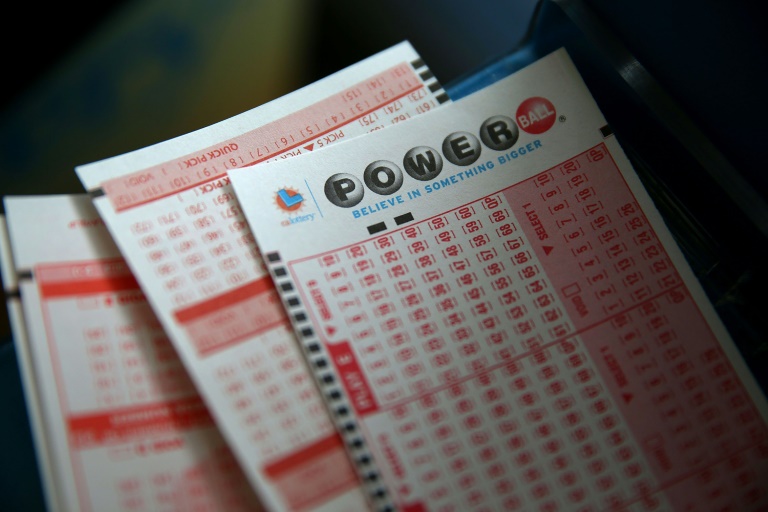
The grand prize for Wednesday night’s Powerball lottery has surged to over $1.2 billion, its organizers estimate, which would make it the fourth-highest jackpot in US lotto history.

With no winning ticket sold over the previous 38 Powerball drawings, the jackpot has been steadily growing for three months.

If a single lucky winner matches all six numbers Wednesday night, they will have the option of accepting the $1.2 billion as an annuity, paid out over three decades, or taking a lump sum cash payment, estimated by Powerball at $596.7 million.

The jackpot, the which is the second-highest in Powerball history and the fourth-highest in the United States overall, would be split evenly if multiple winning tickets are sold.

Taxes will inevitably gobble up a significant chunk of any prize, still leaving an extraordinarily large payout for the gamble of a $2 ticket.

Lottery winners are generally advised to immediately seek assistance from financial advisors, even before claiming the prize money.

The biggest jackpot in the world ever won was $1.586 billion, split among three Powerball ticket holders in January 2016.

In July, one ticketholder won a $1.3 billion jackpot, the third-highest ever, in the other national US lottery, Mega Millions.

The second-biggest prize ever — and the highest won by a single person — was in an October 2018 Mega Millions drawing for $1.5 billion.

The odds of winning the Powerball jackpot are one in 292.2 million — much higher than the one-in-a-million chance of being struck by lightning, according to US government data.

Powerball tickets are sold in 45 states, the US capital of Washington, Puerto Rico and the US Virgin Islands.

After lengthy slump, Boeing outlines path to comeback

After years of stumbles and weak results, Boeing said Wednesday it expects to return at mid-decade to operational health and a more robust financial performance.

The aerospace giant — which has reported losses the last three years — guided investors to 2025-26 as the timeframe when they should expect a strong financial performance resembling those the company posted prior to the 737 MAX and Covid-19 crises.

Investors cheered the outlook, sending shares up nearly six percent at one point as Boeing signaled a more normal level of production and plane deliveries within the foreseeable future.

“We are on the right path to return to the operational and financial strength we expect of ourselves,” said Chief Executive Dave Calhoun at the outset of the company’s first investor day since 2016.

Boeing’s difficult period began in October 2018 with a deadly Lion Air crash of the 737 MAX, the first of two fatal crashes of the plane that together claimed nearly 350 lives and led to a global grounding of more than a year and a half.

The company’s problems mushroomed when the coronavirus pandemic decimated global travel beginning in 2020.

Demand has recovered strongly and the MAX has been cleared for service by most leading regulators.

But Boeing has struggled to fully exploit the improving environment due in part to supply chain problems and heavier scrutiny from US air safety regulators. These issues have forced the company to curtail production and delayed the certification of new aircraft.

The forecast released Wednesday includes a gradual improvement in Boeing plane deliveries and production in 2023 and 2024 and hitting its stride after that, boosting revenues.

The company projected free cash flow, a closely-watched benchmark of financial health, rising in 2023 to $3-$5 billion from the $1.5-$2 billion range in 2022.

It said free cash flow will surge to around $10 billion in 2024 and 2026, much closer to the $13.6 billion Boeing notched in 2018.

Shares rose 3.2 percent to $148.01 in early-afternoon trading.

Stocks slide before expected Fed hike

European and US stock markets slid on Wednesday, with investors on edge before another widely expected jumbo interest rate hike from the US Federal Reserve.

On Wall Street, the Dow was down 0.4 percent in midday trading, while the broader S&P 500 slid 0.8 percent and the tech-heavy Nasdaq slumped 1.3 percent.

London equities shed 0.6 percent on the eve of another expected large rate increase from the Bank of England.

In the eurozone, Frankfurt and Paris fell following weak eurozone manufacturing survey data and a dip in German exports.

“All eyes will be on central banks on both sides of the Atlantic as both the US Federal Reserve and BoE get ready to deliver their rate decisions over the next 24 hours or so,” said AJ Bell investment director Russ Mould.

“While we have a good idea of the quantum of increase both parties will deliver, it will be all about the mood music,” he added.

Global central banks have this year ramped up borrowing costs in an attempt to curb inflation, which has rocketed on sky-high energy costs arising from Russia’s war on Ukraine.

Economists fear that rising rates will spark a global economic downturn because they ramp up loan repayments for individuals and businesses, thereby denting consumer spending and investment.

– US rate clues –

Wednesday’s Fed decision is hotly anticipated by traders hoping for a hint from officials that they are ready to temper their speed of monetary tightening.

“Investors are waiting for clues from the Federal Reserve about the path of rate rises, and in the meantime a slightly more wary mood has settled on the markets,” said Hargreaves Lansdown analyst Susannah Streeter.

“A fourth consecutive 75 basis point hike is not going to surprise anyone, but the key question is whether the Fed will signal that it is ready to pivot to a less hawkish stance in its December and subsequent meetings,” said market analyst Fawad Razaqzada at City Index and FOREX.com.

Analyst Craig Erlam at OANDA said increasing numbers of investors are anticipating Fed policymakers will hint at a slower pace of interest rate hikes from December, given the softness of economic data in some sectors and the lag in impact of monetary policy.

“Investors are so desperate for anything remotely dovish at this point that even a hint could get a strong reaction,” he said.

In Asia, stocks were mixed after Tuesday’s losses on Wall Street, as forecast-beating US data jolted hopes the Fed could soon tone down its hawkish pace of rate hikes.

Hong Kong led gainers — extending the previous day’s surge — as traders remain hopeful China could begin rolling back its economically painful zero-Covid policy, the day after an unverified statement suggesting a shift was taking place.

Suggestions that the Fed could take its foot off the pedal as the world’s top economy shows signs of slowing have helped fuel a rally across risk assets for more than a week.

But some of the wind was taken out of their sails Tuesday after data showed a rise in job openings while other numbers released indicated the manufacturing sector did not perform as badly as expected last month.

The readings suggest the US economy continues to hold up despite recent signs of weakness in the face of decades-high inflation, and Fed policymakers are likely to interpret them as interest rates need to continue to move higher.

– Key figures around 1630 GMT –

New York – Dow: DOWN 0.4 percent at 32,539.42 points

EURO STOXX 50: DOWN 0.8 percent at 3,622.01

London – FTSE 100: DOWN 0.6 percent at 7,144.14 (close)

Frankfurt – DAX: DOWN 0.6 percent at 13,256.74 (close)

Paris – CAC 40: DOWN 0.8 percent at 6,276.74 (close)

Tokyo – Nikkei 225: DOWN 0.1 percent at 27,663.39 (close)

Hong Kong – Hang Seng Index: UP 2.4 percent at 15,827.17 (close)

Shanghai – Composite: UP 1.2 percent at 3,003.37 (close)

Euro/dollar: DOWN at $0.9865 from $0.9883 on Tuesday

Pound/dollar: DOWN at $1.1455 from $1.1486

Dollar/yen: DOWN at 147.09 yen from 148.23 yen

Euro/pound: UP at 86.12 pence from 85.96 pence

Brent North Sea crude: UP 1.8 percent at $96.37 per barrel

West Texas Intermediate: UP 2.1 percent at $90.20 per barrel

burs-rl/rox

Stocks slide before expected Fed hike

European and US stock markets slid on Wednesday, with investors on edge before another widely expected jumbo interest rate hike from the US Federal Reserve.

On Wall Street, the Dow was down 0.4 percent in midday trading, while the broader S&P 500 slid 0.8 percent and the tech-heavy Nasdaq slumped 1.3 percent.

London equities shed 0.6 percent on the eve of another expected large rate increase from the Bank of England.

In the eurozone, Frankfurt and Paris fell following weak eurozone manufacturing survey data and a dip in German exports.

“All eyes will be on central banks on both sides of the Atlantic as both the US Federal Reserve and BoE get ready to deliver their rate decisions over the next 24 hours or so,” said AJ Bell investment director Russ Mould.

“While we have a good idea of the quantum of increase both parties will deliver, it will be all about the mood music,” he added.

Global central banks have this year ramped up borrowing costs in an attempt to curb inflation, which has rocketed on sky-high energy costs arising from Russia’s war on Ukraine.

Economists fear that rising rates will spark a global economic downturn because they ramp up loan repayments for individuals and businesses, thereby denting consumer spending and investment.

– US rate clues –

Wednesday’s Fed decision is hotly anticipated by traders hoping for a hint from officials that they are ready to temper their speed of monetary tightening.

“Investors are waiting for clues from the Federal Reserve about the path of rate rises, and in the meantime a slightly more wary mood has settled on the markets,” said Hargreaves Lansdown analyst Susannah Streeter.

“A fourth consecutive 75 basis point hike is not going to surprise anyone, but the key question is whether the Fed will signal that it is ready to pivot to a less hawkish stance in its December and subsequent meetings,” said market analyst Fawad Razaqzada at City Index and FOREX.com.

Analyst Craig Erlam at OANDA said increasing numbers of investors are anticipating Fed policymakers will hint at a slower pace of interest rate hikes from December, given the softness of economic data in some sectors and the lag in impact of monetary policy.

“Investors are so desperate for anything remotely dovish at this point that even a hint could get a strong reaction,” he said.

In Asia, stocks were mixed after Tuesday’s losses on Wall Street, as forecast-beating US data jolted hopes the Fed could soon tone down its hawkish pace of rate hikes.

Hong Kong led gainers — extending the previous day’s surge — as traders remain hopeful China could begin rolling back its economically painful zero-Covid policy, the day after an unverified statement suggesting a shift was taking place.

Suggestions that the Fed could take its foot off the pedal as the world’s top economy shows signs of slowing have helped fuel a rally across risk assets for more than a week.

But some of the wind was taken out of their sails Tuesday after data showed a rise in job openings while other numbers released indicated the manufacturing sector did not perform as badly as expected last month.

The readings suggest the US economy continues to hold up despite recent signs of weakness in the face of decades-high inflation, and Fed policymakers are likely to interpret them as interest rates need to continue to move higher.

– Key figures around 1630 GMT –

New York – Dow: DOWN 0.4 percent at 32,539.42 points

EURO STOXX 50: DOWN 0.8 percent at 3,622.01

London – FTSE 100: DOWN 0.6 percent at 7,144.14 (close)

Frankfurt – DAX: DOWN 0.6 percent at 13,256.74 (close)

Paris – CAC 40: DOWN 0.8 percent at 6,276.74 (close)

Tokyo – Nikkei 225: DOWN 0.1 percent at 27,663.39 (close)

Hong Kong – Hang Seng Index: UP 2.4 percent at 15,827.17 (close)

Shanghai – Composite: UP 1.2 percent at 3,003.37 (close)

Euro/dollar: DOWN at $0.9865 from $0.9883 on Tuesday

Pound/dollar: DOWN at $1.1455 from $1.1486

Dollar/yen: DOWN at 147.09 yen from 148.23 yen

Euro/pound: UP at 86.12 pence from 85.96 pence

Brent North Sea crude: UP 1.8 percent at $96.37 per barrel

West Texas Intermediate: UP 2.1 percent at $90.20 per barrel

burs-rl/rox
Stocks slide before expected Fed hike

European and US stock markets slid on Wednesday, with investors on edge before another widely expected jumbo interest rate hike from the US Federal Reserve.

On Wall Street, the Dow was down 0.4 percent in midday trading, while the broader S&P 500 slid 0.8 percent and the tech-heavy Nasdaq slumped 1.3 percent.

London equities shed 0.6 percent on the eve of another expected large rate increase from the Bank of England.

In the eurozone, Frankfurt and Paris fell following weak eurozone manufacturing survey data and a dip in German exports.

“All eyes will be on central banks on both sides of the Atlantic as both the US Federal Reserve and BoE get ready to deliver their rate decisions over the next 24 hours or so,” said AJ Bell investment director Russ Mould.

“While we have a good idea of the quantum of increase both parties will deliver, it will be all about the mood music,” he added.

Global central banks have this year ramped up borrowing costs in an attempt to curb inflation, which has rocketed on sky-high energy costs arising from Russia’s war on Ukraine.

Economists fear that rising rates will spark a global economic downturn because they ramp up loan repayments for individuals and businesses, thereby denting consumer spending and investment.

– US rate clues –

Wednesday’s Fed decision is hotly anticipated by traders hoping for a hint from officials that they are ready to temper their speed of monetary tightening.

“Investors are waiting for clues from the Federal Reserve about the path of rate rises, and in the meantime a slightly more wary mood has settled on the markets,” said Hargreaves Lansdown analyst Susannah Streeter.

“A fourth consecutive 75 basis point hike is not going to surprise anyone, but the key question is whether the Fed will signal that it is ready to pivot to a less hawkish stance in its December and subsequent meetings,” said market analyst Fawad Razaqzada at City Index and FOREX.com.

Analyst Craig Erlam at OANDA said increasing numbers of investors are anticipating Fed policymakers will hint at a slower pace of interest rate hikes from December, given the softness of economic data in some sectors and the lag in impact of monetary policy.

“Investors are so desperate for anything remotely dovish at this point that even a hint could get a strong reaction,” he said.

In Asia, stocks were mixed after Tuesday’s losses on Wall Street, as forecast-beating US data jolted hopes the Fed could soon tone down its hawkish pace of rate hikes.

Hong Kong led gainers — extending the previous day’s surge — as traders remain hopeful China could begin rolling back its economically painful zero-Covid policy, the day after an unverified statement suggesting a shift was taking place.

Suggestions that the Fed could take its foot off the pedal as the world’s top economy shows signs of slowing have helped fuel a rally across risk assets for more than a week.

But some of the wind was taken out of their sails Tuesday after data showed a rise in job openings while other numbers released indicated the manufacturing sector did not perform as badly as expected last month.

The readings suggest the US economy continues to hold up despite recent signs of weakness in the face of decades-high inflation, and Fed policymakers are likely to interpret them as interest rates need to continue to move higher.

– Key figures around 1630 GMT –

New York – Dow: DOWN 0.4 percent at 32,539.42 points

EURO STOXX 50: DOWN 0.8 percent at 3,622.01

London – FTSE 100: DOWN 0.6 percent at 7,144.14 (close)

Frankfurt – DAX: DOWN 0.6 percent at 13,256.74 (close)

Paris – CAC 40: DOWN 0.8 percent at 6,276.74 (close)

Tokyo – Nikkei 225: DOWN 0.1 percent at 27,663.39 (close)

Hong Kong – Hang Seng Index: UP 2.4 percent at 15,827.17 (close)

Shanghai – Composite: UP 1.2 percent at 3,003.37 (close)

Euro/dollar: DOWN at $0.9865 from $0.9883 on Tuesday

Pound/dollar: DOWN at $1.1455 from $1.1486

Dollar/yen: DOWN at 147.09 yen from 148.23 yen

Euro/pound: UP at 86.12 pence from 85.96 pence

Brent North Sea crude: UP 1.8 percent at $96.37 per barrel

West Texas Intermediate: UP 2.1 percent at $90.20 per barrel

burs-rl/rox

From XXX to cookery? Erotic site OnlyFans seeks to shift debate

A year is a long time in the history of OnlyFans, an online platform where people sell erotic photos and videos to their subscribers.

Last August, the site tried to ban explicit sexual content in advance of a rumoured stock market flotation, only to climb down after an outcry from its army of creators and users.

On Wednesday, the firm’s boss seemed keen to move beyond that discussion and paint a picture of a company in harmony with its users, whatever content they might upload.

“Everyone on Onlyfans is an adult,” Amrapali Gan told the Web Summit, a tech conference in Lisbon, tacitly accepting that the platform is largely known for explicit content.

“You can have adult content, you can have cooking content, that really depends on what creators are willing to share,” she said.

“It’s really a place where creators are able to monetise content that they would normally be shared for free on other social media platforms.”

The platform takes a 20 percent commission on the fees that users pay out to content creators.

It was founded in Britain in 2016 but really discovered its niche during the Covid pandemic and now boasts 180 million users and some two million creators.

But it still divides opinion, to say the least.

– ‘It’s like Instagram’ –

“What’s interesting about Onlyfans is the freedom,” Kny Vy, a content creator on OnlyFans, told AFP.

“We control what we do, it’s independent, not mainstream porn. We do what we like, what we want to do, what our subscribers want too.”

Kny Vy invested in professional filming equipment and manages to make between 600 and 3,500 euros per month.

But most content creators on the platform make much less.

Another woman who uses OnlyFans but wanted to remain anonymous told AFP it was essentially like Instagram.

“The more content you publish, the more your followers stick to your pages,” she said.

She said Onlyfans offered a “more secure framework” for actresses than the traditional porn industry allowing them “to refuse practices that they do not want to do”.

– Commodification of bodies’ –

But the platform has been dogged by controversy.

One user of the site was given three weeks in jail and fined in Singapore recently, and two models in Myanmar were arrested for uploading content to the platform.

And more broadly, campaigners say the site is a tool of exploitation rather than emancipation.

“It necessarily encourages prostitution,” said Sandrine Goldschmidt from Mouvement du Nid (Nest Movement), a French group campaigning for abolition of the sex trade.

She said OnlyFans and similar sites encourage the idea that “selling photos of your body is a way to make ends meet”.

And even without physical contact, this was “commodification of bodies” akin to “sexual exploitation” said Goldschmidt.

Berengere Wallaert of ACPE, a French charity tackling child prostitution, went further.

“Many young victims of prostitution started by posting their ads on the OnlyFans site,” she said. 

None the wonder that Amrapali Gan was keen to stress the security measures her site has put in place.

“There is not something happening on OnlyFans that we don’t see,” she said.

“Every single piece of content is moderated and reviewed by a human,” she said, arguing that other companies could not necessarily say the same.

Democrats lean in on economy, democracy in midterm home stretch

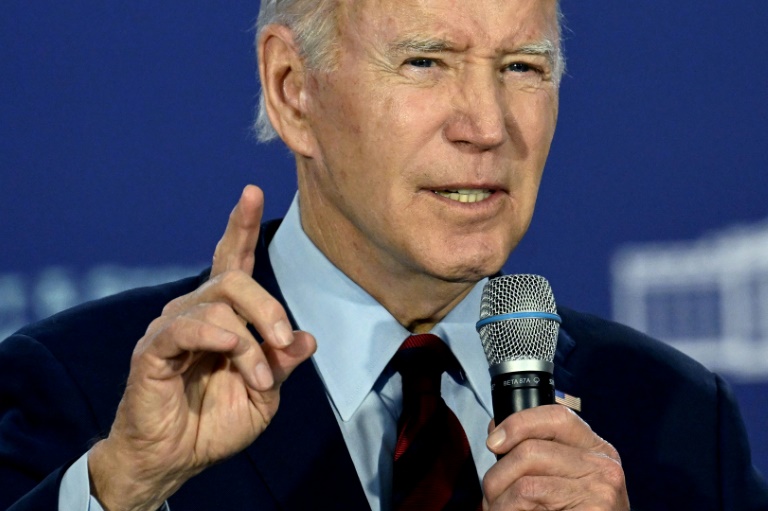
A week out from the US midterm elections, Democrats stepped up their campaign offensive Wednesday, ringing alarm bells on right-wing threats to democracy and pushing President Joe Biden’s plans to tackle runaway inflation.

Biden — who argues that a changing of the guard in the Democratic-controlled Congress would exacerbate price hikes and threaten entitlements — will talk up infrastructure improvements in an address from the White House.

But he will pivot to democracy in the evening, berating right-wingers denying his 2020 election victory and questioning the integrity of voting — as well as discussing the broader stakes of a Republican victory in the midterms.  

The consensus among election watchers ahead of the voting next Tuesday is that House Democrats will be swept from power in a Republican red tide, while the party’s control of the Senate is hanging by a thread.

Democrats are being hammered on the biggest issues for voters, especially inflation and fears of a looming recession, with the Federal Reserve repeatedly hiking interest rates. 

“Seniors who live on a fixed income are suffering in President Biden’s cruel economy, as the latest inflation report shows Americans continue to fall further behind,” Republicans on the chief congressional tax-writing committee said in a statement.

The group highlighted increasingly isolated seniors having to cut back on social outings and hobbies as “Biden-flation” bites.

– Balancing act –

The nonpartisan Cook Political Report moved 10 House races toward the Republicans on Tuesday in the solidly-Democratic states of New York, New Jersey, Oregon, California and Illinois. 

Biden, whose approval rating has been underwater for more than a year, has been relatively inconspicuous on the campaign trail.

But he enters the fray in the home stretch with stump speeches in Pennsylvania, New Mexico, California and Maryland.

He and Vice President Kamala Harris will zoom in on the economy Wednesday, touting the passage of legislation to boost infrastructure, tackle inflation, curb prescription drug price hikes and lower heating bills.    

“Starting in January, we’re capping the cost of insulin for seniors on Medicare at $35 a month,” Biden tweeted, referring to the US national insurance scheme for over 65s. 

“That’s more money at the end of the month to pay for groceries, to get your car repaired, to put toward holiday shopping for your grandkids.”

It is a tricky balancing act for Biden, who also has to acknowledge his own supporters’ fears over spiraling urban violence, burgeoning anti-Semitism and threats to democracy from election deniers. 

A hammer attack that left House Speaker Nancy Pelosi’s 82-year-old husband needing surgery has renewed focus in the closing stages on violent political rhetoric used by the far right.

More than half of Americans say the price of gas and consumer goods is the economic issue that worries them the most in a new Quinnipiac University national poll.

But 59 percent of Republicans voiced concerns over the potential for significant voter fraud and 54 percent of Democrats worried about widespread voter suppression.

– Infighting –

“You can’t condemn the violence unless you condemn those people who continue to argue the election was not real, that it’s being stolen,” Biden said Saturday.

Democrats have some major legislative victories to tout, but they have been hamstrung since Biden’s election win by internecine fights between progressives and moderates.

A huge row sparked by the party’s leftist flank calling on Biden to negotiate with President Vladimir Putin over Russia’s invasion of Ukraine was the most recent example of Democratic dysfunction.

Before settling on a “kitchen sink” strategy of talking about the cash in voters’ pockets, Democrats spent much of the campaign pulling in different directions on the importance of abortion rights, climate change, reproductive freedoms and the war in Ukraine.

But polling consistently shows that voters are more focused on their pocketbooks, and internal divisions left Democrats without a cohesive response to Republican attacks that they have mishandled the economy.

If all of the races in Cook’s Republican column go as predicted, the party would need to win just six of the 35 “toss up” races to take the majority. Democrats would need 29. 

For the first time since July, FiveThirtyEight’s Senate forecast makes Republicans more likely than not to take the upper chamber. 

Russia rejoins deal to ship vital Ukraine grain exports

Russia on Wednesday rejoined a deal to allow Ukrainian grain exports through the Black Sea but Russian President Vladimir Putin warned Moscow could pull out of the agreement again.

The revival of an agreement aimed at easing fears of global food insecurity came just as Washington warned it was “increasingly concerned” that Moscow could use nuclear weapons in its campaign in Ukraine.

Russia’s defence ministry said it had received “sufficient” guarantees from Kyiv that it would not use the maritime corridor to carry out attacks on Moscow’s military.

UN Secretary-General Antonio Guterres “warmly” welcomed Russia’s decision to resume participation in the agreement, which was brokered by the UN and Turkey in July and allows for joint inspections of ships.

President Vladimir Putin said Russia could leave the deal again if Ukraine “violates” its guarantees but would “not interfere” with any grain deliveries even if it did so.

The Ukrainian president’s chief of staff Andriy Yermak said Russia’s change of mind just days after announcing it was pulling out of the deal “puts an end to many years of Russian blackmail diplomacy”.

A Turkish security source said the corridor was open again from 0900 GMT although no departures from Ukraine were planned Wednesday.

The deal, overseen by the Joint Coordination Centre in Istanbul, has allowed more than 9.7 million metric tonnes of grain and other foodstuffs to leave Ukrainian ports.

This has brought much-needed relief to a global food crisis triggered by the conflict between Russia and Ukraine, which are both major global grain exporters.

Russia on Saturday had said it was temporarily pulling out, accusing Ukraine of misusing the safe shipping corridor to launch a drone attack on its Black Sea fleet.

Moscow warned the route was “dangerous” for shipments without its participation in the agreement but some deliveries from Ukraine still went ahead on Monday and Tuesday.

Ukrainian President Volodymyr Zelensky on Tuesday had urged “reliable and long-term protection” of the corridor while Russia’s Vladimir Putin demanded “real guarantees”.

In a call with Zelensky on Tuesday, French President Emmanuel Macron denounced Russia’s decision to exit the deal saying it “again harms global food security”.

The Russian defence ministry on Wednesday said it obtained written guarantees from Kyiv “thanks to the participation” of the UN and “assistance” from Turkey. 

It said Kyiv guaranteed “the non-use of the humanitarian corridor and Ukrainian ports determined in the interests of the export of agricultural products for conducting military operations against the Russian Federation”.

– ‘Turbulent situation’ –

The White House meanwhile said repeated discussion by Russian officials of the potential use of nuclear weapons in Ukraine has left US officials worried that the possibility could become a reality.

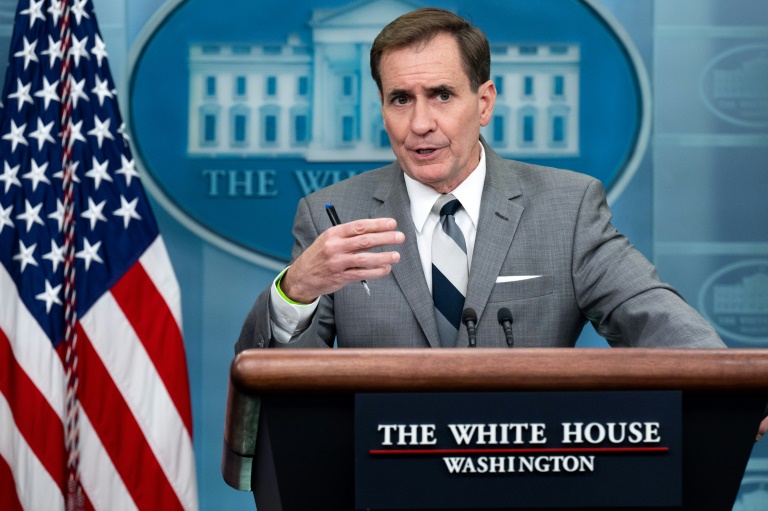
“We have grown increasingly concerned about the potential as these months have gone on,” said White House national security spokesman John Kirby.

Kirby also said North Korea was sending a “significant” amount of artillery ammunition to Russia under cover of shipments to the Middle East or Africa.

He did not confirm a New York Times report that high-level Russian military officials recently discussed when and how they might use tactical nuclear weapons on the battlefield.

The report, which cited unnamed US officials, said Putin did not take part in the discussions and there was no indication the Russian military had decided to deploy the weapons.

At the same time, Russia’s foreign ministry said the world’s “top priority” should be to avoid a clash of nuclear powers.

“We are firmly convinced that in the current difficult and turbulent situation — a consequence of irresponsible and shameless actions aimed at undermining our national security — the top priority is to prevent any military clash of nuclear powers,” a foreign ministry statement said.

Moscow called on other nuclear powers to “abandon dangerous attempts to infringe on each other’s vital interests”.

It said Moscow’s nuclear doctrine is “purely defensive in nature”, only allowing the Kremlin to use such weapons in the event of nuclear aggression or “when the very existence of our state is threatened”. 

Russia has repeatedly suggested that Ukrainian territories it claims to have annexed are protected by its nuclear doctrine.

US says its worries are growing over Russian nuclear talk

The White House said Wednesday it was increasingly concerned over Moscow’s talk of using a nuclear weapon in Ukraine, after a media report said top Russian military officials had discussed how and when to use such a weapon.

“We have grown increasingly concerned about  the potential as these months have gone on,” said White House national security spokesman John Kirby. 

Kirby did not confirm a New York Times report that said high-level Russian military officials recently discussed when and how they might use tactical nuclear weapons on the battlefield.

The report, which cited unnamed US officials, said Russian President Vladimir Putin did not take part in the discussions, and there was no indication that the Russian military had decided to deploy the weapons.

But Kirby said any comments on the use of nuclear weapons by Russia are “deeply concerning,” and said the United States takes them seriously.

He pointed to recent Putin comments talking about nuclear weapons and referencing the bombs US forces dropped on the Japanese cities Hiroshima and Nagasaki near the end of World War II.

“We take note of that,” Kirby said.

“It increasingly is unsettling in terms of the degree to which he feels he has to continue to stretch to prosecute this war,” he said.

At the same time, Kirby reiterated, Washington sees no indications that Russia is making preparations to use nuclear weapons, adding that US intelligence does not necessarily see or know everything.

The United States has been warning Moscow for weeks over public comments from top Russian officials that they could use nuclear weapons in Ukraine in certain cases, particularly if they felt there was a threat to Russian territorial integrity.

The most recent threat came from former Russian president and senior security council official Dmitry Medvedev.

Medvedev said on Tuesday that Ukraine’s objective to reclaim all its territories occupied by Russia, which include the Donbas region and Crimea, would be a “threat to the existence of our state.”

That, Medvedev said, would be “a direct reason” to invoke nuclear deterrence.

However, early Wednesday Putin’s spokesman Dmitry Peskov said that Western media was “deliberately pumping up the topic of the use of nuclear weapons.”

Moscow does “not have the slightest intention to take part in this,” he said, calling the Times report “very irresponsible.”

In September, Jake Sullivan, President Joe Biden’s national security advisor, said that the United States has warned Russia at “very high levels” of “catastrophic consequences” for using nuclear arms.

EU foreign policy chief Josep Borrell warned on October 13 that Russian forces would be “annihilated” by the West if Putin uses nuclear weapons against Ukraine.

US pharmacy chains to pay $10 bn to settle opioid cases

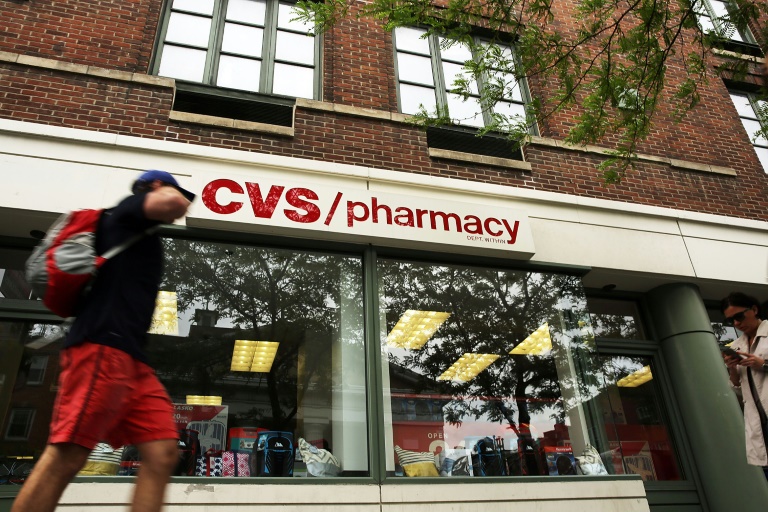
US pharmacy chains CVS Health and Walgreens said Wednesday they had reached preliminary agreements to together pay more than $10 billion to resolve opioid claims from US states, cities and tribes.

The opioid crisis, which has caused more than 500,000 deaths over 20 years in the United States, has triggered a flurry of lawsuits against drugmakers, distributors and pharmacies from victims as well as cities, counties and states.

The pharmacies’ agreements in principal are for much bigger sums than previously agreed by pharmacy chains, putting that sector in the same ballpark as drugmakers like Teva and Johnson & Johnson and distributors like AmerisourceBergen and McKesson that have previously reached multi-billion dollar agreements.

“We are pleased to resolve these longstanding claims and putting them behind us is in the best interest of all parties, as well as our customers, colleagues and shareholders,” CVS chief policy officer Thomas Moriarty said in a statement.

“As one of the largest pharmacy chains in the nation, we remain committed to being a part of the solution,” Walgreens said. “We believe this is in the best interest of the company and our stakeholders at this time.” 

Lawsuits against the retail chains have alleged the drugstores didn’t do enough to root out the deluge of opioids that have ravaged communities across the United States. 

The stores have argued they are not responsible for the crisis and that the health care system relies on pharmacies to fill legitimate prescriptions.

CVS and Walgreens each said the settlements include “no admission of wrongdoing or liability” by the companies.

The agreements announced Wednesday are contingent on sufficient approvals by counties, states, tribes and other political subdivisions and do not cover lawsuits involving private litigants.

Bloomberg News reported that Walmart also reached a tentative agreement involving billions of dollars. A Walmart spokesman declined comment.

CVS said its agreement will involve paying $5 billion to states, political subdivisions and tribes over the next 10 years, beginning in 2023. 

CVS Chief Executive Karen Lynch told an earnings call that the company recognizes “the seriousness of the opioid abuse misconduct has had on so many Americans.”

Walgreens plans payments of about $4.8 billion over 15 years to settling states, plus $144.5 million to Native American tribes over the same period and $753.5 million in attorney’s fees over six years.

Both companies signaled they would continue to fight other lawsuits.

“The company will continue to vigorously defend against any litigation not covered by the Settlement Frameworks, including private plaintiff litigation. The Company continues to believe it has strong legal defenses and appellate arguments in all of these cases,” said Walgreens. 

– Multiple lawsuits – 

CVS earlier this year announced an agreement to pay $484 million to the state of Florida to settle opioid claims, with the money set to fund treatments for drug misuse and health effects of the crisis.

The chain, along with Walgreens, Rite Aid and Walmart, agreed last summer to a $26 million settlement with two counties in New York state.

And an Ohio jury last November sided with two of the state’s counties that sued Walmart, Walgreens and CVS, determining the three companies acted illegally in filling significant opioid prescriptions, creating an “oversupply” of the drugs and a “public nuisance.”

For many people, opioid addiction begins with prescribed pain pills, before they increase their consumption and eventually turn to illicit drugs such as heroin and fentanyl, an extremely powerful synthetic opioid.

Opioid victims and their families addressed the Sackler family, owners of Purdue Pharma, the maker of OxyContin, directly in a US courtroom in March as part of the company’s bankruptcy case. 

“We buried Matthew and Kyle because of your family’s vicious acts of disregard for human life,” Liz Fitzgerald said of the deaths of two of her sons, who died at ages 32 and 25 after years of dealing with opioid addictions.

“Two boys are gone because of your ‘safe’ medication,” Fitzgerald said.

Close Bitnami banner
Bitnami