AFP

Ferrari sales, earnings guidance shift higher

Italian luxury sports car manufacturer Ferrari said Wednesday it had raised its 2022 earnings guidance after posting double-digit gains in sales and earnings.

The firm with the prancing horse logo reported a net profit of 228 million euros ($225 million) for the third quarter, an increase of 10 percent from the July-September period last year.

That beat the 216 million euros analyst consensus compiled by financial data provider FactSet.

Sales rose by 19 percent to 1.25 billion euros.

Ferrari also managed to avoid the supply chain problems that have plagued other automakers, posting a 16 percent increase in deliveries to 3,188 vehicles.

Chief executive Benedetto Vigna said “all these lead us to revise upward our 2022 guidance on all metrics.”

It now expects approximately five billion euros in sales revenue and 1.73 billion euros in operating profits.

“Today, we continue to manage an outstanding order book: with the exception of few models, our entire range is sold out,” added Vigna.

Germany primes energy price cap as bills soar

Germany on Wednesday put the finishing touches on an energy price cap, the cornerstone of a massive 200-billion-euro ($198-billion) package to shield households and businesses from rising costs.

“Immediate help is on its way!” Chancellor Olaf Scholz said on Twitter, who has ploughed ahead with plans despite criticisms from European partners.

The major energy market intervention is deemed necessary to support consumers at a time when Europe’s largest economy is drifting towards recession and inflation has shot past 10 percent.

The plan will see the price for a percentage of household and businesses’ typical consumption capped at lower-than-market prices, according to a position paper from the government.

For gas, 25,000 larger businesses, as well as almost 2,000 hospitals and schools will benefit from the cap as soon as January 1 next year, under the plans. 

Households and smaller businesses meanwhile could have to wait until March 1 at the latest for the price brake to come into force.

Policymakers will “seek” to apply the relief retroactively from February 2023.

A similar price cap will also apply to electricity from the start of the new year in January, with the measures set to last through to the end of April 2024.

– December help –

While the cap for smaller consumers will only come into force later, the government will pick up the bill for household heating in December.

For households the price of a kilowatt-hour of gas will be capped at 12 cents for up to 80 percent of their typical usage.

The same unit of gas currently costs billpayers 18.6 cents, according to the price comparison site Check 24.

All in all, the support measures could save a single-person household with a typical gas consumption of 5,000 kWh around 264 euros over a year, the site estimates.

The partial price cap was designed to maintain “incentives to save energy” despite lowering prices for consumers, according to the government paper.

Scholz will meet with state premiers later Wednesday to finalise the details of the plan.

Ahead of the meeting, some regional leaders pressed the federal government to apply the gas cap for households sooner. 

“People need reliable protection from the higher costs, especially in the cold months of January and February, when they use heating intensively,” Hendrik Wuest, the regional leader of North Rhine-Westphalia, told Der Spiegel magazine.

– European discontent –

Germany, long reliant on Moscow for energy imports, has been hit hard by the sharp rise in prices since the invasion of Ukraine and the cut to supplies.

Despite the Germany economy eking out 0.3-percent growth between July and September, most analysts still expect the country to slip into recession as the high costs of energy drags on production.

Businesses that have been crying for support from the government welcomed the plans.

The price cap measures should “create a bit of security and at the same time ease worries”, the BDI industrial lobby said Monday ahead of the final agreement.

Berlin’s massive go-it-alone plan to shield its economy has ruffled feathers among European partners who would have preferred a common solution.

They feared that more highly indebted EU countries could not afford the outlay made by Germany, while the plan could affect their own energy costs.

Germany’s energy price shield will be partly financed through new borrowing through an economic stabilisation fund created during the coronavirus pandemic. 

Berlin also intends to fund the cap by skimming off part of the bumper profits made by energy companies as prices have risen.

North Korea fires more than 20 missiles, one close to South

North Korea fired more than 20 missiles Wednesday, including one that landed close to South Korea’s waters in what President Yoon Suk-yeol said was “effectively a territorial invasion”.

It also fired an artillery barrage into a maritime “buffer zone” that experts said was part of an “aggressive and threatening” response by Pyongyang to large-scale joint air drills the United States and South Korea are conducting.

One short-range ballistic missile crossed the Northern Limit Line, the de facto maritime border, prompting a rare warning for residents on the island of Ulleungdo to seek shelter in bunkers.

Seoul’s military said it was the “first time since the peninsula was divided” at the end of Korean War hostilities in 1953 that a North Korean missile had landed so close to the South’s territorial waters.

“President Yoon pointed out today that North Korea’s provocation is an effective territorial invasion by a missile,” his office said in a statement.

One of the missiles landed in waters just 57 kilometres (35 miles) east of the mainland, the military said, calling the incident “very rare and intolerable”.

Pyongyang fired a total of 23 missiles including seven short-range ballistic missiles and six ground-to-air ones, Seoul’s military said.

North Korea also conducted an artillery barrage, firing into a maritime “buffer-zone” set up in 2018 in a bid to reduce tensions between the two countries during an ill-fated bout of diplomacy.

The huge volley of launches were “provocations against South Korea”, said Go Myong-hyun, a researcher at the Asan Institute for Policy Studies.

“I wouldn’t be surprised if they lead up to a nuclear test,” he added.

South Korea, for its part, said it had fired three air-to-ground missiles into the sea towards the north of the two countries’ maritime boundary.

President Yoon called a meeting of the National Security Council, ordering “swift and stern measures so that North Korea’s provocations pay a clear price”.

South Korea closed some air routes over the East Sea, also known as the Sea of Japan, advising local airlines to detour to “ensure passenger safety in the routes to the United States and Japan”.

White House national security spokesman John Kirby slammed North Korea as “reckless” for carrying out the launches.

“We… condemn these missile launches and the DPRK’s reckless decision to fire a missile below the de facto maritime boundary with the Republic of Korea,” Kirby said. 

European Council President Charles Michel said he was “outraged” by Pyongyang’s “aggressive and irresponsible behaviour” and Russia called for calm.

– ‘Vigilant Storm’ –

Pyongyang’s day of missile launches came as Seoul and Washington staged their largest-ever joint air drills, dubbed “Vigilant Storm”, which involved hundreds of warplanes from both sides.

Pak Jong Chon, a high-ranking North Korean official, had earlier called the drills aggressive and provocative, according to a report in state media Wednesday.

Pak said the name of the exercises harked back to Operation Desert Storm, the US-led military assault on Iraq in 1990-1991 after the invasion of Kuwait.

“If the US and South Korea attempt to use armed forces against the (Democratic People’s Republic of Korea) without any fear, the special means of the DPRK’s armed forces will carry out their strategic mission without delay,” he said.

“The US and South Korea will have to… pay the most horrible price in history.”

– ‘Dangerous situation’ –

North Korea’s missile launches on Wednesday appeared to be “the most aggressive and threatening armed demonstration against the South since 2010”, Cheong Seong-chang, a researcher at the Sejong Institute, told AFP.

“It is now a dangerous and unstable situation that could lead to armed conflict,” he added.

In March 2010, a North Korean submarine torpedoed the South Korean naval vessel Cheonan, killing 46 sailors, including 16 who were on mandatory military service.

In November of the same year, the North shelled a South Korean border island, killing two marines — both of them young conscripts.

Wednesday’s missile tests follow a recent blitz of launches, including what the North said were tactical nuclear drills.

Washington and Seoul have repeatedly warned the launches could culminate in another nuclear test — which would be Pyongyang’s seventh.

“Pyongyang seems to have completed its most powerful deterrent. This is a serious threat,” Park Won-gon, a professor at Ewha University, told AFP.

The North’s latest launches came with South Korea in a period of national mourning after more than 150 people — mostly young women in their 20s — were killed in a crowd crush in Seoul on Saturday.

It shows “North Korea’s clear priorities”, Yang Moo-jin, professor at the University of North Korean Studies in Seoul, told AFP.

“Pyongyang probably thinks it has no reason to take the Itaewon tragedy into its consideration, as Seoul and Washington’s largest-ever joint air drills are also happening anyway,” he added.


Fed poised for further US rate hike as political pressure mounts

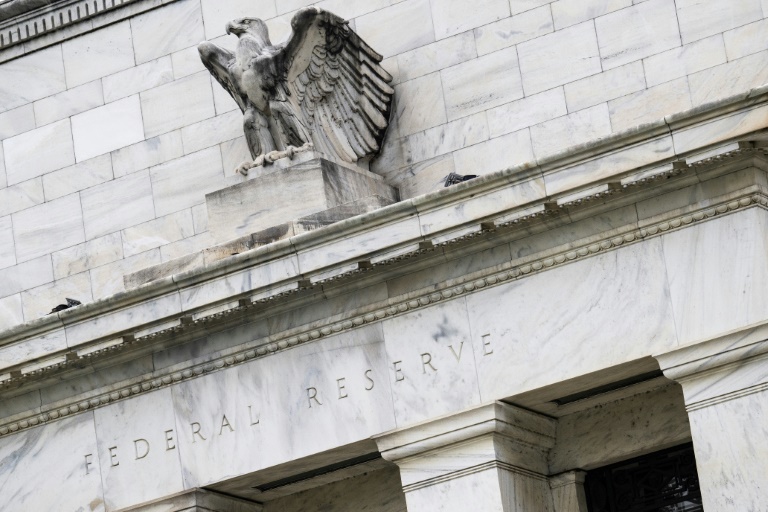
The Federal Reserve opened its final day of deliberations Wednesday, which is expected to bring another steep interest rate hike as it tries to cool the economy amid intense political pressure ahead of next week’s midterm elections.

The US central bank has embarked on an aggressive campaign this year to rein in inflation which has surged to its fastest pace in decades, and with prices still rising, the squeeze on American households has propelled economic issues to the top of voter priorities.

Raising borrowing costs as it aims to dampen demand, the Fed has cranked up the benchmark lending rate five times this year, including three straight increases of 0.75 percentage point.

Policymakers are widely expected to announce a fourth three-quarter point rate hike on Wednesday, so all eyes will be focused on any signs the Fed could shift to a less hawkish stance in the coming months, slowing or halting the policy moves.

“There’s a growing belief that the central bank will signal a desire to ease off the brake over the following few meetings,” said Oanda analyst Craig Erlam.

But it will be challenging for Fed Chair Jerome Powell to signal the policy-setting Federal Open Market Committee (FOMC) is mulling a step-down from its current path, while reaffirming the commitment to bring cool inflation pressures.

“Markets will likely interpret any comments about a downshift in tightening as dovish, signaling the end of the rate hiking cycle,” economist Rubeela Farooqi of High Frequency Economics said in an analysis.

If inflation remains elevated, the Fed could press on with “a series of half-point hikes, rather than further slowing the pace of increases,” she added.

The impact of the Fed’s actions is trickling through the economy, with the interest-sensitive housing sector cooling sharply but the labor market still tight as private hiring picked up more than expected in October.

The committee is scheduled to announce its decision at 1800 GMT.

Powell’s comments at his press conference following the meeting will be scrutinized for clues on how much further he thinks the Fed must go before declaring victory in the inflation fight.

Stocks slipped on Wednesday morning as investors braced for the announcement.

– Political pressure –

As central bankers walk a tightrope fighting inflation while avoiding tipping the economy into a recession, politicians are ramping up pressure on Fed officials amid growing worries of a downturn.

Senator Sherrod Brown, the Democratic chair of the Senate Banking Committee, urged the Fed last month to show commitment to its dual mandate — of promoting maximum employment and  stable prices — and moderate interest rates.

“For working Americans who already feel the crush of inflation, job losses will make it much worse,” Brown said in a letter to Powell.

Other Democratic senators including Elizabeth Warren also expressed concern this week over the Fed’s rate hikes, as President Joe Biden’s party faces growing voter frustration over high inflation, and risks losing control of both houses of Congress to opposition Republicans.

Powell has argued that allowing high inflation to become entrenched would inflict even more pain on American families and workers.

Oanda’s Erlam said it may be too late to avoid a recession “but the Fed has been very clear from the start that while a soft landing is the desirable and attainable outcome, getting inflation under control is the primary focus.”

As higher borrowing rates put the brakes on the economy’s momentum, there is likely to be “moderation in the labor market before a mild recession in (the first half of) 2023 brings about more marked change,” said economist Matthew Martin of Oxford Economics in an analysis.

Fed poised for further US rate hike as political pressure mounts

The Federal Reserve opened its final day of deliberations Wednesday, which is expected to bring another steep interest rate hike as it tries to cool the economy amid intense political pressure ahead of next week’s midterm elections.

The US central bank has embarked on an aggressive campaign this year to rein in inflation which has surged to its fastest pace in decades, and with prices still rising, the squeeze on American households has propelled economic issues to the top of voter priorities.

Raising borrowing costs as it aims to dampen demand, the Fed has cranked up the benchmark lending rate five times this year, including three straight increases of 0.75 percentage point.

Policymakers are widely expected to announce a fourth three-quarter point rate hike on Wednesday, so all eyes will be focused on any signs the Fed could shift to a less hawkish stance in the coming months, slowing or halting the policy moves.

“There’s a growing belief that the central bank will signal a desire to ease off the brake over the following few meetings,” said Oanda analyst Craig Erlam.

But it will be challenging for Fed Chair Jerome Powell to signal the policy-setting Federal Open Market Committee (FOMC) is mulling a step-down from its current path, while reaffirming the commitment to bring cool inflation pressures.

“Markets will likely interpret any comments about a downshift in tightening as dovish, signaling the end of the rate hiking cycle,” economist Rubeela Farooqi of High Frequency Economics said in an analysis.

If inflation remains elevated, the Fed could press on with “a series of half-point hikes, rather than further slowing the pace of increases,” she added.

The impact of the Fed’s actions is trickling through the economy, with the interest-sensitive housing sector cooling sharply but the labor market still tight as private hiring picked up more than expected in October.

The committee is scheduled to announce its decision at 1800 GMT.

Powell’s comments at his press conference following the meeting will be scrutinized for clues on how much further he thinks the Fed must go before declaring victory in the inflation fight.

Stocks slipped on Wednesday morning as investors braced for the announcement.

– Political pressure –

As central bankers walk a tightrope fighting inflation while avoiding tipping the economy into a recession, politicians are ramping up pressure on Fed officials amid growing worries of a downturn.

Senator Sherrod Brown, the Democratic chair of the Senate Banking Committee, urged the Fed last month to show commitment to its dual mandate — of promoting maximum employment and  stable prices — and moderate interest rates.

“For working Americans who already feel the crush of inflation, job losses will make it much worse,” Brown said in a letter to Powell.

Other Democratic senators including Elizabeth Warren also expressed concern this week over the Fed’s rate hikes, as President Joe Biden’s party faces growing voter frustration over high inflation, and risks losing control of both houses of Congress to opposition Republicans.

Powell has argued that allowing high inflation to become entrenched would inflict even more pain on American families and workers.

Oanda’s Erlam said it may be too late to avoid a recession “but the Fed has been very clear from the start that while a soft landing is the desirable and attainable outcome, getting inflation under control is the primary focus.”

As higher borrowing rates put the brakes on the economy’s momentum, there is likely to be “moderation in the labor market before a mild recession in (the first half of) 2023 brings about more marked change,” said economist Matthew Martin of Oxford Economics in an analysis.

Stocks slide before expected Fed hike

European and US stock markets slid on Wednesday, with investors on edge before another widely expected jumbo interest rate hike from the US Federal Reserve.

London equities shed 0.5 percent on the eve of another expected large rate increase from the Bank of England.

In the eurozone, Frankfurt and Paris were both following weak eurozone manufacturing survey data and a dip in German exports.

“All eyes will be on central banks on both sides of the Atlantic as both the US Federal Reserve and BoE get ready to deliver their rate decisions over the next 24 hours or so,” said AJ Bell investment director Russ Mould.

“While we have a good idea of the quantum of increase both parties will deliver, it will be all about the mood music,” he added.

Global central banks have this year ramped up borrowing costs in an attempt to curb inflation, which has rocketed on sky-high energy costs arising from Russia’s war on Ukraine.

Economists fear that rising rates will spark a global economic downturn because they ramp up loan repayments for individuals and businesses, thereby denting consumer spending and investment.

– US rate clues –

Wednesday’s Fed decision is hotly anticipated by traders hoping for a hint from officials that they are ready to temper their speed of monetary tightening.

“Investors are waiting for clues from the Federal Reserve about the path of rate rises, and in the meantime a slightly more wary mood has settled on the markets,” said Hargreaves Lansdown analyst Susannah Streeter.

“A fourth consecutive 75 basis point hike is not going to surprise anyone, but the key question is whether the Fed will signal that it is ready to pivot to a less hawkish stance in its December and subsequent meetings,” said market analyst Fawad Razaqzada at City Index and FOREX.com.

Analyst Craig Erlam at OANDA said increasing numbers of investors are anticipating Fed policymakers will hint at a slower pace of interest rate hikes from December, given the softness of economic data in some sectors and the lag in impact of monetary policy.

“Investors are so desperate for anything remotely dovish at this point that even a hint could get a strong reaction,” he said.

In Asia, stocks were mixed after Tuesday’s losses on Wall Street, as forecast-beating US data jolted hopes the Fed could soon tone down its hawkish pace of rate hikes.

Hong Kong led gainers — extending the previous day’s surge — as traders remain hopeful China could begin rolling back its economically painful zero-Covid policy, the day after an unverified statement suggesting a shift was taking place.

Suggestions that the Fed could take its foot off the pedal as the world’s top economy shows signs of slowing have helped fuel a rally across risk assets for more than a week.

But some of the wind was taken out of their sails Tuesday after data showed a rise in job openings while other numbers released indicated the manufacturing sector did not perform as badly as expected last month.

The readings suggest the US economy continues to hold up despite recent signs of weakness in the face of decades-high inflation, and Fed policymakers are likely to interpret them as interest rates need to continue to move higher.

– Key figures around 1330 GMT –

London – FTSE 100: DOWN 0.5 percent at 7,151.73 points

Frankfurt – DAX: DOWN 0.3 percent at 13,303.53

Paris – CAC 40: DOWN 0.6 percent at 6,291.04

EURO STOXX 50: DOWN at 3,632.94

New York – Dow: DOWN 0.3 percent at 32,568.10

Tokyo – Nikkei 225: DOWN 0.1 percent at 27,663.39 (close)

Hong Kong – Hang Seng Index: UP 2.4 percent at 15,827.17 (close)

Shanghai – Composite: UP 1.2 percent at 3,003.37 (close)

Euro/dollar: UP at $0.9907 from $0.9883 on Tuesday

Pound/dollar: UP at $1.1502 from $1.1486

Dollar/yen: DOWN at 146.94 yen from 148.23 yen

Euro/pound: UP at 86.12 pence from 85.96 pence

Brent North Sea crude: DOWN 0.1 percent at $94.55 per barrel

West Texas Intermediate: DOWN 0.2 percent at $88.22 per barrel

burs-rl/kjm

Stocks slide before expected Fed hike

European and US stock markets slid on Wednesday, with investors on edge before another widely expected jumbo interest rate hike from the US Federal Reserve.

London equities shed 0.5 percent on the eve of another expected large rate increase from the Bank of England.

In the eurozone, Frankfurt and Paris were both following weak eurozone manufacturing survey data and a dip in German exports.

“All eyes will be on central banks on both sides of the Atlantic as both the US Federal Reserve and BoE get ready to deliver their rate decisions over the next 24 hours or so,” said AJ Bell investment director Russ Mould.

“While we have a good idea of the quantum of increase both parties will deliver, it will be all about the mood music,” he added.

Global central banks have this year ramped up borrowing costs in an attempt to curb inflation, which has rocketed on sky-high energy costs arising from Russia’s war on Ukraine.

Economists fear that rising rates will spark a global economic downturn because they ramp up loan repayments for individuals and businesses, thereby denting consumer spending and investment.

– US rate clues –

Wednesday’s Fed decision is hotly anticipated by traders hoping for a hint from officials that they are ready to temper their speed of monetary tightening.

“Investors are waiting for clues from the Federal Reserve about the path of rate rises, and in the meantime a slightly more wary mood has settled on the markets,” said Hargreaves Lansdown analyst Susannah Streeter.

“A fourth consecutive 75 basis point hike is not going to surprise anyone, but the key question is whether the Fed will signal that it is ready to pivot to a less hawkish stance in its December and subsequent meetings,” said market analyst Fawad Razaqzada at City Index and FOREX.com.

Analyst Craig Erlam at OANDA said increasing numbers of investors are anticipating Fed policymakers will hint at a slower pace of interest rate hikes from December, given the softness of economic data in some sectors and the lag in impact of monetary policy.

“Investors are so desperate for anything remotely dovish at this point that even a hint could get a strong reaction,” he said.

In Asia, stocks were mixed after Tuesday’s losses on Wall Street, as forecast-beating US data jolted hopes the Fed could soon tone down its hawkish pace of rate hikes.

Hong Kong led gainers — extending the previous day’s surge — as traders remain hopeful China could begin rolling back its economically painful zero-Covid policy, the day after an unverified statement suggesting a shift was taking place.

Suggestions that the Fed could take its foot off the pedal as the world’s top economy shows signs of slowing have helped fuel a rally across risk assets for more than a week.

But some of the wind was taken out of their sails Tuesday after data showed a rise in job openings while other numbers released indicated the manufacturing sector did not perform as badly as expected last month.

The readings suggest the US economy continues to hold up despite recent signs of weakness in the face of decades-high inflation, and Fed policymakers are likely to interpret them as interest rates need to continue to move higher.

– Key figures around 1330 GMT –

London – FTSE 100: DOWN 0.5 percent at 7,151.73 points

Frankfurt – DAX: DOWN 0.3 percent at 13,303.53

Paris – CAC 40: DOWN 0.6 percent at 6,291.04

EURO STOXX 50: DOWN at 3,632.94

New York – Dow: DOWN 0.3 percent at 32,568.10

Tokyo – Nikkei 225: DOWN 0.1 percent at 27,663.39 (close)

Hong Kong – Hang Seng Index: UP 2.4 percent at 15,827.17 (close)

Shanghai – Composite: UP 1.2 percent at 3,003.37 (close)

Euro/dollar: UP at $0.9907 from $0.9883 on Tuesday

Pound/dollar: UP at $1.1502 from $1.1486

Dollar/yen: DOWN at 146.94 yen from 148.23 yen

Euro/pound: UP at 86.12 pence from 85.96 pence

Brent North Sea crude: DOWN 0.1 percent at $94.55 per barrel

West Texas Intermediate: DOWN 0.2 percent at $88.22 per barrel

burs-rl/kjm

Stocks slide before expected Fed hike

European and US stock markets slid on Wednesday, with investors on edge before another widely expected jumbo interest rate hike from the US Federal Reserve.

London equities shed 0.5 percent on the eve of another expected large rate increase from the Bank of England.

In the eurozone, Frankfurt and Paris were both following weak eurozone manufacturing survey data and a dip in German exports.

“All eyes will be on central banks on both sides of the Atlantic as both the US Federal Reserve and BoE get ready to deliver their rate decisions over the next 24 hours or so,” said AJ Bell investment director Russ Mould.

“While we have a good idea of the quantum of increase both parties will deliver, it will be all about the mood music,” he added.

Global central banks have this year ramped up borrowing costs in an attempt to curb inflation, which has rocketed on sky-high energy costs arising from Russia’s war on Ukraine.

Economists fear that rising rates will spark a global economic downturn because they ramp up loan repayments for individuals and businesses, thereby denting consumer spending and investment.

– US rate clues –

Wednesday’s Fed decision is hotly anticipated by traders hoping for a hint from officials that they are ready to temper their speed of monetary tightening.

“Investors are waiting for clues from the Federal Reserve about the path of rate rises, and in the meantime a slightly more wary mood has settled on the markets,” said Hargreaves Lansdown analyst Susannah Streeter.

“A fourth consecutive 75 basis point hike is not going to surprise anyone, but the key question is whether the Fed will signal that it is ready to pivot to a less hawkish stance in its December and subsequent meetings,” said market analyst Fawad Razaqzada at City Index and FOREX.com.

Analyst Craig Erlam at OANDA said increasing numbers of investors are anticipating Fed policymakers will hint at a slower pace of interest rate hikes from December, given the softness of economic data in some sectors and the lag in impact of monetary policy.

“Investors are so desperate for anything remotely dovish at this point that even a hint could get a strong reaction,” he said.

In Asia, stocks were mixed after Tuesday’s losses on Wall Street, as forecast-beating US data jolted hopes the Fed could soon tone down its hawkish pace of rate hikes.

Hong Kong led gainers — extending the previous day’s surge — as traders remain hopeful China could begin rolling back its economically painful zero-Covid policy, the day after an unverified statement suggesting a shift was taking place.

Suggestions that the Fed could take its foot off the pedal as the world’s top economy shows signs of slowing have helped fuel a rally across risk assets for more than a week.

But some of the wind was taken out of their sails Tuesday after data showed a rise in job openings while other numbers released indicated the manufacturing sector did not perform as badly as expected last month.

The readings suggest the US economy continues to hold up despite recent signs of weakness in the face of decades-high inflation, and Fed policymakers are likely to interpret them as interest rates need to continue to move higher.

– Key figures around 1330 GMT –

London – FTSE 100: DOWN 0.5 percent at 7,151.73 points

Frankfurt – DAX: DOWN 0.3 percent at 13,303.53

Paris – CAC 40: DOWN 0.6 percent at 6,291.04

EURO STOXX 50: DOWN at 3,632.94

New York – Dow: DOWN 0.3 percent at 32,568.10

Tokyo – Nikkei 225: DOWN 0.1 percent at 27,663.39 (close)

Hong Kong – Hang Seng Index: UP 2.4 percent at 15,827.17 (close)

Shanghai – Composite: UP 1.2 percent at 3,003.37 (close)

Euro/dollar: UP at $0.9907 from $0.9883 on Tuesday

Pound/dollar: UP at $1.1502 from $1.1486

Dollar/yen: DOWN at 146.94 yen from 148.23 yen

Euro/pound: UP at 86.12 pence from 85.96 pence

Brent North Sea crude: DOWN 0.1 percent at $94.55 per barrel

West Texas Intermediate: DOWN 0.2 percent at $88.22 per barrel

burs-rl/kjm

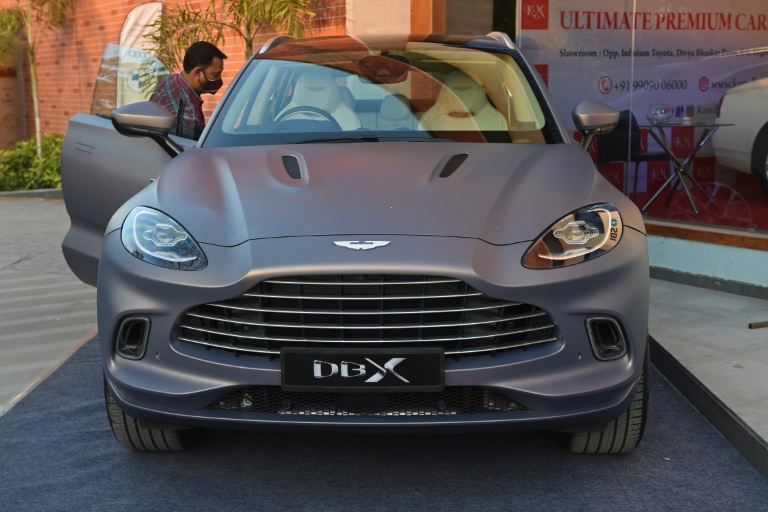
Aston Martin losses deepen despite rising car sales

British luxury carmaker Aston Martin Lagonda on Wednesday revealed its third-quarter net losses more than doubled on supply-chain disruptions, offsetting accelerating sales.

Losses after tax hit £228 million ($262 million) in the three months to the end of September, after a shortfall of almost £90 million a year earlier, according to the group which is targeting electrification of its range.

Sales of the brand, loved by fictional spy James Bond, zoomed by a third to £315.5 million, but this was propelled by a 28-percent increase in the average car price, it said in a statement.

Aston Martin faced “supply chain and logistics disruption as well as inflationary pressures impacting the broader automotive industry” which delayed car deliveries and ramped up costs, noted chairman Lawrence Stroll.

The group was hit also by a plunge in the pound that made dollar-denominated debt more expensive.

– Britishvolt –

Aston Martin has been knocked off track also by a collaboration with troubled electric car battery startup Britishvolt.

UK-based Britishvolt on Wednesday said it had secured “necessary near-term investment” after media reported on Monday that the cash-strapped firm was on the brink of collapse.

The startup, which is developing a £3.8-billion electric battery factory in northeastern England, also warned that the “weakening economic situation is negatively impacting much business investment”.

Britishvolt said staff had agreed to a temporary pay cut despite a UK cost-of-living crisis amid sky-high inflation.

Britain is due to ban the sale of new high-polluting diesel and petrol cars from 2030, forcing its car manufacturing sector to increasingly switch production to electric models.

Aston Martin meanwhile suffered vast losses in 2019 as it crashed spectacularly on weak global demand linked to China’s economic slowdown and Brexit.

Losses then deepened further as a result of fallout from the coronavirus pandemic.

The automaker was saved from bankruptcy in early 2020 by Canadian billionaire Lawrence Stroll, who is the top shareholder.

Saudi Arabia became the second-biggest investor following a capital injection from its sovereign wealth fund earlier this year.

Aston Martin is looking to shift gear into fully-electric vehicles from 2025.

Musk says may take 'weeks' for banned Twitter accounts to be restored

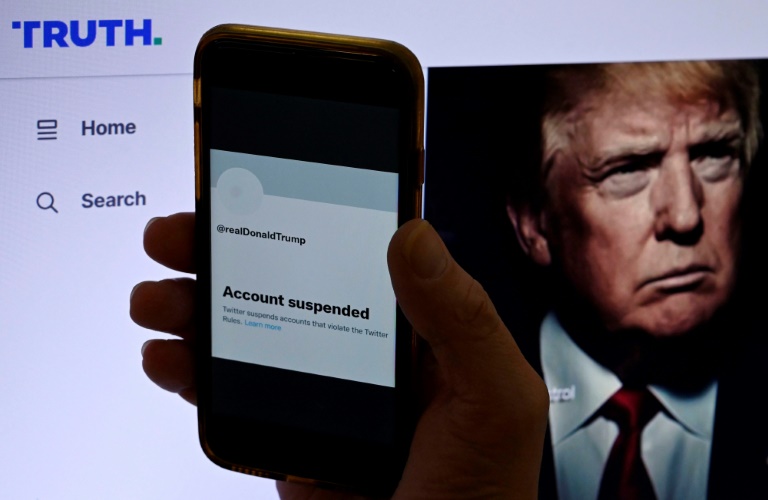
New Twitter owner Elon Musk said Wednesday that it will be “a few more weeks” before any banned accounts — such as that of former US president Donald Trump — may be restored on the platform.

Twitter users have been watching closely to see whether Musk will reinstate Trump, banned for inciting last year’s attack on the Capitol by a mob seeking to overturn the results of the 2020 election, and other deplatformed users.

The potential reinstatement of such accounts banned for violating the site’s content moderation rules has been seen as a bellwether of where Musk, a self-described “free speech absolutist,” wants to take the site he describes as a global town square.

But on Wednesday the South African billionaire said the wait will have to continue a little longer. 

“Twitter will not allow anyone who was de-platformed for violating Twitter rules back on platform until we have a clear process for doing so, which will take at least a few more weeks,” he tweeted.

That means after crucial November 8 midterm elections in the United States, which will determine control of Congress. Trump, once a prolific tweeter, retains a powerful hold on his Republican Party, and has reopened his 2020 playbook by questioning the integrity of the upcoming election.

Since Musk took Twitter private last week, Trump has suggested he would be happier sticking with his own Truth Social messaging platform.

But the former president’s network has financial issues and many political strategists believe he would find it hard to resist the mass audience and influence offered by a return to Twitter, where he was once one of the site’s biggest global draws.

The announcement comes only days after the world’s wealthiest man took sole control of the social media giant in a contentious $44 billion deal, vowing to dial back content moderation.

Musk was tweeting in response to a post from the company’s head of safety, Yoel Roth, on Twitter’s efforts to combat disinformation ahead of the elections.

“We’re staying vigilant against attempts to manipulate conversations about the 2022 US midterms,” Roth said.

Musk also said he had talked to civil society leaders “about how Twitter will continue to combat hate & harassment & enforce its election integrity policies.”

On Tuesday, Musk said the site will charge $8 per month to verify users’ accounts.

Close Bitnami banner
Bitnami