AFP

US Supreme Court's right wing skeptical of using race in college admissions

The conservative-majority US Supreme Court appeared poised on Monday to ban the use of race or ethnicity as a factor in deciding who gets into America’s elite universities.

The top US court heard nearly five hours of arguments on the use of race or ethnicity in admissions to Harvard and the University of North Carolina (UNC) — respectively the oldest private and public institutions of higher education in the country.

Harvard and UNC, like a number of other competitive US schools, consider an applicant’s race or ethnicity as a factor to ensure a diverse student body and representation of minorities, a policy known as “affirmative action.”

It emerged from the Civil Rights Movement in the late 1960s to help address the legacy of discrimination in higher education against African Americans.

The suits against Harvard and UNC were brought by a group known as Students for Fair Admissions, which claims that race-conscious admissions policies discriminate against equally qualified applicants of Asian American origin.

“The racial preference is operating to the disadvantage of Asian American applicants,” Patrick Strawbridge, attorney for Students for Fair Admissions, told the court.

“When you use race, you’re telling applicants that their race matters,” Strawbridge said, calling it “inherently divisive” and unconstitutional.

“It gets us further away from a world where the government treats race as irrelevant,” he said.

Strawbridge’s arguments appeared to get a sympathetic hearing from the conservative justices on the court, setting the stage for another potential historic reversal like in June, when the high court overturned its landmark 1973 “Roe v. Wade” decision guaranteeing a woman’s right to abortion.

Conservatives have a 6-3 majority on the court, which includes three justices nominated by former president Donald Trump, a Republican.

– ‘Don’t have a clue what it means’ –

Justice Clarence Thomas, a longtime opponent of affirmative action, said he could not think of another case “where the court deferred to the alleged discriminator.”

“I’ve heard the word diversity quite a few times and I don’t have a clue what it means,” he added. “It seems to mean everything for everyone.”

Conservative justices John Roberts, Brett Kavanaugh and Amy Coney Barrett repeatedly pressed the attorneys for Harvard and UNC about when there would be an “end point” to affirmative action and whether there were any “race-neutral” alternatives.

“Your position is that race matters because it’s necessary for diversity,” Roberts said. “It’s not going to stop mattering at some particular point.”

Justice Ketanji Brown Jackson, the first Black woman on the court, and the other two liberals pushed back against the arguments put forward by Students for Fair Admissions.

“You haven’t demonstrated or shown one situation in which all they look at is race,” Jackson said. “They are looking at the full person.”

Justice Elena Kagan said the court has previously “rightly recognized that student body diversity is a compelling interest that can justify limited consideration of race in university admissions.

“That holding recognizes a simple but profound truth — when students of all races and backgrounds come to college and live together and learn together they become better colleagues, better citizens and better leaders.

“In your view, it really wouldn’t matter if there was a precipitous decline in minority admissions,” Kagan said to Strawbridge. “Your brief says it just doesn’t matter if our institutions look like America.

“Doesn’t it?” she asked.

– ‘Cause racial diversity to plummet’ –

The administration of Democratic President Joe Biden and dozens of major American companies have weighed in on the side of the universities.

“A blanket ban on race-conscious admissions would cause racial diversity to plummet at many of our nation’s leading educational institutions,” US Solicitor General Elizabeth Prelogar told the court.

Previous courts have upheld affirmative action — in 2016 by a single vote — but the policy has been controversial from the start, and a number of white students have mounted legal challenges over the years, claiming “reverse discrimination.”

Nine states have banned affirmative action at public universities including California, where voters did so in a ballot proposition in 1996.

In a 1978 decision, the Supreme Court banned the use of quotas in university admissions as unconstitutional.

But it said race or ethnicity can be considered as one factor among others, in admitting students to ensure a diverse student body and combat historic discrimination. 

Jackson sat out the Harvard case because she has served previously on the Board of Overseers at the school, her alma mater.

The court is expected to deliver its decision by June.

Taylor Swift makes US song charts history with 'Midnights'

Taylor Swift made music history Monday, becoming the first artist ever to simultaneously nab all 10 spots on the top US song chart after the release of her album “Midnights.”

“Anti-Hero” led the charge, taking the Billboard Hot 100’s top spot.

It’s the first time in the chart’s 64-year history that a single artist has claimed the entire top 10, Billboard said.

The last artist to come close was Drake, who took nine of the coveted spots in September 2021.

“10 out of 10 of the Hot 100??? On my 10th album??? I AM IN SHAMBLES,” tweeted Swift, with a nod to her devoted fan base’s love of searching for hidden clues in her content including titles, numbers and dates.

Swift released the highly anticipated “Midnights” — her 10th studio album — on October 21, which also debuted at the top of Billboard’s main albums chart with the biggest week for a release since Adele’s “25” in 2015.

The release of “Midnights” crashed Spotify for hours, but it still set a record as the most-streamed album in a day, according to the platform.

The album’s 13 songs tell “the story of 13 sleepless nights scattered throughout my life,” Swift said.

Together, they form “a full picture of the intensities of that mystifying, mad hour.”

The three songs off “Midnights” not in the top 10 also charted, as did seven more tracks from the extended “3am edition.”

Swift’s latest album sees her returning to pop and recalling some of her earliest hits after two pandemic albums, “Folklore” and “Evermore,” leaned into folk.

It also drops as the 32-year-old makes good on her vow to re-record her first six albums so she can control their rights — a process she was contractually allowed to begin in November 2020.

She has released two of them thus far: “Fearless” and “Red.”

Taylor Swift first artist to claim entire top 10 on hot songs chart

Taylor Swift made music history Monday, becoming the first artist ever to simultaneously nab all ten of the top US song chart’s spots after the release of her album “Midnights.”

The total takeover saw her song “Anti-Hero” launch in the Billboard Hot 100’s top spot.

It’s the first time in the chart’s 64-year history that a single artist has claimed the entire top 10, Billboard said.

The last artist to come close was Drake, who took nine of the coveted spots in September 2021.

Swift released her highly anticipated album “Midnights” on October 21, also debuting at the top of Billboard’s top album’s chart with the biggest week for a release since Adele’s “25” in 2015.

Swift’s release of her 10th album crashed Spotify for hours, but “Midnights” still set a record as the most-streamed album in a day, according to the platform.

The album’s 13 songs tell “the story of 13 sleepless nights scattered throughout my life,” Swift said.

Together, they form “a full picture of the intensities of that mystifying, mad hour.”

Swift’s latest album sees her returning to pop and recalling some of her earliest hits after two pandemic albums, “Folklore” and “Evermore,” leaned into folk.

It also drops as the 32-year-old has found resounding success as she makes good on her vow to re-record her first six albums so she can control their rights.

She has released two re-records of her six albums thus far: “Fearless” and “Red.”

Swift still has four left, after she was contractually allowed to begin the process in November 2020.

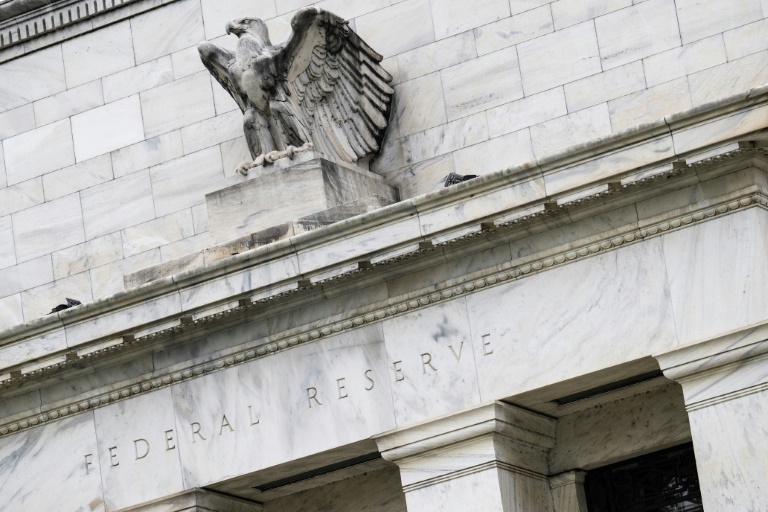
Markets mixed on hopes Fed will take foot off pedal

World stocks were mixed on Monday before a key Federal Reserve policy meeting later in the week, with investors hoping for a less hawkish tilt in plans for interest rate hikes.

Equities in Europe mostly climbed through the day, although Paris sank on news of record high eurozone inflation and slowing economic growth and US indices were a sea of red.

“Market volatility is expected to remain high throughout the week as investors have a lot to digest,” said Pierre Veyret, analyst at ActivTrades.

Investors were hopeful on reports that the Fed could take its foot off the accelerator in its push to rein in decades-high inflation.

It is expected to announce a fourth successive 75 basis point hike on Wednesday, but it could hint that officials are open to dialling back the pace of increases.

The Dow Jones was trading down throughout Monday morning, after Wall Street enjoyed strong gains before the weekend thanks to a rally in tech firms after strong earnings from Apple.

The US gathering comes as other central banks recently indicated they are willing to ease up, with Canada raising rates less than expected last week.

The Bank of England is however expected to deliver another hefty rate hike on Thursday.

“Uncertainty sums up the feeling in the markets at the moment,” said Craig Erlam, senior market analyst at OANDA.

“There’s going to be a lot to take in this week… perhaps it’s not surprising to see some jitters creeping back in.”

– Better earnings than expected –

Concerns that rapidly rising borrowing costs will send economies into a recession have hammered markets globally this year.

Yet a better-than-expected earnings season has provided recent support.

More multinationals will report this week as the financial results season rolls on, including pharmaceutical giants Moderna and Pfizer, technology behemoth Sony, and car brands BMW, Toyota and Ferrari.

But investors remain on edge over red-hot inflation, as analysts warned a recession in the eurozone appeared to be on its way.

Economic growth in the bloc fell to 0.2 percent in the third quarter, as inflation hit another record high on the back of soaring energy prices, the EU’s statistics agency said on Monday.

“It is a matter of how deep the recession will be and not if there will be one,” Oxford Economics said in an analyst note.

Consumer prices jumped by a fresh record of 10.7 percent in October, stoked by an eye-watering 41.9 percent rise in energy costs, Eurostat said.

“Double-digit inflation and decade-high interest rates do not bode well for eurozone growth during the rest of this year and into 2023,” noted economist Benjamin Trevis at think-tank CEBR.

– ‘Salt to the wounds’ –

Asia mainly advanced through Monday, although Hong Kong and Shanghai sank on concerns over the economic impact of Chinese Covid restrictions.

Beijing reported a contraction in factory activity as sweeping pandemic restrictions paralysed major industrial cities.

That also weighed heavily on oil because China is a major global consumer.

“Although these data points are weaker than expected, it should be no surprise given those broad-based Covid-related restrictions,” said Stephen Innes, managing partner at SPI Asset Management.

“Negative news from the real estate sector is adding salt to the economic wounds.”

– Key figures around 1640 GMT –

New York – Dow: DOWN 0.4 percent at 32,720.04 points

EURO STOXX 50: UP 0.1 percent at 3,617.54

London – FTSE 100: UP 0.7 percent at 7,094.53 (close)

Frankfurt – DAX: UP 0.1 percent at 13,253.74 (close)

Paris – CAC 40: DOWN 0.1 percent at 6,266.77 (close)

Tokyo – Nikkei 225: UP 1.8 percent at 27,587.46 (close)

Hong Kong – Hang Seng Index: DOWN 1.2 percent at 14,687.02 (close)

Shanghai – Composite: DOWN 0.8 percent at 2,893.48 (close)

Euro/dollar: DOWN at $0.9888 from $0.9965 on Friday

Pound/dollar: DOWN at $1.1491 from $1.1615 

Dollar/yen: UP at 148.62 yen from 147.60 yen

Euro/pound: UP at 86.04 pence from 85.80 pence

West Texas Intermediate: DOWN 1.3 percent at $87.90 per barrel

Brent North Sea crude: DOWN 0.4 percent at $96.31 per barrel

burs-rox/raz

Markets mixed on hopes Fed will take foot off pedal

World stocks were mixed on Monday before a key Federal Reserve policy meeting later in the week, with investors hoping for a less hawkish tilt in plans for interest rate hikes.

Equities in Europe mostly climbed through the day, although Paris sank on news of record high eurozone inflation and slowing economic growth and US indices were a sea of red.

“Market volatility is expected to remain high throughout the week as investors have a lot to digest,” said Pierre Veyret, analyst at ActivTrades.

Investors were hopeful on reports that the Fed could take its foot off the accelerator in its push to rein in decades-high inflation.

It is expected to announce a fourth successive 75 basis point hike on Wednesday, but it could hint that officials are open to dialling back the pace of increases.

The Dow Jones was trading down throughout Monday morning, after Wall Street enjoyed strong gains before the weekend thanks to a rally in tech firms after strong earnings from Apple.

The US gathering comes as other central banks recently indicated they are willing to ease up, with Canada raising rates less than expected last week.

The Bank of England is however expected to deliver another hefty rate hike on Thursday.

“Uncertainty sums up the feeling in the markets at the moment,” said Craig Erlam, senior market analyst at OANDA.

“There’s going to be a lot to take in this week… perhaps it’s not surprising to see some jitters creeping back in.”

– Better earnings than expected –

Concerns that rapidly rising borrowing costs will send economies into a recession have hammered markets globally this year.

Yet a better-than-expected earnings season has provided recent support.

More multinationals will report this week as the financial results season rolls on, including pharmaceutical giants Moderna and Pfizer, technology behemoth Sony, and car brands BMW, Toyota and Ferrari.

But investors remain on edge over red-hot inflation, as analysts warned a recession in the eurozone appeared to be on its way.

Economic growth in the bloc fell to 0.2 percent in the third quarter, as inflation hit another record high on the back of soaring energy prices, the EU’s statistics agency said on Monday.

“It is a matter of how deep the recession will be and not if there will be one,” Oxford Economics said in an analyst note.

Consumer prices jumped by a fresh record of 10.7 percent in October, stoked by an eye-watering 41.9 percent rise in energy costs, Eurostat said.

“Double-digit inflation and decade-high interest rates do not bode well for eurozone growth during the rest of this year and into 2023,” noted economist Benjamin Trevis at think-tank CEBR.

– ‘Salt to the wounds’ –

Asia mainly advanced through Monday, although Hong Kong and Shanghai sank on concerns over the economic impact of Chinese Covid restrictions.

Beijing reported a contraction in factory activity as sweeping pandemic restrictions paralysed major industrial cities.

That also weighed heavily on oil because China is a major global consumer.

“Although these data points are weaker than expected, it should be no surprise given those broad-based Covid-related restrictions,” said Stephen Innes, managing partner at SPI Asset Management.

“Negative news from the real estate sector is adding salt to the economic wounds.”

– Key figures around 1640 GMT –

New York – Dow: DOWN 0.4 percent at 32,720.04 points

EURO STOXX 50: UP 0.1 percent at 3,617.54

London – FTSE 100: UP 0.7 percent at 7,094.53 (close)

Frankfurt – DAX: UP 0.1 percent at 13,253.74 (close)

Paris – CAC 40: DOWN 0.1 percent at 6,266.77 (close)

Tokyo – Nikkei 225: UP 1.8 percent at 27,587.46 (close)

Hong Kong – Hang Seng Index: DOWN 1.2 percent at 14,687.02 (close)

Shanghai – Composite: DOWN 0.8 percent at 2,893.48 (close)

Euro/dollar: DOWN at $0.9888 from $0.9965 on Friday

Pound/dollar: DOWN at $1.1491 from $1.1615 

Dollar/yen: UP at 148.62 yen from 147.60 yen

Euro/pound: UP at 86.04 pence from 85.80 pence

West Texas Intermediate: DOWN 1.3 percent at $87.90 per barrel

Brent North Sea crude: DOWN 0.4 percent at $96.31 per barrel

burs-rox/raz

Ukraine hit by water, power cuts after Russian missile strikes

Ukraine suffered sweeping blackouts and water supplies were cut for 80 percent of Kyiv residents on Monday after another wave of Russian missile strikes on key infrastructure.

The Ukrainian army said “more than 50” cruise missiles were launched at targets across the country, days after Russia blamed Ukraine for drone attacks on its fleet in the Black Sea.

The army said many missiles were shot down by air defences but Prime Minister Denys Shmygal said they had caused power cuts in “hundreds” of areas across seven Ukrainian regions.

Several blasts were heard in the capital Kyiv.

“Currently, due to the emergency situation in Kyiv, 80 percent of consumers remain without water supply,” the city’s mayor Vitali Klitschko said on Telegram.

“Engineers are also working to restore power to 350,000 homes in Kyiv that were left without electricity,” he added.

In the west of Kyiv, an AFP journalist saw over 100 people waiting patiently to collect water from a park fountain after their supply was cut off by the Russian attack.

All of them carried empty plastic bottles to be filled.

“Russian terrorists have again launched a massive attack against electricity installations,” said the deputy head of Ukraine’s presidency, Kyrylo Tymoshenko.

Ukrainian Foreign Minister Dmytro Kuleba said on Twitter: “Instead of fighting on the battlefield, Russia fights civilians.”

The Russian army confirmed it had carried out cruise missile strikes and said they had all reached their intended targets.

– ‘Cold winter ahead’ –

Three missiles struck a site to the north of Kyiv, a soldier close to the target told AFP.

“It is dangerous here because there could be more strikes,” the soldier said at a blocked crossroads.

In a nearby town, Mila Ryabova, 39, told AFP she was woken by between eight and 10 “powerful explosions”.

“We were together with my family, preparing my daughter for school, but now there is no electricity in our house and at school,” said Ryabova, a translator.

“I’m not afraid of anything. (Some people) are still in shelters now, but not us. 

“But we are worrying and talking about opportunities to move abroad, because there is a cold winter ahead. We may not have electricity, heat supply. It can be hard to handle, especially with a small child.”

Previous strikes this month have already destroyed around a third of Ukraine’s power stations.

In Moldova, the government said a Russian missile shot down by Ukrainian air defences fell on a village in the north of the country, but without causing any injuries.

The country’s interior ministry said the missile fell on the village of Naslavcea close to the Ukrainian border.

– Grain deal –

Monday’s attack comes after Russia pulled out of a landmark agreement that allowed vital grain shipments via a maritime safety corridor. 

The July deal to unlock grain exports signed between warring nations Russia and Ukraine — and brokered by Turkey and the United Nations — is critical to easing the global food crisis caused by the conflict.

But Russia announced Saturday it would suspend its participation in the deal after accusing Kyiv of a “massive” drone attack on its Black Sea fleet, which Ukraine labelled a “false pretext”.

Sevastopol in Moscow-annexed Crimea has been targeted several times in recent months and serves as the fleet’s headquarters and a logistical hub for operations in Ukraine.

Despite Russia’s decision, at least 10 cargo ships loaded with grain and other agricultural products left Ukrainian ports Monday, according to a marine traffic website.

But Kremlin spokesman Dmitry Peskov warned that continuing grain exports without Russian participation was “hardly feasible”.

“It takes on a different character, much more risky, dangerous,” he said.

In all, 12 ships were due to leave Ukraine on Monday and four were to head to the country, according to the Joint Coordination Centre that has been overseeing the agreement. 

“Civilian cargo ships can never be a military target or held hostage. The food must flow,” Amir Abdulla, UN Coordinator for the Black Sea Grain Initiative, said on Twitter. 

Turkish President Recep Tayyip Erdogan, whose country has stayed neutral throughout the eight-month war in Ukraine, vowed to pursue efforts to keep the agreement in force despite Russia’s moves.

“Although Russia acts hesitantly… we will resolutely continue our efforts to serve humanity,” Erdogan said in a televised address.

burs/dt/raz

Italy surprise GDP jump comes as new PM Meloni prepares budget

Italy posted better-than-expected quarterly growth on Monday, a surprise bump for new Prime Minister Giorgia Meloni that staves off — for now — an expected recession in Europe’s third-largest economy.

In its third quarter, gross domestic product (GDP) grew by 0.5 percent over the second quarter, compared to the slight decline that had been anticipated by the previous government of Mario Draghi. 

That rise — according to preliminary estimates by national statistics institute Istat — outpaced the Eurozone average of a rise of 0.2 percent and the 0.3 percent Germany published Friday.

Nicola Nobile of Oxford Economics told AFP it was due to a surge in “household consumption, especially in services such as tourism”.

“But like other countries in the eurozone, Italy should enter a recession this winter in a context of rising interest rates and inflation,” he said. 

Regardless, the quarterly surprise comes at the right time for Meloni, leader of the post-fascist Brothers of Italy party, whose first budget is due before the European Commission by the end of November.

– Balancing act –

On her first visit to Brussels on Thursday, where she will be received by European Commission President Ursula von der Leyen, Meloni is expected to pledge her willingness to curb deficits while maintaining the costly election promises of her right-wing coalition. 

Hailing as she does from a historically Eurosceptic party, her election has been closely watched elsewhere in Europe.

The balancing act for Italy — the first beneficiary of the EU’s post-Covid stimulus package — comes against a global backdrop of rising interest rates, record inflation, the energy crisis and the war in Ukraine. 

During the election campaign, she pledged not to swell the budget of a country long plagued by low growth and huge debt.

Still, while the Draghi government forecast a public deficit of 3.4 percent of GDP next year, Giorgia Meloni plans to raise the bar.

According to the Italian press, she is aiming for a deficit of 4.5 percent, or an additional 21 billion euros ($21 billion) to be financed by debt. 

A large part of the budget will be devoted to measures aimed at mitigating soaring energy prices for businesses and households, the new government’s top priority.

– In small doses – 

At the helm is Economy Minister Giancarlo Giorgetti, who served as economic development minister under Draghi and is considered a moderate within Matteo Salvini’s far-right League. 

The coalition’s flagship measure — extending a 15 percent flat tax for the self-employed to those with annual incomes of 100,000 euros, instead of the current 65,000 euros — could be limited at first and then extended to other incomes.  

Funds must also be made available to lower the retirement age, which, in the absence of new measures, would automatically rise from 64 to 67 in 2023, as provided for in a 2011 reform.

Salvini has proposed recovering one billion euros with a six-month hiatus in Italy’s controversial basic income — a minimum payment which goes to Italy’s hardest up, including the unemployed, those who cannot work because of disabilities or retirees who live under a basic income level.

Salvini’s contentious proposal to save cash is to cut the income for six months to an estimated 900,000 beneficiaries who are capable of working but currently not.

But the last word will go to Giorgia Meloni.  

The challenge for the premier will be “to ensure the support of the League, while neutralising in part its leader” Salvini, who could undermine the “serious image” Meloni wants to put forward, said Credit Agricole analyst Sofia Tozy. 

Deal complete, Twitter-Musk litigants ask judge to dismiss suit

Attorneys in the saga over Elon Musk’s Twitter takeover have asked a Delaware court to dismiss the litigation following the deal’s closure, according to court documents released Monday.

“Yesterday evening, Defendants and Twitter closed the transaction contemplated by the merger agreement dated April 25, 2022,” said the October 28 letter from Musk’s attorney in the case to Judge Kathaleen McCormick.

“In light of this development, Defendants and Twitter have agreed to dismiss their claims and counterclaims as set forth in the stipulation and proposed order of dismissal submitted with this letter.”

Twitter sued Musk in the Delaware court in July after the unpredictable billionaire tried to walk away from the April deal to acquire the social media company for $44 billion.

But with an October trial date looming, Musk revived the deal in early October, ultimately sealing the takeover last week.

After taking over, Musk immediately dismissed senior Twitter leaders and said he would appoint a “content moderation council.”

Deal complete, Twitter-Musk litigants ask judge to dismiss suit

Attorneys in the saga over Elon Musk’s Twitter takeover have asked a Delaware court to dismiss the litigation following the deal’s closure, according to court documents released Monday.

“Yesterday evening, Defendants and Twitter closed the transaction contemplated by the merger agreement dated April 25, 2022,” said the October 28 letter from Musk’s attorney in the case to Judge Kathaleen McCormick.

“In light of this development, Defendants and Twitter have agreed to dismiss their claims and counterclaims as set forth in the stipulation and proposed order of dismissal submitted with this letter.”

Twitter sued Musk in the Delaware court in July after the unpredictable billionaire tried to walk away from the April deal to acquire the social media company for $44 billion.

But with an October trial date looming, Musk revived the deal in early October, ultimately sealing the takeover last week.

After taking over, Musk immediately dismissed senior Twitter leaders and said he would appoint a “content moderation council.”

Covid outbreak traps visitors at Shanghai Disneyland

Shanghai Disney Resort abruptly shut its doors Monday as Chinese authorities imposed a snap lockdown, trapping guests who are not permitted to leave until they test negative for Covid-19.

China is the last major economy wedded to a zero-Covid policy, with authorities brandishing snap lockdowns, mass testing and lengthy quarantines in an effort to stamp out emerging outbreaks.

But new variants have tested local officials’ ability to snuff out flare-ups faster than they can spread, causing much of the country to live under an ever-changing mosaic of Covid curbs.

Visitors to Shanghai Disney Resort are not allowed to leave “until on-site testing returns a negative result”, the city government said in an online notice on Monday.

It added that those who had visited the park since Thursday must obtain three negative Covid tests over three successive days and “avoid participating in group activities”.

The announcement came after Disney said it was “temporarily closing with immediate effect… in accordance with disease control requirements”.

The sprawling 390-hectare (960 acres) theme park and resort includes Shanghai Disneyland, Disneytown and Wishing Star Park. The resort had previously said that it was operating at reduced capacity due to Covid restrictions.

“We will notify guests as soon as we have a confirmed date to resume operations,” Disney said. 

China reported 2,699 local Covid infections on Monday, including 10 asymptomatic cases in Shanghai, according to the National Health Commission.

The eastern megacity — a major hub for the world’s second-largest economy — seethed under a months-long lockdown earlier this year marked by sporadic food shortages and isolated protests.

Close Bitnami banner
Bitnami