AFP

Ukraine water, power cuts after 'massive' Russian missile attack

Ukraine suffered sweeping blackouts and water supplies were cut for 80 percent of Kyiv residents on Monday after what Ukrainian officials called another “massive” Russian missile attack on energy facilities.

“More than 50” cruise missiles were launched at targets across the country early on Monday, the Ukrainian army said on Telegram. 

“From 7:00 am (0500 GMT) on October 31, Russian occupiers carried out several waves of missile attacks against critical infrastructure in Ukraine,” the army said, adding that “44 missiles” had been shot down.

Several blasts shook the capital Kyiv, days after Russia blamed Ukraine for drone attacks on its Crimea fleet in the Black Sea.

“Currently, due to the emergency situation in Kyiv, 80 percent of consumers remain without water supply,” the city’s mayor Vitali Klitschko said on Telegram.

“Engineers are also working to restore power to 350,000 homes in Kyiv that were left without electricity,” he added.

At least five explosions were heard in the city between 8:00 am and 8:20 am local time, according to AFP journalists.

Prime Minister Denys Shmyhal said there were power cuts in “hundreds” of urban settlements across seven Ukrainian regions.

“Russian terrorists have again launched a massive attack against electricity installations,” said the deputy head of Ukraine’s presidency, Kyrylo Tymoshenko.

– ‘Cold winter ahead’ –

Near one of the sites targeted north of Kyiv, a soldier told AFP that three missiles had struck.

“It is dangerous here because there could be more strikes,” the soldier said at a blocked crossroads.

In a nearby town, Mila Ryabova, 39, told AFP she was woken by between eight and 10 “powerful explosions”.

“We were together with my family, preparing my daughter for school, but now there is no electricity in our house and at school,” said Ryabova, a translator.

“I’m not afraid of anything. (Some people) are still in shelters now, but not us. 

“But we are worrying and talking about opportunities to move abroad, because there is a cold winter ahead. We may not have electricity, heat supply. It can be hard to handle, especially with a small child.”

Similar attacks targeted infrastructure across Ukraine, including Lviv in the west, Zaporizhzhia in the south and Kharkiv in the northeast.

The Moldovan government said a Russian missile shot down by Ukrainian air defences fell on a village in northern Moldova on Monday, but without causing any injuries.

The country’s interior ministry said the missile fell on the village of Naslavcea close to the Ukrainian border.

“Instead of fighting on the battlefield, Russia fights civilians,” Ukrainian Foreign Minister Dmytro Kuleba said on Twitter.

– Grain deal –

Monday’s attack comes after Russia pulled out of a landmark agreement that allowed vital grain shipments via a maritime safety corridor. 

The July deal to unlock grain exports signed between warring nations Russia and Ukraine — and brokered by Turkey and the United Nations — is critical to easing the global food crisis caused by the conflict.

But Russia announced Saturday it would pull out of the deal after accusing Kyiv of a “massive” drone attack on its Black Sea fleet, which Ukraine labelled a “false pretext”.

Sevastopol in Moscow-annexed Crimea has been targeted several times in recent months and serves as the fleet’s headquarters and a logistical hub for operations in Ukraine.

Despite Russia’s decision to exit the deal, two cargo ships loaded with grain and other agricultural products left Ukrainian ports on Monday, according to a marine traffic website. 

Twelve ships were due to leave Ukraine on Monday and four were to head to the country, per the Joint Coordination Center that has been overseeing the agreement. 

“Civilian cargo ships can never be a military target or held hostage. The food must flow,” Amir Abdulla, UN Coordinator for the Black Sea Grain Initiative, said on Twitter. 

“More than two million tons of food” were at sea, but stalled by Russia’s actions, Zelensky said in his evening address on Sunday.

“This is an absolutely transparent intention of Russia to return the threat of large-scale famine to Africa and Asia,” he added.

burs/dt/jm

Japan govt spent $43 bn to bolster yen in October

Japan’s finance ministry said Monday it spent $43 billion in October to bolster the value of the yen, which has tumbled against the dollar this year to lows not seen since the 1990s.

The ministry said it spent 6.35 trillion yen ($43 billion) on forex intervention operations between September 29 and October 27, without giving details of when or how often they had taken place.

It follows a similar decision to sell dollars and buy yen in September that cost 2.8 trillion yen (nearly $20 billion at the time) and was announced by authorities soon after it happened.

But the government had until now refused to confirm speculation by traders and analysts of further intervention this month, causing rollercoaster fluctuations in the yen’s value.

The currency dropped beyond 151 per dollar earlier in October for the first time in 32 years, before rebounding sharply, then gradually falling again.

Around the time of Monday’s announcement, one dollar bought 148 yen — still dramatically weaker than February levels of around 115.

Behind the currency’s slide is the contrast between the monetary policies of the US and Japanese central banks.

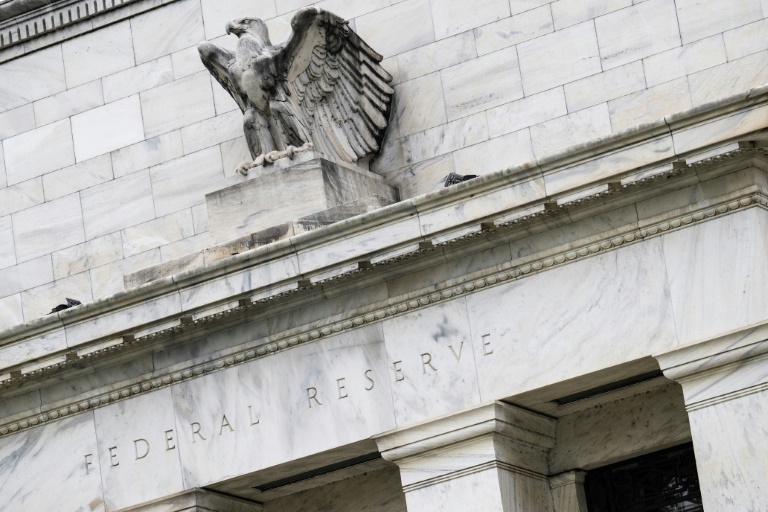
While the US Federal Reserve is fighting inflation with aggressive rate hikes, the Bank of Japan has stuck to its longstanding monetary easing programme, designed to encourage sustainable growth.

BoJ governor Haruhiko Kuroda said on Friday there would be no change “any time soon” to the bank’s ultra-loose stance.

“Traders want to test the resolve of the Bank of Japan,” Carol Kong, economist and currency strategist at Commonwealth Bank of Australia, told AFP.

The Japanese government has “a huge amount to spend on intervention”, with more than $1 trillion left in its forex coffers after September’s action, she said.

But to keep costs down, “they have instead used a lot of verbal intervention to try to keep dollar yen on the weaker side”.

Kuroda and Finance Minister Shunichi Suzuki have repeatedly vowed tough action against rapid changes in forex rates.

As well as the impact of government interventions, the yen has also strengthened slightly in recent days because investors expect the Fed to soon temper its hawkish rate hikes, Kong said.

But as long as the Bank of Japan sticks to its guns, moves by the Japanese government to strengthen the yen can only have a limited effect, said Rakuten Securities chief strategist Masayuki Kubota in a recent commentary.

“Intervention can’t stop the yen’s depreciation, but if fundamentals — the gap between Japanese and US interest rates — change, the fall of the yen will stop,” he wrote.

Japan govt spent $43 bn to bolster yen in October

Japan’s finance ministry said Monday it spent $43 billion in October to bolster the value of the yen, which has tumbled against the dollar this year to lows not seen since the 1990s.

The ministry said it spent 6.35 trillion yen ($43 billion) on forex intervention operations between September 29 and October 27, without giving details of when or how often they had taken place.

It follows a similar decision to sell dollars and buy yen in September that cost 2.8 trillion yen (nearly $20 billion at the time) and was announced by authorities soon after it happened.

But the government had until now refused to confirm speculation by traders and analysts of further intervention this month, causing rollercoaster fluctuations in the yen’s value.

The currency dropped beyond 151 per dollar earlier in October for the first time in 32 years, before rebounding sharply, then gradually falling again.

Around the time of Monday’s announcement, one dollar bought 148 yen — still dramatically weaker than February levels of around 115.

Behind the currency’s slide is the contrast between the monetary policies of the US and Japanese central banks.

While the US Federal Reserve is fighting inflation with aggressive rate hikes, the Bank of Japan has stuck to its longstanding monetary easing programme, designed to encourage sustainable growth.

BoJ governor Haruhiko Kuroda said on Friday there would be no change “any time soon” to the bank’s ultra-loose stance.

“Traders want to test the resolve of the Bank of Japan,” Carol Kong, economist and currency strategist at Commonwealth Bank of Australia, told AFP.

The Japanese government has “a huge amount to spend on intervention”, with more than $1 trillion left in its forex coffers after September’s action, she said.

But to keep costs down, “they have instead used a lot of verbal intervention to try to keep dollar yen on the weaker side”.

Kuroda and Finance Minister Shunichi Suzuki have repeatedly vowed tough action against rapid changes in forex rates.

As well as the impact of government interventions, the yen has also strengthened slightly in recent days because investors expect the Fed to soon temper its hawkish rate hikes, Kong said.

But as long as the Bank of Japan sticks to its guns, moves by the Japanese government to strengthen the yen can only have a limited effect, said Rakuten Securities chief strategist Masayuki Kubota in a recent commentary.

“Intervention can’t stop the yen’s depreciation, but if fundamentals — the gap between Japanese and US interest rates — change, the fall of the yen will stop,” he wrote.

Markets boosted by rate hopes ahead of Fed decision

Most markets rose Monday ahead of a crucial Federal Reserve policy meeting later in the week, with investors hoping for a less hawkish tilt in their plans for interest rates.

A sense of relief has settled on trading floors over the past week following a report that the US central bank could take its foot off the accelerator in its push to rein in decades-high inflation.

Adding to the positive mood has been an indication that others around the world are looking at slowing down, though the excitement was tempered Friday by record inflation readings in Europe and data showing prices remained elevated.

Asian dealers were given a strong lead from Wall Street, where all three main indexes ended more than two percent higher thanks to a rally in tech firms following a strong earnings report from Apple.

Tokyo, Seoul, Sydney, Singapore, Taipei, Mumbai, Bangkok and Wellington all piled on more than one percent, while Jakarta was also up.

London and Frankfurt were flat at the open while Paris dipped.

Hong Kong and Shanghai were hit by concerns about China’s growth outlook as the government continues its zero-Covid strategy of lockdowns, with restrictions imposed in towns and cities nationwide.

Data showing activity in the factory and services sectors contracted last month highlighted the impact the measures are having on the world’s number two economy.

The drops also come after China announced a tally of more than 2,500 new virus cases, the biggest outbreak in more than two months, fanning concerns of further painful shutdowns.

All eyes are on the Fed’s policy meeting, which ends Wednesday.

While it is widely expected to announce a fourth successive 75 basis point hike, traders will be poring over the post-meeting statement looking for a hint that officials are open to dialling back the pace of increases.

The gathering comes as other central banks have recently indicated they are willing to ease up, with Canada raising rates less than expected last week, while authorities in Australia and Europe have taken a more dovish view.

Concerns that rapidly rising borrowing costs will send economies into a recession have hammered markets globally this year.

“There has been a succession of central bank downshifts, adding to the ‘peak hawkishness’ theme running through macro markets,” said SPI Asset Management’s Stephen Innes. “And investors are entirely focused on these U-turns as peak rates get priced in. 

“So, people don’t want to miss the stock market rally wagon, especially if the Fed conveys a similar policy downshift this week, sending the rally into overdrive as pivot procrastinators will be forced to chase.”

The policy decision is followed Friday by the release of US jobs figures, which will give a fresh snapshot of the economy in light of rising prices and interest rates.

A better-than-expected earnings season has also provided support to global markets, easing concerns that tighter monetary policies would hammer firms’ bottom lines, though big-name tech giants have taken a blow.

National Australia Bank’s Rodrigo Catril said more than 70 percent of companies that had reported had beaten forecasts, though he added that while markets had risen over the past month, some traders remained cautious.

“Those with a positive inclination may look at October’s equity performance as a sign of a new uptrend while others would suggest we have not yet seen the worst given the lag effects from monetary policy and the prospect of still more tightening to come,” he said in a note.

– Key figures around 0820 GMT –

Tokyo – Nikkei 225: UP 1.8 percent at 27,587.46 (close)

Hong Kong – Hang Seng Index: DOWN 1.2 percent at 14,687.02 (close)

Shanghai – Composite: DOWN 0.8 percent at 2,893.48 (close)

London – FTSE 100: FLAT at 7,046.37

Euro/dollar: DOWN at $0.9928 from $0.9967 on Friday

Pound/dollar: DOWN at $1.1570 from $1.1618 

Dollar/yen: UP at 148.01 yen from 147.46 yen

Euro/pound: UP at 85.80 pence from 85.77 pence

West Texas Intermediate: DOWN 0.5 percent at $87.44 per barrel

Brent North Sea crude: DOWN 0.5 percent at $95.30 per barrel

New York – Dow: UP 2.6 percent at 32,861.80 (close)

Markets boosted by rate hopes ahead of Fed decision

Most markets rose Monday ahead of a crucial Federal Reserve policy meeting later in the week, with investors hoping for a less hawkish tilt in their plans for interest rates.

A sense of relief has settled on trading floors over the past week following a report that the US central bank could take its foot off the accelerator in its push to rein in decades-high inflation.

Adding to the positive mood has been an indication that others around the world are looking at slowing down, though the excitement was tempered Friday by record inflation readings in Europe and data showing prices remained elevated.

Asian dealers were given a strong lead from Wall Street, where all three main indexes ended more than two percent higher thanks to a rally in tech firms following a strong earnings report from Apple.

Tokyo, Seoul, Sydney, Singapore, Taipei, Mumbai, Bangkok and Wellington all piled on more than one percent, while Jakarta was also up.

London and Frankfurt were flat at the open while Paris dipped.

Hong Kong and Shanghai were hit by concerns about China’s growth outlook as the government continues its zero-Covid strategy of lockdowns, with restrictions imposed in towns and cities nationwide.

Data showing activity in the factory and services sectors contracted last month highlighted the impact the measures are having on the world’s number two economy.

The drops also come after China announced a tally of more than 2,500 new virus cases, the biggest outbreak in more than two months, fanning concerns of further painful shutdowns.

All eyes are on the Fed’s policy meeting, which ends Wednesday.

While it is widely expected to announce a fourth successive 75 basis point hike, traders will be poring over the post-meeting statement looking for a hint that officials are open to dialling back the pace of increases.

The gathering comes as other central banks have recently indicated they are willing to ease up, with Canada raising rates less than expected last week, while authorities in Australia and Europe have taken a more dovish view.

Concerns that rapidly rising borrowing costs will send economies into a recession have hammered markets globally this year.

“There has been a succession of central bank downshifts, adding to the ‘peak hawkishness’ theme running through macro markets,” said SPI Asset Management’s Stephen Innes. “And investors are entirely focused on these U-turns as peak rates get priced in. 

“So, people don’t want to miss the stock market rally wagon, especially if the Fed conveys a similar policy downshift this week, sending the rally into overdrive as pivot procrastinators will be forced to chase.”

The policy decision is followed Friday by the release of US jobs figures, which will give a fresh snapshot of the economy in light of rising prices and interest rates.

A better-than-expected earnings season has also provided support to global markets, easing concerns that tighter monetary policies would hammer firms’ bottom lines, though big-name tech giants have taken a blow.

National Australia Bank’s Rodrigo Catril said more than 70 percent of companies that had reported had beaten forecasts, though he added that while markets had risen over the past month, some traders remained cautious.

“Those with a positive inclination may look at October’s equity performance as a sign of a new uptrend while others would suggest we have not yet seen the worst given the lag effects from monetary policy and the prospect of still more tightening to come,” he said in a note.

– Key figures around 0820 GMT –

Tokyo – Nikkei 225: UP 1.8 percent at 27,587.46 (close)

Hong Kong – Hang Seng Index: DOWN 1.2 percent at 14,687.02 (close)

Shanghai – Composite: DOWN 0.8 percent at 2,893.48 (close)

London – FTSE 100: FLAT at 7,046.37

Euro/dollar: DOWN at $0.9928 from $0.9967 on Friday

Pound/dollar: DOWN at $1.1570 from $1.1618 

Dollar/yen: UP at 148.01 yen from 147.46 yen

Euro/pound: UP at 85.80 pence from 85.77 pence

West Texas Intermediate: DOWN 0.5 percent at $87.44 per barrel

Brent North Sea crude: DOWN 0.5 percent at $95.30 per barrel

New York – Dow: UP 2.6 percent at 32,861.80 (close)

US, China discuss relations, war in Ukraine

US Secretary of State Antony Blinken and Chinese Foreign Minister Wang Yi discussed the rivalry between the two superpowers and Russia’s war in Ukraine in a call Sunday, the State Department and Beijing’s foreign ministry said.

The top diplomats talked about the need to “responsibly manage the competition between our two countries,” Blinken said in a tweet.

They also discussed the need for Beijing and Washington to keep open lines of communications and held talks about the war in Ukraine, the US State Department said.

Blinken “raised Russia’s war against Ukraine and the threats it poses to global security and economic stability,” State Department spokesman Ned Price said in a statement.

China has steadfastly avoided criticizing Russia for invading Ukraine and instead blames the United States and NATO for the war.

The call comes as relations between the two superpowers nosedive over Taiwan and a litany of other issues, and is the first between the diplomats since Blinken warned China was speeding up its plans to retake the democratic self-ruled island.

Beijing said Wang had raised on the call recent sanctions by the US on China aimed at limiting its access to high-end semiconductors with military uses, and had called for “diplomatic efforts” in Ukraine.

“The US side should stop its efforts to contain and suppress China, and not create new obstacles to the relationship between the two countries,” a readout from the Chinese foreign ministry said.

“Wang Yi pointed out that bringing China-US relations back to the track of stable development is not only in the common interests of China and the US, but also the general expectation of the international community,” it added.

Stellantis China Jeep joint venture to file for bankruptcy

A Chinese joint venture producing Jeep SUVs for Stellantis will file for bankruptcy, the European carmaker said Monday, after its chief executive complained earlier this month political tensions with the West were affecting the business environment.

Earlier this month Carlos Tavares had said the auto giant would consider ending production in China, questioning whether the stability of relations between Beijing and the world could be guaranteed.

Shareholders have given their approval for the joint venture to file for bankruptcy “in a loss-making context”, Stellantis said.

The carmaker had terminated the Jeep joint venture with local partner Guangzhou Automobile Group (GAC) in July, and is in talks with local partner Dongfeng about its Peugeot and Citroen brands.

The Jeep joint venture’s “assets were no longer sufficient to pay off all debts”, GAC said in a separate filing to the Hong Kong stock exchange on Monday, confirming that the venture would file for bankruptcy.

“Affected by factors including decline in product competitiveness, (the GAC-Stellantis venture’s) production and operations have gradually fallen into difficulties,” GAC said.

Unlike German rival Volkswagen, which sold three million cars in China last year, Stellantis has never broken through there.

The company aims for revenues of 20 billion euros ($19.6 billion) in China by 2030 with its 14 brands, but Tavares earlier this month complained of unequal treatment from Beijing.

“The red carpet is rolled out for Chinese manufacturers in Europe, and that’s not how we’re welcomed in China,” he told reporters at the Paris Motor Show.

Stellantis China Jeep joint venture to file for bankruptcy

A Chinese joint venture producing Jeep SUVs for Stellantis will file for bankruptcy, the European carmaker said Monday, after its chief executive complained earlier this month political tensions with the West were affecting the business environment.

Earlier this month Carlos Tavares had said the auto giant would consider ending production in China, questioning whether the stability of relations between Beijing and the world could be guaranteed.

Shareholders have given their approval for the joint venture to file for bankruptcy “in a loss-making context”, Stellantis said.

The carmaker had terminated the Jeep joint venture with local partner Guangzhou Automobile Group (GAC) in July, and is in talks with local partner Dongfeng about its Peugeot and Citroen brands.

The Jeep joint venture’s “assets were no longer sufficient to pay off all debts”, GAC said in a separate filing to the Hong Kong stock exchange on Monday, confirming that the venture would file for bankruptcy.

“Affected by factors including decline in product competitiveness, (the GAC-Stellantis venture’s) production and operations have gradually fallen into difficulties,” GAC said.

Unlike German rival Volkswagen, which sold three million cars in China last year, Stellantis has never broken through there.

The company aims for revenues of 20 billion euros ($19.6 billion) in China by 2030 with its 14 brands, but Tavares earlier this month complained of unequal treatment from Beijing.

“The red carpet is rolled out for Chinese manufacturers in Europe, and that’s not how we’re welcomed in China,” he told reporters at the Paris Motor Show.

Hong Kong to explore legalising crypto for retail investors

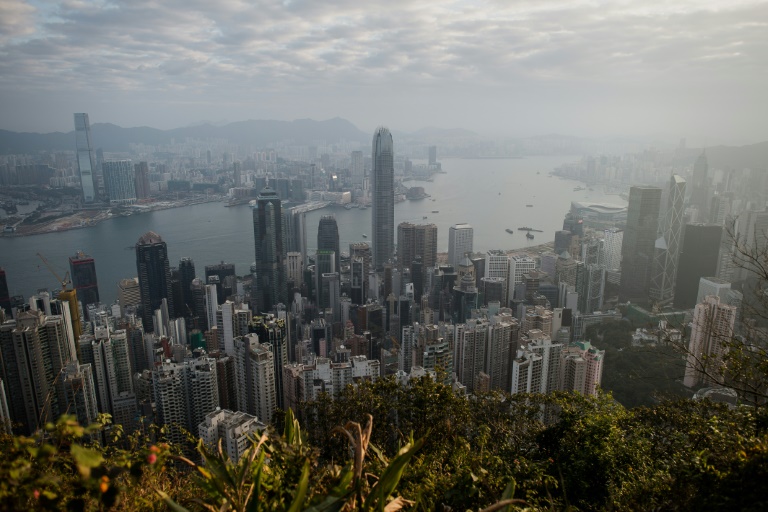
Hong Kong is “back in business” and exploring whether to legalise crypto trading by retail investors, the city’s finance chief announced Monday, kicking off a week of conferences aimed at resuscitating the Chinese hub’s image.

In contrast to mainland China where crypto has been all but banned, Hong Kong is looking to relax regulations and claw back some of the business that has left.

Years of strict pandemic controls and a political crackdown have hammered the Asian finance hub’s economy and sparked an exodus of talent that authorities say they now want to reverse.

A fintech conference opened on Monday and will be followed on Wednesday by a finance summit attended by some of the world’s top bankers.

“Hong Kong is open and inclusive towards the global community of innovators engaging in virtual asset businesses,” finance secretary Paul Chan told delegates at the fintech conference.

“In a great many ways, we are telling the world that we are back in business,” he added, in a speech that had to be delivered remotely after he caught Covid last week during an overseas trip.

In a new policy statement the government said it would launch a consultation to explore how the retail segment “may be given a suitable degree of access”. It added that Hong Kong was willing to review “property rights for tokenised assets and the legality of smart contracts”.

Currently Hong Kong restricts exchanges to clients with portfolios of at least HK$8 million ($1 million). 

Expanding permission to retail investors would allow far more regular residents to invest in cryptocurrencies and virtual assets.But that carries its own risks. 

There has been a global push to regulate the crypto market and protect investors following wild swings and a string of high-profile collapses.

Critics say crypto is an ideal tool to generate investment bubbles, hide illicit wealth and enable scams.

China, once one of the world’s largest crypto markets, banned transactions of  digital currencies in 2021.

Singapore recently strengthened regulations around retail transactions after a number of crypto exchanges imploded, including in the city state. 

Meanwhile, Japan has recently relaxed some of its more conservative rules on listing tokens.

Given its position as a gateway for China to the international markets, Hong Kong was initially something of a crypto hub.

The city then introduced a voluntary licensing regime in 2018 for big exchanges but only two were approved for permits — BC Technology and HashKey.

One of the biggest exchanges that used to be in the city, FTX, moved to the Bahamas last year.

Hong Kong to explore legalising crypto for retail investors

Hong Kong is “back in business” and exploring whether to legalise crypto trading by retail investors, the city’s finance chief announced Monday, kicking off a week of conferences aimed at resuscitating the Chinese hub’s image.

In contrast to mainland China where crypto has been all but banned, Hong Kong is looking to relax regulations and claw back some of the business that has left.

Years of strict pandemic controls and a political crackdown have hammered the Asian finance hub’s economy and sparked an exodus of talent that authorities say they now want to reverse.

A fintech conference opened on Monday and will be followed on Wednesday by a finance summit attended by some of the world’s top bankers.

“Hong Kong is open and inclusive towards the global community of innovators engaging in virtual asset businesses,” finance secretary Paul Chan told delegates at the fintech conference.

“In a great many ways, we are telling the world that we are back in business,” he added, in a speech that had to be delivered remotely after he caught Covid last week during an overseas trip.

In a new policy statement the government said it would launch a consultation to explore how the retail segment “may be given a suitable degree of access”. It added that Hong Kong was willing to review “property rights for tokenised assets and the legality of smart contracts”.

Currently Hong Kong restricts exchanges to clients with portfolios of at least HK$8 million ($1 million). 

Expanding permission to retail investors would allow far more regular residents to invest in cryptocurrencies and virtual assets.But that carries its own risks. 

There has been a global push to regulate the crypto market and protect investors following wild swings and a string of high-profile collapses.

Critics say crypto is an ideal tool to generate investment bubbles, hide illicit wealth and enable scams.

China, once one of the world’s largest crypto markets, banned transactions of  digital currencies in 2021.

Singapore recently strengthened regulations around retail transactions after a number of crypto exchanges imploded, including in the city state. 

Meanwhile, Japan has recently relaxed some of its more conservative rules on listing tokens.

Given its position as a gateway for China to the international markets, Hong Kong was initially something of a crypto hub.

The city then introduced a voluntary licensing regime in 2018 for big exchanges but only two were approved for permits — BC Technology and HashKey.

One of the biggest exchanges that used to be in the city, FTX, moved to the Bahamas last year.

Close Bitnami banner
Bitnami