AFP

Twitter owner Musk tweets conspiracy theory, then deletes it

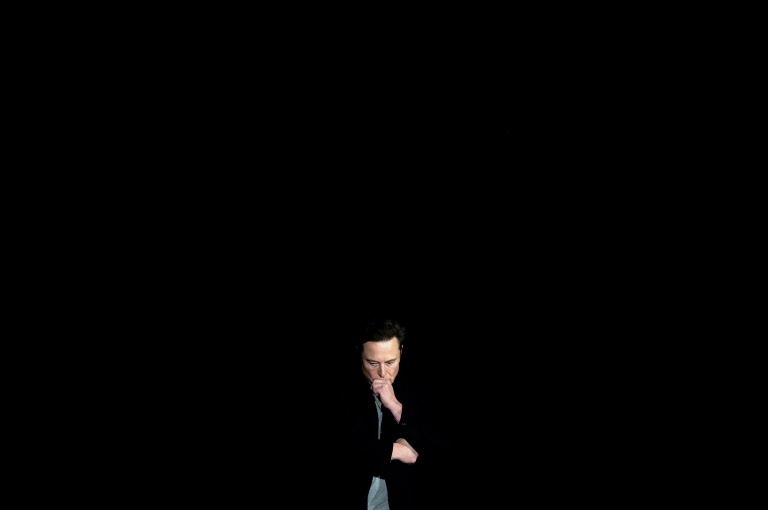
New Twitter owner Elon Musk tweeted an anti-LGBT conspiracy theory Sunday about what happened the night US Speaker Nancy Pelosi’s husband was attacked, then hours later deleted the post.

The seesaw action by Musk, a self-declared “free speech absolutist,” cast new uncertainty on the direction the social media platform will take under his new ownership. It also underscored the huge megaphone Musk now has at his disposal.

Musk early Sunday tweeted a response to Hillary Clinton, who posted a news story about the alleged attacker’s links to the far right.

“There is a tiny possibility there might be more to this story than meets the eye,” Musk told Clinton, attaching a link to the story, which is no longer accessible, by the conservative Santa Monica Observer.

Musk may have had second thoughts about the tweet because around noon a message appeared, “This Tweet was deleted by the Tweet author.” By then, Musk’s tweet had been liked 110,000 times, the online Semafor news site said.

The tweet was no longer visible Sunday afternoon on Musk’s feed.

The weekly outlet cited by Musk in his tweet has published other conspiracy theories in the past, including that a body double for Clinton was sent to a debate with Donald Trump during the 2016 election campaign, according to the Los Angeles Times.

Musk’s Sunday tweet swiftly became a focal point for critics who have been nervous about the direction in which he intends to take Twitter, the leading social media platform for global discourse and diplomacy.

Twitter’s communications department did not respond to an AFP request for comment about the tweet and whether Musk himself deleted it.

Musk, whose outspoken and controversial tweets have courted trouble in the past, has vowed to dial back content moderation, relying more on computer algorithms than human monitors. Conservatives say past moderation has unfairly targeted their views.

In a message meant to reassure jittery Twitter advertisers on his leadership, Musk said late last week that he realizes Twitter “cannot become a free-for-all hellscape where anything can be said with no consequences.”

But detractors warn that without standards, the world’s “digital town square” is at risk of becoming flooded with misinformation, with possibly perilous consequences for democracy and public health.

“Clinton: Conspiracy theories are getting people killed and we shouldn’t amplify them. Owner of Twitter: But have you considered this conspiracy theory?” wrote University of Denver political scientist Seth Masket after Musk’s Sunday tweet.

The former UN special rapporteur for freedom of expression, David Kaye, poked fun at the multiple hats Musk seems to want to wear. He wrote on Twitter: “troll elon should report this takedown to chief twit elon.” 

– Troll campaign tests Musk –

Nancy Pelosi, who is second in line to the US presidency, has said her family is “heartbroken and traumatized” after the intruder broke into the couple’s San Francisco home early Friday and attacked Paul Pelosi with a hammer, fracturing his skull.

The 82-year-old is recovering in hospital. 

President Joe Biden has said it appears the assault was “intended for Nancy,” and called out increasingly polarizing political rhetoric.

“The Republican Party and its mouthpieces now regularly spread hate and deranged conspiracy theories. It is shocking, but not surprising, that violence is the result,” Clinton said in her tweet.

Musk’s response came just hours after Twitter said the site was being targeted by a trolling campaign testing its moderation policies under the billionaire entrepreneur’s leadership.

“Twitter’s policies haven’t changed…. And we’re taking steps to put a stop to an organized effort to make people think we have,” tweeted the platform’s chief of safety and integrity, Yoel Roth.

Roth said a “small number of accounts” had posted “a ton” of hate content — including 50,000 tweets using a particular slur made by just 300 accounts.

“Nearly all” of the accounts are inauthentic, he said.

Roth also retweeted a Musk post in which the Tesla chief reiterated that “we have not yet made any changes to Twitter’s content moderation policies.”
'Black Adam' stays atop N.America box office

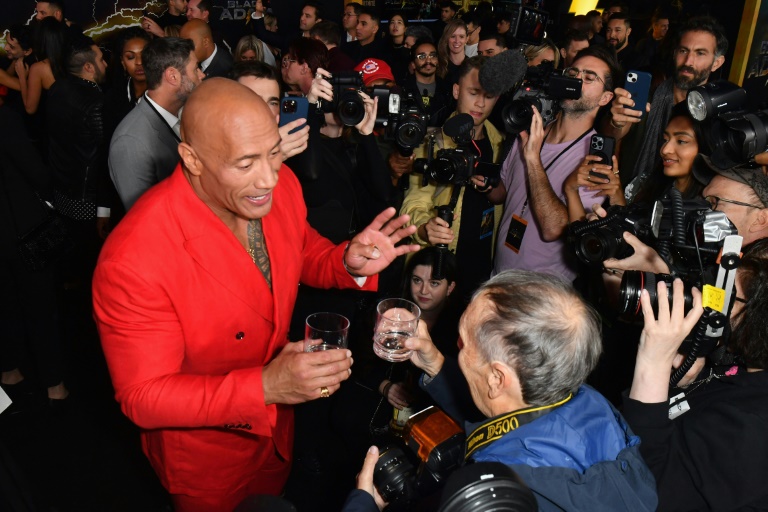
Warner Bros.’ film “Black Adam” remained atop competition for the second weekend running, hauling in a modest estimated $27.7 million in North American box office receipts, industry watcher Exhibitor Relations reported Sunday.

A feature that explores the origin story behind 2019’s “Shazam,” the DC Comics superhero, “Black Adam” stars Dwayne “The Rock” Johnson as a former slave bestowed with special powers.

Coming in second for the Friday-through-Sunday period was Universal’s “Ticket to Paradise,” a romantic comedy starring A-list stars George Clooney and Julia Roberts. The flick brought in $10 million. 

Horror films, though, scored more broadly at the box office in the run-up to Halloween.

“Four of the top 10 movies this weekend are horror films,” said David A. Gross of Franchise Entertainment Research.

“Prey for the Devil,” a Lionsgate flick, was in the number three spot, pulling in $7 million.

“This is an average opening for an original horror film … Reviews are poor,” Gross said.

Two other horror films, Paramount’s “Smile” at fourth and Universal’s “Halloween Ends” at fifth, brought in $5 million and $3.8 million respectively.

Overall, it was not a great weekend for Hollywood, with films earning an estimated $66 million, down from the $100 million from the previous weekend.

Rounding out the top 10 were

6) “Lyle, Lyle, Crocodile” ($2.8 million)

7) “Till” ($2.8 million)

8) “Terrifier 2” ($1.8 million)

9) “The Woman King” ($1.1 million)

10) “Tar” ($1 million)

Ukraine blames Russia for making grain export 'impossible'

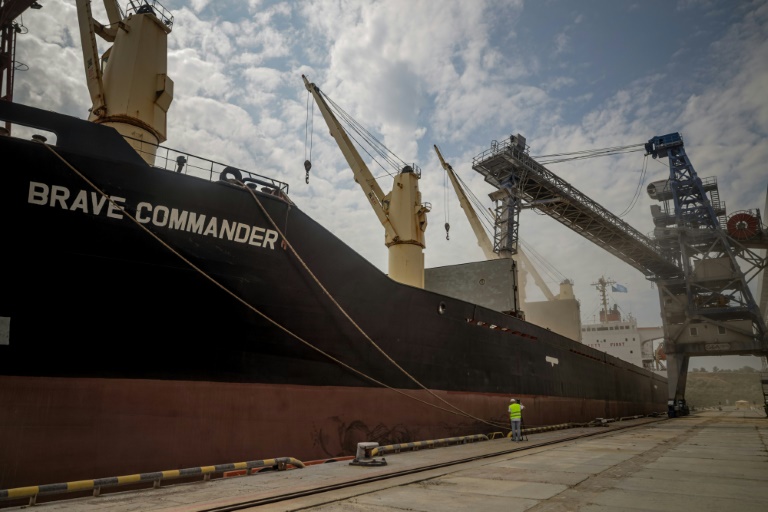
Russia’s blockade of grain exports makes it “impossible” for fully loaded ships to leave port, Ukraine charged Sunday after Moscow claimed drone attacks on its Crimea fleet had exploited the grain corridor safe zone.

Kyiv’s maritime grain exports were halted after Russia pulled out of a landmark agreement that allowed the vital shipments.

The July deal to unlock grain exports signed between Russia and Ukraine and brokered by Turkey and the United Nations, is critical to easing the global food crisis caused by the conflict.

“(A) bulk carrier loaded with 40 tons of grain was supposed to leave the Ukraine port today,” Infrastructure Minister Oleksandr Kubrakov tweeted.

“These foodstuffs were intended for Ethiopians, that are on the verge of famine. But due to the blockage of the ‘grain corridor’ by Russia the export is impossible,” the Ukrainian minister said.

The agreement had already allowed more than nine million tonnes of Ukrainian grain to be exported and was due to be renewed on November 19.

Russia’s defence ministry alleged Sunday the attack drones had “Canadian-made navigation modules”, saying it had recovered debris from some of the weapons in the sea.  

Specialists had “conducted an examination of Canadian-made navigation modules installed on the marine unmanned vehicles”, the ministry said.

On Saturday Russia announced its suspension after accusing Kyiv of a “massive” drone attack on the Black Sea fleet, which Ukraine labelled a “false pretext”.

US President Joe Biden called the move “purely outrageous” while Secretary of State Antony Blinken said Moscow was “weaponising food”.

UN Secretary-General Antonio Guterres on Sunday expressed “deep concern” about the situation, his spokesman said, and delayed his departure for an Arab League Summit in Algiers by a day “to focus on the issue”.

The EU on Sunday urged Russia to “revert its decision”.

– Enough grain to ‘feed millions’ –

The centre coordinating the logistics of the deal said in a statement that no traffic was planned for Sunday.

“A joint agreement has not been reached at the JCC for the movement of inbound and outbound vessels on 30 October,” it said. “There are more than 10 vessels both outbound and inbound waiting to enter the corridor.”

Turkey’s defence ministry later Sunday said ships would not leave Ukraine “during this period” but Turkey would continue checks of ships in Istanbul carrying Ukrainian grain “today and tomorrow”.

It also said Russia had formally notified Turkey of its suspension but “Russian personnel remained at the coordination centre” in Istanbul.

Ukraine’s foreign minister said on Twitter that Russia was blocking “two million tons of grain on 176 vessels already at sea” that he said was “enough to feed seven million people.”

He accused Moscow of having planned to “resume its hunger games” in advance and said the Black Sea explosions were “220 kilometres away from the grain corridor”.

– ‘Peddling false claims’ –

Kyiv and the UN earlier urged that the agreement remain in force.   

Ukrainian President Volodymyr Zelensky called Russia’s move “an absolutely transparent intention of Russia to return the threat of large-scale famine to Africa and Asia”.

Sevastopol in Moscow-annexed Crimea has been targeted several times in recent months and serves as the Black Sea fleet’s headquarters and a logistical hub for operations in Ukraine.

Russia’s army claimed to have “destroyed” nine aerial drones and seven maritime ones in an attack on the port early Saturday. 

It alleged British “specialists” based in the southern Ukrainian city of Ochakiv had helped prepare and train Kyiv to carry out the strike. 

In a further singling out of the UK — which Moscow sees as one of the most unfriendly Western countries — Russia said the same British unit was involved in explosions on the Nord Stream gas pipelines last month.

Britain strongly rebutted both claims, saying “the Russian Ministry of Defence is resorting to peddling false claims of an epic scale”.

Moscow’s military said ships targeted at their Crimean base were involved in the grain deal.

– ‘Massive’ attack –

Russia had recently criticised the deal, saying its own grain exports have suffered due to Western sanctions. 

Mikhail Razvozhayev, the Moscow-installed governor of Sevastopol, said Saturday’s drone attack was the “most massive” the peninsula had seen. 

Attacks on Crimea, annexed by Moscow in 2014, have increased recently as Kyiv presses a counter-offensive in the south to retake territory held by Moscow. 

In early October, Moscow’s key bridge linking Crimea to the Russian mainland was damaged by a blast that President Vladimir Putin blamed on Ukraine. 

Kyiv said Sunday its troops in the south are “holding their positions and hit the enemy in order to create conditions for further offensive actions.”

Moscow-installed authorities in Kherson, just north of Crimea, have vowed to turn the city into a fortress, preparing for an inevitable assault. 

burs/raz/gw

Twitter owner Musk tweets conspiracy theory about violent Pelosi attack

New Twitter owner Elon Musk tweeted an anti-LGBT conspiracy theory Sunday about what happened the night US Speaker Nancy Pelosi’s husband was attacked, underscoring concerns about the platform’s future after he vowed it would not become a “free-for-all hellscape.”

Musk, a self-declared “free speech absolutist,” was responding to former Democratic presidential candidate Hillary Clinton, who had tweeted to draw a line between Republicans who promote baseless conspiracy theories and the violent attack on Paul Pelosi in San Francisco.

“There is a tiny possibility there might be more to this story than meets the eye,” Musk told Clinton, attaching a link to the story, which is no longer accessible, by the conservative Santa Monica Observer.

The weekly outlet has published other conspiracy theories in the past, including that a body double for Clinton was sent to a debate with Donald Trump during the 2016 election campaign, according to the Los Angeles Times.

Musk’s tweet swiftly became a focal point for critics who have been nervous about the direction in which he intends to take Twitter, the leading platform for global discourse and diplomacy.

Musk, whose outspoken and controversial tweets have courted trouble in the past, has vowed to dial back content moderation, relying more on computer algorithms than human monitors. Conservatives say past moderation has unfairly targeted their views.

In a message meant to reassure jittery Twitter advertisers on his leadership, Musk said earlier this week that he realizes Twitter “cannot become a free-for-all hellscape where anything can be said with no consequences.”

But detractors warn that without standards, the world’s “digital town square” is at risk of becoming flooded with misinformation, with possibly perilous consequences for democracy and public health.

“Clinton: Conspiracy theories are getting people killed and we shouldn’t amplify them. Owner of Twitter: But have you considered this conspiracy theory?” wrote University of Denver political scientist Seth Masket after Musk’s Sunday tweet.

Masket later tweeted a screenshot suggesting he had complained to Twitter about Musk’s tweet, adding: “Somehow I doubt much will come of this.”

– Troll campaign tests Musk –

Nancy Pelosi, who is second in line to the US presidency, has said her family is “heartbroken and traumatized” after the intruder broke into the couple’s San Francisco home early Friday and attacked Paul Pelosi with a hammer, fracturing his skull.

The 82-year-old is recovering in hospital. 

President Joe Biden has said it appears the assault was “intended for Nancy,” and called out increasingly polarizing political rhetoric.

“The Republican Party and its mouthpieces now regularly spread hate and deranged conspiracy theories. It is shocking, but not surprising, that violence is the result,” Clinton said in her tweet.

Musk’s response came just hours after Twitter said that the site was being targeted by a trolling campaign testing its moderation policies under the billionaire’s leadership.

“Twitter’s policies haven’t changed… And we’re taking steps to put a stop to an organized effort to make people think we have,” tweeted the platform’s chief of safety and integrity, Yoel Roth.

Roth said that a “small number of accounts” had posted “a ton” of hate content — including 50,000 tweets using a particular slur made by just 300 accounts.

“Nearly all” of the accounts are inauthentic, he said.

Roth also retweeted a Musk post in which the Tesla chief reiterated that “we have not yet made any changes to Twitter’s content moderation policies.”
Twitter owner Musk tweets conspiracy theory about violent Pelosi attack

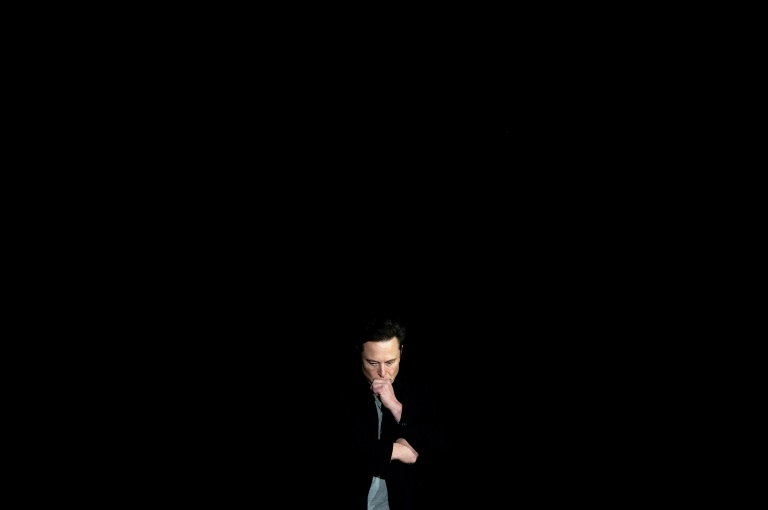
New Twitter owner Elon Musk tweeted an anti-LGBT conspiracy theory Sunday about what happened the night US Speaker Nancy Pelosi’s husband was attacked, underscoring concerns about the platform’s future after he vowed it would not become a “free-for-all hellscape.”

Musk, a self-declared “free speech absolutist,” was responding to former Democratic presidential candidate Hillary Clinton, who had tweeted to draw a line between Republicans who promote baseless conspiracy theories and the violent attack on Paul Pelosi in San Francisco.

“There is a tiny possibility there might be more to this story than meets the eye,” Musk told Clinton, attaching a link to the story, which is no longer accessible, by the conservative Santa Monica Observer.

The weekly outlet has published other conspiracy theories in the past, including that a body double for Clinton was sent to a debate with Donald Trump during the 2016 election campaign, according to the Los Angeles Times.

Musk’s tweet swiftly became a focal point for critics who have been nervous about the direction in which he intends to take Twitter, the leading platform for global discourse and diplomacy.

Musk, whose outspoken and controversial tweets have courted trouble in the past, has vowed to dial back content moderation, relying more on computer algorithms than human monitors. Conservatives say past moderation has unfairly targeted their views.

In a message meant to reassure jittery Twitter advertisers on his leadership, Musk said earlier this week that he realizes Twitter “cannot become a free-for-all hellscape where anything can be said with no consequences.”

But detractors warn that without standards, the world’s “digital town square” is at risk of becoming flooded with misinformation, with possibly perilous consequences for democracy and public health.

“Clinton: Conspiracy theories are getting people killed and we shouldn’t amplify them. Owner of Twitter: But have you considered this conspiracy theory?” wrote University of Denver political scientist Seth Masket after Musk’s Sunday tweet.

Masket later tweeted a screenshot suggesting he had complained to Twitter about Musk’s tweet, adding: “Somehow I doubt much will come of this.”

– Troll campaign tests Musk –

Nancy Pelosi, who is second in line to the US presidency, has said her family is “heartbroken and traumatized” after the intruder broke into the couple’s San Francisco home early Friday and attacked Paul Pelosi with a hammer, fracturing his skull.

The 82-year-old is recovering in hospital. 

President Joe Biden has said it appears the assault was “intended for Nancy,” and called out increasingly polarizing political rhetoric.

“The Republican Party and its mouthpieces now regularly spread hate and deranged conspiracy theories. It is shocking, but not surprising, that violence is the result,” Clinton said in her tweet.

Musk’s response came just hours after Twitter said that the site was being targeted by a trolling campaign testing its moderation policies under the billionaire’s leadership.

“Twitter’s policies haven’t changed… And we’re taking steps to put a stop to an organized effort to make people think we have,” tweeted the platform’s chief of safety and integrity, Yoel Roth.

Roth said that a “small number of accounts” had posted “a ton” of hate content — including 50,000 tweets using a particular slur made by just 300 accounts.

“Nearly all” of the accounts are inauthentic, he said.

Roth also retweeted a Musk post in which the Tesla chief reiterated that “we have not yet made any changes to Twitter’s content moderation policies.”
'Deserve to be here': Harvard students defend minority admissions

Agustin Leon-Saenz assumes his ticket to Harvard University had something to do with the race-conscious admissions policy known as affirmative action.

But make no mistake, Leon-Saenz said, “I deserve to be here.”

The 19-year-old, a second-year science and engineering student at the Ivy League school in Cambridge, Massachusetts, was born in Ecuador.

He was seven years old when his family came to the United States and he did not speak a word of English.

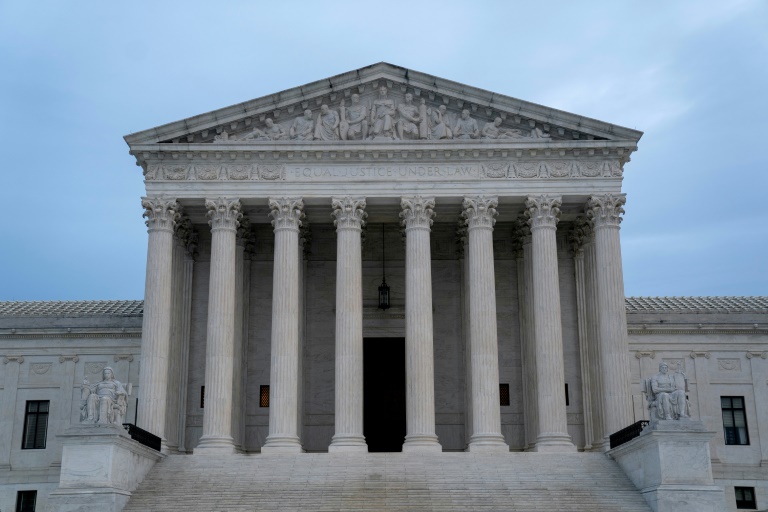
Ahead of a Supreme Court hearing on Monday that could outlaw affirmative action as discriminatory, Leon-Saenz and other Harvard students and former students defended the policy.

Harvard, like other competitive US universities, takes race into account as it seeks to ensure a diverse student body and has programs specifically designed to attract minorities.

“I applied to Harvard as a result of outreach from the undergrad minority recruitment program,” Leon-Saenz said.

Before Harvard, he attended public schools made up of mostly Black or Hispanic students.

Leon-Saenz earned excellent grades in high school and received an email one day from Harvard encouraging him to get in touch with a student at the university who was also from Ecuador.

“That was really, like, the reason I applied to Harvard because otherwise I obviously didn’t know anyone from Harvard,” he said. “To see that there was at least one other person (from Ecuador) was enough for me.”

When his application to Harvard was accepted, Leon-Saenz said he “honestly did not believe it.”

“Coming to Harvard did not feel real, attainable,” he said.

– ‘Very jarring’ –

When he did step foot on the campus of America’s oldest private university, “the change was very jarring.”

At his high school in New Mexico, most of Leon-Saenz’ classmates were of Mexican origin while at Harvard less than 12 percent of the student body is of Hispanic descent.

Leon-Saenz is the only person of Ecuadoran origin in his class and he can sometimes feel out of place.

“Some of my peers, when they see me, they know I’m Latino, and don’t necessarily see me as equal academically,” he said.

“That is the reason why I relate more to the community of immigrants and first generation low-income students.”

But Leon-Saenz said he “worked hard in school” and like others who may have benefitted from race-conscious admissions policies “we deserve to be here.”

Kylan Tatum, who is studying literature at Harvard and uses they/them pronouns, is frustrated by the “question of who deserves to be here, who doesn’t deserve to be here?”

It ignores “social factors that are influencing the ability to have good grades, test scores and extracurricular opportunities,” they said.

Tatum, whose mother is African American and father of Vietnamese origin, said they are upset with the arguments being used to challenge affirmative action before the Supreme Court.

A group known as Students for Fair Admissions has filed suits against Harvard and the University of North Carolina claiming that their race-conscious admissions policies discriminate against equally qualified applicants of Asian-American origin.

Asian-American students are underrepresented at the schools considering their record of superior academic achievement, according to the complaints.

“I am someone who is both Black and Asian and seeing some of the tactics that have been used in this case is very alarming to me,” Tatum said, calling it “weaponization of Asian American socioeconomic and educational success against other minorities.”

– ‘They learned from me’ –

Margaret Chin, an American of Chinese origin who received a degree from Harvard in 1984, said affirmative action had benefitted both her personally and her community as a whole.

Chin, whose father was a waiter and mother a garment worker, only considered applying to the Ivy League school after attending a student fair in New York City’s Chinatown where Harvard had a booth.

“It took me a little bit to adjust,” Chin said.

“But I was very lucky in my room (assignment),” she said, sharing housing with a mixed group of young Black, white and Asian women from varying social backgrounds.

“I learned about other ways of living,” she said, “and they learned from me.”

Chin, 62, a professor of sociology at Hunter College/CUNY in New York, said many Americans grow up in segregated communities, making it all the more important that institutions of higher education have diverse student bodies.

“People don’t oftentimes see people of different races or even go to elementary, middle or high school together,” she said.

If the Supreme Court strikes down affirmative action, not only minorities would suffer but the “whole population” as well, Chin said.

Annual tech gathering takes aim at crypto

One of the world’s biggest technology get-togethers kicks off in the Portuguese capital on Tuesday, with organisers saying a key aim is to ask tough questions about cryptocurrencies.

Around 100,000 people are expected to gather in Lisbon for the four-day Web Summit and related events, the first full-scale edition since 2019 following the disruption of the pandemic.

The conference attempts to bring together start-ups, investors, business leaders and agenda-broadening speakers –- linguist Noam Chomsky and heavyweight boxing champion Oleksandr Usyk are among this year’s lineup.

Several of the prime slots, though, are taken by cryptocurrency specialists led by Changpeng Zhao, boss of crypto exchange Binance.

And plenty of companies present — from start-ups to billion-dollar behemoths Yuga Labs and OpenSea — are promoting the technology that fans claim will be the future of the web, gaming and ultimately the entire financial system.

But crypto has so far been derided as a tool to generate investment bubbles, hide illicit wealth and enable scams.

Conference organiser Paddy Cosgrave told AFP there were “a lot of questions to be answered” about crypto, describing it as “largely smoke and mirrors”.

“We’ve done our best to persuade many of the leading lights in the space to come, and some of them will get a bit of a kicking on stage, we’ll see how that goes,” he added.

Crypto sceptics including actor Ben McKenzie (Gotham, The O.C.) have also been given slots.

Organisers said the event’s 70,000 tickets had sold out, with Cosgrave reckoning some 30,000 more people would be in Lisbon for side events.

– Whistleblower focus –

Zhao’s company is the dominant player in the crypto sector, but it has been repeatedly accused of trying to dodge regulatory scrutiny — claims the company has denied.

And it became embroiled in one of the biggest stories of the week, with a $500-million investment to back Elon Musk’s takeover of Twitter.

But the wider crypto sector is struggling with plunging values and flatlining interest from the public.

And the tech industry as a whole is also struggling with supply chain problems, trade disputes between the US and China, and economic volatility that has sent investors fleeing.

Cosgrave, though, played down any suggestion that conferences like his had a role in helping to stimulate investment or turn around the fortunes of the sector.

“It’s not really about the establishment or the dominant companies of today,” he said.

“It’s a gathering of companies that in the future may play some significant role.”

As usual, though, the Web Summit will host plenty of figures from the dominant companies — Amazon, Apple, Google and Meta will all be there.

But on a lower level than last year, when the conference played host to Facebook’s Nick Clegg and to whistleblower Frances Haugen, who accused their company of stoking hatred in return for clicks.

Cosgrave highlighted the event’s history of giving a platform to whistleblowers — this year Mark MacGann, who revealed details of Uber’s aggressive lobbying, will be giving a talk.

The organisers say more than 1,000 speakers will take part, giving talks on subjects from cybersecurity to artificial intelligence.

'Lot of progress' in India trade talks: UK foreign minister

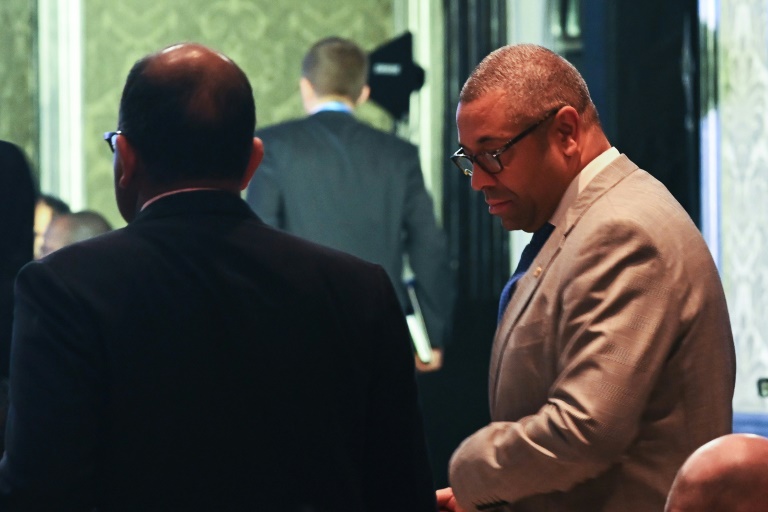
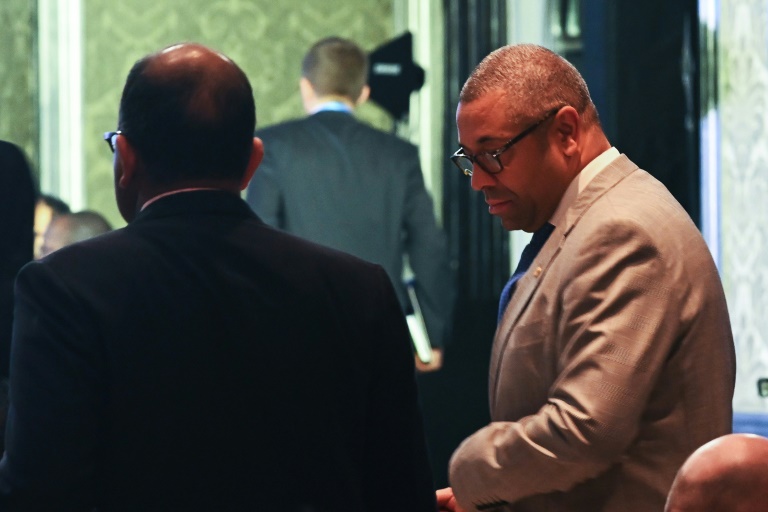
Britain’s foreign minister has insisted during a visit to India that “a lot of progress” has been made in talks on a post-Brexit free-trade deal despite negotiators missing a recent deadline.

“We have made a lot of progress in the negotiations, and we continue to work for an agreement that works for both countries,” James Cleverly said in a Times of India interview published Sunday.

“We have been very, very explicit that our partnership with India is one that matters to us and one we want to enhance and develop,” he was quoted as telling the paper during the two-day visit.

India and its former colonial ruler have been negotiating for around 18 months on a trade deal that would be an important milestone for Britain as it seeks alternative markets following its exit from the European Union.

In exchange for lowering tariffs on British imports like whisky, India wants more work and study visas for its nationals in line with similar recent deals struck between Britain and Australia and New Zealand.

But a target date for a deal of the Indian religious festival of Diwali, which began on October 24, was missed with reports saying the talks had snagged over fears among Britain’s ruling Conservatives of more immigration.

The Indian government was also irked by comments from Suella Braverman, Britain’s recently reinstated right-wing interior minister, that Indians were the largest group of people who overstayed British visas.

However, Cleverly told the Times that he saw it “as a very positive thing that so many Indians want to come and study in the UK, that Indian businessmen want to do business in the UK. It’s a cause for celebration.”

But he added: “Of course, it does mean that we must ensure our processes are right.”

Cleverly refused to be drawn on expectations that the appointment of Rishi Sunak, who is of Indian heritage, as prime minister could help boost ties.

“That said, it’s lovely to see how much excitement and enthusiasm there is about the British PM here in India,” he told the paper.

'Lot of progress' in India trade talks: UK foreign minister

Britain’s foreign minister has insisted during a visit to India that “a lot of progress” has been made in talks on a post-Brexit free-trade deal despite negotiators missing a recent deadline.

“We have made a lot of progress in the negotiations, and we continue to work for an agreement that works for both countries,” James Cleverly said in a Times of India interview published Sunday.

“We have been very, very explicit that our partnership with India is one that matters to us and one we want to enhance and develop,” he was quoted as telling the paper during the two-day visit.

India and its former colonial ruler have been negotiating for around 18 months on a trade deal that would be an important milestone for Britain as it seeks alternative markets following its exit from the European Union.

In exchange for lowering tariffs on British imports like whisky, India wants more work and study visas for its nationals in line with similar recent deals struck between Britain and Australia and New Zealand.

But a target date for a deal of the Indian religious festival of Diwali, which began on October 24, was missed with reports saying the talks had snagged over fears among Britain’s ruling Conservatives of more immigration.

The Indian government was also irked by comments from Suella Braverman, Britain’s recently reinstated right-wing interior minister, that Indians were the largest group of people who overstayed British visas.

However, Cleverly told the Times that he saw it “as a very positive thing that so many Indians want to come and study in the UK, that Indian businessmen want to do business in the UK. It’s a cause for celebration.”

But he added: “Of course, it does mean that we must ensure our processes are right.”

Cleverly refused to be drawn on expectations that the appointment of Rishi Sunak, who is of Indian heritage, as prime minister could help boost ties.

“That said, it’s lovely to see how much excitement and enthusiasm there is about the British PM here in India,” he told the paper.

'There were bodies everywhere': US soldiers survive S. Korea crush

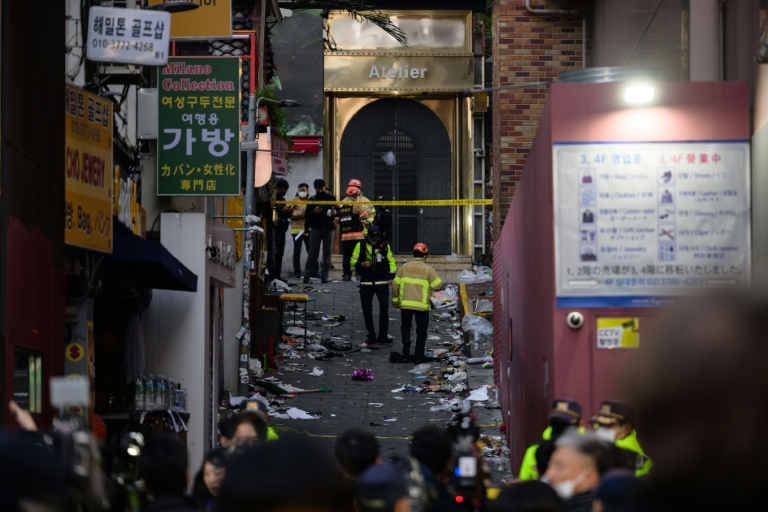
For hours, they pulled body after body out of the crushed tangles of limbs that filled the narrow Itaewon alleyway at the epicentre of South Korea’s worst ever stampede. But it was often too late.

Three off-duty American soldiers stationed in South Korea told AFP how they found themselves caught up in the crowd surge and crush that killed 151 people and injured scores more, describing scenes of chaos, suffering and death as they struggled to help.

An estimated 100,000 people attended the event, which local vendors said was “unprecedented”, but the overstretched police force, also dealing with a protest across town, only planned to deploy some 200 officers.

The three US soldiers told AFP they were part of the crowd coming down the narrow, steep alleyway that became a death trap, but they were able to escape onto a ledge-like area at the side.

But just after they managed to leap out of the crowd “it started happening — everybody just fell on top of each other like dominoes,” Jarmil Taylor, 40, told AFP.

People at the top of the alleyway were trying to force their way down, even though the street was already rammed full — and then people began to fall.

“There were people on top of people — it was layers of people. They didn’t have enough people there to help them at once,” Taylor, visibly dazed and tired, told AFP Sunday at the scene.

“People in the pile were panicking which made the situation worse. There were sounds everywhere that made it impossible — screaming people just drowned out all the sounds,” he added.

He and his friends would try to pull victims out of the crush and carry them to safety so that emergency responders could perform CPR, he said.

“We were picking a lot of people and taking them into the nearby clubs since they had finally opened them up. The clubs’ floors was filled with people laid on the ground.”

– ‘It just fell apart’ –

Washington stations some 27,000 US troops in South Korea to help protect it against the nuclear-armed North, and Taylor and his friends are based at Camp Casey in Gyeonggi.

On their week off, they decided to go to the festivities at Itaewon, but said that when they found themselves in the huge crowd, they realised something was wrong. 

“We were getting nervous too, we were in the middle of it and that’s why we got off to the side, and that’s when it just fell apart,” said Dane Beathard, 32.

People were crushed so tightly into the alleyway that emergency workers could not get them out of the packed crowd, he said.

“We helped pull people out all night … It was a long time for people stuck in there not to breathe,” Beathard said.

“All of the people crushed were in the front, where they collapsed into a pile,” he said, adding that at the worst points it was “a fifteen foot layer of people”. 

Authorities said the majority of victims were young women in their 20s.

“There were a lot of women in the crowd who got crushed,” said Jerome Augusta, 34.

“I think because they were smaller their diaphragms were crushed. And because they were panicking, which made it more chaotic,” he said.

Initially there were barely any police or emergency responders at the scene, the trio said, and the scale of the crowd meant that the people at the back had no idea that disaster was unfurling right in front of them. 

“We were screaming at them to back up, but it was too little too late,” Augusta said.

The soldiers stayed on the edge of the crush all night, desperately trying to pull people out of the piles of bodies, but said that by the time they got to them, it was often too late.

“We are not small guys but we were crushed too before we got out,” Taylor said, adding that the disaster had struck so quickly they had not managed to process what was going on.

“What you’ve got to understand is the people stuck in the front they were all on the ground — crushed. So you couldn’t push forward and trample everyone in front, so people piled up as they fell,” he said.

The trio said they felt lucky to have survived. 

“When we left there were bodies everywhere, everywhere,” the three of them told AFP.

Close Bitnami banner
Bitnami