AFP

Energy giants' billions renew windfall tax debate

The billions in profits announced by TotalEnergies and Shell on Thursday have revived the debate over windfall taxes on the thriving energy giants.

As millions struggle with higher energy bills and inflation, there have been mounting calls for a much bigger tax to be placed on energy companies that have benefitted from price fluctuations.

In Paris, TotalEnergies said surging global oil and gas prices had helped it post a massive jump in profits in the third quarter.

In London meanwhile, British energy giant Shell announced net profit totalling $6.7 billion in the third quarter.

Net profits at TotalEnergies soared 43 percent from the same period last year to $6.6 billion, with record performances for its natural gas and liquefied natural gas (LNG) activities.

The firm has now earned $17.3 billion over the first nine months of the year, more than the $16 billion in profits it posted last year.

Shell’s result Thursday compared with a loss after tax of $447 million in the July-September period last year, the company said. 

Flush with cash from revenue surging to almost $100 billion, Shell said it would buy back shares at a cost of $4 billion.

Both sets of results will fuel raging debate over sizable profits by energy firms due to the spike in prices thanks to the Russian invasion of Ukraine.

– Pressing the giants –

In France, the leftwing opposition is pressing for a windfall tax to help fund measures to protect consumers from energy price hikes.

TotalEnergies has been plagued by strikes in France that have led to petrol shortages at pumps.

“Staff are right to call for a 10-percent wage rise” after TotalEnergies’ latest declared profits, tweeted the France Unbowed (LFI) deputy Thomas Portes.

And Patrick Kanner, head of France’s socialists in the upper house, the Senate, argued that TotalEnergies should play their part in the “national effort to allow the poorest to deal with the inflationary crisis”.

President Emmanuel Macron however reiterated his opposition to such a measure in a prime-time television appearance on Wednesday evening.

In Britain, Greenpeace UK made similar arguments about Shell.

“A proper tax on Shell’s reported Q3… profits as well as the billions made in Q1 and Q2 by all the fossil fuel giants would already have generated enough cash to insulate thousands of homes,” said Greenpeace UK’s senior climate advisor Charlie Kronick.

“Responding to the cost-of-living crisis is well within the government’s control.”

Britain’s new prime minister, Rishi Sunak, unveiled a windfall tax on the profits of British energy companies earlier this year when he was finance minister.

But campaigners say it was far too small.

– One-off bonus –

TotalEnergies reached a pay deal with most unions, but one has held out and two refineries remain on strike despite the government forcing some employees back to work under threat of jail time.

The company has also announced it would pay its workers a bonus, “an exceptional one-month-salary bonus in 2022 to all its employees worldwide” it announced Thursday.

Shareholders too will get 35 to 40 percent of cash flow, and a higher interim quarterly dividend than last year.

French Finance Minister Bruno Le Maire welcomed the company’s bumper profits, saying it would allow TotalEnergies to maintain its current discounted prices at service stations.

“When a French company succeeds, I think all of us should be satisfied with its success and we should all be proud of having a big energy company like Total,” he told BFM Business television.

But France’s Multinationals Observatory argued Thursday that TotalEnergies, which they say pays virtually no tax in France, should really pay between 40 and 65 million dollars tax this year.

While oil and gas prices have recently cooled, they are still much higher than before Russia launched its invasion of Ukraine in February.

The war has not been all a boon for TotalEnergies, which was involved in several gas projects in Russia.

It made a new $3.1 billion impairment charge due to its activities there, following write downs worth $7.6 billion in the first two quarters this year.

Despite slower global growth next year, TotalEnergies said it expects a cut of two million barrels per day by the OPEC oil cartel and its allies to support prices, as well as a European ban on Russian oil imports due to go into effect next month.
Canada gauges Haiti options ahead of talks on intervention force

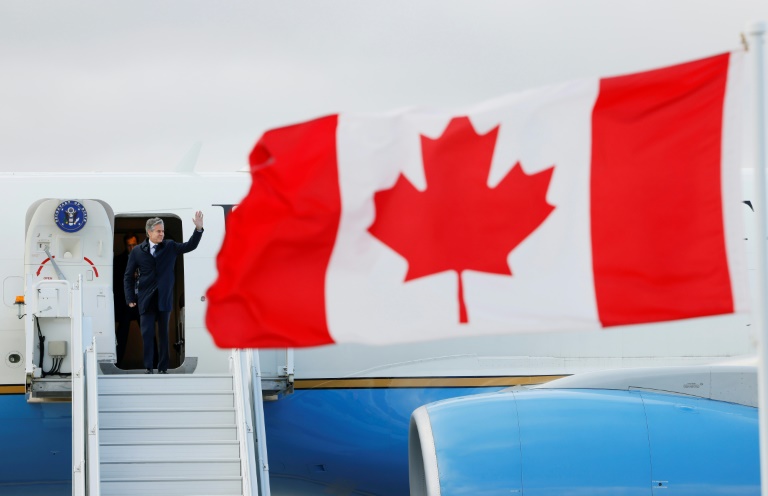
Canada said Thursday it was conducting an assessment mission in Haiti, as US Secretary of State Antony Blinken arrived in Ottawa for talks on setting up an intervention force to address the Caribbean nation’s spiralling crises.

The Canadian delegation is due to assess options “to support Haitian people in resolving the humanitarian and security crises” facing the impoverished country and “restore access to essential goods and services,” in consultation with regional partners the United Nations, the CARICOM Caribbean grouping and others, a statement said.

The mission comes in the wake of appeals by Haiti’s government and UN Secretary-General Antonio Guterres for international intervention as armed gangs take over vast stretches of the country and a cholera outbreak worsens.

The UN Security Council last week unanimously approved a resolution that targeted gang leaders but it did not address a multinational force. 

Ahead of Blinken’s arrival in Ottawa, however, a top US official voiced hope for progress on an international intervention.

“I am very optimistic that the international community and the Security Council will come together around another resolution that would create a multinational force for Haiti,” said Assistant Secretary of State for Western Hemisphere Affairs Brian Nichols.

While President Joe Biden’s administration has made clear it has no desire to put US troops in harm’s way, Nichols rejected pessimism that no country would step forward.

He said a “number of countries” have the capacity to lead a mission, including Canada, but that there had been no decision.

“I’ve talked to dozens of partner nations around the world about the situation in Haiti and there is strong support for a multinational force,” he added.

– US prioritizes police –

Blinken said ahead of his trip that solving Haiti’s problems would be “difficult, if not impossible” without restoring security.

He reiterated the US focus on building the Haitian National Police, pointing to the October 15 delivery by the US and Canadian militaries of equipment, including armored vehicles.

“We need to break the nexus — a very noxious nexus — between the gangs and certain political elites who are funding them, directing them and using them to advance their own interests instead of the interests of the country,” Blinken told an event at Bloomberg News.

“If we are able to help break that up as well as reinforce the Haitian National Police, then I think the government can get a grip on security,” he said.

Canadian Foreign Minister Melanie Joly said she would discuss Haiti with Blinken and that any actions need to “take into consideration what Haitians themselves think.”

“The goal is, at the end of the day, to find ways to help Haiti in the most effective way,” she told reporters in Ottawa.

Joly said Canada would work to impose sanctions on gang leaders in line with last week’s Security Council resolution that notably froze for one year all economic resources linked to Jimmy Cherizier, nicknamed “Barbecue,” whose armed groups have blockaded Haiti’s main oil terminal.

In a statement, she vowed Canada would “not remain idle while gangs and those who support them terrorize Haiti’s citizens.”

Joly said she would also coordinate with Blinken on the Ukraine war, Iran and China, ahead of a series of major Asian summits.

Blinken has spoken frequently to Joly but his two-day trip is his first to Canada since becoming the top US diplomat in January 2021 with the start of Biden’s presidency.

In Ottawa, Blinken will meet with Prime Minister Justin Trudeau and tour a community center for Ukrainian refugees.

He will spend Friday in Montreal, Joly’s hometown, where he will visit a lithium recycling factory in a bid to highlight cooperation on supply chains.

ECB hikes rates again despite 'looming recession'

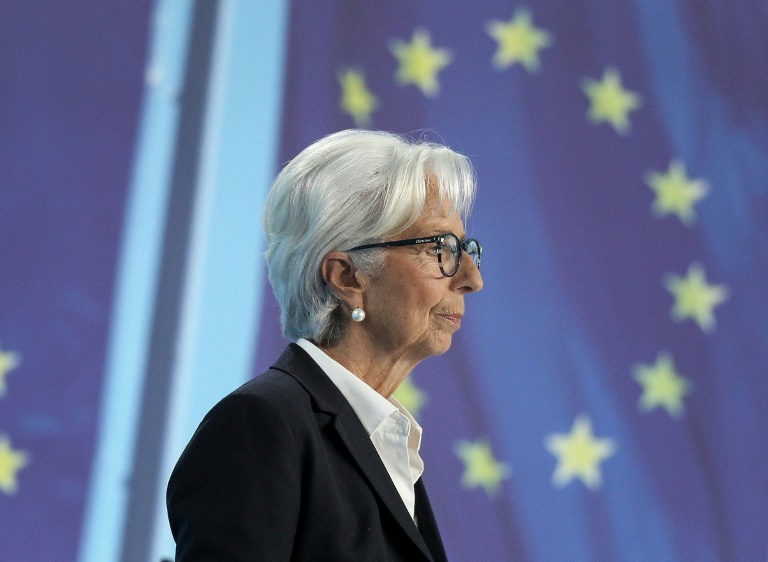
The European Central Bank announced another jumbo interest rate hike on Thursday and said further increases would follow to combat soaring inflation, even as its president, Christine Lagarde, acknowledged that a recession was looming.

The ECB’s 25-member governing council repeated last month’s move with another bumper increase of 75 basis points, leaving its three main rates sitting in a range of between 1.5 and 2.25 percent.

“We will have further rate increases in the future,” Lagarde said. “There is still ground to cover.”

The Frankfurt institution is under pressure to rein in record-high inflation, driven by surging food and especially energy prices in the wake of Russia’s war in Ukraine.

Eurozone inflation stood at 9.9 percent in September, nearly five times the ECB’s two-percent target.

Inflation “remains far too high”, Lagarde said.

Like other central banks, the ECB is fighting back with a series of rate hikes intended to dampen demand by making credit more expensive for households and businesses.

But higher borrowing costs also weigh on economic activity, and the outlook for the 19-nation currency club has deteriorated significantly.

“The likelihood of recession (is) looming much more on the horizon,” Lagarde told a press conference, while inflation may not have peaked.

“Obviously we’re concerned, particularly about those who have low income,” she said.

Capital Economics analyst Jack Allen-Reynolds said the pace of future hikes would likely be slower, predicting a 50 basis-point increase at the December meeting.

“If we are right that the forthcoming downturn will be deeper than most expect, policymakers might… become more cautious about tightening policy,” he said.

– Political grumbling –

Moscow’s decision to drastically curb gas supplies to Europe has triggered an energy crisis on the continent, fuelling fears of power shortages and sky-high heating bills this winter. 

As European governments race to unveil multi-billion-euro support measures to help citizens through a cost-of-living squeeze, the ECB’s response has faced criticism.

Italian Prime Minister Giorgia Meloni earlier this week said the aggressive rate hikes created “further difficulties for member states that have elevated public debt”.

French President Emmanuel Macron expressed “concern” that the ECB was “shattering demand” in Europe.

But Lagarde defended the bank’s third rate increase of the year, after a decade of historically low and even negative rates.

“The decision that we made today is the most appropriate in order to restore price stability,” she said, which is “critically important… also for the economy to actually prosper and recover”.

The former French finance minister also cautioned governments against adding to their debt pile, saying support measures should be “temporary and targeted at the most vulnerable”.

In response, Italy’s new Economy Minister Giancarlo Giorgetti struck a more conciliatory tone, voicing confidence in “the ECB’s wisdom to interpret the causes of the recent surge in inflation and to take into account the current slowdown in the European economy”. 

– Excess liquidity –

Also in focus on Thursday were the ECB’s plans to bring other monetary policy levers in line with its inflation-busting efforts, including slimming down its massive balance sheet.

The ECB announced it would tighten the conditions on the latest tranche of super-cheap loans issued to banks during the pandemic, known as TLTRO III, to incentivise earlier repayment.

Lenders are currently able to make an easy profit by parking their excess TLTRO cash at the ECB and pocketing the new, higher deposit rate — not a good look at a time when many consumers and companies are struggling.

Lagarde was also grilled by reporters on how the ECB intends to shrink its five-trillion-euro bond portfolio, after years of hoovering up government and corporate debt to keep credit flowing.

Given the economic uncertainty and the risk of rattling financial markets, analysts believe the start of any “quantitative tightening” — letting the bonds mature or actively selling them — is some way off.

Lagarde said the topic would be discussed in December.

Markets mixed as investors digest ECB hike, US data

Volatile markets were mostly trading up on Thursday after the ECB announced an expected hike to interest rates in the face of sky-high inflation and the US economy posted positive figures.

The European Central Bank rolled out another increase of 75 basis points, despite growing concern the eurozone is hurtling towards a painful recession.

President Christine Lagarde defended criticism of the hikes and said there would be “further rate increases in the future” to bring down inflation.

After fluctuating for much of the day, Eurozone stocks were flat by late afternoon trading.

The ECB hike was widely expected and comes as the Frankfurt institution faces pressure to rein in record-high inflation, mainly driven by skyrocketing energy costs in the wake of Russia’s war in Ukraine.

Markets.com analyst Neil Wilson said the hike was “in line with consensus but (a) less hawkish tone overall, indicative of fewer rate hikes required to tackle inflation.”

Eurozone inflation stood at 9.9 percent in September, nearly five times the ECB’s two-percent target.

The euro lost against the greenback on Thursday, after having traded above one dollar for the first time since last month on Wednesday.

“Overall, we should not forget that the recession risks increase globally, the policy tightening continues in major economies, and there is no sign that inflation is easing,” said Ipek Ozkardeskaya, analyst at Swissquote bank.

– Mixed US picture –

The New York Dow was up around one percent after the US commerce department data showed gross domestic product rose at an annual rate of 2.6 percent between July and September.

The latest GDP figures reflect “increases in exports, consumer spending” and government spending, according to the government.

But it warned of risks ahead, as households grapple with soaring prices and draw down on their savings.

“The US GDP grew faster than expected, yet looking closely, we see that the exports boosted the headline figure, while imports fell — meaning that the domestic demand from the US weakened despite a significant appreciation of the US dollar,” said Ozkardeskaya.

“The headline figures mask what is happening beneath the surface,” added Fiona Cincotta, Senior Financial Markets Analyst at City Index.

“The reality is that consumer growth, which accounts for more than two-thirds of the US economy, is slowing.”

– Credit Suisse shares slide –

Traders globally continued to digest earnings updates amid a slew of results from some of the world’s biggest companies.

Shares in Credit Suisse slumped some 18 percent after Switzerland’s second-biggest bank announced a string of radical measures Thursday aimed at turning around the beleaguered lender.

Credit Suisse revealed huge third quarter losses and said it would revamp its investment banking unit, slashing 9,000 jobs and raising fresh capital.

But the world’s top brewer ABInBev posted its best quarter of the year as sales volumes rose. 

And London’s benchmark FTSE 100 stocks index climbed, boosted by strong share-price gains for energy heavyweights BP and Shell following the latter’s bumper third-quarter profits on high oil and gas prices.

French giant TotalEnergies said net profits had soared 43 percent on last year to $6.6 billion — adding fuel to the raging debate over windfall taxes on energy firms due to the spike in prices thanks to Russia’s invasion of Ukraine.

– Key figures around 1530 GMT –

Euro/dollar: DOWN at $0.9987 from $1.0087 on Wednesday

Pound/dollar: DOWN at $1.1578 from $1.1621 

Dollar/yen: DOWN at 145.87 yen from 146.39 yen

Euro/pound: DOWN at 86.19 pence from 86.77 pence

New York – Dow: UP 1.2 percent at 32,210.68 

EURO STOXX 50: FLAT at 3,618.73

London – FTSE 100: UP 0.3 percent at 7,073.69 (close)

Frankfurt – DAX: UP 0.1 percent at 13,211.23 (close)

Paris – CAC 40: DOWN 0.5 percent at 6,244.03 (close)

Tokyo – Nikkei 225: DOWN 0.3 percent at 27,345.24 (close)

Hong Kong – Hang Seng Index: UP 0.7 percent at 15,427.94 (close)

Shanghai – Composite: DOWN 0.6 percent at 2,982.90 (close)

Brent North Sea crude: UP 1.3 percent at $94.98 per barrel

West Texas Intermediate: UP 1.8 percent at $89.52 per barrel

burs-rox/bp

IMF chief says 2023 aid pledges for Ukraine 'sufficient'

IMF chief Kristalina Georgieva on Thursday said financial pledges for Ukraine by the United States and Europe should be sufficient to get Kyiv through 2023, assuming the war does not intensify.

“Yes, we would go to 2023 with sufficient financial support for Ukraine,” Georgieva told AFP on the sidelines of a conference organised by the European Commission, the EU’s executive arm.

“So when we look into next year, the numbers are significant, but they are not out of context of what has been done up to now,” she added, underlining that the outlook remains highly uncertain.

Ukraine’s financial situation is calamitous because of Russia’s invasion and President Volodymyr Zelensky has appealed to international backers to cover his country’s $38-billion budget hole for 2023.

Western powers insist that keeping the war-ravaged country on its feet is of historic importance, with German Chancellor Olaf Scholz calling for “a new Marshall Plan for the 21st century” at a conference on Ukraine earlier this week. 

– ‘Incredible resilience’ –

But questions linger over whether the Ukrainian economy can survive much longer if Kyiv’s allies don’t move faster.

Georgieva said the United States and EU have each pledged fresh funds to keep the Ukrainian budget afloat next year that should be enough for Ukraine, though the path of the war was unknown.

In a baseline scenario that she stressed was highly unstable, the IMF has put Ukraine’s financial monthly needs for 2023 at three to four billion dollars and possibly five billion dollars if the war’s destruction deepens.

“Where is the money? Well, the EU has committed 18 billion euros ($18 billion). This is a billion and a half a month for next year, the United States has committed $18 billion, 1.5 billion a month,” she said.

“And of course, at the IMF, we are working towards a programme for Ukraine. So based on the incredible resilience of Ukrainian people, the world has stepped up,” she said.

This year there has been $35 billion of international financing pledged, most of which has already been disbursed, Georgieva said.

For critics, any new commitments come with significant question marks. The EU, for example, has yet to fully deliver on the nine billion euros pledged for this year amid squabbling by member states over whether the aid should be in grants or loans.

Aid fatigue is meanwhile rearing its head in Washington where a leading Republican said the United States would no longer write a “blank cheque” to Ukraine after congressional elections on November 8.

“The Ukrainian government has done an amazing job in managing the economy to a point that some parts of it started growing again,” Georgieva said.

She praised the grit shown by Ukrainians in the war that “has made Ukraine a better country”, with deep changes such as accelerated advances in technology.

The Washington-based IMF says the Ukrainian economy will collapse by a staggering 35 percent this year with inflation soaring by 20 percent.

Biden touts high-tech manufacturing resurgence ahead of midterms

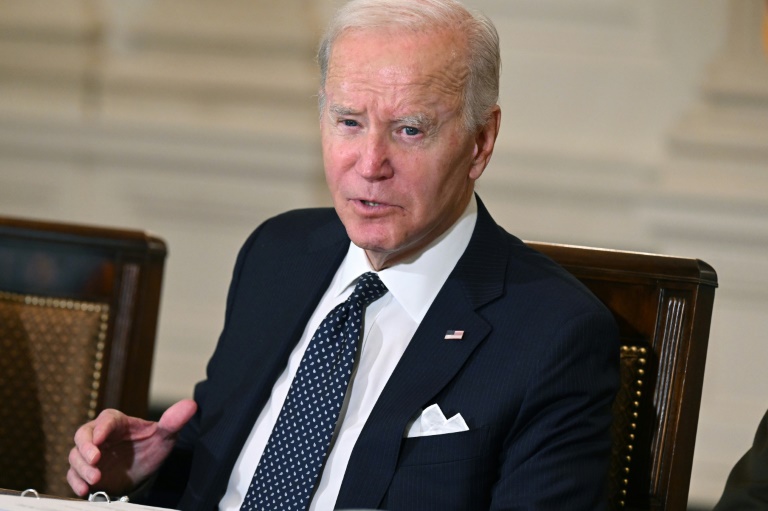
President Joe Biden was traveling to New York on Thursday to tout giant investments in semiconductor manufacturing, part of a final hour bid ahead of midterm elections to persuade Americans that the economic future is bright.

Biden, whose Democrats are forecasted to lose the House of Representatives and possibly also the Senate in the November 8 polls, was leaving the White House for Syracuse, New York, buoyed by new data showing that the overall economy rebounded in the third quarter, staving off fears of recession.

In New York, he will celebrate the pledge by Micron to pour $100 billion over the next two decades into semiconductor factories.

The project is part of a renaissance in high-end manufacturing that has been a cornerstone of Biden’s presidency — and he hopes will ultimately woo a broad section of voters to believe in the Democratic stewardship of the economy.

“For years, regions like central New York and the industrial Midwest have been hollowed out as manufacturing jobs have been shipped overseas. This administration is changing that,” the White House said in a statement.

In an indicator of how difficult the environment is for Democrats less than two weeks before voting day, even longtime stronghold New York is creaking. Governor Kathy Hochul, who will be with Biden in Syracuse, is among those finding herself in an unexpectedly tough race.

With time running out, Biden is leading an intensified campaign to paint Republicans as reckless and readying to slash social spending for the poor.

“The president will deliver remarks that contrast his vision for the economy with that of congressional Republicans, who want to raise costs for working people and put Medicare and Social Security on the chopping block,” the White House said.

Voter anger is largely driven by the highest inflation in four decades. The administration points out that many of the world’s big economies are suffering similar price rises, linked to the post-pandemic disruptions and the invasion of Ukraine by major energy producer Russia.

Biden got some good news before departure.

Gross domestic product rose at an annual rate of 2.6 percent in the July to September period, according to the latest Commerce Department data.

The better-than-expected performance was helped by strong trade, even as housing investment plunged and weaker consumer spending on goods casts a pall on growth as higher prices bite.

“Our economic recovery is continuing to power forward,” said Biden in a statement.

Biden touts high-tech manufacturing resurgence ahead of midterms

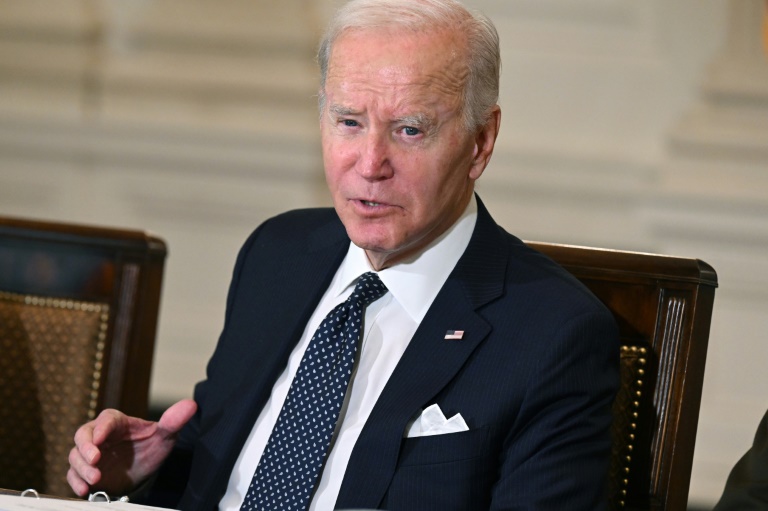
President Joe Biden was traveling to New York on Thursday to tout giant investments in semiconductor manufacturing, part of a final hour bid ahead of midterm elections to persuade Americans that the economic future is bright.

Biden, whose Democrats are forecasted to lose the House of Representatives and possibly also the Senate in the November 8 polls, was leaving the White House for Syracuse, New York, buoyed by new data showing that the overall economy rebounded in the third quarter, staving off fears of recession.

In New York, he will celebrate the pledge by Micron to pour $100 billion over the next two decades into semiconductor factories.

The project is part of a renaissance in high-end manufacturing that has been a cornerstone of Biden’s presidency — and he hopes will ultimately woo a broad section of voters to believe in the Democratic stewardship of the economy.

“For years, regions like central New York and the industrial Midwest have been hollowed out as manufacturing jobs have been shipped overseas. This administration is changing that,” the White House said in a statement.

In an indicator of how difficult the environment is for Democrats less than two weeks before voting day, even longtime stronghold New York is creaking. Governor Kathy Hochul, who will be with Biden in Syracuse, is among those finding herself in an unexpectedly tough race.

With time running out, Biden is leading an intensified campaign to paint Republicans as reckless and readying to slash social spending for the poor.

“The president will deliver remarks that contrast his vision for the economy with that of congressional Republicans, who want to raise costs for working people and put Medicare and Social Security on the chopping block,” the White House said.

Voter anger is largely driven by the highest inflation in four decades. The administration points out that many of the world’s big economies are suffering similar price rises, linked to the post-pandemic disruptions and the invasion of Ukraine by major energy producer Russia.

Biden got some good news before departure.

Gross domestic product rose at an annual rate of 2.6 percent in the July to September period, according to the latest Commerce Department data.

The better-than-expected performance was helped by strong trade, even as housing investment plunged and weaker consumer spending on goods casts a pall on growth as higher prices bite.

“Our economic recovery is continuing to power forward,” said Biden in a statement.

N.Irish elections loom after failure to resolve post-Brexit impasse

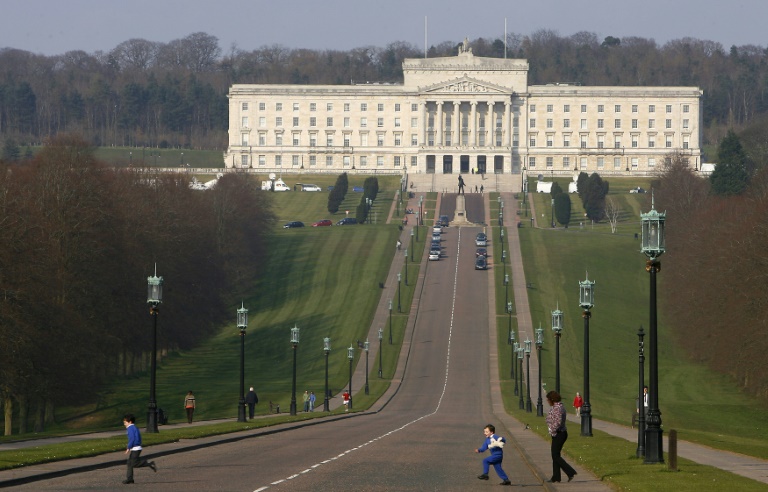
Northern Ireland’s feuding political parties failed on Thursday to agree to restart power-sharing, paving the way for a second election this year amid an entrenched political stalemate over contentious post-Brexit trade rules.

Northern Irish lawmakers briefly reconvened for the first time in months for a special sitting of the devolved assembly at Stormont, but failed to  elect a speaker needed to form a new executive.

The pro-UK Democratic Unionist Party blocked the resumption of power-sharing due to  concerns about the so-called Northern Ireland Protocol governing post-Brexit trade.

The party wants the protocol overhauled or scrapped entirely.

DUP leader Jeffrey Donaldson told reporters Thursday the party would not vote for a new speaker because insufficient action had been taken to address their demands since they collapsed the executive in February.

“We need to remove the rubble of the protocol that has undermined our economy, that has inhibited our ability to trade within our own country,” he said ahead of the failed vote.

Donaldson said the arrangements “changed our constitutional status without our consent” and were “harming businesses and driving up the cost of living for every single person in Northern Ireland”.

However, Matthew O’Toole of the Social Democratic and Labour Party (SDLP) said holding another election was a “farce” and that the continued boycott had left him “ashamed of this place”.

“While this assembly sat mothballed and silent people’s homes have got colder, their trust in politics has fallen even further and their lives have gotten harder,” he said.

– ‘Farce’ –

New British Prime Minister Rishi Sunak’s had implored the parties to “get back to Stormont”, arguing people there “deserve a fully functioning and locally elected executive”, his official spokesman said.

Chris Heaton-Harris, Britain’s Northern Ireland minister for the last seven weeks, held talks with the political parties on Wednesday in a fresh bid to get them to form a new executive.

If no agreement is reached by Friday, London will be legally required to call early elections for the devolved assembly in the volatile province, with December 15 the expected date.

“If the executive is not formed by 28 October, I will call an election,” the minister had said in a statement. “Time is running out.”

Northern Ireland has now been without a functioning government for nine months, with pro-Irish party Sinn Fein winning a historic first election in May which is seen as further complicating the political situation.

Sinn Fein leader Michelle O’Neill — set to become first minister if the executive can be restarted — condemned the DUP’s “perpetual standoff with the public, the majority of whom they do not speak for or indeed represent”.

– Delicate balance of peace –

The DUP insists the protocol — agreed by London and Brussels as part of Britain’s 2019 Brexit deal — must be addressed first.

It claims the pact, which effectively keeps Northern Ireland in the European Union’s single market and customs union, weakens the province’s place within the United Kingdom.

Many unionists also argue it is threatening the delicate balance of peace between the pro-Irish nationalist community and those in favour of continued union with Britain.

The protocol was agreed to avoid the return of a hard land border with the Republic of Ireland, which remains an EU member.

Eliminating that hard border was a key strand of the 1998 Good Friday Agreement, which ended three decades of sectarian violence in Northern Ireland.

Britain’s Conservative government, which has  had three prime ministers in two months, has urged Brussels to agree to wholesale revisions of the protocol.

London is also in the midst of passing contentious legislation to override it unilaterally.

That has sparked fears of a trade war and worsening relations with Europe when the economic landscape is already gloomy.

The impasse was discussed in a phone call on Wednesday between Sunak and Irish premier Micheal Martin.

Sunak also spoke by phone to European Commission President Ursula von der Leyen, who said on Twitter that she hopes to find “joint solutions under the protocol… that will provide stability and predictability”.

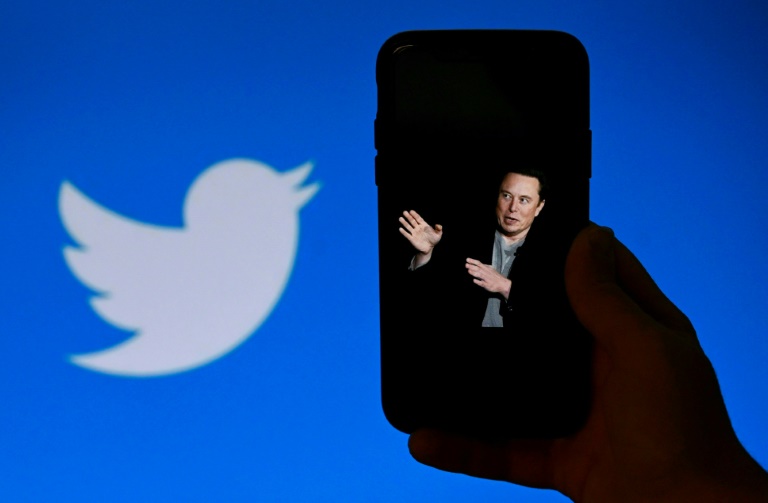
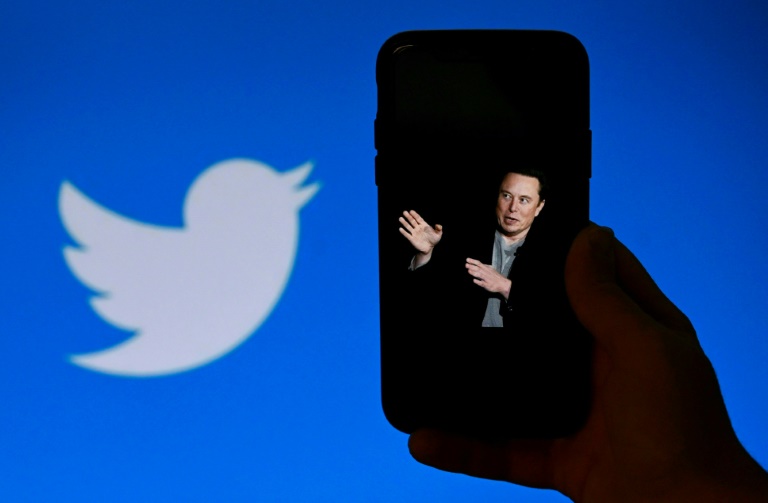
Seeking 'healthy' debate of ideas, Musk nears Twitter deal finish line

Closing in on his Twitter megadeal, Elon Musk said Thursday his goal is to enable “healthy” debate of ideas and counter the tendency of social media to splinter into partisan “echo chambers.”

The billionaire entrepreneur pursued the deal “because it is important to the future of civilization to have a common digital town square, where a wide range of beliefs can be debated in a healthy manner, without resorting to violence,” Musk tweeted on the eve of a court-imposed deadline to finalize the $44 billion purchase.

The Tesla boss’s on-again, off-again acquisition of the influential website appeared to be entering its final phase after Delaware Judge Kathaleen McCormick paused litigation on October 6 on a Twitter suit against Musk after he previously walked away from the deal.

Since then Musk has reportedly been lining up financing.

While there is always the chance of a last-minute curveball, more signs pointed to the deal’s likely closure.

The New York Stock Exchange posted a pending order to suspend trading in Twitter before Friday’s session.

Shares of Twitter — which vaulted higher after McCormick’s October 6 move — climbed 1.2 percent to $53.97 by 1500 GMT Thursday, not far below the $54.20 purchase price in Musk’s deal.

“We expect Musk and Twitter to officially close the deal by Friday morning with Cinderella finally getting the glass slipper that fits,” said Wedbush analyst Dan Ives. 

“We also believe the overhang on Tesla is now removed with Musk having likely sold stock this week to fund the rest of the Twitter deal.”

“I think on Friday, we’ll get an announcement that says that Elon Musk has purchased Twitter,” University of California, Berkeley law professor Adam Badawi told AFP.

But if the buyout fails to close by the end of the business day, the judge will likely “bring the hammer down” and head quickly to trial, Badawi added.

– ‘Chief Twit’ –

Musk originally agreed to the Twitter acquisition in April, but soon pulled back, saying in July he was canceling the contract because he was misled by Twitter over the number of fake “bot” accounts — allegations rejected by the company.

Twitter in turn sought to prove Musk, who also heads aerospace firm SpaceX, was contriving excuses to walk away simply because he changed his mind.

A trial on Twitter’s suit was scheduled for mid-October, but McCormick’s order gave the parties until 5:00 pm on October 28, 2022 to close the transaction.

Fresh questions about the combination surfaced last week following reports Musk planned deep staff cuts at Twitter and that US President Joe Biden’s administration was weighing a national security review.

But on Wednesday, Musk changed his Twitter profile to “Chief Twit” and posted a video of himself walking into the company’s California headquarters carrying a sink.

The South African-born serial entrepreneur cuts a polarizing figure in American business, with supporters cheering his disruptive spirit and execution prowess at Tesla and detractors criticizing him as a megalomaniac with a potentially dangerous tendency to wade into geopolitical topics in which he lacks expertise, such as the Russia-Ukraine conflict. 

In his latest statement Thursday, Musk said much of the public speculation about his intentions in the deal had been “wrong” as he insisted his goals were noble.

In pursuing Twitter, “I didn’t do it because it would be easy. I didn’t do it to make more money,” Musk said. 

“I did so with humility, recognizing that failure in pursuing this goal, despite our best efforts, is a very real possibility.”

Seeking 'healthy' debate of ideas, Musk nears Twitter deal finish line

Closing in on his Twitter megadeal, Elon Musk said Thursday his goal is to enable “healthy” debate of ideas and counter the tendency of social media to splinter into partisan “echo chambers.”

The billionaire entrepreneur pursued the deal “because it is important to the future of civilization to have a common digital town square, where a wide range of beliefs can be debated in a healthy manner, without resorting to violence,” Musk tweeted on the eve of a court-imposed deadline to finalize the $44 billion purchase.

The Tesla boss’s on-again, off-again acquisition of the influential website appeared to be entering its final phase after Delaware Judge Kathaleen McCormick paused litigation on October 6 on a Twitter suit against Musk after he previously walked away from the deal.

Since then Musk has reportedly been lining up financing.

While there is always the chance of a last-minute curveball, more signs pointed to the deal’s likely closure.

The New York Stock Exchange posted a pending order to suspend trading in Twitter before Friday’s session.

Shares of Twitter — which vaulted higher after McCormick’s October 6 move — climbed 1.2 percent to $53.97 by 1500 GMT Thursday, not far below the $54.20 purchase price in Musk’s deal.

“We expect Musk and Twitter to officially close the deal by Friday morning with Cinderella finally getting the glass slipper that fits,” said Wedbush analyst Dan Ives. 

“We also believe the overhang on Tesla is now removed with Musk having likely sold stock this week to fund the rest of the Twitter deal.”

“I think on Friday, we’ll get an announcement that says that Elon Musk has purchased Twitter,” University of California, Berkeley law professor Adam Badawi told AFP.

But if the buyout fails to close by the end of the business day, the judge will likely “bring the hammer down” and head quickly to trial, Badawi added.

– ‘Chief Twit’ –

Musk originally agreed to the Twitter acquisition in April, but soon pulled back, saying in July he was canceling the contract because he was misled by Twitter over the number of fake “bot” accounts — allegations rejected by the company.

Twitter in turn sought to prove Musk, who also heads aerospace firm SpaceX, was contriving excuses to walk away simply because he changed his mind.

A trial on Twitter’s suit was scheduled for mid-October, but McCormick’s order gave the parties until 5:00 pm on October 28, 2022 to close the transaction.

Fresh questions about the combination surfaced last week following reports Musk planned deep staff cuts at Twitter and that US President Joe Biden’s administration was weighing a national security review.

But on Wednesday, Musk changed his Twitter profile to “Chief Twit” and posted a video of himself walking into the company’s California headquarters carrying a sink.

The South African-born serial entrepreneur cuts a polarizing figure in American business, with supporters cheering his disruptive spirit and execution prowess at Tesla and detractors criticizing him as a megalomaniac with a potentially dangerous tendency to wade into geopolitical topics in which he lacks expertise, such as the Russia-Ukraine conflict. 

In his latest statement Thursday, Musk said much of the public speculation about his intentions in the deal had been “wrong” as he insisted his goals were noble.

In pursuing Twitter, “I didn’t do it because it would be easy. I didn’t do it to make more money,” Musk said. 

“I did so with humility, recognizing that failure in pursuing this goal, despite our best efforts, is a very real possibility.”

Close Bitnami banner
Bitnami