AFP

US economy grows for first time this year in third quarter

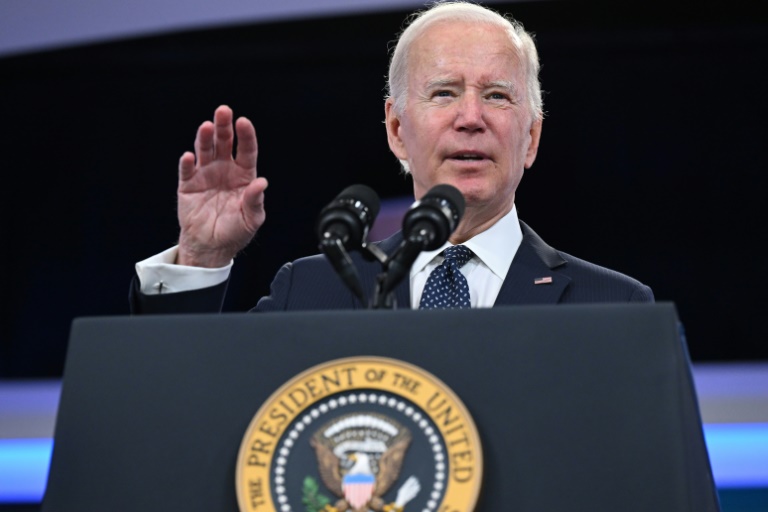
The US economy rebounded in the third quarter, expanding for the first time this year in welcome news for President Joe Biden days ahead of midterm elections, government data showed Thursday.

Economic issues have become a flashpoint in the United States, with decades-high inflation weighing on growth and squeezing households.

Fears of a downturn have intensified in the world’s biggest economy after two quarters of negative growth, commonly viewed as a strong signal that a recession is underway — a trend that would have global consequences and domestic political costs.

But gross domestic product rose at an annual rate of 2.6 percent in the July to September period, according to the latest Commerce Department data.

“Our economic recovery is continuing to power forward,” said Biden in a statement.

But officials need to “make more progress” on bringing down high costs for American households, he added.

On Thursday, mortgage rates surged past seven percent for the first time in two decades, according to the closely watched Freddie Mac survey, piling further pressure on potential homebuyers.

The better-than-expected GDP performance was helped by strong trade, even as housing investment plunged and weaker consumer spending on goods casts a pall on growth as higher prices bite.

Industrial supplies and materials, notably petroleum and products, kept exports robust.

In consumer spending, an increase in services was “partly offset” by a drop in products like motor vehicles and parts, along with food and beverages, data showed.

– ‘Unsustainable’ –

The leap in exports is “unsustainable,” as a strong dollar and weak global growth will pose constraints moving forward, cautioned Ian Shepherdson of Pantheon Macroeconomics.

A fall in imports that helped net trade also marks a reversal of earlier inventory rebuilding, but that is now over, he said.

“We’re relying on better consumption, rising government spending, and… investment to keep GDP in the black,” he added.

Overall, personal consumption expenditures — a key segment of the economy — grew 1.4 percent, slower than before.

The US economy shrank 0.6 percent in the second quarter, according to revised numbers, after a larger decline in the first three months this year.

Biden has insisted that the economy is on the right path, but analysts warn of risks ahead, as households grapple with soaring prices and draw down on their savings.

– Risks ahead –

Republicans have blamed Democrats for worsening price spikes through runaway spending, though inflation is a global issue that presidents have limited power over.

Analysts see a slowdown in growth in the coming quarters, with the possibility of a recession in 2023.

“This will likely be the only positive quarter for the entire year,” said economist Diane Swonk of KPMG in a tweet.

While there is still some momentum in household spending and a rebound in business investment, there is also “ongoing weakness in residential investment,” added Rubeela Farooqi of High Frequency Economics.

There are particular risks to consumption “as households continue to face challenges from high prices and likely slower job growth going forward,” she said in an analysis.

Households have been reeling from decades-high inflation, with prices soaring on supply chain snarls due to Covid-19 lockdowns and fallout from Russia’s invasion of Ukraine, which sent food and energy costs rocketing.

To lower price pressures, the US central bank has embarked on aggressive rate hikes, walking a tightrope as it tries to avoid tipping the economy into a recession.

Already, there are signs of stress, such as a hit to the more interest-sensitive housing sector.

Rates on popular 30-year fixed mortgages have also rocketed to 7.08 percent according to Freddie Mac, as the Federal Reserve’s moves ripple through the economy.

Policymakers are expected to press on with rate increases at a meeting next week, in the face of persistently high prices.
US economy grows for first time this year in third quarter

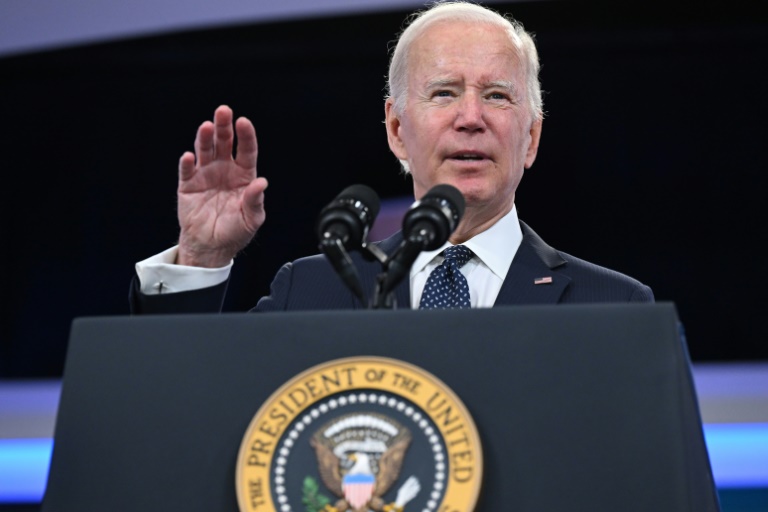
The US economy rebounded in the third quarter, expanding for the first time this year in welcome news for President Joe Biden days ahead of midterm elections, government data showed Thursday.

Economic issues have become a flashpoint in the United States, with decades-high inflation weighing on growth and squeezing households.

Fears of a downturn have intensified in the world’s biggest economy after two quarters of negative growth, commonly viewed as a strong signal that a recession is underway — a trend that would have global consequences and domestic political costs.

But gross domestic product rose at an annual rate of 2.6 percent in the July to September period, according to the latest Commerce Department data.

“Our economic recovery is continuing to power forward,” said Biden in a statement.

But officials need to “make more progress” on bringing down high costs for American households, he added.

On Thursday, mortgage rates surged past seven percent for the first time in two decades, according to the closely watched Freddie Mac survey, piling further pressure on potential homebuyers.

The better-than-expected GDP performance was helped by strong trade, even as housing investment plunged and weaker consumer spending on goods casts a pall on growth as higher prices bite.

Industrial supplies and materials, notably petroleum and products, kept exports robust.

In consumer spending, an increase in services was “partly offset” by a drop in products like motor vehicles and parts, along with food and beverages, data showed.

– ‘Unsustainable’ –

The leap in exports is “unsustainable,” as a strong dollar and weak global growth will pose constraints moving forward, cautioned Ian Shepherdson of Pantheon Macroeconomics.

A fall in imports that helped net trade also marks a reversal of earlier inventory rebuilding, but that is now over, he said.

“We’re relying on better consumption, rising government spending, and… investment to keep GDP in the black,” he added.

Overall, personal consumption expenditures — a key segment of the economy — grew 1.4 percent, slower than before.

The US economy shrank 0.6 percent in the second quarter, according to revised numbers, after a larger decline in the first three months this year.

Biden has insisted that the economy is on the right path, but analysts warn of risks ahead, as households grapple with soaring prices and draw down on their savings.

– Risks ahead –

Republicans have blamed Democrats for worsening price spikes through runaway spending, though inflation is a global issue that presidents have limited power over.

Analysts see a slowdown in growth in the coming quarters, with the possibility of a recession in 2023.

“This will likely be the only positive quarter for the entire year,” said economist Diane Swonk of KPMG in a tweet.

While there is still some momentum in household spending and a rebound in business investment, there is also “ongoing weakness in residential investment,” added Rubeela Farooqi of High Frequency Economics.

There are particular risks to consumption “as households continue to face challenges from high prices and likely slower job growth going forward,” she said in an analysis.

Households have been reeling from decades-high inflation, with prices soaring on supply chain snarls due to Covid-19 lockdowns and fallout from Russia’s invasion of Ukraine, which sent food and energy costs rocketing.

To lower price pressures, the US central bank has embarked on aggressive rate hikes, walking a tightrope as it tries to avoid tipping the economy into a recession.

Already, there are signs of stress, such as a hit to the more interest-sensitive housing sector.

Rates on popular 30-year fixed mortgages have also rocketed to 7.08 percent according to Freddie Mac, as the Federal Reserve’s moves ripple through the economy.

Policymakers are expected to press on with rate increases at a meeting next week, in the face of persistently high prices.

Israel, Lebanon strike 'historic' maritime border deal

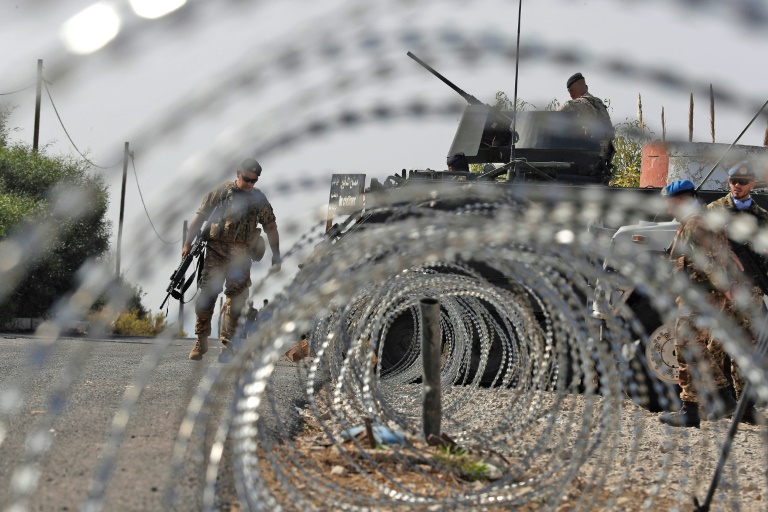
Israel and Lebanon struck a US-brokered maritime border agreement Thursday that opens up lucrative offshore gas fields for the neighbours that remain technically at war. 

US President Joe Biden hailed the “historic” deal that comes as Western powers clamour to open up new energy  production and reduce vulnerability to supply cuts from Russia. 

The agreement was signed separately by Lebanon’s President Michel Aoun in Beirut and by Israel’s Prime Minister Yair Lapid in Jerusalem, and went into effect after the papers were delivered to mediators.

“Both parties took the final steps to bring the agreement into force and submitted the final paperwork to the United Nations in the presence of the United States,” Biden said in a statement.

Israel’s arch-foe, the Lebanese Hezbollah group, said it would end its “exceptional” mobilisation against the country, after threatening to attack Israel for months should it reach for offshore gas reserves at the border before the deal was signed.

“Our mission is complete,” Hezbollah leader Hassan Nasrallah said in a televised speech.

The deal comes as Lebanon hopes to extract itself from what the World Bank calls one of the world’s worst economic crises in modern history, and as Lapid seeks to lock in a major achievement days ahead of a general election on November 1. 

The exchange of letters was held in the southern Lebanese border town of Naqura, in the presence of US mediator Amos Hochstein and UN Special Coordinator for Lebanon Joanna Wronecka, who will now deposit the new maritime coordinates at the UN headquarters in New York.

– Delicate dance –

Biden said that “energy — particularly in the Eastern Mediterranean — should not be a cause for conflict, but a tool for cooperation, stability, security and prosperity.  

“This agreement takes us one step closer to realising a vision for a Middle East that is more secure, integrated and prosperous, delivering benefits for all the people of the region.”

Hours before signing it, Lapid had claimed that Lebanon’s intention to ink the deal amounted to a de-facto recognition of the Jewish state.

“It is not every day that an enemy state recognises the State of Israel, in a written agreement, in front of the entire international community,” he said.

Aoun denied Lapid’s assertion, countering that “demarcating the southern maritime border is technical work that has no political implications”.

The deal comes as political parties in Israel — including Lapid’s centrist Yesh Atid – jockey for position in what will be the fifth general election in less than four years.

Veteran right-winger and longtime premier Benjamin Netanyahu has his sights set on a comeback and he dismissed the maritime deal as an “illegal ploy” early this month.

London-listed Energean on Wednesday said it began producing gas from Karish, an offshore field at the heart of the border agreement, a day after Israel gave the green light. 

Lebanon meanwhile will have full rights to operate and explore the so-called Qana or Sidon reservoir, parts of which falls in Israel’s territorial waters, with the Jewish state receiving some revenues.

– No quick fix –

With demand for gas rising worldwide because of the energy crisis sparked by Russia’s invasion of Ukraine, Lebanon hopes that exploiting the offshore field will help ease its financial and economic crisis.

But analysts caution that it will take time for production to start in Lebanese waters, meaning no quick return for a country that is desperately short of foreign exchange reserves. 

Exploration has so far only been tentative — a 2012 seismic study of a limited offshore area by the British firm Spectrum estimated recoverable gas reserves in Lebanon at 25.4 trillion cubic feet, although authorities in Lebanon have announced higher estimates.

The maritime border deal could not have been signed by Lebanon without the consent of Hezbollah, a powerful Shiite faction backed by Israel’s arch nemesis Iran.

Hezbollah leader Nasrallah said that the deal “is not an international treaty and it is not a recognition of Israel,” while hailing it as a “great victory for Lebanon”.

Israel and Hezbollah fought a 34-day war in 2006 and the Shiite movement is the only faction to have kept its weapons after the end of Lebanon’s 1975-1990 civil war.

On July 2, Israel said it had downed three drones launched by Hezbollah that were headed towards the offshore field of Karish. 

US lawmakers urge bank chiefs to reconsider Hong Kong meeting

US lawmakers on Thursday asked executives of major banks to reconsider attendance at a major conference next week in Hong Kong, saying their presence legitimizes China’s clampdown in the city.

Heads of some 30 big financial institutions are expected for the conference in Hong Kong, which is keen to show it is open for business after isolation under one of the world’s strictest Covid policies.

But the event also comes after China cracked down during the pandemic on the city’s pro-democracy movement, arresting activists and effectively shutting down independent media after imposing a draconian national security law in 2020.

“Business as usual in Hong Kong is the wrong choice for these companies,” said Senator Jeff Merkley and Representative Jim McGovern, Democrats who head the bipartisan Congressional-Executive Commission on China, which assesses human rights.

“Their presence only serves to legitimize the swift dismantling of Hong Kong’s autonomy, free press and the rule of law by Hong Kong authorities acting along with the Chinese Communist Party,” they said in a statement.

The lawmakers warned US financial executives they could draw “pertinent congressional concern” if they expand investments that further harm Hong Kong’s autonomy.

The lawmakers also accused Hong Kong’s Beijing-appointed leader, John Lee, of refusing to cooperate with US-led sanctions on Russia over its invasion of Ukraine.

The event will include panel talks featuring the CEOs of Goldman Sachs, Morgan Stanley and Citigroup.

Top executives from HSBC, Standard Chartered, JPMorgan Chase and BlackRock will also attend.

China promised to allow a separate system in Hong Kong before Britain returned the territory in 1997 but President Xi Jinping has solidified control after massive and sometimes violent protests against Beijing’s role.

US lawmakers urge bank chiefs to reconsider Hong Kong meeting

US lawmakers on Thursday asked executives of major banks to reconsider attendance at a major conference next week in Hong Kong, saying their presence legitimizes China’s clampdown in the city.

Heads of some 30 big financial institutions are expected for the conference in Hong Kong, which is keen to show it is open for business after isolation under one of the world’s strictest Covid policies.

But the event also comes after China cracked down during the pandemic on the city’s pro-democracy movement, arresting activists and effectively shutting down independent media after imposing a draconian national security law in 2020.

“Business as usual in Hong Kong is the wrong choice for these companies,” said Senator Jeff Merkley and Representative Jim McGovern, Democrats who head the bipartisan Congressional-Executive Commission on China, which assesses human rights.

“Their presence only serves to legitimize the swift dismantling of Hong Kong’s autonomy, free press and the rule of law by Hong Kong authorities acting along with the Chinese Communist Party,” they said in a statement.

The lawmakers warned US financial executives they could draw “pertinent congressional concern” if they expand investments that further harm Hong Kong’s autonomy.

The lawmakers also accused Hong Kong’s Beijing-appointed leader, John Lee, of refusing to cooperate with US-led sanctions on Russia over its invasion of Ukraine.

The event will include panel talks featuring the CEOs of Goldman Sachs, Morgan Stanley and Citigroup.

Top executives from HSBC, Standard Chartered, JPMorgan Chase and BlackRock will also attend.

China promised to allow a separate system in Hong Kong before Britain returned the territory in 1997 but President Xi Jinping has solidified control after massive and sometimes violent protests against Beijing’s role.

EU chief courts Moscow's Central Asia allies

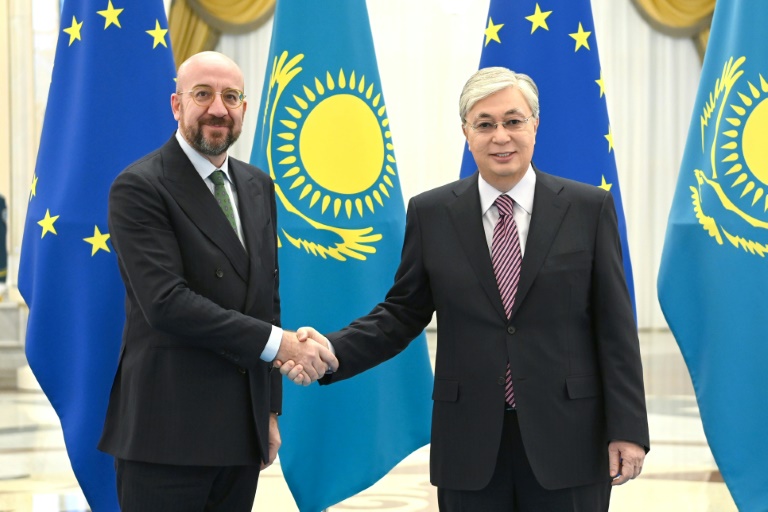
EU chief Charles Michel called on Thursday for closer ties with Central Asia on his first official visit to Kazakhstan, the main economic powerhouse in a region where Russia’s influence has come under question.

In a first European Union-Central Asia summit, Michel met the leaders of the region’s five countries — Kazakhstan, Kyrgyzstan, Uzbekistan, Tajikistan and Turkmenistan. 

He described the gathering as “much more than just a policy dialogue between two regions”.

“It’s a powerful symbol of our reinforced cooperation and a strong signal of the EU’s commitment to this region,” he said. 

Michel’s visit to the Kazakh capital Astana comes eight months into Russia’s invasion of Ukraine, which has made Moscow’s former Soviet neighbours nervous and intensified the Kremlin’s clash with the West.

In a joint statement, Michel and the Central Asian leaders said they agreed to “continue building a strong diversified and forward-looking partnership underpinned by shared values and mutual interests”.

Michel’s visit comes two weeks after Astana hosted several summits attended by Russia — as well as by China and Turkey, which are also seeking to strengthen their influence in the region. 

“Central Asia and Europe are coming closer together and becoming more and more connected,” Michel had told a press conference with Kazakh President Kassym-Jomart Tokayev in Astana.

The head of the EU Council said Kazakhstan was a “crucial partner” and the EU hoped to “develop our cooperation”.

He singled out Kazakhstan as a major trading partner for the EU and called for investment in transport infrastructure in the country, which has looked to reduce  dependence on Moscow since the latter sent troops to Ukraine. 

– ‘Geopolitical balance’ –

Since the start of Moscow’s invasion in February and the subsequent Western sanctions slapped on Russia, “Central Asian countries have been trying to strike a geopolitical balance,” Kazakh political analyst Dosym Satpayev told AFP. 

The traditional allies of Moscow have trod a fine line on the Kremlin’s attack on Ukraine, neither condemning nor openly supporting it.

Tokayev even clashed with Russian President Vladimir Putin publicly in June, refusing to recognise the self-declared separatist republics controlled by pro-Moscow rebels in eastern Ukraine. 

Russia has since claimed to have annexed the regions.

“The European Union has a very good opportunity to strengthen its position in Central Asia,” Satpayev said, 

He said this was especially true in Kazakhstan — the only country in the region that has signed an enhanced partnership and cooperation agreement with the EU — and neighbouring Uzbekistan, where Michel is expected on Friday.

Meanwhile Astana is seeking new routes for  oil exports, around three quarters of which transit Russia.

In early July, Tokayev pledged greater energy cooperation with the EU.

In a joint statement on Thursday, Tokayev and Michel said they discussed how to avoid “unintended negative impact on Kazakhstan’s economy” of EU sanctions against Russia, imposed over the Ukraine conflict.

They also discussed relocating to Kazakhstan “European manufacturing companies”, whose products are not subject to sanctions.

Since the outbreak of war in Ukraine, Russia has twice halted Kazakh oil exports, citing technical and security reasons. 

Rich in hydrocarbons and minerals, Kazakhstan lies at the heart of China’s massive new silk road project. 

Like Beijing, Turkey is also advancing its interest in the region, highlighting ethno-linguistic and religious ties to Central Asia. 

Germany reviewing possible Chinese takeover of chip factory

The German government is reviewing a possible sale of a local chip factory to a Chinese-owned firm, sources said Thursday, despite the reported concerns of intelligence agencies.

Government officials speaking on condition of anonymity told AFP that they were assessing the potential impact of a takeover of Dortmund-based Elmos by Sweden’s Silex, a unit of Chinese company Sai MicroElectronics.

“There is an ongoing investment review procedure,” one official said. “The checks have begun, are continuing and are not finished.”

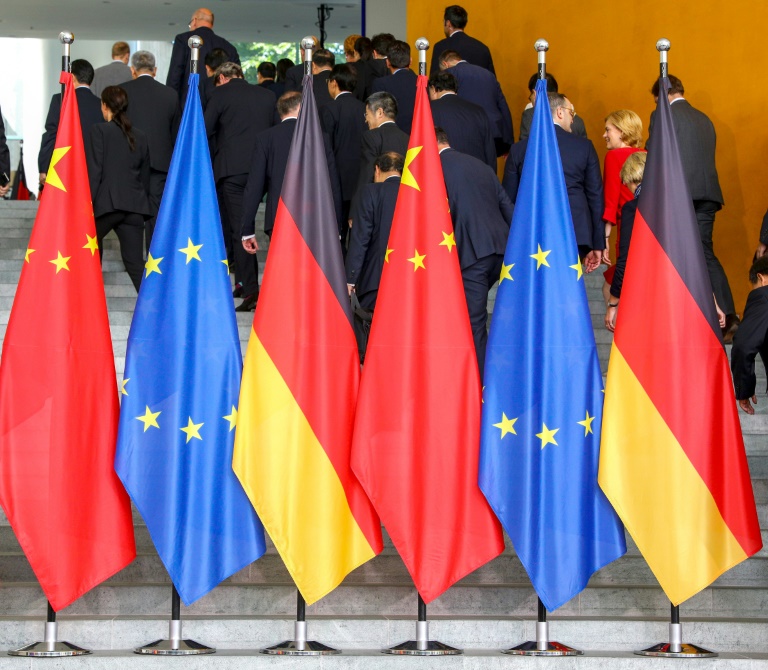
The overture by the Chinese firm comes ahead of Chancellor Olaf Scholz’s visit to China next week as the first European Union leader to make the trip since November 2019.

And it coincides with growing fears within his coalition government and among intelligence officials about the risks of critical infrastructure and intellectual property falling into foreign hands.

Business daily Handelsblatt had reported earlier that Berlin intends to green-light the deal, possibly as early as next week.

In contrast with other recent controversial acquisitions, the chancellery and the economy ministry are in agreement on Elmos and inclined to approve the takeover as the company’s technology is not state of the art, according to the report.

However the domestic security watchdog, the Office for the Protection of the Constitution, warned against the sale, saying that Chinese control of key production capacity was enough to allow Beijing to apply pressure on Germany, Handelsblatt reported.

The Office could not immediately be reached for comment.

– Security concerns –

Elmos, which primarily builds components for the automobile industry, said late last year it intended to sell the production facility at its headquarters.

Silex is seeking to buy the site and its supplies for 85 million euros (dollars), which would allow Elmos to shed its own production activities and sell its chips to manufacturing contractors.

Germany’s coalition government on Wednesday allowed a Chinese firm to buy a reduced stake in a Hamburg port terminal, after Scholz resisted calls to ban the disputed sale outright over security concerns.

Under a tenuous compromise agreed by Scholz’s cabinet, Chinese shipping giant Cosco has the go-ahead to buy a stake “below 25 percent” in the Tollerort container terminal owned by HHLA.

Germany, along with EU partners, has in recent years taken a closer look at Chinese investment in sensitive technologies and other areas, and reserves the right to veto acquisitions.

The issue has gained urgency in light of the breakdown in ties with Russia over the Ukraine war due to the once heavy dependence of Europe’s top economy on Moscow’s energy supplies.

Germany reviewing possible Chinese takeover of chip factory

The German government is reviewing a possible sale of a local chip factory to a Chinese-owned firm, sources said Thursday, despite the reported concerns of intelligence agencies.

Government officials speaking on condition of anonymity told AFP that they were assessing the potential impact of a takeover of Dortmund-based Elmos by Sweden’s Silex, a unit of Chinese company Sai MicroElectronics.

“There is an ongoing investment review procedure,” one official said. “The checks have begun, are continuing and are not finished.”

The overture by the Chinese firm comes ahead of Chancellor Olaf Scholz’s visit to China next week as the first European Union leader to make the trip since November 2019.

And it coincides with growing fears within his coalition government and among intelligence officials about the risks of critical infrastructure and intellectual property falling into foreign hands.

Business daily Handelsblatt had reported earlier that Berlin intends to green-light the deal, possibly as early as next week.

In contrast with other recent controversial acquisitions, the chancellery and the economy ministry are in agreement on Elmos and inclined to approve the takeover as the company’s technology is not state of the art, according to the report.

However the domestic security watchdog, the Office for the Protection of the Constitution, warned against the sale, saying that Chinese control of key production capacity was enough to allow Beijing to apply pressure on Germany, Handelsblatt reported.

The Office could not immediately be reached for comment.

– Security concerns –

Elmos, which primarily builds components for the automobile industry, said late last year it intended to sell the production facility at its headquarters.

Silex is seeking to buy the site and its supplies for 85 million euros (dollars), which would allow Elmos to shed its own production activities and sell its chips to manufacturing contractors.

Germany’s coalition government on Wednesday allowed a Chinese firm to buy a reduced stake in a Hamburg port terminal, after Scholz resisted calls to ban the disputed sale outright over security concerns.

Under a tenuous compromise agreed by Scholz’s cabinet, Chinese shipping giant Cosco has the go-ahead to buy a stake “below 25 percent” in the Tollerort container terminal owned by HHLA.

Germany, along with EU partners, has in recent years taken a closer look at Chinese investment in sensitive technologies and other areas, and reserves the right to veto acquisitions.

The issue has gained urgency in light of the breakdown in ties with Russia over the Ukraine war due to the once heavy dependence of Europe’s top economy on Moscow’s energy supplies.

ECB warns of 'looming recession' as it again hikes rates

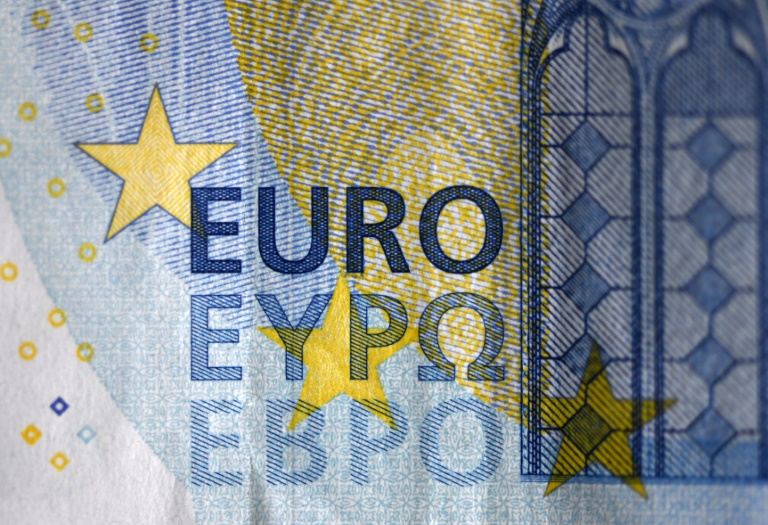
The European Central Bank announced another jumbo interest rate hike on Thursday and said further increases would follow to combat soaring inflation, even as its president, Christine Lagarde, warned a eurozone recession was looming.

The ECB’s 25-member governing council repeated last month’s unprecedented move and opted for another bumper increase of 75 basis points, leaving its three main rates sitting in a range of between 1.5 and 2.25 percent.

“We will have further rate increases in the future,” Lagarde said. “There is still ground to cover.”

The Frankfurt institution is under pressure to rein in record-high inflation, mainly driven by surging food and especially energy prices in the wake of Russia’s war in Ukraine.

Eurozone inflation stood at 9.9 percent in September, nearly five times the ECB’s two-percent target.

Inflation “remains far too high” in the 19-nation currency club, Lagarde said.

Like other central banks, the ECB is fighting back with a series of rate hikes intended to dampen demand by making credit more expensive for households and businesses.

But higher borrowing costs also weigh on economic activity, and the eurozone outlook has deteriorated significantly.

“The likelihood of recession (is) looming much more on the horizon,” Lagarde told a press conference.

And inflation could go “higher than expected if there are increases in the prices of energy and food commodities”, she added.

“Obviously we’re concerned, particularly about those who have low income,” Lagarde said.

– Political grumbling –

Moscow’s move to curb gas supplies to Europe has triggered an energy crisis on the continent, fuelling fears of power shortages and sky-high heating bills this winter. 

If Russia completely cuts off gas flows to Europe, the eurozone economy could shrink by nearly one percent in 2023, ECB vice-president Luis de Guindos recently warned.

That scenario has become more likely after Russia in late August shut down the crucial Nord Stream 1 pipeline to Europe’s economic powerhouse Germany.

As European governments race to unveil multi-billion-euro support measures to help citizens through a cost-of-living crisis this winter, the ECB’s monetary policy tightening has come under scrutiny.

Italian Prime Minister Giorgia Meloni this week criticised the ECB’s “rash choice” to aggressively hike rates, saying it created “further difficulties for member states that have elevated public debt”.

French President Emmanuel Macron expressed “concern” that the ECB was “shattering demand” in Europe.

But Lagarde hit back at the criticism.

“The decision that we made today is the most appropriate in order to restore price stability, which… is critically important for not just the stability of prices but also for the economy to actually prosper and recover,” she said.

The former French finance minister also warned governments against adding to their debt pile as they try to shield citizens from price shocks.

“Governments should pursue fiscal policies that show they are committed to gradually bringing down high public debt ratios,” Lagarde said, stressing that policymakers should pick measures which are “temporary and targeted at the most vulnerable”.

– Excess liquidity –

Also in focus on Thursday were the ECB’s efforts to bring other monetary policy levers in line with its inflation-busting efforts, including unwinding its massive balance sheet.

The governing council moved to reduce the benefits gained by eurozone banks from super-cheap loans issued at ultra-low rates during the pandemic.

The interest rate for so-called TLTRO III loans would rise, the ECB said, and lenders will be offered “additional voluntary early repayment dates”.

Lenders are currently able to make an easy profit by parking their excess TLTRO cash at the ECB and pocketing the new, higher deposit rate.

This is not considered a good look at a time when many consumers and companies are struggling, and the ECB had signalled it wanted to make the loan scheme less generous.

Lagarde was also grilled by reporters on how the ECB intends to shrink its five-trillion-euro bond portfolio, after years of hoovering up government and corporate debt to keep credit flowing.

Given the economic uncertainty and the risk of rattling financial markets, analysts believe the start of any “quantitative tightening” — letting the bonds mature or actively selling them — is some way off.

Lagarde said the topic would be discussed at the next meeting in December.

'Spare' — Prince Harry to release memoir in January

Prince Harry will release a tell-all memoir in January, his publisher said Thursday, with the highly-anticipated account of life in the British monarchy and after he quit royal duties landing just four months after the death of Queen Elizabeth II.

The book by Harry — who now lives in California with his wife Meghan Markle — comes at a sensitive time.

There has been intense speculation that prince could draw back the veil on palace life and offer damaging revelations, or pull his punches in the aftermath of Elizabeth’s death as Britain adjusts to its new head of state, King Charles III. 

Titled “Spare,” the memoir will hit the shelves on January 10, 2023.

“We are excited to announce the remarkably personal and emotionally powerful story of Prince Harry, The Duke of Sussex,” Penguin Random House said on Twitter.

On its website, the book is described as a window into how the prince responded to the death of his mother Diana 25 years ago, and how his life has been affected since.

“With its raw, unflinching honesty, Spare is a landmark publication full of insight, revelation, self-examination, and hard-won wisdom about the eternal power of love over grief,” Pengun Random said.

Diana, Princess of Wales, died in a high-speed car crash in Paris on August 31, 1997. Britain was plunged into an outpouring of grief that jolted the monarchy, which was seen by some as out of touch.

In addition to the title refering to Harry’s apparent bid to lead a more simple, less ritzy lifestyle, it also alludes to his status as the “spare” to his older brother Prince William’s role as “heir” to the British throne.

Harry and Meghan stunned his family by announcing they were quitting royal duties and moving to the United States in early 2020.

From there, they launched a series of broadsides criticizing their life in the institution, including claims of racism and the Crown’s failure to support them amid relentless tabloid attacks.

Their public criticisms exacerbated tensions with William — with whom he is reported to be barely on speaking terms — and their father, King Charles.

Harry and Meghan now live with their two children, Archie and Lilibet, in Santa Barbara, California.

– ‘Highs and lows’ –

In July last year, Harry announced he was penning a memoir that would expose the “mistakes” and “lessons learned” across his life.

“I’m writing this not as the prince I was born but as the man I have become,” Harry said at the time. 

“I’ve worn many hats over the years, both literally and figuratively, and my hope is that in telling my story — the highs and lows, the mistakes, the lessons learned — I can help show that no matter where we come from, we have more in common than we think.”

He said he was “excited for people to read a firsthand account of my life that’s accurate and wholly truthful.”

But any additional unflattering and candid remarks — beyond those Harry made during a high-profile interview with Oprah Winfrey last year — about the royal family after the queen’s death might backfire.

“Prince Harry has gotten cold feet about the memoir’s contents at various points, book industry executives with knowledge of the process told The Times, and the project has been shrouded in rumors, delays and secrecy,” The New York Times reported.

Harry will use proceeds from the memoir, which will be released in 16 languages, to donate to British charities, the publisher added.

Close Bitnami banner
Bitnami