AFP

Hong Kong finance chief contracts Covid ahead of banking summit

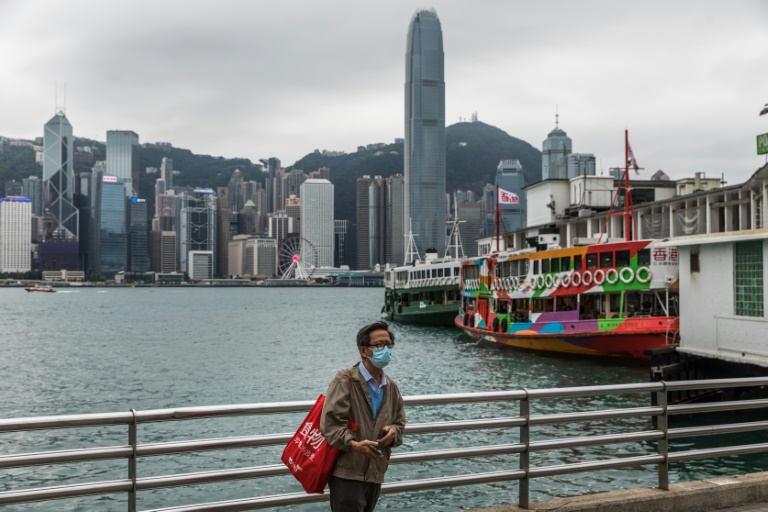
Hong Kong’s finance chief could have to miss an upcoming global banking summit in the city, after his office revealed Thursday he had tested positive for the coronavirus.

City authorities are eager for the international finance get-together to show Hong Kong is open for business, having been previously isolated by China’s zero-Covid policy.

Financial Secretary Paul Chan was scheduled to deliver speeches next Wednesday and Thursday at the conference, which is set to draw about 200 participants and the heads of 30 major financial institutions.

But it is now unclear if Chan will be able to attend.

He had been visiting Bahrain and Saudi Arabia to build trade ties and was scheduled to return Thursday.

But he tested positive under a rapid antigen test in Riyadh, his office said. 

“(Chan) has cancelled the remaining parts of the visit and will stay in Riyadh for a short while, and seek to comply with relevant health requirements and return to Hong Kong as soon as possible,” it said in a statement.

The office did not immediately respond to AFP questions about his updated itinerary.

Hong Kong has gradually relaxed its pandemic controls, including scrapping mandatory quarantine for new arrivals last month.

But it still maintains many strict curbs long abandoned by much of the world, including rival business hubs.

International arrivals must undergo multiple tests and cannot enter bars or restaurants for the first three days.

Under Hong Kong’s current rules, those who test positive for the coronavirus must isolate at home or in a hotel room, or a government isolation centre.

They may leave isolation after a week if they have tested negative on days six and seven.

Global banking chiefs will have a taste of Hong Kong’s existing pandemic curbs next week at the summit in the Four Seasons hotel, although certain rules will be relaxed.

Attendees will not be able to go to bars or restaurants during the first three days after arriving but will be able to socialise in a bubble within the hotel and attend an opening banquet at an art museum.

The event will include panel talks featuring the CEOs of Goldman Sachs, Morgan Stanley and Citigroup.

Top executives from HSBC, Standard Chartered, JPMorgan Chase and BlackRock will also attend.

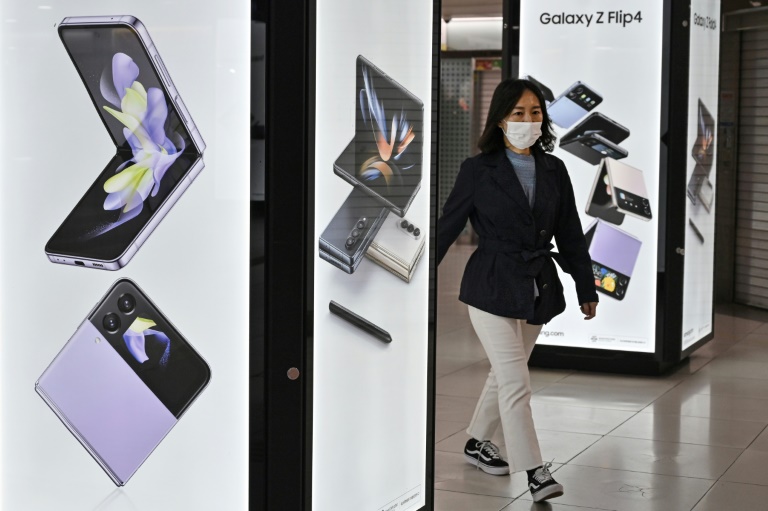
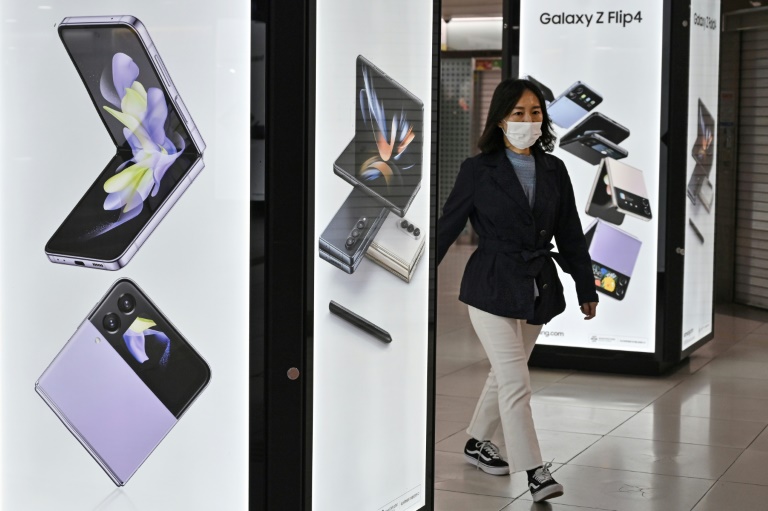
Samsung Electronics says Q3 operating profit down 31% on-year

South Korean tech giant Samsung Electronics on Thursday said its third-quarter operating profits were down 31.39 percent year on year after a global economic downturn hit demand for consumer electronics.

Earnings in its crucial memory chips division dropped, the company said in a statement, adding that “demand for consumer products remained weak”.

Operating profit for July to September 2022 fell to 10 trillion won ($7 billion), down from 15.8 trillion won for the same period last year, the company said.

The results were released the same day the company announced de facto leader Lee Jae-yong — who received a presidential pardon in August over a fraud conviction — would be promoted to chairman of Samsung Electronics.

“Our survival depends on future technologies,” Lee said in a message posted on the company’s internal forum after his promotion, Yonhap reported. “We can turn this crisis into opportunity.”

The third-quarter results are the first year-on-year decline in profit in nearly three years for Samsung Electronics, the world’s biggest smartphone maker.

But the company said it had seen an increase in sales, which were up by 3.79 percent from the same period last year to 76 trillion won.

The world’s biggest memory-chip maker is the flagship subsidiary of the giant Samsung group, by far the largest of the family-controlled empires known as chaebols that dominate business in South Korea, Asia’s fourth-largest economy.

The conglomerate is crucial to the country’s economic health — its overall turnover is equivalent to a fifth of the national gross domestic product.

Until the second quarter of this year, Samsung, along with other tech companies, significantly benefited from strong demand for electronic devices — as well as chips that power them — during the pandemic.

But the global economy is now facing multiple challenges, including soaring inflation, rising interest rates and the growing threat of a broad debt crisis.

The situation has been exacerbated by Russia’s invasion of Ukraine — which has spurred a surge in energy prices and pushed global food prices up — along with China’s adherence to a strict zero-Covid policy.

“In 2023, demand is expected to recover to some extent, but macroeconomic uncertainties are likely to persist,” Samsung Electronics said.

“In the Memory Business, after a dampened first half, demand is expected to rebound centering on servers as data center installations resume,” it added.

Analyst Park Sung-soon of Cape Investment & Securities told AFP he did not expect consumer demand for tech products to recover until the second half of 2023. 

“So the focus for Samsung will be adjusting its supply rather than relying on demand recovering anytime soon,” he said.

Samsung also said it had benefited from the strength of the US dollar against the Korean won, “resulting in an approximately 1.0 trillion won company-wide gain in operating profit compared to the previous quarter”.

– Geopolitics –

The vast majority of the world’s most advanced microchips are made by just two companies — Samsung and Taiwan’s TSMC — both of which are running at full capacity to alleviate a global shortage.

The supply of memory chips has become an issue of global geopolitical significance recently, with leading governments scrambling to secure supplies.

That was demonstrated in May when US President Joe Biden kicked off a South Korea tour by visiting Samsung’s sprawling Pyeongtaek chip plant.

Russia’s invasion of Ukraine has “further spotlighted the need to secure our critical supply chains”, Biden said at the plant, underscoring the importance of bolstering technology partnerships among “close partners who do share our values”.

Samsung employs about 20,000 people in the United States and work is under way to build a new semiconductor plant in Texas, scheduled to open in 2024.

The US also recently introduced new measures to limit China’s access to high-end semiconductors with military uses, a move that has wiped billions from chip companies’ valuations worldwide.

Samsung Electronics says Q3 operating profit down 31% on-year

South Korean tech giant Samsung Electronics on Thursday said its third-quarter operating profits were down 31.39 percent year on year after a global economic downturn hit demand for consumer electronics.

Earnings in its crucial memory chips division dropped, the company said in a statement, adding that “demand for consumer products remained weak”.

Operating profit for July to September 2022 fell to 10 trillion won ($7 billion), down from 15.8 trillion won for the same period last year, the company said.

The results were released the same day the company announced de facto leader Lee Jae-yong — who received a presidential pardon in August over a fraud conviction — would be promoted to chairman of Samsung Electronics.

“Our survival depends on future technologies,” Lee said in a message posted on the company’s internal forum after his promotion, Yonhap reported. “We can turn this crisis into opportunity.”

The third-quarter results are the first year-on-year decline in profit in nearly three years for Samsung Electronics, the world’s biggest smartphone maker.

But the company said it had seen an increase in sales, which were up by 3.79 percent from the same period last year to 76 trillion won.

The world’s biggest memory-chip maker is the flagship subsidiary of the giant Samsung group, by far the largest of the family-controlled empires known as chaebols that dominate business in South Korea, Asia’s fourth-largest economy.

The conglomerate is crucial to the country’s economic health — its overall turnover is equivalent to a fifth of the national gross domestic product.

Until the second quarter of this year, Samsung, along with other tech companies, significantly benefited from strong demand for electronic devices — as well as chips that power them — during the pandemic.

But the global economy is now facing multiple challenges, including soaring inflation, rising interest rates and the growing threat of a broad debt crisis.

The situation has been exacerbated by Russia’s invasion of Ukraine — which has spurred a surge in energy prices and pushed global food prices up — along with China’s adherence to a strict zero-Covid policy.

“In 2023, demand is expected to recover to some extent, but macroeconomic uncertainties are likely to persist,” Samsung Electronics said.

“In the Memory Business, after a dampened first half, demand is expected to rebound centering on servers as data center installations resume,” it added.

Analyst Park Sung-soon of Cape Investment & Securities told AFP he did not expect consumer demand for tech products to recover until the second half of 2023. 

“So the focus for Samsung will be adjusting its supply rather than relying on demand recovering anytime soon,” he said.

Samsung also said it had benefited from the strength of the US dollar against the Korean won, “resulting in an approximately 1.0 trillion won company-wide gain in operating profit compared to the previous quarter”.

– Geopolitics –

The vast majority of the world’s most advanced microchips are made by just two companies — Samsung and Taiwan’s TSMC — both of which are running at full capacity to alleviate a global shortage.

The supply of memory chips has become an issue of global geopolitical significance recently, with leading governments scrambling to secure supplies.

That was demonstrated in May when US President Joe Biden kicked off a South Korea tour by visiting Samsung’s sprawling Pyeongtaek chip plant.

Russia’s invasion of Ukraine has “further spotlighted the need to secure our critical supply chains”, Biden said at the plant, underscoring the importance of bolstering technology partnerships among “close partners who do share our values”.

Samsung employs about 20,000 people in the United States and work is under way to build a new semiconductor plant in Texas, scheduled to open in 2024.

The US also recently introduced new measures to limit China’s access to high-end semiconductors with military uses, a move that has wiped billions from chip companies’ valuations worldwide.

Samsung Electronics says Q3 operating profit down 31% on-year

South Korean tech giant Samsung Electronics on Thursday said its third-quarter operating profits were down 31.39 percent year on year after a global economic downturn hit demand for consumer electronics.

Earnings in its crucial memory chips division dropped, the company said in a statement, adding that “demand for consumer products remained weak”.

Operating profit for July to September 2022 fell to 10 trillion won ($7 billion), down from 15.8 trillion won for the same period last year, the company said.

The results are the first year-on-year decline in profit in nearly three years for Samsung Electronics, the world’s biggest smartphone maker.

But the company said it had seen an increase in sales, which were up by 3.79 percent from the same period last year to 76 trillion won.

The world’s biggest memory-chip maker is the flagship subsidiary of the giant Samsung group, by far the largest of the family-controlled empires known as chaebols that dominate business in South Korea, Asia’s fourth-largest economy.

The conglomerate is crucial to the country’s economic health — its overall turnover is equivalent to a fifth of the national gross domestic product.

Until the second quarter of this year, Samsung, along with other tech companies, significantly benefited from strong demand for electronic devices — as well as chips that power them — during the pandemic.

But the global economy is now facing multiple challenges, including soaring inflation, rising interest rates and the growing threat of a broad debt crisis.

The situation has been exacerbated by Russia’s invasion of Ukraine — which has spurred a surge in energy prices and pushed global food prices up — along with China’s adherence to a strict zero-Covid policy.

“In 2023, demand is expected to recover to some extent, but macroeconomic uncertainties are likely to persist,” Samsung Electronics said.

“In the Memory Business, after a dampened first half, demand is expected to rebound centering on servers as data center installations resume,” it added.

Analyst Park Sung-soon of Cape Investment & Securities told AFP he did not expect consumer demand for tech products to recover until the second half of 2023. 

“So the focus for Samsung will be adjusting its supply rather than relying on demand recovering anytime soon,” he said.

Samsung also said it had benefited from the strength of the US dollar against the Korean won, “resulting in an approximately 1.0 trillion won company-wide gain in operating profit compared to the previous quarter”.

Parent company Samsung Group announced Thursday that heir and de facto leader Lee Jae-yong — who received a presidential pardon in August over a fraud conviction — would be promoted to chairman.

– Geopolitics –

The vast majority of the world’s most advanced microchips are made by just two companies — Samsung and Taiwan’s TSMC — both of which are running at full capacity to alleviate a global shortage.

The supply of memory chips has become an issue of global geopolitical significance recently, with leading governments scrambling to secure supplies.

That was demonstrated in May when US President Joe Biden kicked off a South Korea tour by visiting Samsung’s sprawling Pyeongtaek chip plant.

Russia’s invasion of Ukraine has “further spotlighted the need to secure our critical supply chains”, Biden said at the plant, underscoring the importance of bolstering technology partnerships among “close partners who do share our values”.

Samsung employs about 20,000 people in the United States and work is under way to build a new semiconductor plant in Texas, scheduled to open in 2024.

The US also recently introduced new measures to limit China’s access to high-end semiconductors with military uses, a move that has wiped billions from chip companies’ valuations worldwide.

Samsung Electronics says Q3 operating profit down 31% on-year

South Korean tech giant Samsung Electronics on Thursday said its third-quarter operating profits were down 31.39 percent year on year after a global economic downturn hit demand for consumer electronics.

Earnings in its crucial memory chips division dropped, the company said in a statement, adding that “demand for consumer products remained weak”.

Operating profit for July to September 2022 fell to 10 trillion won ($7 billion), down from 15.8 trillion won for the same period last year, the company said.

The results are the first year-on-year decline in profit in nearly three years for Samsung Electronics, the world’s biggest smartphone maker.

But the company said it had seen an increase in sales, which were up by 3.79 percent from the same period last year to 76 trillion won.

The world’s biggest memory-chip maker is the flagship subsidiary of the giant Samsung group, by far the largest of the family-controlled empires known as chaebols that dominate business in South Korea, Asia’s fourth-largest economy.

The conglomerate is crucial to the country’s economic health — its overall turnover is equivalent to a fifth of the national gross domestic product.

Until the second quarter of this year, Samsung, along with other tech companies, significantly benefited from strong demand for electronic devices — as well as chips that power them — during the pandemic.

But the global economy is now facing multiple challenges, including soaring inflation, rising interest rates and the growing threat of a broad debt crisis.

The situation has been exacerbated by Russia’s invasion of Ukraine — which has spurred a surge in energy prices and pushed global food prices up — along with China’s adherence to a strict zero-Covid policy.

“In 2023, demand is expected to recover to some extent, but macroeconomic uncertainties are likely to persist,” Samsung Electronics said.

“In the Memory Business, after a dampened first half, demand is expected to rebound centering on servers as data center installations resume,” it added.

Analyst Park Sung-soon of Cape Investment & Securities told AFP he did not expect consumer demand for tech products to recover until the second half of 2023. 

“So the focus for Samsung will be adjusting its supply rather than relying on demand recovering anytime soon,” he said.

Samsung also said it had benefited from the strength of the US dollar against the Korean won, “resulting in an approximately 1.0 trillion won company-wide gain in operating profit compared to the previous quarter”.

Parent company Samsung Group announced Thursday that heir and de facto leader Lee Jae-yong — who received a presidential pardon in August over a fraud conviction — would be promoted to chairman.

– Geopolitics –

The vast majority of the world’s most advanced microchips are made by just two companies — Samsung and Taiwan’s TSMC — both of which are running at full capacity to alleviate a global shortage.

The supply of memory chips has become an issue of global geopolitical significance recently, with leading governments scrambling to secure supplies.

That was demonstrated in May when US President Joe Biden kicked off a South Korea tour by visiting Samsung’s sprawling Pyeongtaek chip plant.

Russia’s invasion of Ukraine has “further spotlighted the need to secure our critical supply chains”, Biden said at the plant, underscoring the importance of bolstering technology partnerships among “close partners who do share our values”.

Samsung employs about 20,000 people in the United States and work is under way to build a new semiconductor plant in Texas, scheduled to open in 2024.

The US also recently introduced new measures to limit China’s access to high-end semiconductors with military uses, a move that has wiped billions from chip companies’ valuations worldwide.

Kanye West 'escorted' out of Skechers offices

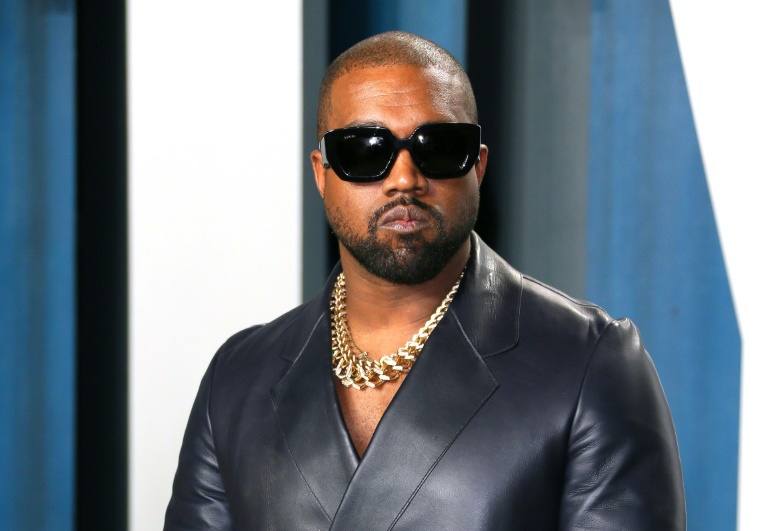
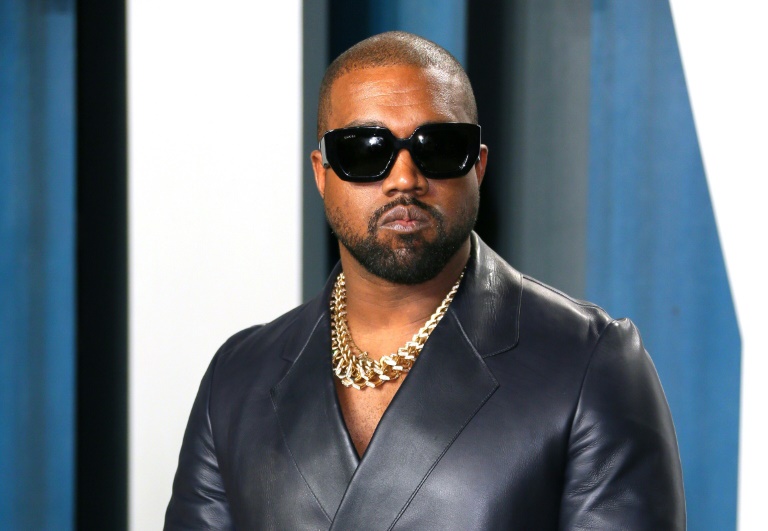
Kanye West was “escorted” by two executives out of the Skechers corporate offices after the rapper showed up uninvited, the shoe company said in a statement Wednesday.

West — known formally as Ye — has made headlines in recent weeks for racist and anti-Semitic statements that have cost him several lucrative fashion collaborations.

He arrived “unannounced and without invitation” at the Los Angeles offices, Skechers said, adding that he was “engaged in unauthorized filming.”

The hip hop star appeared at a Paris fashion show this month wearing a shirt emblazoned with “White Lives Matter,” a slogan created as a backlash to the Black Lives Matter movement.

Days later, he was locked out of Twitter and Instagram for threatening to “Go death con 3 on JEWISH PEOPLE,” using a reference to US military readiness.

“Skechers is not considering and has no intention of working with West,” the company said Wednesday.

“We condemn his recent divisive remarks and do not tolerate anti-Semitism or any other form of hate speech.”

“Considering Ye was engaged in unauthorized filming, two Skechers executives escorted him and his party from the building after a brief conversation,” it added.

German sportswear giant Adidas on Tuesday announced it was ending its partnership with West, followed later that day by American apparel company Gap, which said it was taking “immediate” steps to remove his products.

Paris-based fashion house Balenciaga ended ties with West last week.

One of Hollywood’s biggest talent agencies, CAA, said on Monday it was dropping West, while film and TV producer MRC said it was shelving an already finished documentary about the artist.

West’s ex-wife Kim Kardashian posted a message condemning hate speech on social media this week without mentioning her former husband.

West, 45, has been outspoken about his struggles with mental health issues.

Kanye West 'escorted' out of Skechers offices

Kanye West was “escorted” by two executives out of the Skechers corporate offices after the rapper showed up uninvited, the shoe company said in a statement Wednesday.

West — known formally as Ye — has made headlines in recent weeks for racist and anti-Semitic statements that have cost him several lucrative fashion collaborations.

He arrived “unannounced and without invitation” at the Los Angeles offices, Skechers said, adding that he was “engaged in unauthorized filming.”

The hip hop star appeared at a Paris fashion show this month wearing a shirt emblazoned with “White Lives Matter,” a slogan created as a backlash to the Black Lives Matter movement.

Days later, he was locked out of Twitter and Instagram for threatening to “Go death con 3 on JEWISH PEOPLE,” using a reference to US military readiness.

“Skechers is not considering and has no intention of working with West,” the company said Wednesday.

“We condemn his recent divisive remarks and do not tolerate anti-Semitism or any other form of hate speech.”

“Considering Ye was engaged in unauthorized filming, two Skechers executives escorted him and his party from the building after a brief conversation,” it added.

German sportswear giant Adidas on Tuesday announced it was ending its partnership with West, followed later that day by American apparel company Gap, which said it was taking “immediate” steps to remove his products.

Paris-based fashion house Balenciaga ended ties with West last week.

One of Hollywood’s biggest talent agencies, CAA, said on Monday it was dropping West, while film and TV producer MRC said it was shelving an already finished documentary about the artist.

West’s ex-wife Kim Kardashian posted a message condemning hate speech on social media this week without mentioning her former husband.

West, 45, has been outspoken about his struggles with mental health issues.

'Overpaying' Musk on deadline to close Twitter deal

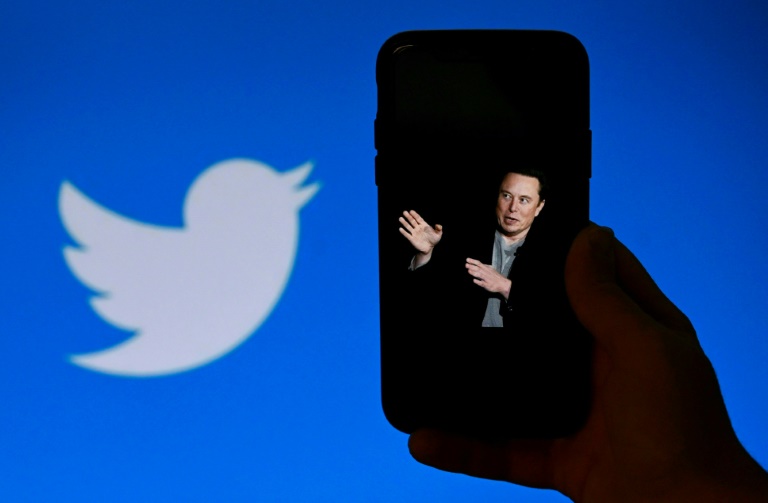
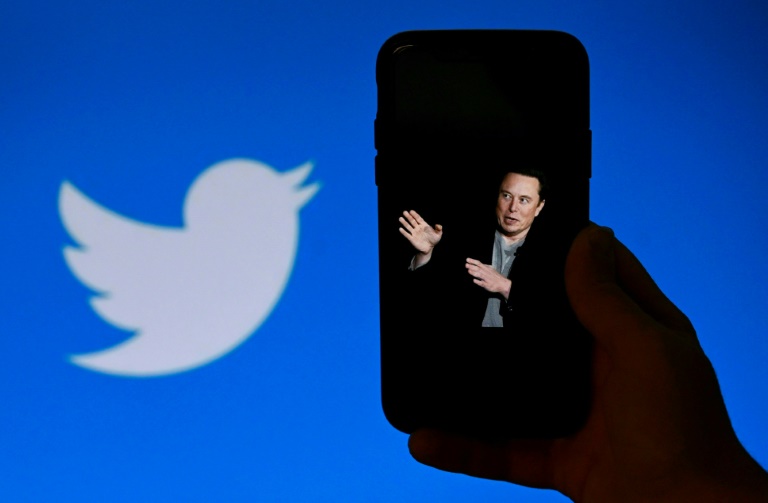
Elon Musk looks set to meet a Friday deadline to seal his on-again, off-again deal to buy Twitter, avoiding a trial over the $44 billion contract that he admits is overpriced.

After he sought to terminate the sale, Twitter filed a lawsuit to hold Musk to the agreement he inked in April to purchase the social media giant.

With a trial looming, the unpredictable billionaire capitulated and revived his takeover plan.

Musk signaled the deal was on track Wednesday by changing his Twitter profile to “Chief Twit” and posting a video of himself walking into the company’s California headquarters carrying a sink.

“Let that sink in!” he quipped.

“I think on Friday, we’ll get an announcement that says that Elon Musk has purchased Twitter,” University of California, Berkeley, law professor Adam Badawi told AFP.

Musk, the world’s richest man, has reportedly been lining up financing since Delaware Judge Kathaleen McCormick paused litigation on October 6.

If the buyout doesn’t close by the end of the business day, the judge will likely “bring the hammer down” and head quickly to trial, Badawi added.

Musk tried to step back from the Twitter deal soon after his unsolicited offer was accepted, and said in July he was canceling the contract because he was misled by Twitter over the number of fake “bot” accounts — allegations rejected by the company.

Twitter, in turn, sought to prove Musk, the head of the Tesla electric vehicle company, was contriving excuses to walk away simply because he changed his mind.

“I’m excited about the Twitter situation,” Musk said during a recent Tesla earnings call.

“I think it’s an asset that has just sort of languished for a long time but has incredible potential, although obviously myself and the other investors are overpaying for Twitter right now.”

– Twitter free-for-all? –

While pitching the deal to investors, Musk said he planned to get rid of nearly three-quarters of Twitter’s workers, according to a Washington Post report.

That report came as a shock in the Twitter workplace, where some employees who would prefer not to work for Musk have already left, said a worker who asked to remain anonymous in order to speak more freely.

“But a portion of people, including me, are willing to give him the benefit of the doubt for now,” the employee said of Musk.

“The more I hear about him the less I like him, but I do find it quite funny that he brought a sink to the headquarters just to make a joke.”

Musk’s stewardship of the site has sparked worry from activists who fear he could open the gates to more abusive and misinformative posts.

He has vowed to dial content moderation back to a bare minimum, and is expected to clear the way for former US president Donald Trump to return to the platform.

The then-president was blocked due to concerns he would ignite more violence like the deadly attack on the Capitol in Washington to overturn his election loss.

Once the deal is complete, Musk will essentially be handed the keys to Twitter and be in charge of the often-divisive global platform.

“The existing board of Twitter is probably going to get fired; Musk will put in directors who are friendly to him, he will put in management,” said Badawi.

He doubted Musk will want to be chief executive since he already runs Tesla, SpaceX, Neuralink and the Boring Company.

Trump now posts on his own, much-smaller, platform Truth Social, and has vowed not to return to Twitter even after Musk takes over.

The former president, who is considering another run at the White House in 2024, has 4.18 million followers at Truth Social, compared to the 88.8 million he had on Twitter.

'Overpaying' Musk on deadline to close Twitter deal

Elon Musk looks set to meet a Friday deadline to seal his on-again, off-again deal to buy Twitter, avoiding a trial over the $44 billion contract that he admits is overpriced.

After he sought to terminate the sale, Twitter filed a lawsuit to hold Musk to the agreement he inked in April to purchase the social media giant.

With a trial looming, the unpredictable billionaire capitulated and revived his takeover plan.

Musk signaled the deal was on track Wednesday by changing his Twitter profile to “Chief Twit” and posting a video of himself walking into the company’s California headquarters carrying a sink.

“Let that sink in!” he quipped.

“I think on Friday, we’ll get an announcement that says that Elon Musk has purchased Twitter,” University of California, Berkeley, law professor Adam Badawi told AFP.

Musk, the world’s richest man, has reportedly been lining up financing since Delaware Judge Kathaleen McCormick paused litigation on October 6.

If the buyout doesn’t close by the end of the business day, the judge will likely “bring the hammer down” and head quickly to trial, Badawi added.

Musk tried to step back from the Twitter deal soon after his unsolicited offer was accepted, and said in July he was canceling the contract because he was misled by Twitter over the number of fake “bot” accounts — allegations rejected by the company.

Twitter, in turn, sought to prove Musk, the head of the Tesla electric vehicle company, was contriving excuses to walk away simply because he changed his mind.

“I’m excited about the Twitter situation,” Musk said during a recent Tesla earnings call.

“I think it’s an asset that has just sort of languished for a long time but has incredible potential, although obviously myself and the other investors are overpaying for Twitter right now.”

– Twitter free-for-all? –

While pitching the deal to investors, Musk said he planned to get rid of nearly three-quarters of Twitter’s workers, according to a Washington Post report.

That report came as a shock in the Twitter workplace, where some employees who would prefer not to work for Musk have already left, said a worker who asked to remain anonymous in order to speak more freely.

“But a portion of people, including me, are willing to give him the benefit of the doubt for now,” the employee said of Musk.

“The more I hear about him the less I like him, but I do find it quite funny that he brought a sink to the headquarters just to make a joke.”

Musk’s stewardship of the site has sparked worry from activists who fear he could open the gates to more abusive and misinformative posts.

He has vowed to dial content moderation back to a bare minimum, and is expected to clear the way for former US president Donald Trump to return to the platform.

The then-president was blocked due to concerns he would ignite more violence like the deadly attack on the Capitol in Washington to overturn his election loss.

Once the deal is complete, Musk will essentially be handed the keys to Twitter and be in charge of the often-divisive global platform.

“The existing board of Twitter is probably going to get fired; Musk will put in directors who are friendly to him, he will put in management,” said Badawi.

He doubted Musk will want to be chief executive since he already runs Tesla, SpaceX, Neuralink and the Boring Company.

Trump now posts on his own, much-smaller, platform Truth Social, and has vowed not to return to Twitter even after Musk takes over.

The former president, who is considering another run at the White House in 2024, has 4.18 million followers at Truth Social, compared to the 88.8 million he had on Twitter.

Right-wing election 'army' sparks fear for US midterms

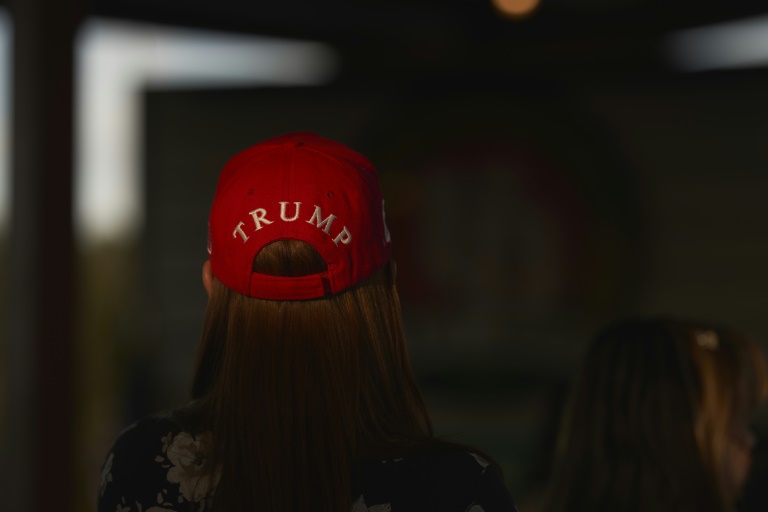
Influential right-wing campaigners who endorse Donald Trump’s false claims of election fraud are mobilizing a vigilante-style “army” of poll watchers for the US midterms, a move analysts say threatens chaos, intimidation and violence.

The campaigners, including some who tried to overturn Trump’s defeat in the 2020 election such as his former aide Steve Bannon, are weaponizing misinformation and so-called “election denialism” to encourage thousands of people to sign up as poll observers and challengers.

The mobilization has made the midterms, just two weeks away, the biggest test of the US democratic system since Trump’s debunked assertion that the last election was stolen from him.

On his popular podcast “War Room” this month, Bannon rallied for his audience to sign up as election workers, saying it was a political “call to arms.”

“It (the midterms) can’t be like 2020,” he told listeners.

Last week, Bannon was sentenced to four months in prison for refusing to testify in the congressional probe of the January 6, 2021 attack on the Capitol by Trump supporters.

He was allowed to remain free while he appeals.

“Steve Bannon’s early call for election deniers to sign up as poll workers and poll observers, along with disinformation questioning the integrity of the voting system… sows a real possibility for a chaotic election season,” Jennifer McCoy, professor of political science at Georgia State University, told AFP.

“We may potentially see tremendous confusion as some voters are prevented from voting, and many challenges during the vote count as these new poll workers and partisan observers challenge results they may not like.”

– ‘Army of citizens’ –

Bannon appeared on his podcast with Cleta Mitchell, a lawyer who also aided Trump’s effort to overturn the 2020 election and is now involved in assembling what she calls an  “army of citizens” to monitor elections.

She has said that her organization, the “Election Integrity Network,” has trained more than 20,000 people as poll watchers throughout the country, many of them in battleground states.

“The left has been counting and controlling the election process with no oversight from us for too long,” Mitchell wrote in a post earlier this year.

“Those days are over.”

A “guide” published on her organization’s website and distributed in nationwide training sessions called on citizens to be “ever present” in local polling offices, question election authorities and scrutinize voter eligibility.

It also urged them to identify whether officials in attorney general offices were “friend or foe.”

“In endorsing combative yet vague instructions and promoting the unjustified specter of widespread fraud, the unprecedented effort to organize an ‘army’ of citizens could lead to voter interference and intimidation, mass voter challenges, election security breaches, and other forms of lawbreaking in November,” Mekela Panditharatne, from the Brennan Center for Justice, wrote in an analysis.

– ‘Electoral autocracy’ –

Mitchell did not respond to AFP’s request for an interview.

Last week, Arizona election authorities said they were “deeply concerned” over voter safety after two armed individuals in tactical gear were found watching over a drop box for mail-in ballots.

The news came after at least two voters in Arizona filed official complaints of intimidation, a local TV station reported.

“It is one thing to observe the polling in a neutral fashion, and another to do so in a way that intimidates voters who may have opposing party affiliations,” Larry Diamond, a senior fellow at the Hoover Institution, told AFP.

“To the extent that pro-Trump extremists who deny the legitimacy of the 2020 election ‘observe’ the elections in a way that intimidates some voters, for example, people of color, or people in precincts with heavy Democratic registration, it could threaten the integrity of the elections.”

The mobilization of pro-Republican poll watchers appears to be well-funded.

Mitchell’s organization is part of the pro-Trump Conservative Partnership Institute, which, according to its annual report, raised $19.7 million last year.

According to the Federal Election Commission, a regulatory body, that includes a $1 million grant from Save America PAC –- which was created by Trump after he lost the 2020 election and has since raised millions.

Among other wealthy Trump supporters trying to rally poll watchers is election conspiracy theorist Patrick Byrne, the multimillionaire founder of the online retailer Overstock.

Byrne has sought to recruit “citizen election observers” through his nonprofit, the America Project.

With election denial rampant, the United States risks becoming what historian Ruth Ben-Ghiat called an “electoral autocracy.”

“They (Trump and his supporters) aim to delegitimize elections in the absolute,” Ben-Ghiat, a professor at New York University, told AFP.

“The goal is to associate voting with corruption to the point where the idea of relying on elections as a way to choose leaders is compromised in the public mind.”

Close Bitnami banner
Bitnami